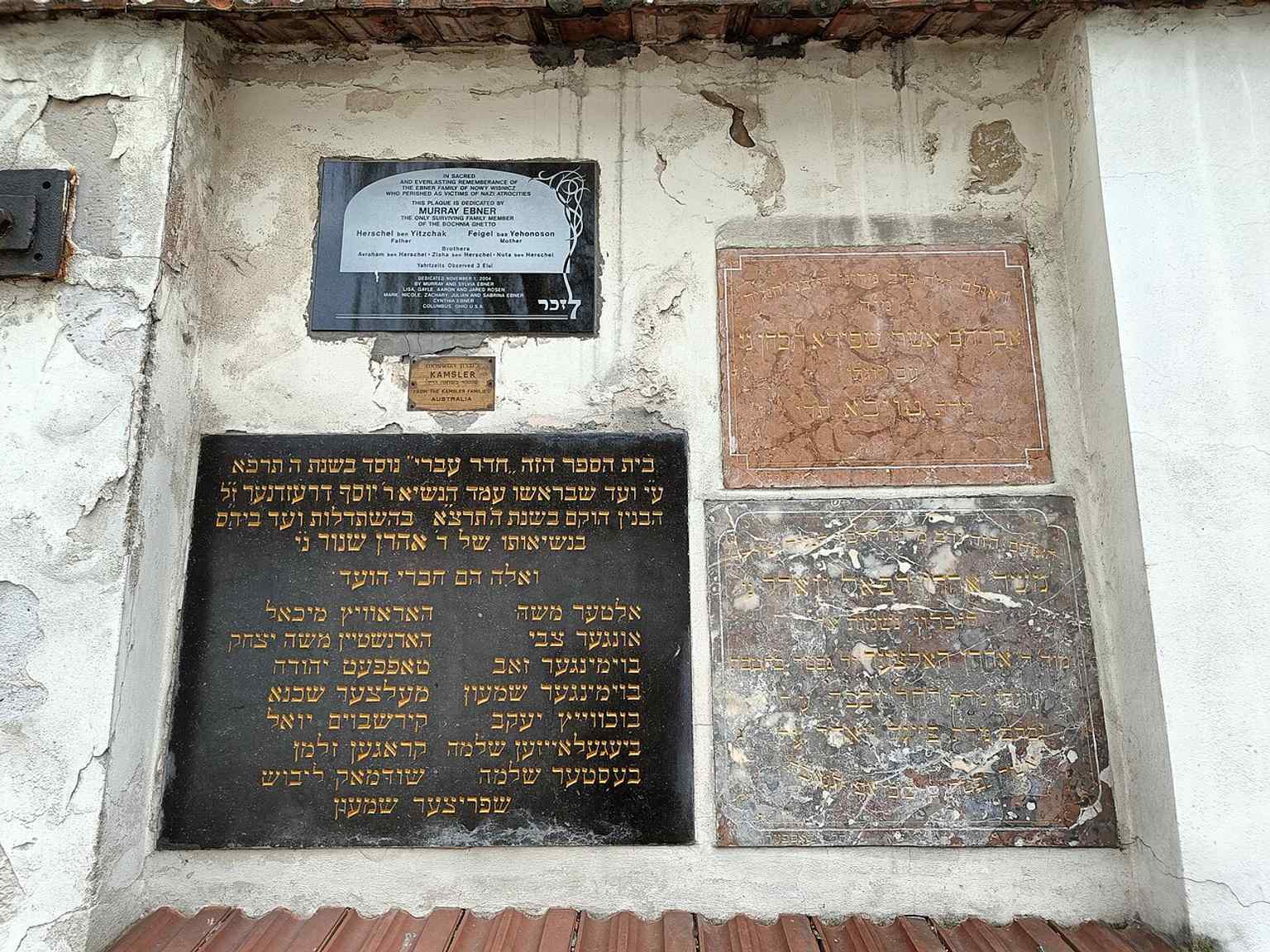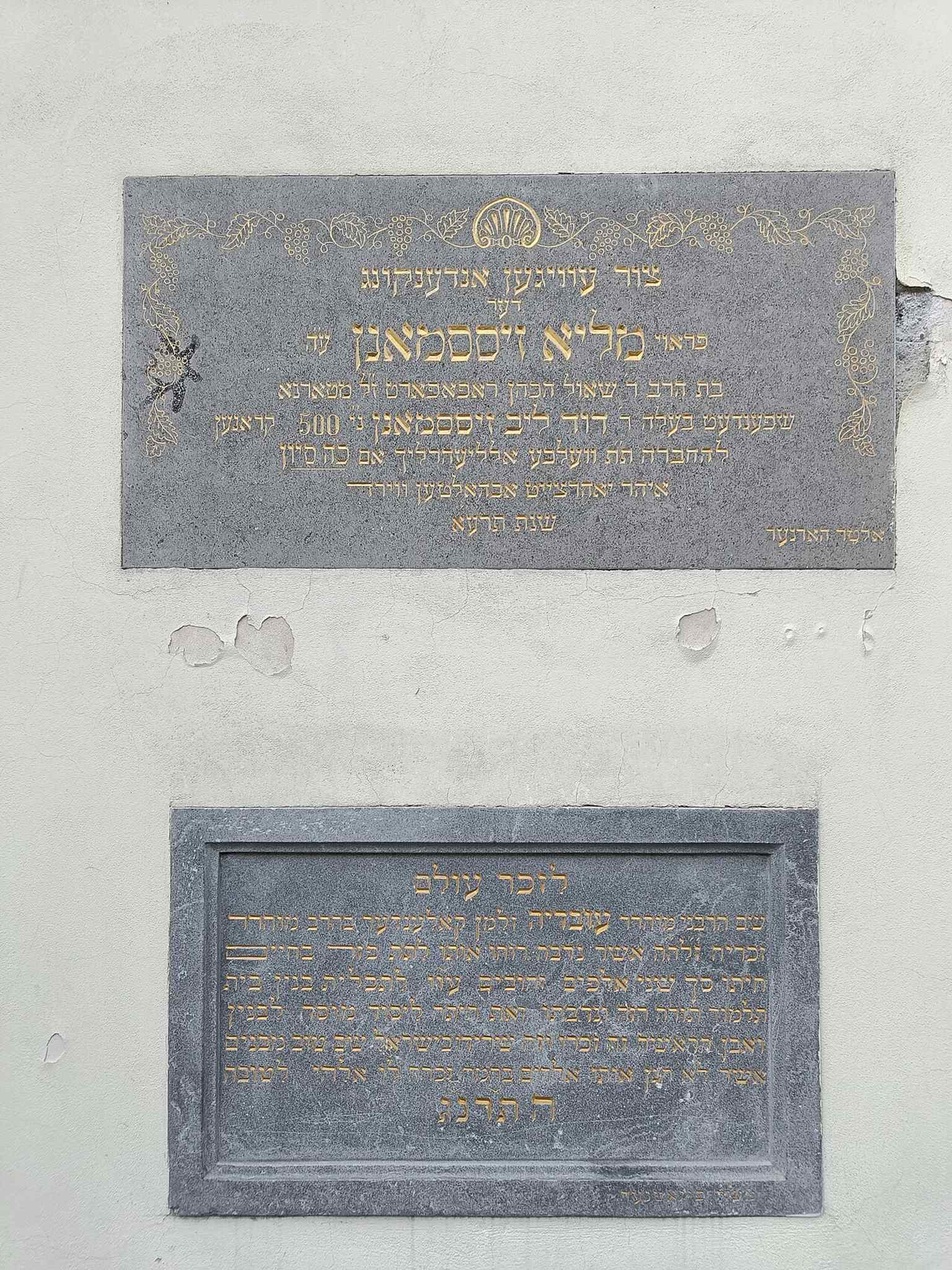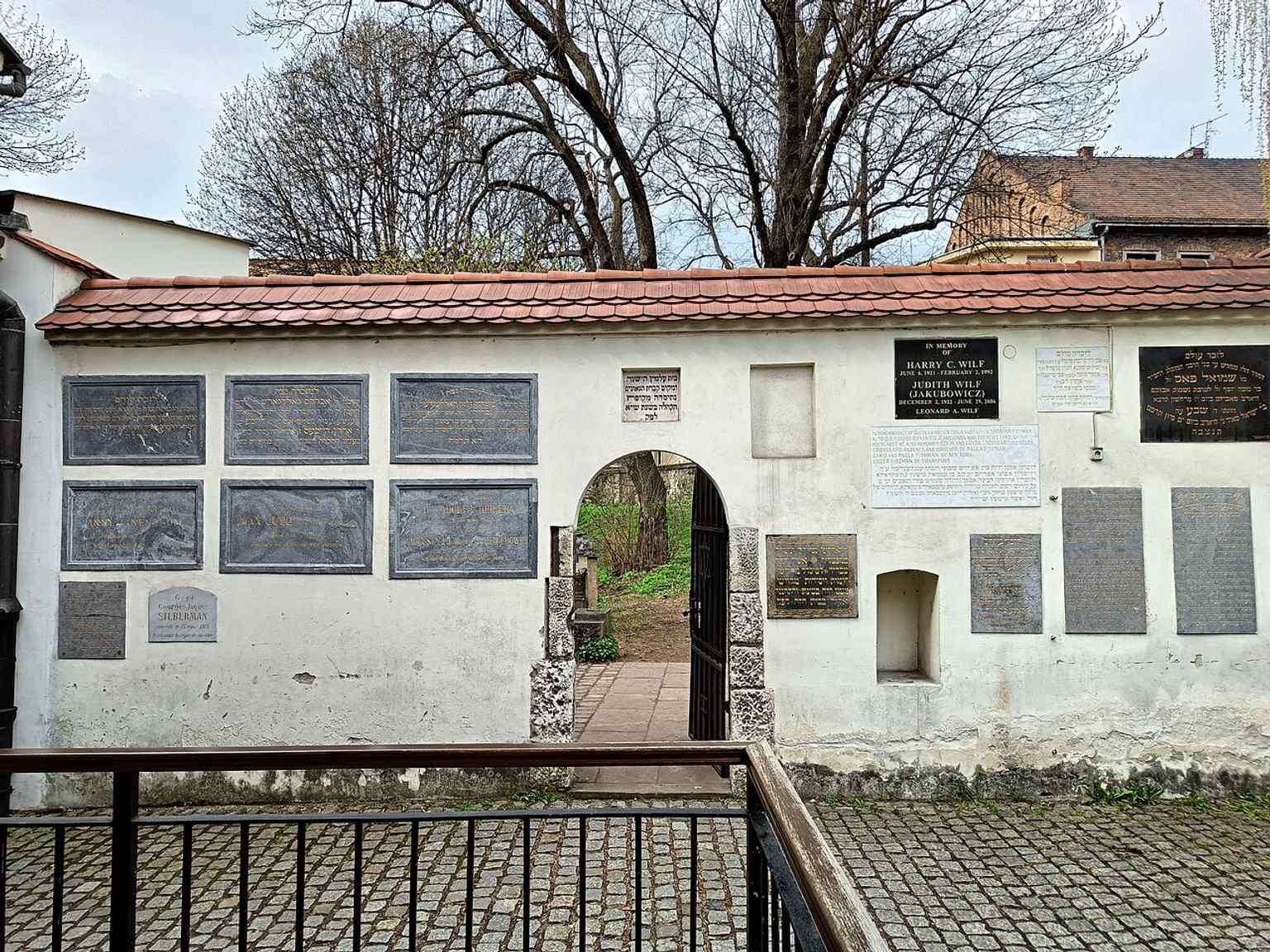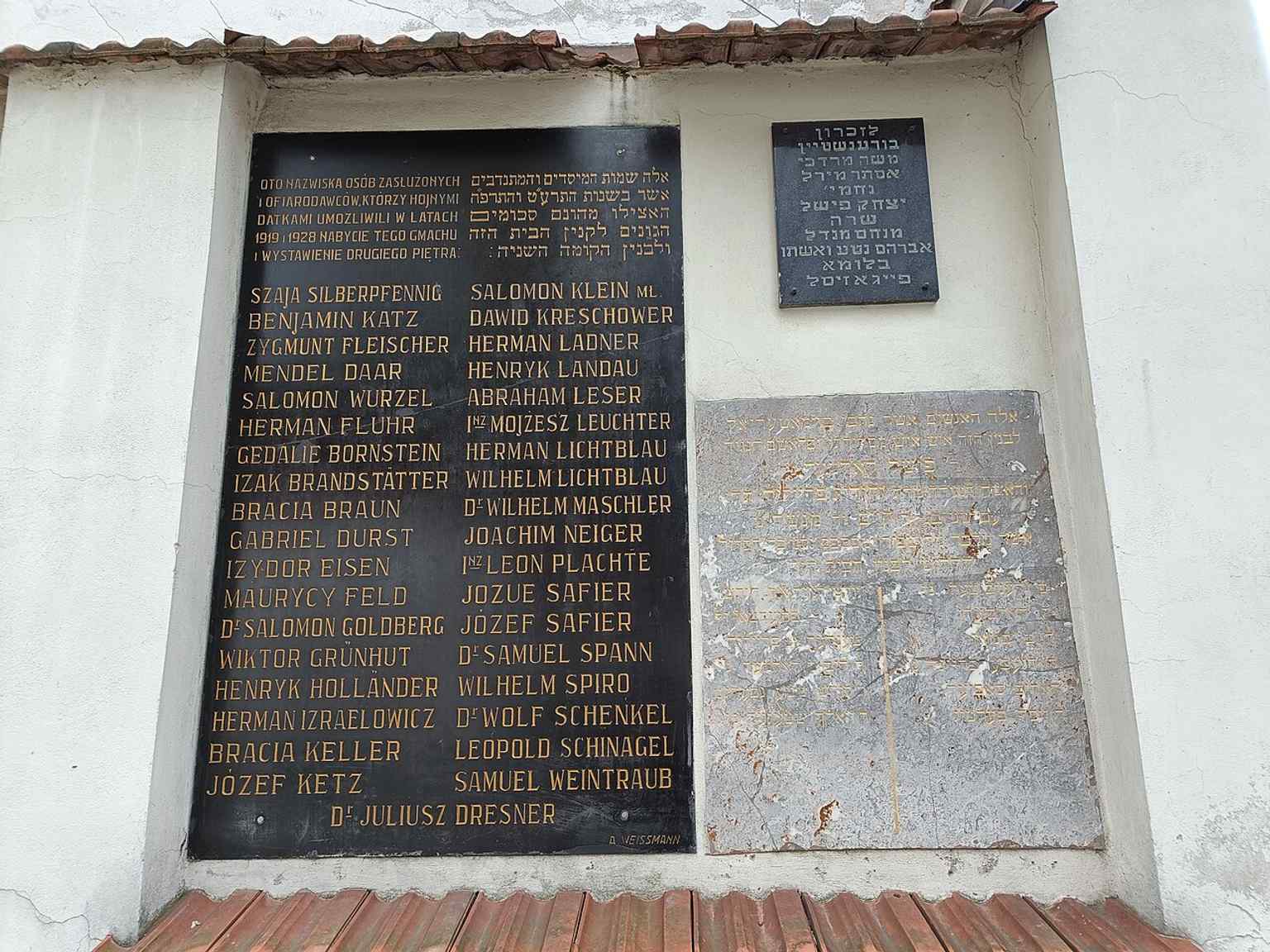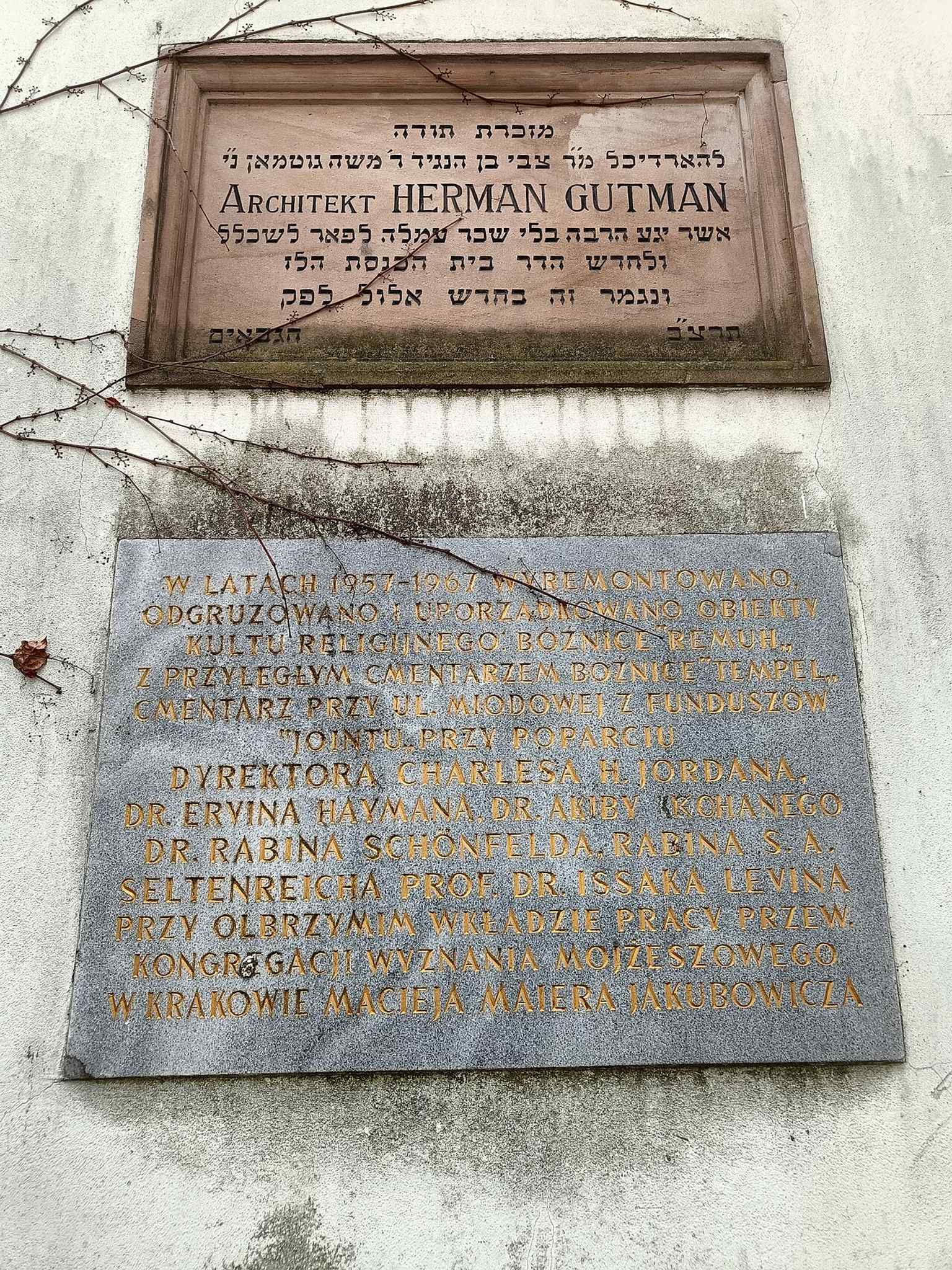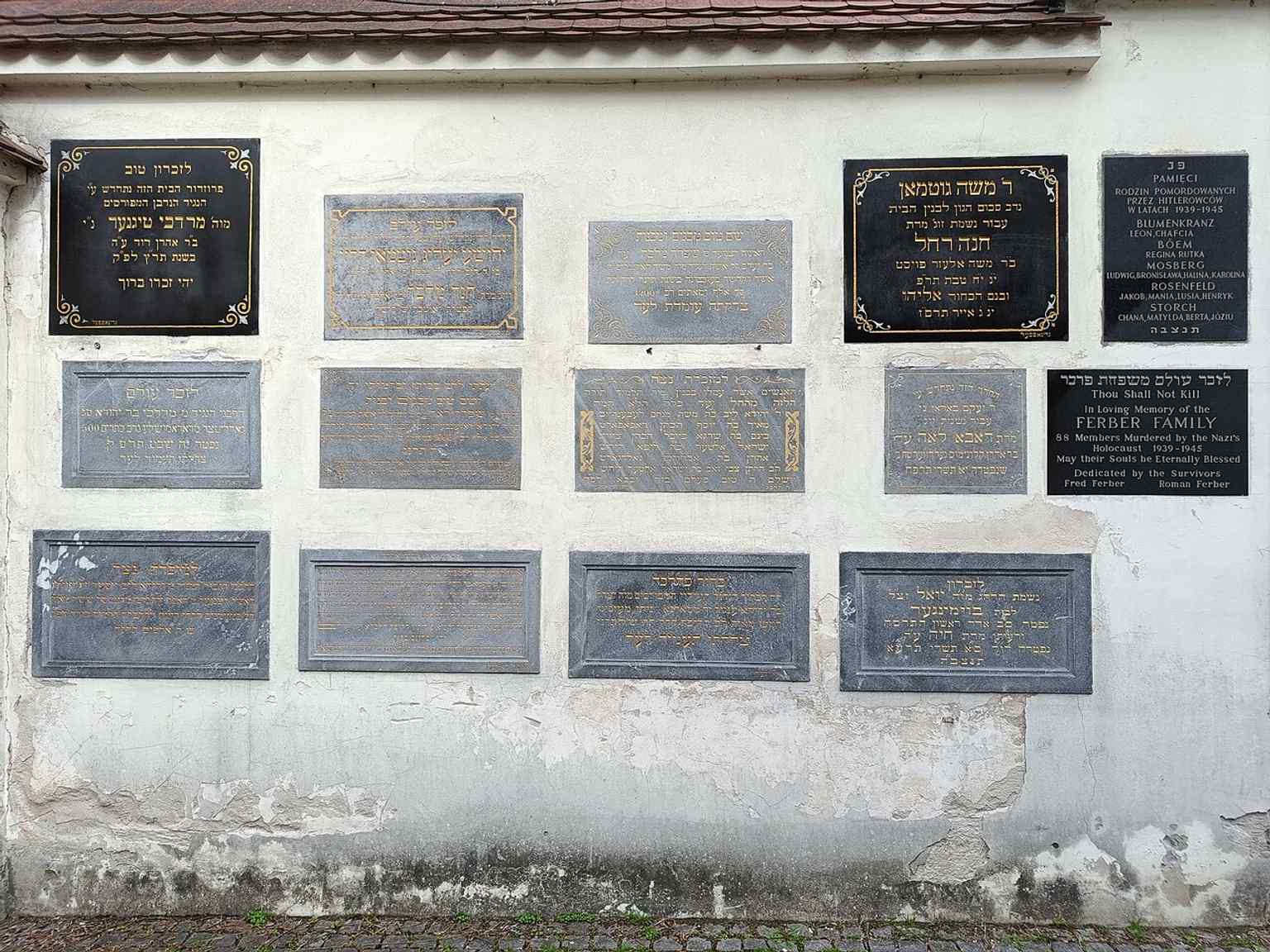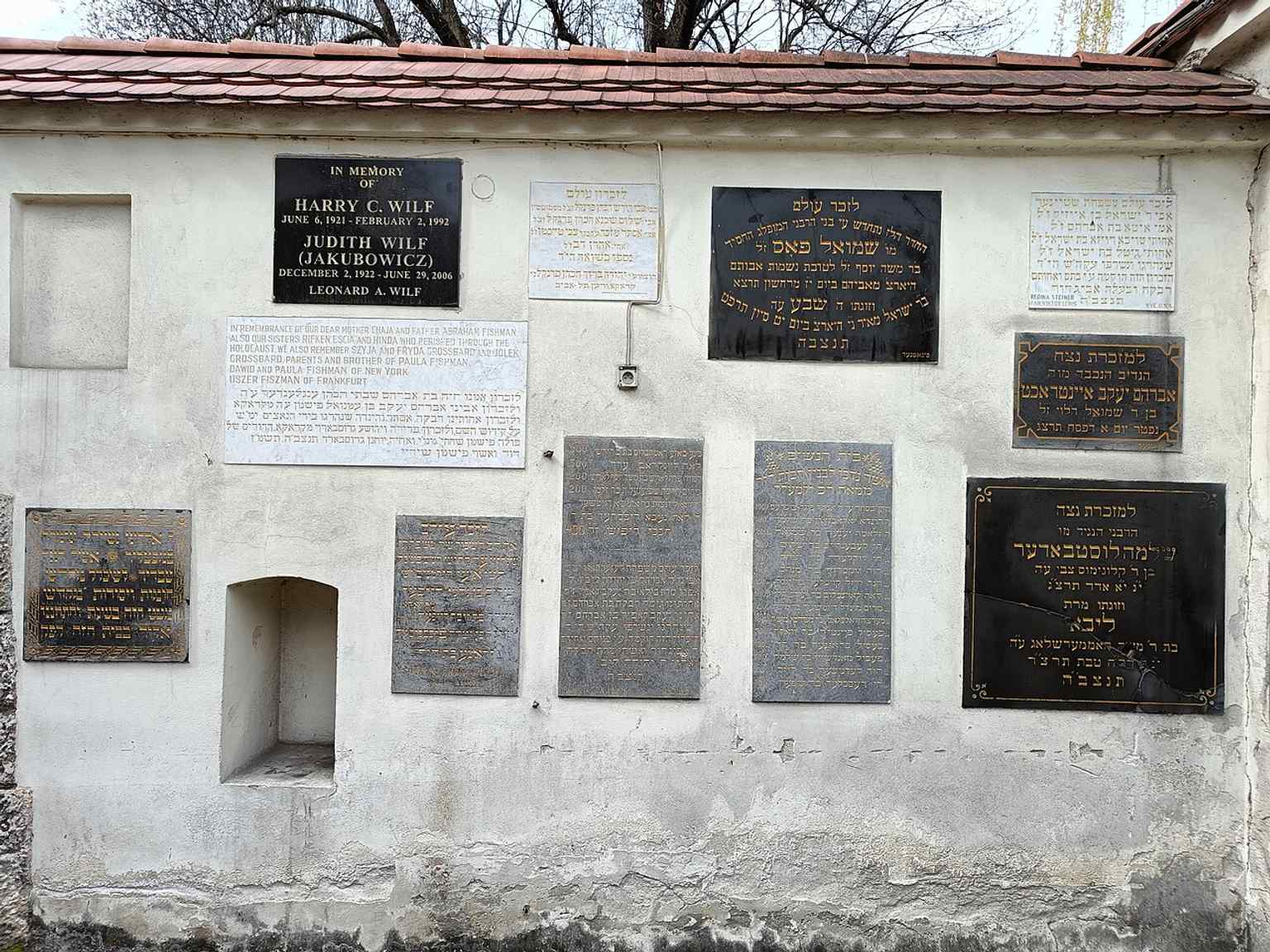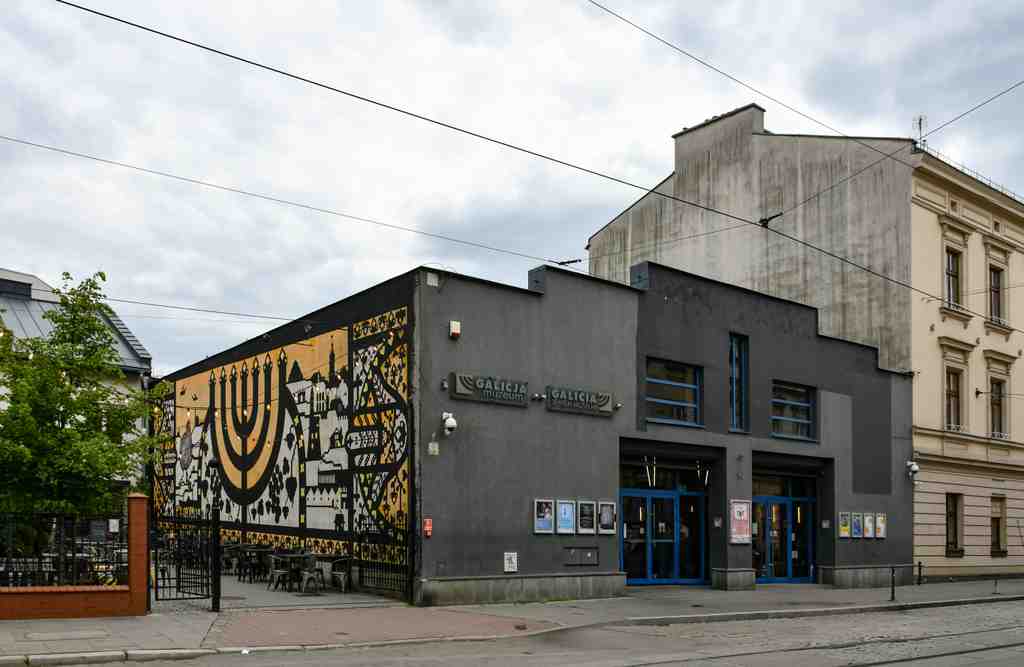
Look for a pale stone wall and dark iron gate beside a low synagogue building, with the cemetery’s compact enclosure tucked closely behind them.
Stand here for a moment, and Kazimierz begins not with a square or a market, but with a boundary: wall, gate, names, and the patient weight of stone. This is the Old Jewish Cemetery, better known as the Remah Cemetery, laid out between the fifteen thirties and fifteen fifties, one of the oldest surviving Jewish burial grounds in Poland. Places like this keep a different sort of record. Official history likes neat summaries; graves preserve human scale, one life, one family, one inscription at a time.
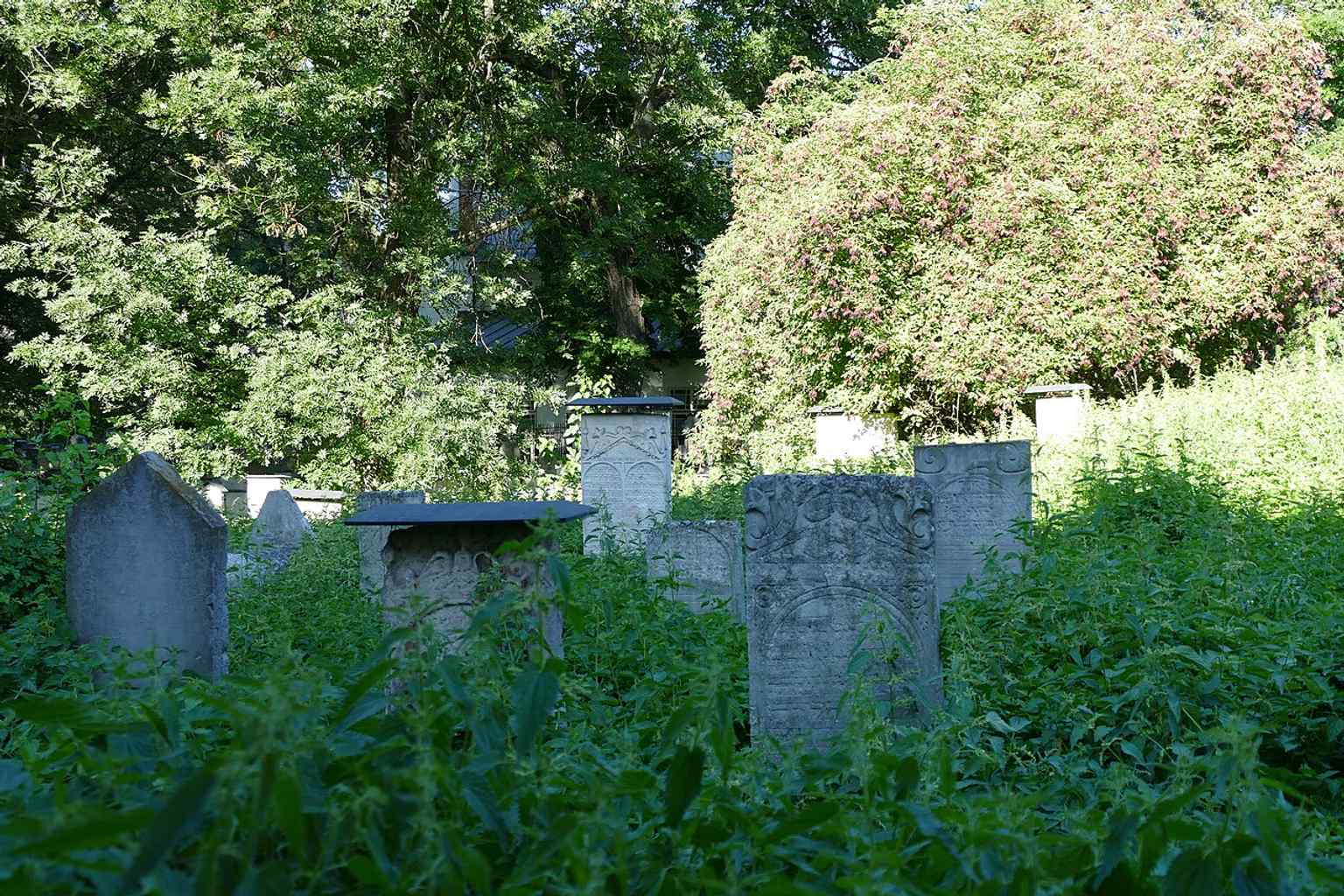
The man at the heart of this place is Rabbi Moses Isserles, known as the Remah. He was one of the great Jewish scholars of Kraków, but here he is also something more intimate: a mourner. He founded the synagogue next door in memory of his first wife, so this whole corner became not only a public religious site, but a private landscape of grief turned outward into communal memory. If you glance at the image on your screen, you can see his grave, the one that drew generations of visitors.
And visitors truly came. Before the Second World War, thousands arrived here every year, especially on Lag Ba’omer and around the anniversary of Remah’s death, turning this cemetery into a place of active devotion rather than hushed abandonment. His tombstone carried the famous line, “From Moses to Moses there was none like Moses,” placing him in the company of Maimonides and making this grave a destination for pilgrimage.
Now, let me put a question to you. Who earns remembrance most deeply: the celebrated scholar, the person misjudged in life, or the descendants who keep returning to speak a name aloud?
Locals would point you toward the back of the cemetery for the answer. Legend says Yossele the Holy Miser was buried there in disgrace because his neighbours thought him mean and cold. Only after his death did they discover that he had quietly given charity to the poor, and the rabbi added HaTzadik, meaning “the righteous one,” to his stone. Nearby lies Rabbi Yom-Tov Lipmann Heller, another learned figure whose life also carried hardship and survival after imprisonment in Vienna.
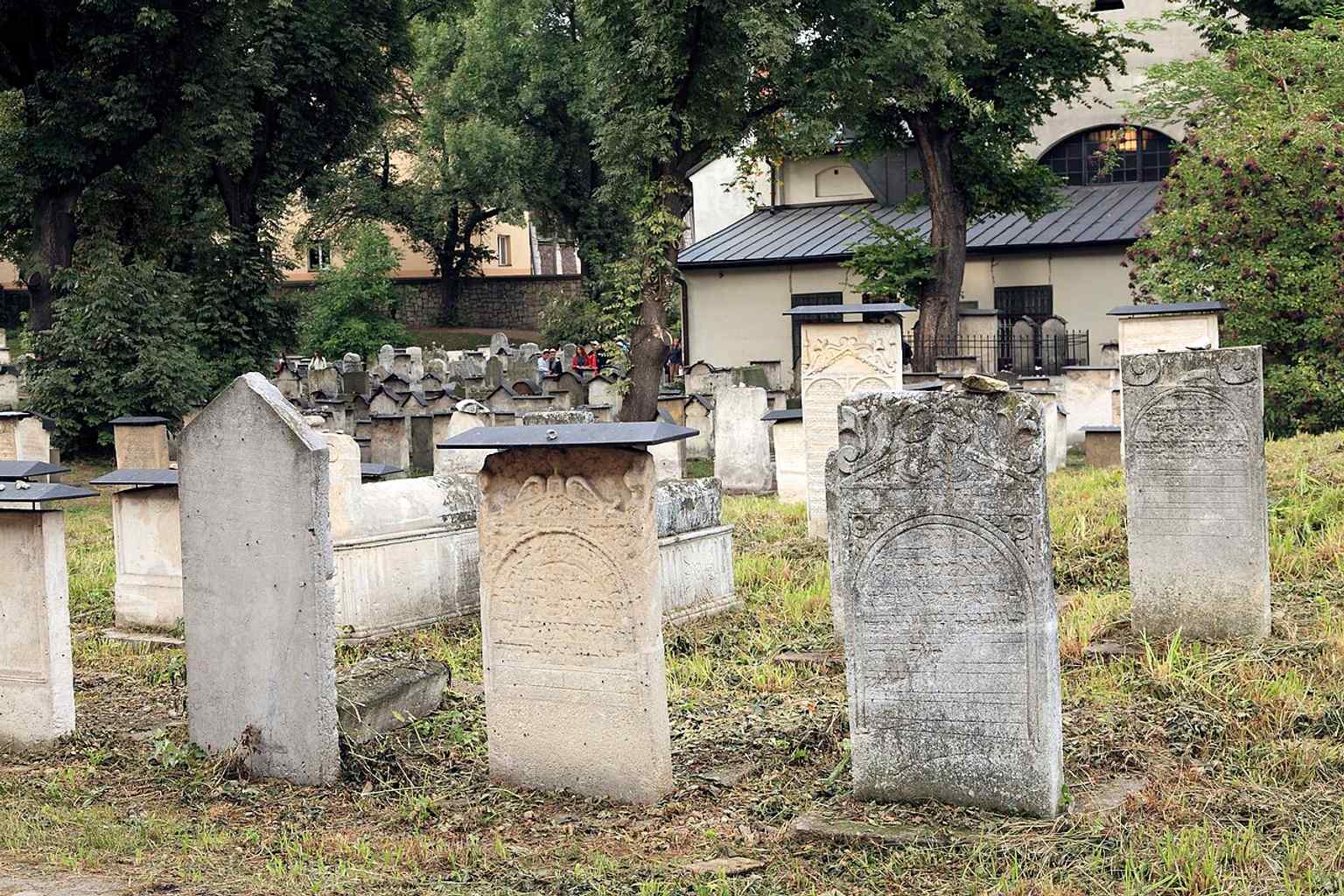
What you see today is a rescue as much as a relic. The Nazis tore down walls, ripped up tombstones, and reused many as building material elsewhere or sold them off. After the war, workers recovered fragments, and in nineteen fifty-nine a major clearing and reconstruction effort helped reassemble this ground. The dense restored stones in the cemetery images are not just old; many are survivors.
From one rabbi’s grave, an entire district begins to unfold: prayer, scholarship, legend, loss, and the stubborn habit of return. When you’re ready, continue to the Izaak Synagogue, about a two-minute walk from here. If you plan to come back, the cemetery generally opens from nine, closes on Saturdays, stays open until six from Tuesday to Thursday, and closes earlier on Monday, Friday, and Sunday.