
Al Machouar – Tour Audio Stinia: Leggende ed Eredità di Fez-Meknes
I segreti di una città risuonano più forte dove le piastrelle turchesi incontrano le ombre degli antichi cortili. Meknes è un labirinto di intrighi e grandezza, dove lo splendore nasconde scandali e ogni pietra ha assistito a una ribellione. Questo tour audio autoguidato ti invita a ripercorrere passi dimenticati dalle sale a cupola della Moschea di Lalla Aouda ai mosaici dorati della Madrasa Bou Inania e alla silenziosa tomba di Moulay Ismail. Scopri storie nascoste e momenti perduti, lontano dalle guide affollate. Quale svolta oscura al Mausoleo di Moulay Ismail scatenò un'inaspettata lotta per il potere? Chi scomparve dietro gli schermi ornati di Bou Inania senza lasciare traccia? E perché i locali sussurrano ancora della luce tremolante delle candele a Lalla Aouda dopo mezzanotte? Attraversa Meknes in un viaggio di dramma e rivelazione. Senti il battito di intrighi secolari ad ogni nuova stradina e camera echeggiante. Inizia la tua avventura dove il mistero respira sotto ogni arco.
Anteprima del tour
Informazioni su questo tour
- scheduleDurata 30–50 minsVai al tuo ritmo
- straighten5.3 km di percorso a piediSegui il percorso guidato
- location_on
- wifi_offFunziona offlineScarica una volta, usa ovunque
- all_inclusiveAccesso a vitaRiascolta quando vuoi, per sempre
- location_onParte da Moschea Lalla Aouda
Tappe di questo tour
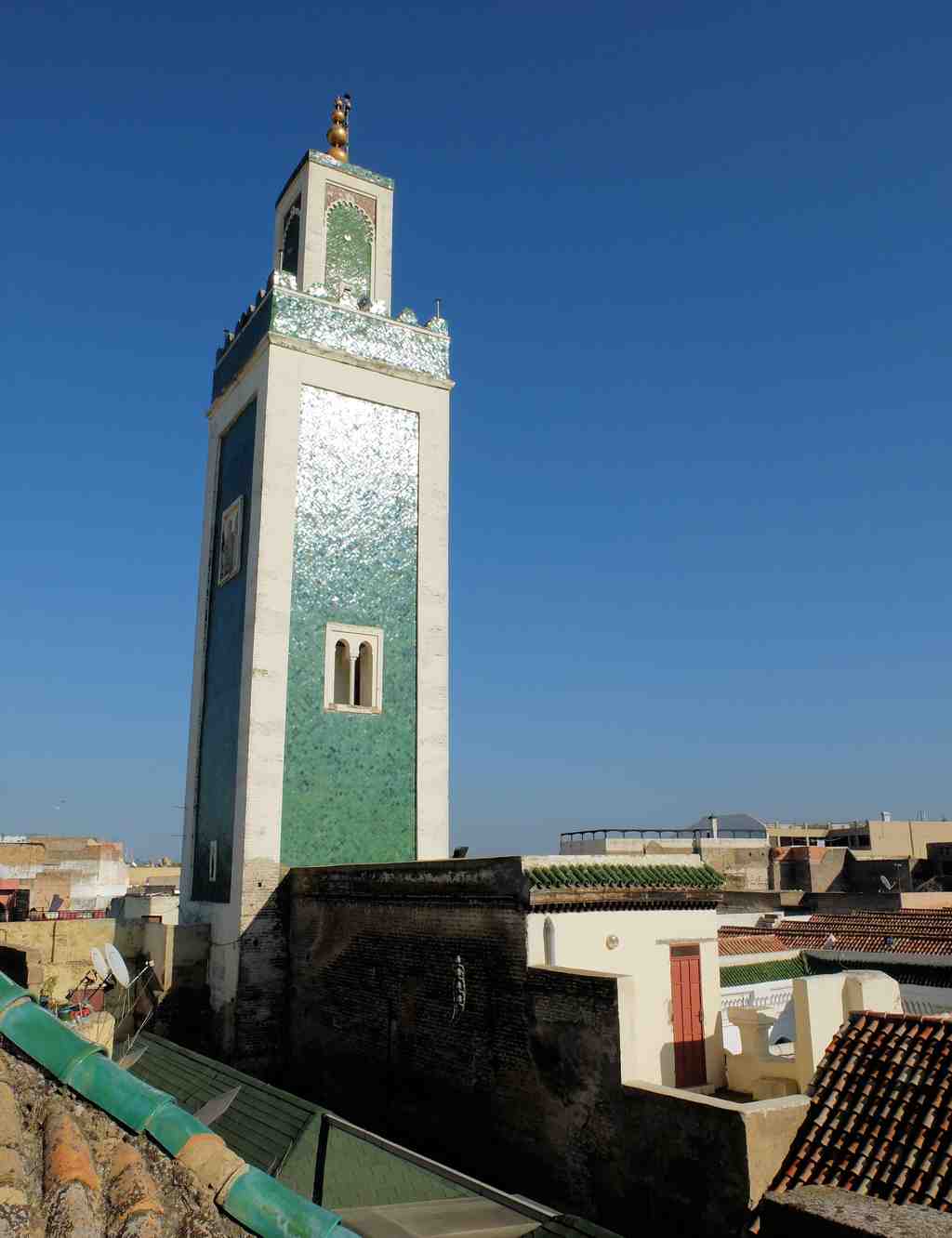
To spot the Lalla Aouda Mosque, just look for a tall, elegant minaret coated in green tiles rising above pale ramparts-you really can’t miss it standing proudly near the eastern…Leggi di piùMostra meno
To spot the Lalla Aouda Mosque, just look for a tall, elegant minaret coated in green tiles rising above pale ramparts-you really can’t miss it standing proudly near the eastern edge of Place Lalla Aouda. Now, let’s step back in time-imagine the year is 1276, and the air is thick with the scent of orange blossoms from the nearby courtyards. The Marinid sultan Abu Yusuf Ya'qub has just commanded the construction of a mighty kasbah and, at its heart, a grand mosque. It was then known simply as the Mosque of the Kasbah-nothing too fancy with names yet, just sturdy sandstone walls and the echo of prayers. But as centuries rolled by, the mosque got caught up in a whirlwind of history, intrigue, and royal ambition. Enter Moulay Isma'il, the Alaouite sultan with big dreams and a mustache even bigger, who swept into Meknes in the late seventeenth century. Determined to turn the city into his imperial capital, he expanded this mosque into a jewel of his palace, with construction hammering and chiseling day and night between 1672 and 1678. He wanted a place fit for a king-a royal mosque right next to the palace, where he could breeze in through a private passage straight from his throne to prayers. Talk about luxury real estate! And that’s when the mosque’s story gets even more interesting-it changes names and legends begin to swirl. The locals start calling it the Mosque of Lalla Aouda, after Lalla Masuda, a revered saint and mother of the mighty Saadian sultan Ahmad al-Mansur. Was she the real founder? Or is that just a tale passed down with the wind? Sometimes history leaves us with a little mystery-after all, what’s a grand old mosque without a dash of legend? As you stand before the northwest entrance, step up to the gates: one is plain, with a classic horseshoe arch, but look to the left for the fancy one, sparkling with colorful zellij tilework-if the sun is right, it’ll glint in your eyes. The inscription above tells us this gateway was finished at the hands of Moulay Isma'il himself in 1679. Step through and you’d have found yourself in a spacious courtyard-part mosque, part ceremonial square-alive with parades when sultans were in town, but forbidden to almost everyone else. Orange trees now line this courtyard, swaying gently as local children dart past and pigeons coo from the ramparts. Beyond, the mosque is a true maze of passages-one way leads to a hall for ablutions, complete with zellij paving, tiny horseshoe archways to quiet latrines, and even a chamber for the timekeeper, who had one job: making sure prayers started at just the right moment. (Imagine the stress of waking up late for that role!) Inside, the main prayer hall unfolds in grand style: broad, sturdy columns topped with marble, arches upon arches, and a T-shaped nave layout, directing everyone’s gaze toward the mihrab, beautifully carved with stucco and flanked by marble engaged columns. Here, the sultan would slip in through his private passage, right beside the imam, to join the prayers. Just hope people didn’t mistake him for a latecomer. But there’s more-once, a majestic minbar (the preacher’s pulpit) and an intricate wooden maqsura (the sultan’s private screen) graced this mosque. These are now preserved in the Dar Jamai Museum, so even though the halls are quiet, you’re surrounded by echoes of ceremony, devotion, and royal ambition. So here you stand, at the threshold of a mosque that has seen centuries of empires, saints, intrigue, and faithful devotion-a place where the stones themselves might just be tempted to whisper their secrets if you lean close enough. Fancy a listen?
Apri pagina dedicata →You’re standing right outside the Mausoleum of Moulay Isma'il, one of the most extraordinary-and, if rumor is to be believed, slightly intimidating-places in all of Meknes. Let’s…Leggi di piùMostra meno
You’re standing right outside the Mausoleum of Moulay Isma'il, one of the most extraordinary-and, if rumor is to be believed, slightly intimidating-places in all of Meknes. Let’s set the scene. Picture the late 1600s: Morocco is divided, rivals everywhere, the Ottomans knocking on the door, and European pirates up and down the coast. Who shows up to save the day and shake things up? Moulay Isma'il, the “Warrior King”-a ruler with ambition bigger than his kasbah, which, by the way, he gleefully built right here to make Meknes his capital. Moulay Isma'il wasn’t just any sultan; he ruled for an astonishing 55 years, and was as known for his iron will as his elaborate tastes. People called him fierce, sometimes ruthless, but absolutely unforgettable. His plan was to keep everyone-rivals, rebels, even foreign ambassadors-dazzled and maybe a bit nervous. He built this kasbah as a bold statement: three main palaces, lavish gardens, gigantic walls, and, the cherry on top, his own lavish resting place, which you see before you today. But Moulay Isma'il had a problem. Building something big and beautiful takes more than just royal determination; it takes materials. So he became what we might call today an “upcycler”…on a grand scale! He had expensive wood, ivory, and sparkling ceramics stripped straight from the famous 'Badi Palace' in Marrakesh-let’s just say if you ever thought about “borrowing” things from your neighbor, Moulay Isma'il took it to a whole new level. He didn’t just want his legacy here on earth. He wanted a magnificent final address, somewhere befitting his reputation. That’s this mausoleum, built in 1703 during his reign. Its location was already special, blessed by the tomb of a revered Sufi mystic, Sidi 'Abd ar-Rahman al-Majdub, whose poetry and wisdom enchanted Morocco long before the sultans. Isma'il’s original palace is almost gone now, but the mausoleum has stood strong-renovated and expanded by his descendants, and still a magnet for those in search of baraka, or spiritual blessing. Step closer to the main courtyard. Imagine the sunlight dancing across the zellij tiles, the sound of a gentle fountain at the center, and the impressive triple arches rising up on either side. At the heart of the building, behind ornate horseshoe arches, is the patio chamber-its soaring cupola ceiling lets in beautiful natural light, painting the marble columns with shifting shadows. These columns, you might notice, have carved capitals with palm and leaf motifs, all “acquired” from the Saadian palaces of Marrakesh. Some might call it recycling-others, royal looting-but the results are breathtaking. Inside the mausoleum chamber are marble tombstones, carved with intricate Arabic calligraphy and swirling designs-here rest Moulay Isma'il, his son Ahmad ad-Dhahabi, and a later sultan, Moulay Abd ar-Rahman. The room glows with the colors of stucco and zellij, and two towering grandfather clocks stand near the tomb, gifts from none other than King Louis XIV of France. They say good timekeeping was important, even in eternity! If only the clocks had alarms ring whenever someone tried to “borrow” some more palace tiles, right? Each section of this complex has a purpose-reading rooms filled with ancient books, tranquil courtyards for reflection, and passageways lined with the signatures of Moroccan-Andalusian style. The south entrance, through which you likely arrived, wasn’t the original way in; that was added in the 20th century, during the French protectorate. The old entrance came in from the north, straight from Dar al-Kebira palace, the sultan’s own grand home. Today, people come from across Morocco-some seeking blessings, some simply mesmerized by the history, some just hoping to catch a glimpse of the legendary, larger-than-life character of Moulay Isma'il. If you listen closely, you just might hear someone still whispering about the sultan who united Morocco, wowed kings, and left behind one of the most unforgettable funeral homes in the world. And remember, in Meknes, even a mausoleum knows how to put on a show!
Apri pagina dedicata →Under French rule, the palace became everything except a disco: a military hospital, a military court, and finally, in 1920, a museum for Moroccan treasures. By the way, don’t…Leggi di piùMostra meno
Under French rule, the palace became everything except a disco: a military hospital, a military court, and finally, in 1920, a museum for Moroccan treasures. By the way, don’t miss the spectacular wall fountain outside-crafted in 1913 with sparkling mosaic tiles, entertaining thirsty passersby and camels alike for over a century. Stepping into Dar Jamai, you’re greeted by the classic sights of Moroccan splendor. Imagine the sunlight dancing over colorful tiles, the air filled with orange blossom, and lavish rooms bursting with carved wood, painted ceilings, exquisite carpets, and jewelry galore-each piece, a story from the 17th to the 20th century. There’s even a lavish garden riad, a small mosque, hammam, and an upstairs salon looking fit for royalty…or a very successful Marrakech Instagrammer. So, as you gaze at all this grandeur, picture the palace’s journey: from royal family dreams, to colonial remix, to a vibrant collection of Morocco’s artistic soul. Enjoy exploring, and try not to get too jealous of those Jama’is’ taste in décor!
Apri pagina dedicata →


Mostra altre 8 tappeMostra meno tappeexpand_moreexpand_less
In front of you is a huge Moroccan gate with a horseshoe-shaped central arch, covered in colorful mosaic tile patterns and flanked by two imposing square towers; just look for the…Leggi di piùMostra meno
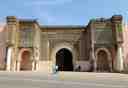
In front of you is a huge Moroccan gate with a horseshoe-shaped central arch, covered in colorful mosaic tile patterns and flanked by two imposing square towers; just look for the gleaming marble columns and intricate geometric decoration rising right from the edge of the plaza. Now, get ready for one of the grandest entrances in all of Meknes-Bab Mansur al-'Alj! Imagine you’re standing in the late 1600s in a bustling imperial city: the sun is warm on your back, the square is alive with merchants’ calls and clopping hooves, but every eye is drawn to this stunning gate. Sultan Moulay Isma’il, famous for his flair and ambition, needed a gateway that could impress even the toughest critics. He chose Mansour al-'Alj, a man with quite the backstory-a former Christian slave turned Muslim architect, whose name means “The Victorious Apostate.” Talk about a plot twist! By 1732, the sultan’s son Moulay Abdallah finished the work, but don’t think this was just an average city door. Bab Mansur was designed not to defend, but to dazzle. Those sturdy columns? They’re souvenirs from the ancient Roman city of Volubilis, not far from here-recycling at its grandest. The façade bursts with color and detail, from the signature Moroccan darj-wa-ktaf patterns to the sparkly zellij tiles and painted arabesques wrapping around the arches. If you squint, you’ll notice an Arabic inscription running along the very top, crowning the masterpiece like a royal headband. Once, just off to your right, there was a loggia added by Sultan Moulay Abd ar-Rahman-a fancy porch where generals plotted, judges judged, and the governor’s men held ceremonies that echoed through the air. But today, that meeting spot is gone, and Bab Mansur itself usually stays shut, holding its secrets close. Still, on special days, its interior opens to reveal exhibits, letting you step into history for a brief moment. Legend has it, the clever Mansour was once asked, “Could you have built it better?” He grinned and replied he’d left the finishing touch for his next masterpiece-keeps the mystery alive, doesn’t it? So as you stand here, with the past whispering through those ancient marble columns, imagine the centuries of footsteps, parades, and marveling travelers who’ve paused, just like you, to wonder at this gateway to a royal world.
Apri pagina dedicata →To spot the Grand Mosque of Meknes, look up for a tall minaret covered in gleaming green tiles rising high above the maze of rooftops, topped with golden orbs that reflect the…Leggi di piùMostra meno
To spot the Grand Mosque of Meknes, look up for a tall minaret covered in gleaming green tiles rising high above the maze of rooftops, topped with golden orbs that reflect the sunlight-a real beacon in the old city. Welcome to the heart of Meknes’ old city-the historic Grand Mosque! As you stand before its gates, picture yourself back in the 12th century, when the city’s life revolved around this ancient monument. Through the bustling souqs and winding alleys, every path seemed to lead here, the spiritual and commercial center of the medina. Imagine the quiet anticipation of Friday mornings, crowds gathering outside, vendors shouting their final offers, and the sweet scents of spices drifting through the air. The Grand Mosque anchors Meknes much like a sturdy ship anchors at a busy port. Built by the Almoravids, it was later given a royal makeover-let’s call it medieval “extreme home makeover”-by the Almohad caliph Muhammad al-Nasir. He even went so far as to reroute water from 9 kilometers away, just to quench the mosque’s thirst. Now that’s what I call commitment! Imagine the excitement when, from far in the desert, water finally splashed into the courtyard’s zellij-tiled fountain, a relief for both worshipers and parched city birds. If these thick walls could talk, they’d tell you about the dramatic days of the 14th century, when the mosque’s mighty minaret actually collapsed-yes, collapsed!-killing seven unfortunate worshipers. But don’t worry, the Marinid sultans rushed in to restore it, determined that nothing would shake Meknes’ spiritual tower ever again. Around it, madrasas popped up like mushrooms after rain, with students sitting cross-legged, scribbling notes as esteemed scholars taught lessons that echoed from the prayer hall all the way to the bustling kissaria. Step closer and peek inside, where simplicity reigns. Nine graceful rows of arches lead your eyes to a beautifully stuccoed mihrab, a carved memory from Moulay Ismail’s rule in the 17th century. He not only remodeled the mihrab, but also gifted the mosque its wooden minbar and anaza-a decorative screen that acts like a summer mihrab for open-air prayers. Even today, the courtyard sparkles with zellij tiles, shaded arches, and that central fountain, tempting you to dip your hand in cool water on a hot Moroccan afternoon. And of course, soaring above everything, you’ll notice the green-tiled minaret-an unmistakable Meknes signature. Built in the 18th century by Moulay Mohammed ben Abdallah, it’s four-sided, bold, and crowned with golden copper balls that practically wink in the sunlight. Tucked near its base is the timekeeper’s little chamber, where for centuries, someone listened intently for the moment to announce prayers. As you stand here, you’re connected to nearly 900 years of history. Every gate, fountain, and arch is a page from a living storybook, and today, you’re right in the middle of it. Just watch out for falling minarets-after all, this mosque has seen its share of drama!
Apri pagina dedicata →To spot the Bou Inania Madrasa, look for a building with a grand wooden doorway decorated with copper fittings and, once inside, a mesmerizing courtyard with geometric…Leggi di piùMostra meno
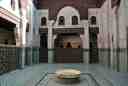
To spot the Bou Inania Madrasa, look for a building with a grand wooden doorway decorated with copper fittings and, once inside, a mesmerizing courtyard with geometric green-and-white tilework, carved stucco arches, and elegant wooden screens. Welcome to the Bou Inania Madrasa! Take a deep breath and imagine the year is 1335. The streets of Meknes are humming with the soft echo of sandals on stones, and young scholars, eager to learn, step through these beautifully crafted wooden doors. Now, it’s easy to think this place got its name from the famous sultan Abu Inan Faris, but plot twist-it was his dad, Abu al-Hasan, who built it first! Evidence is literally written on the walls inside, in case you don’t believe me. Abu Inan probably did a little glow-up renovation later on, so history gave him the naming rights, which just goes to show rebranding isn’t just a modern thing. You’d never guess it, but Bou Inania wasn’t called that at first. Back in its earliest days, people simply called it the “New Madrasa”-which probably made things confusing whenever they built another new one. It’s one of several historic madrasas that helped turn this area, not far from the Grand Mosque, into the scholarly heart of Meknes. Imagine dozens of students, hailing from all over, living upstairs or in the little ground-floor rooms, trying to remember if they were on page 22 or still stuck at basic grammar. Some were lucky enough to grab a room with a window into this glorious courtyard, where a marble water fountain sits in the middle, splashing gently like a mini oasis. The whole place was as lively as a beehive: lessons echoing under the arches, the scent of old wood and incense, feet pattering toward the nearby ablutions house with its 22 little changing rooms, and gossip about which student had the best lunch. At the southeastern end, you’d find the prayer hall, entered through an arch so ornate it looks like sugar icing, with a mihrab shimmering in the sunlight and carved stucco so detailed it could make you dizzy. And here’s a fun bit: historians say the Bou Inania Madrasa marked a moment of change in Moroccan architecture-bridging styles from Abu al-Hasan’s other madrasas to those of his ambitious son, Abu Inan. So yes, this place is a living, breathing landmark of both rivalry and beauty. If you listen closely, you might just hear the murmurs of centuries of students-and, if you’re lucky, catch a cool breeze weaving through the magnificent mashrabiya screens.
Apri pagina dedicata →To spot the Bab Berdieyinne Mosque, look for the tall, square minaret rising above the tiled rooftops, with its pale sandy walls patterned by rows of simple arched designs and…Leggi di piùMostra meno
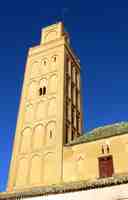
To spot the Bab Berdieyinne Mosque, look for the tall, square minaret rising above the tiled rooftops, with its pale sandy walls patterned by rows of simple arched designs and topped by a delicate metal finial. Now, as you’re standing here beneath the blue Moroccan sky, let’s tumble into the story of the Bab Berdieyinne Mosque-a true heavyweight in Meknes’ skyline, with its lofty minaret watching over the winding lanes since 1709. But here’s the twist: this beauty owes its existence, in part, to Khnata bent Bakkar, Morocco’s first female minister. Imagine the awe in the medina as word spread that a woman of vision and power was behind this new house of worship. Back then, under Sultan Moulay Isma'il-who seemed to build more than he slept-Meknes was transforming into an imperial dream, and the Bab Berdieyinne Mosque arose from layers of rammed earth, close to the packsaddles market at the Bab al-Bard’iyin city gate. Feel the sunlight against your face, and picture the mosque’s earliest days-workers with dust on their brows, Berber chief 'Ali ibn Yashu al-Yazghi overseeing- walls ascending as prayers drift through the air. Its minaret, simple at first glance but tallest in the city, soon became a guiding landmark, each facade wearing a matching jacket of arched frames, brick upon brick. Time swept on, and like an ambitious old uncle, every new sultan wanted to leave his mark-Moulay Muhammad ibn Abdallah polished it up in the 18th century, and decades later, the French Protectorate dusted off the old stones once again. But let’s fast forward to a stormy day in February 2010. After days of pounding rain, the minaret-lovely but weary from centuries of storms-couldn’t hold out. Just as hundreds gathered for Friday prayers, as the imam prepared to speak, disaster struck. The tall tower collapsed, filling the narrow lanes with dust and heartbreak. Families ran, and rescuers clawed through the rubble with their bare hands. For a city used to dealing with rains and aging bricks, the fall of a minaret was something else; this tragedy claimed 41 lives and injured many more, making it the worst collapse of its kind in Morocco. The king himself ordered a minaret reborn-precisely as it had been, a tribute to both memory and hope. Experts began inspecting old mosques around the country, making sure history wouldn’t tumble again unannounced. As you stand in front of this restored minaret, think of all it’s witnessed: from markets of saddle-makers outside its walls, to women breaking barriers, to neighbors who came together at a time of loss. Whether you believe in destiny, or simply good builders, the Bab Berdieyinne Mosque stands as a testament to second chances and stubborn beauty-weathered but never quite defeated.
Apri pagina dedicata →To spot the Cheikh Al Kamel Mausoleum, look for a striking white building with vivid green-tiled pyramidal roofs and a tall, square minaret jutting into the sky right in front of…Leggi di piùMostra meno
To spot the Cheikh Al Kamel Mausoleum, look for a striking white building with vivid green-tiled pyramidal roofs and a tall, square minaret jutting into the sky right in front of you. Now, let’s take you on a wild ride through history without leaving your feet! This landmark isn’t just a building; it’s a swirl of stories, mystery, music, and more than a pinch of drama. This is the final resting place of Mohammed al-Hadi ben Issa, also known as Shaykh al-Kamil, a legendary Sufi mystic who shook up spiritual life in the 16th century. Long after he passed, the area was rebuilt in 1776 by Sultan Mohammed Ben Abdallah-clearly not one to settle for a simple headstone. The mausoleum isn’t just a tomb; it’s a whole complex, with a zawiya for followers to gather, a mosque for prayer, and an ever-watchful minaret added a bit later for good measure. You might expect a quiet, pensive atmosphere, but this site is famous for its intense celebrations! Every year at Mawlid-the Prophet Muhammad’s birthday-the place erupts in a festival like no other, powered by the wild melodies of flutes, trumpets, drums, and chanting, as locals lose themselves in deep, spiritual meditation. Got a sweet tooth? Tradition says you can’t leave Mawlid without sticky dates as a snack. But the real curveball here is the Issawi order’s infamous moussem: a religious festival packed with music, joy, and, believe it or not, some eyebrow-raising rituals-think rolling on the ground and the not-for-the-squeamish animal sacrifices. Over the years, the mausoleum gained a spicy reputation, attracting groups who claimed to descend from another local saint and partook in practices that ignited controversy and government crackdowns. With all its layers, this is where Meknes displays both its most joyful melodies and its most puzzling secrets-proof that history, like a good party, can be unpredictable and unforgettable!
Apri pagina dedicata →Right in front of you stands a grand, sandy-colored city gate with towering square towers, scalloped crenellations on top, and intricate geometric green and blue tilework…Leggi di piùMostra meno
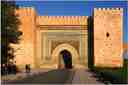
Right in front of you stands a grand, sandy-colored city gate with towering square towers, scalloped crenellations on top, and intricate geometric green and blue tilework surrounding a majestic horseshoe arch - just follow the road to its large, shadowy entrance. Now, let’s unravel the story of Bab el-Khemis, also known as the “Thursday Gate”-though don’t feel bad if you’re here on a Tuesday. Built way back in 1686 during the reign of Sultan Moulay Ismail, this impressive gate was like the VIP entrance to the Jewish quarter, known as the Mellah, and also acted as the western doorway to a part of the city called the Garden of Amber. Imagine the lively crowds once streaming through for the Thursday souk, people haggling over goods, soldiers from the Oudaya’s army brushing shoulders with court officials, the air practically buzzing with anticipation. An inscription on the gate actually immortalizes its age, so you’re looking at poetry and dated history all wrapped in one ornate frame. But not all stories have a happy twist-years later, after a less-than-warm welcome home from a lost battle, Moulay Abdallah, the sultan’s son, was so miffed by the local jokes that he ordered much of the Mellah to be destroyed. The architecture’s beauty matches Bab el-Bardayin’s, so if you get déjà vu, that’s no coincidence! So next time someone makes a bad pun, just be glad you don’t have the power to demolish half a neighborhood.
Apri pagina dedicata →Directly in front of you, you’ll spot the Rabbi Meir Toledano Synagogue by its subtle, sun-washed cream walls, a black arched gate, and a riot of palms reaching skywards from just…Leggi di piùMostra meno
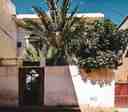
Directly in front of you, you’ll spot the Rabbi Meir Toledano Synagogue by its subtle, sun-washed cream walls, a black arched gate, and a riot of palms reaching skywards from just inside the garden. Now imagine this spot nearly 800 years ago, when it all began as the Mahrit Synagogue. Back then, the medina was humming with merchants, and prayers floated through the hot, dusty air-until, one terrible day in 1630, an earthquake shattered not only the building but spirits, too. Fast forward to 1646: the Toledano family, recently arrived from Toledo, Spain, strode into Meknes full of hope and set about raising the walls once more, planting both roots and palm trees. But there’s a twist worthy of a history buff-this synagogue owes its current name to Rabbi Meir Toledano, a man of wisdom, grit, and just a sprinkle of fame. In 1803, he edited and published his stepfather’s Torah writings under the title Melekhet ha-Kodesh, earning his place in history-and in synagogue names. So as you stand here with the buzz of the medina in your ears, remember: you’re looking at a survivor, a patchwork of centuries, families, and stories-where even the trees seem to whisper a tale or two.
Apri pagina dedicata →That big, sandy-colored fortress right in front of you, with its thick square walls and tall battlements lined with arches, is Borj Belkari-just look for the heavy straight edges…Leggi di piùMostra meno
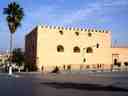
That big, sandy-colored fortress right in front of you, with its thick square walls and tall battlements lined with arches, is Borj Belkari-just look for the heavy straight edges and small windows staring out over the street like watchful eyes. Welcome to Borj Belkari! Imagine standing here in the 17th century, the sound of horses’ hooves echoing off these mighty walls as Sultan Moulay Ismail’s guards kept a sharp lookout for any trouble. This bastion wasn’t just for show-it protected the kasbah like a crocodile guards its dinner. But here’s a twist: behind those fortress walls, you’re about to find not cannons, but clay! Since 2003, Borj Belkari has become a home for Morocco’s ancient pottery, with a museum that takes you on a dusty, delightful journey from the rough hands of prehistoric potters to the skilled artisans of today. Start at the right of the entrance-you’ll see shards and treasures discovered by archaeologists, then walk through rooms filled with green-glazed pots and mysterious ancient shapes. You’ll end up in a workshop so real you may expect clay on your fingers! These pieces have traveled from all across Morocco: Zerhoun, Oued Laou, Ouazzane, and more-each telling the tale of a people who shaped their world from earth and fire. Who knew such a tough old tower could hold so much creative spirit inside?
Apri pagina dedicata →
Domande frequenti
Come inizio il tour?
Dopo l'acquisto, scarica l'app AudaTours e inserisci il tuo codice di riscatto. Il tour sarà pronto per partire immediatamente – tocca play e segui il percorso guidato dal GPS.
Ho bisogno di internet durante il tour?
No! Scarica il tour prima di iniziare e goditelo completamente offline. Solo la funzione chat richiede internet. Ti consigliamo di scaricare tramite WiFi per risparmiare dati mobili.
È un tour guidato di gruppo?
No – è un tour audio autoguidato. Esplori in autonomia al tuo ritmo, con la narrazione audio riprodotta dal tuo telefono. Nessuna guida, nessun gruppo, nessun orario.
Quanto dura il tour?
La maggior parte dei tour richiede 60–90 minuti, ma sei tu a controllare il ritmo. Metti in pausa, salta le tappe o fai pause quando vuoi.
E se non riesco a finire il tour oggi?
Nessun problema! I tour hanno accesso a vita. Metti in pausa e riprendi quando vuoi – domani, la prossima settimana o il prossimo anno. I tuoi progressi vengono salvati.
Quali lingue sono disponibili?
Tutti i tour sono disponibili in oltre 50 lingue. Seleziona la lingua preferita quando riscatti il codice. Nota: la lingua non può essere cambiata dopo la generazione del tour.
Dove accedo al tour dopo l'acquisto?
Scarica l'app gratuita AudaTours dall'App Store o Google Play. Inserisci il codice di riscatto (inviato via email) e il tour apparirà nella tua libreria, pronto per essere scaricato e avviato.
Se il tour non ti piace, ti rimborseremo l'acquisto. Contattaci a [email protected]
Pagamento sicuro con 


