AudaTours logoAudaTours

Tour Audio di Sligo: Echi d'Arte, Fede e Guarigione

Audioguida8 tappe

Venti tempestosi dell'Atlantico un tempo nascondevano ribelli, artisti e fuorilegge proprio qui, nelle tortuose strade di Sligo. Dietro ogni facciata tranquilla si cela un segreto in attesa di essere svelato. Questo tour audio autoguidato svela strati che la maggior parte dei visitatori non nota, guidandoti attraverso il cuore pulsante della città, dal polso creativo di The Model ai fragorosi applausi di The Showgrounds e alle solenni ombre della Cattedrale di San Giovanni Battista. Chi incise messaggi proibiti nella pietra della cattedrale per una sfida di mezzanotte? Quale scandalo scoppiò sul campo da calcio dividendo una città per decenni? E il cui ritratto inquietante aleggia ancora all'interno di The Model, con una storia che nessuno osa ripetere? Addentrati più a fondo nel passato intricato di Sligo e senti le sue storie viventi vorticare intorno a te ad ogni passo. Questa non è una passeggiata ordinaria, ma un viaggio di dramma, intrigo e scoperta. Sblocca l'anima nascosta di Sligo—che la vera avventura abbia inizio.

Anteprima del tour

map

Informazioni su questo tour

  • schedule
    Durata 30–50 minsVai al tuo ritmo
  • straighten
    3.9 km di percorso a piediSegui il percorso guidato
  • location_on
    PosizioneSligo, Irlanda
  • wifi_off
    Funziona offlineScarica una volta, usa ovunque
  • all_inclusive
    Accesso a vitaRiascolta quando vuoi, per sempre
  • location_on
    Parte da Ospedale Privato Kingsbridge, Sligo

Tappe di questo tour

  1. Then, in 1972, a brand-new building sprang up-like giving the hospital a fresh haircut and a shiny set of teeth. Fast-forward to 2001, and the keys changed hands to Jerry Conlan…Leggi di piùMostra meno

    Then, in 1972, a brand-new building sprang up-like giving the hospital a fresh haircut and a shiny set of teeth. Fast-forward to 2001, and the keys changed hands to Jerry Conlan of Harlequin Healthcare. The place became part of a healthcare rollercoaster, joined by the glitzy Mount Carmel Hospital in Dublin, but soon the ride got a bit bumpy-Conlan’s group hit money troubles. But as all good stories love a twist, in swooped Kingsbridge Healthcare Group from Belfast in 2015, rescuing this hospital and bringing it into a modern era. Now, behind these walls, a dedicated team treats everything from sore throats to tricky hearts. With just 19 beds and about 60 staff, it’s proof that in Sligo, even small hospitals can make a mighty difference.

    Apri pagina dedicata →
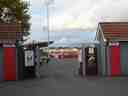
  2. To spot The Showgrounds, look straight ahead for the wide open gates with red wooden doors on both sides, and you'll see the red and white seating of the stadium right behind them…Leggi di piùMostra meno

    To spot The Showgrounds, look straight ahead for the wide open gates with red wooden doors on both sides, and you'll see the red and white seating of the stadium right behind them with light towers reaching into the sky. Welcome, sports fan, to The Showgrounds-the beating heart of Sligo football and the home turf of Sligo Rovers since 1928! Imagine the stadium on a drizzly Irish evening, floodlights clicking on with a buzz, the crowd in high spirits, scarves waving, and the smell of fresh-cut grass floating in the air. This ground was originally just a leased patch of land, but the people of Sligo loved their club so much that in 1968, a trust bought it for the community-on the strict promise it could only ever be used for sports and fun, never sold or turned into something dull like, say, a supermarket. The place you see now covers 12 acres, and once packed in 13,908 fans for a nail-biting 1983 cup semi-final. That’s nearly the population of a small town squeezed in, singing and shouting! Picture 1978, the rain drumming on a brand new covered stand as Sligo Rovers face Shamrock Rovers in a League Cup semi-tension thick, boots pounding. Fast-forward to 2001 and the main stand opens in cantilever style-no more peering around pillars! Over the years, the grounds continued to evolve: in 2006, the old, much-loved “Shed” was torn down, replaced by slick new turnstiles and fresh offices. And let’s not forget the club shop, where you can snag a scarf to shout even louder on match day. Not just for football, these grounds once echoed with the yips and howls of greyhound races from the 1930s to the 40s-a place for all sorts of racing hearts. Most recently, in 2023, it hosted the FAI Intermediate Cup Final. Big dreams are always on the horizon here: a €17 million redevelopment plan aims to transform The Showgrounds into an ultra-modern, 6,000-seat arena, upgraded for UEFA matches, with a dash of rugby too. In 2024, the Irish government even pitched in more than €16 million to help make that dream real. If you close your eyes, you can almost hear the roar of the crowd, the laughter, and maybe-just maybe-the distant yowl of a racing hound from a time long past. This is more than a stadium; it’s a patchwork of memories, passion, and a community that refuses to sit still.

    Apri pagina dedicata →
  3. You can spot the Roman Catholic Diocese of Elphin right in front of you-a grand, grey stone cathedral with a tall clocktower, lined with arched windows and tucked partly behind…Leggi di piùMostra meno

    You can spot the Roman Catholic Diocese of Elphin right in front of you-a grand, grey stone cathedral with a tall clocktower, lined with arched windows and tucked partly behind leafy trees. Alright, fellow explorer, take a good look at this cathedral because you’re about to uncover centuries of triumph, mystery, and even a bit of crafty silversmithing! Our story begins way back-almost 1,600 years ago-when Ireland wasn’t filled with stone cathedrals but with thick forests and small monastic settlements. In the early days of Christianity’s arrival, Saint Patrick himself came marching through the area, planting the seeds of faith right here in Elphin, which at the time was called Corcoghlan. Imagine the sound of footsteps crunching through the undergrowth as Patrick and his followers searched for the perfect spot. Now, Saint Patrick didn’t just bring his famous shamrock; he also brought his own skilled silversmith, Saint Assicus-a bit of a “metal head,” if you ask me! Assicus became the first bishop and is still the patron saint of this diocese. The settlement thrived and gained formal recognition as a diocese in 1111. The first cathedral was dedicated to the Blessed Virgin Mary, and for centuries, it stood watch over the community. Then, things got dramatic. The English Reformation swept through Ireland in the 16th century, tearing down cathedrals and scattering religious houses. The original Elphin church was destroyed-gone, except for memories and a sense of loss that haunted the region. For hundreds of years, the diocese lacked a true cathedral, but the people’s will never faded, and in 1874, with a thundering clamor of hammers on stone, Bishop Laurence Gillooly led the rebuilding effort, this time in Sligo town. The new structure was dedicated to the Immaculate Conception and soon after, a college for boys training for the priesthood-Summerhill College-rose nearby. The diocese now covers parts of Roscommon, Sligo, Galway, and Westmeath, supporting about 70,000 souls across thirty-seven parishes. Today, under Bishop Kevin Doran, the diocese not only preserves its deep traditions, but encourages fresh faith with programs and even modern catechism courses. So as you stand here, let your mind wander-from the first sparks of Christianity, through fire and rebuilding, to the present day-where stories old and new ring out from these very stones. Interested in a deeper dive into the diocesesan governance, parishes or the ordinaries? Join me in the chat section for an insightful conversation.

    Apri pagina dedicata →
Mostra altre 5 tappeMostra meno tappeexpand_moreexpand_less
  1. It’s been called a bridge in the community, connecting people and inspiring the next generation. Speaking of inspiration, this theatre helped launch some of Ireland’s brightest…Leggi di piùMostra meno

    It’s been called a bridge in the community, connecting people and inspiring the next generation. Speaking of inspiration, this theatre helped launch some of Ireland’s brightest stars. You see, Westlife’s Shane Filan, Kian Egan, and Mark Feehily all took their first steps to stardom right here, belting out numbers in “Grease” before forming a boyband that set hearts racing far beyond Sligo. And there’s more than just music and drama-the Yeats Summer School brings poetry-lovers from all over, while the Sligo Fun Company fills the building with young voices and laughter. The seats, by the way, were due for a fresh upgrade as the theatre approached its fortieth birthday. So, find your imaginary seat, and let the stories of Sligo take center stage!

    Apri pagina dedicata →
  2. To spot St John the Baptist Cathedral, look up ahead for a grey stone building with castle-like battlements and a square tower rising above pointed arched windows. Standing right…Leggi di piùMostra meno

    To spot St John the Baptist Cathedral, look up ahead for a grey stone building with castle-like battlements and a square tower rising above pointed arched windows. Standing right here, you’re in front of a building that has outlasted storms, renovations, and even a name or two-officially it’s the Cathedral of St Mary the Virgin and St John the Baptist, but most folks just call it Sligo Cathedral. Now, picture this place not in stone and glass but as a medieval hospital in the 1200s, where monks hurried through shadowy corridors-some of these original stones are still hidden in the west tower! Jump to 1730, when a German architect named Richard Cassels, probably wishing he’d packed a raincoat, rolled into Sligo to design both this church and the nearby grand home, Hazelwood House. Sir Roger Jones, no handyman but a determined builder, brought Cassels’ vision to life, giving us this basilica-inspired shape, echoing Roman patterns. Over the years, the church’s towers grew taller, its windows bigger, and the battlements more dramatic-imagine a stone fortress ready to keep out armies or at least curious cows. In 1961, after a fierce storm nearly blew the previous cathedral’s roof off, St John’s suddenly found itself promoted, becoming the official Cathedral for the dioceses of Elphin and Ardagh. Among the modern signs and traffic, you’re standing at the oldest continually used building in town-a place where every stone seems to sigh with stories and secrets.

    Apri pagina dedicata →
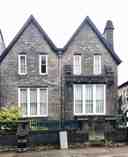
  3. Look ahead for a distinctive grey stone building with two steep, pointed rooftops-it’s the one right in front with large white-framed windows and a small black gate behind a low…Leggi di piùMostra meno

    Look ahead for a distinctive grey stone building with two steep, pointed rooftops-it’s the one right in front with large white-framed windows and a small black gate behind a low stone wall. Welcome to Sligo County Museum, where the walls have seen so much history, they probably know more than your average local pub storyteller. Imagine yourself in 1867-the building you’re standing before was just completed, not as a museum, but as a cosy manse for a clergyman tied to the Congregational church. Picture horse-drawn carts rattling along Stephen Street while sermons drift through the lane, and just next door, that gothic church became the Sligo Library in 1954. But in 1955, things really got exciting-this house turned into a museum, and it’s been the guardian of Sligo’s secrets ever since. Step into its story: inside, you’ll find everything from Stone Age relics to the 21st century. One exhibit that tends to steal the show (and possibly your appetite) is a 100-year-old firkin of bog butter-imagine stumbling on a forgotten tub of butter in a bog, unearthing it generations later, and thinking, “Now that’s a spread with character!” But beyond quirky treasures, Sligo’s connection to W. B. Yeats shines brightest here. You can almost feel the poet’s spirit as you gaze at a replica of his Nobel Prize or artwork from his brother, Jack Butler Yeats. There are even belongings from the revolutionary Countess Markievicz and her sister, Eva Gore-Booth, offering a glimpse into Ireland’s fight for independence. As you wander, don’t miss the tales of World War I-rescued photographs share haunting stories of Sligo’s sons and daughters who braved the front lines. And here’s a twist: in the early 2000s, a new museum was planned-money raised, ground broken, but just as dreams grew big, construction stopped. The original manse, with all its quirks and scars, still stands watch over Sligo’s story-a reminder that history is as much about what could have been as what was. So take a deep breath, listen to the old stones, and imagine the layers of life lived within these walls.

    Apri pagina dedicata →
  4. To spot The Model, Sligo, just look slightly up the hill across the street and you’ll see a grand, two-story stone building with pale yellow arches and tall chimneys, styled like…Leggi di piùMostra meno

    To spot The Model, Sligo, just look slightly up the hill across the street and you’ll see a grand, two-story stone building with pale yellow arches and tall chimneys, styled like an Italian palazzo-trust me, it stands out among its neighbors! Now, as you’re standing here, listen closely-you might just hear echoes of children playing from long ago, bouncing off those sturdy stone walls. Back in 1862, this place opened not as an art gallery, but as a “model school”-no, not for catwalks, but to set the gold standard for all primary schools in Ireland. Designed by James Owen and built by local hands for £8,000 (not bad for a building that’s lasted over 150 years), it welcomed kids for lessons until the early 1970s. The original plan was that all faiths could study here, but over time, it mostly became a Protestant school-so Sligo’s future dreamers got their ABCs and algebra lessons under some serious stained-glass glare! When a new school opened across the street and laughter faded, this old building felt a bit lonely. Weeds curled through the old railing, floors creaked with memories, and for years it sat silent-until Sligo County Council spotted its potential in the 1990s. Imagine city officials peeking inside, dust motes swirling in the sunlight, and thinking, “Museum? Arts centre? Let’s bring this place back to life!” So, the Model was reborn for the arts-a touch dramatic, but fitting for what came next. With the help of sharp-eyed architects and a few million euros (thanks, Arts Council!), the place got a striking new extension twice-filling the halls with sleek galleries, busy artist studios, and a cinema where popcorn is always in style. Sligo’s Cultural Quarter was now a reality, and The Model quickly became the town’s cultural heartbeat. But the real treasure here is the Niland Collection. It’s named after Nora Niland, Sligo’s super-librarian, who started collecting remarkable Irish art back in the 1950s. She kicked things off by borrowing five masterpieces from Jack Butler Yeats-you might say she was the first to “Yeats” the system! Today, the collection holds over 300 works, including stunning paintings by Paul Henry, Estella Solomons, and George Russell. There’s so much Yeats here that even the ghost of W.B. Yeats might pop in to admire his brother’s brushwork. Artists from around the globe have found inspiration in these halls, with exhibitions sporting names like Andy Warhol and Patti Smith. The Model isn’t just about quiet admiration of art, though. It’s hosted concerts, movie nights, wild creative workshops, and-believe it or not-even a visit and speech by Prince Charles himself, who surely felt the weight of history (and maybe a little stage fright). Of course, no great centre is without a bit of drama. There was a naming spat in 2009 that led to passionate letters and the odd grumble-including one former president of the Yeats Summer School who called the change a “public disgrace.” And in classic Sligo style, there was even a celebrity chef’s restaurant here for a hot second-before the oven mitts packed up and left for town. So take a good look at those arches and stone-every block and bay window whispers a tale: from children’s lessons to bold modern art, from dusty abandonment to a treasure trove of creative energy. The Model, Sligo isn’t just a building; it’s a shapeshifter for the ages, always ready for the next act. Intrigued by the building, niland collection or the operation and programmes? Explore further by joining me in the chat section below.

    Apri pagina dedicata →
  5. Right in front of you, you’ll see a bold sign with “Sligo University Hospital” in both Irish and English, and a tall, well-lit building rising behind it-just follow the glow of…Leggi di piùMostra meno

    Right in front of you, you’ll see a bold sign with “Sligo University Hospital” in both Irish and English, and a tall, well-lit building rising behind it-just follow the glow of the windows! Standing here, you’re not just at any hospital; you’re at a place with quite a tale to tell, starting all the way back in 1940 when it opened its doors as Sligo County Hospital. Imagine the world at that time-people bustling in the Mall, nurses in crisp uniforms, the smell of fresh paint and hope filling the air. Fast forward a few decades to 1971, and they added a massive new wing with a proper celebration-so grand, even the Tánaiste, Erskine Childers, showed up to cut the ribbon! For years, this place was called Sligo General Hospital; patients came here for everything from a sore throat to a sprained ankle or to see a newborn’s first smile. But in 2015, it got a new name to match its big ambitions: Sligo University Hospital, linking it to modern medical research and a whole network of learning and care. Now, it’s part of the Saolta group, pulsing day and night with ambulances, visitors, and dedicated staff fighting for good health. Some even joke the coffee here is strong enough to revive the sleepiest student doctor! So there you have it-the heart of medical care in Sligo, with a spirit as enduring as its stories.

    Apri pagina dedicata →
Domande frequenti

Come inizio il tour?

Dopo l'acquisto, scarica l'app AudaTours e inserisci il tuo codice di riscatto. Il tour sarà pronto per partire immediatamente – tocca play e segui il percorso guidato dal GPS.

Ho bisogno di internet durante il tour?

No! Scarica il tour prima di iniziare e goditelo completamente offline. Solo la funzione chat richiede internet. Ti consigliamo di scaricare tramite WiFi per risparmiare dati mobili.

È un tour guidato di gruppo?

No – è un tour audio autoguidato. Esplori in autonomia al tuo ritmo, con la narrazione audio riprodotta dal tuo telefono. Nessuna guida, nessun gruppo, nessun orario.

Quanto dura il tour?

La maggior parte dei tour richiede 60–90 minuti, ma sei tu a controllare il ritmo. Metti in pausa, salta le tappe o fai pause quando vuoi.

E se non riesco a finire il tour oggi?

Nessun problema! I tour hanno accesso a vita. Metti in pausa e riprendi quando vuoi – domani, la prossima settimana o il prossimo anno. I tuoi progressi vengono salvati.

Quali lingue sono disponibili?

Tutti i tour sono disponibili in oltre 50 lingue. Seleziona la lingua preferita quando riscatti il codice. Nota: la lingua non può essere cambiata dopo la generazione del tour.

Dove accedo al tour dopo l'acquisto?

Scarica l'app gratuita AudaTours dall'App Store o Google Play. Inserisci il codice di riscatto (inviato via email) e il tour apparirà nella tua libreria, pronto per essere scaricato e avviato.

verified_user
Soddisfazione garantita

Se il tour non ti piace, ti rimborseremo l'acquisto. Contattaci a [email protected]

Pagamento sicuro con

Apple PayGoogle PayVisaMastercardPayPal

AudaTours: Tour Audio

Tour a piedi autoguidati, coinvolgenti e convenienti

Prova l'app arrow_forward

Amato dai viaggiatori di tutto il mondo

format_quote Questo tour è stato un ottimo modo per vedere la città. Le storie erano interessanti senza sembrare troppo scriptate, e mi è piaciuto poter esplorare al mio ritmo.
Jess
Jess
starstarstarstarstar
Tour Tbilisi arrow_forward
format_quote Un ottimo modo per conoscere Brighton senza sentirsi un turista. La narrazione aveva profondità e contesto, senza esagerare.
Christoph
Christoph
starstarstarstarstar
Tour Brighton arrow_forward
format_quote Ho iniziato questo tour con un cornetto in mano e zero aspettative. L'app ti accompagna tranquillamente, niente pressione, solo tu, le tue cuffie e delle storie interessanti.
John
John
starstarstarstarstar
Tour Marseille arrow_forward

Tour Audio Illimitati

Sblocca l'accesso a OGNI tour nel mondo

0 tour·0 città·0 paesi
all_inclusive Esplora Illimitato