
Tour Audio di Praga: Monumenti Enigmatici e Gemme Nascoste Svelate
Una città di leggende non si ferma mai—appena sotto il famoso skyline di Praga, le meraviglie prendono vita dietro ogni curva di vetro e pietra scolpita. Questo tour audio autoguidato ti condurrà in profondità nei ritmi segreti della città, svelando storie affascinanti in luoghi che la maggior parte dei visitatori si affretta a superare. Quale esperimento magico ha rivoluzionato una volta il teatro globale dall'interno di una meraviglia di vetro blu? Chi ha rischiato tutto per sfidare le forze naziste nella cripta nascosta sotto una cattedrale modesta? E quale svolta improbabile ha fatto sì che un edificio danzasse fino a diventare un mito moderno—solo per essere impresso su una moneta d'oro? Vaga lungo le rive del fiume dove si incontravano i ribelli, ripercorri sentieri un tempo percorsi da spie silenziose e ammira edifici che vibrano di sfida creativa. Ogni tappa di questo viaggio permette a Praga di rivelare un cuore più audace e selvaggio—ogni angolo carico di dramma, invenzione e sogni sotterranei. Sei pronto ad attraversare lo specchio della città e scoprire lo straordinario nell'ombra e nella luce di Praga?
Anteprima del tour
Informazioni su questo tour
- scheduleDurata 40–60 minsVai al tuo ritmo
- straighten5.0 km di percorso a piediSegui il percorso guidato
- location_on
- wifi_offFunziona offlineScarica una volta, usa ovunque
- all_inclusiveAccesso a vitaRiascolta quando vuoi, per sempre
- location_onParte da Lanterna Magica
Tappe di questo tour
To spot the Magician’s Lantern, look for a striking modern building covered in big blue-tinted glass panels, with reflections of classic architecture in the windows and a…Leggi di piùMostra meno
To spot the Magician’s Lantern, look for a striking modern building covered in big blue-tinted glass panels, with reflections of classic architecture in the windows and a mysterious eye-shaped sculpture standing guard out front. Alright, time to pull a rabbit out of the hat-and welcome you to the enchanting world of Laterna magika, or the Magician’s Lantern, right here in Prague. If this glassy, futuristic-looking building seems to shimmer with secrets, well, that’s no trick of the light! You’re actually standing in front of what many call the world’s very first multimedia theatre-a place where the line between stage and screen melts like butter on a projector lamp. Picture this: It’s 1958, Brussels. There’s the hum of a world’s fair-Expo 58-buzzing with excitement, champagne bubbles, and the smell of fresh paint on futuristic pavilions. Suddenly, the Czech team rolls in with something nobody’s ever seen: a show that fuses live actors, dancers, film projections, and even storytelling spirits into a dazzling new kind of theatre. The audience isn’t sure whether they’ve wandered into a play or a movie-honestly, neither are the performers! A hush falls, then,. The experiment-born from the minds of director Alfréd Radok and set designer Josef Svoboda-wins prize after prize, charms dignitaries from as far as the USA to Syria, and makes Czechoslovakia the toast of the expo. The project was dubbed “Laterna magika”-and like a true magician, it never lets the crowd see the wires behind its special effects. After Brussels, the magic traveled internationally, finally finding its true home here in Prague by 1959, performing for crowds in the glorious Adria Palace. Those early performances were a whirlwind-the actress on stage chats with her filmed self in a dozen languages, dances twist and spin between flickering images, and audiences are left blinking, not quite sure what’s real and what’s a picture on the screen. But the show must go on! Through the swinging 60s and the socially-electric 70s, Laterna magika transformed into a creative powerhouse, drawing crowds from Czechoslovakia and far beyond. It wrestled with censorship-like when the culture minister axed a dance based on Bohuslav Martinů’s music, leading the first director to stomp dramatically offstage (well, out of the job). Yet with every setback, the theatre reinvented itself, keeping a mysterious blend of dance, cinema, and mime alive. And here’s where things get circus-level fun. Imagine the late 1970s: the team, dreaming up their next big hit, decides-what else?-let’s put on the Wonderful Circus. Premiering in 1977, this show mixed clowns, magic, and mind-bending film tricks so well, it became the most-performed theatre piece in all Central Europe. Even now, decades later, it’s a Prague classic.. The 1980s and 90s were even more dramatic. You might not expect it, but this place played a starring role in the Velvet Revolution! For three wild weeks after November 1989, Adria Palace-home of Laterna magika-became the bustling headquarters for the Civic Forum, the movement behind the revolution. Imagine corridors packed with students snatching a few winks between phone calls to freedom fighters, stacks of flyers hot off the presses, and journalists from all over the globe filling the auditorium, searching for news as swiftly as performers change costumes. When the dust (and the paperwork) settled, Laterna magika outlasted political chaos, stepping into the modern era as part of Prague’s National Theatre. Over the years, it’s been a playground for invention-think digital projections, computer animation, and collaborations with artists from all over Europe. New directors, like Radim Vizváry, have kept the flame burning, staging works blending drama, dance, puppetry, and technology into a whirling wonderland for audiences of all sorts. Standing here, you’re part of that history! So, the next time you see a show mixing film and live performance-or simply watch a TikTok with someone acting against their own video double-remember: the magic started here, with a lantern that could conjure anything onto the stage. Now, shall we continue our adventure? Just don’t try to saw me in half, okay?
Apri pagina dedicata →To spot the Dancing House, just look for the wild, curvy glass tower on your left-almost as if two buildings are locked in a waltz, twisting right out of the straight lines of…Leggi di piùMostra meno
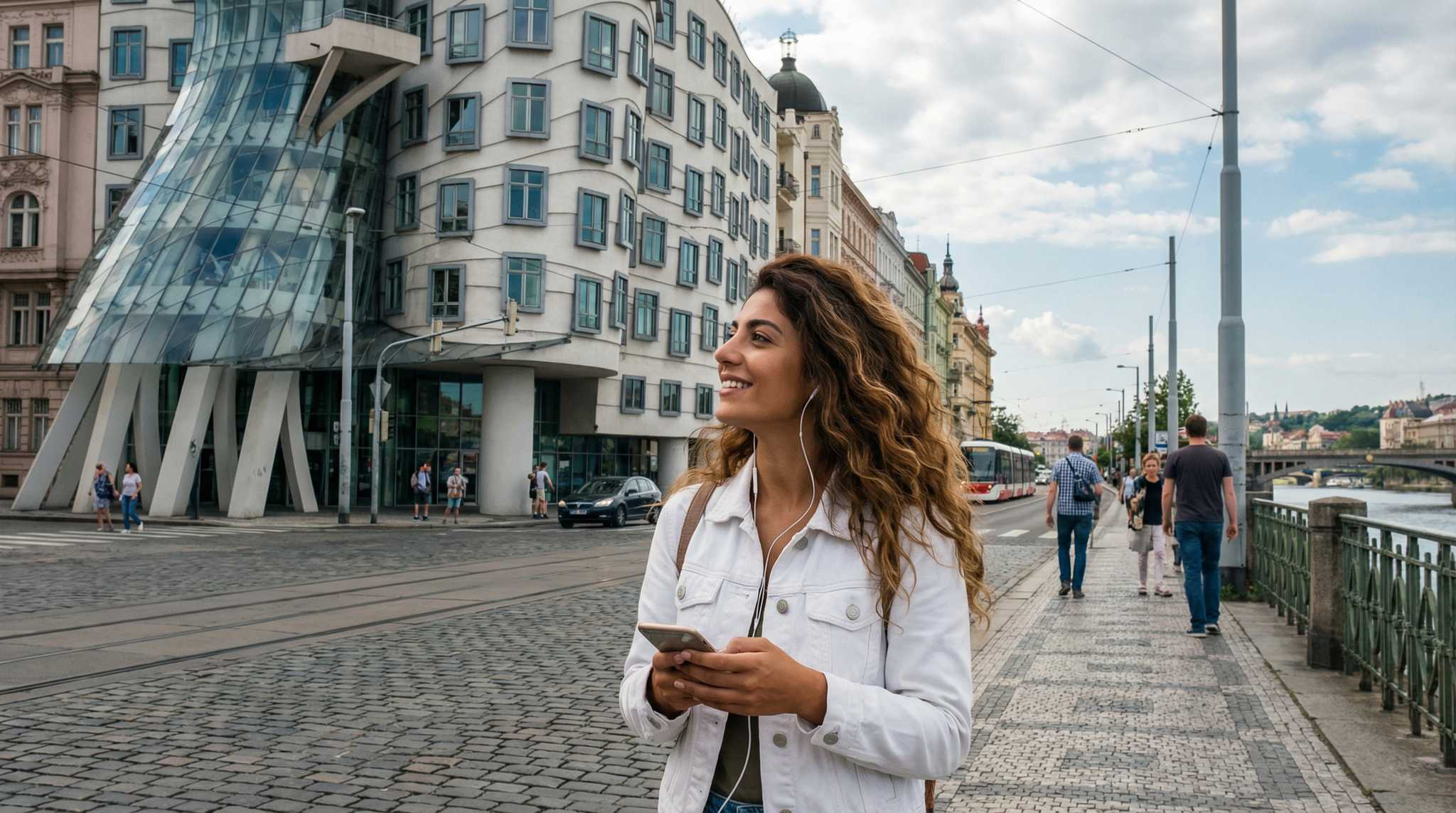
To spot the Dancing House, just look for the wild, curvy glass tower on your left-almost as if two buildings are locked in a waltz, twisting right out of the straight lines of their stiffer 19th-century neighbors. Here you are on the Rašín Embankment, staring at what might be Prague’s boldest dance move! The Dancing House almost leaps out at you-its glass façade dips and sways, while its white concrete partner stands firm, together defying the centuries-old seriousness of the city. But this place hasn’t always been so lively. Picture, instead, the rumble of war in 1945 when a U.S. bomb fell on this very spot, reducing the old apartment block here to ruins. For years after, this riverside patch stubbornly remained empty, a reminder of both destruction and hope. In fact, Václav Havel-yes, the famous playwright who would one day become president-grew up next door, dreaming up ways to fill the void. Fast forward to the tail end of Czechoslovakia’s communist era. The architect Vlado Milunić met Havel and started brainstorming. Could the site become a center of art and culture? Well, not quite-but the spirit of shaking up the old order was alive and kicking. Enter Frank Gehry, the world-renowned Canadian-American architect. Imagine their first meeting in Geneva in 1992-old blueprints tossed aside, boldness encouraged. Gehry and Milunić decided on something truly daring: a building in motion. This was the beginning of a project that would require 99 completely different concrete panels, each carefully cast for a shape that wouldn’t fit in any kit. It was to be Yin and Yang, static and dynamic, just like Prague itself in the uncertain days leading out of communism. The design they landed on was so whimsical that Gehry himself nicknamed it Ginger and Fred, after the famous dancing duo Rogers and Astaire-he worried it might be “Hollywood kitsch,” but really, who can resist a good twirl? Just take a look: the glass tower, slimmer in the middle, is “Ginger” swaying in a sparkling dress while the taller, rockier tower is “Fred,” top-hatted with a wild metal sculpture dubbed “Medusa” perched atop. Of course, not everyone was clapping along. Some critics raised their eyebrows, tutting that this curly, deconstructivist-okay, let’s say “new-baroque”-wonder looked a little out of place among the Gothic, Baroque, and Art Nouveau masterpieces that surround it. “Does Prague need a house that can’t stand up straight?” they groaned. Still, others delighted in the joke; it’s impossible to confuse this mischievous pair with anything else in the city. Funnily enough, although the towers reach the same height as their more traditional neighbors, Gehry and Milunić played a clever trick-by jumbling up the windows and wrapping the façade in winding mouldings, the Dancing House actually looks shorter and friendlier, winking at everyone who passes by. The windows, with their protruding frames, are like paintings jumping right off the canvas, a little surprise for wandering eyes. Inside, things get even more eccentric. Whatever floor you ride to-there are nine above ground and two sneaky basements-you’ll find corners that don’t have right angles, and rooms that look nothing like their neighbors. Czech-British architect Eva Jiřičná worked her magic here, borrowing tricks from ship design to make every square meter count. There’s even a restaurant, the Ginger & Fred, perched on the seventh floor-just in case you fancy dinner while dangling above Prague’s rooftops! And since 2016, guests can even check into the Dancing House Hotel, resting their heads in the arms of either Ginger or Fred. But perhaps my favorite twist in this tale: the Dancing House isn’t just beloved by tourists or quirky architects. In 1997, Time magazine handed it a big prize for design. The Czech National Bank even immortalized its swirling silhouette on a gold coin-how many buildings can say that? So imagine yourself, shoes tapping the stone, the Vltava River glinting nearby, the whole city around you continuing its old, stately waltz-while Ginger and Fred keep on dancing right here, determined to never let things get too predictable. For further insights on the origin, structure or the interior, feel free to navigate to the chat section below and inquire.
Apri pagina dedicata →To spot the Saints Cyril and Methodius Cathedral, look for a grand cream-colored church with a tall, white bell tower topped by a cross, dramatic statues standing guard along a…Leggi di piùMostra meno
To spot the Saints Cyril and Methodius Cathedral, look for a grand cream-colored church with a tall, white bell tower topped by a cross, dramatic statues standing guard along a black wrought-iron fence, and a roof of deep red tiles-standing proud right at the corner where the street bends. If these walls could talk, they’d probably have a few good stories, some dramatic moments, and maybe even a whispered secret! You’re facing the Saints Cyril and Methodius Cathedral, the beating heart of the Czech and Slovak Orthodox community in Prague. Imagine the bustle of centuries past, when this very spot-long before you and I arrived-was already known as Na Zderaze, haunted by the spirit of a Czech lord named Zderad, whose name still marks the street beside you. Let’s step back in time: Over 900 years ago, people prayed here in a tiny church believed to have been blessed by Saint Methodius himself. Knights of the Cross strutted around the grounds, and the rumble of battles during the Hussite Wars echoed off the ancient stone. By the 1700s, a brand-new church rose on these ashes, built under the watchful eye of Kilian Ignaz Dientzenhofer-imagine him checking every corner for perfect symmetry, only to have future generations turn this Catholic church into the Orthodox cathedral you see now. But the real heartbeat of this place? That came in 1942, in the thick of World War II, when the crypt of the cathedral became the stage for one of Prague’s most daring dramas. Imagine the tension: underground, in the darkness, a group of Czech and Slovak agents hide as Nazi boots thunder on the steps above. They’d just carried out Operation Anthropoid, assassinating the dreaded Reinhard Heydrich. Surrounded, outnumbered, and outgunned, they make their last, heroic stand here-a real life scene as tense as any spy movie. Today, the crypt holds a museum to these national heroes. As you stand outside, take a deep breath-history is in the air! And remember, every stone, every echo in the shadows, reminds us that even the quietest corners of Prague can be places of incredible courage. So, what do you think? Not every church can say it played both host to saints... and secret agents!
Apri pagina dedicata →
Mostra altre 10 tappeMostra meno tappeexpand_moreexpand_less
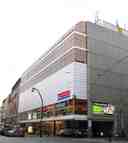
In front of you, you'll spot the Máj Department Store-a huge, angular white and grey building with rows of windows and a modern, boxy look, sitting boldly at the busy…Leggi di piùMostra meno
In front of you, you'll spot the Máj Department Store-a huge, angular white and grey building with rows of windows and a modern, boxy look, sitting boldly at the busy intersection. Now, let’s crank the time machine to the 1970s-imagine disco music in the air, bell-bottom pants on the street, and right here, this massive slab of futuristic ambition rising where a gothic palace once stood. Máj was built between 1972 and 1975 by three Czech architects who were determined to show what modern Prague could look like. Their design was so daring and new that it caught international attention, especially because it didn’t care at all about blending in with the old city. Picture a mysterious spaceship landing in New Town-people said Máj was like a heavy paperweight dropped onto the Mark, standing proud and a little bit stubborn. When it opened, Máj was all slick glass and metal, with shiny strips of windows and a big, bright escalator hall that made shoppers feel like they were stepping into the future. Even the construction style was new-and the building had a permanent crane on rails on the roof, swooping by to keep all those windows polished. You might not see that crane today, but think of it gliding above, a guardian of glass and innovation. At a time when Czech architects weren’t exactly encouraged to be bold, Máj caused a real stir. International magazines raved about it, but at home, official voices were a bit quieter. The local authorities would have preferred something more... well, obedient. But this building didn’t care for subtlety. Pavel Panoch, a historian, described Máj as an elephant in a porcelain shop. It was all hard edges, immense windows, and concrete towers-so different from anything else around that the city had to sit up and take notice. Yet Prague’s love affair with Máj has always been complicated. After the Velvet Revolution, the building changed hands like a suitcase in a spy movie. It was briefly Kmart, then Tesco, then My-and with every name, came a new vision for its future. At one point, there were even rumors of demolition, stirring up protests from historians and architects who believed this building-yes, this concrete giant-deserved to be protected. In the end, the Ministry of Culture declared Máj a national cultural monument in 2007, drawing a dramatic line in the sand: modern architecture can be just as meaningful as the oldest castles. If you look up now, you might see two giant butterfly sculptures high on the facade. Those, believe it or not, were installed only recently by the artist David Černý. There's some drama there too: the butterflies are actually planes in disguise, a tribute to Czech pilots from World War II. Not everyone loved them, and their arrival led to some very colorful debates on TV (if you ask me, nothing says Czech architectural history like a scandal!). Inside, Máj has had just as many twists. Its transformation in the 2020s aimed to make it a wonderland for all ages: hundreds of arcade games, a lion-themed kids’ park, comics and superhero exhibits, restaurants, and-on top-stunning terraces with panoramic views of Prague. Imagine the laughter echoing, the beeping arcade machines, and probably a few stressed parents running after their children! Through it all, Máj has stayed a mirror reflecting Prague’s shifting dreams and debates. Some say the modern interior clashes with its historic shell-at one point, social media compared it to a circus or even Las Vegas. There was so much fuss over rooftop playgrounds, permits, and design changes that you’d think the building was auditioning for a reality show. But whether you love its boldness or crave more elegance, Máj still stands strong-a boxy, glassy, sometimes controversial, but always unforgettable piece of Czech history. So, as you look up at this bold building, imagine all the arguments, energy, and experiments packed inside these walls. If these walls could talk, I bet they'd gossip non-stop. Ready to continue our journey? Let’s see what other secrets Prague has to share!
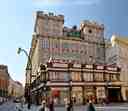
Apri pagina dedicata →To spot the Adria Palace, look for a grand, ornate building with a strong geometric façade, decorated with playful round shapes and a gathering of sculpted figures high above its…Leggi di piùMostra meno
To spot the Adria Palace, look for a grand, ornate building with a strong geometric façade, decorated with playful round shapes and a gathering of sculpted figures high above its entrance, right at the busy corner where Jungmann Square meets Národní Street. Welcome to the incredible Adria Palace! Take a second to gaze up and let your eyes follow the wild parade of rounded shapes and the epic cluster of dancing statues just above the busy street. Hard to miss, right? If the building seems like it wants to throw a party, that’s because it’s been the life of this corner since 1924 - all decked out in a flamboyant style called “rondocubism”, a Czech twist that mashes up cubism with grand, rounded forms. Imagine architects Josef Zasche and Pavel Janák at their desks, doodling with compasses and straightedges as the streets outside buzz with the energy of 1920s Prague. Back in those roaring twenties, the Adria Palace was the hot new headquarters for an Italian insurance company, Riunione Adriatica di Sicurtà. Clearly, Italians don’t do boring, so they hired the city’s best sculptors - Otto Gutfreund, Jan Štursa, Bohumil Kafka (no, not that Kafka), and even Adolf Mayerl, who added ten marvelous dancing figures between the windows. You can almost imagine those statues coming to life, waltzing through the night when everyone’s gone home. But Adria wasn’t just a fancy office: it had a secret world beneath its stylish surface. Hidden below was the grand Adria cinema, opening in 1925 with a splashy gala showing “The Hunchback of Notre Dame.” The city’s elite showed up in tuxedos and gowns, and the underground space could seat almost 1,000 guests. Soon enough, in 1927, magic happened here - Prague’s first-ever sound films crackled onto the screen, complete with strange, fuzzy animal noises. Turns out, early sound technology was so fuzzy, people actually preferred mooing cows and barking dogs over whispered love scenes.. The story of the palace has plenty of drama. As the winds of history shook Prague, Adria’s cinema changed names and hands - from Adria, to the German-controlled “Moskva” during WWII, and back to a Czech stage after the war. Later, it became home to avant-garde performances, experimental film clubs, even the legendary Laterna magika, where film mixed with live theater. In the surging crowds of November 1989, the palace’s elegant halls were suddenly filled with hurried voices: it was the headquarters of the Civic Forum, the epicenter of Prague’s Velvet Revolution. Today, Adria Palace is still buzzing - a home to theaters, cafes, and everyday city life. Next time you pass by, take a peek at those sculptures; you just might catch one of them sneaking a sly wink at you. Now, ready to waltz onward to our next stop?
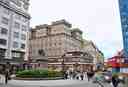
Apri pagina dedicata →To spot Jungmann Square, just look ahead for a bustling plaza surrounded by tall, ornately decorated buildings and a large statue of a seated man right at the center, framed by a…Leggi di piùMostra meno
To spot Jungmann Square, just look ahead for a bustling plaza surrounded by tall, ornately decorated buildings and a large statue of a seated man right at the center, framed by a bed of flowers and crowds of locals and tourists. Now, as you stand here with the chatter of the street and the distant rumble of the metro below, let your imagination whisk you back through centuries! This lively spot-Jungmannovo náměstí-wasn’t always full of banks, coffee shops, and people racing to the next appointment. Picture it in the Middle Ages, right outside the ancient walls of Prague’s Old Town. The land was known as “Na Písku,” or “On the Sand,” because it was basically, well, a big sandy patch. But even sandy spots can have big dreams. In the 14th century, the mighty King Charles IV brought in a troop of Carmelite monks who set out to build a majestic monastery and a church dedicated to Our Lady of the Snows. Imagine a construction site teeming with cloaked monks, carts rattling over cobblestones, and the clang of stone on stone as they tried to rival the biggest churches in Europe. The church you see peeking behind you was only ever meant to be the presbytery-the best part was left unbuilt when the Hussite Wars erupted. Talk about giving up halfway through a home renovation! Here’s where the story really heats up: In the 15th century, radical preacher Jan Želivský, with a fiery voice, stood right here, gathering crowds beneath those medieval walls. On July 30, 1419, he led his followers from this very spot, torches flickering and tension crackling in the air, to what became the First Prague Defenestration-let’s just say that people didn’t like politicians much, and some of them left the town hall very suddenly... through the window. For centuries after, this square witnessed periods of neglect and revival. The monastery fell into ruin, but in 1606, the barefoot Franciscans moved in, and the area took on a gentler, more spiritual character. In the 1800s, you’d hear locals call it “Františkánský plácek” or the “Little Franciscan Place.” But its name changed in 1878 when they rolled in a grand statue-look right at it: that’s Josef Jungmann, poet and linguistic champion, gazing with intense thought. Jungmann lived just down the road and is famous for rescuing the Czech language from obscurity. Rumor has it he spent so long translating dictionaries that he turned down dinner invites for years. No wonder he’s sitting! But that statue, believe it or not, once stood in the absolute center of what was then a chaotic crossroads of horse-drawn carts, honking trams, and, eventually, rattling buses. The square has always been the beating heart of the city’s transport. In the early days, people boarded the oldest tram route in Prague, heading from the river right through here to Karlín. Buses and even the city’s infamous “trolleybuses” jostled for space around the statue. In fact, from 1949 to 1966, this was the last stop for travelers arriving by Prague’s then state-of-the-art electric trolleybuses-imagine the crowd, the hustle, the sudden hiss as the trolley sticks lost their grip on the wires. Then, in 1985, with the arrival of the metro, the square took a new turn. The statue was gently nudged aside, shops spilled out onto the cobbles, and soon, flowerbeds and winding walkways replaced screeching brakes. Today, as you stand in the modern hush of the pedestrian zone, you can easily miss that this place was once as rumbling and rowdy as a train station. See those elegant facades surrounding you? Behind them lie old townhouses filled with shops, stories, and secrets. If you peek south, the insurance building marks where old bell-makers’ workshops once stood. Just a few steps away, the František Garden waits behind iron gates, still inviting tired souls in for a quiet moment-if you listen closely, you might even hear the echoes of monks chanting from centuries ago. So the next time you walk through Jungmann Square, remember: every footstep here treads on layers of Prague’s history-sandy markets, royal dreams, revolutionary fires, tram bells, and the forever thoughtful gaze of Josef Jungmann. I hope you don’t mind that I didn’t try to defenestrate you along the way-though if you want to make a dramatic exit, the nearest metro is just behind you!
Apri pagina dedicata →Congratulations, you’ve arrived at Stop Number 7-the mighty fortress of finances, the Czech National Bank, or as the locals call it, “Česká národní banka” or ČNB. While some banks…Leggi di piùMostra meno
Congratulations, you’ve arrived at Stop Number 7-the mighty fortress of finances, the Czech National Bank, or as the locals call it, “Česká národní banka” or ČNB. While some banks keep coins in vaults, this place keeps an entire country’s money moving smoothly! Picture the sheer bustle of this spot - Prague’s city center humming around you, crisp architectural lines rising up from Na Příkopě, a street name that itself means 'by the moat'. Fitting, don’t you think? The building stands guard not just over Czech crowns, but over the country’s economic health itself. For a moment, imagine the winter of 1993; the Velvet Divorce has just split Czechoslovakia into the Czech Republic and Slovakia. Out of the velvet dust, two new central banks are born. If you listen closely, you might almost hear the scurrying feet of bankers with boxes full of paperwork, the gleeful sound of new banknotes being printed, and the epic sigh of relief as each new crown, or koruna, finds its place in Czech wallets. Ever since, this very bank has held the reins of the Czech economy-and it’s not just about stashing away cash. This is where the real magic happens, where policies are shaped and dreams of economic growth are juggled. If you ever wondered who steers the Czech economy when the financial weather turns stormy, it’s those here, in the Bank Board’s chambers. The heart of this bank is the Bank Board-a seven-member team with one Governor, two Vice-Governors, and four others. You could call them the “Magnificent Seven” of Czech economics. No one gets too comfortable-they get six years per term and then it’s time to give someone else the keys to the vault. The President of the Republic himself handpicks these masterminds, keeping leadership fresh, alert, and maybe just a little bit nervous. After all, who would want to drop the crown… literally? Speaking of crowns, let’s talk about cash. The Czech Republic planned to swap the koruna for euros back in 2010. But the Czech people adore their Crown-so much so that the plan was put on ice. No matter how many times politicians pull out their euro calculators, Prague’s pockets keep jingling with 1, 2, 5, 10, 20, and 50 Kč coins. And for paper money? Take your pick from 100 up to 5,000 Kč notes. If you find the 5,000 one, treat it like gold dust-maybe don’t stuff it in your sock. But the job here isn't simply keeping banknotes crisp and coins shiny. The CNB’s ultimate goal is price stability. Sounds simple, but imagine juggling hot potatoes while walking a tightrope. Prices rise, prices fall-it’s their job to keep things steady, aiming for an inflation target right around 2%. Too much, and people can’t afford their beloved český guláš. Too little, and the economy turns chilly as a Prague January. To hit that sweet spot, the Bank uses a sparkling toolbox: interest rates, open market operations, minimum reserves, and even some FX interventions, which means buying and selling Czech crowns to keep things calm on the currency front. Think of it as a financial ballet-sometimes fast, sometimes slow, but always with a good beat. Now, let’s peek at their role as the watchful referee over every corner of Czech finance-banks, insurance, pension funds, even those fancy new electronic money apps. If someone isn’t playing by the rules? The CNB brings out their yellow (or should we say, golden) card, setting penalties and keeping the playing field fair and competitive. The Czech Republic joined the European Union back in 2004, and while some thought that might mean rolling out the red carpet for the euro, sentiment has kept the Crown firmly in place. The CNB sits alongside other European national banks in the European System of Central Banks, but with a firm “no thanks” to swapping out their cherished currency-at least for now. In the meantime, they analyze economic forecasts like meteorologists track thunderstorms, adjusting policies so everyday Czechs can weather the financial storms and dance in the sunshine. And if you want a little trivia: the list of Governors is like a parade of economic superheroes, each steering this mighty ship from Josef Tošovský in the 90s to Aleš Michl, who took the helm in 2022. Inside the building before you, and in the minds of these leaders, the fate of Czech prices, jobs, and investments is balanced-always with a little tension, a bit of mystery, and, on a lucky day, perhaps a joke over a cup of strong Prague coffee. So, next time you pay for a coffee or a trdelník and see those crowns and notes, remember-they’ve all taken a detour through this imposing building, where economic magic and monetary gymnastics are all in a day’s work. Speaking of which, let’s keep our own balance and tiptoe off to the next stop!
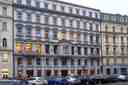
Apri pagina dedicata →Right in front of you stands a grand and stately gray building, its symmetrical rows of windows and ornate detailing making it stand out amid the street-look for the third floor…Leggi di piùMostra meno
Right in front of you stands a grand and stately gray building, its symmetrical rows of windows and ornate detailing making it stand out amid the street-look for the third floor above the shops and cafes, where warm light sometimes glows behind old glass, to spot the home of Libri Prohibiti. Now, let’s step up close and breathe in the atmosphere of one of Prague’s most secretive and courageous corners-Libri Prohibiti, the Library of Forbidden Books. Imagine you’re climbing the stairs to the third floor, maybe out of breath but full of curiosity, feeling like a detective about to unlock a treasure chest of hidden knowledge. This is no ordinary library, and it’s no place for dusty silence; instead, it thrums with the spirit of rebellion, hope, and the kind of daring only people who stand up to dictators have ever known. Let me take you back to the days of Communist Czechoslovakia. The government forbade more than 400 writers, journalists, and performers from sharing their work with the public. If you thought getting your favorite book from the library was tough, imagine living in a time when you could only read them if you found a secret copy, probably passed to you at a smoky kitchen table or in the shadow of a crumbling stairwell. Even famous figures like Václav Havel ended up in prison for daring to write and distribute their thoughts. Almost everything that spoke of freedom, questioning, or creativity was hunted down as if it were contagious! What did these artists and thinkers do? Did they just give up and get dull jobs? Not a chance! Instead, they became undercover agents of literature, creating and passing out “samizdat”-hand-typed or copied works, made with carbon paper, clunky photocopiers, spirit duplicators, or whatever they could get their hands on. Every new page was an act of defiance. One copy became fifteen, then more, all passed from hand to shaking hand. If you were caught, you were in real trouble-prison, exile, you name it. In those years, a man named Jiří Gruntorád paid dearly for his part in this underground book world, spending four years in prison for distributing samizdat. Today, he’s right here, the director and keeper of Libri Prohibiti, making sure these stories are never lost or forgotten. After the revolution, with the help of big names like President Václav Havel, authors, and scholars, Gruntorád helped create this sanctuary for forbidden words in 1990. It started small, just 2,000 books and magazines, all carefully gathered during the stormy years of “normalization.” But talk about a growth spurt! Thanks to government grants, private donors, and the dedication of volunteers from Charles University and beyond, the collection now boasts over 29,000 books and magazines, almost 3,000 reference works, and more than 5,000 pieces of audio and video-all treasures that once risked being lost forever. Every year, more arrive, as if the library is an ever-hungry beast, never satisfied with freedom’s stories. Step inside-if you can (and you should, it’s free!). You’ll find a cozy reading room with space for just eighteen people. But the room buzzes with energy, an air of possibility, because everywhere around you are voices that almost vanished. There’s samizdat from not just Czechoslovakia but other countries-Poland, Russia, Ukraine-and even literature from Czech and Slovak exiles who kept the flame alive abroad. You’ll find works that were banned and smuggled, like George Orwell’s “Nineteen Eighty-Four” and Tolkien’s “The Lord of the Rings,” which-let’s face it-seems a bit magical to be hiding in a real place called Libri Prohibiti! The collections are divided into categories-a sampler platter of rebellion, including World War resistance writings, foreign exile documents, flyers, posters, audio of underground lectures, banned music on cassettes, grumpy old gramophone records, and videos that will transport you straight into the heart of protest. The staff, a mix of passionate experts and plucky volunteers, ensure the books are preserved but never allowed out. Sorry, no borrowing; you’ve got to savor each sentence right inside. And here’s the best part-Libri Prohibiti is living history. It doesn’t just guard books, it invites you to join the story. With over 180 members, supporters, and friends who refuse to let censorship win, this place is a beacon that proves the written word can outlast any regime’s threats. So, while you stand here on Senovážné Náměstí, take a moment to appreciate the courage it took to build such a sanctuary. Every book inside is a survivor, every page a quiet shout of triumph over oppression. If you listen closely, you might just hear the whispers of rebels, dreamers, and storytellers, all reminding you: never stop reading, never stop questioning, and if someone says a book is forbidden-well, that’s probably the one worth seeking out. For a more comprehensive understanding of the overview, collections or the publications, engage with me in the chat section below.
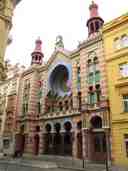
Apri pagina dedicata →To spot the Jubilee Synagogue, just look straight ahead for a building that jumps out with its bold stripes of pink and cream, ornate horseshoe arches, vibrant blue trim, and two…Leggi di piùMostra meno
To spot the Jubilee Synagogue, just look straight ahead for a building that jumps out with its bold stripes of pink and cream, ornate horseshoe arches, vibrant blue trim, and two striking red towers-it looks almost like a palace borrowed from a magical storybook! Now, take a deep breath and soak in the atmosphere. Behind you, the city buzzes. In front of you-ta-da!-stands one of Prague’s most dazzling treasures, the Jubilee Synagogue, also known as the Jerusalem Synagogue. You might be tempted to wonder if a genie will pop out any minute, given its Moorish arches and those playful red domes perched on top, but I promise the magic here is all architectural (with just a dash of history for extra sparkle). Let’s rewind to over a century ago-1906. Imagine streets filled with horse-drawn carriages and the excitement of something new on Jerusalem Street. An architect named Wilhelm Stiassny had a grand vision, brought to life by builder Alois Richte. Their creation, named to celebrate the golden Jubilee of Emperor Franz Joseph I, rose from the rubble of three older synagogues that had been swept away by urban progress. Pink and cream stone, hints of turquoise, and art nouveau patterns-this place was designed to pop, and trust me, it still does. Some locals reportedly needed sunglasses just to walk past when the sun hit the facade! But here’s a twist: though originally built for Reform Judaism, with an organ and choir filling its halls, today’s Jubilee Synagogue hosts Orthodox Jewish traditions. A bit like a chameleon, it’s adapted to the times, reflecting the shifting stories of Prague’s Jewish community. Walk up to the entrance and you’ll see a Hebrew inscription, which translates to, “This is the gate to which the righteous will come.” Not a bad motto for a building that’s been through it all-glory, loss, even a dark period during Nazi occupation, when it was only used to store confiscated property. It’s a survivor, still welcoming worshippers and curious explorers alike. Inside, if you could peek past the huge wooden doors, you’d find more drama: swooping horseshoe arches, art nouveau swirls, and a riot of color-reds, blues, golds, and greens blend in joyful celebration. After decades of devotion and turmoil, since 2008 the Jubilee Synagogue has finally opened its doors to the world, inviting people from every walk of life to marvel at its beauty. And thanks to a little help from the World Monuments Fund, it got a makeover fit for a king (or maybe a magician). So as you stand here, imagine how many stories these stones have seen, and how many more they’re ready to tell. And if you listen very closely, you might even hear echoes of old songs drifting through those arches-after all, history here loves an encore!
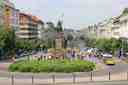
Apri pagina dedicata →To spot Wenceslas Square, look straight ahead for a huge, bustling boulevard lined with grand buildings, colorful shopfronts, streams of people, and right at its heart, a statue…Leggi di piùMostra meno
To spot Wenceslas Square, look straight ahead for a huge, bustling boulevard lined with grand buildings, colorful shopfronts, streams of people, and right at its heart, a statue of a knight on horseback towering above the crowd. Alright, imagine you’re standing on the edge of history-or, in this case, a really busy boulevard! Wenceslas Square unfolds in front of you, so wide and long you might wonder if it was designed for giants as well as tourists. This isn’t your typical European square-it stretches out like a grand avenue, gently sloping upwards towards the majestic National Museum, which anchors one end like a stone crown. The sounds of car engines, footsteps, and hushed chatter swirl through the air, mixing with the occasional creak of a tram passing through. Once upon a time, this spot wasn’t filled with shops or tourists snapping selfies but horses-yes, horses! In the Middle Ages, the area was known as the “Horse Market,” where locals brought steeds to buy and sell, right where the busy intersection now bustles. If you squint, maybe you can still picture townsfolk haggling over a fine chestnut mare, or maybe a particularly stubborn donkey causing a scene (and, knowing donkeys, probably refusing to move). But Prague is a city where medieval markets become world stages! In 1848, inspired by the waves of revolution across Europe, the square swapped its clopping hooves for a new name: Saint Wenceslas Square, after the patron saint of Bohemia. Out went the horse traders and in came poets, patriots, and protesters. The transformation was championed by Karel Havlíček Borovský, a journalist with hair as wild as his ideas. The two grandest features of the square are right before you: the Czech National Museum, proudly perched at the top, and the statue of Saint Wenceslas himself. Legend has it that if the statue ever rides away, Prague will face its darkest hour-though I’m sure Saint Wenceslas enjoys his front-row seat to all the action far too much to dash off! This square saw it all: On October 28, 1918, crowds packed in so tightly they could barely move, as Alois Jirásek read the declaration of Czechoslovakia’s independence. Imagine the cheers, the tears, the flags waving-now that’s what I call a street party! And the excitement didn’t stop. In 1938, when Prague braced itself during the May Crisis, thousands flooded Wenceslas Square again, determined to defend their freedom from Nazi threats. Laughter, anger, shouting-every emotion echoed around the square’s stones. Tragedy, too, left its mark. In 1969, student Jan Palach set himself ablaze right here to protest Soviet occupation, shocking the world and filling the square with silent grief and resolve. Yet, only a few months later, when Czechoslovakia’s hockey team bested the Soviet Union, 150,000 Czechs swarmed Wenceslas Square to celebrate victory-how’s that for emotional whiplash? Wenceslas Square’s legacy gleams brightest during the Velvet Revolution in 1989, when enormous crowds assembled here in peaceful protest. Their brave spirit, their chant of “We have bare hands!”, and their jangling keys-a symbol that the locks of communism were being opened-still echo down the square every November. I guess you could say Wenceslas Square has always been the city’s open-air living room: a place where Prague’s heart beats loudest, in moments of joy, sorrow, and change. If you look around, you might catch sight of art deco treasures like the Hotel Evropa, with its gilded façade silently judging everyone’s fashion choices, or the Koruna Palace, which has seen more shoe sales than a millipede family reunion. Inside the square’s famous Melantrich Building, legendary figures like Alexander Dubček and Václav Havel once addressed thousands from the balcony-talk about balcony views! Even the underground buzzes with life. Metro lines crisscross below your feet, connecting the city’s heart to every corner. Above ground, you’ll spot a mix of families, protestors, late-night revelers, and-if you stick around for December-enchanting Christmas markets turning the square into a wonderland of lights and laughter. And if you’re wondering about the construction-yes, there’s always something being rebuilt or improved. Since 2020, Wenceslas Square has been getting a facelift, with plans for smoother sidewalks, new tram lines, bike paths, and more trees. The construction noise can sometimes get lively but hey, a historic square has to keep up with the times. So, as you stand here, you’re not just sightseeing; you’re treading the ground where centuries of Czech hopes, struggles, protests, and dreams all come together. Wenceslas Square isn’t just the busiest pedestrian spot in the country-it’s the living, breathing soul of Prague. Ready to delve deeper into the features, art and architecture or the transport? Join me in the chat section for an enriching discussion.
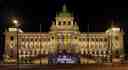
Apri pagina dedicata →In front of you, rise your eyes to spot an immense neo-renaissance palace, its grand stairways sweeping upward to a glowing dome, statues standing guard like silent storytellers,…Leggi di piùMostra meno
In front of you, rise your eyes to spot an immense neo-renaissance palace, its grand stairways sweeping upward to a glowing dome, statues standing guard like silent storytellers, and fountains trickling at its feet-welcome to the National Museum overlooking the tip of Wenceslas Square. Ah, the National Museum! It’s hard to miss this majestic building-by day a sunlit crown, by night a shimmering beacon over Prague. Imagine, as you stand here, the year is 1818. The world is lit by candlelight, and scientists, nobles, and dreamers gather collections of rare stones, curious bones, and pale fluttering manuscripts. With a flourish of ideas and perhaps a few dramatic mustaches, Count Kašpar Maria Šternberg, a passionate botanist, puts on his best serious face and declares, “Let’s make a museum that is for everyone, not just for nobles.” It all started with a wish to share the treasures of natural history: fossils, minerals, ancient plants, maybe even a rock or two that someone swore would turn to gold (sorry, alchemy still hadn’t worked out). By 1800, they founded the Academy of Fine Arts and, before long, the dream spilled out of Sternberg Palace and then Nostitz Palace, moving from place to place, like a growing family in need of bigger shoes. Eventually, Prague’s grand square was crowned with this neo-renaissance jewel designed by Josef Schulz-a building as grand as the vision inside it. But here’s where things get dramatic! World wars rumble across the continent-bombs fall in 1945 and the museum windows shake, but the most precious collections are hurried into safety away from the front lines. After patching itself up, the museum faces another storm in 1968, as Soviet troops roll into Prague and unleash a rain of machine-gun fire on the sandstone pillars. Look closely, my friend. Some of that damage is still visible-a mix of scars, sorrow, and defiance. Like a face with laugh lines and battle wounds, the museum wears its history. It wasn’t just bullets and bombs. When the Prague Metro was carved underfoot in the ‘70s, the entire building trembled-and still it stood, though surrounded by the noise and dust of city life. The busy North-South Highway sliced the museum off from Wenceslas Square, as if someone had decided to put a moat of cars and buses around the knowledge within. Time for a twist: in the last decade, the museum shut its doors for a massive renovation. Imagine the chaos-seven million items carefully packed and moved, a convoy of history on the move, from dinosaur bones to medieval crowns! Now, after years of quiet, the museum opened up its heart again in 2018, its dome offers breathtaking views, and an underground tunnel connects it to the next-door “New Building” (which used to be the Parliament). After all, every museum needs a secret passage, right? Inside, the treasures are as varied as they are dazzling: from glittering minerals in the Halls of Minerals, to skeletons of strange prehistoric beasts in the Miracles of Evolution, to the delicate stitches of Bohemian embroidery. There are coins and medals once clutched by kings, theater costumes that rustled under stage lights, and proud reminders of Czech stories-from the mysterious Middle Ages to the modern age of robots and rock concerts. There’s even a department dedicated to puppets, if you like your history with a side of strings and googly eyes. Every stone, every coin, every letter in the museum’s archives whispers a different story, but they all speak the same language: that knowledge belongs to everyone. Through wars, regime changes, and public protests on the steps out front, the National Museum has stood tall-a place for curious minds, wild ideas, and bold new dreams. And they say it starred as Vatican City in the film EuroTrip-I suppose even museums like a bit of showbiz, every now and then! So as the fountain chimes behind you and the statues watch from their lofty posts, imagine how many people have found themselves changed by what lies inside these walls. Whether you’re after Czech kings, ancient jewelry, lost music, or the secrets of evolving life, this grand house of stories is a place just waiting to amaze you. Welcome to the memory bank of a nation-and don’t forget to check out the dome for some of the most spectacular views in Prague! Seeking more information about the origins, buildings or the collections and departments? Ask away in the chat section and I'll fill you in.
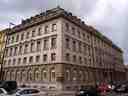
Apri pagina dedicata →Spot the Petschek Palace by looking for a massive, solid stone building with rows of tall windows and a grand, fortress-like presence on the street corner-the kind of place where…Leggi di piùMostra meno
Spot the Petschek Palace by looking for a massive, solid stone building with rows of tall windows and a grand, fortress-like presence on the street corner-the kind of place where you’d expect bank vaults and maybe a little bit of intrigue! Alright adventurer, time to dust off your imaginary trench coat and fedora, because Petschek Palace is just the place for a good spy story-actually, it’s seen more real-life drama than most movies could ever dream of! Picture this: the year is 1929, and a wealthy banker named Julius Petschek wants a building that is both timeless and cutting edge, so he hires architect Max Spielmann. The result? This neoclassical marvel, with grand stonework that looks a hundred years older than it really is. But in its day, this place was decked out with the high-tech features of the Roaring Twenties: reinforced concrete skeleton, air conditioning (fancy for the time!), a tube postal system, telephone switchboards, a paternoster lift that’s still doing its up-and-down dance, and huge safes hiding secrets below ground. But, unfortunately, the story gets much darker as World War II rolls in. The Petschek family sells the palace and flees, and the Nazis swoop in, turning the palace into the dreaded Gestapo headquarters for the Protectorate of Bohemia and Moravia. Inside these thick stone walls, the air would have been cold, heavy with whispers of fear and resistance. This was a place filled with the echoes of interrogations and the footsteps of brave Czech resistance members facing unimaginable choices. Courts-martial meted out terrible fates from within these very rooms-many never left. You’ll see a plaque on the corner, quietly remembering those who suffered here. After the storm of war cleared, the building gained a new life under the Ministry of Foreign Trade, and now it houses the Czech Ministry of Industry and Trade. Oh, and here’s a lighter tidbit for you-if you’ve seen The Bourne Identity, this palace had a cameo as a Swiss bank in the movie. So many lives, so many secrets in these stones! If only the walls could talk-though with all those safes, they’d probably just whisper, “Nice try, but you don’t have the key!”
Apri pagina dedicata →

Domande frequenti
Come inizio il tour?
Dopo l'acquisto, scarica l'app AudaTours e inserisci il tuo codice di riscatto. Il tour sarà pronto per partire immediatamente – tocca play e segui il percorso guidato dal GPS.
Ho bisogno di internet durante il tour?
No! Scarica il tour prima di iniziare e goditelo completamente offline. Solo la funzione chat richiede internet. Ti consigliamo di scaricare tramite WiFi per risparmiare dati mobili.
È un tour guidato di gruppo?
No – è un tour audio autoguidato. Esplori in autonomia al tuo ritmo, con la narrazione audio riprodotta dal tuo telefono. Nessuna guida, nessun gruppo, nessun orario.
Quanto dura il tour?
La maggior parte dei tour richiede 60–90 minuti, ma sei tu a controllare il ritmo. Metti in pausa, salta le tappe o fai pause quando vuoi.
E se non riesco a finire il tour oggi?
Nessun problema! I tour hanno accesso a vita. Metti in pausa e riprendi quando vuoi – domani, la prossima settimana o il prossimo anno. I tuoi progressi vengono salvati.
Quali lingue sono disponibili?
Tutti i tour sono disponibili in oltre 50 lingue. Seleziona la lingua preferita quando riscatti il codice. Nota: la lingua non può essere cambiata dopo la generazione del tour.
Dove accedo al tour dopo l'acquisto?
Scarica l'app gratuita AudaTours dall'App Store o Google Play. Inserisci il codice di riscatto (inviato via email) e il tour apparirà nella tua libreria, pronto per essere scaricato e avviato.
Se il tour non ti piace, ti rimborseremo l'acquisto. Contattaci a [email protected]
Pagamento sicuro con 


