AudaTours logoAudaTours

Audioguida di Melbourne: Fascino Storico di Carlton

Audioguida15 tappe

Ammira lo skyline di Carlton e osserva un'architettura che sfida la gravità: balconi a forma di cubo appollaiati come pezzi di un puzzle sopra il trambusto, guglie di pietra che tagliano le nuvole e il bagliore vigile di finestre centenarie. Questa non è una passeggiata ordinaria. Segui questa audioguida autoguidata attraverso strade dove proteste, preghiere e accordi segreti hanno plasmato il cuore di Melbourne. Immergiti in storie spesso perse sotto la superficie, i segreti che la maggior parte dei visitatori non vede mai. Quale tetto ha quasi infranto il protocollo del consiglio comunale con il suo audace balzo nello spazio aereo pubblico? Quale musica dimenticata risuona ancora tra i banchi di una cappella vittoriana? Chi ha pianificato la sua prossima mossa per i diritti dei lavoratori mentre le chitarre risuonavano sopra le loro teste in un bar d'albergo? Traccia ribellione e reinvenzione ad ogni angolo. Senti la storia cambiare sotto i tuoi piedi mentre scopri racconti di accesi confronti e musica di mezzanotte, sermoni infuocati e battaglie per la sopravvivenza. Vedi Carlton come una città dall'energia irrequieta. Gli edifici sono pronti a parlare. Inizia ad ascoltare ora.

Anteprima del tour

map

Informazioni su questo tour

  • schedule
    Durata 40–60 minsVai al tuo ritmo
  • straighten
    3.9 km di percorso a piediSegui il percorso guidato
  • location_on
  • wifi_off
    Funziona offlineScarica una volta, usa ovunque
  • all_inclusive
    Accesso a vitaRiascolta quando vuoi, per sempre
  • location_on
    Parte da Upper House, Melbourne

Tappe di questo tour

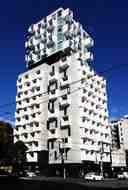
  1. To spot the Upper House, just glance up at the busy corner of Swanston and Queensberry Streets and look for a striking white building with dozens of cube-shaped balconies hanging…Leggi di piùMostra meno

    To spot the Upper House, just glance up at the busy corner of Swanston and Queensberry Streets and look for a striking white building with dozens of cube-shaped balconies hanging out like they’re trying to escape! Welcome! Right now you’re standing at the foot of the Upper House, one of Melbourne’s most unique high-rise residences. Just look above you-those boxy balconies peeking out all over the white façade make the building look a bit like it’s been playing a high-stakes game of Tetris. Built between 2013 and 2014, this modern marvel was once just the humble site of the old Electrical Trades Union building, a far cry from the futuristic vibe you see now. Here’s a fun bit of Carlton lore: Upper House isn’t really just one building-it’s two. Down low, you’ve got the Podium, a solid, urban-looking chunk with ten levels, and riding on top is the Cloud, which hovers above, its shiny, reflective surfaces sitting on a ring of slender columns. It gives the whole place an otherworldly, floating vibe, especially if you’re craning your neck from the street. You might half expect the whole top section to drift away with the next cloud. Separating these two is a secret gem for residents: the Observatory. High up on the 11th floor, it’s part futuristic lounge, part gym, and part sky-high back yard, all connected by an open-air deck with stunning views-perfect for watching the city swirl and sparkle below. Upper House is made up of 110 apartments, and each unit has these wild, cantilevered white balconies. Imagine sipping your morning coffee three metres out over the city, your feet nowhere near the footpath! And the lobby at ground level feels more like a buzzing café than a typical high-rise entry. But, as with any blockbuster story, there was plenty of drama in getting Upper House off the ground. See, the Melbourne council is usually pretty grumpy about balconies sticking out too far into public airspace. That didn’t stop the Upper House’s developers from striking a deal-leasing enough “air” to let their balconies jut out (just not over the sidewalk-no chance of dropping your sandwich on a pedestrian’s head). And the original plan was for 19 storeys, but after some heated standoffs with the Carlton Residents Association, everyone agreed on 17. Sometimes, even buildings have to compromise. If you’re wondering about the design, the quirky box pattern you see isn’t random. The architects were inspired by steel loops-hence all these cube-shaped balconies, almost like blown-up versions of a looped wire. Inside, everything from the benches to the kitchen tables was shipped in and fit together like a puzzle, which explains why the place feels as streamlined as a spaceship. And last but not least: for all its bold looks, Upper House is a safety superstar. It has only one central staircase, but thanks to clever, pressurized hallways and smoke vents disguised in the corridors, you’re safer here than a cat in a sunbeam. An unusual building, in an unusual city, on an unusually lively corner-sometimes, the sky’s literally the limit! Ready to delve deeper into the description, design and systems or the key influences? Join me in the chat section for an enriching discussion.

    Apri pagina dedicata →
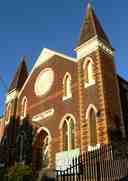
  2. Look to your left for a striking red-brick church with two sharp spires that poke at the sky-between them, arched windows and a big round stone clock face will let you know you’ve…Leggi di piùMostra meno

    Look to your left for a striking red-brick church with two sharp spires that poke at the sky-between them, arched windows and a big round stone clock face will let you know you’ve found the Lygon Street Christian Chapel. Now, step back in time to 1865 when the streets of Carlton rumbled with horses and hopeful chatter. Imagine this brand-new chapel rising above the footpaths, drawing in people with the promise of good news and a tune or two-because, let’s be honest, nothing says “community” like a church organ in full swing! The first preachers here were Americans. Reverend H.S. Earl started it all, probably with sermons that carried a bit of an accent and just maybe an extra “Hallelujah” for good measure. But after February 1867, he was swapped out for T.J. Gore and G.L. Surben, who surely brought their own flavor to the pulpit. But the real magic, if you close your eyes and listen, might just come from the old organ inside. Built by Fincham & Hobday in the early 1890s, this organ was tucked into the chapel in 1913. Imagine the deep, trembling notes filling the room, making even the sleepiest churchgoer sit up straighter. Back then, maybe a few sneaky kids hid behind those pews, goosebumps on their arms when the organ roared to life! So while it may look calm out here, inside it’s a living echo of Carlton’s spirited past-with every hymn, a whisper of history and a friendly invitation to listen in.

    Apri pagina dedicata →
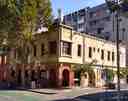
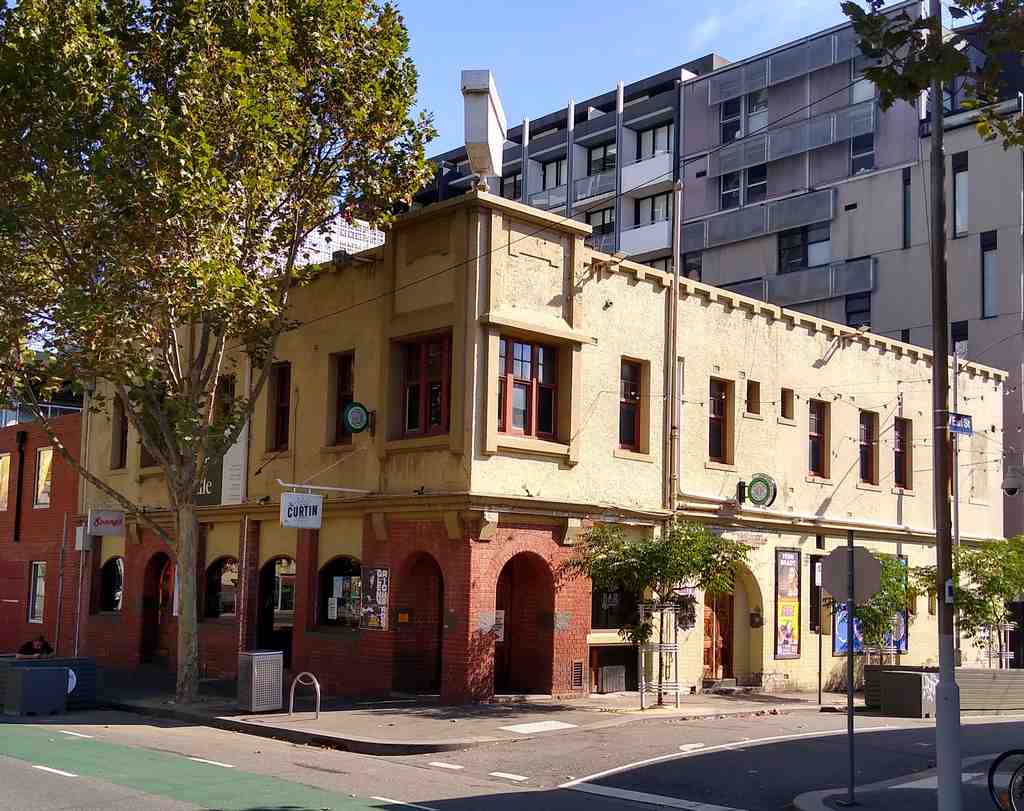
  3. Look for a sturdy two-story, sandy-yellow building right on the corner with bold red window frames and brick archways-you can’t miss the sign that reads “The Curtin” hanging just…Leggi di piùMostra meno

    Look for a sturdy two-story, sandy-yellow building right on the corner with bold red window frames and brick archways-you can’t miss the sign that reads “The Curtin” hanging just above the entrance, inviting you in. Alright, take a moment to soak in that old-school vibe as you stand here, because you’re at the legendary John Curtin Hotel-or as locals lovingly call it, The Curtin. Picture this corner back around 1860: dusty streets, horse-drawn carts, miners and politicians ducking in for a pint after a long day. This pub actually started life as The Lygon Hotel before getting a patriotic makeover in 1971, when it took the name of Australia’s 14th Prime Minister, John Curtin. Since then, it’s been more than just a place for a cold beer-it’s been a beating heart for Carlton’s political history. With the mighty Victorian Trades Hall just across the street, The Curtin swarmed with labor leaders and activists plotting the next move for workers’ rights. Sometimes you could almost hear the passionate debates rumbling through the walls, mixing with the sound of clinking glasses. Roll forward to 1975, and things get dramatic: the Australian Council of Trades Unions nearly buys up the place for half a million bucks, planning to transform it but still preserve that special spark. But don’t think The Curtin only sang political tunes-oh no! For decades, this building’s upstairs bandroom pulsed with live music: sweat, guitars, and enough stories to fill the bar twice over. In fact, in 2016 and 2017 it was up for Best Venue in all Victoria for places under 500 people-pretty impressive for a humble neighborhood pub! Sadly, 2020 brought tough times and the COVID-19 pandemic shuttered its famous live gigs, though the fried chicken and chips kept spirits alive downstairs. Most recently, with the lease ending and the building on the market, there was a rush to save The Curtin’s legendary legacy. Now, it's protected by a heritage shield-so the façade you see will remain, even if the future holds new surprises. Who knows what tales the old walls might witness next? Alright, onward-your next stop is packed with just as much history!

    Apri pagina dedicata →
Mostra altre 12 tappeMostra meno tappeexpand_moreexpand_less
  1. Look straight ahead for a grand grey stone building with tall columns, twin towers on either side, and four flags waving from the rooftop-this is the Victorian Trades…Leggi di piùMostra meno

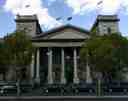
    Look straight ahead for a grand grey stone building with tall columns, twin towers on either side, and four flags waving from the rooftop-this is the Victorian Trades Hall. Welcome to the Victorian Trades Hall, the beating heart of Australia’s union history! Close your eyes for a moment, and imagine yourself here in the late 1850s: the air filled with the chatter of determined workers and the clang of hammers echoing down Lygon Street. This place isn’t just stone and pillars-it was actually built by the hands of workers themselves, made possible because they all chipped in to create a meeting place for their movement. Picture the original hall-simple timber walls capped with a shiny, corrugated iron roof. It might’ve leaked on a rainy day, but it stood for something monumental: a place where everyday people could come together, not just to unionise but to learn and share ideas with their families. The Trades Hall started modestly in 1859, but just wait-you’ll see its story gets more impressive every decade. Through the years, as energy for workers’ rights grew and passions ran high, the hall grew too! By the late 1800s, architect Joseph Reed-who also designed the State Library and Town Hall-took the reins. He transformed the Hall into the stately Parliament-style mansion you see before you now, full of high arches, carvings, and a sense of grandeur. If you stand quietly, you might almost hear echoes of fiery debates and laughter drifting from the past. This place isn’t just a landmark; it’s the world’s oldest trade union building. What kinds of stories did these walls witness? Just across the road, the Eight-Hour Day monument reminds us that right here in Melbourne, workers first won the famous eight-hour workday. It’s as if the stone itself remembers their struggles and hopes. And look up at the roof-see those four bold flags snapping in the wind? That’s the Australian flag, the blue Eureka flag of rebellion, the striking Aboriginal flag, and of course, the classic red flag. They wave for all the movements born here, like the Victorian Labor Party and the Australian Council of Trade Unions. Need a meeting room for the next big protest, or thinking of catching a political play or some radical comedy? Victorian Trades Hall still has you covered! It’s even been home to a student union and a radio station-back in 1931, radio waves crackled right out of these windows, filling homes with union news and music. Today when you walk by, you might hear the hum of busy campaigners, bursts of laughter from events, or even a passionate speech ringing through the corridors. Beyond activism, the Hall is now a creative, boisterous space with art exhibitions, bookshops packed with political reads, and a bar pouring cold drinks for thirsty activists. Victorian Trades Hall embodies the spirit of those who refused to back down-and every brick seems to say, “We stand together!” Now, as you take in its mighty columns, know you’re standing where history was, and still is, in the making.

    Apri pagina dedicata →
  2. Look for a grand Victorian mansion with ornate decorations and intricate architectural flourishes straight ahead-imagine something you’d expect in a classic European city, but…Leggi di piùMostra meno

    Look for a grand Victorian mansion with ornate decorations and intricate architectural flourishes straight ahead-imagine something you’d expect in a classic European city, but tucked right here at 48 Drummond Street! Welcome to Wilam Hall-a place with more stories packed into its walls than there are students living inside. Picture yourself stepping through its front doors at the end of the 1800s. This building, originally known as Benvenuta, was built in 1893 for Leah Abrahams, whose late husband made his living in the small arms business. You can almost hear the clip-clop of horse-drawn carriages arriving outside, marble floors echoing inside and sunlight streaming through magnificent stained glass, still with a mysterious bullet hole above the main staircase. Now, here’s where things take a turn for the dramatic-Benvenuta spent the 1920s as government Arbitration Court Offices, before the 1930s and 40s saw her fall into the hands of an Italian social club. Imagine evenings filled with music and laughter-picture a local orchestra warming up in the grand ballroom, and then, out of nowhere, the sounds of a lively boxing match erupting every Sunday! Can you believe people once danced and brawled right where students now study and nap? As with any grand old mansion, mysteries hang in the air. There’s that bullet hole up the staircase-rumour has it, it’s linked to criminal mischief from the late ‘30s, when a North Melbourne vigneron took over… or perhaps it marks a darker family tragedy from the Abrahams themselves. These days, students pass by with their laptops and takeaway coffees, but every so often, someone stops and wonders what really happened all those years ago. Fast forward to the late 1940s, and Benvenuta finds new life as a hostel for students-a world away from courtrooms and nightclubs. She was known first as the Drummond Street Hostel, catching the overflow from the University of Melbourne’s ever-growing student population. By 1955, she became Medley Hall, named for Sir John Medley, a decision later questioned decades later when students learned of his links to controversial scientific ideas. In 2024, after heartfelt debate, advocacy, and a gift from the Wurundjeri Council, the Hall was renamed Wilam Hall-“Wilam” meaning “home.” Over the years, Wilam Hall became the first place at the University to admit men and women as equals-a true trailblazer. She’s survived closures, a major redevelopment, and even had a starring role in the Nicolas Cage film, “Knowing”-so if the halls feel a little dramatic, maybe they still remember those movie lights! Inside, it’s all modern comforts: music room, communal kitchen, more bathrooms than you’d expect for an old mansion, and the occasional grand piano echoing through the corridors

    Apri pagina dedicata →
  3. Look straight ahead for a grand cream building with a soaring central dome and tall arched entrance, flanked by two smaller turrets; it’s hard to miss, especially with the ornate…Leggi di piùMostra meno

    Look straight ahead for a grand cream building with a soaring central dome and tall arched entrance, flanked by two smaller turrets; it’s hard to miss, especially with the ornate fountain and bright flowerbeds right out front. Pause here for a moment and take a deep breath-you’re standing in front of the Royal Exhibition Building, a true giant of Melbourne’s history! Imagine it’s 1880, the air buzzing with excitement, steam engines huffing and crowds thronging from all corners of the city and world, drawn to this enormous landmark built in just 18 months-a record speed, even by today’s standards. The first thing that might jump out at you is that dome; architect Joseph Reed designed it after the famous Florence Cathedral, mixing in just a dash of French Beaux Arts, a sprinkle of Byzantine and Renaissance styles, plus a slice of the drama you’d expect if you threw a cathedral, a palace, and a train station into a blender. The sheer size was jaw-dropping for its time-a statement about Melbourne’s soaring ambition and gold rush wealth, back when the city rivaled the big capitals of the world. Under these arches, THE international exhibition craze of the 19th century came gloriously to life. Picture opening day in 1880-the place smelled of fresh paint and anticipation, with bare walls waiting to be filled, hopeful inventors unpacking their shining gadgets as music floated from the bandstands. Eight years later, in 1888, for the Centennial International Exhibition, barriers were broken-electric lights flickered on for the first time in Melbourne, and people could visit even at night, gasping at the illuminated dome. The building was a dazzling crossroads of science, progress, and cultural pride, with over a million people passing through the doors during its earliest years, all while the interior echoed with footsteps and the hum of excited conversation. Under that vast dome the words “Victoria Welcomes All Nations” beamed a message of inclusivity and hope-a message still painted there today. But the real claim to fame came in 1901, when this very hall was chosen for a moment that would shape a nation: the opening of the first Parliament of Australia. Imagine the echo of voices from history as the new Commonwealth was declared, and the new Australian flag was hoisted above the dome, billowing high above the city. For the next 26 years, this was even where the Victorian Parliament set up shop, the air thick with debate and the steady clatter of politicians’ shoes on the 12,000 square metres of timber floorboards below. Of course, history is never all glamour and grandeur. As the decades shuffled by, popularity faded. During World War I, this place became a flu hospital, filling with the coughing and shuffling of patients rather than cheerful exhibition-goers. By the 1940s, locals jokingly called it “The White Elephant,” and at times demolition seemed only a city council vote away. A fire in the 1950s took out whole wings, and for a long stretch, the building rang mostly with the squeak of sneakers at school exams, the clatter of trade-show stands, and even the thumps of Olympic wrestling and fencing bouts for the 1956 Summer Games. Melbourne nearly lost its grand palace, but in a twist worthy of a good drama, the threat of demolition ignited public outrage and a new sense of pride. In 1980, a royal visit almost seemed like a finishing touch-a plaque, a new title, “Royal,” and a promise to restore what had been nearly lost. By the late 20th and early 21st centuries, restoration and recognition finally caught up. In 2004, to triumphant bell-ringing, it became the first building in Australia listed as a UNESCO World Heritage Site, celebrated as the world’s best-preserved survivor from the old international exhibition era-outliving nearly all its global rivals. More recently, the stunning Dome Promenade, once a favourite haunt for starry-eyed visitors seeking a panoramic view, was reopened after almost a century; now anyone can climb back up for a fresh look at Melbourne’s skyline. Today, the Royal Exhibition Building is very much alive. Festivals and expos still fill its Great Hall with energy; during the pandemic, it briefly transformed again-this time into a mass vaccination centre, its floors echoing with the quiet hope of a city banding together. And if you feel a tingle walking past, that’s no surprise-few places have witnessed so many bold ideas, fierce debates, and grand gatherings under one spectacular dome. So, take one last look up and let the architectural masterpiece and its many-layered stories soak in. If you’re lucky, you might even hear the cheerful sound of preparations for the next big event coming from inside-proving this grand old “White Elephant” is still stomping proudly on the world stage!

    Apri pagina dedicata →
  4. Take a good look around you-you're standing near a hidden treasure trove of Australian nature! This is the H. L. White Collection, the ultimate bird egg collector’s paradise.…Leggi di piùMostra meno

    Take a good look around you-you're standing near a hidden treasure trove of Australian nature! This is the H. L. White Collection, the ultimate bird egg collector’s paradise. Imagine being a curious kid in the 1800s, just like Henry Luke White, who spent his days scouring fields and forests for bird eggs. By the time he was all grown up, Henry’s hobby had become enormous-so enormous, in fact, that his collection held over 13,000 eggs from 4,200 clutches. If you think your sock drawer is disorganized, just be thankful you’re not storing thousands of delicate eggs! But Henry wasn’t just in it for fun-he even bought whole other egg collections to add to his! He hired people like Sidney Jackson, a real-life egg detective, to help him find more rare treasures. The collection is so special, it includes eggs from birds that no longer exist, like the mysterious paradise parrot. It’s a real-life time machine, right inside those beautiful old Queensland maple cabinets you see. And here’s a bit of drama: these incredible eggs were *almost* sent to a museum in Sydney, but instead ended up here in Melbourne. Why? Because Henry didn’t get along with the bird curator in Sydney. Proof that sometimes, even the rarest eggs are scrambled by a good old-fashioned rivalry!

    Apri pagina dedicata →
  5. To spot IMAX Melbourne, look for a striking, modern building with huge angled silver panels and a bold IMAX sign above a glass entryway-it’s right in front of you now. Welcome to…Leggi di piùMostra meno

    To spot IMAX Melbourne, look for a striking, modern building with huge angled silver panels and a bold IMAX sign above a glass entryway-it’s right in front of you now. Welcome to the cinematic heart of Carlton-IMAX Melbourne, where movie screens are so massive they make your television back home look like a postage stamp. Imagine stepping up to the entrance and realizing that you’re about to go eight storeys down beneath the Melbourne Museum, all to reach a theater so big, it holds the title of largest IMAX in the Southern Hemisphere and, for a while, was the biggest in the entire world! If you think that’s a lot of underground, you’re right. When the theater opened back in 1998, contractors had to dig deep-literally and figuratively-to build a space worthy of gigantic stories and epic surround sound. But, as with any epic adventure, they hit a few snags. As workers drilled into the earth, they found contaminated soil and unpredictable water seeping up, which must have made the place feel more like an underground river than a movie palace. But they pushed through, and when the doors finally opened in March 1998, Melbourne audiences gasped in awe as the film Everest towered 31 metres high and 23 metres across, as if the mountain itself was looming inside the theatre. Now, let’s fast forward a bit-much like the fast-forward button on your remote. By 2013, technology had caught up with even the grandest cinema dreams. IMAX Melbourne closed briefly to install a shiny new digital xenon system alongside its classic 1570 film projector. Movie lovers were delighted-until, just two years later, the theater shut again. This time, engineers installed a next-level dual laser projection system, an upgraded 12 Channel sound system, and a brand-new, even sharper screen. In a twist straight from a sci-fi flick, the old film projector was wheeled away into storage, probably feeling a little left out. But, like a hero making a comeback, the classic 1570 projector staged a triumphant return in 2017, just in time for the blockbuster Dunkirk. And if you’re a movie buff, you’ll think this bit is cool: in 2023, when Oppenheimer hit the screens, Melbourne IMAX became one of only 30 theaters in the whole world- and the only one in the Southern Hemisphere-able to show the film in its original 1570 format. That’s like cinema superpowers! Inside, this place is no less impressive: the screen stretches a jaw-dropping 32 by 23 meters, with a capacity for 461 people (including, for anyone feeling fancy, 25 VIP seats). The sound system? So powerful you feel the T-Rex run before you see it. So, whether you’re after Hollywood’s latest blockbusters or planetarium-sized documentaries, you’re experiencing stories on a scale that’s rare anywhere else-especially here in cozy Carlton. Alright, grab some popcorn and maybe a neck brace for looking up at that gigantic screen-IMAX Melbourne offers an adventure every time the lights go down.

    Apri pagina dedicata →
  6. To spot the Melbourne International Flower and Garden Show, look for the lush gardens and eye-catching displays just ahead, with floating white spheres on the water and rows of…Leggi di piùMostra meno

    To spot the Melbourne International Flower and Garden Show, look for the lush gardens and eye-catching displays just ahead, with floating white spheres on the water and rows of greenery surrounding elegant modern decking. Welcome to the Melbourne International Flower and Garden Show, where every April, these grounds burst into a living rainbow of color and creativity. Close your eyes for a second-can you hear it? That’s the sound of thousands of garden lovers strolling under towering trees, their senses tingling from the rich scent of freshly cut blooms and the earthy perfume of wet soil. Since 1995, crowds have flocked here, eager to discover stunning show gardens, whimsical topiary, and the latest gardening trends, right in the heart of the heritage-listed Carlton Gardens and beneath the grand Royal Exhibition Building. It's a festival of flowers so spectacular, even the bees get busy! One year, a mischievous squirrel managed to make off with a tulip prize ribbon-no one’s tails were spared that joke for weeks. Imagine over 100,000 people, all snapping photos, chatting plant care, and occasionally ducking to dodge a flying petal. But in 2020, the gardens fell silent, the only sound the rustling leaves as Melbourne hit pause during the pandemic. Now, the show is back, brighter than ever-so take a deep breath, and enjoy the blooming magic that surrounds you!

    Apri pagina dedicata →
  7. Step back with me to 1854. Melbourne's thirst for knowledge was almost as strong as its love of coffee. The museum began as a few small displays tucked away in the Government…Leggi di piùMostra meno

    Step back with me to 1854. Melbourne's thirst for knowledge was almost as strong as its love of coffee. The museum began as a few small displays tucked away in the Government Assay Office, and, believe it or not, their first “hot exhibit” was not a dinosaur but a nugget of gold! It spent many years across town, squished between the State Library and the old art gallery, where generations of young Victorians gazed in awe at bones, bugs, and, for those who misbehaved, perhaps the stern glare of Sir Frederick McCoy, the first director and resident fossil fan. Fast forward to the year 2000. Imagine grand speeches, ribbon-cutting, and enthusiastic architects leading tours around what was once the Melbourne Exhibition Speedway-bet you didn’t expect race cars here before T-Rexes! This new home, set within the elegant Carlton Gardens and rubbing shoulders with the grand old Royal Exhibition Building, was made for magic on a grand scale. The museum’s layout itself is like a network of interconnected spaces, sometimes feeling like a single mighty building, other times like a collection of friendly pavilions scattered through the greenery. Now, let’s talk about what you’ll find inside. Remember those sweeping canopies over your head? They’re not just architectural show-offs. They’re cleverly angled to usher visitors down intersecting walkways and into a world of discovery. The museum hums with life-literally. Within these walls, you’ll find a Forest Gallery, brimming with live birds, reptiles, and the lush smells of a temperate forest. Careful when you step inside: it’s easy to forget you’re in the middle of a city and not somewhere deep in Gippsland. Fancy yourself the next Indiana Jones? The back-of-house holds over 17 million treasured objects: dinosaur bones, ancient Indigenous artefacts, a library of centuries-old scientific books… probably even a spare sock or two lost by schoolkids. And if you ever wondered what staff really do, pop into the “Curious?” space, where you can see experts at work and ask burning questions like, “Did dinosaurs roar, or did they sound more like angry ducks?” (They’re still working on that one.) Now, let’s boost the wow-factor: the world’s second-largest IMAX screen is right here in the museum’s belly, stretching an eye-popping 32 meters across. Strap in for 3D journeys where sharks come so close you might duck, or monsters stomp so loudly you feel it in your chest. The theatre holds more patrons than there are seats in the Sydney Opera House’s main hall, just in case you’re feeling competitive. The galleries themselves are packed with treasures. Walk beside gigantic dinosaurs like Triceratops-whose star exhibit, Horridus, is so famous it gets more selfies than most celebrities. Perhaps you’ll run into Phar Lap, the legendary racehorse, standing tall in the Melbourne Gallery, or explore “Bugs Alive!” and dare yourself not to squirm at the creepy-crawlies. From the ancient world of “600 Million Years: Victoria Evolves,” where prehistoric monsters lurk, to the heartfelt stories captured in “The Melbourne Story,” the museum’s every corner pulses with history and imagination. Don’t miss the Bunjilaka Aboriginal Cultural Centre. Here, voices of Victoria’s Aboriginal people echo through the halls, through art, stories, and cultural exhibitions. Step further and you’ll find Pacific Island canoes almost big enough to need their own parking lot. And let’s not forget the interactive children’s gallery-if you hear joyful squealing and occasional parents trying to keep up, you’re in the right place. If you need a breather, find a quiet bench, sip a flat white in the café, or shop for a plush triceratops in the gift store. After all, what’s a museum adventure without a bit of retail therapy? So, as you stand here beneath the blades and between eras, you’re surrounded by memory, discovery, and just a touch of architectural swagger. The Melbourne Museum is a celebration of curiosity, creativity, and community-a place where history isn’t just preserved, it comes out roaring. Or sometimes, chirping happily above the sound of the city. Fascinated by the architecture, main exhibits or the imax melbourne? Let's chat about it

    Apri pagina dedicata →
  8. To spot the Carlton Gardens, look for a wide stretch of lush green trees and sweeping lawns sandwiched between city buildings, with the stunning domed Royal Exhibition Building…Leggi di piùMostra meno

    To spot the Carlton Gardens, look for a wide stretch of lush green trees and sweeping lawns sandwiched between city buildings, with the stunning domed Royal Exhibition Building proudly sitting near the southern edge-just ahead of you. As you stand here at the edge of the Carlton Gardens, take a deep breath-you’re about to wander through one of Melbourne’s oldest, grandest and most mysterious green spaces. Picture yourself in the mid-1800s: Melbourne was bustling with gold rush fever, but this patch of earth wasn’t yet the peaceful sanctuary you see today. In 1839, Charles La Trobe, the city’s superintendent, wisely decided that patch after patch of good Melbourne soil should be set aside just for parks like this one. Imagine the sound of distant horse hooves and pickaxes as he surveyed the wilderness, dreaming of future lawns and shady trees. As you follow the elegant, tree-lined paths, you’re walking in the footsteps of countless Melburnians, visitors, and even kings and queens of days past-okay, maybe not actual crowned heads, but definitely politicians and people of importance. In fact, this garden has watched the city grow around it, its trees quietly stretching skyward as new skyscrapers took shape on all sides. It’s not just any city park: the Carlton Gardens, along with its famous neighbor, the Royal Exhibition Building, are inscribed as UNESCO World Heritage Sites-an absolute gold medal for gardens! The trees themselves are botanical royalty. You’ll find English oaks, mighty Moreton Bay figs, poplars, turkey oaks, and evergreens so massive you could almost believe they’ve witnessed every moment of Melbourne’s growth. Not to brag, but in this garden are some record-breakers: there’s an Acmena ingens here-so rare there are only five known elsewhere-and a Taxodium distichum that’s the largest of its kind in all Victoria. The elms form handsome avenues, which is impressive because Dutch elm disease wiped out so many elms worldwide. If you see a couple of fluffy-tailed brushtail possums or a parade of ducklings waddling around the ornamental lakes, well done-you’ve spotted some of the garden’s more famous residents. At night, swooping bats and even flying foxes come out, making the gardens feel a bit like Gotham but with less crime and way more cuteness. But let’s step back to the 1880s. The smell of cut grass and fresh blossoms mixed with excitement: the Royal Exhibition Building was finally complete and it was time for the Melbourne International Exhibition! Throngs of visitors poured into the gardens, marveling at new inventions and fashions in the grand halls, then catching their breath among the fountains and flower beds outside. Picture women in huge skirts floating down the grand allées of plane trees and gentlemen tipping their hats, all hoping to be seen by the garden’s statuesque Exhibition Fountain, designed by the famous Joseph Hochgurtel. The gardens have had plenty of curtain calls and surprises over the years. When the city needed a hospital during the influenza epidemic in 1919, these very grounds offered up their buildings for emergency care. When speed ruled the day, the lawns hosted wild cycling and then, even more thrilling, high-powered motorcycle races. The thunder of engines echoed where today kids run and picnic-goers nap in the shade. Even the mighty Victorian Football League once considered making this oval their home-imagine that, footy among the flowers! During World War II, the stately halls served the Royal Australian Air Force. Later, echoes of many languages drifted through these trees as part of the complex became a migrant reception center, welcoming newcomers with leafy arms after their long journeys. And in more recent memory, Melbourne Museum moved in, followed by the award-winning children’s playground-a Victorian maze for kids to let loose in. Today, couples get their wedding photos here, and crowds gather for massive events like the Melbourne International Flower and Garden Show. The Royal Exhibition Building has lost some of its exhibition thunder to new venues, but nothing beats the romance and grandeur of these historic lawns. So, as you look around at this oasis hugged by the city, know that you’re part of its long story, and maybe-just maybe-the possums and trees are sharing a secret or two, passed down through generations. So, take a stroll, read a plaque, and see what stories the Carlton Gardens will whisper to you next!

    Apri pagina dedicata →
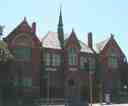
  9. Look for a grand, red-brick building with pointy gables and a tall green spire right across from the Carlton Gardens-if you're facing the ornate archway and the row of wide,…Leggi di piùMostra meno

    Look for a grand, red-brick building with pointy gables and a tall green spire right across from the Carlton Gardens-if you're facing the ornate archway and the row of wide, arched windows, you've found Carlton Gardens Primary School. Now, imagine it’s 1884: horse-drawn carts clatter along Rathdowne Street, and the scent of fresh ink and chalk lingers in the air from a brand-new school just opened for the children of a fast-growing city. This place has seen a bit of everything-joyful shouts from generations of students, harried parents dashing by, and, believe it or not, a moment when it briefly swapped books for beds during the 1918 flu epidemic, welcoming patients instead of pupils! Picture worried nurses and townsfolk bustling under those same steep roofs you see now. The land underneath your feet was once prized by Thomas O’Grady and described as “the best in Carlton”-good soil for growing both minds and memories. Over time, the school has worn a few hats, with different names like Rathdowne Street Primary and Carlton Primary, but its heart has always been the same. These days, kids here might have parents dashing off to the University of Melbourne just up the road, but their laughter is the same as it was a century ago. So, next time you stroll by, maybe tip an imaginary hat to all the tiny feet-and occasional hospital gurney!-that have passed through these doors.

    Apri pagina dedicata →
  10. To spot La Mama Theatre, look for a modest, two-story red-brick building set back from the street with wooden stairs leading up the outside, painted signs announcing upcoming…Leggi di piùMostra meno

    To spot La Mama Theatre, look for a modest, two-story red-brick building set back from the street with wooden stairs leading up the outside, painted signs announcing upcoming shows, and a touch of greenery crawling around its entrance. As you stand here, just outside La Mama Theatre, take a deep breath and let the spirit of creativity fill your lungs-seriously, you might just inhale some lingering lines from last night’s experimental play. Picture this place back in 1967: a lively, scruffy corner of Carlton, alive with the clip-clop of students’ boots and the mingling aromas of espresso and hope. Into this scene walked Betty Burstall, fresh from New York, where she and her filmmaker husband Tim discovered the “off-off-Broadway” world-a place where you could fork over fifty cents for a cup of coffee and end up watching a play that was either brilliant, bonkers, or both. Betty looked around this very street and thought: “Why can’t Melbourne have a home for new, local, daring drama-where the hottest ticket is just showing up?” And so, inside this two-story brick printing works-a sturdy old shell built in 1883-you would have found actors, writers and dreamers crammed together under the soft glow of makeshift stage lights, with scripts clutched nervously in their hands and laughter echoing out onto Faraday Street. This “not-for-profit” space was a radical idea. Instead of high ticket prices and tuxedoed critics, Betty created a rent-free venue where the audience could toss a few coins into a hat if they loved what they saw, and every performer had a fair shot-no matter who they were or where they came from. Jack Hibberd’s very first play premiered here, and soon, Australian theatre was being born every week, twenty-five new plays in the first two years alone! Can you imagine the nerves behind those doors as the next up-and-comer waited for their cue? It wasn’t just playwrights, either. La Mama became a home for poets, composers, filmmakers and underground troupes. The air inside would shimmer with the excitement (and occasionally, confusion) of something wildly new. If you’d popped in one evening, you could have found underground performance groups like Tribe-who later jammed with Spectrum-or seen the house troupe, the La Mama Group, evolve into the legendary Australian Performing Group. Bet you didn’t know future stars like Cate Blanchett, David Williamson, or Julia Zemiro once tested their wings here, their voices bouncing off the old brick walls before rocketing across the globe. The heart of La Mama always beat for the artists, offering upfront funding, rehearsal space, and an 80% share of the box office-so the only real risk was holding back your imagination. Even today, despite everything the theatre’s faced, that spirit stays strong. In 2018, a fire tore through the building, sending smoke and memories swirling up into the sky. It could have been the final curtain, but thanks to fierce determination and the love of Melbourne’s artistic community, La Mama rose again, restored and ready, with its theatre space unchanged-right down to the old trapdoor and the original fireplace. So, whether you’re here for a new play, a whispered poem, or just to soak up the bohemian air, know you’re standing on storied ground. The next time you see a show, remember: you’re taking part in a little bit of theatrical rebellion that’s lasted more than fifty years-or, as Betty would’ve put it, helping keep Australian theatre “immediate, exciting, and delightfully unpredictable.”

    Apri pagina dedicata →
  11. You’re standing outside the Royal Dental Hospital of Melbourne, which, despite treating thousands of toothaches, won’t actually bite - I promise. Imagine stepping back to 1890,…Leggi di piùMostra meno

    You’re standing outside the Royal Dental Hospital of Melbourne, which, despite treating thousands of toothaches, won’t actually bite - I promise. Imagine stepping back to 1890, when this hospital first opened its doors, only it wasn’t here in Carlton yet. It stood over in the city, staffed by volunteer dentists. Picture bright white coats, the sharp smell of antiseptic, and anxious footsteps echoing on polished hallway tiles. A determined man named John Iliffe rallied Melbourne’s dentists to give their time for free - now that’s what you call a dental plan! Over the decades, this hospital packed up and moved a few times, always following the pulse of the city’s needs. From Lonsdale Street to Spring Street, and eventually, in 2003, to the building right in front of you on Swanston Street. Think of all the stories that moved with it - the whispered conversations from nervous patients, and the gentle encouragements from dentists about to fill another cavity or try to convince someone to floss more (don’t worry, your secret’s safe with me). Now, let’s rewind to the war years, a time buzzing with urgency. During World War I, dental students swapped their textbooks for drills, working 12-hour shifts. Their mission? To treat the teeth of soldiers - and get a whopping 5,000 fillings and 8,000 extractions done for recruits heading off to serve. After World War II, ex-air force huts became makeshift dental labs, cranking out prosthetics for returning heroes. That’s a lot of courage on both sides of the dentist’s chair! Through the years, the hospital grew, dreaming bigger with every location. In 1969, it became the Royal Dental Hospital of Melbourne, its name as regal as a crown. Today, it’s a hive of activity, not just treating emergencies and general dental woes - but also specializing in everything from orthodontics to pediatric dentistry. Step inside and you’ll find one of Australia’s top teaching hospitals: students from Melbourne, RMIT, and La Trobe universities learning their craft, and overseas dentists getting their start in Victoria. So, whether you’ve got a killer sweet tooth or you just love a good tooth tale, the Royal Dental Hospital of Melbourne has probably seen it all - and patched it up with a smile

    Apri pagina dedicata →
  12. Look right ahead for a grand, three-storey cream and red-brick building with strong columns and a central entrance marked “Metropolitan Fire Brigade”-it stands out proudly between…Leggi di piùMostra meno

    Look right ahead for a grand, three-storey cream and red-brick building with strong columns and a central entrance marked “Metropolitan Fire Brigade”-it stands out proudly between modern apartments. Alright, picture yourself back in the roaring 1920s when this very spot was alive with the clang of bells, the shouts of firefighters, and the whiff of smoke from old fire engines ready to speed off into the streets of Melbourne. This isn’t just any building-this is the Carlton Fire Station, the hero headquarters built between 1927 and 1929, designed by Cedric Haese Ballantyne with enough Edwardian Baroque flair to make it look like the grandest firefighter’s palace in town. Imagine young firemen rushing down from the upper floors, where they lived-single blokes on one level, families on another-while the ground floor shopfronts bustled with everyday city life. Everything centered around that wide central archway, leading straight into a hub of fire brigade action and a sense of urgency that never really vanished from these walls. Now, here’s the twist: after 70 years of battling blazes, the fire engines rolled out for the last time in 1997, the sirens fading just around the corner to a new home on Bouverie Street. This bold old station didn’t retire quietly, though-it transformed into cool city apartments, where the only alarms are probably burnt toast. The Carlton Fire Station stands with all its original pride, a reminder that every hero needs a home-and, apparently, great architecture doesn’t hurt either!

    Apri pagina dedicata →
Domande frequenti

Come inizio il tour?

Dopo l'acquisto, scarica l'app AudaTours e inserisci il tuo codice di riscatto. Il tour sarà pronto per partire immediatamente – tocca play e segui il percorso guidato dal GPS.

Ho bisogno di internet durante il tour?

No! Scarica il tour prima di iniziare e goditelo completamente offline. Solo la funzione chat richiede internet. Ti consigliamo di scaricare tramite WiFi per risparmiare dati mobili.

È un tour guidato di gruppo?

No – è un tour audio autoguidato. Esplori in autonomia al tuo ritmo, con la narrazione audio riprodotta dal tuo telefono. Nessuna guida, nessun gruppo, nessun orario.

Quanto dura il tour?

La maggior parte dei tour richiede 60–90 minuti, ma sei tu a controllare il ritmo. Metti in pausa, salta le tappe o fai pause quando vuoi.

E se non riesco a finire il tour oggi?

Nessun problema! I tour hanno accesso a vita. Metti in pausa e riprendi quando vuoi – domani, la prossima settimana o il prossimo anno. I tuoi progressi vengono salvati.

Quali lingue sono disponibili?

Tutti i tour sono disponibili in oltre 50 lingue. Seleziona la lingua preferita quando riscatti il codice. Nota: la lingua non può essere cambiata dopo la generazione del tour.

Dove accedo al tour dopo l'acquisto?

Scarica l'app gratuita AudaTours dall'App Store o Google Play. Inserisci il codice di riscatto (inviato via email) e il tour apparirà nella tua libreria, pronto per essere scaricato e avviato.

verified_user
Soddisfazione garantita

Se il tour non ti piace, ti rimborseremo l'acquisto. Contattaci a [email protected]

Pagamento sicuro con

Apple PayGoogle PayVisaMastercardPayPal

AudaTours: Tour Audio

Tour a piedi autoguidati, coinvolgenti e convenienti

Prova l'app arrow_forward

Amato dai viaggiatori di tutto il mondo

format_quote Questo tour è stato un ottimo modo per vedere la città. Le storie erano interessanti senza sembrare troppo scriptate, e mi è piaciuto poter esplorare al mio ritmo.
Jess
Jess
starstarstarstarstar
Tour Tbilisi arrow_forward
format_quote Un ottimo modo per conoscere Brighton senza sentirsi un turista. La narrazione aveva profondità e contesto, senza esagerare.
Christoph
Christoph
starstarstarstarstar
Tour Brighton arrow_forward
format_quote Ho iniziato questo tour con un cornetto in mano e zero aspettative. L'app ti accompagna tranquillamente, niente pressione, solo tu, le tue cuffie e delle storie interessanti.
John
John
starstarstarstarstar
Tour Marseille arrow_forward

Tour Audio Illimitati

Sblocca l'accesso a OGNI tour nel mondo

0 tour·0 città·0 paesi
all_inclusive Esplora Illimitato