

पोर्टलैंड ऑडियो टूर: हवेली से समुद्री रेल तक समय की गूँज
पोर्टलैंड की कोबलस्टोन सड़कों के नीचे, हर ईंट की कतार और बंदरगाह की हवा से रहस्य धड़कते हैं। यह स्व-निर्देशित ऑडियो टूर ओल्ड पोर्ट के भूतिया घाटों और ग्रीन मेमोरियल ए.एम.ई. ज़ियन चर्च की भावपूर्ण गूँज में गोता लगाता है, और पोर्टलैंड कला संग्रहालय के भीतर छिपी उत्कृष्ट कृतियों तक ले जाता है। चाँदनी रात में घाटों के नीचे तस्करी किए गए उन्मूलनवादियों की ज़रूरी कहानी को उजागर करें। निषेध छापे के दौरान कौन बिना किसी निशान के गायब हो गया जिसने शहर को हिला दिया था? संग्रहालय की प्रसिद्ध कृतियों के बीच कौन सी कुख्यात कलाकृति चुपचाप बैठी है, जिसे अक्सर अनदेखा कर दिया जाता है? स्वतंत्रता के लिए लड़ाइयों, विद्रोह की फुसफुसाहटों और छिपे हुए घोटालों के माध्यम से एक मार्ग तैयार करें। हर कदम परिचित गलियों को खोई हुई विजयों और अनकहे साहस के मंचों में बदल देता है। पोर्टलैंड की सतह के नीचे की परतों को अनलॉक करें। प्ले दबाएं और इन छिपे हुए इतिहासों को प्रकाश में लाएं।
टूर पूर्वावलोकन
इस टूर के बारे में
- scheduleअवधि 30–50 minsअपनी गति से चलें
- straighten4.2 किमी पैदल मार्गगाइडेड पथ का पालन करें
- location_onस्थानकंबरलैंड, संयुक्त राज्य
- wifi_offऑफ़लाइन काम करता हैएक बार डाउनलोड करें, कहीं भी उपयोग करें
- all_inclusiveलाइफ़टाइम एक्सेसकभी भी, हमेशा के लिए फिर सुनें
- location_onपोर्टलैंड कला संग्रहालय से शुरू होता है
इस टूर के स्टॉप
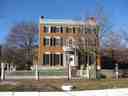
To spot the Portland Museum of Art, look for a stately, three-story brick mansion with a pale fence and tall windows; it faces the street proudly with a wreath-adorned entrance…और पढ़ेंकम दिखाएँ
To spot the Portland Museum of Art, look for a stately, three-story brick mansion with a pale fence and tall windows; it faces the street proudly with a wreath-adorned entrance and is framed by leafless trees right here in the heart of the Arts District. Alright, take a little breath of that fresh Maine air and look up at this historic building-you’re not just seeing a museum; you’re about to step into more than a century of drama, art, and a dash of friendly Portland controversy. Picture it: the year is 1882. The city bustles with horse-drawn carts, and a small group called the Portland Society of Art first dreams of filling these streets with creativity. But they didn’t have a permanent home-not until the generous Margaret Jane Mussey Sweat left behind this mansion, hoping to honor her late husband, Lorenzo De Medici Sweat (that’s right, a name so fancy he almost sounds like a Renaissance painting himself). The transformation from private home to public gallery brought in famed architect John Calvin Stevens, and in 1911 the L.D.M. Sweat Memorial Galleries opened their doors. Imagine the echo of footsteps and the gentle hum of awed voices from that first crowd, eyes wide as they gazed at Maine’s first major art collection. As time pressed on, the museum kept growing, but squeezed for space like a lobster in a too-small shell. In the swinging ‘70s, things started to accelerate after Charles Shipman Payson, a Maine native, pledged his prized collection of Winslow Homer paintings-and a cool eight million dollars for a modern new wing. Suddenly, the old galleries had room to breathe, and so did Maine’s art lovers. The Payson Building became the face of the museum in 1983, and art poured in from across the world-paintings by Monet, Rodin, Picasso, and Cassatt, not to mention works from Marsden Hartley to Jamie Wyeth, making sure the museum had more drama inside than an episode of reality TV. But the history doesn’t just hang on the walls here; it’s built into the museum itself. The PMA is a patchwork of three buildings, each one echoing a different era and architectural style. In 2002, after a major facelift, the museum finally merged the stately McLellan House, the Beaux-Arts glory of the Sweat Galleries, and the modern Payson Building into a seamless whole-no more family feuds between the centuries, just one big, art-loving happy house. Now, every year, around 140,000 curious souls pass through these doors, hunting inspiration or maybe some peace and quiet (hey, we all need it). Sure, the walls are crowded with masterpieces, but the collection is broader than a Maine horizon: over 22,000 works, from haunting Munch prints to the sunny charm of Childe Hassam, and enough American stories to fill a whole bookshelf… or maybe a lobster trap. And just when you think you’ve cracked the whole story, controversy barrels in as only Portland can. In recent years, the debate around 142 Free Street-an old theater turned church turned museum-fueled passionate arguments about history, inclusivity, and even affordable housing. Some wanted the brick structure saved for its past; others argued that progress sometimes means letting go. After city council drama, court cases, and more letters than a postman’s holiday, the decision was finally made-Portland’s evolving identity, echoing in the bricks beneath your feet. So as you stand here, take a moment to hear it all: the murmur of past crowds, the quiet clash of old and new ideas, maybe even the gentle slap of a sea breeze-a place where Maine’s stories and masterpieces all come together under one roof. If these walls could talk, they’d tell you this-art is about change, and no one does change quite like Portland. Ready to move on, or do you just want to wander inside and see if you can spot a Picasso hiding behind the coat rack?
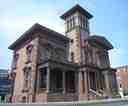
समर्पित पेज खोलें →Look ahead for a grand, brownstone villa with a tower that rises above the roof-if you see a fancy house that looks like it’s wearing its finest 1800s party outfit, you’ve found…और पढ़ेंकम दिखाएँ
Look ahead for a grand, brownstone villa with a tower that rises above the roof-if you see a fancy house that looks like it’s wearing its finest 1800s party outfit, you’ve found Victoria Mansion! Welcome, traveler, to a mansion so glamorous it practically sparkles with stories! Imagine you’re strolling through downtown Portland in the 1860s-horses clop by, ladies in big skirts pass, and ahead stands the remarkable home of Ruggles Sylvester Morse, a hotel tycoon who built his fortune in faraway cities. Morse wanted the best of everything (rumor has it even his dreams wore silk slippers), so he had the famous architect Henry Austin create this one-of-a-kind Italianate palace. Just look at those dramatic eaves, that four-story tower, the fancy windows, and verandas-if houses could strut, this one would be on a runway! Now, step closer-can you imagine stepping inside? The air would smell faintly of wood polish and fresh flowers, and your feet would sink into wall-to-wall carpets (real luxuries back then!). Gilded mirrors catch your reflection, and sunlight dances through stained glass. Artists like Giuseppe Guidicini painted illusions and frescoes on the walls, so lifelike you’d swear the ceilings might open to the sky or trompe-l'œil doors could lead to secret worlds. Gustave Herter, a master of furniture, designed lavish sofas and tables, making each room a tiny masterpiece. And wait, there’s more! Imagine being a guest here-you’d have twin sinks in your room (no squabbling over the washbasin), and if you sneaked into the Turkish smoking room, you’d find one of the country’s first glimpses of Islamic architecture with exotic colors and patterns everywhere. Downstairs, marble fireplaces crackle with warmth and the “flying staircase” twists up like a winding ribbon. Even the plumbing was ahead of its time, with hot and cold water piped in from clever rooftop gutters. After Morse passed away, the mansion’s next owner, Joseph Libby, wisely let the mansion’s magic be, changing almost nothing. But when hard times hit and the Great Depression rolled in, the mansion was left empty-so empty you could hear your own footsteps echo. It was nearly lost to a gas station, but thankfully, William Holmes swooped in like a hero from an old movie, saving it as a museum. Thanks to some determined souls, almost every piece inside is original-so when you step through those doors, you’re truly stepping into the past. And let’s be honest, with all its glitz and glamour, you’d half expect Queen Victoria herself to drop by for tea!
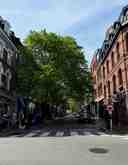
समर्पित पेज खोलें →To spot the Old Port, just look ahead for the old-school cobblestone street lined with tall 19th-century red brick buildings and a canopy of leafy green trees-the perfect mix of…और पढ़ेंकम दिखाएँ
To spot the Old Port, just look ahead for the old-school cobblestone street lined with tall 19th-century red brick buildings and a canopy of leafy green trees-the perfect mix of historic charm and seaside energy, right on this inviting stretch. Standing here in the Old Port, you’re at the heart of Portland’s most famous district, and you can almost feel the cobblestones buzzing beneath your feet. These streets have been through a lot-if they could talk, they’d probably spill a few fishy secrets and a couple of centuries’ worth of gossip. Close your eyes for a second and imagine the sounds of horse-drawn carts rumbling on the uneven stones, mingling with the lively shouts of merchants and sailors. This neighborhood has always been where the action happens, from the days of trade ships and timber to the electric nightlife you’ll find today. Way back in the 1600s, Portland’s peninsula was first settled, but things got hairy pretty quickly. The little colony was abandoned during the French and Indian Wars-apparently, property values were not great during surprise raids! It was resettled, took the name Falmouth in 1718, and then flourished on the back of the lumber trade. Those big old-growth trees from Maine’s forests? Many of them were shipped right out of this very port, destined to be masts for the world’s greatest sailing ships. You could say Portland had “mast” appeal. But not everything went according to plan. In 1775 the British showed up with cannons blazing, torching the city in what must have sounded like the world’s worst fireworks show. Somehow, Portlanders took the hint and rebuilt, bouncing back stronger than ever. By the 1800s, the area was booming again, and by the 1850s, Commercial Street was rising right here-built on fill to create space for industry, commerce, and bustling fish piers. Look around at these chunky brick buildings-they’re the survivors, built after the great fire of 1866 swept through and sparked a wave of ambitious new construction. Middle and Exchange Streets became the nerve center of town, filled with printers, newspapers, and all kinds of businesses. Exchange Street, just beside you, once buzzed with the energy of reporters and pressmen, shouting headlines across the street at each other. At the top of Exchange Street, the Portland Press Herald building loomed large, printing news and sometimes a bit of neighborhood drama since the 1920s. But like a ship in a storm, the Old Port hit rough waters in the 20th century. Buildings fell into disrepair, and the area was nearly lost-until a wave of developers in the 1970s saw promise in the historic facades. They launched a major transformation, turning forgotten spaces into snazzy apartments, offices, maybe even a few secret speakeasies. Restaurants like The Hollow Reed popped up and sparked a revolution-Portland’s food scene took off like a rocket, or maybe more like a well-cooked lobster. Don’t miss the local parks-Post Office Park and Tommy’s Park-perfect for catching your breath, taking in some public art, or maybe enjoying a hot dog from a famous stand. There’s even a mural at Tommy’s Park that tricks your eyes, and if you’re lucky, you’ll stumble on visitors and locals swapping tales about the grand old days of the Old Port Festival: a rain-or-shine, music and food extravaganza that once even built the world’s largest lobster roll. Sixty-one feet of sandwich… that’s the kind of Portland record that’s hard to live down. Today, the Old Port remains a living, breathing patchwork of boutique shops, lively eateries, and a connection to Portland’s salty, storied past. Listen carefully as you wander-if you’re quiet enough, sometimes you can still hear the echoes of sailors laughing, printers calling headlines, and maybe, just maybe, the whisper of a lobster roll recipe drifting through the salty sea air. To expand your understanding of the geography, parks or the old port festival, feel free to engage with me in the chat section below.
समर्पित पेज खोलें →
7 और स्टॉप दिखाएँकम स्टॉप दिखाएँexpand_moreexpand_less
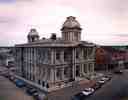
To spot the United States Custom House, look straight ahead for a grand, three-story gray granite building with rhythmic rows of large arched windows and two striking square…और पढ़ेंकम दिखाएँ
To spot the United States Custom House, look straight ahead for a grand, three-story gray granite building with rhythmic rows of large arched windows and two striking square cupolas perched on top-it stands majestic on a corner with a white stone railing along the steps. Now, let’s go back in time, right where you’re standing-imagine the year is 1866. You’re on a bustling Portland waterfront, the salty air is sharp with the promise of commerce, and every street seems to echo with the clatter of horse hooves, the shouts of sailors, and the crash of waves against wooden docks. But suddenly-tragedy! The Great Fire tears through the city, devouring nearly 1,800 buildings, including the Exchange Building where customs officers once counted riches streaming in from across the sea. Portland is in ruins, but the spirit here is as tough as New Hampshire granite, and the city refuses to be snuffed out. After all, by this time, Portland is one of the nation’s busiest ports, collecting an impressive $900,000 a year in customs duties. With trade booming and the need for a grand new home for customs operations, a decision is made-this city needs a landmark! In steps Alfred B. Mullett, America’s dashing Supervising Architect of the Treasury. Mullett is the kind of architect who mixes solid strength with a flair for the dramatic-think of this building as Portland’s own architectural hero in a tailored stone suit. Building begins in 1867. Materials trickle in as slowly as a Maine spring thaw, especially the granite hauled from New Hampshire for upper levels. Five patient years pass as masons and carpenters wrestle columns and pilasters into place. By 1872, Mullett’s vision stands complete: a granite fortress with elegant Renaissance Revival curves and the signature mansard roofs of the Second Empire style. Walk up close and you’ll see those massive round-headed windows, with simple but powerful keystones. Stout Doric columns and pilasters guard each corner, topped with an intricate cornice swirling around the building like fancy icing on a sturdy birthday cake. Perhaps the real treasure lies inside-picture yourself walking over a sophisticated checkerboard marble floor, counters stretching along either side, made from rare marbles salvaged from the heart of Lake Champlain. High above, a coffered ceiling glimmers with ornate patterns, and a grand two-story customs hall buzzes with inspectors and merchants inspecting manifests, stamping papers, and maybe even sneaking a few good stories. There’s a narrow, iron-gallery ringing the hall, decorated with emblems of trade-corn, tobacco leaves, and even playful dolphins! Right in the middle of this elegant swirl stands an eight-foot walnut counter with a proud spherical clock ticking away every second of Portland’s fortunes. This Custom House has survived nearly unchanged for over a century and a half-through the arrival of the U.S. Coast Guard in the 1980s, through restoration projects great and small, and even the moving out of the last customs officers in 2012. In 2013, a major renovation breathed new life into these granite bones, and today it houses federal agencies whose tasks are still woven into the fabric of Portland’s story. So as you stand here, picture bustling sailors, anxious merchants, and the oddly proud customs officials all layered across the years, arguing over sea-chests and invoices where you now gaze up at the grand old twin cupolas. This is a survivor-a building as steadfast and surprising as Portland itself! And don’t worry, they say the only things smuggled through here today are echoes of the past… and maybe, just maybe, a stray seagull hoping for a snack. Intrigued by the architecture, significant events or the building facts? Make your way to the chat section and I'll be happy to provide further details.
समर्पित पेज खोलें →You’re now standing before the Maine Supreme Judicial Court, a building where some of the state’s most important decisions are made. Imagine the sense of responsibility just…और पढ़ेंकम दिखाएँ
You’re now standing before the Maine Supreme Judicial Court, a building where some of the state’s most important decisions are made. Imagine the sense of responsibility just walking into this place-no pressure, right? Here, seven justices hold the power to shape Maine’s laws, and you'd better believe they've earned their robes. The governor appoints them, the Senate confirms them, and each serves a seven-year term-but there’s no set limit or official “time to retire.” It’s sort of like being invited to Thanksgiving dinner every year: you can keep coming back as long as everyone agrees you still bring something to the table! When the justices gather here as the Law Court, their job is a serious one. They hear appeals from folks who’ve been sentenced to more than a year behind bars, help decide who gets to be a lawyer, and set the rules for how Maine’s courts run. Their decisions and opinions help define what’s fair in Maine, making this more than just a place for long black robes and dramatic gavel-banging. Here’s an unexpected twist: unlike most state supreme courts, Maine’s wasn’t always stuck in the state capital, Augusta. Why not? Well, the courthouse there was too small for all the justices-imagine a game of musical chairs with lawyers and judges! So Portland became home, with the justices often traveling to Bangor, Augusta (now that there’s more room post-2015), and even high schools, bringing a bit of legal drama wherever they go. The court has a unique superpower, too: it can offer advisory opinions if the governor or legislature has burning questions. And if, say, the governor tries something wild-like turning the Blaine House into a giant lobster shack-the justices are the ones who decide if the governor is still fit for office. It’s no wonder the Maine Supreme Judicial Court is such a vital part of the state’s story. With each case and every gathering, this grand building continues to shape Maine’s future-one gavel strike at a time.
समर्पित पेज खोलें →To spot the Eastern Cemetery, look for a sweeping field of old gravestones ringed by black iron fencing and a solid stone wall, with an entrance on Congress Street-right in front…और पढ़ेंकम दिखाएँ
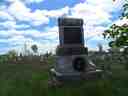
To spot the Eastern Cemetery, look for a sweeping field of old gravestones ringed by black iron fencing and a solid stone wall, with an entrance on Congress Street-right in front of you lies the city’s oldest resting ground, along a grassy slope dotted with trees and scattered monuments. Now, take a moment to soak in the atmosphere-there’s a certain quiet grandeur to this place, where history comes with a few extra goosebumps. Established way back in 1668, the Eastern Cemetery is Portland’s oldest historic site and, quite frankly, one of its most fascinating. Over 4,000 marked graves fill this seven-acre triangle at the foot of Munjoy Hill, with perhaps thousands more souls resting in unmarked plots beneath the grass. You’re standing on the edge of centuries, where Portland’s very first settlers, sailors, merchants, and many, shall we say, colorful characters ended up. Let your imagination wander as you take in the gentle slope and the scattered grave markers, some leaning forward as if straining to share their owners’ stories. Near the main entrance, there’s the modest little Dead House-don’t let the name fool you, it’s really just a nondescript shed from 1871. On a chilly winter day long ago, grieving families would use it to temporarily store caskets when the Maine ground was too hard to dig graves. You can almost picture the frost on the windowpanes and hear the crunch of boots on icy ground. But if you visit in the summer, you’ll see tours led by the spirited volunteers of Spirits Alive, a group committed to bringing the cemetery’s tales into the daylight-just minus the spookiness, I promise! The cemetery itself is a patchwork of stories. In 1890, Portland’s city engineer mapped out 12 tidy sections, each one crammed with its own cluster of headstones. Look for the monument with a soldier’s bedroll on top-that’s the Stinson Monument. It honors Sergeant Alonzo P. Stinson, the first Portlander to fall in the Civil War. Though he died far from home, his memory rests right here, marked by a granite and bronze cenotaph waving little American flags. Talk about coming home in style! But the drama doesn’t end there. On a rise, side by side, lie two captains-Lt. William Ward Burrows II and Commander Samuel Blyth-one American, one British, both killed in the same naval smackdown off the Maine coast during the War of 1812. Their funeral must have been a showstopper: imagine a grand procession winding through Portland, the whole city gathered to witness two former enemies receive equal honors, all rivalry set aside. As a bonus, a third officer who died of wounds from that very battle joined them two years later-the ultimate sailor’s reunion. Eastern Cemetery reveals Portland’s deeper tales too. Some parts were set aside for Black residents, Quakers, Catholics, paupers, and “strangers.” Over time, investigators like historian Ron Romano uncovered sections once hidden to official records. The cemetery grew until it simply couldn’t hold any more. By the mid-1800s, larger cemeteries opened, and burials here practically stopped-though that didn’t prevent over 700 families from relocating their loved ones up the road, hoping for roomier or less ghostly accommodations. Probably the oldest marked grave you’ll find is that of Mistress Mary Green, dating from 1717-though given the cemetery opened in 1668, who knows what secrets lie beneath your shoes. There’s also the final resting place of Commodore Edward Preble, a naval hero, and Captain Lemuel Moody, who built the Portland Observatory you’ll see later in our tour. Some markers are works of art themselves, thanks to Bartlett Adams, Portland’s first tombstone carver. He created nearly 700 here, many elaborate and full of detail. If you spot a particularly ornate stone, there’s a good chance it’s one of his. This place is part garden, part puzzle, and completely alive with stories, thanks to groups like Spirits Alive who preserve its quiet dignity. And speaking of alive, don’t linger too long-otherwise, I’ll have to start making ghost jokes! Off we go to the next stop, but remember, every stone here has a tale fit for a blockbuster (if only Hollywood did 17th-century Portland). Seeking more information about the mary green's headstone, the captains' graves or the notable burials? Ask away in the chat section and I'll fill you in.
समर्पित पेज खोलें →Look ahead for a tall, octagonal red tower rising above the rooftops, with a lantern-like cupola and flagpoles at the very top-there’s nothing else quite like it on the Munjoy…और पढ़ेंकम दिखाएँ
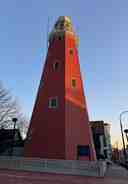
Look ahead for a tall, octagonal red tower rising above the rooftops, with a lantern-like cupola and flagpoles at the very top-there’s nothing else quite like it on the Munjoy Hill skyline! Welcome to the Portland Observatory-where, believe it or not, the WiFi signal was made of flags and telescopes! This grand old tower, built in 1807, has stood guard over Portland’s harbor for more than two centuries. Imagine yourself as a ship captain back then: after weeks at sea, hungry for land and news, your ship slowly emerges from behind the islands. Far above on Munjoy Hill, Captain Lemuel Moody’s keen eyes and a mighty telescope-one so powerful it could spot your sails a whopping 30 miles out-would spy your arrival before anyone else in the city even thought to light the stove. Back in those bustling days, the Observatory wasn’t just a fancy lookout; it was the 19th-century equivalent of a harbor traffic app. Ships weren’t visible from the busy waterfront, so Moody’s crew ran a slick operation-when a merchant’s ship was spotted, their special flag would be hoisted atop the tower, sending a silent shout through the salty sea air: “Prepare the docks, lads, she’s coming home!” Merchants, always hungry for a head start, happily paid Captain Moody for the privilege of keeping their flags in-house-and their cargoes were met with precision. Now, this elegant tower was built with brains and brawn. Its seven stories are shaped into an octagon, all to shrug off the fierce coastal winds. Instead of a basement, the base is packed with heavy rocks, anchoring it through centuries of storms-even the famed nor’easters. During the War of 1812, this spot wasn’t just about business-it was also used as a watch tower, surveying the sea for any hint of danger. As styles changed and radios took over, the Observatory’s role faded. But don’t think she just napped through the years-Portland’s kids turned it into a playground, their initials still carved deep into the ancient wood. Today, lovingly cared for by Greater Portland Landmarks, the Observatory welcomes curious visitors to climb its tower and soak in the views-as far as Mount Washington, if you’re lucky! So, standing here, you’re at the heart of a truly unique piece of maritime history-a tower built for messages, memories, and marvelous views.
समर्पित पेज खोलें →To spot the Green Memorial A.M.E. Zion Church, look for a gray stone-like building on the corner with tall, pointed stained-glass windows, textured concrete walls, and a small…और पढ़ेंकम दिखाएँ
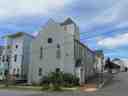
To spot the Green Memorial A.M.E. Zion Church, look for a gray stone-like building on the corner with tall, pointed stained-glass windows, textured concrete walls, and a small white entryway sheltered under a gabled roof. Alright, you’re standing right outside the Green Memorial A.M.E. Zion Church-take in that textured stonework and the tower peeking up over Munjoy Hill’s rooftops! If this spot feels important, you’re absolutely right; you’re at the heart of a story filled with grit, celebration, and more than a few chicken dinners. Let’s rewind. Picture the year 1888. All of Portland is buzzing because Union Station just opened, and one of the new arrivals is Moses Samuel Green, who stepped off the train with hope in his heart and maybe a few good shoe-polishing rags in his suitcase. Moses, born into slavery in Maryland, managed to leap life’s highest hurdles-he built a shoeshine stand, dived into real estate, and rose to become the wealthiest African American in the city, probably in all of Maine. The kind of rags-to-riches tale that makes fairy tales look lazy. By 1891, Moses wasn’t just shining shoes-he was gathering people. Along with other African American Portlanders, he founded the A.M.E. Zion Mission, welcoming folks who’d come from far and wide looking for new beginnings. They didn’t have their own building back then-just borrowed corners in other churches. But by 1914, thanks to Moses’ business savvy, this concrete block beauty was built right here. In fact, the name ‘Green Memorial’ honors him-a tribute sewn right into Munjoy Hill’s fabric. Flash forward to the mid-20th century and imagine the sidewalks buzzing with families-on their way to social events and Sunday choir practice-because this church became the living room of Portland’s Black community. It was the place for organizing civil rights campaigns and swapping job leads. On Thursdays, when most of the church’s members, many domestic workers, had their day off, something wonderful would happen: -the church’s legendary chicken dinners. Ticket sellers made sure every major employer in town bought a bundle for their employees, and Thursday dinners filled not just the church coffers but also the bellies and hearts of Portlanders. You would've heard some real foot-tapping, too. In the 1920s, the all-woman Mis-Ter-Ray Club organized teas and dances right here, raising funds amidst the scent of fresh-brewed tea and the glide of dress shoes on a creaky floor. Musicians like Roland Hayes and Marian Anderson even stopped by-when the world came to Portland, this was where they performed. It wasn’t all dinners and music; this church meant business when it came to justice. Reverend Stephen Gill Spottswood, one of its ministers, became a national force, eventually leading the NAACP and pushing for the Dyer Anti-Lynching Bill and desegregation. Some of the country’s major civil rights movements found roots right here, from meetings and marches to the spread of news and hope across Maine. But the story lingers on. By 1973, the building was listed on the National Register of Historic Places. In the 1990s, the church became the star in "Anchor of the Soul," a documentary that rightly dubbed it an anchor for Portland’s Black community through the 20th century. The word was out: Green Memorial wasn’t just a church-it was the pulse of a community. Imagine the excitement on the day they built a traditional West African canoe right outside for a community sailing event. Today, under the guidance of Reverend Kenneth I. Lewis, whose résumé would make anyone dizzy, the church is alive with a vibrant, multiracial congregation. As the Reverend says, “Sunday is the most segregated day in the United States. But not at the corner of Monument and Sheridan.” And don’t forget the choir-renowned through Maine, their music has moved hearts at memorials and celebrations alike. So next time you smell fried chicken, hear gospel music, or pass a friendly bulletin board announcing job openings-know that on this corner, the spirit of community isn’t just history, it’s tradition in action.
समर्पित पेज खोलें →To spot the Abyssinian Meeting House, look for a simple, two-story building with white wooden siding on top, red brick on the bottom, tall black-trimmed windows, and a large sign…और पढ़ेंकम दिखाएँ
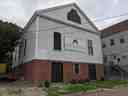
To spot the Abyssinian Meeting House, look for a simple, two-story building with white wooden siding on top, red brick on the bottom, tall black-trimmed windows, and a large sign right on the front that says "Abyssinian Meeting House." You’re standing in front of the Abyssinian Meeting House, one of Portland’s best-kept secrets-and what a story it has to tell! Take a deep breath and imagine it’s the early 1800s, and this quiet street is alive with activity: the clacking of horse hooves, the smell of wood smoke in the air, and the determined footsteps of neighbors bustling to a meeting that could change their lives. This remarkable building, crafted between 1828 and 1831 by free African-Americans, is the oldest African-American church building in Maine, and the third oldest in the entire United States-sort of the wise grandparent of historic Black churches! It was born out of stubborn hope, after Christopher Christian Manuel, Reuben Ruby and others bravely spoke out against segregation at the local Second Congregational Church, where Black worshippers were forced to the balcony if they were even allowed in at all. When their protest letter hit the local newspaper, you can bet it made some noise! Refusing to accept second-class treatment, these community leaders formed the Abyssinian Religious Society. When you picture Reuben Ruby, think of a man with a heart as strong as an ox and a spirit as lively as a fiddle-he gave the land for this building, put in sweat turning it into a spiritual home, and even drove his hackney carriage around Portland, carrying not only fares but sometimes escaped slaves seeking freedom. One minute he’s helping William Lloyd Garrison plot the next anti-slavery speech, the next he’s fixing up the church interior or, yes, even hosting a spirited lawsuit to make sure the books were balanced. This wasn’t just a house of worship. Imagine the sound of revival meetings, the pounding pulse of impassioned abolitionist speeches, the hum of the Portland Union Anti-Slavery Society planning its next campaign. In the 1840s, if you listened closely, you’d even hear children’s laughter and the scratch of slates-because this was also a school for Black children when others wouldn’t teach them. By 1851, over 75 children crowded in for lessons, the air alive with hope and the occasional groan over tough homework. The Abyssinian was a place where church and action came together, where you might find Reverend Amos Noé Freeman helping people find jobs, arguing for temperance, or plotting ways to fight slavery. He even welcomed runaway slaves and hosted famous abolitionists, giving the place an air of both excitement and mystery-sort of like a 19th-century superhero hideout! Through all this, the Abyssinian endured. When Portland’s Great Fire of 1866 raged through the city, parishioners reportedly banded together in a desperate stand to save the church from the flames-and they succeeded. The building fell quiet as the 20th century closed in, especially after tragedy struck in 1898 when the sinking of the SS Portland claimed seventeen of its congregation. Still, the Abyssinian refused to disappear, even as membership dwindled and it was eventually sold, turning into a stable, then an antique store, and finally carved into apartments. The neighbors probably didn’t realize that under their feet lay remnants of abolitionist meetings and Underground Railroad activity! When the city seized it for unpaid taxes in the ‘90s, the building could have faced the wrecking ball, but local heroes stepped in again-sound familiar?-buying the place for exactly what it cost to buy the land in 1828: $250. Today, thanks to grants, archeologists have uncovered marbles, bits of dishes, old toys, and even a wooden water pipe. The future of this site is finally looking as bright as the people who built it. So next time you hear the wind whistling around these old windows, let it remind you of all the stirring voices-teachers, freedom seekers, and fiery preachers-that once filled these walls. Fascinated by the a house of worship (1828-1917), mandated dissolution or the landmark status and restoration? Let's chat about it
समर्पित पेज खोलें →

अक्सर पूछे जाने वाले प्रश्न
मैं टूर कैसे शुरू करूँ?
ख़रीदारी के बाद, AudaTours ऐप डाउनलोड करें और अपना रिडेम्पशन कोड दर्ज करें। टूर तुरंत शुरू करने के लिए तैयार होगा - बस प्ले टैप करें और GPS-गाइडेड रूट का पालन करें।
क्या टूर के दौरान मुझे इंटरनेट चाहिए?
नहीं! शुरू करने से पहले टूर डाउनलोड करें और पूरी तरह ऑफ़लाइन इसका आनंद लें। केवल चैट फ़ीचर को इंटरनेट की ज़रूरत है। मोबाइल डेटा बचाने के लिए WiFi पर डाउनलोड करने की सिफ़ारिश है।
क्या यह एक गाइडेड ग्रुप टूर है?
नहीं - यह एक सेल्फ-गाइडेड ऑडियो टूर है। आप अपनी गति से स्वतंत्र रूप से खोजते हैं, आपके फ़ोन से ऑडियो कथन बजता है। कोई टूर गाइड नहीं, कोई ग्रुप नहीं, कोई शेड्यूल नहीं।
टूर में कितना समय लगता है?
अधिकांश टूर पूरा करने में 60-90 मिनट लगते हैं, लेकिन गति पूरी तरह आपके नियंत्रण में है। जब चाहें रुकें, स्टॉप छोड़ें, या ब्रेक लें।
अगर मैं आज टूर पूरा नहीं कर सकता/सकती तो?
कोई समस्या नहीं! टूर की लाइफ़टाइम एक्सेस है। जब चाहें रोकें और फिर शुरू करें - कल, अगले हफ़्ते, या अगले साल। आपकी प्रगति सेव रहती है।
कौन सी भाषाएँ उपलब्ध हैं?
सभी टूर 50+ भाषाओं में उपलब्ध हैं। अपना कोड रिडीम करते समय अपनी पसंदीदा भाषा चुनें। नोट: टूर जेनरेट होने के बाद भाषा बदली नहीं जा सकती।
ख़रीदारी के बाद मैं टूर कहाँ एक्सेस करूँ?
App Store या Google Play से मुफ़्त AudaTours ऐप डाउनलोड करें। अपना रिडेम्पशन कोड (ईमेल द्वारा भेजा गया) दर्ज करें और टूर आपकी लाइब्रेरी में दिखेगा, डाउनलोड और शुरू करने के लिए तैयार।
अगर आपको टूर पसंद नहीं आया, तो हम आपकी ख़रीदारी वापस करेंगे। हमसे संपर्क करें [email protected]
सुरक्षित चेकआउट 


