
लिवरपूल ऑडियो टूर: लिवरपूल के पवित्र स्थान और प्रतिष्ठित स्थल ऑडियो टूर
एक ऐसा शहर जहाँ एक धधकती लाल मीनार छतों के ऊपर चमकती है, और सुनहरे गुंबद भूरे आसमान के नीचे चमकते हैं—लिवरपूल की परतें मर्सी से भी गहरी हैं। यह स्व-निर्देशित ऑडियो टूर इसके धड़कते दिल में बिखरे हुए छिपे हुए अभयारण्यों, गुप्त संघर्षों और भूले हुए विजयों के दरवाज़े खोलता है। वह खोजें जिसे अधिकांश आगंतुक अनदेखा कर देते हैं और उन गलियों में घूमें जो अनकही कहानियों से स्पंदित होती हैं। सेंट क्लेमेंट में किस रहस्यमय सौदे ने एक बार पूरे समुदाय को किनारे पर ला खड़ा किया था? अल-रहमा मस्जिद में उठाई गई आवाज़ों ने एकता और विवाद दोनों को कैसे प्रज्वलित किया? और सेंट डंस्टन के पत्थर के टावरों को दशकों से किस अलौकिक आकृति ने प्रेतवाधित किया है, ऐसी अफवाह है? जादुई विक्टोरियन नावों से लेकर आशा से भरे जीवंत प्रार्थना कक्षों तक साहसी कदमों का पता लगाएं। शहर का नाटक तब सामने आता है जब आप उन स्थानों से गुजरते हैं जहाँ विद्रोह फुसफुसाया, घोटाले भड़के, और लचीलापन चमकता रहा। लिवरपूल के प्रसिद्ध क्षितिज के नीचे खुदाई करने के लिए तैयार हैं? प्ले दबाएं—रहस्यों को उजागर होने दें।
टूर पूर्वावलोकन
इस टूर के बारे में
- scheduleअवधि 30–50 minsअपनी गति से चलें
- straighten4.8 किमी पैदल मार्गगाइडेड पथ का पालन करें
- location_onस्थानलिवरपूल, यूनाइटेड किंगडम
- wifi_offऑफ़लाइन काम करता हैएक बार डाउनलोड करें, कहीं भी उपयोग करें
- all_inclusiveलाइफ़टाइम एक्सेसकभी भी, हमेशा के लिए फिर सुनें
- location_onसेंट डंस्टन चर्च, लिवरपूल से शुरू होता है
इस टूर के स्टॉप
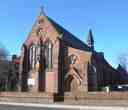
To help you spot the Church of St Dunstan, look for the striking building of deep red brick on the corner of Earle Road. Imagine a castle and a ship had a baby-that’s the vibe!…और पढ़ेंकम दिखाएँ
To help you spot the Church of St Dunstan, look for the striking building of deep red brick on the corner of Earle Road. Imagine a castle and a ship had a baby-that’s the vibe! Its tall, copper-green spire pokes high into the sky, glinting even on a cloudy Merseyside day. The windows at the front are tall and narrow, five of them side by side, and they’re flanked by pointy turrets, almost like the towers of an enchanted fortress. There’s a statue of Saint Dunstan tucked in a gable above the north porch. If you’re standing at the front, don’t forget to look up-the angular roof lines and brickwork are impressive from every angle. Now, let’s slip back in time for a moment-close your eyes (well, not for too long, I don’t want you bumping into the fence!). Picture yourself here in the late 1880s, when the church was just being finished. Liverpool was a city full of energy and bustle, and the Earp family wanted a place that would stand out. So, architects Aldridge and Deacon didn’t hold back. They gave us this “severe but handsome” beauty-honest words from the National Heritage folks, who know a thing or two about good looks. The church is built out of solid, red Ruabon brick, with a roof of slate, as classic as you can get. When the sun shines, the bricks seem almost to glow, but come dusk, the whole place gathers a mysterious, slightly gloomy air-like something out of a spooky novel. Inside, round stone pillars hold up the arches, and old brick glows with stories untold. Why, they say even the pipe organ, though silent now, might wake up with a groan if you say “Henry Willis” three times in a row. If you peek at the carvings above the west windows, you’ll spot symbols of the Four Evangelists and a figure of Christ, keeping an eye on all who pass by. There’s stained glass by Burlison and Grylls, and even an iron screen inside, guarding the chancel as if it’s a secret to be discovered. The Church of St Dunstan is still alive with song every Sunday. People gather here as they have for over a century, bringing their own hopes, questions, and a few well-creased hymnbooks. For architectural buffs, the west front might be “impressive if rather curious”-but for the rest of us, it’s simply unforgettable. Ready for the next stop? Just follow me-onward to our next adventure!
समर्पित पेज खोलें →If you look ahead, you can’t miss the Church of St Clement-just spot the sand-coloured stone walls and the eye-catching red door at the top of a few steps. Its steep slate roof…और पढ़ेंकम दिखाएँ
If you look ahead, you can’t miss the Church of St Clement-just spot the sand-coloured stone walls and the eye-catching red door at the top of a few steps. Its steep slate roof and tall, pointy bell turret at the front might make you feel like you’re about to walk into a fairy tale! The long row of lancet windows between sturdy buttresses along the side makes it look strong, as if it’s been waiting for you for almost 200 years-which, funny enough, it has. You’re standing in front of a church that’s seen a lot of Liverpool history. Built in 1840, the Church of St Clement is still bustling with life today, serving its parish and community. Under that calm stone exterior, you’ll find stories tucked into every corner. Imagine stepping inside to see galleries running along three walls, supported by old cast iron columns, and a ceiling painted with twinkling stars. Back in the day, this church was the heart of the neighbourhood, echoing with organ music and the footsteps of parishioners heading to their creaky box pews. Inside, there’s even a two-level pulpit, so if you wanted to give a very dramatic sermon, you’d be well set. There’s a spiral staircase where the vicar once would have made a grand entrance-careful not to get dizzy on the way up. And if you peered into the chancel, you’d spot the Ten Commandments written out beside the communion table, keeping everyone on their best behaviour. What’s special is that much of St Clement’s interior survived almost just as it was built. The church’s arches and windows, its peaceful apse, and its galleries all tell a tale of another era-a little slice of Victorian Liverpool where history and faith blend together. So, take a moment. Imagine all the secrets those walls could share-how many weddings, christenings, and maybe the occasional sneaky nap during a long service! Ready for the next stop? Liverpool’s layered stories keep getting better.
समर्पित पेज खोलें →To spot the Al-Rahma Mosque as you approach, look for a building that stands tall on the corner, finished in sandy-brick, with rows of arched windows marching along its sides.…और पढ़ेंकम दिखाएँ
To spot the Al-Rahma Mosque as you approach, look for a building that stands tall on the corner, finished in sandy-brick, with rows of arched windows marching along its sides. Most striking of all is the big, shining golden dome that glows at the top-almost like a crown. Two golden-topped towers stand at the mosque’s front corner, peeking over the street, and if you glance up, you’ll catch a crescent moon glinting on the very top of the dome. That’s how you know you’re in the right place! Now that you’re standing in front of the Al-Rahma Mosque, take a deep breath and feel the buzz around you. This isn’t just any building-it’s the main heartbeat of Liverpool’s Muslim community. Inside, as many as 2,500 people can gather for prayer. Imagine opening the doors to a sea of shoes in the entryway, the low murmur of greetings, and the bright sunlight drifting through those tall arched windows. But let’s rewind the clock a bit-the story actually starts back in the 1950s, when Liverpool’s Muslim community was just finding its feet. The first mosque wasn’t grand at all; just a simple room in Al-Haj Ali Hizzam’s house. Picture that for a moment: neighbors squeezed together, sharing prayers and stories, all dreaming of a space like the one you’re looking at now. Fast forward to the 1970s. After waiting ten long years for planning permission-talk about patience-the community finally built this mosque in 1974. Doors opened, and just like that, Liverpool’s Yemenis, Syrians, and Somalis found a place to call home. If these walls could talk, they’d echo with the sounds of laughter at community dinners, lost umbrellas on rainy days (this is Liverpool, after all!), and the gentle rhythm of footsteps heading inside for Friday prayers. Even today, the mosque’s green sign welcomes everyone from students to lifelong locals. Whether you’re here for worship, curious about the building, or just enjoying the golden domes, there’s always a story waiting for you. So, while you’re here, take a moment to soak up the blend of tradition, faith, and that unbeatable Toxteth warmth-you might even say it’s mercy, by the brick. Ready to keep walking?
समर्पित पेज खोलें →
7 और स्टॉप दिखाएँकम स्टॉप दिखाएँexpand_moreexpand_less
To spot the Church of St Margaret of Antioch, just look ahead for a bold, sturdy building of rich brick, standing tall with a broad triangular roof and two big arched windows at…और पढ़ेंकम दिखाएँ
To spot the Church of St Margaret of Antioch, just look ahead for a bold, sturdy building of rich brick, standing tall with a broad triangular roof and two big arched windows at the centre, like a pair of old eyes watching over Prince’s Road. On either side, you’ll see round rose windows peering out, and right in the middle above the door, there’s a statue of St Margaret herself keeping an eye on things. If you see a brick church with a strong square shape and a little wooden bellcote poking out near the roof, you’re in the right place! Take a step closer-feel the past press in around you. The year is 1869. Liverpool is alive with industry and hope, and a local stockbroker named Robert Horsfall has spent his fortune to build what would become the centre of Anglo-Catholicism in the city. Imagine the smell of wet brick and fresh slate as the builders hurry to finish before winter sets in. At your feet stands a church built strong, in thick red brick with bands of stone. Look up to spot the canopied statue of St Margaret, set above a line of arched windows, as if she’s keeping watch for lost souls or drivers who can’t park straight! The great round window above her catches the shifting Liverpool light and floods the church with colours. Once inside, people would have seen the marble piers striping the interior like a candy cane-stand at the entrance and picture it: the marble pillars, the iron gates guarding the raised chancel, and glimmers of gold from the saints on the pulpit. Maybe you’d smell the polish on the wooden pews, or hear the distant warble of the pipe organ, built in 1869 and still determined to rattle a few windows on Sundays. This place wasn’t always peaceful. In the 1880s, the vicar, James Bell Cox, caused such a stir with his high church rituals that he ended up in prison! For a while, coming here was almost as daring as sneaking into a secret club. Don’t forget to look for the rose windows on each side. After the war, stained glass from Gerald Smith and H. L. Pawle replaced what was lost to bombing raids, casting new colours across the old stones. If you take a walk around to the north, you’ll see where the Jesus Chapel was added in the 1920s, beautifully decorated, with an altar screen that almost bursts with painted colour. By now, you might notice how surprisingly quiet and calm it feels out here, even with the city buzzing not far away. That’s the charm of St Margaret’s-an oasis of calm that’s seen Liverpool change all around it, but still stands, patient as ever, rain or shine. Now, on to our next stop!
समर्पित पेज खोलें →Look ahead-you can’t miss it! You’re searching for a building that looks like something plucked straight from a fairy tale of old Constantinople. It’s right at the corner where…और पढ़ेंकम दिखाएँ
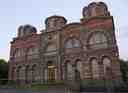
Look ahead-you can’t miss it! You’re searching for a building that looks like something plucked straight from a fairy tale of old Constantinople. It’s right at the corner where Berkley Street meets Princes Road. What’ll catch your eye first is those eye-catching stripes of red brick and creamy white stone, stacked in neat arches-one inside the other, like architectural nesting dolls. There’s a fence with gold-tipped spikes out front, but if you look up, you’ll spot a row of three domes perched proudly on the entrance, with yet another dome rising up just behind them. Each dome is built on a cylindrical base and they look almost like beehives-if bees were in the business of building palaces. Now, as you stand here, picture yourself back in the late 1800s. This neighbourhood was the place to be-Liverpool’s wealthy families filled these streets with huge, impressive mansions, all trying to outdo their neighbours with the most dazzling building on the block. The Greek Orthodox Church of St Nicholas went up in 1870, designed in a grand Neo-Byzantine style that would’ve made any Victorian industrial captain puff out his chest. But here’s something funny: on the outside, the church puts on quite the show-arches, domes, stripes so bold they could be in a seaside deckchair competition. But step inside, and it’s much plainer, with cool white marble columns and simple Byzantine-style tops. It’s like the building puts on its best suit for the outside, but switches to pyjamas once you’re through the door. This church was inspired by one in Constantinople, which is now a mosque, so you could say St Nicholas is a bit of a copycat-which is only fair, because good ideas are meant to be shared. And take a look to either side of you: just next door you’ll find a majestic synagogue and an old Welsh Presbyterian church. Back in Victorian times, this little stretch was like an Olympic Games of architecture-each community showing off its culture and status, but all living side by side. It wasn’t common for England in those days to see so much diversity, but right here, the city’s many faces came together, decorating Liverpool with a skyline full of surprises. So, next time you see a cluster of grand buildings and wonder who wanted to make the best impression-well, the answer is everyone. And who can blame them? In Liverpool, even the bricks seem keen to stand out.
समर्पित पेज खोलें →To spot the Wapping Tunnel, look for a huge, impressive brick cutting with steep walls and towering chimneys rising like old-fashioned giants into the sky. If you’re facing the…और पढ़ेंकम दिखाएँ
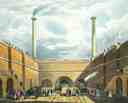
To spot the Wapping Tunnel, look for a huge, impressive brick cutting with steep walls and towering chimneys rising like old-fashioned giants into the sky. If you’re facing the tunnel entrance, you’ll be looking down into a deep rectangular pit, almost like a fortress moat, with three big arched tunnels in the wall directly ahead. At the sides you’ll notice curving staircases full of people, and up above, atop the high walls, curious onlookers are gathered, peering down where the action happens. The whole area bustles with energy, even in this old illustration-so if you spot those tall brick walls, arched tunnels, and skinny towers, you’ve found it! Now, take a deep breath because you’re standing right where history took a wild leap! Imagine it’s the late 1820s: the air smells of coal and excitement, with trains huffing steam like impatient dragons. Here begins the legendary Wapping Tunnel-built before anyone else in the world thought to drill a tunnel under a city just for trains. Picture inventors like George Stephenson, sleeves rolled up, dreaming big and digging even bigger. Down below, wagons carrying goods to and from the Liverpool docks rumble along these tracks. But there’s a twist: the tunnel is so steep-imagine a rollercoaster made of bricks and sweat-that the little steam engines just can’t handle it. So what do they do? They hook the carriages up to a gigantic rope pulled by a mighty stationary steam engine hidden in a rocky lair near the famous Moorish Arch. It’s dark inside, chilly, and just a bit spooky. Echoes bounce around as goods are tugged up or trundle down this underground highway, linking the bustling city to its docks and, eventually, the rest of the world. This place was Liverpool’s hidden artery-out of sight, but pulsing with life. And if you look around Liverpool today, you can still spot some of the tunnel’s red-brick ventilation towers-like old periscopes from a secret world below your feet. Take a moment and let your imagination travel back, with the roars and rattles of wagons, the shouts of workers, and the magic of the world’s very first city tunnel. Not bad for a hole in the ground, eh?
समर्पित पेज खोलें →To spot the Liverpool Institute for Performing Arts, just look ahead for a grand, sand-coloured stone building with four huge columns holding up a triangular pediment above the…और पढ़ेंकम दिखाएँ
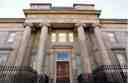
To spot the Liverpool Institute for Performing Arts, just look ahead for a grand, sand-coloured stone building with four huge columns holding up a triangular pediment above the entrance. The words “Liverpool Institute and School of Art” are etched just above the columns. The building has tall windows and is set back behind a black iron fence, giving it a stately, almost theatrical look - perfect, given what goes on inside. Alright, you’re standing outside the Liverpool Institute for Performing Arts - or LIPA. This isn’t just any school! If you listen closely, you might just imagine the echo of a guitar chord or the thud of a drumbeat drifting out the old windows. Back in the 1980s, this impressive building was falling apart, left empty after Paul McCartney’s own school, the Liverpool Institute High School for Boys, closed down. What a waste of such a fine spot, right? Luckily, Paul - yes, the Paul McCartney of The Beatles - teamed up with Mark Featherstone-Witty, who had big dreams of his own. Together, they transformed these tired old halls into a buzzing wonderland for music, dance, and creativity. Today, students come from all around the world, hoping their big break starts right here. You can almost sense the nerves and excitement in the air as you stand outside - someone inside could be practising their first monologue, or writing a song that’ll be the next big hit on the radio. There’s even a part-time academy for kids as young as four. Talk about starting early! The spot where you’re standing has hosted royalty - Queen Elizabeth II officially opened LIPA in 1996 - and seen more standing ovations than you could count. Success stories walk out these doors every year, ready for the bright lights. Don’t be surprised if you hear someone warming up their voice or spot a group bursting into dance practice! So, give a little nod to the dreamers inside, and who knows - maybe one day you’ll hear someone say, “I got my start right here at LIPA.” Now, onward to our next stop - let’s keep the show on the road!
समर्पित पेज खोलें →You’ve nearly made it to the Everyman Theatre. To spot it, just look straight ahead for a modern, boxy building with a glowing red “everyman” sign stretching across the front. But…और पढ़ेंकम दिखाएँ
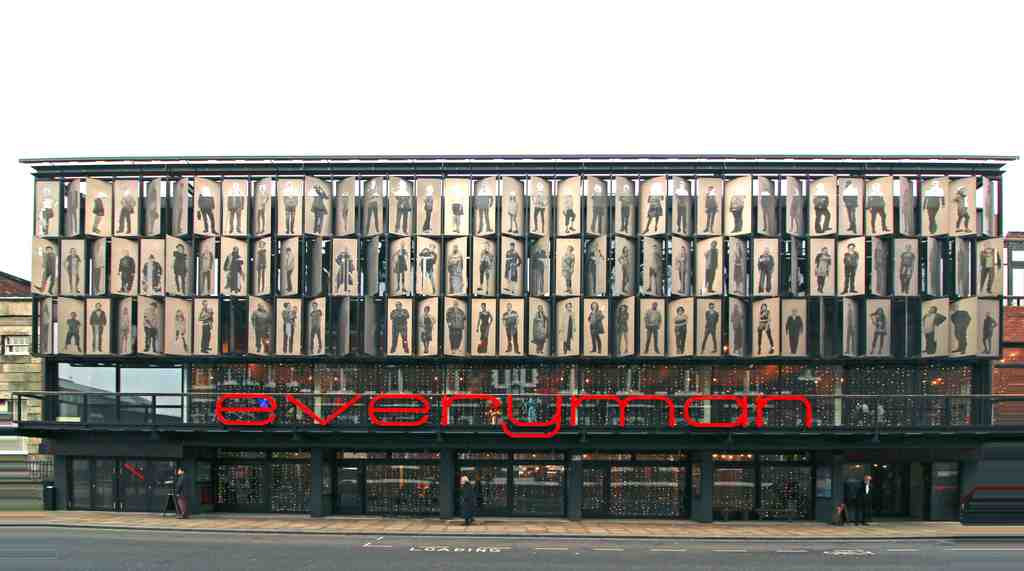
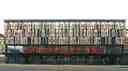
You’ve nearly made it to the Everyman Theatre. To spot it, just look straight ahead for a modern, boxy building with a glowing red “everyman” sign stretching across the front. But here’s the real giveaway: the whole upper front of the building is covered with dozens of tall, metal shutters, each printed with photos of real Liverpool locals-men, women, artists, even families all looking out at you. Honestly, it looks like half the city is peeking down, ready to greet you. Now, as you stand right here on Hope Street, take a second and imagine the electric atmosphere from decades of theatre magic in this spot. Picture 1960s Liverpool: artists, poets, and musicians drifting in and out, laughter and music floating out the doors onto the street. Back then, the Everyman started life as Hope Hall-first a chapel, then a church, then a concert hall and a cinema. I guess this building just couldn’t decide what it wanted to be when it grew up! It’s a place charged with creativity and just a pinch of rebellion. In the 1960s, up-and-coming theatre lovers saw the potential for something new here. Soon enough, the Everyman’s first group of founders opened its doors as a theatre, kickstarting a legacy for daring, inventive shows. It must have been exciting (or downright nerve-wracking!) to see Liverpool’s own writers like Willy Russell get their first big breaks on this stage. Imagine the cheers and groans during musicals, and the hush over the audience as the curtain rose on the Christmas rock ‘n’ roll pantos. Sometimes even the famous get their start here-you might have caught a young Julie Walters or Bill Nighy putting everything on the line, hoping for applause. And if you’re feeling a bit peckish, let me tempt your imagination: below your feet, back in the ‘70s, you’d have found the famous Everyman Bistro in the basement, always buzzing with conversation and the clatter of plates. These days, the cafe’s at street level, but the memories linger down below. In 2011, the whole building was knocked down and rebuilt-imagine the drama of auctioning off theatre seats and pieces of history, each with a story to tell. When it reopened, the Everyman strutted right into the limelight, winning the national prize for Britain’s best building. Not bad for a place with such humble, quirky beginnings-a true Scouser, don’t you think? So pause a moment. Listen. You just might hear the echoes of opening nights, wild dreams, and a city’s proud creative heart, all waiting behind those iconic faces in the windows. Right, onward to our grand finale at Liverpool Metropolitan Cathedral!
समर्पित पेज खोलें →If you’re searching for the Liverpool Metropolitan Cathedral, just look ahead and you can’t miss it! It has a circular, spaceship-like shape rising from a grand flight of wide…और पढ़ेंकम दिखाएँ
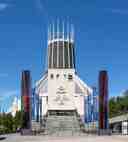
If you’re searching for the Liverpool Metropolitan Cathedral, just look ahead and you can’t miss it! It has a circular, spaceship-like shape rising from a grand flight of wide steps. The crown-like spire at the top glitters in the sun, surrounded by slender silver spikes, almost as if it's ready for lift-off. Stained glass panels shot with colors frame the entrance, so keep your eyes open for this futuristic-looking building that’s unlike anything else in Liverpool. Now, let’s stop for a moment. You’re standing before one of Liverpool's wildest and most iconic landmarks-known to the locals, with a wink, as “Paddy’s Wigwam." But its real name is the Liverpool Metropolitan Cathedral of Christ the King, and it sits right at the heart of Catholic Liverpool. In the 1840s, as the city overflowed with Irish families fleeing famine, the Catholic community here was bursting at the seams. Dream after dream for a giant cathedral came and went-some were just too grand, especially the one with a dome bigger than St. Peter’s in Rome! Imagine, Liverpool would have nearly stolen the pope’s thunder. But, as is often the case, money ran out faster than you can say “hallelujah,” and plans were abandoned, leaving only a crypt behind for many years. Finally, in the 1960s, the bold design before you took shape thanks to architect Frederick Gibberd, who won a worldwide design competition. Construction… well, it wasn’t quite smooth sailing. The roof leaked, tiles came tumbling off, and the builders were so annoyed that they took the architect to court! Yet, here it stands-a modernist crown, shimmering with colors, and open to all. Step inside if you can, and the light pouring through its stained glass will make you feel like you’ve walked into a kaleidoscope. But even from here, you can imagine hundreds of thousands, gathering outside, every stone alive with stories. Look up at that spiky crown! Liverpool’s own royal hat-though I don’t recommend trying it on. After all, you don’t want to be the first one to lose your head at the cathedral! Intrigued by the architecture, cathedral crypt or the organ? Make your way to the chat section and I'll be happy to provide further details.
समर्पित पेज खोलें →
अक्सर पूछे जाने वाले प्रश्न
मैं टूर कैसे शुरू करूँ?
ख़रीदारी के बाद, AudaTours ऐप डाउनलोड करें और अपना रिडेम्पशन कोड दर्ज करें। टूर तुरंत शुरू करने के लिए तैयार होगा - बस प्ले टैप करें और GPS-गाइडेड रूट का पालन करें।
क्या टूर के दौरान मुझे इंटरनेट चाहिए?
नहीं! शुरू करने से पहले टूर डाउनलोड करें और पूरी तरह ऑफ़लाइन इसका आनंद लें। केवल चैट फ़ीचर को इंटरनेट की ज़रूरत है। मोबाइल डेटा बचाने के लिए WiFi पर डाउनलोड करने की सिफ़ारिश है।
क्या यह एक गाइडेड ग्रुप टूर है?
नहीं - यह एक सेल्फ-गाइडेड ऑडियो टूर है। आप अपनी गति से स्वतंत्र रूप से खोजते हैं, आपके फ़ोन से ऑडियो कथन बजता है। कोई टूर गाइड नहीं, कोई ग्रुप नहीं, कोई शेड्यूल नहीं।
टूर में कितना समय लगता है?
अधिकांश टूर पूरा करने में 60-90 मिनट लगते हैं, लेकिन गति पूरी तरह आपके नियंत्रण में है। जब चाहें रुकें, स्टॉप छोड़ें, या ब्रेक लें।
अगर मैं आज टूर पूरा नहीं कर सकता/सकती तो?
कोई समस्या नहीं! टूर की लाइफ़टाइम एक्सेस है। जब चाहें रोकें और फिर शुरू करें - कल, अगले हफ़्ते, या अगले साल। आपकी प्रगति सेव रहती है।
कौन सी भाषाएँ उपलब्ध हैं?
सभी टूर 50+ भाषाओं में उपलब्ध हैं। अपना कोड रिडीम करते समय अपनी पसंदीदा भाषा चुनें। नोट: टूर जेनरेट होने के बाद भाषा बदली नहीं जा सकती।
ख़रीदारी के बाद मैं टूर कहाँ एक्सेस करूँ?
App Store या Google Play से मुफ़्त AudaTours ऐप डाउनलोड करें। अपना रिडेम्पशन कोड (ईमेल द्वारा भेजा गया) दर्ज करें और टूर आपकी लाइब्रेरी में दिखेगा, डाउनलोड और शुरू करने के लिए तैयार।
अगर आपको टूर पसंद नहीं आया, तो हम आपकी ख़रीदारी वापस करेंगे। हमसे संपर्क करें [email protected]
सुरक्षित चेकआउट 


