एडिनबर्ग ऑडियो टूर: एडिनबर्ग के बौद्धिक मील के माध्यम से कहानी-यात्रा
एक ऐसा शहर जहाँ अतीत और भविष्य टकराते हैं, एडिनबर्ग अपने सबसे साहसिक रहस्यों को चमकते कांच के टावरों और पत्थर की दीवारों वाली किंवदंतियों के पीछे छिपाता है। यह स्व-निर्देशित ऑडियो टूर आपकी कुंजी है यह जानने के लिए कि अधिकांश आगंतुक क्या चूक जाते हैं—छिपे हुए विद्रोह, प्रोफेसरों को मूर्ख बनाने वाली शरारतें, और छात्रों द्वारा उन्हीं सड़कों के नीचे शुरू की गई क्रांतियाँ जिन पर आप चलते हैं। राष्ट्रीय संग्रहालय की नींव के पत्थर को कौन सी शाही त्रासदी सताती है? स्कूल ऑफ इन्फॉर्मेटिक्स पर आपदा कैसे आई और आग और लचीलेपन के माध्यम से दुनिया के अग्रणी दिमागों को कैसे एकजुट किया? संग्रहालय के “ब्रिज ऑफ साइज़” पर किसने निषिद्ध सामान की तस्करी की, और एक छात्र गीत प्रतिबंध ने एक बार सुर्खियों को क्यों बढ़ा दिया? हलचल भरे विश्वविद्यालय के कोनों, गूंजते छात्र हॉलों और विस्मयकारी दीर्घाओं से गुजरें जहाँ पुराने घोटाले नए नवाचार से मिलते हैं। हर मोड़ एक रहस्योद्घाटन लाता है—आविष्कार, शक्ति, शरारत और दुनिया बदलने वाली महत्वाकांक्षा की नब्ज पर चलें। शहर की छिपी गहराई को अनलॉक करें। आपकी कहानी से भरी यात्रा अब शुरू होती है।
टूर पूर्वावलोकन
इस टूर के बारे में
- scheduleअवधि 40–60 minsअपनी गति से चलें
- straighten3.4 किमी पैदल मार्गगाइडेड पथ का पालन करें
- location_onस्थानएडिनबर्ग, यूनाइटेड किंगडम
- wifi_offऑफ़लाइन काम करता हैएक बार डाउनलोड करें, कहीं भी उपयोग करें
- all_inclusiveलाइफ़टाइम एक्सेसकभी भी, हमेशा के लिए फिर सुनें
- location_onस्कूल ऑफ इन्फॉर्मेटिक्स, एडिनबर्ग विश्वविद्यालय से शुरू होता है
इस टूर के स्टॉप
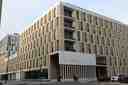
To spot the School of Informatics, just look for a large, modern building that stands out with its tall glass windows and neat, vertical lines on the pale stone walls-the main…और पढ़ेंकम दिखाएँ
To spot the School of Informatics, just look for a large, modern building that stands out with its tall glass windows and neat, vertical lines on the pale stone walls-the main entrance says “INFORMATICS FORUM” above white pillars, sitting right on the corner as the street curves. Now, welcome to the beating heart of digital discovery at the University of Edinburgh! Imagine the air buzzing with quiet genius, the windows glowing late into the night as minds shape the future of artificial intelligence. But it wasn’t always quite so shiny. Picture Edinburgh in the late 1990s: floppy disks, brick-sized mobile phones, students swapping ideas in cramped departments scattered around the old city. In 1998, the university decided to roll all that pent-up brainpower into one brilliant new whole-merging the Department of Artificial Intelligence, the Centre for Cognitive Science, the Department of Computer Science, plus some legendary institutes like the famous Artificial Intelligence Applications Institute. With a spark, the School of Informatics was born, like a digital phoenix rising from a sea of paperwork! You might think that’s a lot of academics crammed together, but the magic here is how all those disciplines-from computational linguistics to systems biology-actually started working in harmony. It’s a bit like assembling the Avengers, but instead of superheroes, you’ve got wizards of code, masters of machine learning, and warriors of logic! Strolling past these walls, you’re treading alongside history-makers and pioneers. Malcolm Atkinson, Alan Bundy, Rod Burstall-names whispered with awe in university corridors. Geoffrey Hinton, one of the legendary “Godfathers of AI,” studied right here before dreamt up the neural networks that let your phone recognize your selfies. Nigel Shadbolt, now a giant in the world of open data, walked these halls too. Of course, every great tale needs a twist. In 2002, disaster struck: a devastating fire swept through Cowgate, destroying many buildings-including the beloved AI library and much of the informatics home. It could have been a knockout blow, but the story didn’t end there. By January 2003, the community had rallied, and the school set up shop in Appleton Tower. If these walls could talk, they’d tell stories not just of discovery, but of resilience-nobody here lets a little thing like a fire keep them from cracking the mysteries of the universe! There’s a world of secret labs tucked inside these walls. One investigates how to make computers think and adapt like brains; another explores how humans and robots can understand each other-from text to speech to give-and-take conversation. Across the corridor, another group is shaping the architecture of future computers, dreaming up machines even faster and smarter than today’s. Here’s the punchline: according to some of the most respected global rankings, this school is at the very top. Number one in the UK, number one for natural language processing-beating Cambridge, Oxford, and the world! So when you walk past all those students and researchers, you might just brush shoulders with someone inventing tomorrow. Or at least someone who can finally explain what the cloud really is! Alright, onward, digital explorer! Time to see what’s next on Edinburgh’s epic story circuit.
समर्पित पेज खोलें →To spot the Edinburgh University Students' Association, look for a modern logo with sharp geometric lines next to bold text that says "Edinburgh University Students'…और पढ़ेंकम दिखाएँ
To spot the Edinburgh University Students' Association, look for a modern logo with sharp geometric lines next to bold text that says "Edinburgh University Students' Association"-it’s probably just ahead, so keep your eyes peeled for signage, lively groups of students, or maybe the sound of distant laughter drifting from the building’s entrance. Welcome to a hidden powerhouse of student life-where voices rise, ideas clash, and someone always seems to have lost their ID card. Right where you’re standing, waves of history hustle along with today’s students, and you’re about to hear how it all began. Picture the late 1800s: horse-drawn carriages clatter past, and a young student named Robert Fitzroy Bell is dreaming bigger than his exam schedule. He wanted students to have a real voice-so in 1884, he brought together the first-ever students’ representative council. The streets buzzed as they campaigned, gathering support and donations from everyone-city bigwigs, the public, and even the local Town Council pitched in. Imagine the sound of coins and laughter filling the Waverley Market during a “fancy fair,” raising what would be equivalent to millions today! That campaign brought you Teviot Row House in 1889, just a stone’s throw away-the oldest purpose-built student union in the world! But, believe it or not, back then the union was boys only. It wasn't until 1905 that the Edinburgh University Women's Union emerged, with their own premises on Chambers Street. If you had a time machine and snuck into the union in, say, 1910, you’d find rooms filled with pipe smoke, hot debates, wild ideas, and-eventually-the stubborn realization that life’s better when everyone’s invited. Edinburgh’s student unions grew, merged, and sometimes squabbled like family at a holiday dinner. The Chambers Street Union (the women’s union by a new name) and the King’s Buildings Union each developed their own flavor, but by the 1970s-after some pretty heated votes-they united to form what’s now the Students’ Association. If you hear echoes of singing voices and rallying speeches, maybe it’s the ghosts of past sabbatical officers. Or maybe it’s just students preparing for the next Freshers’ Week. Along the way, the Association fought for big causes-fairer fees, same-sex marriage, and even better buses (because campus commuters are truly warriors). At tense moments, controversies exploded: from headline-making song bans-bye-bye "Blurred Lines"-to taking bold stands on sexual violence, the Association sometimes made national news. There’ve been legal battles and dramatic debates where student newspaper editors even had to rip pages out of their own papers to dodge lawsuits. It’s never been boring behind these doors. On the lighter side, this place knows how to party. EUSA, as the cool kids once called it, runs bars, nightclubs-like Potterrow’s famous dome-and venues across campus. Add in the world-famous Fringe Festival every August, and you get a whirlwind of music, performance, and laughter, with buildings like Teviot and The Pleasance turning into festival central. Students have founded over 280 societies here-one for every curiosity and cause you could imagine: politics, theater, radio, and music groups that fill Edinburgh’s nights with sound and color. If you’re feeling a creative tingle, consider this: the oldest student-run theater in Britain is just around the corner at Bedlam Theatre, and Edinburgh’s student music society can pack in 200 voices for a chorus that’ll knock your socks off (though to be honest, Scottish winters will do that anyway). Campaigning for climate action, running support networks, and putting pride front and center-students here make change while finding their friendships. Today, led by President Dora Herndon and a team of sabbatical officers, the Association keeps democracy alive. You’ll hear lively debates, see posters for the next council meeting, and maybe stumble on a club quiz night or a student protest. There’s a humming backdrop of energy and a real sense of belonging-every student a member, every voice counted, every dream at least given a fair hearing. So as you take it all in, listen for the thumping heartbeat of student ambition. In this building, people have met their future best friends, started movements, and maybe-just maybe-changed the world. Who knows? Maybe you’ll hear your own footsteps joining theirs. If you're curious about the activities, structure or the notable people, the chat section below is the perfect place to seek clarification.
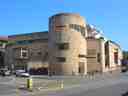
समर्पित पेज खोलें →In front of you stands the National Museum of Scotland-just look for the bold, round tower of golden sandstone, its modern, geometric shapes and large windows gleaming under the…और पढ़ेंकम दिखाएँ
In front of you stands the National Museum of Scotland-just look for the bold, round tower of golden sandstone, its modern, geometric shapes and large windows gleaming under the Edinburgh sky, right at the corner of Chambers Street. You’re standing at the crossroads of stories from every corner of Scottish history-and the world! The National Museum of Scotland wears two faces side-by-side: the striking modern sandstone tower before you, all sharp lines and round towers, and tucked beside it, the grand Victorian palace that looks like it was built to house adventures and mysteries rather than just artifacts. Let’s set the scene. It’s 1861, Queen Victoria’s reign is in full swing. Edinburgh is bustling and Prince Albert himself comes to lay the foundation stone of what will soon become the city’s greatest curiosity cabinet. Sadly, it’s Albert’s last public act before his sudden death, so this place has a touch of royal drama built right into its bones! Step inside-at least in your imagination-and you’ll find yourself in a soaring glass-and-iron hall that looks straight out of a Victorian fantasy novel. You’ll hear the echoes of early inventors, explorers, and some very curious schoolchildren (and more than one parent chasing after them). That grand gallery, stretching four stories high, glimmers with hundreds of suspended wonders-from flying machines to ancient stone carvings, and a clock that moves like a giant, ticking sculpture, the famous Millennium Clock. Can you hear its gears clanking and bells chiming as the hour strikes? But every good museum needs a story of rivalry, discovery, and, well, the odd prank. This site’s story begins in the 1600s, when Robert Sibbald’s “Chamber of Rarities” wowed visitors-even Daniel Defoe claimed it couldn’t be matched anywhere else in Britain. Over time, the collection grew, split, changed hands, and once even served as Charles Darwin’s classroom, where he learned to stuff animals and studied Scottish minerals. Picture Darwin himself here, a curious young man poking at ancient bones while his professor paces nearby. In the late 1800s, the museum became the Industrial Museum of Scotland, collecting weird and wonderful inventions from across the globe, even building a so-called “Bridge of Sighs” linking it with the university next door. In classic student fashion, this bridge once became the secret pathway to a hidden stash of party refreshments-until, of course, the grown-ups discovered it and the fun abruptly ended. But the museum’s sense of humor endures! In 1975, they created the world’s sneakiest bird: the bare-fronted hoodwink, which was really a clever mash-up of various bird parts and a prank on gullible visitors. The bird, experts claimed, always flew away before anyone got a good look. That’s the sort of delight hidden in these walls. But it’s not all fun and games. Here, you can spot the famous Dolly the sheep-no, not a woolly jumper, but the first-ever cloned mammal, forever frozen in time. There are Ancient Egyptian mummies, glamorous costumes from Sir Elton John, ancient Scottish beheading machines, and even stolen treasures being returned to their rightful homes like the Ni'isjoohl totem pole. Every element of the building itself tells a story-those golden stones were chosen to speak to Scotland’s ancient geology, and the rooftop garden bursts with wild Scottish plants. This museum isn’t just for gazing at old, dusty relics; it’s a living, evolving curiosity cabinet, as full of surprises as a Scottish loch. And with millions visiting every year, you’re in very good company-even if, so far, nobody’s managed to beat the schoolchildren at spotting all 8,000 objects in the new galleries in one go. So as you look up at this remarkable blend of old and new, imagine chambers filled with stories-where the past has a pulse, and no two visits are ever truly the same. Now, who’s ready to go find Dolly, the world’s most famous sheep?
समर्पित पेज खोलें →
12 और स्टॉप दिखाएँकम स्टॉप दिखाएँexpand_moreexpand_less
To spot Bedlam Theatre, look straight ahead for a striking old stone building with a pointy Gothic roof, grand turrets at each corner, and a bold red door beneath a tall, ornately…और पढ़ेंकम दिखाएँ
To spot Bedlam Theatre, look straight ahead for a striking old stone building with a pointy Gothic roof, grand turrets at each corner, and a bold red door beneath a tall, ornately carved window-think of a dramatic castle squashed into the city! Welcome to Bedlam Theatre! You’re standing in front of one of Edinburgh’s quirkiest landmarks, which has a history almost as dramatic as the shows inside it. Imagine the year is 1848; the smell of city smoke mixes with the crisp Scottish air as workers hustle to finish what was then the brand-new New North Free Church on the site of a former poorhouse. The air would be filled with the clatter of stone on stone, and the city’s skyline is forever changed by Thomas Hamilton’s bold, if a bit boxy, Decorated Gothic design. The buttresses and turrets you see now weren’t everyone’s cup of tea-even some critics thought they looked a bit like a spiky sandcastle! But this isn’t just any church; this was born from a moment of high drama-picture a minister, Charles John Brown, bravely marching out with his followers during the Disruption of 1843, determined to stand by their beliefs and serve the poorest parts of Edinburgh. This church became a home for missions, schooling, and a lively community right here on the edge of George IV Bridge. The steam and noise from nearby Cowgate would waft up on chilly mornings, carrying with it the hustle and bustle of a busy, growing city. For nearly a hundred years, worshippers came here each Sunday, singing hymns that drifted up to the high timber roof. Later, as the city changed and congregations merged, the building’s role shifted-first as a chaplaincy centre for the University of Edinburgh, a place filled with the murmur of students, raucous debates, and, during the 1969 “teach-in” on Northern Ireland, passionate arguments echoing off stone walls. Yet, by the 1970s, Bedlam’s story was on the brink of a tragic turn. No more ringing sermons; instead, the building became a glorified university store-imagine old chairs, boxes of paper, and dreams gathering dust. But like any great actor, Bedlam was waiting in the wings for a comeback. During the famous Edinburgh Fringe Festival, the building’s doors would creak open to host overflowing crowds from the Traverse Theatre, giving a foretaste of things to come. In 1980, however, Bedlam took center stage. The university handed the quirky old church to its student drama group, EUTC. The conversion wasn’t easy-legend has it the lighting rig was made from shared student ingenuity and borrowed gallery rails, and the first theatre seats were “rescued” from a closing cinema. Ever since, EUTC has staged about 40 student productions a year, plus up to eight shows a day during the whirlwind of the Fringe. The place even gets its name from the “Bedlam” lunatic asylum that once loomed just out of sight-a perfect name for a theatre where anything can happen! There’s an even more delightful twist: this is the oldest fully student-run theatre in the United Kingdom. And it’s not only the plays that draw an audience. The theatre is home to the Improverts, Edinburgh’s longest-running comedy troupe, where you’re guaranteed to hear a few groans and giggles-sometimes even both at the same time! Of course, the ghosts of students past may be applauding too, if you listen closely on a quiet night. Bedlam might have faced its final curtain call in 2001 when developers tried to have it demolished for a hotel, but the actors, alumni, and the entire city fought for it. When the building won protected Category B status, you probably could have heard the celebrations from the other end of George IV Bridge. After a big effort to restore its stunning stonework and railings in 2012, Bedlam now plays a part in Edinburgh’s green revolution by running eco-friendly shows and embracing sustainable theatre practices. Today, the air might not ring with hymns, but with applause, laughter, and occasionally a groan-worthy improv joke. So whether you love ghost stories, student rebellion, underdog comebacks, or just a bit of old Edinburgh melodrama, Bedlam Theatre has a little of everything. And who knows
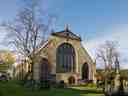
समर्पित पेज खोलें →To spot Greyfriars Kirk, look for a large, rectangular church with pale stone walls, tall Gothic windows, and little spire-like finials rising from its corners-it sits within a…और पढ़ेंकम दिखाएँ
To spot Greyfriars Kirk, look for a large, rectangular church with pale stone walls, tall Gothic windows, and little spire-like finials rising from its corners-it sits within a graveyard, framed by trees and old monuments, right across from the busy streets. Alright, let’s take a breath and dive into the story of Greyfriars Kirk! As you stand here, imagine the air in Edinburgh centuries ago: chilly mist curling past the gravestones, the echo of footsteps on cobblestones, and the distant sound of church bells drifting across Old Town. This spot has seen more drama than an entire season of your favorite detective show! The tale begins in the mid-15th century, when a group of Franciscan friars-nicknamed the “Grey Friars” because of their habits-arrived from the Netherlands. They set up shop here at the edge of the city, right where you’re standing. Back then, these grounds were open and peaceful-hard to believe, now that the city seems to rise up on all sides. Royalty often visited the friars; James IV even called himself their “Royal Protector.” But as power shifted and the Reformation swept through Scotland, the peaceful friary was turned upside down. Statues were stolen, mobs ransacked the buildings, and nearly all the friars eventually fled with hurried footsteps and beating hearts back to the Netherlands. The beautiful chapel and cloisters were torn down, and the stone was carted off to build the city’s new Tolbooth and repair St Giles’. Soon, these grounds were transformed into a burial place to relieve the overcrowded kirkyards elsewhere. The seeds of the current church were planted in 1602, and by 1620, after more than a little drama with missing shiploads of Swedish timber and some quite confused city planners, Greyfriars Kirk opened its doors. The first service? Held on a weekday-Christmas Day, no less!-just to make the king happy. But the real fireworks were still to come. In 1638, Greyfriars Kirk became the birthplace of the National Covenant: a grand document of resistance, read out for the first time right here. Imagine the tension; nobles signing the parchment inside the church’s shadowy vaulted interior, while crowds outside buzzed with excitement and hope for Scotland’s future. (It rolled out so fast, it was like the world’s first viral petition.) Not all was peaceful-far from it! During Oliver Cromwell’s invasion, the Kirk was seized and turned into barracks for soldiers. Picture heavy boots, neighing horses, and a lot of very annoyed ministers. The misfortunes didn’t end there. In 1718, the church’s tower, used (rather unwisely) to store gunpowder, exploded in the dead of night. The blast ripped through the west end-think of the shock and chaos, the shattering windows, and the roar through the old city. Rebuilding was a major feat, splitting the church into “Old” and “New” Greyfriars, each with its own congregation-a bit like housemates awkwardly sharing one big, echoing living room. Another disaster struck in 1845 when a fire gutted the church. Some blamed the whole thing on divine judgment-though honestly, it might have just been a dodgy boiler. Restoration took over a decade, but out of disaster came innovation: stained glass windows and a pipe organ appeared for the first time since the Reformation, making Greyfriars a trendsetter in church design. Inside, you’ll find relics like the original National Covenant, ancient stained glass, and a copy of Psalm 150 carved into the modern organ, along with memorials to heroic-and not-so-heroic-figures from Edinburgh’s past. The walls and pillars themselves are an architectural patchwork: Gothic arches with Baroque swirls, ball-topped obelisks, and a roof that seems to swoop and leap above your head. Even today, Greyfriars keeps its history alive, offering weekly Gaelic services and supporting the community. For centuries, it’s been a place of struggle, renewal, and laughter-sometimes all in the same day! So as you gaze up at those ancient windows and wander beneath the trees, remember: every stone and grave here has a tale to tell, each one echoing with the voices and footsteps of Edinburgh’s unforgettable past. Keep your ears open-you never know what whispers you might catch on the breeze. Ready to delve deeper into the setting and kirkyard, architecture or the features? Join me in the chat section for an enriching discussion.
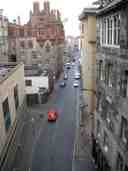
समर्पित पेज खोलें →Look straight ahead and slightly down into the valley-like street below the high bridges-Cowgate is the long, narrow road lined with tall, stone buildings on both sides, and…और पढ़ेंकम दिखाएँ
Look straight ahead and slightly down into the valley-like street below the high bridges-Cowgate is the long, narrow road lined with tall, stone buildings on both sides, and you’ll spot it curving through the bottom of the Old Town. Welcome to the Cowgate! As you stand here, you’re at the heart of one of Edinburgh’s most storied and surprising streets, a place where history, mystery, and a bit of chaos collide. Imagine, if you will, the sound of clattering hooves and the lowing of cows, because for hundreds of years, this road was the city’s main cattle run-market days saw herds being driven right under your feet, on their way to nearby Grassmarket. But don’t let the name fool you: “gate” here just means “road” in old Scots, not an actual gate. Trust me, no cows are getting locked in here today, unless they’re headed for a burger joint. The story of Cowgate begins way back around 1330, as Edinburgh’s first real expansion beyond its castle and ridge. Early settlers crowded to the south side of this street, wary of a muddy stream on the north. That burn was finally filled in around 1490. Digging around in modern times, archaeologists even found a buried 14th-century ditch near St Patrick’s Church-your daily reminder that there’s always a new secret hidden under the Old Town. Cowgate is old, but it hasn’t always looked this way. If you close your eyes, you can almost picture a very different scene: noble families and city councillors striding proudly past grand homes and palaces, as described by 16th-century authors Braun and Hogenberg. Mary, Queen of Scots herself once stayed here in 1566, entertained in fine style-think banquets of wine, bread, meats, fish, and the kind of feasting that gets you written up in the history books. Not every night out in Cowgate ends up with your enemies spreading rumours about your midnight visits, but Mary wasn’t your average guest! But not every chapter was regal. From the 1750s up to the mid-20th century, Cowgate fell on harder times, becoming one of Edinburgh’s notorious slums. Overcrowded and noisy, this place was packed with Irish immigrants fleeing famine, earning “Little Ireland” as a proud and gritty nickname. And if the walls could talk, they’d have a brogue. Famous names called Cowgate home-like James Connolly, the Irish revolutionary, born at 107 Cowgate. Keep an eye out for a golden plaque in his honour just under the George IV bridge. Now, you might wonder about the jumble of buildings above, below, and all around. Here, streets stack up like a cake-Cowgate hums away below, while George IV Bridge and South Bridge soar overhead, the city folded on top of itself. All these layers caused real trouble in 2002, when a fire broke out in a nightclub and roared up through eight storeys and into buildings above. The firefighters called it a rabbit warren as they raced through twisted alleys and hidden doors. It took 19 fire crews and more than a day to put it out! Amazingly, nobody died, but the University of Edinburgh’s world-class archive in artificial intelligence went up in smoke, as did the Gilded Balloon comedy venue. If only those robots could’ve helped. Out of ashes comes reinvention, and Cowgate dusted itself off with a brand new look-hotels, shops, nightclubs, and even a small supermarket now nestle among the historic walls. Some protesters have even tried to stop new luxury hotels from being built, arguing that it risks the city’s UNESCO World Heritage shine, and could cast a shadow over the beloved library next door. So, what about the buildings you’re passing? There’s Magdalen Chapel-a sneaky survivor from 1544, hidden amongst its bigger neighbours, with a spire added in 1620 and an entrance rebuilt in 1613. There’s also St Cecilia’s Hall, a Georgian beauty from 1763, now echoing with music from old harpsichords. St Patrick’s Church stands at the east end, helping found Hibernian F.C., Edinburgh’s famous football club. Not bad for a street named for cows! And let’s not forget Cowgate’s weirder side. In 2024, a severed head-yes, you heard that right-brought police, sirens, and curious crowds one November night. Just goes to show, history here never takes a day off. So, while you stand on Cowgate, listen for echoes-of cattle, crowds, carnivals, and calamities. Every stone has a story, and more than a few laughs squeezed in between the legends. Shall we moooooove on?
समर्पित पेज खोलें →To spot Old College, look for a grand, curved stone building with a striking central dome rising above ornate pillars and arched windows, right ahead of you on South…और पढ़ेंकम दिखाएँ
To spot Old College, look for a grand, curved stone building with a striking central dome rising above ornate pillars and arched windows, right ahead of you on South Bridge. Welcome to Old College, a place so rich in history you could almost trip over a 200-year-old secret as you walk past! As you stand here, take in the grandeur of that stately dome-it’s almost as if the building is wearing an academic cap, waiting for graduation day. The smooth honey-coloured sandstone, with arches and soaring Roman columns, gives the whole place the feel of an ancient palace-or perhaps a very serious giant’s dollhouse. Let’s wind the clock back to 1582, when King James VI granted Edinburgh its royal charter. Back then, this area was known as the "Tounis College," but let’s be honest, once James popped by in 1617, “King James’s College” suddenly sounded much fancier. Before Old College rose up, this spot was the site of a medieval church called Kirk o’ Field. I like to imagine medieval students tripping over gravestones, books in hand, muttering Latin curses at the rain. The land was framed by the old Flodden Wall to the south, with a tangle of gardens stretching out to hospitals and lanes. What you see as a tranquil courtyard today? Back in the 1700s, it was a patchwork mess of crumbling old libraries and overcrowded classrooms. Pressure started mounting for a proper university building when, in the late 1700s, Old College was more “falling down” than “institution of higher learning.” The Principal issued dire warnings about crumbling walls-nothing like a collapsing ceiling to inspire a little fundraising! Edinburgh folk back then were a practical, if sometimes cheeky, bunch; one letter joked that when South Bridge was built, exposing the college’s “posteriors” for all to see, embarrassment would force the town to pony up for improvements. Soon enough, Robert Adam, the superstar architect of his day, was called in to design the new college. His vision? A grand entrance from South Bridge, sweeping into a dramatic first court and a majestic “Great Court” where academic life would buzz. The foundation stone was laid in 1789, with great ceremony, and for a brief, shining moment, everything seemed to be on track. Unfortunately, life (and building projects) rarely go to plan. Adam died, the Napoleonic Wars broke out, and money dried up faster than a Scottish picnic in April. By 1793, work stopped altogether-and all that fuss about posteriors had led to little more than a half-built shell and a very drafty portico. Luckily for future generations (and current law students), help arrived in the form of William Henry Playfair, who finished the job in the early 1800s, sticking closely to Adam’s original plans, but combining all those courts into one glorious quadrangle. Still, no one could quite agree if it was “New College” or “the College.” Only in the early 1900s did the name “Old College” finally stick, after theologians and academics shuffled off to other campuses-hopefully waving goodbye with a bit less drama than the wars and financial squabbles. But we’re not done just yet! There’s the dome to admire, a late addition from 1887, paid for by industrialist Robert Cox and topped with a gilded statue of Youth, which looks like it’s keeping an eye out for any more building delays. John Hutchison sculpted that young figure, and some say if you squint just right, you’ll catch it gazing longingly at graduation gowns. Look to the center of the courtyard. The paving stones here were just laid down a few years ago, their warm glow matching the old Edinburgh Craigleith sandstone-so even the new parts feel like they’ve always belonged. In fact, this courtyard is so inviting now, it regularly plays host to graduation cheers, festival laughter, and more photo ops than you’d find at a royal wedding. And let’s not forget the impressive bronze war memorial at the west end of the quadrangle, a quiet reminder, created by Sir Robert Lorimer and Pilkington Jackson in the 1920s, of all those who studied here and then served far beyond its walls. So, take a moment to picture centuries of ideas, laughter, and heated debates echoing under this soaring dome. Old College is a living museum, a working school, and the grand old heart of the University of Edinburgh-all in one incredible package. And just think, it all started with a crumbling churchyard and a few too many exposed posteriors!
समर्पित पेज खोलें →Directly in front of you, Lady Yester’s Kirk stands out with its ashlar stone façade, three tall arched windows rising above three matching doorways, all crowned by a distinctive…और पढ़ेंकम दिखाएँ
Directly in front of you, Lady Yester’s Kirk stands out with its ashlar stone façade, three tall arched windows rising above three matching doorways, all crowned by a distinctive Dutch gable and corner pinnacles-just look up for the curving stonework and large, elegant windows framed by a simple wrought-iron fence. Now, allow me to whisk you back in time-use your imagination, and perhaps plug your nose, because Edinburgh’s Old Town was never shy about its city smells! Picture Margaret, Lady Yester: a woman with grit, style, and a purse deeper than most lochs. In the 1640s, with one hand steady on her widow’s veil and the other writing out a mighty 15,000-merk donation, she set out to gift the city a church of its own. Imagine cobbled streets swarming with traders and townsfolk, while stone masons argued over plans and Margaret herself eyed their progress like a hawk over Holyrood Park. Lady Yester’s Kirk began as a cruciform chapel, but drama and disaster came quickly. Cromwell’s soldiers barged in during the English occupation, using the church as barracks-so if you hear any ghostly English complaints about Scottish weather, don’t be alarmed! During the quieter times, the church sat silent but noble, hosting graduations for the nearby university and, for a spell, ringing with the French voices of Huguenot refugees. You see, in the late 17th century, a French Protestant congregation patched rips in its pews and held prayers while the city swirled through religious tensions-Edinburgh, it seems, never ran out of drama. Fast-forward to the 18th century, when the church became famous for controversy. After the death of a minister, the town council flexed its civic muscle to appoint a new one against the congregation’s wishes, resulting in Edinburgh’s first secession and the birth of a whole new Relief congregation-imagine the church-goers storming off and starting their own club just down the street! There are even stories of a beadle, Mungo Watson, described as “Prayers at All Prices,” who allegedly squeezed cash out of pious parishioners like a barman topping up ale. By the early 1800s, the congregation worried the students’ gallery above them might collapse, which is not exactly the divine inspiration you want during Sunday worship. The old kirk was condemned, and-rumor had it-a crafty developer recycled building materials in constructing this version you see before you today. Did they skimp on the roof? Well, it did need replacing again after just twenty years, so you be the judge! The façade, though, was designed by William Sibbald-a Dutch gable in ashlar stone, echoing older traditions and those magnificent round-headed windows with tracery borrowed from the first church. Once, this whole area would have been a lively churchyard, surrounded by walls and only accessible through a single gate from what is now Infirmary Street. Throughout the 19th century, Lady Yester’s was a centre of both faith and community. There were Sabbath schools, riotous New Year’s Days, savings banks, and even a missionary association. During Rev. Caird’s time, the church was so popular that entrance on Sundays was by ticket only-think of it as the original VIP section of Edinburgh! University students flooded in, and at least three ministers later rose to lead the University of Edinburgh, forging a proud link between the pulpit and the professor's lectern. The early 20th century, however, brought change: city improvements sliced through the parish, families drifted away, and in 1938, Lady Yester’s congregation finally merged with Greyfriars Kirk. As for this fine building, it swapped sermons for schedules and now houses the University of Edinburgh’s Estates Department. Look closely and you’ll find hints of its past: a monumental skull-and-crossbones plaque, once marking Lady Yester’s own resting place, survives in Greyfriars Kirk-where, hopefully, nobody has to worry about wobbly church roofs anymore! So here you stand, next to a stone witness to centuries of devotion, drama, community, and the occasionally questionable roofing job. If these walls could talk, they might just demand a pension-and perhaps one of those relief congregation pastries. Keep your eyes peeled for architectural details and let your mind wander through the tales of Lady Yester’s Kirk! Ready for the next adventure?
समर्पित पेज खोलें →To find the Museum of Edinburgh, just look for the eye-popping three-story house with a bright yellow exterior and bold red trim-trust me, it almost glows along the…और पढ़ेंकम दिखाएँ
To find the Museum of Edinburgh, just look for the eye-popping three-story house with a bright yellow exterior and bold red trim-trust me, it almost glows along the Canongate! Now, imagine yourself standing here in front of this vibrant building. Doesn’t it look like a cheerful huddle of golden cubes stacked up for a party? But back in the late 1500s, this place wasn’t throwing any parties-unless the clan chiefs of the Gordons liked to boogie. This house, called Huntly House, was believed to belong to George Gordon, the 1st Marquess of Huntly. He might not have actually lived here (even history gets tangled now and then!), but what’s definitely true is that this place has seen power, mystery, and a pinch of drama. Fast forward to 1647, when a tough-as-nails group called the Incorporation of Hammermen-masters of metalwork-took over and expanded it, making clangs and sparks fly in every corner. By the early 20th century, the fate of this “yellow marvel” trembled on the brink. It was nearly torn down, but-plot twist!-the city swooped in to rescue it in 1924. Imagine the relief of locals, who still call it Huntly House, whispering stories as they walk by. Step through its doors and you’ll wander a maze of rooms packed tighter than a magician’s hat: original copies of the National Covenant, Field Marshal Earl Haig’s recreated war HQ, and glimmering collections of Edinburgh silver, Scottish glass, fancy clocks, costumes, pottery, and porcelain. Can you smell the dust of centuries mixing with the polish from treasures? There’s even a secret weapon-James Craig’s original plans for Edinburgh’s New Town, just sitting quietly, holding city secrets. With a whopping 220,000 objects in its vaults, each room at the Museum of Edinburgh is a leap into the city’s own time machine. It’s even had its moment on TV, appearing on Outlander. So if you hear the echo of footsteps or the faint clinking of a metalsmith’s hammer, just smile-you’ve stumbled right into Edinburgh’s heart of legends, all under that dazzling yellow roof.
समर्पित पेज खोलें →Take a look straight ahead and spot the Canongate Kirk by its big circular window, Dutch-style end gable, little portico held by columns, and a golden cross perched between…और पढ़ेंकम दिखाएँ
Take a look straight ahead and spot the Canongate Kirk by its big circular window, Dutch-style end gable, little portico held by columns, and a golden cross perched between antlers at the very top-flanked on both sides by blooming pink cherry trees. Welcome, traveler, to the Canongate Kirk, a place where royalty, rebels, poets, and philosophers have crossed paths for centuries. Imagine it’s a blustery morning in the late 1600s-dust swirling as stone masons chip away, and hopeful parishioners watching from the street, dreaming of their new church. The story begins with a bit of royal drama-back then, the congregation worshipped at nearby Holyrood Abbey, until the King decided he needed it for a Chapel Royal instead. So the locals were shuffled off and told to use Lady Yester’s Church temporarily, while a new grand kirk rose right here on the Canongate. To pay for the build, money was cleverly diverted from an old bequest-originally meant to fund bells or a minister’s house-but, after lots of petitions and polite arm-twisting of the council and king, Thomas Moodie’s fortune finally built this very kirk. If you look closely, you’ll see his coat of arms above the front door, a little stone thank-you from the past. By 1691, when the doors first opened, the air was thick with excitement: a new home for worship, with beams still smelling of fresh-cut wood and sunlight streaming through big arched windows. A curious building from the start, with its Dutch gable and a golden cross tucked between antlers-echoing the old Canongate coat of arms, and, legend has it, topped off in 1949 with real antlers from a stag shot by King George VI! As you’re standing here, try to picture the 18th century, when George Whitfield, the fiery preacher, was rattling the pews, and in 1745, the church echoed not just with hymns, but with the impatient shouts of Jacobite soldiers-yes, the army of "Bonnie Prince Charlie" camped right outside, and the Kirk itself held prisoners from the Battle of Prestonpans! Later on, overcrowding brought about new chapels, and the growing parish even got input from local tradesmen, who earned the rare privilege of picking the minister themselves. By the 19th century, however, the Canongate began to fade in prestige as the city’s wealthy residents moved out and new roads bypassed the once-bustling thoroughfare. The kirk wasn’t immune-its royal connections weakened, and the congregation shrank. One minister described walking these streets as seeing “the unveiled and unmitigated vileness” of a city beset by poverty. It wasn’t all doom and gloom: a wave of religious revival swept through, swelling the pews once again. The 1860s saw a brand-new pipe organ, one of Scotland’s first, and for a time, the kirk was alive with music and hymn-singing where once there’d just been Psalms and silence. Through two world wars, the Kirk stood strong-losing ninety parishioners in the First, forty in the Second, but never losing hope. In 1937, King George VI kindly sent over a Christmas tree from Balmoral-a tradition happily continued by the royal family to this day. If these walls could talk, they’d tell you about Queen Elizabeth herself in the front row, about Zara Phillips’ royal wedding in 2011, and about funerals for national icons like the brilliant economist Adam Smith and the poet Robert Fergusson, whose statue gazes toward you from the gate. They’d recall the "Radio Padre," Dr. Ronald Selby Wright, who broadcast hope to the nation during war, and the everyday stories of families, students, and soldiers who sat on the benches you see around you. Step a little closer and soak in the details: the noble royal and castle pews up front, reminders of the Kirk’s links to both palace and fortress; the gleaming Frobenius organ, its pipes singing out in concerts, weddings, and services every Sunday. The Kirk isn’t just a historic monument-it’s still a living, breathing community. The Canongate Kirk has survived centuries of upheaval, kings both welcome and not, and more than a few brushes with disaster-yet it endures, a home of faith, music, and memory right in the heart of Edinburgh’s Old Town. Next time you pass its cherry trees in bloom, think of the thousands of footsteps and the swirl of royal and everyday drama that have filled this courtyard across the ages. Now, onward to our next stop! Yearning to grasp further insights on the building and kirkyard, current work or the ministry? Dive into the chat section below and ask away.
समर्पित पेज खोलें →To spot Queensberry House, just look ahead for a pale stone mansion with tall, square chimneys and rows of large windows, flanked by high iron fencing-it stands out on the south…और पढ़ेंकम दिखाएँ
To spot Queensberry House, just look ahead for a pale stone mansion with tall, square chimneys and rows of large windows, flanked by high iron fencing-it stands out on the south side of the Canongate, right where old Edinburgh meets the new parliament. Now, picture yourself in the bustling 1600s, when this fine mansion first rose from the ground-built to impress, with its simple yet stately walls. Imagine the rustle of silk skirts and the hurried clack of boots as Dame Margaret Douglas of Balmakellie made this her grand home. A few years later, Charles Maitland, Lord Hatton, moved in, swapping luxury lodgings at the palace for this new prize. But even in those days, things were not always what they seemed: beneath the aroma of roasting meat in the kitchens, there was the sharp scent of molten metal as silver and gold were secretly worked and tweaked-perhaps not just for honest coin! You see, Lord Hatton was master of the Scottish Mint, and rumors swirled that this house’s kitchen became a shadowy workshop to fudge the royal treasury. The stone foundations even run deeper, once supporting the home of Jerome Bowie, the king’s wine cellar master. Yes, this house has been the residence of those who know their way around both coins and claret! In 1686, the building switched hands to the Douglas family, and here’s where things turn truly dramatic. William Douglas, the 1st Duke, breathed his last within these walls, but his son, the 2nd Duke, would really shake history. Picture the tension in 1707: James Douglas, the 2nd Duke, signing away Scotland’s independence in the Treaty of Union. The angry rumble of the Edinburgh mob outside was no joke. For some, this mighty house stood as a symbol of new power-and old betrayal. The Duke was called a traitor, his house was stormed, and dangerous secrets filled every corner. And now, for a tale with a dash of horror and a good shiver! That same year, in the kitchen, a quietly terrifying tragedy unfolded. While the Duke went to Parliament, he left behind his eldest son, James Douglas-reputed to be violently insane-and a young servant. By nightfall, the kitchen’s cozy fire was host to a grim scene: the servant’s body roasting, while James idly turned the spit. The city whispered that the Duke ordered his own son’s death in retribution, but truth slipped into legend. The boy was whisked away, vanishing into family estates, while locals insisted his spirit lingered, haunting the old house ever after. The drama didn’t stop there. Catherine, Duchess of Queensberry, welcomed poets and artists while Jacobite soldiers nursed wounds here after the Battle of Prestonpans in 1745. As the city shifted and the rich moved north, Queensberry House saw itself stripped of luxury, serving as cheap rooms, a hospital during deadly cholera outbreaks, then a night asylum for the homeless, and finally a home for the elderly who had nowhere left to go. Queensberry House survived over three centuries of change, mystery, ghosts, and government deals. Today, it’s part of the modern Scottish Parliament-if you listen closely, in the hush behind those white-walled windows, maybe you’ll still catch a whisper of old secrets or the echo of that long-ago kitchen fire. The past may be hiding, but here, it never truly sleeps!
समर्पित पेज खोलें →Take a good look at the Scottish Parliament building ahead of you. This isn’t just any modern structure with odd-shaped windows and wild angles-it’s the beating heart of Scottish…और पढ़ेंकम दिखाएँ
Take a good look at the Scottish Parliament building ahead of you. This isn’t just any modern structure with odd-shaped windows and wild angles-it’s the beating heart of Scottish democracy, where the country’s biggest decisions are hotly debated, tea is frequently consumed, and every so often, a bagpiper can be heard drifting round the corner. Imagine a swirl of cool breeze, chatter of politicians arriving, and maybe even the flapping of an MSP’s umbrella in the unpredictable Edinburgh drizzle. But to understand why this place is so important, let’s travel back in time-all the way to the 13th century. Picture nobles, bishops, and merchants gathering in drafty halls, their woolen cloaks wrapped tight as they formed the first Parliament of Scotland. Their debates weren’t on modern tax policy, but on things like land, loyalty, and, of course, not letting the English get too comfortable north of the border! Fast forward to 1707, though, and a wave of tension hangs in the air. Scotland and England-after much argument and more than a few grumpy faces-signed the Acts of Union. Suddenly, the old Scottish Parliament vanished, absorbed into the one in London. From that day, for nearly 300 years, Scots with big opinions had to pack their bags for Westminster. But you know what they say: absence makes the heart grow fonder-and sometimes prouder. As decades went on, the idea of “home rule” crept back into conversation, like a distant tune. In the 1960s and 70s, Scottish nationalism surged; oil was discovered in the North Sea, and politicians began to suggest that maybe, just maybe, Scotland should have a bit more say in its own affairs. There were referendums, heartbreakingly close votes, and more false starts than a haggis race at a country fair. It wasn’t until 1997, after years of campaigning and heartfelt debates, that the Scottish people finally voted for devolution. Edinburgh would once again echo with its own parliament’s voice. Think about the moment when the first MSPs gathered here in 1999. There was bagpipe music, nervous excitement, and the eyes of the world were on Holyrood. For five years, the Parliament met in makeshift venues-the General Assembly Hall, even a chamber in Glasgow. At last, in 2004, the new Parliament building opened its doors, gleaming with glass, stone, and Scottish ambition. Designed by Enric Miralles, a Spanish architect with a flair for the dramatic, this building takes inspiration from Scottish landscape, boats, and even the humble leaf. There’s grass on the roof (a cozy place for any homesick sheep, perhaps), and its strange shapes spark endless debate-inside and out. Inside, the main debating chamber is no stuffy old hall. The seats curve in a horseshoe to encourage conversation, not combat-although don’t be fooled; debates get heated! Only the Presiding Officer, like a referee with nerves of steel, can keep order. If things get rowdy, a sharp rap on the desk brings everyone to attention. In front sits the ceremonial mace, crafted from Scottish silver and gold. Inscribed on it are words like “Wisdom, Compassion, Justice, and Integrity.” That’s right-no pressure for the politicians then! And when a session begins, you’d hear a resounding clang as the glass case lifts the mace, an ancient tradition reborn for modern Scotland. This Parliament now makes most of the decisions for Scotland-on schools, hospitals, transportation, taxes, policing, even the fate of deep-fried Mars bars! Well, maybe not that last one. But don’t be fooled; some powers, like foreign affairs or defense, remain in the hands of Westminster. There’s a gentle but constant tension: just how far should Scotland’s powers go? The debates aren’t just passionate-they’re historic. With 129 MSPs, each region elects its representatives partly by local votes and partly from party lists. It’s a system designed so every voice has a chance, and, yes, it means nobody can ever agree on the seating plan. Laws get debated, scrutinised, and sometimes fiercely opposed. Occasionally, MSPs even clap for each other-the Westminster lot wouldn’t stand for all that cheering, but up here, we believe in a bit more warmth. So as you stand here, imagine this space not just as stone and glass, but as a living symbol-a place where the future of Scotland is shaped every day. Some say politics can be boring, but not in Holyrood. After all, democracy is a bit like haggis: it’s complicated, sometimes messy, but undeniably Scottish at heart. Intrigued by the officials, parliamentary chamber or the proceedings? Make your way to the chat section and I'll be happy to provide further details.
समर्पित पेज खोलें →To spot the King’s Gallery, just look for the stylish stone building with tall windows, a pointy church-like tower, and a golden sign that shouts “THE KING’S GALLERY” right…और पढ़ेंकम दिखाएँ
To spot the King’s Gallery, just look for the stylish stone building with tall windows, a pointy church-like tower, and a golden sign that shouts “THE KING’S GALLERY” right beneath a little red lion. Now, as you pause in front of this grand building, imagine the echoes of a bustling Edinburgh in the mid-1800s. Picture yourself walking these very streets, but instead of art-lovers and tourists, you’d see townsfolk flocking to worship at the Holyrood Free Church, the very structure before you. Back then, its pointed Gothic windows caught the golden Scottish sunlight and its bell tower called out to the faithful. But fast forward through history, and after 1915, the church bells fell silent. The building stood a bit neglected-no longer filled with hymns and prayers, but instead, stacks of dusty supplies as it became a storeroom. It needed a little magic (and perhaps a royal wave) to bring it back to life. But don’t just focus on the church part-there’s more! The neo-Jacobean section once housed a school and, believe it or not, a home for palace chauffeurs. It was funded by the determined Duchess of Gordon, who championed this spot for generations, leaving behind a legacy stitched into these stones. Then, in 2002, the transformation truly began. Under the clever eye of architect Benjamin Tindall, both the church and the old school got spruced up into this elegant gallery, all ready for Queen Elizabeth II to give it her royal seal. Today, art from the Royal Collection graces these walls-think dazzling masterpieces from Rembrandt, Leonardo da Vinci, and even watercolors from Queen Victoria herself. You never quite know what spectacular exhibit awaits inside. And here’s a cheeky twist: some politicians once imagined demolishing the building to make a “Freedom Square!” But don’t worry; for now, the only thing being demolished here is any doubt that you’re standing at one of Edinburgh’s most regal and charming art stops.
समर्पित पेज खोलें →Look up ahead for a grand palace with two round towers topped by silver-gray pointed roofs and a stately fountain in front, right at the bottom of the Royal Mile-it’s hard to miss…और पढ़ेंकम दिखाएँ
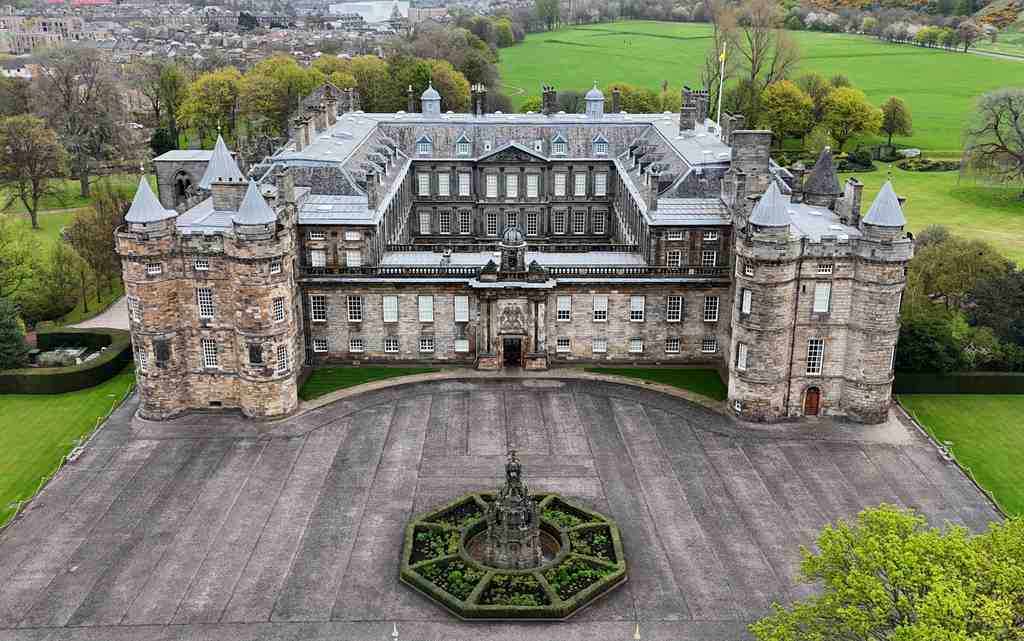
Look up ahead for a grand palace with two round towers topped by silver-gray pointed roofs and a stately fountain in front, right at the bottom of the Royal Mile-it’s hard to miss the impressive and symmetrical entrance of Holyrood Palace spread out before you. Now, as you stand here with the grand palace stretching out on either side, imagine you’re stepping right into the pages of a living storybook-because Holyrood Palace isn’t just a royal home; it’s the stage for centuries of intrigue, celebration, and even a few royal animal antics! Picture the magnificent stone towers standing strong since the days when kings and queens roamed these grounds. The palace itself was mostly built in the late 1600s, but there’s a special tower on your left that dates back even further to the 16th century; it’s seen more royal drama than an entire season of Netflix. Let’s rewind the clock to 1128. Just next door, the sound of chanting monks echoed through Holyrood Abbey, founded by King David I after a supposed vision of a holy cross. Back then, a relic known as the Black Rood was said to work miracles, and the abbey would host kings, councils, and even some of Scotland’s very first parliaments. Can you imagine hearing the voices of nobles plotting and kings brooding within these ancient stones? Fast forward to the 16th century-Holyrood transforms from medieval abbey guesthouse into a stunning Gothic palace, perfect for royal weddings, banquets, and state business. James IV added a glittering new palace when he married Margaret Tudor here (you could say their union built actual walls!). His successor, James V, boosted security-installing a massive tower, even a moat and a drawbridge. All the while, the palace gardens grew wild, complete with a royal menagerie-imagine lions and tigers prowling behind the palace, just to keep the butlers on their toes. And who could forget Mary, Queen of Scots? She called Holyrood home, practicing her archery out in the gardens and hosting fancy dinners-until a real-life murder mystery bloodied the palace. Imagine Mary at supper, when suddenly, her secretary David Rizzio was dragged out and stabbed right before her eyes-allegedly with over fifty daggers! That’s the sort of dinner drama you don’t see every day. In later centuries, the palace took on new lives. Charles Edward Stuart, better known as Bonnie Prince Charlie, danced the night away in Holyrood’s Great Gallery as he tried to win back the throne (with a waltz, no less). The palace’s ballroom saw parties, while the gardens outside became a safe haven for folks who owed a bit too much money-you could hide from your creditors here and sneak out for a stroll on Sundays (debt relief, the royal way!). Holyrood also played host to a trio of royal exiles from France sheltering from revolution, and when Queen Victoria came calling in the 1800s, she ordered the place spruced up-careful not to disturb Mary, Queen of Scots’ haunted rooms, of course. The palace will always be a living home to royalty: Every summer, you can spot the Royal Standard waving overhead for “Royal Week,” when the King is in town and the whole place twinkles with ceremony, garden parties and official business. Today, you can feel the presence of history in every crack and arch. Imagine investitures and banquets sparkling in the Great Gallery, or the solemn moment in 2022 when Queen Elizabeth II's coffin rested here before Scotland paid its final respects. So, whether it’s grand ceremonies, wild parties, or dramatic intrigues, Holyrood Palace is more than just a royal home-it’s a tapestry woven from centuries of Scottish legend and royal adventure. And remember: if these walls could talk, they’d have a lot more gossip than your average palace guard! Interested in a deeper dive into the architecture, interior or the gardens and grounds? Join me in the chat section for an insightful conversation.
समर्पित पेज खोलें →To spot Holyrood Abbey, look for the tall, roofless stone structure just beside Holyrood Palace, with huge pointed arches and a dramatic shattered window at one end-its ancient,…और पढ़ेंकम दिखाएँ
To spot Holyrood Abbey, look for the tall, roofless stone structure just beside Holyrood Palace, with huge pointed arches and a dramatic shattered window at one end-its ancient, skeletal walls standing out against the sky at the eastern edge of Edinburgh’s Royal Mile. Welcome to the hauntingly beautiful Holyrood Abbey, where it feels like you’ve stepped straight into the pages of a gothic novel, only with fewer ghosts and more royal scandal! Let’s wind back to 1127, when King David I was out hunting nearby. Now, David wasn’t the luckiest outdoorsman-while pursuing a stag, his horse was startled and he was thrown to the ground. As the antlers loomed closer, he must have had that “should’ve stayed in bed” feeling, but suddenly a radiant cross blazed in the air. Quite the upgrade from your usual hiking miracle! Seeing this as a sign from above, David founded this very abbey in 1128, and dedicated it to the “Holy Rood,” which means Holy Cross. Holyrood Abbey quickly became a hub of power, intrigue, and, of course, more drama than a season finale. Picture it: its original nave stretched wide, echoing with voices of Augustinian Canons chanting and Scottish nobles plotting in whispered tones. Over centuries, its guesthouse swelled into a royal residence, and here, kings and queens would arrive for everything from coronations and weddings to-less cheerfully-funerals. James II was born here in 1430, crowned seven years later, and, in 1503, Margaret Tudor married James IV at the altar, fireworks of medieval celebration lighting up the night. Ah, but not all was joy and wedding cake. Holyrood was attacked, looted, and even caught in the crossfire of wars and religious upheaval. The English stripped its roof, thieves made off with bells, and mobs smashed the altars during the Reformation. Imagine the clang of angry fists on ancient stone. And when the abbey fell out of fashion, its stories didn’t fade quietly-its stones still remember. And who could forget the notorious “Abbey Lairds”-people who ran to Holyrood seeking sanctuary, hoping for royal protection from debts or accusations. It was like a medieval get-out-of-jail-free card (available for a limited time only-royal rules apply). Some found their salvation here, while others just swapped one kind of trouble for another. For centuries the abbey saw Scotland’s greatest events unfold. The Parliament of Scotland gathered in its shadow. The Treaty of Edinburgh-Northampton was signed to end the first War of Scottish Independence here, and the tombs of Scotland’s royals-kings, queens, princes, and, yes, a tragic handful of children-were gathered in the royal vaults beneath your feet. Holyrood’s history isn’t just about stone and ceremony; it’s about mistakes with lasting consequences. In the 18th century, after centuries of chaos, the roof was replaced with stone vaults-an impressive engineering idea, but unfortunately the buttresses were a little past their prime. The result? The roof gave a dramatic farewell performance and collapsed in 1768, leaving Holyrood Abbey the open-air ruin it is today-a reminder that sometimes, shortcuts do more harm than good. Even so, the abbey was never quite forgotten. Great minds and artists found inspiration in these haunted arches-Felix Mendelssohn was so moved that he wrote his Scottish Symphony after wandering among the shadows. Painters like Louis Daguerre captured the ruins in moonlight, while poets stood under the stars, awed by the ghosts of history. So as you stand in this roofless relic, sunlight streaming through jagged windows and the wind sometimes whispering stories lost in the stones, you can almost hear the echoes-of choirs, coronations, laughter, heartbreak, and even the clatter of a fleeing stag. Holyrood Abbey is more than just rubble: it is a stage for nearly a thousand years of Scotland’s wild, noble, and ever-chaotic soul. Bravo, you’ve made it to the finale-just watch out for any startled deer on your way out! For further insights on the list of abbots, coronations or the in art, feel free to navigate to the chat section below and inquire.
समर्पित पेज खोलें →
अक्सर पूछे जाने वाले प्रश्न
मैं टूर कैसे शुरू करूँ?
ख़रीदारी के बाद, AudaTours ऐप डाउनलोड करें और अपना रिडेम्पशन कोड दर्ज करें। टूर तुरंत शुरू करने के लिए तैयार होगा - बस प्ले टैप करें और GPS-गाइडेड रूट का पालन करें।
क्या टूर के दौरान मुझे इंटरनेट चाहिए?
नहीं! शुरू करने से पहले टूर डाउनलोड करें और पूरी तरह ऑफ़लाइन इसका आनंद लें। केवल चैट फ़ीचर को इंटरनेट की ज़रूरत है। मोबाइल डेटा बचाने के लिए WiFi पर डाउनलोड करने की सिफ़ारिश है।
क्या यह एक गाइडेड ग्रुप टूर है?
नहीं - यह एक सेल्फ-गाइडेड ऑडियो टूर है। आप अपनी गति से स्वतंत्र रूप से खोजते हैं, आपके फ़ोन से ऑडियो कथन बजता है। कोई टूर गाइड नहीं, कोई ग्रुप नहीं, कोई शेड्यूल नहीं।
टूर में कितना समय लगता है?
अधिकांश टूर पूरा करने में 60-90 मिनट लगते हैं, लेकिन गति पूरी तरह आपके नियंत्रण में है। जब चाहें रुकें, स्टॉप छोड़ें, या ब्रेक लें।
अगर मैं आज टूर पूरा नहीं कर सकता/सकती तो?
कोई समस्या नहीं! टूर की लाइफ़टाइम एक्सेस है। जब चाहें रोकें और फिर शुरू करें - कल, अगले हफ़्ते, या अगले साल। आपकी प्रगति सेव रहती है।
कौन सी भाषाएँ उपलब्ध हैं?
सभी टूर 50+ भाषाओं में उपलब्ध हैं। अपना कोड रिडीम करते समय अपनी पसंदीदा भाषा चुनें। नोट: टूर जेनरेट होने के बाद भाषा बदली नहीं जा सकती।
ख़रीदारी के बाद मैं टूर कहाँ एक्सेस करूँ?
App Store या Google Play से मुफ़्त AudaTours ऐप डाउनलोड करें। अपना रिडेम्पशन कोड (ईमेल द्वारा भेजा गया) दर्ज करें और टूर आपकी लाइब्रेरी में दिखेगा, डाउनलोड और शुरू करने के लिए तैयार।
अगर आपको टूर पसंद नहीं आया, तो हम आपकी ख़रीदारी वापस करेंगे। हमसे संपर्क करें [email protected]
सुरक्षित चेकआउट