डर्बी ऑडियो टूर: समय और परंपरा के माध्यम से गूँज
डर्बी में, आधुनिक कांच की चमक और प्राचीन भजनों की गूँज के नीचे रहस्य छिपे हैं। यह स्व-निर्देशित ऑडियो टूर उन सड़कों से होकर गुजरता है जो अनकही कहानियों और गौरव की झलक से भरी हैं, जिन्हें अक्सर सबसे जिज्ञासु खोजकर्ता भी चूक जाते हैं। किस बड़े घोटाले में एक ही नाटकीय मोड़ में पवित्र भूमि को सिल्वर स्क्रीन से बदल दिया गया? किस रहस्यमय क्षण ने डर्बी के धड़कते नाटकीय हृदय को हमेशा के लिए खामोश कर दिया था? और क्या वाकई एक शॉपिंग मक्का के बाहर हवा में पाइप ऑर्गन संगीत की हल्की सी गूँज अभी भी तैर रही है? विद्रोहियों और स्वप्नदर्शियों के पदचिह्नों का पता लगाएं, पवित्र चैपल से लेकर हलचल भरे थिएटरों और भविष्यवादी आर्केड तक यात्रा करें। हर कदम के साथ, राजनीतिक उथल-पुथल, पुनर्निवेश, भूली हुई हँसी और घोटाले की परतें आपकी आँखों के सामने खुलती हैं। यात्रा के अंत तक, डर्बी सिर्फ एक शहर नहीं होगा - यह स्मृति और संभावनाओं से जीवंत एक महाकाव्य मंच बन जाएगा। डर्बी के परिचित चेहरों के पीछे क्या छिपा है, इसका अनावरण करें। आपका रोमांच अब शुरू होता है।
टूर पूर्वावलोकन
इस टूर के बारे में
- scheduleअवधि 40–60 minsअपनी गति से चलें
- straighten3.9 किमी पैदल मार्गगाइडेड पथ का पालन करें
- location_onस्थानडर्बी, यूनाइटेड किंगडम
- wifi_offऑफ़लाइन काम करता हैएक बार डाउनलोड करें, कहीं भी उपयोग करें
- all_inclusiveलाइफ़टाइम एक्सेसकभी भी, हमेशा के लिए फिर सुनें
- location_onकांग्रेगेशनल चैपल, डर्बी से शुरू होता है
इस टूर के स्टॉप
Inside, the place was always full, with the echoes of singing and the uplifting sound of the mighty church organ-crafted by Forster and Andrews-filling every corner. This organ…और पढ़ेंकम दिखाएँ
Inside, the place was always full, with the echoes of singing and the uplifting sound of the mighty church organ-crafted by Forster and Andrews-filling every corner. This organ was so impressive, it even got its own mention in the National Pipe Organ Register, making it a bit of a celebrity in church circles. But life’s full of surprises! In 1934, this holy house swapped sermons for popcorn-it became the Coliseum Cinema, giving the Odeon across the street a run for its money. For years, movie lovers queued up where worshippers once bowed their heads! Sadly, when Traffic Street made room for more cars in 1961, the chapel took its final bow and was demolished. No walls remain now, but if you listen closely... hey, is that a faint organ note on the breeze, or just my imagination playing tricks on us?
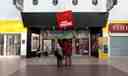
समर्पित पेज खोलें →Right in front of you, you’ll see a bright, modern entrance with a red square sign dangling jauntily above the doors-just look for the words 'Derby Theatre' and the posters…और पढ़ेंकम दिखाएँ
Right in front of you, you’ll see a bright, modern entrance with a red square sign dangling jauntily above the doors-just look for the words 'Derby Theatre' and the posters promising a bit of drama, a bit of fun, and maybe a few singing animals! Now, pause with me here and imagine: it’s 1975. Mall shoppers buzz by in polyester, bell-bottoms swish, and in the heart of Derby’s brand-new Eagle Centre, there’s a sense of excitement-after all, a brand new theatre is about to open. Designed by the architect Roderick Ham, who’d already conjured up the magical Thorndike Theatre, this spot was chosen as the sparkling centrepiece for Derby’s cultural life. The Duke of Devonshire himself-yes, real royalty!-cut the ribbon for the Derby Playhouse’s grand opening. In those early days, the air buzzed with anticipation. Their first show was “My Fair Lady,” and the magic didn’t stop there. Imagine velvet seats-well, there were originally 535 of them, only slightly fewer now-filled night after night for “Hamlet” and then, the following summer, for “The Seagull” starring Alan Bates. Stars, drama, orchestras tuning their instruments backstage-it must have felt electric! But every stage has its dark moments. By 2007, the theatre hit troubled waters-serious financial difficulties threatened all the glitz and glamour. In October 2008, just before the curtain was set to rise again, Derby Playhouse Ltd. was forced into administration. Their swan song: “The Killing of Sister George.” I mean, talk about a dramatic exit. Yet, Derby doesn’t quit that easily! Like all the best stories, there was a twist. In 2009, thanks to the University of Derby-who must have a soft spot for happy endings-the theatre was reborn as Derby Theatre. The University turned it into a “learning and professional theatre,” so, yes, you might just spot a future Broadway star buying a coffee inside. The University didn’t just run the shows-they’ve continued to invest, giving up to half a million pounds a year to keep the creativity flowing. And the Arts Council jumped in with nearly a million more to help launch the “Learning Theatre Pilot”-perhaps the only time government paperwork has resulted in jazz hands instead of headaches! Behind those doors is not just one stage, but two! There’s the 531-seat main auditorium for the big shows, and a cozy 110-seat studio for those more intimate, experimental performances. And if you’re wondering where all the costumes and props go-well, they restored the old Arts College and Metro Cinema building on Green Lane for wardrobe, rehearsals, and prop storage. Imagine the smell of fresh paint, the click of scissors, and the rustle of silk as entire casts transform night after night. Sarah Brigham became the first resident artistic director in 2012-the “director of directors,” you might say. Her first show here? “Kes,” which even featured a former TV star in his very first stage role. It’s that kind of place-where seasoned actors mix with emerging talent, and nobody’s afraid to have a laugh or take a risk. The lineup here has swung from children’s classics like “Charlotte’s Web,” to serious political satire like “Yes, Prime Minister,” right through to blood-curdling drama and hilarious family shows. They’ve staged “Horrible Histories” more than once-where you might, if you listen hard, still imagine the shrieks of delighted children echoing in the lobby. And you might notice the very fresh look around the place. In 2012, they launched a big fundraising campaign to give the main auditorium and carpets a facelift, just in time for autumn. Nothing like the faint scent of new carpet to make a theatre feel positively posh! And just when you thought the drama was over, proposals began flying about moving the entire theatre to a new site in the old Assembly Rooms-because apparently, Derby likes a theatrical cliffhanger! In the end, Derby Theatre isn’t just a place for plays; it’s a living, breathing hub where young talent is nurtured, where audiences of all ages laugh, cry, and occasionally spill their ice creams. It’s a reminder that the show always goes on, as long as there are stories to tell and people ready to listen. Now, if you get a sudden urge to burst into song, don’t worry-standing outside Derby Theatre, you’d be in excellent company!
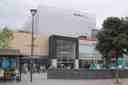
समर्पित पेज खोलें →To spot Derbion, just look ahead for a huge modern building with a glass entrance trimmed with green foliage and the bold “DERBION” sign above the doors-it towers above the lower…और पढ़ेंकम दिखाएँ
To spot Derbion, just look ahead for a huge modern building with a glass entrance trimmed with green foliage and the bold “DERBION” sign above the doors-it towers above the lower shops and is so big you’d need a pretty tall ladder to miss it! Now, standing outside Derbion, you’re face-to-face with one of Derby’s giants-not a mythical one, but a giant of shopping, eating, leisure, and pure hustle and bustle. Imagine the scene back in 1975: local streets full of houses, the smell of Sunday roast drifting from Eagle Street, only to be swept away and replaced by the dazzling new Eagle Centre. Over £7 million was poured into this concrete marvel, a sum big enough to buy, well, several football teams back in the day! You can almost hear the rumble as old terraced houses came down, brick by brick, to make room for something bold and new. The Eagle Centre opened with excitement and a promise of modern shopping, and soon it became the envy of every Derby bargain-hunter. A huge indoor market-once the largest in the country-became the place for everything from fresh fish to fuzzy slippers. Now, fast forward to 2007, and it’s makeover time! Suddenly, the Eagle Centre becomes Westfield Derby, all sparkly and glamorous, doubled in size, and with a shiny extension where the old Castlefields Main Centre once stood. People flocked to a brand-new 800-seat food court-think the world’s best smells all mushed together-and, if you fancy, a whiff of KFC alongside your perfume samples. That year, TV star Tess Daly opened the new doors, and you could practically hear the sound of scissors snipping through a giant red ribbon. But Derbion is about more than just shopping for socks. There’s a twelve-screen Cinema de Lux, ready for the popcorn-munchers and thrill-seekers, and a Hollywood Bowl if you fancy a strike or, if you’re like me, just a lot of gutter balls. And if you ever wanted to play adventure golf without the English rain, Paradise Island brings that fantasy to life-minus the palm trees. Of course, things haven’t always been smooth. In 2010, a fire in the car park caused the whole building to be evacuated-thousands of shoppers and staff pouring out, bags in hand, probably more worried about losing their bargains than anything else. The centre has had as many names as a celebrity in hiding: the Eagle Centre, Westfield Derby, Intu Derby, even just plain old Derby Centre! But in 2021, with a new look and new ambitions, it became Derbion. It’s the biggest shopping centre in the East Midlands, and one of the largest in all of the UK. If you look around carefully, you’ll spot traces of the past-connections to the old market (now closed and getting a brand new look), links to busy bus and train stations, and reminders of every era, from the 70s to today. So whether you’re chasing a deal, a movie, or just the echoes of Derby’s ever-changing story, Derbion is where old meets new, and the hunt never really ends.
समर्पित पेज खोलें →
12 और स्टॉप दिखाएँकम स्टॉप दिखाएँexpand_moreexpand_less
To spot St Peter's Church, look for a grand stone building on your left with distinctive pointed windows, tall battlements lining the roof, and a square tower with a clock-right…और पढ़ेंकम दिखाएँ
To spot St Peter's Church, look for a grand stone building on your left with distinctive pointed windows, tall battlements lining the roof, and a square tower with a clock-right at the heart of the busy city square. Alright, pause here and take a look at this remarkable landmark in front of you-St Peter’s Church, a place that’s been the beating heart of Derby for almost a thousand years. Imagine for a moment: the year is somewhere around 1042. Derby is more a huddle of thatched roofs than a city, but already, St Peter’s is making its mark. By the time the famous Domesday Book rolls out in 1086, St Peter’s is right there on the list-a true survivor, standing tall even as kings come and go. The story of this church is one of resilience. You might notice some of the stonework looks older than the rest-the eastern end still has traces of Norman craftsmanship, stones that have seen the centuries pass by like horse-drawn carts rattling over cobblestones. Step a little closer and you’ll see tall, elegant windows, gifts from the 14th century, still letting in Derby’s sunshine on a good day-or, more likely, our famous drizzle. In 1338, a chap called John de Crich-imagine him bustling about in medieval robes-decided it was time for a makeover. He ordered new sections, like the south aisle and a special space called a Chantry. The church was rebuilt in a decorated style, but instead of getting all dressed up just once, St Peter’s has changed outfits many times over the centuries. Roofs raised and lowered, porches added and taken away, galleries appearing and then vanishing again. You could say St Peter’s has had more style changes than a catwalk model! Now, picture Derby in the 14th century-a dangerous time. The Black Death came sweeping through in 1349, stealing a third of the population, including the poor vicar right here at St Peter’s. Back then, the toll of the bell didn’t just call worshippers; it marked loss, hope, and resilience. Those very bells, cast around 1636, still ring out across Derby today-the same sound echoing down the centuries each Sunday morning. There’s a touch of mischief and mystery here too. In the 1530s, Robert Liversage set up a chapel and a cheeky tradition: every Friday, he handed out a silver penny to thirteen of Derby’s poorest-which, unsurprisingly, led to quite a few tussles over the lucky seats. The charity continues, overseen by the church, and if you wander onto London Road, you’ll find the Liversage Almshouses still standing. But it’s not all good cheer. In 1556, the parish saw tragedy: Joan Waste, a blind rope maker from St Peter’s, was tried for her beliefs at Derby Cathedral. She held firm to her faith and paid the ultimate price, a reminder of the courage and the hardship written into these stones. Plague returned to St Peter’s parish in 1586. Then, in a tale fit for a detective novel, Oliver Cromwell himself stole an Elizabethan chair from the church around 1650. The story didn’t end there: centuries later, a sharp-eyed churchwarden spotted the chair at auction, and, after a bit of wheeling and dealing, brought it back home. If chairs could talk, imagine the stories that one would tell! Some of Derby’s famous figures have connections here too. Robert Bakewell, the renowned metalsmith, is buried just outside. And, in 1768, the hymn “Hark my Soul it is the Lord” was said to be written in the very vestry here. That’s enough to give any music lover goosebumps. A church this old can’t survive without a little music to lift its rafters. Over the years, several magnificent pipe organs have filled St Peter’s with sound. The latest, installed in 1986, is a majestic instrument-if you’re lucky, you might catch the notes drifting through the air. The 20th century brought change. There was a time in the late 1960s when St Peter’s nearly closed its doors for lack of worshippers. But the people couldn’t let their city’s medieval heart just fade away. Through community projects and clever ideas-like the “Christmas Lunch on Jesus” hampers-St Peter’s has become a lively hub for Derby once more. It even helped form the Derby BID, making it the very centre of a thriving city quarter. And here’s a modern twist: in 2010, the church raised thousands of pounds to install a glowing stained glass window of Florence Nightingale, Derby’s very own “Lady with the Lamp.” Now, as sunlight glows through the glass, it casts a rainbow of hope onto these ancient stones. So, as you stand here listening, imagine the laughter, the heartache, the faith, and the music that have echoed off these walls for centuries. St Peter’s is more than just stone and mortar-it’s Derby’s living memory, still looking after its city just as it always has. If these stones could whisper, I bet they’d say: “There’s always another story waiting around the corner.” Intrigued by the historic events, organ or the st peter's today? Make your way to the chat section and I'll be happy to provide further details.
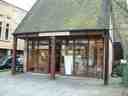
समर्पित पेज खोलें →Look for a charming, old building with a steep, mossy tiled roof and large glass windows at the front, nestled right off the stone pathway-just ahead of you. Now, imagine the…और पढ़ेंकम दिखाएँ
Look for a charming, old building with a steep, mossy tiled roof and large glass windows at the front, nestled right off the stone pathway-just ahead of you. Now, imagine the echoes of schoolboys’ laughter drifting out of these walls-because this is the Old Grammar School, where Derby’s brightest young minds once studied! Today, it might surprise you that beneath those salon hairdryers lies a past packed with dusty inkpots, fluttering textbooks, and even a hint of the supernatural. The building’s been lovingly restored by the daughter of the very architect who first rescued it, holding on to every ancient beam and creaky floorboard. If you listen closely, maybe you’ll hear the whispers of Reverend John Cotton preparing for his life in New England, plotting revolutionary ideas that helped shape Boston, Massachusetts. But don’t get too comfortable-this place isn’t just about smart students and fresh perms. In 1992, it became the Heritage Centre and the starting point for Derby’s famous Ghost Walks! Even the spooky TV show Most Haunted couldn’t resist; in 2003, they prowled these rooms hoping to catch a ghost or two on camera. So, as you stand here, take a deep breath and imagine the blend of old books, hair spray, and maybe a chilly breeze from the past swirling around you. If you feel your hair stand on end, don’t worry-it might just be the spirits giving you a ghostly new style!
समर्पित पेज खोलें →Let’s wind back the clock to the days when this patch of land was wild and untamed, right next to the gentle trickle of Markeaton Brook. Imagine hearing, somewhere nearby, the…और पढ़ेंकम दिखाएँ
Let’s wind back the clock to the days when this patch of land was wild and untamed, right next to the gentle trickle of Markeaton Brook. Imagine hearing, somewhere nearby, the faint tolling of a chapel bell from the Saxon era, calling locals to worship near this very spot. All of this began when Waltheof, the Earl of Huntingdon - a man with a name fit for a Tolkien novel - decided in the late 11th century to give the existing little chapel to the Benedictine monks of Bermondsey Abbey. Those monks wasted no time; within a handful of years, they transformed the humble chapel into the formidable St. James Priory. Even King Stephen, with a stroke of royal authority, confirmed this donation in the 1140s. The monks here were so vital to the city that for years, the Corporation of Derby paid them with two pounds of wax annually - just so townspeople could cross St James Bridge. Now, that’s what I call a toll with a real “wax on, wax off” policy! Fast-forward to the 13th century, and the priory isn’t just a spiritual center; it’s actively caring for Derby’s poor and sick, running a small hospital described as “protected as a poor hospital.” In 1279, an inspection by the head of the Cluniac order reveals a curious cast: a priory with one prior and two monks. While one monk earned a gold star for exemplary behavior, the other… well, he was caught living “disreputably.” The solution? He was booted out and made to do penance back at Bermondsey. You might say he exchanged his monk’s robe for the medieval version of a dunce cap. These monks also ran into regular misadventures with their neighbors. In 1296, Prior Peter took two chaplains to court for “unlawfully seizing his hay.” Yes, you heard right - medieval Derby had hay heists. Their defense? They claimed the hay was payment for “tithes due to the church of All Saints.” Poor Prior Peter lost that case and, two years later, lost another, after accusing the same men (plus a few friends) of breaking into the monastery, roughing him up, and stealing property. Not quite the peaceful monastic life you might expect. By the 14th century, things went from bad to worse. In 1335, disaster struck - the entire priory, church, and hospital were accidentally burnt down. Just imagine the chaos and the devastation, as black smoke curled over Derby. The Crown stepped in, letting the priory beg for alms to rebuild. And if all that wasn’t stressful enough, the Hundred Years War meant that places connected to French abbeys, like this one, had their land seized. King Edward III, however, gave St. James a break - sort of - by letting it keep its lands, but imposing tough fines, then changing his mind, then demanding the lands anyway. I suppose even kings had trouble making up their minds back then! Things eventually settled down in the 15th century, when St. James Priory gained “denization” status, meaning it was considered English, not foreign. No more tributes to France! It even became independent from its parent abbey, able to make its own decisions - probably a relief after all those hay-related lawsuits. But by the 16th century, the priory was limping along. In 1532 it made only £11 a year - with tiny incomes trickling in from places as far-flung as Lenton in Nottinghamshire and Charnwood Forest, where the monks ran a treadmill-powered mill. And yes, that’s exactly what it sounds like: people or animals walking round and round to grind grain. The priory’s last days came with Henry VIII’s dissolution of the monasteries, sweeping away centuries of peace (and occasional chaos) in the name of royal reform. After its closure, the prior, Thomas Gainsbury, walked away with a pension and the property went to Derby’s council. The priory buildings are long gone - so many layers of city life have been built on top that archaeologists can’t even tell for sure where everything stood. In 1829, a pub called the King’s Head Inn rose where the priory once stood, proving that Derby’s always known how to keep a lively spirit. But not all was lost. Over the years, fragments surfaced - a large key, a grave slab, and, yes, some human remains. These are whispers from the past, connecting us to centuries of prayer, charity, triumph, disaster, and the occasional monastic courtroom drama. As you stand here today, you’re walking on ground layered with stories and memories, even if the stones of St. James are hidden deep below. Are you ready to follow the trail to our next stop? Derby’s stories only get stranger from here!
समर्पित पेज खोलें →Straight ahead, you’ll spot St Werburgh's Church by its striking square Gothic tower with turrets perched on each corner, standing just to the right of the main church building…और पढ़ेंकम दिखाएँ
Straight ahead, you’ll spot St Werburgh's Church by its striking square Gothic tower with turrets perched on each corner, standing just to the right of the main church building with its sweeping arched windows-look past the traffic lights and over the greenery and you can’t miss it! Imagine you’re standing on Friargate, as car tyres swish past and pigeons flutter through the branches-there’s St Werburgh’s, watching over Derby since the days when people got around by horse and cart. You might find your gaze drawn to its magnificent tower-it’s a proud survivor from the early 1600s, built while Shakespeare was still writing his plays! If those ancient stones could speak, what stories they’d tell. Just beyond, the main body of the church stretches out, rebuilt in dramatic Gothic Revival style back in the late 1800s, thanks to Sir Arthur Blomfield and lots of stone from Coxbench quarry. The church looks as if plucked from a medieval storybook, but its history’s even juicier! Picture this: In 1735, on a quietly nervous morning, Samuel Johnson-later to become Dr Johnson, the famous dictionary man-stood inside this very church, probably fidgeting with his coat as he waited for his bride, Elizabeth Porter. Now, the town whispers said Elizabeth was quite a bit older than Samuel, and neither family was terribly happy about their match. No pressure! Still, they faced their doubts together and exchanged vows that would last until her death-starting their marriage right here, inside St Werburgh’s. If you listen closely, you might still catch faint echoes of wedding bells and their hurried footsteps on ancient flagstones. You might notice the church is really two buildings in one: the imposing stone tower and its old chancel (the area around the altar) are separate from the main church-linked only on the outside, with no way through within. Today, the tower and chancel are under the care of the Churches Conservation Trust. If you fancy a peek inside, you’d need to pop to Derby Museum down the street to borrow the key-like a real-life adventurer on a quest for secrets of the past! For a time, the church itself closed up shop, gathering dust after 1984, when its doors shut to parishioners. But history in Derby doesn’t take a nap forever; inside, the building found new lives as an indoor market, and then a Chinese restaurant-imagine shopping for trinkets or getting your takeout under soaring stained-glass windows! Seven years of silence later, St Werburgh’s was finally reawakened as a church in 2017, ringing out with lively contemporary music every Sunday. You hear modern song, laughter, and a fresh sense of community pouring out those grand doors. Don’t just glance at the outside, though. Inside the chancel, you’d find a royal coat of arms-Queen Anne’s, no less-presiding over the reredos, with carved panels featuring the Ten Commandments, the Lord’s Prayer, and the Apostles’ Creed. If you wander in, check out the intricate wrought iron font cover, the handiwork of Robert Bakewell, and a centuries-old memorial by sculptor Francis Leggatt Chantrey-evidence that this church has never stopped marking important moments in Derby’s life. Of course, there’s a dash of solemnity here as well. On the wall is a powerful bronze war memorial-Christ with arms outstretched, keeping watch over forty-seven local men who went off to fight in World War I but never returned. Their names, and the phrase “Blessed are the Peacemakers,” serve as a moving reminder of Derby’s sacrifices and hopes. Now if you like organ music, St Werburgh’s has a story with a twist. Back in its heyday, the church boasted a splendid organ, with a history of celebrated organists, their fingers flying along the keys. Organ music thundered, echoing around the high arches-until, decades later, the instrument was sold off and… well, never actually used again at its new home. So, as you stand before St Werburgh’s today, surrounded by swaying trees and drifting clouds, remember: you’re facing a place where love, music, laughter, and even the odd local market stall have taken shelter for centuries. If these stones could sigh, I imagine they’d say, “Every day in Derby brings a new beginning.”
समर्पित पेज खोलें →To spot the Derby Museum and Art Gallery, just look for a big, square, brick building with large windows and the words “Museum & Art Gallery” in gold letters on the front; you’ll…और पढ़ेंकम दिखाएँ
To spot the Derby Museum and Art Gallery, just look for a big, square, brick building with large windows and the words “Museum & Art Gallery” in gold letters on the front; you’ll see it behind a colourful bed of bright yellow tulips and vivid blue flowers. Now, take a deep breath and step back in time with me, because where you’re standing is much more than just bricks, windows, and some fancy gold lettering. Imagine the year is 1879: the air is tinged with excitement, and a crowd is gathering, abuzz with the news that Derby has a brand new home for the very best of its treasures. This was no ordinary building, but the result of years of collecting, collecting, and - you guessed it - more collecting! Local businessmen, keen scientists, and curious townsfolk had all chipped in, filling rooms with everything from stuffed exotic birds to sparkling minerals, ancient fossils to mysterious porcelain, and even rare books that whispered secrets of the universe. Speaking of secret universes, let me introduce you to the Museum’s true superstar: Joseph Wright of Derby. If you step inside, you’ll find yourself face-to-face with dramatic paintings that shimmer with light and shadow - and a fair bit of drama. Wright captured moments when science and curiosity lit up the world. Imagine watching a glass flask bursting into light with phosphorus, right in front of a wide-eyed crowd as they struggled to decide whether science or faith should rule the world. It was here in Derby, during the Enlightenment, that questions about the sun, the planets, and even the very origins of life itself hung in the air thicker than Derbyshire mist. The paintings show real people: inventors, philosophers, and clockmakers who believed that the secrets of the universe were only one experiment away. But the art here isn’t just pretty - it’s also rather revolutionary! See, some of those bold thinkers Wright painted, like Joseph Priestley and Erasmus Darwin, got into hot water for their ideas. One had to flee the country after his laboratory and house were burned by a mob! And all these wild ideas brewing in Derby were part of the great Enlightenment, a time when people began to see the possibilities of science, sometimes at their peril. It isn’t all drama and mayhem, though. Next, picture yourself in the Bonnie Prince Charlie room - a replica right inside the museum that lets you step into the tense winter of 1745, as the Prince schemed to take the British crown. If you put your ear to the wall, who knows - you might just hear the ghostly whisper of secret plotting and royal ambition. And what about a treasure hunt? Over the years, the museum’s collection has grown thanks to generous locals, mysterious donations, and - in true Derby fashion - a bit of crime! In 2012, more than a thousand coins, medals, and watches were stolen by a particularly audacious thief. For weeks, nobody even knew they were missing, until one day, someone arrived to fetch an object and found the door swinging open. There was a real-life detective story unfolding in the museum, complete with clues, unexpected twists, and an eventual (thankfully partial) recovery. Stroll a little further and you’ll find dazzling displays of Royal Crown Derby porcelain, delicate and gleaming, as well as ancient relics from archaeology, natural history marvels, a room full of military history, and even the oldest known pictorial representation of an English king: a carved figure from the time of Æthelbald of Mercia, sword drawn, diadem glowing, ready to leap out of history. You might say this place is a bit like Derby itself: full of surprises, bursting with creativity, and never afraid to ask a few challenging questions. So as you gaze up at those big brick walls and golden letters, imagine the clink of porcelain, the flicker of electric light in 1883 when they first switched it on, and the steady drumbeat of progress as Derby’s greatest thinkers changed the world - all from right where you’re standing. And remember, when it comes to Derby, there’s always another story waiting to be discovered just around the corner! Seeking more information about the derby and the enlightenment connection, significance of joseph wright's paintings or the wright of derby? Ask away in the chat section and I'll fill you in.
समर्पित पेज खोलें →If you’re looking for Derby Cathedral, just lift your gaze above the treetops ahead and spot its tall, sandstone tower rising high with ornate spires and gothic windows-you can’t…और पढ़ेंकम दिखाएँ
If you’re looking for Derby Cathedral, just lift your gaze above the treetops ahead and spot its tall, sandstone tower rising high with ornate spires and gothic windows-you can’t miss its grand, square shape dominating the sky. Now, let’s step into a world where history echoes beneath your feet! Imagine it’s nearly 1,100 years ago, and you’re in the midst of Anglo-Saxon England-King Edmund has just ordered the building of a royal chapel dedicated to All Saints, right where Derby Cathedral now stands. You might hear the gentle chanting of seven priests, serving the king himself, their voices drifting through the misty morning air. But don’t get too attached to that old Saxon church-the building didn’t last, and after the Normans took control, it was torn down and rebuilt in dramatic medieval style. Fast-forward a few centuries to the 1500s. Picture a team of stonemasons hammering away at the huge Perpendicular Gothic tower soaring above you-look up! That’s the 212-foot masterpiece right in front of you, built from sandstone carted in from not far away. Peer up and see if you can spot the twelve mighty stone animal figures guarding the four faces of the tower, or the curious grinning “Green Men” flanking the great West Door. You know, there’s a story that once, an unfortunate donkey tried to “fly” down a rope from the top, but... let’s just say, it ended with more bruised egos than glorious landings. In the 1700s, Derby’s church had become rather more “derelict chic” than grand, with cracked walls and crumbling stone. So, Dr. Hutchinson, the plucky vicar, decided to take matters into his own hands. Legend has it, he recruited some fearless workmen, who by the cover of night, demolished the old church in secret! When the mayor wandered in the next day, all he could do was join in the (rather expensive) rebuild. Out went the medieval nave, in came the soaring arches and elegant stonework you see today-a Georgian vision by architect James Gibbs, who famously said that its plainness made its beauty. Don’t miss the intricate wrought iron chancel screen inside-five whole years of hammering by local craftsman Robert Bakewell, and what a masterpiece it is! Not all stories here are joyful. In 1556, Joan Waste, a blind Derby woman, was tried for heresy just inside these walls and marched out to her death for merely owning an English Bible. Pause for a moment and let the chill of history run down your spine-these stones have seen both ordinary life and immense courage. Now, back to the fun stuff: let your ears wander for a second-can you hear the bells? Derby Cathedral boasts the oldest ring of ten bells in the world, still chiming since 1678. The deepest bell, weighing nearly a ton and older than the tower itself, might have called monks in for prayer long before Derby even dreamed of becoming a city. Every day at 9, 12, and 6, a clever machine called a carillon plays different tunes-from “The Derby Ram” to “Thaxted,” filling the air with music and history. Sometimes, the tower hosts extraordinary visitors not of the human kind. Look up! You might catch a glimpse of peregrine falcons nesting among the spires-they’ve been raising chicks here for years, celebrities with their own webcam channel. And if you’re feeling brave, picture Derby’s rescue team abseiling down the tower for charity, ropes whirring and hearts pounding. Within these walls, great names rest-from Bess of Hardwick, the grand dame of Hardwick Hall, to Georgiana, Duchess of Devonshire. Even today, the Derby Cathedral Centre opposite the doors is abuzz with meetings, art, and echoes of café laughter-though the coffee might have to wait for another day. Musicians fill the cathedral with the organ’s thunder, and children from Derby Cathedral School, which opened in 2018, now learn under its historic shadow. So as you stand before Derby Cathedral, think of centuries stacked like stones: kings and priests, stonemasons and schoolchildren, ringing bells, singing choirs, falcons circling high and the secrets of Derby’s past humming along the wind. This is not just a building-it’s the pulse of Derby, beating strong for over a thousand years. Intrigued by the monuments and furnishings, clock and carillon or the tower and bells? Make your way to the chat section and I'll be happy to provide further details.
समर्पित पेज खोलें →Just ahead of you is St Michael’s Church-look for a sturdy stone building on the corner, with rows of narrow, pointed windows and a short, square tower topped with Gothic…और पढ़ेंकम दिखाएँ
Just ahead of you is St Michael’s Church-look for a sturdy stone building on the corner, with rows of narrow, pointed windows and a short, square tower topped with Gothic arches. Alright, take a moment to gaze up at St Michael’s, a church with more twists and turns in its story than a mystery novel-and a few unexpected surprises along the way. Go back nearly eight hundred years and you’d find its roots in medieval Derby, handed over in 1240 by a knight named Sir Rafe de Freshville. I imagine he wore armor, but probably not while signing paperwork. Now, picture this quiet old church ticking through the centuries, until-crash!-one August day in 1856, the chancel suddenly collapsed. Just like that. If you felt a shiver, don’t worry, you’re perfectly safe now! Rising from the debris, Derby decided not to give up. In 1857, Sir William Evans, top hat and all, laid the first stone for a new church. Within a year, worship echoed again between these walls, and Bishop John Lonsdale himself blessed the place. St Michael’s didn’t forget its ancestors, though. Inside, you’d once have found royal arms from Queen Anne’s days, and some dazzling ironwork-rumored to be by Robert Bakewell-which even included a metal angel with a trumpet. If that sounds dramatic, wait till you hear what else was hiding beneath the porch: ancient coffin slabs, one Saxon, one from the 1200s, quietly lying side by side. As time marched on, stained glass by famous London studios colored the light, while the magnificent organ-a showpiece since 1859-only got grander every decade. Local legend has it the organists could shake the roof! In the end, though, the congregation drifted and, by 1977, the church swapped sermons for spreadsheets, transformed into offices. Today, St Michael’s stands firm-stone, story, and all-a reminder that even when history crumbles, something new might just spring up from the ruins. And hey, at least no one has dropped the ceiling on us today! Shall we continue to our next stop?
समर्पित पेज खोलें →Now, let’s rewind to April 1971 for a moment. Derby was meant to get its own BBC station in June, but life rarely sticks to the script. Suddenly, Rolls-Royce, one of Derby’s…और पढ़ेंकम दिखाएँ
Now, let’s rewind to April 1971 for a moment. Derby was meant to get its own BBC station in June, but life rarely sticks to the script. Suddenly, Rolls-Royce, one of Derby’s aerospace giants, declared bankruptcy. Boom-deadline’s gone, plans are thrown out the window, and the BBC rushed to fire up the transmitters two months early just to keep people up-to-date on the unfolding drama. Talk about hitting the ground running! I bet their first news bulletin sounded a bit like: “Welcome to BBC Radio Derby-sort of... we weren’t expecting you just yet!” Through the years, the station’s become something of a community glue. Day in, day out, there’s news, weather, travel, lively debates, and enough competitions to make your granny regret not phoning in for that fruit hamper. Sports, though, really set the airwaves buzzing around here. If you listen during a Derby County or Burton Albion match, you’ll feel the excitement thrumming in your bones almost as much as if you were in the stadium. Cricket fans, you’re not left out either-when the summer sun shines, cricket chat takes over. Back in the late ‘80s and early ‘90s, the Radio Derby logo was a proud ram’s head. Rams fans, are you sensing a theme? If you say “Derby” and “ram” in the East Midlands, half the city turns around to see who’s talking. The station’s traditional slogan, “Rise and shine on 269!”-referring to its 269-metre medium wave frequency-might sound retro now, but you can bet folks across Derbyshire still wake up with those jingles echoing in their heads. BBC Radio Derby isn’t just about talking into a microphone in a soundproof room. They’ve gone every route possible: FM, AM, DAB digital, online through BBC Sounds, even on your telly, as long as it’s set to Freeview channel 717 in the East Midlands. Derby folks are serious about getting their news and tunes-if you told them it would come via carrier pigeon, they’d probably set up a perch. The service blankets the area thanks to a network of tall transmitters-a 200-foot mast north of the city at Drum Hill, as well as Stanton Moor, and for those up in Buxton, 96 FM has you covered. The station has a long tradition of helping out-Money Mountain, for example, ran every October for 25 years. Picture this: Sunday morning dawns, a marquee sways in the car park, mugs of tea steam in chilly hands, and the phone lines start to ping as people bid on car valeting, signed photographs, and even the odd mysterious "box of local curiosities." It started with “Dial a Hymn”-donate and dedicate a song for Nan-and by the end, they’d raised over a million pounds. The final gavel, auctioned as a trophy, brought down the curtain in 2008, but the memory still makes Derby smile. And while its main crowd may be the over-45 set, Radio Derby never lets itself get stale-its weekend and sports shows attract younger fans too, and the station’s known for quirky extras like the Colin Bloomfield Sun Meters. Installed in Markeaton Park and Long Eaton, these UV meters keep track of sun safety, all thanks to a local appeal in memory of beloved presenter Colin Bloomfield. No radio station would be complete without its personalities. Names like Colin Bloomfield, Terry Christian, and James Whale have all called these studios home before spreading their wings. And who can forget the ever-evolving jingles that signpost the station’s output? From the classic “Rise and Shine” to today’s Reelworld tunes, they keep Derby humming-even if it’s just to the hourly news. So next time you hear “On Radio, TV and Mobile-this is BBC Radio Derby,” remember all the layers of local life pulsing out from this very spot. All you need to join in is a radio, a curiosity for Derbyshire’s stories, and maybe a keen ear for a good old-fashioned debate. After all, if there’s one place in Derby where everyone’s got an opinion and a song request, it’s right here! Eager to learn more about the overview, technical or the presenters? Simply drop your inquiries in the chat section and I'll provide the details you need.
समर्पित पेज खोलें →Take a good look around you - right here, in the middle of 21st-century Derby, you’re standing where a slice of medieval mystery once flourished! This spot was home to St Helen’s…और पढ़ेंकम दिखाएँ
Take a good look around you - right here, in the middle of 21st-century Derby, you’re standing where a slice of medieval mystery once flourished! This spot was home to St Helen’s Priory, also known as Derby Augustinian Priory. Picture the year 1137: the town was smaller, quiet, even a little muddy, with the sound of distant bells and the voices of monks drifting through the fresh morning air. It was here that Towyne, a local citizen with a heart for big projects (and possibly a knack for medieval networking), decided this town needed a spiritual sanctuary, an “oratory” dedicated to St Helen. Imagine a neat little cluster of stone buildings, tucked just outside Derby’s bustling old town walls. Monks in long woolen robes shuffle from prayer to study to tending vegetables and maybe the odd sheep or two. And they had a spot on “Little-Derley,” a patch of land about a mile from here, which ended up becoming Darley Abbey-guess you could say they were the startup team before moving to bigger headquarters! By the mid-1100s, the monks had mostly packed up and moved to Darley Abbey, but St Helen’s wasn’t left twiddling its thumbs. No, in 1160, it reinvented itself as a hospital, caring for the poor and sick. You see, even back then, Derby folk knew the importance of good healthcare-there just wasn’t as much paperwork. The hospital made most of its money (about £4 17s. 8d. a year-imagine trying to keep the lights on with that) from its 120 acres of farmland. But by the mid-1300s, the hospital’s time was over, quietly slipping into history, leaving only stories and, apparently, some buried secrets. Speaking of secrets, in the 1800s, when part of the site became a marble factory run by Mr Brown, workers discovered human remains underfoot-sure gave “digging up the past” a whole new meaning! No original stones from the priory survive, but the land itself has a long memory. Queen Mary I even gifted this land to Derby in 1554, so they could open a Free Grammar School for boys-no small inheritance, if you ask me. And that grand building you might spot nearby, St Helen’s House? That was built in the 1760s and carries the priory’s name, weaving its story into the very heart of Derby. So, though you’re not looking at ancient walls, you are standing in the footsteps of monks, nurses, students, and factory workers-a place where Derby’s history is layered deeper than the cobbles beneath your feet. Fancy a little ghostly chill? You never know which ancient soul might be keeping an eye on you from history’s shadows!
समर्पित पेज खोलें →To spot the old St Alkmund's Church, look straight ahead for a tall, striking Gothic spire rising high above a row of townhouses, its stonework echoing with the stories of…और पढ़ेंकम दिखाएँ
To spot the old St Alkmund's Church, look straight ahead for a tall, striking Gothic spire rising high above a row of townhouses, its stonework echoing with the stories of centuries past. Welcome to the spot where St Alkmund’s Church once touched the sky! Picture it: a massive ashlar stone church in the middle of Derby’s only Georgian square, with a spire that shot up over 200 feet-practically poking through the clouds. In the 19th century, if you stood here, you’d be surrounded by elegant townhouses and the gentle buzz of shopkeepers and locals, all with the looming shadow of that famous steeple keeping watch over the square. Imagine the rhythmic clop of horse hooves and the laughter of children racing past a gabled sweet shop on the corner. But let’s step back even further in time. St Alkmund’s wasn’t just any church-this ground has been holy since the 9th century, with churches dedicated to Saint Alkmund popping up one after another like a game of spiritual whack-a-mole. During excavations, they even found a huge stone sarcophagus and a 13-foot cross carved with birds and animals. Makes you wonder what secrets the earth is still hiding under your feet, right? Fast forward to 1846. The latest version of St Alkmund’s Church was a true Victorian marvel. Designed by Henry Isaac Stevens for the princely sum of £7,700 (nearly as much as a small castle, if you ask me), its tall, elegant pillars and swooping stone arches turned heads and stole hearts. The aisle and nave were wide, light poured in from stained glass, and the flying buttresses propped up the steeple with the confidence of a Victorian lady holding her oversized bonnets. Oh, and about that steeple-it was the talk of Derby! Its 216-foot spire stood directly in the line of sight of St Mary’s Catholic Church. Let’s just say, the Anglicans were not feeling very ecumenical, and the locals nicknamed St Alkmund’s “The Church of the Holy Spite.” When it comes to church rivalries, Derby really knew how to reach new heights-literally! Inside, music lovers were treated to pipe organ performances; they had a legendary run of organists and even hosted the world-famous French organist Alexandre Guilmant for a grand recital in 1889. You could almost feel the notes vibrating up through the stone arches! Life here wasn’t just about worship, of course. Picture the Lamb Inn on the square, its own brewery sending rich, yeasty smells drifting in the breeze. Shoppers darted past the medieval storefronts or picked up treats at Derby’s oldest sweet shop-imagine, the hum of conversation mixing with the chime of the church clock. But every great story has its twist. By the 1950s, the beloved spire was hiding a dirty secret: the woodwork inside had started rotting and the stone was crumbling. It got so bad that they had to cut off the top 20 feet and cap the rest while workers clanged and called from scaffolds high in the air. Sadly, plans to restore the full spire never came to be, and the church lost some of its Gothic decoration, as if the old building was sighing with exhaustion after centuries of standing tall. And then-progress, wrapped in concrete and tarmac. In the 1960s, Derby’s council swung the wrecking ball to make way for a shiny new road. Locals protested, but the old church was demolished in 1968, with its graveyard, secrets, and all, making way for St Alkmund’s Way. When the dust settled, archaeologists uncovered the ancient sarcophagus and that wild stone cross, now sitting just a short walk away, safe in the museum. All that’s left of St Alkmund’s here is a small plaque, reminding Derby of what once soared above this spot. So as you stand here, with the noise of modern traffic swirling around, imagine instead the ringing of bells, the aroma of fresh bread and hops, and the echoes of Derby’s strangest steeple battle. History has a funny way of sticking around, doesn’t it? Give the ground a tap with your foot-you never know, maybe St Alkmund’s spirit is still hanging about, keeping an eye on Derby’s busiest road!
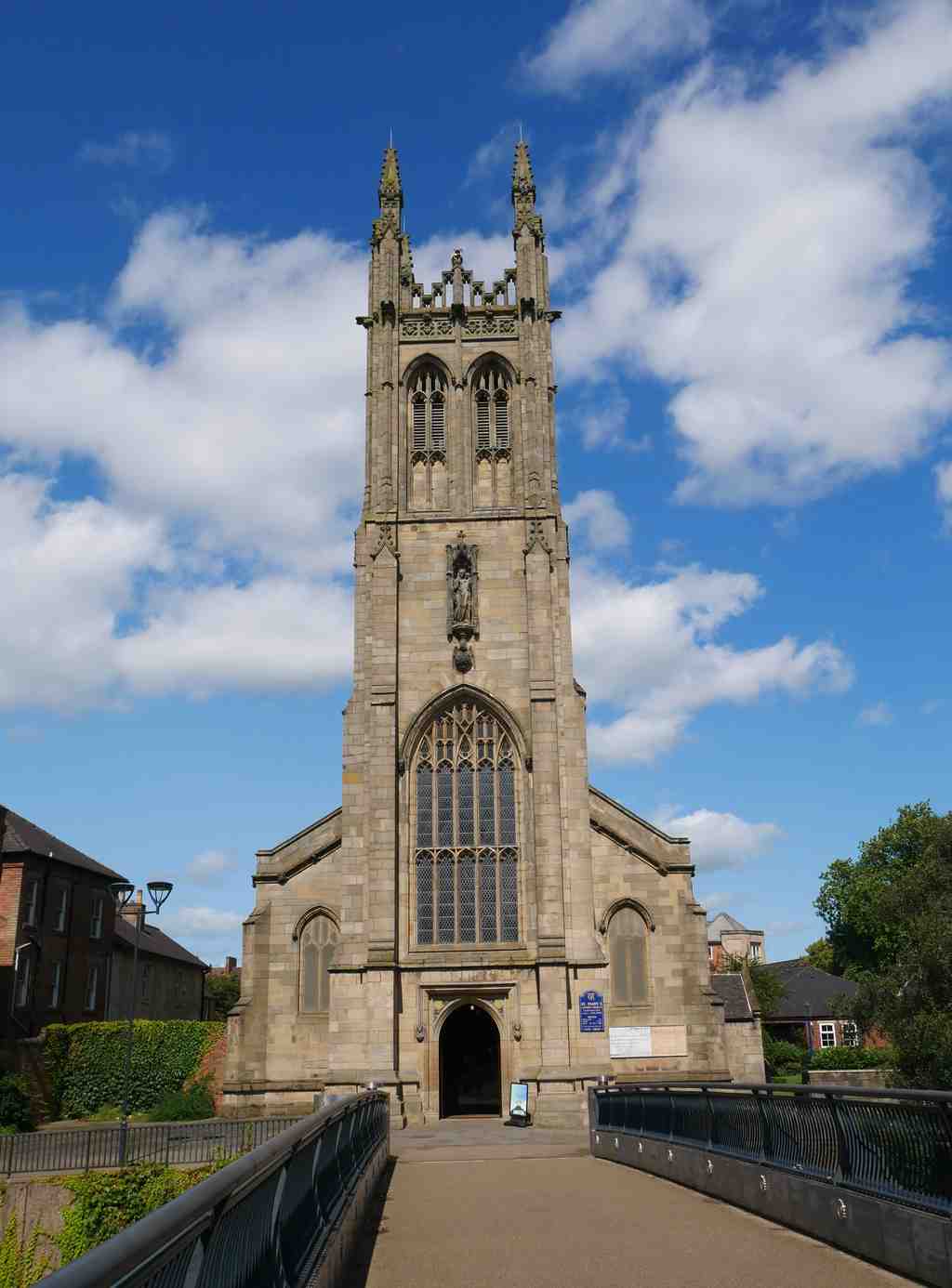
समर्पित पेज खोलें →Right in front of you, you’ll see a tall, pale stone church with a striking tower and pointed spires, standing boldly at the end of a footbridge-just look straight ahead and you…और पढ़ेंकम दिखाएँ
Right in front of you, you’ll see a tall, pale stone church with a striking tower and pointed spires, standing boldly at the end of a footbridge-just look straight ahead and you can’t possibly miss it! Welcome to St Mary’s Church-one of Derby’s true Gothic gems, even if it was nearly capped with a spire taller than a giraffe on stilts. Imagine it’s the year 1838. The city is buzzing with excitement as crowds gather here, watching bricklayers and stonemasons shape this church from the dreams of a young, ambitious architect named Augustus Pugin. He had big plans, sketching out grand towers and mighty spires, but oh, those pesky bank accounts had the final say! Instead of a towering spire, we’re left with this beautiful, compact tower-though I must say, it’s still just tall enough to make any lost pigeon rethink its travel plans. Now, peer up at the pointed arches and the fine stonework-Pugin was obsessed with perfecting England’s Gothic past. This was his first big chance to show off his revamp of medieval style, and he did it with all the drama of a Victorian soap opera. When the foundation stone dropped in 1838, the crowd might have heard the first echo beneath their feet -a sign of the sturdy faith to come. Within a year, the church was finished, and the very first service was filled with the words of Cardinal Nicholas Wiseman ringing against the stone walls. But life here was never dull. Just eight years after the church opened its doors, a bigger Anglican church was built right across the street, blocking the view from King Street-yes, church rivalry was real! As the years passed, St Mary’s continued to grow, adding a chapel for Our Lady of Lourdes, and even a shining statue of Mary up on the tower-though, a strong wind or too many pigeons convinced someone to take it down later. In 1927, workers uncovered damp creeping through the ancient plaster. Imagine the sound of hammers and scaffolding as restorers set about repairing Pugin’s dream. The church expanded again in 1932 with the addition of the Lady Chapel-you might still feel the echoes of those first footsteps in this hallowed space. Then, the great twist! In the late 1960s, city planners swept away the towering St Alkmund’s Church opposite, revealing St Mary’s to the city once more-the spotlight firmly on its graceful stone. After another facelift, new bells tolled out across Derby, calling everyone to witness this jewel of the city’s faith and history. Even today, with new footbridges and polished stone, St Mary’s stands proud-proof that sometimes, the view just keeps getting better!
समर्पित पेज खोलें →You’ll spot the Derby Silk Mill directly ahead-look for a striking red-brick building rising beside the river, its tall, square tower peeking above the trees like a watchful…और पढ़ेंकम दिखाएँ
You’ll spot the Derby Silk Mill directly ahead-look for a striking red-brick building rising beside the river, its tall, square tower peeking above the trees like a watchful sentinel over the water. Now, imagine the sound of rushing water and the steady hum of machinery as you stand here, right where Derby made history! This sturdy old building is no ordinary brick box-oh no! You’re staring at the beating heart of the world’s very first factory system. Back in the 1700s, when wigs were tall and inventions taller, wild-eyed engineers built Lombe’s Mill right here, harnessing the power of the Derwent River. Their mission? To spin silk faster than a Derby greyhound chasing its tail. If you listen closely, I swear you can almost hear the clatter of wooden looms and the excited chatter of workers bustling inside, wondering what the future might hold. Fast-forward to 1974, and the mill transforms into Derby’s very own Industrial Museum. People came from miles around to gape at gears, marvel at mighty engines, and maybe even daydream about a world run by clever contraptions. But the story doesn’t stop there-no sir! In 2015, the museum closed, leaving a silence that felt as heavy as an anvil. Funds had to be found, jobs were lost, and folks wondered if the mill’s story would fade away with the dusk. Yet, just like any great Derby tale, hope came roaring back! In 2016, with a sprinkle of courage (and £17 million), the site shook off the dust and began its most daring reinvention yet. When the doors burst open again in 2021, the Mill had transformed into the Museum of Making-a sparkling new home for science, art, and good old Derby ingenuity. Step inside and you’ll find treasures held safely upstairs, just in case the river decides to drop by unexpectedly-like it did during the Storm Babet floods in 2023. But don’t worry, the museum’s sturdy bones held firm, and after repairs it buzzed back to life, proud and undaunted. Now the Derby Silk Mill shines brighter than ever, winning prizes, inspiring inventors, and reminding us all that a little bit of Derby determination can turn silk threads into a tapestry of history. After all, when life gives you storms, Derby makes museums-and maybe, if you’re lucky, a few good stories for the road home!
समर्पित पेज खोलें →
अक्सर पूछे जाने वाले प्रश्न
मैं टूर कैसे शुरू करूँ?
ख़रीदारी के बाद, AudaTours ऐप डाउनलोड करें और अपना रिडेम्पशन कोड दर्ज करें। टूर तुरंत शुरू करने के लिए तैयार होगा - बस प्ले टैप करें और GPS-गाइडेड रूट का पालन करें।
क्या टूर के दौरान मुझे इंटरनेट चाहिए?
नहीं! शुरू करने से पहले टूर डाउनलोड करें और पूरी तरह ऑफ़लाइन इसका आनंद लें। केवल चैट फ़ीचर को इंटरनेट की ज़रूरत है। मोबाइल डेटा बचाने के लिए WiFi पर डाउनलोड करने की सिफ़ारिश है।
क्या यह एक गाइडेड ग्रुप टूर है?
नहीं - यह एक सेल्फ-गाइडेड ऑडियो टूर है। आप अपनी गति से स्वतंत्र रूप से खोजते हैं, आपके फ़ोन से ऑडियो कथन बजता है। कोई टूर गाइड नहीं, कोई ग्रुप नहीं, कोई शेड्यूल नहीं।
टूर में कितना समय लगता है?
अधिकांश टूर पूरा करने में 60-90 मिनट लगते हैं, लेकिन गति पूरी तरह आपके नियंत्रण में है। जब चाहें रुकें, स्टॉप छोड़ें, या ब्रेक लें।
अगर मैं आज टूर पूरा नहीं कर सकता/सकती तो?
कोई समस्या नहीं! टूर की लाइफ़टाइम एक्सेस है। जब चाहें रोकें और फिर शुरू करें - कल, अगले हफ़्ते, या अगले साल। आपकी प्रगति सेव रहती है।
कौन सी भाषाएँ उपलब्ध हैं?
सभी टूर 50+ भाषाओं में उपलब्ध हैं। अपना कोड रिडीम करते समय अपनी पसंदीदा भाषा चुनें। नोट: टूर जेनरेट होने के बाद भाषा बदली नहीं जा सकती।
ख़रीदारी के बाद मैं टूर कहाँ एक्सेस करूँ?
App Store या Google Play से मुफ़्त AudaTours ऐप डाउनलोड करें। अपना रिडेम्पशन कोड (ईमेल द्वारा भेजा गया) दर्ज करें और टूर आपकी लाइब्रेरी में दिखेगा, डाउनलोड और शुरू करने के लिए तैयार।
अगर आपको टूर पसंद नहीं आया, तो हम आपकी ख़रीदारी वापस करेंगे। हमसे संपर्क करें [email protected]
सुरक्षित चेकआउट