स्टॉकहोम ऑडियो टूर: महल, नरसंहार और पुराने शहर की किंवदंतियाँ
स्टॉकहोम अपने रहस्यों को करीब रखता है — बलुआ पत्थर के महलों के पीछे, आग और महत्वाकांक्षा से बने आंगनों के बीच, उन मूर्तियों के नीचे जो शहर की बदलती कहानी को हमेशा देखती रहती हैं। यह स्व-निर्देशित ऑडियो टूर आपको अपनी गति से घूमने और उन परतों को उजागर करने के लिए आमंत्रित करता है जिन्हें अधिकांश आगंतुक कभी नहीं देख पाते: भव्य तांबे की छतों के नीचे फुसफुसाए गए कुलीन षड्यंत्र, बारोक वैभव से गूँजते फीके बगीचे, संगमरमर में सील की गई राजनीतिक जीत और कड़वी प्रतिद्वंद्विता। आधी रात को जब एक रईस के महल में आग लगी, तो उसका भाग्य हमेशा के लिए बदल गया, तब क्या हुआ? किस छिपे हुए कक्ष ने कभी एक ऐसे घोटाले को पाला था जिसने संसद को उसकी नींव तक हिला दिया था? एक ही वास्तुकार का चेहरा बार-बार आधिकारिक पत्थर में क्यों उकेरा गया है, मानो चुनौती दे रहा हो? प्राचीन अदालतों से संसद के हृदय तक जाएँ। विद्रोहियों, अभिजात वर्ग और अनसुने दूरदर्शी लोगों के पदचिह्नों का पता लगाएँ। प्रत्येक इमारत स्टॉकहोम के भव्य नाटक में एक नया पृष्ठ खोलती है — शक्ति, त्रासदी और सपनों से बदला हुआ एक शहर। क्या आप उन जगहों का पता लगाने के लिए तैयार हैं जहाँ किंवदंतियाँ छाया में चलती हैं? स्टॉकहोम को खुद को प्रकट करने दें।
टूर पूर्वावलोकन
इस टूर के बारे में
- scheduleअवधि 60–80 minsअपनी गति से चलें
- straighten2.2 किमी पैदल मार्गगाइडेड पथ का पालन करें
- location_on
- wifi_offऑफ़लाइन काम करता हैएक बार डाउनलोड करें, कहीं भी उपयोग करें
- all_inclusiveलाइफ़टाइम एक्सेसकभी भी, हमेशा के लिए फिर सुनें
- location_onरिद्दरहुसपलात्सेत से शुरू होता है
इस टूर के स्टॉप
Look for a grand and elegant building made from light sandstone and brick with tall windows, a copper-green roof, and striking statues along its top, directly facing the small…और पढ़ेंकम दिखाएँ
Look for a grand and elegant building made from light sandstone and brick with tall windows, a copper-green roof, and striking statues along its top, directly facing the small Riddarhustorget square. Imagine you’ve just stepped back in time. Before you, the Riddarhuspalatset stands with quiet strength - rows of tall windows march across its sand-colored and red-brick facade, while up on the roof, powerful statues look forever north and south. Hundreds of years ago, this grand palace was the hub of Swedish nobility, a place where power, pride, and secrets filled the air. The palace’s story begins with a bit of a twist. It could have been the home of one of Sweden’s most powerful men - Axel Oxenstierna. He bought this land for himself in the early 1600s, but when he realized the location was perfect for a meeting place of the Swedish aristocracy, he sold it off. His sacrifice set the stage for something extraordinary to grow right in the heart of Stockholm. In 1641, construction began. The project was nothing less than a European collaboration. First, Simon de la Vallée, an architect from France, set the plans in motion, dreaming of a palace in the style of Dutch and French nobility. It’s said if you squint, you can see the inspiration from Mauritshuis in The Hague, but the Riddarhuspalatset quickly developed its own Swedish soul. When tragedy struck and Simon de la Vallée died in 1642, another craftsman stepped up. Heinrich Wilhelm, a German stonemason, took over, but after another decade, he too passed away. This pattern would repeat, each hand adding something new: the Dutchman Justus Vingboons divided and decorated, but didn’t see the end of the project, and was sent back to the Netherlands. In the end, Simon’s own son, Jean de la Vallée, finished the building, adding a very Swedish twist with the roof-it’s a curious two-part curve, a look that would become the model for manors all around Sweden. Take a good look at the roof and its statues. To the north, a mighty warrior stands, arms heavy with the chain of knighthood, flanked by the Roman goddess Prudentia and strong Hercules himself, complete with club and lion skin. This is a show of noble virtues. If you wander to the south side, past hedges and gateposts, you’ll find Nobilitas - the spirit of the nobility - at the center, guarded by the figures of civil study and military might. Perched high and proud at each roof corner are obelisks that aren’t just decoration, but cleverly disguise the building’s chimneys. When Riddarhuset finally opened in the late 1600s under King Karl XI, it became the center of noble life in Sweden. Imagine rooms filled with whispering voices, grand staircases in Öland limestone underfoot, and the pale Gotland sandstone glinting in the light. The truest treasures are inside: 2,334 noble family shields hanging on its walls - though today, fewer than a third of those families are still around. The palace kept changing. In 1870, wings designed by architect Adolf W. Edelsvärd sprang up, and by the 1910s, the southern garden took root, brightening what was once a direct border to the busy square. Imagine the Riddarhuspalatset in its heyday: a place where every corner hummed with secrets, alliances, and plots. Even today, the Riddarhuset is alive. It hosts concerts and tours, weddings and ceremonies-the resonance of life taken from centuries past. If you step inside, think of all that’s come before you: from European craftsmen struggling with stone, to families trying to hold their place in history, to the slow, steady heartbeat of Swedish nobility through ages of change. So as you stand here, picture the noblemen glancing from these windows, their coats brushing against intricate pilasters and carvings, and let yourself feel the weight of history pressing close. Welcome to Riddarhuspalatset, where every stone tells a story, and no visit is ever quite the same.
समर्पित पेज खोलें →Directly in front of you stands a grand, pale stone building shaped like a strong letter “H,” with tall windows, classical columns, and an elegant gated entrance-just look for the…और पढ़ेंकम दिखाएँ
Directly in front of you stands a grand, pale stone building shaped like a strong letter “H,” with tall windows, classical columns, and an elegant gated entrance-just look for the two projecting wings that frame a small inner courtyard. Imagine it’s the 1660s and you’re standing in a city where the air still carries the faint scent of burnt timber from a devastating fire decades earlier. The north side of Riddarhustorget was just beginning to rise from the ashes, with grand, new palaces planned to give Stockholm a touch of Parisian charm. Right here, Gustaf Bonde, the kingdom’s powerful treasurer, dreamed up a residence that would outshine its neighbors. To make it real, he hired the best: Nicodemus Tessin the Elder and Jean De la Vallée, the same architects who shaped royal Stockholm. Construction rumbled and clanged from 1662 to 1673, and you can almost hear workers hoisting stone and hammering scaffolding in place. Picture the original palace-a dazzling baroque mansion with a sky-high copper roof, its corners wearing elegant domed pavilions that glittered in the sunshine. The “H”-shaped floor plan gave way to grand entrance courtyards in the south and a lush little baroque garden tucked away to the north, so guests arriving by coach would pass under archways and along garden paths blooming with colorful flowers. But fate wasn’t always kind. In 1710, fire struck, and flames devoured the magnificent roof-imagine the choking air and crash of burning timbers. But the palace survived, its northern domes somehow spared, and the people of Stockholm pressed on to give it new purpose. Gustaf Bonde’s family fortunes weakened, and the palace was eventually rented, then sold. At different times, the elegant halls sheltered the noble Svea Court of Appeal and the Royal Library, both in exile from other lost homes. Despite money troubles, the Bonde family somehow managed to build another, smaller house right next door-a feat that even their neighbors thought unlikely! No one really knows if the simple stone house that appeared in the 1660s was designed by a famous architect or a talented craftsman, but it matched the grand palace’s bold pilasters and domed roof, echoing the Baroque splendor. By 1731, everything changed: the city of Stockholm bought the property, and for almost 200 years this palace was the bustling city courthouse. Imagine tense trials echoing in grand chambers, and city life swirling just outside. A fierce fire swept through yet again in 1753, and the palace’s look was transformed into the one you see today, reshaped by the city architect Johan Eberhard Carlberg. Much of the original roof was lost, but the cellars with their deep brick vaults, certain grand doors, and richly decorated ceilings in the entrance hall, still hold echoes of the mansion’s earliest days. Step around to the north if you can, and try to spot the last traces of the baroque garden, and imagine secret conversations among hedges. In 1915, after centuries of drama, the courthouse work moved elsewhere. The building drifted into quieter years, even sheltering the Stockholm Chamber of Commerce for a spell. Then in the 1940s, the state took over and gave the palace a new role-as the home of Sweden’s Supreme Court. The echoes of the past still linger amid carefully crafted furniture made especially for these noble courts, with artwork on loan from the National Museum and treasured pieces from the Royal Household. Today, as you listen to the hush and movement of the city around you, you’re standing where fires roared, nobles plotted, and justice was debated-each stone here telling the story of a city remade, year after year, in hope and resilience.
समर्पित पेज खोलें →To spot the Parliament House of Stockholm, look for a grand, light-colored building crowned with a statue of a seated woman - Moder Svea - flanked by classical columns and tall,…और पढ़ेंकम दिखाएँ
To spot the Parliament House of Stockholm, look for a grand, light-colored building crowned with a statue of a seated woman - Moder Svea - flanked by classical columns and tall, ornate windows, rising above the treetops in front of you. Now, pause for a moment and breathe in the air here on Helgeandsholmen, for this is the heart of Swedish democracy. Imagine the turn of the 20th century: the clatter of hammers, the scent of fresh stone and sawdust, and the sense of anticipation as Stockholm prepared to crown its tiny island with a new seat of power. This eloquent building, the Riksdagshuset, was always more than just a house for laws; it was a theater for Sweden’s history, with high drama, debate, and even a dash of scandal built into its very stones. Before this grand structure, the Swedish parliament squeezed into less impressive quarters on Riddarholmen, growing increasingly uncomfortable as Sweden itself stretched into the modern era. Discussions for a new building went back and forth for years. Some wanted the island to remain a park, open and free; others feared anything too splendid would overshadow the Royal Palace nearby. The final decision only came in 1888, and even then, plans sparked fierce arguments. Did you know that the winning entry in the 1889 architectural competition, by Valfrid Karlson, was completely set aside? Instead, a young architect named Aron Johansson - initially just an assistant - took the lead. He faced so much opposition and criticism that his mentor even quit in protest when the facade was pushed closer to the old bridge. As you gaze up, picture the construction site in the late 1890s: 37,000 cubic meters of soil dug away, 9,000 sturdy oak piles driven deep into the island to anchor this monument. When King Oscar II laid the first stone on May 13, 1897, he placed beneath it a small lead box filled with treasures: Swedish laws, coins, banknotes, a set of blueprints, and the newspapers of the day - a secret message to the future, sealed under the main entrance. Building progressed into the new century, but not without headaches. Prices soared, materials were hard to find as Stockholm blazed with other projects, and critics complained about the building’s neo-baroque style, saying it looked outdated before it even opened its doors. Yet, when scaffolding finally came down in 1904, Stockholm had a parliament house worthy of the nation's ambitions, big enough for both politics and the nation's bank. The outside is a marvel of symbolism. High above you sits Moder Svea, a majestic figure clutching a scepter and shield - the mother of the nation, calm and unyielding. Look carefully at her flanks: on one side sits Vigilance, ever watching over Sweden, and on the other, Reflection, parchment in hand, urging every decision here to be wise and considered. Together, they echo Sweden’s two-chamber parliament, existing from 1867 until 1970, each chamber meant to balance the other in power. If you sneak a glance at the west, two monumental stone lions once guarded the old National Bank, later moved here during a major renovation between 1980 and 1983. During those renovations, while the parliament temporarily decamped across the city, archaeologists made discoveries right beneath the park - finding remains of Stockholm’s medieval city wall, a reminder that even in modern times, the past has a way of resurfacing. You might not notice from the street, but there are dozens of carved faces - called maskarons - over the windows. The architect himself, Aron Johansson, is up there among them, immortalized in stone along with several other key figures, despite a strict order for anonymity. Not everyone followed the rules: the same face repeats several times, sneaking past the committee’s watchful eyes. Step inside and you’d find an interior full of light and color, modeled in the fresh Jugend style of the era. Frescoes tell stories of Sweden’s past, and spaces once used for vital business now occasionally host other events, like the Right Livelihood Award. There’s even a special women’s room, opened in 1994 to honor the fight for women’s suffrage - a mirror here taunted visitors with the question: who will be Sweden’s first female prime minister? Today, with ongoing renovations and even plans for an underground visitor center, the building is still very much alive, both as a keeper of tradition and as a place where Sweden reinvents itself. So as you stand here, imagine the voices rising from within - urgent debates, moments of silence, laughter, arguments, compromise - and know you are standing at the true crossroads of Swedish history.
समर्पित पेज खोलें →
17 और स्टॉप दिखाएँकम स्टॉप दिखाएँexpand_moreexpand_less
You’re standing now before the Forum for Living History at Stora Nygatan 10-a building that looks solid, dignified, and unassuming at first glance. Yet, inside these walls pulses…और पढ़ेंकम दिखाएँ
You’re standing now before the Forum for Living History at Stora Nygatan 10-a building that looks solid, dignified, and unassuming at first glance. Yet, inside these walls pulses the very heartbeat of one of Sweden’s most important struggles: keeping memories alive. Imagine for a moment the slow creak of the old doors opening as you step inside; the soft shuffle of shoes across thick carpeted exhibition floors. This institution, born out of a need for remembrance, has a story rooted in the late 1990s. Back then, a chill ran through Sweden when a startling survey revealed that just two-thirds of Swedish youth were absolutely certain the Holocaust had happened. A national conversation began. How could such a seismic event in human history feel so distant, so abstract, to so many young people? The answer arrived in 2003-one year after the Swedish parliament made a decisive move. The Forum for Living History was established, tasked with more than just commemoration. Its mission? To be a national space where democracy, tolerance, and human rights are championed-always starting with the lessons of the Holocaust. But here, the ghosts of history are not left to wander aimlessly. They’re invited in, examined, and their stories told, to strengthen all people’s determination to uphold the equal worth of every human being. The building itself, with beautiful early 20th-century architecture designed by Erik Josephson, was once the home of a major Swedish bank. Now-imagine whispered voices and the click of exhibition lights turning on-its rooms are filled with schoolchildren, teachers, and everyday visitors drawn to ever-changing exhibitions about both Sweden and the world’s shadows and glimmers of hope. The Forum is no ordinary museum. Over the years, its exhibitions have gripped visitors in haunting and surprising ways. Picture the display “Dinner with Pol Pot” in 2009-a chilling walk through the ideological blind spots of a Swedish friendship delegation to Cambodia in 1978, even as genocide was unfolding around them. Some criticized the exhibition for naming and shaming those involved, while others accused it of telling only part of the story. Public debate was fierce, but the Forum stood firm, defending its mission to confront every sort of brutality-no matter the ideology behind it. And then there’s the soft rustle of papers-the sound of reports and research flowing from these halls. The Forum’s team has delved into the dark corners of Swedish society, examining intolerance, hate crimes against LGBTQ+ individuals, antisemitism, Islamophobia, and the many faces of racism. Their surveys often shocked, like when a study uncovered that five percent of Swedes held consistently antisemitic views, while many others felt ambivalent. Politicians and academics bristled with controversy, debating what the numbers meant and how they were gathered. Alongside this, teachers from all across Sweden would send in their solemn questionnaires about the Holocaust, grappling with the weighty responsibility of passing on its lessons. Yet, even here, the details proved thorny; could asking too many trick questions diminish the tragedy? At the Forum, those are the kinds of hard questions that echo through the halls. Wander further and you might hear the lilt and hum of language from group visits-school classes following the story of Anne Frank, families pausing by the “Propaganda: Risk for Influence” exhibit, or artists debating at “(Un)Human: A Story about Racial Biology and Forced Sterilization in Sweden.” The Forum does not flinch from uncomfortable truths, whether those truths are about Nazi Germany, Stalin’s Russia, or even difficult parts of Sweden’s own past. But controversy has dogged the Forum’s footsteps, much like the critical voices in a lively public square. Some politicians and academics have protested: Shouldn’t independent researchers, not the state, be the tellers of history? Is it possible for a government to promote values without sliding into bias or ideology? These are more than academic squabbles-they go to the heart of what it means to remember, together, as a nation. As a visitor, you are part of this ongoing conversation. Each year, the Forum also administers the Per Anger Prize, a government-awarded honor given to those who help others escape oppression and violence-a living testament that the lessons of history must lead to action, not just reflection. Beneath the building’s calm exterior, controversy and courage collide in a constant swirl. Pausing here, between the thick stone walls that saw the birth of countless ideas and debates, you might almost sense the steady murmur of voices-some hopeful, some wounded, some defiant-all insisting: Never forget. For a more comprehensive understanding of the task, background and activities, selection of reports or the exhibitions, engage with me in the chat section below.
समर्पित पेज खोलें →Ahead of you, you’ll spot Västerlånggatan by looking for a gently curving cobblestone street lined with tall, narrow, ochre and earthy-toned historic buildings pressed tightly…और पढ़ेंकम दिखाएँ
Ahead of you, you’ll spot Västerlånggatan by looking for a gently curving cobblestone street lined with tall, narrow, ochre and earthy-toned historic buildings pressed tightly together, with colorful shopfronts, cafes, and boutique signs jutting into the air just above head height. Now, take a moment to soak in the lively hum around you-Västerlånggatan may today be one of Stockholm’s most beloved and bustling streets, but if you listen closely, the echoes of its past unfold beneath your feet. Imagine, centuries ago, this street was nothing but a dirt path winding outside the city’s 13th-century western wall, trailing along the old shoreline. Merchants trudged through mud and snow, linking the northern city gate to the southern, carrying goods, news, and secrets between Uppland and Södermanland. As Stockholm grew, Västerlånggatan didn’t just keep pace-it helped set the rhythm. By the 15th century, this street was already earning its reputation, paved and edged with narrow homes and small shops. It shared fame with its sibling, Österlånggatan, both often called “The Long Street” or “The Common Street”-straightforward names for what would become a maze of tales. Imagine blacksmiths pounding hammers on anvils along the northern stretch, their shops confined outside the city walls for fear of fire. Later, goldsmiths took over, filling the block with a gleam of prestige that lingers even now in the old facades. Keep wandering southward and you’ll pass where, centuries ago, influential merchants like Mårten Trotzig and Erik Larsson von der Linde counted their riches. Imagine the air filled with the chatter of traders, the clink of armor, the scent of leather and horses. The street was alive with craftsmen and shopkeepers, while hidden alleys on the west side hid quieter front doors and secret transactions. And then, in 1625, the great fire swept much of the western blocks away. Yet, out of destruction, the street found new faces and fortunes. There’s mystery, too, tucked behind these facades. Look at number 16, where the Raven pharmacy sign glimmers in gold. People flocked here, desperate for cures when epidemics swept through the city, believing in the healing powers of snakes, frogs, and even pulverized mummies. The old café Gråmunken nearby guards medieval vaults in its basement, built on rock that stood above sea level in the Viking Age-a reminder of just how deep the layers of history run in this ground. Outside number 19, you’re standing on the former site of the world's oldest ironmonger, a shop with origins in 1654, whose medieval core hid behind later, grander additions. Smell something baked, maybe? Perhaps you’re passing the narrowest hotel in the city-just under five meters wide-once home to rowdy taverns, printers who published the world’s oldest newspaper, and insomniac milliners. One legendary shop owner, Carolina Lindström-the “Evening Star”-made a fortune buying mourning clothes before anyone else heard the king had died. Resourcefulness and mischief have always had a home here. Don’t miss the friezes on number 24, where legend has it a magical lady of the sea enchanted a captain and, for a broken promise, a cat exacted fatal revenge. If you look close, the carvings are likely martens, placed by a clever furrier centuries ago-but the real magic is that these stories still swirl in the air. Here, the modern shop windows try to lure you inside, but behind them, medieval walls hold the chill of old winters and the secrets of blacksmiths’ forges. The past collides here in every sense-stone for walls, wood and iron for signs, joyful music in the mornings, pub-crawlers by night. Even Olof Palme, Sweden’s ill-fated prime minister, once called Västerlånggatan home, his shadow woven into the street’s endless echoes of footsteps and voices. And as you continue down this street, you become part of the long river of time that has flowed through Västerlånggatan-from a muddy path outside the city walls to its heart, pulsing with life, layered with stories, and stubbornly keeping its old spirit alive amongst the bustle and neon lights. So linger a moment: behind every window, every weathered stone and twisting alley, another tale is waiting to be discovered, woven through with the city’s laughter, legends, and longing. For further insights on the origin of the name, a walk north to south or the gallery, feel free to navigate to the chat section below and inquire.
समर्पित पेज खोलें →Look for the spot on the square just beyond the medieval stone walls, where the narrow old lanes meet and you're close to the water’s edge; here, at the heart of Gamla Stan, you…और पढ़ेंकम दिखाएँ
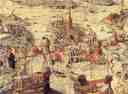
Look for the spot on the square just beyond the medieval stone walls, where the narrow old lanes meet and you're close to the water’s edge; here, at the heart of Gamla Stan, you stand where the infamous events of the Stockholm Bloodbath unfolded. Imagine it is a cold November evening in 1520. The cobblestone streets of Stockholm are crowded with the echoing steps of townsfolk and foreign soldiers. The city reeks of sea salt and smoke from burning torches, and you can almost taste the tension hanging over these ancient stones. Now, picture the grand Tre Kronor castle looming over the city, its towers slicing the sky like watchful sentinels. It had just hosted the biggest celebration the city had seen: King Christian II of Denmark was crowned as the new ruler of Sweden and, for a brief moment, even the bitterest enemies sang and cheered together. Inside the palace halls, the beer flowed, jokes flew, and Swedes and Danes tried for uneasy camaraderie. But as the music faded and the last candle flickered, things took a darker turn. On the 7th of November, King Christian-who history would later call "Christian the Tyrant”-called his most important Swedish guests to a private conference. Imagine the unease as, one by one, the city’s nobles and leaders were summoned away, their faces lit by the orangey glow of lanterns down secret corridors. By dusk, Danish soldiers stalked through these very streets, their boots thumping and armor rattling as they locked the doors behind these guests. The archbishop, Gustav Trolle, had created a list-names marked with invisible ink, all accused of heresy. Now, the atmosphere is heavy with betrayal. On the chilly morning of November 9th, a council led by Trolle condemned nearly one hundred men to death. The charge? Heresy-because they’d turned on the archbishop a few years back. But everyone in the city knew: this was about vengeance and power as much as it was about religion. Listen, as the mournful bell tolls across the square, cutting through the damp air. The square is already packed with uneasy onlookers. Suddenly, two bishops, the pride of Skara and Strängnäs, are led out in their finest robes. In front of the silent crowd, they are beheaded. And then, chaos: nobles, town councilors, wealthy citizens-names you’d heard whispered with respect-are dragged forth. Some are hanged from hastily-erected gallows, others kneel before the axe. The executioner swings again and again, until the stones are sticky with blood, and a chill sinks into the very bones of Stockholm. The horror does not stop with the living. King Christian, it’s claimed, even has the bodies of Sten Sture the Younger-his greatest rival-and Sture’s own child, dug up and burned as a warning to anyone who might challenge him. Noblewomen, among them Lady Kristina, Sten Sture’s widow, are seized and shipped off into exile in Denmark. News of the bloodbath spreads with a speed that outpaces even the king's fastest messengers. In the northern wilds, a young nobleman named Gustav Vasa, whose own father was killed in this massacre, hears what has happened. Fueled by grief and fury, he begins to stir the people into rebellion. Soon, farmhands and townsfolk alike join him-and this peasant army will ultimately drive King Christian and his soldiers out in what becomes the Swedish War of Liberation. The Stockholm Bloodbath, this spot you are standing on, didn’t just cost lives. It sparked centuries of rivalry between Sweden and Denmark, with each side painting the other as villain or victim; stories and rumors even claimed Christian the Tyrant was honored as "Christian the Good" back in Denmark, but no such title ever truly existed. The very memory of these days fueled the passions that shaped Swedish identity and politics for hundreds of years. Step back and take a breath. The stones beneath your feet remember the blood and betrayal, the intrigue and uprising. And yet, the city stands-wiser, stronger, quieter for knowing just how much power can hang by a thread within these old, echoing walls. Intrigued by the background, massacre or the aftermath? Make your way to the chat section and I'll be happy to provide further details.
समर्पित पेज खोलें →To spot the Stock Exchange, look straight ahead for a grand, salmon-pink building with graceful arched windows, a classical facade, and a prominent central pavilion topped by a…और पढ़ेंकम दिखाएँ
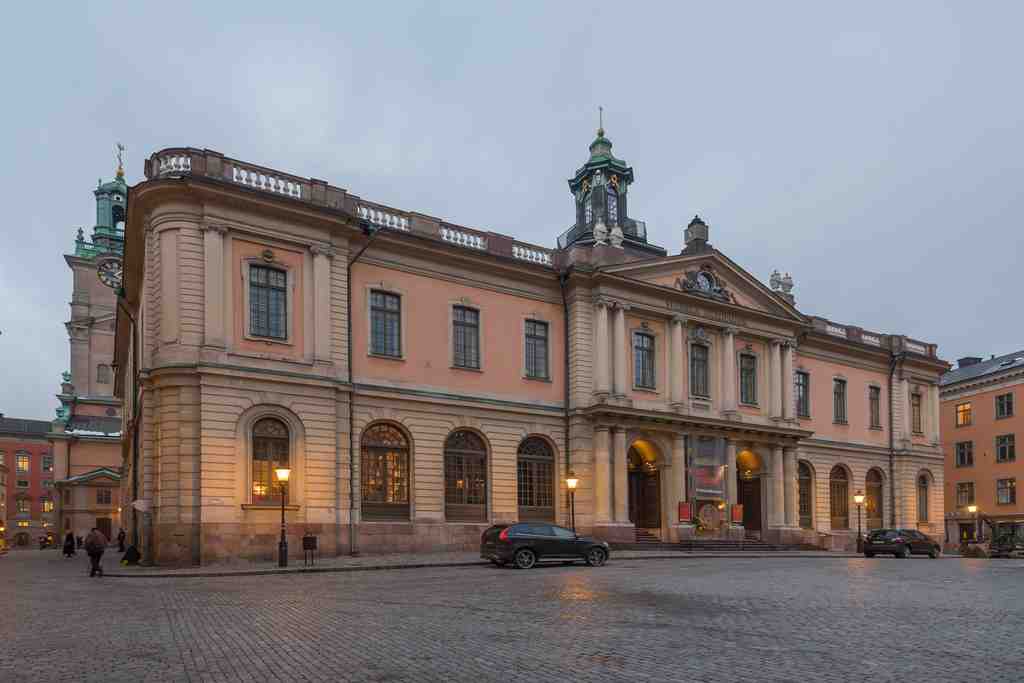
To spot the Stock Exchange, look straight ahead for a grand, salmon-pink building with graceful arched windows, a classical facade, and a prominent central pavilion topped by a small green cupola-a stately sight facing the northern edge of Stortorget. Take a slow breath in and let your eyes wander over this impressive building in front of you. Imagine it’s the late 1700s: the cobblestones under your feet shimmer from the rain, elegant carriages pull up along the square, and a crowd gathers under flickering lamplight as Gustav III, the king himself, is about to step inside for the grand opening of the new Stock Exchange House. This striking building-the “Börshuset”-was started in 1768 and finished nearly a decade later, thanks to the vision of architect Erik Palmstedt and a determined city council set on creating a home for Stockholm’s stock market. It replaced a jumble of old, medieval city buildings, giving the neighborhood its modern name, Rådstugan. But this was meant to be more than a place for money: its grand main hall, the Börssalen, would be a stage for the city’s greatest celebrations, a meeting place for ideas and achievements, and the site of many lavish dances and balls. Imagine the twirl of silk skirts and the glitter of candlelight as noblemen and women swayed across gleaming floors-sometimes even the royal family joined the fun. The building was paid for in part by an extra tax, called the “börstolag,” showing just how important the city thought a new exchange was. But the Börshuset was designed as a challenge too, a proud answer from hardworking townspeople to the aristocrats’ stately palaces-its elegant pillars and high windows were meant to symbolize common achievement, not just inherited nobility. By 1790, statues began to appear in the hall: take Jonas Alströmer, innovator and potato hero, whose marble bust-carved by Pierre Hubert L’Archevêque-stood as inspiration for future inventors. There were plans for others, sharing space with Stockholm’s biggest personalities: merchants, reformers, and adventurers of the “Age of Liberty.” But don’t just imagine the daily business of stocks and trade. Picture the evenings when the Börshuset became a playground for the city’s elite. King Karl XV and Oscar I celebrated their coronations here. Up on the top floor, elegant gold-and-white drawing rooms glimmered with laughter and music. From the 1860s, these salons became the city’s official reception halls-rooms where the fate of Stockholm was toasted in sparkling glasses. There’s a rich echo in the square too: nearby, Erik Palmstedt also designed the beautiful sandstone and cast iron well at Stortorget. Its water-always meant to be “worthy of admiration,” as city engineer Carlberg insisted-might have cooled the hands of many a reveler before returning to the bright sounds of a festival. In 1914, life in the Börshuset changed forever. Philanthropist Magna Sunnerdahl, inspired by the writer Verner von Heidenstam, donated half a million kronor so that the Swedish Academy could make its home here for good. The city wouldn’t sell, but she secured the Academy eternal rights to the two upper floors-including the very hall where the Nobel Prize in Literature is awarded today. Imagine the hush as decisions are made behind those second-story windows, where generations of scholars have debated Sweden’s greatest literary legacy. Today, the Stock Exchange no longer buzzes on the ground floor-traders and stock tickers have moved to Frihamnen. Instead, the entrance houses the Nobel Museum, and the building stands as a masterpiece of French-inspired 18th-century classicism, with hints of rococo carved into its face. Every room tells a different story, from glittering feasts to earnest debates and mysterious deliberations: if these walls could talk, you’d never reach the end of their tales. So, pause here outside the Börshuset and soak in its elegant power-the sound of history echoing in every corner of the square, and maybe, if you listen close enough, the faint strains of a waltz drifting down from those golden salons above.
समर्पित पेज खोलें →To spot Storkyrkan, look for the tall, light-toned church with a distinctive green copper tower and golden spire, rising above the rooftops directly in front of you. As you stand…और पढ़ेंकम दिखाएँ
To spot Storkyrkan, look for the tall, light-toned church with a distinctive green copper tower and golden spire, rising above the rooftops directly in front of you. As you stand here, imagine you’re at the beating heart of Old Stockholm-a place that has seen moments of glory, fear, and celebration echoing across centuries. Storkyrkan, also known as Sankt Nicolai Church, has watched the city transform since the 1200s. Picture ancient Stockholm just rising from marsh and islands, merchants and knights tramping up to this very spot for worship. The church was born thanks to gifts from Birger Jarl, one of the founders of the city, dedicated to St. Nicholas, patron saint of sailors-a perfect choice when so many traders from the Hanseatic League called Stockholm home. If you listen carefully, you may almost hear the shouts of medieval craftsmen as they lay the first bricks, working in the cold winds off Lake Mälaren. Over time, the church grew into a grand, five-aisle hall of brick and stone-an odd, but beautiful, slightly misshapen rectangle, crowned with a mighty west tower. Look up: that tower soars about 66 meters, a true city landmark. Flanked by two wings, one cradling a staircase, it catches the sunlight on its baroque façade, which surprises you with dramatic lines and the play of shadow among pilasters and deep windows. But the most dramatic moments came inside these ancient walls. You’re standing where Sweden’s monarchs have come to be crowned, starting as far back as 1336, when Magnus Eriksson and Blanka of Namur were dressed in glory. Later, it was here that kings, queens, and even conquerors like Kristian II received their crowns, filling the cold air with the scent of incense and the rustle of velvet robes. Storkyrkan was not always so grand-its earliest chapel was a humble wooden affair, built on the city’s highest point. Through the 1300s and 1400s, generations of builders reshaped it, adding chapels dedicated to the Virgin Mary and other saints, knocking down walls, building higher, always aiming for something bigger. Imagine master craftsmen by candlelight, carving capitals, stacking stones. By the end of the 1400s, the roofline soared, mighty pillars held up rolling vaults, and light spilled through larger windows-a church finally fit for royal ceremonies. Speaking of drama, imagine the moment in 1489 when the church first unveiled Bernt Notke’s statue of Saint George and the Dragon. The whole city must have gathered, gasping as the fearsome dragon and brave knight, carved from oak and elk horn, shimmered in torchlight. Beneath the armor, hidden inside the statue’s chest, were bits of bone said to belong to saints-a touch of medieval magic hidden for centuries. During turbulence of the Reformation, Storkyrkan was literally transformed. Gone were the “papist superstitions,” as one king put it; old decorations vanished, walls changed, and warriors stood ready to defend the church from the upper floors if the city was attacked. Can you imagine the tension in the air as iron-clad soldiers kept watch from those very halls? Through the years, kings came and went. At times, the church even served as a fortress. The great bell, Storklockan, cast in 1638, weighed over five tons and its solemn tolls called both worshippers and rulers to great events. If you luck out today, you might hear it ring, a deep note that rumbles through the stone streets like thunder. Since 1942, Storkyrkan has sat at the center of Stockholm’s diocese, but its name remained stubbornly tied to the past: “Storkyrkan,” the Great Church-never quite giving itself over fully to being the bishop’s cathedral. Outside, the baroque face you see was shaped to match the Royal Palace nearby, a symbol that church and crown stood side by side. Not just royal stories: the church is woven into the lives of Stockholmers. From humble medieval gatherings, to the celebration of the royal weddings-like Carl XVI Gustaf and Silvia in 1976 or even Princess Victoria and Daniel Westling in 2010-Storkyrkan has always been the stage for the city’s greatest joys and sorrows. Today, as the city bustles, step close and just for a moment, feel the centuries pressing in from every side-the flicker of ancient candles, the cold marble beneath your feet, and perhaps, just perhaps, the muffled notes of an organ high above you. You are standing where history lives and breathes, right here at Storkyrkan. Yearning to grasp further insights on the name of the church, the church bells or the church tower clock? Dive into the chat section below and ask away.
समर्पित पेज खोलें →To spot Storkyrkoförsamlingen, look ahead for a large, pale peach and white church with tall arched windows and a clock tower peering over the roof. As you stand before…और पढ़ेंकम दिखाएँ
To spot Storkyrkoförsamlingen, look ahead for a large, pale peach and white church with tall arched windows and a clock tower peering over the roof. As you stand before Storkyrkoförsamlingen, I invite you to imagine the lively footsteps of people crossing this square centuries ago, some rushing into church, others lingering with stories to tell. Nearly 800 years ago, in 1260, this place first came alive as Sankt Nikolai parish, splitting away from Solna and quickly establishing itself as the heart of old Stockholm. Try picturing the streets teeming with pilgrims, bell ringers clanging out across the rooftops, and the murmur of Swedish, German, and even Finnish tongues-because this parish was so bustling, it eventually spun off parishes for the city’s different cultures and neighborhoods! For centuries, this church witnessed the city changing around it. There were times when it stood alone as its own pastorate, and other chapters when it joined together with neighboring areas like Riddarholmen or Solna, creating a tightly woven fabric of communities. In 1906, as a symbol of how borders drifted and thrived, Helgeandsholmen island was officially added to the parish-a little shuffle of city boundaries that must have sparked quite a bit of gossip at the local café. Imagine street vendors calling out, organ music swelling from inside, and even the odd argument among clergy over who was in charge or if there were enough organists for Sunday’s service! Parish life had its drama too; now and then priest positions would fall vacant, or be quietly eliminated, and the roster of musicians and cantors was always changing. By 1989, after more than seven centuries of history, the parish’s independent story came to an end as it joined the grand Stockholm Cathedral Parish. Yet, even today, if you listen carefully to the wind swirling around these old stones, it feels as though all those centuries of parishioners are still here-rooted in the city’s beating heart, sharing their hopes and harmonies with each new visitor who passes by.
समर्पित पेज खोलें →To spot Axis Oxenstierna's Palace, look for the tall, striking building with a reddish facade and distinctive stone trim just ahead, standing proudly at the end of the street and…और पढ़ेंकम दिखाएँ
To spot Axis Oxenstierna's Palace, look for the tall, striking building with a reddish facade and distinctive stone trim just ahead, standing proudly at the end of the street and contrasting sharply with its lighter neighbors. Now, take a moment to imagine Stockholm in the mid-1600s: the cobblestones crunch beneath the boots of old city guards as the city’s most ambitious people pass by. Rising before you, with its richly-colored walls, intricate sand-colored stonework around the windows, and towering five stories, stands Axis Oxenstierna’s Palace-a true masterpiece from the age when Sweden was shaping its empire. Designed by Jean de la Vallée, this palace was meant to be just one grand wing of an even larger estate, rivaling any noble home in Europe. Its creator, Chancellor Axel Oxenstierna, wanted a residence that would signal his power right next to the royal Tre Kronor Castle. Imagine the excitement of the first stones being set in 1653, the air filled with the shouts of builders, the scrape of chisels shaping the rough sandstone-that same red hue you see before you. But fate intervened: Oxenstierna died just a year after construction began, and his son followed only two years later. The family never moved in. Instead of a bustling noble household, the finished part of the palace stood quiet and unfinished-a monument to both ambition and loss. Yet, this palace’s story was only beginning. In the late 1600s, the newly-formed Riksens ständers bank, which would one day become Riksbanken, filled its rooms with the world of finance. Just imagine inside, the clink of coins and murmur of important discussions echoing down corridors lined with 17th-century doors and ornate hinges. Over the centuries, many Swedish government institutions would come and go, each leaving their trace on the palace. The building’s location, right by the royal castle, gave it an air of prestige and ensured the state always took good care of it-so much so that even today, most of the original details remain, from the window frames to the reddish walls. The palace stands as one of the best examples of early Roman Mannerism in Stockholm, its style deliberately imposing and full of clever tricks: for example, look at the windows facing Storkyrkobrinken. The land here isn’t straight, but the architect angled the windows and doorways slightly, fooling your eye and making the palace seem perfectly aligned, a visual illusion in stone. The palace even got a facelift in 2013, bringing its colors back to their 1600s glory. And while it was always meant to be much bigger, there’s something magical about its preserved state-a building with five grand stories at a time when most houses only had two or three, with richly decorated stonework and an air of promise frozen in time. So, as you stand in its shadow, imagine what might have been, and listen to the quiet heartbeat of Swedish history whispering from its ancient walls. Interested in knowing more about the history, architecture or the façade renovation
समर्पित पेज खोलें →Look ahead and you'll see an enormous rectangular building of reddish stone, with ornate sculptures and guards often stationed at the main entrance-this is the Stockholm Palace,…और पढ़ेंकम दिखाएँ
Look ahead and you'll see an enormous rectangular building of reddish stone, with ornate sculptures and guards often stationed at the main entrance-this is the Stockholm Palace, its windows, pilasters, and statues standing majestically above Lejonbacken, with views stretching down toward the water. Take a moment to stand still and imagine yourself here nearly 800 years ago, at the very heart of old Stockholm. The air would be filled with the shouts of workers, the clatter of hammers, and the slow rumble of horses’ carts over cobblestones. This spot has always been fiercely important: originally, it was the site of a mighty fortress built by Birger Jarl in the 13th century, created to protect Lake Mälaren from invaders. Soon, it grew into Tre Kronor-the “Three Crowns” Castle-named after three golden crowns that gleamed from its central tower. Legends say that the city’s destiny was shaped in its shadow, and power echoed from these walls. But all grand stories have turning points, and Stockholm’s came with fire. On a spring day in 1697, flames swept through the ancient castle. People raced for their lives, the air thick with smoke and choking heat. Almost everything was lost-but the northern row of the walls, built only a few years earlier in the strict and sturdy Baroque style, managed to survive the blaze. It’s still there if you look closely, a silent survivor amidst all the grandeur. With Tre Kronor in ashes, Sweden needed a symbol of hope and might. Enter Nicodemus Tessin the Younger, an architect who dreamed on a monumental scale. Inspired by the palaces of Rome and guided by the taste for Baroque opulence, he designed something new and bold. Funding was scarce-Sweden was caught in the costly Great Northern War-so work came in fits and starts, stopping completely for nearly twenty years. Imagine the palace standing half-built, windows open to wild weather and the laughter of city children who dared sneak inside. It wasn’t until 1754, long after Princess Hedvig Eleonora’s death and after Tessin, too, was just a memory, that King Adolf Frederick and Queen Louisa Ulrika could finally move into the new home. The palace’s interiors-sumptuous, light-filled, full of intricate Rococo details-were shaped by Carl Hårleman. For decades, artisans, painters, and sculptors from France, Germany, and Sweden toiled here. They carved stone lions for the Lejonbacken ramp, cast statues for the south facing façade, and painted ceilings with busts and battles. Some craftsmen brought their families and even their faith from Catholic Paris, forming a tight-knit colony that lived and worked by the palace. When funding dried up, most remained, their skills and stories woven deep into the stones. The Royal Palace grew into more than a residence. Today, it contains over 1,400 rooms, with treasures waiting behind every door: the airy Hall of State, the dazzling Royal Chapel, the Treasury where Sweden’s crown jewels twinkle in the dim light, and the Livrustkammaren-the Royal Armory-where you can see armor and carriages fit for kings. Museums fill parts of the old cellars, while libraries and secret archives are tucked in the quieter corners. If you listen closely on certain days, you might even hear footsteps echoing in the Bernadotte Gallery where modern monarchs work, or the faint ring of ceremonial swords from the Royal Guards-who have protected this place day and night for half a millennium. Even the outer courtyards tell tales. In the outer yard, don’t miss the statue of Christina Gyllenstierna, who stands forever defiant in memory of Stockholm’s lone female defender. Each façade has its own meaning: the rugged northern face speaks of power, the western row of the king, and the southern row-faced with grand arches and statues-reflects the spirit of the Swedish people. Small details abound: look for the sculpted caryatids, female figures who seem to hold up the palace by sheer strength, and medallions of long-gone rulers watching from above. Over centuries, kings and queens have modernized the palace, painting its walls from brick red to yellow and back again, installing water pipes, electricity, and-most recently-gleaming solar panels on the roof. Yet for all the changes, the spirit of the place endures: a living museum, a workplace for 200 staff, and, every so often, a stage for royal celebrations, from balcony appearances to the stirring spectacle of the changing of the guard. Pause here and feel the layers of time beneath your feet. Through fire and rebirth, war and peace, the Stockholm Palace has witnessed the making of Sweden, a place where the past stands shoulder to shoulder with the present. Fascinated by the exterior, interior or the gallery? Let's chat about it
समर्पित पेज खोलें →To spot Gästvåningen, look up to the second floor of the western wing of the Stockholm Palace-the layout in front of you shows its rooms opening toward the palace’s inner…और पढ़ेंकम दिखाएँ
To spot Gästvåningen, look up to the second floor of the western wing of the Stockholm Palace-the layout in front of you shows its rooms opening toward the palace’s inner courtyard. Now, take a deep breath and step into the world of Gästvåningen, the Grand Guest Floor. Imagine you’re climbing the creaking palace stairs two floors up, crossing into a space reserved for royalty, visiting presidents, and the world’s most powerful guests since the 1870s. This is not just another wing-the air here hums with secrets, not just of today, but from a time when powdered wigs were in fashion and candle wax dripped from golden chandeliers onto waxed wooden floors. The story of Gästvåningen begins in the glittering 1760s, when Jean Eric Rehn, a master of royal taste, led the decorating of these rooms for Prince Fredrik Adolf, brother of Gustav III. The rooms were designed to impress, their origins written into every gilded corner and every echo of footsteps across the 510 square meters of this magnificent suite. Picture yourself in your finest attire, glancing over your shoulder as you pass from room to room-the prickle of anticipation in the air, wondering who has stood here before you, what words were whispered, what alliances quietly forged. Your first stop would be the Drabantsalen-the Drabants’ Hall. Originally a guardroom, its ceiling still boasts stern helmet decorations, standing silent sentry over the visitors. All around you, portraits of Swedish kings stare with a mix of pride and challenge-Karl X Gustav, Karl XI, Karl XII-each eye following you as you move, perhaps weighing your intentions. Under those watchful eyes linger portraits of statesmen from centuries past, cabinet pieces in the sturdy baroque style-likely Dutch in origin-crown chairs, and even a mosaic table, a papal gift from Pius IX to Queen Dowager Josefina. Peer out the window, and you’ll see malachite vases, shimmering green, once a royal gift from Tsar Nicholas I to King Oscar I. Every artifact in here is a witness to centuries of diplomatic exchanges, each one carrying the scent of wax, perfume, and tension. Move on and you’ll find yourself in the Empiresalongen, once a drawing and dining room for Fredrik Adolf. Peer closely at the walls-these tapestries, woven in Brussels around 1700, are embroidered with stories from Ovid’s Metamorphoses, tales of gods and mortals entwined in ancient drama and love. Under the gaze of these mythologies, Queen Hedvig Eleonora once walked. The room brims with Empire-style furniture, created for Oscar I and Josefina’s wedding in 1823. If you tap lightly on the desk, know that Carl Fredrik Ekström carved it masterfully in 1797. Above it sits a vase of Älvdal porphyry, precious and stark against the gold. And just imagine, a chandelier wrought by Lindroth hangs overhead, each twinkling crystal casting a story in the candlelit gloom. Be drawn to Meleagersalongen-the very heart of ceremonial exchange, where treasures, medals, and secrets changed hands during state visits. The room shows off a blend of rococo and Gustavian style, the overdoor hunting scenes painted by the celebrated Oudry for this very palace in the 1740s. Touch the mahogany of the grand piano-its marble pillars cool under your fingertips-and admire the elegant rococo bureaus crafted for a royal wedding in 1766. A marble bust of Karl XIV Johan gazes steadily forward. The woven tapestries depict the Greek hero Meleager, their threads once part of Ulrika Eleonora the Younger’s bridal dowry, each fiber binding together generations. Next comes the Stora sängkammaren, the great bedroom, rich with crimson silk damask and the subtle scent of age. The walls echo with secrets-restored to their original colors in the 1960s, crowned by a chandelier likely from Russia. There’s a safe disguised as a cast-iron stove and a chest of drawers dating to 1755. Glance up, and you’ll see a finely painted portrait of Fredrik Adolf himself, watching over the room. In the Lilla sängkammaren, or small bedroom, you’ll find an intimate space decorated in Gustavian style with a table that looks like precious porphyry-yet is really painted glass, a trick by Jean Baptiste Masreliez. Wander through the Inre sängkammaren and see masterpieces by Flemish artists and elegant empire furniture. In the Inre salongen, the interior salon, you’re transported to the classical world of Pompeii, inspired by archaeological discoveries-here, genre scenes by Swedish and French masters mingle with exquisite bookcases and delicate tabourets, whispers of 1790s sophistication in every detail. Lastly, you reach the Margaretarummet-a quieter, sunlit space named after Crown Princess Margareta, herself an artist. Here, her own oil paintings hang beside marble busts of royalty and a travel secretary made by order of Fredrik Adolf. If you listen, maybe you’ll hear the ghost of Margareta, paintbrush in hand, still wandering through the guest floor she never truly left. Gästvåningen is more than lavish rooms-it’s a stage where centuries of Swedish history, artistry, and diplomacy play out, one royal guest at a time. The rooms do not sleep; they keep their stories, waiting for curious souls like yours.
समर्पित पेज खोलें →To spot the Three Crowns (Tre Kronor) building, look for a grand old castle with pale stone walls, ornate towers, and a mighty round tower at its center, reaching up high above…और पढ़ेंकम दिखाएँ
To spot the Three Crowns (Tre Kronor) building, look for a grand old castle with pale stone walls, ornate towers, and a mighty round tower at its center, reaching up high above the other rooftops. Now, let me carry you back in time to where you’re standing-right here, on the crest of Stockholm’s island, once stood the most legendary and powerful fortress in all of Sweden: Tre Kronor, or the Three Crowns. Imagine the thick scent of damp stone as you stand at the stronghold’s foot. It all began around the middle of the 1200s, when Birger Jarl, the city’s founding lord, built a fortress right here to guard the vital waters between Lake Mälaren and the salty Baltic. If you close your eyes, you might sense the splash of cold waves and distant warning calls, because in those days the city’s survival hung on fortifications like these. The earliest structure was a massive round stone tower, the heart of all that would follow. Its walls were four meters thick-impenetrable-and it rose boldly, crowned with battlements and a pointed roof, visible for miles around. No ordinary door opened to the enemy: the only way in was by a ladder hoisted to the second floor, and at its base, a dark prison cell could only be reached by lowering a rope through a trapdoor. Over centuries, the fortress grew into a true royal castle, a place of drama, ambition, and sometimes disaster. Kings and princes called this place home-such as young Magnus Birgersson, born here in 1300. Life in the castle wasn’t always peaceful. In 1419, fire tore through the rooms, destroying archives and precious history, an ominous warning of what would come. When Gustav Vasa, Sweden’s fearless rebel-king, broke the Kalmar Union in the early 1500s, Tre Kronor became the nation’s crowning seat of power. He was determined to make it impregnable. Old churches provided stone and brick-no material went to waste. Workers laid hundreds of thousands of new bricks to build mighty walls and round bastions, a moat with a drawbridge, and space for new, thundering cannons. At one point, even a section of the neighboring Storkyrkan church had to be torn down, so the castle’s guns could fire freely on any threat. With each king, the castle became more magnificent. Johan III brought the Renaissance here, topping towers with domes and gilded spires. Three gleaming crowns-Tre Kronor-were placed atop the central tower in 1588, and at last, the whole palace took its name from that glittering symbol. Inside, the grandeur matched the outside: a copper-floored audience chamber (the copper would later pay for peace in wartime!), fancy new wings for the king and queen, secret passages like the “Green Walk,” even a chapel with high windows shining down on Queen Katarina Jagellonica’s private worship. It was always a hive of activity. By the late 1500s, the castle bustled with around 1,600 people-servants, soldiers, cooks, and courtiers-enough to fill a small town. Wealth, intrigue, and even danger filled these walls, and sometimes disaster struck. In 1642, for instance, four towers collapsed during another great fire. Imagine Queen Christina, not yet grown, fleeing for her life in the chaos. Yet the greatest tragedy came on a spring morning in 1697. Above the Hall of State, a fire broke out, spreading faster than anyone could fight it. The old castle was lost in roaring flames, centuries of history, the royal library, and even Sweden’s grandest archives turning to ashes. Only the north wing, newly built in a baroque style inspired by Rome, survived the inferno. The blaze drove people into the streets, covering the city in a fine soot, leaving ruins and heartbreak where the nation’s heart had stood. Standing here now, you are in the shadow of legends. Models and marks in the cobblestones nearby show where the old walls and towers once rose. Today, the present Stockholm Palace stands on these ashes, but beneath it all, the memory of Tre Kronor lives on-a reminder of kings, queens, war and fire, and the unbroken spirit of Stockholm. Interested in knowing more about the history, the renaissance castle tre kronor or the tre kronor after the fire
समर्पित पेज खोलें →To spot the Finnish Assembly, look for a simple white building with diagonal wooden doors and metal-shuttered windows, with the words “Finska Kyrkan Suomalainen Kirkko” written…और पढ़ेंकम दिखाएँ
To spot the Finnish Assembly, look for a simple white building with diagonal wooden doors and metal-shuttered windows, with the words “Finska Kyrkan Suomalainen Kirkko” written above the entrance. As you stand in front of the Finnish Assembly, imagine you’re stepping back in time onto this old Stockholm street, where for centuries, the sound of Finnish voices echoed through these doors. The church wasn’t always a church-long ago, this building was actually a ball house where people once played indoors, the sound of laughter and bouncing balls ringing through the halls. But in 1577, a small group of Finns, far from home, carved out a piece of Finland right here by breaking away from the mighty Storkyrkan. For them, this church was more than walls and windows; it was hope and belonging in a foreign city. At first, sermons were mostly in Finnish, and the air was thick with homesickness and determination. The congregation-once called Fredrik’s Parish-fought to keep their space, even when powerful church leaders tried to shut them down in 1809. Picture tense meetings, hands slamming on heavy tables, as members insisted on having their own place to worship. Even in 1838, when the church council tried to dissolve the congregation, most Finns here refused to give up, their voices rising defiantly. For centuries, this place served not just the Finnish-born, but also their children, spouses, and anyone with strong ties to Finland. Even today, anyone who belongs to the Church of Sweden and has a Finnish connection can join-whether they were born in Finland or married someone who was. It isn’t just a church to those who enter, but a living monument to endurance, faith, and friendship across the sea. With every step across its threshold, you’re part of a story still unfolding in the heart of Stockholm.
समर्पित पेज खोलें →To spot the Cepheus neighborhood, look for a tightly clustered patchwork of pale stone houses with steep, dark roofs and glimpses of tree-tops rising above an enclosed courtyard…और पढ़ेंकम दिखाएँ
To spot the Cepheus neighborhood, look for a tightly clustered patchwork of pale stone houses with steep, dark roofs and glimpses of tree-tops rising above an enclosed courtyard in the midst of a dense labyrinth of old Stockholm’s streets-pause near the intersection where sunlight filters down onto cobbles squeezed between tall, shadowy buildings. Now, take a deep breath and imagine standing right in the heart of what was once one of Stockholm’s most crowded and secretive pockets. The neighborhood of Cepheus, named after the Ethiopian king of Greek myth, has seen centuries of life pass through these twisting alleys and narrow yards. The air would once have been thick with voices: children shouting, tradesmen calling, the clip-clop of hooves echoing off the crowded stone. And yet, not so long ago, this area was a place the rest of Stockholm wanted to forget-called a remnant of “medieval barbarity,” a tangle of homes packed so tightly that the sun barely reached their windows. In the mid-1800s, more than 13,000 people squeezed into collapsing buildings like these, their lives unfolding in gloomy, cramped spaces, with tiny courtyards-some scarcely two meters wide-offering only the faintest patches of sky. By the turn of the 20th century, people began to see these ancient streets not only as reminders of hardship, but also as keepers of history. Famous artist Carl Larsson, himself born in the area, dreamed aloud of saving these houses, restoring them and adding all the comforts of the modern world. But for decades, visions of neat, rectangular blocks and total demolition threatened to sweep it all away. That changed in the 1930s, when Stockholm’s love affair with its own past finally began to outweigh memories of the slum. A passionate group called Samfundet Sankt Erik set out to rescue the area, beginning with a careful restoration of Kindstugatan 14-a project so successful it convinced the city there was value even in the crumbling old walls. This wasn’t easy. The local landlords just wanted to be rid of their decrepit properties, so the restoration society began buying up house after house, determined to save what they could of Cepheus’ tangled legacy. The real breakthrough was led by architect Albin Stark in 1936. Instead of tearing down everything, he oversaw the demolition of thirteen of the most crowded backhouses-and in their place, something remarkable appeared: Gamla Stan’s first large park. For the first time, light and green space flooded a neighborhood that had always huddled in shadow. Young couples and radical architects flocked to the new apartments, charmed by the blend of centuries-old character and modern convenience. For a while, the neighborhood was even lovingly called the “Honeymoon Block.” Over the next forty years, restoration continued. Each building yielded surprises-ancient timber beams, centuries-old bricks-hidden layers in a living jigsaw, all recorded by the city’s museum. Though grand plans to restore other districts like Cepheus were never fully realized, here the vision took hold, preserving not just stone and wood, but generations of stories. If you listen closely, you can almost hear them now, woven through the bricks, fluttering with the leaves that finally catch the sun in this remarkable corner of old Stockholm. Yearning to grasp further insights on the background, the decontamination of cepheus or the historical photos? Dive into the chat section below and ask away.
समर्पित पेज खोलें →To spot the Von der Lindeska house, look straight ahead for a tan-yellow building on the square with a unique bay window jutting out over the street, supported by striking carved…और पढ़ेंकम दिखाएँ
To spot the Von der Lindeska house, look straight ahead for a tan-yellow building on the square with a unique bay window jutting out over the street, supported by striking carved figures underneath. Now, imagine you are standing in front of a building steeped in drama and more than a hint of mystery. The Von der Lindeska house has watched Stockholm shift and change since 1633. Back then, the walls around you rose for Erik Larsson von der Linde, a man with pockets lined by the king himself, crowned with noble status only two years before this building came to life. Imagine the pride blazing in his chest as he oversaw the construction-a house built to impress, with sturdy medieval bones and a face lifted in the bold, red brick style of Dutch Renaissance, a real showpiece in its day. But as swiftly as Erik Larsson claimed his piece of Stockholm, his story burned out-he died just three years after the building’s completion. His heirs didn’t linger, and soon, the powerful Gabriel Gustafsson Oxenstierna took possession. Picture the crisp autumn day in 1637 as they signed the deed-shuffling papers in rooms now thick with silence, knowing that this house would see the ambitions and secrets of many families. Trouble, as it so often does, followed close behind. The house passed into royal hands, then into the hands of Queen Christina, a figure who could add a touch of dramatic flair to any setting. Generously, she gifted it to her half-brother Gustaf Gustafsson af Vasaborg, as if palaces were tokens one could simply give away. The centuries ticked by, and no matter how grand its owners, each seemed destined to lose their grip. Gustav’s own son, Gustaf Adolf, pawned the house to the state bank, and in a twist worthy of a fable, could not repay the debt. Along came Johan Scharenberg, a merchant with an eye for opportunity. In 1682, under the hammer of an auctioneer, he claimed the house as his own, snapping up this jewel thanks to the failings of a nobleman. Scharenberg’s wealth echoed in the details-he soon added a new stone building next door and connected it with a wing, preserving one of Stockholm’s most fascinating oddities: the five-sided bay window on Kornhamnstorg. Step closer, if you like, and look up. You'll see it supported by four figures-two men and two women-carved in oak, each braced as if bearing the weight of history itself. These guardians once glowed with color, brought back to life in 2019 to their original brilliance, and have a kinship with the ornamentation of the Vasa warship-regal, almost fantastical in their flair. Walk around to Västerlånggatan and find the grand, sandstone portal. Two gods-Mercury with his sack of secrets and Neptune with the sea-peer out, supporting the heavy form above them. The portal, shaped by the skilled hands of the Dutch sculptor Aris Claeszon, tells you this was a house of power and trade, not just shelter. And then there are the words-look for the two old German inscriptions, one declaring that everything hangs on God’s grace, the other urging you to trust only in Him. Wander these stones and you can feel the echoes of those who came before: ambitious traders, failed aristocrats, even whispers that the philosopher René Descartes himself once stared out these windows, ill and thoughtful, only for rumor to outlive fact. So what you see in front of you is not just a house, but a relic-a place of shifting fortunes, creative genius, and secrets sheltered through centuries.
समर्पित पेज खोलें →In front of you, Järntorget opens up with colorful old buildings in yellow, peach, and cream, framing a lively square filled with café tables and red umbrellas right in the heart…और पढ़ेंकम दिखाएँ
In front of you, Järntorget opens up with colorful old buildings in yellow, peach, and cream, framing a lively square filled with café tables and red umbrellas right in the heart of Gamla Stan. Take a moment and let yourself be carried back to the days when the air here was thick with the clang of iron bars and the shouts of merchants. Järntorget, or the Iron Square, got its name because this very spot was once the center of Stockholm’s iron trade-try to picture heavy wagons arriving from Mälaren’s ports, pouring out iron that would soon travel across the world. It wasn’t always about iron though; before that, the square was known as Korntorget, or the Grain Square, where sacks of grain piled up instead of metal. By the late 1400s, the clang of blacksmiths and the chatter of traders grew even louder. King Karl IX saw how important this market was and demanded that half a dozen inns be set up to serve both locals and travelers-imagine five of those right here, giving the square a constant hum of conversation, spilled ale, and gossip. Next to the square stood Stockholm's official weighing house, built in the 1400s, which was where all the iron had to be officially weighed before it could be sold. When that old building was torn down in the 1700s, the Södra Bankohuset took its place-one of the first buildings in northern Europe built just to be a bank. It’s still protected as a historical monument today. On a lively day, laughter floats from Sundbergs konditori, which has sat on the edge of the square since 1785, serving treats to generations. By the sidewalk, look for a bronze statue of Evert Taube-the beloved Swedish troubadour sometimes said to continue singing under his breath, just a stone’s throw from his favorite pub. And in the center, you might spot the old Iron Square pump, a rare survivor from the days before running water, though nowadays it stands silent. So as you stand here, let the bustle and sunshine mingle with echoes of Stockholm’s distant past-because in Järntorget, you’re truly standing on centuries of stories, commerce, and everyday life.
समर्पित पेज खोलें →To spot Baggensgatan 27, look for a pale yellow, slightly rough-textured house with simple rectangular windows and a heavy dark door right along the narrow, winding cobblestone…और पढ़ेंकम दिखाएँ
To spot Baggensgatan 27, look for a pale yellow, slightly rough-textured house with simple rectangular windows and a heavy dark door right along the narrow, winding cobblestone lane-just before it bends to reveal the sunlit street beyond. Now, let me take you deep into the centuries-old layers of this unassuming facade. Imagine you’re standing right where pilgrims, royals, clergy, and curious townsfolk have passed for nearly 700 years. You might not guess it from the modest windows and pale yellow walls, but behind them lies one of the oldest surviving dwelling houses in Stockholm-built so long ago, in fact, that its story began in the time of knights, kings, and roaming monks. Way back in 1336, King Magnus Eriksson himself ordered a house built on this very spot, giving it to the Johanniter-an order of knights famous for hosting pilgrims and wanderers. They were to run it like an inn, a kind of medieval hostel for those braving the mud, hunger, and bandits on the pilgrim trails of Europe. Envision the flicker of tallow candles, voices murmuring in Latin and German, tired boots kicked off next to rough wooden benches, and the heavy scent of wet cloaks and hope. In those days, this was a haven in the storm and a place to rest before facing the wild outside city walls. By the 1400s, this building slipped into a new chapter. It was passed, through a woman named Gertrud Hansdotter, to Vadstena Abbey-another echo of ancient piety. Imagine the plots and whispers, the endless paperwork of monks and nuns as this house, through tangled inheritances and poetic chronicles, wound its way deeper into church ownership. Some records called it Bernt Taskemakares hus for a time-it belonged to a certain "Taskemaker Bernt"-evidence that even in medieval Stockholm, colorful nicknames reigned. Soon, the tides of history swept through. When the Swedish king broke the monopoly of the monasteries in the sixteenth century, the house ended up in secular hands, but its thick walls remembered more sacred times. There are iron anchor plates on the facade that date back much farther than the house’s later owners-simple, ancient technology clinging quietly to survival. The story turns lively and even dangerous in the late 1500s. Simon Nilsson signed it over to Anders Keith, a Scottish knight and favorite of King Johan III-and Keith’s coat of arms, along with those of his noble wife, are still carved in stone above the door, daring you to peek up for a glimpse of forgotten glories. Picture the grand parade when Keith hosted feasts here, or the more somber gatherings when, after his death, the house came to shelter secret Catholic services under King Sigismund, the Catholic monarch who inherited the crown to Protestant suspicion and unrest. Imagine: priests in black robes murmuring Latin prayers, keeping their faith alive in hushed defiance, while city authorities nervously sent requests to the king-“please, can we shut this Papal priest down?”-hoping for peace in a city divided by faith. Because of these secret services, the house got a nickname it has never quite lost-Papistekyrkan, or the “Papist church.” Yet, if you look at it now, there’s nothing church-like at all: no soaring spires, no bells, just windows stacked in yellow walls and a mysterious silence beneath the carved shields. Yet buried in the cellars, especially facing Österlånggatan, are ancient brick vaults-echoes, they say, of those very Catholic rituals centuries ago. King Sigismund himself is rumored to have handed the house to the Jesuits, and for a fleeting, dangerous moment, this ordinary house was the beating heart of forbidden worship in the city. Through the next centuries, Baggensgatan 27 moved from one owner to another-sold at auctions, passed through wealthy merchants, wine dealers, and spice sellers, even surviving a fire in 1770 that nearly devoured both house and history. Each new hand left its mark, whether it was a flamboyant tiled stove decorated with porcelain birds and parasols, or a coat of gesso chased onto the façade during a grand 1800s renovation. Today, if you step quietly and imagine, you might almost hear the heavy door creak open for a hungry monk-sense the prayers whispered through the granite or the flickering flames reflected in blue-and-white tile stoves. Deep beneath your feet, the ancient stones remember it all. What’s left from 1336? Maybe just the cool cellar vaults, a portion of the oldest floor, and a thousand tales-one of which you’ve now witnessed, right here on a quiet Stockholm lane, in a golden house that remembers everything. For a more comprehensive understanding of the 15th century, 16th century or the 17th century, engage with me in the chat section below.
समर्पित पेज खोलें →Look for a narrow, winding street paved with cobblestones and lined with tall, sunlit buildings in soft yellow and ochre hues, with hanging signs, flags, and the soft chatter of…और पढ़ेंकम दिखाएँ
Look for a narrow, winding street paved with cobblestones and lined with tall, sunlit buildings in soft yellow and ochre hues, with hanging signs, flags, and the soft chatter of passersby echoing between the walls-this is Österlånggatan, stretching gracefully through the heart of Stockholm’s old town. As you stand here, pause for a moment-the air in this quiet stretch of Gamla stan hums with centuries of stories. Beneath your feet, well below the cobbles, lies a shoreline beaten by waves in the 1200s, a trace of Stockholm’s eastern edge before the land was built out with gravel, rubbish, and grit. Every step you take is cushioned by layers of time, sunk deeper into the earth as each century chased away the sea and summoned up a street. Österlånggatan, ‘Eastern Long Street,’ once ran just outside the city’s fortress walls. Imagine the medieval hum here: workshops banging, merchants trading iron and copper, and taverns ringing with songs and storms of laughter. Germans clustered near Järntorget, while Swedish merchants from the northern mines jostled in shops and dwellings lining this very street. In those days, not much noble interest was shown for these noisy quarters, but you might have caught sight of a dignified figure-maybe Gunilla Johansdotter Bese, who gave her name to the now-hidden alley, Fru Gunillas Gränd, between Numbers 43 and 45. In the 17th century, the street was nearly wild with life. Sailors, tavernkeepers, and travelers crowded the stone walkways and ducked through the alleys that vein off to the east. At Number 19-the site of the old Riga tavern-you might have dodged brawlers or stumbled over a sailor newly landed. Just a little further down, Drakens Gränd and Ferkens Gränd may have echoed with the calls of coopers making barrels or with the cheering of locals drinking away their coins at places like the Gilded Dragon, the Three Kings, or the Swedish Arms. Venture on, and you could arrive at a place where the cheerful clamor turns rowdy, and the air carries the tang of the docks. It’s a romantic memory now, but back then, these blocks knew filth and stench, hardship and hustle-rows, misery, and a charm all their own. With the dawn of Skeppsbron in the 1600s-the broad, grand quay just to your east-Österlånggatan was slowly dethroned. The shipping trade and the hubbub faded. By the 20th century, many echoes of the street’s raucous past were gone, and today, a quiet intimacy lingers, interrupted now and then by the gentle clinks of glasses from a restaurant window or the whisper of tourists’ shoes. But the layers of old Stockholm are visible everywhere if you know how to read their signs. Look up at the tall, varied facades-Number 14’s oriel window and baroque portal, number 16’s cast iron pilasters, even the facades at 25-27 patched and pasted through generations. Time here moves both swiftly and slowly, with buildings shifting, leaning, and adapting to the ever-settling earth below. Some have dropped by half a meter over the centuries as the land compresses under their weight. One building, Number 51, is home to Den Gyldene Freden, the “Golden Peace,” in business since 1722. Its doors have outlasted every tavern of Österlånggatan’s wild youth. Literary societies and poets have gathered here by candlelight for centuries, and the Swedish painter Anders Zorn rescued the place from closure a hundred years after famed troubadour Bellman had filled the city’s ears and hearts with song. Zorn’s bold purchase and careful restoration bequeathed the restaurant and its legacy to the Swedish Academy-so, even today, a meal taken within those walls tugs at the history of every poetic soul who ever raised a glass in Stockholm. There’s humor, too, tucked among the cobbles-like the “NON DOMUS DOMINUM SED DOMINUS DOMUM” inscription: a gentle jab that it’s not the house that makes the lord, but the lord who makes the house a home. And tales of mystery, like the fate of buildings suddenly lost to sliding earth, or of Gustav Vasa, who looted a church graveyard nearby for ingredients to make gunpowder-a deed that made folks murmur, ‘Not very Christian, shooting your ancestors into the sky.’ As you stroll on, let yourself drift between centuries-feeling, just for a moment, what it was to live, work, squabble, and celebrate on this ancient track. From dockside chaos to quiet shopping street, Österlånggatan is ever-changing, but always steeped in the rich, storied spirit of Stockholm’s old town.
समर्पित पेज खोलें →To spot Skeppsbron, look ahead for a row of tall, colorful, narrow buildings facing the shimmering water, with boats moored along the quay and the spires of Gamla Stan reaching up…और पढ़ेंकम दिखाएँ
To spot Skeppsbron, look ahead for a row of tall, colorful, narrow buildings facing the shimmering water, with boats moored along the quay and the spires of Gamla Stan reaching up behind them. Now, as you stand before the bustling waterfront of Skeppsbron, imagine the salty wind on your face and the echoing footsteps of sailors, merchants, and dreamers who’ve passed through here for nearly four hundred years. The scene before you is more than just a pretty postcard-it’s the historic front porch where Stockholm once greeted the world. In the early 1600s, as Sweden was rising to power, King Gustav II Adolf looked out at this eastern shoreline and saw more than workmen and briny cargo. He saw the promise of a grand parade street, a shimmering gateway where Sweden could show off its wealth and ambition. By 1634, Stockholm had become the country’s official capital, and people flocked here: traders, politicians, intellectuals, adventurous souls from all around Europe. Over two-thirds of the country’s foreign trade passed right over this very quay, making Skeppsbron a place of endless commotion and wild opportunity. But let me take you further back-imagine standing here in the 17th century, when the city finally tore down its medieval eastern wall. Skeppsbron’s name, which actually means “the ship’s quay,” became the very definition of commerce and connection. This new street, facing the broad Saltsjön bay, replaced the much older, more hidden medieval quay, and the shoreline itself had to be forged with both human hands and nature’s help-land was literally reclaimed from the water with fill dirt, rubbish, and anything they could find. It’s a little-known secret that some of the houses’ foundations here are built partly on medieval debris, and you can even read the city’s history in the cracks and sloping lines of older facades: as the land rose and materials shifted, some buildings began to tilt, stubbornly holding onto their patch of Stockholm through centuries of change. The houses of Skeppsbron were designed to dazzle: tall and narrow, packed onto long, slender plots, their proud faces turned towards the brimming harbor. Downstairs, you would’ve found busy packing houses and offices, while above, lavish apartments gazed out at the never-ending parade of masts in the harbor. Carvings and symbols of sea gods, merchant gods, and ship’s prows still decorate their walls, each telling stories of risk and reward, of fortunes made and lost at sea. This was once the beating financial heart of Stockholm. The so-called “Skeppsbroadeln,” or “Skeppsbron nobility,” were merchant families who built impressive dynasties-with names like Hebbe, Küsel, Tottie, and Arfwedson-trading in everything from spices to iron to silks. Their houses became as much a part of the city’s skyline as the ships that clustered along the quay, bringing all the colors and clamor of a world marketplace right up to the city’s doorstep. But time works its changes: by the late 1800s, Skeppsbron had lost its dominance as the city’s primary port, thanks to bigger ships and the shifting needs of modern transportation. Yet passenger ferries ran until the 1970s, and hulking freighters still moor out in the deeper waters of Saltsjön, while the railway and new harbors crept ever further from Stockholm’s historic heart. Even today, if you listen closely, you can hear the layered past-underneath the hiss of traffic and the calls of seagulls, the echoes of ancient merchants discussing grain prices and grand plans, or the thud of heavy barrels being rolled off a ship. The streets and quay are watched over by statues: to the north, you’ll find the proud bronze of King Gustav III, who strides ashore in victory after a war, forever frozen in a moment of royal drama. And to the south, by the old customs house, stands the mammoth red granite “Sea God” by the artist Carl Milles, a whimsical monument to Stockholm’s everlasting conversation with the sea. Up until recently, parts of Skeppsbron bristled with traffic and parking lots instead of cargo and excitement. But the city never forgets the value of its old harbor: proposals dream up new restaurants, markets, and places for pleasure boats to berth, hoping to recapture the magic that has always made Skeppsbron the place where Stockholm meets the world. So take a last look at those proud facades and the endless blue beyond-here, more than anywhere else in Stockholm, you stand at the threshold between past and present, between the city’s ambitions and the unending promise of the sea. Want to explore the history, architecture or the foundation problems in more depth? Join me in the chat section for a detailed discussion.
समर्पित पेज खोलें →
अक्सर पूछे जाने वाले प्रश्न
मैं टूर कैसे शुरू करूँ?
ख़रीदारी के बाद, AudaTours ऐप डाउनलोड करें और अपना रिडेम्पशन कोड दर्ज करें। टूर तुरंत शुरू करने के लिए तैयार होगा - बस प्ले टैप करें और GPS-गाइडेड रूट का पालन करें।
क्या टूर के दौरान मुझे इंटरनेट चाहिए?
नहीं! शुरू करने से पहले टूर डाउनलोड करें और पूरी तरह ऑफ़लाइन इसका आनंद लें। केवल चैट फ़ीचर को इंटरनेट की ज़रूरत है। मोबाइल डेटा बचाने के लिए WiFi पर डाउनलोड करने की सिफ़ारिश है।
क्या यह एक गाइडेड ग्रुप टूर है?
नहीं - यह एक सेल्फ-गाइडेड ऑडियो टूर है। आप अपनी गति से स्वतंत्र रूप से खोजते हैं, आपके फ़ोन से ऑडियो कथन बजता है। कोई टूर गाइड नहीं, कोई ग्रुप नहीं, कोई शेड्यूल नहीं।
टूर में कितना समय लगता है?
अधिकांश टूर पूरा करने में 60-90 मिनट लगते हैं, लेकिन गति पूरी तरह आपके नियंत्रण में है। जब चाहें रुकें, स्टॉप छोड़ें, या ब्रेक लें।
अगर मैं आज टूर पूरा नहीं कर सकता/सकती तो?
कोई समस्या नहीं! टूर की लाइफ़टाइम एक्सेस है। जब चाहें रोकें और फिर शुरू करें - कल, अगले हफ़्ते, या अगले साल। आपकी प्रगति सेव रहती है।
कौन सी भाषाएँ उपलब्ध हैं?
सभी टूर 50+ भाषाओं में उपलब्ध हैं। अपना कोड रिडीम करते समय अपनी पसंदीदा भाषा चुनें। नोट: टूर जेनरेट होने के बाद भाषा बदली नहीं जा सकती।
ख़रीदारी के बाद मैं टूर कहाँ एक्सेस करूँ?
App Store या Google Play से मुफ़्त AudaTours ऐप डाउनलोड करें। अपना रिडेम्पशन कोड (ईमेल द्वारा भेजा गया) दर्ज करें और टूर आपकी लाइब्रेरी में दिखेगा, डाउनलोड और शुरू करने के लिए तैयार।
अगर आपको टूर पसंद नहीं आया, तो हम आपकी ख़रीदारी वापस करेंगे। हमसे संपर्क करें [email protected]
सुरक्षित चेकआउट