
Sanlucar de Barrameda Audio Tour: A Heritage Trail
सैनलुकर डी बारामेडा में हर ज्वार महल की दीवारों से पुराने और मंज़ानिला के एक गिलास से अधिक नमकीन रहस्य फुसफुसाता है। छिपे हुए इतिहास ऑरलियन्स-बोरबॉन पैलेस की शाही पट्टियों के पीछे इंतजार करते हैं और सैंटियागो कैसल की धूप से भरी प्राचीरों में गूँजते हैं। इस स्व-निर्देशित ऑडियो टूर के साथ, शराब के बैरल और धूप से सराबोर नींबू के पेड़ों से सुगंधित गलियों में घूमें, उन कहानियों को उजागर करें जिन्हें अधिकांश यात्री अनदेखा कर देते हैं। किस शाही घोटाले ने लगभग एक महल को अस्तित्व से मिटा दिया था? सैंटियागो कैसल में प्राचीन भित्तिचित्र और सुरंगें अभी भी इतिहासकारों को क्यों भ्रमित करती हैं? और किस जोखिम भरे प्रयोग ने मंज़ानिला शराब का स्वाद हमेशा के लिए बदल दिया—क्या यह भाग्य था या चालाक तोड़फोड़? नाटकीय पलायन, फुसफुसाई गई विद्रोह, गायब दावतें और लगभग भूले हुए रहस्यों से गुजरें, क्योंकि शहर रंग, सुगंध और अप्रत्याशित साज़िश के विस्फोटों में खुद को प्रकट करता है। हर कदम सैनलुकर के गौरवशाली अतीत से एक और परत हटाए। हर हवा में इसके रहस्यों का स्वाद लेने के लिए तैयार हैं? आपका रोमांच अब शुरू होता है।
टूर पूर्वावलोकन
इस टूर के बारे में
- scheduleअवधि 30–50 minsअपनी गति से चलें
- straighten4.4 किमी पैदल मार्गगाइडेड पथ का पालन करें
- location_onस्थानसैनलुकर डी बारामेडा, स्पेन
- wifi_offऑफ़लाइन काम करता हैएक बार डाउनलोड करें, कहीं भी उपयोग करें
- all_inclusiveलाइफ़टाइम एक्सेसकभी भी, हमेशा के लिए फिर सुनें
- location_onमंज़ानिला से शुरू होता है
इस टूर के स्टॉप
Picture this: the grapes for Manzanilla grow just a stone’s throw from where you’re standing, rooted in chalky earth and cooled by ocean winds. When the harvest comes, the…और पढ़ेंकम दिखाएँ
Picture this: the grapes for Manzanilla grow just a stone’s throw from where you’re standing, rooted in chalky earth and cooled by ocean winds. When the harvest comes, the bustling port town fills with energy-locals joke that even the barrels start gossiping. Manzanilla means “chamomile” in Spanish, and if you swirl your glass, the scent is said to remind people of that calming tea. But don’t let its pale, delicate look fool you-this wine has a lively, briny punch! It’s created with the local Palomino grape, then aged in barrels under a thick cap of flor yeast that seems to love Sanlúcar’s cool, humid air more than anywhere else. That’s why Manzanilla is fresher and lighter than other sherries from Jerez. They say it’s like tasting a sea breeze with every sip. Local tradition? Manzanilla isn’t just a wine, it’s an experience. Here, it’s poured ice-cold, especially good at fighting off the southern Spanish sun. It's perfect with salty olives, toasted almonds, and-my personal favorite-plenty of jamón serrano. Ever heard of a “Rebujito”? That's Manzanilla mixed with lemony soda, the cocktail of choice at many a fiesta. But drink up-once opened, a bottle of Manzanilla starts to fade fast. Some locals call it “catching the wind in a bottle.” This wine’s fame even made it into the opera Carmen-now THAT’s a drink with star power! Think of all the secrets and stories that have been swapped over glasses of Manzanilla in the centuries-old taverns right here. So, are you ready to taste the spirit of this town? Just remember: in Sanlúcar, wine isn’t just something you drink, it’s a reason to celebrate!
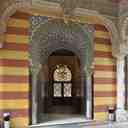
समर्पित पेज खोलें →Right in front of you stands the eye-catching entrance of the Orleans-Bourbon Palace! To spot it, just look for bold horizontal stripes of yellow and red lining the façade, and a…और पढ़ेंकम दिखाएँ
Right in front of you stands the eye-catching entrance of the Orleans-Bourbon Palace! To spot it, just look for bold horizontal stripes of yellow and red lining the façade, and a grand arch decorated with intricate Moorish details. The colors are so striking you might think someone played a game of “paint the palace” with two giant paint rollers. Don’t forget to check out the leafy, patterned columns and the ornate carvings all above and around the doorway. Through the arch, you’ll glimpse a chandelier and some beautiful geometric glass doors. Not a bad first impression, right? Imagine yourself in Sanlúcar in the 1800s. The palace you see was once the ultimate summer getaway for royalty: Antonio de Orleans and María Luisa Fernanda de Borbón, the fancy-sounding Duke and Duchess of Montpensier. What a mouthful, huh? Picture those carriages rolling up to these doors, silk dresses swishing everywhere, and the air buzzing with excitement over the latest royal gossip. This place has seen all sorts of drama. When the French royal family had to pack their bags and leave home, Antonio and Luisa chose sunny Sanlúcar for their royal summer HQ. They bought up old buildings, rolled them together, and wrapped everything in a single, glorious skin-no boring symmetry or plain old doors here! Antonio was quite the traveler; after visits to Lebanon, Algeria, and some wild adventures in the Eastern Mediterranean, he wanted his palace in Sanlúcar to feel like a magical, faraway land. So, he mixed Egyptian, Tunisian, Turkish, and Granada influences into one wild design, like a recipe for the perfect palace! But the drama didn’t stop at the paint. By 1971, the palace had almost been lost forever-it was nearly demolished before the city fought to buy and restore it. These days, it’s the heart of local government, but sometimes it feels like the ghosts of old parties still echo through these halls. If you look around, you’ll notice a blend of styles-mudéjar patterns, classical French elegance, even hints of rococo and Egyptian. The interiors are so packed with surprises that walking through is like time-traveling from one grand style to another with every step. So, while you stand here and look up at those whimsical arches and dazzling decorations, just imagine yourself invited to the most fabulous summer party of the 19th century. All you need is a fancy hat and a bit of royal attitude!
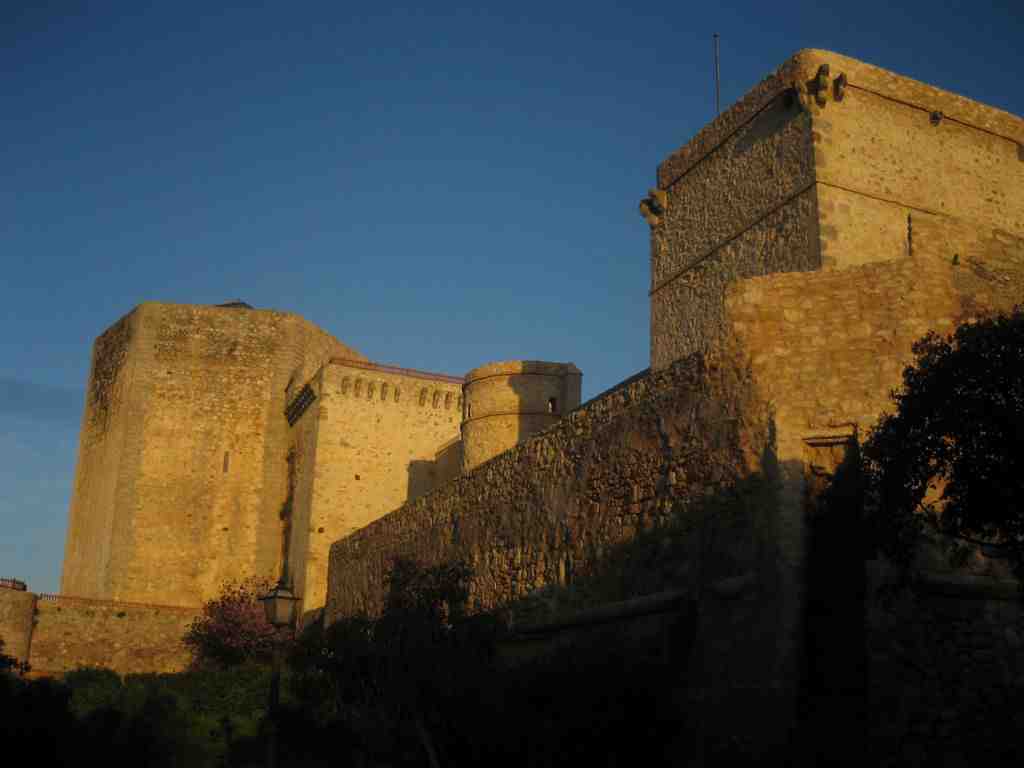
समर्पित पेज खोलें →You’re just approaching Santiago Castle! To spot it, glance up and ahead to your left. You’ll notice strong, golden stone walls rising above the trees, especially catching the sun…और पढ़ेंकम दिखाएँ
You’re just approaching Santiago Castle! To spot it, glance up and ahead to your left. You’ll notice strong, golden stone walls rising above the trees, especially catching the sun in the late afternoon. These thick, fortress walls form tall, blocky towers. Look for the squared battlements along the top-imagine you’re a medieval guard keeping watch! Picture yourself here five hundred years ago. The year is 1478. You’re at the edge of the old citadel, right where the town divides into two heights. Standing in front of Santiago Castle, you might feel the shadow of history in the air-these walls have seen some wild stories. Built by the powerful House of Medina Sidonia, this castle was the brainchild of Enrique Pérez de Guzmán, a duke who knew that style and strength go hand in hand-Gothic style, to be exact! Just think: workers mixed tapial, masonry, and carved blocks under the sun, racing to finish this fortress for their lord. The castle is a big square, with four strong towers around a central courtyard, and on the northeast corner stands its pride and joy-the main hall and the famous keep. The keep here was inspired by the legendary tower of Guzmán el Bueno from Tarifa. Pretty fancy, right? Step closer…and see if you can spot the old gate with the half-circle arch. Above it, you’ll find a triton-maybe a mermaid, maybe not, the locals can’t decide!-with a double tail, framed by the carved shields of noble families. The lower walls are covered in ancient graffiti: drawings left behind by soldiers, wanderers, and dreamers from centuries ago. There are stone masons’ marks everywhere, each one telling a secret about how these walls were built. And just below your feet, they even discovered a hidden tunnel leading toward the grand Ducal Palace-a real medieval escape route! The castle has survived fire, repairs, endless family squabbles, and now plays host to curious visitors like you. Today, it’s the most visited site in Sanlúcar, with museums tucked inside its old rooms. So take a deep breath, listen to the wind, and imagine the clang of armor and echoing footsteps on these ancient stones. Not bad for a place that’s survived almost everything…except a bad joke or two! Interested in a deeper dive into the construcción, estilo or the estructura? Join me in the chat section for an insightful conversation.
समर्पित पेज खोलें →

8 और स्टॉप दिखाएँकम स्टॉप दिखाएँexpand_moreexpand_less
Look just ahead and to your right as you’re walking up this old stone slope called Cuesta de Belén. The Covachas will be hard to miss-they’re that row of tall, pointy arches set…और पढ़ेंकम दिखाएँ
Look just ahead and to your right as you’re walking up this old stone slope called Cuesta de Belén. The Covachas will be hard to miss-they’re that row of tall, pointy arches set right into the wall, almost like a secret shopfront built for medieval wizards! Notice how the stone glows golden in the sunlight, and check out those strange, lizard-like creatures carved above each arch. Legend has it, if you hustle past too quickly, you might miss their sly little faces peeking down at you. Let’s imagine ourselves back at the end of the 1400s, when this was the center of Sanlúcar’s bustling commerce. Picture busy merchants unloading silks and spices, their voices echoing beneath the Gothic arches. The Covachas, also known as the Shops of the Serpents, were built for traders, and their style was meant to impress. The thirteen pointed arches rest on chunky pillars, and above these, you’ll spot something straight out of a fantasy tale-a parade of stone serpents and basilisks. Don’t worry, these beasts haven’t snacked on anyone in centuries. This loggia was commissioned by Enrique Pérez de Guzmán, the second Duke of Medina Sidonia, and has survived all sorts of drama: fancy towers built on top of it, swaps with monks over a butcher shop (talk about trading up!), and even being partly buried and hidden from view until the 1980s, when restoration set it free again. For a while, the Covachas kept a low profile, but now they’re declared a protected treasure, once again sticking out their serpentine tongues at passers-by. As you stand here, let your imagination roam through time: merchants haggling, nobles strutting, and the ever-watchful stone serpents ensuring nobody gets up to too much mischief. If these ancient walls could whisper, I bet they’d have plenty of juicy secrets. Maybe next time you visit, you’ll hear one! Now, follow the curve of the street as we head onward-if you hear any hissing, don’t panic, it’s probably just the wind… or is it?
समर्पित पेज खोलें →Look straight ahead and you’ll spot a beautiful piece of stonework rising out of a crisp white wall. That’s the Convent of the Mother of God, right in front of you! Just look for…और पढ़ेंकम दिखाएँ
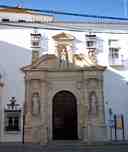
Look straight ahead and you’ll spot a beautiful piece of stonework rising out of a crisp white wall. That’s the Convent of the Mother of God, right in front of you! Just look for the big, arched wooden door framed by elegant stone columns. There are two statues tucked into shell-shaped niches on either side of the entrance, and-if you glance up-you’ll notice another figure of the Virgin Mary watching over the doorway from above, crowned by a fancy triangular roof. Now, take a deep breath and try to imagine what it must’ve felt like to stand here in the late 1400s. The air would be full of secrets: the gentle footsteps of Dominican nuns and the low hum of prayers, maybe even the distant sound of horses from the nobility passing by. This place isn’t just another pretty building-it’s a living chapter of Sanlúcar de Barrameda’s story. Right where you stand, this convent began thanks to some very powerful locals. It was first brought to life in 1480, thanks to the Duke and Duchess of Medina Sidonia. But the actual building you see-so full of grandeur and delicate detail-dates to the late 1500s, when it became a special retreat for noblewomen. Honestly, if Netflix ever needs ideas for historical drama, this convent is ready made: influential women like Leonor de Sotomayor and Leonor de Guzmán made sure this place flourished, pouring their hearts and family fortunes into it. And get this: two daughters of the famous conquistador Hernán Cortés became nuns here-María and Catalina. Imagine the whispers behind these stone walls! Add to that the fact that the first Dominican convent in the Americas, over on the island of Santo Domingo, can trace its roots right back to this place and its determined nuns. Take a closer look at the decorations above the door. Notice the coats of arms-they’re like the ancient version of family Wi-Fi passwords, only in stone. And the saints standing tall in their little shell-shaped alcoves? They’re keeping a watchful eye on who comes and goes. If you could step inside today, you’d find stunning art: a dome decorated with intricate patterns, golden Baroque altarpieces that glow in the sunlight, and an atmosphere so rich you can almost hear the echo of centuries-old hymns. So, while you’re here, pause for a moment and enjoy the quiet magic. Who knows? Maybe you’ll sense a friendly nun from days gone by, eager to share a smile-or at least keep an eye out for wandering tourists! Shall we head onward?
समर्पित पेज खोलें →Look to your right, and you’ll spot a tall, stately building stretching along the narrow street - that’s the Hotel Palacio de Arizón. Its facade is a pale pink and cream color,…और पढ़ेंकम दिखाएँ
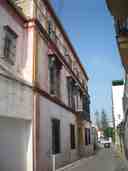
Look to your right, and you’ll spot a tall, stately building stretching along the narrow street - that’s the Hotel Palacio de Arizón. Its facade is a pale pink and cream color, with red trim around the windows and strong, black iron bars covering them. You’ll notice the large windows on the upper floor and the iron balcony hanging above the main entrance. The building’s size dominates the whole street - it’s impossible to miss! If you glance up, look for the decorative details along the roof and try to spot the tower at the far end, used in the past to watch the comings and goings on the river. Now, take a moment to imagine what this place would have felt like around 300 years ago. You’re looking at the Casa de Arizón, a grand house built between the 1600s and 1700s. Back in those days, Sanlúcar was buzzing with trade - ships coming in from the Americas, barrels of wine and treasure unloaded just blocks away. The Arizón family started off in Ireland, but soon journeyed to Catalonia and then all the way here, to make their fortune in Sanlúcar. And boy, did they! Félix Arizón arrived in 1709 and turned this very building into their headquarters, dealing in wine, brandy, and dried fruits, sending and receiving news and goods from all over. Imagine the echo of good-natured haggling, and maybe the clink of a few gold coins changing hands. This palacio isn’t just big - it’s a survivor. It’s the only house of its kind, a cargadores a Indias mansion of this size, that stands complete in the whole region - and that means, in the world! It was built as both a family home and a business hub, joining two different houses into one sprawling complex. If the walls could talk, they’d have tales of sea captains, business deals, and maybe a little bit of gossip from the horse stables and warehouses out back. Take in the main doorway, crowned with a family coat of arms in white marble, and the calm symmetry of the facade. The balconies, with their dainty wrought iron supports and bold, shuttered windows, are classic southern Spain, with a dash of baroque grandeur from old Seville. And don’t miss the "tower chair" - the watchtower at the top, facing the river and sea, blending mudéjar and baroque designs. From there, the Arizóns could spot ships sailing in from America or Barcelona, ready to bring more good fortune. Standing here, you’re right in the heart of old trading Sanlúcar. So, next time you sip a glass of manzanilla, give a little toast to the Arizóns and their adventurous, world-connecting spirit. They sure made this street a livelier place! Ready to head to our next stop? Interested in a deeper dive into the descripción, historia familiar or the leyendas? Join me in the chat section for an insightful conversation.
समर्पित पेज खोलें →Look ahead and slightly to your left-do you see that long, white-walled building? Its roof is lined with small red pyramid shapes, and right in the middle sits a grand stone gate…और पढ़ेंकम दिखाएँ
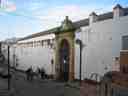
Look ahead and slightly to your left-do you see that long, white-walled building? Its roof is lined with small red pyramid shapes, and right in the middle sits a grand stone gate crowned with the crest of Sanlúcar. That’s the historic Sanlúcar de Barrameda Market, or Plaza de Abastos. Its entrance is framed by this elegant arch of honey-colored stone, giving the market a look that’s part fortress, part foodie paradise. Now, standing here, close your eyes for a second and imagine the buzz of a market day-hum of voices, clatter of carts, the sweet smell of oranges mixing with the salty breeze from the Guadalquivir River. This spot has been the heartbeat of the town’s daily life for centuries. You’re right in the heart of Sanlúcar’s old commercial quarter, a district alive with trade since the Middle Ages. Back in 1736, the city decided the time had come to gather all the scattered butchers, fruit sellers, and grocers under one roof. That roof, right above you now, covers almost 1,400 square meters-pretty roomy for secrets, haggling, and laughter. Even the mighty Duke of Medina Sidonia chipped in, offering a piece of his garden. That was some neighborly spirit, right? Circling the outside, you’ll spot the market’s walls with their quirky battlements-almost like a castle ready to defend its cheese and tomatoes. The tale doesn’t stop there. Over the years, the market has grown, been reimagined, and even survived plans to turn it into a modern white cube. Some say, markets change, but stubborn old buildings and hungry locals always win in the end. Picture the 18th-century grand opening, the mayor all puffed up, the first shoppers peeking in, wondering if the tomatoes taste better under a fancy roof. Once inside, you’d have found arcades lined with stalls, outdoor corners buzzing with gossip-more drama than a Spanish telenovela. There’s been debate and drama even in recent times about its look and future. Some wanted it futuristic-a white box! But most folks prefer their market with a little history and a lot of character. That’s why, as you stand here, this place still whispers with stories of bargains struck, secret recipes swapped, and traditions passed down-one basket at a time. If you ask me, Sanlúcar’s market isn’t just where people buy their dinner-it’s where the soul of the city gathers every morning, still as lively as it was nearly 300 years ago. So take a look around, maybe catch the scent of fresh seafood or hear a stallholder singing. This is the living heart of Sanlúcar, and you’re standing right at its door.
समर्पित पेज खोलें →You’re standing right in front of the Church of Santo Domingo. Take a look up-see the tall stone facade with its solid, square shape and that elegant bell gable poking toward the…और पढ़ेंकम दिखाएँ
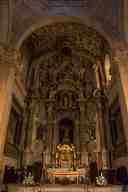
You’re standing right in front of the Church of Santo Domingo. Take a look up-see the tall stone facade with its solid, square shape and that elegant bell gable poking toward the sky? Notice the cheeks of the building: strong pillars, classical arches, and, if you squint just right, the arms of the Dominicans and the noble family proudly showing off their crests. The entryway looks almost sculpted, with triangular points topped off with neat stone balls. If you hear the echo of your footsteps here, you’re on the money-this is the place! Imagine it’s the mid-1500s. The air smells of sea salt and wet stone, and this part of town-the Arrabal de la Ribera-is buzzing. Traders shout, donkeys bray, and the church is just beginning to rise from the ground, thanks to the powerful Dukes and Duchesses of Medina Sidonia. They needed somewhere grand to pray-and to show off, of course! Even in the afterlife, these nobles stayed VIP, as a pair of them are buried right here in the main chapel. I suppose a mausoleum in a beautiful church beats a plain old tombstone any day. The building itself is a real Renaissance masterpiece, but it has a wild side. Its grand dome rides high above an octagonal base, and the ceilings are lined with elegant patterns, almost like the inside of a jewelry box. As you step in, imagine cool stone under your hands and the fancy crest of the Pérez de Guzmán staring back at you from above the choir, telling the story-no pressure to impress guests, huh? Throughout the church, you’ll find the marks of many hands: architects like Hernán Ruiz II, Francisco Rodríguez Cumplido, and the military wiz Cristóbal de Rojas, who made time for church-building between defending Cádiz from pirates. Inside, the chapel walls hold remarkable paintings and stunning sculptures, like the hauntingly beautiful Christ of Miracles and the ornate high altar sparkling in rococo style-done by people whose names are still whispered with a mix of admiration and jealousy by jealous artists everywhere. If you listen closely, maybe you’ll hear a faint trumpet fanfare in your imagination: this place once echoed with the footsteps of monks, the secrets of nobles, and maybe, just maybe, a few ghostly whispers from the Duke who never wanted to leave his favorite spot in Sanlúcar. So take a moment, breathe in, and let the history settle in your bones-because Santo Domingo has more stories than even it can keep quiet.
समर्पित पेज खोलें →You’re now standing by the place that echoes with ancient footsteps-the site where the Battle of Carteia raged over two thousand years ago, back in 206 BC. Imagine the air buzzing…और पढ़ेंकम दिखाएँ
You’re now standing by the place that echoes with ancient footsteps-the site where the Battle of Carteia raged over two thousand years ago, back in 206 BC. Imagine the air buzzing with shouts in Latin and Punic, horses’ hooves thundering, and the metallic ring of swords clashing. If these stones could talk, I bet they’d need a nap and a cup of coffee! This wasn’t just a neighborhood scuffle-this was Carthage versus Rome, a showdown smack in the middle of the epic Second Punic War. The Carthaginians, led by Hanno, were desperately trying to recruit tough Celtiberian mercenaries. On the other side, the speedy Roman commander Lucius Marcius Septimus raced down the river with a lean, travel-light force-no fancy baggage, just pure determination. You see, in war, it’s not about who’s got the most stuff, but who’s got the fastest legs-and maybe the least to carry. The Romans found Hanno trying to charm new fighters on a hill nearby. The Carthaginians were surrounded and the mercenaries quickly began to negotiate-probably thinking, “How do we get out of this without ruining our hair?” Marcius asked for prisoners, deserters, and... payment! Nothing like a little bargaining while surrounded by a hostile army. But just when you thought everyone would walk away happy, the deal hit a snag. The Romans demanded the mercenaries surrender their weapons. Now, that was almost an insult to these Celtiberian warriors, who’d rather face certain doom than hand over their swords. So, the negotiations fell apart faster than a tourist’s map in a rainstorm, and battle broke out again-loud, frantic, and fierce. The Carthaginian and mercenary lines broke. More than half didn’t make it out; the survivors scrambled, running for the safety of the coast where Mago Barca, a Carthaginian commander, arrived with sixty ships for a wild rescue operation-imagine a medieval Uber with room for hundreds. Afterwards, Carthaginian hopes in this region were squashed down to the city of Gadir, now known as Cádiz. The story didn’t end happily for Mago, either-when he returned to the supposedly safe city, the locals had locked him out and were chatting up the Romans instead. Ouch. The ultimate historical “You’re not welcome anymore.” And so, here you stand where ancient warriors once argued, fought, and fled. If you listen closely, maybe you’ll catch the distant sound of clashing swords or the grumbling of a Carthaginian officer, “Next time, let’s try a different hill.” Ready to march on to the next stop? Let’s continue our adventure!
समर्पित पेज खोलें →If you look straight ahead, you can’t miss the bold, round shape of the Sanlúcar de Barrameda bullring-bright yellow and red, with lots of arches and an almost fortress-like vibe.…और पढ़ेंकम दिखाएँ
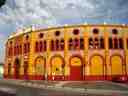
If you look straight ahead, you can’t miss the bold, round shape of the Sanlúcar de Barrameda bullring-bright yellow and red, with lots of arches and an almost fortress-like vibe. Just follow the curve of Avenida San Francisco and, boom, suddenly you’re in front of this grand, historic entrance with its big, striking doors and little windows peering down at you like curious eyes. The building’s neomudéjar style, with all those decorative horseshoe arches and patterned stonework, really makes it stand out from anything else nearby. Now that you’re here, let’s imagine the scene a century ago. The year is 1900. The crowd buzzes with excitement, paper fans flutter and the smell of anticipation (and maybe a few nervous picnics) drifts through the air. This very spot, Coso del Pino, opened with a huge bang-a bullfight featuring Miura bulls and stars like Machaquito-a name about as fun to say as it is to shout when you’re cheering in the stands. Back then, the bullring wasn’t just for bulls. It hosted all sorts of public events. People had been gathering here for spectacles since the 16th century, turning plazas and even castle courtyards into temporary rings. You might say Sanlúcar folks liked to improvise-until they finally settled on this sturdy spot, built right where the gardens of El Pino once grew. This place can hold over 5,000 fans. Picture them, perched on two levels, peering out from fourteen elegant balconies, watching the action on the 37-meter-wide ring below. And the stories! Once, in 1912, the horsemen-picadores-refused to enter unless their lances were made bigger. Can you imagine the dramatic standoff? Who needs soap operas when you’ve got bullfighters? Over the years, legends have performed here, and even a famous bull, “Milhijas,” was pardoned right in this ring in 2019. The whole place had a makeover for its centenary, losing a few seats but gaining lots in character. Best of all, it’s the only bullring in Cádiz province rocking this neomudéjar style-like a Spanish castle dressed for a festival. So, take in the echoes of the crowds, the crackle of excitement, and-if you listen closely-maybe the sound of a lone bull, hoof to sand, getting ready to make history. No need to worry though-the only thing charging down the street now is your curiosity! Shall we take a quick look around before we wrap up our Sanlúcar adventure? To expand your understanding of the historia, características or the hitos, feel free to engage with me in the chat section below.
समर्पित पेज खोलें →

अक्सर पूछे जाने वाले प्रश्न
मैं टूर कैसे शुरू करूँ?
ख़रीदारी के बाद, AudaTours ऐप डाउनलोड करें और अपना रिडेम्पशन कोड दर्ज करें। टूर तुरंत शुरू करने के लिए तैयार होगा - बस प्ले टैप करें और GPS-गाइडेड रूट का पालन करें।
क्या टूर के दौरान मुझे इंटरनेट चाहिए?
नहीं! शुरू करने से पहले टूर डाउनलोड करें और पूरी तरह ऑफ़लाइन इसका आनंद लें। केवल चैट फ़ीचर को इंटरनेट की ज़रूरत है। मोबाइल डेटा बचाने के लिए WiFi पर डाउनलोड करने की सिफ़ारिश है।
क्या यह एक गाइडेड ग्रुप टूर है?
नहीं - यह एक सेल्फ-गाइडेड ऑडियो टूर है। आप अपनी गति से स्वतंत्र रूप से खोजते हैं, आपके फ़ोन से ऑडियो कथन बजता है। कोई टूर गाइड नहीं, कोई ग्रुप नहीं, कोई शेड्यूल नहीं।
टूर में कितना समय लगता है?
अधिकांश टूर पूरा करने में 60-90 मिनट लगते हैं, लेकिन गति पूरी तरह आपके नियंत्रण में है। जब चाहें रुकें, स्टॉप छोड़ें, या ब्रेक लें।
अगर मैं आज टूर पूरा नहीं कर सकता/सकती तो?
कोई समस्या नहीं! टूर की लाइफ़टाइम एक्सेस है। जब चाहें रोकें और फिर शुरू करें - कल, अगले हफ़्ते, या अगले साल। आपकी प्रगति सेव रहती है।
कौन सी भाषाएँ उपलब्ध हैं?
सभी टूर 50+ भाषाओं में उपलब्ध हैं। अपना कोड रिडीम करते समय अपनी पसंदीदा भाषा चुनें। नोट: टूर जेनरेट होने के बाद भाषा बदली नहीं जा सकती।
ख़रीदारी के बाद मैं टूर कहाँ एक्सेस करूँ?
App Store या Google Play से मुफ़्त AudaTours ऐप डाउनलोड करें। अपना रिडेम्पशन कोड (ईमेल द्वारा भेजा गया) दर्ज करें और टूर आपकी लाइब्रेरी में दिखेगा, डाउनलोड और शुरू करने के लिए तैयार।
अगर आपको टूर पसंद नहीं आया, तो हम आपकी ख़रीदारी वापस करेंगे। हमसे संपर्क करें [email protected]
सुरक्षित चेकआउट 


