
ब्रासोव ऑडियो टूर: ट्रांसिल्वेनियाई विरासत की गूँज
एक काला गोथिक विशालकाय मध्ययुगीन सड़कों पर खड़ा है, उसकी घंटियाँ सदियों के तूफानों और आग के रहस्यों को गूँज रही हैं। यह ब्रासोव है—एक ऐसा शहर जहाँ परछाइयाँ पत्थर के मेहराबों से चिपकी रहती हैं और हर गली में एक फुसफुसाई हुई किंवदंती छिपी है। एक स्व-निर्देशित ऑडियो टूर पर निकलें जो न केवल स्थलों को बल्कि बिसेरिका नेग्रा, द काउंसिल हाउस, कैथरीन गेट और अन्य में बुने हुए अनदेखे नाटक को भी उजागर करता है। अपनी गति से घूमें, ऐसी कहानियों की खोज करें जिन्हें अनुभवी स्थानीय लोग भी नज़रअंदाज़ कर देते हैं। जब क्रांति ने शहर को घेर लिया तो काउंसिल हाउस की घड़ी के नीचे किसने सब कुछ दांव पर लगा दिया था? कैथरीन गेट से आधी रात को क्या गायब हो गया, जो कभी वापस नहीं आया? और ब्लैक चर्च में एक गलत जगह रखा गया पत्थर एक झगड़े का रुख क्यों बदल गया? किले की दीवारों और सुनहरी मीनारों के नीचे चलें क्योंकि हर कदम पर पुरानी साज़िशें और गुप्त योजनाएँ जीवंत हो उठती हैं। हर कोना ब्रासोव के उलझे हुए अतीत में एक नया मोड़ प्रकट करता है। ब्रासोव की छिपी हुई धड़कन को अनलॉक करने के लिए तैयार हैं? अभी प्ले दबाएँ।
टूर पूर्वावलोकन
इस टूर के बारे में
- scheduleअवधि 40–60 minsअपनी गति से चलें
- straighten4.0 किमी पैदल मार्गगाइडेड पथ का पालन करें
- location_on
- wifi_offऑफ़लाइन काम करता हैएक बार डाउनलोड करें, कहीं भी उपयोग करें
- all_inclusiveलाइफ़टाइम एक्सेसकभी भी, हमेशा के लिए फिर सुनें
- location_onशहरी सभ्यता का संग्रहालय से शुरू होता है
इस टूर के स्टॉप
To spot the Museum of Urban Civilization, look to the side of the square for a long, pale yellow building with lots of identical white-framed windows and a red tile roof lined…और पढ़ेंकम दिखाएँ
To spot the Museum of Urban Civilization, look to the side of the square for a long, pale yellow building with lots of identical white-framed windows and a red tile roof lined with small attic dormers-it sits at the edge of Piața Sfatului like a grand, elegant cake on display. Standing in front of this building, you’re actually in one of the most fascinating story spots in all of Brașov. Imagine, just a few centuries ago, this very area would have been full of chattering townsfolk, horse-drawn carriages, merchants yelling out today’s deals, and perhaps one unlucky fellow who’d just realized he’d forgotten his shopping list-again. The Museum of Urban Civilization is like Brașov’s time machine. Before it held quiet exhibition halls, this whole spot witnessed the hustle and bustle of citizens going about their lives, negotiating, celebrating, and sometimes even arguing over who made the best cheese. The air would have been thick with the smell of fresh bread, roasted chestnuts, and the occasional whiff of adventure. Each cobblestone around here has a hundred stories to tell, and the museum preserves them all, from the largest city festival to the tiniest shopkeeper’s secret. Soak in the sights and sounds-because the next time someone says, “Nothing ever happens in museums,” you’ll know this place once saw the heart and soul of Brașov in action. Just don’t try to order a coffee from the exhibits inside, or you might end up with a mug from the 1800s!
समर्पित पेज खोलें →To spot the "Holy Trinity - Greek" Church, just look for a charming white building tucked slightly back from the street, decorated with striking black baroque scrollwork and three…और पढ़ेंकम दिखाएँ
To spot the "Holy Trinity - Greek" Church, just look for a charming white building tucked slightly back from the street, decorated with striking black baroque scrollwork and three shimmering gold-and-color icons gleaming above the entrance. Now imagine yourself standing before this unique church, its façade alive with swirling decorations, the air filled with the faint scent of blooming flowers from the courtyard plants. It may be a peaceful sight now, but the story behind this church is anything but calm. Picture the year 1784: the people of Brașov are bustling through the old marketplace known as Târgul Cailor, and suddenly, the clang of bricks and stone being carried echoes through the yard. After years under strict rules, Emperor Joseph II has issued his decree of religious tolerance, and the local Orthodox merchants are eager to build a place of worship-though the authorities have said, “Alright, but you have to put it out of sight! Not smack on the street!” That’s why you’ve found it nestled away, always a little shy. But they triumph, raising their church stone by stone on the spot of an older 17th-century chapel. Most of these benefactors come from the Balkan Peninsula, bringing not just generous donations but their Greek spirit too. Local hero Panaiot Nica and other Macedonian-Romanian founders pitch in, alongside noble exiles from Muntenia-Brâncoveanu, Văcărescu, Mavrocordat, and Suțu families-creating a real who’s who of historic benefactors. The celebration at the church’s grand opening in 1788 must have been something-bells ringing out over Brașov, priests chanting, the courtyard filled with the city’s most colorful merchants and leaders, all watched over by the stately Orthodox Bishop from Sibiu. But harmony didn’t last long. Soon, a tug-of-war broke out! “It’s a Greek church!” said one group. “No, it’s for all of us!” said another. Lawsuit after lawsuit dragged on for a staggering one hundred years. Picture heated meetings, furrowed brows, perhaps the odd dramatic storm outside to match the tempers within. Tired and defeated in court, the Romanians eventually gave up in the late 1800s and moved on to build their own church in Brașov’s main square. For a while, this was strictly “the Greek church,” but in 1924, it returned under the Orthodox jurisdiction of Sibiu and, from 1942 onward, services were once again held in Romanian. The churchyard holds many secrets: pass through the gate and under the old defense tower-once part of Brașov’s fortifications and later repurposed as a bell tower with a wooden toaca for even more music in the air. Take a closer look at the architecture-the church itself is a historic heavyweight, 20.5 meters long, 8.5 meters wide, its stone-and-brick walls thick with history and gossip. The baroque façade, twirling stucco trim, and the three glowing icons (Saint Peter, the Holy Trinity, and Saint Paul) form a magical welcome. Inside, the baroque style continues, with lush stucco garlands and bas-relief flowers curling above your head. The iconostasis gleams, draped in gold leaf, while up above, the ceiling is crowded with angels and saints painted in the 19th-century Western style. Don’t miss the graveyard in the back, either. Here you’ll find the resting places of those noble families, along with a mitropolitan bishop from Muntenia-plus, intriguingly, the oldest cross in the region, carved all the way back in 1292 and rehomed here for safekeeping in 1980. Just imagine the generations that have walked these grounds, leaving quiet prayers behind like footprints. If you listen closely, you might even hear echoes of heated whispers from past disputes, the murmured prayers of the faithful, and the soft rustle of leaves in the old cemetery. This is a church founded on hope, survived on persistence, and filled, even now, with stories that refuse to fade away. If you're keen on discovering more about the historian, architecture or the painting, head down to the chat section and engage with me.
समर्पित पेज खोलें →
9 और स्टॉप दिखाएँकम स्टॉप दिखाएँexpand_moreexpand_less
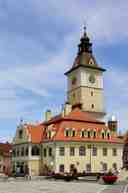
Right in front of you is a large square building topped with a dramatic clock tower: look for its tall, black-and-gold patterned roof and four big clock faces-it's impossible to…और पढ़ेंकम दिखाएँ
Right in front of you is a large square building topped with a dramatic clock tower: look for its tall, black-and-gold patterned roof and four big clock faces-it's impossible to miss as it rises over the heart of Piața Sfatului. Welcome to the Council House, the historic heart of Brașov! Imagine the centuries swirling around you as you stand here; this building has seen more drama than a season of reality TV. It started over 600 years ago as a simple watchtower, where brave lookouts kept their eyes trained on the “Bridge of Lies” that spanned a bubbling stream splitting through the square. Whenever trouble threatened, the watchmen were supposed to alert the city-but I like to think they also kept tabs on misbehaving townsfolk sneaking home after too many local ales! Legend says it was here, in 1420, that the city’s furriers made a deal: they let the communities of the “Țara Bârsei” region build a chamber *above* their shop-perfect for dishing out justice and holding the grand counsel meetings. But, as fate would have it, the city was hit by Turkish invasions and their very own leader ended up imprisoned, so construction took a bit longer than everyone hoped. You could say their open-plan office got put on hold. The main hall was, at first, just a single room-five meters wide and twelve long, with only a stove, some tables, benches, and a cabinet for important papers. Down in the chilly basement was the jail-complete with an execution chamber. The rules here were pretty strict: noble thieves lost their heads, common thieves got the noose, and suspected witches? Well, let’s just say they had a less-than-fiery personality at the end. By the 1500s, the Council House played judge, jury, and...trumpet soloist? From the newly elevated tower-thanks to thirty hardworking masons between 1521 and 1528-watchmen would walk the gallery and, every hour, blast a note on their trumpets to let locals know the time or, in emergencies, to warn of invasions or disasters. Talk about a wake-up call every hour on the hour! Drama wasn’t limited to sentencings-one fateful July night in 1608, a lightning bolt struck the tower. Locals scrambled to douse the flames...with wine, vinegar, and milk. Mother always said a little milk helps put out fires-or was it “spicy food”? Either way, the Council House survived, although its bronze globe atop the tower was eventually replaced. Through earthquakes, fires, and rebuildings, every stone here tells a story. In 1689, a giant blaze devastated most of Brașov and the Council House lost its roof, bell, and precious town records stored under stone vaults. Luckily, clever clerks already made duplicates-always back up your files! As the centuries rolled by, the Council House evolved. The mayor even added a grand room for the “Hundertmannschaft,” or “one hundred men” who gave the building its local name: “Casa Sfatului”-the House of Councils. It was the center of town government, and every big decision and bold verdict echoed through these walls. They even installed one of the oldest clocks around. Atop the tower, a clockwork doll used to ring the chimes, so regularly in fact that one Austrian commander wanted to destroy the clock because it drove his pet parrot absolutely mad! In 1600, something extraordinary happened-Michael the Brave, fresh off his victory at Șelimbăr, marched into the Council House and called together the Diet of Transylvania, striving to unite all Romanian lands. He didn’t get his full wish, but he led Transylvania as its de facto ruler, a dreamer with a very loud fanfare. Later renovations brought Baroque flourishes, a sparkling city crest on the façade, and the iconic black-and-gold tiles you see today crowning the roof like a crown. The last big change came in 1909-look at those vibrant tiles!-and since then, the Council House has watched over Brașov, surviving fires, earthquakes, communist ambitions, and even near-demolition (twice!). For a while, the Council House stored the city’s historical archives and weighed the city’s goods, but since 1950 it’s hosted the History Museum, sheltering treasures and tales. Now, twice every weekend, musicians play from the balcony, echoing the days when the city band serenaded the square. Next time you hear a trumpet, just remember: even Brașov’s old clock had competition from a parrot! So as you stand before these centuries-old stones, try to feel the rush of history, the echo of trumpets, and the occasional squawk of a very annoyed bird. Ready to move on, or need a minute to soak up the square? Fascinated by the historian, description or the trivia? Let's chat about it
समर्पित पेज खोलें →Look out for a building with a pale brick facade, wooden-trimmed arched windows, and a tall, crowned dome with a shining cross on top rising right above the colorful shops in the…और पढ़ेंकम दिखाएँ
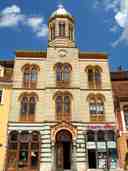
Look out for a building with a pale brick facade, wooden-trimmed arched windows, and a tall, crowned dome with a shining cross on top rising right above the colorful shops in the square. Welcome to the Piața Sfatului Orthodox Church, a living symbol right in Brașov’s main square! Imagine the year is 1829-a tiny chapel is tucked away in the citadel, barely noticed amidst the city’s bustle. As years passed, that little chapel began to crumble, and its faithful flock had to pack their things and join services at the Greek Church. But just when it seemed their place in the city’s heart was lost, along came Archbishop Miron Romanul in 1895, trowel in hand, with dreams of something grand. The first stone was laid-perhaps with more hope than mortar-and just four years later, the towering church you see now opened its doors. Picture those days: Romanians, who for so long gathered on the city’s outskirts, finally stepping with pride into the main square, bells ringing, all eyes on them. The style is a nod to ancient Byzantium, complete with a central dome and bell tower that almost touch the sky. And what a journey this church has had: the spire once collapsed in a mighty earthquake in 1940, only to rise again in 1973-because even in church-building, a good comeback story is hard to resist! Step closer: inside, you'll find gold-leaf icons and bright frescoes, restored so many times they practically sparkle with stories. It’s not just a church; it’s Brașov’s echo of triumph, tradition, and a little resilience-proof that even in the city’s busiest square, there’s room for miracles.
समर्पित पेज खोलें →Directly in front of you is a tall, corner building with light pastel walls, crisp white window frames, and a striking oval medallion high above the main entrance-just look where…और पढ़ेंकम दिखाएँ
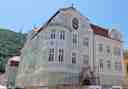
Directly in front of you is a tall, corner building with light pastel walls, crisp white window frames, and a striking oval medallion high above the main entrance-just look where the two streets meet and you’ll spot its spacious bay windows and that eye-catching painted portrait near the roof. Now, imagine you’re standing at the very crossroads of Brașov’s bustling history, where stylish elegance meets the clinking of gold coins! Welcome to the former National Saxon Bank of Brașov, a place that practically invented “banking in style.” Over a century ago, in 1899, this was more than just a money vault-it was the city’s bold leap into the modern age. Money had to be safe, but hey, why not look gorgeous doing it? Fast forward just a few years, and the bank upgraded to this very spot, at the corner of what’s now Michael Weiss and Republicii, a street that was as lively back then as it is today. Picture the scene in 1908: busy merchants rushing by, paperboys calling the news, the hammering of builders finishing the shiny new headquarters. But this wasn’t an ordinary building; it was the first in Brașov designed exactly to be a bank. The architect was Albert Schuller, a local talent freshly returned from Munich. Schuller didn’t just bring blueprints-he brought the spirit of Jugendstil, or Art Nouveau, right from the heart of trendy European design. Imagine all the old architecture around-a bit of this, a bit of that, with leftovers from the 1700s and 1800s. But Schuller was all about the “modern look”. He designed this place to suit its job: it had to be efficient, comfortable, and-let’s face it-a showoff when it came to looks. Two floors for function, style, and pizazz! There was a main entrance for the grandeur of banking halls, while apartments for the director and staff were tucked upstairs, kept separate but just a quick dash away for those “banking emergencies”-no pajamas in the vault, though, I promise! Now, look up at the façade; it’s a festival of details. The entrance punches through with a massive, slightly off-center portal. There’s a big oval medallion that might just make you feel watched-and that’s Apollonia Hirscher, the legendary wife of a medieval city judge, painted in full Saxon costume with a Cornucopia, the horn of plenty. She once graced the original house of the Hirscher family that stood here since the 1500s, and even as the house was replaced, her image was immortalized for all to see. Some say she brings luck and abundance; I say, “Well, a cornucopia on your bank is never a bad sign!” Step to the corner, just below the pretty bow window, and you’ll spot an odd sight-antlers! Those are from the Hirscher family’s crest, a nod to this corner’s ancient past and a tiny wink to anyone who likes their banking with a side of deer. The whole building is a series of contrasts: historic symbols paired with cutting-edge construction for its day, and function never losing a style battle to form. If you peek closer at the walls, you’ll see delicate garlands holding up German proverbs carved in decorative wreaths. One says, “Life is only work and aspiration,” while another cheers for saving up for a rainy day-can you sense the penny-pinching wisdom? The life of this building has been anything but boring. After the bank’s merger in 1929, this spot turned into the headquarters of a Scandinavian company tinkering with the city’s first electric grid. Imagine the electric buzz, literally! Later, after nationalization in 1948, the hum of bureaucracy took over as it became an office for the electricity provider, then landed under the Ministry of Finance, and finally donned the illustrious hat of a disappearing bank branch in the 1990s. Throughout it all, Brașov’s ever-watchful townsfolk never let the old bank fade away; the city took it back and lovingly restored it, with repairs finally wrapping up in 2022. Right now, as you stand here, you’re not just in front of a building-you’re in front of a monument to ambition, energy, heritage, and all the clever twists of history that banked on Brașov’s future. And remember-if those walls could talk, they’d probably offer you a loan… at a pretty stylish interest rate!
समर्पित पेज खोलें →To spot the Centrul Cultural „Reduta” din Brașov, look for a grand two-story building with large arched windows framed by elegant columns and bright white and red detailing,…और पढ़ेंकम दिखाएँ
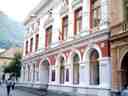
To spot the Centrul Cultural „Reduta” din Brașov, look for a grand two-story building with large arched windows framed by elegant columns and bright white and red detailing, standing proudly on your right, often flying the Romanian flag. Now, take a deep breath and imagine yourself swept back in time right where you’re standing. In the late 1700s, this site teemed with excitement, as the original “Reduta” was the place to be for anyone who loved music, theater, or an elegant waltz. Picture people dressed in their finest, carriages pulling up with a rattle, laughter echoing from the grand halls within. Built in 1794 with late baroque and rococo flair, the old Reduta was both a ballroom and Brașov’s first real stage. But the story doesn’t end there! Over the decades, the Reduta drew some of Europe’s brightest musical stars. Just think, in 1848 Johann Strauss himself played here - imagine the sparkling hum of violins, the swishing skirts of dancers. In 1879, giant talents like Johannes Brahms and violinist Joachim filled the hall with music that made the air practically shimmer. And if you listen closely, maybe you can still hear a faint note or two, floating out from the past. But wait, there’s more drama than just music! This is where Romanian theater took its first bow in Brașov, powered by the passion of local artists. Even Romania’s beloved poet, Mihai Eminescu, took the stage as a prompter here. That’s right, Reduta holds echoes of poetry, secrets behind the curtain, and perhaps more than a little backstage gossip! When the old building couldn’t contain all this excitement anymore, it was knocked down and rebuilt in 1893 as the stunning palace you see before you now. Those faces above the windows? Wagner, Schumann, Mozart, Beethoven, Goethe, Schiller, and Shakespeare - a real “who’s who” of art and genius, keeping a watchful eye on everyone coming in. Step even closer and you’ll sense the rich Renaissance-inspired style - if you feel like you’re in an Italian storybook, you’re on the right track! After wars, revolutions, and reinventions, Reduta beat on as the city’s creative heart - home to festivals, ballets, music recitals, and every kind of performance you can imagine. Seriously, if these walls could talk, they’d probably ask for a spotlight and start singing! Today, Reduta’s main performance hall seats 370 people, just waiting for the next act. Whether you love dance, music, or a bit of historic grandeur, you’re standing by a monument where every stone hums with applause. Why not give it a little round of your own right now?
समर्पित पेज खोलें →Right in front of you is a very narrow, cobblestone alley with graffiti-covered walls, just wide enough for a single person to slip through-look for the tight squeeze between two…और पढ़ेंकम दिखाएँ
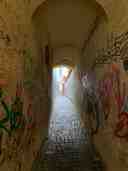
Right in front of you is a very narrow, cobblestone alley with graffiti-covered walls, just wide enough for a single person to slip through-look for the tight squeeze between two buildings to spot this landmark! Welcome to Strada Sforii, or as the locals call it, Rope Street-the narrowest street in Brașov and one of the tiniest in all of Europe! Go on, try to stretch out your arms; let me know if you touch both walls at once-I’ll give you bonus points if you don’t get stuck! Imagine this: it’s the 17th century, and firefighters need to dash through the city at lightning speed. Instead of giant fire trucks, they squished through this very passage, carrying their buckets and maybe bumping elbows, hoping none of them had too big a lunch. That’s right, this street wasn’t made for romance or tourist selfies originally-it was a fire escape route! Today, though, Strada Sforii is more about giggles and curious faces poking in from both ends, daring each other to make it through. The walls are smothered in graffiti-love notes, doodles, and memories from visitors all over the world, giving it the feel of a diary that people add to every day. For a moment, picture the street lit only by lanterns, echoing with hurried footsteps, whispers, and the occasional nervous laugh as history’s narrowest escape route played its part in saving the town. Now, take a deep breath-can you feel that sense of adventure? You’re walking right through the heart of living history… just don’t try it after a big meal!
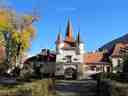
समर्पित पेज खोलें →To spot Catherine’s Gate, just look straight ahead for a fairy-tale tower with four small turrets on top of a chunky arched gateway surrounded by pale yellow walls and red-tiled…और पढ़ेंकम दिखाएँ
To spot Catherine’s Gate, just look straight ahead for a fairy-tale tower with four small turrets on top of a chunky arched gateway surrounded by pale yellow walls and red-tiled roofs-a little castle popping up at the edge of a tree-lined path. Alright, get ready to step deep into the pages of history, because Catherine’s Gate is not just a quirky fairy-tale structure-it’s the last standing guardian of a time when Brașov was a fortress city, always bracing for whatever came over the hills. Imagine yourself here in the 1500s: the dusty path you just walked on would’ve ended at a vast, double-walled barrier, bristling with tension, archers at the ready behind those tiny triangular slots in the stone. In those days, the only way to get into the main town from Şchei-the old Romanian district-was right through this very gate. For three centuries, everyone from traveling merchants to wandering minstrels, and, yes, the occasional invader, had to pass right under these stern arches. The scene would’ve been noisy and bustling--with carts creaking, traders haggling, and the gate’s guards, tailors by trade but fierce defenders by necessity, keeping a close eye on who came and went. Why tailors, you ask? Well, each part of the city walls was protected by a specific guild, and the tailors claimed this gate as their own. Talk about defending your ‘patch’! But here’s a twist worthy of a movie: the original gate, built probably in the 1400s, was wiped out not by invaders but by a wild storm and flash floods in 1526. Imagine sheets of rain thundering down from the mountain, torrents sweeping through, washing away the old gate. The townsfolk must have watched in disbelief as the entrance to their city was destroyed in a single day. Out of necessity and with a sense of urgency, they rebuilt it at the end of ‘Catherine Street’ (named after a long-gone convent of nuns), giving the gate its name-Poarta Ecaterinei or Catherine’s Gate. Fast forward to the year 1559, when this little tower was finished, topped with four playful turrets-each one a not-so-subtle warning to troublemakers that the city held the dreaded ‘right of the sword’ (Jus Gladii): yes, local judges could hand out death sentences! Medieval justice-no pressure if you were just passing through, of course. On its upper level, check out the old city of Brașov’s coat of arms and a Latin inscription proudly carved into stone. That inscription celebrates the second term of mayor Johannes Benkner, the man who made sure the city had a gate worthy of a Renaissance fortress. The gate itself was no humble arch-back then, it stretched all the way from the present-day faculty of forestry nearby, right up to the Şchei Gate, forming a true defensive maze. Armed guards watched from wooden galleries, while cannons called bombards and old-fashioned firearms called arquebuses peeked out from the slits, ready to defend the city. But just as the centuries changed, so did life in Brașov. Trade boomed, the streets grew busier, and Catherine’s Gate suddenly seemed a little… cramped. By the 1800s, the city had to build even bigger gates nearby to control the bustling traffic of both commerce and carriages. Eventually, most of the old gate was demolished in 1827, like a retired knight, leaving only this enchanting tower behind. For a while, it served simply as a storage room, locked up and silent, surrounded by new buildings like a school and a girls’ gymnasium. Restoration breathed new life into it in the 20th century, and now if you peek inside, you might find art exhibits or old photographs-reminders that even the most stalwart guard towers can become havens of creativity and memory. As you stand here, picture the clang of the old drawbridge chains, the anxious faces of medieval travelers, and the scent of autumn leaves drifting in the air. Today, Catherine’s Gate is wrapped in the gentle greenery of a tiny park, the only piece left standing after centuries of storms, fires, earthquakes, and changing times-a living, and rather charming, witness to Brașov’s remarkable history. And remember: if those four turrets start whispering secrets, it’s probably just the wind… or maybe the medieval mayor keeping an eye on things!
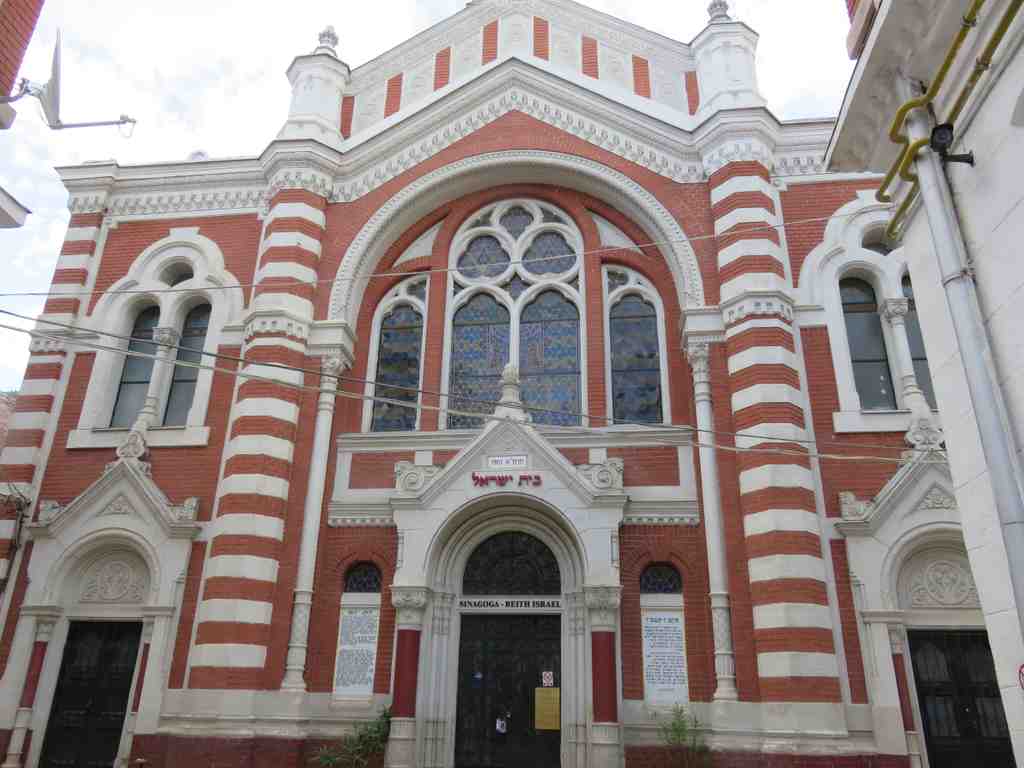
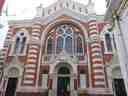
समर्पित पेज खोलें →To spot the Brașov Synagogue, just look for the striking building with bold red-and-white striped brickwork and grand arched stained-glass windows set back from the street,…और पढ़ेंकम दिखाएँ
To spot the Brașov Synagogue, just look for the striking building with bold red-and-white striped brickwork and grand arched stained-glass windows set back from the street, peeking out between a cluster of surrounding houses. As you stand here, imagine you’re waiting for some grand performance to begin. Behind you is the bustle of Brașov, but in front of you is a place where stories have unfolded with drama, hope, and even a dash of mystery. The Brașov Synagogue-Beth Israel-may not be the oldest building in town, but you can feel its heavy, watchful atmosphere, full of memories echoing through the stone arches. Let’s step back to 1807. The chilly Carpathian breeze tickles your ears, and you hear the faint. Finally, after centuries of quiet presence, a small Jewish community receives the right to settle here. At first, just four families gathered together, using a hospital chapel for their secretive prayers, wary yet resilient. Their journey took them from one makeshift home to another-sometimes a prayer house, sometimes a school-but always hunted by uncertainty and a little bit of hope (and no doubt some good matzo ball soup). By the late 1800s, Brașov’s Jewish community had grown big enough-and bold enough-to say, “Hey, we need a proper home!” After a feisty split over religious tradition (history is just full of dramatic twists, isn’t it?), the Neolog congregation paired up with the famous architect Lipót Baumhorn, who might have been the Spielberg of synagogue design in Eastern Europe. Construction began in 1898 and oh, it was a showstopper: a dazzling mix of Gothic Revival style with Moorish elements, arches, stripes, and windows spilling colored light onto the street. It cost over a million crowns-more than the mighty Szeged Synagogue! On August 20th, 1901, the doors swung open for the very first time, with soldiers standing guard outside to keep the peace. Hundreds of people arrived, caught between celebration and tension, the stained-glass windows glowing like the colors inside a treasure chest. The next decades were a whirlwind: the community multiplied, played sports (go team Hakoach!), dreamed of faraway Argentina, and filled the synagogue with laughter, learning, and-let’s be honest-a fair bit of gentle argument. But the shadows crept in. In 1940, the infamous Iron Guards rampaged inside, smashing those radiant windows and beautiful woodwork. In the war, instead of prayers, there were echoes of running footsteps as the building was used as a gymnasium. But after the storm passed, hope had the last word. The synagogue was lovingly repaired, communities reunited, and, in 2001, it was restored again-on its 100th birthday, no less! Nowadays, with a smaller but steadfast community, Beth Israel stands as a place of tradition, memory, and tasty kosher food (can you smell a hint of brisket coming from next door, or is that just wishful thinking?). A memorial in the courtyard hums quietly for lost voices. The synagogue’s windows, alive with sunlight, still tell the stories of 32 Israeli settlements and decades of resilience. So here you are, standing outside history itself. Take a breath and think of all those who have walked past this very spot-some hopeful, some fearful, but all etched into the stone and stained glass forever.
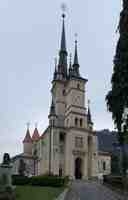
समर्पित पेज खोलें →Look ahead for a grand church with creamy stone walls, a tall clock tower, and spires rising like rockets-its main entrance sits at the end of a cobbled path, so you can’t miss…और पढ़ेंकम दिखाएँ
Look ahead for a grand church with creamy stone walls, a tall clock tower, and spires rising like rockets-its main entrance sits at the end of a cobbled path, so you can’t miss it! You’re standing at the threshold of time itself! Imagine the year is 1292: this very spot holds only a simple wooden cross, swaying gently as the people of Șcheii Brașovului gather in the misty mountain air. The wooden church that would one day become the majestic St. Nicholas Church was mentioned by none other than Pope Boniface IX all the way back in 1399-though, if churches could talk, you’d probably hear, “Hey, finally some recognition!” from those first logs and beams. As you take in the view today, picture the flurry of activity between 1495 and 1519 when the humble wooden church was slowly transformed into a fortress of faith built from cold, unyielding stone. The locals worked alongside powerful friends-Voivode Vlad Călugărul, followed by the mighty Neagoe Basarab-each pitched in to make the church grander than anyone expected, with a solid, rectangular nave and a striking polygonal apse. By 1519, St. Nicholas stood larger than planned, almost as if it wanted to remind the mountains who was boss here in Țara Bârsei. But the work never stopped! In 1584, another ambitious prince, Petru Cercel, rolled up his sleeves and started adding a porch and a choir fit for a chorus of angels, plus a shimmer of painted icons over the altar. While he set his creativity loose, Moldavian Voivode Aron Vodă dropped by in 1595, deciding the church needed a bell tower-because ringing bells have a way of waking up history, wouldn’t you agree? Inside, the walls were painted with biblical scenes that felt almost alive, as if saints and apostles were elbowing for space. Wave to your left and right-see those smaller chapels? They blossomed in the 1700s, each with its own story. The northern chapel, finished in 1734, was helped along by Lady Ancuța, daughter of Constantin Brâncoveanu. Not to be outdone, Brașov’s merchants chipped in for the southern chapel between 1750 and 1752. Chapels here are like the cherry on top: one holds an elegant iconostasis carved with swirling Brâncovenesc motifs, the other brims with paintings of the Annunciation and the Apocalypse of Saint John. Just imagine, painters leaned in close by dim lantern-light, their brushes dancing over stone as they depicted saints spinning the “Wheel of the World”-saints, apparently, were ahead of Galileo when it came to planetary motion. And for a bit of royal bling, look up at the middle tower topped with four mini-turrets. In 1751, Empress Elizabeth of Russia sent a sparkling donation of 13,000 florins for the church’s clock tower. Rumor has it that the villagers had enough left over for cake-but don’t quote me! Walk carefully on the cobblestones and listen-each stone could tell you about Michael the Brave, who once came here, and whose legendary entry into Brașov was immortalized by muralist Mișu Popp in the 1800s. Step inside and the colorful frescoes wrap you in stories of battles, coronations, and Romanian heroes-all painted by famous artists like Constantin Lecca and Costin Petrescu. The saints practically wink at you from the walls. But this is more than just a church. Under its gentle shadow, the First Romanian School sprang to life in 1495. This was where children mastered their ABCs, and where deacon Coresi published the very first books in Romanian. Imagine the scratch of quills on parchment and the scent of ancient paper-the church became a hive of learning, so lively that even the local Junii Brașoveni Society met here. They funded Brașov’s first gymnasium and a bustling library, keeping wisdom alive through centuries. In the old churchyard, history rests in peace: celebrated figures like Ioan Meșotă and Nicolae Titulescu are buried among whispering trees. There’s a statue of Coresi, and nearby, the First Romanian School still stands as a proud neighbor. All around are voices of poets, monks, and rebels who molded this city’s spirit. So, as you stand here, take a deep breath and let the past wrap around you like the incense that once drifted through these arches. Legends, laughter, faith, and the tireless hum of learning-they’re all waiting here, just for you. Don’t worry, St. Nicholas has seen it all before, and he’s happy to share his tales! For further insights on the architecture, painting or the cultural activities, feel free to navigate to the chat section below and inquire.
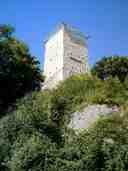
समर्पित पेज खोलें →Look up to your left-perched high on a rocky hill and rising above the trees, you'll see a sturdy, square stone tower with a glass roof shining in the sunlight. Welcome to the…और पढ़ेंकम दिखाएँ
Look up to your left-perched high on a rocky hill and rising above the trees, you'll see a sturdy, square stone tower with a glass roof shining in the sunlight. Welcome to the legendary Black Tower! Imagine yourself here centuries ago-the air thick with tension, and the city walls just five meters away. This was no ordinary building; it was a true guardian of Brașov, standing tall on Warthe Hill. Picture nervous guards pacing behind its thick stone walls, always on the lookout for invaders who might try their luck squeezing through the narrow pass below. Now, back in those days, the path was so tiny, enemies would practically have to tiptoe in single file. The clever folks of Brașov said, “Not so fast!” and built this very tower to slam the door on any troublemakers. Through storms, wars, and fire (yes, it’s been singed a few times!), the Black Tower watched over the city like a grumpy fortress on a rock. And here’s a fun twist-its name, the Black Tower, comes from an actual fire that turned its walls sooty and dark! Close your eyes for a second, and you might just hear the distant clang of swords, the murmur of guards swapping ghost stories, or the faint echo of a warning shout traveling down the hillside. History really does feel alive when you’re standing here, doesn’t it?
समर्पित पेज खोलें →
अक्सर पूछे जाने वाले प्रश्न
मैं टूर कैसे शुरू करूँ?
ख़रीदारी के बाद, AudaTours ऐप डाउनलोड करें और अपना रिडेम्पशन कोड दर्ज करें। टूर तुरंत शुरू करने के लिए तैयार होगा - बस प्ले टैप करें और GPS-गाइडेड रूट का पालन करें।
क्या टूर के दौरान मुझे इंटरनेट चाहिए?
नहीं! शुरू करने से पहले टूर डाउनलोड करें और पूरी तरह ऑफ़लाइन इसका आनंद लें। केवल चैट फ़ीचर को इंटरनेट की ज़रूरत है। मोबाइल डेटा बचाने के लिए WiFi पर डाउनलोड करने की सिफ़ारिश है।
क्या यह एक गाइडेड ग्रुप टूर है?
नहीं - यह एक सेल्फ-गाइडेड ऑडियो टूर है। आप अपनी गति से स्वतंत्र रूप से खोजते हैं, आपके फ़ोन से ऑडियो कथन बजता है। कोई टूर गाइड नहीं, कोई ग्रुप नहीं, कोई शेड्यूल नहीं।
टूर में कितना समय लगता है?
अधिकांश टूर पूरा करने में 60-90 मिनट लगते हैं, लेकिन गति पूरी तरह आपके नियंत्रण में है। जब चाहें रुकें, स्टॉप छोड़ें, या ब्रेक लें।
अगर मैं आज टूर पूरा नहीं कर सकता/सकती तो?
कोई समस्या नहीं! टूर की लाइफ़टाइम एक्सेस है। जब चाहें रोकें और फिर शुरू करें - कल, अगले हफ़्ते, या अगले साल। आपकी प्रगति सेव रहती है।
कौन सी भाषाएँ उपलब्ध हैं?
सभी टूर 50+ भाषाओं में उपलब्ध हैं। अपना कोड रिडीम करते समय अपनी पसंदीदा भाषा चुनें। नोट: टूर जेनरेट होने के बाद भाषा बदली नहीं जा सकती।
ख़रीदारी के बाद मैं टूर कहाँ एक्सेस करूँ?
App Store या Google Play से मुफ़्त AudaTours ऐप डाउनलोड करें। अपना रिडेम्पशन कोड (ईमेल द्वारा भेजा गया) दर्ज करें और टूर आपकी लाइब्रेरी में दिखेगा, डाउनलोड और शुरू करने के लिए तैयार।
अगर आपको टूर पसंद नहीं आया, तो हम आपकी ख़रीदारी वापस करेंगे। हमसे संपर्क करें [email protected]
सुरक्षित चेकआउट 


