
मास्ट्रिच ऑडियो टूर: मास्ट्रिच-सेंट्रम के पवित्र पत्थर और कहानियाँ
मास्ट्रिच के पत्थरों के नीचे एक ऐसा शहर छिपा है जो घेराबंदी, साज़िश और फुसफुसाते रहस्यों से आकार लेता है - हर पत्थर सदियों के विद्रोह और विश्वास की गूँज है। यह स्व-निर्देशित ऑडियो टूर आपको प्रतिष्ठित मीनारों और हलचल भरे चौकों के नीचे की कहानियों को खोलने के लिए आमंत्रित करता है, जो मास्ट्रिच को उजागर करता है जिसे अधिकांश आगंतुक कभी नहीं देख पाते। सेंट सर्वेटियस के बेसिलिका में उकेरा गया कौन सा गुप्त प्रतीक मध्ययुगीन दहशत का कारण बना? व्रिजथॉफ की घेराबंदी के दौरान किसके रहस्यमय विश्वासघात ने रातोंरात शहर का भाग्य बदल दिया? हमारी लेडी के बेसिलिका के पास कौन सी अजीबोगरीब रस्म आज भी हँसी और अफवाहों को जन्म देती है? घुमावदार गलियों का पता लगाएँ जहाँ आधी रात को इतिहास सामने आया, मोमबत्ती की रोशनी वाले चैपल, शांत आंगनों और दंगाग्रस्त सार्वजनिक चौकों में। एक ऐसे शहर की धड़कन महसूस करें जो लगातार खुद को लड़ाइयों, चमत्कारों और घोटालों के माध्यम से नया कर रहा है, ये सब बस नज़र से ओझल इंतजार कर रहे हैं। विद्रोहियों और दूरदर्शी लोगों के नक्शेकदम पर चलने के लिए तैयार हैं? मास्ट्रिच के रहस्य आपके पैरों के ठीक नीचे इंतजार कर रहे हैं - चलना शुरू करें।
टूर पूर्वावलोकन
इस टूर के बारे में
- scheduleअवधि 40–60 minsअपनी गति से चलें
- straighten2.9 किमी पैदल मार्गगाइडेड पथ का पालन करें
- location_on
- wifi_offऑफ़लाइन काम करता हैएक बार डाउनलोड करें, कहीं भी उपयोग करें
- all_inclusiveलाइफ़टाइम एक्सेसकभी भी, हमेशा के लिए फिर सुनें
- location_onहमारी लेडी का बेसिलिका, मास्ट्रिच से शुरू होता है
इस टूर के स्टॉप
To spot the Basilica of Our Lady, just look for a mighty, dark stone building with two narrow towers topped with pointed roofs, rising above the trees with a large blocky front,…और पढ़ेंकम दिखाएँ
To spot the Basilica of Our Lady, just look for a mighty, dark stone building with two narrow towers topped with pointed roofs, rising above the trees with a large blocky front, clock, and tiny arched windows-it really stands out from the modern buildings around it! Welcome to the Basilica of Our Lady, also known in these parts as the Star of the Sea! Imagine yourself standing here nearly a thousand years ago, surrounded by the echoes of chanting monks and the hum of ancient prayers. This Romanesque church, with its sturdy walls and massive westwork, is a true survivor-a little like the superhero of Maastricht! Legend has it the very ground beneath your feet may have once held a Roman temple. Even Jupiter, the king of the Roman gods, once ruled this spot. Now that’s what I call a celestial upgrade-one minute, thunderbolts, the next, heavenly hymns. The story of this church is filled with drama and a touch of rivalry. Long ago, before the year 1100, this was run by a college of canons with close ties to Liège-sort of the academic all-stars of their day. But don’t picture peaceful teamwork! The neighboring Saint Servatius church was always competing for top spot, like two bakeries both claiming to sell the world’s best Limburg pie. Take a good look at the choir towers rising above-the east one was once used not just for praying, but for stashing away the city’s treasures and archives. Doors would creak as heavy chests were carried up tight spiral stairs, the secret hopes of a whole town locked away. Over the centuries, this church has seen everything: medieval canons abandoning their vows of shared living (guess roommate squabbles date back centuries, too), new churches being built and torn down, even the occasional supervillain phase-during the French occupation in 1794, they turned the cloisters into a blacksmith’s shop and army stables. Imagine the clang of hammers and the snorts of horses instead of choirs singing! But the heart of the church remained strong. By 1837, it was restored to holy use, and architect Pierre Cuypers swept through in the late 19th century, restoring many Romanesque details and giving the inside its beautiful, shadowy atmosphere-like stepping into a secret. Don’t miss the Star of the Sea chapel near the entrance, home to a miraculous statue of the Virgin Mary. She has traveled more than many people ever do: originally in a Franciscan monastery, she moved into the parish church, and after that was closed, she finally found a true home right here. Twice a year, she even gets out for a stroll-paraded through the city on the shoulders of the faithful, drawing crowds with tears in their eyes and feet sore from pilgrimage. Inside, the church is filled with artwork and stories. There are murals still whispering tales from the Middle Ages, altars rescued from vanished churches, a pipe organ older than some countries, and an ancient baptismal font-it’s seen everything from bouncing babies to booming weddings. The carved stone capitals inside are a real highlight: you’ll spot not just vines and flowers, but wild monsters, naked figures tangled in leaves, and even one with a tiny sculptor possibly sneaking his own face into history, handing a capital to the Virgin herself. Down in the treasury, you won’t find quite as much gold as there once was-the French melted down many precious items to pay war taxes, and a few treasures even managed to hitch a ride to the Vatican. But there are still reliquaries, statues, mysterious horns, and ancient fabrics waiting to be admired. So take in the soundscape-the distant chime of the clock, the low thunder of the city, and maybe, just maybe, the quiet promise of miracles. After all, here at the Star of the Sea, history never really sleeps… and neither does curiosity! Intrigued by the description exterior, description interior or the cloisters and star of the sea chapel? Make your way to the chat section and I'll be happy to provide further details.
समर्पित पेज खोलें →To spot the Onze Lieve Vrouweplein, look ahead for a cozy square filled with lively café terraces shaded by large trees, and just behind them, you’ll see the massive twin-towered…और पढ़ेंकम दिखाएँ
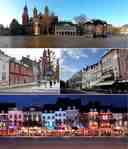
To spot the Onze Lieve Vrouweplein, look ahead for a cozy square filled with lively café terraces shaded by large trees, and just behind them, you’ll see the massive twin-towered façade of the Basilica of Our Lady rising above it all. Welcome to the beating heart of old Maastricht! You’re now standing where locals and travelers have gathered for centuries. Look up-the grand church with strong stone towers, almost like a castle, looms over the square. That’s the Basilica of Our Lady, and the square owes its name and atmosphere to this ancient giant. But don’t let the cheerful café tables and clinking glasses fool you-underneath your feet are layers of history, mystery, and just a dash of Roman intrigue. If you had a shovel and could safely dig right here (not recommended unless you fancy a stern chat with the city council), you’d find Roman remains about four to six meters down. In the early 1900s, builders discovered a round tower foundation in the basilica’s courtyard. At the time, people scratched their heads and thought, “What’s this doing here?” Only much later did they realize it was part of a Roman fortress. Fast-forward to the 1980s: archaeologists uncovered a massive six-meter-wide Roman moat right here, plus temple stones and walls, even a western city gate from around 333 AD. Many of these treasures are displayed at the Museum Cellar Derlon, just steps away. Imagine the bustling Roman settlement, and after the legions left, the area stayed alive with new settlers. Over a thousand years ago, workers used chunks of ancient Roman fortress to build the basilica’s west end-a solid bit of recycling if you ask me. Back in the Middle Ages, this square was a patchwork of churchyards, houses, and a rather crowded sense of community. Picture the 14th-century St. Nicholas Church on one side, a tight cluster of canon houses on the others, and a raised cemetery taking up most of the open space. In fact, the square used to be much smaller until the St. Nicholas Church grew too old and was demolished in 1838. By then, the area was turned into a public promenade, and the graveyard was leveled-imagine the city deciding it needed somewhere to walk (and gossip) more than it needed extra gravestones. During French rule, the basilica itself was turned into (of all things) a stable and blacksmith’s workshop. Picture prancing horses right where you are now, a very different sort of “pastoral” scene. When the 19th century rolled in, linden trees lined the western edge, café culture blossomed, and Hotel Derlon with its famous kitchen took root. Today, the aroma of coffee and the chatter at terraces have replaced the old church bells and merchants’ calls. The architecture here paints a vivid timeline-look around and you’ll spot ornate brick facades with decorative stonework from the 17th to 19th centuries, and stately canon houses mixed among cafés. At the center, the Basilica’s solid sandstone front looks like it was designed to keep invaders-and drafts-at bay. Just beside it, a softer, yellow stone Gothic doorway was restored by Pierre Cuypers, and the statuary above is all neo-Gothic. On the opposite side, you might see the playful “House with the Pelican,” a delight of 1905’s art nouveau, with a pelican and rams’ heads sculpted in stone for a touch of whimsy. Keep your eyes open for bits of unexpected detail: the old wool weigh-house, its stone slab marked 1721, stands with a proud stone pelican overhead. There are even little religious statues tucked into corners, placed just after the Second World War. In the middle of the square, a bronze statue of Jupiter on horseback stands atop a centuries-old column-a nod to the Roman Jupiter pillar found nearby. And what’s a square without food and drama? Over the years, this spot became the favorite hangout for everyone from starched-collar canons and jostling traders to today’s hungry, happy crowds. The square is filled with good cheer and strong coffee most mornings, and probably a mischievous story or two from the night before. So enjoy the shade of the grand trees, the rhythm of busy terraces, and know you stand in a place where ancient Romans, medieval priests, French troops, and modern friends all left a mark-in stone, stories, and maybe a few spilled drinks, too.
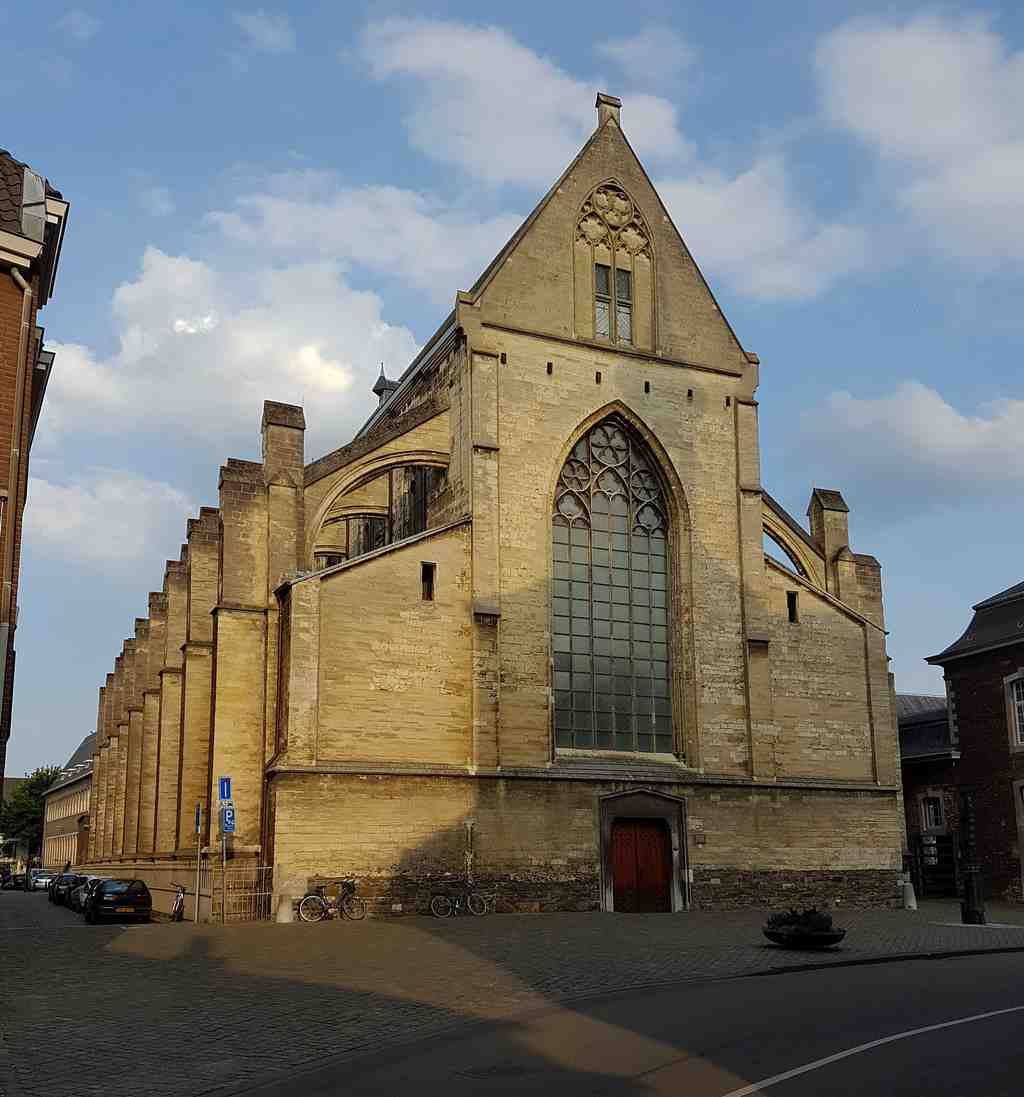
समर्पित पेज खोलें →Straight ahead, you’ll spot the Old Friars Minor Monastery by its tall, sandy-colored stone walls, impressive pointed windows, and the row of chunky buttresses marching down the…और पढ़ेंकम दिखाएँ
Straight ahead, you’ll spot the Old Friars Minor Monastery by its tall, sandy-colored stone walls, impressive pointed windows, and the row of chunky buttresses marching down the left side-keep an eye out for the massive Gothic arch and the simple wooden door near the base. Let’s take you back through the centuries! Imagine the year is 1234. The air is thick with the sounds of hammers and laughter as the very first Franciscans, the so-called “Lesser Brothers,” settle right here-invited by a bishop and setting up shop against the old city wall, just a stone’s throw from where you’re standing. They start to build this great and surprisingly modest church-it’s big, sure, but there’s no fancy tower, just that soaring roof, thin ribs of stone, and the huge pointed window you see above the entrance. It was less about showing off, more about preaching and helping the city’s poor. Picture monks bustling in simple brown robes and the echo of prayers drifting out into the medieval streets. By the late Middle Ages, the monastery is the beating heart of Franciscan life. But not everything is peaceful-oh no! There were dramatic disputes over money with the priests from the nearby St. Servatius and St. John churches. At times, it must have looked like a scene from a medieval soap opera, with everyone trying to out-negotiate each other. And when the religious wars came, the Franciscans were thrown out, chased away by soldiers and rival religious groups. Their beloved Madonna statue, once attracting crowds of worshippers, had to go into hiding. I’d say the monks had a knack for dramatic exits! Once the monks were gone, the building’s career changed faster than a chameleon on a rainbow. In came orphans, followed by soldiers who turned the church into an arsenal stuffed with cannons and muskets. The old church became a hospital-imagine wounded soldiers limping through the great doorway, the sound of boots on stone floors mingling with prayers just hoping for some peace. Later, it became known as the “Great Arsenal” and eventually the “Sint-Pieterskazerne”-or, for those in a hurry, “the Military Commandant’s House.” For a while, the place was almost falling down. By the 1800s, artists came to capture its crumbling glory-drawings showed it as an overgrown relic, dark and mysterious, like something out of a Gothic novel. When Maastricht’s days as a fortress city ended in 1867, the army packed up, and, if these old stones could sigh with relief, you’d have heard the sound echo down the street! In the 20th century, some heroes with a love of history rescued it. The archivists turned the church into a treasure house for documents-old manuscripts and secret letters replaced cannonballs. But restoration wasn’t easy or cozy! Staff shivered through icy winters, desks stacked high against the ancient walls, all while dodging the occasional falling stone (and, apparently, more than a few pigeons). During the latest big restoration, clever architects floated a modern archive deep below your feet-so secure that even the river Jeker couldn’t get in! If you spot a strange crack running through the outer wall, that’s no accident-think of it as an artistic wink at Maastricht’s nearly 800-year-old city wall, hidden behind the stones. Look up again-the inside once bustled with monks, orphans, soldiers, and now researchers flipping through medieval parchments. If you could listen hard enough, maybe you’d hear the distant echo of a monk’s footsteps, a musket’s clatter, or a librarian’s quiet “shhh.” So take a moment and look around you: from holy prayers and hidden statues, to soldiers’ boots and scholars’ whispers, the Old Friars Minor Monastery has truly seen-and heard-it all! And let’s be honest: after so much excitement, even a centuries-old building deserves a peaceful retirement job as a historical archive.
समर्पित पेज खोलें →
10 और स्टॉप दिखाएँकम स्टॉप दिखाएँexpand_moreexpand_less
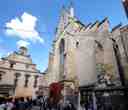
To spot the Dominican Church, just look for a tall, light-colored gothic church with soaring pointed arches and a massive stained-glass window above a rusty steel entrance, right…और पढ़ेंकम दिखाएँ
To spot the Dominican Church, just look for a tall, light-colored gothic church with soaring pointed arches and a massive stained-glass window above a rusty steel entrance, right by a lively plaza filled with people. Here you are, right beside the legendary Dominican Church! If you were a builder in the 13th century, you’d be amazed at this mighty gothic stone structure towering over the city with its massive pointed windows and battlement-like walls. The church was squeezed in here, a bit hidden and wedged behind other buildings, after some neighborly squabbles about where the Dominicans were allowed to build-certainly not the best real estate negotiation ever! Its exterior, made of creamy sandstone and local stone, looks austere and almost fortress-like, but you can almost sense the drama that once filled these old stones. The air here would’ve once been thick with incense and the solemn sounds of Dominican monks chanting prayers. Picture this: sometime around the year 1265, the first monks-led, legend has it, by a saint named Winand-began building this very church. By 1294 it was complete, just in time for the medieval world’s ups and downs. The Dominicans, famous for their preaching, study, and a love of books, made this place their spiritual and intellectual home. They weren’t just quiet monks, either. In the 16th century, when Europe was turning upside down with wars and religious revolutions, this church managed to narrowly escape a destructive iconoclastic riot in 1566, only to be plundered a decade later by German mercenaries-imagine the crash of doors and shouts of angry soldiers echoing beneath the vaulted ceilings! Still, the resilient brothers returned, rebuilt, and even expanded. Local heroes like Franciscus Romanus invested piles of money to restore the altars and bring treasures-including relics from faraway abbeys. Inside, if you wander in today, you’ll find an astonishing sight: thousands and thousands of books stacked high within metal shelves that seem to float beneath the soaring gothic arches. There’s even a café nestled in the old sanctuary-so yes, you can literally sip your cappuccino in church without anyone raising an eyebrow! But long before it was voted “the world’s most beautiful bookshop,” this church was a place of resilience and miracles. Some say the very first prior, Saint Winand, was buried in the middle of the church, though no one is entirely sure. During an archaeological dig, dozens of graves were uncovered here, including an ancient one of a man who’d clearly worked very hard his whole life-and maybe not just at prayer. Look up at the stained-glass windows and imagine processions of Dominicans and laypeople gathering, especially on feast days, singing hymns as the light streamed through. Groups called “brotherhoods” held meetings, whispered prayers, and joined in city processions, hoping for blessings and protection for their families. Over the centuries, the church survived bombardments, an occupation by French revolutionary troops who tossed out the monks and shut down the monasteries, and all sorts of new uses-a parish, a warehouse, a concert hall, an archive depot, a post office, even a bicycle parking lot! When it was finally restored and reborn as a bookshop in 2007, creative architects carefully designed the huge steel bookshelves so that the grand, airy interior would never feel cramped. In fact, standing here now, you’re beside a building that CNN and The Guardian have called the “coolest” and “most beautiful” bookshop in the world-one whose story is every bit as gripping as any novel inside. And if you step inside, look to the left and see an ancient wall fresco-one of the oldest in the Netherlands, showing scenes from the life of Saint Thomas Aquinas. Thanks to a little projector magic, you can watch the faded medieval figures come to life. Talk about a plot twist! Only in Maastricht could a gothic monastery become a temple for books, coffee, and centuries of survival. Who says history can’t have a sequel?
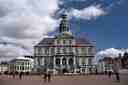
समर्पित पेज खोलें →To spot the Markt, look straight ahead towards the grand stone building with a striking tower and multiple arched entryways, right in the very heart of the wide open square-it's…और पढ़ेंकम दिखाएँ
To spot the Markt, look straight ahead towards the grand stone building with a striking tower and multiple arched entryways, right in the very heart of the wide open square-it's impossible to miss! So here you are, in the bustling and historic heart of Maastricht: the Markt. Imagine the lively hum of voices and footsteps echoing over the centuries-because this square has really seen it all. Let’s rewind to the Middle Ages, when the Markt was much smaller and pressed right up against the old city wall, surrounded by a moat. Those street names-Kleine Gracht and Grote Gracht? They recall the very canals that hugged the city’s first medieval defenses. Back then, a grand cloth hall and a bell tower stood where the massive town hall now rises. The cloth weavers sold their precious fabrics here, while city gates like the Hochterpoort and Leugenpoort stood close by-though they eventually got repurposed as jailhouses. I guess if you tried selling fake silk, you might have ended up behind bars right here! But wait-by the 17th century, a new chapter began! With the construction of the impressive town hall-designed by the famous Pieter Post-much of the old wall, gates, and cloth hall were cleared away. This gave the Markt its broad, nearly square shape, and suddenly, the square became the “living room” of Maastricht. Imagine the sounds of hammers and saws as the new town hall rose, shining as a prime example of Dutch classicism. And believe it or not, the drama didn’t stop there. This wasn’t just a place for trading apples and cheese-oh no! Executions once took place here, crowds gathering, the tension thick in the air. There was a pillory for shaming men, and for misbehaving women: a spinning wooden cage! No TikTok scandals here, only the old-fashioned kind. The last public execution in the Netherlands happened on this very square in 1860-no ghosts reported, but I’d keep an eye out just in case. Around you, most of the buildings date from the 17th and 18th centuries. If you look at the houses along the Markt’s edges, you’ll spot stunning stone facades and grand old rooftops, with some well-preserved bits of medieval framework peeking through. The west side is a parade of architectural eye candy-classic Louis XV and Louis XVI styles-fancy enough to make you want to dust off a powdered wig! Jump ahead to the 20th century, and the Markt goes modern-tram lines rumble through, and eventually, the construction of the Wilhelminabrug bridge causes huge changes. Old streets vanish and big office blocks spring up, leading to some “love them or hate them” architectural debates. By the early 2000s, most of those “concrete monsters” were torn down, replaced by the elegant Mosae Forum: a blend of government offices, shops, and a parkade, all cleverly stitched into the ancient city fabric. Today, all the traffic detours around the square, letting you soak in the wide-open views and sunlight at leisure. Don’t miss the quirky details: the old water pump from 1824, statues all around, and at the south end, the “Mooswief”-a tribute to the tough local women who once sold vegetables here. Every year during carnival, this statue gets a necklace of carrots and leeks. On market days-Wednesdays for bargains, Fridays for everything (and especially fish!), and Saturdays for antiques-this entire area bursts alive with the smells of waffles, the shouts of traders, and the clatter of shopping carts. Maastricht’s Markt isn’t just a place; it’s the heartbeat of a living city. It’s survived sieges, shopping trends, bad architecture, and-most heroically-the curse of slow public transportation. With every step, you’re walking through layers of history, where the past is still busy doing business with the present. Ready for the next stop? Let’s keep wandering!
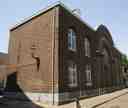
समर्पित पेज खोलें →To spot the Synagogue, look for a sturdy brick building on the corner, with tall arched windows and a wide, decorative arch above the entrance facing Bogaardenstraat-it’s solid, a…और पढ़ेंकम दिखाएँ
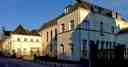
To spot the Synagogue, look for a sturdy brick building on the corner, with tall arched windows and a wide, decorative arch above the entrance facing Bogaardenstraat-it’s solid, a bit austere, and unmistakably monumental. Now, if you’re standing here, imagine this corner almost two centuries ago-there’s excitement in the air, a throng of people watches a festive parade, and the city’s carillon plays from the Markt for the opening of this very building in 1840. Somewhere nearby, city architect Mathijs Hermans must’ve dusted off his best hat for the big day, proud of his early 19th-century neoclassical design. With its brickwork, rounded arches, and heavy doors, the place gives off the impression you’d need the wisdom of Solomon just to decide which entrance to use! But let’s not start at the beginning of the story-no, let’s take a jump back to the distant year of 1295. Here in Maastricht, Jewish families lived and worked, their presence marked in medieval records as the city’s Jewish quarter: “platea judaeorum” or what’s today called Jodenstraat. Imagine shouts, laughter, prayers, and the scratch of Hebrew script-a community, growing roots. Of course, as in many cities, those roots got yanked. During the plague years around 1370, Jews were forced out, though records show Maastricht didn’t see the same violence as some places. Still, the first synagogue was abandoned, and Jewish life almost disappeared. Fast forward to the 18th century, and Jewish people trickled back, squeezed into tiny back rooms and makeshift synagogues-one was even above a carriage entrance, surely a tight fit for a festive gathering. Their efforts to find bigger, safer spaces were rebuffed (apparently, chapels and empty churches were the “hot rentals” of their day). But hope prevailed, and after the Napoleonic era, when all Maastricht’s citizens gained full rights, Jewish families began openly rebuilding their religious life. The answer to centuries of searching? The very earth beneath your shoes. This used to be the “little Capuchin garden”-part of an old monastery. The city gifted this plot, and here in 1840, the synagogue rose as the new anchor of the Jewish community in Limburg. It came complete with classrooms for the Jewish school-and a lot more elbow room than those attic hideaways! The story isn’t all celebrations, though. When the Nazis rolled into Maastricht during World War II, this synagogue was seized, used as a warehouse, and stripped of nearly everything sacred. Yet, in a twist worthy of any spy movie, the precious Torah scrolls were hidden just in time; later, unbelievably, American soldiers pitched in after liberation to help restore the chaos left behind. By 1952, services resumed, and the old ark and a pair of dazzling 24-arm chandeliers-sneakily kept safe in the cellar of City Hall-were brought back. On the outside, you’ll see a mix of memorials: a plaque for the many victims of the Holocaust, another marking 150 years of this community’s resilience. Today, the building is still the main synagogue for Limburg, belonging to the larger congregation in Amsterdam. On the inside, the light that streams from the dome above the bima makes up for the few windows. The walls are washed a brilliant white-no need for fancy frescoes, just the essentials: ancient prayers, hopes, and memories. Where you stand now, you’re not only facing a house of worship but also a survivor, a testament to centuries of challenge, loss, and astonishing perseverance. And if you see a local walking by, smiling quietly, just think: this corner has known secrets, sorrows, and a few festive parades through the ages-it’s earned a bit of dignity and joy.
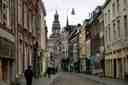
समर्पित पेज खोलें →In front of you, the Grote Gracht curves gently uphill with rows of narrow, tall historic houses tightly packed on either side, their brick and stone façades leading your eyes…और पढ़ेंकम दिखाएँ
In front of you, the Grote Gracht curves gently uphill with rows of narrow, tall historic houses tightly packed on either side, their brick and stone façades leading your eyes toward the grand tower of the Maastricht town hall straight ahead. You’re standing in one of Maastricht’s most storied streets, where history is layered like the bricks beneath your feet-each step here is a leap between centuries, commerce, intrigue, and urban legend. Picture this: In the 16th century, where you now see pavements and people hustling by, there was once a broad, dry moat. As part of the city’s earliest defense, the original Grote Gracht (which literally means “Great Ditch”) split Maastricht's old quarters and kept its secrets buried in mud. By the 1500s, the city’s needs changed-a moat was no longer so fashionable-so they filled it in, and a bustling street grew where an old city wall once stood. If you feel the road slanting beneath your feet, that’s no accident. The street gently climbs from the old prison gate by the Markt to the Two Mountains Gate at the other end-imagine dragging carts and trams up this slope! And trams really did rumble through here at the turn of the last century, first with gas, then with the somewhat less-explosive horsepower of horses. The gas tram-let’s just say it made headlines for the wrong reasons: so many breakdowns, city officials swapped it for a good old-fashioned horse-drawn one in 1903. If your imagination is good, you might hear the clop of hooves joining today’s traffic. Now, take in the facades around you. Over fifty monumental buildings line the Grote Gracht, each with its own flavor, from the strict geometry of neoclassicism to the playful curves of Rococo. See if you can spot the lavish House Soiron, with its pristine pilasters and central coach gate, or the grand Hof van Tilly, decorated with a cartouche boasting-quite proudly-its founding in 1714. A once-luxurious palace, a school, and even a government guesthouse for visitors inspecting the town on behalf of the Prince-Bishop of Liège, Hof van Tilly later witnessed everything from elegant assemblies to gym classes! It even has a fountain in the courtyard, still adorned with Poseidon carrying off Amphitrite. (Those ancient gods really had a flair for drama.) And then there’s the famous Wine House Thiessen, built in 1740-yes, centuries-old wine cellars lurk beneath your feet. The façade’s stately brick masks a secret world of rococo swirls and the scent of old casks. If you see a door crowned with a figure of a reclining lion, that’s 't Liewke. Local legend claims the lion isn’t as ancient as it seems-let’s call it Maastricht’s version of anti-aging cream. Locals even named their favorite beer hall after it, long after lions vanished from the street (if there ever were any!). But life on the Grote Gracht hasn’t always been all nobility, grand windows, and fine wine. For centuries this street has been a patchwork of palaces, shops, cafés, convents, butcheries, and-more recently-a curious selection of smartshops and coffeeshops, earning the cheeky nickname, the “Via Marihuana.” At its height, you could find more than twenty such establishments styled between 17th-century mansions. Meanwhile, the upper floors above shuttered stores are being reimagined as students’ homes-can you picture students of Maastricht University getting inspired under old, stuccoed ceilings? Mystery and mishaps aren’t strangers here. Take the story of number 56! Once tangled up in tax evasion drama, an abandoned hotel project, and a real estate rescue mission, it now thrives as a hotel after weathering more twists than a Maastricht alleyway. So, while the Grote Gracht may look peaceful today, its past overflows with bold urban planners, enterprising tradesmen, tram noises, secret lion statues, and the persistent scent of change. Who knows-perhaps around the next corner, a new legend awaits, just ready to join the street’s extraordinary cast!
समर्पित पेज खोलें →Right in front of you stands the Ursuline Convent, a striking complex of tall brown-brick buildings with elegant arched windows and a prominent green-spired chapel-just look for…और पढ़ेंकम दिखाएँ
Right in front of you stands the Ursuline Convent, a striking complex of tall brown-brick buildings with elegant arched windows and a prominent green-spired chapel-just look for the towers and the garden pavilion out front. Now, let me whisk you into the remarkable world of the Ursuline Convent, where history, devotion, and a dash of drama weave together. Picture Maastricht back in the mid-1800s: this spot was buzzing with grand plans, hopeful prayers, and, believe it or not, wallpaper money-yes, really! When the Ursuline sisters arrived in Maastricht in 1850, summoned by the passionate priest Louis Hubert Rutten, they started off just down the street, teaching girls from within Rutten’s own house. That’s dedication! And in the early days, four local women jumped straight into cloistered life, with two coming from the wealthy Claereboets family, who made their fortune in-you guessed it-wallpaper. It turns out, even nuns appreciate a nice pattern. The community quickly outgrew its humble beginnings and, as more sisters took vows, moved through several homes until finally settling here, at the Grote Gracht and Capucijnenstraat. With the help of their wealthy patrons, they bought two stately mansions-one charmingly named ‘the Bonhomme’ and another, ‘the House Cumberland’ (nothing to do with sausages, I promise). Their homes soon blossomed into schools and a full-fledged convent, with a chapel added in splendid neo-Gothic style, complete with dramatic stonework, dazzling stained glass, and a copper-capped spire that you can spot peeking above the rooftops. The sisters’ days were a whirlwind of teaching and prayer, nurturing legions of young minds in the classrooms that spread outward from this very courtyard. Poor girls and privileged ones rubbed elbows under one roof-a recipe for a few hair-raising schoolyard tales, no doubt. Imagine the clatter of shoes on tiled floors, Latin conjugations recited in sing-song voices, and maybe the sisters sneaking a glance at their favorite spot in the garden with its winding ironwork fence, ancient mulberry tree, and statues that seemed to offer a silent blessing each morning. Over the years, the buildings grew in size and number-by the end of the 19th century, there were new wings, teaching colleges, and even a lyceum for girls who dreamed big. Architecture buffs will love spotting elements from the Amsterdam School, those expressive bricks and playful sculptures, and a mysterious statue of Mary quietly keeping watch from her alcove. Sometimes, it seemed like builders couldn’t keep up; new classrooms popped up as old ones were knocked down, always with a little help from friends and wealthy donors. The sisters weren’t content with just transforming these city blocks. Out in Sint Pieter, they kept a grand villa and a quirky imitation of the Lourdes Grotto-a favorite retreat for schoolgirls in need of a country break (and, I dare say, perhaps a place to gossip away from prying ears). Their reach extended too, with new schools and convents springing up all across Maastricht-sometimes changing hands, sometimes closing, but always remembered by those who walked their halls. As the decades passed, the convent’s mission evolved. After a century and a half, the last Ursuline sisters left Maastricht in 2005. But their legacy lives on! Today the convent complex houses apartments and a cheerful care home. The old chapel? It’s become a museum filled with miniatures of Limburg’s castles, mills, and farmhouses-a perfect spot for anyone who loves history in bite-sized pieces. Every December, the space transforms again for a magical exhibition of nativity scenes from around the world. So as you stand here, surrounded by these dignified buildings and the tranquil garden, know that you’re in the heart of a place where centuries of courage, education, and even a little bit of wallpaper wizardry have shaped the city’s story. And if you hear the echo of schoolgirls’ laughter-or maybe the faint rustle of a nun’s habit in the breeze-you’re in good company.
समर्पित पेज खोलें →To spot the Vrijthof, just look for the huge open square right in front of you, with rows of trees and a sweeping view of grand historic buildings-especially the tall red and gray…और पढ़ेंकम दिखाएँ
To spot the Vrijthof, just look for the huge open square right in front of you, with rows of trees and a sweeping view of grand historic buildings-especially the tall red and gray towers of the basilicas and the classic bandstand right in the middle. Ah, welcome to the beating heart of Maastricht-the Vrijthof! Just imagine this square bustling with life as it has for thousands of years. You’re standing on ground that whispers tales from Roman times, when this was an ancient graveyard where generations were laid to rest. Archaeologists have dug up hundreds of medieval graves beneath your feet, and if you listen very closely, you just might hear the distant clinking of ancient treasure hunters digging for the legendary lost silver apostles... or was it gold? Either way, I wouldn’t start digging, or they’ll turn the square into a giant sandbox! Take in those magnificent towers ahead of you-the twin churches of St. Servatius and St. John stare each other down across a tiny lane called Het Vagevuur, which means “Purgatory.” Perfect name for a street between a Protestant and a Catholic church, don’t you think? St. Servatius is the grand old dame here, a Romanesque basilica whose crypts and treasury you can still visit. St. John’s, the Gothic rebel painted red, claims Maastricht’s tallest spire. Try counting the steps if you feel energetic; just don’t blame me if your legs need a week to recover! This square wasn’t always a peaceful gathering place. In the Middle Ages, high stone walls and iron gates guarded its edges, and at the center, the crowd would assemble for grand religious processions or, less cheerily, for dramatic executions. Now, don’t worry, they don’t do that anymore-you’re quite safe! But back then, the whole city would hold its breath as the relics of Saint Servatius gleamed in the sunlight, and thousands gathered to catch a glimpse, hoping for a miracle or two. Look around and spot the grand houses along the edges-these were once homes for powerful canons, the city’s oldest governor’s mansion, and the stylish Hôtel Du Casque, where the fanciest travelers parked their top hats. Over there, the Groote Sociëteit-the gentlemen’s club-was so exclusive, regular folks had to wait centuries for an invite. And don’t miss the proud, pinecone-topped column toward one corner! That’s the perroen, a symbol of local freedom, rebuilt after Napoleon’s troops knocked the original down for being a little too... independent. Three lions lounge around the column, but don’t worry, they’re stone-so the only thing you’ll hear is pigeons fluttering overhead. Famous for its tradition of outdoor fun, the Vrijthof explodes with carnival joy every February. Ever seen a statue hoisted by a cheering crowd to mark the start of madness? That’s ‘t Mooswief, this square’s very own mascot. Meanwhile, André Rieu fills the whole space each summer with music and dancing-just picture waltzes echoing off the old stones, thousands singing along as fairy lights twinkle late into the night. The terraces of cafés and restaurants you see are always filled with locals and visitors sipping coffee, raising toasts, and sampling Limburg pies. Some say In den Ouden Vogelstruys is the oldest café here, dating back to 1730. If those walls could talk, they’d have some tales about wild carnival nights and secret meetings. Through sieges, celebrations, lost treasures, and legendary concerts, Vrijthof is Maastricht’s living memory-always changing, but forever the city’s beloved stage. So, take a stroll, grab a seat at a terrace, and let the past and present swirl around you in the square that’s seen it all.
समर्पित पेज खोलें →To spot the Basilica of Saint Servatius, look for a massive, fortress-like church of warm brown stone, with round arches and two tall square towers rising at the front, standing…और पढ़ेंकम दिखाएँ
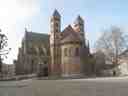
To spot the Basilica of Saint Servatius, look for a massive, fortress-like church of warm brown stone, with round arches and two tall square towers rising at the front, standing proudly at the edge of Vrijthof square. Picture yourself back in the era of knights, emperors, and great church builders - you’re standing before one of the most storied places in the entire city. The Basilica of Saint Servatius, with its striking towers and mix of rounded and pointed arches, has watched over Maastricht for over a thousand years. Let me take you on a journey through its past - but keep an eye out for any ghostly bishops lurking about! It all started on the grave of Saint Servatius, an Armenian missionary who, after roaming lands and spreading his message, finally came to rest right here in the 4th century. People believed his spirit hovered so close, you could almost hear the gentle shuffle of pilgrims gathering by candlelight. What began as a humble memorial chapel soon ballooned to a mighty stone basilica, upgraded stage by stage, century after century. By the first half of the 11th century, as the nave took form, a parade of bishops and nobles marched through its doors. In 1039, the place was so important that no less than Emperor Henry III himself, along with twelve bishops, came to watch the church's official dedication. Talk about a VIP guest list. By now, the basilica had grown into a blend of styles. While most of what you see is solid Romanesque - those round arches and chunky stone - the side chapels and soaring ceilings sneaked in a little Gothic flavor. If only the old walls could talk, they’d spill secrets of feasts, coronations, and the odd medieval drama. When the sculpted Bergportaal was carved in the late 1100s, artisans were already dabbling in early Gothic - Maastricht was truly ahead of the curve! But this grand building wasn’t always treated kindly. Imagine the clatter and nervous nickering as French troops burst in during the Revolution, turning holy ground into a horse stable. Sacred treasures, intricate screens, and colorful medieval windows either vanished or turned up elsewhere in Europe. Restoration after restoration followed, with Dutch architect Pierre Cuypers in the late 1800s trying to knit together the basilica’s battered beauty. Just when things seemed peaceful, a fire in 1955 sent the spire crashing through the roof! Not to worry though - sturdy as ever, the basilica survived. And what’s a massive church without a little buried treasure? Hidden crypts, long-lost chapel fragments, and ancient marble panels have been rediscovered under your very feet. The church amassed sparkling reliquaries - from silver triumphal arches to elaborate busts - turning its treasury into a magnet for pilgrims, each hoping to catch a glimpse of sacred relics and perhaps snag a miracle for the road. Speaking of road trips, every seven years, the Pilgrimage of the Relics transforms Maastricht into a spiritual festival, complete with processions and wide-eyed crowds. Even today, people from all over come to touch the key and the crozier of Saint Servatius, hoping the magic hasn’t run out. Take a close look at those capitals on the Westwork - you’ll spot carvings of plants, battling beasts, and busy medieval workers, all telling stories older than most nations. The South portal, heavy with sculptures, marked a turning point from Romanesque into Gothic art, influencing churches as far away as France. So as you gaze up at the spires, let the mix of styles and stones remind you: the Basilica of Saint Servatius isn’t just a church - it’s a layered record of faith, fire, royalty, and resilience. And who knows? If you listen hard enough on a quiet morning, you might just hear the echo of an emperor’s footsteps, or the far-off song of a medieval pilgrim.
समर्पित पेज खोलें →Directly in front of you, you’ll spot a cluster of buildings with pointed rooftops and a mix of light and dark stone walls, stretching along the quiet street-keep your gaze just…और पढ़ेंकम दिखाएँ
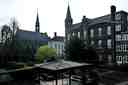
Directly in front of you, you’ll spot a cluster of buildings with pointed rooftops and a mix of light and dark stone walls, stretching along the quiet street-keep your gaze just to the left of the arched wooden door and you’ll see the large, sloping roof and older façades marking the Convent of the Sisters Under the Arches. Now, let’s step into the world of the Sisters Under the Arches-don’t worry, I won’t make you take vows or anything! Imagine you’re standing here, and instead of the peaceful rustle of leaves, you’re hearing the soft shuffles of habit-clad sisters and the distant peal of church bells. This place wasn’t always just a peaceful oasis in the city; its story sprawls out over layers of Maastricht’s wild and wonderful history. Long before those nuns arrived, where you stand might have been in the middle of a graveyard-literally! Archaeologists discovered that the late Roman and Merovingian burial ground from the Vrijthof stretched all the way to this garden. No worries, it’s all very peaceful now, and the only spirits you might encounter would probably just want to help tidy up. Beneath these solid walls lies one of Maastricht’s oldest secrets: a double wall from the 9th to 11th centuries, maybe even part of the old city fortifications. Some parts belonged to the medieval courthouse, called the Hoge Leenzaal. Back in its heyday, the canons in the adjacent St. Servatius used it as their very own legal hangout, with a wooden bridge running between chapel and courtroom-imagine kind of a medieval skywalk, but with more holy relics and less security checks. Fast-forward to the late 18th century: the French Revolution sweeps through, and suddenly the canons are packing their bags. Their grand buildings sat empty and echoing-until, that is, 1837. Enter Elisabeth Gruyters. With a sense of purpose and, I assume, excellent negotiation skills, she founded the Sisters of Charity and, after bouncing around a few locations, bought up this estate in 1845. That was a bold move for 24 women in those days, but they soon made this labyrinth of historic buildings their home. As their numbers grew, so did the premises-soon reaching from Sint Servaasklooster to Kommel, enveloping the Refugiehuis of Herckenrode and even swallowing up old schools. Their mission was simple but powerful: care for the sick, the orphaned, and those seeking an education. Their lives weren’t all silent prayers; many sisters spent their days (and nights) working at the hospital just next door at Calvarienberg or teaching classes at the nearby schools. If you think modern multitasking is tough, try doing it in a habit with a full schedule of prayers! The simple original chapel made way in 1901 for the bold, neo-Gothic church you see today, with its dramatic slate roofs and a Madonna and Child perched over the entry. Don’t bother hunting for a towering spire-it’s not there. The church has high, pointed roofs instead, which are a dream for fans of Gothic drama and anyone afraid of heights. The convent buildings themselves look like a time travel exhibition: here’s the 12th-century Hoge Leenzaal, built from coal sandstone, while over there you’ve got the Maasland Renaissance-style Proosdij complex with its quirky layers of yellow marl and Namur stone. And oh, if you catch a glimpse inside the Elisabeth Gruytershuis, you might spot a tribute to the founder herself-her room is preserved as a tiny museum. Of course, the jewel in this cluster is the sprawling cloister garden. Half secret park, half archaeological surprise, and a suntrap on a good day, it’s home to part of Maastricht’s first medieval city wall. This wall zigzags through the garden, some sections studded with archery loopholes and even reinforced where some overambitious medieval archers probably strained the structure a bit too much. There are statues tucked beneath the trees, a Lourdes grotto carved into the old stone, flowerbeds, benches, and a silent bronze of Elisabeth herself. Even today, the convent is a sanctuary-a home base for sisters from around the world and a retreat for older members. The outside world bustles past, but within these walls, daily life moves to a gentler rhythm, punctuated by music during the Musica Sacra festival and the rare Open Monastery Day, when visitors can peek behind the arches and wonder at all that’s happened right here. It’s easy to see why the place is still called Onder de Bogen-Under the Arches-since, quite literally, centuries of stories haven’t managed to wear the arches or the spirit of hospitality thin.
समर्पित पेज खोलें →Right in front of you, you'll spot a sleek, rectangular building with a strong grid of white columns and large dark windows-just look through the leafy trees and you'll see its…और पढ़ेंकम दिखाएँ
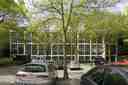
Right in front of you, you'll spot a sleek, rectangular building with a strong grid of white columns and large dark windows-just look through the leafy trees and you'll see its sharp modern lines standing out amidst the older surroundings. Ah, welcome to the Jan van Eyck Academie-though it goes by a much fancier title these days: the Van Eyck - Multiform Institute for Fine Art, Design, and Reflection. Don’t worry, there won’t be a quiz at the end on the full name! Now, imagine you’re stepping into a place that has always been bubbling with creative energy, occasionally mixed with the smell of paint, the clang of metal, and the click of typewriters-or now, computer keys. This academy first sprang to life after World War II, but its story actually begins in the late 1920s, when a priest, an architect, and an artist walked into a bar… Actually, they just discussed the sorry state of art in Limburg province, and longed for a place to nurture Catholic creativity in the south of the Netherlands. Their dream didn’t become reality until 1947, when the Saint Bernulphus Foundation finally gathered the right mix of faith and funding to sign the founding charter-on the feast of Saint Servatius, no less! The early days were a bit like Hogwarts for artists. Students pored over art history, iconography, and philosophy, with a side helping of actual painting and church restoration. The mission: rebuild lost treasures and train artists who could paint a fresco or sculpt a Madonna without breaking a sweat-or straying from Catholic principles. For a while, the academy squeezed into a rather gloomy old convent with one luxury: lots of character (and not very many working lightbulbs). By the 1960s, it was time to step into the light. Modernist architect Frits Peutz designed the bold white building you see now-a symbol that Maastricht art was ready for the 20th century. The new digs came with all the trimmings: pottery kilns, metal workshops, and even a foundry for bronze. Rumor has it, when the Dutch Minister of Culture opened the new wing, he was practically dazzled by all the shiny, state-of-the-art studios. But as the decades passed, the world changed-and so did the Jan van Eyck Academie. The strict Catholic focus loosened. Ceramics and stained glass faded from fashion. The school became a playground for experimentation, and boundaries between disciplines blurred into a happy creative mess. The 1970s and ‘80s were a wild time here-one visiting artist even filled the place with round holes and shot laser beams through the air. The artists weren’t just painting anymore: they were staging performances, experimenting with video and audio, and even setting up Maastricht’s first media department. International artists flocked here, turning English into the everyday language. The school morphed into a buzzing “art factory,” swapping professors for “advising researchers” and students for “Researchers” with a capital R. It’s been a hothouse for experimentation ever since-don’t be surprised if you meet a sculptor talking to a poet, a philosopher arguing with a video artist, and a curator trying to join the food lab to “study the flavor of art.” You never know what sort of “brave new project” is cooking up in one of the creative labs inside. The Jan van Eyck’s legacy stretches far outside these modern walls. Alumni include acclaimed artists and thinkers-some of whom probably still have paint stains on their jeans. And if you ever wonder what’s behind the scenes today, just know the building has been fully renovated and is now buzzing with artists, designers, writers, scientists, and the occasional dreamer working on the next big thing. So pause a moment, listen to the laughter mixing with the occasional clatter of a sculpture in progress, and take in this home of art, ideas, and a splash of mischief in Maastricht.
समर्पित पेज खोलें →To spot the Calvary Monastery, just look for a cluster of pale brick buildings with steep, pointy roofs and tall windows, sitting beside a classic black iron fence at the corner…और पढ़ेंकम दिखाएँ
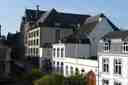
To spot the Calvary Monastery, just look for a cluster of pale brick buildings with steep, pointy roofs and tall windows, sitting beside a classic black iron fence at the corner of Abtstraat and Calvariestraat. Now, as you stand here, let me bring this place to life for you. Imagine the quiet of a cool Maastricht morning almost four hundred years ago, the streets far emptier than today, the air thick with the scent of woodsmoke and possibility. Here at this very spot, a determined shoemaker’s daughter named Elisabeth Strouven and five equally brave women set up home in what was little more than a simple farmhouse. But oh, what a team they were! Picture six women, three of them named Elisabeth-perhaps making roll call very confusing-all fueled by faith, compassion, and a stubborn refusal to lock themselves away from the world. It was Good Friday, 1628, and this budding sisterhood transformed a barn into a chapel, welcoming the sick and the needy when others shied away. These streets echoed with the footsteps and laughter of people in need, and sometimes with the moans of the sick they nursed during plagues and wars. In a place initially called “Calvariënberg” after the gloomy hill of Calvary, there was soon hope and bustling charity. The old mayor’s daughter had joined the trio, and by 1630, the community was surrounded by a sturdy wall-no fortress, but a sanctuary. But don’t be fooled-this wasn’t always a gentle, serene place. Over the decades, drama unfolded within these walls! Elisabeth herself wrote the rules after Rome rejected their proposals, and it took years of persistence for this to finally become a proper Franciscan convent. The sisters soon ran not just the convent, but a guesthouse, and later even managed a branch in a distant castle in Hoeselt. When their founder died in 1661, they tried to continue her mission, and in time, these buildings sprouted new wings and new residents, growing into a grand U-shape around a sunny courtyard. On the weathered wall inside, you might still spot the iron anchors that form the numbers 1671-a silent reminder of those early expansion days. Come the 18th century, things were flourishing, though admittedly, charity work faded into contemplation. The nuns were more likely to be found in prayer than in the infirmary. In 1710, they built the chapel you see today-straight ahead, with its simple whitewashed walls, two tidy rows of windows, and a gable topped by a stone cross that seems to hold up the sky. Its façade once belonged to a noble canon who watched over the convent, and relics still whisper secrets from centuries past. But history had more curves in store for Calvariënberg. The French Revolution swept across Maastricht, and by 1796, the sisters were thrown out, protesting all the way. For a time, these walls housed cotton-mills and lantern factories-imagine noisy machines clanking where prayers once rose. Then, as the city modernized, it became a hospital for those most in need: the poor, the elderly, and, notably, people considered “mad” by 19th-century standards. Through the years, the buildings were patched, propped, and repurposed by architects, city workers, and charity boards. Metal gates replaced high stone walls, rooms divided and reunited, old chapels and convent corridors echoing with the busy footsteps of caregivers and, oddly enough, city social workers. Today, you can almost sense those layers-the hands that washed the sick, the feet that marched in protest, the laughter of students who later found the place home. In this quiet corner, with the pale, timeless walls before you, you’re not just standing at a monument-you’re at the heart of centuries of hope, hard work, heartbreak, and, yes, maybe a little holy stubbornness. Not bad for a building that started with a couple of shoe-leathered friends, right?
समर्पित पेज खोलें →
अक्सर पूछे जाने वाले प्रश्न
मैं टूर कैसे शुरू करूँ?
ख़रीदारी के बाद, AudaTours ऐप डाउनलोड करें और अपना रिडेम्पशन कोड दर्ज करें। टूर तुरंत शुरू करने के लिए तैयार होगा - बस प्ले टैप करें और GPS-गाइडेड रूट का पालन करें।
क्या टूर के दौरान मुझे इंटरनेट चाहिए?
नहीं! शुरू करने से पहले टूर डाउनलोड करें और पूरी तरह ऑफ़लाइन इसका आनंद लें। केवल चैट फ़ीचर को इंटरनेट की ज़रूरत है। मोबाइल डेटा बचाने के लिए WiFi पर डाउनलोड करने की सिफ़ारिश है।
क्या यह एक गाइडेड ग्रुप टूर है?
नहीं - यह एक सेल्फ-गाइडेड ऑडियो टूर है। आप अपनी गति से स्वतंत्र रूप से खोजते हैं, आपके फ़ोन से ऑडियो कथन बजता है। कोई टूर गाइड नहीं, कोई ग्रुप नहीं, कोई शेड्यूल नहीं।
टूर में कितना समय लगता है?
अधिकांश टूर पूरा करने में 60-90 मिनट लगते हैं, लेकिन गति पूरी तरह आपके नियंत्रण में है। जब चाहें रुकें, स्टॉप छोड़ें, या ब्रेक लें।
अगर मैं आज टूर पूरा नहीं कर सकता/सकती तो?
कोई समस्या नहीं! टूर की लाइफ़टाइम एक्सेस है। जब चाहें रोकें और फिर शुरू करें - कल, अगले हफ़्ते, या अगले साल। आपकी प्रगति सेव रहती है।
कौन सी भाषाएँ उपलब्ध हैं?
सभी टूर 50+ भाषाओं में उपलब्ध हैं। अपना कोड रिडीम करते समय अपनी पसंदीदा भाषा चुनें। नोट: टूर जेनरेट होने के बाद भाषा बदली नहीं जा सकती।
ख़रीदारी के बाद मैं टूर कहाँ एक्सेस करूँ?
App Store या Google Play से मुफ़्त AudaTours ऐप डाउनलोड करें। अपना रिडेम्पशन कोड (ईमेल द्वारा भेजा गया) दर्ज करें और टूर आपकी लाइब्रेरी में दिखेगा, डाउनलोड और शुरू करने के लिए तैयार।
अगर आपको टूर पसंद नहीं आया, तो हम आपकी ख़रीदारी वापस करेंगे। हमसे संपर्क करें [email protected]
सुरक्षित चेकआउट 


