

एम्स्टर्डम ऑडियो टूर: एम्स्टर्डम-ओस्ट के छिपे हुए रास्ते और कहानियाँ
आधुनिक वास्तुकला का एक भूलभुलैया वहाँ उगता है जहाँ कभी दलदली भूमि फैली हुई थी और स्केटर भयंकर शीतकालीन विद्रोहों की गूँज पर फिसलते हैं — एम्स्टर्डम-ओस्ट ऐसी कहानियाँ छुपाता है जिन्हें कुछ ही लोग सुनते हैं। यह स्व-निर्देशित ऑडियो टूर 'द न्यू ईस्ट' के परतदार रहस्यों को उजागर करता है। पोस्टकार्ड से आगे बढ़कर उस विश्वविद्यालय का पता लगाएँ जिसने अकादमिक क्रांतियों को जन्म दिया और एक आइस रिंक जहाँ एक बार घोटाले ने शहर को अपनी जगह पर जमा दिया था। हर गली को एक ऐसा मोड़ प्रकट करने दें जिसे पर्यटक तेज़ी से पार कर जाते हैं। एक तूफानी रात को एम्स्टर्डम यूनिवर्सिटी कॉलेज के कक्षाओं को किस दंगे ने हिला दिया था? जाप एडेनबान की काँच की खिड़कियों के पीछे कौन गायब हो गया, जो कभी वापस नहीं लौटा? सख्त शहर के कानूनों के बावजूद कुछ भित्ति चित्र क्यों बदलते रहते हैं? बदलते क्षितिज, कट्टरपंथी बैठकों और भूमिगत किंवदंतियों का पता लगाएँ। जैसे ही आप प्रायोगिक परिसरों से पौराणिक अखाड़ों तक यात्रा करते हैं, हर गली में नाटक की धड़कन महसूस करें। एम्स्टर्डम को तेज़, अजीब रंगों में देखें। पूर्व की परतों को खोलें। शहर की असली कहानियाँ आपके पैरों के नीचे इंतज़ार कर रही हैं — उन्हें प्रकट करने के लिए प्ले दबाएँ।
टूर पूर्वावलोकन
इस टूर के बारे में
- scheduleअवधि 30–50 minsअपनी गति से चलें
- straighten4.9 किमी पैदल मार्गगाइडेड पथ का पालन करें
- location_onस्थानएम्स्टर्डम, नीदरलैंड
- wifi_offऑफ़लाइन काम करता हैएक बार डाउनलोड करें, कहीं भी उपयोग करें
- all_inclusiveलाइफ़टाइम एक्सेसकभी भी, हमेशा के लिए फिर सुनें
- location_onएम्स्टर्डम यूनिवर्सिटी कॉलेज से शुरू होता है
इस टूर के स्टॉप
Directly in front of you, you’ll spot Carolina MacGillavrylaan by its striking cluster of modern tower blocks and glassy buildings lining the wide avenue-just look straight ahead…और पढ़ेंकम दिखाएँ
Directly in front of you, you’ll spot Carolina MacGillavrylaan by its striking cluster of modern tower blocks and glassy buildings lining the wide avenue-just look straight ahead down the street, and you can’t miss those bold, angular façades rising up on both sides. Alright, now that you’re here: let me tell you the tale of this remarkable street. Imagine walking through a land not of canal houses and cobblestones, but of cutting-edge architecture-towers of glass and stone basking in the Amsterdam sunshine, their walls reflecting the blue sky and the bustle of students hurrying to class. Welcome to the heart of Science Park, and the story of Carolina MacGillavrylaan, a name as unique as the street itself. It all began with a big decision in September 2004, when the street was officially named after one of the Netherlands’ brightest minds: Carolina Henriette MacGillavry. She wasn’t just any scientist-she was a wizard with crystals, a professor of chemistry and crystallography at the University of Amsterdam from 1957 to 1972. And no, she didn’t actually live here; her home was in the Concertgebouw area, closer to where classical music takes center stage than where science reigns supreme! But her legacy? That’s right here. MacGillavrylaan zigzags out from Molukkenstraat, running like a stubborn leg of a triangle, gradually pulling away from the old canal. As you stroll down this road, you’re basically walking beside centuries of history-the ancient Kruislaan of Watergraafsmeer runs right through here! And yet, the laan itself ends quite abruptly, just by the Watergraafsmeer junction, as if the scientists building it suddenly decided to go for a coffee and never came back. This street holds secrets in the shapes above you-look around and see the playful mix of high-rise towers and 4-5 story blocks. The names of the buildings? They’re a breeze from the Greek isles: Samos (nicknamed “The Twins”), Milos, Andros, KEA-and no, there’s no secret summer ferry, though wouldn’t that be something? Samos, Milos, and KEA are award-winning creations, especially Milos, which once went by “The Castle” and scooped up the Zuiderkerk Prize. Stand by KEA, and you’re beside a skyscraper built especially for Science Park students and young locals-22 floors up, with 152 apartments! There’s also Meander, a zigzagging wonder built for around 750 students, its winding walls creating hidden courtyards where laughter bounces alongside textbooks. Don’t forget the mint-green Science Park II tower or the CPO Science Park-where even the sun has clever shortcuts to shine on every floor. You might spot the famous physics institutes, AMOLF and Nikhef, standing to the east, buzzing with experiments and fresh ideas. And if you hear a distant rumble, that’s probably a sprinter train pulling into Science Park station above Kruislaan-it’s been zipping people to Weesp and beyond since 2009. Or maybe it’s the sound of a bus on line 40, connecting science, city, and adventure. So, whether you’re here for brainpower or just to marvel at modern architecture, Carolina MacGillavrylaan is where old Amsterdam and the future tangle together. Just keep your eyes peeled-you never know what new discovery might be hiding behind all this glass and stone!
समर्पित पेज खोलें →Just ahead, look for a wide bridge made of reddish bricks with slightly slanted balustrades and neat granite blocks-a steady stream of cars, buses, and cyclists is your clue that…और पढ़ेंकम दिखाएँ
Just ahead, look for a wide bridge made of reddish bricks with slightly slanted balustrades and neat granite blocks-a steady stream of cars, buses, and cyclists is your clue that you’ve found the Hartman Bridge right at the crossroads. Alright, welcome to the Hartman Bridge! You’re standing on a spot where angry neighbors, city debates, and a touch of Amsterdam School style all collided. Picture the year: it’s the late 1920s, jazz music is just hitting the radios, and the folks living here on Celebesstraat are not amused-rumor has it the city wants to plop down a rickety wooden emergency bridge, but the neighbors rally, stomping their feet until the council agrees to a real, solid bridge lined up just right with their street. The discussions drag on until 1932 (bureaucracy hasn’t changed much, has it?), when the city finally brings in the famous Piet Kramer. He wasn’t one to cut corners, and he designs this bridge gleaming with Amsterdam School touches: lots of brick, artful granite slabs, and quirky sculpted details. If you squint, you can spot “Anno 1935” carved in the granite-a subtle shout-out to the year of completion, so this bridge never has to show its ID at parties. When it first opened, this was quite the grand entrance to the city-25 meters wide, two massive sidewalks on either side, shined up in brick and stone, proudly connecting the buzz of Indische Buurt with the greener sprawl of Watergraafsmeer. Below your feet, a forest of wooden piles supports the whole weight, holding off Amsterdam’s famous soggy soil. And you know what? For decades, it was just called “Bridge 190.” It wasn’t until 2007, after an emotional campaign, that it got its name-the Hartmanbrug, honoring André Hartman, a beloved local cigar shop owner. After tragedy struck, his wife kept his memory alive, staying behind the counter until 2015. She herself unveiled the bridge’s new name, giving these old bricks a heartwarming, if bittersweet, story to tell. And every day, buses 40 and 65 rumble over, perhaps not realizing they’re rolling over history with every pass. Keep your eyes peeled-there’s more history lurking beneath each stone than you might guess!
समर्पित पेज खोलें →


6 और स्टॉप दिखाएँकम स्टॉप दिखाएँexpand_moreexpand_less
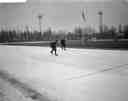
Directly ahead, you’ll spot a wide, oval sheet of shimmering ice in a flat, open area with flagpoles and tall light towers reaching into the sky-just look for the long, silver…और पढ़ेंकम दिखाएँ
Directly ahead, you’ll spot a wide, oval sheet of shimmering ice in a flat, open area with flagpoles and tall light towers reaching into the sky-just look for the long, silver track and the line of trees behind it. Welcome to the legendary Jaap Edenbaan-the oldest outdoor artificial ice rink still in use anywhere on planet Earth! Picture this: it’s winter in 1961, and all across the Netherlands, skaters are glued to weather reports, desperately hoping for just the right amount of cold to freeze the lakes and canals so they can race. Suddenly, everything changes here in Amsterdam-Oost. The city gets its very own artificial ice track-one that doesn’t care if Jack Frost shows up on time or not! Close your eyes for a moment and imagine the crackle of fresh ice under skates as nearly 300,000 visitors swarmed this place for its magical first season. The track itself was opened by Jaap Eden’s own grandson, and from that moment, Dutch skating would never be the same. Indoors or out, rain or shine, the nation could now train and race-and, not surprisingly, they took to winning medals like ducks take to... well, ice. The first official competitions hit the track in February 1962, and as you stand here, you’re sharing ground that’s hosted five Dutch all-round championships, explosive sprint races, and marathon battles where athletes pushed themselves to the edge of exhaustion. This wasn’t just a new place to practice-it was the launchpad for the Netherlands’ love affair with speed skating. Honestly, if these ice crystals could talk, they’d probably be exhausted just from all those photo finishes! But hold up, there’s more: the rink has survived the decades by reinventing itself. In 1989-and then just recently, in 2023-the whole place got a facelift. The city peeled up the old, rusty pipes beneath the ice and swapped in robust plastic and high-tech cooling, breaking it all into four zones. Now, the ice-meister can turn up the cold where the sun hits hardest and save energy where shadows fall. Ingenious, right? If only my phone battery had that kind of tech. And get this: during these renovations, the rink stayed open for business! It’s the only spot where you can race a lap while the floor is being rebuilt two lanes down. Then there’s the Edenhal-the indoor ice palace that opened in 1973. Not only did it host countless ice hockey matches and figure skating competitions, but it was also the loudest concert venue east of the Amstel. Imagine the roar as Bob Marley, ABBA, The Police, and even AC/DC shredded guitars where ice now glistens. If you ever get a craving for a foot-tapping beat mid-skate, blame the ghosts of rock legends echoing through the rafters! What’s next? In 2025, a new hall will rise from the place of the old one-shiny, state-of-the-art, and ready for another round of epic moments. Meanwhile, the outdoor track remains uncovered; studies proved there was no real gain in putting a roof over this classic oval. After all, a little bit of Dutch drizzle never slowed a speed skater, did it? Oh, and here’s your fun fact for the day: during the 2022 Winter Olympics, when COVID locked everyone in, Dutch TV covered the games from right here instead of Beijing. Talk about a home-ice advantage! Picture a bustling studio surrounded by the frosty Amsterdam air. So, whether you love skating, music, or just a good comeback story, Jaap Edenbaan is the place where history glides alongside you, where energy hums beneath your feet, and where every winter is Olympic season-all you need are sharp blades and dreams of gold. Ready to delve deeper into the the artificial ice rink, edenhal or the concerts? Join me in the chat section for an enriching discussion.
समर्पित पेज खोलें →To spot Kruislaan, just look for a long, tree-lined street running alongside a canal, with leafy branches arching above and water glinting off to one side-trust me, it’s hard to…और पढ़ेंकम दिखाएँ
To spot Kruislaan, just look for a long, tree-lined street running alongside a canal, with leafy branches arching above and water glinting off to one side-trust me, it’s hard to miss the calm, green tunnel stretching out ahead. So, you’re standing here at Kruislaan-let’s step into its story together. Imagine the wind rustling through rows of tall, old trees, sunlight dappling the pavement where joggers and bicyclists zip by (often just missing each other by a hair). It feels peaceful now, but beneath your feet is a street with a wild past. Kruislaan gets its name from its “crossing” nature, once linking the little polder of Watergraafsmeer before this neighborhood became part of Amsterdam in 1921. It used to mark a patchwork border between busy city and country calm. Picture it: cows mooing over one shoulder, city trams rattling in the distance over the other! You’re literally on a road that zigzags through time and layers of Amsterdam history. It starts quietly along the old Weesperzijde and then bolts under the mighty viaduct of Gooiseweg-yes, cars thundering overhead actually count as part of the view. At one spot, the street was even merged with Rozenburglaan, and today, the intersection is so smooth, cars and bikes barely notice it used to be two roads. Oh, and did you know that Kruislaan nearly had a totally new name just a couple of years ago? A resident, René Kruis, had a bit of fun and rechristened it “Sonja Kruislaan” as a quirky prank, even putting up his own homemade street signs. Certainly gave the postman a good workout! As you walk, keep an eye out for side stories hiding on the street. There are sport parks at both ends-one called Drie Burg where football clubs have shouted out victories for decades, and another called Middenmeer, bursting with local sport heroes in action. Halfway along, The Nieuwe Ooster cemetery stretches quietly behind its gates, holding centuries of city history, with grand monuments peeking above the trees. Bridges add a hint of adventure too-as Kruislaan tiptoes along canals and ditches, at nearly every corner you’ll find another little bridge. The most famous ones are bridge 168 and the Kruislaanbrug itself, but don’t try counting them while walking, or you might end up in the canal! Finally, the road ends in science and innovation-at Amsterdam Science Park, researchers are cooking up the city’s future. But here, standing on Kruislaan, you’re smack in the heart of Amsterdam’s changing soul, a stretch of street that’s always been a meeting place for travelers, dreamers, pranksters, and local legends. And hey, if anyone asks, just say you’re on Sonja Kruislaan-see if it catches on!
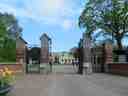
समर्पित पेज खोलें →Right in front of you, you’ll spot De Nieuwe Ooster’s striking entrance: three sturdy brick pillars topped with stone, each holding up elegant black wrought-iron gates-just look…और पढ़ेंकम दिखाएँ
Right in front of you, you’ll spot De Nieuwe Ooster’s striking entrance: three sturdy brick pillars topped with stone, each holding up elegant black wrought-iron gates-just look ahead between the grand old trees and you can't miss it! Welcome, you brave explorer, to The New East-De Nieuwe Ooster! You’re standing at the gates of a place where history whispers through the rustling leaves and the stories never quite rest. Imagine the sound of those iron gates creaking open for the very first time back in 1894-. The city of Amsterdam needed space for new beginnings and peaceful farewells, so out here in Watergraafsmeer, a patchwork of 16 hectares was bought and made ready. If you’d been here in the late 1800s, you’d have seen endless open fields, the kind of space where even a crowd of cows would be hard to find. The clever man behind this leafy labyrinth was landscape architect Leonard Anthony Springer. He made sure the cemetery wasn’t just about stone and sorrow: he designed it like a park, with shaded walkways, clusters of trees, and grand flowerbeds. Funny enough, he paid more attention to picking the right trees than most people do swiping for a houseplant. Back then, municipal architect Adriaan Willem Weissman also dreamed up the chapel. He offered four options-like a real-life episode of “Architectural Bake-Off.” Luckily for us, the city picked the simplest, most elegant design… and, trust me, it still stands with quiet dignity. By 1904, Amsterdam’s need for restful spots kept growing, so they added another eight hectares, expanding onto the old Oud-Roosenburgh estate. And again in 1927, the cemetery stretched its tree-lined arms all the way to the Zaaiersweg. These days, De Nieuwe Ooster is an impressive 33 hectares-so roomy, even the crows still get lost now and then. But this isn’t your ordinary graveyard. In 1994, the place got a bit of a modern twist-a new crematorium opened its doors, designed by R. van Liesveld. That’s when everyone started calling it “De Nieuwe Ooster” instead of the long-winded “Nieuwe Oosterbegraafplaats.” And tucked away out back, there’s now a dedicated memorial field just for ashes, built in 2006. Let’s talk about beauty: this is more than a resting place; in 2005, it was officially named an arboretum. You could spend hours admiring rare heathers, blooming magnolias, towering oaks and elms, and even a monumental red beech tree that’s been standing here since before the first funeral ever took place. Schoolchildren still wander the grounds for botany lessons among all the roses and rhododendrons. History buffs, get your notebooks ready! In 2003, the entrance became a national monument, and several gravestones followed. The grounds grew even more fascinating in 2007 with the opening of the Dutch Funeral Museum Tot Zover. Now, you might not find this in your average holiday brochure, but it’s a place where you can ponder everything from ancient burial customs to modern cremations, all under one (slightly spooky) roof. Literary fans, why not go on your own signature scavenger hunt? This cemetery is the final address of many Dutch celebrities-writers like Nescio and Ed. Hoornik, Nobel-winning physicist Johannes Diderik van der Waals, painters, politicians, composers, footballers, and even “the most famous Salvation Army officer ever,” Major Bosshardt. The list of gravestones is practically an encyclopedia of Dutch history. There are even touching stories, like that of Gerardus Frederik Westerman-one of the founders of Artis zoo-who has a stone dog forever guarding his grave. Then there are the memorials: a solemn monument to eighteen local resistance fighters executed during World War II, a Buchenwald monument with earth from martyrdom sites across Europe, and a field where more than 300 Allied soldiers from World War II are buried. The war stories echo here on cold mornings, when the dewy silence feels thick with memory. And of course, there are other reminders of recent tragedies, too: memorials to Amsterdam’s air disasters, acts of heroism, and scientific generosity from those who donated their bodies for study. Over the years, De Nieuwe Ooster has seen laughter and tears, grief and gratitude-a patchwork of lives and stories. So take a deep breath as you stand before these gates; the next time you hear the wind rustling through the leaves, listen closely-perhaps it’s just another tale or a gentle joke from a century gone by, echoing through Amsterdam’s most storied garden. Now, shall we continue on to our next stop?
समर्पित पेज खोलें →In front of you, Gooiseweg stretches out as a wide and straight road lined with trees, often filled with a steady stream of traffic-just look ahead for the broad lanes bustling…और पढ़ेंकम दिखाएँ
In front of you, Gooiseweg stretches out as a wide and straight road lined with trees, often filled with a steady stream of traffic-just look ahead for the broad lanes bustling with cars and the clear view of a roadway cutting between the trees. Now, take a deep breath and imagine yourself back in time, standing where you are now, with the roar of engines and the smell of petrol filling the air. Gooiseweg wasn't always this major artery through Amsterdam-Oost. Picture the 1960s-massive clouds of exhaust, car horns blaring, and an endless river of boxy cars crawling across what would become one of Amsterdam’s most important city routes. Originally, Gooiseweg was a dream of endless motion. Opened in 1960, it connected Amstelstation to Gaasperdam and was built for speed, with its overpasses and broad lanes-though cyclists still had their own paths along the sides for a peaceful ride. But the real adventure began when the planners dreamed even bigger: they wanted the road to soar beyond Amsterdam, all the way to “Gooistad.” The only problem? The road came to a screeching halt at the A9, as if it had hit invisible traffic lights. Plans to bridge the gap-literally-never came to pass, and those grand sandbanks you might spot along Langbroekdreef and Valburgdreef are silent reminders of roads never built. But Gooiseweg wasn’t always so straight and smooth. Let’s rewind to the age of the Gooisehulpweg, the ‘help road’ of the late 1960s. Due to political squabbles-neither Diemen nor Ouder-Amstel wanted to foot the bill for a road mainly serving Amsterdam-the first version of Gooiseweg was more like a wild ride at a fairground. The road twisted, turned, and snaked through the muddy fields with ridiculous serpentines, forcing drivers into comical slow slaloms as they bounced over poorly paved patches. Locals joked you needed a good sense of direction and a sturdy back to survive the Gooisehulpweg rush hour. It took until the late 1980s-long after Amsterdam’s metro became a fixture-before the permanent, polished version of Gooiseweg replaced that rattling snake of a road. And while traffic jams were once as dependable as the sunrise, the road finally let drivers zip in and out of the city with ease. The noisy Gooisehulpweg disappeared, replaced by the whisper of modern car tires humming on smooth asphalt. So, the next time you’re gliding-or, let’s be real, stuck-in traffic here, just remember: you’re rolling over layers of history, plans, and a little bit of chaos that helped shape today’s Gooiseweg. Not bad for a stretch of road with such a bumpy past, right?
समर्पित पेज खोलें →Look ahead for a navy-blue and red structure with the word "WELKOM" on top and the JOS Watergraafsmeer crest on both sides-you can't miss it! Welcome to JOS Watergraafsmeer,…और पढ़ेंकम दिखाएँ
Look ahead for a navy-blue and red structure with the word "WELKOM" on top and the JOS Watergraafsmeer crest on both sides-you can't miss it! Welcome to JOS Watergraafsmeer, where the echoes of football boots and wild cheers still bounce around Sportpark Drieburg! Picture this: you’re standing where history was literally pieced together, because JOS Watergraafsmeer was created in 1995 from a patchwork of clubs-imagine old rival coaches grumbling as they shook hands for the first time, a real-life football truce. It all started with a youth club way back in 1920, which kept its birthday as the official founding date-talk about wanting to stay forever young! But things only got more tangled as time went on: clubs like Amstel, TDO, TIW, Ontwaakt, WMHO, Nestor, and Rustenburg fused, split, and merged again until JOS and Watergraafsmeer combined forces in the glorious summer of ‘95. Just think, legendary names like Rinus Michels-yes, that Rinus Michels, the man who led Ajax and the Dutch national team-once coached here. He stepped in after Hille van Keulen took JOS up to the first class, and then Michels led the club to champions status, with Olympian Jaap Knol as chairman keeping everyone in line, probably with a stern glare and a whistle. But it’s not all about winners-sometimes it’s about the underdogs. In 1959, when almost nobody was watching, Watergraafsmeer pulled off a miracle and knocked out top-league Blauw-Wit in the KNVB Cup. It was the kind of upset that gets replayed for decades at club dinners. Even music got in on the action. Henk Hofstede, singer with The Nits, wrote “J.O.S. Days” about the emotional marks left by the club’s war memorial-gone now, but others still stand as silent reminders of what was lost. So as you stand here, you’re at the heart of a club built on memory, surprise victories, and a bit of musical legend. If you put your ear to the pitch, you might just hear the past calling, “Keep your eye on the ball!” Or maybe that's just the current coach. Either way, this is JOS Watergraafsmeer-where every match is a piece of Amsterdam’s living story.
समर्पित पेज खोलें →


अक्सर पूछे जाने वाले प्रश्न
मैं टूर कैसे शुरू करूँ?
ख़रीदारी के बाद, AudaTours ऐप डाउनलोड करें और अपना रिडेम्पशन कोड दर्ज करें। टूर तुरंत शुरू करने के लिए तैयार होगा - बस प्ले टैप करें और GPS-गाइडेड रूट का पालन करें।
क्या टूर के दौरान मुझे इंटरनेट चाहिए?
नहीं! शुरू करने से पहले टूर डाउनलोड करें और पूरी तरह ऑफ़लाइन इसका आनंद लें। केवल चैट फ़ीचर को इंटरनेट की ज़रूरत है। मोबाइल डेटा बचाने के लिए WiFi पर डाउनलोड करने की सिफ़ारिश है।
क्या यह एक गाइडेड ग्रुप टूर है?
नहीं - यह एक सेल्फ-गाइडेड ऑडियो टूर है। आप अपनी गति से स्वतंत्र रूप से खोजते हैं, आपके फ़ोन से ऑडियो कथन बजता है। कोई टूर गाइड नहीं, कोई ग्रुप नहीं, कोई शेड्यूल नहीं।
टूर में कितना समय लगता है?
अधिकांश टूर पूरा करने में 60-90 मिनट लगते हैं, लेकिन गति पूरी तरह आपके नियंत्रण में है। जब चाहें रुकें, स्टॉप छोड़ें, या ब्रेक लें।
अगर मैं आज टूर पूरा नहीं कर सकता/सकती तो?
कोई समस्या नहीं! टूर की लाइफ़टाइम एक्सेस है। जब चाहें रोकें और फिर शुरू करें - कल, अगले हफ़्ते, या अगले साल। आपकी प्रगति सेव रहती है।
कौन सी भाषाएँ उपलब्ध हैं?
सभी टूर 50+ भाषाओं में उपलब्ध हैं। अपना कोड रिडीम करते समय अपनी पसंदीदा भाषा चुनें। नोट: टूर जेनरेट होने के बाद भाषा बदली नहीं जा सकती।
ख़रीदारी के बाद मैं टूर कहाँ एक्सेस करूँ?
App Store या Google Play से मुफ़्त AudaTours ऐप डाउनलोड करें। अपना रिडेम्पशन कोड (ईमेल द्वारा भेजा गया) दर्ज करें और टूर आपकी लाइब्रेरी में दिखेगा, डाउनलोड और शुरू करने के लिए तैयार।
अगर आपको टूर पसंद नहीं आया, तो हम आपकी ख़रीदारी वापस करेंगे। हमसे संपर्क करें [email protected]
सुरक्षित चेकआउट 


