
एम्स्टर्डम ऑडियो टूर: सिनगॉग से लेकर गली-नुक्कड़ तक और हर कला के बीच
एम्स्टर्डम की मनमोहक नहरों के पीछे सदियों का विद्रोह, घोटाला और खामोश रहस्य छिपे हैं, जिनसे ज़्यादातर यात्री सीधे गुज़र जाते हैं। यह स्व-निर्देशित ऑडियो टूर आपको एम्स्टर्डम-सेंट्रम के उलझे हुए दिल से होकर ले जाता है, जो ओउडे केर्क के प्राचीन पत्थरों को परेशान करने वाली किंवदंतियों, डी वालन की नियॉन-रोशनी वाली सड़कों की वर्जित साज़िशों, और वेस्टरकेर्क की कालातीत घंटियों में गूंजती ऊंची आशाओं को उजागर करता है। उन कहानियों को उजागर करें जिन्हें गाइडबुक छोड़ देती हैं—शहर को हिला देने वाली आग से लेकर गुप्त क्रांतियों तक और इन दीवारों के भीतर हमेशा के लिए बदल गए जीवन तक। तूफानी रात में ओउडे केर्क के कब्रिस्तानों के समुद्र के नीचे कौन गायब हो गया था? पुलिस और शिकारियों दोनों को मात देने के लिए डी वालन की खिड़कियों में कौन से कोडित संकेत झिलमिलाते थे? किस रहस्यमय कलाकार ने एक ऐसे घंटाघर से आधी रात की घंटी की आवाज़ में सुकून सुना था जिस पर चढ़ने की किसी ने हिम्मत नहीं की? एक ऐसी दुनिया में कदम रखें जहाँ राजनीतिक टकरावों ने पवित्र भूमि को हिला दिया और प्यार ने एम्स्टर्डम के अपने प्रतिबिंबों जितना धुंधलापन पार किया। हर कदम एक और खोई हुई आवाज़, छिपा हुआ रहस्य, या लुभावनी मोड़ को उजागर करता है। अपनी यात्रा शुरू करें—एम्स्टर्डम को केवल वैसा ही न देखें जैसा वह है, बल्कि जैसा वह वास्तव में आपके पैरों के नीचे जीता है।
टूर पूर्वावलोकन
इस टूर के बारे में
- scheduleअवधि 40–60 minsअपनी गति से चलें
- straighten5.1 किमी पैदल मार्गगाइडेड पथ का पालन करें
- location_onस्थानएम्स्टर्डम, नीदरलैंड
- wifi_offऑफ़लाइन काम करता हैएक बार डाउनलोड करें, कहीं भी उपयोग करें
- all_inclusiveलाइफ़टाइम एक्सेसकभी भी, हमेशा के लिए फिर सुनें
- location_onओउडे केर्क, एम्स्टर्डम से शुरू होता है
इस टूर के स्टॉप
Look for a large, grand church with striking pointed arch windows and a tall, ornate clock tower that rises above the rooftops, just beside a peaceful canal - you can’t miss its…और पढ़ेंकम दिखाएँ
Look for a large, grand church with striking pointed arch windows and a tall, ornate clock tower that rises above the rooftops, just beside a peaceful canal - you can’t miss its mix of reddish brick and pale stone, right in the heart of the square. Welcome to Amsterdam's oldest story in stone: the Oude Kerk, or Old Church! Imagine yourself stepping back over 800 years, to a time when Amsterdam was just a marshy village, and in the air hangs the damp scent of peat and wood smoke. Picture a small wooden chapel standing right where you are, shivering in the Dutch breeze back in 1213. Now, try to picture the voices of priests, bustling townsfolk, and bell tolls echoing across the settlement. By 1306, that humble chapel had transformed into this remarkable stone church, officially consecrated by the bishop of Utrecht-all under the loving watch of Saint Nicholas, the patron saint of Amsterdam and, believe it or not, sailors and thieves alike. Even before Amsterdam had canals and stroopwafels, this church was the pulsing heart of the city. The building grew up with Amsterdam itself, lovingly renovated again and again by generations of Amsterdammers. Fires raged through the city in 1421 and 1452, causing chaos and nearly halting construction, until eventually, with stubborn Dutch gumption, builders wrapped the church’s aisles in a protective semicircle and added bold north and south wings, giving the church its cross-like embrace. By 1460, work had finished-although it’s fair to say the Oude Kerk has never stopped evolving. Flash forward to the wild 1500s. The church was an island of calm for some, a shelter and trading hub for others-a place where locals gossiped, peddlers sold their goods, and beggars sought refuge from Amsterdam’s famously unpredictable weather. Imagine the babble of market traders, the shuffling of feet, the distant clatter of coins. Then, in 1578, everything changed. The Reformation-called the Alteratie in Amsterdam-swept through, and the church switched from being proudly Catholic to fiercely Reformed (Calvinist). Suddenly, the party was over for the marketeers and homeless. The Calvinists cracked down, cleaned house, and, in an almost poetic twist, fenced off the choir with a grand oak screen, inscribing upon it a rather dramatic message about God’s church finally being “undone again” by the fresh wave of reformers. If you fancy a ghost story, here’s the secret under your feet: the floor you’re standing on isn’t just stone-it’s a rolling sea of gravestones. Some 2,500 of them, to be exact, covering the final resting place of around 60,000 Amsterdammers. So if you shiver, it’s either the Dutch breeze or the memory of 700 years of the city’s history under your soles. You might also catch a musical echo, because Oude Kerk boasts the largest medieval wooden vault in Europe, made from ancient Estonian oak planks famed for their perfect acoustics. Listen close, and you may imagine the ghostly notes of the grand Baroque Vater-Müller organ, built in 1724, its pipes once described as “perfect.” Organist Jan Pieterszoon Sweelinck, who started here at just fifteen and became an international music star, is memorialized with a majestic bust inside. His music once drifted from the tower across all Amsterdam-picture the sound rolling over rooftops as the city woke to market day. Rembrandt himself was a regular, bringing his children to be christened beneath these soaring rafters. His beloved wife, Saskia, is still here, buried beneath the stones, illuminated every year by the rising sun in March to mark their everlasting connection. If you feel a little sunlight and a chill at the same time, you’ll know you’re in the right spot. Today, though, this is no longer just a church: it’s an art space, blending centuries-old tradition with cutting-edge installations, and each March it hosts a unique Catholic pilgrimage to honor the legendary “Miracle of Amsterdam”-a holy incident so mysterious it even survived a bit of fire and a good Calvinist cleaning. So, as you stand here, gaze up at those ancient pointed windows, and let the echoes of the past and the hum of modern life flood in. Amsterdam doesn’t get older-or more alive-than this.
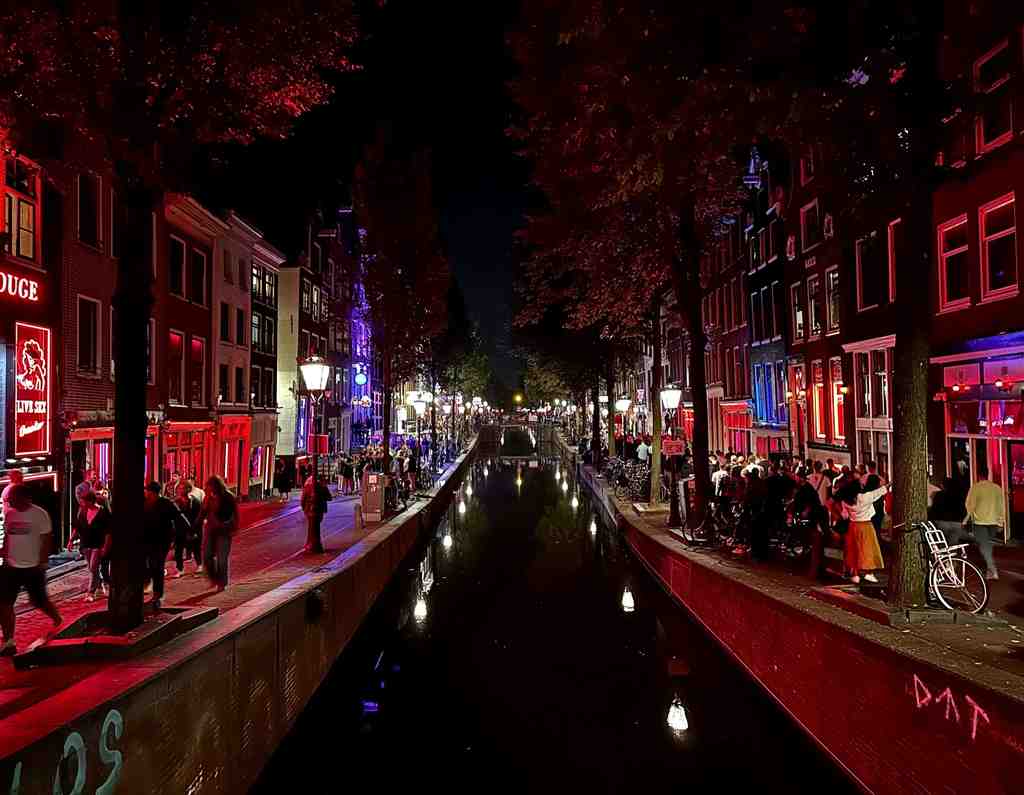
समर्पित पेज खोलें →To spot De Wallen, look ahead across the canal and you’ll see rows of historic brick buildings glowing with vivid red and blue neon lights, reflected in the water below, while…और पढ़ेंकम दिखाएँ
To spot De Wallen, look ahead across the canal and you’ll see rows of historic brick buildings glowing with vivid red and blue neon lights, reflected in the water below, while crowds drift along both sides of the bustling alleyway. Alright, you’ve made it to the heart of Amsterdam’s most famous-and infamous-neighborhood: De Wallen! As you stand here, drink in the odd, electric glow washing over the old canal houses, each window flashing red or blue like an invitation and a secret all at once. There’s laughter and chatter all around, a lively buzz that doesn’t die down until well after midnight. This district has seen nearly every side of Amsterdam’s wild history. Back in the 1200s, this was just a harborside street. Boats would drift into port on the Amstel River right here, bringing salty sailors hungrily searching for danger-and maybe a little fun. City leaders tried in vain to control the flow of goings-on, even banning priests and married men from wandering these parts. Some rules never seem to work, do they? The real show started when the gambling houses got in on the act in the 1700s. Picture it: Wealthy men in velvet coats meeting clever women in candle-lit parlors, then sneaking down winding alleyways. For those who couldn’t afford quite so much velvet, there were plenty of other options, so long as you knew where to look-or which curtain to peer through. In those days, a sex worker might have to hide behind a tiny crack in fabric, hoping not to be caught by police while secretly checking out potential customers. But Amsterdam’s “policy of tolerance” is nearly as famous as its canals. In the Napoleonic era, Napoleon’s sailors poured in and, perhaps for the first time, the city tried to turn chaos into order. Prostitutes were handed red cards: a strange passport that gave them permission to work-at least if they passed a terrifying health check. Rumor has it, if you failed, your next visit would be to a tub full of mercury. Let's just say that wasn’t a spa treatment you wanted on your vacation. The scene kept changing, especially through the 20th century. Brothels were banned, driven underground, reimagined as massage parlors, or disguised with a bit of lipstick and nail polish. Even today, you’ll spot shopfronts sandwiched between bakeries and souvenir stands, each with its own vivid display. In the late 1900s, the city stepped in to try and clean up the district, closing down many of the oldest and flashiest establishments. But you can still see traces of the old windows in the brickwork-ghostly reminders of those wild days. De Wallen is the biggest of several red-light districts here in Amsterdam, and not just for its neon glow. Almost 300 cabins line these narrow lanes, each lit by either a red light-if you’re looking at women-or a blue one, which signals that a transgender woman is on duty. The whole system is part show, part signal, and pure Amsterdam. It’s one of the few places in the world where you might find a nightclub next door to a cannabis coffeeshop, across from a sex museum, with a tour group gawking nearby. Now, not everything here is as safe or glittering as the lights would have you believe. Behind the windows, real and complicated lives go on. Issues like human trafficking and exploitation have haunted the cobbles just as much as the echoes of laughter. It’s not all “cheeky fun”-there are stories of heartbreak and grit stitched into the fabric of this neighborhood. In recent years, activists have fought to make it safer for the workers themselves, building up support networks and even raising a statue at Oudekerksplein. The statue, called “Belle,” honors sex workers everywhere and asks passersby to show respect-imagine that as a gentle whisper in the chaos: “Respect sex workers all over the world.” And, of course, what would De Wallen be without the mysterious aroma spilling out from Amsterdam’s legendary cannabis coffeeshops? These are legal, as long as you keep your cannabis and your drinks strictly non-alcoholic. Some shops are as old as the window displays. The balancing act between freedom, fun, and the city council’s many rules can sometimes feel like a circus-though the only clowns you’ll see here are tourists who walked into the wrong window by mistake. So as you wander on, take in the bright lights and the laughter, but remember: every street here is layered with stories-some scandalous, some sad, and some that turned Amsterdam into the city of beautiful, complicated contradictions that it is today. Who knows? Maybe the next story here will be yours. Intrigued by the location, sex work or the cannabis coffeeshops? Explore further by joining me in the chat section below.
समर्पित पेज खोलें →To spot the Westerkerk, just look up ahead for the soaring brick church with tall, white-trimmed windows and, most famously, the tallest tower in Amsterdam topped with a sparkling…और पढ़ेंकम दिखाएँ
To spot the Westerkerk, just look up ahead for the soaring brick church with tall, white-trimmed windows and, most famously, the tallest tower in Amsterdam topped with a sparkling blue imperial crown. Now, let your imagination travel back to the 1600s: you’re standing beside canals lined with merchant houses, with the sweet smell of tulips and the sounds of craftsmen drifting through the air. Facing you is the Westerkerk-a Renaissance masterpiece built between 1620 and 1631! Designed first by Hendrick de Keyser and finished by his son Pieter, this church was one of the first in Amsterdam built specifically for Protestant worship after the city’s dramatic Reformation, not just cobbled together from old Catholic relics. It’s huge: 58 meters long and 29 wide, with a main hall that feels like it was made to host a congregation even bigger than Amsterdam’s bicycle population. But it’s the Westertoren, that sky-high tower soaring 87 meters above your head, that really steals the show. They say it can be seen from across the city, and with good reason-it wears an imperial crown right on top, glinting blue and gold in the sunlight. There’s a hint of mystery in the design: no one knows exactly who created the iconic spire, but the best detective stories point to either the genius van Campen or plans left behind by de Keyser. And if you listen closely at the right moment you’ll hear the legendary carillon playing. This magical instrument boasts 51 bells, chiming every quarter hour, day and night, thanks to a centuries-old drum operated by the city’s carillonneurs-today, that’s Boudewijn Zwart. Just above the bustling canal, imagine the strains of a Baroque organ swirling out through open doors. The Westerkerk’s main organ has a tale as twisty as an Amsterdam alley. At first, instruments were banned-Calvinists thought music was a bit too much fun for church! But by the late 1600s, the congregation was ready to cut loose with a few hymns. Roelof Barentszn Duyschot and later his son crafted the grand organ in 1686, filling the church with pipes (and, no doubt, the occasional complaint about noisy neighbors). Over the years, the organ got bigger, smaller, electric, mechanical, and finally-after a trip to Zaandam for a spa day-restored to its old, baroque glory in the 1990s. For a true treat, stop by on a Friday or Saturday at 1pm, and you might catch a free lunchtime concert. In August, the phrase “Not a day without Bach” comes alive with music nearly every day! But it’s not all bells and Bach. The Westerkerk is heavy with history, too-especially the stories that walk its aisles but aren’t always written on plaques. This was the final resting place for Rembrandt, the legendary painter, buried in 1669 as a poor man, his grave number lost to time. Each July, he’s remembered with flowers and music, just steps from the spot where some of the world’s most beautiful art once took shape. And there’s more artistic company here too: Rembrandt’s son, his beloved Hendrickje Stoffels, and a host of other Dutch artists and historical figures lie somewhere beneath your feet. If these walls could talk, they’d whisper tales of royal romance. When Princess Beatrix wed Prince Claus in 1966, glittering guests filled the church-the royal family only chose Westerkerk because their usual venue was under renovation. It’s the kind of place where stories collide: a place of worship, a shelter for music, a royal stage, and-it has to be said-a bit of a celebrity in the eyes of one world-famous diarist. Anne Frank, who hid with her family just around the corner, listened for comfort to the clock and carillon of the Westertoren. She mentions it over and over in her diary, describing the bells as a reminder of freedom, hope, and a normal world outside. Today, a statue of Anne stands outside, and you can almost hear the faint echo of her voice mingling with the peal of bells. With every step you take around this grand old church, think of all those who came before you-lovers, royals, painters, musicians, and people just hoping to find a bit of peace. If you’re lucky, you just might feel the floor tremble beneath your feet as the mighty bells ring out once more. Now, ready for the next stop-shall we see what stories await just down the canal? Exploring the realm of the main duyschot organ, stoplist of the duyschot organ or the ds. a.h. visser organ? Feel free to consult the chat section for additional information.
समर्पित पेज खोलें →

9 और स्टॉप दिखाएँकम स्टॉप दिखाएँexpand_moreexpand_less
In front of you, right on the Prinsengracht canal, you’ll spot a row of tall, narrow brick townhouses-look for the simple, dark windows with cream trim among the crowd of…और पढ़ेंकम दिखाएँ
In front of you, right on the Prinsengracht canal, you’ll spot a row of tall, narrow brick townhouses-look for the simple, dark windows with cream trim among the crowd of visitors, just where the contemporary glass structure meets the classic canal houses. Now, take a deep breath and imagine stepping back in time to Amsterdam during World War II. The city is occupied, fear hangs in the air, and just behind these plain windows-maybe less noticeable than the bicycles piled outside-a secret world once existed. These houses, built all the way back in 1635, might look like your typical Dutch canal homes from the outside. But hidden at the rear, through a bookshelf that swung open like an invitation to a mystery novel, was the Secret Annex where Anne Frank and seven others hid for over two years. Picture it: summer sunlight glinting off the canal, the murmur of distant voices outside, but inside, silence is everything. This was where laughter had to be muffled, meals had to be eaten in secrecy, and every passing siren sent chills down spines. In the cramped spaces-just about 450 square feet for eight people-Anne wrote in her diary, her words painting pictures brighter than any paint could manage. She wrote about her dreams, fears, and even cracked jokes, proving that a little humor can survive even the darkest times. But here's a twist worthy of a detective show: the building wasn’t always a secret sanctuary. It was once a fashionable family home, then a warehouse with horses clopping through its wide doors, and later even a piano roll factory! By the 1940s, Otto Frank set up his spice and gelling business here. The ground floor hustle-think of sacks of spices rustling and being packed for shipment-hid the sorrowful truth of what was happening above. For more than two years, Anne and her family relied on the courageous help of employees like Miep Gies and Bep Voskuijl. They risked everything to bring food, news, and hope, sneaking upstairs with bread or news of the outside world. Still, fear was a constant guest in the Annex. The radio played softly for encouragement, until it too was surrendered when Nazis demanded them turned in. One terrible day, the secret was discovered. The rooms were raided, lives were upended, and the Frank family was sent away. Of the eight, only Otto Frank survived the camps. The Annex was emptied by the authorities, and only thanks to the bravery of Miep and Bep were Anne’s diaries saved. It’s almost poetic: a story meant to be hushed, saved by those who refused silence to win. After the war, Otto returned, found Anne’s words, and helped turn her writings into the magical, heartbreaking “Diary of a Young Girl.” And almost as if the story wasn’t powerful enough, the fate of the house itself became a drama. Developers nearly demolished the block, but campaigners protested, and with the creation of the Anne Frank Foundation, the building was saved just in time. Restored, expanded, and opened as a museum in 1960, the house has drawn people from around the world-over a million visitors a year! They come to walk those narrow staircases, see the famous hiding place, and feel the hope and sadness in those rooms. Today, the museum covers several buildings, creating space for exhibitions about all forms of discrimination and the fight against it. Objects from Anne’s time are displayed, including a Hollywood touch-a real Academy Award in a bullet-proof case, donated by Shelley Winters for her role in the 1959 film about Anne Frank. And just for a sprinkle of modern trivia: even pop stars drop by! When Justin Bieber visited, he left a guestbook note that sparked headlines, showing just how much Anne’s story still moves new generations. If these walls could talk, they’d whisper tragedy and courage, ordinary daily life turned upside down, and a young girl whose words outlasted the darkness. So, as you stand here, with the gentle slap of the canal’s water echoing on the cobbles -remember, history isn’t just behind glass. Sometimes, it’s right under your feet, and still speaking through a diary, a house, and the bravery of those who dared to hope.
समर्पित पेज खोलें →Look down at the ground in front of you and to your left-three giant pink granite triangles are set into the cobblestones, each about the size of a small car, forming a larger…और पढ़ेंकम दिखाएँ
Look down at the ground in front of you and to your left-three giant pink granite triangles are set into the cobblestones, each about the size of a small car, forming a larger triangle right where the square meets the canal. You’re now standing at the Homomonument, one of Amsterdam’s most quietly powerful landmarks-though it’s big enough to fit a group of dancing drag queens, many people walk over it every day without noticing its message. Picture yourself here on a sunny afternoon, the canal sparkling nearby, while footsteps echo on the stone underfoot and the city hums with the sound of trams. But beneath this calm is a patchwork of stories, struggles, and victories that changed the world. The Homomonument was unveiled in 1987, after a battle that lasted decades-not your average home improvement project! Here’s the setting: Amsterdam. The air was buzzing with movement from the LGBTQ community, who wanted their place in history not just marked, but carved in granite. Imagine activists in the 1970s, gathering in secret, frustrated because whenever they tried to lay a simple wreath for gay victims of World War II at the Dam Square memorial, the police snatched the flowers away. It may sound absurd now, but back then, denying the memory of homosexual victims was the official line. Enter the Homomonument Foundation, stubborn as a Dutch bike-lock, refusing to let this chapter be ignored. By the late seventies and early eighties, people of every political stripe in the Netherlands were arguing whether this monument should even exist. Some politicians compared homosexuals to criminals, while supporters fired back, insisting it was long past time for recognition. In this mix, an artist named Karin Daan designed what you see before you now: not a towering statue, but three pink triangles, each one loaded with meaning, stitched gently into the very heart of the city-a bit like embroidery on the city’s fabric. Now, let’s explore the triangles. Each triangle tells part of a story: the triangle by the canal, with steps leading down to the water, points directly at Dam Square-the city’s main memorial. People like to sit here, dangle their feet over the water, and sometimes you’ll see flowers or candles left behind for someone from the past. If you listen closely, you might almost hear the water lapping at the edge beneath you. The triangle up above becomes a small stage for future hope, pointing towards the old headquarters of the world’s oldest LGBT organization. During festivals, this space is awash with color and laughter as Amsterdam’s LGBTQ community takes over the square with music, dance, and pride. The final triangle, set flat with the stones, points towards the Anne Frank House-a reminder of the darkest days of persecution under the Nazis. Around its edge, there’s a haunting line from Dutch-Jewish poet Jacob Israël de Haan, which translates to “Such a boundless craving for friendship”-a phrase that’s both an ache and a promise. And what about the big pink triangle itself? That was the patch the Nazis made gay men wear in concentration camps-a mark of shame transformed, years later, into a symbol of pride, resistance, and remembrance. The monument here is the world’s first memorial to gay and lesbian victims, not just of the Nazis, but of all eras. It stands for those lost, those fighting today, and those who dream of a more equal tomorrow. Every May, locals gather here on Remembrance Day to lay flowers and light candles, while the next night, the square erupts in music and celebration for Liberation Day. So, as you stand here, surrounded by trees and water, bicycles rolling past, remember you’re on a piece of living history: the Homomonument is woven into the city, proud and strong as granite, whispering that we’re all connected-in the past, the present, and the future. And if anyone says a triangle can’t change the world, just ask a Dutch person… or maybe a geometry teacher! Intrigued by the symbolism, construction or the current situation? Explore further by joining me in the chat section below.
समर्पित पेज खोलें →To spot Dam Square, look ahead for a huge, open plaza with a tall, white stone obelisk at its center and a grand, old palace with a green-domed tower right behind it. Welcome to…और पढ़ेंकम दिखाएँ
To spot Dam Square, look ahead for a huge, open plaza with a tall, white stone obelisk at its center and a grand, old palace with a green-domed tower right behind it. Welcome to Dam Square, the living, beating heart of Amsterdam-you’re standing right where the city itself was born! Imagine, centuries ago, you’d be standing over the mighty Amstel River, holding your breath as restless waters glided underneath a broad, wooden dam. That’s right: the entire city gets its name from this very spot: “Amsterdam” simply means “dam on the Amstel.” Built way back in the 13th century, this dam tamed the river, let boats float in and out, and, naturally, made everyone think, “Hey, this is the perfect place for some fish!” Not long after, a lively fish market appeared, boats lined up the banks, and before long, the town started to grow and buzz around this central point. Now, look around. The square is surrounded by a patchwork of stories, each building whispering a tale of its own. To your left stretches the mighty Royal Palace. In the 1600s, this was Amsterdam’s City Hall, a stunning example of Dutch pride and ambition, only turning into a royal residence in 1808. Fancy being king? Hope you like a lively view-Napoleon’s brother, Louis Bonaparte, asked that the old weigh house blocking his palace window be torn down, just so he could see the busy square! Beside the palace, the Gothic spires of the Nieuwe Kerk (New Church) rise, once the stage for royal ceremonies and now a sanctuary for major art exhibitions. If you squint, can you feel the centuries of footsteps that have echoed across these stones? Toward the front and center, you spot the National Monument-a tall, elegant stone pillar, built in 1956. It rises like a candle of remembrance to honor the victims of World War II. Every May 4th, this place fills with solemnity and silence as people gather to remember, laying wreaths and bowing their heads. It’s a symbol of national grief, resilience, and hope, watched over eternally by stone lions and mourning figures. In contrast, a few steps away, you might hear the laughter of children, the melody of street musicians, and the whir of passing trams-life continuing, as relentless as ever. But don’t think Amsterdam’s Dam Square is all peace and pigeon-feeding! Oh no, it has seen moments of real drama. Picture May 7th, 1945, just after World War II ends: the square throngs with civilians, celebrating the arrival of Canadian liberators. Suddenly, gunfire explodes above. German soldiers, perhaps drunk or furious, open fire from a club balcony. The cheers morph into screams and chaos erupts. By the time peace has been clawed back, at least 22 people are dead, and over a hundred are wounded. Some say the true toll was even higher-a moment of horror that haunts even as the city celebrates its freedom. Jump ahead to 1980: more drama! Queen Beatrix’s coronation brings wild protests to Dam Square, with thick clouds of tear gas and ringing chants. Amsterdam has long been a stage for free speech, protest, and wild celebration-this square absorbs it all and keeps spinning. And let’s not forget the everyday oddities. Funfairs used to pop up regularly, casting a wild, colorful shadow over the stately buildings. In fact, whether you’re here for a parade, a concert, or a quick dash to De Bijenkorf department store-a chic shopping palace that has stood since 1914-you’ll find every flavor of Amsterdam right here. The square is a crossroads of every major street from old Kalverstraat, humming with shoppers, to Damrak, leading straight up to Centraal Station, and yes, even a short walk from the famously racy De Wallen red-light district. And if you’ve ever seen a wax figure with an unsettling grin, Madame Tussauds is watching the scene from the sidelines. So pause in the middle of the square and let yourself drift back. Taste the fish from the old market in the air, hear the clatter of trams, the echoes of protest, and the soft hum of millions of stories-heroes, villains, kings, and everyday Amsterdammers, all woven together in this vibrant tapestry. Dam Square: the one place where Amsterdam’s past, present, and a little bit of oddball fun all come together. Watch out for flying pigeons-they’ve been here longer than most residents! Ready to move on?
समर्पित पेज खोलें →Look to your right for an elegant brick house with an extra floor, green shuttered windows, and a distinct triangular rooftop above the entrance-this is the Rembrandt House…और पढ़ेंकम दिखाएँ
Look to your right for an elegant brick house with an extra floor, green shuttered windows, and a distinct triangular rooftop above the entrance-this is the Rembrandt House Museum, sitting right beside a modern glass-fronted building bearing Rembrandt’s famous self-portrait. Now, as you stand here, let your imagination wander back almost four hundred years. The air around you would have smelled faintly of paints and linseed oil, and you might just hear laughter, footsteps on old wooden floors, and the scratching of a quill somewhere inside. You're face-to-face with the very home where Rembrandt van Rijn-yes, the superstar of Dutch painting, the man who gave us those unforgettable eyes and stormy, golden-lit canvases-ate, dreamt, worried about bills, and above all, painted like there would never be a tomorrow. Rembrandt moved into this sturdy house on the Jodenbreestraat in 1639, not long after it got an upgrade: more space, a fancy new facade with that triangular pediment, and an extra floor-just to show off a little, because, well, artists need room for dreams (and for all the canvases and clients). He wasn’t alone: his family, students, and customers bustled in and out. In those years, if you had peeked through the windows, you might have seen works in progress destined for the most powerful people in Europe-or a young apprentice nervously sweeping up potion-like mixtures of ground quartz and clay, Rembrandt’s own secret recipe for preparing his canvases. That odd mixture made his colors sing, and some of the very pots he used were discovered centuries later where only a true detective would look: in the cesspool. Rembrandt’s house wasn’t just a home-it was a hive. There was a studio alive with the scratch of etching needles (the museum now owns almost every one Rembrandt ever made), and a lively art dealership where the best gossip in Amsterdam swirled between negotiations over masterpieces. Students like Ferdinand Bol and Govert Flinck trained here, learning from the master while probably being told, “No, more shadows! More drama!”-or maybe just, “Fetch more coffee!” But success has its shadows, even in a house of light. Rembrandt’s spending could be as dramatic as his art, and in 1658, after years of financial troubles, the home was auctioned away for less than he paid. And yet, luck and love followed these old bricks. Over the years the house became many things-a residence, a site for repairs and experiments-until, rather battered, it caught the attention of Amsterdam’s leaders. In 1907, after centuries of history, they rescued the building and transformed it for Rembrandt’s 300th birthday. Even Queen Wilhelmina walked these floors on opening day, perhaps pinching herself at how much history seeped from the walls. Today, the Rembrandt House Museum takes things full circle. It has been carefully rebuilt to look as it did in Rembrandt’s day. As you walk through, you pass from bustling public rooms to the deep, comforting quiet of a 17th-century living room-furnished to match inventories found during Rembrandt's bankruptcy. You’ll see the art rooms, the bedroom where the artist dreamed up his mythic stories, and the actual etching plates he used, plus paintings by friends and pupils-like the sweet, moody “Shepherdess in a Landscape,” gifted just recently. But this isn’t a museum frozen in time. Alongside Rembrandt’s etchings and his teacher’s paintings, you’ll also find bold new art by contemporary creators-proof that inspiration is alive and plotting its next great design in the heart of old Amsterdam. Every year, hundreds of thousands of visitors pass through, looking for a little piece of Rembrandt’s magic. Some find it in the crooked stairs; others, in a glint of morning light falling across the studio floor. So take a deep breath, step inside, and let Rembrandt’s world-full of triumph, tragedy, paint, and laughter-spill around you. Don’t worry, the ghosts here all have fantastic stories to tell. Want to explore the rembrandt's house, collection or the exhibitions in more depth? Join me in the chat section for a detailed discussion.
समर्पित पेज खोलें →To spot the Hortus Botanicus, look for a large glass greenhouse structure just ahead of you, where tall palms and leafy green plants almost seem to press right up against the…और पढ़ेंकम दिखाएँ
To spot the Hortus Botanicus, look for a large glass greenhouse structure just ahead of you, where tall palms and leafy green plants almost seem to press right up against the transparent walls and roof. You’ve just arrived at one of Amsterdam’s true green treasures! Imagine stepping into a time machine-not one that whirs and beeps, but one that smells like fresh earth, medicinal herbs, and tropical flowers. That’s Hortus Botanicus, right in front of you, inviting you to travel through centuries of botanical adventure without ever leaving the garden. Back in 1638, when most of Amsterdam’s buildings barely creaked above the canals, the city founded this garden, but it wasn’t just for show. No, the first version-called Hortus Medicus-was created with a serious mission: to help doctors and apothecaries battle the illnesses of the day. At a time when the common cold could ruin an entire week (and who knows what a sneeze might unleash), people came here to sniff, snip, and learn about mysterious plants from around the world. Picture herbalists with wide-brimmed hats, hunched over odd-smelling roots, whispering Latin names like they were magic words. But Hortus was also caught up in the wild world of the Dutch East India Company. Sailors and traders returned from far-flung places, their ships packed with seeds and seedlings-imagine the excitement when a single coffee plant arrived here, and later became the parent of every coffee tree in Central and South America. Talk about a morning miracle! And those oil palms from Mauritius? Just tiny twigs at first, but after they took root here, they grew up to become a jackpot crop for all of Southeast Asia. By the mid-1600s, director Johannes Snippendaal counted nearly 800 plants-most had healing powers. You can still find the Snippendaal Garden here today, bursting with green memory and centuries-old stories. Over the years, Hortus Botanicus has kept growing-literally. Look for the hexagonal pavilion, the grand entrance gate, and the orangery: each one has its own piece of the story. Even the Palm House and Hugo de Vries Laboratory hide behind glass and brick, changed forever by scientists who poked at leaves and asked big questions. But it hasn’t all been peace, plants, and prosperity. In 1987, the garden almost closed its gates forever when funds dried up, but people loved it too much to let it go. Locals rallied-imagine hundreds of green-thumbed heroes!-and saved the garden for all of us to enjoy. Today, you could stumble upon a Persian ironwood tree or wander into a hothouse with three climates. There are flowers stranger than your uncle’s holiday sweater, halls for ceremonies, and even a café for a leafy pause. So as you stand here, you’re not just outside a garden; you’re on the threshold of Amsterdam’s living, growing, and frankly rather magical slice of history. Fancy a stroll among botanical legends?
समर्पित पेज खोलें →You’re looking for a grand, free-standing building with a tall, pale stone rooftop trim and rows of large arched windows-just peer right behind the long row of brick buildings…और पढ़ेंकम दिखाएँ
You’re looking for a grand, free-standing building with a tall, pale stone rooftop trim and rows of large arched windows-just peer right behind the long row of brick buildings with white-paned windows, and you’ll spot the majestic Portuguese Synagogue rising above them. Welcome to the Portuguese Synagogue-or as the locals with a dash of flair call it, the Esnoga! Picture yourself standing right where history shook off its dust: in front of a shining beacon built in 1675, at a time when the world seemed about as friendly to Jewish people as a cat is to a cucumber. Let’s jump back five centuries for a moment. Imagine families whispering in Judeo-Spanish huddled around candlelight, while far away in Spain and Portugal, Jewish communities faced decrees giving them grim choices: convert, flee, or face brutal consequences. Some slipped out under cover of night, making their way to Portugal, and then, when tolerance ran even thinner, scattered again-many heading here, to Amsterdam, their hopes balled in their fists like the world’s least fun souvenir. Amsterdam in the 1600s! Canals were bustling, the air thick with trade winds and new ideas. Here, in what was one of Europe’s greatest cities, these Sephardic Jews-our globe-trotting ancestors-could finally worship freely. No sneaky secret services peering through keyholes, just the bold sound of prayer and the crackle of candles. Their dream? A truly grand synagogue that could make Christian tourists gasp and Amsterdam’s pigeons feel underdressed! (And let’s face it, with 17th-century Dutch fashion, that’s saying something.) They called themselves “Portuguese Jews” because, well, Spain was fighting the Dutch Republic and who wants to cheer for the losing team? Their new home-the Esnoga-was more than a place to pray. It became a dazzling display of their resilience, smarts, and, let’s be frank, their taste for gorgeous architecture. Inspired by King Solomon’s Temple, the synagogue sits on wooden piles driven deep into the soft Dutch earth, with canal water slipping quietly beneath. The entrance leads you through a peaceful courtyard lined by buildings that once held the winter synagogue, a library, the homes of learned rabbis, and perhaps a few secret cookie stashes. Step inside (at least in your mind!) and what do you see? A vast, sunlit hall held up by twelve stone columns-one for each of the legendary Twelve Tribes of Israel. Instead of carpets, the floor glimmers with fine sand, a quirky Dutch touch that muffles footfall and catches city grime, turning the place into what may be the fanciest sandpit in Europe. As you look up, there’s not a trace of wires or bulbs. Instead, during services, over a thousand candles blaze in huge brass chandeliers, making every face glow with ancient light through a dazzling set of 72 windows. And perched proudly at the front? The Torah Ark, carved from a single solid piece of jacaranda wood shipped all the way from Brazil-eat your heart out, IKEA. Over the centuries, the Esnoga saw joy, tradition, and even some serious close shaves. During World War II, the Nazis eyed this synagogue as a deportation center, but a daring team led by Leo Palache managed to talk them out of it. Instead, ritual treasures were hidden in the ceiling and attic, just waiting to be rediscovered like the world’s best (and most nerve-wracking) surprise party. After the war, the famous Ets Haim library, packed with rare manuscripts, survived, traveled between countries, and was finally recognized by UNESCO as a “Memory of the World”-so, yes, some of the world’s oldest wisdom is just a stone’s throw from where you’re standing. But oh, the Esnoga keeps making headlines! Even today, debates spark like Hanukkah candles over old bans-as with the recent controversy about Baruch Spinoza, the philosopher still persona non grata here after three centuries. Some things change, some things don’t, right? Finally, don’t miss the art! Dutch artists of the Golden Age painted this synagogue inside and out. Imagine grand inauguration scenes with men parading Torah scrolls and a choir of candles, while all around, donors’ names glimmer on medallions-a roll call of the community that made miracles happen. So, as you stand here, take in that grand facade and those rows of ancient windows. The Esnoga isn’t just a building-it’s a symbol of survival, pride, and more than a little architectural swagger. Onward, history explorer! I promise, the next stop might have fewer candles, but just as many stories. To delve deeper into the architecture, ets haim (tree of life) library or the image gallery, simply drop your query in the chat section and I'll provide more information.
समर्पित पेज खोलें →To spot Beit Ha’Chidush, look ahead for a tall, stately brick building with huge arched windows and a navy-blue door nestled under a cream stone arch, just a few steps off the…और पढ़ेंकम दिखाएँ
To spot Beit Ha’Chidush, look ahead for a tall, stately brick building with huge arched windows and a navy-blue door nestled under a cream stone arch, just a few steps off the leafy street. Standing here, you’re right in front of the House of Renewal-Beit Ha’Chidush, or BHC for short-a place where tradition gets a fresh twist and everyone’s invited to the party, even if it’s just for a quick peek through those glorious windows. BHC isn’t your ordinary synagogue; its story pulses with the heartbeat of a city that loves to reinvent itself. Picture this: back in 1995, a handful of Jews in Amsterdam-some secular, some religious, many from far-off lands-decided they wanted something different. They wanted a congregation as open and vibrant as Amsterdam itself, one where “all are welcome” really means “all.” They called it the House of Renewal, and just like that, a new chapter began. Two years after their first gathering, a remarkable thing happened: BHC moved into the Uilenburg Synagogue, right here at Nieuwe Uilenburgerstraat 91. Lean in a little closer; these grand brick walls date back to 1766, built in the elegant Louis XV style. Imagine horse-drawn carriages clattering on cobblestones outside, while inside, candles glimmered during Shabbat. Before BHC arrived, this synagogue saw different congregations, was abandoned during World War II, and even used for less-than-holy purposes by the city. Once, you might have even heard the echo of footsteps when the building stood empty. Eventually, it was saved by the Uilenburgersjoel Foundation and became a home again-this time for all kinds of Jewish communities, with BHC as a leading resident. Step inside, if you get the chance, and you’ll find it’s still a work of renewal. Here, everyone with a Jewish background is welcome, whether from mom’s side or dad’s. Bring your non-Jewish partner, friends, rainbow flags-BHC is a warm, colorful embrace where diversity isn’t just accepted, it’s celebrated. Shabbat services are sparkly affairs: most months, they have two Friday night gatherings and one on Saturday morning, plus festive events for Jewish holidays. Once a month, members share a tish-a Shabbat dinner with the rabbi at someone’s home. I hear the food, company, and music are just as lively as the chatter at a bustling Amsterdam café. If you’re wandering by in August, BHC’s Pride Shabbat is a sight to see. Imagine the synagogue aglow with laughter, song, and all the colors of the rainbow, as Amsterdam’s LGBTQ+ Jewish community gathers to celebrate. One year, BHC even joined the famous canal parade with a boat of its own-proof that this isn’t a community that likes to blend in quietly! Teaching and learning never stop here. Kids join Ledor Wador classes, adults dive into lessons about their heritage, and everyone gets a chance to ask big questions. BHC is governed democratically by elected board members-think of general assembly meetings full of passionate debate, laughter, and the occasional well-timed joke, just as you’d expect from a community that knows how to keep things interesting. But it’s not all celebration-this story comes with its share of tension and triumph. When BHC began, their search for a permanent rabbi was a real saga. For ten years, “flying rabbis” from overseas dropped in to lead services, until finally, in 2005, Elisa Klapheck took the helm-making history as the first female rabbi in Dutch Jewish history. The community has grown and flourished, welcoming a new Torah scroll in 2007 and a beautiful new Ark in 2017. Every time you step onto these stone steps, remember: renewal is ongoing, and the heartbeat of Amsterdam’s Jewish future still echoes through these walls. So, as you gaze up at those towering windows reflecting the sky, just think-to stand here is to witness a living, breathing story of renewal, welcome, and pride in the heart of the city!
समर्पित पेज खोलें →To spot Nieuwmarkt, just look ahead for a large, open square with a striking castle-like brick building topped with pointy turrets-the Waag-standing proudly at its…और पढ़ेंकम दिखाएँ
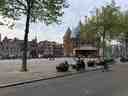
To spot Nieuwmarkt, just look ahead for a large, open square with a striking castle-like brick building topped with pointy turrets-the Waag-standing proudly at its center. Alright, welcome to Nieuwmarkt, the beating heart of Amsterdam’s old city! If you stand and listen for a moment, you’ll catch the buzz of life-a jumble of bicycles zipping past, chatter from nearby cafés, and the clinking of coffee cups from one of the many terraces dotted around the square. On Saturdays, the air is rich with the scent of fresh bread and herbal teas from the organic market, while on a sunny Sunday, you might spot treasure hunters sifting through tables of old books and antiques, eyes gleaming like they’ve just found a pirate’s loot. But before it was all bicycles and cappuccinos, imagine you’re stepping back in time, squinting through the city’s morning mist. The centerpiece here, the Waag, wasn’t always a quirky café-it once watched over everyone as part of the medieval city wall. Picture the city’s old gate opening up to a bustling market, merchants weighing cheese and spices with a seriousness usually reserved for Olympic sports. When the canals were filled in right here in 1614, the square was born in a splash, ready for centuries of stories. Not all those stories are cheerful. During World War II, this square became a place of fear-a collection point used by the Nazis, where neighbors were torn from their lives. The ghosts of history linger here quietly, a reminder to always cherish freedom and community. Now, here's a twist-fast forward to the wild ‘70s! Picture the city planners wanting to carve a giant highway straight through Nieuwmarkt. Locals didn’t just grumble into their coffee-they rioted! The Nieuwmarkt Riots were loud, passionate, and victorious; the highway was scrapped, and the soul of the neighborhood was saved. The metro still rumbles beneath your feet, but above ground, life wins. So whether you’re here for bao buns in Chinatown, a sunny terrace, or a stroll through centuries, Nieuwmarkt is the sort of place where every stone has a story. And sometimes, the biggest adventure is just listening.
समर्पित पेज खोलें →






अक्सर पूछे जाने वाले प्रश्न
मैं टूर कैसे शुरू करूँ?
ख़रीदारी के बाद, AudaTours ऐप डाउनलोड करें और अपना रिडेम्पशन कोड दर्ज करें। टूर तुरंत शुरू करने के लिए तैयार होगा - बस प्ले टैप करें और GPS-गाइडेड रूट का पालन करें।
क्या टूर के दौरान मुझे इंटरनेट चाहिए?
नहीं! शुरू करने से पहले टूर डाउनलोड करें और पूरी तरह ऑफ़लाइन इसका आनंद लें। केवल चैट फ़ीचर को इंटरनेट की ज़रूरत है। मोबाइल डेटा बचाने के लिए WiFi पर डाउनलोड करने की सिफ़ारिश है।
क्या यह एक गाइडेड ग्रुप टूर है?
नहीं - यह एक सेल्फ-गाइडेड ऑडियो टूर है। आप अपनी गति से स्वतंत्र रूप से खोजते हैं, आपके फ़ोन से ऑडियो कथन बजता है। कोई टूर गाइड नहीं, कोई ग्रुप नहीं, कोई शेड्यूल नहीं।
टूर में कितना समय लगता है?
अधिकांश टूर पूरा करने में 60-90 मिनट लगते हैं, लेकिन गति पूरी तरह आपके नियंत्रण में है। जब चाहें रुकें, स्टॉप छोड़ें, या ब्रेक लें।
अगर मैं आज टूर पूरा नहीं कर सकता/सकती तो?
कोई समस्या नहीं! टूर की लाइफ़टाइम एक्सेस है। जब चाहें रोकें और फिर शुरू करें - कल, अगले हफ़्ते, या अगले साल। आपकी प्रगति सेव रहती है।
कौन सी भाषाएँ उपलब्ध हैं?
सभी टूर 50+ भाषाओं में उपलब्ध हैं। अपना कोड रिडीम करते समय अपनी पसंदीदा भाषा चुनें। नोट: टूर जेनरेट होने के बाद भाषा बदली नहीं जा सकती।
ख़रीदारी के बाद मैं टूर कहाँ एक्सेस करूँ?
App Store या Google Play से मुफ़्त AudaTours ऐप डाउनलोड करें। अपना रिडेम्पशन कोड (ईमेल द्वारा भेजा गया) दर्ज करें और टूर आपकी लाइब्रेरी में दिखेगा, डाउनलोड और शुरू करने के लिए तैयार।
अगर आपको टूर पसंद नहीं आया, तो हम आपकी ख़रीदारी वापस करेंगे। हमसे संपर्क करें [email protected]
सुरक्षित चेकआउट 


