AudaTours logoAudaTours

विस्मार ऑडियो टूर: कालातीत पुराने शहर की किंवदंतियाँ और स्थलचिह्न

ऑडियो गाइड20 स्टॉप

विस्मार के लाल-ईंटों वाले क्षितिज के नीचे तस्करों, भाड़े के सैनिकों और चमत्कारी बचे हुए लोगों द्वारा गढ़ी गई एक दुनिया छिपी है। यह स्व-निर्देशित ऑडियो टूर सदियों के परतों को हटाता है, आपको अल्त्स्ताद्ट के मध्यकालीन हृदय से होकर उन कहानियों को उजागर करने के लिए ले जाता है जिन्हें अधिकांश राहगीर कभी नहीं सुनते। एक क्लासिक मूक फिल्म में वाटर टोर ने कौन सा भयावह रहस्य उजागर किया था? किसने एक बार वॉल्ट के मेहराबों से वर्जित बैरल को चुपके से निकालने के लिए सब कुछ दांव पर लगा दिया था? होली स्पिरिट चर्च की चित्रित छत चोरों और संतों दोनों के लिए एक संदेश के रूप में क्यों काम करती थी? प्राचीन नहरों का पता लगाएं, जिद्दी पुराने द्वारों के बीच घूमें, और हर मोड़ पर घोटाले और अस्तित्व से रूबरू हों। हर कदम कल्पना को प्रज्वलित करता है: बाजार की चीखें सुनें जहाँ केवल सन्नाटा है और ऊँचे पत्थर के हॉल में नाटक की गूँज देखें। जितना गहरा आप जाएंगे, विस्मार की छिपी हुई आत्मा उतनी ही अधिक जीवंत हो उठेगी। दूसरों की अनदेखी को उजागर करें—किंवदंती को एक ईंट रहस्य से अगले तक अपना रास्ता दिखाने दें। विस्मार के गुप्त अतीत में आपकी यात्रा यहीं से शुरू होती है।

टूर पूर्वावलोकन

map

इस टूर के बारे में

  • schedule
    अवधि 60–80 minsअपनी गति से चलें
  • straighten
    3.5 किमी पैदल मार्गगाइडेड पथ का पालन करें
  • location_on
  • wifi_off
    ऑफ़लाइन काम करता हैएक बार डाउनलोड करें, कहीं भी उपयोग करें
  • all_inclusive
    लाइफ़टाइम एक्सेसकभी भी, हमेशा के लिए फिर सुनें
  • location_on
    वाटर टोर से शुरू होता है

इस टूर के स्टॉप

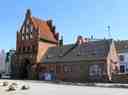
  1. To spot the Water Tor, look for the striking tall red-brick gate with a steep, stepped gable roof and white arched details, right next to a row of old brick houses along…और पढ़ेंकम दिखाएँ

    To spot the Water Tor, look for the striking tall red-brick gate with a steep, stepped gable roof and white arched details, right next to a row of old brick houses along Wasserstraße. Welcome to the Water Tor, one of Wismar’s proudest landmarks and, believe it or not, the last of its kind! Stand here for a moment and imagine yourself hundreds of years ago, right where the salty breeze from the harbor tickles your nose. This medieval gate, built way back in 1450, is the only one of Wismar’s five mighty city gates that still stands today-like a stubborn old captain who refused to abandon ship. You’d have walked straight through this arch on your way into the bustling Hanseatic port, carts rattling over cobblestones and traders calling out their goods. Back then, the Water Tor was special-it was the only gate with direct access to the harbor, while the others only faced the land. If you were a merchant arriving by sea, this was your grand entrance. The road in front of you is Spiegelberg, and it would’ve been packed with sailors, wagons, and perhaps someone sneaking in a barrel or two of questionable ale (Don’t worry, I won’t tell!). Take a look upward! The pointed arch is wider than you’d expect, framed by a square brick tower topped with a red-tiled saddle roof. Tall, narrow windows and striking white, pointed decorations highlight its Gothic flair, while the stepped gable is lined with battlements-fancy zigzags that would have impressed any visitor, or at least made them forget about the chilly sea wind. On both sides of the arch, you’ll spot coats of arms: the noble bull from Mecklenburg and the city’s own shield stripes, watching over everyone who passed. In the 19th century, most of the city’s walls and towers were torn down as industry boomed. Yet, this old gate stayed put, a reminder of Wismar’s glory days. Today, the Water Tor houses the Club maritim-so who knows what nautical secrets and sailor stories hide inside? And here’s a bit of chilling trivia: look for the plaque inside the passage, honoring the silent film classic Nosferatu, which shot some of its spookiest scenes right here. Locals say, if you pass under the archway around sunset, you might just feel a hint of movie magic-or maybe… something else. So as you stand before the Water Tor, let your imagination run wild, and remember: every time someone passes through, a piece of Wismar’s past walks with them. Now, on to the next adventure!

    समर्पित पेज खोलें →
  2. To spot the Vault, look for a two-story, half-timbered house painted in reddish-orange, trimmed in white, with steep gabled roofs and shuttered windows, standing right over a…और पढ़ेंकम दिखाएँ

    To spot the Vault, look for a two-story, half-timbered house painted in reddish-orange, trimmed in white, with steep gabled roofs and shuttered windows, standing right over a small canal just beside the road. Welcome to the Vault! Here’s a building with more stories than most bars in town-although, funny enough, this one has served a few drinks in its time too! Imagine yourself in the 17th century-the salty breeze of the nearby harbor in the air, as bustling merchants unload barrels of wine right behind you. This two-story half-timbered charmer stands boldly atop two mighty brick arches, and underneath, you’d hear the gentle gurgle of the Runde Grube stream as it slips away towards the Old Harbor. Back then, the Vault wasn’t just a pretty face; it was a checkpoint for fine wines. Local “wine lords,” as important as they sound, would gather here, rolling barrels inside and popping corks to judge what was good enough to send on to town hall. Imagine their serious faces as they gave each vintage a swirl and a sniff-maybe sneaking an extra sip or two, strictly for “quality control,” of course! Later, this building was not one to turn down a good drink; tenants started serving beer instead, giving new meaning to the phrase “beer on tap.” But its talents didn’t stop there. In 1864, the scent of smoked fish began drifting through the air as the building became one of Wismar’s favorite stops for eel and fresh fish. The brick smokehouse buzzed with activity to the south-until time and the elements brought the old smoker down at the turn of the millennium. Through fires, renovations, and countless bustling days, the sturdy Vault held tight to its secrets. Picture a cold day, city workers slotting iron gates across the canal, blocking the water to fight a fire-every clang echoing off these old walls. And even as shops and windows changed, this house has always stood strong as Wismar’s gateway between town and harbor, a reminder that every building has just as many lives as the people who walk through its doors.

    समर्पित पेज खोलें →
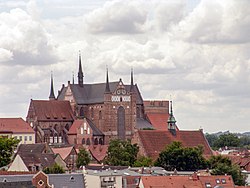
  3. To spot the Holy Spirit Church, look to the corner of Lübsche Straße and Neustadt and you’ll see a long, red-brick building with a steeply pitched roof, tall pointed windows, and…और पढ़ेंकम दिखाएँ

    To spot the Holy Spirit Church, look to the corner of Lübsche Straße and Neustadt and you’ll see a long, red-brick building with a steeply pitched roof, tall pointed windows, and a small greenish bell tower poking up from the tiles-its sturdy buttresses and rustic texture make it stand out from the rest of the block. Alright, time to take a little step back-let your imagination time-travel! Picture yourself standing right here, but it’s the 1300s. Instead of cars and street signs, there’s the chatter of markets, the creak of wagon wheels, and folks bustling around this brick giant, looking for help, healing, or maybe just some shelter for the night. The Holy Spirit Church was never just a place to pray; it was the beating heart of Wismar’s compassion-a church, hospital, and a hostel all in one. Founded back in the middle of the 13th century, it was the town’s answer to anyone in crisis: the sick, the homeless, the travelers with pockets full of stories (and probably, a few fleas). The church quickly got permission in 1255 to hold its own services and bury its own dead, which, in medieval Europe, was a pretty big deal. In fact, by 1323, even the Pope decided this was a special place and took it under his protection-no pressure! Step closer, and you’ll notice those grand, pointy windows and the chunky pillars pressing into the walls. They’re not just for show; those pillars arrived about 350 years after the church itself, to keep the old building from tumbling down. Over the centuries, the church grew a little taller, gained dormer windows, and even a bell tower with a bell that dates all the way back to 1473. Now that’s an original ringtone! If you could float through these old bricks, you’d see a bright, open space inside, crowned with a gorgeously painted wooden ceiling from the 1600s-40 meters long, sparkling with colors, and bursting with scenes from the Bible. You’d see playful cherubs, lush leaves, scenes of paradise, floods, and drama-almost like a medieval comic strip running right over your head! Don’t forget to look for the oldest painted Christ in Mecklenburg, peering out from a door that’s survived since the Romanesque era. In fact, the church is like a medieval art gallery: here, you’ll find mysterious frescoes, playful crane paintings (the ancient security guards-legend has it these birds carried stones so they wouldn’t fall asleep on duty!), and beautiful stained glass windows that once belonged to St. Marien. Some windows show Mary spinning, Joseph snoozing, and a wild variety of saints and biblical scenes, all crafted with incredible detail in the late 1300s. Back in the old days, the long hall next door-the "Lange Haus"-served as a hospital ward, lined with tiny cells for patients who could even listen in on church services. Imagine the sounds: gentle prayers, the shuffle of feet, a cough echoing through the halls, and the soft clatter of bowls as supper was served from the kitchen cellar below. Meanwhile, food for the needy came straight from the nearby farmland, all stored down in that cool, vaulted cellar. Time pressed on, and by the Reformation, the hospital moved out. The church adapted-turning into a true church for worship, while the former hospital became cozy homes for the elderly. And in the centuries since, it’s played the ultimate host for rescued church art, especially after World War II, when treasures poured in from damaged churches all around. One curious tidbit for TV fans: the big iron gate to the courtyard has starred in police dramas-nothing like a medieval church pulling double duty as a TV police station! So as you stand here, listen to the echoes of medieval prayers and hospital hustle. Imagine row upon row of tired travelers, the hopeful sick, the lonely, the laughter of helpers, and the buzz of centuries of stories swirling in these red bricks. The Holy Spirit Church isn’t just ancient bricks; it’s a living memory of Wismar’s kindness-and I promise, the only thing infectious here now is its incredible history! On to the next stop! If you're curious about the paintings, stained glass or the chapels, the chat section below is the perfect place to seek clarification.

    समर्पित पेज खोलें →
17 और स्टॉप दिखाएँकम स्टॉप दिखाएँexpand_moreexpand_less
  1. Right in front of you is a pale, cream-colored townhouse with three stories and the words WELT-ERBE-HAUS above the doorway; just look for the simple facade squeezed between its…और पढ़ेंकम दिखाएँ

    Right in front of you is a pale, cream-colored townhouse with three stories and the words WELT-ERBE-HAUS above the doorway; just look for the simple facade squeezed between its neighbors like a book on a shelf. Now, as you stand here, let yourself imagine Lübsche Straße back in the year 1350. This wasn’t just any old street; this was the bustling east-west artery of medieval Wismar, alive with creaking wagon wheels, boisterous traders, and the salty tang of Hanseatic ambition in the air. The World Heritage House, this very building, stood right in the thick of it all. Picture its enormous ground-floor hall-a kind of medieval loading dock-where daylight poured through great street-facing windows as workers clattered in, ready to organize or transfer everything from barrels of herring to exotic spices. Above your head would have been cavernous storage rooms, filled to the brim with goods. Down the side facing the courtyard stretched the “Kemlade”-a cozy living extension where, if you listen closely, you might hear the whisper of family dinners and laughter echoing through the centuries. As time rolled forward, so did the life of this house. In the 1600s and 1700s, the owners traded their warehouse dreams for more comfortable living, lowering the once-soaring hall ceilings and expanding the living spaces above. City notables left their mark-a mayor named Gabriel Lembke pulled off a renovation in the 1800s so thorough the building could almost have changed its middle name. By 1924, the house became a hub for a merchant company, and not only did they run their business here, but they had a pub and even a little museum tucked inside, making it the medieval equivalent of a shop, an Airbnb, and a mini-history channel all under one roof. Oh, but fate wasn’t always kind to our friend. After World War II, the Cultural Association of the GDR moved in, keeping the house busy until 1990. When they left, the poor building started falling apart, with each creak and crumble carrying a plea to the city, “Don’t let me become just another ghost!” Luckily, Wismar answered the call. When the city was officially recognized as a UNESCO World Heritage Site, the house got a rescue worthy of a fairy tale-an epic, four-million-euro renovation from 2013 to 2014, scrubbing away centuries of wear to reveal some head-turning surprises. Picture this: as restorers worked away, they discovered behind a cluster of paint and dust in one corner a real rarity-a natural stone basin from the 17th century, nestled in a slim, once-colorful niche. It’s the very first of its kind uncovered in Wismar, a lost piece of domestic life chipped straight from history’s hidden pages. Step inside, and you’ll find an exhibition across 400 square meters, celebrating UNESCO’s criteria for world heritage with international stories and a colorful city map underfoot, the World Heritage House itself popping out in bold hues. Wander to one of the audio stations along the way-just press play to have Hanseatic tales dance to life in your ears. Fascinated by ancient trade? Dedicated displays let you get up close to the goods and business that built this town. Just don’t try to barter with the mannequins-they’re notoriously hard to haggle with. Then you’ll move into the Kemlade, where a casual peek behind a blue wooden ceiling revealed original artwork and-ta-da!-a trove of domestic artifacts: wooden dishes, old household items, even a wooden plank that once served as a book cover. There’s a hint of 18th-century rococo in the air thanks to delicate wall paintings that restorers uncovered after nearly 240 hours of careful scraping-talk about a wall with stories to tell! If you go upstairs, the true showstopper awaits: a wallpaper hall clad in a rare, nearly 64-square-meter mural crafted in 1823 by Dufour & Leroy in Paris. The wallpaper tells the mythical adventures of Telemachus and the goddess Calypso, each sheet made by hand, with 2,027 different printing blocks and a dazzling 87 colors. It’s so special, matching panels live in the Metropolitan Museum in New York and even the Hermitage near Nashville, Tennessee. And don’t forget the outdoor courtyard shared with the next-door house, where a concrete fountain, shaped like Wismar’s old city map, runs with water. The gentle trickling shows off the city’s historic water supply system, all inspired by an ancient plumbing plan from 1710. It’s fun to watch the little rills and imagine you’re a drop of rain taking the grand tour of Wismar yourself. Every inch of this building whispers stories of merchants, families, legends, and survival. Just remember-if these walls could talk, they’d tell you not only where the city came from, but how it’s still thriving, layer by layer, for all to see. So take a moment. Let curiosity be your tour guide, and enjoy every echo of history around you.

    समर्पित पेज खोलें →
  2. Just ahead, you’ll spot the District Court Wismar as a sturdy brick building with tall arched windows, nestled right next to the more ornate, yellow-red Fürstenhof-just follow the…और पढ़ेंकम दिखाएँ

    Just ahead, you’ll spot the District Court Wismar as a sturdy brick building with tall arched windows, nestled right next to the more ornate, yellow-red Fürstenhof-just follow the cobblestone path and look for the mixture of red and light stonework! Now, imagine standing here not just in the present, but across decades, even centuries, in the very heart of Wismar’s historical “Gothic Quarter.” The District Court Wismar isn’t just a building-it’s a living archive of justice and local drama. Close your eyes a second and picture all sorts of footsteps echoing on these old stones -from stern judges to hurried townsfolk nervously awaiting their fate. Once upon a time, before 1879, court life in Wismar was a bit like a soap opera with too many stars: you had grand duke-appointed judges, the magistrate’s court, even church authorities getting involved. If you thought family game night was confusing, try keeping up with all the “patrimonial courts” and which noble house was deciding what! But, when the German Empire’s justice reforms swept the land, all these scattered courts got bundled together. Suddenly, the District Court of Wismar was born as one of the most important legal hubs in the region-answering to the mighty Landgericht Schwerin and, above that, the Oberlandesgericht Rostock. At the start, three official judges sat inside, holding the lives of nearly 30,000 people in their hands. Talk about a full docket! Its domain wasn’t just the folks of Wismar, either. The court’s reach spread like the branches of an old oak-cities, windmills, farms, tiny villages with names like Flöte and Hohen Viecheln, and even the waterways of Golwitzer Bucht. Justice here had a wide audience, and no two days were quite the same. One minute the hallways were buzzing with local farmers; the next, they might echo with the stomping boots of noblemen or the nervous whispers of villagers waiting to hear a verdict. Fast forward to the days of the German Democratic Republic, when the courtrooms were reorganized yet again. Suddenly, this place was known not as the Amtsgericht, but as part of a strict system of “Kreisgerichte,” or district courts. There was a new air of seriousness-barred windows, officers posting official notices on the doors, the clang of heavy keys. For a while, there was also a youth detention center nearby, until it closed its doors in 2014. After Germany was reunited, history swung around again. Structures changed; someone probably had to shuffle an awful lot of paperwork, but at last, the Amtsgericht Wismar came back-this time more powerful than ever, with a legal territory sprawling from Wismar to distant Grevesmühlen. And today, it’s responsible for 142,000 people-an audience big enough for a (very stern) circus. Its home is right here in the historic Fürstenhof, beside the bustling marketplace. You’re standing where centuries of decisions, dramas, and maybe the occasional surprise twist have shaped the city’s fate. So watch your step-this might just be where new history gets written!

    समर्पित पेज खोलें →
  3. Look for a gigantic brick church with striking gothic arches and tall spires towering high above the red rooftops-if you spot something that looks like a medieval fortress but…और पढ़ेंकम दिखाएँ

    Look for a gigantic brick church with striking gothic arches and tall spires towering high above the red rooftops-if you spot something that looks like a medieval fortress but prettier, you’ve found the Georgenkirche! Now, let me whisk you back through the centuries to a time when Wismar was bustling with merchants, craftspeople, and more than a few ambitious city planners! The Georgenkirche, or St. George’s Church, is not only the largest church in Wismar but also its youngest-imagine a little sibling determined to outgrow all the others! Construction started around 1295, and from the very beginning, everyone aimed high: this was to be the people’s and princes’ very own house of worship, with soaring columns and a choir so grand that even the town’s ghosts (if they exist!) would be inspired to sing. But like every great story, this one isn’t without drama. Imagine the clang of hammers and the scraping of bricks being hoisted into place as the church slowly took shape over generations. Records mention an earlier church here, but no one is quite sure where it stood-maybe right under your feet, or maybe out there beyond the old city wall! By the turn of the 14th century, a brand-new basilica was rising, crowned with chapels, a bold choir, and architects forever changing their plans to make things even bigger. As the years ticked by, the church became an inescapable part of daily life-home to booming services, epic celebrations, and, if you were really lucky, a juicy bit of medieval gossip whispered under the arches. By 1404, an ambitious third phase started: new chapels, a west tower (which, admittedly, was never finished, but hey, show me a perfect builder!), and a grand west entrance decked with ornate brickwork. Some say that St. George’s became a symbol for the city’s ups and downs-every brick hiding stories of triumph and, occasionally, defeat. Fast forward to the 20th century, and the Georgenkirche’s luck seemed to run out. Near the end of World War II, in April 1945, bombs tore through the heart of the building, flames licking at its ancient beams. The massive walls survived, but the mighty roof and tower collapsed, organ and altars destroyed or lost to the chaos. For decades after, the church stood like a wounded giant-exposed to the elements, with grass growing through cracks once filled with prayer. But like all good heroes, St. George’s never gave up. The people of Wismar, passionate preservationists, and even a mighty round of applause from the rest of Germany worked miracles-literally known as “the Wonder of Wismar.” Imagine workers high on scaffolding, voices echoing, as beams and bricks once again found their places. It took millions of euros, storms that tried to undo their work, and even a dash of political intrigue during the reunification of Germany (because hey, why not add a little more drama?), but by 2010, the Georgenkirche stood proud again, restored and ready for new stories. Step inside, and you might feel the space echoing a thousand years of footsteps, from lords in silk to townsfolk in humble leather. Its interior is a triumph of North German brick gothic-broad, bright, and full of silent witnesses. While many treasures were lost to war and history, legends live on: there were over 30 altars here at one time, can you believe it? And a mighty high altar, 10.5 meters wide, once the grandest in all the Baltic lands. Even the walls, stripped and beautiful, seem to whisper, “You ain’t seen nothing yet…” Today, the Georgenkirche is not just a church, but a survivor and a stage for music, art, and the odd festival or two. In 2014, a viewing platform opened, letting you gaze out over Wismar as if you were the town’s medieval guardian. So, whether you’re here to marvel at its sheer size, trace the scars and triumphs of history, or simply enjoy a quiet moment, just remember: you’re standing in the shadow of a true architectural phoenix. Just watch out for falling medieval mysteries-and maybe a ghost or two who’s never quite left their favorite seat! Fascinated by the architecture, preserved equipment or the former altars? Let's chat about it

    समर्पित पेज खोलें →
  4. To spot the Fürstenhof, just look ahead for a grand, three-story Renaissance building with pale yellow walls, deep terra-cotta red window frames, richly decorated friezes, and a…और पढ़ेंकम दिखाएँ

    To spot the Fürstenhof, just look ahead for a grand, three-story Renaissance building with pale yellow walls, deep terra-cotta red window frames, richly decorated friezes, and a dramatic arched entrance right in the middle. Alright, take a nice deep breath of that North German air and let’s head back in time! You’re standing before the Fürstenhof - Wismar’s original Renaissance showstopper, where dukes planned their fairy-tale weddings, and justice thundered through the halls. Picture the year 1512, when Heinrich V, the Duke of Mecklenburg, decided to build a palace fit for his second royal wedding to Helene of the Palatinate. The first part of this building, called the Old Court, had the latest trends of the late Gothic world - think fancy vaulted ceilings and curtain-arched windows. The place was covered in a red lime wash, the terracotta sculptures shining white, and the blue backgrounds making every detail pop. If you catch a glimpse of the reconstructed color scheme in the courtyard, you’re getting a peek at Fürstenhof’s former glory. But Fürstenhof was not a one-wedding wonder! Fast forward about 40 years and there’s a fresh party in town. Duke Johann Albrecht I wanted nothing less than a Renaissance marvel for his own wedding to Anna Sophie of Prussia. So, they tore down an old Gothic festival hall and replaced it with what you see towering in front of you - the New Court, built in 1553. Imagine builders and artists hustling about, inspired by the cool palaces of Ferrara in Italy. The outside walls sing with friezes carved in limestone and terracotta, featuring biblical tales and legendary myths. Every window along the street is topped with a triangle-shaped gable, while the big arched gate in the center looks like it’s daring you to march in just like a duke. Yet, just like a good plot twist, time changed everything. For centuries, the Fürstenhof switched jobs more often than a medieval jester! When Wismar came under Swedish rule, the dukes were out and the lawyers were in. The grand halls echoed with the voices of judges during the 1600s and 1700s, as the feared and respected Wismar Tribunal made its home right here, handing down important decisions for all of Swedish Germany. You can almost imagine Swedish uniforms flapping in the sea breeze and horse hooves clapping as lawyers hurried in for another day of courtroom drama. The outside of the building changed, too. In the 19th century, restoration work by Carl Luckow gave the Fürstenhof a fresh look - sometimes sticking closely to the original plans, sometimes getting a little creative. Windows were replaced, doors standardized, and terracotta sculptures restored. The whole building got a new coat of plaster, and even the relief panels had to be replaced, sometimes copied to keep the beauty alive. But one thing never changed: the Fürstenhof’s knack for reinvention. During the DDR times, this building housed a court, a geodesy office, and even the city archives. These days, if you ever need to sort out a parking ticket or something a bit more dramatic, the district court of Wismar is waiting inside! So, as you stand here, look up at those decorated friezes - some original, some painstakingly copied - and imagine the centuries of stories whirling through these walls: noble weddings, astonishing art, legal showdowns, and whispered secrets swirling through candle-lit corridors. Not bad for a building that started as a honeymoon suite, right? And if you hear the echo of fancy shoes or the soft shuffle of court papers, don’t worry - that’s just the past poking its head out to say hello.

    समर्पित पेज खोलें →
  5. You’re standing before the remains of Wismar’s old city wall-one of the last ancient guardians of this historic town. Imagine, if you will, the hustle and bustle here more than…और पढ़ेंकम दिखाएँ

    You’re standing before the remains of Wismar’s old city wall-one of the last ancient guardians of this historic town. Imagine, if you will, the hustle and bustle here more than 800 years ago. Back in 1161, the earliest wall was probably more of a big dirt mound than a mighty fortress, but you’ve got to start somewhere, right? By 1240, the townspeople improved those defenses, probably realizing that a pile of dirt might keep the bunnies out, but not the neighbors from down the river. Just a couple decades later, in 1226, Wismar officially became a city-congratulations, Wismar! And not to brag, but it’s been in the history books ever since. With city status, the townsfolk knew they needed better protection, so from 1276, they began building a real wall: thick stone with sturdy buttresses, round and square towers, and plenty of gates. The wall wrapped its stony arms around both the Old Town and the newer parts of Wismar, an ever-growing suit of armor. It became so elaborate that, by the mid-1400s, there were 28 separate towers and city gates, plus plenty of little side gates. There were even half-moon bulges where defenders could peek out or take a lunch break-nobody attacks during sandwich time, I hope! Regular folks lived and worked right up against the wall. Imagine Hermanns Mustyn storing grain in a big old warehouse by the wall, back in 1334. And from time to time, the city’s rulers issued letters about holding troops “within the walls and fortifications,” so you might see guards up there, always on the lookout for the next big drama. One tall tale for you: legend had it that the city’s defenders kept wildcats-okay, maybe just rocks called “katten” for catapults-ready to fling at any intruders who didn’t RSVP politely at the main gates. Speaking of gates, the wall once had five mighty city gates. There was the simple Water Gate, leading to the harbor, which was upgraded in late Gothic style in 1450. Locals called it the Helleporte-which might mean “the light slope” but could also be twisted into “Hell’s Gate.” Sounds dramatic, but rest assured-nobody reported seeing actual devils, just some customs officers checking your cargo. Other gates led toward the northern beaches (the Poeler Gate), pastures and villages (the Mecklenburg Gate), to Lübeck in the west, or through the city’s oldest quarter (the Alt-Wismar Gate). Each gate had its own quirks-a square tower here, a drawbridge there, and always, stories of sieges and triumphs echoing in the stone. You know, the city wall wasn’t just a wall-it had a supporting cast of places to come in and out. Besides the big gates, there were portholes and secret little doors: a wind gate, a castle gate, and no fewer than four “water gates” leading to the port. These openings were sometimes locked up, sometimes mysteriously left open, perfect inspiration for a late-night ghost story. But it wasn’t all tense standoffs and sword fights. Over time, the wall got a serious face-lift, especially between the 1500s and 1600s. Wismar was fortified yet again when the town was caught up in the wars between Swedish, Danish, and Prussian rulers. Picture hundreds of workers-sometimes more than a thousand at a time-digging, stacking, and sweating to build up and expand the ramparts outside the wall. I hope they had coffee breaks! The city even played a role in dramatic moments like the Thirty Years’ War, when the Swedes, Danes, and others frequently swapped control of Wismar. Sometimes, disaster struck-like in 1699, when the powder tower exploded during a storm and sent debris flying, shaking the city to its core. Eventually, Wismar’s days as a fortress faded, and after more treaties and handshakes than a politician’s breakfast, the city was forced not to rebuild its military walls. So, the grand old city wall became less useful. As Wismar grew into the 19th century, townsfolk eyed those thick stones as prime real estate for new streets and homes. Bit by bit, the wall came down, its stones repurposed or swept away. Sections survived here and there-along the Dr.-Leber-Straße, by the Lindengarten, or as part of a street now named Wallstraße, literally “wall street.” Today, these crumbling remains, brushed by the wind, remind us of knights, merchants, and townsfolk patrolling the city’s edge, never quite knowing if the next day would bring peace, peril, or-if they were really lucky-a day off. So take a good look, listen to the echoes, and maybe thank the wall for keeping Wismar safe all those centuries. After all, without the wall, who knows who-or what-might have popped by for a surprise visit! Onward to our next stop, with perhaps a little less fortification but no less history.

    समर्पित पेज खोलें →
  6. Right in front of you, rising high above the rooftops, you'll spot the lone and towering brick structure of the Marienkirche’s west tower-just look up for a massive rectangular…और पढ़ेंकम दिखाएँ

    Right in front of you, rising high above the rooftops, you'll spot the lone and towering brick structure of the Marienkirche’s west tower-just look up for a massive rectangular spire of red brick, trimmed with pale stone at the corners, dominating the heart of Wismar’s old town. Now, picture yourself just outside this monumental tower, surrounded by the echoes of nearly eight centuries of Wismar’s bustling life. The story of Marienkirche is one of drama, resilience, and a little bit of ghostly glamour, so take a deep breath and let’s step back in time together. Imagine it’s the 13th century. The townsfolk are hard at work, and the smell of fresh-baked bread mingles with the salty breeze from the Baltic Sea. Wismar is booming, and the people decide they need a church-well, not just any church, but a grand one. The first Marienkirche might’ve been a simple wooden building, quietly standing by the market, already welcoming its flock by the 1220s, even before Wismar was officially a town. By around 1260, the community’s ambition really takes flight, replacing wood with reddish brick and vaulting into the sky with a massive hall church. You can picture the original nave-so wide, you could have hosted a medieval dance party with room for everyone’s pointy shoes. That era’s drive for “bigger and better” means the Marienkirche doesn’t stay still. Over a century, piece by piece, the church grows: new chapels, tall vaults, a beautiful choir, and, to top it all off, a west tower that eventually soars to 120 meters! Imagine the clang of hammers and laughter of workers, stone and brick flying up to the heavens. But all that grandeur had its share of mishaps-lightning strikes, storms, and even the occasional falling spire. The steeple fell more than once; the wind here is a fierce decorator! Inside, it was a treasure trove: colorful stained glass, paintings, and altars, gifts from rich merchants, hardworking guilds, and entire families hoping to buy some peace for their souls. They even hired Lübeck’s top artists, like the sculptor Tönnies Evers, to carve intricate pulpits and retables. The church bells? One of the largest collections in Northern Germany, tolling together to mark every feast and festival, and still, some ring out today. Oh, and if you’ve ever watched a vampire movie with your popcorn, here’s a fun twist: In the 1920s, Marienkirche was a star, appearing in the legendary silent film “Nosferatu - A Symphony of Horror.” I like to think the church’s stone gargoyles got a bit nervous with all those camera flashes. Yet, the 20th century brought shadows. As World War II swept across Europe, Marienkirche suffered; bombs tore through the nave and the southern walls, leaving it battered and exposed to the elements. For years, townspeople dreamed of restoring their beloved church. But in 1960, the remaining shell of the nave and choir was demolished, despite the protest of those who loved it-not out of danger, but simply to clear the ruins. Only the iconic tower was spared, standing as a lonely watchman over Wismar-because sailors still depended on it as a landmark to find their way home. But this isn’t a ghost story. With grit and grit alone, the people of Wismar and supporters far and wide rallied to save what remained. Over the years, the tower has been restored, made safe, and today, it’s alive with new possibilities-hosting concerts, exhibitions, and even imaginative installations that help everyone remember the church that once proudly filled this square. On the ground, you’ll spot low walls tracing where the giant church nave once stood. Step inside the marked outline, close your eyes, and you might just hear echoes of singing, prayers, and laughter. Marienkirche was always the people’s church-center of their spiritual life, the stage for their joys and sorrows, even a final resting place for many of their loved ones. Rich guilds had lavish private chapels, the organ thundered overhead, and children ran through the pews, perhaps hoping not to meet any of Nosferatu’s friends in the crypt! So as you gaze up at the solitary tower, remember-this isn’t just a ruin. It’s a survivor, a memory-keeper, and a symbol that, like the people of Wismar, it refuses to fade away. If those old bricks could talk, I bet they’d have some tales to tell… maybe even a vampire joke or two! To delve deeper into the equipment, tower or the parish church, simply drop your query in the chat section and I'll provide more information.

    समर्पित पेज खोलें →
  7. Right in front of you stretches Krämerstraße, a picturesque pedestrian street lined with colorful, gabled townhouses-look slightly to your right where the buildings' ornate…और पढ़ेंकम दिखाएँ

    Right in front of you stretches Krämerstraße, a picturesque pedestrian street lined with colorful, gabled townhouses-look slightly to your right where the buildings' ornate rooftops, especially the patina-green and pastel facades, make the street stand out against the open sky. Ah, you’ve reached Krämerstraße, right in the living, breathing heart of Wismar’s Old Town! Take a deep breath-there’s something magical about this street, as if the cobblestones beneath your feet are humming with stories from centuries past. The bright facades you see, with their whimsical gables and patina greens, creamy yellows, and blushing pinks, tell tales far older than the latest café menu. This whole area is protected by UNESCO, so you’re walking through a world heritage site-basically, VIP status in the world of streets. Picture it: the year is 1229. Wismar is freshly minted as a city. Krämerstraße is alive with the sounds of traders-called “Krämer”-hawking their spices, dazzling cloths, glittering cutlery, and the kind of mysterious gadgets you only ever find at medieval markets or, these days, online shopping sites that deliver from 'far-away lands.' Back then, though, if you wanted a handful of cinnamon or a bolt of fancy fabric, this was your hotspot. Try to imagine the scents: spice-laden breezes, the tang of brewed coffee centuries later, the sweetness of fresh bread from a nearby bakery, and just a hint of adventure. As you stroll along, you’ll notice that Krämerstraße isn’t just a street, it’s a network-a little like a medieval mixer-connected by lanes with curious names. There’s the Hegede, which in old Low German meant a hedge or a border, a reminder of marketplaces with picket boundaries and maybe a little bickering about whose stall went where. Lübsche Straße salutes the nearby Hanseatic titan, Lübeck, while Böttcherstraße still whispers stories of the barrel-makers, the ones responsible for every last beer barrel and shipping crate. And who could forget Bademutterstraße? Don’t worry, despite the name, it’s not dedicated to mothers in bathtubs! Way back, it honored the midwives of Wismar, with “Bademömen” being a nickname for those amazing women. Now, keep your eyes peeled for the houses with their proud gables-a whole parade of architectural characters standing shoulder to shoulder. At number 1, you’ll spot a four-story emporium built in 1907 in a style unique to Wismar, once the flagship for Karstadt, the famous store whose founder Rudolph Karstadt opened his first textile and manufacturing shop right next door in 1881. Move along and you’ll see elegant baroque numbers, like number 3, a gabled house with elaborate swirls, and number 8, showing off its bay window and, just recently, some sprucing up to keep everything standing tall. If you want a splash of color, look for the pastel-green corner gable or the rose-hued number 15. A Dutch architect called Philipp Brandin once called number 15 home, back around 1577. Who knows? Maybe he stood exactly where you are, shaking his head at the noisy traders and dodging runaway wagons. Or perhaps he admired the street’s very own fountain, still bubbling today, and the lively scene of people darting between market stalls. The street has changed with the times, of course. In the 1970s, during the days of the German Democratic Republic, Krämerstraße became a pedestrian paradise, paved in smooth asphalt-perhaps not the stuff of medieval legend, but great for a modern shopping trip without splashing mud on your shoes. In 1999, it was given a facelift, with patterns of granite stones laid in neat rows, brick formats for a touch of tradition, and mosaic patches for those who like a bit of surprise underfoot. Not every story here is laughter and business deals. Number 17 once housed a bookshop that belonged to Johann Heinrich Sievers, who ran afoul of the law for offending the monarchy and wound up fleeing to England. Add to that the three-century-old Löwenapotheke (Lion Pharmacy) on Bademutterstraße, complete with a lion’s-head portal and some classic Art Nouveau glass, now reborn as a cheerful café. And if you’re looking for a touch of whimsy, don’t miss the sculpture of a wolf and a crane or the stamp issued in 2003-yes, this street is so photogenic, it even landed on German postage. So as you explore, remember-each step you take in Krämerstraße is a little journey across eight centuries of shopping, laughter, whispers, and wonder. If those gables could talk, they'd probably say, "Careful with the cobblestones-and do stop for a pastry!"

    समर्पित पेज खोलें →
  8. To spot the Old Lionapotheke, just look for the striking yellow building with a layered, stepped gable roof and a fanciful golden lion perched over the front door-set right at the…और पढ़ेंकम दिखाएँ

    To spot the Old Lionapotheke, just look for the striking yellow building with a layered, stepped gable roof and a fanciful golden lion perched over the front door-set right at the end of Krämerstraße. Now, let’s imagine ourselves back in the swirling mists of medieval Wismar. You’re standing right where the city’s midwives once hurried along Bademutterstraße, and the air around the Old Lionapotheke is thick with scents of herbs, brewing, and a hint of mystery. Built in the bold Gothic style by the high-and-mighty von der Lühe family, this house was bustling with business-after all, they owned not just the house, but the right to brew beer! Can you picture barrels rolling by, gossip bubbling as people gathered for a drink? Some of that original timber still stands here, dating as far back as 1334. But things took a curious turn in 1659, after the Thirty Years’ War. Mathias Scheffel’s son decided it was high time to open an apothecary-a place where remedies could be found for all the town’s aches, pains, and probably a few broken hearts too. He added the grand baroque facade, and you’ll still find traces of those days if you look closely. Want a wild secret? In the back rafters sits a cannonball, stubbornly wedged there since the time of the Great Northern War. Every time the wind rattles the windows, I like to imagine the ghostly echo of cannon fire somewhere in the distance. Ownership of the pharmacy passed through many hands until 1851, when a clever pharmacist renamed it the Lion-Apotheke, giving a nod to the lion’s legendary strength in folk medicine. Peek up-you’ll see two stone lion medallions on the gable and that bright golden lion over the doorway. Locals say the poor beast has run off a few times-stolen, then mysteriously returned. Maybe it just wanted a coffee-because, after centuries of potions and powders, this building finally settled down as the cosiest café in town. If those Jugendstil glass windows could talk, I bet they’d have stories to tell!

    समर्पित पेज खोलें →
  9. If you look ahead, you’ll spot the Fire Department Wismar in a classic brick building with sturdy arched windows-just follow the sight of those bright, cherry-red fire trucks…और पढ़ेंकम दिखाएँ

    If you look ahead, you’ll spot the Fire Department Wismar in a classic brick building with sturdy arched windows-just follow the sight of those bright, cherry-red fire trucks parked right out front, almost like they’re on a parade waiting to spring into action! Now, let’s stand still for a second and soak in the smell of stone, rust, and a hint of burnt toast-don’t worry, that last one’s probably just my imagination-and imagine the heartbeat of Wismar’s guardians, the Fire Department. Wismar’s fire brigade is more than sirens and shiny trucks. It’s a living chain, forged from the sweat and courage of generations, stretching all the way back to April 23, 1859. That’s when the Freiwillige Feuerwehr Wismar, the oldest volunteer fire department in all Mecklenburg-Vorpommern, first started answering distress calls-back when people still debated whether bathing was healthy or not! For over a century, if you saw flames licking a roof in the old town, it was local volunteers racing through the crooked streets, carrying buckets, axes, and a fair bit of stubbornness. For a long time the main hub was in Gerberstraße-until, in 1997, a new home was needed when engineers declared the old house was... well, about as sturdy as a house of cards after a sneeze. After a twenty-year odyssey, the Altstadt fire team finally got their new station at Kagenmarkt in 2017-a well-deserved upgrade for folks who risk their necks for their neighbors! Wismar’s modern fire department isn’t just about tradition, though. These days, it’s a sophisticated blend of Berufsfeuerwehr-the full-time, highly trained professionals-backed up by two proud volunteer battalions. Firefighting here is a 24-hour job. There’s always a team on hand: seven energetic firefighters per shift, watching over the city’s chimneys, attics, and even those secret underground tunnels everyone pretends don’t exist. Their big red engines are packed to the roof with gadgets: a help-and-rescue vehicle, a shiny new turntable ladder (there’s a whole contract for it with local towns, so no one has to play “who gets the ladder?” in an emergency), and even a machine to swap out gear in the heat of battle. If you hear a really big engine rumbling, that’s probably the Wechselader, a special truck only called on for the scariest fires-think “action movie finale” size. And the fleet? Oh, it’s a petrolhead’s dream. From command cars to a rescue boat bobbing by the harbor, each vehicle is a story on wheels. There’s even a field-kitchen trailer-because trust me, after a long fire, you don’t want hungry firefighters! Even their old vehicles find new purposes: some remain in town just in case, like retired superheroes always ready for one last mission. Since October 2023, the fearless leader is Paul Wehry, who took over from Ronny Bieschke-the man who, thanks to a twist as sudden as a smoke alarm, found himself unable to finish the career-advancement classes needed for his job. But, like any good fire story, there’s a twist: the city got him a special permit so he could slide back into the leadership chair. You see, in Wismar, tradition’s not just something you dust off for parades; it’s living, breathing, and sometimes requires a bit of creative paperwork. Of course, this city isn’t just covered by the central fire brigade. Big companies have their own teams too: the local shipyard has a squad ready for shipboard emergencies, and the timber mill has firefighters always sniffing for the faintest whiff of sawdust-smoke. Their gear ranges from telescopic mast platforms to a machine known as the “Hytrans Fire System”-which sounds less like fire-fighting equipment and more like something you’d expect on a spaceship, don’t you think? Today, as you look at these bright trucks under the watchful brick arches, you’re seeing more than machines. You’re looking at a patchwork of courage, invention, and the simple promise to rush into danger, again and again, for over 160 years. Sometimes loud, sometimes quiet, but always ready-Wismar’s guardians in red are the city’s beating heart against disaster. So don’t be surprised if, just as you start to walk away, someone races past with a big grin and a shiny helmet-just another day’s adventure for the Wismar Fire Department!

    समर्पित पेज खोलें →
  10. Look for a massive, red-brick church with a strikingly tall tower topped by a greenish roof and rows of pointed gables along its sides-it’ll be towering above the rooftops just…और पढ़ेंकम दिखाएँ

    Look for a massive, red-brick church with a strikingly tall tower topped by a greenish roof and rows of pointed gables along its sides-it’ll be towering above the rooftops just ahead of you. Welcome! You’re standing before the mighty Nikolaikirche of Wismar, a church that has watched over the town for more than 600 years. Imagine the salty sea air mingling with the scent of fish-once upon a time, this place was alive with sailors and fishermen bustling around, their heavy boots echoing on these very stones. Built between 1381 and 1487, the Nikolaikirche became the spiritual home for those who braved the dangers of the Baltic Sea-an enormous, high-arched sanctuary meant to bring them hope and comfort. But this isn’t just any old church-look up! With its 64-meter tower and soaring roof, Nikolaikirche was a true architectural daredevil of its time. If you feel a bit dwarfed, that’s no accident-the nave, that central hall, is the fourth highest in all of Germany, reaching up to 37 meters. When it was built, late gothic architects stacked up over three million bricks, with special stones sent from far-off Lüneburg (talk about an express shipment in the Middle Ages!). Now scan the glorious southern gable. See all those decorations in brick? You’ll spot a mosaic of faces-dragons, lions, the Virgin Mary, and Saint Nicholas himself keep watch with stony eyes. And just above, a rose window made of brick glows warmly in the afternoon sun. The real trick, though, is to picture the church as it once was. The tower used to reach nearly double its current height, but in 1703, a monstrous storm-not unlike the ones that sent sailors scrambling for shelter-ripped off the entire spire. The crashing timbers smashed through the church roof and wrecked the medieval interior. For years, repairs and renovations crawled along, with craftsmen trying to recapture that soaring original feeling. But Nikolaikirche is no museum frozen in time-it’s a patchwork of centuries. Step inside (in your mind, at least) and imagine sunbeams streaming through tall, narrow gothic windows, illuminating stories from many vanished Wismar churches. After bombs in World War II damaged St. Georgen and St. Marien, their treasures took refuge here. There’s an altar so huge-ten meters wide!-it’s the biggest on the entire Baltic coast, and a mysterious Schifferaltar or “Sailors' Altar”, once worshipped by those hoping to survive treacherous journeys. And then there’s the Thomas altar, a kind of medieval comic strip carved and painted with tales of adventure, miracles, family betrayal, and even prison escapes! You’ll see Thomas of Aquin refusing to eat at a wedding feast in India (spoiler alert: he’s attacked by a lion), or monks sneaking him out of a tower with a rope when his mother tries to keep him from joining the friars-some say Harry Potter had it easier! All around, relics and artwork from ages past tell of faith, hope, and human struggle. There are ancient baptismal fonts, one so heavy it sits on the backs of three kneeling boys cast in bronze, and another guarded by a wooden angel dangling from a pulley-perhaps in case of a heavenly water shortage! But Nikolaikirche also bears scars: gravestones engraved for aged priests and noble ladies, stately altars missing their brightest paints, fragments of stone and wood battered by storms and time. On quiet days, you can almost hear the muffled echoes of centuries-prayers, organ music, and the faint shiver of ghostly sails overhead. So, as you stand here, imagine hundreds of years of anxious sailors running in, children gawping at glowing stained glass, and townsfolk whispering beneath impossibly high ceilings, all hoping-just maybe-that St. Nicholas is listening. After all, in a city shaped by the sea, who’s more important than the patron saint of sailors? Want to explore the building description, equipment or the bells in more depth? Join me in the chat section for a detailed discussion.

    समर्पित पेज खोलें →
  11. You’re now standing outside the site of the old Franciscan Monastery of Wismar-a place that once buzzed with the daily lives of monks, was visited by noblewomen in fancy gowns,…और पढ़ेंकम दिखाएँ

    You’re now standing outside the site of the old Franciscan Monastery of Wismar-a place that once buzzed with the daily lives of monks, was visited by noblewomen in fancy gowns, and even saw a few family squabbles… plus a fair share of theological debates! So, let’s go back in time. Close your eyes for a moment (unless you’re walking-then please don’t!) and imagine yourself in medieval Wismar, surrounded by narrow alleys filled with the sounds of millers, weavers, tanners, and other hard-working townsfolk. In the middle of the 13th century, a group of traveling Franciscan friars-sometimes called the "Grey Brothers" thanks to their simple grey robes-arrived here. Picture them with dusty sandals and bright eyes, fresh from journeys through Lübeck, Rostock or Schwerin. They had a bold dream: to build a spiritual home and help Wismar’s young community shine. And it was the powerful Prince Johann I of Mecklenburg who invited them in, having had a soft spot for the Franciscans ever since meeting them in Rostock. Apparently, he thought, “If they can handle Rostock, they can surely handle Wismar!” So, in 1251 or 1252, the brothers set up shop. They started small, with a humble house that soon grew into a full-fledged monastery. By 1266, they’d reached "official convent" status, which simply meant they finally had at least 12 monks-enough for a rousing game of medieval charades or, more likely, some very serious prayer and study. As the years rolled by, their buildings rose in the shadow of Wismar’s bustling trades, with the “Minderbrothers” mixing daily with bakers and shoemakers. They even had their own brickworks to keep the construction going, proving that monks really did do it all. Around 1283, the Franciscans started tearing down their old, tiny church to make way for a grander building dedicated to their patron, Francis of Assisi. The new church, with its elegant three-naved hall and vaulted ceilings (added in 1345), would have knocked your medieval socks off. By the time it was consecrated in 1348, the place was fit for princesses-literally! Princess Anastasia of Pomerania, a great friend to the friars, donated colorful stained-glass windows depicting Mary, Francis, and Anthony of Padua. Later, she was buried in pride of place in the choir, along with several children and local nobility. In fact, many important Wismar families hoped for a spot in the friars’ churchyard-being close to the monks (and all that prayer) was like a spiritual insurance policy for the afterlife. But life here wasn’t all stained glass and singing. The Franciscans played an important part in the social and spiritual life of Wismar. Many were sons of local craftsmen-shoemakers, especially, had a particularly close relationship with the friars. They even had their own altar and eternal Mass in the church, and a family plot in the graveyard. But this popularity came at a price: competition! When the Dominicans-the "Black Monks"-set up shop in 1293, Wismar’s pious citizens suddenly had a choice of spiritual “brand.” The friars sometimes felt the pressure-imagine a bake sale where the Dominicans have fancier cake! Fast-forward to the early 1500s and the Franciscans were caught in a classic medieval dilemma: Money or piety? The strictest friars wanted to live in true poverty; others weren’t quite ready to give up regular donations, warm clothes, or-heaven forbid-a decent meal! Tensions brewed. The ruling dukes tried to nudge everyone toward stricter poverty, but the friars settled on a “middle way”-they’d keep some gifts, but not get carried away. No medieval Black Friday shopping sprees here. Then came the Reformation, and everything changed. In 1524, a wave of fiery sermons in Wismar’s churches sparked enormous excitement. Soon, even some of the Franciscans themselves were preaching evangelical ideas. The town council, smelling change in the air, began taking over the monastery’s internal affairs. Monks who went along with the new ideas were allowed to stay awhile, but no newcomers were admitted. By 1541, the friars’ gray robes had been folded up for the last time, and the beautiful old church became Wismar’s first school. For centuries, the monastery’s buildings lingered as schools and burial sites-local families were still being laid to rest in the old churchyard right into the 18th century. Today, most of what stands here dates from around 1890, after the original structures grew too rickety, but beneath your feet are echoes of monks’ footsteps, whispered prayers, and perhaps a ghost or two wondering what happened to that last barrel of Rhine wine. So, next time someone asks, “What’s so special about these old stones?” you can confidently say: “Grey robes, secret brickworks, princesses, forbidden reforms, and shoemakers!” Not bad for one little corner of Wismar, right? Ready to delve deeper into the origin and construction of the monastery, position of the monastery or the the monastery in the franciscan poverty dispute? Join me in the chat section for an enriching discussion.

    समर्पित पेज खोलें →
  12. To spot the Wismar Market, look for a vast, almost square cobblestone plaza with a distinctive domed pavilion at its heart-the historic Wasserkunst-surrounded by grand houses, the…और पढ़ेंकम दिखाएँ

    To spot the Wismar Market, look for a vast, almost square cobblestone plaza with a distinctive domed pavilion at its heart-the historic Wasserkunst-surrounded by grand houses, the white town hall, and a lively mix of shops and cafés. Welcome to the heart of Wismar, the mighty Market Square-where history leaps out from the cobblestones and whispers in nearly every corner. As you stand here, imagine the centuries rolling back like an old rug, revealing all the drama, hustle, and occasional chaos that unfolded right where you’re standing. This is no ordinary town square; it’s a place shaped by adventure, disaster, celebration, and more than one soggy sock from the nearby waters! The Market is the centerpiece of Wismar’s medieval old town, now protected as a UNESCO World Heritage site. Can you feel that sense of importance in the air? Back in the Middle Ages, Wismar was a member of the powerful Hanseatic League, a trading alliance-imagine a medieval version of a massive global shopping club, minus the discount TVs and loyalty cards, but with plenty of fish and ale. The Market itself stretches over a full hectare, almost square in shape, and for centuries it’s been witness to everything from bustling markets to somber executions and hotly debated town meetings. In the middle of the square stands the Wasserkunst, an elaborate waterworks dating back to the late 16th century. Designed in the Netherlandish Renaissance style by the clever Philipp Brandin, it once supplied the whole town with water. Picture it: townsfolk gathered with wooden buckets and jugs, gossiping about local scandals or the newest arrivals at the market, as water splashed cheerfully right where you are now. It’s one of Wismar’s proudest icons-a bit like a celebrity fountain, minus the sunglasses. But the buildings ringing the square are stars in their own right. See that stately white structure with the classic lines? That’s the third version of the town hall, built in 1819 after its predecessors met sorry ends-one of them burned down in 1351, proving that even in the Middle Ages, somebody must have forgotten to blow out a candle. The town hall carries traces of its past, with older cellars and walls hidden away inside, and a city crest recalling the centuries Wismar spent under Swedish influence. If you squint, you might even sense the serious faces of city fathers peering out, hoping the new building would finally survive a few centuries without any fire mishaps. The buildings all around have stories to spare. Take “Alter Schwede,” a towering patrician house in brick Gothic, built around 1380-the oldest one here, and these days, you can grab a bite inside, just as hungry merchants did in centuries past. Shops, banks, cafés, and guesthouses now line the Market, but many carry names and shapes recalling their former lives. Some, like the baroque Reuterhaus or the Renaissance Markt-Apotheke, still stand proud despite passing through fires, rebuildings, and wild centuries of change. Drama wasn’t only served in architecture. The ground under your feet once witnessed one of Wismar’s darkest tales: a memorial plaque here marks the grim fate of Mayor Johann Bantzkow and councilman Hinrik van Haren. In 1427, these two led a fleet out to battle on the Baltic-and let’s just say their homecoming was less “heroes’ welcome” and more “historical cautionary tale.” After a disastrous defeat, they were executed in the square, following riots and unrest. Who knew local politics could be downright deadly? Proof that behind every postcard-perfect façade here lurks a good yarn-or a warning to check the weather before setting sail. The Market’s importance has shifted over the years. Until the 1990s, it was filled with cars rather than market stalls; if you think that sounds romantic, remember the giant concrete blocks that once defined parking spots and the frustration of finding a space on busy days. Luckily, restoration efforts in the late 20th and early 21st centuries gave the square its soul back, paving it elegantly and nudging the cars aside, so the weekly market and city life could return center stage. Look around and you’ll spot quirky details: the bronze statues of the water nymph and her partner, echoing medieval traditions; the city watchhouse, once the headquarters for firemen and prisoners, now serving as a snazzy “BürgerServiceCenter”-basically, where the modern citizen sorts out their paperwork instead of escaping from jail. If you’re eagle-eyed, you might even spot cannons from the Thirty Years’ War standing guard, a reminder that Wismar has always been ready for anything… even surprise invasions. And just think, in 1988, the Deutsche Post thought this whole scene worthy enough to put on a postage stamp-fitting for a place where every stone could send a story off into the world. So take a deep breath of sea-tinged air, listen for echoes of ancient merchants and fearless mayors, and enjoy standing in a square where absolutely anything could happen-and often did!

    समर्पित पेज खोलें →
  13. To spot the City Watch, just look for the impressive three-story building with arched windows and a central clock above an ornate stone balcony, right at the edge of the market…और पढ़ेंकम दिखाएँ

    To spot the City Watch, just look for the impressive three-story building with arched windows and a central clock above an ornate stone balcony, right at the edge of the market square-its turreted brickwork and grand entrance will surely catch your eye. Welcome to the City Watch of Wismar-where the past is a little bit serious, a little bit official, and, let’s be honest, just a tad dramatic! Imagine yourself standing here back in 1858, as this striking building first emerged from Helmuth Brunswig’s blueprints: the new nerve center for Wismar’s main guard, fire brigade, and city jail. Yes, the whole trio! If those arched windows and Tudor-style brickwork could talk, they’d probably tell you all about the drama and commotion they’ve seen. Under its roof, brave guards and firefighters rushed into action at the clang of the alarm bell-though I suspect the ones arrested and hustled up to those tiny attic prison cells would’ve preferred a less exciting evening. And speaking of the roof, three jail cells hid up in the attic until as recently as 2002. Maybe you can feel a chill-all those secrets still floating somewhere in the rafters. But, don’t worry, nowadays the only thing you’ll find behind bars here is a tourist information brochure. Picture yourself walking into the arched entrance, where townsfolk once came for help, complaints, or maybe just to gossip. Over time, this building changed as often as fashion trends at the market out front: it became home to the police, municipal archives, and even the local health office. Since the 1990s, it’s welcomed visitors like you with open arms as the BürgerServiceCenter and tourist info. And for an extra dose of history: those two iron cannons outside? They’re survivors from the Thirty Years’ War, bestowed as a gift from Landskrona in Sweden in 1997-they may look old and tough, but don’t worry, they’re strictly decorative now. If you hear the faint ticking of that grand clock or imagine the sound of marching boots, you’re catching echoes of a place that saw centuries of city life unfold, complete with plenty of duty, secrets, and the hustle and bustle of Wismar’s heart.

    समर्पित पेज खोलें →
  14. Right ahead of you in the middle of the spacious market square, look for an elegant, twelve-sided stone pavilion with a gleaming green copper roof, topped with an ornate lantern -…और पढ़ेंकम दिखाएँ

    Right ahead of you in the middle of the spacious market square, look for an elegant, twelve-sided stone pavilion with a gleaming green copper roof, topped with an ornate lantern - that's the Waterwork Wismar, standing proudly like a jewelled crown in the heart of the city. Welcome to the Waterwork Wismar, the true “water wizard” of the old town! Imagine yourself here on this bustling market square nearly 400 years ago; around you, merchants set up colorful stalls, townsfolk hurry about, and smack in the center stands this remarkable building. Unlike any ordinary fountain, this was a dazzling feat of Renaissance engineering, designed by the Utrecht master builder Philipp Brandin. From afar, it looks like it could be a miniature palace for a particularly fashionable duck - but actually, it was built to keep thirst at bay for everyone in Wismar. Back in the 16th century, Wismar was facing a very modern dilemma: everyone wanted fresh water, and they wanted it fast! Small wells just couldn’t keep up. In 1563, the city fathers rallied their best minds and decided to build a waterwork. They brought in water from the Metelsdorf springs, channeling it through hollowed-out wooden pipes - talk about eco-friendly plumbing! At first, a wooden collection basin at the edge of town did the trick. But the city grew, thirstier than ever, so they dragged the whole setup here to the market square in 1595. Imagine the noise and chaos of workers hammering pipes into the earth! But wooden basins rot faster than a loaf of bread left out for the crows. Enter Philipp Brandin, ready to swap timber for sturdy stone in 1579 - for a handsome 200 talers upfront. The only hitch? The magical stones he needed were still somewhere on Gotland Island. The project quickly devolved into a comedy of errors worthy of its own soap opera: money ran out, squabbles erupted, and Brandin threatened to quit unless the funding flowed. One year led to another. Brandin eventually gave up the idea (and the stones) in exchange for what he’d already been paid, and the city called in a replacement: Heinrich Dammert from Lübeck, who finally finished the job in 1602. Was it Brandin’s or Dammert’s masterpiece? A local historian later wondered if Brandin deserved the credit - maybe Dammert was the true "water hero"! Now, the finished waterwork did more than just impress with Renaissance flair, with its delicate stonework and fancy copper cap topped by a pretty, six-sided lantern. This structure was the heart of a network pouring fresh spring water to 220 houses and 16 public taps across town - a lifeline for people and livestock alike. On the eastern side, you would once have seen two cheeky bronze figures carrying water; legend called them Nix and Nixe, but gossipy locals dubbed them “Adam and Eve,” or rather less politely, “Frau- and Mannloch.” The city fathers blushed so intensely that they banished the statues to the museum, worried about the example they set for curious children! The story doesn't end there. In 1685, the council built an “Old Water Tower” in a nearby fortress, connecting it to the market’s water network with wooden pipes - because if there’s one thing you want in a siege, it’s not running out of tea water! In 1861, as the fountain started sinking beneath its own weight and the water tank ran dry, architect Heinrich Thormann upgraded the whole setup, swapping old pipes for gleaming cast iron. Underfoot, the original fountain’s Latin inscription survives, telling tales of ancient taps and parched lips, its translated German version added during a later restoration so no one would get lost in the past. By 1897, Wismar’s waterwork was retired by modern infrastructure, but the city couldn’t let such a beauty fall apart. Massive restoration efforts in the 20th century, involving craftspeople from all over Mecklenburg, saved it from decline - even family dogs must have chipped in! And in a final twist, the original “Nix and Nixe” returned (as replicas) in 1998, this time unlikely to shock. Even a small fire in 2005 couldn't break the waterwork’s spirit - the structure held firm. So as you stand here today, you aren’t just gazing at an old fountain; you’re surrounded by centuries of engineering squabbles, dazzling artistry, and a city’s determination to quench its thirst in style. Now, don’t get any funny ideas about fishing for coins - this is Wismar’s treasure, and its magic is in the stories flowing all around you!

    समर्पित पेज खोलें →
  15. Let’s rewind to June 23, 1824. Picture Wismar with muddy streets, clattering carts, and a population finding its way in a changing world. That’s when the…और पढ़ेंकम दिखाएँ

    Let’s rewind to June 23, 1824. Picture Wismar with muddy streets, clattering carts, and a population finding its way in a changing world. That’s when the Ersparniß-Anstalt-Wismar's very first local savings bank-opened its doors. Back then, putting your money somewhere safe was a novel idea, and the townsfolk were both curious and cautious. Come to think of it, some things never change! Curiosity turned to tradition. As the decades rolled on, savings banks sprang up in Rehna (1834), Neukloster (1877), and after much debate-a classic must-see spectacle for any local gossip-lover-Grevesmühlen in 1886. The expansion was driven by folks who saw the wisdom in keeping their savings under fewer mattresses and in more vaults. Fast forward to the early 20th century, and Mecklenburg’s savings banks were taking shape: Schönberg had its own by 1910, Gadebusch by 1918. Each brought its own story-some marked by struggles, others by grand openings-like the one in Gadebusch moving to new, sparkling premises after just over a decade. But then came World War II. Everything stopped. The banks shuttered, and the silence must have weighed heavily on the community. But resilience won the day: by May 22, 1945, just as the dust settled and hope peeked back into the city, the Sparkasse reopened. By 1946, they were in full swing again, just in time to help rebuild a battered community. The post-war years brought a whirlwind of mergers and reforms. Names changed faster than a magician’s card trick: The Kreissparkasse Wismar merged with Stadtsparkasse to become Kreis- und Stadtsparkasse Wismar. The nearby banks in Grevesmühlen, Rehna, Schönberg, and Gadebusch adjusted their hats and teamed up, switching business addresses more often than some people change their socks. It was 1994 when everything settled into one-a fresh, new Sparkasse Mecklenburg-Nordwest, serving all of Nordwestmecklenburg and the grand Hanseatic city of Wismar. This bank didn’t just count coins; it set out to build community. In 2009, it started its own charitable foundation, supporting the arts, youth projects, sports, local history, and much more. You could say it’s been investing in the soul of the city-one good deed at a time. Today, the Sparkasse has 21 branches and nearly 240 employees. In 2024, it celebrated its 200th birthday with the proud sum of nearly 2 billion euros in its books! Not bad for a bank that started out with folks nervously dropping their first coins inside. So, as you stand here, listen for the faint echoes-perhaps a teller counting bills or a customer sighing in relief after seeing their balance. Remember, this is more than a bank. It’s a living piece of Wismar’s story, saving dreams for yet another century.

    समर्पित पेज खोलें →
  16. To spot Dankwartstraße, look for a striking, bright red building with a stepped gable and rows of narrow, arched windows rising above two big street-level shopfronts-it’ll stand…और पढ़ेंकम दिखाएँ

    To spot Dankwartstraße, look for a striking, bright red building with a stepped gable and rows of narrow, arched windows rising above two big street-level shopfronts-it’ll stand out on the street almost like someone in the world’s boldest sweater. Alright, take a deep breath and let your feet rest for a moment-you’re now standing on one of Wismar’s most storied streets, Dankwartstraße, a street that has changed hats more often than a medieval market juggler. Close your eyes for a second and imagine the bustling heart of medieval Wismar, the Old Town streets swirling with merchants, bakers, blacksmiths, and children dashing about-because Dankwartstraße wasn’t always just a quiet, brick-paved pedestrian lane. Oh no, this street was once the main artery beating from the town’s lively market square all the way towards the grand, long-gone Mecklenburger Tor-the city gate that once stood proud at the southern end, with its own drawbridge and all the drama of controlling Wismar’s comings and goings. And about the name-forget anything as boring as ‘High Street’ or ‘Main Street’. This one’s named after Tangmar the Smith, who set up his forge here in 1250. (I like to imagine Tangmar took his coffee breaks with sparks still flying in his beard.) The street grew around his workshop, and by 1260 it was known as Danckmarstrate, later becoming Dankuartstrate by 1519-a real tongue-twister as the centuries rolled by. If you look around, you’ll notice buildings that could fill an entire book of stories themselves-gaudy gables, neo-Gothic flourishes, cheerful cafés, and houses where tradespeople once literally hammered out their lives. At number 6, there’s a modern café, but not long ago, a family might have gathered around a wood stove in the evenings. Number 25? That’s no ordinary corner house-its turret and elegant windows once watched over a bakery first recorded all the way back in 1533. Imagine the smell of bread swirling out each morning, blending with the shouts of fishmongers and the clang of the nearby blacksmith. But let’s not get lost in the dough! As you walk, cobblestones might tap secrets beneath your shoes, secrets of the centuries of trade that made medieval Wismar part of the mighty Hanseatic League. Traders hauled spices, timber, and wool down these very stones on their way to the market, or all the way to Schwerin by way of Dankwartstraße, maybe stopping for a mug of beer or to gossip about the latest town scandal (and who doesn’t love a bit of gossip, especially if it happened 400 years ago?). Let your eyes wander a little-see those houses with fancy fronts and twirly gables? Many are protected monuments, each with a nickname and a local story. There’s the delicately restored gothic house at number 8-narrow, brick-gabled, with baroque touches added on centuries later, like a medieval house trying out a new haircut. There’s a former copper smithery, a Drogerie, and even buildings that in the DDR era became milk bars or housed meatpacking factories bustling away through the Cold War. It’s not all good cheer and cinnamon rolls, though; the stones remember sorrow, too. At number 35 lies a ‘Stolperstein’-a stumbling stone-remembering Max Ehrlich, murdered in Treblinka, one of Wismar’s shared sorrows from the darkest chapter of the last century. With each step, remember that these houses, streets, and shops are witnesses: places of hope, trade, family feasts, laughter, invention, resistance-and sometimes heartbreak. And if you find yourself getting lost in all these centuries, don’t worry! Wismar’s UNESCO listing means streets like this are kept under careful watch, their stories preserved like a hand-woven tapestry. Even the names of the little side streets-Am Markt, Grüne Straße, Baustraße, and Kleinschmiedestraße-hint at ancient hedges, green courtyards, and the clang of tiny hammers. If Dankwartstraße feels like it’s buzzing with energy beneath your feet, it’s not just the shops or cafés-it’s eight centuries of laughter, loss, reinvention, and resilience. It’s proof that a street doesn’t need a castle or a tower to be the beating heart of a city. Sometimes, all you need is a blacksmith’s spark to light up the ages.

    समर्पित पेज खोलें →
  17. Look for a tall, striking brick church-like building with pointed Gothic windows and a steep roof right ahead of you, its reddish-brown facade standing out powerfully on the…और पढ़ेंकम दिखाएँ

    Look for a tall, striking brick church-like building with pointed Gothic windows and a steep roof right ahead of you, its reddish-brown facade standing out powerfully on the corner-yep, that’s the Black Monastery! Now, close your eyes for just a second and picture yourself walking down this bustling medieval street in Wismar-people chattering in Low German, carts rumbling over cobbles, and suddenly, rising before you, is the epic Black Monastery. It’s 1292, and this place is brand new-built not with gold and marble, but with sturdy brick and the tireless hands of the Dominican monks, known all across town as the “black brothers” for their long, dark robes. (Don’t worry, nothing spooky-just a fashion choice to show they’re not the ‘grey’ Franciscan brothers from across town.) Believe it or not, this monastery popped up while Duke Heinrich the Pilgrim was still locked up far away in an Arab jail-talk about having to get permission by snail mail! The Dominicans set up shop here with the city’s blessing, winning both land and a fancy church that would eventually become a showcase of high Gothic style. But first, their job was slightly less holy-they had to help fix local streets and bridges! Alas, brewing beer was forbidden to the monks, so Wismar’s bars were safe from ecclesiastical competition. Before they had their own church, the black brothers preached at St. Mary’s nearby, but soon enough, shovels hit the ground. They even got their own brickworks by 1305. By the mid-1300s, the monastery wasn’t just a religious hotspot; it was the city’s courtroom and meeting hall too, with heated debates echoing off these very walls. Here’s a weird twist-the grounds kept growing because the monks bought up neighboring plots (it seems “poverty” was a flexible concept). Their grand church rose in the 14th century, its design forced to do a little medieval limbo to fit against Wismar’s city walls. Over time, it became a place where both city kings and commoners wanted to be buried: you’ll literally be standing next to where grand merchants, powerful mayors, and even a duchess, Sophie of Pomerania, found their final rest. The medieval monastery was also a bit of a classroom. By the late 1300s, Wismar was home to lectures in theology and philosophy, drawing monks from what today would be the Netherlands and the Rhineland. Some students probably hoped for heated debate; others just wanted a warm spot in the winter refectory. Wismar’s Dominicans enjoyed both power and gifts-fish, wine, even lamp oil-all for the promise of a few prayers and a well-kept soul. Of course, this didn’t always sit well with the town council or the reformers later: there was a brief period of stricter poverty but also stories of monks sneaking treasure to Lübeck for safekeeping. Apparently, even in the Middle Ages, a little extra insurance couldn’t hurt! The Black Monastery saw the storm of the Reformation sweep through Wismar-but unlike the Franciscans, the Dominicans clung fiercely to their Catholic roots, holding secret gatherings even as city leaders tried to nudge them into the Protestant fold. Eventually, their numbers dwindled, and by 1562, after some serious pressure and failed theological “interventions,” the last monks handed over the keys-promptly cursed by the new superintendent for their stubbornness. As the centuries rolled on, the Black Monastery changed hats several times: it was a church, then in 1689, its nave morphed into an orphanage, with children’s footsteps echoing where monks once prayed. Its stones tell stories of splendor, strife, and new beginnings. In the 19th century, most of the original building was torn down for a new school, but that glorious high Gothic choir-standing right here-survived. Today, you’re gazing at the heart of centuries of history, where schoolchildren now gather in an old chapel that once hosted both solemn prayer and fierce city council showdowns. If these bricks could talk, they’d have enough drama, secrets, and laughter to fill a whole library. Thank you for joining me for this tour in Wismar’s Altstadt. I hope you enjoyed this journey as much as I did-after all, who wouldn’t love following in the footsteps of black-robed monks, city rebels, lost dukes, and a parade of orphans, all in a single afternoon?

    समर्पित पेज खोलें →

अक्सर पूछे जाने वाले प्रश्न

मैं टूर कैसे शुरू करूँ?

ख़रीदारी के बाद, AudaTours ऐप डाउनलोड करें और अपना रिडेम्पशन कोड दर्ज करें। टूर तुरंत शुरू करने के लिए तैयार होगा - बस प्ले टैप करें और GPS-गाइडेड रूट का पालन करें।

क्या टूर के दौरान मुझे इंटरनेट चाहिए?

नहीं! शुरू करने से पहले टूर डाउनलोड करें और पूरी तरह ऑफ़लाइन इसका आनंद लें। केवल चैट फ़ीचर को इंटरनेट की ज़रूरत है। मोबाइल डेटा बचाने के लिए WiFi पर डाउनलोड करने की सिफ़ारिश है।

क्या यह एक गाइडेड ग्रुप टूर है?

नहीं - यह एक सेल्फ-गाइडेड ऑडियो टूर है। आप अपनी गति से स्वतंत्र रूप से खोजते हैं, आपके फ़ोन से ऑडियो कथन बजता है। कोई टूर गाइड नहीं, कोई ग्रुप नहीं, कोई शेड्यूल नहीं।

टूर में कितना समय लगता है?

अधिकांश टूर पूरा करने में 60-90 मिनट लगते हैं, लेकिन गति पूरी तरह आपके नियंत्रण में है। जब चाहें रुकें, स्टॉप छोड़ें, या ब्रेक लें।

अगर मैं आज टूर पूरा नहीं कर सकता/सकती तो?

कोई समस्या नहीं! टूर की लाइफ़टाइम एक्सेस है। जब चाहें रोकें और फिर शुरू करें - कल, अगले हफ़्ते, या अगले साल। आपकी प्रगति सेव रहती है।

कौन सी भाषाएँ उपलब्ध हैं?

सभी टूर 50+ भाषाओं में उपलब्ध हैं। अपना कोड रिडीम करते समय अपनी पसंदीदा भाषा चुनें। नोट: टूर जेनरेट होने के बाद भाषा बदली नहीं जा सकती।

ख़रीदारी के बाद मैं टूर कहाँ एक्सेस करूँ?

App Store या Google Play से मुफ़्त AudaTours ऐप डाउनलोड करें। अपना रिडेम्पशन कोड (ईमेल द्वारा भेजा गया) दर्ज करें और टूर आपकी लाइब्रेरी में दिखेगा, डाउनलोड और शुरू करने के लिए तैयार।

verified_user
संतुष्टि गारंटी

अगर आपको टूर पसंद नहीं आया, तो हम आपकी ख़रीदारी वापस करेंगे। हमसे संपर्क करें [email protected]

सुरक्षित चेकआउट

Apple PayGoogle PayVisaMastercardPayPal

AudaTours: ऑडियो टूर

मनोरंजक, किफ़ायती, सेल्फ-गाइडेड वॉकिंग टूर

ऐप आज़माएँ arrow_forward

दुनिया भर के यात्रियों द्वारा पसंद

format_quote शहर को देखने का यह बहुत अच्छा तरीका था। कहानियाँ रोचक थीं बिना ज़्यादा स्क्रिप्टेड लगे, और मुझे अपनी गति से खोजने का बहुत मज़ा आया।
Jess
Jess
starstarstarstarstar
Tbilisi टूर arrow_forward
format_quote बिना पर्यटक जैसा महसूस किए Brighton को जानने का यह एक शानदार तरीका था। कथन में गहराई और संदर्भ था, लेकिन ज़रूरत से ज़्यादा नहीं।
Christoph
Christoph
starstarstarstarstar
Brighton टूर arrow_forward
format_quote इस टूर की शुरुआत एक हाथ में क्रोसॉन्ट और शून्य उम्मीदों के साथ की। ऐप बस आपके साथ बहता है, कोई दबाव नहीं, बस आप, आपके हेडफ़ोन, और कुछ बढ़िया कहानियाँ।
John
John
starstarstarstarstar
Marseille टूर arrow_forward

अनलिमिटेड ऑडियो टूर

दुनिया भर के हर टूर तक पहुँच अनलॉक करें

0 टूर·0 शहर·0 देश
all_inclusive अनलिमिटेड खोजें