डॉरटमुंड ऑडियो टूर: शहर के केंद्र में किंवदंतियाँ, स्थलचिह्न और स्थानीय जीवन
डॉरटमुंड की हलचल भरी सतह के नीचे एक ऐसा शहर है जो हमेशा खुद को नया रूप देने के लिए उत्सुक रहता है - मध्ययुगीन मीनारों से लेकर जो आसमान को भेदती हैं, रात में हरी चमकती पुस्तकालयों तक। यह स्व-निर्देशित ऑडियो टूर आपको स्पष्ट से कहीं आगे ले जाता है, हर मोड़ पर जीवंत खरीदारी वाली गलियों, रहस्यमय चर्च के शिखरों और छिपे हुए ज्ञान की रोमांचक धड़कन को उजागर करता है। किस आधी रात की आपदा ने एक पौराणिक शिखर को लगभग अनजाने नागरिकों पर गिरा दिया था? इन कांच की दीवारों के भीतर युद्ध, आग और राजनीतिक उथल-पुथल के दौरान गुप्त पांडुलिपियों की रक्षा किसने की? क्या वेस्टनहेलवेग से एक खोई हुई प्रेट्ज़ेल रेसिपी ने वास्तव में एक छोटा स्थानीय घोटाला भड़काया होगा? जैसे ही प्रत्येक स्थलचिह्न नाटक और अनकहे आश्चर्यों से जीवंत हो उठता है, महत्वाकांक्षा और साज़िश की सदियों से गुज़रें। डॉरटमुंड की रोजमर्रा की लय को प्रतिद्वंद्विता, लचीलेपन और रहस्योद्घाटन के एक जीवंत इतिहास में बदलते हुए देखें। डॉरटमुंड का दिल इंतजार कर रहा है - दुकानें और मीनारों से परे रहस्य टिमटिमा रहे हैं। चलना शुरू करें और इसकी कहानियों को अपने लिए जानें।
टूर पूर्वावलोकन
इस टूर के बारे में
- scheduleअवधि 40–60 minsअपनी गति से चलें
- straighten2.4 किमी पैदल मार्गगाइडेड पथ का पालन करें
- location_on
- wifi_offऑफ़लाइन काम करता हैएक बार डाउनलोड करें, कहीं भी उपयोग करें
- all_inclusiveलाइफ़टाइम एक्सेसकभी भी, हमेशा के लिए फिर सुनें
- location_onवेस्टनहेलवेग से शुरू होता है
इस टूर के स्टॉप
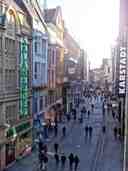
To spot Westenhellweg, look for the wide, lively pedestrian street lined with tall shopfronts and big, colorful store signs like “SALAMANDER” and “KARSTADT”-it’s hard to miss with…और पढ़ेंकम दिखाएँ
To spot Westenhellweg, look for the wide, lively pedestrian street lined with tall shopfronts and big, colorful store signs like “SALAMANDER” and “KARSTADT”-it’s hard to miss with crowds flowing in every direction! Now, take a deep breath and imagine yourself swallowed up in the heartbeat of Dortmund-this is Westenhellweg, the city’s shopping superstar! Picture the air buzzing with excitement, as groups of friends, families with strollers, and determined shoppers all pour onto this street in a constant, lively stream. Each footstep seems to echo with anticipation-are they searching for a perfect pair of shoes, a tasty snack, or maybe just the thrill of a bargain? At times, nearly 13,000 people per hour stroll this very pavement-no wonder it once claimed the title of Germany’s busiest shopping street! A century ago, you might have dodged horses and wagons instead of shopping bags and smartphones. Imagine merchants bellowing out daily deals, the smell of fresh-baked pretzels weaving through the crowd, coins clinking as deals are made. Modern or old, one thing never changes: Westenhellweg is always bursting with stories. Maybe you’ll pick up a souvenir… or just a funny story about accidentally bumping into a mannequin instead of a person (trust me, you wouldn’t be the first). So take it all in-this is Dortmund’s living, breathing market parade, where every visit feels brand new!
समर्पित पेज खोलें →Right in front of you, you’ll see a striking sandstone church with a sharply pointed dark green spire that stretches dramatically skyward-just look for the tallest roof and a…और पढ़ेंकम दिखाएँ
Right in front of you, you’ll see a striking sandstone church with a sharply pointed dark green spire that stretches dramatically skyward-just look for the tallest roof and a series of steep little gables running down both sides. Welcome to the Petrikirche, where history stretches almost as high as its legendary spire. Picture yourself standing here in medieval Dortmund, with the sound of hammers and chisels echoing as builders lay the first stones in 1322. The church took shape over time, built from light Westphalian sandstone, and its tall central nave grew to match the lofty side aisles on either side-a true hall church, as open and airy inside as a cathedral, with sunlight slipping through stained glass and casting colored patches onto ancient floors. But the real showstopper? Just tilt your head back-way back!-to admire that dizzyingly tall spire. It's not just impressive; it was born out of a medieval rivalry. Imagine the tension in the 15th and 16th centuries as the Petrikirche and nearby St. Reinold’s Church competed for the highest church tower in Dortmund. Was it a holy skyscraper race or just a bit of neighborly one-upmanship? Either way, the Petrikirche’s spire eventually soared to a historic 105 meters, almost as if reaching for the clouds themselves. But even this mighty spire couldn’t avoid dramatic twists. In 1752, it collapsed-perhaps from age, perhaps from a stormy night that rattled its timbers. For more than two centuries, the church stood without its magnificent tip, the skyline forever changed. Only after World War II, in 1981, did craftsmen restore the spire to its full glory, shining once again over the city. Today, those 48 meters of slender pinnacle, topped with a world globe and cross, rival anything you’d find in a fantasy novel. Now, step inside with your imagination and see what’s waiting beyond those thick walls-a treasure known as the “Golden Miracle of Westphalia.” It’s a late-Gothic altarpiece from Antwerp, crafted in 1521, that’s almost too dazzling to believe: closed, it shows serene scenes of worship, but open it up and you’ll find no fewer than 36 tiny, intricate paintings and 30 gold-leafed sculptures for festival days. The effect is like seeing a storybook burst open in a blaze of color and light. Maybe you’re wondering about music, too. After the old organ was destroyed in the War, a beautiful replacement came in 2015: a reconstructed English romantic organ, built with more than 1,000 pipes standing tall inside a modern cube of pale birch wood. Listen closely! When it’s played, the whole space sings-a harmony of old and new. Through centuries of storms and competition, destruction and renewal, Petrikirche has stood sentinel for Dortmund-stately, proud, and still full of secrets. So, next time you’re tempted by a little rivalry, just remember: in Dortmund, even the churches have played the game of “Who can reach the sky the fastest?”
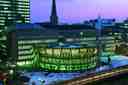
समर्पित पेज खोलें →To spot the City and Landesbibliothek Dortmund, look ahead for a striking modern glass building that glows with greenish light in the evening, shaped rather like a giant lantern…और पढ़ेंकम दिखाएँ
To spot the City and Landesbibliothek Dortmund, look ahead for a striking modern glass building that glows with greenish light in the evening, shaped rather like a giant lantern right across from the busy main train station. Now, take a moment to soak in the atmosphere-can you imagine the echo of a distant train whistle from the Hauptbahnhof just opposite? You’re about to step into a library that’s not just a place for books, but the secret beating heart of knowledge in Dortmund-a living, breathing story that’s been written, lost, and rewritten over more than a century. Let me take you back to 1907, when Dortmund was a fast-growing city full of wild ambitions and coal dust. Back then, a man named Erich Schulz became the first director of what started as the Wilhelm-Auguste-Viktoria-Bücherei. Picture it: the library opens in 1908, tucked above a bustling Sparkasse bank, while coins clink and customers chatter just downstairs. From the very first day, it wasn’t a dusty old archive-it was both a “people’s library” for folks seeking adventure in novels and a scientific library for the city’s thinkers. By the way, at the grand opening, the library had 22,000 books, which would have made it the envy of every local bookworm. Pretty soon, space was tight. Those pesky bankers wanted more room for themselves, and by 1917, the Sparkasse had even taken over a slice of the upper floor! The solution? Some clever shuffling: in 1921, the library annexed the “Tuchhalle”-a nearby cloth hall-transforming it, if only for a while, into an atmospheric reading room echoing with muffled footsteps and the crisp sound of pages turning. Throughout the dust and chaos of the early 20th century, the library adapted, growing and evolving. In 1932, the city awarded it the honorary title “Landesbibliothek,” so from then on, it became known as the Stadt- und Landesbibliothek. This wasn’t just about civic pride-in the age of economic struggle and political turmoil, this library offered a rare refuge for knowledge and a beacon of light, like a lighthouse for learning. Fast forward through the tumult of World War II, and the torch of leadership was picked up by Fritz Hüser in 1945. The library continued to blaze new trails in research, especially in newspapers, making sense of current events before most people had radios at home! In 1958, the library got an upgrade-moving into a “House of Libraries” between the Old Market and Wißstraße, a solid, stoic building that became an icon of 1950s architecture. But nothing in Dortmund stands still forever. By 1999, the city had changed again, and so did the library. On a bright spring day in May, this futuristic, glass-clad landmark you see today opened its doors, designed by the Swiss architect Mario Botta. Some call its look “spaceship chic,” and honestly-when it lights up green at night, who would argue? The new building, right across from the thundering rhythm of the Hauptbahnhof, became an instant meeting place for everyone from schoolkids clutching history projects to professors looking for old manuscripts. Step through its doors and you’ll find a staggering collection-about a million items, from books and magazines to rare medieval manuscripts, early printed books, and even quirky historical maps. (Fun fact: there are 40 medieval manuscripts, 64 incunabula-that means super-early printed books-and thousands more treasures hiding within the archives!) For those who love digital adventures, the library is a technological trailblazer! With one login, you can dive right into heaps of electronic books, articles, streaming services, and even databases you can access from your favorite Dortmund café-or from your couch in bunny slippers. The library’s special collections are a real treat for treasure hunters: personal letters from writers, portraits, woodcuts, and a unique Nelly Sachs archive, honoring the city’s beloved Nobel Prize-winning poet. And if you want a literal piece of the art world, there’s the Artothek-a gallery of drawings, paintings, and even sculptures you can borrow and take home for a few months. Imagine swapping out your living room art as easily as you check out a book! The library is also known for its inventive outreach: whether you’re a student muddling through your first research project, a retiree reminiscing about old times, or someone unable to leave home, there are special workshops, reading programs, and even a mobile service that brings books right to your door. So as you stand here, surrounded by the hum of city life and the promise of hidden stories, just imagine the generations before you-students, professors, poets, and curious children-each finding their own adventure inside these walls. And next time you pass by at night, when the building glows bright and green, remember: in Dortmund, even the library likes to put on a show. Wondering about the inventories, service and services, digital library or the manuscript department / westphalian manuscript archive? Feel free to discuss it further in the chat section below.
समर्पित पेज खोलें →
12 और स्टॉप दिखाएँकम स्टॉप दिखाएँexpand_moreexpand_less
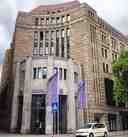
To spot the Museum of Art and Cultural History Dortmund, look for the massive, curved stone building with tall, narrow windows and a grand entryway marked by two purple flags-it…और पढ़ेंकम दिखाएँ
To spot the Museum of Art and Cultural History Dortmund, look for the massive, curved stone building with tall, narrow windows and a grand entryway marked by two purple flags-it stands prominently on the corner with a sturdy, fortress-like presence. Alright, pause for a second and take in the sight before you: the Museum of Art and Cultural History Dortmund. It looks like a proud sentinel from another era, doesn’t it? Its bold stone walls and Art Deco curves once guarded money as the city’s Sparkasse, a bank built in 1924 by Hugo Steinbach. Now, instead of coins and cash, its vaults are bursting with treasures from Dortmund’s past-paintings, sculptures, peculiar old furniture, and objects that whisper stories from thousands of years ago. Step inside in your mind for a moment. Imagine the echo of your footsteps bouncing off marble floors, mingling with the distant sound of laughter as school classes explore the wonders inside. This isn’t just a museum; it’s a time machine! Its oldest objects reach right back to the Stone Age. You’ll find yourself standing in front of ancient tools, each one chipped by hands long before Dortmund had a name. Then zoom forward-a cascade of centuries swept into one building-from shining medieval relics, once treasured in the city’s churches, to paintings thick with the drama of Romanticism, the faces and places of 19th-century Dortmund staring back at you. But don’t be fooled into thinking history here is just about dusty old objects. Oh no! The museum itself has played a rollercoaster role in Dortmund’s life. Picture this: in 1883, the city’s leaders-nudged by a curious history buff named Eduard Roese-decided Dortmund needed a ‘collection point’ for whatever pieces of the past people could find. In true teacher fashion, the first director, Albert Baum (who also taught drawing on the side), filled the place with quirky finds, from archaeological oddities to household curiosities. Back then, the collection was a bit like a moving caravan-hopping from one building to another, including a spell in the freshly restored Old Town Hall. At times, it was so packed, the exhibits were squeezed into 70 separate rooms-imagine trying to find your way, like a treasure hunter through Dortmund’s attic! As the decades rolled on, art got a starring role. Under the eye of art historian Rolf G. Fritz in the 1930s, gleaming paintings joined the ranks-especially those brooding, soul-stirring works from Germany’s Romantic period. But the museum’s ride wasn’t always smooth. In 1937, disaster struck like a clap of thunder: the Nazis swept through, seizing art they labeled ‘degenerate’, destroying countless masterpieces by brilliant artists-vanishing forever into the dark. World War II brought more danger. The museum’s precious relics were hurried out of town, hidden away to escape the bombs raining down-saving Dortmund’s heritage by a hair’s breadth. When peace returned, the battered collections needed a new home. For a while, they hid within the grand rooms of Schloss Cappenberg near Lünen, sharing those echoing halls with rescued treasures from shattered Westphalian churches. Picture soft afternoon light falling on an altar from Marienkirche, carefully pieced together by museum hands. Finally, in 1983, Dortmund’s cultural heart found its forever home in this former bank-an Art Deco beauty now protected as a monument. People cheered the way the museum mixed old and new: glittering works of fine art shown alongside humble crafts and historic oddities. And kids were invited, not just to watch, but to touch, learn, and imagine themselves as explorers. What’s on display inside? Brace yourself. The ground floor whisks you back to Stone Age survival, while the first and second floors climb through medieval Dortmund and the elegance of the 1600s through the 1800s. You’ll stumble across a perfectly preserved 18th-century pharmacy (don’t taste the medicines!) and marvel at a Mercator globe from 1541-a relic from the days when the world itself was still being mapped. And don’t forget: there’s even a permanent exhibition on geodetic tools-glimmering brass instruments that once measured and mapped out the world. If walls could talk, this old bank would tell you, “My vaults hold more riches now than ever-treasures for the mind and soul.” You might catch a special exhibition, from magical Grimm’s fairy tales to the fiery beauty of centuries-old ceramic tiles. Or bump into a whole altar retable brought together after centuries apart, finally reunited for Dortmund to see. So, as you catch your breath, remember: this is more than a museum. It’s a living archive of epic tales, disasters averted, and hearts that never stopped seeking beauty-even when the world around was tumbling down.
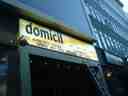
समर्पित पेज खोलें →Look straight ahead for a modern building with a glowing yellow sign that says "domicil" in large, bold letters above a dark entrance-it's right there in front of you, nestled…और पढ़ेंकम दिखाएँ
Look straight ahead for a modern building with a glowing yellow sign that says "domicil" in large, bold letters above a dark entrance-it's right there in front of you, nestled among taller office buildings. Alright, jazz adventurer-welcome to Domicil, Dortmund’s beating musical heart! Imagine the buzz and glow of that big yellow sign above you, almost daring you to step inside and lose track of time. But let’s rewind: Back in 1969, long before smartphones and streaming, jazz in Dortmund needed a home, and found one down in the cozy basement of a kindergarten on Leopoldstraße. Picture a smoky cellar, the clink of glasses, and the buzz of anticipation-here, the rhythm of saxophones and drums spilled into the night, as legendary musicians like Alexis Korner and Albert Mangelsdorff stopped by to make magic. Domicil started as a vibrant community project, powered by jazz lovers and young dreamers partnering with the city’s youth office-a place that proudly took up the baton from the old Hot Club Dortmund. Before long, this quirky cellar became the hottest ticket in town, drawing in acts from all over the world. The walls must have been bursting at the seams as names like Betty Carter and Dexter Gordon painted wild solos in the air. Fast-forward to 2005, and after 37 toe-tapping years, Domicil got a dramatic upgrade-a real “jazz club glow-up,” if you will. The new venue, right here on Hansastraße, was part of a massive, community-led transformation. Local heroes rolled up their sleeves for 15,000 hours of volunteer work (if that’s not dedication, I don’t know what is), and the old cinema seats found new homes as the building started the next chapter of its musical legacy. The Westfalenhaus, with its steel skeleton from 1922, has seen it all: blockbuster films, roaring jazz soirées, and more than a few hair-raising cabaret nights. Step inside today-although try not to trip over the memories! On the ground floor: a classic cocktail bar invites you in with promises of laughter and late-night stories. Upstairs, a club for 150 gives you that intimate jazz vibe, while the grand concert hall above can host up to 500. Domicil’s stage has welcomed giants: Dave Holland, Kamasi Washington, Maceo Parker, and Joshua Redman, to name just a few. And it’s not just all jazz-the club is famous for wild nights of poetry slams, song battles, and unpredictable moments that keep the spirit electric. Awards? Oh, Domicil collects those like guitar picks. The New York jazz magazine *Down Beat* regularly lists Domicil among the top 100 jazz clubs in the world. It’s earned almost every German music and culture prize you can name, applauded for its powerful, youth-driven programs and commitment to local talent. You could say this isn’t just a building-it’s a living legend, echoing every tap, snap, and standing ovation since the first trumpet blared in that basement. So, next time you hear the irresistible call of a saxophone or the bass thumping deep in your chest, remember: the doors at Domicil are always open for those who want to lose themselves in the music.
समर्पित पेज खोलें →To spot the Concert House Dortmund, just look for a striking, modern building with a clear, glowing glass facade at the lively corner of Brückstraße and Ludwigstraße-the glass is…और पढ़ेंकम दिखाएँ
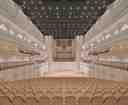
To spot the Concert House Dortmund, just look for a striking, modern building with a clear, glowing glass facade at the lively corner of Brückstraße and Ludwigstraße-the glass is etched and often lit up with LED lights, making the entrance hard to miss, especially in the evenings. Now, as you stand in front of this dazzling building, let’s travel back in time-not too far, just a couple of decades ago. Picture Dortmund’s city center: a faded cinema, the Universum-Kino, standing right here, awaiting its final curtain call. The local dreamers-artists, business leaders, and music lovers-had a vision: to turn this aging spot into a beacon of music, something so grand it would make even Vienna’s famed Musikverein raise an eyebrow. As bulldozers rumbled in 1999, it took months to clear 45,000 cubic meters of debris from this compact city block-enough rubble to build a mountain of memories. When the dust finally settled, master builder Ralf Schulte-Ladbeck rolled out the blueprints for what would become the Concert House Dortmund. Fast forward to 2002, the city buzzed with excitement: after years and more than a few budget headaches-let’s just say, every Euro spent could probably play a note of its own-this high-tech concert hall finally opened its doors. On opening night, the air trembled with anticipation, the first notes echoing through a space designed for pure, acoustic magic. The hall’s rectangular shape and two-second reverberation time immediately drew comparisons to the best in Europe. Rumor even has it, if you drop a pin here, Vienna might just hear it. Step towards the glass entrance, and you'll find a lively city foyer, with a bar and cloakrooms greeting visitors. Above you floats a mysterious black concert hall-like a musical jewel box, suspended and waiting to be opened. Inside, you'll notice the smooth, cream walls and, if you look up, tiny star-like lights twinkling on the black ceiling, echoing the anticipation before a grand performance. Even Gustav Mahler, Arnold Schönberg, and Igor Stravinsky, captured in oversized oil portraits, seem to be keeping an ear out for the next incredible note. The concert hall is a temple of sound science. The twelve wooden sails soaring above the stage aren’t just for show-they bounce music around the hall, ensuring every seat feels like the best in the house. The seats themselves are a feat of engineering, crafted for optimum sound, and the lighting can turn a string quartet into a thunderstorm or a jazz group into a dream. And then… the organ. Like a giant slumbering beast behind the stage, it’s over twelve meters high, holding 3,565 pipes-some so tiny you could lose them in your pocket, some so massive, they could surf the Rhine. When the organ roars, it truly shakes the air. The electric console is a marvel, allowing organists to recall hundreds of settings at the touch of a button-a kind of musical time machine. Since opening, the Concert House has hosted everyone from Anne-Sophie Mutter to the Boston Symphony Orchestra, giant festivals, jazz nights, pop subscriptions, and even edgy productions with video installations that make the walls themselves dance. Its program is as varied as Dortmund itself: from chamber evenings to orchestral blockbusters, baby concerts, and world-class lectures. If you’re lucky, you might just walk in on a rehearsal by a young prodigy-part of the hall’s “Junge Wilde” series, which gives rising stars a stage to shine for three years. Famous conductors, superstar pianists, and the world’s best orchestras have all left a bit of their magic on this stage. But the Concert House isn’t resting on its laurels. It continues to innovate-not just with sound, but sustainability, powering much of its energy from sunbeams and proudly earning green awards. And the legend grows every season, as the music floats out to the city and beyond. So, standing here, you’re not just outside a building; you’re at the heart of Dortmund’s musical soul. And remember: around here, there’s an old joke-if you listen very closely during a quiet moment inside, you might just hear the Vienna Philharmonic still checking their tuning…
समर्पित पेज खोलें →To spot the Handwerkskammer Dortmund, look for a broad, brick-and-stone building with rows of square white-framed windows and a large sign reading “Handwerkskammer Dortmund”…और पढ़ेंकम दिखाएँ
To spot the Handwerkskammer Dortmund, look for a broad, brick-and-stone building with rows of square white-framed windows and a large sign reading “Handwerkskammer Dortmund” stretching across its ground floor, standing solidly against the blue sky right in front of you. All right, put down your hammer and step outside your imaginary workshop for a moment-you’re standing in front of the beating heart of Dortmund’s craftsmen and women! Imagine the smell of fresh wood shavings, a whiff of machine oil, and the soft rumble of busy hands forging, fixing, and creating behind those walls-a symphony of skills echoing all the way back to the year 1900. That’s when the Handwerkskammer Dortmund, the local Chamber of Crafts, first swung open its doors. Not that it looked quite this modern back then-picture less glass and steel, and more moustachioed gentlemen with impressive hats, like Julius Röper from Hamm, a locksmith by trade, who was elected as the very first chairman on April 19th, 1900. I bet they didn’t have a fancy sign like this one either! But let’s rewind a bit. The whole idea of a craftsmen’s chamber was set buzzing in 1897 when Germany decided that tradespeople ought to have their own parliament-a place to make big decisions, set standards, and defend their interests. Fast-forward a few years, and by August 1899, a royal decree gave the signal for Prussia, and soon, the people of Dortmund hammered out their own association. You could say this was the original networking group. Forget social media-these folks built their connections face to face, with the clang of hammers and the clink of coffee cups. So what actually happens inside these walls? Well, this isn’t just an old boys’ club. The Handwerkskammer has a real parliament-a “Full Assembly” that gathers people from all sorts of trades. Two thirds are bosses running businesses, and the rest are workers with hands-on skills, like a sort of craft union and business guild rolled into one. They argue, joke, celebrate, and make rules for over 34,000 member businesses. From setting up exams for master craftsmen to schooling apprentices, everything revolves around one goal: keeping Dortmund’s trades sharp and thriving. I hear the debates can get heated-maybe the odd sausage gets thrown at someone who suggests banning coffee breaks, but mostly it’s democracy in dungarees. Leadership has a fresh face these days: since 2014, Berthold Schröder has steered the ship as president, with Kerstin Feix and Marc Giering as his trusty vice-captains-one from the employer’s side, one from the workers'. And with Carsten Harder at the helm as chief executive, things stay buzzing along smoother than a well-tuned engine. The reach of this chamber is massive. It stretches all the way from Soest and Hamm, right through Dortmund, out to Bochum, Herne, Hagen, and the Ennepe-Ruhr district. It’s divided into chunks called Kreishandwerkerschaften-think of them as local tribes, each with its own quirks. As you can imagine, debates about who’s the best at making sausages or building scaffolding might get competitive. Of course, running the chamber isn’t just about holding grand meetings. Their most important work is representing tradespeople everywhere-whether that’s advising politicians or helping a struggling roofer find new business. They manage a ton of tasks: keeping the official rolls of craftsmen and apprentices, overseeing exams, offering guidance, and even searching for lost business partners. If your plumbing business hits a bit of a blockage, these are the folks you call-not ghostbusters! Training is huge here, too. The chamber runs five sprawling education centers, where apprentices and masters can upgrade their skills. The Ardeystraße center-just a stroll to the south-is famous for its Meisterschulen, where you can become a master in one of 22 trades. And then there’s the Hansemann center, housed in an old colliery, where scaffolders practice their skills indoors, rain or shine. There’s even a motorbike workshop, and a monument remembering the forced laborers once held here during the war-a stark reminder that history is about more than just bright uniforms and shiny tools. And if you’re a budding entrepreneur, the Chamber’s got your back with free, confidential business advice. Whether you’re planning to open a bakery, fix bicycles, or launch the next big thing in window cleaning, you’ll find a whole team ready to help with marketing, tech questions, passing on the business to your children-or just figuring out how to keep the lights on. Walk in with an idea and walk out with a plan (and possibly some cake, if you’re lucky). In 2014, these builders, bakers, brewers, and bike-repairers moved to this very building-taking their old traditions and fixing them firmly in a brand-new headquarters. Just think: every window in front of you could be hiding a story of old craftsmanship-fresh creativity, laughter, and probably a few practical jokes. So as you stand here, perhaps you suddenly hear the faint sound of a saw, or a whiff of coffee brewing in the staff room. That’s the soul of the city, crafted by thousands of hands, right here in the beating heart of Dortmund. Now, onward-your next adventure awaits! For further insights on the organization, chamber district dortmund or the tasks, feel free to navigate to the chat section below and inquire.
समर्पित पेज खोलें →Right in front of you, you’ll spot a grand stone church with a tall square tower topped by a pale green, almost minty roof-you really can’t miss it, especially as it stands…और पढ़ेंकम दिखाएँ
Right in front of you, you’ll spot a grand stone church with a tall square tower topped by a pale green, almost minty roof-you really can’t miss it, especially as it stands proudly amidst the surrounding shops and city bustle. Welcome to the Marienkirche, or St. Mary’s Church, a true survivor with stories to spare! Imagine yourself standing right on the Hellweg, a lively medieval road where merchants once bustled past, horses clattered, and the air smelled of spice, bread, and rain-soaked stone. Back between 1170 and 1200, builders laid Marienkirche’s first stones in the Romanesque style for Dortmund’s town council and judges-a place where law, faith, and the city’s heartbeat all pulsed together. But architecture here tells its own tale-look up at those thick, sturdy walls and round arches, made to weather not just the elements but centuries of change. Then, in the 1300s, as taste shifted, imagine the sound of chisels and hammers as masons added on the choir in elegant, lofty Gothic fashion, all pointed arches and sky-reaching ambition. This beautiful blend made Marienkirche Dortmund’s architectural role-model, inspiring Reinoldikirche just across the Hellweg! Inside, dazzling masterpieces were born. Picture the Berswordtaltar from 1385, dazzling in gold and color, with scenes so vivid you could almost hear angels singing. The central panel from 1397 shows the Virgin swooning in grief-a detail once so popular in art that it later became forbidden by the great Counter-Reformation thinkers. Then there’s the Marienaltar, painted by Conrad von Soest in 1420, bursting with scenes from Mary’s life-though, as the years rolled by, it suffered at the hands of over-ambitious renovators who, in 1720, took saws and hammers to the original painting just to fit new frames. Oops! Only fragments survive, making those remaining pieces even more precious. For centuries, the Marienkirche echoed with the sounds of worship, debate, and-after the Reformation swept through-became a proud Lutheran parish. But the church’s toughest trial came in World War II. As bombs rained down, the building was nearly destroyed. Yet faith has a way of saving the day: those most priceless altars were whisked away for safekeeping in Cappenberg Castle, surviving the war intact while the church itself became almost rubble. Do you feel the spirit of resilience here? After the dust settled, the community rolled up its sleeves and rebuilt piece by piece, a feat not finished until 1959. Another voice was restored in the nave high above-a swallow’s nest organ, rebuilt with love so music could soar once again. And look at those stained glass windows-subdued in color, designed by Johannes Schreiter in the early 1970s-letting soft, filtered light play over ancient stone. Today, Marienkirche is not just a church but a concert venue too-its walls once echoing with medieval footsteps now singing to sacred music. If only these stones could talk... but you never know, one might just whisper “thank you for visiting!” as you stand here in their shade.
समर्पित पेज खोलें →If you look just past the busy square, you’ll spot St. Reinold’s Church by its tall, stone tower topped with a striking, mint-green spire that points confidently into the sky…और पढ़ेंकम दिखाएँ
If you look just past the busy square, you’ll spot St. Reinold’s Church by its tall, stone tower topped with a striking, mint-green spire that points confidently into the sky above the surrounding rooftops. Take a moment to let your eyes travel up those sturdy centuries-old walls. You’re now standing in front of the oldest church in Dortmund-a place that’s seen almost as many changes as the city itself. Imagine it’s the year 1250: the air smells of fresh-cut timber and damp stone. Builders are sweating under the Ottonian sun, setting the chunky blocks in place, hoping their work will last. Spoiler alert: it did. The church has watched the world go by for nearly 800 years, guarding the crossroad where merchants on the Hellweg route once shouted their wares and wagons rattled over cobbles. St. Reinold’s isn’t just old; it’s a bit of a show-off, too. When its tower finally topped out at 112 meters in 1454, folks called it the “Miracle of Westphalia.” The spire was so pointy and tall, some probably thought you could poke holes in the clouds. Fast forward a couple of centuries-after a rattling earthquake in 1661 brought the whole tower tumbling down, the city didn’t give up. They laid new foundations, lifted a baroque ornament onto the top, and made sure the church could keep looking down on Dortmund... politely, of course. The church bells aren’t shy either. Picture a belly full of six steel bells, together weighing as much as a city bus, thundering out across the city after WWII when the building rose stubbornly from the rubble. The largest bell alone is the superstar of Westphalia-so big, you could almost imagine using it as a swimming pool. But please don’t try. There’s a serious side, too-on a strange December day in 2016, political extremists clambered up the steeple. They tried to shout hateful slogans from high above, but the vicar had a better plan. The mighty bells let loose such a glorious racket that the noise drowned everything else, making sure the sound of peace was louder than hate. Justice-and a bit of bell-powered humor-won the day. So as you look up at that proud spire, remember: it’s more than stone and metal. It’s Dortmund’s guardian, a keeper of stories, and, on the right day, a bell-powered superhero.
समर्पित पेज खोलें →To spot the Adler Apotheke, look for a grand stone corner building with large arched windows and the red neon sign that reads "ADLER APOTHEKE" right above the entrance-plus,…और पढ़ेंकम दिखाएँ
To spot the Adler Apotheke, look for a grand stone corner building with large arched windows and the red neon sign that reads "ADLER APOTHEKE" right above the entrance-plus, there’s a quirky statue of a bowing man right in front. If these walls could talk, they’d probably whisper tales spiced with herbs and just a pinch of medieval mischief! You’re standing before the Adler Apotheke-Dortmund’s oldest operating pharmacy, serving the city right here since 1392. Imagine flickering candlelight, the rustle of silk from merchants, and the sharp, mysterious scents drifting out the doorway as busy healers ground roots and petals on ancient stone. For over 500 years, the same family kept the secrets of potions and powders flowing through the generations-no wonder they never had to call for a doctor! Down in the cellar, there’s now a museum where you’ll find a whole underground world with old lab rooms, glass jars, and strange equipment that would look perfectly at home in a wizard’s workshop. Some say if you listen carefully between the museum jars, you might still hear the echo of a medieval cough-or the sigh of a town doctor outdone by a clever pharmacist. Next time you sneeze, just remember you’re standing on centuries of local remedies. Now, fancy a magical cure or just a peek into the past?
समर्पित पेज खोलें →To spot the Fisherman at the town hall, look for a corner bakery with big glass windows showing off rows of fresh bread and pastries, and a wide yellow awning above the entrance…और पढ़ेंकम दिखाएँ
To spot the Fisherman at the town hall, look for a corner bakery with big glass windows showing off rows of fresh bread and pastries, and a wide yellow awning above the entrance on a bustling street. Alright, take a deep breath-because the delicious smell of fresh bread is about to hit you! Here you are, standing in front of Fischer am Rathaus, a true legend among Dortmund’s bakeries, and if you listen very carefully, you might just hear whispers of stories baked right into the walls. Let’s rewind to 1848, when a fellow named Johann Gottfried Fischer first opened this family bakery. Imagine the clatter of horse-drawn carts outside, the chime of coins on the old wooden counter, and the excitement of locals, because Fischer’s was making a name for itself even back then. Now, this bakery’s claim to fame is inventing the Dortmunder Salzkuchen. Imagine a golden, hearty bread roll, sprinkled with salt and traditionally loaded up with savory minced pork and onions. Hungry yet? Some locals say that biting into a Salzkuchen is a time machine straight to Dortmund’s past! For a time, the original bakery stood at a different corner, near the old Rathaus-the oldest stone town hall in Germany. But history isn’t always kind. In 1944, World War II brought devastation. Bombs rained down, taking with them the cherished bakery building, decades of family recipes, and precious photographs. But the Fischer family wasn’t one to crumble under pressure-baking puns absolutely intended! With resilience and maybe just a touch of stubbornness, the family rebuilt what they could, using part of the ground floor-even though their original spot was lost. A fresh start came in 1959, with this new location on Betenstraße, conveniently keeping its name, since it’s still close to the new city hall. Talk about keeping old promises alive, one loaf at a time. But Fischer am Rathaus hasn’t just survived-it’s thrived. Generation after generation, the Fischer family resisted waves of fancy franchise bakeries trying to roll into town. It’s now run by Heiner Fischer, the sixth baker in the family! Every crusty loaf here is a little act of defiance against soulless chain bakeries. Even their charitable streak has made waves: in 2016, they handed out free, cheeky pink cupcakes shaped like-well, let’s just say they helped raise awareness for breast cancer in a memorable fashion! So go ahead, peek through the window-or pop in and taste history. With every bite, you’re sharing in over 170 years of Dortmund tradition. Not every city can say their bread tells the story of survival, family, and a community that rises together-yeast pun fully intended!
समर्पित पेज खोलें →To spot the Old Town Hall of Dortmund, look for a tall, pale stone building just ahead of you, with a striking stepped gable and two large gothic arches at the bottom-almost like…और पढ़ेंकम दिखाएँ
To spot the Old Town Hall of Dortmund, look for a tall, pale stone building just ahead of you, with a striking stepped gable and two large gothic arches at the bottom-almost like two eyes peering over the market square. Alright, traveler, get ready to step through centuries-if you listen closely, the cobblestones practically whisper with secrets! Imagine it’s the year 1241. The Old Town Hall that once stood before you wasn’t just a building-oh no, it was the oldest stone town hall north of the Alps. City bigwigs in Dortmund must’ve strutted around like proud peacocks when they bought this Romanesque marvel, complete with upper and lower floors, right at the lively heart of the Old Market. The town scribe’s house-cheekily called the “Brothaus” though probably never full of bread-was snuggled right next door. Picture the market buzzing with noisy merchants and the smell of fresh cloth and bread mixing with the din of voices, as the council held meetings upstairs and cloth traders bustled downstairs. The town judge pronounced verdicts from the tenth step of the stairs! Big decisions and small ones, from squabbles over wool to grand political verdicts, were dished out right here. And it wasn’t just business-a visit from Emperor Charles IV in 1378 turned the hall into a ballroom, where musicians played and Dortmund’s finest families danced, maybe even inventing the medieval version of the conga line. And this wasn’t an ordinary house. The upper floor had a grand hall for city council meetings, while downstairs was alive with the color and bustle of wool traders. The halls echoed with deals, debates, and on occasion, a raucous celebration when a legal victory went someone’s way. Under its gothic arches was the Niedergericht, the lower court, where law and justice had such weight that any citizen from the whole region would respect the decision made on the tenth step. Imagine centuries of footsteps. The rulers shifted-from counts to city council-and even the old town judge doubled as a councillor! As centuries rolled by, renovations shaped the Old Town Hall. In the 1300s, thick plumes of smoke would sometimes rise after great fires, leaving charred scars on the walls. Restoration after each blaze left new windows, strange nooks, and secret spaces for relics. By the 16th century, an archive tower grew on one side and a writing house on the other, all tied together like a medieval architectural sandwich. Over time, the building saw more drama than a soap opera. Roofs caved in, gables were swapped-at one point featuring a grand baroque flourish. In old age, the place got a little shabby… A leaky roof, crumbling gables, and the slightly worrying tilt of a wall now and then. There were heated disputes about whether to save it, which nearly sparked a 19th-century “renovator’s rebellion!” One competition sought the best new design, another begged to save the old face of the hall. Then, in the late 1800s, hope arrived: Friedrich Kullrich stepped in and lovingly restored the building to a vision inspired by its days of glory. With support from citizens and, yes, some very generous beer money from Joseph Cremer, the hall became a showpiece once again. The grand reopening in 1899 even brought Kaiser Wilhelm II to town. You could practically hear the fanfare! But fate was not kind. World War II bombings smashed the hall terribly. After the war, despite its battered state, it was still faring better than some other buildings-yet city leaders decided to tear it down anyway. Its last walls were taken away under heavy police guard, as rumors swirled about treasure hiding in the archive tower (some people always believe there’s a secret hoard under old stones…). The rubble from this magnificent place-oh, the irony-helped rebuild St. Reinold’s Church. And now, as you stand here, the only thing left is a humble brass plaque, quietly marking where centuries of city politics, dances, and decision-making once stood. If you listen hard, maybe you’ll catch the echo of a medieval judge calling out a verdict, or the mayor banging his fist on a very old desk. Imagine-right beneath your shoes, history is sleeping, waiting for someone (like you, perhaps) to tell its story all over again. And who knows? Local folks are still dreaming of seeing the Old Town Hall rise once more. Maybe, just maybe, you’ll one day visit its grand arches in real life, rather than in memory. Now, are you ready to leave the echoes behind and head to our next stop? Ready to delve deeper into the historical events, uses or the role model function? Join me in the chat section for an enriching discussion.
समर्पित पेज खोलें →Look for a large, sturdy-looking stone church with tall, pointed gothic windows and a unique, silvery spire rising from its slate-grey roof-Propsteikirche St. Johannes Baptist…और पढ़ेंकम दिखाएँ
Look for a large, sturdy-looking stone church with tall, pointed gothic windows and a unique, silvery spire rising from its slate-grey roof-Propsteikirche St. Johannes Baptist stands out right ahead of you. Now that you’re here, let me take you back nearly 700 years to when this fascinating spot was a patchwork of hope, drama, and the occasional monk with more determination than sense. Picture yourself in medieval Dortmund, where the Dominicans-a group of monks in black and white-kept knocking on the city gates, only to be sent packing again and again. You can almost hear the echo of heavy doors closing behind them. But finally, in 1330, they made it inside and set up shop as the city’s third monastery. Back then, the church was quite different; it started as a compact, three-bay choir. By 1354, it hosted its first sacred ceremony and there was a sense of triumph-you might even imagine a choir singing out, finally in their own home. As the city grew, so did the church, but with a twist: instead of a towering spire, this church was built in the style of a ‘beggar’s order’-no tall tower, just a place focused on community prayer. The choir and the main hall were kept almost the same length, giving the building an unusual sense of unity. By the 1400s, extra naves popped up, but with their own quirks (like the north aisle being noticeably narrower-nobody said medieval architecture was all about balance!). Fast-forward to 1458, the new vaulted nave was finished, and for centuries, the Dominican community shaped the rhythms of life here: prayer, study, maybe a little ale brewed in the monastery’s own brewery. Over the years, the tides of history washed over this church. When the Reformation hit, all of Dortmund’s inner-city churches turned Protestant. Yet, as the centuries turned, the Propsteikirche made its comeback as Dortmund’s first Catholic parish church after the Reformation in 1819. As industry boomed and thousands flocked to Dortmund for work, this church became a buzzing hub for the city’s Catholic community-a place where everyone, from factory workers to families, gathered to find a slice of peace and identity. But tragedy was never far. The Second World War brought devastation: in 1943, the church was reduced to little more than its shell by bombs raining down on the city. You might shiver, imagining shattered glass and crumbling stone. Still, the congregation was determined, and by the late 1940s, the church rose from the ashes-rebuilt carefully, but now crowned with a new steel rooftop turret in 1954. That elegant spire you see today gleams above you, its weathercock added with great fanfare by helicopter in 2005-now that’s what I call a dramatic entrance. Step inside, and the treasures continue. The late Gothic high altar, painted in the 1470s by Derick Baegert, is a masterpiece. At nearly eight meters wide, it’s a riot of color, faces, and stories, with the left panel showing the oldest known image of medieval Dortmund. There’s mystery there, too: on the grand crucifixion scene, the artist himself is hiding in plain sight-a centuries-old selfie, if you like! Rich golden skies, armored knights, the drama of Christ’s last moments, all unfold before your eyes. Even more treasures are dotted about: stately statues of Mary dating back to before 1480, one from a famous Cologne workshop, the other carved around 1420 with a curiously large ear on the baby Jesus-maybe for listening to all those centuries of prayers. There are also relics, like a bone from the legendary St. Reinoldus, rediscovered and returned to Dortmund for the city’s 1,100th birthday. And listen for the bells-four of them, cast in 1952, each named for a saint, and tuned just right to harmonize with the other churches in Dortmund’s city center. In a city known for its energy and resilience, Propsteikirche St. Johannes Baptist stands as a real survivor. From medieval monks to bombings and helicopters, it’s a living timeline in stone and glass, always changing, always ringing out the stories of those who came before. And who knows? Maybe you’ll spot a ghostly monk peeking out from that narrow north aisle, still making sure no one’s locked him out again!
समर्पित पेज खोलें →To spot the Hansakontor, look for a long, white building lined with rows of rectangular windows and bordered by a stone wall with greenery above it, set just behind the sidewalk…और पढ़ेंकम दिखाएँ
To spot the Hansakontor, look for a long, white building lined with rows of rectangular windows and bordered by a stone wall with greenery above it, set just behind the sidewalk on your right as you walk along the street. Welcome to the Hansakontor, the office block with more history than a family drama and more windows than a calendar! Picture this: it’s the late 1940s, and on this very spot, rows of humble houses lined the street, neighbors probably arguing over who owed whom a cup of sugar. Then, along came the Harpener Bergbau AG with big, ambitious plans to remake the area into an office complex, dreams as solid as the stone you see in this wall… until World War II crashed those dreams with a thunderous rumble. The war wiped out those old houses-turned-offices and left just empty ground and lots of uncertainty. Fast forward to the late 1940s: imagine the sound of construction crews, hammers banging, concrete being poured, and the smell of fresh cement rising into the chilly Dortmund air. After delays-some thanks to Britain’s occupation authorities who had plenty of paperwork for everyone-the Hansakontor finally came to life in 1950, its first section gleaming with hope for a city rising from the ashes. The second phase followed in 1951, a testament to the sheer determination of post-war Dortmund and its coal-hardened residents. Walk closer and look at the building’s shell: the near-solid walls clad in shell limestone, imposing and dignified, facing the street with a sort of stony confidence. But then, there’s a playful side-curved rooflines swoop over thin columns, inviting you to come closer, almost like a friendly wave from a stern-faced uncle. Out back, there’s a secret: a garden, now protected as a historic site. Here stands the “Wettersteiger mit erhobener Grubenlampe,” a bronze statue holding a miner’s lamp aloft, created in 1958 by Wilhelm Wulff and set amid greenery carefully planned by Guido Harbers, a garden architect from Munich. The past lingers in every leaf and stone, a little oasis of memory in the heart of the city. For decades, the building buzzed with the business of Ruhrkohle AG, the coal company that rose from its merger with Harpener and 25 other firms in 1968. They were the heavyweights of Germany’s economic miracle, their workers bringing coal up from the deep ground and hope back to the streets above. Even as a newer office tower went up next door in 1978-stealing away part of Hansakontor’s original glass stairwell-this proud building kept humming with life and paperwork, its walls soaking up the secrets and laughter of generations. Today, Hansakontor remains the only survivor of its era here, guarding the memory of postwar Dortmund’s rebirth and carrying the torch of the city’s industrious, sometimes stubborn spirit. Look at its façade, still stoic but softened by those garden curves, and you’ll see not just concrete and limestone-but a monument to survival and renewal. Maybe even hear the echoes of coal miners and city planners, still whispering in the wind.
समर्पित पेज खोलें →To spot Hansaplatz, just look ahead for a wide, open square bustling with market stalls under colorful awnings and surrounded by grand stone buildings-especially that striking…और पढ़ेंकम दिखाएँ
To spot Hansaplatz, just look ahead for a wide, open square bustling with market stalls under colorful awnings and surrounded by grand stone buildings-especially that striking colonnaded facade on your right. Welcome to Hansaplatz, the lively heart of Dortmund’s city center! As you stand here, take a deep breath-you’re soaking in the same square where fresh bread once battled for space with gossiping neighbors, and where you might occasionally get caught in a stampede… of enthusiastic shoppers, not cattle. The square’s story is almost as busy and colorful as the market itself. Before Hansaplatz was laid out in 1904, this very spot was a patchwork of old barns, gardens, and historic family courtyards. In fact, it’s thought there used to be a real carp pond at the center, feeding both bellies and the local imagination. If you listen closely, you might just hear the centuries-old ribbit of a ghostly carp, annoyed at being evicted for all these delicious strawberries and cheese wheels. Once upon a time, the powerful Von Wickede family had their manor right over there, on the eastern side. Picture 1378: Emperor Charles IV himself comes to stay-no pressure, right? His wife shows up the next year. Eventually, the manor’s great hall was handed over to the tides of time and torn down, with some of its glorious frescoes salvaged and tucked away in the Museum of Art and Cultural History. Rumor has it, the Emperor probably never slept where everyone claimed he did-the so-called Kaisersaal was likely just a warehouse, only transformed into a posh living space years later. Sadly, those rescued wall paintings were lost in the chaos of World War II, vanishing like a good cheese sample before lunchtime. Let’s fast forward to the late 1800s. The old town market at Alter Markt was getting swamped. You can almost imagine the town officials sweating over their ledgers as masses of goods and merchants squeezed onto the old square, till you could barely turn around without bumping into a barrel or a bundle of carrots. Enterprising but exasperated, the city moved the weekly meat market-first to one garden, known jokingly as the “New Marketplace,” then, after a change of hands, off to another patch nearby. The game of market musical chairs finally ended when the city acquired several key properties and unrolled the plans for Hansaplatz. The work wasn’t always smooth. Buildings came down-sometimes not without a good legal scuffle with tenants determined to stay put. Only a couple of the oldest were left standing at first, earning their keep in rent a while longer. By 1906, a bold red sandstone bank building popped up on the southern edge, nodding at walkers and wagons on Brauhausstraße. Two years later, the western arcade went up, a sandstone sentinel that stands to this day-even if it’s had a modern makeover or two. Officially, the square was dubbed Wickedeplatz for about as long as it takes to eat a bratwurst-just a couple of years-before Hansaplatz became its true name. On the north end, smaller buildings once clustered along Karpfenpoth, the old carp pond street. A famous inn called “Zum Drachen” marked the crossroads, but sweeping change came between 1910 and 1912 when Karstadt, that massive department store to your right, expanded on Wilhelm Kreis’ grand designs. Streets and names were erased, buildings bulldozed, and the history books grew a little fatter. And just imagine, under your feet is a story of its own-in the 1980s, workers built a huge underground parking garage, so nowadays, shoppers stroll in peace above while cars nap below. If you cast your eyes to the south, you’ll spy a stately branch of Commerzbank in an elegant early 20th-century building that dodged the war’s destruction almost entirely. Decades before, this was where the first theater in Dortmund once stood. And see those plane trees offering dappled shade? They’re a reminder that life here is as much about pausing to enjoy the moment as it is about commerce. Today, Hansaplatz isn’t just home to one of Germany’s largest weekly markets-it’s a stage for bold rallies, spirited festivals, and everyday encounters. From emperors and paintings, to sausages and fresh flowers, every pebble underfoot has a tale to tell. Maybe, as you wander, you’ll feel the pulse of centuries past-or at very least, the irresistible call of a donut stand nearby.
समर्पित पेज खोलें →
अक्सर पूछे जाने वाले प्रश्न
मैं टूर कैसे शुरू करूँ?
ख़रीदारी के बाद, AudaTours ऐप डाउनलोड करें और अपना रिडेम्पशन कोड दर्ज करें। टूर तुरंत शुरू करने के लिए तैयार होगा - बस प्ले टैप करें और GPS-गाइडेड रूट का पालन करें।
क्या टूर के दौरान मुझे इंटरनेट चाहिए?
नहीं! शुरू करने से पहले टूर डाउनलोड करें और पूरी तरह ऑफ़लाइन इसका आनंद लें। केवल चैट फ़ीचर को इंटरनेट की ज़रूरत है। मोबाइल डेटा बचाने के लिए WiFi पर डाउनलोड करने की सिफ़ारिश है।
क्या यह एक गाइडेड ग्रुप टूर है?
नहीं - यह एक सेल्फ-गाइडेड ऑडियो टूर है। आप अपनी गति से स्वतंत्र रूप से खोजते हैं, आपके फ़ोन से ऑडियो कथन बजता है। कोई टूर गाइड नहीं, कोई ग्रुप नहीं, कोई शेड्यूल नहीं।
टूर में कितना समय लगता है?
अधिकांश टूर पूरा करने में 60-90 मिनट लगते हैं, लेकिन गति पूरी तरह आपके नियंत्रण में है। जब चाहें रुकें, स्टॉप छोड़ें, या ब्रेक लें।
अगर मैं आज टूर पूरा नहीं कर सकता/सकती तो?
कोई समस्या नहीं! टूर की लाइफ़टाइम एक्सेस है। जब चाहें रोकें और फिर शुरू करें - कल, अगले हफ़्ते, या अगले साल। आपकी प्रगति सेव रहती है।
कौन सी भाषाएँ उपलब्ध हैं?
सभी टूर 50+ भाषाओं में उपलब्ध हैं। अपना कोड रिडीम करते समय अपनी पसंदीदा भाषा चुनें। नोट: टूर जेनरेट होने के बाद भाषा बदली नहीं जा सकती।
ख़रीदारी के बाद मैं टूर कहाँ एक्सेस करूँ?
App Store या Google Play से मुफ़्त AudaTours ऐप डाउनलोड करें। अपना रिडेम्पशन कोड (ईमेल द्वारा भेजा गया) दर्ज करें और टूर आपकी लाइब्रेरी में दिखेगा, डाउनलोड और शुरू करने के लिए तैयार।
अगर आपको टूर पसंद नहीं आया, तो हम आपकी ख़रीदारी वापस करेंगे। हमसे संपर्क करें [email protected]
सुरक्षित चेकआउट