AudaTours logoAudaTours

नीस ऑडियो टूर: पवित्र पत्थर और नए पुल की कहानियाँ

ऑडियो गाइड11 स्टॉप

दो ऊँची सफेद मीनारें नीस के धूप से सराबोर क्षितिज को चीरती हैं, एक ऐसे शहर पर नज़र रखती हैं जो रंगों और रहस्यों से भरा है। यह स्व-निर्देशित ऑडियो टूर आपको चमकती हुई बेसिलिकाओं से लेकर ताड़ के पेड़ों से घिरे नज़ारों तक और एवेन्यू जीन-मेडिसिन की विद्युतीय ऊर्जा के साथ बहने के लिए आमंत्रित करता है, उन कहानियों को उजागर करता है जो अधिकांश आगंतुक कभी नहीं सुनते हैं। किस दुखद घटना ने फ्रांस के सबसे भव्य दक्षिणी चर्च की गंभीर चुप्पी को तोड़ दिया? नीस देश ने राज्यों के साथ शतरंज क्यों खेला, झंडे को चक्करदार गति से क्यों बदला? किस अपराधी ने यहाँ एक बैंक के नीचे सुरंग बनाई, एक ऐसे कारनामे में सभी को मात दी जिसके बारे में स्थानीय लोग आज भी बात करते हैं? हर कदम आपको घोटाले, विद्रोह, आश्चर्य और लचीलेपन के क्षणों में और गहराई तक ले जाने दें। जीवंत सड़कों और शांत आंगनों में घूमें जहाँ इतिहास अचानक चमकता है और लंबे समय से छिपी कहानियाँ खोजे जाने की प्रतीक्षा करती हैं। वे चमकती मीनारें तो बस शुरुआत हैं। अतीत और वर्तमान के बीच फिसलें और अब नीस के जंगली पक्ष पर प्ले दबाएँ।

टूर पूर्वावलोकन

map

इस टूर के बारे में

  • schedule
    अवधि 30–50 minsअपनी गति से चलें
  • straighten
    2.2 किमी पैदल मार्गगाइडेड पथ का पालन करें
  • location_on
  • wifi_off
    ऑफ़लाइन काम करता हैएक बार डाउनलोड करें, कहीं भी उपयोग करें
  • all_inclusive
    लाइफ़टाइम एक्सेसकभी भी, हमेशा के लिए फिर सुनें
  • location_on
    नीस की हमारी लेडी ऑफ द असम्प्शन का बेसिलिका से शुरू होता है

इस टूर के स्टॉप

  1. Take a look just ahead-if you spot two tall square towers rising above the city, like two giant chess pieces keeping watch over Avenue Jean-Médecin, you’ve found the Basilica of…और पढ़ेंकम दिखाएँ

    Take a look just ahead-if you spot two tall square towers rising above the city, like two giant chess pieces keeping watch over Avenue Jean-Médecin, you’ve found the Basilica of Our Lady of the Assumption. Its white stone façade practically glows in the sunlight, with pointed arches and a huge rose window right in the middle-like a giant eye made of colored glass, staring out onto the bustling street. This is the largest church in Nice, and you can't really miss it, standing proudly among the city’s apartment buildings. As you’re standing here, try to imagine the city in the late 1800s. Noise from horse-drawn carriages, the smell of fresh bread from nearby shops, and the feeling in the air that something grand was being built. Between 1864 and 1879, teams of workers raised this spectacular church, following the plans of Charles Lenormand. He wanted Nice to have something as eye-catching as the famous cathedrals in Paris and Angers-so he went big, with soaring towers each 31 meters tall, and the beautiful rose window depicting scenes of the Assumption, which sparkles when the sun hits it just right. The basilica was a sort of architect’s wink to France. You see, after Nice became a part of France, the authorities wanted a building that screamed “French style!”-and nothing says French quite like soaring gothic towers. All that was left was to add a few playful pigeons outside for decoration. Legend has it, if you squint, you might even spot one with a paintbrush helping out! It wasn’t until 1925 that it was consecrated, and Pope Paul VI later raised it to the grand title of “basilica.” But this place isn’t just beautiful-it has seen joy, prayer, and even sorrow. In 2020, it was the site of a tragic event, but just days later, the community gathered here for a special rite of healing-a powerful reminder that even the toughest stones can shelter hope. So, take in the details: the intricate carvings, the massive doors, and the quiet strength of those towers above you. You’ve just uncovered the first legend of Nice, and the city’s stories are only going to get stranger from here! Ready to wander onward?

    समर्पित पेज खोलें →
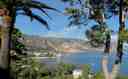
  2. Right in front of you is a view that almost feels painted-it’s the classic “Nice country” scene! To spot it, just look out past the tall palm and pine trees, and let your gaze…और पढ़ेंकम दिखाएँ

    Right in front of you is a view that almost feels painted-it’s the classic “Nice country” scene! To spot it, just look out past the tall palm and pine trees, and let your gaze travel across the sparkling bay below. You’ll see rugged mountains rising in the distance, dotted with quaint houses nestled in lush greenery. The light dances across the water and you might even spot a boat or two drifting lazily along. Now, as you stand here, take a deep breath-can you smell that salty sea air? You’re at the gateway to the Pays Niçois, or “Nice country,” a land with as many stories as there are pebbles on this shore. These hills and villages on the southern edge of France have watched over centuries of adventure, from medieval knights to mapmakers with more ambition than accuracy. If you’d been here just a few centuries ago, you’d have been standing on the edge of a tug-of-war match between kingdoms. First, this country was part of Provence, then it switched teams to the House of Savoy, and then had a little French intermission around the time of the French Revolution-talk about not being able to sit still! It only officially joined France in 1860. Before that, the river Var to the west was the last line in the sand, marking the border with Italy. Back in the Renaissance, big-brained Italians like Flavio Biondo and Agostino Giustiniani studied this place, trying to figure out what made it tick. Cartographers had trouble pinning it down-no surprise, with these mountains and twisting coastline! But by the time you got to the 17th century, clever folks in Amsterdam were drawing the borders proudly in their atlases. Today, “Nice country” isn’t just one spot, it’s a feeling-a whole way of life stretching from the hills down to the sea, with a tradition of music, dance, and stories swirling in the Mediterranean breeze. So, as you stand watching the sunlight bounce off the water, just think-how many secrets and songs have drifted across these shores? If only these old pines and palms could talk, huh? They’ve probably seen more drama than a French soap opera! Ready to wander onward to our next adventure?

    समर्पित पेज खोलें →
  3. Looking ahead, you’ll spot Avenue Jean-Médecin stretching out in front of you, wide and lively, with tram tracks running right down its middle and trees lining both sides. The…और पढ़ेंकम दिखाएँ

    Looking ahead, you’ll spot Avenue Jean-Médecin stretching out in front of you, wide and lively, with tram tracks running right down its middle and trees lining both sides. The tall, elegant buildings seem to stand guard, their windows gazing down at the cafes, shops, and the steady flow of people. Just follow the tram wires above and the hum of city life-it’s nearly impossible to miss! Now, take a deep breath of city air-you’re standing on the very backbone of Nice! Avenue Jean-Médecin isn’t just a street, it’s where the city’s heart beats its loudest. Imagine the footsteps of thousands moving up and down this north-south artery every day, mingling voices in dozens of languages. This spot is often just called “The Avenue” by locals-like it’s the only one that matters! The buildings around you hold stories from a century ago: the elegant Belle Époque façade now home to the Fnac was built in 1913, while the ocre-red arches of Galeries Lafayette have been welcoming shoppers since 1916. But don’t be fooled by history-Avenue Jean-Médecin is always changing to keep up with the times! As you look around, you’ll see the main shopping stops, big banks, bustling movie theaters, and even the Basilica Notre-Dame, all in one impressive stretch. At night, thousands of tiny blue lights glow above your head-an artwork by the light magician Yann Kersalé, called L’Amorse du bleu, illuminating the avenue’s modern spirit. And, just like any great city street, there’s mystery too: that Société Générale bank a little way back? It was sensationally robbed by Albert Spaggiari in 1976, a story that’s still whispered about in Nice! Today, Avenue Jean-Médecin is nearly all yours to roam on foot, except for the friendly tram that glides past-reminding everyone how this street balances old charm with today’s fast pace. So as you wander, imagine all the lives lived here and let the spirit of “The Avenue” carry you forward. And maybe stop for a gelato-after all, conquering Nice’s most famous street works up a thirst, right?

    समर्पित पेज खोलें →
8 और स्टॉप दिखाएँकम स्टॉप दिखाएँexpand_moreexpand_less
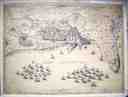
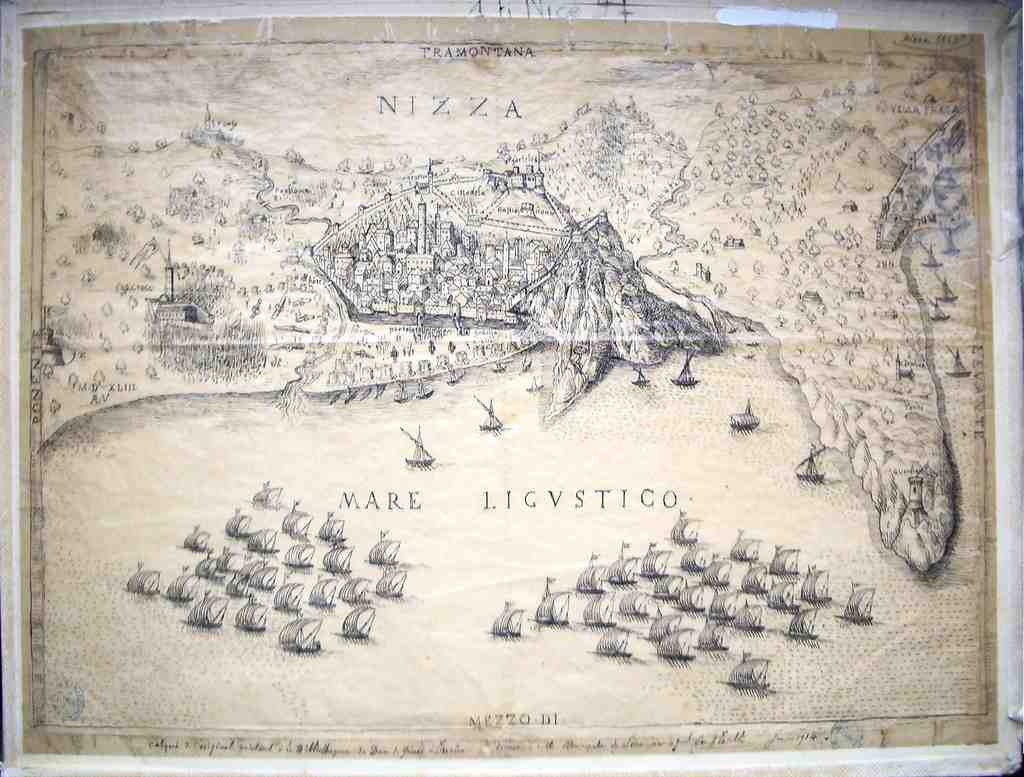
  1. Look ahead-see that high, rocky hill crowned with old stone ruins? That’s the legendary spot where Nice bravely faced the siege of 1543. Right in front of you, imagine the ancient…और पढ़ेंकम दिखाएँ

    Look ahead-see that high, rocky hill crowned with old stone ruins? That’s the legendary spot where Nice bravely faced the siege of 1543. Right in front of you, imagine the ancient city huddled behind protective walls, with the sea stretching out and a swarm of ships gathering below. If you glance toward the park-topped hill, that's the famous Castle Hill, once the site of cannons and defenders, now a place of quiet beauty. Can you see it? Perfect! Let’s step back in time for a moment. It’s the blazing summer of 1543. The city of Nice is surrounded on all sides-by land, a massive army of 20,000 Franco-Turks led by the Count of Enghien. And by sea? A thundering armada of 120 Ottoman galleys, their sails flapping in the salty wind, with the legendary pirate Barbarossa at the helm. The Mediterranean is thick with ships, all aiming their cannons at this very hill, hoping to bring the city to its knees. Inside the city walls, tension is sky-high. The people of Nice are outnumbered and exhausted, pinned down by constant bombardment for weeks. On August 15, the attackers blow a hole in the northern walls, right where Place Garibaldi stands today. But just as the enemy races through the breach, they’re beaten back by furious townsfolk-and, according to legend, a heroic laundress named Catherine Ségurane swings into action, rallying everyone to defend their homes. Some people say she even waved her laundry club to scare off the invaders-never mess with a Niçoise doing her washday chores! As the battle rages on, there are tales of miracles: people whisper that the Virgin Mary appeared above the chaos, filling everyone with courage. Bells ring, dust swirls, cannons roar, and in the middle of it all, the city refuses to give up. At last, after weeks of fierce resistance, the attackers can’t break the castle’s spirit. Reinforcements arrive, and the enemy finally gives up, slipping away under cover of darkness. After 1543, Nice remembers this siege as a story of stubborn hope, clever tricks, and everyday heroes. So as you stand here, feet firm on the ground, imagine the sights and sounds of those dramatic days-where ordinary people became legends, and the city itself proved tougher than anyone expected. Now, onward to our next stop-let’s keep our wits about us, in case any pirates are still lurking nearby!

    समर्पित पेज खोलें →
  2. Just ahead of you, look for a light-colored church with three gently rounded domes along the roof. Above the main door, you'll notice three painted icons watching over the street:…और पढ़ेंकम दिखाएँ

    Just ahead of you, look for a light-colored church with three gently rounded domes along the roof. Above the main door, you'll notice three painted icons watching over the street: Christ in the center, flanked by two saints. The central doorway has an elegant arch, and directly above is a tall, narrow window with intricate patterns, almost like a stained-glass clock. With its ornate trim along the roof and the soft golden crosses on top, it stands out quietly among the city buildings-like a little slice of Russia right in Nice! If you spot a lamppost with hanging flowers and a sign that says “Rue Longchamp,” you’re in the right place. Now, close your eyes for a second and imagine you’re stepping back into the 1850s. Imagine groups of Russian aristocrats strolling by, their colorful winter coats swirling, their voices swirling along the French Riviera breeze. This church, the Church of Saint Nicholas and Saint Alexandra, was built for them-a home away from home so that no matter how blue the Mediterranean sky got, they’d never feel far from their traditions. Picture the Empress Alexandra Feodorovna herself, head wrapped in a warm shawl, quietly planning this church so her countrymen could pray in peace. She never saw her dream completed-her health kept her away-but her daughter, the grand duchess, took her place at the dedication, surrounded by top hats, velvet gloves, and the whiff of exotic Russian perfumes. The ceremony was almost like a chapter out of a grand novel. Diplomats, duchesses, and the city’s dignitaries chatted under these very arches. And here’s a fun twist: this is not the giant Russian cathedral you might also hear about in Nice. No, this is the original-sometimes nicknamed the “old Russian church.” It saw the first Russian prayers whispered in Nice, before the city ever joined France. Yet, for all its royal beginnings, the church has lived through a bit of drama. Ownership debates, changes in the Orthodox world, and, yes, even arguments about which branch of the church gets to hold the keys. It’s almost like a soap opera, but with more incense. So next time you walk past, let your mind wander back to an era of czars and duchesses, when Nice was the place to escape the Russian winter-and secret wish: that these walls could talk, because, oh my, would they have good stories.

    समर्पित पेज खोलें →
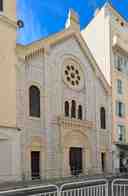
  3. Alright, you’re nearly at the Nice Synagogue now! Take a look down rue Gustave Deloye. Up ahead, you’ll see an elegant cream-colored building with a striking central archway and…और पढ़ेंकम दिखाएँ

    Alright, you’re nearly at the Nice Synagogue now! Take a look down rue Gustave Deloye. Up ahead, you’ll see an elegant cream-colored building with a striking central archway and beautifully balanced twin pillars. The facade is adorned with subtle decorative carvings and tall, arched windows-look up, and you’ll spot a Star of David set above the entrance. It’s grand but welcoming, blending into its Nice surroundings while still standing out with quiet dignity. If you’re standing here mid-morning, you might catch the soft hum of city life, with footsteps echoing off the stone and sunlight bouncing gently from the glass. Now, let’s imagine ourselves back in the late 1800s. Nice is abuzz: the scent of fresh bread drifts through narrow streets, mingling with laughter and the occasional shout. A new place of worship is rising here, built by Paul Martin in 1885, just a year before it would open its doors to the city’s Jewish community. But this wasn’t just any building. For centuries, the story of the Jews in Nice was a rollercoaster: sometimes up, sometimes down! At times, Jews wore special symbols. At others, they had to work only certain jobs or even live in a ghetto-not exactly a Mediterranean vacation, right? But history is never flat. There were years when Nice became a lively crossroads, with new friends arriving from Italy and the Netherlands-talk about a neighborhood potluck! By the 18th century, the community finally got permission to build a synagogue…on the third floor of a Catholic group’s building, with the ritual bath in the basement. Now, that’s what I call shared real estate! Later, that very building was sold to help pay for the beautiful synagogue you see before you now-proof that when life gives you lemons, you can build a sanctuary. Through more twists-changing rulers, stricter laws, and finally, freedom-Nice’s Jewish population kept growing. During World War II, this city was a refuge, a humming safe haven-until things turned dark in 1943. Imagine the tension on these streets, as 5,000 Jews were arrested in just five months. It’s a somber chapter, but after the war, the city’s Jewish life flourished once more, this time with new families from North Africa. Today, fewer than 10,000 Jews remain in Nice, but their legacy is as solid as these stone walls. The synagogue stands not just as a place of worship, but as a storyteller-witness to centuries of resilience, celebration, and, let’s be honest, a few more ups and downs than any good French baguette has air bubbles. So, take a moment here. Maybe even close your eyes and listen for the echoes-of whispered prayers, laughter, and the stories that bricks and stones hold better than any history book. Onward, when you’re ready, to our next stop!

    समर्पित पेज खोलें →
  4. You’re now standing in front of the historical heart of the County of Nice-a place where so many flags have flown, it once ran out of room for flagpoles. Imagine: the salty breeze…और पढ़ेंकम दिखाएँ

    You’re now standing in front of the historical heart of the County of Nice-a place where so many flags have flown, it once ran out of room for flagpoles. Imagine: the salty breeze of the Mediterranean mixing with the mountain air from the Alps, right here between land and sea. Not a bad spot to live, wouldn’t you say? Let’s travel back. Before the fancy French cafés and sun-tanned tourists, this area was full of wild Ligurian tribes. Picture rough voices, laughter, and the clanging of tools as Romans came sweeping in. Years passed, and by the 4th century, the Roman ways had taken over-everyone shouting, “Ave!” and probably complaining about the toga itch. Then came the Franks, after the Western Roman Empire went tumbling down-a bit like knocking over a house of cards, but with more swords and fewer regrets. Nice became part of the County of Provence and, for a brief magical moment, even ran itself as a maritime republic. Imagine pirates, sailors, and traders bustling around, making deals over barrels of wine. If you listen closely, maybe you can still hear the echo of those sea shanties. Here’s a twist-on one chilly day in 1388, the Count of Savoy worked out a sneaky deal with the local baron, and suddenly Nice found itself answering to new bosses from Savoy. The County got a new name and, get this, in 1561, Italians decided official documents would be written in Italian instead of Latin. Must have been a relief-Latin is only fun until someone tries to conjugate verbs! Now, Nice wanted to party, European style. So, in 1614, it became a free port-a hip, happening hotspot for traders. But don’t get too comfortable! Wars with France broke out like a bad rash. The county got handed back and forth, like a hot potato nobody wanted to drop. Through revolts, treaties, and royal drama-sometimes Nice belonged to France, then back to the Sardinian King, then the people tried a movement called "barbetism," full of resistance and secret plans. Finally, after the Treaty of Turin in 1860, Nice officially became part of France. Can you imagine the suspense? The king solemnly asked the people if they were ready to become French-probably with more dramatic pauses than a reality TV show. And here we are today, in a city that’s been Italian, French, and at times, just stubbornly itself. So the next time someone insists on the best place to get gelato or croissants, remember: Nice has the right to claim both-after all, it’s seen more changes than a chameleon in a paint shop!

    समर्पित पेज खोलें →
  5. Look just ahead-do you see that striking building with tall columns at the entrance, almost like a Greek temple dropped right onto rue Gioffredo? That’s the Waldensian Temple of…और पढ़ेंकम दिखाएँ

    Look just ahead-do you see that striking building with tall columns at the entrance, almost like a Greek temple dropped right onto rue Gioffredo? That’s the Waldensian Temple of Nice! The façade is a warm golden color, sitting comfortably behind a black iron fence. The two large columns guard the door, holding up a triangular roof that looks like it could belong in Athens instead of Nice. If you’ve been searching for something that looks grand, sturdy, and a bit mysterious-congratulations, you’ve found it! Now, let’s take a trip back to the 1800s. Imagine the narrow street bustling with people, all speaking Italian, French, maybe even German or English. There wasn’t always a place like this here. Back then, protestants were a rare sight in Nice-so rare, in fact, it was almost like searching for an ice cream shop in the North Pole! This temple was the very first protestant church in the city-a true pioneer! Before it found its home here, the Waldensians, who came from the high mountains of Piedmont, gathered wherever they could: in apartments, little rooms above busy streets, and finally, after some failed land deals and a lot of searching, right here on this spot. The deal was sealed in 1854, with the pastor coming all the way to Nice to sign the papers-talk about dedication! Soon, this golden neoclassical building rose up, a symbol of new beginnings and freedom. It was so important, even a street next to it was named after it: Passage du temple vaudois. Imagine opening these doors in 1857 for the first time: excitement in the air, nervous hopes for a new community, and maybe a bit of confusion at the grand columns-was this really Nice or a Greek myth come to life? Here, kids ran to school in the back, and grown-ups gathered for sewing or borrowed books from a free library. People prayed and sang together, first in Italian, then in French as the city changed and time marched on. Oh, and here’s a little twist! Even after Nice became French, the Waldensian community kept the church, but only if “the pure doctrine” was always preached, and-this is my favorite-only if they paid a symbolic rent of 100 francs a year. That’s right, even history loves a bargain. So, as you stand here, imagine your footsteps echoing those of people who dared to be different, who made a home in a city that was new to them. And even though today the temple isn’t used for worship and has been turned into an auction hall, its columns still stand guard, telling stories of courage, change, and a bit of legal fine print. Not bad for a building that looks like it could host philosophers-or maybe just a really dramatic episode of Antiques Roadshow! Ready for our next adventure? Let’s keep going!

    समर्पित पेज खोलें →
  6. Here we are, standing where the famous New Bridge-or Pont Neuf-once proudly spanned the Paillon River. Picture this: It’s the bustling 1820s in Nice. The city is growing fast, and…और पढ़ेंकम दिखाएँ

    Here we are, standing where the famous New Bridge-or Pont Neuf-once proudly spanned the Paillon River. Picture this: It’s the bustling 1820s in Nice. The city is growing fast, and everyone’s trying to cross from the charming old town to the shiny new neighborhoods popping up. The only problem? There’s a churning, wild river right in the way, and the one old bridge is just a little too far. If Nice were a board game, this was the missing piece! So, the city leaders decide, “Let’s build a new bridge here, closer to the action!” They give the task to engineer Louis Gardon, sort of like the Tony Stark of 19th-century bridge-building-minus the iron suit. Construction begins in 1820. Imagine the sights and sounds: the clink of stone on stone, the shouts of workers, and the occasional curious onlooker peeking over. By 1824, you’d see three grand stone arches stretching across the Paillon, opening a brand-new shortcut through the city. Hooray for modern convenience! On November 4th, the bishop does the official blessing-he probably gave it an extra holy sparkle just in case. The bridge is christened "Pont Royal Saint-Charles" after the new king, but everyone just calls it Pont Neuf. Nice folks don’t like to complicate things! Now, here’s a fun twist: In 1827, the Jewish community, knowing the king was obsessed with ancient Egypt, gifted a monument shaped like an obelisk and set it up at the bridge’s entrance. An Egyptian-style welcome in the Riviera-why not? But not everyone loved it. Years later, the city architect grumbled, “This thing’s blocking the way!” He tried to move it to the square nearby, but his plan was a bit of a flop. The monument vanished mysteriously after 1861-no one’s quite sure where it went. Maybe it’s in a hidden pyramid somewhere? In 1882, with the Paillon being covered up and the massive new casino planned in Place Masséna, the bridge had to make way for progress. It was demolished, and its stones were scattered into the bed of the river, as if giving them one last swim. So, as you stand here, imagine the excitement of carriages clattering across the stone arches, the river rushing below, and the grand new face of Nice coming to life on either side. Not bad for a bridge that only lasted 58 years-but then, in Nice, history moves about as fast as the Paillon used to! Ready to follow where the bridge once led? Let’s head to our next stop.

    समर्पित पेज खोलें →
  7. To spot the Albert I Garden, take a look straight ahead for a wide-open green space filled with tall palm trees reaching up to the blue sky. You’ll notice neat lawns, splashes of…और पढ़ेंकम दिखाएँ

    To spot the Albert I Garden, take a look straight ahead for a wide-open green space filled with tall palm trees reaching up to the blue sky. You’ll notice neat lawns, splashes of bright flowers, and the shape of a large, classic fountain right in the center. The garden is framed by grand, white buildings-the Boscolo Hotel Plaza is just behind it and easy to spot, like a fancy cake covered in balconies. If you see lots of palm trees waving and people strolling along curved paths, you’re in exactly the right place! Welcome to the Albert I Garden, one of Nice’s oldest public gardens, and, around here, it’s almost as famous as the beach! Imagine the area a couple of hundred years ago-it wasn’t nearly as beautiful. Back then, it was really just a soggy bit of grass known as the Prato della foce-“the meadow at the mouth.” Kind of catchy, don’t you think? Lucky for us, someone decided muddy meadows were out and palm trees and fountains were in! Around you, the air might carry the sound of children playing or the soft trickle of water from the central fountain. Can you hear it? Picture wealthy travelers of the 1800s, gliding along the garden paths in their finest hats, searching for fresh air and a little winter sunshine during the Belle Époque. People came here to stroll, see and be seen, and maybe-to the horror of every dog-listen to military bands take turns performing between the gardens. And speaking of plants, this green paradise didn’t just happen on its own. A king once declared, “Let there be a garden!” (Well, more or less.) Planners carefully chose which trees to plant: chestnuts, elms, lime trees, acacias, palms, mimosas, and even magical-sounding Judas Trees. Early on, they extended a special clay pipe all the way here just for the fountain in the middle-now that’s dedication to a good water show. The garden grew and stretched year by year, even taking over spaces above the covered river Paillon. Soon there were more paths, more palm trees, and even a music kiosk-perfect for a good waltz on a Sunday afternoon. Oh, and there was also a swan pond, but the swans have sadly waddled off to greener pastures. Fun fact: for a while, the garden was the place for flower shopping! A shop right on the corner sold bouquets, fresh fruit, and veggies to locals and visitors alike. So if you smell flowers in the air, you’re just catching a hint of history. Today, the palm trees are the star attraction. If you listen closely, you might even hear the wind rustling in their fronds above your head. Not too shabby for a spot that started out as a marsh, right? Take a seat on one of the stone benches, breathe in the delicate scent of grass and flowers, and let yourself drift back to those glamorous days-just keep an eye out for stray musicians or maybe a lost swan looking for its old pond!

    समर्पित पेज खोलें →
  8. If you look right in front of you, you can’t miss it: rising high above the trees and the city bustle is a tall, slender white pyramid, almost like a marble rocket, except it’s…और पढ़ेंकम दिखाएँ

    If you look right in front of you, you can’t miss it: rising high above the trees and the city bustle is a tall, slender white pyramid, almost like a marble rocket, except it’s not getting ready for blastoff-unless you count a victory for history! At the very top, you’ll see a bronze statue with wings, standing proud and strong, one hand held up. Below, just above your head, look for two life-sized figures carved in shining marble-one is gently embracing the other. This is the Centennial Monument, and you’re in the perfect spot. Now, imagine it’s the year 1896. The air is buzzing with celebration, a marching band plays just over there on the garden lawn, and a crowd fills this very spot. But all eyes are fixed on this monument, shining in the southern sun. The people of Nice are here to mark a hundred years since their city was joined to France. André-Joseph Allar, the famous sculptor, created this monument for the big day. Up top, the winged figure in bronze? That’s not just any victory angel, it’s Victoire-or Nike if you want to use her ancient Greek name! She’s wrapped in the French flag, showing a promise of loyalty. Maybe she’s also checking that her wings haven’t got caught in the wind, but hey, no one’s perfect, right? Take a look lower down. This is where the story gets emotional-a young woman is turning toward a strong, calm lady in a helmet, ready to offer a bundle of sticks, the symbol of unity. The young woman? That’s Nice. And the calm lady? She’s France! No wild gestures here, just a reassuring touch, like a mom making sure you have everything before leaving for school-don’t forget your loyalty! On that pyramid, you’ll notice the dates: 1793 to 1893, and then-wait for it-1860 gets a spot too! That means our monument is not just celebrating one reunion with France, but two. That’s double the occasion, double the fun. If you peek behind the monument-don’t worry, it’s not going to jump at you-you’ll find a sculpted wave, a tribute to the ever-present Mediterranean. And all around the base, you’ll spot the city’s coat of arms and enough inscriptions to keep a history buff happy all afternoon. So, as you stand here, let your imagination play. Picture the parade, the speeches, the hope for a future of peace and order, and the gentle warmth of Nice giving herself, once again, to a motherly France. Just like the inscription says: “Nissa fidelissima”-Nice, ever faithful. And with that, you’ve reached the last stop on our tour! Remember, history isn’t just in dusty books-it’s right beneath your feet, and sometimes, at the top of a marble pyramid with a winged lady standing on it. If only every reunion came with such a view!

    समर्पित पेज खोलें →

अक्सर पूछे जाने वाले प्रश्न

मैं टूर कैसे शुरू करूँ?

ख़रीदारी के बाद, AudaTours ऐप डाउनलोड करें और अपना रिडेम्पशन कोड दर्ज करें। टूर तुरंत शुरू करने के लिए तैयार होगा - बस प्ले टैप करें और GPS-गाइडेड रूट का पालन करें।

क्या टूर के दौरान मुझे इंटरनेट चाहिए?

नहीं! शुरू करने से पहले टूर डाउनलोड करें और पूरी तरह ऑफ़लाइन इसका आनंद लें। केवल चैट फ़ीचर को इंटरनेट की ज़रूरत है। मोबाइल डेटा बचाने के लिए WiFi पर डाउनलोड करने की सिफ़ारिश है।

क्या यह एक गाइडेड ग्रुप टूर है?

नहीं - यह एक सेल्फ-गाइडेड ऑडियो टूर है। आप अपनी गति से स्वतंत्र रूप से खोजते हैं, आपके फ़ोन से ऑडियो कथन बजता है। कोई टूर गाइड नहीं, कोई ग्रुप नहीं, कोई शेड्यूल नहीं।

टूर में कितना समय लगता है?

अधिकांश टूर पूरा करने में 60-90 मिनट लगते हैं, लेकिन गति पूरी तरह आपके नियंत्रण में है। जब चाहें रुकें, स्टॉप छोड़ें, या ब्रेक लें।

अगर मैं आज टूर पूरा नहीं कर सकता/सकती तो?

कोई समस्या नहीं! टूर की लाइफ़टाइम एक्सेस है। जब चाहें रोकें और फिर शुरू करें - कल, अगले हफ़्ते, या अगले साल। आपकी प्रगति सेव रहती है।

कौन सी भाषाएँ उपलब्ध हैं?

सभी टूर 50+ भाषाओं में उपलब्ध हैं। अपना कोड रिडीम करते समय अपनी पसंदीदा भाषा चुनें। नोट: टूर जेनरेट होने के बाद भाषा बदली नहीं जा सकती।

ख़रीदारी के बाद मैं टूर कहाँ एक्सेस करूँ?

App Store या Google Play से मुफ़्त AudaTours ऐप डाउनलोड करें। अपना रिडेम्पशन कोड (ईमेल द्वारा भेजा गया) दर्ज करें और टूर आपकी लाइब्रेरी में दिखेगा, डाउनलोड और शुरू करने के लिए तैयार।

verified_user
संतुष्टि गारंटी

अगर आपको टूर पसंद नहीं आया, तो हम आपकी ख़रीदारी वापस करेंगे। हमसे संपर्क करें [email protected]

सुरक्षित चेकआउट

Apple PayGoogle PayVisaMastercardPayPal

AudaTours: ऑडियो टूर

मनोरंजक, किफ़ायती, सेल्फ-गाइडेड वॉकिंग टूर

ऐप आज़माएँ arrow_forward

दुनिया भर के यात्रियों द्वारा पसंद

format_quote शहर को देखने का यह बहुत अच्छा तरीका था। कहानियाँ रोचक थीं बिना ज़्यादा स्क्रिप्टेड लगे, और मुझे अपनी गति से खोजने का बहुत मज़ा आया।
Jess
Jess
starstarstarstarstar
Tbilisi टूर arrow_forward
format_quote बिना पर्यटक जैसा महसूस किए Brighton को जानने का यह एक शानदार तरीका था। कथन में गहराई और संदर्भ था, लेकिन ज़रूरत से ज़्यादा नहीं।
Christoph
Christoph
starstarstarstarstar
Brighton टूर arrow_forward
format_quote इस टूर की शुरुआत एक हाथ में क्रोसॉन्ट और शून्य उम्मीदों के साथ की। ऐप बस आपके साथ बहता है, कोई दबाव नहीं, बस आप, आपके हेडफ़ोन, और कुछ बढ़िया कहानियाँ।
John
John
starstarstarstarstar
Marseille टूर arrow_forward

अनलिमिटेड ऑडियो टूर

दुनिया भर के हर टूर तक पहुँच अनलॉक करें

0 टूर·0 शहर·0 देश
all_inclusive अनलिमिटेड खोजें