

लिल ऑडियो टूर: नहरों से शाही चौकों तक संस्कृति की गूँज
लिल के हलचल भरे कैफे और सुंदर मुखौटों के नीचे सुलगती घेराबंदी, शहरी उथल-पुथल और छिपी हुई वैज्ञानिक क्रांतियों की कहानियाँ छिपी हैं। यह स्व-निर्देशित ऑडियो टूर उन रहस्यों को उजागर करता है जिन्हें आजीवन स्थानीय लोग भी अक्सर चूक जाते हैं, आपको पत्थरों से जड़े चौकों, भव्य बुलेवार्ड और छायादार गलियों से होकर ले जाता है जहाँ इतिहास सतह के ठीक नीचे साँस लेता है। प्लेस डेस रेग्नॉक्स में एक साधारण घर विनाश के कगार पर एक मध्ययुगीन किले में क्यों बदल गया? लोम्बार्ड स्ट्रीट के अभिलेखागारों को किन गुप्त चिंताओं ने सताया था जब रहस्यमय पोटाश के धुएँ ने अमूल्य चर्मपत्रों को धमकी दी थी? किस घोटाले के कारण एक बार फैदहर्ब स्ट्रीट ने चौंकाने वाली गति से 140 घरों को मिटा दिया था—और पुराने लिल को इसकी क्या कीमत चुकानी पड़ी थी? प्रत्येक कदम आपको सदियों की आग, पुनर्निवेश और मानवीय महत्वाकांक्षा से होकर खींचता है—अपने पैरों के नीचे प्राचीन गूँज महसूस करते हुए जैसे आपके चारों ओर जीवंत जीवन घूमता है। लड़ाइयों से प्रयोगशालाओं तक, विद्रोह से उत्सव तक जाने के लिए तैयार रहें, लिल की खोज करें क्योंकि इसका अतीत हर मोड़ पर वर्तमान से टकराता है। अभी शुरू करें और लिल के ऐतिहासिक हृदय से बहने वाले अनदेखे नाटक को उजागर करें।
टूर पूर्वावलोकन
इस टूर के बारे में
- scheduleअवधि 40–60 minsअपनी गति से चलें
- straighten2.9 किमी पैदल मार्गगाइडेड पथ का पालन करें
- location_on
- wifi_offऑफ़लाइन काम करता हैएक बार डाउनलोड करें, कहीं भी उपयोग करें
- all_inclusiveलाइफ़टाइम एक्सेसकभी भी, हमेशा के लिए फिर सुनें
- location_onप्लेस डेस रेगनर्स से शुरू होता है
इस टूर के स्टॉप
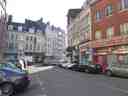
To spot Place des Reignaux, look for a lively little square surrounded by classic Lille buildings with a mix of old stone façades and red brick, as well as ground-floor cafés,…और पढ़ेंकम दिखाएँ
To spot Place des Reignaux, look for a lively little square surrounded by classic Lille buildings with a mix of old stone façades and red brick, as well as ground-floor cafés, bars, and restaurants - you’ll know you’re here when you see rows of cars parked in front of spots like “Stella Artois Le Rex” and the Japanese restaurant “Osaka.” Welcome to Place des Reignaux! Now, you might glance around and think you’re at just another cozy spot in Lille, but oh boy - if these stones could talk, they’d definitely brag about their wild past. Imagine yourself standing here in medieval times, carefully dodging not cars, but horses, as soldiers bustled around a fortified house that once stood close to this very spot. It all began with a family called Dergnau, or Dérégnau, who owned a manor on the fringe of old Lille, right next to Saint-Maurice Church. Back then, it wasn’t parties and coffee shops; it was all about moats, watchmen, and strategy. Now let’s turn up the drama! Picture June 1213: the city was under siege by Count Ferrand of Flanders. Just when things got dicey, in strolled Philippe-Auguste, King of France. He eyed that sturdy house and said, “Let’s make this a fortress!” So, right here, he turned an ordinary home into a stronghold, a mini-citadel where his men could hunker down, defend the city, and-oh yes-repel the invaders with all the gusto of action heroes. When the dust settled and the siege ended, Lille itself was set ablaze and the old citadel was reduced to ashes, just like a cake that spent too long in the oven. But every ending’s a new beginning, isn’t it? Over time, ingenious Lille folks filled in old moats and rerouted canals, replacing medieval ramparts with a thriving community. In fact, the very shape of the land-arc-like and tight, like the wings of a windmill-hints at this neighborhood’s distant, fortified past. Later, during the 1600s, this square marked the spot for the Reignaux Gate, Lille’s front door before it was swapped out for the grand Saint-Maurice gate. Centuries rolled on, stories layered upon these streets, and the neighborhood faced bombings in World War I, leaving scars that would later be patched up in elegant, late nineteenth-century style. Today, as you sip coffee or pass by a busy bistro, just think: you’re walking through layers of history, where homes became fortresses and then, eventually, irresistible café terraces. So who knows-you might just feel echoes of ancient footsteps, or maybe spot a ghostly knight sipping an espresso. Welcome to Lille’s living time capsule!
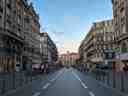
समर्पित पेज खोलें →In front of you, Faidherbe Street stretches straight ahead like a grand avenue, flanked by elegant, creamy stone buildings with large windows and little wrought-iron…और पढ़ेंकम दिखाएँ
In front of you, Faidherbe Street stretches straight ahead like a grand avenue, flanked by elegant, creamy stone buildings with large windows and little wrought-iron balconies-just follow the broad cobblestone road that leads directly toward the impressive facade of the Lille-Flandres train station in the distance. Take a good look around-this street isn’t just a way to get from A to B, it’s actually the beating heart of Lille’s history and transformation! Let’s travel back in time together-feel free to imagine you’re walking here in the late 1800s, but watch out: you might have needed to dodge a horse-drawn carriage or two! Faidherbe Street began its story a bit like a Parisian novel-with big dreams, big demolitions, and a touch of engineering flair. Back in the 1860s, Lille was expanding quickly, and city leaders wanted to show off modern style. They looked to Paris for inspiration, bringing a bit of Baron Haussmann’s grand vision here. The engineer Masquelez, who sounds like he belonged in a detective novel, was assigned a big task: connect the business district (where everyone gossiped about grain and coal prices at the stock exchange) with the shiny new railway station just up ahead. The result? This broad, straight avenue you see now-22 meters wide and 300 meters long-cut with a boldness that would make even the most confident urban planner blush. But change didn’t come quietly. When Faidherbe Street was drawn onto the city map in 1869, it bulldozed its way through old Lille-over 140 houses disappeared, along with the bustling fish market called the Minck, the ancient town hall, and even a chapel. It was noisy, chaotic, and dramatic, with the sounds of crashing walls and lively arguments floating over the cobblestones. Imagine the frustration of neighbors saying goodbye to their favorite bakery, or the shock of a grand-mère finding out her street would be erased! At first, it was just “Rue de la Gare,” or “Station Street,” but when the city’s homegrown hero-General Louis Faidherbe-died in 1889, they renamed it to honor him. Faidherbe wasn’t just some random general. He was born right here in Lille in 1818 and became famous leading the Army of the North during the Franco-Prussian War. Now, his name is forever wrapped around the city’s most dynamic spot. Take a look at the architecture on either side-a rare slice of the Haussmann style outside Paris. These colossal stone facades, spiffy balconies, and fancy domes on the corners were all about showing off Lille’s new wealth. Some buildings, though, bear a different look: after being bombed during World War I, bits of the street were rebuilt in red-brick, regional “neo-Lille” style, to keep local character alive as the city picked itself up and dusted itself off in the 1920s. Modern Faidherbe Street is where history meets high-tech. On one corner sits an Apple Store tucked inside what was once the Grande Pharmacie de France-a chemist’s that dispensed remedies for more than a century before becoming a techie’s paradise. And in true Lille fashion, the street comes alive with wild creativity! For the big Lille 3000 festivals, you could once spot giant elephants standing tall, massive angels towering above the crowds, and lace-like sculptures hanging overhead. (If you’re lucky, you might still see some modern art installations up ahead, though I can’t promise you any live elephants today.) So whether you’re here to shop, snap photos, or simply soak up Lille’s vibrant spirit, remember: every step you take down Faidherbe Street is a step across layers of drama, reinvention, and celebration. And if you suddenly feel like parading, don’t worry-you’re just catching the festival spirit that’s always bubbling below the surface here!
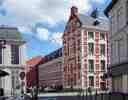
समर्पित पेज खोलें →Look ahead for a bright red building with bold white stone patterns right at the corner; its detailed old façade and tall windows will help you spot Lombard Street. Right here,…और पढ़ेंकम दिखाएँ
Look ahead for a bright red building with bold white stone patterns right at the corner; its detailed old façade and tall windows will help you spot Lombard Street. Right here, in the heart of Lille, you’re standing on one of the city’s most fascinating slices of history-Lombard Street! Not just your average little road, this street almost hums with the kind of stories that can make the cobblestones want to get up and talk. Can you imagine? Just beside Lille-Flandres Station, hundreds of years of footsteps have echoed along these very stones. Maybe even some shoes from the 1600s… if only shoes could talk. The street gets its name from the grand Hôtel du Lombard, a stately brick building you can see right in front of you. It all began in 1617, when the city of Lille decided to expand. You could call it “urban growth spurt” season. By 1626, the Hôtel du Lombard had sprung up, numbers 2 to 4 over there, and just two years later in 1628, it was open for business-not as a fancy hotel, but as a “mont-de-piété.” That’s right, this place was Lille’s version of a pawnshop! But not just any pawnshop-run by a fellow named Wenceslas Cobergher, who took his inspiration from Lombardy in Italy, which was famous for, well, lending people a bit of money when their purses felt too light. Fast-forward to the 19th century, and the Hôtel du Lombard had gone from pawnshop to much fancier business: it became the general archive depot for the entire Nord region. Now, close your eyes for a second and imagine this huge building, room after room, floor after floor, filled with ancient scrolls, official papers, the musty smell of parchment, and archivists muttering over the fate of France’s forgotten secrets. The place was so jam-packed that at one point, they counted 15 rooms and two staircases on the ground floor, 11 rooms above, and 10 more up top-plus ten extra spaces up in the attic! But here’s where things get a little dramatic. Around 1824, the city decided, “Why not mix some science in?” They set up a brand-new chemistry school on the ground floor, complete with an amphitheater and laboratory. Picture bustling students and, in the summer, the scent of chemical experiments wafting into the halls. Suddenly, it wasn’t all silence amongst the archives-archivists began panicking over clouds of strange-smelling gases drifting in from next door, worried their precious parchments would end up smelling more like chemistry than history! One archivist even wrote about escaping “enormous puffs of potash fumes” while students (and likely, the local cleaning crew) made a mad dash out of the room. While chaos sometimes reigned, the chemistry school was a triumph-its star, Frédéric Kuhlmann, drew crowds of 300 people to these first classes in chemical sorcery. Imagine: industrialists, scientists, and curious merchants squeezed into the amphitheater, eager to learn secrets that might help make French industry the envy of the world. These weren’t just classes; they were the seed for Lille’s future as a hub for science and invention. Yet the Hôtel du Lombard kept changing hats. Besides chemistry, in 1838, the building began hosting Lille’s advanced primary school. Think evening lessons in physics, geometry, and even mechanical drawing-smart kids from all over Lille learning to be the next generation’s cleverest merchants and textile tycoons. One young mind, Alfred Thiriez, studied here before founding what became Thiriez & Cartier-Bresson-the kings of cotton spinning! And then, as if history hadn’t heaped enough on its shoulders, in the 1850s this very building cradled Lille’s first school for industrial engineers. Royal visits, endless reforms, big ambitions-the classes here eventually grew into what’s now the prestigious École centrale de Lille. Industrial museums, vast collections of machines and tools, and the occasional panicked archivist-through war, peace, and even a little fire and brimstone-the Hôtel du Lombard just kept rolling. And let’s not forget the grand Hôtel Scrive right across the way, with centuries of weaving, business, and even a plaque for Antoine Scrive, who brought fabulous linen carding machines back to France-a true hero of the age of industrial alchemy. So next time your boss asks you to “do more at the office,” remember: this street managed chemistry labs, archives, schools, and even a museum-all on one block. Lombard Street is Lille’s reminder that the past is never really out of reach; just a step, a whiff of chemicals, or a buried secret behind a red-bricked wall away.
समर्पित पेज खोलें →
12 और स्टॉप दिखाएँकम स्टॉप दिखाएँexpand_moreexpand_less
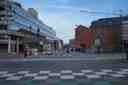
Rue des Canonniers stretches straight ahead, with its flat modern building on the left-striped by lines of windows-and an angular reddish-brick building on the right, so just look…और पढ़ेंकम दिखाएँ
Rue des Canonniers stretches straight ahead, with its flat modern building on the left-striped by lines of windows-and an angular reddish-brick building on the right, so just look ahead where the street carves its way between old history and new design. Alright adventurer, you’re standing at the start of Rue des Canonniers, a street with a name that practically shouts “attention!”-and trust me, there’s plenty to pay attention to here. Imagine, if you will, standing in the exact spot where the thunder of cannons once echoed and the march of history never quite stopped. This isn’t just any street; it’s a living, shifting artery of Lille, winding through centuries of drama, change, and a fair bit of neighborly bickering about traffic patterns. Let’s go back to the 17th century first-picture Lille, just after it expanded its city walls in an era of powdered wigs and clattering wooden carts. This very stretch was then called the rue des Vieux Hommes, or “Old Men’s Street,” possibly because everyone was tired from all the wall-building… or maybe because it led to a retirement home, which, by the way, still peeks out as a historical relic, known as the Maison des Vieux Hommes! But the real action began when this street got a new neighbor-the mighty battalion of Lille’s sedentary cannoneers. These guys weren’t just twiddling their thumbs; they were practicing day in and day out, their presence giving the street its proud, booming name. Today, if you head north, you’ll find the Musée des Canonniers-an entire museum dedicated to their legacy. If you listen closely, you might even hear a ghostly “boom” or two from the past. But don’t worry-the only things exploding these days are people’s minds at the local trivia nights. Fast forward to the steamy, bustling 19th century, and take a whiff: the air was thick with smoke and the sweat of hard-working factory folks. The district around here was packed, especially in the infamous Cour des Élites-a tight maze of alleyways, homes barely wider than a bicycle. Five tiny courtyards spilled into each other like a game of urban Tetris, each more cramped and shadowy than the last. It was so grim that when an investigator came in 1887, they wrote about “misery beyond imagination.” In short, not exactly a five-star review for the neighborhood. But just when things couldn’t get any messier, the city council showed up in the mid-1900s with their favorite tools: blueprints and bulldozers. Plans were made, battles were fought-not with cannons, but with lobbying and passionate protests from folks who loved old Lille. Renaissance du Lille Ancien fought tooth and nail to keep the area’s character intact, and their victory meant that, while parts of the old neighborhoods were cleared, much of the historic flair survived. By the 1980s and ‘90s, a chunk of this area had traded muddy alleyways for clean office buildings and even the headquarters of a major bank. They say money talks…but not nearly as loudly as cannons. Now, as you look around, take in the odd mixture-the old brickwork of historic buildings rubbing shoulders with ultra-modern offices and car parks. To your right, tucked behind those brick walls is the old Souham barracks, where once soldiers trained and nowadays, brilliant minds at the CNRS are probably dreaming up the future. Just a stone’s throw away is the grand Porte de Roubaix, a historic city gate watching over the street like your grandma eyeing you at a family dinner. It’s seen more drama than any gate should. And don’t think Lille stopped arguing about this street! In 2004, and again in 2011, the city leaders overhauled the road-one mayor even called the traffic configuration “ridiculous”! Today, you’ll notice some lanes for cars, others for bikes and buses, and perhaps sense the ghosts of city planners past, still debating in the background. So, whether you’re rubbernecking for remnants of ancient cannon fire or dodging a cyclist on your left, Rue des Canonniers is a place where bygone centuries and everyday city life collide, shake hands, and sometimes, just for fun, stage a parade. Don’t blink-you might miss the next chapter!
समर्पित पेज खोलें →Right ahead, you’ll spot Rue des Arts by its striking row of old brick and stone facades, richly decorated with ornate carvings and tall windows-just look left and right for the…और पढ़ेंकम दिखाएँ
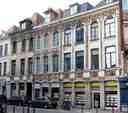
Right ahead, you’ll spot Rue des Arts by its striking row of old brick and stone facades, richly decorated with ornate carvings and tall windows-just look left and right for the elegantly sculpted buildings closely pressed together, some now housing real estate shops underneath. Welcome to Rue des Arts, a street where history isn't just remembered-it’s practically jam-packed into every brick and window frame! Stand here and take a deep breath; you’re inhaling centuries of art, learning, and even a little bit of revolution. Imagine it’s the 11th century. Horses' hooves echo against cobblestones, and this street-long before becoming “of the Arts”-is where the city’s wealthiest burgesses lived. The air here once shimmered with the importance of the first forum at Saint-Pierre, the very core of old Lille. The name changed over the centuries-first the Rue des Foulons, then Rue des Récollets, and finally, after the French Revolution, Rue des Arts. Yes, this street has had as many identities as a spy in a thriller! In 1249, after Saint Francis of Assisi’s death, the first Franciscans arrived with dreams as big as their robes. A generous countess gave them land right here, and soon a brotherhood of nearly 90 Récollets called this street home, building an impressive convent and church. But fortunes can change fast-one minute you’re tucking into a nice communal meal, the next, the Revolution sweeps through. The monks’ land and treasures were seized by the new Republic, and their convent transformed into a depository for books confiscated from the rich and powerful. Years later, the garden of this very convent became the foundation for a new botanical garden-honestly, those monks would never have guessed their former backyard would end up filled with lilies, lectures, and future botanists. As you walk, notice the school buildings that once lined this road. It wasn’t just monks who made Rue des Arts lively; by the 18th century, it had become a hive for academic achievement. Here, the city set up the pioneering Écoles académiques, teaching art, architecture, and technological wonders to generations and even running courses in things like mechanical steam engines (talk about being ahead of their time). The local school wasn’t just for painting bowls of fruit; they covered everything from geometry and anatomy to chemistry, drawing, and even physics. Some students even took home medals-or, if they were really lucky, a prestigious trip to Rome. And speaking of science: imagine the excitement when, in 1854, Louis Pasteur himself cased this very corner to teach in the brand-new Faculty of Sciences. Lille’s thirst for discovery was so great, they built an entire additional wing for future faculties, right on the site of the old convent. The art didn’t leave when the artists did-the Musée des Beaux-Arts, now one of the major museums in France, had its first paintings and statues displayed in the old convent here. You might picture rows of golden frames lined up between flickering candlelight and stacks of books, the air thick with the smell of oil paint and intrigue. But if you’re looking for grand old houses, you can’t miss the hôtels particuliers. At numbers 4 to 36, keep an eye out for elegant mansions with detailed façades-each one is a silent witness to the swirling dramas of nobles, merchants, monks, and scholars through the ages. Some buildings are so ancient, they’ve barely changed since the 18th century. Nowadays, the street still hums with life-there’s a modern college, the Collège Carnot, which moved in after the famous Faidherbe school headed for roomier digs. Behind some of these facades, you’ll still find secrets: old gardens, hidden courtyards, maybe even a ghost or two from all those centuries ago. So, as you stand on Rue des Arts, let your mind wander: from monks chanting at dawn to children learning new inventions, from revolutionary book collectors to famous artists, this street holds stories around every corner. If you listen closely, you might even hear the echo of a 19th-century chemistry class or the rustle of library books lost and found. Rue des Arts isn’t just a street-it’s a time machine, and lucky for you, you’ve got a front-row seat!
समर्पित पेज खोलें →To spot Theater Square in Lille, just look ahead for a grand, cream-colored classical building with dramatic statues atop its façade and a tall, red-and-white clock tower beside…और पढ़ेंकम दिखाएँ
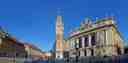
To spot Theater Square in Lille, just look ahead for a grand, cream-colored classical building with dramatic statues atop its façade and a tall, red-and-white clock tower beside it that rises confidently over the square. Ah, here we are-welcome to Theater Square, smack in the heart of Lille! While the name might have you craning your neck for a classic theater with velvet curtains and grand applause, let me tell you a secret: the real drama here has already unfolded. So, picture this scene-centuries ago, you’d actually be standing in what was once a single sprawling square connected to the famous Grand’Place, right next door, before a quirky twist of urban planning set them apart. Back then, the square you’re standing on was called “Petite Place,” and the boundaries were marked out by clusters of wooden houses, busy medieval markets, and the chaotic shouts of traders hawking their wares. Fast-forward to the 16th century: the city’s leaders decided to get serious and erected a “halle échevinale”-that’s a fancy way of saying town hall. It stood at the spot where the rue Faidherbe now pours into the square, complete with a stout belfry that must have looked like the Eiffel Tower to 1580s Lille. The city’s rulers migrated to the plush Palais Rihour by the 1660s, leaving the old hall to stand guard over the bustling Petite Place until it was bulldozed in 1870 to make way for the broader rue Faidherbe. But Lille’s not a city to go without a touch of flair-oh no, when the old fountain “au Change” disappeared during building works, they just put in another one. If you had been here in the 1680s, you’d have seen locals gathering for a splash. The real plot twist came later, in 1785, when Lille got a brand new theater, its grand façade standing where the rue Faidherbe meets the square. Suddenly, the old Petite Place was divided in two-one half connecting to bustling shopping streets, the other reaching out to the future rue de la gare (now rue Faidherbe). This theater became the hub for centuries of entertainment, laughter, and a fair bit of drama-at least until 1903, when, in a scene fit for an opera, the theater burned to the ground in a spectacular fire. But Lille is never down for long. With a determined spirit (and a taste for the theatrical), the city rebuilt, choosing not just to replace the charred remains but to upstage them. An opulent new opera house rose up nearby, set back to make the square even grander, while the New Stock Exchange joined its side. Picture yourself here in the early 1900s, freshly paved boulevards radiating out, tram bells clanging as the new tracks wound their way right into the square. By 1911, a triangle of tram tracks was at the center-imagine the screech of metal on metal and the lively buzz of passengers going about their day. So as you gaze up at the soaring clock tower and the opera’s grand façade, take a moment to think of all the layers beneath your feet: medieval markets, vanished fountains, the roar of theater crowds, and the thrill of Lille reinventing itself again and again. Just don’t try reenacting the fire, okay? The city’s had quite enough drama for one square!
समर्पित पेज खोलें →Look for a tall stone church tower with a sharp blue slate steeple and a big clock face, rising above the brick townhouses at the end of the street-if you see a building that…और पढ़ेंकम दिखाएँ
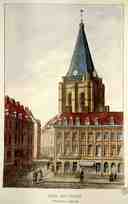
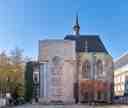
Look for a tall stone church tower with a sharp blue slate steeple and a big clock face, rising above the brick townhouses at the end of the street-if you see a building that looks like it’s keeping time for the whole neighborhood, you’ve spotted the Old Saint-Etienne Church. Now, let’s travel back a few hundred years, right to this very spot-imagine the echoes of footsteps on ancient cobbles as you approach what was once one of Lille’s grandest halls. Back in the Middle Ages, folks walking here would have seen a massive church, shaped almost like a giant indoor market, with three wide naves running side by side under one soaring, echoing roof. Picture the air thick with incense and the hum of prayer; outside, the sound of horses’ hooves and chatter from the bustling market all around. The locals called it a “hallekerque”-that’s church-market to you and me. Five huge doorways, the main one facing Rue Esquermoise, promised both grandeur and a bit of a draft. But here’s where things get lively: in 1649, a tapestry showing Saint Stephen’s rather unlucky day-his stoning-was donated by a certain Marguerite de Fourmestraux. Bet holiday services were extra exciting that year! Wealthy families like the Hangouarts, allies of the powerful Dukes of Burgundy, had their fingerprints all over this church like proud parents at a school concert. The church’s bell tower wasn’t just for decoration-it became the city’s official belfry, with a carillon and a set of mighty bells. When the old city hall tower came crashing down in 1600, the bells moved in here, joined by the famous Emmanuel bell that kept Lillois on time and probably scared a few pigeons. Imagine a dozen bell ringers scurrying about, eight for daily duties and four extra just for the big bell-now that’s teamwork! But all stories have twists. In 1792, during the Austrian siege, cannonballs thundered through the sky and smashed the great Saint-Etienne Church to ruins, leveling not just the church, but a dozen nearby houses. Just like that, centuries of history were swept away, replaced by rue des Débris-Saint-Etienne-the very street beneath your feet, named for all the bits and pieces left behind. If you look nearby, some of the church’s columns are still holding up the vaults by the Grand Place, quietly carrying memories of prayers, laughter, and the occasional bit of gossip. So next time you check your watch, think of the tower that kept Lille ticking-until one fateful September changed everything. And to think, all that’s left is the whisper of bells and a street full of stories.
समर्पित पेज खोलें →Directly ahead of you, Lille reveals itself as a dazzling mosaic of styles: from modern glass towers and sleek business districts, to rows of colorful Renaissance houses and…और पढ़ेंकम दिखाएँ
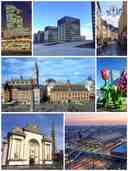
Directly ahead of you, Lille reveals itself as a dazzling mosaic of styles: from modern glass towers and sleek business districts, to rows of colorful Renaissance houses and narrow cobbled streets-just look for a patchwork skyline where medieval meets ultra-modern. Welcome to the beating heart of the north, where France’s “Capital of Flanders” unfolds in layers, just like an onion-don’t worry, it doesn’t make you cry, unless you’re moved by beauty! Imagine yourself standing here centuries ago, on what once was a little island (hence the city’s old name “L’Isle”), nestled among the swampy arms of the River Deûle. Water once ran everywhere, crisscrossing Lille in a maze of canals-listen! You might almost hear the splash of oars and the shouts of merchants carrying goods clear across medieval Europe. But Lille isn’t just ancient tales. She’s a survivor, rebuilt time after time-sacked, besieged, and stubbornly rising with more spirit than ever. In the days of kings and emperors, Lille played a game of hot potato between France, Burgundy, the Holy Roman Empire, and Spain, swapping crowns until Louis XIV swept through and called it French for good. During wars, bombs thundered down, old walls crumbled, but Lille just dusted herself off and built again-if these stones could talk, they’d ask for a quieter neighbor! Look around and you’ll notice the city can’t decide if it’s in France or Belgium. You’re at a crossroads of cultures, where French charm collides with Flemish flair-just try pronouncing “Rijsel” like the locals. In the Middle Ages, Lille was a powerhouse for cloth and trade; by the industrial revolution, it was booming with the whir of textile machines and the clang of metalwork. The city became a hive of factories, worker’s houses close enough for neighbors to pass the salt through open windows. Fast-forward to the nineties and Lille needed a fresh look. Out went the belching chimneys, in came arts, students, and futuristic towers. Don’t blink, or you’ll miss Euralille: a glittering business quarter with chunky glass buildings that look ready to beam up. See those towering structures from the image? That’s where the techno-wizards and business suits scurry under the modern sun. Here, history isn’t just stuck in museums-it marches right alongside the present. Every September, Lille erupts in Europe’s biggest flea market, the famous Braderie. Imagine millions of bargain-hunters jostling through the winding streets, hunting treasures and savoring mountains of moules-frites. It’s so big, if you lose your friend, just look behind the largest pile of shoes. The city’s population is a who’s-who of backgrounds: students (over 110,000!), artists, travelers, and-let’s be honest-people who never left after tasting the waffles. Lille is the center of a sprawling mega-region that stretches its fingers into Belgium, linking arms with neighboring cities like Roubaix, Tourcoing, and even Kortrijk and Tournai in Belgium. Together, they create the Eurometropolis, where you’re always a short train ride away from chocolate, waffles, or, well, Brussels. See that massive train station nearby? Lille is a crossroads for all of Europe-you could have breakfast in Paris, lunch in Lille, and dinner in London, thanks to the high-speed TGV and Eurostar trains. At your feet, beneath the cobblestones, lies centuries of drama. Catacombs of chalk and clay, dug from the earth to build mansions and row houses, snake below the city. The old canals have mostly been covered or filled, but a few arms of the Deûle still curl around the city, whispering stories of trading ships, hidden loot, and midnight escapes. Lille’s modern face is shaped by a wild jumble of neighborhoods: classy Vieux-Lille with its golden façades and fancy shops, quirky Wazemmes with markets bursting with color, and bold new quarters built on the bones of factories. It’s no neat circle, but a patchwork of energy-each area with its own rhythm and secrets. Next time someone tells you Lille’s just a pretty postcard town, tell them it’s a city that’s survived sieges, revolutions, and student parties, and still managed to be one of France’s most exciting-and resilient-places. So take a deep breath of that brisk northern air, and remember: in Lille, every building holds a story, every street is a tightrope between past and future, and you, my friend, are standing right at the crossroads of adventure. Curious about the geography, town planning or the toponymy? Don't hesitate to reach out in the chat section for additional details.
समर्पित पेज खोलें →Rihour Square is easy to spot: look ahead for a wide, open plaza bordered by pale, grand buildings and the imposing medieval façade of the Palais Rihour to your right-its…और पढ़ेंकम दिखाएँ
Rihour Square is easy to spot: look ahead for a wide, open plaza bordered by pale, grand buildings and the imposing medieval façade of the Palais Rihour to your right-its intricate stonework, arched windows, and a tall pointed spire make it unmistakable! Imagine standing here in the very heart of Lille, your feet on ground that was once little more than soggy meadows and marshland. If you listen closely, you might almost hear the soft squelch of boots walking over wet grass, because long before these grand façades and bustling shops, this place was a humble tangle of alder trees, willows, and muddy fields. Lille’s history creeps up from the earth here, whispering secrets of a time when the canal-called the Poissonceaux-surrounded the region, splitting this very spot off from the busy Grand Place. Now, here’s a little twist of fate: this square is named for its ancient landowner, Bérard Rihout-though back in 1248, when the name first appeared, nobody could quite decide if the land took his name or if he was named for the land! Over the next century, records of Rihour pop up again-someone’s selling a patch of soggy field to a local hospice, someone else is counting up taxes owed for the “riez,” a swamp nestled near an old city ditch. Not exactly the glamorous city center we see today! Fast forward to the 15th century, and this spot becomes a building ground for the splendid Palais Rihour-a palace that eventually welcomed Lille’s magistrates. But with new prestige came some not-so-palatial drama. Picture the year 1664: a man named Charles de Renaucourt, infamous horse thief, stands trembling on these very stones. The townspeople gather, the gallows loom, and soon justice-harsh and swift by today’s standards-descends. The square’s look kept changing. Eventually, it became home to Lille’s city hall until tragedy struck in 1916, when fire devoured the building, forever altering the landscape here. Before the blaze, the plaza was much smaller: just two narrow passages-nicknamed “contour de l’Hôtel-de-Ville” and “cour du Frêne”-let you slip by the old city hall into the heart of the city. Afterward, the space opened up, embracing a new era. And the buildings around you? In 1687, the enterprising Anselme Carpentier, a lace merchant with a keen eye for style, ordered a tidy row of nine elegant houses here. To put the cherry on top, he even covered over the nearby canal trough at his own expense! This chic urban look became a model for Lille’s architecture, spreading to the Grand Place and beyond. The row of buildings you see today-especially those with even numbers from 2 to 24-are so treasured, they’re officially protected as historic monuments. Of course, Rihour Square isn’t just about the past. Every September, the Braderie de Lille descends, filling the square with laughter, bargaining, and the irresistible aroma of street food. And when winter comes, more than 80 sparkling Christmas chalets appear here, as bustling shoppers sip hot chocolate and the sound of merriment rises through the chilly air. This is Rihour Square-a place where marsh became majesty, where history crackles underfoot, and where, if you stand still, you can feel every age of Lille swirling around you.
समर्पित पेज खोलें →To spot the Rihour Palace, look ahead for a striking building with red brick walls, sharp gray slate roofs, tall chimneys, and a slender pointed turret rising above the stone…और पढ़ेंकम दिखाएँ
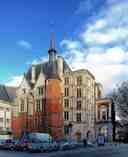
To spot the Rihour Palace, look ahead for a striking building with red brick walls, sharp gray slate roofs, tall chimneys, and a slender pointed turret rising above the stone façade-it stands out right beside the square. Now, imagine you’re standing here in the heart of Lille, back in the 15th century. The city air is cool, and there’s a faint smell of marshland-because this whole area was once soggy, wild ground! Where cars and busy streets now stand, Duke Philip the Good of Burgundy had an ambitious dream: to build an elegant palace fit for a ruler. The only problem? He needed Lille’s money. After some sly negotiation, the Duke convinced the city’s council to hand over a hefty 6,000 pounds, spread over four long years. The city agreed-anything for a duke, right? Construction began in 1453, led by the architect Evrard de Mazières. Workers had to wrestle stone and brick on marshy soil, their boots squelching through the mud. The ground shifted and buildings settled nervously, but twenty years later, under Charles the Bold, the palace finally opened its doors in spectacular late-Gothic style. Imagine four wings wrapped around a grand courtyard, the sound of clinking armor echoing under high archways. The rulers of Burgundy must have felt invincible-until the marshy land began causing cracks in the walls and headaches for architects! By the way, the palace wasn’t all stone. Duke Philip-fancy as he was-insisted on using brick, which turned out to be a bit controversial! And for a short while, if you looked out front, you’d have seen an impressive wooden fence lined with eleven statues of lions and griffins, all keeping a very watchful eye on the comings and goings. And who wandered these halls? Charles V, Holy Roman Emperor himself, once slept under this roof. Later, Louis XV paid a visit, though he didn’t stick around long. Apparently, royalty can be a little picky about their lodgings-even kings want good WiFi, I guess! The city of Lille bought the palace from the King of Spain in 1664 for a whopping 90,000 florins (imagine the receipt on that one). They used it as Lille’s townhouse: the old city hall, or “maison de ville.” But the palace couldn’t catch a break. In 1700, disaster struck during a winter ball-the north wing caught fire in the night and had to be rebuilt in the style of the day. Then, in 1756, the west wing was lost to another blaze, and later still, the southeast suffered the same fate. The palace was patched up again and again, with repairs piecing together stone and brick like a medieval jigsaw puzzle. After centuries of repairs, fires, and some hasty restoration here and there, the palace was transformed in the 1800s with a grand neo-Renaissance look thanks to architect Charles Benvignat. He added his own flair, but the building kept its ancient Gothic soul. The chapel and grand staircase were carefully preserved-piece by piece, the original staircase was turned 90 degrees and moved, like a giant game of Lego with a lot more sweating. By the early 20th century, disaster hit once more. In 1916, during World War I, a late-night blaze swept through while the city hall was inside. With a curfew in place, firefighters were slow to arrive, and their hoses trickled with weak water pressure. They barely saved the finances and the famed conclave room, but the city’s precious archives and a chunk of the library disappeared in the flames. While much of the old palace was eventually knocked down, the chapel, staircase, and some red-brick arcades survived-bits of medieval Lille standing strong against the march of time. Today, if you enter, you’ll find the old guards’ room is now the friendly Lille tourist office, and the former ducal chapel, once a place of stern justice and grand paintings, hosts special exhibits. Dive below the square, and you’ll find vaulted cellars stretching into the cool darkness beneath your feet. What a hidden world, right? Over the centuries, the Rihour Palace has watched as kings, emperors, and armies came and went-sometimes with a bang, sometimes with a puff of smoke. Next time you walk into the square, listen closely. Maybe, just maybe, you’ll hear the whispers of knights, the moans of old bricks, and the happy sighs of tourists who made it here without getting lost in the marsh!
समर्पित पेज खोलें →Look ahead down the lively pedestrian walkway lined with glowing shop signs and a bright red cinema entrance-just beyond the crowd, the bustling Rue de Béthune stretches out in…और पढ़ेंकम दिखाएँ
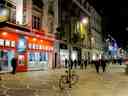
Look ahead down the lively pedestrian walkway lined with glowing shop signs and a bright red cinema entrance-just beyond the crowd, the bustling Rue de Béthune stretches out in front of you! Welcome to the legendary beating heart of Lille’s shopping scene, Rue de Béthune! Let’s imagine for a moment that you’re not just here in the 21st century but stepping into a swirling time machine. Picture the sound of excited shoppers, clinking tram bells, and maybe even the distant echo of a medieval city wall. Believe it or not, this street hasn’t always been dominated by dazzling neon, popcorn scents wafting from the cinema, or the thump of new sneakers from the shops around you. Long ago, Rue de Béthune was just a narrow street heading west out of Lille, locally known as Rue Notre-Dame. Its name changed in the drama of 1793-during the French Revolution, mind you-when the gate it led to was renamed the Porte de Béthune. Back in 1605, when Lille was expanding like teenagers at an all-you-can-eat buffet, the powerful city walls grew westward, swallowing up open fields and turning dirt tracks into cobbles. If you could have strolled here in those days, the air would have smelled of wood fires, the clatter of horse hooves echoing against the old stone gate, and everyday folks bustling toward the city center. For centuries, it was the neighborhood for regular people-workers, merchants, musicians-all weaving their daily stories. It wasn’t until the middle of the 19th century that the big transformation began. The mighty ramparts were demolished (there goes the neighborhood fortifications!), and little by little, fancy storefronts popped up, giving Rue de Béthune its sparkle. The street shook again during the First World War, when fierce fighting flattened many buildings, leaving reconstruction to fill the gaps with fresh architecture in the 1920s. And would you believe, in the 20th century, trams rattled through here-at least, until 1966-making shopping sprees a little speedier but a lot bumpier! In 1974, cars got the boot, and Rue de Béthune made its grand entrance as a pedestrian paradise. So as you look around today-bright lights, crowds, the old façade right above that neon sign-try to imagine all the footsteps that have echoed along these stones, from medieval merchants to modern moviegoers. Take a deep breath and listen for a heartbeat beneath the city’s modern hustle; Rue de Béthune is Lille’s living tapestry, woven with centuries of stories, laughter, and just a hint of shopping frenzy. If you're keen on discovering more about the location and access, origin of the name or the historical, head down to the chat section and engage with me.
समर्पित पेज खोलें →Right in front of you, Rue Neuve stretches out like a lively ribbon between striking golden and stone-colored buildings, with bustling shops on the sides and the hum of people…और पढ़ेंकम दिखाएँ
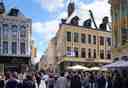
Right in front of you, Rue Neuve stretches out like a lively ribbon between striking golden and stone-colored buildings, with bustling shops on the sides and the hum of people guiding your gaze straight ahead. Alright, welcome to Rue Neuve, one of Lille’s most energetic streets! Picture this: it’s the year 1535, and the city is feeling a bit… well, cramped. Imagine Lille being so packed you’d have a better chance squeezing through a mousehole than getting across town, so what did they do? They created a “new street” - hence Rue Neuve, which literally means “New Street.” And at the time, it really was brand new, breaking through a network of ancient medieval roads that had been here for two centuries. Now, if you listen closely, you might just hear the faint echo of horses’ hooves and market vendors from centuries past. Back then, this street was a grand shortcut, built over the garden of a house called l’Épinette, aiming to un-jam the always-crowded Rue Pierre-Mauroy nearby. Imagine two little bridges here, arching over sparkling canals - not quite the watery Venice, but close enough for Lille! These canals, the canal du pont de Paris and the canal des Boucheries, were once so important that people actually built houses on top of the bridges. Quite a fixer-upper, don’t you think? Fast forward to the 1970s - platform shoes, disco, and a radical new idea. Rue Neuve becomes the very first street in Lille closed entirely to cars, now devoted to pedestrians. So, you’re walking on history, the city’s original pedestrian runway, cheered by lively shopfronts and laughing crowds. If you’re feeling a little proud strolling along, that’s totally justified. From the hustle of ancient merchants to today’s vibrant shoppers, this street has always been at the center of Lille’s heartbeat. So, window-shop away, and just remember - you’re not just shopping, you’re time-traveling!
समर्पित पेज खोलें →To spot the Lille Pocket, look for the old road signs pointing to Armentières and Béthune right in front of you, next to a shady row of trees and the remnants of battered cars…और पढ़ेंकम दिखाएँ
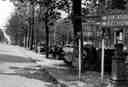
To spot the Lille Pocket, look for the old road signs pointing to Armentières and Béthune right in front of you, next to a shady row of trees and the remnants of battered cars lining the street. Alright, you’re standing in front of the historic Lille Pocket! Close your eyes for a second and imagine the city not with the calm of today, but with the thunder of tanks, scattered soldiers, and the sharp crackle of battle. It was the end of May 1940, and Lille was about to become the stage for one of the most dramatic acts of World War II in France. Suddenly, German tanks rumbled down these very roads, engines growling through the early morning air. Commanded by General Waeger, the German army had completely surrounded Lille. But the French, with about 40,000 men led by General Jean-Baptiste Molinié, were not going to give up without a fight. Their defense stretched from the heart of Lille to towns like Loos, Seclin, and Haubourdin, as these streets became a warren of barricades, rifle nests, and desperate men. Here, resistance wasn’t just about holding ground. While British troops were scrambling to escape at Dunkirk, the defenders of Lille fought to give their allies a chance-five precious days more. Can you imagine it? Soldiers from places as far as Morocco, men of the 1st Moroccan Division and the 2nd and 5th North-African divisions, holding the line with everything they had. The 2nd Moroccan Rifle Regiment, in fact, would later be honored for their bravery. At one point, the desperate French even managed a bold counter-attack. They captured an entire German commander-Fritz Kühne-snatching not only a high-ranking officer but the German attack plans too! For a fleeting moment, you might hear the chaotic shuffle of boots, the whispered commands, hearts pounding in the narrow alleys. Every direction was danger. Tanks to the west, infantry to the north, shells whistling overhead. The defenders’ hope faded as their ammunition ran out, and after hundreds of deaths-both civilian and military-the French strongpoints began to fall, one by one. But in the midst of tragedy, there was also a strange, solemn honor. On June 1st, after a night-long negotiation for surrender, French troops marched through the Grand Place-right past the Germans, with their weapons still in hand. Talk about keeping your head held high in defeat! Even Adolf Hitler himself was furious that the German advance had stalled here, costing precious time and giving those at Dunkirk their shot at evacuation. But unlike many other battles, the Germans recognized the heroism of the Lille defenders. North-African troops, still armed, were saluted by an honor guard of Germans-a rare sight, reserved for the bravest. So, as you stand beneath the leafy shade, try to picture not just a peaceful French boulevard, but a city that thundered with one of World War II’s fiercest last stands. In this pocket, courage and chaos danced together, giving Lille a story echoing with both heartbreak and honor.
समर्पित पेज खोलें →To spot Lille-Centre, look just ahead for beautiful flowerbeds bursting with color, winding stone paths, and rows of tall leafy trees casting cool shade in the heart of the…और पढ़ेंकम दिखाएँ
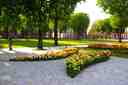
To spot Lille-Centre, look just ahead for beautiful flowerbeds bursting with color, winding stone paths, and rows of tall leafy trees casting cool shade in the heart of the city. So here you are, right in the bustling heart of Lille-Lille-Centre, where every stone and street has a story itching to be told! Take a deep breath and smell the flowers, listen for a moment: you can almost hear the city talking to itself. The birds are chirping, the breeze rustles through the trees, and somewhere in the distance, a tram rattles by. But did you know, this peaceful scene is actually part of an area packed with drama-okay, and a fair bit of shopping, too! Long before this spot bustled with life, Lille-Centre was the heart of a much smaller city. If you could travel back in time, you’d find Lille wrapped tightly in ancient fortifications, just two neighborhoods big. But then, in 1670, the mighty Vauban-Louis XIV’s famous military engineer-decided he had bigger plans. He extended the city walls, turning the historic heart of Lille into the center of a growing urban sprawl. Where you’re standing was once shadowed by massive old ramparts. Imagine in the 1800s, the clatter and dust as the city tore those walls down-new life was springing up, with wide Haussmann-style boulevards like the grand Boulevard de la Liberté opening the gates to modern life. In just a few decades, Lille went from a medieval fortress to a city full of graceful squares, stately avenues, and even a university clustered in the southern district of Saint-Michel. Students in stiff collars and long skirts hustled through the streets-some of them, probably running late for class! The area you see today, stretching from the bustling Place du Général de Gaulle-often just called Grand’Place-to the proud Gare de Lille-Flandres and the glimmering shops of EuraLille, is as much a stage for daily drama as it is for grand history. Every corner seems busy: here, the elegant historic facades of banks and department stores; there, secretive side streets where you can still find echoes of 17th-century Flemish merchant houses. Of course, with all this energy, Lille-Centre has seen its share of tragedy too. The 20th century brought bombs and fire-especially in 1914, when large swathes near the train station were flattened and had to be rebuilt in a neo-Flemish style. In 1916, a fire gobbled up the old city hall at the Palais Rihour. By the 1960s, the city was eager to renew itself, giving a rather hasty makeover to the old working-class Saint-Sauveur district, which lost much of its ancient charm but gained a breathing space for new homes and services. But Lille-Centre isn’t just serious history-it’s also light-hearted and lively. On sunny Saturdays, the plazas fill up with shoppers darting from Printemps for luxe fashion, to FNAC for books and music, and the famous Furet du Nord, a bookshop where you could get lost for days. Hungry? The smell of fresh bread sneaks out from boulangeries; in December, the scent shifts to hot chocolate and spicy speculoos as the Christmas market takes over the squares. Still, don’t miss the quiet pockets left behind-a leafy avenue here, a hidden courtyard there. Did you catch a glimpse of Jeanne d’Arc’s statue, or the stunning spire of Saint-Maurice? Some streets here, like Rue de Béthune and Rue Faidherbe, are packed with modern bustle-perfect for people-watching. Others, such as Rue du Lombard and Rue des Brigittines, are passageways to the past, where you half expect a cloaked figure to emerge from history’s shadows. And finally, if you’re feeling inspired, climb the 104-meter-high city hall belfry nearby. From the top on a clear day, you’ll see the whole swirling pattern of Lille-Centre below-old and new, pressed close by the relentless energy of city life. Down here, though, the rhythm is different. Stand very still just now and listen. That gentle hum is the heartbeat of Lille. So, enjoy your time here! Lille-Centre is part grand stage, part cozy living room, and always the place where the city’s story is still being written-maybe, just maybe, you’ll add your own little chapter before you move on.
समर्पित पेज खोलें →
अक्सर पूछे जाने वाले प्रश्न
मैं टूर कैसे शुरू करूँ?
ख़रीदारी के बाद, AudaTours ऐप डाउनलोड करें और अपना रिडेम्पशन कोड दर्ज करें। टूर तुरंत शुरू करने के लिए तैयार होगा - बस प्ले टैप करें और GPS-गाइडेड रूट का पालन करें।
क्या टूर के दौरान मुझे इंटरनेट चाहिए?
नहीं! शुरू करने से पहले टूर डाउनलोड करें और पूरी तरह ऑफ़लाइन इसका आनंद लें। केवल चैट फ़ीचर को इंटरनेट की ज़रूरत है। मोबाइल डेटा बचाने के लिए WiFi पर डाउनलोड करने की सिफ़ारिश है।
क्या यह एक गाइडेड ग्रुप टूर है?
नहीं - यह एक सेल्फ-गाइडेड ऑडियो टूर है। आप अपनी गति से स्वतंत्र रूप से खोजते हैं, आपके फ़ोन से ऑडियो कथन बजता है। कोई टूर गाइड नहीं, कोई ग्रुप नहीं, कोई शेड्यूल नहीं।
टूर में कितना समय लगता है?
अधिकांश टूर पूरा करने में 60-90 मिनट लगते हैं, लेकिन गति पूरी तरह आपके नियंत्रण में है। जब चाहें रुकें, स्टॉप छोड़ें, या ब्रेक लें।
अगर मैं आज टूर पूरा नहीं कर सकता/सकती तो?
कोई समस्या नहीं! टूर की लाइफ़टाइम एक्सेस है। जब चाहें रोकें और फिर शुरू करें - कल, अगले हफ़्ते, या अगले साल। आपकी प्रगति सेव रहती है।
कौन सी भाषाएँ उपलब्ध हैं?
सभी टूर 50+ भाषाओं में उपलब्ध हैं। अपना कोड रिडीम करते समय अपनी पसंदीदा भाषा चुनें। नोट: टूर जेनरेट होने के बाद भाषा बदली नहीं जा सकती।
ख़रीदारी के बाद मैं टूर कहाँ एक्सेस करूँ?
App Store या Google Play से मुफ़्त AudaTours ऐप डाउनलोड करें। अपना रिडेम्पशन कोड (ईमेल द्वारा भेजा गया) दर्ज करें और टूर आपकी लाइब्रेरी में दिखेगा, डाउनलोड और शुरू करने के लिए तैयार।
अगर आपको टूर पसंद नहीं आया, तो हम आपकी ख़रीदारी वापस करेंगे। हमसे संपर्क करें [email protected]
सुरक्षित चेकआउट 


