

साओ लुइस ऑडियो टूर: पवित्र प्रतिध्वनियों से रेगे की ताल तक
साओ लुइस की अलंकृत छतों और धूप में पकी टाइलों के नीचे, सदियां सादे नज़ारे में छिपी हुई हैं—हर चर्च का कोना रहस्यों और अंधविश्वास से भरा है। यह स्व-निर्देशित ऑडियो टूर आपको उस दुनिया में ले जाता है, उन दबी हुई कहानियों को उजागर करता है जिन्हें ज़्यादातर यात्री नज़रअंदाज़ कर देते हैं: प्रतिद्वंद्वी संस्थापक, प्रतिशोधी राज्यपाल, निषिद्ध रोमांस, लुप्त होते भाईचारे, प्रेतवाधित अस्थि-संग्रहालय। महामारी के बुखार-काले दिनों में किस अभिशाप ने शोक मनाने वालों को पैंटालियन चर्च के पीछे एक कब्रिस्तान बनाने के लिए प्रेरित किया? एक शक्तिशाली राज्यपाल ने सेंट जॉन द बैपटिस्ट की छाया में बदनामी से सुरक्षा के लिए क्यों भीख मांगी? सेंट सेवेरा के अवशेष से जुड़ा वह भयावह अनुष्ठान क्या है, जिसके बारे में साओ लुइस में पीढ़ियों से फुसफुसाया जाता रहा है? इन पदचिह्नों का पता लगाएं जैसे-जैसे गलियां संकरी होती हैं, मीनारें फीके अग्रभागों के ऊपर उठती हैं, और हर घंटी की गूंज एक दूसरे युग की धड़कन बन जाती है। हर पड़ाव एक और परत खोलता है—दुख और आशा, विश्वास और विश्वासघात की—ताकि आप केवल चर्चों को ही नहीं, बल्कि इस शहर की आत्मा में गहराई से निहित जीवित अवशेषों को देखें। अब साओ लुइस की किंवदंतियों को अनलॉक करें। आपके पैरों के नीचे का सर्प प्रतीक्षा कर रहा है।
टूर पूर्वावलोकन
इस टूर के बारे में
- scheduleअवधि 30–50 minsअपनी गति से चलें
- straighten4.3 किमी पैदल मार्गगाइडेड पथ का पालन करें
- location_on
- wifi_offऑफ़लाइन काम करता हैएक बार डाउनलोड करें, कहीं भी उपयोग करें
- all_inclusiveलाइफ़टाइम एक्सेसकभी भी, हमेशा के लिए फिर सुनें
- location_onपैंटालियन का चर्च से शुरू होता है
इस टूर के स्टॉप
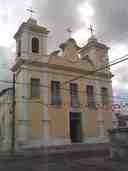
To spot the Church of Pantaleão, look for a soft yellow building squeezed between two narrow streets, its simple Baroque façade flanked by tall twin towers, each crowned with an…और पढ़ेंकम दिखाएँ
To spot the Church of Pantaleão, look for a soft yellow building squeezed between two narrow streets, its simple Baroque façade flanked by tall twin towers, each crowned with an iron cross, all rising abruptly from the edge of the road with no front courtyard. As you stand on this corner, pause a moment and listen to São Luís breathe around you. The Church of Pantaleão has watched these streets for more than two centuries. Imagine, if you will, the year is 1780. The colony is poised between centuries of European dreams and fierce local realities. Two men - Pantaleão Rodrigues de Castro and Pedro da Cunha - both wealthy, respected, and ambitious, gathered the city’s faithful, marked ground where we stand now, and began construction of a church for Saint Joseph. The sound of picks and hammers must have rung out every day, mingling with prayers as the walls rose slowly under the relentless São Luís sun. Yet, like so many dreams in this city, their work met delays. Both founders died before seeing their vision completed, and the work fell to their sons-a legacy of devotion passed on, even as the world changed. Look around and picture these streets two hundred years ago, far less crowded, the air heavy with the promise of coming independence. When the doors finally opened in 1817, crowds packed these narrow lanes. There was music, celebration, and a great gathering to welcome Saint Joseph’s image, the same one that still rests inside the church today. But there’s more to this church than grand ceremonies. There are layers of community, tragedy, and even a touch of superstition written into its stones. In the early 1800s, disaster loomed as the church fell into ruin, its cemetery forced into existence behind the building when plague and epidemic swept the city. Imagine the sadness of those days, the bells echoing, the ground behind the church growing crowded with hurried burials. Yet, it endured, rebuilt time and again as São Luís grew, and as each era left its mark-such as the splendid wrought iron balconies and transom added in 1894, a small but proud touch of elegance you can admire if you step closer. The church carries stories within its plain exterior-look for those details, like the iron balcony work and the twin towers, one hosting a bell that once pealed over the city to mark both celebration and warning. The interior is modest and simple, humble compared to many in Brazil, but no less sacred to the countless people who have found hope here over centuries. And deep within the church is something extraordinary: relics of Saint Severa, a Roman child-martyr. In 1847, bone fragments from this ancient saint were brought all the way from Italy. Local legend runs deeper still. They say if you pierce her wax image with a pin, it will bleed-a chilling thought that held both fright and fascination for generations. This place is steeped in both fact and fable. Perhaps you’ve heard the legend of the enchanted serpent that slumbers below your feet. Intertwined with the old canals that run under São Luís, it is said the city rests on the serpent’s twisting form. Its head lies beneath a distant fountain, its belly deep under a convent, and its coiled tail-right here, beneath this very church. Should the serpent ever awaken, the story goes, São Luís will be no more. For centuries, children have whispered and parents have shivered at the thought. Today, the church bears the name of both Saint Pantaleão and Saint Joseph, but its popular name-born from its benefactor-is a reminder that here, the past is never truly gone. Saints, founders, orphans who once turned the foundling’s wheel for a second chance, generations of faithful-all their stories echo here. This building is protected as part of the UNESCO World Heritage Site, honored and watched over by the city and all who pass by. So, as you peer at its weathered stone and listen to the faint hum of São Luís around you, remember: every plain wall, every echo of the bell, is centuries of hope, heartache, legends, and lives all layered right here where you now stand. Curious about the name, location or the timeline? Don't hesitate to reach out in the chat section for additional details.
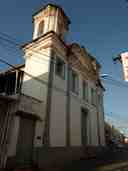
समर्पित पेज खोलें →Directly in front of you, the Church of Santana rises along the street with its simple, pale façade marked by a single tall tower and a large arched doorway, so look for the…और पढ़ेंकम दिखाएँ
Directly in front of you, the Church of Santana rises along the street with its simple, pale façade marked by a single tall tower and a large arched doorway, so look for the church’s distinct, classical lines and traces of weathered paint above the shops on this narrow road. Now, as you stand before the Church of Santana, imagine the heat of a São Luís afternoon in 1790, with dust swirling through the historic streets and the distant echoes of hammering and voices as a new vision was built. This church, ordered into existence by Canon João Maria da Leu Costa, was meant to be more than stone and wood. For centuries, it has stood just like this-stubborn, dignified, a mixture of neoclassical grace and the exuberance of Baroque detail. If you stepped closer to its weathered walls, you would see blue-and-white Portuguese tiles on the sides, cooled by the breeze and sunlight, each telling stories from centuries gone by. Inside, the air would grow stiller, a faint scent of incense haunting the wooden pews. Picture the treasures of the Brotherhood of Senhor Bom Jesus dos Martírios once on display, though now only memories and surviving artifacts linger, reminders of a brotherhood that quietly vanished in the 1960s. From this very door, once a year, a solemn procession emerges on the third Friday of Lent-the faithful, shrouded in tradition and hope, winding their way through twilight as curious onlookers press in. People often mistake this place for the lost Chapel of Santana da Sagrada Família-there’s a certain mystery, a fading boundary between history and legend. Yet, this is the living heart. It survived storms and centuries, witnessed the pulse of a city’s growth. Recognized by UNESCO, the church is part of the historical center, adapted ingeniously for the tropical heat with tiled panels defending against the sun. Decades ago, restoration brought a new breath to its golden altar and rooftops. So as you stand here, feel the weight of stories and rituals layered deep in the stone and tile-a place tied inseparably to the soul of São Luís.
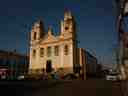
समर्पित पेज खोलें →You are now facing the Church of St. John the Baptist-look directly ahead for a pale yellow neoclassical facade with two towers, each slightly different, and green shuttered…और पढ़ेंकम दिखाएँ
You are now facing the Church of St. John the Baptist-look directly ahead for a pale yellow neoclassical facade with two towers, each slightly different, and green shuttered windows above a wide stone staircase. As you stand in the heart of old São Luís with the afternoon sunlight casting long shadows across the street, imagine the footsteps echoing along Rua de São João and Rua da Paz, leading your gaze straight to this remarkable church. The Church of St. John the Baptist isn’t just another landmark-it’s the fourth oldest church in the city, watching over this crossroads for centuries. But its origins are as dramatic as any story from the city’s past. Picture the year 1665. The governor of Maranhão, Ruy Vaz de Siqueira, walks these same cobbled streets, anxious and whispered about. Legend tells us a secret-he was entangled in a forbidden romance with a married aristocrat. Fearing scandal, desperate to keep his reputation intact, he made a silent pact with St. John the Baptist: if his secret stayed safe, he’d build a church in the saint’s honor. When his secret never came to light, construction began. Some say an even older chapel may have stood here before the Dutch invaded in 1641, but what you see now grew from that old promise, blending sorrow and redemption. Upon completion, the church was protected by sturdy Portuguese soldiers, and soon after, in 1673, their sacred brotherhood received official approval. Over the years, this place grew-by 1857, it was a parish sheltering souls from neighboring churches. Governors contributed, the square outside was paved, and in 1934, a major restoration swept through, reshaping the church’s face, but never its spirit. Stand before its unusual front: four Corinthian columns, a cross above, Latin letters inscribed beneath-the name Sancti Joannis Baptistæ Ecclesia. Notice how its two towers are not quite twins, breaking with strict neoclassical rules and giving the church a personality all its own. Look up and see the dates-1665 for its founding, and 1934 for its renewal-etched into history. One of its secrets, however, is darker. For many years, the ossuary just inside held the remains of Joaquim Silvério dos Reis, a man forever marked as the traitor of the Inconfidência Mineira. His tomb stood as a controversial testimony until it was lost to time and renovations. Here, each stone and inscription whispers of love, secrecy, and betrayal-a living memory for the city’s oldest streets.
समर्पित पेज खोलें →
7 और स्टॉप दिखाएँकम स्टॉप दिखाएँexpand_moreexpand_less
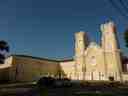
In front of you stands a grand, pale-yellow building with two thick, castle-like towers topped by white battlements-a wide, low wing stretches to the left, while the church’s…और पढ़ेंकम दिखाएँ
In front of you stands a grand, pale-yellow building with two thick, castle-like towers topped by white battlements-a wide, low wing stretches to the left, while the church’s imposing façade and towers rise up directly ahead for you to spot. Now, as you stand in the shadow of these thick walls, let yourself drift back across the centuries to when this place was still a story in the making. Imagine the year is 1624. Around you, the clatter of construction fills the humid air. The original convent and the small Bom Jesus dos Navegantes chapel are just beginning to take shape, set beside each other on this very square-Praça Antônio Lobo. The city itself is little more than a patchwork of red clay and rumor, marshland and ambition. A Franciscan friar named Cristóvão de Lisboa steers this vision. When he leaves for the distant, wild lands of Pará, another friar, Antônio da Trindade, keeps watch. The air here has always been thick, not just with the heat of Maranhão, but with secrets, resistance, and faith. Over time, this convent offers more than prayer. It serves as a clandestine refuge; its thick walls hide those fleeing persecution, those who have defied the governor or broken with the church. Imagine, for instance, in 1720, the city’s highest judge, Dr. Vicente Leite Ripado, racing through the streets at dusk to throw himself into the sanctuary of the convent-the only safe haven after he dared to jail a powerful captain. The convent was even the birthplace of something less peaceful-the Beckman Revolt. Picture February 24th, 1684, a moonlit night. On the shadowed steps by the convent doors, Manuel Beckman stands tall before a secretive crowd. In his voice, suspicion and fury. He calls for rebellion, railing against monopolies and the Jesuits’ iron hold over the local people and land. It is here, right where you are standing, that the seeds of revolt are sown. But even sanctuaries sometimes shape the fates of the powerful. In the mid-1800s, with the convent abandoned and quiet, the walls echo only with the dreams of Frei Vicente de Jesus. He sets to restoring what is nearly lost-yet resources are scarce, and by his death the work stands unfinished. It takes another friar, Ricardo do Sepulcro, to marshal new funds, and in 1867, the city witnesses a resplendent celebration-the arrival of a new image of St. Anthony, greeted by cannon salutes and a grand procession. The church also holds quieter tales. The Bom Jesus dos Navegantes chapel, joined to the church, is among the oldest in São Luís, built by French Capuchins in 1613. Its walls cradle a vast mortuary, with those from the city’s highest ranks laid to rest beneath your feet. Imagine the crypts still whispering with old secrets, the air cool and heavy with memory. From this very pulpit, Father Antônio Vieira once thundered his famous “Sermon of St. Anthony to the Fish,” a sermon whose sharp wit echoed accusations at the elite, veiled beneath parable and prayer. Laughter, tension, perhaps even fear, vibrated beneath the chapel’s ancient woodwork as the city’s most powerful listened, unsure whether they were the fish or the fishermen. This place evolves, always adapting-becoming, at one point, the first police barracks for the province, and centuries later, a host to history: in 1991, Pope John Paul II rested here during his visit, his presence drawing half a million souls to the city’s shore for a mass that pulsed with hope, faith, and celebration. As you stand in front of these resolute walls, the air shimmers with echoes. Here, faith has always mingled with courage, struggle, and transformation. In São Luís, no stone is silent.
समर्पित पेज खोलें →Looking ahead, you will see a striking white Gothic church with pointed arches, a single central tower crowned by a tall octagonal spire, and statues perched at the edges of its…और पढ़ेंकम दिखाएँ
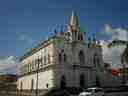
Looking ahead, you will see a striking white Gothic church with pointed arches, a single central tower crowned by a tall octagonal spire, and statues perched at the edges of its roofline-this is the Igreja de Nossa Senhora dos Remédios, located right across from the Gonçalves Dias Square. As you stand before this grand church, imagine yourself transported back to 1719, when all that existed here was dense brushland and open sky. Picture a small group of men, led by the Franciscan João da Silva Cutrim, handing a square of untamed land to Captain Manoel Monteiro de Carvalho. With determination, Manuel sets the first stones, marking the beginning of a humble ermida-a tiny chapel built for prayer at the tip of what was then called Romeu’s Point. The sun is hot, the insects buzz, and the only sounds are hammers and voices mixing with birdsong. The little chapel was raised quickly, welcoming people hungry for hope, their feet crunching on wild grass as they approached its doors. But this sanctuary, meant for peace, would soon be shadowed by a dark tale. One fateful day, a slave, hiding inside the chapel, struck down his master who’d come searching for him. The tragic echo of that moment spread through the community, making the devout wary-many were afraid to return. For decades, the chapel sat lonely and somewhat forgotten. Then, in 1775, Governor Joaquim de Mello e Póvoas cut a new road through the wilderness, connecting this spot with what is now Rua Grande. Suddenly, the bustle of the city inched closer. You can almost hear the clatter of carts and the shuffle of feet as people return to worship, the haunting silence of the place replaced by the gentle roar of life. Time is never gentle on old buildings. By the end of the 18th century, the small chapel crumbled into ruin. It would only come back to life thanks to a persistent hermit named Francisco Xavier, who persuaded local merchants and ship captains to fund a new, grander church-dedicated now to Nossa Senhora dos Remédios, the patroness they believed watched over their fortunes. In the early 1800s, this church truly thrived, its marble altar and fine glass catching the late sun, a reward from grateful traders whose ships were braving the tides. By 1860, another major change arrives. The governor himself pays for a magnificent staircase leading from the church down to the sea, offering worshippers a dramatic view-and easy access even by boat. Picture the clang of workers’ tools, iron railings being set, and the scents of sea spray wafting over the square. The church became a landmark for commerce and faith alike. With its unique Gothic style-pointed arches, striking windows, and a single powerful bell tower-it stands unlike any other church in São Luís. If you look up, you’ll see statues of the four Evangelists, positioned in 1907 and gazing out over the city as silent sentinels. Colored light spills in through German stained glass, added in the 20th century, transforming the interior with every sunrise and sunset. Inside, three altars await; the main one is solid marble, cool and eternal beneath your hand. Generations of people have gathered here, not just for worship but for the annual celebration, the Festejo de Nossa Senhora dos Remédios-one of Maranhão’s most celebrated festivals, alive with music, hope, and gratitude. So as you stand in front of this Gothic masterpiece, think of all the stories layered into these walls: whispers of struggle, rescue, renewal, and unwavering faith that stretch across three centuries.
समर्पित पेज खोलें →To spot the Church of Our Lady of the Rosary in front of you, look for a simple white facade with two bell towers and a curving central pediment, all decorated by a line of…और पढ़ेंकम दिखाएँ
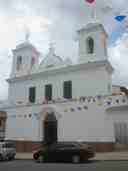
To spot the Church of Our Lady of the Rosary in front of you, look for a simple white facade with two bell towers and a curving central pediment, all decorated by a line of colorful paper flags stretching overhead. Now, while you stand here on Rua do Egito in the heart of São Luís’ Historic Center, imagine this street centuries ago, echoing not with cars and city life, but with footsteps heavy from hard work, hope, and faith. This church, with its sturdy, whitewashed exterior and twin towers rising quietly against the sky, holds within its walls a deeply human story-a story shaped by hands that carried both grief and devotion. In the late seventeenth century, when this land was ruled by colonial powers, enslaved Africans lived under harsh conditions, kept apart by strict social divides. Religion became both comfort and a means of survival for them. The Jesuits, powerful men in robes, taught the enslaved people prayers and led them in worship-not always with kindness, but with the intent to weave Catholicism into daily life. In their own quiet way, the enslaved community took these devotions and made them their own, centering their faith around Our Lady of the Rosary. The idea for this church began with a dream of belonging. Barred from the main churches, the Black Catholic communities formed their own brotherhoods-tight-knit groups that cared for each other, bid for each other’s freedom, and created space for their dead to rest on sacred ground. In the early 1700s, after searching for a place to build their house of faith, they accepted a plot from the Carmelite friars. It was an old piece of land known as “Carmo Velho,” where French Franciscan friars had raised the city’s second-oldest church over a century before. Now, that ground would be used for a new sort of sanctuary. Building the church took sixty years-a lifetime for some. Imagine the slow progress of stone on stone, each block shaped by tired but determined hands, with the Black brotherhood led by João Luís da Fonseca, a proud figure known as the “King” of the group. In 1776, the church was finally ready, and a quiet procession carried the statue of Our Lady of the Rosary from the Carmelite church to her new home here. Over time, its simple baroque lines, the two towers, and the gentle archway became familiar to all in São Luís, welcoming not just the brotherhood but anyone in need. Inside, the baroque style still lingers, though time has changed much-the original wooden floors and altar have been replaced, but decorated Portuguese tiles line the narrow ambulatory, and four shrines glow on the walls, each with its own saintly figure. It was here, in 1814, that the Charity Procession set out for the first time, ensuring the poor would receive a dignified burial. By the 1800s, even as São Luís grew and changed, this church served as a school for young children and became the main parish church when the city’s cathedral was struck by lightning. As the years wore on and old brotherhoods faded, the church faced neglect, its stones bearing silent witness to loss and memory. But in 1947, a new chapter began-the Brotherhood of St. Benedict moved in, bringing laughter, celebration, and purpose. Every August, they hold the vibrant St. Benedict Festival here, filling these spaces with music, prayer, and life once again-just as those early builders must have dreamed.
समर्पित पेज खोलें →To spot the Teatro Arthur Azevedo, look for a grand pink and gray building on the corner, topped with classical white columns and adorned with decorative balconies and round…और पढ़ेंकम दिखाएँ
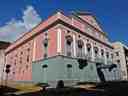
To spot the Teatro Arthur Azevedo, look for a grand pink and gray building on the corner, topped with classical white columns and adorned with decorative balconies and round windows. Standing here, imagine yourself in São Luís in 1817, as the city buzzed with excitement over a brand new theatre - a luxury few could have dreamed of at that time. Portuguese merchants, their minds inspired by the lavish sights they saw in Lisbon, wanted to bring a little of that glamour to São Luís, which was flourishing thanks to the cotton trade. They built this neoclassical masterpiece in a horseshoe shape, just like the finest Italian theaters, and when it opened as the Teatro da União, it was the place to be, the heart of music and drama, seating everyone from wealthy merchants to curious townsfolk. Over 800 people, about five percent of the city, could fit inside under sparkling lamps and thick red curtains. But the story of this theatre isn’t all grandeur and applause. It changed names and purposes; in the 1940s, flickering film reels replaced actors as it became a cinema. Years later, it was left abandoned, the facade silent, while inside, paint peeled and shadows crept along the ruined balconies. Only echoes of the past remained until, in 1989, the city recreated this historic space according to its original plans. Now, you stand in front of a building born twice-rebuilt with care, ready to let a new generation’s stories unfold beneath its graceful arches.
समर्पित पेज खोलें →To spot the Convent and Church of Our Lady of Mount Carmel, look for a grand cream-and-white building with two simple towers topped by iron crosses and a wide, symmetrical facade…और पढ़ेंकम दिखाएँ
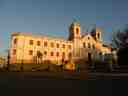
To spot the Convent and Church of Our Lady of Mount Carmel, look for a grand cream-and-white building with two simple towers topped by iron crosses and a wide, symmetrical facade facing the square, featuring a set of steps leading to the main entrance. Now, allow your imagination to linger in the shadowy golden glow that brushes against the ancient stones in front of you. This is the Convent and Church of Our Lady of Mount Carmel, standing firm in Praça João Lisboa since the early years of São Luís itself. Picture the year 1624: the city is young, the streets are raw, and three friars from the Carmelite order arrive here, led by the determined Friar Cristóvão de Lisboa. With the governor’s permission, they set down roots, first in a humbler spot now remembered as Carmo Velho. But soon, by 1627, they moved to this very ground, building their convent where a lone chapel to Saint Barbara once stood. You’re facing a facade shaped by centuries of change and drama. Imagine the commotion of 1640, when Dutch invaders swept through these streets. The church was battered-its towers were damaged, its walls scarred, and for a tense moment, even the stones seemed to hold their breath. Soldiers moved in, taking the convent as a fortress. Yet amidst war, the friars refused to abandon their mission: teaching, preaching, sheltering the poor from the chaos, coaxing courage in the faces of white townsfolk and indigenous people alike, and even offering up their cattle from far-off Itaqui to keep hunger at bay in the besieged city. Once peace returned and the Dutch were sent away, this place transformed countless times-sometimes a school, other times a headquarters for artillery or the police. Think about children’s voices echoing through the halls as Maranhão’s first public primary and secondary classes are taught here, or the hushed excitement when the very first public library opened to eager readers. The air must have been thick with possibility and the scent of old paper. In 1814, the convent received special permission: human and moral sciences, theology, and even Latin and rhetoric were all taught freely to the city’s youth. Education and religious devotion pulsed through these walls, carrying on well past the birth of Brazil’s independence. Yet, not all was peace and quiet here. In more turbulent times, especially as the monarchy’s days waned, students of the Liceu Maranhense-the first of its kind in Maranhão-gathered at the windows above, shouting down to the street below. Here, they heckled presidents and visiting nobility, chanting against monarchy, in defiance so raucous that the police were summoned almost daily to restore order. It was from these windows that José do Patrocínio, spirited and unyielding, addressed the public before being deported for his political activism. By the late 19th century, as Brazil's Republic dawned, the Carmelites left, the convent fell to the Capuchins, and the city’s religious and social life was given new energy. Even as parts of the building faded-its original altar replaced, new annexes added, the grand steps outside swapped for sweeping side staircases-this complex endured. Today, as the sunlight catches on its baroque facade, and the gentle breeze weaves through the square, you can almost sense the deep well of stories these stones contain. The Convent and Church of Our Lady of Mount Carmel remain a living testament to centuries of faith, learning, struggle, and spirited debate that shaped São Luís.
समर्पित पेज खोलें →Look ahead for a tall, white colonial building with red-trimmed windows and balconies, a large flag in yellow, green, and red hanging by the entrance, and the name “Museu do…और पढ़ेंकम दिखाएँ
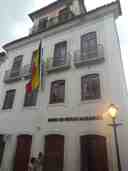
Look ahead for a tall, white colonial building with red-trimmed windows and balconies, a large flag in yellow, green, and red hanging by the entrance, and the name “Museu do Reggae Maranhão” clearly displayed above the doorway. You are now standing at the threshold of a place where music pulses through the walls and memory dances through every room. This is the Reggae Maranhão Museum, the first reggae-themed museum outside Jamaica and only the second in the world. Its doors first opened in January 2018 with a purpose: to capture the heartbeat of reggae that echoes through São Luís like nowhere else in Brazil. Imagine, back in the 1970s, locals tuning their radios at night, hoping the sea breeze would carry crisp beats of Caribbean reggae from across the ocean. That thin wave of music did something remarkable-it made São Luís the “Brazilian Jamaica,” giving birth to a whole city with more than 200 massive sound teams, called radiolas, thundering their rhythms across the neighborhoods. In those days, sailors and travelers brought new vinyl records in their suitcases, and soon, beats were rolling out of the city’s port zone, swirling through the streets like the scent of evening rain. Picture the 1980s and 90s here: reggae pouring out of nightclubs, makeshift stages glowing under string lights, couples swaying in the warm air, and DJs battling to be the loudest in the city. A television glowed in someone’s living room with “Conexão Jamaica” while the first local reggae legends, like the band Tribo de Jah, took the stage. Reggae here transformed, becoming more romantic and sensual than its island ancestor, shaped by the moves of local dancers and by the heartbeat of Maranhão’s own folk rhythms, like bumba-meu-boi and Tambor de Crioula. People even gave new names to hit songs-“melô” or “pedra,” meaning “stone,” if a track was solid and unbeatable. The museum itself pays tribute to this whole journey. On the outside, you’ll see the unmistakable colors of yellow, green, and red-a nod to reggae’s Jamaican roots and the spirit of Bob Marley, the movement’s eternal icon. Inside, five different rooms tell stories of highs and lows, wild parties and quiet moments. There are rare vinyl records you can almost hear crackling, old photos filled with clubs and crowds, and testimony clips from the pioneers themselves. The Hall of Immortals honors Maranhão’s departed reggae heroes, while the other four galleries teleport you back to legendary clubs: Pop Som Club, Toque de Amor, União do BF, and Espaço Aberto, whose walls once shook with sound. Among the treasures: a battered guitar carried by Tribo de Jah through more than 20 countries and the iconic radiola “Voz de Ouro Canarinho,” one of the first to thunder reggae throughout Maranhão, its rumble still remembered by those who heard it. To step inside is to enter a celebration-rare recordings spin, archives fill the Reggae Library for researchers, and the Roots Café invites you to linger. There are concerts and workshops, and sometimes even impromptu dance classes, so the music stays alive. As you stand here, imagine stepping through the door and feeling the rhythm as it passes from speaker to soul, making every visitor part of this living, unforgettable legacy.
समर्पित पेज खोलें →
अक्सर पूछे जाने वाले प्रश्न
मैं टूर कैसे शुरू करूँ?
ख़रीदारी के बाद, AudaTours ऐप डाउनलोड करें और अपना रिडेम्पशन कोड दर्ज करें। टूर तुरंत शुरू करने के लिए तैयार होगा - बस प्ले टैप करें और GPS-गाइडेड रूट का पालन करें।
क्या टूर के दौरान मुझे इंटरनेट चाहिए?
नहीं! शुरू करने से पहले टूर डाउनलोड करें और पूरी तरह ऑफ़लाइन इसका आनंद लें। केवल चैट फ़ीचर को इंटरनेट की ज़रूरत है। मोबाइल डेटा बचाने के लिए WiFi पर डाउनलोड करने की सिफ़ारिश है।
क्या यह एक गाइडेड ग्रुप टूर है?
नहीं - यह एक सेल्फ-गाइडेड ऑडियो टूर है। आप अपनी गति से स्वतंत्र रूप से खोजते हैं, आपके फ़ोन से ऑडियो कथन बजता है। कोई टूर गाइड नहीं, कोई ग्रुप नहीं, कोई शेड्यूल नहीं।
टूर में कितना समय लगता है?
अधिकांश टूर पूरा करने में 60-90 मिनट लगते हैं, लेकिन गति पूरी तरह आपके नियंत्रण में है। जब चाहें रुकें, स्टॉप छोड़ें, या ब्रेक लें।
अगर मैं आज टूर पूरा नहीं कर सकता/सकती तो?
कोई समस्या नहीं! टूर की लाइफ़टाइम एक्सेस है। जब चाहें रोकें और फिर शुरू करें - कल, अगले हफ़्ते, या अगले साल। आपकी प्रगति सेव रहती है।
कौन सी भाषाएँ उपलब्ध हैं?
सभी टूर 50+ भाषाओं में उपलब्ध हैं। अपना कोड रिडीम करते समय अपनी पसंदीदा भाषा चुनें। नोट: टूर जेनरेट होने के बाद भाषा बदली नहीं जा सकती।
ख़रीदारी के बाद मैं टूर कहाँ एक्सेस करूँ?
App Store या Google Play से मुफ़्त AudaTours ऐप डाउनलोड करें। अपना रिडेम्पशन कोड (ईमेल द्वारा भेजा गया) दर्ज करें और टूर आपकी लाइब्रेरी में दिखेगा, डाउनलोड और शुरू करने के लिए तैयार।
अगर आपको टूर पसंद नहीं आया, तो हम आपकी ख़रीदारी वापस करेंगे। हमसे संपर्क करें [email protected]
सुरक्षित चेकआउट 


