पर्थ ऑडियो टूर: पर्थ के केंद्रीय केंद्र से होकर ऐतिहासिक सैर
सोने ने कभी पर्थ की धूल भरी सड़कों को एक जंगली सीमा में बदल दिया था, जहाँ ऊँची मीनारों और भव्य अग्रभागों के नीचे भाग्य उदय हुए और रहस्य गहरे होते गए। इस स्व-निर्देशित ऑडियो टूर पर, शहर के धड़कते दिल से होकर एक पगडंडी का अनुसरण करें, उन अनदेखी कहानियों को उजागर करें जो सादे दृश्यों में छिपी हैं। स्वान नदी कॉलोनी के भूमि अनुदान की गूँज से लेकर पैलेस होटल और वेस्ले चर्च जैसे अलंकृत प्रतीकों तक घूमें, और उन परतों को उजागर करें जिन्हें अधिकांश आगंतुक चूक जाते हैं। गवर्नमेंट हाउस में कौन सा विस्फोटक टकराव एक औपनिवेशिक सपने को लगभग ध्वस्त कर देता था? हलचल भरी हे स्ट्रीट के ऊपर रंगीन कांच पर कौन से रहस्यमय संदेश अभी भी मौजूद हैं? एक मंत्री एक बार पीछे की बेंचों से होकर क्यों भागा था, जब इन दीवारों के माध्यम से घोटाले की फुसफुसाहट फैल रही थी? नाटक और साज़िश के बीच आगे बढ़ें क्योंकि प्रत्येक कदम एक और अध्याय प्रकट करता है। हर कोने पर पर्थ को बदलते हुए देखें, परिचित रास्तों को विद्रोह, महत्वाकांक्षा और मुक्ति के प्रवेश द्वार में बदलते हुए। शहर की चमकीली सतह को उठाने और नीचे छिपी किंवदंतियों को खोजने के लिए तैयार हैं? अपनी यात्रा अभी शुरू करें।
टूर पूर्वावलोकन
इस टूर के बारे में
- scheduleअवधि 40–60 minsअपनी गति से चलें
- straighten2.3 किमी पैदल मार्गगाइडेड पथ का पालन करें
- location_onस्थानपर्थ, ऑस्ट्रेलिया
- wifi_offऑफ़लाइन काम करता हैएक बार डाउनलोड करें, कहीं भी उपयोग करें
- all_inclusiveलाइफ़टाइम एक्सेसकभी भी, हमेशा के लिए फिर सुनें
- location_onजनरल पोस्ट ऑफिस, पर्थ से शुरू होता है
इस टूर के स्टॉप
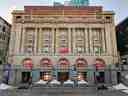
To spot the General Post Office, look for a massive stone building with bold columns and arched windows stretching across the western side of Forrest Place-the name "Commonwealth…और पढ़ेंकम दिखाएँ
To spot the General Post Office, look for a massive stone building with bold columns and arched windows stretching across the western side of Forrest Place-the name "Commonwealth of Australia" runs grandly along the top. Welcome to the mighty General Post Office-Perth’s answer to “how big can you build a mailbox?” Just look at that imposing Beaux-Arts facade, all layered with creamy Donnybrook sandstone and those mighty Ionic columns. When the doors first opened in 1923, this place was the biggest building in Perth and made quite a statement-nothing whispered here!-it absolutely declared, “Hey, this is the age of the Commonwealth.” Long before these big stone and brick walls, Perth’s postal business was a bit haphazard. In the earliest colonial days, if you wanted mail, you probably would have had to tap the harbourmaster on the shoulder. Flash forward to 1835 and they gave postmasters an actual building on St Georges Terrace. By 1841, there was a Postmaster General, and soon after, phone and telegraph services buzzed their way in, making Perth a real hub for communication. But as the city grew, the crowded early post office just couldn’t keep up with all the letters, parcels, and new technology. The adventure of building the palace you see before you is a saga all on its own. In 1911, the federal government secured this very land-which, at the time, was graced by a not-so-charming shopping arcade with a reputation for being “unhealthy.” Let’s just say it wasn’t quite the high-end mall you see today! Architect Hillson Beasley, joined by John Smith Murdoch, drafted up a plan for five floors (and, later, even more), including a basement. They broke ground in 1914, but then-plot twist!-World War I erupted, and suddenly steel was hard to get, with embargoes and shortages slowing everything down. Supplies finally arrived from BHP in 1920, but not before a six-month engineer’s strike ground progress to a halt. Imagine the sound of hammers, drills, and a few grumbles of frustration echoing down Forrest Place! Just when things looked back on track, plans changed again: two more storeys got added, topped with brick instead of stone. By the finish in 1923, no fewer than seven floors rose above Forrest Place-those upper floors for tax officials, telegraph operators, parliamentarians, and even a good old staff dining room for a hard-earned break. The postal hall was huge, stretching two storeys high and showered in natural light from giant panes of frosted glass. Inside was a world of fine jarrah wood, with an estimated 600,000 jarrah blocks used just for the stylish herringbone-pattern flooring. Even the pneumatic tubes zipping telegrams between floors must have looked futuristic back then. Talk about solid-this landmark sits on over 1,500 deep piles, layered with 36-centimeter-thick concrete. It had four elevators for people and two for parcels, so you never had to lug mail up the stairs with your bare hands. When it officially opened in September 1923, Forrest Place itself was christened in style to honor Western Australia’s first Premier, John Forrest. Locals must have gaped at such an ornate stone monument-a jewel admired even by federal legislators who called it the most sumptuous government building rivalled only by the Commonwealth Bank in Sydney. Over time, the GPO became the heart and soul of civic Perth, anchoring the Commonwealth precinct, while the square grew into the city’s main gathering spot. The Padbury Buildings across the way made way for a plaza, creating the lively square you stroll through now. Officially recognized as a heritage treasure in 1992, the General Post Office stands as a magnificent example of Edwardian architecture with a “Greek Renaissance” twist-a reminder that even our mail deserves a little drama and flair. These days, you might spot H&M where the postmasters once sorted mail. Times change, fashion arrives, but the grandeur of this iconic building keeps on standing tall. So, whether you’re here for some shopping or searching for 100-year-old mail, take a moment to appreciate all the history, the hard work, and the quirky stories layered into this grand face of Forrest Place!
समर्पित पेज खोलें →Right in front of you is Murray Street, an energetic pedestrian mall lined with shops and crowned by sleek walkways and glass arcades above-just look for the busy crowds, modern…और पढ़ेंकम दिखाएँ
Right in front of you is Murray Street, an energetic pedestrian mall lined with shops and crowned by sleek walkways and glass arcades above-just look for the busy crowds, modern storefronts, and those rooftop curves to make sure you’re in the right spot! Now, welcome to the heartbeat of Perth’s central business district, where every step along Murray Street feels like diving through layers of city life-old, new, and sometimes just a bit quirky. This avenue was named for George Murray-a British Secretary who, despite the street’s fame, probably couldn’t have found Perth on a map. But don’t hold that against him. Imagine, you’re marching along the only main road in Perth that salutes you with a cathedral at the eastern end: the grand St Mary’s Cathedral. Years ago, the west end had its own church too, St Patrick’s, sounding church bells at Havelock Street, before it gave way just so they could extend the street-Devine intervention for greater traffic, you might say! In 1937, Murray Street stretched even further off to Outram Street, and then on again to Thomas Street, never satisfied standing still. Now picture this: The central chunk of Murray Street, the very pedestrian mall you’re standing on, didn’t always look this lively. There’s history layered beneath your sneakers. Once, this stretch was filled with cars and trams; today, it’s a paradise for shoppers and window gazers. In the early 2000s, when Perth railway station got a shiny new entrance, the mall got a facelift too-luckily for it, botox wasn’t required. Here in the city’s stylish heart, renowned department stores like Myer and David Jones brush shoulders with trendy newcomers like Zara and Nespresso. Murray Street is where you could drop your shopping bags and trip over both the past and the present-hopefully not over your own feet! If the central strip gets a little overwhelming, imagine the luxury: arcades linking straight to Hay Street, more intricate than your average rabbit warren. Step east and you’ll find yourself in the Murray Street East Precinct, where heritage holds strong. The Young Australia League Building looms, a three-story classic with quirky colonnades and proud history. Built for the League and its founder, Jack Simons, it welcomed thousands of youth on their journey to become-well-young Australians. Next door, at 55 Murray Street, stands a stately house once home to politician and philanthropist Timothy Quinlan, who helped carve up land for the city’s Connor-Quinlan Estate. The whole precinct between Pier Street and Victoria Square is a history buffet-so much so, you might wish you brought a time machine. Let’s not skip the former Government Printing Office either-today the Curtin Graduate School, but yesterday it was the city’s information superhighway, minus the high-speed Wi-Fi. And if you’re lost, Perth’s railway station sits just at the mall’s western edge, calling out commuters as reliably as a rooster at dawn. Multi-story parking garages are tucked close by, just in case those shopping bags get the best of your arms. Murray Street, spanning east to west, is Perth’s living, breathing, ever-changing promenade-a place where stories of churches, epic shopping, youth leagues, and dazzling arcades all come together in an endless parade.
समर्पित पेज खोलें →To spot Wesley Church, just look for the striking brick building at the corner of William Street and Hay Street, with one very tall spire shooting up into the sky, surrounded by…और पढ़ेंकम दिखाएँ
To spot Wesley Church, just look for the striking brick building at the corner of William Street and Hay Street, with one very tall spire shooting up into the sky, surrounded by four smaller ones-a true skyscraper of Victorian Gothic style! Now, imagine the dusty crossroads of 19th-century Perth. It’s 1867. Horses clop past wooden wagons, and the air is buzzing with the promise of a new city. In the middle of all this excitement stands a nearly-finished church, its walls a clever patchwork of mellow-toned bricks laid out in a chequerboard style as if someone tried to build a grand cathedral from biscuits! Wesley Church’s mighty spire, reaching 35 metres, is already turning heads and making local pigeons dizzy. But this spot’s story began even earlier-almost like a family adventure! In 1830, a determined bunch of Methodists sailed into the Swan River Colony on a ship called Tranby. Their leader, Joseph Hardey, was a man of vision, and their cargo was hope…and probably a few sturdy hats. They built little places to worship all over the growing colony, but by the 1860s, Perth needed something big and bold. So Methodist members bought this block from James Inkpen, who, with a name like that, really sounds like someone who should open a stationery store, not sell land. The church was planned, the bricks were fired in wood-burning kilns, and Perth’s first mayor, George Shenton, gave a hefty sum (along with Joseph Hardey) to get things off the ground. The architect, Richard Roach Jewell, was the city’s master of Gothic flair-think pointy arches, dramatic buttresses, and tracery windows reaching high. Jewell’s original design put the bell tower on the north-east, but someone said, “Let’s shake things up!” so it moved to the exact southeast spot you see today. Building such a landmark wasn’t cheap: after all the dust settled, it cost almost as much as a small ship filled with bricks. Talk about enthusiasm for a congregation of only 138 people! Opening day, April 1870, must’ve been an emotional rollercoaster-a flurry of hymns and nerves. The new bell, which came straight from their ship Tranby, hung proudly in the spire. Their choir, accompanied by the very first church organ in the whole Western Australian colony (installed in 1875), filled the space with music. Over the decades, Wesley Church has survived both human ambition and the unpredictable shake of Mother Nature. In 1968, the Meckering earthquake rattled its mighty spire so badly that workers began cutting it down. But when they took off nearly 9 metres, the rest stood rock-solid-as if to say, “That’s enough, thank you!” They capped it with a copper cone, and today, the bell from above now sits quietly on display outside, no longer risking another leap from its lofty perch. In the 1970s, while cities everywhere were tearing down the old to build the new, Wesley Church’s community fought to keep their beloved treasure looking grand. With modern towers sprouting nearby, this church managed to hold its place-while quietly getting a facelift, inside and out, thanks to passionate folks (and a National Trust restoration fund). Services are still held for the Uniting Church community, and this building once registered in the National Estate, now sits high on the State Heritage Register. So as you stand under the gaze of those soaring lancet windows, imagine the generations-farmers, blacksmiths, mayors, architects-whose sweat and dreams echo through the nave. And hey, don’t forget to wave at the weathercock spinning atop the spire-he’s probably seen more Perth weather changes than the Bureau of Meteorology! Ready to march to our next landmark? Let’s find out what stories the city has in store just around the corner.
समर्पित पेज खोलें →
12 और स्टॉप दिखाएँकम स्टॉप दिखाएँexpand_moreexpand_less
Right here on Hay Street once stood the fabulous Ambassadors Theatre-a place so lively, you might have thought the popcorn popped itself out of joy. Let’s travel back to 1929:…और पढ़ेंकम दिखाएँ
Right here on Hay Street once stood the fabulous Ambassadors Theatre-a place so lively, you might have thought the popcorn popped itself out of joy. Let’s travel back to 1929: Perth is buzzing, people excitedly clutching their tickets under marquee lights, the scent of fresh paint and velvet seats filling the air. The Ambassadors was brand-new, built after Union Theatres’ boss returned inspired from the United States, eager to share the latest razzle-dazzle with Perth. Inside, music, live stage shows, and the silver screen brought an electric mix of jazz, drama, and Hollywood dreams. Now, things didn’t stay the same for long. By the late 1930s, the theatre’s original grand decorations were swapped out-maybe for trendier styles, or perhaps some unlucky decorator just got a little carried away with a paintbrush and couldn’t stop! For decades, first dates, matinee giggles, and big-screen adventures brightened the city right here. Then, with a last curtain call in 1972, the Ambassadors faded out and was demolished, making way for new stories. So, while the building is gone, the memories of movie magic and music still linger in the Perth air-maybe along with a stray popcorn kernel or two!
समर्पित पेज खोलें →Look for a striking cream-colored building with bold vertical lines, blocky edges, and long windows-the stylish Art Deco facade right in front of you. Now, take a moment to…और पढ़ेंकम दिखाएँ
Look for a striking cream-colored building with bold vertical lines, blocky edges, and long windows-the stylish Art Deco facade right in front of you. Now, take a moment to notice the flair of the Criterion Hotel, Perth’s one and only surviving Art Deco hotel in the bustling heart of the city. Imagine it’s the roaring 1930s: the city streets buzz with jazz, the flapping of glamorous skirts, and the flash of shiny cars. Back then, this landmark was known as the Regatta Hotel, with hopeful travelers spilling through its doors and laughter echoing out into the night air. Over time, the city around it transformed, and while many buildings crumbled or changed, the Criterion stood firm-a bit like Perth’s own stubborn grandparent with unbeatable style! The hotel's bold geometric architecture and vintage charm turned enough heads that it earned a place on the Western Australian Register of Heritage Places in 1996. Saved from the fate of disappearing into history, the Criterion looks today much as it did to visitors nearly a century ago, a rare jewel shimmering between skyscrapers and construction cranes, inviting you to step inside and experience a story that refuses to fade.
समर्पित पेज खोलें →If you look across the street, you’ll spot a building with bold red vertical panels and a dramatic mask right above its sign-the Playhouse Theatre boldly stands out next to the…और पढ़ेंकम दिखाएँ
If you look across the street, you’ll spot a building with bold red vertical panels and a dramatic mask right above its sign-the Playhouse Theatre boldly stands out next to the modern glass and concrete towers surrounding it. Now, imagine it’s a cool evening in the 1960s, and crowds are excitedly pouring through these doors in their best attire, eager to grab a seat in the 700-strong auditorium that’s buzzing with anticipation. The Playhouse Theatre, purpose-built for live productions in 1956, was born out of a pure love of the stage-because, let’s be honest, His Majesty’s Theatre at the time felt a bit like performing Hamlet in an empty football stadium! A handful of drama enthusiasts, known as the Repertory Club, kicked things off way back in 1919. Picture these plucky folks taking over whatever space they could find, from the Palace Hotel’s basement to a cozy cottage, always dreaming of a place to truly call their own-a “real” playhouse. When fundraising finally hit its mark in the ’50s, a legendary landmark rose right here, next to the hallowed grounds of St George’s Cathedral. Oddly enough, the site used to be the Deanery tennis court-so I guess you could say the first acts on this spot involved a lot of good serves and surprisingly few soliloquies! Walking into the Playhouse, you’d find a brightly colored mural from the bold architect Iwan Iwanoff staring you down in the lobby, while inside, the traditional raked auditorium (that’s seats sloping upward like a gentle rollercoaster) gave everyone a perfect view of the stage. Over the years, this theatre was home to two giants-the National Theatre Company, then the Western Australian Theatre Company. Some of the grandest drama in the southern hemisphere graced these boards: from Dorothy Hewett’s The Man from Muckinupin defying government frowns during the state’s 150th birthday, to sparkling visiting stars like Honor Blackman and Timothy West adding a touch of celebrity dazzle. Of course, behind those curtains wasn’t always glamour and thunderous applause; after the roaring success of the late ’70s, times got tough. Even a snazzy renovation in the early ’80s couldn’t stop the National Theatre from closing shop. The Playhouse then became a bit of a shape-shifter, with new names and new faces-the Threshold Theatre, the XYZ Theatre Company, all trying to keep the spotlight burning. Yet for generations, this place remained Perth’s beating theatrical heart, local laughter and applause almost lifting the roof (and, if you ever saw “Puss in Boots” here during the grand finale, maybe a few children’s shrieks too). It all came to a bittersweet close when the theatre was finally replaced in 2011, its curtain falling for good with the demolition in 2012, paving the way for new dreams in Cathedral Square. If you listen closely, you can almost imagine the sounds of stagehands bustling, actors reciting under their breath, and an audience holding its breath, waiting for the magic to begin. The Playhouse may be gone, but for over fifty years, it was the heart of Perth’s drama scene-sometimes tragic, sometimes comic, and always vibrant.
समर्पित पेज खोलें →St George’s Cathedral stands proudly ahead, built from striking rosy bricks with tall arched windows and a stout square bell tower-just look for the grand slate roof and the…और पढ़ेंकम दिखाएँ
St George’s Cathedral stands proudly ahead, built from striking rosy bricks with tall arched windows and a stout square bell tower-just look for the grand slate roof and the carved doorways at the corner of St Georges Terrace and Cathedral Avenue. Standing here, lean in and let the story of St George’s Cathedral sweep over you like a church bell on a Sunday morning. This isn’t just any church; it’s the heart and soul of Anglican life in Perth, and the architectural centerpiece of the city’s old government precinct. If you hear faint footsteps echoing off ancient limestone--you’re not imagining things. These grounds have seen just about everything since the original church stood nearby back in 1829. Now, cast your eyes up at those pointed arches and the intricate rose window. Edmund Blacket, a famous architect from Sydney, designed this beauty in the late 1800s. He sure loved the grand drama of Victorian Gothic! Construction began in 1879 and by 1888, the cathedral was ready to open its doors, built from local bricks, limestone from Rottnest Island, and sturdy jarrah timbers grown in Western Australia’s forests. Imagine the early workers wrestling roof slates into place, only to have them swapped out for tiles in the 1950s because of some epic leaky mishaps. The tiles looked good but proved too heavy-a cathedral with a sagging roof is just asking for divine intervention. So, after some heavy lifting during restorations in the 2000s, the original slate made a graceful comeback. Step closer and notice how simple, yet elegant, the nave feels-the timber-vaulted roof supported by hammerbeams almost seems to float above you, like the skeleton of an ancient ship. Sunlight spills through the rose window at the western end, casting a subtle rainbow on the rosy-brick interior. On peaceful mornings, the only thing breaking the silence is the gentle clatter of choir benches and maybe-just maybe-the flutter of pigeon wings in the eaves. But hold onto your hat-the adventures aren’t just inside the church. The site is legendary for its bells. When Queen Victoria passed away in 1901, the people of Perth pulled together to create a memorial bell tower, designed with a regal touch by Talbot Hobbs. Today, the flag of St George flaps above, and eight mighty bells cast by John Warner & Sons of London still ring out. The bells had some dramatic decades-damage during the 1968 Meckering earthquake silenced them for years, but after a triumphant restoration in the 1970s, ringing was back in business. By the year 2000, the dedicated bellringers had tallied up a grand score of peals. It isn’t just the bells that stir the soul here. The cathedral is famous for its three remarkable organs-each with its own story. The west organ, up on its gallery, is the largest of its kind built in Western Australia since the ‘70s, and features more than 3,500 pipes. Sometimes, the sound is so stirring you half expect a dragon to come charging through the doors-or maybe just a parade of delighted music lovers. The chancel organ and a small, mobile chamber organ provide a musical arsenal for even the trickiest hymns. Don’t miss the curious modern sculpture on the grounds: “Ascalon,” inspired by the tale of St George and the dragon, rises in a swirl of white steel and spirit, a modern answer to ancient legends. You’re standing at the heart of many stories-a place where the city has celebrated crowning moments, marked milestones, and even made history in the church itself. Fun fact: in 2018, Kay Goldsworthy became the first female Anglican archbishop in the world, right here at St George’s! Not bad for a city cathedral with a leaky roof and a dragon in the garden, hey? When you’re ready, we’ll follow in the footsteps of all those who gazed at these red walls and felt history moving all around them.
समर्पित पेज खोलें →Directly in front of you, you’ll spot a large, black-and-white historical map covered in long, thin rectangles crisscrossing rivers, with the area around Perth at its heart-so…और पढ़ेंकम दिखाएँ
Directly in front of you, you’ll spot a large, black-and-white historical map covered in long, thin rectangles crisscrossing rivers, with the area around Perth at its heart-so just look for the dense cluster of lines and names that seem to tangle up around the rivers between Perth and Fremantle. Alright, let’s step back in time-don’t worry, you won’t need to dodge any horse-drawn carts! You’re now standing at the site of one of the most quirky and ambitious land schemes in Australian history: the land grants of the Swan River Colony. Picture this: it’s 1829, and fresh-faced British settlers are spilling out onto the untamed banks of the Swan and Canning Rivers. Imagine the air is thick with anticipation, and every corner smells of hope (maybe mixed with a hint of livestock and wet soil). Now here’s the twist-the British crown didn’t just hand over land willy-nilly. No, in this colony, settlers were “rewarded” with land based on the value of what they dragged over with them: cattle, tools, furniture, you name it. The more “stuff” you brought, the more land you got. For every £3 worth of assets, you could claim 16 hectares (that’s 40 acres-enough room for a mega veggie garden and a cricket pitch or two). But the real comedy show was in the valuations: authorities decided what your stuff was worth, and they weren’t exactly accountants. General cargo was dismissed, but some cattle-and would you believe it, even two rabbits-could net you a whopping 81 hectares (over 200 acres). Maybe they thought giant rabbits would take over the land? Cash didn’t count at all, so folks would load up their ships with as much fancy, but sometimes completely useless, capital as possible. Imagine trying to impress with a shiny plough that simply sunk in the local soil! It’s little surprise that many soon found themselves penniless and surrounded by expensive, but impractical, gear, which eventually left a lasting mark on the colony’s struggling economy. But wait, there was a loophole for hiring people! If you paid to bring out adults or children-free passage for your new mates-you could claim even more land. What this really meant was a swarm of indentured servants: people who worked for their keep but didn’t earn a real wage until they “paid off” their voyage. As the colony grew, this system trapped workers and made shopping in the markets a quiet affair. Everyone was too busy working off a debt instead of spending their shillings in town. Now, you might notice all those ribbon-like strips on the old map in front of you. This design wasn’t artsy-Governor Stirling and Surveyor-General John Septimus Roe quickly learned the best farmland was a skinny stretch along the riverbanks, already bagged by officials and officers. So, the rest of the settlers got these long, awkward “ribbons”-each thin strip clinging to the river for dear life but stretching far out of town into rough bush. If you received a land grant, you didn’t actually own it yet. You only had the right to occupy the land until you “improved” every single acre by planting, fencing, or building, at least up to a set monetary value. Could you be a clever cheat? Some certainly tried. George Fletcher Moore wrangled half of another settler’s grant simply by promising to make all the needed improvements. Yet most folks found these rigid rules led them to spread their time and money too thinly across vast sections of wilderness. Not all grants had strings attached. Some big-wigs-like Stirling himself, Charles Fremantle, and Thomas Peel-were gifted massive parcels just for being who they were, or for military service. Large swathes stayed undeveloped, locked up for speculation while everyone else struggled on. Over the years, the rules changed again and again. Land grants shrank, improvement deadlines became stricter, and eventually, in 1832, free land was out and public auctions were in. Those long, thin farms? Most were only productive at the river’s edge. When new laws allowed settlers to “surrender” worthless sections for title to good bits, the rich simply grabbed better land elsewhere-concentrating wealth and stretching settlement even thinner. And what about the Noongar people, whose land this truly was? Not even a nod. Fencing went up; sacred sites and hunting grounds were blocked. Just south of Perth, the Noongar Beeliar group couldn’t get to their rivers anymore-a loss far deeper than any line on a map. So as you study those curious strips and names, you’re glimpsing dreams, ambitions, mistakes, and consequences that shaped the very streets you stroll today. And remember-if you ever find yourself offered 200 acres for a couple of rabbits, check the fine print! Eager to learn more about the land grants for settlers, improvement conditions or the other land grants? Simply drop your inquiries in the chat section and I'll provide the details you need.
समर्पित पेज खोलें →To spot London Court, just glance ahead for a fairytale-like building with brown wooden beams, white-washed walls, and a large, ornate clock at the entrance, framed by striking…और पढ़ेंकम दिखाएँ
To spot London Court, just glance ahead for a fairytale-like building with brown wooden beams, white-washed walls, and a large, ornate clock at the entrance, framed by striking wrought-iron gates and stripes of color from the shop awnings below. Now, let’s transport you back to 1937, when Perth was buzzing with excitement for the grand opening of London Court. Imagine walking under a canopy of timbered gables, feeling like you’ve accidentally wandered into a slice of old London, right in the heart of Western Australia. The air would have been filled with the sounds of laughter, music, and-if you time it just right-the cheerful clanging of a grand clock, as four tiny knights burst forth for a jousting display above your head. Every hour, shoppers and passersby look up, drawn by the magical duel. Meanwhile, Saint George bravely takes on a dragon in a tiny stained-glass window at the opposite end, making you wonder if you’ve stumbled into a storybook. London Court was the dream of Claude de Bernales, a man with a golden touch and a vision as grand as his fortune from Western Australia’s goldfields. He wanted more than just a place to shop-he wanted a destination, a bridge between Perth’s busy railway station and the buzzing heart of town. So he gathered brilliant architects and clever engineers, who built this arcade faster than you could say “Elizabethan splendor.” Inside once lived lucky residents in fancy flats, alongside shopkeepers and a surprising number of postmen-yes, there was even a dedicated postal service to ferry parcels up and down those flats and offices. Outside, you’ll notice all sorts of quirky details: grimacing gargoyles, playful masks, shields, and banners that hint at London’s great medieval past, plus leadlight windows and gabled roofs that would make even Shakespeare feel right at home. Statues of Dick Whittington and Sir Walter Raleigh peer down from the towers, keeping a close eye for wayward cats or lost explorers. On opening day, Sir James Mitchell declared London Court “an ornament to the city” and thousands flocked here, some donning ruffled Elizabethan hats, for three joyous days of laughter, drama, and song. Today, as you pass through, imagine the echo of those celebrations in every footstep and the legacy of nearly a century’s worth of stories, laughter, and yes, the occasional chime of a clock that never wants you to squander a single minute. If only all shopping trips came with gallant knights and a dragon or two! Want to explore the description, design influences or the construction in more depth? Join me in the chat section for a detailed discussion.
समर्पित पेज खोलें →To spot Trinity Church as you’re walking, look straight ahead for a striking red-brick building with two tall octagonal towers topped by pointed slate spires, an ornate round rose…और पढ़ेंकम दिखाएँ
To spot Trinity Church as you’re walking, look straight ahead for a striking red-brick building with two tall octagonal towers topped by pointed slate spires, an ornate round rose window, and a grand arched entrance-standing strong amid the modern cityscape. Now, imagine yourself whisked back to the heart of the 1800s, when the city of Perth was more sand than skyline and horse hooves echoed down these very streets. Standing in front of Trinity Church, you aren’t just looking at bricks and mortar; you’re peering through a window in time. But don’t worry, you won’t be required to wear Victorian-era pants for this tour. The story of Trinity Church goes back further than the church itself-right to the hope-filled days of 1829, when Henry Trigg sailed into the Swan River Colony with nothing but his faith and (presumably) a very sturdy hat. He started out as a choir master at the local Anglican church, but soon, his heart led him in a different direction. Trigg invited friends to join him for Congregational prayer meetings at his home-proving that while house parties may go out of style, house prayer meetings never really do. Fast-forward a few years to 1845, and this growing group of believers put together a whopping £3 subscription to build their first chapel on William Street. Within a year, the congregation had outgrown the space-and a few years later, with the help of the London Missionary Society, they welcomed their first full-time minister. But it wasn’t all smooth sailing. By 1858, the church had closed its doors, only to be lovingly revived in the 1860s. Talk about resilience-Trigg had more comebacks than a boomerang. By the 1860s, the congregation needed space-so they moved here, to the more grand St Georges Terrace. The new church, finished in 1865, was built with convict labor and handmade bricks, and featured simple, honest architecture: whitewashed interiors, a timber roof, and small stained glass windows for that holy glow effect. But they didn’t stop there. Behind the church, they raised the Schoolroom, and added a hall for gatherings. As for seating, they debated over fancy chairs but settled on old-fashioned pews, since the sloped floor was just a little too “exciting” for loose furniture. You wouldn’t want the congregation sliding down to the altar, would you? By the 1890s, Perth was booming and the church wanted to keep up with the times. The proposal? Build a brand-new, larger church, right in front of the old one, and add offices to help pay for it all. The foundation stone was laid in 1893, and the result is the grand building you see before you. The unveiling drew some of the city’s biggest names-and the city’s admiration. If you listen closely, you might just hear the hum of excitement from opening day, as ladies in big hats and gentlemen in tailcoats stood in awe. Trinity’s architecture, with its Romanesque Revival style, breaks from the city’s usual Gothic look. Those twin towers with their octagonal spires, the pretty rose window, and the grand entry arches-all give the church a sense of sturdy, welcoming dignity. The interior is just as impressive, with its iron-lace balconies, polished jarrah wood, and artful stained glass from Sydney that sparkles in the morning sun. The church’s story didn’t stop there. Over the next century, it sprouted new buildings like Trinity Hall, the Guild Rooms, Trinity Arcade, and Trinity Buildings. In the 1980s, a clever arcade redevelopment allowed shoppers and Sunday worshippers to pass through, their footsteps echoing off the centuries-old bricks. Restoration efforts have kept this place a living part of the city, and-thanks to some creative fundraising-helped secure its place as not just a sanctuary for prayer, but a true treasure of Perth’s heritage. Today, Trinity Church is still home to a welcoming congregation and is recognized on the State Heritage Register-with every brick, stained glass pane, and even the quirky sloped floor, whispering stories of faith, resilience, and the growing city all around it. Wondering about the trinity buildings and trinity arcade, built form or the current uses? Feel free to discuss it further in the chat section below.
समर्पित पेज खोलें →Just ahead, you’ll spot a grand, three-storey red-brick building with cream trim and ornate iron balconies, proudly sitting on the corner where St Georges Terrace meets William…और पढ़ेंकम दिखाएँ
Just ahead, you’ll spot a grand, three-storey red-brick building with cream trim and ornate iron balconies, proudly sitting on the corner where St Georges Terrace meets William Street-just look for the stately dome crowning its roof and the elegant details that give it away as the Palace Hotel. Imagine, for a moment, that you’re standing at this very spot in 1897. The gold rush is lighting up Western Australia with the promise of fortune, and right before you stands one of the most celebrated buildings in the land: the newly opened Palace Hotel. People were dazzled by its luxury-reporters said it was fit for Paris under Napoleon III, but with maybe just a little more outback swagger! Its marble fireplaces and Italian mosaic entrance were the height of elegance. Inside, the very first lift in Perth whisked wealthy guests and gold-hungry prospectors upstairs. There were 50 bedrooms on the first floor alone, ten whole bathrooms, and electric lights and bells in every room, which was really something for the time. But the Palace Hotel’s story stretches well before its grand opening. From at least the 1830s, this site was Perth’s buzziest social hotspot. It started as the King’s Head Hotel, where William Dixon presided over hearty banquets-think nine different meats and three types of dessert at King’s birthday parties. Then the place changed hands to William Henry Leeder, becoming Leeder’s Hotel, before transforming again into the Freemasons’ Tavern, home to the state’s first Masonic lodge. Important city decisions-like creating the police force-were hotly debated over dinner here. Over the decades, it hosted a string of colorful owners: politicians, future premiers, and even an energetic horseman named George Towton who seemed to run a hotel and a race track with equal enthusiasm. By the late 1880s, the building was due for change. It was almost lost to fire-though, thankfully, not to bad cooking! American entrepreneur John De Baun swooped in, bought the property for a sum that would make your eyes water even today, and declared, “Spare no expense!” The result? The Palace Hotel: Federation Free Classical architecture as Perth had never seen, dripping in “bourgeois luxury.” As decades passed, more and more wings and wonders were added-one year it was a grand dining hall, the next, more suites, a writing room, even a bar hidden away in what used to be the billiard basement. At one point, the hotel boasted 130 bedrooms. In the 1950s, they swapped the timber verandas for space-age cantilevered concrete, and by the 1960s the words ‘De Baun’s Palace Hotel’ still glimmered above its entrance-just in case anyone forgot whose palace it was. Now, the Palace Hotel was almost lost forever when the Commonwealth Banking Corporation bought it in the 1970s, planning to flatten it for a high-rise tower. Enter the “Palace Guards!” No, not royal soldiers with bushy hats-these were passionate locals, activists, and even green-banned union workers who campaigned night and day to save their city’s architectural jewel. Perth’s citizens won that battle, and not only preserved this gorgeous façade, but helped shape heritage preservation for all of Western Australia. In the 1980s, the building finally closed as a hotel, parts of its interior were redeveloped, and a gleaming modern tower rose behind it. But the Palace Hotel’s beautiful red brick and iron face refused to budge. Today, it houses the offices of Woods Bagot, Adapptor, and Hatchd-imagine those gold rush party-goers trying to get their heads around that! Yet the ornate details, grand windows, and decorative flourishes remain, telling everyone who passes that this was-and still is-a building of dreams, ambition, and just a little bit of wild west glamour. So while you’re standing here, in the shadow of what was once the finest hotel in all of Australasia, just think: from wild gold parties to protest marches, from high society to civic drama, the Palace Hotel has seen it all. And with that grand dome peeking out overhead, you just know this corner of Perth is still very much alive with stories.
समर्पित पेज खोलें →To spot Central Park, just look skyward directly ahead-it’s the tallest glass-and-steel skyscraper around, with sharp angles, silvery cladding, and a pointed communication mast at…और पढ़ेंकम दिखाएँ
To spot Central Park, just look skyward directly ahead-it’s the tallest glass-and-steel skyscraper around, with sharp angles, silvery cladding, and a pointed communication mast at its peak. As you stand here, tilt your head back and prepare for a little neck exercise-this isn’t just any building; this is Perth’s tallest, rising an astonishing 226 meters to the roof or a gut-twisting 249 meters if you count that communications mast! Imagine St Georges Terrace buzzing with shoppers back in the 1930s, when this spot was home to Foy & Gibson’s grand department store-a place packed with the latest fashions and the hum of a popular cafeteria. Later, David Jones took over, and for decades, window displays stretched as far as the eye could see, tempting passersby with every conceivable delight. But by the late 1970s, the glamour faded and the giant store sat empty, waiting for someone to dream big. And oh boy, did developers dream! When the plan for Central Park was unveiled in 1985, it wasn’t just any plan. City council meetings became more dramatic than your favorite soap opera. Imagine city officials and developers in heated debate, voices bouncing off the walls like tennis balls: could this city handle such a mammoth tower-and a carpark to match? The council’s own experts warned that traffic could back up all the way to King Street-imagine the sound of impatient car horns echoing down the terrace-. In the end, after a nerve-wracking vote, planning concessions meant the developers could add more than half the tower’s height above what would have been allowed. That’s like winning several bonus rounds in a game of “Perth Monopoly.” Once the drama cooled, construction began in 1988-but this was no ordinary build. Instead of clattering together every floor the old-fashioned way, engineers pre-cast massive concrete floor slabs offsite and simply slotted them into place at dizzying heights. Even the bathrooms arrived nearly ready-made, shipped in as sealed modules. Picture that: a convoy of bathrooms, all neatly wrapped like Christmas presents! By 1992, the communications mast reached skyward, the last piece of the puzzle in place. Tenants started moving in-the accounting firm BDO Nelson Parkhill first, followed by major names like Ernst & Young. Down at the base, a newly landscaped park-a lush green pocket among the city’s hard edges-unfurled as a breathing space for everyone below. Note the clever design: multiple “setbacks” or tiers help the building catch the wind without swaying too much. Even so, imagine being on the top floors during a storm: the wind could shimmy the building up to 30 centimeters side to side, just enough to make your morning coffee feel like an amusement park ride. Of course, it hasn’t all been smooth sailing-or washing. With 5,000 sheets of glass, it can take window cleaners up to three months to circle the building once, up and down, over and over, battling Perth’s famous winds. And if you hear rumors about a “race to the top,” they’re true! Since 2001, people have sprinted up all 53 flights in an annual charity stair climb. Now that’s one way to skip leg day at the gym. There have been some wild moments-like when a gale in 1999 dislodged canopy domes, sending bits tumbling and closing entrances for days. Legal battles followed, because even skyscrapers can end up in hot water. In fact, from the earliest department store days, through the controversies and architectural “firsts,” to its present role as a home for giants like Rio Tinto and WeWork, Central Park has always been a centrepiece for the city-tall, proud, and never short on stories. So, as you gaze up and squint at the shimmering glass, just remember: the green pocket at your feet and this mountain of steel and glass above were once the subject of fierce debates, bold dreams, and more than a few traffic jams. Amazing what can grow from a patch of empty land, isn’t it?
समर्पित पेज खोलें →To spot His Majesty's Theatre, look up for a grand, dazzling white building with dramatic columns, ornate balconies, and curved bay windows rising proudly on the corner of Hay and…और पढ़ेंकम दिखाएँ
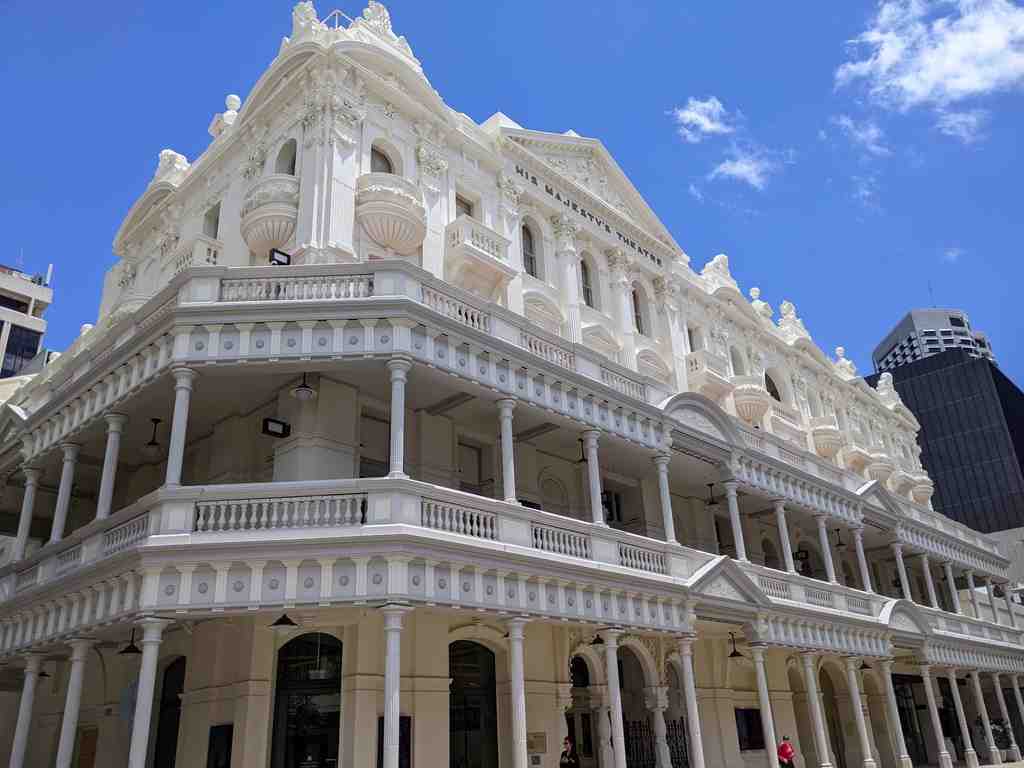
To spot His Majesty's Theatre, look up for a grand, dazzling white building with dramatic columns, ornate balconies, and curved bay windows rising proudly on the corner of Hay and King Street-it’s the real showstopper in the street’s lineup. You’re standing in front of a true star of the Perth stage-His Majesty’s Theatre, the grand dame of Edwardian Baroque! Imagine yourself here in 1904, the smell of fresh paint mixing with anticipation and maybe a few worried sighs from the builders. This theatre was born during Perth’s gold rush, when dreams were big and the buildings even bigger. Local personality Thomas Molloy, always one for drama-on and off the stage-decided Perth needed something fit for royalty (and we’re not just talking about his own ego). He hired architect William Wolfe and builder Friederich Liebe, who’d already worked on the Bulgarian Houses of Parliament-imagine the pressure! Workers dug deep into sandy ground-so deep, in fact, that they hit a secret stream under the site. Suddenly, our grand theatre was threatening to become a swimming pool! Liebe and the engineers cooked up a solution with clever drains to divert the water, but when the bills cascaded in higher than Niagara Falls, Molloy refused to pay extra. Cue years of legal drama, the courtroom echoing with arguments, as the “contract required written approval!” Eventually, Liebe won his case but the court costs were enough to make anyone want to take up a less risky profession, like lion-taming. Despite all this drama, the curtains finally rose on Christmas Eve 1904. But guess what? That opening night was a bit of a flop, with more empty seats than audience members-turns out, Perth folk wanted to spend Christmas at home, not watching Pollard’s Adult Opera Company perform “The Forty Thieves.” But first-night nerves aside, people soon flooded in to marvel at Australia’s biggest stage, a gleaming auditorium shaped like a horseshoe, and all sorts of Edwardian frills. Up on the roof, you could take an electric lift to an observation platform-assuming you weren’t dizzy from the view or all those bars lining the hotel part of the building! This place wasn’t just about glitz. It was cutting edge too-Perth’s first ever building made of reinforced concrete, packed with over three million bricks, marble, and tiles fit for a king (Edward VII, to be precise). The theatre even had waterfalls on either side of the stage to keep guests cool-move over, modern air conditioning! These were removed early on, though, because perhaps actors didn’t want to wear raincoats for Hamlet. Over the decades, jealous rivals came and went, world wars changed the program (for a while it was all movies, no Shakespeare), and famous stars pranced across the boards. When the building started looking shabby, the 1970s saw it closed for a major rescue mission. Architects debated giving it a complete makeover, but cooler heads prevailed, restoring much of that original Edwardian sparkle-though they did add air conditioning, and no one complained about missing the indoor waterfalls. His Majesty’s Theatre has seen more drama, dance, ballet, and opera than you can imagine. It's home to the West Australian Ballet and Opera-imagine those grand staircase entrances, feathers, sequins, the nervous shuffle of performers behind the heavy curtain. Since 2004, it’s worn its “State Heritage Icon” badge with pride. Even the balconies, removed back in the 1940s for being a traffic hazard, have now been gloriously rebuilt with a nod to the past and a wink to modern safety. If you ever hear the faint applause of Perth’s theatre-loving ghosts, don’t worry-you’re in very good company. So gaze up at those ornate balconies and all that theatrical swagger-after all, where else can you experience over a century of standing ovations just by standing right here?
समर्पित पेज खोलें →To spot the Old Perth Technical School, look for a striking three-level red-brick building with a square castle-like tower and stone trimmings, right ahead of you on St Georges…और पढ़ेंकम दिखाएँ
To spot the Old Perth Technical School, look for a striking three-level red-brick building with a square castle-like tower and stone trimmings, right ahead of you on St Georges Terrace, nestled amidst modern skyscrapers but decidedly more medieval with its bold corners and grand front entry. Now, picture yourself standing outside in the lively heart of Perth. Before you stands a structure from 1910, with deep red bricks, limestone footings, and Donnybrook stone trimmings catching the sun just so. The air here feels like it’s vibrating with old stories and youthful ambition. That bold, square tower with its battlements? It almost looks like it could launch the occasional princess rescue or two! Let’s travel back a century to picture what life here might have sounded like:. This very patch of ground once belonged to Henry Willey Reveley, back when the Swan River Colony was just a fledgling settlement. Imagine, Reveley’s mill and a clever mill-race channeled water straight down this slope all the way to the old foreshore-nature and engineering hand-in-hand before many streets here even existed. Jump forward to 1900, and suddenly this area bustles with young learners. The original classes spilled over from the old Boys School next door, offering up lessons to boys and girls alike-chemistry potions bubbling away, blueprints unfurled, and the resounding tap-tap of woodwork underway. When the first superintendent, Alex Purdie, passed away, his successor Frank Allen, who must’ve had superpowers for multitasking (he also ran the Kalgoorlie School of Mines!), pushed for more grand facilities. Allen’s vision, together with the creative flair of architect Hillson Beasley, brought us this new technical school-and not just any building, but one with “Truth, Beauty and Utility” carved right above the main doors. If only all school mottos sounded that heroic! Take a moment to admire that square castellated tower. Fun fact-mining students once transformed it into their own makeshift mine shaft, opening up trapdoors so they could practice drops, just like they were deep underground. If you listen to the structure’s imagination-you might hear the creak of those old wooden doors or the clatter of trapdoor hinges, as if modern engineering students were still sneaking in for after-hours experiments. This school wasn’t just a place for books and hammers, though. In 1905, it became the very first venue for university-level studies in the entire state, even before Western Australia had its own university. Students tackled everything from physics and botany to geology and mathematics, working toward degrees that would shape the state’s future. In 1929, it was even grand enough to get an upgrade in name, becoming Perth Technical College-sort of like when a teenage superhero finally gets their cape. It wasn’t all smooth sailing, especially when the Great Depression hit, and the curriculum lurched between dreams of diploma programs and the harsh reality of resource shortages. But during World War II, help finally landed. Big funding rolled in with a thud--sparking even more courses and buildings, and eventually pushing the college out into new campuses. And the alumni? This place saw the likes of future premiers, business moguls, town planners, creative artists-even Lionel Logue, the man who taught speech to a king himself. That’s a roll call any school would envy. Fast-forward again, and the 1980s brought chaos! Developers wanted to flatten all the school’s buildings for something shiny and new, but Perth’s own Castle Keepers (sounds like a secret society, right?) fought tooth and nail to keep this building safe. After a dizzying parade of developers and a wild ride in the property market, the mighty old school survived when much else around it changed into the glass giants you see now. Today, the Old Perth Technical School stands proud, its heritage fiercely protected and its spaces “meticulously restored” to suit a new generation, now tucked within the bustling Brookfield Place. It’s not just an architectural survivor-it’s a living piece of Perth’s big ambitions and wild ideas, ready to catch the eye of anyone who looks up from their coffee, right here on St Georges Terrace.
समर्पित पेज खोलें →Look for a single-storey limestone building with a strikingly steep, corrugated iron roof and tall, narrow windows-it stands right in front of you, nestled among the city’s modern…और पढ़ेंकम दिखाएँ
Look for a single-storey limestone building with a strikingly steep, corrugated iron roof and tall, narrow windows-it stands right in front of you, nestled among the city’s modern skyscrapers and looking remarkably like a small stone church from another era. Welcome to the Old Perth Boys School, where if these limestone walls could talk, they’d probably recite the times tables-and maybe complain about noisy students! Imagine standing here in the mid-1800s: the air is rich with the sound of clanging hammers and the hubbub of city life just starting to take shape. In 1852, William Ayshford Sanford designed this building, channeling his love of gothic revival style, which is why you see those pointy rooflines and long, church-like windows looking back at you. Originally the site was a humble flour mill, once powered by the local stream-flour-dusted dreams swapped for chalkboards and school bells. When construction began in 1853, the builders soon discovered the land was as boggy as an overcooked pudding-which meant sinking deeper, pricier foundations and more than a few grumpy workers. By 1854, the school opened its doors: a long, narrow, rather gloomy space, if we're being honest. The windows were so small, students probably perfected the art of squinting, and ventilation was about as effective as waving a handkerchief at the sun. Still, it became the heart of education in early Perth, with young boys brimming with a mix of excitement and the occasional mischief (don’t we all wish the gallery at the western end hadn’t vanished so we could sneak a look too?). Population boomed with the gold rush, and the classrooms overflowed-imagine 346 boys stuffed inside, noisy as a flock of cockatoos, with extra wooden huts popping up just to hold them all! Eventually, in 1896, they relocated to a bigger, brighter building, leaving the old stomping grounds to a new chapter as part of Perth Technical College. But this quirky limestone survivor never lost its sense of purpose. Over the decades, it’s been restored, buffed, filled with bookshops, cafes, and the smell of strong coffee. Today, Curtin University brings new energy here, using these storied rooms for university activities. You’re gazing at a living piece of Perth’s story, so old it’s on the State Heritage Register, cared for by the National Trust, and still full of mystery whispers from all those who passed through-proof that education, like a good joke, never gets old!
समर्पित पेज खोलें →
अक्सर पूछे जाने वाले प्रश्न
मैं टूर कैसे शुरू करूँ?
ख़रीदारी के बाद, AudaTours ऐप डाउनलोड करें और अपना रिडेम्पशन कोड दर्ज करें। टूर तुरंत शुरू करने के लिए तैयार होगा - बस प्ले टैप करें और GPS-गाइडेड रूट का पालन करें।
क्या टूर के दौरान मुझे इंटरनेट चाहिए?
नहीं! शुरू करने से पहले टूर डाउनलोड करें और पूरी तरह ऑफ़लाइन इसका आनंद लें। केवल चैट फ़ीचर को इंटरनेट की ज़रूरत है। मोबाइल डेटा बचाने के लिए WiFi पर डाउनलोड करने की सिफ़ारिश है।
क्या यह एक गाइडेड ग्रुप टूर है?
नहीं - यह एक सेल्फ-गाइडेड ऑडियो टूर है। आप अपनी गति से स्वतंत्र रूप से खोजते हैं, आपके फ़ोन से ऑडियो कथन बजता है। कोई टूर गाइड नहीं, कोई ग्रुप नहीं, कोई शेड्यूल नहीं।
टूर में कितना समय लगता है?
अधिकांश टूर पूरा करने में 60-90 मिनट लगते हैं, लेकिन गति पूरी तरह आपके नियंत्रण में है। जब चाहें रुकें, स्टॉप छोड़ें, या ब्रेक लें।
अगर मैं आज टूर पूरा नहीं कर सकता/सकती तो?
कोई समस्या नहीं! टूर की लाइफ़टाइम एक्सेस है। जब चाहें रोकें और फिर शुरू करें - कल, अगले हफ़्ते, या अगले साल। आपकी प्रगति सेव रहती है।
कौन सी भाषाएँ उपलब्ध हैं?
सभी टूर 50+ भाषाओं में उपलब्ध हैं। अपना कोड रिडीम करते समय अपनी पसंदीदा भाषा चुनें। नोट: टूर जेनरेट होने के बाद भाषा बदली नहीं जा सकती।
ख़रीदारी के बाद मैं टूर कहाँ एक्सेस करूँ?
App Store या Google Play से मुफ़्त AudaTours ऐप डाउनलोड करें। अपना रिडेम्पशन कोड (ईमेल द्वारा भेजा गया) दर्ज करें और टूर आपकी लाइब्रेरी में दिखेगा, डाउनलोड और शुरू करने के लिए तैयार।
अगर आपको टूर पसंद नहीं आया, तो हम आपकी ख़रीदारी वापस करेंगे। हमसे संपर्क करें [email protected]
सुरक्षित चेकआउट