
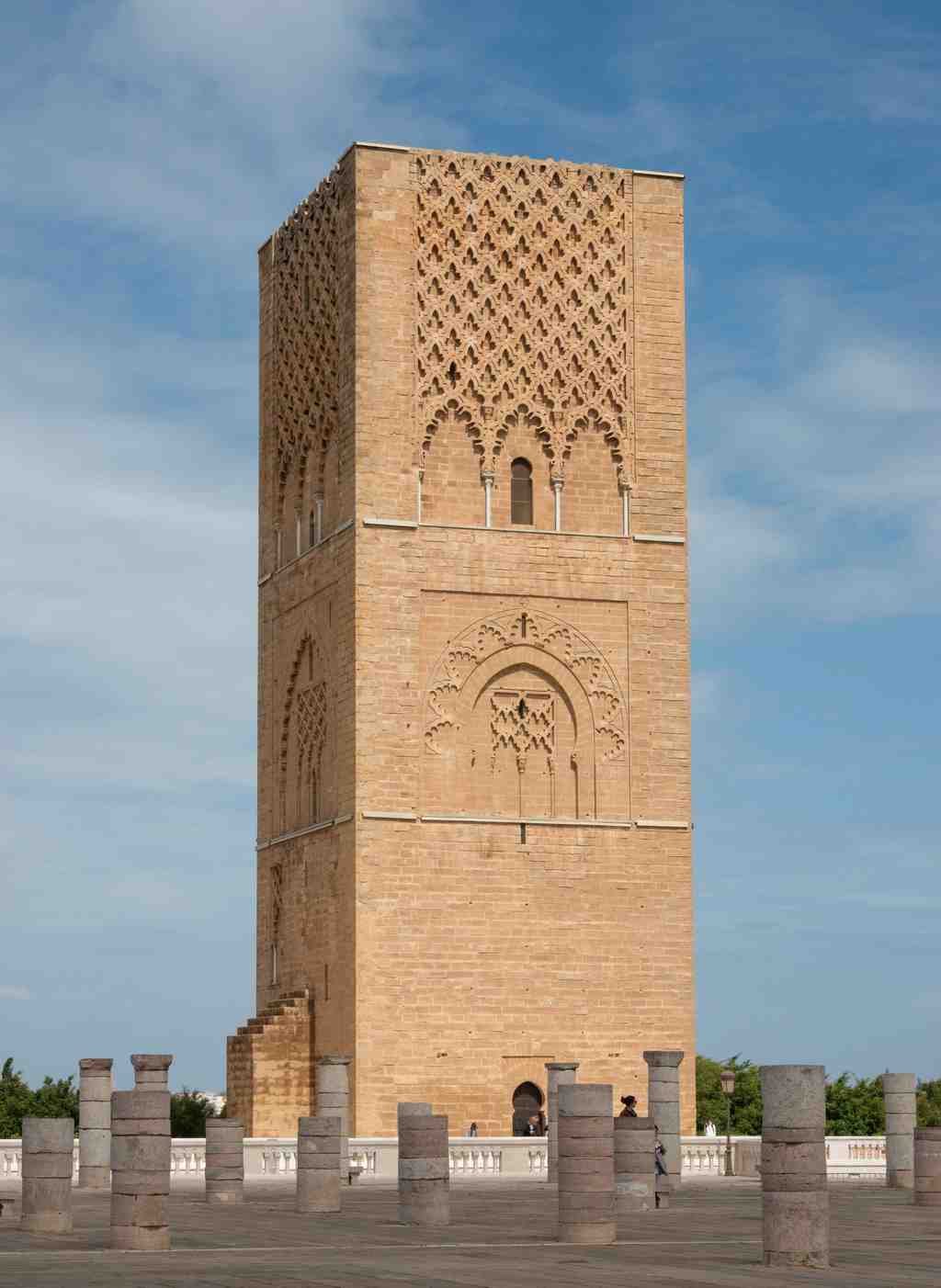
The Unfinished Masterpiece: Exploring Hassan Tower in Rabat
Welcome to Rabat, the coastal capital of Morocco! Every city has its quirks, but not many can claim a massive, unfinished 12th-century skyscraper designed for horses. For travelers who love uncovering the secrets of historical landmarks on their own terms, the Hassan Tower-or Tour Hassan-is an absolute must-see. Let's dive into the fascinating history, grand ambitions, and architectural quirks of this iconic open-air monument.
The Grand Ambition of an Almohad Ruler
Our story starts in the late 12th century with Abu Yusuf Yaqub al-Mansur, the third caliph of the Almohad Caliphate. Al-Mansur wasn't a man of small dreams. After securing a major victory at the Battle of Alarcos, he decided to build a fortified imperial capital called Ribat al-Fath (meaning 'Monastery of Conquest'). To crown his new city, he commissioned what was meant to be the largest minaret in the world, alongside a mosque that would overshadow every other religious structure in the western Muslim world. It was set to be larger than the Great Mosque of Cordoba!
However, the grand vision came to an abrupt halt. When al-Mansur died in 1199, construction ceased immediately. His successors lacked the funds and the desire to finish the colossal project, leaving us with the hauntingly beautiful, incomplete masterpiece we see today.
"Although unfinished, the Hassan Tower stands not as a failure, but as a bold testament to the architectural ambition of the Almohad dynasty."
A Mosque of Epic Proportions
Had it been completed, the al-Hassan Mosque would have been an absolute marvel of architecture. It was strategically placed on the high south bank of the Bu Regreg river, intended to be a jaw-dropping spectacle visible for miles. Historians speculate it was meant to serve as both a place of worship and a fortress for Almohad troops heading out on military campaigns.
The design included several quirky and innovative features:
- Massive Dimensions: Measuring an astonishing 183 by 139 meters.
- Unusual Courtyards: Unlike standard designs with a single main courtyard, this mosque planned for three separate inner courtyards to allow fresh air and daylight into its unprecedentedly large interior.
- Cylindrical Stone Columns: Instead of typical brick piers, the mosque used 348 cylindrical columns made from differing stone drums. This unusual choice actually slowed down construction!
A Minaret Built for a Horse?
Now, let's talk about the star of the show: the tower itself. Standing at 44 meters (144 feet) tall, it is a magnificent sight of red ochre sandstone. But here is the kicker: it was intended to reach a towering 64 to 80 meters! Modeled after the Koutoubia Mosque in Marrakesh and taking inspiration from the Lighthouse of Alexandria, the Hassan Tower is one of the most intriguing famous buildings in North Africa.
If you look closely at its design, you'll notice something missing-stairs. Instead, the interior features a series of ramps. Why? So the muezzin (the person appointed to lead the call to prayer) could comfortably ride his horse all the way to the top! Imagine a 12th-century equestrian elevator; it doesn't get much quirkier than that. The exterior is just as fascinating, adorned with intricate sebka patterns and engaged columns.
Survival and Modern Transformation
Over the centuries, the unfinished mosque has endured its fair share of trials. It was slowly stripped of its building materials, and the Great Lisbon Earthquake of 1755 caused significant damage to the remaining columns. Yet, the striking red minaret stood resilient.
In the 20th century, the site was revitalized. French and Moroccan archaeologists excavated the area, and in the 1960s, a gorgeous modern addition was built on the southeastern corner: the Mausoleum of Mohammed V. Designed by Vietnamese architect Cong Vo Toan and completed in 1971, this beautiful modern complex sits in perfect harmony with the ancient ruins, creating one of Rabat's premier cultural sites.
Ready to Discover Rabat's Heritage?
There is nothing quite like wandering through a forest of 348 ancient stone columns while a 44-meter sandstone tower looms overhead. Best of all, because it is an entirely open-air historical complex, you can easily explore it with modern self-guided tours without worrying about indoor restrictions.
Want to hear the secrets of this monumental site whispered directly into your ear as you walk? The Hassan Tower is proudly featured on our Rabat's Historical Symphony: Culture, Heritage & Devotion tour. Grab your headphones, set your own pace, and step back into the 12th century!
Frequently Asked Questions
- Why is it called the Hassan Tower? Curiously, nobody knows for sure! While commissioned by Yaqub al-Mansur, the name 'Hassan' has been attached to the tower since at least the 13th century. Some historians guess it might have been the original architect's name, but it remains an unsolved mystery.
- Can you climb to the top of the tower? Unfortunately, no. To preserve the structural integrity of this ancient monument, visitors are not allowed to ascend the ramps inside the tower. However, the view from the surrounding plaza is spectacular.
- Is the site free to visit? Yes! The courtyard containing the Hassan Tower and the adjacent Mausoleum of Mohammed V is open to the public and free to enter, making it a perfect spot for budget-friendly city exploration.
- What happened to the rest of the mosque? Construction stopped immediately upon the caliph's death in 1199. Over time, building materials were scavenged for other projects, and the 1755 Lisbon earthquake toppled many of the columns that had been erected.




