
Visite audio de New York : Tours, Hommage et Triomphe dans le FiDi
Des géants d'acier projettent de longues ombres là où des fortunes se sont élevées et où les chagrins de l'histoire résonnent sous le verre étincelant. Ici, dans le quartier financier de New York, chaque pas recèle un secret, chaque coin cache une histoire qui n'attend que d'éclater au grand jour. Cette visite audio autoguidée vous éloigne des sentiers battus pour découvrir les légendes tissées dans la Liberty Tower, les hommages poignants au Mémorial national du 11 Septembre, et les ruelles oubliées où l'ambition et le chaos ont convergé. Découvrez l'épine dorsale de la ville et ses meurtrissures à mesure que de nouvelles perspectives sont révélées. Qui a envoyé un avertissement cryptique quelques instants avant que l'histoire ne change à jamais, ici même ? Quelle relique perdue se cache encore sous les empreintes de ces tours jumelles ? Et pourquoi Wall Street a-t-elle failli s'effondrer suite à une seule frappe inattendue ? Tracez un chemin à travers la résilience et la réinvention, traversez des canyons de verre et de chagrin, et découvrez le pouls brut d'une ville. Êtes-vous prêt à déterrer les histoires cachées de Manhattan ? Commencez maintenant.
Aperçu du tour
À propos de ce tour
- scheduleDurée 30–50 minsAllez à votre propre rythme
- straightenParcours à pied de 0.5 kmSuivez le sentier guidé
- location_onEmplacementNew York, États-Unis
- wifi_offFonctionne hors ligneTéléchargez une fois, utilisez n'importe où
- all_inclusiveAccès à vieRéécoutez n'importe quand, pour toujours
- location_onCommence à Tour Liberty
Arrêts de ce tour
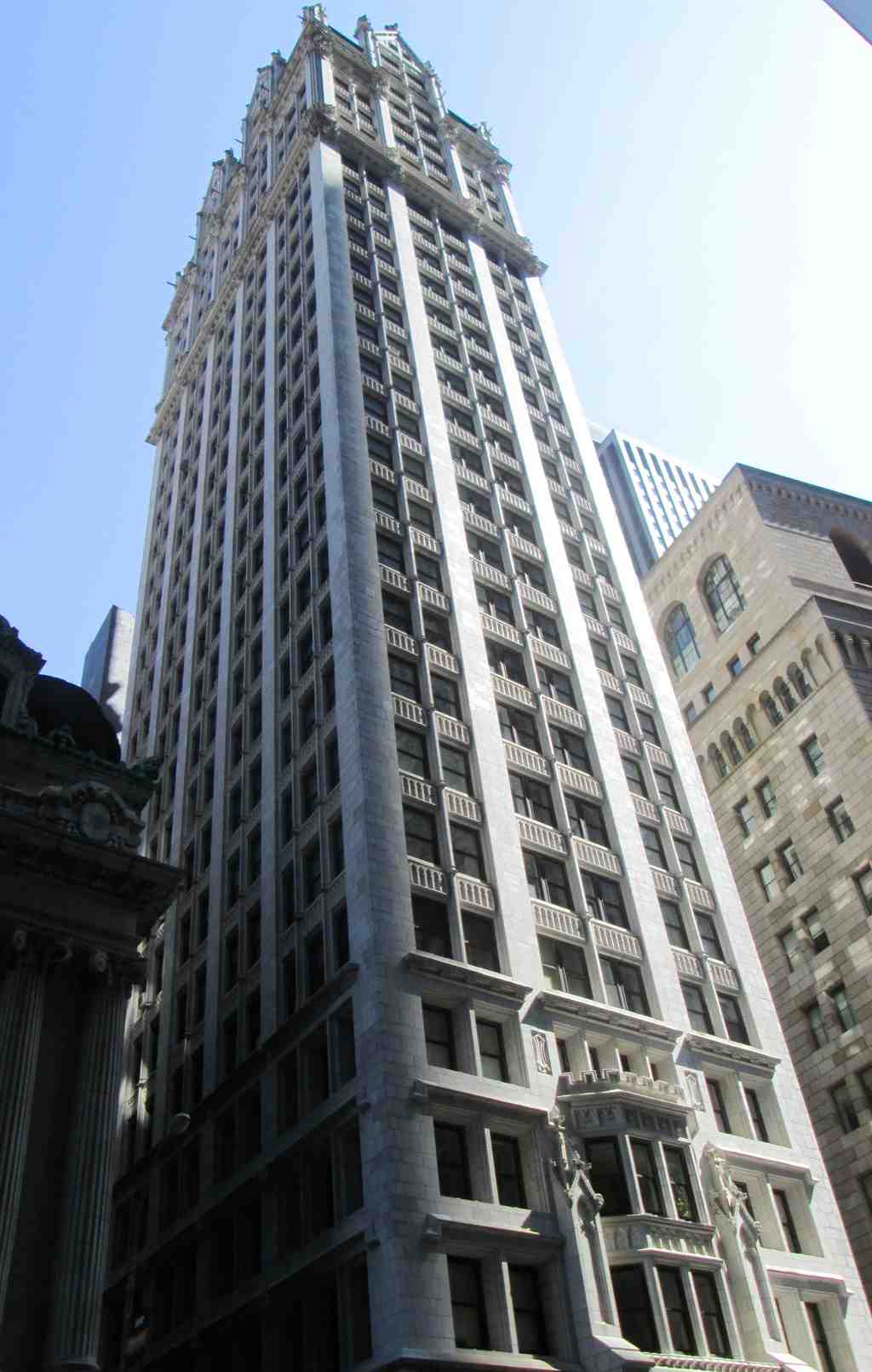
Look to your left as you walk along Liberty Street, and you’ll spot a tall, narrow building clad in gleaming white stone and crowned with turret-like details and pointed arches…Lire plusAfficher moins
Look to your left as you walk along Liberty Street, and you’ll spot a tall, narrow building clad in gleaming white stone and crowned with turret-like details and pointed arches standing sharply at the corner-a striking Gothic tower soaring between its neighbors. Here you are, right beneath Liberty Tower, a soaring exclamation point pressed into the twisting canyon of lower Manhattan. Imagine it’s the spring of 1910: New York is in the midst of its skyscraper race, shoving steel, ambition, and raw optimism further into the sky every year. Where you now stand, workmen are clearing away the remnants of the old Bryant Building-once home to the editor William Cullen Bryant and his newspaper, The New York Evening Post. Trucks clatter past on uneven cobbles, and from time to time, you catch the sharp clang of steel on stone as deep, risky caissons are lowered-94 feet down to bedrock-to support what will soon be the narrowest, tallest tower in the city. There’s a sense of giddy improbability about the place, because no one expects this tiny footprint to give rise to something so slender and extravagant. Henry Ives Cobb, an architect with a taste for drama and inspired by Gothic cathedrals and the new steel skeletons of Chicago, has made sure this building is no wallflower among its blocky neighbors. Run your eyes up the facade set with dazzling white terracotta-every nook bristling with fanciful creatures, birds, alligators, even a few watchful gargoyles glaring down the street as if daring any rival to question their perch. Even after a century, these details haven’t dulled; they catch the sunlight and seem to shimmer, more fairytale than finance. Liberty Tower’s base is grand but solid, holding tight to the earth, but as your gaze creeps higher, it grows lighter, sprouting rails and fluted details, climbing for 33 stories to a delicate copper roof. When the doors first swung open in 1910, not every office was finished-some floors were little more than echoing, raw spaces. Yet, soon enough the rooms filled with life and purpose. If you had stepped inside back then, you might have glimpsed a young Franklin Delano Roosevelt, future president, poring over legal briefs in his office on the second floor, completely unaware of the presidency awaiting him. One floor above him, perhaps, rival businessmen plotted strategies, while deep down, the foundations-a marvel themselves-kept the whole structure tethered to Manhattan bedrock, even as the city seethed with ambition above. You’d be forgiven for picturing more intrigue-because there was plenty. In the tense days leading up to America's entry into World War I, German spies worked from offices inside Liberty Tower, spinning plots and intercepted telegrams that reached all the way to the highest levels of government. One notorious episode involved the Zimmermann Telegram, which, when exposed, helped tip the country into war. Imagine the whispered conversations, the shuffles of paper-history tumbling out from behind nearly every office door. For a time, Sinclair Oil took over, and deals brokered here would ripple all the way to Washington, feeding the Great Teapot Dome scandal that would tear through the 1920s. Later, as newer corporate palaces rose uptown, even the mighty Sinclair Oil moved on, and Liberty Tower changed hands again and again-its rent rolls swelling and shrinking with the fortunes of Wall Street. By the 1970s, the future of the building seemed as narrow as its shape-nearly two-thirds empty, unwanted. But then, in a daring move scarcely anyone believed would work, architect Joseph Pell Lombardi bought the building and began turning it into residential apartments, a bold first in this part of Manhattan. The city below was quiet, but in Liberty Tower, new life took root-each apartment unique, each window framing the changing city below. The story doesn’t stop there. The building has survived both scandal and disaster. When the World Trade Center fell in 2001, Liberty Tower took a heavy blow-its delicate terracotta cracked, its inner steel rusted by water from shattered mains. But, as always, it was stubborn. Residents and experts came together and poured millions of dollars into repair, restoring not just a building but a piece of New York’s shrugging resilience. And above it all, those whimsical gargoyles, alligators, and birds still perch, their gazes fixed on the city’s next chapter. So as you gaze up now, let yourself imagine the swirl of lives, secrets, and fortunes that this elegant, improbable pencil of a tower has seen-rising above the Financial District, narrow, bright, and indelibly unique. Intrigued by the site, architecture or the critical reception? Make your way to the chat section and I'll be happy to provide further details.
Ouvrir la page dédiée →
Foire aux questions
Comment commencer le tour ?
Après l'achat, téléchargez l'application AudaTours et entrez votre code de réduction. Le tour sera prêt à commencer immédiatement - il suffit d'appuyer sur lecture et de suivre l'itinéraire guidé par GPS.
Ai-je besoin d'Internet pendant le tour ?
Non ! Téléchargez le tour avant de commencer et profitez-en pleinement hors ligne. Seule la fonction de chat nécessite Internet. Nous recommandons de télécharger en WiFi pour économiser vos données mobiles.
S'agit-il d'une visite de groupe guidée ?
Non - il s'agit d'un audioguide en autonomie. Vous explorez indépendamment à votre propre rythme, avec une narration audio diffusée par votre téléphone. Pas de guide, pas de groupe, pas d'horaire.
Combien de temps dure le tour ?
La plupart des tours durent entre 60 et 90 minutes, mais vous contrôlez totalement le rythme. Faites des pauses, sautez des arrêts ou arrêtez-vous quand vous le voulez.
Et si je ne peux pas finir le tour aujourd'hui ?
Pas de problème ! Les tours disposent d'un accès à vie. Faites une pause et reprenez quand vous le souhaitez - demain, la semaine prochaine ou l'année prochaine. Votre progression est sauvegardée.
Quelles sont les langues disponibles ?
Tous les tours sont disponibles dans plus de 50 langues. Sélectionnez votre langue préférée lors de l'utilisation de votre code. Note : la langue ne peut pas être changée après la génération du tour.
Où accéder au tour après l'achat ?
Téléchargez l'application gratuite AudaTours sur l'App Store ou Google Play. Entrez votre code de réduction (envoyé par e-mail) et le tour apparaîtra dans votre bibliothèque, prêt à être téléchargé et commencé.
Si vous n'appréciez pas le tour, nous vous rembourserons votre achat. Contactez-nous à [email protected]
Paiement sécurisé avec 


