
Visite audio de New York : Résilience et souvenir dans le quartier financier
Une seule poutre d'acier s'élève au-dessus de l'horizon de la ville, murmurant le verre brisé et les héros silencieux. Le quartier financier de New York cache des siècles de lutte et de résilience sous ses tours polies et ses rues animées. Branchez-vous pour une visite audio autoguidée qui donne vie aux secrets de Wall Street. Promenez-vous là où des fortunes ont été faites et perdues, où l'histoire court juste sous vos pieds, attendant d'être découverte. Quel code secret était caché au sommet de la Liberty Tower après la tragédie ? Quel artefact inexpliqué se trouve sous le National September 11 Memorial & Museum, déroutant même les experts ? Pourquoi une sombre querelle personnelle dans une petite ruelle voisine a-t-elle changé la finance mondiale pour toujours ? Traversez des canyons de verre et de pierre. Revivez des batailles épiques, des protestations retentissantes et des confessions de minuit alors qu'elles se déroulent là où vous vous tenez. Laissez le pouls de la ville s'accélérer sous vos pas et ses histoires cachées se révéler à chaque tournant. Appuyez sur lecture et déverrouillez le cœur inexploré de New York.
Aperçu du tour
À propos de ce tour
- scheduleDurée 30–50 minsAllez à votre propre rythme
- straightenParcours à pied de 0.5 kmSuivez le sentier guidé
- location_onEmplacementNew York, États-Unis
- wifi_offFonctionne hors ligneTéléchargez une fois, utilisez n'importe où
- all_inclusiveAccès à vieRéécoutez n'importe quand, pour toujours
- location_onCommence à Liberty Tower
Arrêts de ce tour
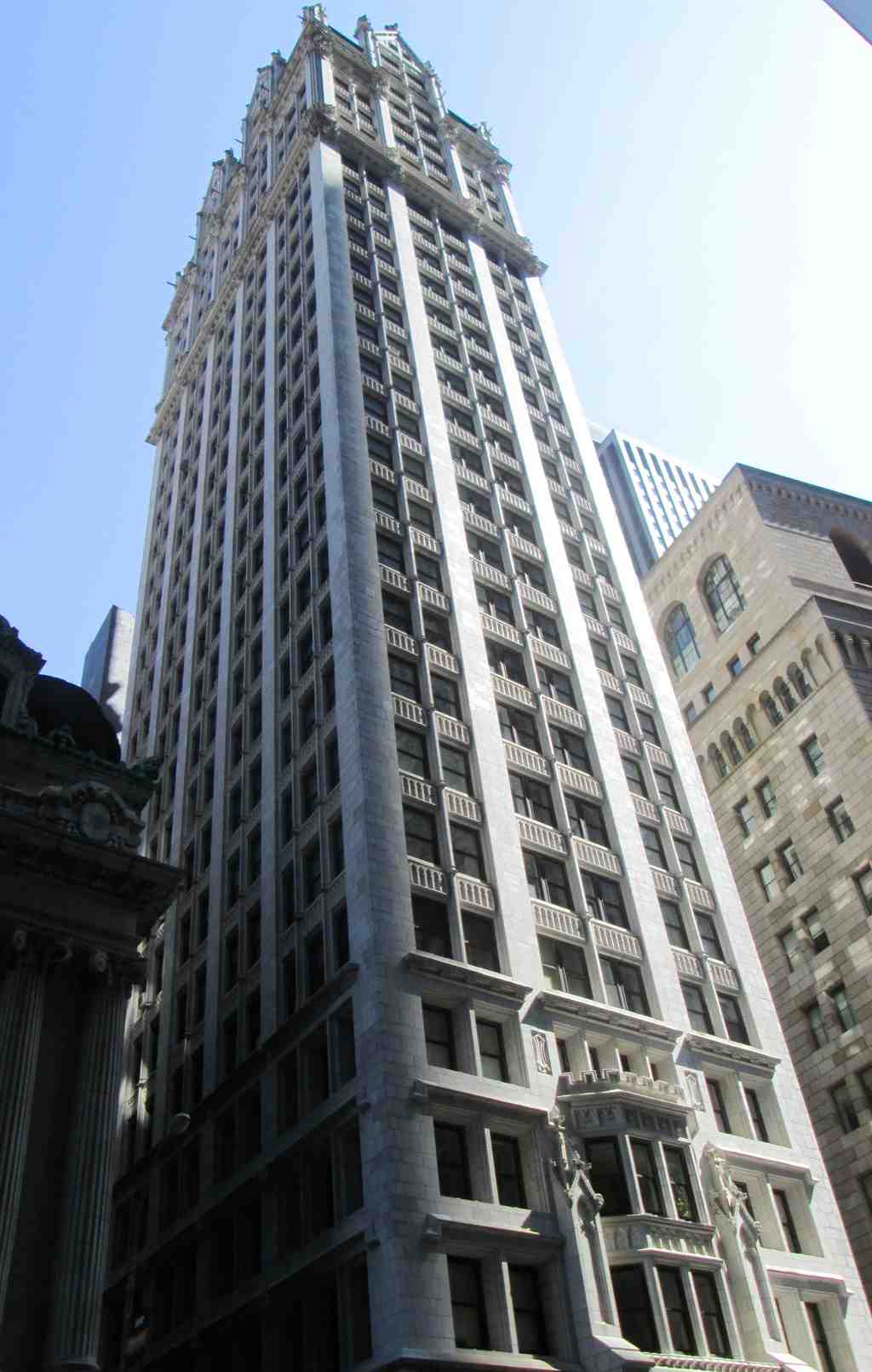
Look up and ahead for a strikingly slender, bright white tower adorned with intricate Gothic details, rising above you near the corner of Liberty Street and Nassau Street. As you…Lire plusAfficher moins
Look up and ahead for a strikingly slender, bright white tower adorned with intricate Gothic details, rising above you near the corner of Liberty Street and Nassau Street. As you stand here, pausing in the shadows at the feet of the Liberty Tower, let your eyes trace its narrow frame all the way up-a proud column of white terracotta thrusting skyward, its pinnacles and ornate gargoyles watching the city below. Imagine the echo of hammers and the clang of steel from more than a century ago, when in 1909 the streets here bustled with horse carts, early automobiles, and restless, boot-clad workers. This building, now serene in its elegance, rose unexpectedly from a wedge-shaped site that once housed the headquarters of the New York Evening Post, known then as the Bryant Building, named for poet and journalist William Cullen Bryant. Liberty Tower was a vision spawned by a group of St. Louis investors, who hired Henry Ives Cobb, a distinguished architect, to design an office building like no other-tall, impossibly slender, and clad in a skin of creamy, white terracotta alive with birds, alligators, and mythic creatures. Imagine Cobb himself, inspired by Gothic cathedrals, determined to craft a tower filled with drama: a solid base, a soaring shaft, and turrets that crown the top. In 1910, it was said to be the world’s tallest building for such a small footprint-a feat that made seasoned New York developers gasp in surprise. The building's foundation, sunk deeper than almost any other in the city, rested on an elaborate maze of caissons plunging through quicksand to the lasting bedrock far below your feet. It was in these offices, lit by the glow of gas lamps and the hum of early electricity, that a young Franklin Delano Roosevelt began his law career, unaware that destiny was already stirring outside on Nassau Street. Tenants came and went-lawyers, surety companies, ambitious financiers-but just when the tower should have celebrated prosperity, a string of financial crises haunted its halls. Developers defaulted, loans were called in, and court cases passed through its marble entrance, while the city outside wrestled with its own growing pains. For a time, this was the Sinclair Oil Building, its new owner Harry Sinclair striking deals in boardrooms high above the rumble of the street-some deals innocent, others shrouded in the secrets that led to national scandal: the infamous Teapot Dome. The tower’s walls even became a backdrop for international intrigue, as German spies quietly rented offices here in 1917, hoping to sway the tides of war, until the mysterious Zimmermann Telegram was intercepted and exposed, tilting America toward the battlefields of World War I. Years passed. Ownership changed hands repeatedly. By the late 1970s, the once-glamorous skyscraper fell silent, nearly forgotten and two-thirds empty while the Financial District’s fortunes ebbed. Then, a new chapter: Joseph Pell Lombardi, a visionary architect, saw beauty where others saw only faded grandeur. He rescued the tower and, brick by brick, room by room, began a bold transformation-from offices to homes. In a neighborhood once ruled by commerce, Liberty Tower became one of downtown’s first residential high-rises. Its 86 co-op apartments drew artists and urban pioneers alike, the city’s pulse beating a little stronger in these historic walls. Still, hardship lingered. When the World Trade Center collapsed just blocks away on September 11, 2001, the Liberty Tower suffered wounds: shattered terracotta, leaking water, and silent, hidden steel rusting beneath its skin. Residents banded together once more, investing millions to restore its sparkle and keep its old magic alive. Now look up again, and consider this: the Liberty Tower is not just a building, it is the sum of a thousand stories-each one whispered in the rush of the wind high above Liberty Street, each one a testament to the resilience of this extraordinary city. Fascinated by the site, architecture or the critical reception? Let's chat about it
Ouvrir la page dédiée →
Foire aux questions
Comment commencer le tour ?
Après l'achat, téléchargez l'application AudaTours et entrez votre code de réduction. Le tour sera prêt à commencer immédiatement - il suffit d'appuyer sur lecture et de suivre l'itinéraire guidé par GPS.
Ai-je besoin d'Internet pendant le tour ?
Non ! Téléchargez le tour avant de commencer et profitez-en pleinement hors ligne. Seule la fonction de chat nécessite Internet. Nous recommandons de télécharger en WiFi pour économiser vos données mobiles.
S'agit-il d'une visite de groupe guidée ?
Non - il s'agit d'un audioguide en autonomie. Vous explorez indépendamment à votre propre rythme, avec une narration audio diffusée par votre téléphone. Pas de guide, pas de groupe, pas d'horaire.
Combien de temps dure le tour ?
La plupart des tours durent entre 60 et 90 minutes, mais vous contrôlez totalement le rythme. Faites des pauses, sautez des arrêts ou arrêtez-vous quand vous le voulez.
Et si je ne peux pas finir le tour aujourd'hui ?
Pas de problème ! Les tours disposent d'un accès à vie. Faites une pause et reprenez quand vous le souhaitez - demain, la semaine prochaine ou l'année prochaine. Votre progression est sauvegardée.
Quelles sont les langues disponibles ?
Tous les tours sont disponibles dans plus de 50 langues. Sélectionnez votre langue préférée lors de l'utilisation de votre code. Note : la langue ne peut pas être changée après la génération du tour.
Où accéder au tour après l'achat ?
Téléchargez l'application gratuite AudaTours sur l'App Store ou Google Play. Entrez votre code de réduction (envoyé par e-mail) et le tour apparaîtra dans votre bibliothèque, prêt à être téléchargé et commencé.
Si vous n'appréciez pas le tour, nous vous rembourserons votre achat. Contactez-nous à [email protected]
Paiement sécurisé avec 


