
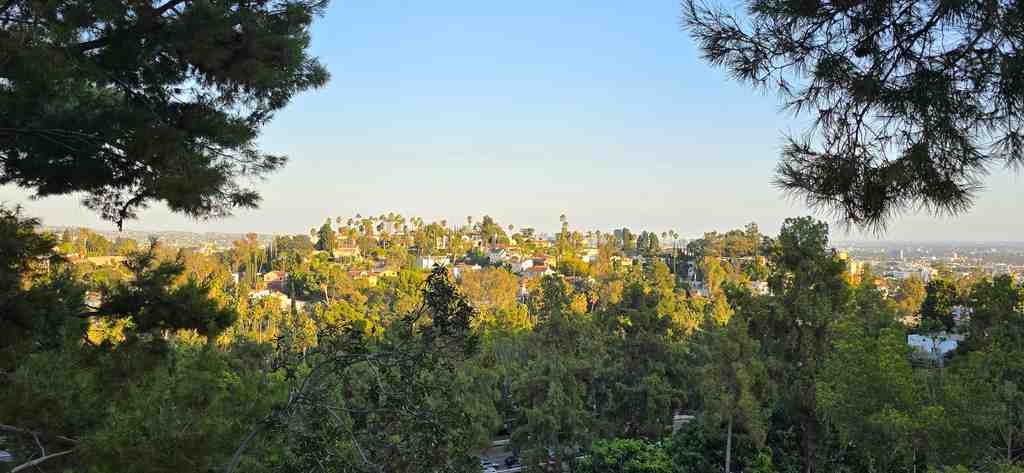
Visite audio de Los Angeles : Glamour caché et légendes du vieil Hollywood
Une ville bâtie sur la réinvention cache ses secrets les plus fous dans l'ombre des enseignes emblématiques et des chefs-d'œuvre modernistes. Los Angeles récompense quiconque est assez audacieux pour regarder sous la surface. Embarquez pour ce voyage audio autoguidé et déambulez des maisons énigmatiques perchées sur les collines comme la Samuel Freeman House aux quartiers imprégnés de légendes tels que Whitley Heights, découvrant des histoires inédites qui se cachent au-delà des foules de touristes. Écoutez les réalités murmurées et les rebondissements dramatiques que la plupart ne remarquent jamais. Quelle querelle explosive a failli déchirer l'élite d'Hollywood au-dessus de l'éclat du Dolby Theatre ? Pourquoi un architecte visionnaire a-t-il tout risqué pour une maison qui déconcerte encore les experts ? Quelle rébellion silencieuse s'est évanouie dans les collines parsemées de palmiers sans laisser de trace, à l'exception du plus petit artefact caché ? Traversez les passages secrets de l'histoire et du glamour. Sentez le pouls des rêves, de la défiance et du désir résonner dans chaque rue. Ce n'est pas le Los Angeles que vous attendez. Mettez vos écouteurs et laissez les profondeurs de la ville se révéler.
Aperçu du tour
À propos de ce tour
- scheduleDurée 40–60 minsAllez à votre propre rythme
- straightenParcours à pied de 4.6 kmSuivez le sentier guidé
- location_onEmplacementLos Angeles, États-Unis
- wifi_offFonctionne hors ligneTéléchargez une fois, utilisez n'importe où
- all_inclusiveAccès à vieRéécoutez n'importe quand, pour toujours
- location_onCommence à Ovation Hollywood
Arrêts de ce tour
Looking around, you’ll spot Ovation Hollywood by its bright white, modern buildings that wrap around a lush, palm-lined, grassy courtyard with big signs for Dave & Buster’s,…Lire plusAfficher moins
Looking around, you’ll spot Ovation Hollywood by its bright white, modern buildings that wrap around a lush, palm-lined, grassy courtyard with big signs for Dave & Buster’s, Victoria’s Secret, and the striking Dolby Theatre-look up and ahead for escalators and large terraces full of bustling people. Welcome to Ovation Hollywood, where the old glitz of Tinseltown meets a splash of 21st-century sparkle! If you’re sensing the spirit of the movies in the air, you’re not wrong-this very ground once held the Hollywood Hotel back in 1902, where stars and starlets rubbed elbows (and may have argued over who had the best hair). Fast forward more than a century, and this space has been transformed several times over. After the grand old hotel was knocked down in 1956, the area took on a much less glamorous life as a federal building, a run-of-the-mill shopping center, and-yes-even parking lots. Imagine showing up for your Hollywood moment and finding nothing but asphalt and savings bonds. Yikes. But nothing in Hollywood stays boring for long! In the late 1990s, with a little magic from some ambitious developers and a lot of help from the city (they tossed in $90 million, talk about blockbuster funding), a three-year construction extravaganza began. The result was the dazzling shopping and entertainment complex you see today, opening its doors in November 2001 with a massive courtyard at its heart. Take a moment to look around and picture not just Hollywood glamour but...Babylonian myth! Seriously-this entire centerpiece was inspired by the epic, lost-to-history Babylon scene in the 1916 silent film “Intolerance.” Back in the land of ancient stone elephants and giant archways, now you get escalators and shopping bags. The most famous tenants here are easy to spot. To your left is the legendary Dolby Theatre, home to those glittering gold statues every actor dreams about-the Oscars. Imagine the tension as nominees file inside, nerves jangling with every flashbulb. Not to be outdone, the complex also houses the famous TCL Chinese Theatre, just a stone’s throw away, where Hollywood’s royalty have left their handprints and signatures since the 1920s. And perched above it all is the Loews Hollywood Hotel, with over 600 rooms, just in case you need a place to practice your acceptance speech. As you wander, you’ll notice over 70 shops and 25 restaurants. You could buy sneakers at Foot Locker, splurge at Sephora, then grab your Oscar-night snack from a celebrity chef-Wolfgang Puck himself runs his West Coast headquarters right inside these walls! If you’re feeling sporty, there’s a bowling alley; if you’re brave, maybe even try to strike up a conversation at one of the nightclubs. Word to the wise: leave the dramatic monologues for the big screen. Television has also made this place its playground. Studios inside these walls once buzzed with “On Air with Ryan Seacrest”-these days it’s home to Revolt TV, but who knows? Maybe you’ll spot a camera crew and wind up as an accidental extra. Down below you, beneath your feet, the Hollywood/Highland Metro station keeps visitors streaming in and out, while bus lines make this the crossroads of the city. Now, every blockbuster needs a little controversy, right? Ovation Hollywood (once called Hollywood & Highland) managed that, too. Some folks grumbled about the mishmash of architectural styles-there’s even a not-so-coveted “Ugliest Building in Los Angeles” award hanging around its neck from 2007. Yet despite a few critics, the crowds kept coming. This place hasn’t just stayed busy; it jump-started a whole new era of development on Hollywood Boulevard, sparking a comeback for neighboring landmarks. As you look out over the palm trees and the swirl of people, imagine all the movie dreams, wild schemes, and snack runs that have unfolded here over the years. Ovation Hollywood is part silver screen fairy tale, part retail therapy, and always a little over the top-just how Hollywood likes it.
Ouvrir la page dédiée →To spot the Hollywood Masonic Temple, just look for the building with six towering stone columns out front and huge red banners that say “Jimmy Kimmel Live!”-it stands right…Lire plusAfficher moins
To spot the Hollywood Masonic Temple, just look for the building with six towering stone columns out front and huge red banners that say “Jimmy Kimmel Live!”-it stands right across Hollywood Boulevard, with tall palm trees brushing the sidewalk. Now, let’s imagine it’s 1922 on Hollywood Boulevard. The air thrums with excitement and the scent of warm stone and cigar smoke. The Hollywood Masonic Temple-this stone giant you see now-has just opened its ornate wooden doors, drawing curious onlookers and the city’s elite. At the top of those eight broad steps, well-dressed Masons in crisp suits stride into the cool, marble-lined halls, ready for an evening in a space with a billiard room, a ladies’ parlor (where gossip probably echoed off the walls), and a ballroom grand enough for a spectacle. The man behind it all, Charles E. Toberman, was famous for dreaming big-he helped bring us the Hollywood Bowl, the Roosevelt Hotel, and even Grauman’s Chinese Theatre just down the street. His new Masonic Temple was built to last, both sturdy and elegant-those massive Ionic columns you see out front were meant to command respect. And, for a fun twist, it cost $176,678 back in 1922. That would buy you a small Hollywood condo today, if you’re lucky! The Masons held memorable gatherings here, with pipe organ music filling the auditorium and ballrooms that sparkled under twirling chandeliers. In fact, for the grand opening in 1923, guests witnessed “the evolution of dance,” complete with a performance by dancer Lucille Means. Over the decades, legendary names like Harold Lloyd, John Wayne, and Cecil B. DeMille-yes, even the Hollywood legends needed somewhere mysterious to meet-were members here. But not all glitz and glamour-the Great Depression hit, and even the Masons weren’t immune to tough times. Imagine the hush in these grand halls as fortunes vanished, and the ground floor was rented out to a social club that (somewhat sneakily) installed an illegal slot machine. By the late 1970s, membership was dwindling, and the old lodge moved out, heading to the Valley, leaving this majestic building searching for a new identity. It spent a short, dramatic stint as an opera house-opera singers warming up their voices in grand, echoing lobbies-before undergoing a nightclub transformation so bold they even moved the bathrooms to the basement to create more dance floor space. Jazz, disco, and cabaret acts echoed off walls designed for sacred rituals. But nightclubs come and go, and soon this place was left waiting for its next big act. Then, in the 1990s, Disney spotted the temple’s potential. During the premiere of Toy Story, Disney turned the building into a zany, multimedia funhouse. In 1998, they officially bought the place, restoring its dazzling original features-wrought-iron torchieres, glowing tiles, and stonework good enough for any movie palace. And so, in 2003, ABC rolled out its own Hollywood magic. "Jimmy Kimmel Live!" premiered, turning this temple into a modern-day stage for laughter, celebrity interviews, and late-night monologues. So when you’re standing out here, you’re in front of a building that started as a temple for secret societies, transformed into a haven for wild nights, and then morphed once again to play host to pop culture and laughter. For a final bit of Hollywood mystery: Some folks whisper there was once a secret tunnel under Hollywood Boulevard going straight to Grauman’s Chinese Theatre. Maybe stars rushed through the darkness to avoid fans-or maybe it’s just another great Tinseltown tale. No matter which part of its wild history you prefer, the Hollywood Masonic Temple is a reminder that, in this town, even stone and columns can reinvent themselves for the next big act. Now let’s keep strolling-we’re only getting started on Hollywood’s many surprises!
Ouvrir la page dédiée →

Afficher 9 arrêts de plusAfficher moins d'arrêtsexpand_moreexpand_less
Look up the hill and you’ll spot an L-shaped, sandy-tan structure with geometric concrete blocks stacked like a giant’s Lego set, adorned with mysterious carvings-right where the…Lire plusAfficher moins
Look up the hill and you’ll spot an L-shaped, sandy-tan structure with geometric concrete blocks stacked like a giant’s Lego set, adorned with mysterious carvings-right where the shadow of those tall pine trees meets the blazing LA sun. Let me paint a picture-the year is 1925, and this hillside is mostly dust, wild plants, and construction chaos, not yet the polished Hollywood Hills we know today. Imagine Frank Lloyd Wright, one of America’s most daring architects, squinting at a stack of blueprints, convinced he can make concrete look as elegant as silk. He called this method “textile block,” hoping the house would seem knit together, almost like fabric. Sam Freeman, a jewelry salesman, and his wife Harriet, a passionate teacher, were either fearless visionaries or just had a thing for architecture that made their neighbors raise their eyebrows so high, they nearly flew away. The house is small but bold-don’t let its modest size fool you. There are 12,000 concrete blocks in this place, each one shaped and carved right here from the earth below. If you run your fingers along the walls, you’ll feel rough grains, intricate engraved patterns, even some geometry that looks like an ancient code. Wright’s design borrowed from both Islamic and Mayan traditions, and for extra drama, the whole structure hovers partly above the hillside, supported by retaining walls instead of a regular foundation. You might say it’s got a flair for the dramatic-even though the ground underneath is constantly threatening to give way. Now, back in its heyday, the Freeman House wasn’t just a home; it was LA’s living room for artists, dancers, and thinkers on the avant-garde. While the neighbors might have scoffed at this concrete cube, inside its walls history was dancing with rebellion. Political debates crackled late into the night, jazz music drifted out over the hillside, and sometimes the guest list included characters blacklisted by the House Un-American Activities Committee. In fact, rumor has it that unemployed actors-including a young Clark Gable!-crashed here. Life here wasn’t always glamorous, though. The blocks soaked up the rain faster than a sponge in a puddle, and leaks were frequent troublemakers. The Freemans’ solution? Put out pots and pans everywhere. At one point, Frank Lloyd Wright himself drove by, spotted the offending metal roof flashing, and cried out, “What have you done to my house?” That’s architectural drama for you-imagine being yelled at by a genius. As decades rolled by, the house kept up its eccentric streak. Living here meant ducking under peeling ceilings, watching walls bulge, and seeing entire terraces attempt to escape down the hillside. When the Northridge earthquake struck in 1994, the house shuddered and cracked, but stood-barely. Restoration was a decades-long headache, with the University of Southern California stepping in, patching what they could, sometimes with more enthusiasm than cash flow. Think of it as surgery using duct tape and determination. Today, the Freeman House is more than fragile concrete and wild stories-it’s a designated Historic-Cultural Monument, a survivor’s tale written in blocks and stubborn optimism. It’s been a laboratory, a party spot for rebels, and a museum hiding secrets behind carved concrete. The latest chapter? It was recently sold to a real estate developer, but under strict orders: its soul stays protected, and the doors have to open for public tours-so more curious souls like you can feel the echoes of all those wild evenings, all the rain caught in pans, and all the laughter bouncing off concrete walls. Intrigued by the site, architecture or the impact? Make your way to the chat section and I'll be happy to provide further details.
Ouvrir la page dédiée →You’ll spot the Hollywood United Methodist Church by its tall, castle-like gray stone tower with a huge red ribbon on the front-just look up at the corner of Franklin and Highland…Lire plusAfficher moins
You’ll spot the Hollywood United Methodist Church by its tall, castle-like gray stone tower with a huge red ribbon on the front-just look up at the corner of Franklin and Highland and you can’t miss it! Alright, time to stretch your imagination as you stand here! Picture yourself in old Hollywood: it’s 1909 and a group of hopeful Methodists has rented a room above the Owl Drugstore on what’s now Hollywood Boulevard. Their dream? Build a church for a bustling community that hadn’t even given itself to the stars yet. The first church building they put up was charming but honestly, a bit squished, with only 800 seats. That one didn’t last long-by the early 1920s it was history, replaced by the Guaranty Building (which, fun fact, still stands just a few blocks away). So, what you see in front of you is actually their grand comeback. In the roaring 1920s, the congregation snagged this plot of land, started building, and, after a few years and $800,000 (which in today’s money would buy maybe a parking space in Beverly Hills), this masterpiece opened to the public in spring of 1930. Its designer, Thomas P. Barber, styled the sanctuary’s soaring arches and hammer-beam ceiling after the grand halls of London. And just in case earthquakes decide to crash the party, the building’s steel-and-concrete bones give it the strength of a superhero. But it’s not just about looks! Look up at that bold red ribbon. Since World AIDS Day in 1993, it’s stood as a giant symbol of compassion and activism. Over the decades, this church became a home for the LGBTQ+ community, and a beacon for those fighting for equality within the United Methodist fold. The ribbon’s still repainted every so often, a stubbornly hopeful splash of color against the Hollywood sky. If you’ve ever dreamed of dancing at the “Enchantment Under the Sea” prom from Back to the Future, you’re in luck-those scenes happened right here in the gym. “Sister Act” filmed its singing nuns inside, and even Tom Hanks dropped by for “That Thing You Do!” You could say this place is so Hollywood, it’s practically got its own star. Oh, and if you hear the sound of laughter and little feet, that’s The Oaks School next door-a non-religious school that shares some staff and plenty of high-fives with the church folks. Standing here, you’re soaking up not just the gothic vibes or the movie magic, but over a century of stories about hope, change, and marching to your own beat, all while Hollywood swirls around you.
Ouvrir la page dédiée →To spot the American Legion Post 43, just look ahead for a striking cream-colored building with a bold blue-and-gold frieze near the roof, an Egyptian-style entrance, and plaques…Lire plusAfficher moins
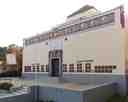
To spot the American Legion Post 43, just look ahead for a striking cream-colored building with a bold blue-and-gold frieze near the roof, an Egyptian-style entrance, and plaques labeled the "Court of Honor" beside the stairs. Now, let’s set the scene! You’re standing outside a place where Tinseltown’s brightest stars once swapped scripts for uniforms. Born in 1919 when a group of World War I veterans-who just happened to be creative powerhouses like Cecil B. DeMille and Adolph Menjou-decided to carve out a slice of Hollywood just for veterans, Post 43 soon became famous as the "Post to the Stars." Imagine strolling through the doors and bumping into Clark Gable or telling Stan Lee your greatest superhero idea. Even Ronald Reagan was here, long before he got that big “promotion” to the White House! Inside, this isn’t your typical clubhouse. Completed in 1929 to the drumbeat of a roaring Fourth of July, the building boasts Egyptian Revival architecture-a style that looks ready for a pharaoh or a film premiere. That art-deco bar? It’s not just for drinks, it’s been the backdrop for more TV and movie scenes than you can shake an Oscar at. And the massive theater inside, stretching nearly the size of a small airplane hangar, once welcomed studios eager to show off fresh stars to a crowd of decorated veterans. But this isn’t just a museum. As the years rolled by, Post 43 kept up with the times-hosting Iraq and Afghanistan vets, modernizing its theater in 2019, and making sure soldiers who knew their way around a Humvee could also find work lighting, filming, or editing Hollywood blockbusters. Recognized as a historic monument, Post 43 even caught the eye of Hollywood producers, landing scenes in projects like The Shining, Star Trek, and American Crime Story. Today, it’s a living, breathing monument-equal parts Hollywood glitz, battlefield camaraderie, and a grand old clubhouse for those who served with both movie-star style and real-world grit.
Ouvrir la page dédiée →Ahead of you, nestled among palm trees and bursts of green ivy, you’ll spot a cozy Craftsman-style bungalow with a welcoming porch and a staircase leading up to its doors-just…Lire plusAfficher moins
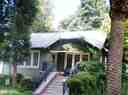
Ahead of you, nestled among palm trees and bursts of green ivy, you’ll spot a cozy Craftsman-style bungalow with a welcoming porch and a staircase leading up to its doors-just look for the charming house wrapped in lush foliage. Imagine it’s the early 20th century and the air smells like fresh-cut wood and orange blossoms-here, the Highland-Camrose Bungalow Village was a brand-new oasis created by the Taylor Brothers and Lee Campbell. These sixteen bungalows were built as peaceful homes for Hollywood dreamers-picture the gentle clatter of teacups on porches and the laughter echoing through curtained windows. As the years rolled on, these bungalows changed roles, swapping pajamas for paperwork when they became the buzzing offices of organizations linked to the nearby Hollywood Bowl, including the Los Angeles Philharmonic Orchestra. Suddenly, these cottages were filled not with bedtime stories, but with concert talk, musical scores, and perhaps the occasional lost tuba player asking for directions. In 1989, the village got its Hollywood ending-being placed on the National Register of Historic Places. Today, along with their charming stone walls and lush gardens, these bungalows feel a bit like Hollywood’s best-kept secret-a little village where music, history, and classic California architecture all band together.
Ouvrir la page dédiée →Take a look straight ahead-Whitley Heights rises from the green hillside, a patchwork of red-tiled Mediterranean-style homes and tall palm trees, standing out above the Hollywood…Lire plusAfficher moins
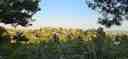
Take a look straight ahead-Whitley Heights rises from the green hillside, a patchwork of red-tiled Mediterranean-style homes and tall palm trees, standing out above the Hollywood skyline like a sunlit villa village perched above the city below. Let’s go on a little walk through Hollywood history, with a dash of drama and more than a sprinkle of celebrity glamour! Picture it: the early 1900s, when Hobart J. Whitley-a man who clearly looked at a sunny, wild hillside and thought, “Yes, this needs an Italian upgrade”-snapped up this patch of land in hopes of creating LA’s own Mediterranean getaway. Instead of sheep or tomato vines, he brought in architect Arthur Barnes to plant winding roads and build homes inspired by the breezy terraces of Italy and the lush courtyards of old Spain. Somewhere, a gondolier probably wept with jealousy. In 1907, flames swept up from a careless spark down the hill, quickly eating through rare palm trees and imported shrubs. Just imagine the crackle of brush and the panic of neighbors--as volunteers hauled water to keep the fire from swallowing their dreams or the local reservoir. Thankfully, the hill survived, and with it, Whitley’s vision. Atop this very rise sits what was once a showplace for all of Hollywood, where winding streets were more for spectacular strolls than car chases. When Whitley Heights was finally opened up to the public in 1920, they threw a festive barbecue-because if there’s one thing Angelenos love more than sunshine, it’s a good party! The terraces-draped with fresh homes and lush gardens-filled with hopeful residents, many of them the new royalty of film: actors, directors, and dreamers, all drawn to the views and the promise of privacy just steps from the excitement of Hollywood Boulevard. It didn’t take long before the likes of Rudolph Valentino and Charlie Chaplin called this hillside home. Even Bette Davis had an address up here-though her house, tragically, gave way to a museum that was never built. If you sense a shiver of history, you’re not alone-these slopes have seen their share of drama. Fast forward to the 1980s, and life atop the hill was a little less serene. Nervous neighbors debated fiercely as crime crept up from below, and the idea of closing off their streets took root. At one point, they actually managed to put up gates, turning Whitley Heights into a nearly private enclave. But city laws have a sense of humor, and after heated court battles the gates had to come down. You might still imagine the clang of metal as those gates were removed--and the mixed sounds of relief and regret trailing through the trees. Whitley Heights isn’t just a celebrity address; it’s a living stage set. These homes-with red-tiled rooftops, cool white arches, and balconies peeking through lines of palms-still shine with old Hollywood charm. “La Leyenda” towers as a six-story 1927 apartment house-a monument to the bold dreams of this community, now protected as a historic treasure. The area’s spirit endures thanks to quirky stories like that of Patrick Bauchau, whose jungle-like garden nearly caused a scandal when local preservationists worried it was hiding too much of his home. Everyone’s a critic here, even when it comes to personal landscaping! As you admire Whitley Heights, imagine actors gathering for secret parties, writers dreaming up the next big script, and the constant push and pull between keeping the world out and letting history shine through. Whitley Heights remains a legendary nook, nestled above Tinseltown, where the palm trees and winding streets still promise just a hint of movie magic for anyone lucky enough to pass by. Let’s keep walking-there are more secrets to uncover in Hollywood’s hills! To delve deeper into the geography, notable residences or the notable residents, simply drop your query in the chat section and I'll provide more information.
Ouvrir la page dédiée →Look up ahead for a tall, pale beige building towering over the trees, with “MONTECITO” proudly spelled out in big letters at the very top-if you see its grid of windows marching…Lire plusAfficher moins
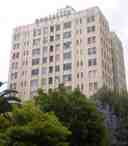
Look up ahead for a tall, pale beige building towering over the trees, with “MONTECITO” proudly spelled out in big letters at the very top-if you see its grid of windows marching up in neat rows, you’ve found it. Now, let your imagination stroll back to the glitz and grit of 1930s Hollywood. Picture this: in 1935, on this very hill, workers bustled around as the Montecito Apartments began to rise-a gleaming new Art Deco giant, decked out in zigzag patterns and Mayan-flavored details. For a cool $1 million (which, let’s be honest, was a fortune back then!), the Montecito wasn’t just tall-it was the tallest in Hollywood, offering sweeping views, a private pool, secret underground garages, and a parking lot fit for stylish convertibles. Now, try to sense the excitement as hopeful young actors, clutching their dreams and suitcases, walked inside-among them a fresh-faced Ronald Reagan, arriving in 1937 with stars in his eyes. Rumor has it he even roomed with the legendary Mickey Rooney! And he wasn’t alone-celebrities like James Cagney, George C. Scott, Montgomery Clift, and even Don Johnson called the Montecito home, sprinkling a bit of Hollywood magic (and maybe a few wild parties) behind those windows. But don’t get too star-struck! By the 1980s, this grand address needed a new act. The city rescued it, transforming those Deco rooms into affordable homes for seniors-preserving the building’s beauty and sense of community. Today, the Montecito stands tall as an official historic place, honored for its architecture and colorful history. And if you listen carefully, you might just hear echoes of old Hollywood laughter drifting down from those storied halls. So, hats off to the Montecito-the building where legends found a home and fairy tales got a Hollywood address!
Ouvrir la page dédiée →Right in front of you is El Cabrillo-just look for the two-story Spanish-style courtyard, where old brickwork, arched walkways, a rounded turret, and a classic tiled fountain in…Lire plusAfficher moins
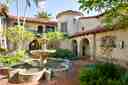
Right in front of you is El Cabrillo-just look for the two-story Spanish-style courtyard, where old brickwork, arched walkways, a rounded turret, and a classic tiled fountain in the center practically transport you to golden-age Hollywood. Alright, welcome to El Cabrillo, where history, mystery, and a pinch of Hollywood magic meet right under these shady palms! Can you hear that gentle trickle from the stone fountain? That sound has echoed off these walls since 1928, when legendary movie mogul Cecil B. DeMille decided to create something truly spectacular. He brought in the dynamic architect duo Arthur and Nina Zwebell-think of them as the Spielberg and Lucas of courtyard design. But here, they did something special: unlike their other work, El Cabrillo was built from sturdy brick, not just stucco and wood, immediately giving it more gravitas and a permanent, grand feel. As you gaze around, soak in the Spanish Colonial Revival details-the hand-made tiles, the swirling wrought-iron, and those magnificent timbered ceilings peeking through the windows. If you imagine candlelight and a parade of stars in elegant 1920s garb, you’re not far off. El Cabrillo quickly became one of Hollywood’s most fashionable addresses, where celebrities and up-and-coming actors wanted to be seen. In fact, actress Ann Harding paid an eye-watering $500 a month to live in one of the snazzy front apartments-try charging that for rent to your houseplants today! Stories swirl around this place. Some say DeMille built it to house his favorite New York stage actors when “talkies”-movies with sound-first arrived. Others believe it was a lavish present for his daughter Frances. Either way, only in Hollywood could the truth be less dramatic than the legends! And true to form, the complex became a backdrop for old and new Hollywood alike. Rudolph Valentino may have filmed a silent scene here in the courtyard, while, decades later, drag legend Divine and costume collector Kent Warner both called it home. There’s even a Hollywood-style heist twist: after Warner died, the basement was cleaned out, tossing priceless treasures like James Dean’s “Rebel Without a Cause” boots and Marlon Brando’s “Wild One” jacket straight into the trash-ouch! But not all the drama happened on screen. In the 1930s, a scandal erupted when a judge’s daughter and son-in-law were discovered living here rent-free, sparking a grand jury investigation. Then, during tougher times in the ‘70s and ‘80s, residents would sometimes have to duck inside to avoid stray bullets zipping through the night -Hollywood can be as wild as any movie plot, can’t it? Yet, El Cabrillo has always been a scene-stealer. It shone as the home base for TV’s “Chuck” (though, in true Hollywood fashion, the magical courtyard you saw in the show was eventually recreated on a soundstage), and it’s popped up in “Perry Mason,” “Hollywood,” “911,” and even in “Stalker,” where actor Dylan McDermott strolled through, wondering aloud how much it would cost to live here. Well, today, units go for sums that would make even a mogul blush-$800,000 or more! Restored to its original glory, El Cabrillo stands not just as a home but as a living, breathing set. Designated both a Los Angeles Historic-Cultural Monument and on the National Register of Historic Places, it invites you to step into a world where the past is present, every tile has a tale, and every evening, you can almost imagine the ghostly laughter of Hollywood legends echoing through the courtyard. So take a moment to savor it-and maybe compose your own Hollywood ending right here. Intrigued by the ties to hollywood film business, architecture or the later years? Make your way to the chat section and I'll be happy to provide further details.
Ouvrir la page dédiée →Right in front of you, you’ll spot the Hollywood Tower by its V-shaped layout and dramatic faux French Normandy turrets, peeking out above a cluster of tall palm trees, with that…Lire plusAfficher moins
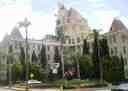
Right in front of you, you’ll spot the Hollywood Tower by its V-shaped layout and dramatic faux French Normandy turrets, peeking out above a cluster of tall palm trees, with that famous neon “HOLLYWOOD TOWER” sign watching over the freeway and street below. Now, let’s take a moment to soak in this magnificent grand dame at the corner of Franklin and Vista Del Mar-Hollywood Tower, once called La Belle Tour, built all the way back in 1929. Picture yourself arriving here in a classic Packard, camera flashes going off, and the faint scent of fresh paint on the ornate trim. This place wasn’t just an apartment building, it was Hollywood’s answer to sophisticated living-three glamorous penthouses, roof gardens for sunbathing or secret parties, and a subterranean garage to hide your fancy ride from prying eyes. Rumor has it, George Raft, the smooth-talking actor who could steal a scene or a safe, even owned a piece of the building-and called it home for a while. There’s a plaque by the door reminding everyone that back in the Golden Age, this was where film luminaries rubbed elbows-maybe sometimes a little more closely after a cocktail or two. The building’s gray stonework might look a bit indecisive, as Paula L. Woods once wrote, “so old it probably had a view of the sea when it was built”-but inside, every detail whispered class. The hedges out front were always pruned to perfection, and the lobby shone with that telltale, Spic-and-Span clean scent. It was the kind of place where a screenwriter might hammer out a blockbuster, while a starlet tiptoed back from a midnight rendezvous, hoping the paparazzi hadn’t followed her up Franklin Ave. The Tower loomed large well before the Hollywood Freeway cut its path below-look up at that neon sign, glowing day and night, a silent beacon for dreamers and dealmakers. In its time, the building whirled through a carousel of owners, prices rising and falling with Hollywood’s fortunes. By the late 1970s, things got tricky: rent control made the ledgers groan, and some tenants were better at dodging rent than composing hit songs. Hoping for steadier waters, management started wooing senior citizens-by 1981, more than half the apartments belonged to retirees swapping plot twists in the lobby. Yet Hollywood Tower always seemed to reinvent itself-fresh paint here, new carpet there, and in 2007, a fancy new neighbor sprouted up: La Belle, an echo of the Tower’s original name. The Tower even got a million-dollar facelift and a new set of modern-day owners, but it stays true to its roots-still separate, still iconic, with more cameos in Hollywood films than some actors ever get. You might spot it in noir thrillers, comedies, or-my personal favorite-Disney’s inspiration for the spooky-but-thrilling Tower of Terror rides. The stories it could tell: Eugene Pallette stomping through the halls, Scottish comedian James Finlayson plotting his next gag, or a young Robert Patrick getting ready for his big Terminator break. So as traffic hums beneath that legendary sign, just imagine the secrets, the laughter, and the glamour that made the Hollywood Tower the star behind the stars. After all, in Hollywood, you’re never far from a legend-or a little bit of mischief!
Ouvrir la page dédiée →
Foire aux questions
Comment commencer le tour ?
Après l'achat, téléchargez l'application AudaTours et entrez votre code de réduction. Le tour sera prêt à commencer immédiatement - il suffit d'appuyer sur lecture et de suivre l'itinéraire guidé par GPS.
Ai-je besoin d'Internet pendant le tour ?
Non ! Téléchargez le tour avant de commencer et profitez-en pleinement hors ligne. Seule la fonction de chat nécessite Internet. Nous recommandons de télécharger en WiFi pour économiser vos données mobiles.
S'agit-il d'une visite de groupe guidée ?
Non - il s'agit d'un audioguide en autonomie. Vous explorez indépendamment à votre propre rythme, avec une narration audio diffusée par votre téléphone. Pas de guide, pas de groupe, pas d'horaire.
Combien de temps dure le tour ?
La plupart des tours durent entre 60 et 90 minutes, mais vous contrôlez totalement le rythme. Faites des pauses, sautez des arrêts ou arrêtez-vous quand vous le voulez.
Et si je ne peux pas finir le tour aujourd'hui ?
Pas de problème ! Les tours disposent d'un accès à vie. Faites une pause et reprenez quand vous le souhaitez - demain, la semaine prochaine ou l'année prochaine. Votre progression est sauvegardée.
Quelles sont les langues disponibles ?
Tous les tours sont disponibles dans plus de 50 langues. Sélectionnez votre langue préférée lors de l'utilisation de votre code. Note : la langue ne peut pas être changée après la génération du tour.
Où accéder au tour après l'achat ?
Téléchargez l'application gratuite AudaTours sur l'App Store ou Google Play. Entrez votre code de réduction (envoyé par e-mail) et le tour apparaîtra dans votre bibliothèque, prêt à être téléchargé et commencé.
Si vous n'appréciez pas le tour, nous vous rembourserons votre achat. Contactez-nous à [email protected]
Paiement sécurisé avec 


