

Visite audio de Chattanooga : Échos du patrimoine et des salles sacrées
Une ville fluviale au passé hanté et aux courants de rébellion se cache sous la surface idyllique de Chattanooga. Des fantômes s'attardent dans les halls d'hôtels scintillants et des accords secrets résonnent entre les murs silencieux des églises. Cette visite audio autoguidée vous mène directement au cœur battant de la ville. Découvrez des histoires cachées et des lieux méconnus que la plupart des visiteurs ne trouvent jamais. Quels sinistres secrets tourbillonnaient autrefois sous les eaux vitrées de l'Aquarium du Tennessee ? Comment un seul scandale au sein de l'hôtel The Read House a-t-il failli faire tomber des réputations — et changer la ville pour toujours ? Pourquoi les gens chuchotent-ils à propos d'une Bible disparue, enfermée à la First Presbyterian Church ? Promenez-vous aux côtés des fantômes de contrebandiers, de visionnaires et de causes perdues. Imprégnez-vous d'une ville vivante où chaque pierre soigneusement sculptée et chaque néon clignotant vous invite à regarder plus profondément. Chaque arrêt révèle un nouveau drame dans les rues calmes et le bord de la rivière animé. La rivière n'est jamais immobile. Écoutez maintenant et commencez votre voyage dans les ombres de Chattanooga.
Aperçu du tour
À propos de ce tour
- scheduleDurée 40–60 minsAllez à votre propre rythme
- straightenParcours à pied de 4.1 kmSuivez le sentier guidé
- location_onEmplacementChattanooga, États-Unis
- wifi_offFonctionne hors ligneTéléchargez une fois, utilisez n'importe où
- all_inclusiveAccès à vieRéécoutez n'importe quand, pour toujours
- location_onCommence à Musée de la Découverte Créative
Arrêts de ce tour
Right here is the Creative Discovery Museum, downtown Chattanooga’s headquarters for sticky fingers and big questions. It opened May 26, 1995... which means plenty of local adults…Lire plusAfficher moins
Right here is the Creative Discovery Museum, downtown Chattanooga’s headquarters for sticky fingers and big questions. It opened May 26, 1995... which means plenty of local adults can now say, “I came here as a kid,” and immediately sound ancient. Inside, everything’s built for ages about 18 months to 12 years, with zones for art, music, and hands-on science. The famous one is RiverPlay: a two-story water world where toddlers get their own riverboat corner, older kids run the show, and everybody ends up negotiating that swinging bridge like it’s a high-stakes expedition. There’s also a water table that turns locks and dams into something you can actually understand by making a small river do what you tell it... or at least trying. They don’t just let kids roam, either: school tours, outreach, birthday parties, even lock-ins with pizza and a lesson... the dream, honestly. When you’re ready, head east for about 6 minutes toward the Tennessee Aquarium, and take the stairs.
Ouvrir la page dédiée →On your right, look for the bold, striped brick-and-stone building with a tall, glassy peak like a modern lighthouse, clearly labeled “TENNESSEE AQUARIUM.” This place opened in…Lire plusAfficher moins
On your right, look for the bold, striped brick-and-stone building with a tall, glassy peak like a modern lighthouse, clearly labeled “TENNESSEE AQUARIUM.” This place opened in 1992, right here on the Tennessee River, and it wasn’t just built to show off fish… it was built to help Chattanooga fall back in love with its own waterfront. In the early 1980s, downtown was hurting-factories had gone quiet, people had moved out, and the river felt more like a boundary than a front porch. So local leaders, planners, and nonprofits started asking a pretty gutsy question: what if the river became the city’s main attraction again? That idea snowballed into the aquarium. The site used to be abandoned warehouses-hardly a tourist paradise-until a nonprofit development group pulled it together and the money came in from a mix of private backers and community effort. The big number was about $45 million at the time… which is roughly around $100 million in today’s dollars. And yes, some folks rolled their eyes and called it “Jack Lupton’s fish tank,” because Chattanooga humor has always been… efficient. But the joke didn’t age well. The aquarium hit its first-year goal of 650,000 visitors in just a few months, and by the next spring it had blown past 1.5 million visitors. Architecturally, it’s clever. The original building, River Journey, is basically a vertical storybook: you start up high where rain hits the Appalachian Mountains and you follow that water all the way down toward the Gulf. Skylights brighten living forest scenes at the top, then you move down into darker “canyon” spaces where the tanks glow. Even the outer walls are doing homework-there are dozens of river-history relief panels built into the exterior. Inside, River Journey was once the largest freshwater aquarium in the world when it opened, with hundreds of thousands of gallons of water. You’ve got Appalachian habitats with otters and native fish, a Mississippi Delta zone with young alligators and alligator snapping turtles, and tanks featuring the Tennessee River itself-including a massive Nickajack Lake display with paddlefish cruising around like they own the place. Which, to be fair, they sort of do. Then in 2005 came Ocean Journey-the expansion next door-adding saltwater exhibits after years of visitors saying, “Okay, but where are the sharks?” That building holds an enormous reef tank you can view from multiple levels, including a walk-through underwater section. There are penguins, a touch tank for small sharks and rays, and a gallery where jellyfish share space with art glass… because Chattanooga likes its science with a side of style. And it’s not just showmanship. The aquarium runs serious conservation work-especially for Southeast freshwater species-like helping bring lake sturgeon back to the Tennessee River after they were declared extinct here in 1961. That’s the kind of long-term project that doesn’t fit on a souvenir magnet… but it matters. When you’re set, St. Paul’s Episcopal Church is a 14-minute walk heading west.
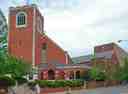
Ouvrir la page dédiée →Look to your right for a sturdy red-brick church with pale stone trim and a square bell tower that rises above the trees like it’s keeping an eye on downtown. This is St. Paul’s…Lire plusAfficher moins
Look to your right for a sturdy red-brick church with pale stone trim and a square bell tower that rises above the trees like it’s keeping an eye on downtown. This is St. Paul’s Episcopal Church, and it’s been part of Chattanooga’s story since 1852... when the congregation didn’t even have a church. Picture it: a handful of Episcopalians climbing to the second floor of a general store at Fourth and Market, trying to hold a proper service while commerce clattered below. By the next year, ten families made it official, forming a parish in a growing river town that still had mud on its boots. Their first real building went up at Eighth and Chestnut, but the Civil War turned it into a military hospital. That’s not exactly great for the furniture... or the walls. The place took a beating, and afterward the congregation received $3,640 in federal compensation... about $80,000 in today’s money... to patch it back up and reopen in 1867. Then came the big move here, to Seventh and Pine, and the building you’re looking at: designed by New York architect William Halsey Wood, started in 1881 and opened for worship in 1888. It’s meant to feel like an English village church, with that confident tower and, inside, a high wooden ceiling and side galleries seating around 450. Up in the tower are 11 bells, cast in Baltimore and dedicated in 1911... ready to make sure nobody sleeps in on Sunday. And this isn’t just history behind glass. Since 1996, the undercroft has hosted St. Catherine’s Shelter for women and children, alongside other community work like daily Alcoholics Anonymous meetings and food-bank partnerships. In 1978, the whole place earned a spot on the National Register of Historic Places... but it’s the everyday service that keeps it truly alive. When you’re ready, Tivoli Theatre is a 3-minute walk heading south.
Ouvrir la page dédiée →


Afficher 10 arrêts de plusAfficher moins d'arrêtsexpand_moreexpand_less
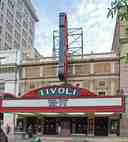
On your right, look for the classic cream-and-tan brick façade topped by that big red-and-black marquee and the tall vertical sign that spells TIVOLI like it’s trying to be seen…Lire plusAfficher moins
On your right, look for the classic cream-and-tan brick façade topped by that big red-and-black marquee and the tall vertical sign that spells TIVOLI like it’s trying to be seen from orbit. This is the Tivoli Theatre... Chattanooga’s own “Jewel of the South,” and for once a nickname that isn’t just marketing fluff. It opened March 19, 1921, after about two years of building and a price tag of $750,000 at the time... roughly $13 million today. That’s not “let’s put on a show” money. That’s “we’re making a statement” money. Architecturally, it’s Beaux Arts-fancy, symmetrical, and proudly over-dressed. Chicago theater specialists Rapp and Rapp helped design it, along with local architect Reuben H. Hunt, and the John Parks Company handled construction. And the exterior is basically a handshake: cream tiles, beige terra-cotta brick, and then the marquee comes in with the red-black-white drama. The sign originally bragged with about 1,000 “chaser lights,” the kind that ripple and wink, plus a big neon TIVOLI to seal the deal. If you were coming downtown for a night out, this was the lighthouse. Inside was even more of a treat: a grand lobby with white terrazzo flooring inlaid with green marble, little music-themed medallions, crystal chandeliers, and a ceiling that went full rose-and-gold. The seats? Red velvet plush-because in 1921, your movie experience deserved upholstery. Here’s the real flex: the Tivoli was one of the first air-conditioned public buildings in the country-and among the first theaters in the South with air conditioning. In other words, on a sticky Tennessee summer night, this place didn’t just sell tickets... it sold RELIEF. Opening day was an all-day celebration: concerts by the Tivoli Symphony, showings of Cecil B. DeMille’s “Forbidden Fruit,” and a personal appearance by Mae Murray. Tickets ran 15 to 55 cents-about $2.50 to $9.50 today. And yes, they packed in multiple shows, plus speeches from local big-deals like Professor Spencer McCallie and the mayor. The Tivoli’s built for scale-over 1,750 seats spread across orchestra, boxes, loge, and balconies. The stage is massive, and the silver-and-gold proscenium arch frames it like a picture you can walk into. And because movies used to be silent-awkward, right?-they installed a mighty Wurlitzer organ (after an earlier organ), costing $30,000 in 1924... around half a million today. That “Mighty Wurlitzer” is still playing, nearly a century later, which is honestly more commitment than most of my gym memberships. Like a lot of grand movie palaces, it hit hard times when newer theaters arrived in the 1950s. The last film here was “Snow White and the Three Stooges” in August 1961- a quiet, tasteful farewell. It closed, then came back as a cultural center in 1963, landed on the National Register of Historic Places in 1973, and the city bought it in 1976 for $300,000-about $1.6 million today. Major restoration money followed, and after a big renovation, it reopened in 1989 with Marilyn Horne headlining... the kind of comeback story the Tivoli deserves. When you’re set, The Read House Hotel is a 4-minute walk heading south.
Ouvrir la page dédiée →On your right, look for the big red-brick, ten-story hotel with white stone corner trim and rows of tall windows, sitting right at the street corner beneath a canopy of leafy…Lire plusAfficher moins
On your right, look for the big red-brick, ten-story hotel with white stone corner trim and rows of tall windows, sitting right at the street corner beneath a canopy of leafy trees. This is The Read House, and it has the kind of history that likes to change outfits but never really leaves the party. The address has been welcoming travelers since 1847, when a hotel called the Crutchfield House opened here-built by Thomas Crutchfield Senior, who’d later become Chattanooga’s mayor. Back then, being “directly across from the depot” was basically the 1800s version of having the best airport hotel. Trains brought people, money, and gossip… and this place happily took all three. In January of 1861, the Crutchfield House hosted a guest passing through on a very tense little errand: Jefferson Davis, fresh off resigning from the United States Senate, headed home to Mississippi. He gave a pro-secession speech right in the dining room-because nothing pairs with dinner like political combustion. And then William Crutchfield, the mayor’s brother and future congressman, fired right back, calling Davis a traitor and basically saying Tennessee wasn’t going to get tricked into joining the chaos. Tempers flared so hard a duel almost happened. Imagine checking in, hoping for a quiet night, and the hotel’s entertainment is “almost a shootout.” When the Civil War arrived in full, the building’s role turned grim. In 1862 it became Confederate headquarters, then a hospital that winter, run under Confederate General Samuel Jones. In 1863, Union troops took Chattanooga and planted their regimental colors on top of the hotel-an unmistakable “we’re in charge now” message. After the Battle of Chickamauga, it served as a hospital again, this time for wounded Union soldiers. The Crutchfield House survived the war… but not fire. In 1867, it burned down, and the family decided they’d had enough of rebuilding. Enter John T. Read, a Civil War surgeon with a stubborn streak. In 1872-New Year’s Day, no less-he opened the first Read House Hotel here, starting with about 45 rooms. His son Samuel took over young, at 19, and grew it into a 202-room operation by 1902. This spot was booming, and the Read family played along. The building you’re looking at now is the 1926 version: ten stories in a tidy Georgian style, designed by Chicago architects Holabird and Roche. It cost $2.7 million at the time-roughly around $50 million today-and they pulled off the classic trick of keeping parts of the old hotel running while the new one went up, so the front desk never really had to say, “Sorry, we’re closed.” Famous names cycled through-presidents, performers, and even Al Capone. During one of his federal trials, Capone stayed here, and the hotel added custom iron bars to his windows-Room 311-bars that, yes, are still there. Because nothing says “welcome” like decorative detention. And then there’s Room 311’s other claim to fame: the haunting story. Many locals whisper about a woman named Annalisa Netherly, said to have lived in that room for a long stretch in the 1920s and ’30s, and to have died there under murky, tragic circumstances. The stories don’t agree on details-some say murder, some say suicide-but the legend stuck. Guests report strange, heavy feelings, especially men… and especially smokers. Others sleep like a rock. So… your odds are either “paranormal encounter” or “great night’s rest,” which is about as on-brand for hotels as it gets. When you’re set, the Chattanooga Public Library is a 3-minute walk heading east.
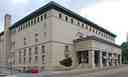
Ouvrir la page dédiée →On your right, look for the big, boxy concrete building with deep horizontal overhangs and the bold sign that simply reads “THE PUBLIC LIBRARY” above the recessed entrance. This…Lire plusAfficher moins
On your right, look for the big, boxy concrete building with deep horizontal overhangs and the bold sign that simply reads “THE PUBLIC LIBRARY” above the recessed entrance. This is the Chattanooga Public Library, and it’s been a city-run doorway to knowledge since 1905... which means it has survived wars, depressions, and more than a few questionable haircut eras. The building you’re seeing opened in 1976, back when it touted itself as the Chattanooga-Hamilton County Bicentennial Library. Nothing says “happy birthday, America” like checking out a stack of books and whispering in public. Before this place, Chattanooga had a Carnegie library built in 1904, the kind of dignified brick-and-stone temple that later landed on the National Register of Historic Places. Then the collection moved again-eventually into a building that’s now Fletcher Hall at the University of Tennessee at Chattanooga. And in 2013, the library added a makerspace, because reading is great... but so is building stuff. When you’re set, Joel W. Solomon Federal Building and United States Courthouse is a 4-minute walk heading north.
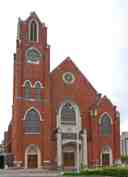
Ouvrir la page dédiée →On your right, look for the tall red-brick church with a square tower on the left side, pointed-arch windows, and pale stone trim framing the main doors. This is the Basilica of…Lire plusAfficher moins
On your right, look for the tall red-brick church with a square tower on the left side, pointed-arch windows, and pale stone trim framing the main doors. This is the Basilica of Saints Peter and Paul, sitting here at 214 East 8th Street like it’s been holding its ground for a long time… because it has. The parish began back in 1852, when Chattanooga’s Catholic community was small enough that Mass happened wherever they could borrow a roof. By 1858 they started building a stone church, and then… history happened. Construction stalled in 1860 as the Civil War closed in. And in September 1863, after the Battle of Chickamauga, the nearly-finished church was seized by the Union Army. The Army of the Cumberland didn’t just occupy it… they used its stone for fortifications and culverts. Nothing says “temporary wartime need” like dismantling someone’s church for building materials. General William Rosecrans, a Catholic himself, tried to protect the site, but after he was replaced, the demolition picked back up. After the war, the congregation filed a claim, and in 1889 the government paid $18,729… roughly about $625,000 today… to help make up for the damage. Under Father William Walsh, ground broke for this current church in 1888, and it was dedicated on June 29, 1890. Inside, there are Tiffany-designed stained-glass windows telling Peter’s story on the east side and Paul’s on the west, plus 14 vivid Stations of the Cross and a Kilgen organ from 1936. In 2011, Pope Benedict XVI elevated it to a minor basilica… a formal nod that this place matters. And in 2016, the diocese opened a cause for canonization for Father Patrick Ryan, a former pastor who died at 33 after going house to house caring for yellow fever victims. That’s courage with no safety net. When you’re set, Soldiers and Sailors Memorial Auditorium is a 3-minute walk heading southeast.
Ouvrir la page dédiée →Look to your right for a big, pale-brick block of a building with a wide, columned entrance canopy and the words “Soldiers and Sailors Memorial Auditorium” across the front.…Lire plusAfficher moins
Look to your right for a big, pale-brick block of a building with a wide, columned entrance canopy and the words “Soldiers and Sailors Memorial Auditorium” across the front. You’re standing beside one of Chattanooga’s great “we built it to last” statements. This auditorium went up in the early 1920s, built from 1922 to 1924 by contractor John Parks, with a price tag of about $700,000 back then… which is roughly $13 million in today’s money. That’s a lot of bricks and a lot of civic pride. Architect R. H. Hunt designed it-same guy who gave Chattanooga the Tivoli Theatre-so yes, the city was on a bit of a glamorous streak. But this place wasn’t built just for glitz. It was meant as a public thank-you note to local veterans of World War I, written in masonry and echo. Inside are actually two theaters: the big downstairs Memorial Auditorium with nearly 3,900 seats, and the smaller Walker Theatre upstairs with about 850-plus a basement hall where trade shows can do their very un-theatrical thing. By the 1960s, the building got pretty rough around the edges, closing in 1965 and reopening after repairs. Then it shut again in 1988 for a major restoration-over $7 million at the time, around $19 million today-before reopening in 1991. And the stories? Oh, they’ve got range. In 1975, a legal fight over the musical Hair went all the way to the United States Supreme Court. Nothing says “community auditorium” like constitutional law. That same year, Kiss played their first show here as a headline act-so, wigs, guitars, and court rulings… a very Chattanooga combo. One more gem: the historic pipe organ, dating back to the building’s early days, was lovingly restored over 21 years and rededicated in 2007. Patience is a virtue… especially in organ restoration. When you’re set, the Chattanooga State Office Building is a 4-minute walk heading southeast, and it’ll be on your right.
Ouvrir la page dédiée →On your right, look for a broad, six-story block with long rows of square windows, a darker stone base, and a light-colored upper façade that feels very mid-century “efficient.”…Lire plusAfficher moins
On your right, look for a broad, six-story block with long rows of square windows, a darker stone base, and a light-colored upper façade that feels very mid-century “efficient.” This is the Chattanooga State Office Building, sitting at 540 McCallie Avenue like a 1950s time capsule that never quite got the memo to leave. It went up in 1950 as the headquarters for Interstate Life Insurance, built for about $1.75 million back then... roughly $23 million in today’s money. Not bad for a workplace designed to sell peace of mind. Architecturally, it’s Art Moderne: smooth, streamlined, and confident in that postwar way that says, “The future will be organized.” Down low, you’ve got ruby granite; above, gray-white limestone. And near the McCallie entrance, there’s a bronze frieze by a Tennessee sculptor meant to capture the “sturdy mountain” character of folks in Southeast Tennessee. In other words: tough, practical, and not impressed by your fancy talk. Inside, though? The place had perks. A penthouse lounge. An auditorium. Even a basement bowling alley for employees. Nothing says “corporate culture” like rolling a strike before clocking back in to calculate risk. In 1973, they planned a big add-on-about 65,000 extra square feet-boosting the building’s footprint by about 72 percent. Then the plot thickened: by 1980 the company tried selling it to the state, and in 1981 Tennessee bought it for $5.85 million-around $20 million today-plus the land and a warehouse. It served state offices until 2013, when nearly 400 employees moved out and the building was handed to the University of Tennessee at Chattanooga. UTC floated demolition for a new dorm, preservationists pushed back, and in 2014 the National Trust labeled it one of America’s most endangered places. By 2015, UTC got the green light to start repairs. When you’re set, First Presbyterian Church (Chattanooga, Tennessee) is a 2-minute walk heading southeast.
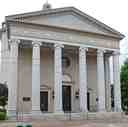
Ouvrir la page dédiée →On your left, look for the big, pale-brick church with a classic Greek-temple look: a row of tall white columns holding up a wide triangular pediment, with a small greenish dome…Lire plusAfficher moins
On your left, look for the big, pale-brick church with a classic Greek-temple look: a row of tall white columns holding up a wide triangular pediment, with a small greenish dome peeking above the roofline. This is First Presbyterian Church, and it’s kind of the original “we should probably organize ourselves” congregation of Chattanooga. It officially formed on June 21, 1840… which, in city terms, is basically the early draft version of Chattanooga. What’s especially striking is who helped get it going: missionaries who had worked at the Brainerd Mission to the Cherokee. After the Trail of Tears tore people from their homes, those missionaries returned and started ministry here among the English, Scots-Irish, and Welsh families who were building a new town. That’s a lot of heavy history behind what now looks like calm stone and straight lines. Early on, worship happened in a log cabin. Not exactly the columned front you’re looking at now. In 1845 they built their first real church, then outgrew it and moved again in the 1850s to a brick building downtown. Then the Civil War hit Chattanooga hard. During the Union occupation in 1863, their church was stripped and used as a military hospital. Imagine showing up for Sunday service and finding your sanctuary turned into triage… the kind of reality check history likes to hand out. After the war, for a while, they met in the minister’s home-faith, but make it practical. This building came later, in 1910, designed by Stanford White, a heavyweight architect with a flair for grand statements. It cost $152,000 at the time-roughly about $5 million in today’s money-and honestly, it looks like they spent it on columns you could lean a whole city against. It earned a National Register listing in 2009. One more fun twist: in the 1920s, their minister Joseph Glass Venable started preaching on local radio-launching what the church believes is the longest continuously running radio program in the entire country. Not bad for a group that began in a log cabin. When you’re set, McKenzie Arena is a 9-minute walk heading northwest.
Ouvrir la page dédiée →On your left, look for the big cream-colored ROUND building with a wide staircase and the bold sign over the entrance that reads “THE McKENZIE ARENA.” This is McKenzie Arena,…Lire plusAfficher moins
On your left, look for the big cream-colored ROUND building with a wide staircase and the bold sign over the entrance that reads “THE McKENZIE ARENA.” This is McKenzie Arena, but around here it’s better known as “The Roundhouse”… because, well, it’s a roundhouse. It opened in 1982, designed by Campbell and Associates, with David J. Moore on site helping steer the whole thing from blueprint to basketball squeaks. Back then it was simply the UTC Arena, built to replace the older Maclellan Gymnasium as the main home court. And it came out swinging. In its very first season, the defending national champions from North Carolina rolled in… with a roster that included Michael Jordan, Brad Daugherty, and Sam Perkins. Picture the place: fresh paint, new seats, and the sudden realization that you’re watching future legends warm up right in front of you. Not a bad way to christen a new arena. In 2000, the building got its current name to honor Toby and Brenda McKenzie-big-time supporters from nearby Cleveland, Tennessee. Since then, it’s hosted Southern Conference tournament action multiple times, plus the kind of grab-bag events that make arenas secretly fun: concerts with a massive stage setup, ice shows, rodeos, circuses, monster truck rallies on a floor big enough to take the punishment, and plenty of wrestling-WCW, WWF, and today’s WWE still dropping by. It even hosted Terrell Owens’ own Hall of Fame induction celebration here in 2018… because of course it did. Subtlety is overrated. When you’re set, Maclellan Gymnasium is a 3-minute walk heading south.
Ouvrir la page dédiée →




Foire aux questions
Comment commencer le tour ?
Après l'achat, téléchargez l'application AudaTours et entrez votre code de réduction. Le tour sera prêt à commencer immédiatement - il suffit d'appuyer sur lecture et de suivre l'itinéraire guidé par GPS.
Ai-je besoin d'Internet pendant le tour ?
Non ! Téléchargez le tour avant de commencer et profitez-en pleinement hors ligne. Seule la fonction de chat nécessite Internet. Nous recommandons de télécharger en WiFi pour économiser vos données mobiles.
S'agit-il d'une visite de groupe guidée ?
Non - il s'agit d'un audioguide en autonomie. Vous explorez indépendamment à votre propre rythme, avec une narration audio diffusée par votre téléphone. Pas de guide, pas de groupe, pas d'horaire.
Combien de temps dure le tour ?
La plupart des tours durent entre 60 et 90 minutes, mais vous contrôlez totalement le rythme. Faites des pauses, sautez des arrêts ou arrêtez-vous quand vous le voulez.
Et si je ne peux pas finir le tour aujourd'hui ?
Pas de problème ! Les tours disposent d'un accès à vie. Faites une pause et reprenez quand vous le souhaitez - demain, la semaine prochaine ou l'année prochaine. Votre progression est sauvegardée.
Quelles sont les langues disponibles ?
Tous les tours sont disponibles dans plus de 50 langues. Sélectionnez votre langue préférée lors de l'utilisation de votre code. Note : la langue ne peut pas être changée après la génération du tour.
Où accéder au tour après l'achat ?
Téléchargez l'application gratuite AudaTours sur l'App Store ou Google Play. Entrez votre code de réduction (envoyé par e-mail) et le tour apparaîtra dans votre bibliothèque, prêt à être téléchargé et commencé.
Si vous n'appréciez pas le tour, nous vous rembourserons votre achat. Contactez-nous à [email protected]
Paiement sécurisé avec 


