
Glasgow Audio Tour: Stories & Spires of Glasgow’s West End
Au-dessus de votre tête, des guirlandes lumineuses scintillent là où les chevaux claquaient autrefois et où des sociétés secrètes chuchotaient sous les toits victoriens. Le West End de Glasgow n'est pas seulement de belles ruelles pavées et des flèches gothiques, c'est une boîte à énigmes de légendes, de rébellions perdues et de fantômes oubliés depuis longtemps. Découvrez la ville invisible lors de cette visite audio immersive autoguidée, en vous plongeant dans des ruelles animées, de grandes vieilles églises et des coins que la plupart des visiteurs ignorent. Démêlez les récits qui ont façonné le vrai Glasgow. Quel secret a transformé Ashton Lane de la ruine à la fête presque du jour au lendemain ? Quel chef-d'œuvre de vitrail de la paroisse de Kelvinside Hillhead cache une querelle non résolue ? Pourquoi près de la moitié du chœur de Hillhead Baptist n'est-elle jamais revenue après une seule nuit qui a secoué le monde ? Avancez plus profondément le long des rues éclairées par des lanternes, chaque histoire vous entraînant davantage. Attendez-vous à un drame tourbillonnant à chaque pas et à la ville dévoilant de nouvelles ombres et révélations sous vos yeux. Commencez votre voyage — suivez les lumières, poursuivez les légendes, révélez le véritable cœur de Glasgow.
Aperçu du tour
À propos de ce tour
- scheduleDurée 30–50 minsAllez à votre propre rythme
- straightenParcours à pied de 2.5 kmSuivez le sentier guidé
- location_onEmplacementGlasgow, Royaume-Uni
- wifi_offFonctionne hors ligneTéléchargez une fois, utilisez n'importe où
- all_inclusiveAccès à vieRéécoutez n'importe quand, pour toujours
- location_onCommence à Ashton Lane
Arrêts de ce tour
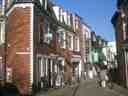
Take a look around - if you see a narrow, cobbled lane with a row of red-brick and white-trimmed buildings, fairy lights zigzagging overhead, and the feeling you've just wandered…Lire plusAfficher moins
Take a look around - if you see a narrow, cobbled lane with a row of red-brick and white-trimmed buildings, fairy lights zigzagging overhead, and the feeling you've just wandered onto a movie set about quirky city nights, congratulations - you’ve found Ashton Lane! It's tucked away beside Hillhead subway station, so keep your eye out for the tiny street sign, and the string lights leading the way like fairy dust towards adventure. Standing here now, you might smell roasted coffee, fresh chips, or even a hint of popcorn drifting from the old cinema. But believe it or not, this place wasn’t always a nightlife hotspot. Back in the 1970s, Ashton Lane was pretty much left behind - rundown homes, empty shops, and probably more tumbleweed than tourists. But then came a twist worthy of a Hollywood blockbuster: the legendary Ubiquitous Chip restaurant, known as ‘The Chip,’ made a daring move into what used to be stables for a funeral undertaker. Talk about a makeover! Soon, other spots followed-bars, creperies, and even Bar Brel set up shop in what once parked the ‘prim dark green Wolseley landaulette’ of Glasgow’s first female medical graduate, Dr Marion Gilchrist. Makes you wonder if the secret ingredient to a great restaurant is a dash of history and a sprinkle of old car smell, right? Now, Ashton Lane is like Glasgow’s own magical alleyway, filled with the buzz of conversation, clinking glasses, and the gentle glow of string lights overhead. Wander past the lively Grosvenor Café and the timeless Chip, and you might even catch a whiff of nostalgia. Even the cinema here has a dramatic story: once built on top of a funeral office, with its own orchestra and a terracotta façade, it later closed, nearly faded away, and then burst back to life with a shiny new bar and sparkling movie screens. So, whether you’re in the mood for a film, a pint, or just a wander, Ashton Lane’s the place where Glasgow’s past and present have a wee dance together. Who knows, maybe tonight’s the night your own story joins the legend of the Lane!
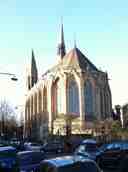
Ouvrir la page dédiée →If you look ahead, you can spot the Kelvinside Hillhead Parish Church rising majestically above the street. It’s the grand stone building with a pointy spire that shoots straight…Lire plusAfficher moins
If you look ahead, you can spot the Kelvinside Hillhead Parish Church rising majestically above the street. It’s the grand stone building with a pointy spire that shoots straight into the sky-almost like the world’s fanciest birthday candle. Notice those tall, narrow windows with delicate stained glass arches, each one almost as tall as a giraffe on tiptoes. The roof sweeps back in a dramatic, slate-clad octagon, and you’ll see little towers poking up, like the castle from your favourite storybook. Alright, take a deep breath and imagine you’re standing here in the 1870s, with the buzz of Glasgow’s new university students all around. This area used to be just fields, and the first church was a rickety, corrugated iron shed plopped down in the middle of it. Folks flocked here so fast, the building couldn’t take the strain, so they had to find a proper spot for something a wee bit more impressive-though dodging old mining tunnels made it quite the adventure. Finally, in 1876, James Sellars, a local architect, finished this very church, inspired by the famous Sainte-Chapelle in Paris. Imagine the smoke rising from chimneys and horses trotting past as the doors swung open for the first service. Feel a chill? Those stained glass windows aren’t just pretty-they let in a technicolour wash of sunlight, including a masterpiece by the painter Edward Burne-Jones and a more modern window from 1958. Inside, you can practically hear the grand organ warming up. That’s the same organ built back in 1876, and it’s had more tune-ups than a classic car ever since-shifting pipes, pumping air with new technology, and filling the whole church with music for almost 150 years. This place has seen more than a few changes-unions with other churches, a complete reroofing so it doesn’t drip during Scottish rain (which is most days), and even some dramatic moments without a permanent minister. It’s a place for community, tradition, and a little bit of mystery-where old meets new in the heart of the West End. Keep your eyes up-you might just spot a patch of light from a window that’s been shining for generations!
Ouvrir la page dédiée →
Afficher 7 arrêts de plusAfficher moins d'arrêtsexpand_moreexpand_less
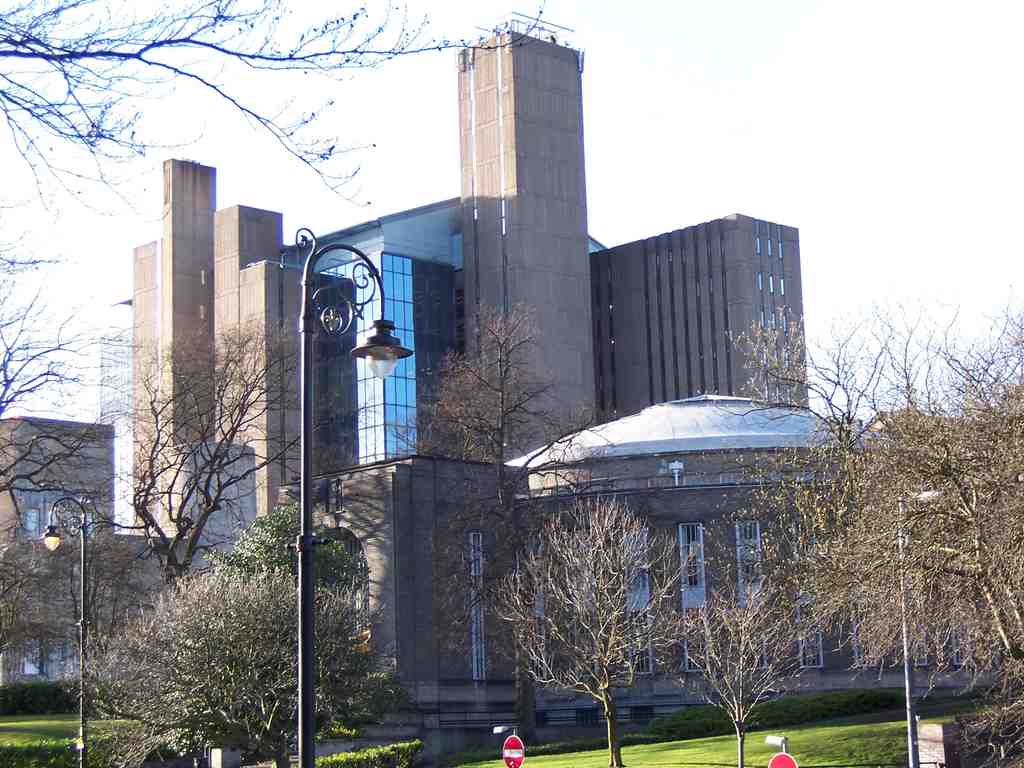
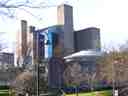
Straight ahead, you can’t miss it-a giant, fortress-like tower with sharp angles and tall vertical shapes. This is the Glasgow University Library, and let’s be honest, it looks a…Lire plusAfficher moins
Straight ahead, you can’t miss it-a giant, fortress-like tower with sharp angles and tall vertical shapes. This is the Glasgow University Library, and let’s be honest, it looks a bit like something from a futuristic film. Just look up and you’ll see its 12 storeys rising into the Glasgow sky, each side wrapped in pale panels and silver cladding. You’ll also spot clusters of square towers that almost resemble castle turrets-if the castle was built by someone obsessed with concrete. The best place to spot the entrance is to watch for the glassy corners catching the light, right where the trees open up near the walkway. Now, let’s step back in time-and by “step,” I mean open a door into history tall enough to fit a stack of about 2.5 million books. Imagine, inside that building is enough paper, parchment, and digital bytes to fill a small galaxy. The library’s collection started back in the 1400s, with its first book donations from a bishop, and it has kept growing-sort of like your to-be-read pile, only with a lot more Latin and illuminated manuscripts. Through revolutions, donations from wealthy collectors, and even a royal physician with thousands of volumes to his name, the stacks here have just kept multiplying. You could say the librarians here have never known a quiet day. And those manuscripts? Six-point-two kilometres if you laid them end to end! You’d need some very comfortable shoes for that stroll. It’s not all dusty tomes, though. There’s a world-class Special Collections department up on level 12, filled with everything from medieval mysteries to rare treasures covered in gold leaf. Meanwhile, the building itself is a beacon of what’s known as 'brutalism'-hard edges, lots of concrete, and once described as being a bit like San Gimignano in Italy, if San Gimignano was built in the sixties and really loved rain screens. Keep an ear out as you approach-the low hum inside is the sound of brains at work, pages turning, and students whispering about essay deadlines. Open almost every day of the year, the Glasgow University Library is more than a building; it’s where centuries of knowledge and a few generations of panicking students come together. So, if you suddenly feel a genius idea coming on, don’t worry-it’s just the atmosphere! Shall we head on to our next stop, or do you need a moment to imagine hauling six kilometers of books up twelve flights of stairs?
Ouvrir la page dédiée →If you look straight ahead, you’ll spot Wellington Church rising up before you, looking a bit like it belongs in ancient Greece rather than the middle of Glasgow. Just follow the…Lire plusAfficher moins
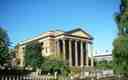
If you look straight ahead, you’ll spot Wellington Church rising up before you, looking a bit like it belongs in ancient Greece rather than the middle of Glasgow. Just follow the wide flight of stone steps and look for the grand row of very tall Corinthian columns at the entrance-those pillars practically shout “important building ahead!” You can’t miss the huge triangular roof (that’s the pediment) sitting above the columns, basking in the sun. The old, blonde sandstone gives the whole place a golden glow, especially on a clear day like today. Now, imagine you’ve arrived here in the late 1800s. The air is buzzing with excitement as the local congregation moves from their cramped church on Wellington Street to this impressive new home. Thomas Lennox Watson, the architect behind this temple-like masterpiece, was determined to make something unique-while everyone else was going Gothic, he wanted neoclassical grandeur! Back then, people would’ve gathered here in their finest clothes, perhaps whispering in admiration at those columns-they honestly look like something straight out of Athens. The church became more than just a Sunday stop. It welcomed students, locals, and visitors alike, with concerts, university events, and even wild debates about social justice or peace. Sometimes you could walk by and hear the powerful pipe organ inside lifting the spirits with music. Today, you might catch the hustle and bustle of students ducking into the Crypt Café below for coffee and cake, or folks from all over the world popping by for the International Welcome Club. Don’t be shy-pop your head in the door if it’s open. Maybe you’ll catch the whiff of fresh-baked scones or the sound of laughter echoing off these ancient stones. Funny enough, this grand sanctuary sometimes becomes a university lecture hall, so if you listen closely, you might just hear the ghosts of students past and present rustling their notes in a panic before exams. In a city famous for changing and growing, Wellington Church stands solid and warm, welcoming all who pass by-whether you need faith, friendship, or just a really good cup of coffee. Curious about the building, current work or the ministry? Don't hesitate to reach out in the chat section for additional details.
Ouvrir la page dédiée →To spot the Glasgow University Union, look for a grand, slightly castle-like building at the foot of University Avenue. It’s pretty hard to miss. You might notice a crest nearby,…Lire plusAfficher moins
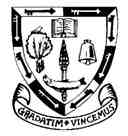
To spot the Glasgow University Union, look for a grand, slightly castle-like building at the foot of University Avenue. It’s pretty hard to miss. You might notice a crest nearby, which you can see in the image you have-a shield with a tree, an open book, a bell, and a sword, circled by arrows and a banner underneath that reads “Gradatim Vincemus.” If you see the big, impressive stonework building with loads of students going in and out, congratulations, you’re in the right place. Alright, take a deep breath-this is the legendary Glasgow University Union! You’re in the presence of history. Imagine the year is 1885: the campus is buzzing, students in tweed jackets are racing about, and somewhere, a group is plotting how to make university life, well, just a bit more fun. This union started because students wanted a place to hang out, let off steam, and make lifelong friends (and the occasional questionable decision at the bar, of course). The movers and shakers of the campus-the debating champs, the med students, and the athletes-all pitched in. They even managed to convince a generous soul named John McIntyre to hand over £5000, which, back then, was enough to buy about fifty million pints of ale, or so I like to imagine. Fast forward a bit-more money raised, a few headaches over architectural drawings, and the original GUU building opens its doors in 1890. But students being students, they quickly outgrow it and need an even bigger building, which you’re standing in front of now. Between 1929 and 1931, this Scots Baronial-style fortress rises like Hogwarts for students-a place for wild debates, laughter, music, and more than a few epic parties. There was a bit of drama, too: back in the day, the GUU only let men in, while the Queen Margaret Union down the road was for women. Debates, protests, and a few sneaky bar occupations followed. Eventually, sense prevailed, and in 1980, women were finally allowed to join. Just imagine the sound of the crowd cheering as the doors opened to everyone. Today’s GUU has been transformed again: there’s a brilliant sports and social facility, lively bars like The Well and G12, and The Hive nightclub-if these walls could talk, they’d probably ask for earplugs. So, as you stand here, picture yourself surrounded by decades of university life-students making friends, sparking debates, and planning their next adventure. And who knows, you might even hear a ghostly echo of laughter from a party long past. Shall we head to the next stop, or do you fancy stepping inside for a quick peek? To expand your understanding of the services, daft friday or the debating, feel free to engage with me in the chat section below.
Ouvrir la page dédiée →
Foire aux questions
Comment commencer le tour ?
Après l'achat, téléchargez l'application AudaTours et entrez votre code de réduction. Le tour sera prêt à commencer immédiatement - il suffit d'appuyer sur lecture et de suivre l'itinéraire guidé par GPS.
Ai-je besoin d'Internet pendant le tour ?
Non ! Téléchargez le tour avant de commencer et profitez-en pleinement hors ligne. Seule la fonction de chat nécessite Internet. Nous recommandons de télécharger en WiFi pour économiser vos données mobiles.
S'agit-il d'une visite de groupe guidée ?
Non - il s'agit d'un audioguide en autonomie. Vous explorez indépendamment à votre propre rythme, avec une narration audio diffusée par votre téléphone. Pas de guide, pas de groupe, pas d'horaire.
Combien de temps dure le tour ?
La plupart des tours durent entre 60 et 90 minutes, mais vous contrôlez totalement le rythme. Faites des pauses, sautez des arrêts ou arrêtez-vous quand vous le voulez.
Et si je ne peux pas finir le tour aujourd'hui ?
Pas de problème ! Les tours disposent d'un accès à vie. Faites une pause et reprenez quand vous le souhaitez - demain, la semaine prochaine ou l'année prochaine. Votre progression est sauvegardée.
Quelles sont les langues disponibles ?
Tous les tours sont disponibles dans plus de 50 langues. Sélectionnez votre langue préférée lors de l'utilisation de votre code. Note : la langue ne peut pas être changée après la génération du tour.
Où accéder au tour après l'achat ?
Téléchargez l'application gratuite AudaTours sur l'App Store ou Google Play. Entrez votre code de réduction (envoyé par e-mail) et le tour apparaîtra dans votre bibliothèque, prêt à être téléchargé et commencé.
Si vous n'appréciez pas le tour, nous vous rembourserons votre achat. Contactez-nous à [email protected]
Paiement sécurisé avec 


