AudaTours logoAudaTours

Visite Audio de Glasgow : Une Odyssée à Travers l'Histoire et la Culture

Guide audio15 arrêts

Sous les statues imposantes et les lumières scintillantes de Glasgow se cache un enchevêtrement sauvage de rébellion, de secrets et de rebondissements ludiques. Derrière les visages dignes de George Square ou sous les dômes épiques des City Chambers, les véritables drames de la ville ondulent juste hors de vue. Embarquez pour cette visite audio autoguidée et marchez sur les traces des soulèvements politiques, des grands bouleversements artistiques et des scandales quotidiens, découvrant des histoires que la plupart des visiteurs ignorent. Pourquoi une manifestation pacifique de travailleurs a-t-elle transformé George Square en un champ de bataille craint par les dirigeants britanniques ? Quelles fêtes interdites ont autrefois secoué les salles silencieuses de la Gallery of Modern Art ? Et comment un cône de signalisation orange est-il devenu le symbole le plus audacieux de la malice de Glasgow ? Promenez-vous des monuments royaux à l'art rebelle, chaque pas révélant d'anciennes rivalités, des ambitions risquées et des moments qui ont changé le cœur de l'Écosse. Glasgow bougera autour de vous dans des couleurs inattendues, prête à être découverte à nouveau. Appuyez sur lecture, regardez de plus près et commencez à chercher la ville qui se cache juste sous vos pieds.

Aperçu du tour

map

À propos de ce tour

  • schedule
    Durée 40–60 minsAllez à votre propre rythme
  • straighten
    Parcours à pied de 6.0 kmSuivez le sentier guidé
  • location_on
    EmplacementGlasgow, Royaume-Uni
  • wifi_off
    Fonctionne hors ligneTéléchargez une fois, utilisez n'importe où
  • all_inclusive
    Accès à vieRéécoutez n'importe quand, pour toujours
  • location_on
    Commence à George Square

Arrêts de ce tour
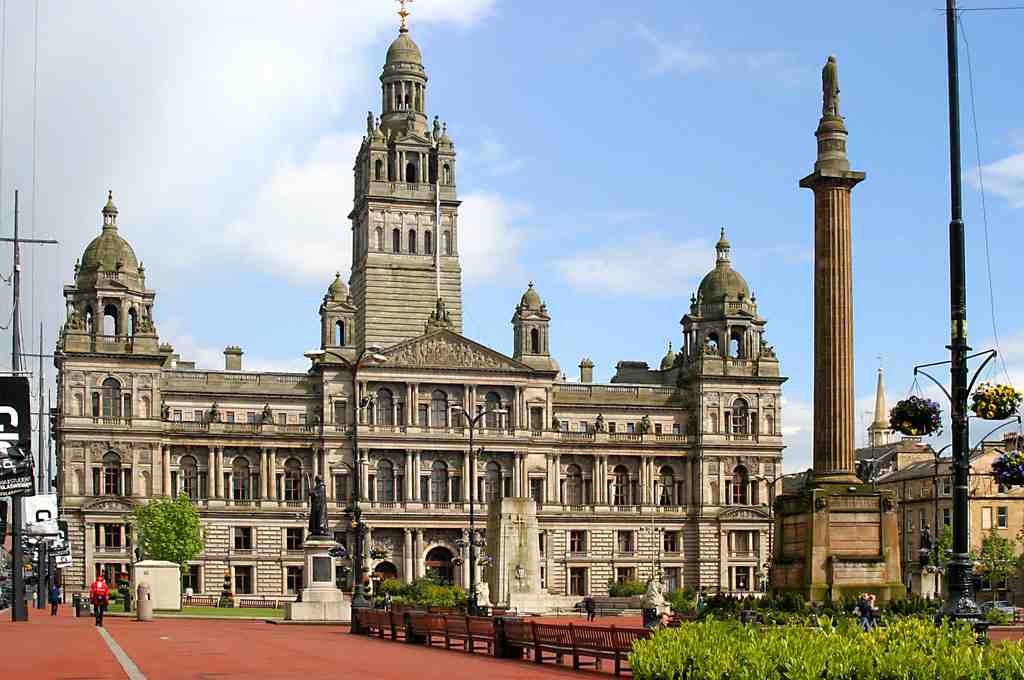
  1. To spot George Square, just look for the grand, ornate building with domed towers directly in front of you and, towering above it all, the tall column with a statue standing…Lire plusAfficher moins

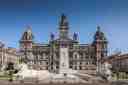
    To spot George Square, just look for the grand, ornate building with domed towers directly in front of you and, towering above it all, the tall column with a statue standing proudly on top-right at the very heart of the square. Now, take a deep breath and soak it all in-this is George Square, the beating heart and stage of Glasgow’s story. Right now, you’re surrounded by some of the city’s most impressive architecture, with the grand City Chambers to your east and the busy bustle of Queen Street to the west. But trust me, a couple centuries ago, you’d have had to dodge more cows than cars here! That’s right, before it got its royal-sounding name, this area was nothing but pasture, with narrow muddy tracks, cattle munching away, and the local herd marching them up and down Cow Lone-an ancient road, which, frankly, was Glasgow’s original version of rush hour traffic. By the late 1700s, though, Glasgow was booming, money was pouring in with tobacco, sugar, and cotton, and folks wanted something fancy. In 1781, a twist of royal flattery turned the old grazing land into George Square, named for King George III; but for years, it was still an empty patch with barely a house or two and a big pile of muddy soil in the middle. Honestly, if you’d been around back then, you’d probably have wondered if this ‘grand square’ was just a cozy place for crows instead of dignitaries. But Glasgow had big plans. Picture this: the city’s finest families moving in, elegant Georgian terraces rising up around the square, carriages rolling past, and, on the north side, people relaxing in stylish hotels and tea rooms. Oh, and let’s not forget the sheep-because yes, the center was fenced off and sheep would be grazing where you’re now standing! No wonder local historian James Denholm bragged that the buildings-especially those to the north-were the most beautiful in Scotland. If you squint, you might just spot the Millennium Hotel on the north side, the only survivor of those original terraces. The square’s crowning feature is right before you-a fluted column nearly 80 feet high, with the noble figure of Sir Walter Scott on top. Erected in 1837, it was Scotland’s very first Scott monument, beating Edinburgh to the punch. You’ll also notice, dotted all around, a statuesque gathering that’s more like Scotland’s own “Avengers” lineup: Robert Burns, the poet; James Watt, the inventor; Sir Robert Peel, the reformer; Queen Victoria on horseback; and even Thomas Campbell, keeping an eye out for troublemakers. And speaking of trouble, George Square has always buzzed with drama, protests, and celebration. Back in 1919, workers fighting for better hours turned the entire square into a sea of voices and banners-so tense some leaders feared a full-blown revolution! They even called in the army, just in case. Over the years, it’s been the place for Remembrance parades, wild sporting celebrations, royal visits, and even Hollywood blockbusters-if you feel a zombie creeping up, blame Brad Pitt and “World War Z,” which used George Square as a stand-in for Philadelphia! But it’s not all pomp and protest. The square is also filled with mystery and argument-do you change a place that’s soaked in history, or do you keep every statue just as it always was? There’ve been fierce debates about moving monuments, modernising the gardens, and who gets the best spot for a selfie. In the end, many of the statues remained, and the square’s grand atmosphere was restored for the people of Glasgow-and for curious wanderers like you. Next time you’re here after dark, you might see it twinkling with lights for concerts or hear laughter echoing after a festival. But today, as the city swirls busily around, remember: every stone, every column, and every crane on the horizon is part of an ever-changing story built right here, in the heart of Glasgow. Now, how’s that for a grand entrance to the city? If you're keen on discovering more about the historical development, prominent buildings or the monuments and statues, head down to the chat section and engage with me.

    Ouvrir la page dédiée →
  2. Look ahead to the east side of George Square: towering columns, domed roofs, and a dazzling array of statues announce the grand Glasgow City Chambers-trust me, it’s not a building…Lire plusAfficher moins

    Look ahead to the east side of George Square: towering columns, domed roofs, and a dazzling array of statues announce the grand Glasgow City Chambers-trust me, it’s not a building you’ll miss, unless you’re really committed to sightseeing with your eyes closed! Right as you stand before it, imagine yourself whisked back to the late 1800s, when Glasgow was bustling, noisy, and growing faster than a Scot can brew tea. It’s the age of Queen Victoria, and this city-once just a small medieval town-is exploding in size, wealth, and pride. Back then, the city’s old council chambers were pretty much bursting at the seams, so the council packed their bags and played a little real estate musical chairs-moving from the Glasgow Tolbooth at Glasgow Cross, then over to the Saltmarket, and eventually squeezing themselves into a spot between Wilson Street and Ingram Street. But Glasgow kept getting bigger, and the need for a powerful, permanent home for its government grew ever more urgent. That’s where this jewel of a building comes in. In the early 1880s, City Architect John Carrick scoured the city to find the perfect spot: the eastern edge of this very square. Soon, the sounds of hammering and chiseling rang out as Scottish architect William Young’s vision rose from the dirt. Queen Victoria herself came here to inaugurate the almost-finished building in August 1888, and you can just imagine the crowds, the cheers, and maybe even the odd kilt catching the Glasgow breeze. The City Chambers has since been the beating heart of Glasgow’s local government-witnessing political drama, historical events, and more than a few heated debates (pun intended-those council meetings can get quite spirited!). From the outside, you’re looking at a Victorian masterpiece, rendered in the Beaux Arts style-a sort of architectural flex saying “our city is rich, proud, and a bit fancier than Edinburgh, thank you very much.” The carved statues across the top-by artist James Alexander Ewing-are more than just stone decorations: the central Jubilee Pediment was meant to show Glasgow sending its industries out to the world, but was instead dedicated to Queen Victoria’s Golden Jubilee. Look for Victoria herself, regal and surrounded by various personifications: Scotland, England, Ireland, Wales, and even some rather exotic-looking symbols of the British Empire. Above, you’ll spot Truth, Riches, and Honour, keeping watch over the city, and perched up high on the tower-statues for each of the Four Seasons (apparently, they could only fit four, despite Glasgow actually having about seven kinds of rain). But here’s a spot of fun: the central figure of Truth-sword raised and cloak billowing-is nicknamed “Glasgow’s Statue of Liberty,” thanks to her pose. She may not be as tall as Lady Liberty in New York Harbour, but she’s probably seen just as many pigeons and heard almost as many secrets. Step inside (at least in your imagination) and the spectacle continues. The entrance hall floor is inlaid with a shimmering mosaic of Glasgow’s coat of arms-a design echoing strange legends about Saint Mungo, the city’s patron saint. Legend has it: “Here’s the Bird that never flew, Here’s the Tree that never grew, Here’s the Bell that never rang, Here’s the Fish that never swam.” It’s like a riddle left behind by a mischievous monk, begging you to puzzle out Glasgow’s story, with each symbol drawing on a local myth. Inside the ornate banqueting hall, you’d find huge murals painted by the famous Glasgow Boys, all watched over by decorations coordinated by architect William Leiper. Can’t you just picture the hush of a crowd when Nelson Mandela or Sir Alex Ferguson received the Freedom of the City? More recently, those very walls echoed with a different kind of celebration when the city honoured workers who defied injustice halfway around the world-proof that Glasgow’s courage lives not just in stone, but in spirit. This building isn’t just for politics and parties, though-it’s also a bit of a movie star! It’s doubled as places like the British Embassy in Moscow in "An Englishman Abroad" and even stood in for the Vatican in "Heavenly Pursuits.” Talk about an identity crisis! So, as you gaze up at this grand old dame, remember: she’s seen more history, hope, and heart than most buildings ever will. Just be careful looking up too long-you wouldn’t want a pigeon with bad aim to bless your trip!

    Ouvrir la page dédiée →
  3. Look ahead for a grand neoclassical building with tall Corinthian columns, a shining mirrored triangular decoration above the entrance, and-here’s a local favourite-a statue of a…Lire plusAfficher moins

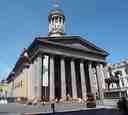
    Look ahead for a grand neoclassical building with tall Corinthian columns, a shining mirrored triangular decoration above the entrance, and-here’s a local favourite-a statue of a man on a horse with a cheeky traffic cone on his head standing right out front. Let’s stop right here for a moment-there’s no way I can compete with a building this dramatic! The Gallery of Modern Art, or GoMA, is like the wise, rather eccentric aunt of Glasgow’s art scene. It stands here, in the busy heart of Royal Exchange Square, commanding attention with its stately pillars and towering cupola. But would you believe this striking place began life in the late 1700s as the flashy home of William Cunninghame-one of those Tobacco Lords who, while making eye-watering fortunes, was also part of that infamous triangular slave trade? If these old stones could whisper, they’d have plenty to say. Imagine elegant carriages pulling up outside as Cunninghame’s parties filled the halls with laughter and secrets. Fast forward a few decades, and the bankers arrived-buying up the town house to make it a base for the Royal Bank of Scotland. Not content with the house’s grandeur, they called in a top architect, David Hamilton, who added the glorious columns and the majestic cupola you see today. For a while, this place even did time as the city’s Royal Exchange. Deals were struck; fortunes, made and lost, echoing through the Corinthian pillars. By the 1950s, the clinking of coins had given way to the rustle of pages. The building transformed once more, this time into Stirling’s Library. Picture locals lost in books-bathed in light from specially installed fluorescent lamps-floors lined with seven-foot display units, and magazine readers relaxing in a grand hall, the arched ceiling looming thirty feet above them. Over 1,200 books waited for anyone with the curiosity to grab one: music scores, art volumes, and even special collections for parents. For almost half a century, knowledge flowed through the same spaces where merchants once whispered about ships and silk. Then, in 1996, the story took a distinctly creative turn. The old library handed the keys over to art, and GoMA was born-Glasgow’s home for fresh ideas, questioning works, and local plus international artists who aren’t afraid to shake things up a bit. You might find a painting by Andy Warhol here, a photograph by Sebastião Salgado, or something sharp and stirring from a new Scottish talent. Social issues get a bright, sharp spotlight during the gallery’s famous biannual projects, as workshops and artist talks fill the air with fresh energy. But oh, before you go inside, you really can’t miss the statue out front-a stoic Duke of Wellington, astride his horse, stately as you like… and always, always wearing a traffic cone hat. For years, officials tried to remove the cone, but Glaswegians just kept popping it back. It’s now a symbol of the city’s playful spirit-no snobbish art snobbery here! That cone’s seen football patterns for Champions League finals, gold glitter for the Olympics, and even a blue starred one in support of Europe. It’s Glasgow: grand, sharp-witted, and always keeping authority on its toes. All right, tour buddy-when you’re ready for a burst of creativity, step inside!

    Ouvrir la page dédiée →
Afficher 12 arrêts de plusAfficher moins d'arrêtsexpand_moreexpand_less
  1. As you’re walking, look out for a sign with swooping, handwritten-style letters spelling “Celtic Connections” on a white background - you can’t miss it right ahead of you! Now,…Lire plusAfficher moins

    As you’re walking, look out for a sign with swooping, handwritten-style letters spelling “Celtic Connections” on a white background - you can’t miss it right ahead of you! Now, imagine you’re standing outside the beating heart of wintertime in Glasgow, where, every January since 1994, the city shakes off the post-Christmas blues with a festival so lively it could wake up even the sleepiest bagpiper. It all began when a fellow named Colin Hynd noticed the Glasgow Royal Concert Hall went almost silent after the holidays. So, he whipped up a plan: why not throw the city’s grandest musical party, filling those quiet halls with fiddles, flutes, and feet tapping so hard you’d think the floors were complaining? When the festival first kicked off, audiences of 33,000 piled in, eager to chase away the winter chill with tunes old and new. Back then, every event was packed inside the Concert Hall itself - not a workshop in sight - but the excitement spread like wildfire. Each year, more acts and more venues joined the fun, including cosy churches, grand ballrooms, and even the old Fruitmarket. One highlight: a magical night when folk and classical collided, as Aly Bain played with the Scottish Ensemble, blending the swirl of tradition with the grandeur of strings. With over 300 concerts now, the festival is a full-blown adventure for your ears - you can wander from a thundering ceilidh to a gentle, barefoot ballad, then straight to a wild late-night session where anything goes and the only thing announced is a warning: expect the unexpected! I mean, where else do you find world-famous artists jamming into the wee hours - sometimes even forgetting who’s supposed to be on stage? The late-night Festival Club is a thing of legend, with no set list and impossible-to-predict collaborations. One minute it’s a banjo duel, the next it’s someone crooning the blues in Gaelic! But Celtic Connections isn’t just about the stars; it’s about making new ones, too. Thousands of schoolchildren pour into the halls for free morning concerts, their eyes wide and toes tapping as they meet music face-to-face for the very first time. The festival’s Young Tradition and New Voices concerts, not to mention the fierce Danny Kyle Open Stage contest, have launched future folk heroes - you might just catch a famous name’s very first set. You can almost hear the buzzing energy when young musicians step up, hearts pounding, instruments in hand. If you listen closely, you’ll discover the city is alive with sound for these weeks. You’ll find every nook and cranny - from the big Concert Hall to tiny cafes, bustling bars to grand old churches - pulsing with everything from mournful pipes to fiery fiddles, Cajun rhythms to world music beats. The Transatlantic Sessions, one of the most loved traditions, brings musicians from across the UK, Ireland, and the US together, playing not just for the crowd but for the sheer joy of it. Imagine the world’s cosiest living room concert, except with a few more kilts and a lot more applause! Artists like Capercaillie, Moving Hearts, and even Bruce Springsteen tributes have worked their magic here, and some nights the only thing louder than the music is the debate about which act was your favorite. Even the legendary Bob Dylan got a birthday bash, with orchestras and guest stars filling the stage. And let’s not forget, this festival brings in visitors (and their good cheer) from all over the globe, pumping millions into Glasgow’s economy - and as anyone here will tell you, it’s not just a festival, it’s a brilliant, swirling celebration of Scotland’s past, present, and future all tangled up together. There’s mystery around every corner, like which secret artist will appear at the club tonight - or which school kid will grow into the next big name in folk. All you need is an open mind, a love of music, and maybe a pair of dancing shoes that don’t mind staying up past midnight. Alright, take a deep breath and soak it all in - you’re standing where traditions come alive, and every note tells a story! Eager to learn more about the venues, regular features or the emerging talent? Simply drop your inquiries in the chat section and I'll provide the details you need.

    Ouvrir la page dédiée →
  2. Directly ahead, you’ll spot a striking white façade topped with curved bay windows and bold black ironwork, standing out like a bright splash of modern art among the sandstone…Lire plusAfficher moins

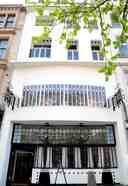
    Directly ahead, you’ll spot a striking white façade topped with curved bay windows and bold black ironwork, standing out like a bright splash of modern art among the sandstone buildings-just look for the elegant grid of glass and the gentle sweep of shapes to find the Willow Tearooms. Now, as you’re standing on Sauchiehall Street, imagine the hustle and bustle of early 1900s Glasgow, with the scent of tea and cakes wafting on the air and the sharp clatter of horse-drawn carriages ringing out in the background. Here’s where our story begins: in 1903, a forward-thinking tea merchant’s daughter named Miss Catherine Cranston had a vision-a place not for raucous drinking, but for calm, elegant socialising and afternoon tea. Who needs whisky when you’ve got scones and a stiff Earl Grey, eh? But Miss Cranston needed someone to give her tearooms a touch of magic, and that’s where Charles Rennie Mackintosh comes in. Imagine Glasgow, teetering on the edge of a new century, with Art Nouveau swirling through city life like cream in coffee. Mackintosh, brimming with wild ideas, was trusted not just with the furniture and wallpaper, but with dreaming up everything-he even designed the cutlery and the waitresses’ uniforms! This building is the only surviving tearoom designed entirely by Mackintosh, built just for Miss Cranston and opened when pumpkin spice lattes were still a mystery to mankind. He transformed a plain old warehouse here into a wonderland. The willow tree theme-see it in the stylised black iron signs-nods to both the meaning of 'Sauchiehall' and to the decorative spirit inside. Mackintosh and his wife, Margaret, wove willows into everything: chairs, glass, and bright tiles along the façade. Inside, each room had its own character: the ladies’ tearoom out front shimmered with white, silver, and rose; a lunch room at the back for all; above, a sunlit tea gallery. Men on their lunch breaks could sneak up to the wood-panelled smoking rooms and billiards hall, though I reckon they secretly wished for cake too. No one left without seeing the main attraction: the Room de Luxe. Let’s travel upstairs in our imagination-the doors swing open, and you step into a fantasy: purple silk, shining silver, high-backed chairs fit for queens, and that glorious curved bay window you can still see sticking out the front. The air is rich with laughter, gossip, and the little chime of fine china. The walls shimmer with mirrored glass, and Margaret’s famous gesso panel edges the room with stories-it's afternoon tea as theatre, a full artistic experience. These tearooms became legendary, with everyone in Glasgow flocking to catch a slice of cake-or perhaps catch a glimpse of the famous décor and, dare I say, maybe even spot a suitor across the steam of a fresh teapot. The outside, too, made a statement: white-rendered with delicate window patterns, hinting at the luxury and art hidden within. Yet time, like a spilled teacup, wasn’t always kind. Ownership changed, and for years the building was hidden behind shopfronts or used by department stores. Bits of Mackintosh’s beautiful décor were lost, but the bones remained-his bay windows and motif details stubbornly peering out from beneath later alterations. It wasn’t until the 2010s, as closure loomed, that a rescue mission began. The Willow Tea Rooms Trust poured more love (and money) into the building than you’d put sugar in a cuppa-£10 million, to be exact! Restorers painstakingly matched colours and revived the furniture. The Room de Luxe sparkles again, recreated to Mackintosh’s legendary vision. Today, the building stands as both art and living history; now owned by the National Trust for Scotland, it isn’t just a tearoom-it’s a celebration of Glaswegian artistry, women’s independence, and the enduring joy of a shared slice of cake in beautiful surroundings. So go on-imagine the ghosts of Glasgow’s past, swirling pastries under silver teapots, ladies and gents from a hundred years ago, marvelling at the willow-themed wonderland that still waits to welcome you today. If you're keen on discovering more about the background, the willow tearooms or the the willow tearooms today, head down to the chat section and engage with me.

    Ouvrir la page dédiée →
  3. The Glasgow Art Club stands right in front of you-look for the three-story sandstone building with tall sash windows and the maroon flag flying above its grand entrance, marked by…Lire plusAfficher moins

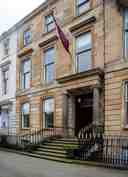
    The Glasgow Art Club stands right in front of you-look for the three-story sandstone building with tall sash windows and the maroon flag flying above its grand entrance, marked by a pair of elegant columns and a set of stairs leading up from the street. Welcome to one of Glasgow’s most fascinating and quietly creative sanctuaries! You’re standing outside a building that's positively humming with stories and imagination-though don’t worry, the art’s on the inside, not leaking out onto the pavement. The Glasgow Art Club, founded way back in 1867, is a home not just for artists, but for anyone with a love for creativity-whether you sketch, sculpt, write plays, sing, or simply enjoy watching others do all of the above while sipping a coffee. Close your eyes for a moment and imagine the city in the late 1800s. The streets are full of horse-drawn carriages, and three friends-William Dennistoun, Sir David Murray, and their mates-are chatting excitedly above a baker’s shop in Candleriggs, dreaming up a club where artists could gather, scribble, argue, and maybe even revolutionise Scottish culture. Well, it worked! Their first meetings were at the Waverley Temperance Hotel, where great ideas were no doubt fuelled by tea and possibly the occasional bakery treat. Dennistoun scored the title of first-ever president-imagine that, all for the price of a scone and a good idea. The club’s early years were a bit like an artist with a blank sketchbook-always moving, looking for just the right space. After hopping from hotel to hotel, hosting life and sketching classes, and inviting photographers, painters, and even, eventually, architects into the fold, they finally landed here on Bath Street, in these handsome townhouses. The renovations were masterminded by the club’s own John Keppie, and, in a magical twist, a young Charles Rennie Mackintosh-who’d later become a legend-decorated the rooms and even painted a mural. Imagine Mackintosh, sleeves rolled up, arguing over paint samples and making artistic magic on these very walls. And while the club was originally for men only-typical, right?-it eventually opened its doors to women as full members in 1984, and by 2015, Efric McNeil became the first female president. There’s an extra thrill in knowing you’re standing by a place that had to be dragged into the modern age by the sheer power of art and, probably, stubborn artists. Inside, high-ceilinged rooms fill with light and color as the club rotates exhibitions-not just paintings, but sculpture, poetry, performances, and even lunchtime concerts by Westbourne Music. Picture it: one minute, you're admiring a sculpture; the next, it’s Wednesday and the sound of soaring violin notes twist their way through the building. The club is also home base for the Paisley Art Institute, founded in 1876, which keeps things lively with exhibitions and workshops that pull in artists of all ages and stripes. It’s rare to find a club as welcoming-ladies, gentlemen, students, entire corporate bodies (hopefully not all at once). If these walls could talk, they’d tell you about the night in 1932 when Dr. Pittendrigh Macgillivray, the King’s Sculptor in Ordinary for Scotland, was honored with a dinner-think speeches, laughter, maybe a toast or two spilled on a painting. Or about the time the Prince and Princess of Wales received an album of paintings from the club to mark the grand opening of the 1888 Glasgow International Exhibition-talk about a royal stamp of approval! The club still thrives today, drawing artists, writers, and dreamers into its fold. Every year, fresh exhibitions and special events fill the hearts of locals and visitors with inspiration. Some might say art never sleeps here; it just stops to have tea, swap a few stories, and maybe debate which artwork should hang by the door. So as you look at the grand, sandstone facade, remember: behind those columns and wrought-iron fences lies a lively world built on imagination, dedication, and just a bit of good-natured creative mischief. If only we could all be so lucky to be part of that club-even if only for a moment as we admire its historic doorway! Curious about the overview and premises, exhibitions and notable exhibitors or the notable members? Don't hesitate to reach out in the chat section for additional details.

    Ouvrir la page dédiée →
  4. In front of you is the Glasgow School of Art’s Mackintosh Building, a striking sandstone structure with enormous grid-like windows and strong, geometric lines-just look up Renfrew…Lire plusAfficher moins

    In front of you is the Glasgow School of Art’s Mackintosh Building, a striking sandstone structure with enormous grid-like windows and strong, geometric lines-just look up Renfrew Street for the row of impressive windows and the unique ironwork that crowns the facade, making it stand out amongst the traditional Glasgow buildings. Now, as you stand here with the cool Garnethill air swirling around you, imagine Glasgow in the late 1800s-steam rising from carts, the echo of horses’ hooves, and the future of British art and design actually being plotted right under your feet! The Glasgow School of Art, or GSA for the locals, was founded way back in 1845 with a rather practical name: the Glasgow Government School of Design. I suppose if you’d asked for “abstract expressionism” then, someone might just hand you a government-issue pencil. At first, classes bounced around the city, but in 1897, a donation from the Bellahouston Trust changed everything. Charles Rennie Mackintosh-a local lad with a head for modern ideas-was chosen to design the new building. And my word, did he let his imagination run wild! Just picture the excitement in 1909, when the second phase finally finished, and students got to create in the now-iconic Mackintosh Building. Picture the sunlight streaming through these very windows, and hear as painters set up their easels and architects hunched over blueprints. But this wasn’t just an ordinary school. The Mackintosh Building quickly became a pioneer of the Modern Style-if these walls could talk, they’d have a posh Scottish accent and a lot of creative opinions! Over time, the campus grew: new buildings popped up, like the bright white, sharp-edged Reid Building across the street, designed by Steven Holl and JM Architects-so cutting-edge, it once won both awards and, shall we say, “not-so-awards” for its boldness. That’s art for you-subjective as a surrealist’s dream! Inside, the GSA fostered talents who’d go on to stun the world: imagine a young Simon Starling crafting his Turner Prize-winning work, or Charlotte Prodger dreaming up video art that would win major acclaim. In fact, since 2005, 30% of all Turner Prize nominees have been GSA alumni! That’s more artists than rainy days in Glasgow, and those are frequent! Yet, maybe the most dramatic moments here aren’t just in the art but the building’s own saga. In May 2014, tragedy struck-fire erupted, racing through timber-lined walls and stairways. Miraculously, no lives were lost, but the heart of Mackintosh’s masterpiece and the beloved library-gone in a blaze. The city mourned, yet hope fizzled as careful restoration began, craftspeople recreating every detail, even using rare woods Mackintosh once picked himself. If only the story ended there, but in 2018, a second fire roared through, leaving only a charred shell. The O2 ABC next door was damaged, and the whole neighborhood felt the loss. Even as experts declared the building might be unsalvageable, locals and art lovers kept the faith. Meticulous plans and digital blueprints-thanks to modern technology-mean every detail, every quirky railing and sunbeam, can be rebuilt. Imagine the determined faces peering at screens, piecing the puzzle together, vowing Mackintosh’s vision will rise again. And it will: by 2030, the Mackintosh Building is promised to return as a graduate school, buzzing with creative energy once again. Today, as you gaze at the strong stone, the intricate ironwork, and those mighty windows, think of all the brushstrokes, architectural models, and dreams born here-even in adversity, creativity never quit. The GSA covers much of the city, from here in Garnethill to the Stow Building and even far-flung Forres, but this spot, this building, is truly the soul. You might not see students bustling in and out today, but when you close your eyes, you can almost hear the hum of voices, the clink of teacups from the old canteen, and perhaps-as if carried by the breeze-a few bardic notes from the GSA Choir echoing down Scott Street. Now that’s a creative spirit you won’t find anywhere else-unless you start painting bus stops or designing radical raincoats! Ready to journey on? Ready to delve deeper into the governance, scottish campuses or the singapore campus? Join me in the chat section for an enriching discussion.

    Ouvrir la page dédiée →
  5. To spot the Archdiocese of Glasgow, look for a grand building ahead with a sense of historic dignity-it stands out like an old captain steering the city through centuries of…Lire plusAfficher moins

    To spot the Archdiocese of Glasgow, look for a grand building ahead with a sense of historic dignity-it stands out like an old captain steering the city through centuries of change, often nestled amidst modern life but pulsing with echoes from Scotland’s proud past. Now that you’re standing here, let’s pull back the curtain of time and really step into the story. Imagine Glasgow centuries ago-not a bustling metropolis, but a growing town, its heart beating with the rhythm of faith and commerce. The Archdiocese of Glasgow was no small parish-it was one of the powerhouses of medieval Scotland, governing vast lands that stretched far beyond the city’s familiar boundaries, reaching into rolling valleys, gentle hills, and even wind-battered coasts. Think of it like an epic jigsaw, with Glasgow itself holding the mightiest piece, but all the bits clicking together all the way from Clydesdale up to Galloway, and from Annandale through Lennox, with each patch of countryside, each river, and farmyard, paying their respects and tithes. The roots of this story go even deeper, back to the days of King David I-imagine him, beard flowing in the chill Scottish air, riding through forests with John, then Bishop of Glasgow, discussing how they’d turn this bishopric into a force both sacred and political. The whispering streets and churches here quietly remember St Kentigern, or St Mungo as locals fondly call him, said to be the first to bring faith here-although whether he really did, or just made the best fish pie in town, is lost to time! Now, picture the 12th century, when the fortunes of Glasgow were looking up, quite literally, with rising spires and swelling coffers. Bishop Jocelin, shrewd and ambitious, wrangled kingly favour, and before you knew it, Glasgow was granted burgh status by King William the Lion. Suddenly, Glasgow could host its own bustling markets, protected by trading privileges. They even got their own annual fair! The kind of event where you might lose your coin purse but win a sheep and, if lucky, a sweetheart. Over time, the diocese wasn't just about prayers and sermons. The bishops here were big political players-imagine them robed in velvet and authority, acting as chancellors, treasurers, and even advisors to Scotland’s monarchs. One particularly spirited chap, Robert Wishart, friend to both William Wallace and Robert Bruce, wasn’t just watching from the pews-he was right there, cheering Scotland’s fight for freedom like the world’s holiest football fan. Fast-forward to the Renaissance, when Bishop William Turnbull sweet-talked Pope Nicholas V into founding the University of Glasgow. Suddenly, the city buzzed with students, scholars, and the odd prankster turning the cathedral steps into a lecture hall-or maybe a wrestling ring after too much ale. But nothing in Scotland’s story stays calm for long. In 1560, the roof of tradition nearly caved in: Scotland broke with Rome, Catholic practice went underground, and the last archbishop of the old hierarchy, James Beaton, packed his bags for France (taking some very important books with him-imagine, centuries of handwritten secrets, recipes, gossip, and stately records stashed in his suitcase!). For centuries, the Church here had to keep a low profile, popping back up in the 19th century, when the Holy See restored the hierarchy, and brave bishops like Andrew Scott trod carefully but determinedly through the streets, rebuilding parish by parish. Charles Eyre finally restored Glasgow as an archbishopric again in 1878, as if the city’s spiritual engine had flickered back to life after a century or two lying in wait. So take a deep breath right here in front of the Archdiocese-feel the ghosts of bishops (and sheep merchants), the shiver of parades, the hush of secret prayers, and the laughter of the Glasgow Fair. This isn’t just a church house. It’s where faith, intrigue, rebellion, and learning all bumped elbows for centuries-and where the story of Glasgow’s beating heart still echoes, if you just stand still and listen.

    Ouvrir la page dédiée →
  6. To spot the Pavilion Theatre, just look for the grand sandstone building with turreted corners and a big red sign reading ‘PAVILION’-it’s right on the busy corner of Renfield…Lire plusAfficher moins

    To spot the Pavilion Theatre, just look for the grand sandstone building with turreted corners and a big red sign reading ‘PAVILION’-it’s right on the busy corner of Renfield Street and Renfrew Street, easily spied from across the intersection. Alright, you’ve made it to one of Glasgow’s true showbiz gems, the Pavilion Theatre! Take a deep breath and let your imagination slip back to the bustling heart of Edwardian-era Glasgow, 1904-a city alive with tram bells and horses’ hooves on wet cobbles. Here stands the Pavilion, its French Renaissance façade glowing in glazed, buff-coloured terracotta even on a dreich Scottish day, and its red neon lights promising laughter and music inside. Step closer. Imagine the theater just as it opened-a music hall of pure luxury, called “the Pavilion Theatre of Varieties,” and boy, did they mean it! Rich mahogany wood shimmered alongside terrazzo floors, and the walls boasted lavish Rococo plasterwork so ornate you’d think you’d wandered onto the set of a royal ball. There’s even a clever sliding roof up there, once whirring open on warm summer nights to let in the cool Glasgow breeze. And the Pavilion wasn’t just built for the city’s elite, though its 1,449 seats-stalls, circle, balcony, boxes-could fit almost everyone who fancied a night of escape. Back in the early 1900s, this was where the excitement of London’s grandest music halls came north, part of Thomas Barrasford’s empire, dazzling crowds with acts like the famous Marie Lloyd, the hilarious Little Tich, and a young fellow nobody knew at the time named Charlie Chaplin. Yes, *the* Charlie Chaplin, shoes and all, made folk laugh here long before he conquered Hollywood! For anyone outside, the magic inside felt almost mysterious-you’d hear laughter and thunderous applause drifting through the doors onto Renfield Street and wonder, “Just who’s on stage tonight?” If you strolled by in the 1920s or 30s, you’d see grand pantomimes come to life, with watchful family audiences clapping as the magic unfolded-thanks to Glasgow theatre legend Fred Collins and later his son Horace, who ran the show through thick and thin, even during the dark days of World War II. Horace, in fact, became Scotland’s entertainment lifeline during the war, putting on shows for the troops. At the side door around the same time, the Fred Collins Variety Agency would buzz with the biggest stars, hoping to book their name on the Pavilion’s marvellous billboards. Gatherings here were more than just performances-they were the glue of Glasgow’s community and imagination. And despite changing tastes, the Pavilion has always stayed true to its joyful roots: slapstick comedy, spectacular pantos, and “nostalgia” rockers lighting up the nighttime. It’s still yes, you heard right, the only privately run theatre in Scotland-proof that a little bit of independence can make for a lot of fun. A little secret? In 2004, Janette Krankie famously took a tumble during a rollicking Jack and the Beanstalk panto-Glasgow held its breath, but she bounced back, proving once and for all: the show really must go on! From the riotous Mighty Boosh selling out in hours to the cheeky jokes of Scotland’s favourite comedians, this grand old building remains a living, laughing monument to the wild heart of Glasgow itself. And as you stand here, you’re right in the middle of more than a century of stories, music, and a wee bit of theatrical magic. So-fancy a ticket?

    Ouvrir la page dédiée →
  7. Just ahead, you’ll spot Greater Glasgow stretching out as a huge patchwork of city blocks, greener countryside, and twisting roads-imagine a sprawling urban carpet unfurled…Lire plusAfficher moins

    Just ahead, you’ll spot Greater Glasgow stretching out as a huge patchwork of city blocks, greener countryside, and twisting roads-imagine a sprawling urban carpet unfurled beneath the clouds, with the River Clyde slicing through its heart. Welcome, explorer, to perhaps one of the trickiest “landmarks” on our journey-the vast, living, and breathing conurbation of Greater Glasgow! Now, I know what you’re thinking: Andy, are we meant to be admiring a city, a region, or a bit of an identity crisis? Well, you’re in luck, because Greater Glasgow is all that and more. Today, as you stand beneath the big Scottish sky, picture an invisible boundary looping together bustling neighbourhoods, lively towns, and green fields-all joined, not by politics, but by the determination of nearly a million Glaswegians to call this massive area home. You see, Greater Glasgow isn’t just a name on a map or a line in a council meeting-it’s a living patchwork quilt, always shifting and surprising. It grew wild and fast in the late 1800s and early 1900s, a time when you couldn’t walk ten feet without bumping into someone from a different part of the world, all drawn here by the booming industries and smoky promise. By 1912, Glasgow proudly joined the ranks of Europe’s biggest cities, rubbing shoulders with Rome, London, Paris, and Berlin, as it burst past the one-million-residents mark. That’s right, we Glaswegians reached a million before Instagram followers were even a thing! Now, here’s where it gets interesting. Greater Glasgow doesn’t care for invisible council borders-it’s more about where the buildings and back gardens end and where the rolling fields begin. This big urban sea has, at different times, counted the likes of Motherwell, Wishaw, Coatbridge, Airdrie, and Hamilton as its own, depending who was holding the census pen that year. Sometimes, there are gaps between streets that decide whether you’re in or out, almost as if Greater Glasgow were a secret society, admitting only the most closely packed postcode pals. And just to keep things spicy, if you stretched your imagination (and maybe your legs, too), there’s an even bigger and bolder version of “Greater Glasgow” that some folks refer to. One that runs all the way to Ayrshire, Lanarkshire, Renfrewshire, Inverclyde, and even the bonnie towns down to Ayr and Lanark. It’s been called the Glasgow City Region, Metropolitan Glasgow, Clydeside-you name it, we’ve been it. No wonder the Eurostat folks in Brussels get a bit dizzy when they try to count us all! In 2011, this mega-region counted a whopping 1.7 million folks, a population so big that if everyone did the Highland fling at once, Scotland would probably wobble on its axis. But not all was always smooth. In the swinging '60s, as if following the latest fashion, thousands left the city for new suburban pastures, in some cases newly built towns like Cumbernauld and East Kilbride-destined to be “off the list” because of their green, open spaces separating them from Glasgow. The City of Glasgow itself, which once held over a million souls, saw its numbers dwindle as suburbia and shifting boundaries changed the game. Makes you wonder if the city ever suffers from separation anxiety, doesn’t it? Through rain, sun, and more than a few “four seasons in a day,” one thing’s for sure: Greater Glasgow’s spirit remains huge. Today, it’s tied together not just by bricks and mortar, but by the hum of the Glasgow Subway (the only metro in Scotland), two international airports, suburban trains clattering along, and the constant chatter of its people. So the next time someone asks if you’ve seen Greater Glasgow, you can grin and say, “Aye, I’ve stood in the heart of it, where the city never truly ends and the story’s always being written.” Welcome to the big, bold, blended adventure that is Greater Glasgow! And remember-here, boundaries are only as real as the locals let them be.

    Ouvrir la page dédiée →
  8. To spot St Andrew’s Cathedral, look for a pale stone building ahead of you with a pointed arch doorway, tall Gothic windows, and four delicate towers that rise like castle…Lire plusAfficher moins

    To spot St Andrew’s Cathedral, look for a pale stone building ahead of you with a pointed arch doorway, tall Gothic windows, and four delicate towers that rise like castle turrets-all standing out boldly on Clyde Street’s north bank. Now, as you stand before these slender towers and intricate windows, let’s step back in time-imagine the year is 1814. The river is close enough that you’d almost expect to hear the distant splash of oars on the Clyde, and this spot is buzzing… not with prayers, but with tobacco and sugar traders, run by folks called Bogle and Scott. Yes, believe it or not, before this Gothic beauty, you might have found yourself in a warehouse stacked high with crates, not a whisper of hymns in the halls! But here’s where it gets intriguing. Glasgow back then was a city with secrets. For nearly 250 years, Catholics had to worship in hidden chapels and back rooms, their faith tucked away like a precious letter. Now, thanks to a shift in laws and the arrival of Irish immigrants during the Industrial Revolution, there were crowds-thousands! Suddenly, there was an appetite for a Catholic church right here in the city centre. Enter Reverend Andrew Scott and architect James Gillespie Graham, our dynamic church-building duo! With a congregation growing from just a few hundred to several thousand in less than a decade, they sprang into action, eyeing this strip of land for a new church. The site, remember, had been the playground of old trading dynasties, and spirits must have been high, perhaps even a little nervous, as construction began. But don’t expect this story to be smooth sailing-oh no! As the stonemasons laid out the church’s skeleton by day,, the city’s shadows came alive at night. Opponents tore down what had been built, sabotaging the rising walls. It got so tense that guards had to stand watch under the moonlight, listening for whispers and footsteps in the dark! Yet, in this drama, a twist: people from all Christian walks-Presbyterians, Episcopalians, neighbours who didn’t always see eye to eye-started sending in donations, proving that sometimes, adversity does bring out the best in a city. Now, look up at the building’s modest height. You might wonder, where’s the towering spire? The dramatic bell tower? Well, thanks to even more restrictive laws, the church had to keep a low profile-imagine a cathedral trying to sneak into a party without being noticed! Yet, it still opened its doors in 1816, welcoming a surge of people from all walks of life-a triumph of perseverance and faith. The story doesn’t end there. The 19th and 20th centuries saw the cathedral’s fortunes shift like Glasgow’s own bustling streets. After the Scottish Catholic hierarchy was restored by Pope Leo XIII, good old St Andrew’s became not just a church, but a pro-cathedral, then finally a full cathedral, the seat of Glasgow’s Archbishop. Surviving social winds and world wars, it even gained a magnificent organ-a grand Henry Willis & Sons-built beast, whose pipes once thundered in Elgin Place. This majestic instrument arrived by van in the 1980s,, and though it’s been replaced for now by an electronic stand-in, there’s a fund (and hope!) for the organ’s return. As the decades marched on, this cathedral became more than just a building for its shrinking parish. People from many corners-city workers, students, shoppers, and travelers-still slip inside, seeking peace, reflection, or the gentle hum of community. Modern renovations brought warmth and gold-leaf glimmers, not to mention bold new art swinging into place. Maybe if you listen close, you’ll catch an echo from the very first Mass here, or the laughter of builders relieved their day’s work wouldn’t disappear overnight. So, whether it’s sunshine glinting off those pointed windows or the soft shuffle of feet heading inside, this isn’t just Glasgow’s Catholic heart-it’s a living story of danger, kindness, determination, and, let’s be honest, a city that sometimes builds cathedrals with one hand and keeps an eye on the local mischief with the other! And, who knows, if you return for Mass, you just might hear the echo of the mighty organ again. Ready to delve deeper into the organ, st andrew's parish or the renovation? Join me in the chat section for an enriching discussion.

    Ouvrir la page dédiée →
  9. Right in front of you, you’ll spot a warm yellow-brick building with a bold sign that proudly announces “Citizens Theatre” above the entrance, and if you look behind those…Lire plusAfficher moins

    Right in front of you, you’ll spot a warm yellow-brick building with a bold sign that proudly announces “Citizens Theatre” above the entrance, and if you look behind those leafless trees, you’ll see its angular glass-and-brick modern extension standing out along Gorbals Street. Now, let your imagination take centre stage while I roll back the years-picture the distant echo of horse hooves on cobbled Victorian streets. Where you’re standing now, in the heart of the Gorbals, was once a buzzing entertainment district. The Citizens Theatre’s story begins in 1878, when it first opened not as the “Citizens,” but as Her Majesty’s Theatre and Royal Opera House, dazzling crowds with sparkling proms and pantomimes under the design of James Sellars. Back then, the grand old theatre could seat 2,500 people-imagine it, the gaslights glowing, all topped by statues by John Mossman watching life on the busy street below, and some of those statues still guard the roofline to this day. The theatre changed names to the Royal Princess’s and became legendary for the longest-running pantos Scotland had ever seen. There’s a certain irony: today, the main auditorium is just 500 seats-far fewer, but every one feels close to the action, thanks to the classic Victorian “raked” stage, original proscenium arch, and three steep tiers climbing up, all still boasting some of the oldest working stage machinery in the entire United Kingdom! Feel the ghost of excitement? That’s nothing new here. After World War II, a visionary playwright, James Bridie (who was actually a doctor-now there’s someone who could write a play and prescribe cough syrup at the same time!), along with cinema kingpin “Mr Cosmo” George Singleton and others, transformed this grand, fading playhouse into the “Citizens Theatre” of today. They were determined to open up drama for everyone-no posh velvet ropes, just honest, affordable theatre the whole city could enjoy. Backstage, the hum of creativity is constant-even today, their legendary “paint frame” still soaks up colour as artists hand-paint massive backdrops beneath a Victorian glass roof. You’d think it couldn’t get more magical… until you realise that locals claim there are a few “unofficial” cast members: a ghostly monk, a “white lady” darting through the dress circle, and even an endlessly wandering strawberry seller from long ago. Imagine the creak of old wood, the flutter of unseen footsteps... would you stick around for a midnight rehearsal? But that’s just the drama offstage! The Citizens saw its fair share of controversy too: from free tickets for striking workers to headline-grabbing nudity in Hamlet (a bit of Shakespearean slapstick, you could say!). Every time the shows pushed boundaries or made the Glasgow press huff and puff-like that flier featuring Shakespeare in drag-the people flooded in, clamouring for more. Survival was never guaranteed. A fire next door, the demolition of Gorbals Cross, and the theatre precariously sitting alone “surrounded by potholes and puddles” at one point might have written its final curtain. But like a true Glaswegian, the Citizens dusted itself off, rebuilt, and returned fresher and bolder each time-most recently with a brand new foyer that’s about to reopen, statues back atop their pedestals. The echo of children’s laughter from free workshops, creative classes, panto performances, and the blend of new and seasoned actors learning their craft-these are just glimpses of what continues within these walls. Whether you came for high art, fairy tales, or a hint of the supernatural, the Citizens Theatre always promised the people of Glasgow a surprise, a spark, and perhaps an encounter with a mischievous ghost. Take a bow for standing before one of Britain’s most storied and spirited playhouses-where history, drama, controversy, and laughter all somehow fit under one marvellous old roof. Yearning to grasp further insights on the background, citizens theatre and tag or the artistic directors? Dive into the chat section below and ask away.

    Ouvrir la page dédiée →
  10. To spot Glasgow Central Mosque, look straight ahead for a striking building made from red sandstone with a giant golden dome sitting proudly on top, surrounded by angular archways…Lire plusAfficher moins

    To spot Glasgow Central Mosque, look straight ahead for a striking building made from red sandstone with a giant golden dome sitting proudly on top, surrounded by angular archways and a wide open entrance. You’ve reached Glasgow Central Mosque-Scotland’s biggest mosque, and I hope you brought comfy shoes, because with room for 4,000 worshippers, it could host the world’s biggest game of hide-and-seek! Imagine it: you’re standing on the south bank of the River Clyde, the reddish stone glowing under the Scottish sky, and that golden dome catching even the faintest sunlight. Built in 1983, this mosque is the heart of the local Muslim community in Strathclyde, though the design by Coleman Ballantine Partnership Architects may make you think you’re admiring a grand palace from the east rather than a Glaswegian landmark! Step a bit closer and you might hear the lively sounds of families gathering, children playing, and the call to prayer rolling warmly over the city’s hum. This place isn’t just bricks and mortar-it’s laughter, conversation, and the welcoming bustle of a thriving community. The mosque serves not just as a spiritual hub, but as a centre for learning, celebration, and support. It’s a bit like the city’s kettle: where everyone meets for a good chat. But life here hasn’t always been simple. There’s been tension and even a dash of scandal, most famously in 2016 when the mosque’s then-religious head, Habib ur Rehman Rauf, was caught up in controversy over his comments about distant political events. The community has faced questions, difficult debates, and a few painful moments played out in the glare of the media. Yet, even through these challenges, the mosque remains a symbol of resilience and hope for the people it serves. And presiding over it all are three imams-Shaykh Muhammad Vaez, Shaykh Abdul Ghafoor Ahmad, and Qari Wali Ahmed-who guide the community through calm and stormy weather alike. So as you stand here, maybe you’ll feel a gentle breeze or catch the scent of fresh-cut grass, and know you’re at the beating heart of an ever-changing, ever-welcoming Glasgow. And if you’re lucky, you might even get an invite for tea inside-just don’t expect biscuits as big as this building!

    Ouvrir la page dédiée →
  11. Look right ahead for a huge wall of shimmering glass and steel with the big “ST ENOCH” sign across the front - you really can’t miss this modern giant overlooking St. Enoch…Lire plusAfficher moins

    Look right ahead for a huge wall of shimmering glass and steel with the big “ST ENOCH” sign across the front - you really can’t miss this modern giant overlooking St. Enoch Square! Alright, take a breath and look up, because you’re about to step into the “Glasgow Greenhouse!” No, don’t expect tomatoes or sunflowers - this is the city’s most dazzling glass-covered shopping centre. If you listen closely, you might even hear the echoes of skates on ice and the distant hum of trains from years gone by, because this spot was once the site of the old St. Enoch Station. Imagine the hustle and bustle back then: trains rattling, whistles blowing, and travelers dashing for the next big adventure. Then, in 1986, the whole place got a radical makeover thanks to GMW Architects and the rock-steady hands of Sir Robert McAlpine’s crew. By 1989, this sparkling palace was ready to unveil itself. The grand opening was so special they had the Prime Minister herself, Margaret Thatcher, pop by for the ribbon-cutting ceremony. Must have been the most expensive shopping trip she ever made! Right next to the famous Argyle Street, and overlooking the historic St. Enoch Square, the centre instantly became the heart and soul of Glasgow’s shopping scene - and a bit of a magnet for architectural gossip. Of course, some critics looked at all that steel and glass and thought it was over the top, but let’s be honest - who wouldn’t want a shopping centre that floods with natural daylight? On a sunny summer afternoon, the whole mall glows in a golden light, and the solar heat trapped beneath the glass roof means that real heating is only needed for about a week every year. Not only did it make shoppers feel a little bit closer to nature, but it earned the building its local nickname: “the Glasgow Greenhouse.” The roof, by the way, was made by Glasgow’s legendary shipbuilders Scott Lithgow, so the whole thing is practically unsinkable - just in case there’s a shopping flood. Now, underneath that glittering roof, there’s more than just shops and cafés. When it first opened, smack in the middle of all those shops and escalators, there was a curling, glimmering ice rink! Imagine kids and adults gliding, spinning, and yes, occasionally crashing to the sound of laughter and Glasgow chatter. Sadly, the ice rink vanished in 1999, replaced by even more places to eat and shop. Seven floors of car parking rose overhead, meaning you could park, fill your car with loot, and still not need to bring a brolly! Let’s not forget St. Enoch’s famous anchor tenants - British Home Stores reigning proudly at one end, Boots guarding the other. Even Debenhams, perched across the bridge on the old Lewis’s store, had its story woven into this retail maze. Over the years, St. Enoch never stopped reinventing itself. In the early 2000s, spiral staircases disappeared, walls turned into projection screens, and that food court ballooned into a feast-lover’s treasure trove. Then came an even bigger transformation: a whopping £100 million facelift from 2008 to 2016 that made the place shine even brighter. New floors, new entrances, and a sparkling new glass facade meant the centre could compete with any shopping titan - even those fancy Buchanan Galleries up the road. And just when you thought it couldn’t get more exciting, there’s talk of cinemas, restaurants, and new shops crowding into the old BHS spot. Each wave of change brought new layers: Hamleys for the kids, H&M for the trendy, Starbucks for everyone who needs a coffee to survive shopping. But put your hand on your heart for this next bit - in 2023, the city approved plans to pull down the St. Enoch Centre over the next 15 to 20 years. Yes, it’s true! Shopping, offices, homes, even new streets will rise up in its place. But the legend of the “Glasgow Greenhouse” will live on, sparkling in the memories of generations who wandered its sunlit halls, chased bargains, or just enjoyed a moment of warmth in the middle of a Scottish winter. So while you stand here, let your mind wander back through the clatter of trains, echoes of skating blades, the laughter in the food court, and the amazing glass roof that caught every single drop of Glasgow sunlight. Go ahead, take a step inside and see why this place still feels a little bit like magic.

    Ouvrir la page dédiée →
  12. Look straight ahead for a charming, brown stone building with turrets, clock, and pointed roof-it sits in the middle of the square, flanked by modern glass-fronted shops like…Lire plusAfficher moins

    Look straight ahead for a charming, brown stone building with turrets, clock, and pointed roof-it sits in the middle of the square, flanked by modern glass-fronted shops like Costa and Greggs, making it impossible to miss. Welcome to St Enoch Square, the final stop on our whirlwind Glasgow adventure! Now, take a good look around-if you see a little fairy-tale house with turrets, a rooftop clock, and a glassy modern shopping centre looming to one side, you’re in just the right place. You might even catch that old subway ticket office from 1896, now moonlighting as a coffee shop! If buildings could gossip, this one here would have stories to brew you stronger than any double espresso. Picture it: centuries ago, under your very feet, was the wild green stretch of the River Clyde’s banks. Maybe, just maybe, you’d spot sheep grazing on a grassy, iron-fenced patch, or the faint echoes of chapel bells at St Thenew’s ancient burial site-a place full of mystery, where legend says St Enoch herself found peace. But St Enoch Square was never destined for a quiet life. In the 1700s, the Merchants House of Glasgow snapped up the land after it had cycled through soap-makers, goldsmiths, and even glass-workers. Their intent? Grand ambitions! By 1780, St Enoch Church crowned the square, designed so elegantly by James Jaffray, then rebuilt even grander in 1827 by David Hamilton. Sheep still grazed as late as the 1860s. Imagine the odd mix-city traders doing business amidst bleating sheep! Oddly enough, the flock wasn’t Glasgow’s last brush with livestock on these streets. Not for long! The growing, thundering city needed space-first for farmers’ markets, then for a railway revolution. By the late 19th century, St Enoch Station stretched across the square, pulling in the largest hotel Glasgow had ever seen: 200 bedrooms, and shockingly lit with that strange new invention, electricity. People flocked here, lured by the chance to travel, or the rich lure of the Royal Music Hall’s footlights and the hum of the Theatre Royal just around the corner. But cities change, as you’ve seen on this tour. By the 1920s, the original church was replaced by car parks and a whirring bus terminus. The hotel, once the toast of the town, fell silent and transformed into-wait for it-a car park! “If these walls could drive,” Glasgow folk joked. In the 1980s, the square was given a new trick: the great, glittering St Enoch Centre sprang up, covering the area in vast glass roofs. They say it’s the largest glass-covered commercial strip in all of Europe-on a rainy Glasgow afternoon, that’s a superpower! The east side still clings to echoes of the past, with old shopfronts merged into modern retail, dusting off the memories with every till’s ring. Look behind you, and you’ll see glass and steel canopies guarding the entrances to the subway-a century-old system reborn in 2015 with polished floors and bright, beaming lights. Even the original Flemish Renaissance ticket office, with its corbelled turrets and sharp details, stands defiantly at the square’s heart, still firmly holding onto its corner of history. Oh, and if you’re here in December, you won’t need to follow your nose far-mulled wine and continental beers waft through the market stalls as the Christmas Market brings a buzz of laughter and a swirl of color to the chilly Glasgow dusk. So as you stand here, boots on ancient ground turned modern plaza, surrounded by bustling shops and the ghostly echoes of sheep and steam trains, remember: St Enoch Square is where centuries bump elbows and everyone-from saints to shopkeepers-gets to be part of the city’s living story. Don’t worry, the only thing grazing here now is your appetite, and you’re spoiled for café choices! And just like that, our Glasgow journey comes to a close, with the city’s heart still beating strong all around you. Thanks for letting me walk you through history-if you need one last Glasgow tip, never skip the hot chocolate at the café here. Cheers!

    Ouvrir la page dédiée →

Foire aux questions

Comment commencer le tour ?

Après l'achat, téléchargez l'application AudaTours et entrez votre code de réduction. Le tour sera prêt à commencer immédiatement - il suffit d'appuyer sur lecture et de suivre l'itinéraire guidé par GPS.

Ai-je besoin d'Internet pendant le tour ?

Non ! Téléchargez le tour avant de commencer et profitez-en pleinement hors ligne. Seule la fonction de chat nécessite Internet. Nous recommandons de télécharger en WiFi pour économiser vos données mobiles.

S'agit-il d'une visite de groupe guidée ?

Non - il s'agit d'un audioguide en autonomie. Vous explorez indépendamment à votre propre rythme, avec une narration audio diffusée par votre téléphone. Pas de guide, pas de groupe, pas d'horaire.

Combien de temps dure le tour ?

La plupart des tours durent entre 60 et 90 minutes, mais vous contrôlez totalement le rythme. Faites des pauses, sautez des arrêts ou arrêtez-vous quand vous le voulez.

Et si je ne peux pas finir le tour aujourd'hui ?

Pas de problème ! Les tours disposent d'un accès à vie. Faites une pause et reprenez quand vous le souhaitez - demain, la semaine prochaine ou l'année prochaine. Votre progression est sauvegardée.

Quelles sont les langues disponibles ?

Tous les tours sont disponibles dans plus de 50 langues. Sélectionnez votre langue préférée lors de l'utilisation de votre code. Note : la langue ne peut pas être changée après la génération du tour.

Où accéder au tour après l'achat ?

Téléchargez l'application gratuite AudaTours sur l'App Store ou Google Play. Entrez votre code de réduction (envoyé par e-mail) et le tour apparaîtra dans votre bibliothèque, prêt à être téléchargé et commencé.

verified_user
Satisfaction garantie

Si vous n'appréciez pas le tour, nous vous rembourserons votre achat. Contactez-nous à [email protected]

Paiement sécurisé avec

Apple PayGoogle PayVisaMastercardPayPal

AudaTours : Audioguides

Des tours à pied en autonomie, divertissants et économiques

Essayer l'application arrow_forward

Adoré par les voyageurs du monde entier

format_quote Ce tour était un excellent moyen de voir la ville. Les histoires étaient intéressantes sans paraître trop scénarisées, et j'ai adoré pouvoir explorer à mon propre rythme.
Jess
Jess
starstarstarstarstar
Tour de Tbilissi arrow_forward
format_quote C'était un bon moyen de découvrir Brighton sans se sentir comme un touriste. La narration était profonde et contextuelle, sans en faire trop.
Christoph
Christoph
starstarstarstarstar
Tour de Brighton arrow_forward
format_quote J'ai commencé ce tour avec un croissant dans une main et zéro attente. L'application vibre tout simplement avec vous, pas de pression, juste vous, vos écouteurs et quelques histoires sympas.
John
John
starstarstarstarstar
Tour de Marseille arrow_forward

Audioguides illimités

Débloquez l'accès à TOUS les tours du monde

0 tours·0 villes·0 pays
all_inclusive Explorer Unlimited