
Visite audio d'Édimbourg : Icônes, intrigue et inspiration dans la capitale
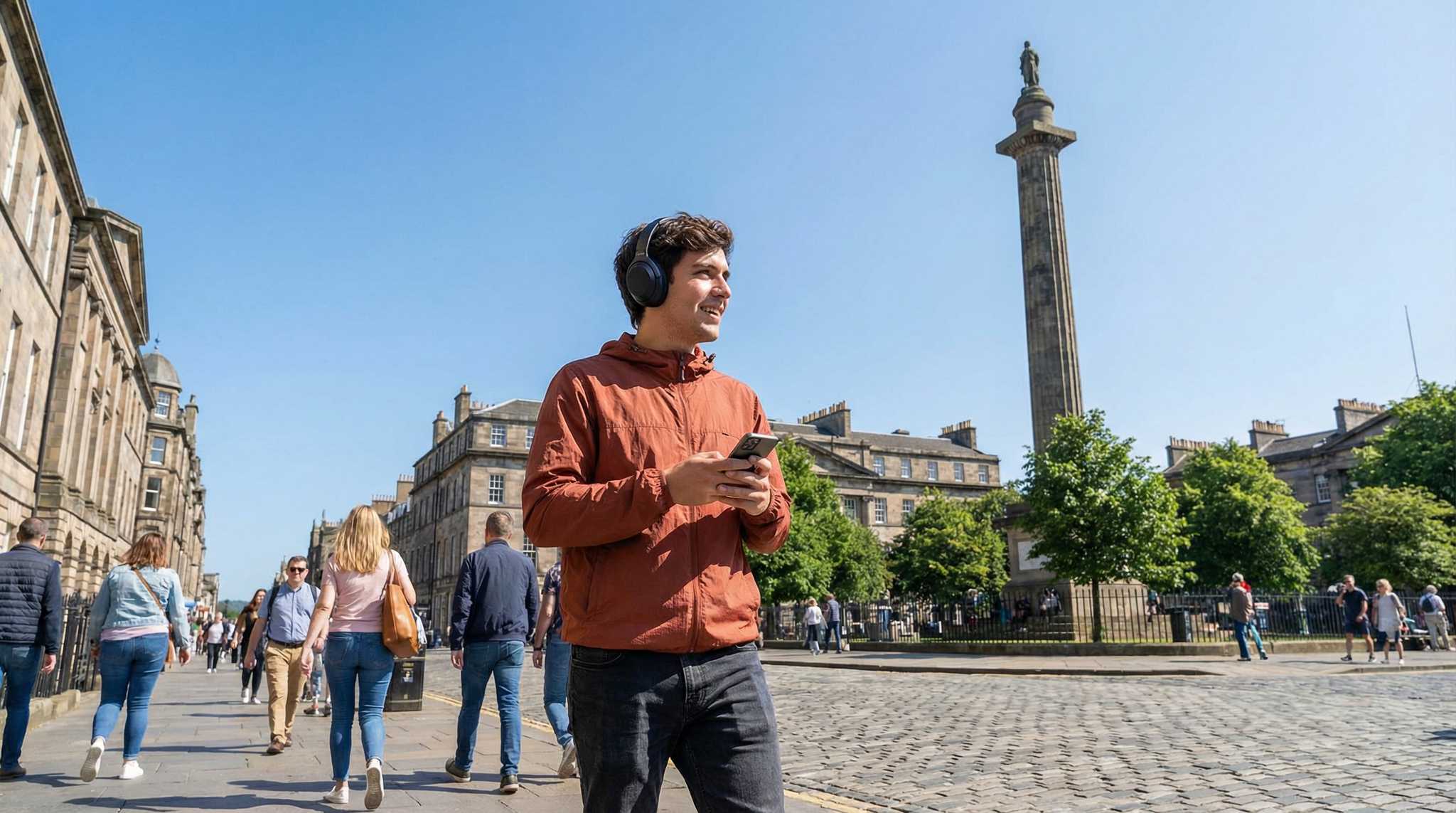
Imaginez la Nouvelle Ville d'Édimbourg non pas comme une carte postale, mais comme une scène vivante où la grandeur et l'intrigue se rencontrent – un paysage urbain vibrant d'histoires juste sous ses élégantes façades. Lors de cette visite audio autoguidée, allez au-delà de la surface pour découvrir pourquoi Jenners, St Andrew Square et la New Town Church ont suscité le drame, le mystère et l'innovation pendant des siècles. Écoutez parler de catastrophes incendiaires qui n'ont pas pu abattre des monuments emblématiques. Découvrez quel tunnel souterrain sommeille encore sous vos pieds sur la place. Et quelle tradition secrète a lieu chaque année dans les hautes salles de la New Town Church – avec des signatures de célébrités ? Laissez des pas agités vous guider des pierres opulentes aux chambres bancaires privées et aux chaires forgeant la révolution. C'est une promenade à travers des scandales murmurés, des réinventions audacieuses et des moments qui ont changé Édimbourg pour toujours. La vraie ville vous attend. Appuyez sur lecture et révélez le cœur caché d'Édimbourg, une histoire à la fois.
Aperçu du tour
À propos de ce tour
- scheduleDurée 40–60 minsAllez à votre propre rythme
- straightenParcours à pied de 4.4 kmSuivez le sentier guidé
- location_onEmplacementÉdimbourg, Royaume-Uni
- wifi_offFonctionne hors ligneTéléchargez une fois, utilisez n'importe où
- all_inclusiveAccès à vieRéécoutez n'importe quand, pour toujours
- location_onCommence à Jenners
Arrêts de ce tour
If you look up Princes Street, you’ll spot Jenners by its jaw-dropping, castle-like sandstone facade, crowned with turrets, a green dome, and the proud Union Jack fluttering on…Lire plusAfficher moins
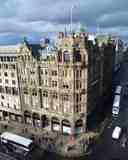
If you look up Princes Street, you’ll spot Jenners by its jaw-dropping, castle-like sandstone facade, crowned with turrets, a green dome, and the proud Union Jack fluttering on top-trust me, you can’t miss it! Now, as you stand outside this grand old building, try to picture it bustling with shoppers, its windows full of twinkling Christmas lights, the smell of perfume and popcorn drifting out onto the street. Jenners is not just a department store-it’s like the Hogwarts of shopping, one of Edinburgh’s most magical and storied places! Founded way back in 1838 by Charles Jenner and Charles Kennington, the place started as a humble linen drapers right here on Princes Street. But, uh oh, fate struck in 1892-a massive fire tore through the original store, the sort of disaster that would have sent most businesses packing. But not Jenners. Instead, local architect William Hamilton Beattie stepped up, crafting this Renaissance Revival masterpiece that opened in 1895: imagine the excitement, a brand new emporium fit for royalty! Speaking of royalty-the house really does live up to its “Harrods of the North” nickname. Jenners held a Royal Warrant from 1911, and in 1988 Queen Elizabeth II herself strolled through these doors to mark its 150th birthday. The Douglas Miller family, true retail royalty themselves, ran the show for generations, their roots in the business nearly as deep as Edinburgh’s city walls. You can see Jenners’ grand design in every detail. Look up at those sculpted ladies holding up the building-those are called caryatids. Charles Jenner insisted on them to “show symbolically that women are the support of the house.” There’s an ornate stone cornice, decorative balustrades, and a canted tower on the corner-almost like a lookout for bargain hunters. The building uses tricks from the old days that were cutting-edge in the 1890s: electric lights, hydraulic lifts, even a grand saloon hall inside with thick wooden galleries and a glittering glass roof. If you listen carefully, you might just hear the faint echo of excited chatter, or a child’s gasp at the sight of Jenners’ iconic Christmas tree rising through the hall each winter. Jenners had its drama, too. Imagine the whispers when, in 2005, after more than a century as an independent marvel, the Douglas Miller family negotiated the sale to House of Fraser-rumored at up to £200 million! But it went for £46.1 million, and unlike all the other stores the group gobbled up, Jenners kept its name. Edinburgh wouldn’t stand for anything less. In the 2000s, this old grand dame made headlines again, first by dropping foie gras (after a boycott by local aristocrats, the Duke and Duchess of Hamilton!) and then for a multimillion-pound reboot. They handed over the basement to Hamleys, the famous toy shop, for a while-a move that turned the basement into pure Christmas morning for Edinburgh’s kids. Through all of this, Jenners kept moving with the times. It survived world wars, changing fashions, economic ups and downs, and a whole lot of bustling Princes Street foot traffic. But in 2020, amid sweeping changes on the high street, the House of Fraser finally shuttered those doors. By 2021, the iconic gold letters spelling “JENNERS” came down in the dead of night-a move so shocking the city council demanded they be put back, fast! These days, the building is in the midst of a grand transformation. Anders Holch Povlsen, a Danish billionaire with a soft spot for Scotland, has bought Jenners and started converting it into a luxury hotel. Soon, visitors will be sleeping where fashionistas once shopped-imagine that! Rooms will fill the upper floors, with shops and cafes below, and a rooftop bar with that jaw-dropping Edinburgh view. They promise to keep Jenners’ soul intact, especially that show-stopping central atrium and, yes, the beloved “Jenners” sign. There’s even been more drama: in January 2023, another fire broke out during renovations, sending smoke pouring out the back and injuring brave firefighters. But, true to Jenners’ spirit, this building is rising from the ashes once again-ready for its next act in Edinburgh’s story. So, take a moment, soak in those magnificent details, and imagine the thousands, maybe millions, of stories that have unfolded right here, just behind these grand old doors.
Ouvrir la page dédiée →
Afficher 12 arrêts de plusAfficher moins d'arrêtsexpand_moreexpand_less
You’ll spot Charlotte Square straight ahead-a grand, leafy garden square framed by curved rows of honey-colored Georgian townhouses, with an imposing bronze statue of a man on…Lire plusAfficher moins
You’ll spot Charlotte Square straight ahead-a grand, leafy garden square framed by curved rows of honey-colored Georgian townhouses, with an imposing bronze statue of a man on horseback right in the center of the private lawns. Alright, welcome to Charlotte Square-the crown jewel at the western tip of Edinburgh’s majestic New Town. Go ahead, take a deep breath and soak in the fresh scent of grass and old stone, and listen: if these elegant homes could talk, the stories they’d tell! Now, while it may look rather calm and dignified today, Charlotte Square’s history is a fair bit livelier, full of ambition, rivalries, royal honors, book festivals, and even a hint of wartime secrecy. Ready for the tale? Imagine this: it’s the late 1700s, and the city’s designers were working on a grand plan for the New Town, where Edinburgh’s best and brightest would mix business, pleasure, and maybe the odd bit of gossip about the neighbors. This very square was meant to mirror the equally stately St Andrew Square over to the east, locking Edinburgh’s New Town in a gentle architectural embrace. The man behind the plan was James Craig, who first called this place St. George’s Square. But here comes our first little drama-there was already a George Square in the south. Talk about confusing your dinner invitations! So, in 1786, they renamed it in honor of King George III’s beloved wife and daughter: both named Charlotte. Good job, royal family, for cutting down on the monogramming costs. But Charlotte Square took its sweet time becoming the showpiece you see. The north-west corner wasn’t completed until 1990 because of a boundary dispute so long-running, you’d think someone had hidden a treasure chest under one of the paving stones! The design you see-with uniform stone facades, graceful windows, and neat railings-came mostly from Robert Adam, one of the greatest architects of his day. Adam poured his imagination into the plans, then promptly passed away just as work was beginning. You could say he really put his house in order before moving on. These days, the heart of Charlotte Square is still the lush private garden-no public picnics, I’m afraid, unless you’re very charming or have a secret key. Originally, it was a perfect circle laid out by William Weir, but later, they squared it up for a grander effect, planting more trees and filling the lawns with the sound of birds and the occasional nervous squirrel. The focal point is Prince Albert’s statue, finished by Sir John Steell in the style of field marshals-because nothing says “eternal glory” like sitting on a horse forever. Around the base, you’ll see four figures, each bigger than the last, supposedly representing Science and Learning, Labour, the Army and Navy, and Nobility. The Queen herself popped by in 1876 to reveal the finished work-imagine the city’s excitement that day! Look around the perimeter and you’ll notice each house is more distinguished than the last. Number 5 was home to the Marquess of Bute, who adored the square so much he eventually bequeathed his house to the National Trust for Scotland. His neighbor, Number 6, is today the official residence of the First Minister of Scotland-so if you smell a hint of policy and power, that’s where it’s brewing. Number 7, restored to its original Georgian splendor, offers you the chance-on another day-to step inside and see how Edinburgh’s elite used to live, complete with antique fireplaces and hush-hush parlors. In warmer months, the gardens once transformed into a literary wonderland for the Edinburgh International Book Festival. Now relocated, but for many years this green haven played host to readers, writers, and rain-soaked publishers. Of course, Charlotte Square hasn’t escaped history’s less glamorous moments: during World War II, a vast air-raid shelter lay hidden beneath your feet, and the original garden railings were melted down for the war effort-talk about giving up your garden view for victory! It’s a square of secrets, style, and stories, a place where the well-heeled and the wildly imaginative have always felt at home. Keep your eyes peeled-a true Edinburgh legend could be living behind any one of those magnificent doors.
Ouvrir la page dédiée →To spot the Royal College of Physicians of Edinburgh, look for an elegant stone building with classic Georgian features on Queen Street, with its impressive entrance and a subtle…Lire plusAfficher moins
To spot the Royal College of Physicians of Edinburgh, look for an elegant stone building with classic Georgian features on Queen Street, with its impressive entrance and a subtle golden centaur logo nearby-no, not an actual horse-man with a trumpet, though that would be hard to miss, wouldn’t it? Let’s take you back in time. Imagine the year is 1681: Edinburgh’s streets are muddy, the air sharp and bracing, and the whole city hums with the pulse of new ideas-some of them positively contagious! In this city, a band of 21 distinguished doctors, most with Dutch university credentials (because nothing says “serious medicine” like Leiden), gather by candlelight to hatch a grand plan. After several failed attempts-Scotland’s earliest “try, try again” club-they finally receive a royal charter, giving birth to the Royal College of Physicians of Edinburgh. Sir Robert Sibbald, a character who could probably diagnose you before you sneezed, was key in these negotiations. If you listen closely, you can almost hear the scratch of quills on parchment and the triumphant sighs. Now, standing here today, you’d never guess their beginnings were so dramatic. The early years saw them move from Fountain Close, tucked away off the Old Town’s Cowgate, to increasingly grander digs. There was one spot that didn’t last: their George Street hall, which ate up so much cash on its stone façade that they nearly had to sell the place before they even held a meeting in it! Eventually, the hall was sold to a bank and promptly demolished-and I promise, no doctors were harmed in the making of that decision. By 1844, a new foundation stone was laid here at Queen Street, with architect Thomas Hamilton’s vision turning the spot into a blend of sophistication and authority. Hamilton, with his mastery of elegant columns and high-ceilinged rooms, ensured this address would make any visitor stand a bit taller. Next door at number 8, the early New Town home designed by Robert Adam around 1770, was later snapped up by the college-the kind of real estate deal you wish you could land on your lunch break. But the story isn’t just stone and money woes. Within these walls lies the Sibbald Library, one of the city’s medical treasures. Sir Robert Sibbald’s gift of a hundred books-these weren’t fluffy bedtime reads, but thick tomes brimming with treatments and theories (some more accurate than others!)-planted seeds for a vast collection. If you venture inside today, you’ll find artefacts like the medicine chest used by Dr. Stuart Threipland, physician to the almost-king Bonnie Prince Charlie, ready to treat ailments from a simple sniffle to a full-blown royal disaster. The college, ever the innovator, produced its own guide to healing: the ‘Edinburgh Pharmacopoeia.’ Between 1699 and 1841, this was the go-to recipe book for both cures and-let’s be honest-some spectacularly dubious remedies. Still, thirteen editions kept generations guessing at which potion might actually work. Today, we’d rather not try some of their ingredients for dinner. A whiff of drama lingers from the 20th century too. Here in 1984, they were so plagued by dry rot-a true Scottish villain-they had to sell a cherished painting to keep the building’s walls from crumbling. Every era brings its peculiar emergencies, doesn’t it? But above all, this is a place where minds meet. Over 14,000 fellows and members, from all corners of the world, gather in spirit-or in person-under these high Georgian ceilings. Men and women work shoulder to shoulder; since 1920, women have rightfully staked their claim as equals in this hallowed hall. Even Queen Street’s inner doors led to state-of-the-art research labs, a short-lived but ambitious experiment in laboratory science. Today, as the modern world crowds around us, the Royal College of Physicians of Edinburgh stands quietly proud, its bells of progress still ringing through its journals, libraries, and archives: 30,000 catalogued records, and even thousands of 18th-century letters-now digitised!-telling stories of triumphs, debates, and medical mysteries solved by lamplight. Take a lingering glance at those windows-imagine the light of candles and the murmur of doctors debating; it’s an ongoing legacy, all built on the social experiment called “trying to keep Scots healthy since 1681.” Now, onward-perhaps you’ll invent your own cure for cold Edinburgh winds as you walk! Ready to delve deeper into the edinburgh pharmacopoeia, laboratory or the publications? Join me in the chat section for an enriching discussion.
Ouvrir la page dédiée →Right in front of you is a massive, striking building made of deep red sandstone, with dramatic arches, tall Gothic towers at each corner, and rows of statues peering out from…Lire plusAfficher moins
Right in front of you is a massive, striking building made of deep red sandstone, with dramatic arches, tall Gothic towers at each corner, and rows of statues peering out from their niches-just look across Queen Street for the building that seems almost castle-like, as if it belongs in a fairy tale rather than the middle of Edinburgh! Now, let’s set the scene: you’re standing before the Scottish National Portrait Gallery, a true temple of Scottish faces and stories. Let’s travel back to the late 1800s-Edinburgh’s skyline was taking shape, but this spot was about to get something very different from the usual Neoclassical blocks. Enter John Ritchie Findlay, a newspaper owner with a passion (and a checkbook!), and architect Robert Rowand Anderson. Their plan? A gallery that would be the first building in the world designed specifically for portraits-so before London’s, before Washington’s, before anywhere else, the Scots led the way in giving faces a home! Anderson unleashed his inner romantic on this red fortress. He drew inspiration from the Gothic palaces of Venice and gave it more dramatic flair than a Scottish soap opera. Those four corner towers soaring above you? They were originally supposed to look more French, but the benefactor wanted a Scottish look-hence those spiky Gothic turrets! Walk closer and you’ll see rows of famous faces in stone, each tucked into a niche along the upper walls-these are Scotland’s own celebrities from centuries gone by, carved to liven up the outside of the gallery when painted portraits were hard to find. The gallery itself opened in 1889, but the collection’s story started long before. Step inside (at least in your mind), and the main hall would welcome you with a processional mural by artist William Hole. Imagine a parade of Scottish heroes-saints, kings, poets-stretching from St. Ninian to Robert Burns, all painted in vivid color along the walls. Hole kept adding new figures through the years; maybe he just couldn’t resist Scottish drama! For a long time, the Portrait Gallery had to share this building with the National Museum of Antiquities-let’s just say it was a tad crowded, with ancient relics on one side and stern-faced portraits on the other. In 2009, the artifacts moved out to a new home, and that’s when the gallery shut its doors for a major spruce-up. What did almost £18 million, heaps of dust, and three years behind closed doors get us? A dazzling refurbishment, new spaces for art lovers, and a sparkling lift for everyone-making those turrets almost jealous, I bet! The collection inside is a real feast for the imagination. You’ll find ancient paintings from the Renaissance, epic scenes of Scottish royalty, and portraits of clergy, writers, and characters with so many wigs it could be a hairdresser’s dream. There’s a portrait of James IV of Scotland painted in 1507-the oldest in the bunch. Look out for Mary, Queen of Scots: the museum has two portraits of her, though, fun fact, neither was actually painted while she was alive! But her circle-her husbands, her nemeses-are there in paint and miniature. Now, don’t miss the tartans-“Blazing with Crimson” was a special show, but the gallery always has tartan portraits. Lord Mungo Murray strutted his stuff in a painting from 1683 wearing a hunting plaid, years before tartan became a political firestorm and eventually a symbol of Scottish pride again. But, lest you think it’s all lairds and lords, the gallery dives into ordinary Scottish life too. There are haunting photographs of Glasgow slums by Thomas Annan, and modern portraits of legends like Billy Connolly, Tilda Swinton, and Sir Alex Ferguson. You’ll even find a selfie or two-because what would a portrait collection be in the 21st century without one? Fun tidbit: The collection contains over 3,000 paintings and sculptures, a staggering 25,000 drawings and prints, and some 38,000 photographs-so if you feel like the carved faces on the building are watching you as you stroll past, just imagine how many eyes are waiting inside! So gaze up, take in those Gothic arches and stone legends, and let your mind wander through the dramas, triumphs, and tartans of Scottish history-all housed in this sandstone fortress. I’d say it’s worth a thousand words… but really, it’s more like a thousand faces!
Ouvrir la page dédiée →To spot St Mary’s Cathedral, just look for a grand, grey stone building ahead with tall, narrow windows, pointed arches, and striking spires shooting up into the sky-it stands…Lire plusAfficher moins
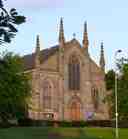
To spot St Mary’s Cathedral, just look for a grand, grey stone building ahead with tall, narrow windows, pointed arches, and striking spires shooting up into the sky-it stands proud among the leafy trees on the east end of New Town. Now, take a deep breath and imagine you’re stepping back in time-all the way to 1814. Edinburgh was buzzing with change, and the Chapel of St Mary’s had just opened its doors. In those days, being Catholic in Scotland was a bit like trying to have a picnic in the rain: difficult and best done quietly! The Catholic faith wasn’t exactly embraced; worshippers gathered in discreet places like the old Chapel of St Andrew on Blackfriars Wynd, hoping not to draw too much attention. But something remarkable happened by 1814: tolerance began to bloom. The city allowed the construction of Scotland’s first purpose-built Catholic church in ages, right here on this spot-and people flocked to it, their prayers echoing against the mighty neo-perpendicular walls designed by James Gillespie Graham. Over the years, the building grew more and more beautiful, as if it were dressing up for a grand ball. By 1878, when the Scottish Catholic hierarchy was restored, it was given the important title of pro-cathedral, the heartbeat of Catholic life in Scotland. Imagine the excitement, the sense of victory-centuries of quiet faith were at last able to burst forth! In 1886, this church became the Metropolitan Cathedral, with all the pomp and circumstance that brings. But it hasn’t always been peaceful: in 1892, a dramatic fire broke out at the neighboring Theatre Royal, sending flames licking close to the cathedral’s walls. Quick-thinking builders rushed in, opening arches in the walls and adding side aisles-the church adapted and carried on! As Edinburgh rolled into the 20th century, generations added their own touches. By 1921, a majestic war memorial and high altar stood here, and in 1927, they crowned these with a baldachino, a sort of architectural crown. In 1932, the cathedral got yet another lift-literally-as the roof was raised higher by clever architects Reid and Forbes. And as you gaze at the entrance, you’re actually looking at a 1970s makeover, when the old porch and baptistery were swapped out for something bigger and brighter, making it even more welcoming. But wait, there’s music in the air! St Mary’s is alive with song: a choir-the Schola Cantorum-specializes in everything from haunting plainchant to intricate Renaissance harmonies. There’s even a grand organ with a whopping 4,000 pipes, installed in 2008. If you’re lucky, you might hear a rehearsal wafting out onto the city streets. And if you fancy a cuppa, this cathedral used to have its own café, Café Camino, which doubled as a venue for the famous Edinburgh Festival Fringe. Imagine enjoying cake and coffee surrounded by centuries of history! Today, St Mary’s Cathedral stands as the mother church of Scottish Catholicism, home to parishes from all corners of Edinburgh, and the seat of the Archbishop of St Andrews and Edinburgh. From papal visits-yes, even Pope John Paul II came here in 1982-to local festivals and daily worship, this building is a living testament to faith’s endurance, resilience, and, dare I say, style. Now, shall we carry on and let the music linger behind us as we stroll to the next stop? Intrigued by the architecture, music or the current clergy? Explore further by joining me in the chat section below.
Ouvrir la page dédiée →Look ahead and slightly up-you’ll spot Regent Bridge as a grand, stone archway stretching across the road, framing the sky between tall buildings, with elegant neoclassical…Lire plusAfficher moins
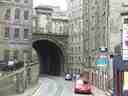
Look ahead and slightly up-you’ll spot Regent Bridge as a grand, stone archway stretching across the road, framing the sky between tall buildings, with elegant neoclassical columns right above the dark, tunnel-like passage. Alright, stand right there for a second and imagine this-Edinburgh two hundred years ago was a bit of a city with two personalities. You had all the sweeping, genteel avenues up north in the New Town, handsome and sophisticated as a ballroom, but the primary entrance into the city from the south-the main London road, no less-was like squeezing through the world’s most awkward corridor. Carriages would creak and groan down cramped, zigzaggy lanes, rattling past sagging tenements and, frankly, their fair share of smells. Hardly the royal welcome for such a beautiful city! Then came the grand plan. In 1814, city leaders, including Sir John Marjoribanks (that’s right, say it fast and try not to giggle), decided enough was enough. Their idea was bold: cut straight through the jumbled streets and rock of Low Calton, knock down the tired old buildings, and toss an arch over the gap-a real showstopper as you entered Edinburgh. The answer was Regent Bridge, which you’re standing by now-a proper neoclassical masterpiece that shouts “Welcome to Edinburgh!” and not “Mind your head!” Imagine the drama: to build this, they had to relocate bits of the old Calton burial ground (not your everyday moving job), blast through solid rock, and demolish whatever dared stand in their way. The ravine was fifty feet deep-nearly as deep as a double-decker bus is long! The finished bridge itself is no slouch, either: majestic Greek Revival arches, trailing triumphal entryways held up by those Corinthian columns, all rising higher on the south side because the ground dips away so sharply. The construction kicked off in 1816 with the engineering maestro Robert Stevenson at the helm, and by 1819, Regent Bridge was ready and waiting. They opened it with flair while Prince Leopold of Saxe Coburg was in town; you can just imagine the carriages rolling in and the crowds craning for a look at the modern marvel. And the cherry on top? They named the gleaming new street above it Waterloo Place, in honor of the famous victory that same year. So next time you walk over it, picture horses’ hooves echoing on the arches, society’s finest taking in the grand view, and the whole city breathing just a little easier thanks to a bridge that truly changed Edinburgh’s fortunes. And all for a cool £20,000-plus, perhaps, the occasional lost ghost from the repurposed burial ground, so tread softly!
Ouvrir la page dédiée →For a quick visual tip, look straight ahead for a tall, round stone tower topped by an iron mast and surrounded by castle-like battlements-it rises boldly above the trees at the…Lire plusAfficher moins
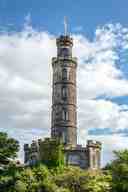
For a quick visual tip, look straight ahead for a tall, round stone tower topped by an iron mast and surrounded by castle-like battlements-it rises boldly above the trees at the very top of Calton Hill, like a lone sentinel against the Edinburgh sky. Now, get ready for a tale of daring, drama, and a touch of nautical flair-because you’re staring up at the legendary Nelson Monument, a place where stone meets sky and heroism meets history! It’s almost as though Lord Nelson himself said, “Build me a tower as tall as my reputation!” And Edinburgh did just that, right here, perched a dramatic 171 meters above sea level, where the wind is always eager to carry away a good story. Let’s time travel back to 1805-Britain’s fate is tangled in the sails at the Battle of Trafalgar. Vice Admiral Horatio Nelson stands at the heart of the action, facing the French and Spanish fleets. The cannons roar, masts splinter, and the salty spray mixes with tension and hope. In that blaze of victory-a triumph for Britain and a heartbreak for his crew-Nelson pays the ultimate price, falling as a hero. That moment ripples through Britain, and Edinburgh, not known for its reserve in matters of national spirit, raises public funds with a passion. They decide to build a monument fit for the memory of a man whose telescope always seemed to spot glory on the horizon. Now, creating this tower was a bit of a wild voyage itself! The first architect, Alexander Nasmyth, designed something that looked a bit too much like an extravagant pagoda-charming, but a bit shocking to the local wallets. Enter Robert Burn, who wisely chooses a design that mimics an upturned telescope, forever paying tribute to Nelson’s love for spotting distant ships (or perhaps escaping chores aboard). Construction began in 1807, and by 1816, despite running out of money and a few construction woes, the tower finally rose-thanks in part to Thomas Bonnar, who completed the battlemented pentagon base. This monument wasn’t just a pretty face; sailors once attended to it, living in rooms now long since claimed by adventurous caretakers and, believe it or not, a bustling tearoom by 1820! Even in the roughest weather, the monument became a steadfast signal mast, keeping the city in touch with the Forth’s ships. In fact, above the entrance, a plaque still tells visitors that the grateful citizens raised this monument “not to express their unavailing sorrow… nor yet to celebrate… glories… but, by his noble example, to teach their sons to emulate what they admire.” Read that on a stormy day and you’ll swear you hear the distant crash of waves. But wait-what about that mysterious “time ball” crowning the top? Installed in 1852, the time ball is a bit like the world’s slowest but most reliable fireworks-rising up just before one o’clock, then dropping precisely at the stroke of one. This tradition was started so ships in Leith harbour could set their clocks and navigate the world without ending up in Norway by mistake. It was the Astronomer Royal for Scotland, Charles Piazzi Smyth, who dreamed up the idea, linking the ball to a clock in the City Observatory via an underground wire. Imagine the suspense on days when fog blanketed the city, all eyes peering up, waiting for that ball to drop! And if the mist was too thick-even for a telescope-they added the mighty One O’Clock Gun at Edinburgh Castle so sailors could hear the signal instead. Fast forward to 2009, and there’s a bit of restoration magic-stone and metal repaired, the mechanism brought back to life, and the ball again dropping with the precision worthy of Nelson himself. And every Trafalgar Day, the Royal Navy’s White Ensign flies high, spelled out with Nelson’s famous message in signal flags: “England expects that every man will do his duty.” So as you stand here with the wind brushing your face and the city sprawling below, remember this isn’t just a tower-it’s a beacon of courage, history, and very precise timekeeping!
Ouvrir la page dédiée →Right ahead of you, you’ll see a dramatic row of massive stone columns - just look up Calton Hill and you can’t miss it! Now take in the scene: you’re standing before the…Lire plusAfficher moins
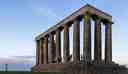
Right ahead of you, you’ll see a dramatic row of massive stone columns - just look up Calton Hill and you can’t miss it! Now take in the scene: you’re standing before the National Monument of Scotland, a stone giant born from ambition and halted by misfortune, perched right on top of Calton Hill. The monument was meant to rival the glory of Athens, and - if you squint just right - you might imagine you’re standing amidst the ruins of the Parthenon itself, though a chilly Scottish breeze brings you right back home. Let’s rewind the clock to the early 1800s. Picture the air shimmering with excitement and the sound of Edinburgh’s citizens bustling below. The Napoleonic Wars had left scars across Europe, and Scotland wanted to honor its bravest soldiers and sailors with something unforgettable. The original idea? A mighty “Scottish Valhalla,” where legends would rest in catacombs below a temple for the ages. But why here, you might ask, and not, say, the more convenient Mound? Well, Calton Hill was chosen for its majestic view over Edinburgh… and because every city deserves a spot for dramatic sunsets and equally dramatic monuments. Support came from the great and the good - even Sir Walter Scott lent his fame to the cause. The chosen design, by Cockerell and Playfair, was boldly ambitious: recreate the Parthenon, but with a Scottish twist. And so, in August 1822, with King George IV himself in the city, a grand procession thundered up from Parliament Square. The Duke of Hamilton led a sea of dignitaries and masonic lodges, escorted by glittering horsemen. Listen closely - - as the foundation stone, heavier than six cars stacked together, was laid in a flurry of speeches, flags, and the echo of cannon fire from all corners of Edinburgh. Now, if this was a fairy tale, our monument would rise swiftly, covered in dazzling sculptures and filled with heroic legends. But life - and Scottish weather - had other plans. Only sixteen months into fundraising, the dream needed £42,000, but less than half turned up. Parliament’s promise of a little more cash floated in, work sputtered to life in 1826, and yet, after just three years, the money and enthusiasm ran dry. All we got were these very columns, standing tall but unfinished, like a proud Scotsman in an untied kilt-majestic, but open to interpretation. The people of Edinburgh love a bit of banter, so the monument quickly picked up some delightful nicknames. “Scotland’s Folly,” “Edinburgh’s Disgrace,” and my personal favorite, “the Pride and Poverty of Scotland.” Yet, there’s affection hidden in the teasing - after all, it still stands as a reminder of lofty dreams. Over the years, ideas to finish the monument swirled through the city like leaves in a Highland wind. Maybe it’d become a palace for Queen Victoria, or a temple to the Act of Union, or even a brand-new Scottish Parliament! But just like a haggis recipe in Paris, these plans never quite took hold. Did you know they even planned for vast catacombs beneath you, a resting place for Scotland’s greatest? Or that in 2008, one of the giant stone lintels needed professional nudging back into place - costing over £100,000? This monument may not be finished, but it’s always cared for. Today, it’s a Category A listed building, protected as a piece of Scotland’s soul. Now, as you stand here, wind perhaps tugging your coat and the sky stretching out over the city, let yourself imagine processions, plans, and laughter echoing off the stones. It might not be complete, but in Edinburgh, even our ruins come with grand stories and an extra helping of character. Go on, give one of those columns a gentle pat-just don’t expect Zeus to answer!
Ouvrir la page dédiée →Up ahead, you’ll spot the City Observatory as a cluster of stone buildings and domes, with the Playfair Building standing out like a miniature Greek temple-just follow your gaze…Lire plusAfficher moins
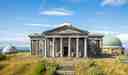
Up ahead, you’ll spot the City Observatory as a cluster of stone buildings and domes, with the Playfair Building standing out like a miniature Greek temple-just follow your gaze past the monuments to the grand, columned structure at the heart of Calton Hill. Alright, take a breath and look all around-the air up here is always fresher, as if the sky approves of all the stargazing that’s happened on this hill! The City Observatory in front of you isn’t just Edinburgh’s answer to a Greek temple; it’s a time machine, holding stories about curious astronomers, city riots, and enough scientific ambition to reach the moon (if only their telescopes were pointed the right way). Back in 1776, imagine the city buzzing below with horse-drawn carts, church bells, and the clang of shipbuilding at Leith Docks. Up on this rock, Thomas Short marched with a giant 12-foot telescope. Not the sort you could slip in your pocket-this one basically needed its own address. Short’s goal? To wow the public with glimpses of distant planets, and-perhaps-not go bankrupt in the process. Edinburgh’s city fathers handed him a plot right here and some donated money, which, after the riots and the Jacobite uprising, nobody seemed sure how to spend. Short’s family kept things running after his death, then opticians tried their luck, until all fell suddenly quiet and the observatory sat abandoned. But wait! Enter James Craig, designer of the first Gothic Tower-if you look to the southwest, facing Princes Street, you’ll spot its pointed shape peeking above the wall. It doesn’t just look fortress-like; it was meant to be. I think it also doubled as a really fancy “Do Not Disturb” sign. Eventually, more hopeful astronomers trickled in, though they mostly ran out of money before reaching the stars. Jump ahead to 1812, and the astronomers get their hands on a new, splendid centre: the Playfair Building. William Henry Playfair, a celebrated architect, gave it its Greek Revival look-imagine arriving here and seeing that portico rise up, the city at your back and galaxies overhead. By 1822, King George IV was so impressed that he gave the place a shiny new title: the Royal Observatory. When funds were low, the scientists had to sometimes fundraise just to buy telescope parts-astronomers, it turns out, are very resourceful, if not always rich. It took until 1831 for a brilliant new transit telescope, built by Fraunhofer, Repsold, and eventually Repsold’s son (nobody could finish a telescope on time!), to finally arrive. Step inside your own imagination: the click of brass dials, the quiet shuffle of paper, and the sharp tick of a sidereal clock keeping perfect cosmic time. Astronomers up here would watch the stars swing by, adjusting their clocks to help mariners from Leith port keep perfect time-a vital service long before everyone had a phone in their pocket. By 1854, the time ball on Nelson’s Monument, just next door, would drop at exactly one o’clock every day, controlled by an electric pulse zipping from the observatory. Later, a wire ran all the way to Edinburgh Castle, firing the famous One O’Clock Gun with a thunderous boom that echoed across the city. Nowadays, these are beloved traditions, set “by hand” rather than cosmic precision-but the city still listens. By the late 1800s, though, technology had raced ahead and the old site grew too noisy and cramped. In 1896, the Royal Observatory packed its scientific bags and moved to Blackford Hill, leaving Calton Hill’s buildings for future dreamers. Soon after, the City Observatory took over, with domes housing splendid new telescopes-one with a mirror so big, it had trouble keeping up with expectations. The famous City Dome you see in the northeast was once home to a giant 22-inch refractor, though sadly, it worked better as a lecture hall than a stargazing window in the end. Here, eccentric city astronomers and sticklers for rules like William Peck and John McDougal Field held court, running lectures, observing stars, and founding the Astronomical Society of Edinburgh. But resist the urge to look for aliens: by the late 20th century, vandals and leaky roofs forced the astronomers to abandon ship. The whole site fell silent-until a creative rescue mission arrived. In 2018, after years gathering dust, the stone was scrubbed, the paint touched up, and the Observatory was born anew as “Collective”-an art centre mixing cosmic ideas with very earthly creativity. The City Dome now hosts installations by international artists, inviting imagination to travel as far as any telescope ever did-though with less chance of bumping your head on a brass lever. Feel the stones underfoot, picture Victorian astronomers arguing about Saturn’s rings, or artists hatching plans for a new exhibit. Even Observatory House in the corner has become a holiday let; if only Thomas Short could know. And as you look across the city with the wind in your hair and echoes of history swirling, just imagine what stories are still waiting to begin. Now, is it possible to spot Uranus from here these days? Only if the clouds and the city lights are on their very best behavior. But one thing’s for sure-the City Observatory is where Edinburgh’s imagination and the universe still meet for a chat.
Ouvrir la page dédiée →

Foire aux questions
Comment commencer le tour ?
Après l'achat, téléchargez l'application AudaTours et entrez votre code de réduction. Le tour sera prêt à commencer immédiatement - il suffit d'appuyer sur lecture et de suivre l'itinéraire guidé par GPS.
Ai-je besoin d'Internet pendant le tour ?
Non ! Téléchargez le tour avant de commencer et profitez-en pleinement hors ligne. Seule la fonction de chat nécessite Internet. Nous recommandons de télécharger en WiFi pour économiser vos données mobiles.
S'agit-il d'une visite de groupe guidée ?
Non - il s'agit d'un audioguide en autonomie. Vous explorez indépendamment à votre propre rythme, avec une narration audio diffusée par votre téléphone. Pas de guide, pas de groupe, pas d'horaire.
Combien de temps dure le tour ?
La plupart des tours durent entre 60 et 90 minutes, mais vous contrôlez totalement le rythme. Faites des pauses, sautez des arrêts ou arrêtez-vous quand vous le voulez.
Et si je ne peux pas finir le tour aujourd'hui ?
Pas de problème ! Les tours disposent d'un accès à vie. Faites une pause et reprenez quand vous le souhaitez - demain, la semaine prochaine ou l'année prochaine. Votre progression est sauvegardée.
Quelles sont les langues disponibles ?
Tous les tours sont disponibles dans plus de 50 langues. Sélectionnez votre langue préférée lors de l'utilisation de votre code. Note : la langue ne peut pas être changée après la génération du tour.
Où accéder au tour après l'achat ?
Téléchargez l'application gratuite AudaTours sur l'App Store ou Google Play. Entrez votre code de réduction (envoyé par e-mail) et le tour apparaîtra dans votre bibliothèque, prêt à être téléchargé et commencé.
Si vous n'appréciez pas le tour, nous vous rembourserons votre achat. Contactez-nous à [email protected]
Paiement sécurisé avec 


