Visite audio d'Aberdeen : Une odyssée du Vieil Aberdeen
Une ville où les siècles se rencontrent et où les recoins cachés murmurent des secrets inouïs—Aberdeen récompense ceux qui cherchent au-delà de sa façade de granit. Lors de cette visite audio autoguidée, serpentez à travers les ruelles anciennes et les enceintes universitaires pour découvrir des querelles politiques, des érudits rebelles et des légendes excentriques perdues dans le temps. Pourquoi un groupe de Bedesmen vêtus de capes bleues a-t-il disparu sans laisser de trace de mémoire d'homme ? Quel prisonnier défiant a comploté son évasion sous l'ombre du clocher ? Un tunnel oublié de Bede House à St Machar's pourrait-il encore cacher la preuve de courses nocturnes scandaleuses ? Voyagez à travers les échos de rires et de portes verrouillées, sur des pierres patinées et des quads animés. Chaque pas révèle un nouveau fil dans la tapisserie dramatique d'Aberdeen, des révolutions chuchotées aux rituels locaux excentriques. Voyez la vieille ville non pas telle qu'elle est dans les guides, mais telle qu'elle palpite sous vos pieds. Découvrez ce qui se cache derrière les murs de granit—appuyez sur lecture et laissez Aberdeen révéler ses plus anciennes intrigues.
Aperçu du tour
À propos de ce tour
- scheduleDurée 30–50 minsAllez à votre propre rythme
- straightenParcours à pied de 2.6 kmSuivez le sentier guidé
- location_onEmplacementAberdeen, Royaume-Uni
- wifi_offFonctionne hors ligneTéléchargez une fois, utilisez n'importe où
- all_inclusiveAccès à vieRéécoutez n'importe quand, pour toujours
- location_onCommence à Bede House, Vieil Aberdeen
Arrêts de ce tour
Logan, a senior bigwig in Old Aberdeen, built this house on top of what used to be a humble patch of farmland leading toward the iconic Brig O’ Balgownie. Picture the clop of…Lire plusAfficher moins
Logan, a senior bigwig in Old Aberdeen, built this house on top of what used to be a humble patch of farmland leading toward the iconic Brig O’ Balgownie. Picture the clop of horses’s hooves and cart wheels rolling along a dirt path, with St Machar’s Cathedral peeking above the rooftops nearby. The house was, and still is, a classic example of an L-shaped Scottish townhouse, built on three stories with a pointy attic that looks like it’s just waiting for witches or wizards to take up residence. As you walk around, see if you can spot the old “pend,” or alleyway at the entrance, leading to two doors. One goes to dark cellars, where food, firewood, and maybe a ghost or two were stored. The other opens onto a winding, spiral staircase. Go on, listen for your boots echoing on stone steps as you climb toward the great hall-the grand centerpiece back in Logan’s day. Above the door, you might notice a plaque written in good old Latin, declaring that William Logan and his wife had the house built in 1676. That’s 17th-century bragging rights! Logan passed away in 1680, with his widow, Jean, staying in the house another twenty years. Both are buried nearby at St Machar’s Cathedral, possibly enjoying an eternal rest with a better view than most. Their home outlived them, shifting from stately residence to a lifeline for the needy as the centuries rolled on. You see, the Bede House earned its name in the late 18th century when a very unique group moved in-the Bedesmen, or as they were known in Aberdeen, the “Blue Gowns.” These were elderly men, clad in distinctive blue cloaks, who received alms and support for the rest of their days. Originally, these Bedesmen lived in a hospital built beside St Machar’s Church in 1531, thanks to Bishop Gavin Dunbar. This wasn’t your modern hospital-think more along the lines of an almshouse, a place where prayer, charity, and perhaps a little quiet mischief were part of daily life. The Bedesmen moved into the Logan house in the late 18th century when their old hospital fell into disrepair-it was a bit like upgrading from a crumbling hut to, well, what was once a posh townhouse. For a while, they lived, prayed, and worked right here, their days strictly regimented, with meals, prayers, and even the odd salmon from the River Don for the eldest two. Dinner at 11am, supper at 6pm-no snacking in between! And in case you were wondering, Bishop Dunbar’s rules were quite clear: “No women in the private rooms!” One wonders if there was ever a dramatic chase scene involving a Bedesman, a blue cloak, and a scandalized janitor. As time passed, the Bedesmen faded into local lore-the last one passing away as late as 1988. Their legacy lives on in stories and a few surviving badges, which acted as a kind of “VIP pass,” allowing them to travel from community to community. Some say these badges read “Pass and Re-Pass,” which sounds suspiciously like what my internet does on a bad day. But wait, what’s this-rumor has it there’s a secret passage winding away from the Bede House to St Machar’s Cathedral. Think of it: narrow stones, echoing footsteps, maybe an adventurous Bedesman sneaking out for a tipple or two at the grocer’s by the Town House, hiding bottles where only the bravest would look. A few old-timers even claimed they’d seen bottles left behind when the house was renovated in the 1960s, but no one’s ever proven the tunnel truly exists. Who knows? If you feel a gentle chill at your ankles, maybe that’s just a wandering Bedesman, still looking for the shortcut to his break room. Today, the Bede House sits with much of its 17th-century spirit intact. It’s now private flats, but its stone stairways, weathered beams, and shadowy nooks whisper stories to anyone who’ll listen. So, as you stand here amid the echoes of centuries, take a moment to picture it all-the laughter, the prayers, the mysterious passages, and, above all, the sense of community that has held these stones together for hundreds of years. On that note, shall we march onward to our next destination, where stories await behind every stack and shelf? Seeking more information about the building, scottish bedesmen or the aberdeen bedesmen? Ask away in the chat section and I'll fill you in.
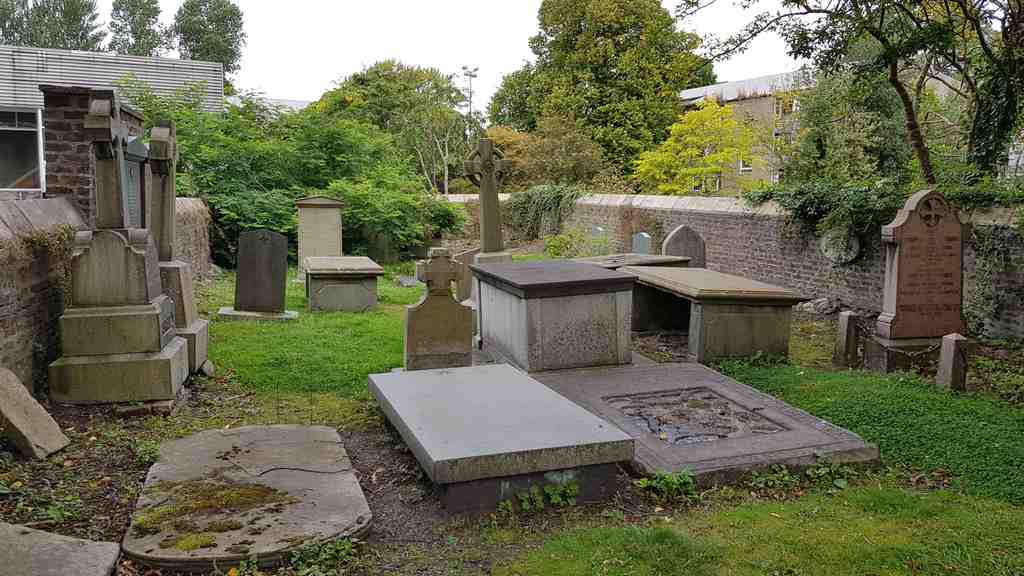
Ouvrir la page dédiée →To spot the Old Town House, look straight ahead for a proud, boxy granite building standing at the centre of the cobbled High Street, with neat rows of sash windows and a quirky…Lire plusAfficher moins
To spot the Old Town House, look straight ahead for a proud, boxy granite building standing at the centre of the cobbled High Street, with neat rows of sash windows and a quirky little clock tower peeking out like a hat on top. Imagine you’re standing here in Old Aberdeen over 300 years ago. The air smells of woodsmoke and the distant salty tang of the North Sea, and the street is filled with the sounds of merchants calling out their wares, horses clopping along the cobbles, and-if you’re really lucky-a flock of geese causing chaos on market day! The town council used to meet in a cold little room above a cathedral porch, but in 1642 they decided they’d rather be warm and a bit more comfortable. So, they built themselves a fine new townhouse-which even squeezed in a school downstairs and a weigh-house for bustling trade. But Old Aberdeen didn’t do things by halves. As the years passed, they fancied a fancier house, so they added a grand clock tower in 1702, complete with prison cells below. Talk about keeping your councillors in check! By the 1780s, however, the place was so creaky it was ready to host its own ghost stories. Enter local architect George Jaffrey, who built this gleaming granite beauty you see today in 1789. The building’s symmetrical frontage, the sash windows, and the proud doorway with its rescued coat of arms all shout, “Look at me, I’m in charge!” And don’t miss the belfry above-its bell has survived since 1754 and surely remembers more village secrets than anyone alive. Inside, the Old Town House was a hub of life-a spot for council meetings, boisterous assembly halls, and those slightly gloomy prison cells (where we all hope the prisoners at least got a nice view out those sash windows). Later, children’s laughter echoed through these rooms when it became a school, and the whispers of readers drifted by when it turned into a library. Today, this grand old dame now houses the King’s Museum, welcoming curious visitors instead of rowdy council members or schoolchildren. So, as you stand here at the heart of Old Aberdeen, feel the centuries of stories swirling around-where every stone, bell toll, and creaky floorboard has a tale to tell. And hopefully, you haven’t parked in front of the old jail cell-nobody wants to be around if that door accidentally swings shut!
Ouvrir la page dédiée →To spot the King's Pavilion, look for the cream-coloured building with large glass windows and zig-zagging stairs right on the edge of the wide sports field-it stands out next to…Lire plusAfficher moins
To spot the King's Pavilion, look for the cream-coloured building with large glass windows and zig-zagging stairs right on the edge of the wide sports field-it stands out next to the older, stony structures behind it. Right in front of you is the King's Pavilion-a place that’s seen its fair share of energy, excitement, and perhaps the odd damp sock! Imagine it’s 1941, wartime Britain. The air is chilly, students and athletes eagerly gather as the impressive new Pavilion opens with a whoosh of official pronouncements. Designed by Alexander George Robertson Mackenzie, this building was a beacon of hope and fresh starts, rising up where an old sports pavilion once stood. For decades, the Pavilion buzzed with action-imagine the cheers bouncing off the walls, the sounds of tennis shoes on gym floors, and the splash of water from the now-quiet swimming pool. These days, those echoes are joined each September by something a little more poetic: the WayWORD Festival, where peculiar poems and wild words fill the air, and the halls become vibrant with stories and laughter. Even as part of history-being Category B listed!-the Pavilion keeps its doors open to new ideas. So, breathe in the crisp Aberdeen air, imagine the thrill of a festival, and remember, every great building needs a few good stories…and maybe a dry towel or two!
Ouvrir la page dédiée →
Afficher 6 arrêts de plusAfficher moins d'arrêtsexpand_moreexpand_less
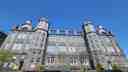
To spot the Aberdeen Mosque and Islamic Centre, look for a grand, grey granite building with two round towers at each corner and a forest of bright windows lining the facade,…Lire plusAfficher moins
To spot the Aberdeen Mosque and Islamic Centre, look for a grand, grey granite building with two round towers at each corner and a forest of bright windows lining the facade, standing tall just ahead of you. Now, take a deep breath and listen as you stand at the heart of what is, believe it or not, the largest mosque and Islamic centre in all of North East Scotland! This isn't just any building-this is a place with a story almost as layered as its beautiful stone walls. Picture it: the year is 1980. A handful of brave university students and a couple of local business folk spot a need-a place for prayers, for community, for togetherness. But where do they start? With just a tiny house, right beside the University. Can you imagine everyone squeezing in for prayers, probably elbow-to-elbow, shoes neatly lined up outside and laughter echoing in the hallway? But the community kept growing, like dough rising in a warm kitchen! Soon, one small house just wouldn't do, so more and more neighbouring homes were added until finally, they moved here-this fantastic structure you're admiring now on Frederick Street, which became the bustling Aberdeen Central Mosque. And here's the twist: the original mosque at Spital is still going strong, especially for students and locals nearby. Talk about having your cake and eating it! But AMIC is about much more than just prayers. Imagine the buzz on open days when doors are flung wide for everyone-Muslim and non-Muslim alike-to step inside and share stories, ask questions, even taste sweet dates and warm tea. Today, it's a place for life’s biggest moments-a marriage, a baby’s birth, even those emotional goodbyes. It runs schools all week: lively Madrasah classes, special lessons for boys and girls, and even iGCSE Islamic Studies. Above all, it's a home for unity and friendship-one that welcomes the whole city to peek in, have a chat, and leave with a story or two to share. Who knows, maybe you’ll be tempted to pop in at the next open day-if nothing else, for the biscuits!
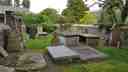
Ouvrir la page dédiée →To spot Snow Kirk, look for a small, leafy graveyard surrounded by old stone walls and scattered with moss-covered headstones and weathered tombs-it’ll be right in front of you,…Lire plusAfficher moins
To spot Snow Kirk, look for a small, leafy graveyard surrounded by old stone walls and scattered with moss-covered headstones and weathered tombs-it’ll be right in front of you, tucked peacefully away beside the university buildings. Now, close your eyes for a second (well, not if you’re walking!) and imagine you’re standing right here five hundred years ago-except instead of quiet, all you hear are echoing voices in Latin, the low chanting of prayers, and perhaps the clinking coins sent from a king. That’s because this very spot, known as the Snow Kirk, has a story steeped in mystery, royalty, and a bit of weather-related folklore. It started as a humble church named after St Mary of the Snows in Rome, but don’t let the name fool you-it wasn’t because Aberdeen had more snow than anywhere else, although I’m sure some locals would claim it! It was tied to a Carmelite friary, and according to legend, Bishop Elphinstone himself had a hand in founding it back in the 15th century. King James IV even funded its walls, so you could say it had some real royal backing-no skimping on spiritual architecture here. But life here at the Snow Kirk wasn’t all peaceful prayers and snowy blessings. After serving for a time as a chapel to King’s College, its fortunes changed abruptly in 1499, when St Machar’s Cathedral stole the show and Snow Kirk lost its parish status, shrinking in importance almost overnight. By the Reformation in the 1560s, its congregation was barely big enough to fill a small classroom-just 30 souls at most! As illegal Catholicism crept in, the kirk became notorious for ‘unauthorised’ gatherings. When officials tried shutting it down, people just kept sneaking back in. I guess you could say old Aberdeen folk were as stubborn as their chilly winters. Eventually, the kirk fell into ruin-demolished down to waist-high walls, but still cherished as a place for burials. Today, you’ll find gravestones for bishops like John Geddes and James Grant, the Lord Provost Gilbert Menzies, and even a few university professors. So as you walk among these stones, imagine you’re brushing shoulders with centuries of Aberdeen’s secrets and stories-just try not to spook yourself if you feel a chilly breeze!
Ouvrir la page dédiée →To your right, you’ll spot Christ’s College: an impressive granite building with tall, pointed windows and a clock tower rising above its roof-just look for the castle-like spires…Lire plusAfficher moins
To your right, you’ll spot Christ’s College: an impressive granite building with tall, pointed windows and a clock tower rising above its roof-just look for the castle-like spires along the top! Alright, picture this: it’s 1843, and the streets of Aberdeen are buzzing with excitement, confusion, and maybe a wee bit of outrage. That year saw what’s known as “The Disruption”-not a dodgy wifi signal, but a major split in Scotland's church! Christ’s College sprang up soon after, thanks to the Free Church of Scotland, built to train ministers who were ready to stand by their beliefs, rain or shine. Imagine young men arriving at this very spot, their boots echoing on the cobblestones, hearts pounding with the weight of their calling. The building buzzed with debate-some friendly, some fierce-echoing from those beautiful, stained-glass windows you see now. Over time, things settled down, and in 1929, Christ’s College joined the Church of Scotland, becoming part of the University of Aberdeen. These days, the college is a dynamic part of university life, working hand in hand with the School of Divinity. The folks who pass through these doors don’t just memorize old texts-they wrestle with big questions and occasionally, I hear, argue over who makes the best tea in Aberdeen. Christ’s College looks after future ministers, helping them grow academically, spiritually, and, I bet, discovering which pew is the squeakiest during weekly Chapter Service. And if you wander the hallways, you’ll find the Divinity Library, humming with students deep in thought, and perhaps overhear a whispered “Aha!” from someone unravelling a theological mystery. Every year, the best student is honored with the Lumsden and Sachs Fellowship-proof that greatness still walks these old, granite halls. Steeped in history and brimming with debate, Christ’s College is no ordinary landmark; it’s a place where Scotland’s heart and mind come to meet.
Ouvrir la page dédiée →Straight ahead, you’ll spot a striking cube-shaped building wrapped in bold white and clear glass stripes that zigzag up to the sky-just look for the zebra pattern standing tall…Lire plusAfficher moins
Straight ahead, you’ll spot a striking cube-shaped building wrapped in bold white and clear glass stripes that zigzag up to the sky-just look for the zebra pattern standing tall over the landscape! Welcome to the Sir Duncan Rice Library, where knowledge towers high above Aberdeen-and fashion sense apparently means dressing like a zebra! If you’re standing here, just imagine it’s 2011, and the University of Aberdeen is buzzing with excitement. After years of relying on the much smaller Queen Mother Library, the University decided it was time for a radical makeover. The Queen Mum’s place wasn’t exactly keeping up with the times-or the growing mountain of books. So, after a global search, the Danish architects at Schmidt Hammer Lassen were chosen in a restricted competition to build something extraordinary, and “extraordinary” is exactly what you see in front of you. Look at the building’s glass stripes-those jagged lines almost look like they've been painted by a giant with a fondness for bold brush strokes. The library rests on a base of Scottish stone, and its design makes it impossible to miss. The moment sunlight hits those angled windows, the whole thing can shimmer and reflect like a giant ice cube left out on a zebra crossing. Inside is even wilder: while the outside is all straight edges and sharp corners, the central atrium inside is a swirl of curves and shifting light. It’s as if the architects thought, “Let’s have a party with geometry!” This seven-storey giant houses 1,200 reading spaces and a whopping 13 kilometers of shelving-enough room for 400,000 books, if you fancy counting! But it’s not just about books. Long before eBooks and TikTok, the University’s collection had started-five centuries ago! Thanks to this building, ancient manuscripts and priceless books now have a fortress. There’s even public exhibition space in case you want to gaze at some treasures or, you know, pretend you’re Indiana Jones for a day. But the library isn’t just smart on the inside. It’s clever too! BREEAM rated it “Excellent” for being super environmentally friendly. The librarians here are so dedicated, they even flush toilets with rainwater-don’t worry, the water is quite clean. Solar panels help with power, and lights have been trained by programmed timers to only shine when they’re needed. There’s a pinch of drama to its history, too. The massive stone base came from Caithness, and building the new library was the single biggest fundraising effort ever at the university-let’s just say there were probably more late-night planning meetings than student pizza parties. The project wrapped up in 2011, and not long after, the building was named for Duncan Rice, the former principal who dreamed big and helped raise the funds. The Queen herself turned up to officially open it in 2012-though I have it on good authority she didn’t try the rainwater toilets. By now, more than 700,000 people have wandered through its vast halls in just its first year. And if you’re wondering about the funky sculpture out front, Evolutionary Loop 517 greets you as you enter-a sort of bronze “hello” from the future. With awards lining its walls and rave reviews around the world, you’re looking at more than just a library. You’re standing before Aberdeen’s glorious treasure chest of knowledge!
Ouvrir la page dédiée →Picture the year 1495. Scotland is wild and remote, the north even more so-think less Google Maps, more “hope you brought a compass and a woolly jumper.” William Elphinstone, the…Lire plusAfficher moins
Picture the year 1495. Scotland is wild and remote, the north even more so-think less Google Maps, more “hope you brought a compass and a woolly jumper.” William Elphinstone, the Bishop of Aberdeen, saw that people here needed more than just fishing skills and a taste for haggis-they needed educated leaders. So, with the blessing of King James IV and a persuasive letter to Pope Alexander VI, Elphinstone founded King’s College right here in Old Aberdeen. It was only Scotland’s third university and just the fifth in the entire English-speaking world. Makes you wonder: who got to be the class clown in 1495? Probably someone failing Latin! Back then, King's College looked a bit different. Imagine a walled-off sanctuary. Inside, monks hustling along stone corridors, the aroma of bread baking in the college’s own kitchens, and somewhere, the clatter of tankards in their brewery. And, of course, the Crown Tower-look up and you’ll see its famous crown, still topping the skyline like a jewel. That’s not just for decoration; it’s also a symbol for the whole university. Now, picture the rivalry heating up like a Highland caber toss. In 1593, George Keith, a modernizing Earl, thought “Why let King’s College have all the fun?” and founded Marischal College in Aberdeen’s new, bustling center. The two became academic rivals: King's, old and traditional, Marischal, young and progressive. They competed for students, professors, and even got into the odd street brawl. That’s right-forget pajama-clad pranks; students then were more “Battle of the Books” than “silent reading.” Every great story needs a twist, and Aberdeen’s universities kept trying (and mostly failing) to merge. Charles I even united them briefly in the 1640s, but as soon as the monarchy changed, they split-talk about “it’s not you, it’s me.” Over the centuries, they both contributed big ideas to the Scottish Enlightenment, and their faculty hosted what’s now seen as the “Who’s Who” of philosophers and scientists in their famous Aberdeen Philosophical Society, also known as the Wise Club. If only Socrates had been there for the debate nights! Finally, in 1860, the city’s academic civil war drew to a close and the two colleges officially became the University of Aberdeen. Marischal’s grand granite building is now Aberdeen’s city council HQ, but you can still visit some university halls and museums there. Fast-forward through time, and the University of Aberdeen keeps growing. Women joined the university in the 1890s-about time! By the 20th century, new buildings were popping up, some bold and modern, others echoing the grand old architecture. You might spot the distinctive Fraser Noble Building, with a “concrete crown” to match the original-imitation is the sincerest form of flattery, right? Let’s not forget the more recent additions. The Sir Duncan Rice Library, just nearby, is a shimmering glass tower that looks like a zebra got cold and sat down in the granite. And hidden gems like the Cruickshank Botanic Garden and the quirky Powis Gateway with its minarets keep this place full of surprises. The University’s not all about academics-well, maybe it is, but there’s still time for a joke or two. Did you hear why the student ate his homework? Because the professors said it was a piece of cake! Seriously, though, with a campus that covers everything from medicine to music, science to storytelling, this is a place that never stops buzzing. As you stand here, let the stories soak in-the scholars plotting ideas, the echoes of protest and progress, and those resilient students, braving rain and exams alike. Today, the university remains a lively hub for thinkers, dreamers, and doers from all over the world. And who knows? Maybe one day you’ll be one of the legends whispered about in these old stone halls. Intrigued by the buildings and campuses, organisation and administration or the symbols of the university? Explore further by joining me in the chat section below.
Ouvrir la page dédiée →To spot the Zoology Building, look for a large, strikingly modern white and grey building with bold lines and a grid-like wall of windows standing proudly above the road-you…Lire plusAfficher moins
To spot the Zoology Building, look for a large, strikingly modern white and grey building with bold lines and a grid-like wall of windows standing proudly above the road-you really can’t miss it as you approach from the street. Now, as you stand before the Zoology Building, imagine you’re stepping into a place with a story as dramatic as any nature documentary. Back in the 1960s, building this place was no walk in the park. In 1966, during construction, there was a sudden, awful collapse. Eight men were trapped, and sadly, five lost their lives-a moment when even the hard hats must have held their breath. The site was a tangled mess for months, cleared away in the cold Aberdeen air, but the spirit of the university didn’t falter. Like a phoenix, the Zoology Building rose again, opening in 1970 on the very spot where its predecessor fell. Inside is a treasure chest: Aberdeen’s own Zoology Museum. Imagine cabinets stuffed with creatures collected over 150 years-from mysterious beetles to a single, rare egg that turned out to belong to the elusive Jerdon's courser. It was hiding in a drawer for years before being found-talk about a game of high-stakes hide and seek! Even Hollywood took notice: the building made a cameo in the movie Tetris as a stand-in for a Soviet government headquarters. Quite a resume, don’t you think?
Ouvrir la page dédiée →
Foire aux questions
Comment commencer le tour ?
Après l'achat, téléchargez l'application AudaTours et entrez votre code de réduction. Le tour sera prêt à commencer immédiatement - il suffit d'appuyer sur lecture et de suivre l'itinéraire guidé par GPS.
Ai-je besoin d'Internet pendant le tour ?
Non ! Téléchargez le tour avant de commencer et profitez-en pleinement hors ligne. Seule la fonction de chat nécessite Internet. Nous recommandons de télécharger en WiFi pour économiser vos données mobiles.
S'agit-il d'une visite de groupe guidée ?
Non - il s'agit d'un audioguide en autonomie. Vous explorez indépendamment à votre propre rythme, avec une narration audio diffusée par votre téléphone. Pas de guide, pas de groupe, pas d'horaire.
Combien de temps dure le tour ?
La plupart des tours durent entre 60 et 90 minutes, mais vous contrôlez totalement le rythme. Faites des pauses, sautez des arrêts ou arrêtez-vous quand vous le voulez.
Et si je ne peux pas finir le tour aujourd'hui ?
Pas de problème ! Les tours disposent d'un accès à vie. Faites une pause et reprenez quand vous le souhaitez - demain, la semaine prochaine ou l'année prochaine. Votre progression est sauvegardée.
Quelles sont les langues disponibles ?
Tous les tours sont disponibles dans plus de 50 langues. Sélectionnez votre langue préférée lors de l'utilisation de votre code. Note : la langue ne peut pas être changée après la génération du tour.
Où accéder au tour après l'achat ?
Téléchargez l'application gratuite AudaTours sur l'App Store ou Google Play. Entrez votre code de réduction (envoyé par e-mail) et le tour apparaîtra dans votre bibliothèque, prêt à être téléchargé et commencé.
Si vous n'appréciez pas le tour, nous vous rembourserons votre achat. Contactez-nous à [email protected]
Paiement sécurisé avec