AudaTours logoAudaTours

Visite audio de Genève : Échos et art à St-Gervais-Chantepoulet

Guide audio10 arrêts

Sous les façades discrètes de St-Gervais-Chantepoulet, des fortunes se sont effondrées du jour au lendemain et des accords secrets ont façonné le destin de Genève derrière de lourdes portes bancaires. Embarquez pour une visite audio autoguidée qui vous emmène au-delà des avenues célèbres, dévoilant des histoires inédites et des recoins négligés que même les habitants ignorent. Laissez les histoires cachées et l'intrigue de la ville transformer chaque pas. Quelle négociation à enjeux élevés à la Banque Cantonale de Genève a failli faire tomber le secret d'une nation ? Quels pactes obscurs ont décidé de l'avenir mondial lors de la World Policy Conference ? Pourquoi une seule lettre oubliée a-t-elle déclenché le chaos au sein de la Banque SYZ, résonnant dans les halls les plus riches de Genève ? Suivez le pouls du scandale, de l'ambition et du pouvoir perdu en vous promenant dans des rues qui révèlent le cœur brut de Genève. Soyez témoin de révolutions et de retournements à chaque tournant. Êtes-vous prêt à découvrir les secrets dramatiques enfouis sous la surface élégante de Genève ? Commencez votre voyage là où l'intrigue a toujours été juste sous la feuille d'or.

Aperçu du tour

map

À propos de ce tour

  • schedule
    Durée 30–50 minsAllez à votre propre rythme
  • straighten
    Parcours à pied de 2.0 kmSuivez le sentier guidé
  • location_on
    EmplacementGenève, Suisse
  • wifi_off
    Fonctionne hors ligneTéléchargez une fois, utilisez n'importe où
  • all_inclusive
    Accès à vieRéécoutez n'importe quand, pour toujours
  • location_on
    Commence à Notre-Dame de Genève

Arrêts de ce tour

  1. To spot Notre-Dame de Genève, look for a grand stone church with tall spires, creamy beige walls, and a large circular stained-glass window above its main entrance-standing…Lire plusAfficher moins

    To spot Notre-Dame de Genève, look for a grand stone church with tall spires, creamy beige walls, and a large circular stained-glass window above its main entrance-standing proudly at a busy crossroads. Now, take a deep breath and imagine Geneva in the 1800s, just after the city’s great religious shake-up! After the Reformation of 1535, every single church in Geneva was Calvinist-if you were a Catholic, you didn’t stand a chance of ringing any church bells in public for hundreds of years. It wasn’t until 1801, when Pope Pius VII and Napoleon had a chat (probably over some strong coffee), that the city finally agreed to allow a Catholic church in town. By the mid-1800s, Geneva’s Catholic community had grown so much they needed a new home-and voilà, Notre-Dame de Genève was born. Imagine the hustle and excitement in the streets as construction began in 1852! A French architect, Alexandre Grigny, stepped up to design a church inspired by the dramatic cathedrals of Beauvais and Amiens. Workers laid the foundation stone, and from all over Europe, donations came pouring in. Think of coins clinking in tins from France to Italy! People were so eager to finish, they actually celebrated the first mass while the dust was still swirling in the unfinished church in 1857. It was finally consecrated in 1859, though the eastern bell tower was, let’s say, an optimistic “work in progress”-it only reaches just above the roof. But wait, there’s a twist! In December 1859, Pope Pius IX-a big fan-sent a gleaming white statue of the Virgin Mary by a Roman artist, which arrived just in time to become a centerpiece of devotion. That statue, by Forzani (who was probably a student of the famous sculptor Tenerani), first stood in the chapel but now watches over the main altar. Notre-Dame’s history isn’t all smooth sailing. In 1875, after some church drama (the Swiss Kulturkampf-think of it as a fiery family feud), the church was actually seized and handed to the Old Catholic community. But just as in fairy tales, the Catholics bought it back in 1912 with a whopping 200,000 francs. Don’t forget to check out those incredible stained-glass windows-some by Claudius Lavergne, others by quirky local artists-glowing with colorful saints and scenes when sunlight shines through. And if you’re walking by at noon or 6 PM, listen out for the single mighty bell, Marie Augustine. She weighs as much as an elephant and rings out the call to prayer every day-just as she has since 1861.

    Ouvrir la page dédiée →
  2. To spot the Geneva University of Art and Design, just look for a striking, modern red building with huge glass panels, bright banners, and a smooth green lawn stretching out…Lire plusAfficher moins

    To spot the Geneva University of Art and Design, just look for a striking, modern red building with huge glass panels, bright banners, and a smooth green lawn stretching out before it-it’s practically waving at you! Now, pause there for a moment and let your imagination run wild. You’re standing in front of a landmark where history is stitched into every brick, yet creativity bubbles up around every window. The Geneva University of Art and Design-locals call it HEAD-might seem young, having been established in 2006, but it actually feels like an old soul with a funky haircut. This place is the proud grandchild of two legends: the École Supérieure des Beaux-Arts, born in 1748 when wigs and powdered faces were in, and the Haute École d’Arts Appliqués, which opened its doors in 1869 back when steam locomotives were all the rage. When these two historic schools merged, they created a sparkling fusion of artistry that still sets imaginations on fire. Nowadays, HEAD spreads across the city like a patchwork quilt, with buildings dedicated to visual arts, cinema, graphic design, and-here’s the real catwalk moment-fashion. In fact, it’s the fashion programs that often steal the show, producing names like Laurence Boissier and Emmanuel Tarpin who’ve strutted from Geneva’s studios onto the international stage. Since 2017, the campus has grown to over 16,000 square meters, so if you think your walk from building to building feels epic, just imagine hauling a mannequin or two! Here, every hallway buzzes with future artists sketching out dreams, filmmakers planning their next big twist, and designers turning wild ideas into wearable wonders. Go ahead-take a breath. You’re standing where centuries of creative minds, big personalities, and perhaps a little bit of artistic mischief come together. Don’t worry if you feel a strange urge to start doodling in your notebook; around here, that’s just the Head effect!

    Ouvrir la page dédiée →
  3. To spot the Centre d'art contemporain Genève, just look for the large, rectangular concrete building with “Centre d'Art Contemporain” written in big white letters on bold red and…Lire plusAfficher moins

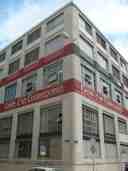
    To spot the Centre d'art contemporain Genève, just look for the large, rectangular concrete building with “Centre d'Art Contemporain” written in big white letters on bold red and black stripes wrapping around the top two floors-right at the busy street corner in front of you. Now, let’s step into a space where time tumbles, artists dare, and electric ideas buzz in the air! Imagine Geneva in 1974: bell-bottoms and discos, and suddenly-bam!-the city gets its first ever home for wild, boundary-pushing art in the French-speaking part of Switzerland. That’s this place: the Centre d’art contemporain Genève. From the start, it’s been a magnet for modern art explorers. Picture exhibitions that fill these giant windows with everything from video screens crackling with strange images to massive photos and haunting films. By 2010, this centre inherited even more responsibility, taking over the Centre pour l’Image Contemporaine-so now it’s the hotspot for shows about fresh tech, multimedia adventures, and futuristic experiments. Through these doors strolled giants of creativity: Joseph Beuys, August Sander, Pipilotti Rist, and Swiss legends like Ugo Rondinone and Olaf Breuning. Staff changed hands-Adelina, Paolo, Katya, and now Andrea-but the spirit stayed the same: mix surprise, a little confusion, lots of laughter, and make everyone wonder, “What IS art anyway?” Don’t be shy-go inside. Maybe the elevator or the flicker of a projector will greet you with something totally unexpected. Who knows? Today, you might just stumble into the next big thing in art!

    Ouvrir la page dédiée →
Afficher 7 arrêts de plusAfficher moins d'arrêtsexpand_moreexpand_less
  1. Look for a tall, sturdy grey stone church with a prominent clock tower and pointed arched windows, standing right beside the road-its old wooden doors and stained glass will catch…Lire plusAfficher moins

    Look for a tall, sturdy grey stone church with a prominent clock tower and pointed arched windows, standing right beside the road-its old wooden doors and stained glass will catch your eye! Now, imagine yourself back in 1853: the sound of construction echoes around rue du Mont-Blanc, dust rising as masons carve out the future of Geneva’s English-speaking community right where you stand. This is Holy Trinity Church, a special slice of English history nestled between the bustling train station and the sparkling Lake Geneva. What makes it unique? Well, the land was a generous gift from the State of Geneva, a rare treat-sort of like finding Swiss chocolate in your sock drawer. The English community here decided in 1846 that they needed a church, a cozy place all their own, so with help from supporters’ donations and the watchful eye of Charles Sumner, Bishop of Winchester, they laid the foundation stone in 1851. He even came back two years later, probably braving the Swiss weather, just to consecrate the church! But the story stretches much further back. Picture furtive gatherings in the 1550s, English Marian exiles escaping Queen Mary I’s crackdown. Here in Geneva, they worshipped according to the Geneva Reformed Church, with John Knox, the fiery Scottish reformer, soon chosen as their minister. Fast forward, and the first true Anglican worship here happened in 1685, while by 1814, services took place in Geneva’s Old Hospital Chapel. Holy Trinity became a home for countless travelers and locals-each leaving a mark, some in the colorful stained-glass windows; the east window was a gift from Mrs. Jephson in 1884, and more modern pieces by Jacques Wasem shimmer in the sunlight. Whispers of history live in every corner, from the parish hall built in 1966 to solemn plaques commemorating those lost in Geneva or the Alps. The organ has even had a makeover as recently as 2015, echoing the music of generations gone by. It’s a testament to how a welcoming spirit can last centuries-no passport required!

    Ouvrir la page dédiée →
  2. As you arrive at the entrance of the World Policy Conference venue, take a moment and look around-there’s a unique energy here, like the quiet before a gathering storm of ideas.…Lire plusAfficher moins

    As you arrive at the entrance of the World Policy Conference venue, take a moment and look around-there’s a unique energy here, like the quiet before a gathering storm of ideas. Imagine the gentle thrum of conversation as leaders in crisp suits, diplomats with world-weary smiles, and experts armed with the sharpest pencils swirl around you. Don’t worry, there’s no pop quiz at the end, just a whirlwind journey through one of Geneva’s most thought-provoking events. This building is home to one of the globe’s most ambitious meets: the World Policy Conference, or WPC for short-established in 2008, at a time when it seemed like the world needed all hands, and brains, on deck. Speaking of brains, the mind behind it all, Thierry de Montbrial, is something of a Renaissance man himself. Picture a blend between a professor, a scientist, an author, and a world-traveling diplomat, with just a sprinkle of secret society intrigue-he’s a long-time advisor to French governments and a veteran of the mysterious Bilderberg conference, which, rumor has it, is a bit like Hogwarts for grown-ups in suits. Montbrial’s vision was ambitious-to create a kind of “United Nations, but for fresh ideas,” where country leaders and world experts could actually talk. And not in the “everyone’s reading off their notes” way you might imagine, but in open debates and friendly (sometimes heated) workshops, with a strong belief that all voices-big, small, famous, unheard-deserve a say. The core idea? To help the world catch up with itself, now that we’re more connected (and occasionally confused) than ever. You can almost hear the rustle of papers and the clicking of laptops as participants prepare for one of the Conference’s buzzing workshops. Now, every year, the guest list reads like a global “Who’s Who.” Heads of state, Nobel Peace Prize winners, central bankers, CEOs, journalists, and even the occasional royalty-names like Ban Ki-moon, Mary Robinson, Abdallah Gul, and Martti Ahtisaari have leaned in around these tables. And don’t forget the think-tankers and civil society agitators. Here, the only thing more varied than the points of view are the international accents you’ll pick up in the hallway-imagine a diplomatic Tower of Babel, but with better catering. The discussions range from the urgent-like the 2008 debut when the world was in the grip of a financial crisis-to the quirky. Has someone dropped a chart diagramming the new world order? Oh wait, no, that’s just this morning’s discussion notes. Everything, from the future of globalization, to technology’s impact on society, to the maze of international relations, gets its moment in the spotlight. The WPC was one of the first to see how even as borders blur and trade flows, states still act like big chess pieces, always maneuvering, always alert. But it’s not all suits and solemnity. There’s a twinkle of mischief in the way these sessions unfold. Imagine heated debates followed by spontaneous laughter when someone cracks a joke about governmental paperwork having a longer lifespan than some local politicians. Sometimes, the key policy idea arrives not in the conference hall, but over dinner or coffee, where the only thing more quickly exchanged than business cards are opinions. Each assembly is designed to level the playing field, so even the most powerful voice still waits their turn-a rarity in global politics. Transparency is central here; every word, every moment, is captured and released in annual reports-each one a glossy tome filled with sharp insights and a dizzying parade of participant profiles. You’re never far from a camera or a tweet-yes, the WPC is everywhere online, from YouTube to unlikely corners of Pinterest, spreading the debates far beyond Geneva. So if you sneeze, aim away from the microphones. But what really sets the World Policy Conference apart is its atmosphere-a place meant for more than empty speeches. Here, people dare to disagree, to brainstorm, to admit they don’t have all the answers. Over the years, institutions like the UN, the African Union, and NGOs big and small have all sent their brightest, hoping to dream up more open, fair, and prosperous ways for nations to interact, respect differences, and, just maybe, make the world a better place. So next time you see an international headline about a breakthrough in global cooperation, think back to these lively rooms in Geneva, where it might just have been born in a debate between coffee sips and the scratch of a well-used pen.

    Ouvrir la page dédiée →
  3. Ah, here we are-Haas & Cie! Imagine the year is 1848: Geneva’s lake glistens at your back, and two young watchmakers, Léopold and Benjamin Haas, are huddled over their benches on…Lire plusAfficher moins

    Ah, here we are-Haas & Cie! Imagine the year is 1848: Geneva’s lake glistens at your back, and two young watchmakers, Léopold and Benjamin Haas, are huddled over their benches on Quai du Mont-Blanc 5. The air is thick with the smell of oiled gears and the sound of hopeful dreams ticking away. Together, they founded what would become Ancienne Manufacture des Montres Haas & Cie. And yes, their “timing” couldn’t have been better! Now, fast forward to 1884: more family members have joined, the company changes its name to Haas Neveux & Cie, and the original logo gets swapped for a tiny running rabbit-symbol of speed and agility. I like to think that rabbit could have set a world record itself for sprinting through Geneva! Speaking of records, in 1896 Haas did just that, crafting a ladies’ watch with a movement only 2 millimeters thick. Not long after, in 1902, they scooped up first prize for precision at the Observatoire de Genève. By 1914, Haas was awarded the Grand Prix at the Swiss National Exhibition in Bern-talk about earning your Swiss stripes! And in 1930, Haas became one of the first to put a square watchcase on the market-a pretty bold move in a world of round dials. From Geneva, Haas traveled the world, appearing in shop windows from Paris to Shanghai to New York. The company saw highs and lows-its rebirth in 1991, and later its legacy taking a new twist when the South Korean SWC company took the reins in 1997, where the Haas & Cie name ticks on. So while the watches may keep perfect time, the story of Haas & Cie is still winding its way around the globe!

    Ouvrir la page dédiée →
  4. To spot the Banque Cantonale de Genève, look for a strong, modern grey stone building with the bold letters “BCGE” and fluttering red and white flags atop its roof, sitting right…Lire plusAfficher moins

    To spot the Banque Cantonale de Genève, look for a strong, modern grey stone building with the bold letters “BCGE” and fluttering red and white flags atop its roof, sitting right by the shimmering water across the river. Now, take a deep breath of that fresh river air-can you feel the weight of Geneva’s centuries-old fortunes lingering around you? You're standing before a place where Swiss francs have flowed almost as steadily as the Rhône itself. But don’t worry, the only thing that might sweep you away here is the wind rustling the flags above! Let’s jump back-way back!-to the year 1816, when Geneva mostly echoed with the sounds of carriage wheels and market banter. A group of forward-thinkers, inspired by a fellow named Jean Auguste Pyrame de Candolle, decided it was time for a bank that could help people thrive in this vibrant city. Picture the original "Caisse d'Épargne" tucked into Geneva’s town hall, encouraging ordinary folks-and even the hardworking clockmakers and bakers-to stash their cash for a brighter future. Geneva’s first savers soon filled the bank’s ledger and, by 1910, nearly every citizen had a savings book, probably hidden under their mattress or inside a secret sock drawer! Fast forward a few decades, and another bank joined the dance: the Caisse Hypothécaire, founded in 1847 by James Fazy. This bank was all about helping farmers plant their dreams and harvest new beginnings. But as the decades slipped by like coins through a teller’s fingers, both banks realized they’d be even stronger together than apart. Now, the story has a little bit of drama-this wouldn’t be finance without a twist! The two banks courted each other, pondering a merger for most of the 20th century. But like two shy dancers at a ball, it took a while for them to unite. Not until the financial storms of the 1990s-not to mention some pretty stormy political debates-did the citizens of Geneva vote “yes” to a merger. Thus, in 1994, the Banque Cantonale de Genève was born. Two hundred years of tradition, suddenly under one modern stone roof. But life in the banking world isn’t always smooth sailing, even for a stately building on the riverbank. No sooner had the BCGE set up shop than storm clouds gathered again. Risky loans-too many of them-threatened to capsize the bank. People worried. In 2000, in a plot thick enough for a detective show, the canton had to swoop in and rescue the bank. There were even whispers of outlandish money laundering accusations-imagine journalists in trench coats rushing for the latest scoop! Luckily, the story calmed down as investigations found little evidence, but not without a flurry of courtroom drama, some convictions for forgery, and a long process of rebuilding trust. BCGE survived, learned from its wild ride, and soon reinvented itself as a modern, responsible Swiss bank. Its managers even pitched in to help on global issues-like supporting international tax transparency and giving a hand to local charity projects, such as restoring Geneva’s giant wooden “Broken Chair” sculpture. And, just to keep things interesting, they host cultural events and their board keeps a careful eye on gender equality-so both your savings and your rights feel safe here. Today, BCGE manages billions for Geneva’s citizens, businesses, and even international clients from Hong Kong to Dubai. It juggles mortgages, investment funds, and company deals-all from this spot by Geneva’s famously turquoise waters. So, as you gaze up at those fluttering flags, imagine the swirl of history, ambition, and a little bit of Swiss daring all coming together right behind those stone walls. And remember, in Geneva, even a bank can have a heart-and the occasional wild adventure!

    Ouvrir la page dédiée →
  5. To spot Banque SYZ, look straight ahead for a modern building with a bold, bright orange “SYZ” logo-almost like a signature-standing out clearly on the facade. Now, as you’re…Lire plusAfficher moins

    To spot Banque SYZ, look straight ahead for a modern building with a bold, bright orange “SYZ” logo-almost like a signature-standing out clearly on the facade. Now, as you’re standing here, imagine the thrill in the cold January air of 1996-a moment when three daring bankers, Eric Syz, Alfredo Piacentini, and Paolo Luban, opened an ambitious new private bank right here in Geneva. They had big dreams and maybe slightly cold fingers too. This wasn’t just any bank; Banque SYZ quickly made a name for itself, specializing in wealth management for private clients and big institutions alike. By 2017, they were overseeing a jaw-dropping 37.2 billion Swiss francs. That's a sum so large, you’d need a bank just to count it! As the years rolled by, SYZ didn’t stand still. Like a suspenseful thriller unfolding, they expanded to Nassau in the Bahamas, with the sound of palm trees swaying in offshore breezes. Their offices popped up in Lugano, Locarno, and then later in Luxembourg and London. In Milan, they teamed up with the Italians to launch yet another bank. Even in Madrid, their footsteps echoed as they built wealth management businesses with a Spanish twist. But here’s where things get dramatic… In 2014, there was a pivotal shake-up: two of the three founders left, leaving Eric Syz holding the reins solo-like a cowboy in a Swiss banking Western, minus the hat. Eric led the bank through big acquisitions, such as taking over the Royal Bank of Canada’s Swiss operations. Despite facing tricky moments-tight regulations, difficult markets, and low interest rates-the bank kept adapting. Sometimes they had to let some businesses go, like a magician making funds disappear (don’t worry, just to another company). Their resilience paid off: in 2014, SYZ was named the most solid Swiss bank in a Financial Times ranking-and, just months later, the “Best Private Banking Boutique” in the world. Not bad for a group that started out with little more than determination and, of course, an eye-catching orange logo. Standing here, you’re right at the center of Geneva’s world of modern banking adventure!

    Ouvrir la page dédiée →
  6. If you look straight ahead, you’ll spot the Temple de Saint-Gervais with its pointed greenish spire rising just past the surrounding old city buildings-look for the tall, narrow…Lire plusAfficher moins

    If you look straight ahead, you’ll spot the Temple de Saint-Gervais with its pointed greenish spire rising just past the surrounding old city buildings-look for the tall, narrow tower and the pale pinkish stone walls nestled at the street’s gentle bend. Ah, welcome to the Temple de Saint-Gervais-standing here, you’re at a crossroads of time, where the Roman legions once marched, medieval stonemasons sweated, and mysterious ancient spirits probably rolled their eyes at the idea of bike lanes! Let’s set the scene: The church you see before you sits on a natural plateau right by the Rhône. Long before these walls existed, this spot was a Celtic burial ground, then a Roman bridge crossing, and the hub for travelers since, well, about 4000 BC! If these stones could talk, they’d probably have the best stories at dinner parties. As you listen, imagine the year is 58 BC. Julius Caesar is here and-no kidding-orders the Rhône bridge to be destroyed to keep tribes from surprising him. Right under your feet, archaeologists have found traces of Celtic graves, megaliths, and even the phases of a Gallo-Roman sanctuary. It’s fair to say you’re standing somewhere that’s had more makeovers than a reality TV star! Fast forward to the 5th century: here rose a grand, cross-shaped basilica-Geneva’s original grave church. Some of the first stones came from a nearby ancient mausoleum, so recycling is nothing new! The crypt from that era is still below, a mysterious place that’s hosted generations of ghosts-allegedly. In the 10th century, this spot was part of a Carolingian court complex-basically, think of it as Geneva’s first town hall and courtroom, minus the modern lawyers. Fire swept through the neighborhood in 1345, but the church stood strong, becoming the parish heart of Saint-Gervais by the 11th century. In the 1400s, huge changes arrived-construction buzzed between 1430 and 1450 as local masons and skilled workers from Piedmont crafted the late-Gothic church you see now, using the soft, pink-tinged sandstone quarried nearby. They built in lively, jagged “sawtooth” patterns, making the sun dance across the façade at just the right angle. It was the 15th-century version of architectural bling! As you get closer, take in the smooth lines of the stonework and those large, arching windows-most were added in early 1900s renovations. If you’d visited in 1478, you could have peeked inside the Chapel of the Escalade, or “German Chapel,” built for craftspeople from South Germany who settled here and ended up so cozy they named their own guild. Geneva in the Middle Ages: come for the trade, stay for the real estate! Then came the Reformation in 1535. Suddenly, the church’s lavish altars and saintly images were banished, and the interior was scrubbed down to suit the new Calvinist style. It was probably the biggest clean-up in Geneva since, well, ever. Still, medieval wall paintings survived-hidden under centuries of whitewash until careful restorers peeled it back in the 20th century. Today you can see bold angels at the vault’s base, the painted tabernacle on the wall, and a vivid Madonna-“Notre-Dame de Consolation”-stretching her huge blue cloak over kneeling believers (and even Duke Amadeus VIII, who became an anti-pope, but don’t hold that against him). If you think your family’s got drama, imagine being the only anti-pope in the region! Let’s talk windows: the originals are long gone, but the modern colorful glass includes one from 2011 and some vibrant pieces from the early 1900s. So, whether you’re into “old as time itself” or “modern with a twist,” there’s a slice of history for you. And what’s that majestic rumble you sometimes hear from within? It might be the Felsberg organ, installed in the 1990s but built to sound like a 17th-century Normandy masterpiece. This organ brings together the sound of old Europe-with a dash of Swiss mountain air-using wood, metal, and a little magic. Go on, imagine a choir filling the nave while the mighty pipes thunder-you might actually feel the street vibrate beneath you! And finally, the bells: three in all, each telling a slightly different story. One cast in 1493, another in 1786, and the youngest chiming since 1949, named (quite appropriately for Geneva) “La Paix” or “Peace.” Next time you hear them, remember-they’ve survived wars, reforms, and even renovations by architects with perhaps questionable taste in window shapes. Today, Saint-Gervais stands as a national treasure, protected and preserved, but above all, a living chapter of Geneva’s story. So give the façade a good look, peer at those ancient stones, and imagine the swirl of centuries passing-one breath, one prayer, one echo at a time. Interested in knowing more about the description, church window or the organs

    Ouvrir la page dédiée →
  7. Right in front of you, you’ll spot the Pont de la Coulouvrenière-a graceful, pale stone bridge with wide arches stretching across the brilliant blue Rhône, framed by lively city…Lire plusAfficher moins

    Right in front of you, you’ll spot the Pont de la Coulouvrenière-a graceful, pale stone bridge with wide arches stretching across the brilliant blue Rhône, framed by lively city buildings and the leafy banks on either side. Now, let’s take you back through time and across this remarkable bridge! Imagine yourself here in the mid-1800s-Geneva was buzzing with change, and the mighty Rhône always needed a sturdy crossing. The first bridge that stood here opened in 1857, built of iron laid over ten chunky supports, but it had a little problem: it was a bit of a lightweight! When steam trams came chugging along, the bridge would shiver like it had caught a cold. Geneva needed something stronger-something majestic. That’s when the city’s own Théodore Turrettini, a man with more vision than your local optometrist, rallied for a new design. So, picture the sounds: the clatter of tools and the churning of fresh concrete as, in 1895, workers embarked on building a grand concrete arch bridge. This was no ordinary project-the Pont de la Coulouvrenière became one of Europe’s pioneering three-hinged concrete arch bridges, an engineering marvel that made the local ducks and engineers alike quack with pride! By the time Geneva’s grand exhibition opened in 1896, the bridge debuted, glittering with its natural stone finish, ready for carriages, trams, and pedestrians alike. Over the years, the bridge got wider feet (well, sidewalks), and tram rails returned, allowing today’s commuters to glide into Geneva’s heart. Feel the gentle sway as trams rumble above, and look down the stairs weaving along the quay to secret walkways like Promenade des Lavandières-where washerwomen once gossiped and rinsed laundry in the singing waters. Pont de la Coulouvrenière isn’t just a bridge; it’s a living chapter in Geneva’s story, connecting people, neighborhoods, and centuries together. Now, whenever you cross it, imagine the footsteps of all those who built, rebuilt, and crossed before you-a bridge with more tales than a library and just enough strength to carry them all!

    Ouvrir la page dédiée →

Foire aux questions

Comment commencer le tour ?

Après l'achat, téléchargez l'application AudaTours et entrez votre code de réduction. Le tour sera prêt à commencer immédiatement - il suffit d'appuyer sur lecture et de suivre l'itinéraire guidé par GPS.

Ai-je besoin d'Internet pendant le tour ?

Non ! Téléchargez le tour avant de commencer et profitez-en pleinement hors ligne. Seule la fonction de chat nécessite Internet. Nous recommandons de télécharger en WiFi pour économiser vos données mobiles.

S'agit-il d'une visite de groupe guidée ?

Non - il s'agit d'un audioguide en autonomie. Vous explorez indépendamment à votre propre rythme, avec une narration audio diffusée par votre téléphone. Pas de guide, pas de groupe, pas d'horaire.

Combien de temps dure le tour ?

La plupart des tours durent entre 60 et 90 minutes, mais vous contrôlez totalement le rythme. Faites des pauses, sautez des arrêts ou arrêtez-vous quand vous le voulez.

Et si je ne peux pas finir le tour aujourd'hui ?

Pas de problème ! Les tours disposent d'un accès à vie. Faites une pause et reprenez quand vous le souhaitez - demain, la semaine prochaine ou l'année prochaine. Votre progression est sauvegardée.

Quelles sont les langues disponibles ?

Tous les tours sont disponibles dans plus de 50 langues. Sélectionnez votre langue préférée lors de l'utilisation de votre code. Note : la langue ne peut pas être changée après la génération du tour.

Où accéder au tour après l'achat ?

Téléchargez l'application gratuite AudaTours sur l'App Store ou Google Play. Entrez votre code de réduction (envoyé par e-mail) et le tour apparaîtra dans votre bibliothèque, prêt à être téléchargé et commencé.

verified_user
Satisfaction garantie

Si vous n'appréciez pas le tour, nous vous rembourserons votre achat. Contactez-nous à [email protected]

Paiement sécurisé avec

Apple PayGoogle PayVisaMastercardPayPal

AudaTours : Audioguides

Des tours à pied en autonomie, divertissants et économiques

Essayer l'application arrow_forward

Adoré par les voyageurs du monde entier

format_quote Ce tour était un excellent moyen de voir la ville. Les histoires étaient intéressantes sans paraître trop scénarisées, et j'ai adoré pouvoir explorer à mon propre rythme.
Jess
Jess
starstarstarstarstar
Tour de Tbilissi arrow_forward
format_quote C'était un bon moyen de découvrir Brighton sans se sentir comme un touriste. La narration était profonde et contextuelle, sans en faire trop.
Christoph
Christoph
starstarstarstarstar
Tour de Brighton arrow_forward
format_quote J'ai commencé ce tour avec un croissant dans une main et zéro attente. L'application vibre tout simplement avec vous, pas de pression, juste vous, vos écouteurs et quelques histoires sympas.
John
John
starstarstarstarstar
Tour de Marseille arrow_forward

Audioguides illimités

Débloquez l'accès à TOUS les tours du monde

0 tours·0 villes·0 pays
all_inclusive Explorer Unlimited