

Visite audio de Łódź : Monuments, légendes et vies le long du Mile Académique
Sous les élégantes coupoles et les parcs verdoyants de Łódź se cache une tapisserie de renaissance et de révolution que peu de gens voient. Cette visite audio autoguidée se glisse derrière l'histoire des manuels, révélant des soulèvements dramatiques et des légendes académiques originales que la plupart des visiteurs manquent. Pourquoi les esprits les plus brillants de la ville ont-ils tout risqué pour créer une nouvelle université à partir des ruines d'après-guerre ? Qui a comploté pour effacer le monument de Stanisław Staszic – et qu'est-ce qui a poussé les habitants à risquer des fortunes pour son retour ? Et quels étranges débats nocturnes résonnent encore aujourd'hui dans le Département d'études allemandes ? Promenez-vous des cours majestueuses aux archives cachées tandis que les histoires jaillissent de la pierre et du bronze. À chaque pas, découvrez des scandales oubliés, des survivants inspirants et des rivalités mystérieuses, tous tissés au cœur battant de Łódź. Laissez la curiosité vous guider – commencez votre voyage et voyez Łódź transformée à travers des yeux qui ne clignent jamais.
Aperçu du tour
À propos de ce tour
- scheduleDurée 40–60 minsAllez à votre propre rythme
- straightenParcours à pied de 2.6 kmSuivez le sentier guidé
- location_on
- wifi_offFonctionne hors ligneTéléchargez une fois, utilisez n'importe où
- all_inclusiveAccès à vieRéécoutez n'importe quand, pour toujours
- location_onCommence à Université de Łódź
Arrêts de ce tour
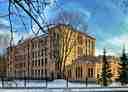
To spot the University of Łódź, look for a grand, peach-colored building with tall, narrow windows and a graceful dome rising on the left, framed by slender trees and a black iron…Lire plusAfficher moins
To spot the University of Łódź, look for a grand, peach-colored building with tall, narrow windows and a graceful dome rising on the left, framed by slender trees and a black iron fence-it's hard to miss, especially with its stately size! Alright, let’s set the scene! Imagine you’re standing in front of this impressive building, maybe brushing a little snow from your jacket or feeling the sun bouncing off the soft peach walls. Now, let’s rewind all the way to 1945-a moment when the world was piecing itself back together after World War II. Łódź, not far from the heart of Poland, was bursting with people, many of them students and professors who were looking for hope and knowledge after the devastation of war. And right here, on this very spot, the city’s thinkers decided to plant the seeds for a new future-by founding the University of Łódź. But before this university came to be, three other schools called Łódź home: a Teacher Training Institute, a Higher School of Social and Economic Sciences, and a local branch of the Free Polish University. When the dust of war settled, and Warsaw was left in ruins, professors and students poured into Łódź, asking, “What next?” The answer was bold: to unite these schools and form one grand university. It was a bit like combining all your favorite ice cream flavors into one sundae-only instead of sprinkles, it came with hope and ambition! During its first year, the university admitted over 7,000 students-a sea of bright faces and nervous chatter in the newly rebuilt halls. The schools grew quickly, splitting and multiplying until they reached a dozen bustling faculties. Imagine students from all walks of life (with equally wild hairstyles, I bet) rushing through the corridors, trying to find their classrooms before the bell rang. And the treasures didn’t stop at the classrooms. Just think-hidden within the walls of this university is one of Central Europe’s biggest and most modern academic libraries, overflowing with three million books! That’s right, three million. If you tried to read day and night without stopping, you’d still never get through the whole collection. Not to mention the self-checkout machines-there’s probably more beeping from library cards than from the local supermarket! The University of Łódź is not just a local giant-oh no! With 25,000+ students and 2,600 teachers, it’s like a small city all on its own, buzzing day and night. And thanks to its hundreds of global partnerships, you could run into students from Texas or Toulouse, Lyon or Finland, maybe even find someone with a dual diploma who can say “hello” in five languages before you finish your coffee. Their international connections mean you never quite know who you might meet in the cafeteria. That’s how far Łódź has come since the days of rebuilding-just imagine what the founders would think if they could see it now. Speaking of trailblazers, some serious legends have walked these halls. There’s Jerzy Jarniewicz, a poet and winner of Poland’s top literary prize. Or Władysław Pasikowski, the visionary behind films like “Pigs” and “Aftermath.” And don’t forget the musicians, politicians, UFC fighters, and TV journalists-all united by the lessons they learned here. But it’s not just about the famous faces or top rankings in law and economics. The real heart of the university lies in its energy. There’s a sense of curiosity that pulses through the stone and glass-maybe because it was quite literally built from the dreams and needs of people looking for second chances. Even now, more than seventy-five years later, students rush across the courtyard, lost in thought over tomorrow’s exam, or caught up in laughter outside the majestic library-a place where the spirit of discovery never slept. So as you look up at the gentle dome and the tall windows soaking up the sunlight, remember-you’re standing in front of a beacon that has seen the city of Łódź through some of its darkest and brightest days. If these walls could talk, they’d probably quiz you on Polish history or at least ask you to borrow a book. And who knows-maybe you’ll leave inspired to write the next chapter yourself. If you're keen on discovering more about the rankings, library or the international cooperation, head down to the chat section and engage with me.
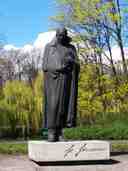
Ouvrir la page dédiée →To spot the Monument to Stanisław Staszic, look ahead for a tall, bronze figure in a sweeping robe standing on a stone pedestal, with leafy park trees behind it. Now, picture…Lire plusAfficher moins
To spot the Monument to Stanisław Staszic, look ahead for a tall, bronze figure in a sweeping robe standing on a stone pedestal, with leafy park trees behind it. Now, picture yourself in the peaceful Park imienia Stanisława Staszica-sunlight filtering through the leaves, a gentle breeze in the air, and right in front of you stands the dignified figure of Stanisław Staszic. But if you’d been here during World War II, you’d have heard only the as the original monument was destroyed by the German occupiers. Years passed, and it was just an empty space, as if the park was holding its breath, waiting for Staszic to return. But don’t worry, this story gets a twist-along came Jerzy Jabłkiewicz, brimming with ideas and determined to restore the city’s pride. After much effort, and with organizations all chipping in (they say it cost a whopping 12 million złoty, which probably would’ve kept even Staszic awake at night), the new monument was unveiled in 1984. Imagine a chorus of voices, the crackle of microphones, and a little applause as President Józef Niewiadomski and others celebrated the occasion. Standing at 4.5 meters tall and cast from bronze in Łódź’s own fire equipment factory, Staszic has watched over this park since then, a silent guardian and a reminder that even when history tries to erase us, determination and a bit of teamwork can bring us back-taller, shinier, and maybe a little more dramatic than before!
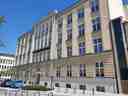
Ouvrir la page dédiée →To spot the Department of German Studies, look for a tall, cream-colored building with rows of big windows and a central entrance framed by a pair of sturdy columns-right ahead of…Lire plusAfficher moins
To spot the Department of German Studies, look for a tall, cream-colored building with rows of big windows and a central entrance framed by a pair of sturdy columns-right ahead of you. Alright, you’ve found a place full of stories and a dash of academic energy! Imagine walking into a building that’s been buzzing with the sounds of German history, politics, and culture since 1993. The Department of German Studies at the University of Łódź was born on a chilly February day, but trust me, things have been heating up ever since. At first, the only folks who got to crack the mysterious code of German studies were part-time students, sneaking in for classes after work. But by 2003, full-time magicians-oops, I mean students-began weaving their way through five-year programs, making sense of everything from dramatic history to the fine art of media and philosophy. Now, picture a team of researchers, heads bent over curious documents, driven by the need to understand Germany, Austria, and Switzerland-not just through dry textbooks, but by digging deep into their language, laws, and even their odd breakfast habits! In fact, since 2006, the Department has published its own weighty journal, and there’s even a periodical inspired by a famous translator, where every page is a ticket to another intellectual mystery. Can you imagine the passionate debates, the late-night ideas, and maybe just a little too much strong coffee? If these walls could talk, they’d probably say “Guten Tag!”-and invite you in for a good story.
Ouvrir la page dédiée →
Afficher 9 arrêts de plusAfficher moins d'arrêtsexpand_moreexpand_less
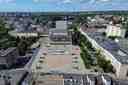
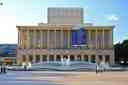
Up ahead, you’ll spot a large open square with a wave-shaped fountain right in the middle-just look for the broad plaza and the Grand Theatre rising on the far side! Welcome to…Lire plusAfficher moins
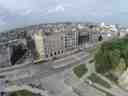
Up ahead, you’ll spot a large open square with a wave-shaped fountain right in the middle-just look for the broad plaza and the Grand Theatre rising on the far side! Welcome to Henryk Dąbrowski Square! Imagine standing here back in the 1800s, when this whole place echoed with the shouts of workers and the clatter of horse-drawn carts from the brick factory that used to be nearby. If you had brought your shopping basket, you might have left with a fresh, dusty brick or two! Over time, as Łódź began to grow, the square shed its dusty past. Mansions started to pop up along the edges and a city park was carefully laid out-much fancier than mud puddles, don’t you think? By the 1920s and ’30s, the city had plans to turn this area into a truly grand centerpiece-think stylish new buildings, with the impressive courthouse at your right taking pride of place. With that, park benches and electric lights arrived, replacing the old flickering gas lamps. And then came one of Łódź's crowning jewels: in 1966, the massive Grand Theatre landed here like a big block of culture. But the story doesn't end there! If you close your eyes today and listen carefully, you’ll probably hear the rumble of trams and buses swooshing past-this spot is one of Łódź’s busiest hubs. And right where you’re standing, the star attraction is that glimmering fountain shaped like a gentle wave, designed by Rafał Szrajber. During its unveiling in 2009, crowds packed the square to marvel at water and light dancing together-a show worthy of its theatrical neighbor. The first big event here after the renovation wasn’t a play or a concert, but a moving musical performance called “Seven Gates of Jerusalem,” filling the square with emotion and wowed faces. As the city dreams up further changes, you’re standing in the midst of Łódź’s living history, where bricks once sold have been replaced by watery waves, music, and the pulse of the city itself.
Ouvrir la page dédiée →Look for a tall, cream-colored building with impressive columns right in front of you, and a fountain bubbling in the plaza-it's hard to miss! Welcome to the Grand Theatre of…Lire plusAfficher moins
Look for a tall, cream-colored building with impressive columns right in front of you, and a fountain bubbling in the plaza-it's hard to miss! Welcome to the Grand Theatre of Łódź, the city’s own giant of the stage! Imagine yourself surrounded by the excitement of opening night in 1967, when this masterpiece first opened its doors. The Grand Theatre isn’t just big-it’s massive, with space for over one thousand people to sit, gasp, and cheer. If you listen carefully, you might hear the echo of applause bouncing off these stone columns. Here, music legends and dazzling performers have brought stories to life, from the magic of Mozart to the drama of Verdi and even some modern surprises! Some of the world’s most famous voices-like Andrea Bocelli and Plácido Domingo-have actually sung right here, probably hitting notes that made the walls vibrate. More than an opera house, this place hosts sparkling New Year Balls, twirling fashion shows, and the city’s famous Camerimage film festival, where movie magic spills right out onto the square. So, as you stand here and feel the cool mist from the fountain, imagine the velvet curtains lifting, the orchestra warming up, and a whole world of music waiting on the other side. In Łódź, this building truly is where the magic happens!
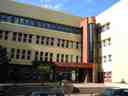
Ouvrir la page dédiée →To spot the Street of the Polish Military Organization, look for a modern, cream-and-yellow building with rows of wide windows and a bold entrance marked by a red-brown sign for…Lire plusAfficher moins
To spot the Street of the Polish Military Organization, look for a modern, cream-and-yellow building with rows of wide windows and a bold entrance marked by a red-brown sign for the Faculty of Economics and Sociology - it’s right at your eye level! Now, as you stand here, take a moment to listen to the city around you - the distant hum of trams, students chattering, the rhythm of footsteps echoing off the concrete. You’re right in the heart of Łódź’s Śródmieście, where history lives quietly in the names and buildings, blending past and present on a street only 620 meters long but full of stories. Imagine, a hundred years ago, this wasn’t always called the Street of the Polish Military Organization. Originally, it was Skwerowa Street, and over time, its name has changed like costumes at a masquerade ball! In the 1930s, it took on its current heroic name, honoring a secret Polish military group formed by Józef Piłsudski back in 1914. Picture a team of undercover patriots sneaking through dark alleys and passing coded messages, all to fight Russian soldiers and win freedom for Poland. Who knew street names could have such suspense and adventure built in? But wait, the drama continues! During World War II, as if someone wanted to erase its Polish spirit, the Germans called it Kärtatschenstraße. Later, under the Polish People's Republic, it was renamed Armii Ludowej Street. Only in 1990 did it return to being the Street of the Polish Military Organization - talk about reclaiming your true identity! Take a look around and you’ll see university students hustling into one of Łódź’s biggest faculty buildings, the Faculty of Economics and Sociology. Trams now glide through here thanks to the new tracks built just for the bustling new city center and busy Łódź Fabryczna station at the end of the street. This little street may be short, but it’s more than a shortcut - it’s a living tribute to the secret heroes of the past, and a busy artery for today’s city life. Welcome to the crossroads of courage and modernity - and mind your step, or you’ll end up swept into the next chapter of Łódź’s history!
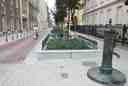
Ouvrir la page dédiée →Grzegorz Piramowicz Street is a cozy, short stretch just ahead, easily spotted by its old-fashioned iron water pump and neat rows of young trees in fenced garden beds nestled…Lire plusAfficher moins
Grzegorz Piramowicz Street is a cozy, short stretch just ahead, easily spotted by its old-fashioned iron water pump and neat rows of young trees in fenced garden beds nestled between elegant historic buildings. Welcome to Grzegorz Piramowicz Street! If you blink, you might miss it-it’s just under 230 meters long, but this street squeezes more character into its short span than a suitcase stuffed for a two-month holiday. Close your eyes for a second and imagine the sound of footsteps echoing gently on the red brick surface, a reminder of the clinker paving laid down back in 1937. Once upon a time, before 1915, this street went by names like Olgińska and Olgi, only to be dressed up as Olgastrasse during World War I. She changed names more often than a spy on the run-Pulvergasse in WWII, then finally finding her true identity in 1945 as Grzegorz Piramowicz Street. You might hear folks call it a “miniature Łódź,” since you can spot grand old tenements, pieces of history, and even the golden-domed Orthodox Church of St. Olga, which lent its name to the street so many years ago. Over the years, the buildings had facelifts, trees sprouted, and the old water pump has seen decades of hands. Soak in the romance and curiosity of this little slice of Łódź, a place where every stone seems to have a tale, and every name change was just a new chapter in the city’s bustling story.
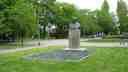
Ouvrir la page dédiée →Just ahead, look for a tall stone pedestal crowned with a stern-faced bronze bust, surrounded by a vibrant bed of purple flowers right in the middle of the park’s…Lire plusAfficher moins
Just ahead, look for a tall stone pedestal crowned with a stern-faced bronze bust, surrounded by a vibrant bed of purple flowers right in the middle of the park’s greenery. Imagine you’re here in 1963-men in suits, women in bright dresses, the park alive with excitement as the townspeople gathered to unveil their latest hero. The air is thick with anticipation, everyone whispering stories about Stanisław Moniuszko, the legendary composer whose melodies once echoed across Poland like secrets carried on the wind. Suddenly, the cloth is pulled away, revealing Moniuszko-cast forever in bronze, peering down at future generations. But here’s a secret: this monument wasn’t raised by some distant government official, but by the people of Łódź themselves! The artists, Elwira and Jerzy Mazurczyk, poured passion into every detail, making sure Stanisław stood proud, as if listening to the chatter of the park. If you listen closely, maybe you can still hear a faint tune floating through the air, as if Moniuszko's music was sneaking up behind you for a quick musical prank. And remember, in this park that bears his name, history isn’t just something you read-it’s something that hums and laughs around you, inviting you in.
Ouvrir la page dédiée →Look for a magnificent building with striped walls and a shining blue-and-gold dome topped with a golden cross-just ahead on your right! Standing before you is the spectacular…Lire plusAfficher moins
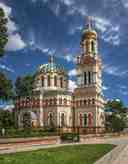
Look for a magnificent building with striped walls and a shining blue-and-gold dome topped with a golden cross-just ahead on your right! Standing before you is the spectacular Alexander Nevsky Cathedral, rising like a colorful crown in Łódź. Let’s set the scene: It’s the late 1800s, and the city is buzzing-not with tourists, but with textile factory workers and business owners, each from different walks of life. Imagine the clinking of coins as Łódź’s wealthiest residents, whether Jewish, Catholic, or Protestant, come together to donate for a brand new Orthodox church. Why? Well, the Orthodox community here was small, but they wanted to remind everyone that unity could build amazing things-even under the watchful eye of foreign empires controlling Poland. Here’s the twist: This cathedral was built in the Neo-Byzantine style, with its octagonal shape, regal domes, and stained glass shining like gems in the sun. If you step inside, you’d see an oak iconostasis, made in distant St. Petersburg, so dazzling it might make your jaw drop-no kidding! It was consecrated in 1884 amid bells ringing and priests chanting, sealing its place in Łódź’s story. And thanks to the generosity of Izrael Poznański, even the church’s elegant fence and magical icon screen have their own fairy-tale charm. So take a moment-look up, and let yourself imagine the secrets this golden, sparkling treasure has watched over for more than a century.
Ouvrir la page dédiée →To spot Jana Kilińskiego Street, just look straight ahead for a long, wide street stretching into the distance, lined with impressive, historic tenement buildings and crisscrossed…Lire plusAfficher moins
To spot Jana Kilińskiego Street, just look straight ahead for a long, wide street stretching into the distance, lined with impressive, historic tenement buildings and crisscrossed by tram tracks. Alright, welcome to Jana Kilińskiego Street! If you take a deep breath, you might just smell a whiff of old-timey textile dust in the air-this street practically stitches together centuries of Łódź history. Imagine it: back in the 1820s, this wasn’t the bustling city artery you see today, but the spine of a tiny industrial settlement, where the rhythmic clatter of looms filled the air as linen and cotton weavers set up their new lives. Originally it was called Widzewska Street-quite catchy, right? But around 1920, it got the name you see today, honoring Jan Kiliński, a shoemaker-turned-hero, whose legendary courage during Poland’s uprisings made him a local superstar, the kind of guy you’d trust to guard your last pair of socks. As industries boomed in the late 1800s, trains from Koluszki would chug to the end of this very street, unloading heaps of fluffy cotton and carting out fine fabrics destined for the Russian Empire. Picture workers hustling and bustling, carts bumping over cobbles, the buzz of commerce everywhere. The city’s first major tram lines were laid here-an event so momentous that Łódź’s very first tram depot sat nearby on Tramwajowa Street, making this stretch the original “power lane” for those who wanted to go places-literally! If you listen closely, you might hear an echo of tambourines or the hum of a choir, because this street is lined with cultural gems that would make any music lover swoon. There’s the majestic Alexander Nevsky Cathedral not far from where you’re standing, and if you peek down side streets, you’ll find parks named for Poland’s greatest composers and writers, like Stanisław Moniuszko and Henryk Sienkiewicz. Then there’s the proud Hotel Polonia, once the most exclusive address in Łódź, and the stately Main Post Office, a place where you’d hope your love letters would arrive on time. During the Second World War, this place looked very different. The street was renamed Buschlinie under German occupation-Łódź itself fell under a thick, fearful hush, and every familiar sign seemed turned inside out. But when the city was liberated, the old name triumphantly returned, as if the spirit of Jan Kiliński himself had marched back and demanded his street with a stomp of his boot. The old tram depot at number 245 is still standing-no longer housing rattling streetcars, but holding onto whispers of all the conductors and ticket-punchers who once called it home. And did you know overflowing with history also means spiritual diversity? The street was once dotted with synagogues, serving Łódź’s vibrant Jewish community. It’s as if every stone and window frame here has a secret to tell you. So, as you stand on Jana Kilińskiego Street, try to imagine the sights, the sounds, and the sheer energy of each decade passing by, all layered into this one endlessly fascinating place. And be sure to look both ways-you never know if a tram, a memory, or even a heroic shoemaker might be coming around the corner.
Ouvrir la page dédiée →Look just ahead for a long, modern avenue running parallel to the bold, sweeping roof of the Łódź Fabryczna railway station, right where trams and buses mingle under glass…Lire plusAfficher moins
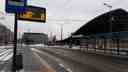
Look just ahead for a long, modern avenue running parallel to the bold, sweeping roof of the Łódź Fabryczna railway station, right where trams and buses mingle under glass canopies. Welcome to the Poznański Family Avenue! Now, don’t let the modern look fool you-if these glass shelters and tram tracks could talk, they’d spin tales of transformation and a teeny bit of neighborhood rivalry. Picture yourself not so long ago, wandering down an unfinished path called “Nowoskładowa.” It was more construction site than city stroll, the scent of fresh pavement hanging in the air, the whole place buzzing like an over-caffeinated bee hive as workers rushed to finish in time for the grand reopening of Łódź Fabryczna after a five-year hibernation. You’re standing on what became a key artery in the city’s heart: about 600 meters of urban renewal, opened to the public in December 2016. The Pow, the clang, the little puffs of bus exhaust-this avenue has seen a parade of city life, especially since it links straight to a maze of tram and bus lines. Trams slice through here with numbers like 4, 9A, 12, and 18, zipping between distant neighborhoods, while buses trundle off to places like Skotniki or Marysin Stadion. And let’s not forget those late-night wanderers, catching night lines N7 and N8, maybe hungry for a midnight snack or a little more adventure. Yet, in true Łódź fashion, naming this avenue caused some drama in City Hall. Folks wanted to pay homage to the grand industrialist Izrael Poznański, but getting his name “officially” on this avenue proved harder than finding your socks after a night tram ride. The city council couldn’t quite agree, so now the street honors the entire Poznański family instead-talk about sharing the spotlight. So as trams hum and snow crunches underfoot, imagine the voices of the past mingling with present-day commuters-everyone moving together, carried forward by a city always in motion. And if you listen closely, maybe even the Poznańskis themselves are whispering, “Ride on!”
Ouvrir la page dédiée →In front of you is Bronisław Sałaciński Square, a wide open space with bright street lamps and a striking, futuristic glass-and-steel entrance to the Łódź Fabryczna train…Lire plusAfficher moins
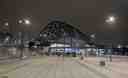
In front of you is Bronisław Sałaciński Square, a wide open space with bright street lamps and a striking, futuristic glass-and-steel entrance to the Łódź Fabryczna train station-just follow the broad, tiled plaza toward the large, arched structure straight ahead. Now, let me pull you back in time, right here where the city hums with buses, footsteps, and modern lights. Imagine it’s 1918. The old Łódź Fabryczna station looms where the new glass giant now stands, and it’s buzzing with tension: Poland’s fighting for freedom, and every shadow holds a secret. Among the crowd is a 19-year-old named Bronisław Sałaciński, not much older than some students you might see today rushing for a train. On November 11th-a day thick with fog, cold, and danger-Bronisław is caught up in a bold attack led by the Polish Military Organization, trying to push the occupying German soldiers out of the station. Bullets scream, and Bronisław is shot in the leg. And as if things couldn’t get any worse, he’s captured and killed just minutes later-tragically, a hero’s end with no chance for a dramatic Hollywood rescue. The city, never one to forget its brave, named this square after him in 1993. For years, buses and busy people crisscrossed here, and today, his memory greets everyone entering the heart of modern Łódź. So next time you hurry over these stones, remember-the ground beneath your feet holds stories of courage, loss, and the hope of a free Poland. Even now, you stand where history refuses to stay silent!
Ouvrir la page dédiée →
Foire aux questions
Comment commencer le tour ?
Après l'achat, téléchargez l'application AudaTours et entrez votre code de réduction. Le tour sera prêt à commencer immédiatement - il suffit d'appuyer sur lecture et de suivre l'itinéraire guidé par GPS.
Ai-je besoin d'Internet pendant le tour ?
Non ! Téléchargez le tour avant de commencer et profitez-en pleinement hors ligne. Seule la fonction de chat nécessite Internet. Nous recommandons de télécharger en WiFi pour économiser vos données mobiles.
S'agit-il d'une visite de groupe guidée ?
Non - il s'agit d'un audioguide en autonomie. Vous explorez indépendamment à votre propre rythme, avec une narration audio diffusée par votre téléphone. Pas de guide, pas de groupe, pas d'horaire.
Combien de temps dure le tour ?
La plupart des tours durent entre 60 et 90 minutes, mais vous contrôlez totalement le rythme. Faites des pauses, sautez des arrêts ou arrêtez-vous quand vous le voulez.
Et si je ne peux pas finir le tour aujourd'hui ?
Pas de problème ! Les tours disposent d'un accès à vie. Faites une pause et reprenez quand vous le souhaitez - demain, la semaine prochaine ou l'année prochaine. Votre progression est sauvegardée.
Quelles sont les langues disponibles ?
Tous les tours sont disponibles dans plus de 50 langues. Sélectionnez votre langue préférée lors de l'utilisation de votre code. Note : la langue ne peut pas être changée après la génération du tour.
Où accéder au tour après l'achat ?
Téléchargez l'application gratuite AudaTours sur l'App Store ou Google Play. Entrez votre code de réduction (envoyé par e-mail) et le tour apparaîtra dans votre bibliothèque, prêt à être téléchargé et commencé.
Si vous n'appréciez pas le tour, nous vous rembourserons votre achat. Contactez-nous à [email protected]
Paiement sécurisé avec 


