
Visite audio de Legnica : Chevaliers, légendes et échos de la dynastie Piast
Un aigle royal se percha autrefois sur la plus haute tour de Legnica, observant des siècles de secrets se dérouler en contrebas. Dans son ombre, les souverains complotaient, les amants se cachaient et les rebelles se levaient. Ce n'est pas seulement une ville de briques et de pierres, c'est un labyrinthe vivant d'histoires cachées. Explorez Legnica à votre rythme avec cette visite audio autoguidée, découvrant des recoins et des histoires que la plupart des voyageurs manquent. Les murmures de la carte résonnent des murs de la cathédrale et des chambres du château. Qui a conspiré sous les arches anciennes du château Piast alors que le pouvoir changeait du jour au lendemain ? Quel signe étrange hantait autrefois les vitraux de la cathédrale des Saints Pierre et Paul ? Un voleur oublié a-t-il vraiment cherché refuge à l'église de la Vierge Marie pour un seul calice d'or ? Traversez le cœur de Legnica alors que le drame de son passé prend vie rue par rue. Chaque pas à travers les secrets de la ville apporte une nouvelle perspective sur l'histoire. Faites le premier pas et laissez Legnica révéler ce que l'aigle a observé.
Aperçu du tour
À propos de ce tour
- scheduleDurée 40–60 minsAllez à votre propre rythme
- straightenParcours à pied de 3.6 kmSuivez le sentier guidé
- location_on
- wifi_offFonctionne hors ligneTéléchargez une fois, utilisez n'importe où
- all_inclusiveAccès à vieRéécoutez n'importe quand, pour toujours
- location_onCommence à Liegnitz Ritter-Akademie
Arrêts de ce tour
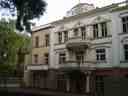
To spot the Liegnitz Ritter-Akademie, look for a grand baroque building stretching along the cobbled street, with eye-catching yellow and white columns, large windows, and statues…Lire plusAfficher moins
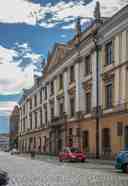
To spot the Liegnitz Ritter-Akademie, look for a grand baroque building stretching along the cobbled street, with eye-catching yellow and white columns, large windows, and statues standing regally atop the roofline. Welcome to the legendary Liegnitz Ritter-Akademie! If these walls could talk, they’d probably ask for a powdered wig and recite Latin poetry. Imagine stepping into the early 1700s: the air smells faintly of waxed wood and old parchment, and fancy carriages rumble up to these doors. This was the top school for Silesia’s young nobles, dreamed up by Duke George Rudolf, who left a hefty fortune to educate Protestant boys-only to see his dream hijacked by the Habsburg emperor in a titanic struggle between religions, armies, and the fate of the region. After years of drama, the Treaty of Altranstädt finally cracked open the vault and, at last, this academy was built between 1726 and 1738, designed by the famous Joseph Emanuel Fischer von Erlach. Picture boys in crisp blue and yellow uniforms bustling about, books in hand, but no swords-sorry, swashbucklers! The academy boasted a staff that read like a who’s who of Enlightenment thinkers, with scholars, historians, and even a mineralogist among its teachers. By 1809, though, the classrooms echoed with more crickets than chatter-only seven students remained, bravely outnumbered by the janitors. Later, when the academy let in non-nobles, the place thrived, bustling all the way to 1945. Then came another plot twist: after World War II, Soviet boots and officers’ barked commands echoed through these halls, as the Northern Group of Forces set up headquarters here. Only in 1992 did this building breathe freely again, eventually being restored to its former glory. So take a moment to imagine it all-the midnight secrets, the brilliant lessons, and a few ghostly laughs from centuries of change. Isn’t history grand?
Ouvrir la page dédiée →To spot the Church of St. John the Baptist in Legnica, look for the tall, grand building with two impressive towers and an ornate baroque facade directly in front of you-it really…Lire plusAfficher moins
To spot the Church of St. John the Baptist in Legnica, look for the tall, grand building with two impressive towers and an ornate baroque facade directly in front of you-it really stands out! Now, step closer and imagine yourself whisked back through centuries of Legnica’s bustling streets and echoing bells. The story of this magnificent church begins all the way back when Kazimierz the Restorer ruled the land-so that’s really old! Picture monks in brown robes wandering here in 1284, as the Franciscans made this place their home. By 1294, the church was made of sturdy brick, thanks to the support of Duke Henry the Fat-a nickname that brings a whole new meaning to “big supporter!” As the years rolled on, the church grew larger, with Duke Wacław’s help in 1341. The plot thickens: in the 1500s, the building changed hands faster than a hot potato! First, Protestants took over in 1522. By 1548, the church became the place for royal burials, with noble coffins and grand tombstones carried here from other doomed churches around Legnica. For a while, it became a Calvinist church-because the last Silesian Piasts decided to change team colors! Princess Ludwika, not wanting to be outdone, transformed the presbytery into a family mausoleum in the late 1670s. Now, just when everyone thought things had settled, along came the Jesuits in the Counter-Reformation. They built their college next door, and in the early 1700s, the old church was mostly torn down-except for that precious mausoleum. The new, grand church was finished in 1727, just in time for disaster to strike! In 1744, the roof and nave came crashing down--after some architect skipped their homework. The church sprang back to life in the 19th century, surviving fires, wars, and renovations. Step inside today, and you’ll find a vast hall lined with chapels, a majestic 19th-century altar, baroque details, and echoes of the Piast princes in the mausoleum, where secrets from centuries past whisper along the walls. This church is a survivor-with as many comebacks as a soap opera star!
Ouvrir la page dédiée →
Afficher 10 arrêts de plusAfficher moins d'arrêtsexpand_moreexpand_less
To spot the Duchy of Legnica, look for a large swath of land on this historical map stretching across the center left, marked as “Legnica,” often highlighted in a rich orange…Lire plusAfficher moins
To spot the Duchy of Legnica, look for a large swath of land on this historical map stretching across the center left, marked as “Legnica,” often highlighted in a rich orange color surrounded by other duchies-if you look just south of the bright green “Krosno” and slightly west from “Wrocław,” you’ll find its borders boldly claimed. Now imagine yourself standing on the lively ground where once, nearly 800 years ago, the fate of empires and dynasties was shaped. The air almost buzzes with old secrets, as if you can hear distant hoofbeats and the clang of armor. This is the heart of the old Duchy of Legnica-a spot that saw almost as many plot twists as your favorite TV show, but with even more crowns and less Wi-Fi. The story begins in the year 1248, when Poland, much like a cake at a birthday party, was being split into smaller pieces. The Duchy of Legnica came out of this great division, ruled by the Piast family, a dynasty that seemed to specialize in two things: having sons with unforgettable nicknames (like Bolesław the Bald), and fighting over territory. They ruled here until 1675, which, even if you aren’t a history buff, you’ll agree is a pretty solid run! Step back further, and you’ll find Legnica Castle, which had already been a comfy seat for dukes since 1163-talk about a family with a long commute to work. But the real drama unfolds in 1241 during the legendary Battle of Legnica. Imagine this very landscape filled with the colors and chaos of a vast army-the Christian knights, Polish nobles, grizzled Bavarian miners, and even crusader orders-all united under Henry II the Pious. Their mission? Stop the Mongol horde. The clash was fierce! Henry was killed, his side defeated, but the Mongols soon turned back-rumor has it they had to go home for a very important meeting (the death of their Grand Khan). If that isn’t the medieval version of “I have to take this call,” I don’t know what is. If you’re here in April, you might catch the small celebrations the locals host to remember this wild moment in European history. Curious about how rulers managed all this chaos? After Henry’s untimely exit, his son Bolesław II the Bald took over, but family drama quickly followed. Brothers squabbled, duchies were carved up, and at one point Legnica even scored some extra towns like Środa Śląska and Strzegom. If anyone’s ever argued over the TV remote in your house, you’ll appreciate this level of royal sibling rivalry. Later, when Henry V the Fat (yes, that was his real nickname-clearly, salad wasn’t invented yet) took the reins, he actually managed to expand the duchy, briefly reuniting it with Wrocław. But, as with all good things, unity didn’t last! The duchy split again, with Bolesław III the Generous (whose money management skills left much to be desired) in the hot seat, with his brothers waiting in the wings. Legnica, by now an important city with 16,000 folks dreaming of fame or just a bit of gold, grew quickly, and even became a center for mining during a local gold rush. Next chapter: Legnica’s fortunes got tangled with big European powers. The Piast line here became a vassal to mighty Bohemia, and the city was frequently a pawn in the grand chess game of European politics. Along came the Protestant Reformation early in the 1500s, which turned Legnica into a Lutheran stronghold, causing more than a few heated sermons over dinner. The Habsburg monarchy, however, was determined to keep things Catholic, and the resulting tug-of-war saw more legal squabbles than a modern soap opera. When the ruling Piast line fizzled out in 1675 with Duke George William, Legnica landed under the rule of the Habsburgs, sparking even more inheritance disputes. Prussia, watching from the sidelines, finally used one of these age-old arguments as their excuse to march in and take over (because, after all, who doesn’t love a good old-fashioned family feud?). So as you stand here, let your mind wander: armies clashing, dukes scheming, and the march of centuries echoing beneath your feet. Who knew that the quiet ground under your shoes once carried the weight of empires? Rumor has it, if you listen closely, you can still hear the distant laughter of Bolesław the Bald... or maybe that’s just the wind!
Ouvrir la page dédiée →To spot the Market Square in Legnica, just look ahead for a wide, open space surrounded by colorful old townhouses on one side, newer blocks on the other, and the impressive…Lire plusAfficher moins
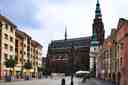
To spot the Market Square in Legnica, just look ahead for a wide, open space surrounded by colorful old townhouses on one side, newer blocks on the other, and the impressive red-brick cathedral towering in the background. Now, let’s take a time-traveling stroll through this rectangular Market Square-a place that’s seen more drama than a soap opera! Imagine the clash of centuries as you wander between the grand, Renaissance-style Herring Houses with their decorative facades and the proud, old-school Modrzejewska Theatre right at the heart, still strutting its stuff since 1840. Just picture yourself dodging merchants, soldiers, and the occasional knight, because for hundreds of years, this was the vibrant center of Legnica’s Old Town. The air would buzz with lively market chatter, and every street-from Złotoryjska to the tongue-twisting Najświętszej Marii Panny-funneled the city’s lifeblood in and out of this square. Crazy fact: Despite being heavily damaged during the war, the center hung on to its heritage, keeping its historical gems intact. What do octopuses and fountains have in common? Both can be found here! Look out for the baroque Neptune fountain from 1731, keeping the market watered (and maybe causing a splashy scandal or two). And if you’re thirsty for more history, the quirky “House Under the Quail Basket” sports 16th-century sgraffito rarely seen elsewhere. Keep an ear out for stories in the walls-some of those pastel townhouses are centuries old, while the blocks from the 60s and 70s remind us that this square never stopped evolving. It’s a patchwork of Legnica’s soul: lively, quirky, and always full of surprises!
Ouvrir la page dédiée →Looking ahead, you’ll spot the Old Town Hall by its grand cream façade, bright red mansard roof, and the standout onion-shaped tower with a greenish spire rising above the busy…Lire plusAfficher moins
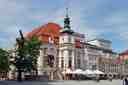
Looking ahead, you’ll spot the Old Town Hall by its grand cream façade, bright red mansard roof, and the standout onion-shaped tower with a greenish spire rising above the busy market square. Now, as you stand in front of this elegant baroque building, imagine Legnica in the 1700s-horse carts rattling across cobbles, townsfolk bustling below the same arched windows before you. This isn’t just a building-it’s a survivor! The very first town hall here was a simple wooden affair set up way back in the 1300s, thanks to the famously generous Duke Bolesław the Wasteful-who, by the way, really lived up to his name. But wooden buildings, as you might guess, aren’t exactly flame-proof, and after a few fiery disasters, the town leaders decided to build something sturdier. By 1741, Franz Michael Sheerhofer’s vision stood tall-a striking, three-winged baroque masterpiece with its external staircase spiraling up to welcome councilors inside. For nearly two centuries, this was the heartbeat of Legnica’s civic decisions, echoing with spirited debates and perhaps secret laughs about local politics (some things never change). But times move on, and by 1928, the Old Town Hall’s destiny took a dramatic turn-literally! It transformed into a theater, and today, it still pulses with creativity. Step close and you might just hear the faint whispers of actors reciting lines, hidden behind those grand doors, their voices mingling with echoes from centuries past. History here doesn't just sit quietly on a plaque-it takes the stage.
Ouvrir la page dédiée →To spot the Cathedral of Saints Peter and Paul, look for a towering, red-brick Gothic church crowned with spires and a grand entrance, dominating the square right in front of…Lire plusAfficher moins
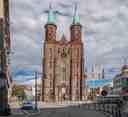
To spot the Cathedral of Saints Peter and Paul, look for a towering, red-brick Gothic church crowned with spires and a grand entrance, dominating the square right in front of you. Welcome to the majestic Cathedral of Saints Peter and Paul! Standing here, you’re face-to-face with Legnica's spiritual heart - a towering masterpiece of red bricks and soaring gothic spires that look like they could almost poke a hole in the sky. If churches were superheroes, this one would certainly wear a cape! Imagine standing here over 800 years ago, hearing the hustle and bustle of medieval traders and townsfolk because, fun fact, the city’s commercial life used to revolve around this very spot. The first whispers of the church echo back to 1208, but it only truly rose from the stone in the mid-1200s, just in time to face its first big test: the smoky chaos of the Mongol siege in 1241. Picture it - the sky darkened, flames licking at the stone, the mighty church nearly brought down. But just when you thought all hope was lost, Legnica rebuilt. By 1333, fresh stones and new dreams stacked up, and the current gothic cathedral began to rise. Legendary builders like Wiland and, later, Conrad from Krakow shaped its iconic portals - and you’ll find the rare scene of the Three Wise Men’s homage carved right onto the north entrance, a true medieval marvel. Fast forward to the 1400s, and the church got a glow-up: nine beautiful side chapels were added. The von der Heyde family chapel, with its star-shaped vaults from 1420, is particularly stunning. If these walls could talk, oh, the stories they’d share - tales of noble families, hopes, heartbreaks, and all the dramas of city life. In 1524, the sound of hymns changed as the Lutheran community took over. But trouble followed in 1648, when fire again roared through the cathedral, tearing its tower and clock to pieces, charring nearly everything inside. But like a feline with nine lives, the tower was rebuilt by 1651, and a new, proud clock marked the rhythm of the city once more. Time soldiers on! Over the centuries, the cathedral welcomed rich baroque touches - a gleaming new main altar and, in the late 19th century, a stunning neo-Gothic make-over thanks to a Berlin architect named Johannes Otzen. That’s when the twin towers you see today finally rose together, reaching upward with elegant symmetry. Step inside (at least in your mind for now), and you’ll find a treasure trove! The Apostles Peter and Paul stand in stone as timeless sentinels. A Renaissance pulpit, carved from dazzling white sandstone, marks its place thanks to swordsmith Alexander Eckstein and master sculptor Kasper Berger. Marvel at the golden baroque main altar, painted by Wrocław’s own Jan Henryk Kynast, or stop by the city council’s Renaissance choir stalls, topped with the Legnica coat of arms. Tucked in the chapels, the only medieval painting in the town, a sixteenth-century pentaptych, glimmers quietly. And don't trip over that enormous bronze baptismal font, dating back before 1300, complete with twelve biblical scenes - imagine the stories those waters have witnessed! Overhead, listen for the mighty organ, first installed in 1894, its pipes restored and echoed through the ages. And, if you’re very lucky (or very patient), you might hear the chimes of the cathedral’s bells. The newest carillon, gifted by a generous soul enamored with childhood memories, plays religious melodies just as it always has - except when, during World War II, the old bells were snatched to fuel the war effort. Of course, under your feet lies a solemn mystery: the crypts where priests, bishops, and noble citizens have found their final rest. Even Pope John Paul II paid a visit here in 1997. Today, the cathedral stands not only as a house of prayer but as the faithful keeper of Legnica’s story - full of fire, hope, and a chorus of bells that never quite fades. Eager to learn more about the interior, organ or the bells? Simply drop your inquiries in the chat section and I'll provide the details you need.
Ouvrir la page dédiée →To spot the New Town Hall, look for a grand, L-shaped building right in front of you, with a striking red roof, decorative gables, and a tall central tower topped by a small…Lire plusAfficher moins
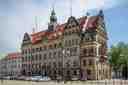
To spot the New Town Hall, look for a grand, L-shaped building right in front of you, with a striking red roof, decorative gables, and a tall central tower topped by a small spire. Now, take a deep breath and imagine yourself in Legnica at the turn of the 20th century-a time when the city was bustling with ambition and the old town hall just couldn’t keep up. So, what did Legnica do? It dreamed big! The people wanted a building to match their growing city, so in 1902, they called upon an architect with the impressive name of Paul Öhlmann to design this very structure before you. Imagine the clatter of horse-drawn carts and the buzz of excitement as this neo-Renaissance marvel slowly rose from the cobbles-five stories tall, L-shaped, with plans for two massive courtyards and a mighty tower, though, spoiler alert: the full grand design was never finished (money ran a little short-some things never change!). Take a closer look at the details-those sculpted knights on the loggia, showing off the city’s ties to Silesia, Legnica, and Prussia. The crest above, with two crossed keys, proclaims Legnica’s identity, while the Czech lion keeps a watchful eye. Today, the town hall is still the heart of city government, and since 1981, its decorative façades and echoing corridors have been protected as a historic monument. If walls could talk, these ones would probably demand a raise! So admire this quirky blend of unfinished dreams and neo-Renaissance glory-Legnica’s town hall stands proud, even if it was built on a budget!
Ouvrir la page dédiée →To spot the Legnica University of Management, look for a grand, cream-and-white building with elegant pillars and a balcony decorated with a balustrade, directly ahead of…Lire plusAfficher moins
To spot the Legnica University of Management, look for a grand, cream-and-white building with elegant pillars and a balcony decorated with a balustrade, directly ahead of you. Now, let’s step back in time to 1997. Imagine the city buzzing with excitement, as this very spot became home to a brand new university that would soon help shape the future of Legnica. The scent of fresh paint and crisp books filled the halls, while outside, the soft chatter of hopeful students echoed. Picture yourself here on opening day: students eager to learn about management, filling classrooms and small lecture halls, the air tingling with new possibilities. At first, Legnica University of Management was a bit like a clever child-small, but with big dreams. It started off specializing in management, but as the years rolled on, it grew into the largest higher education institution in the region. Did you know it has launched over 1,600 graduates out into the world? Some walked these sidewalks as economics experts, others as computer scientists, and some were even juggling blueprints and city plans for their studies in architecture and town planning. The university was always expanding, adding new courses in Transport and Computer Science in 2001, and then Sociology and Architecture in 2004-almost like discovering a new superpower each time. It’s not your average, run-of-the-mill school, either. Over 150 academic specialists teach here, with professors, doctors, and experts from Poland and beyond. If you listen very closely, you might even hear the clacking of keyboards from computer labs, or the soft rustle of turning pages in its library. But the magic of this university isn’t only in what happens inside these walls. It’s also in the connections it forges around the world. Imagine students and professors trading ideas with colleagues from Ukraine, Germany, Spain, and France. There’s even a partnership with the University of Pennsylvania in the United States, where they explore how leadership looks in different cultures-talk about an international flavor! In June 2004, you’d have seen a group of proud Polish graduates shaking hands and speaking a mix of Polish and French, thanks to a special partnership with a university in Dunkirk. The university’s ambitions are as grand as its facade, looking to offer PhDs and welcome students from all corners of Europe and beyond. So as you stand here, you’re not just seeing a building-you’re witnessing a place where future city leaders, architects, and innovative minds are made. Imagine the sights, the sounds, even that nervous excitement just before an interview or drawing exam. There’s mystery in wondering which student here today might one day run a company, build a city, or change the world.
Ouvrir la page dédiée →To spot the Church of the Virgin Mary in Legnica, just look ahead for a grand brick building with two tall, pointed towers capped in green; it stands right at the end of the…Lire plusAfficher moins
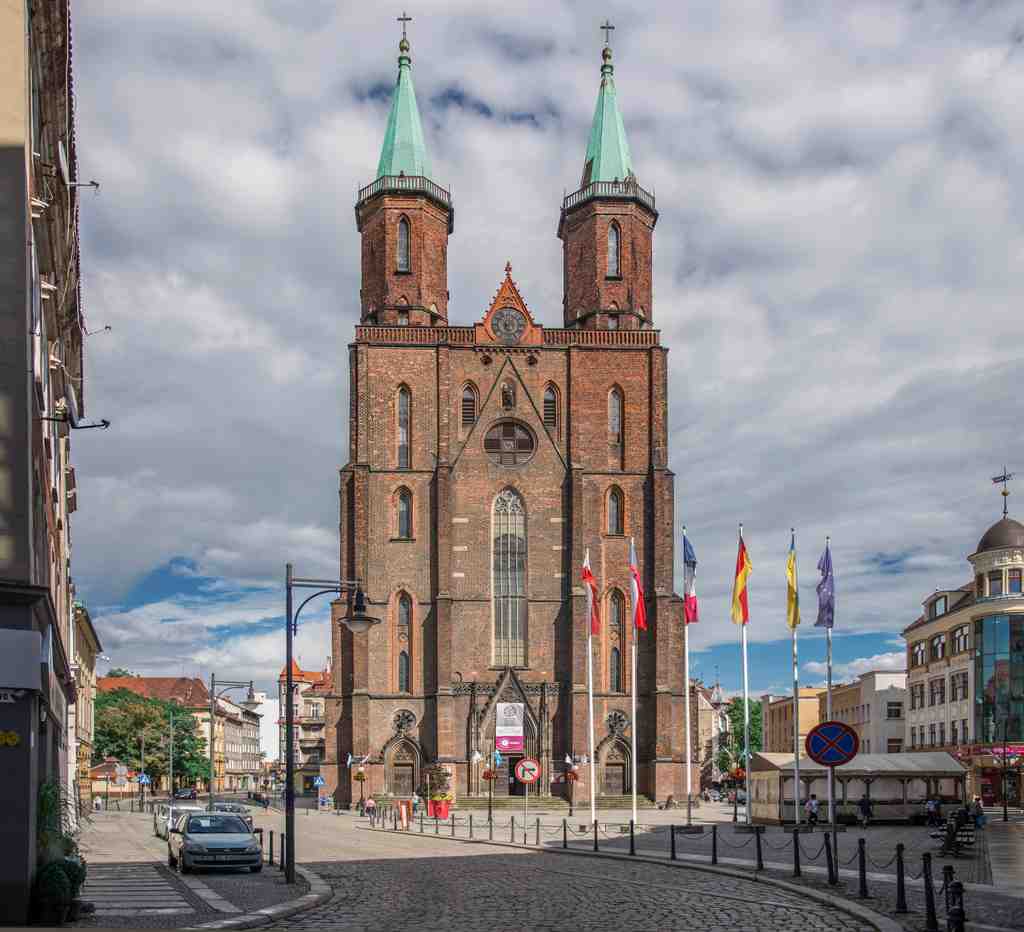
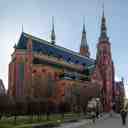
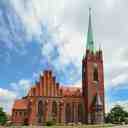
To spot the Church of the Virgin Mary in Legnica, just look ahead for a grand brick building with two tall, pointed towers capped in green; it stands right at the end of the street, towering above everything else around it. Now, as you’re standing here-look up! Can you imagine this spot nearly 900 years ago when the very first version of this church was just a simple wooden building, put together by order of Bolesław the Tall? Legends say even Saint Hedwig of Silesia stopped here to pray, and on an April morning in 1241, Henry the Pious is said to have knelt inside just before marching out to face the Mongols in a battle whose echo you can almost hear if you listen closely. Of course, this peaceful façade has had its fair share of drama. Picture flames crackling through the night-the whole church burned down in a terrible fire in 1338. But like a true legend, it rose from its ashes: rebuilt in stone, now with three sweeping aisles and, eventually, dual towers. If the towers don’t seem quite even to you, you’re not imagining things-one of them was given an octagonal top and balustrade in the 15th century, setting them apart like twins who can never quite agree on a hairstyle. Through the swirling centuries, the church experienced wars, Napoleonic soldiers turning its hall into a makeshift hospital, and even a lightning strike in 1822-kaboom! Down it all went, only to be rebuilt once more. This time, it got shiny new features like cross-ribbed vaults and side galleries; and in the early 1900s, state-of-the-art (for the time!) central heating and gas lighting. Fancy, right? In fact, this is the only church in Legnica that’s been serving the Evangelical faith without interruption since the Reformation. Imagine the bustling days of 1522, when Duke Frederick II brought in the first Protestant preacher, and the town heard the Word in German for the very first time. Thanks to Reformers like Caspar Schwenkfeld and a friendly local duke, the transition to Lutheranism was about as smooth as can be-no pitchforks, just peaceful hymns. Take a closer look at the building itself: made mostly of red brick, but with some splendid sandstone details around the edges and bases of the rooms. The design is classic-a huge, hall-like space with three aisles running the length of an elongated rectangle, capped by those proud towers you can't miss. The walls are dotted with old sandstones tombs; if stones could talk, these would spill all the secrets of Legnica’s past. Speaking of secrets, there’s a special reason for the church’s peculiar eastern arcade. Long ago, the little street beneath it was needed to help defend the city walls-a clever touch of medieval engineering! Step inside, if you get the chance. The main aisle is soaring, bright, and crowned by a ceiling of ribbed vaults. On the walls are geometric, almost Moorish patterns, painting the space in gentle pale colors. Iron candle sconces circle the sturdy columns, and if you look up, you’ll spot two grand sixteen-armed chandeliers-one donated back in 1621, the other a year later. Don’t miss the stained glass windows-fourteen of them, painted by master craftspeople. Every one tells a different tale: saints and apostles, Luther burning the papal bull, and historic scenes like Henry the Pious praying before battle or the first Protestant communion here. Even the benches are special: 114 of them, each one decorated with unique carvings. Bet you can’t find two that are exactly the same. And then there’s the organ! Music lovers take note: this church has had organs since 1414, with a succession of upgrades fit for almost any musical taste, from thunderous baroque to soft romantic whispers. Look for putti and angels on the organ loft, and the figure of King David, plucking a harp at the center. Despite centuries of fires, war, and even bugs trying to munch through the old wooden benches, the community here has always banded together-restoring everything from the roof to the foundations. There’s even a balcony on the southern tower now, open for visitors to gaze out over Legnica’s rooftops. So, as you stand here, surrounded by history, try to imagine all the footsteps, prayers, and stories that have echoed between these walls. The Church of the Virgin Mary in Legnica isn’t just one of the town’s oldest structures-it’s also one of its most tenacious survivors, always being pulled right back up after every fall. And just wait until you see those stained glass windows when the sun hits them-they practically put on a concert all their own! Intrigued by the architecture, interior of the church and equipment or the renovation? Explore further by joining me in the chat section below.
Ouvrir la page dédiée →Look for the impressive brick castle on your right, with two tall, round towers topped by striking red conical roofs-trust me, you can’t miss it, just follow the sun glinting off…Lire plusAfficher moins
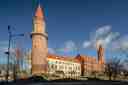
Look for the impressive brick castle on your right, with two tall, round towers topped by striking red conical roofs-trust me, you can’t miss it, just follow the sun glinting off those unmistakable red tiles! Now, let’s step back in time, because what you’re facing is not just any castle-this is the legendary Piast Castle in Legnica, one of the oldest castles in all of Poland. Imagine the air here swirling with secrets, the ground beneath your feet echoing with centuries of footsteps. Our tale begins long before these mighty brick walls even existed. Way back in the 8th century, this spot was surrounded by swampy lakes, rivers, and thick forests-perfect for building a hidden fortress. Local Slavic tribes built an early wooden stronghold here, turning Legnica into a stronghold and lookout point for everyone from traders to warriors. Fast forward to around the year 985. The first Piast rulers, including the famous Mieszko I, established a new fortress out of wood and earth-his version of “castle delivery” was ahead of its time. It was during this era that Legnica began its journey as a seat of power, a place where tax collectors kept the coin flowing and warriors kept nosy neighbors out. Picture the bustle: horses whinnying, merchants haggling, and the clang of armor and coin. But things got a big upgrade in the late 1100s. Bolesław I the Tall decided wooden walls were yesterday’s news, so he started building with stone. By the early 13th century, thanks to his son Henry the Bearded-yes, that was really his nickname-the castle became a massive stone fortress with thick defensive towers; the ones still towering above you now. Unfortunately, just a few years later, trouble brewed: a family feud erupted and in 1172, the castle was set ablaze in a dramatic episode worthy of a soap opera (but with more swords and less dialogue). Later, Henry the Bearded expanded the castle with a grand palace and a chapel, while his descendants added new walls, gates, and, of course, more towers to make sure no unwanted guests could sneak in. In 1241, Mongol armies swept across Europe, but the Piast Castle held strong. Imagine the tension in the air as citizens huddled behind thick stone, listening to battle cries and arrows whistling outside. Over the next centuries, the castle saw it all: feasting nobles, dramatic uprisings, epic weddings, and the odd royal visitor (including a Polish king or two and even Emperor Maximilian II). Every addition reflected the latest architectural trend-gothic, then Renaissance, then baroque, and finally, a little 19th-century flair! There’s even a dramatic story from the 1400s, when an angry mob stormed the castle and… well, let’s just say it wasn’t a great day to be the mayor. But not all tales here are royal or heroic-some are downright spooky. The castle’s twin towers, St. Jadwiga’s and Peter’s, became wrapped in legends. One tells of a not-so-honorable knight named Otto von Hohen, whose job was to feed a prisoner locked in the tower. Long story short, Otto spent all the food money on his own festivities, and tragedy struck when the prisoner died of hunger. The furious prince threw Otto into the tower with the poor man’s spirit for company-and let’s just say neither made it out for another round of drinks. They say on especially silent nights, if you listen hard, you might hear Otto’s ghost moaning through the ancient stone. And yet, despite fires, wars, and a near-total burning in 1945, the castle kept coming back-rebuilt, reshaped, and filled with people. These days, its halls are home to schools, libraries, and language workshops. Children’s laughter replaces the clash of steel, and learning fills the air instead of battle smoke. But take a closer look at those towers-Peter’s Tower is soon opening a viewing terrace, and the chapel foundations hold the memory of long-lost prayers. You’d almost expect to catch a royal wedding parade or a mysterious knight sneaking down the corridor. So, as you stand before the Piast Castle, know you’re looking at a place where Poland’s rulers plotted and celebrated, where legends grew with the rising towers, and where more than one ghost might still be late for dinner. Ready to see what secrets you’ll uncover next? Seeking more information about the architecture of the castle, romanesque chapel of st. benedict and lawrence or the the castle today? Ask away in the chat section and I'll fill you in.
Ouvrir la page dédiée →To spot the Church of St. Hyacinth, look for a striking red-brick building with tall, pointed gothic windows, a dramatic green copper spire soaring high into the sky, and a bold,…Lire plusAfficher moins
To spot the Church of St. Hyacinth, look for a striking red-brick building with tall, pointed gothic windows, a dramatic green copper spire soaring high into the sky, and a bold, towering façade right in front of you. Let’s travel back in time to the early 1900s-you can almost hear the bustling of workers and the clang of hammers as this giant was being built. The church before you was finished in 1908, designed by Friedrich Oskar Hossfeld in the classic neo-Gothic style, chosen to honor Emperor Frederick III (try not to get a crick in your neck as you admire that 73-meter-high tower-legend has it the birds get vertigo just flying past the gold-plated rooster topping its spire). It replaced an even older Carthusian church and monastery, and was funded by everything from public collections to royal gifts. Imagine the excitement when Emperor Wilhelm II himself showed up for the opening ceremony with his son! Inside, the church had room for an impressive 1,330 people and even a special chapel with a grand plaque, watched over by two angels holding the imperial crown-but after World War II, the decorative symbols of empire were gone, swept away by the tides of history. The postwar chapter was hardly peaceful: the Red Army used this holy place as a stable, can you imagine horses neighing where hymns once echoed? Restoration took time, but by 1972 it had become the parish of St. Hyacinth Odrowąż, earning a special place in the city’s spiritual life. In 2013, people whispered of a possible Eucharistic miracle here, and, just a few years later, relics associated with this miracle drew pilgrims from far and wide. Don’t miss the old church organ-built by Schlag & Söhne-it once sang beautifully before rough years, thieves, and playful children scattered precious pipes on the streets and riverbanks. Even with repairs, the organ is a survivor, just like the church itself. So, as you stand here, pause to take in its mighty walls, the ticking of the hand-cranked clock in the tower, and the spirit of resilience that fills every brick.
Ouvrir la page dédiée →Look for a tall, red brick neo-Gothic church with a dramatic spire that shoots up into the sky-just scan above the rooftops and you can’t miss that 55-meter tower reaching almost…Lire plusAfficher moins
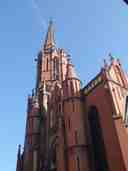
Look for a tall, red brick neo-Gothic church with a dramatic spire that shoots up into the sky-just scan above the rooftops and you can’t miss that 55-meter tower reaching almost for the clouds! Take a moment to soak in the atmosphere: it’s 1902, the city of Legnica is buzzing with excitement, and in just a little over two years, thanks to the creative genius of Alexis Langer and generous donations from the townspeople-plus a major boost from the kind-hearted Maria Bertha von Gellhorn-this towering church sprang up almost as if by magic. Imagine the thrill as the cornerstone was laid, the first hammering echoing down Rzemieślnicza Street, and soon after, bells chiming out their first melodies in 1904. Not just any bells, mind you, but bells blessed by the local priest, while, somewhere in the assembly, perhaps little children watched with wide eyes as the building they’d walk past daily finally seemed complete. The church’s grand inauguration came with a cardinal himself attending-a real VIP moment! But even now, its charm is on display. The monumental spire you see is the north tower, with a graceful Madonna and Child perched on the corner like a heavenly guardian, sculpted by J. Baumeister. Step inside and sunlight floods through grand windows, painting the interior with warmth. Stand beneath the ribbed vault of the main aisle, gaze up at the main altar where the Holy Trinity sits on the “Throne of Grace”-it’s a little slice of wonder, built in record time and forever standing as a symbol of faith, community, and just maybe, a touch of holy speed-building!
Ouvrir la page dédiée →
Foire aux questions
Comment commencer le tour ?
Après l'achat, téléchargez l'application AudaTours et entrez votre code de réduction. Le tour sera prêt à commencer immédiatement - il suffit d'appuyer sur lecture et de suivre l'itinéraire guidé par GPS.
Ai-je besoin d'Internet pendant le tour ?
Non ! Téléchargez le tour avant de commencer et profitez-en pleinement hors ligne. Seule la fonction de chat nécessite Internet. Nous recommandons de télécharger en WiFi pour économiser vos données mobiles.
S'agit-il d'une visite de groupe guidée ?
Non - il s'agit d'un audioguide en autonomie. Vous explorez indépendamment à votre propre rythme, avec une narration audio diffusée par votre téléphone. Pas de guide, pas de groupe, pas d'horaire.
Combien de temps dure le tour ?
La plupart des tours durent entre 60 et 90 minutes, mais vous contrôlez totalement le rythme. Faites des pauses, sautez des arrêts ou arrêtez-vous quand vous le voulez.
Et si je ne peux pas finir le tour aujourd'hui ?
Pas de problème ! Les tours disposent d'un accès à vie. Faites une pause et reprenez quand vous le souhaitez - demain, la semaine prochaine ou l'année prochaine. Votre progression est sauvegardée.
Quelles sont les langues disponibles ?
Tous les tours sont disponibles dans plus de 50 langues. Sélectionnez votre langue préférée lors de l'utilisation de votre code. Note : la langue ne peut pas être changée après la génération du tour.
Où accéder au tour après l'achat ?
Téléchargez l'application gratuite AudaTours sur l'App Store ou Google Play. Entrez votre code de réduction (envoyé par e-mail) et le tour apparaîtra dans votre bibliothèque, prêt à être téléchargé et commencé.
Si vous n'appréciez pas le tour, nous vous rembourserons votre achat. Contactez-nous à [email protected]
Paiement sécurisé avec 


