
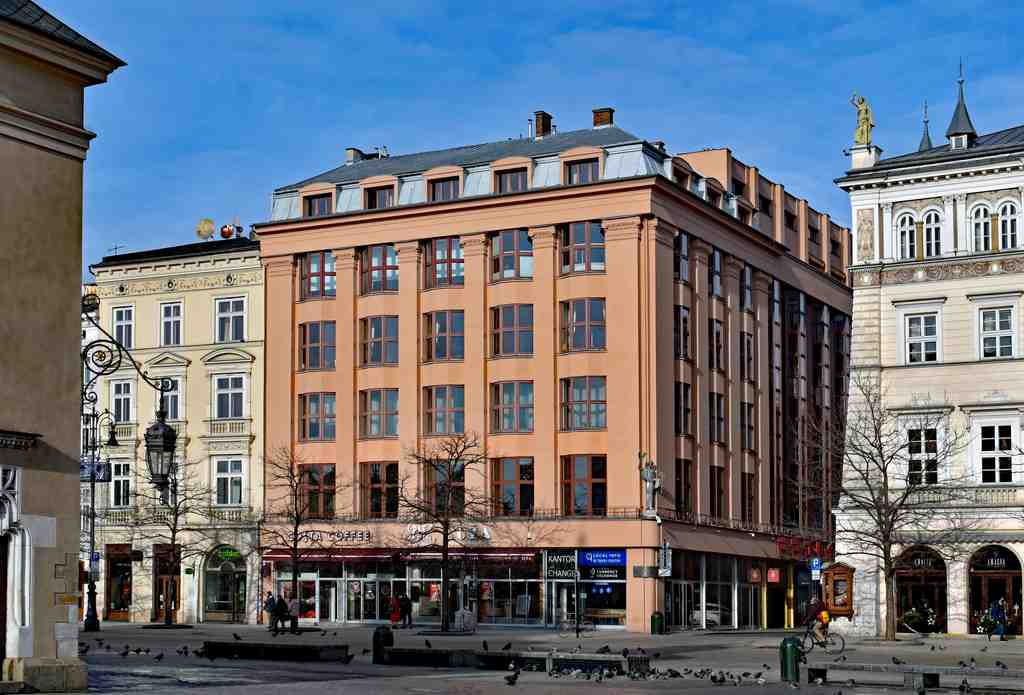
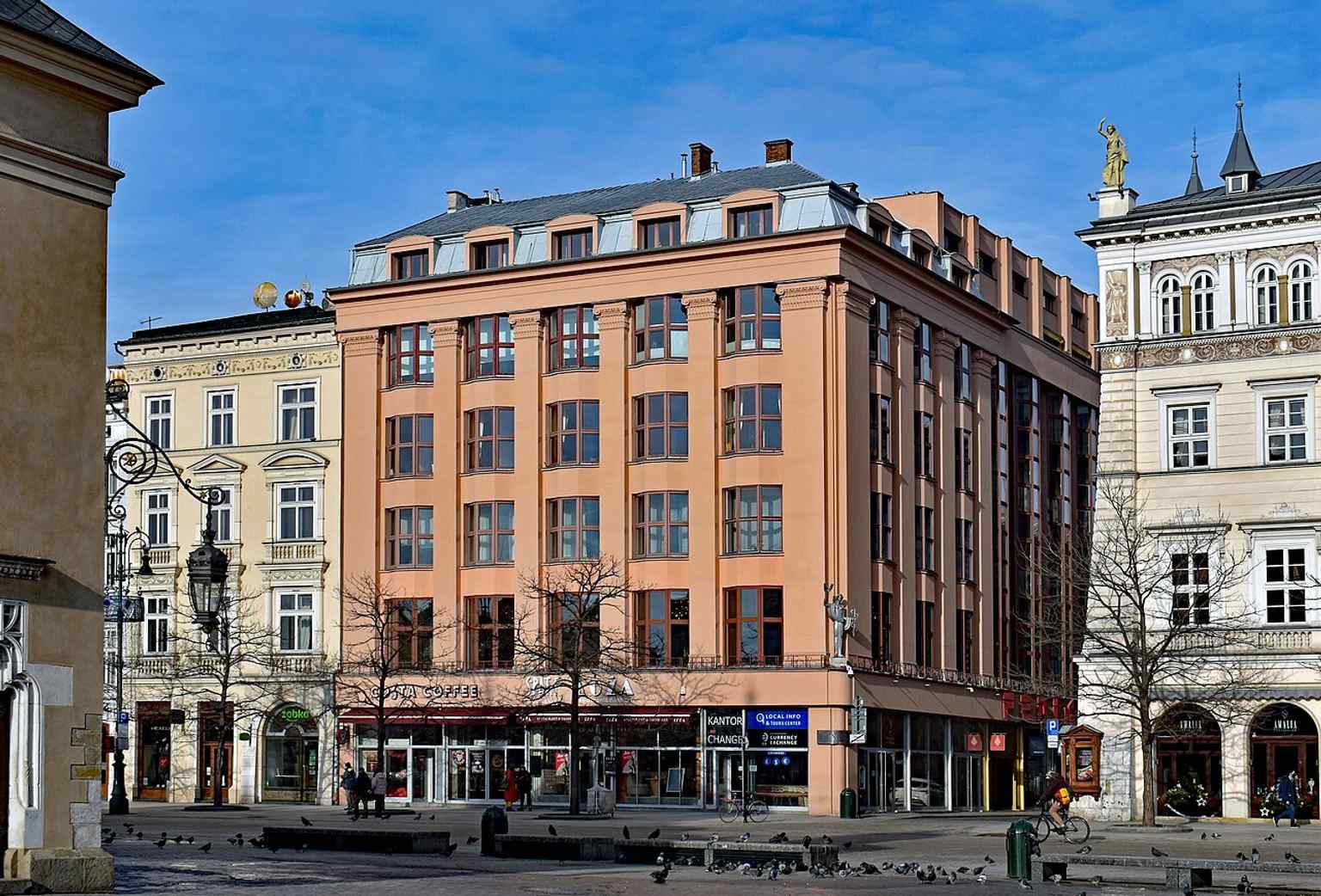
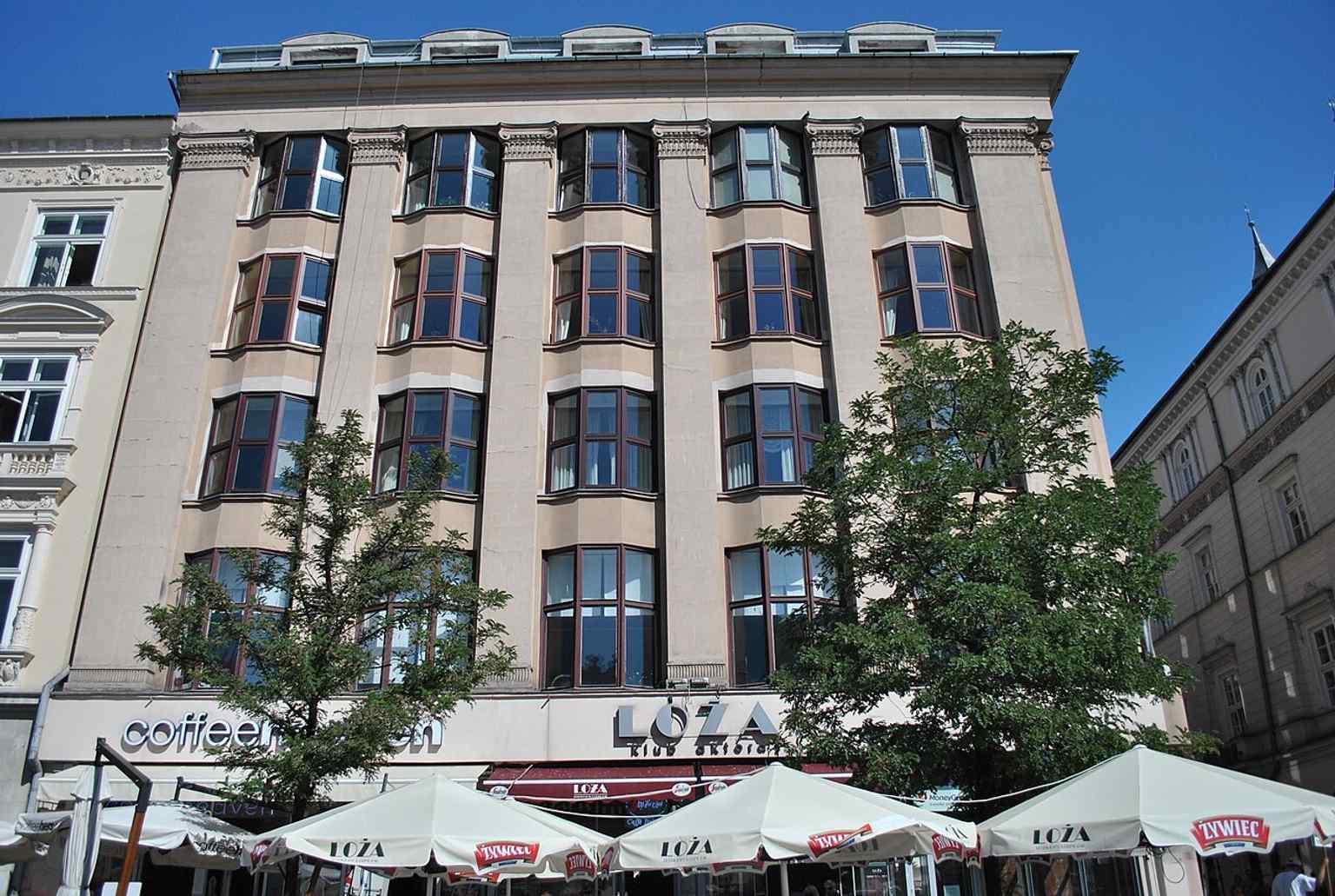
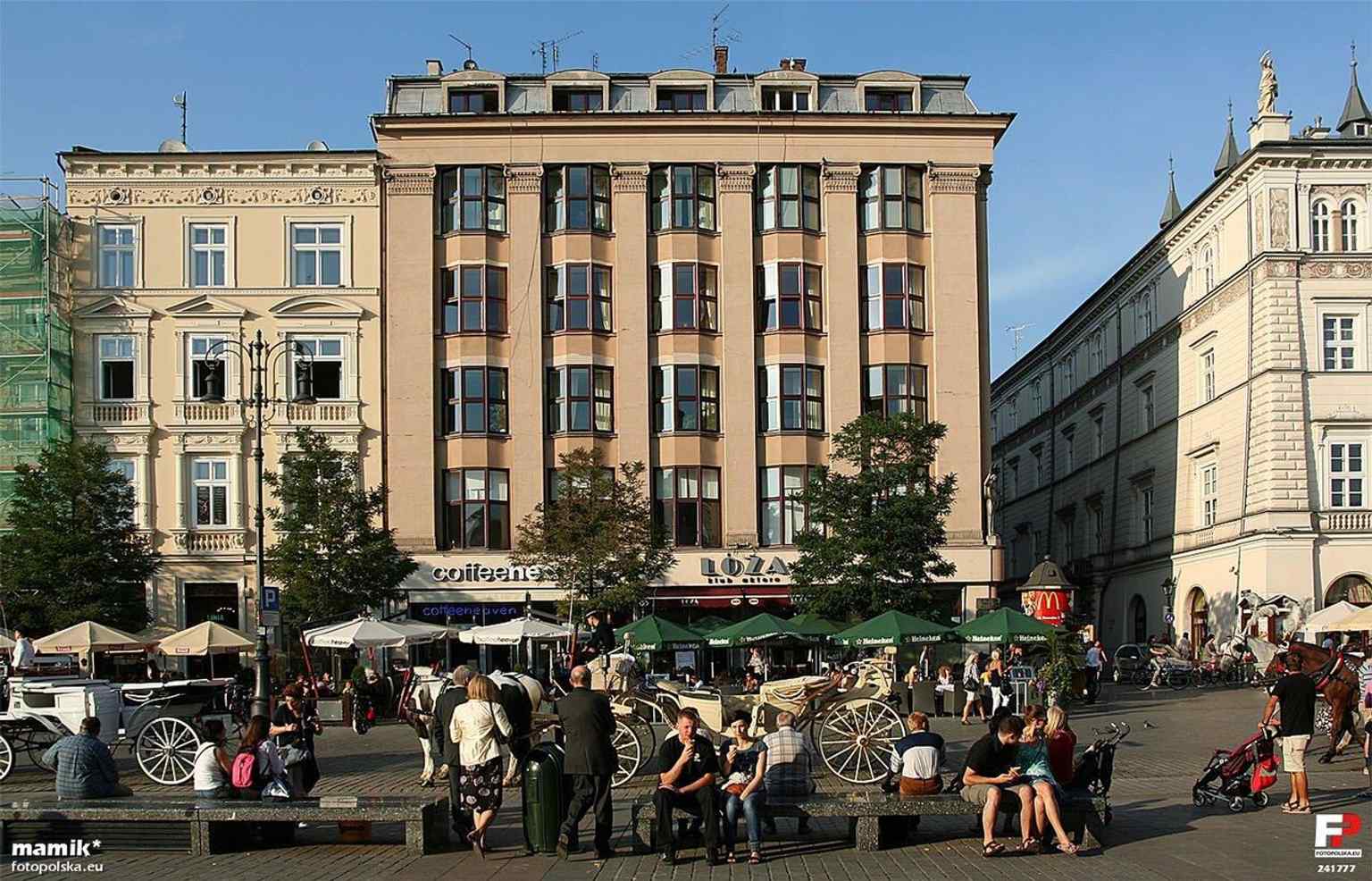
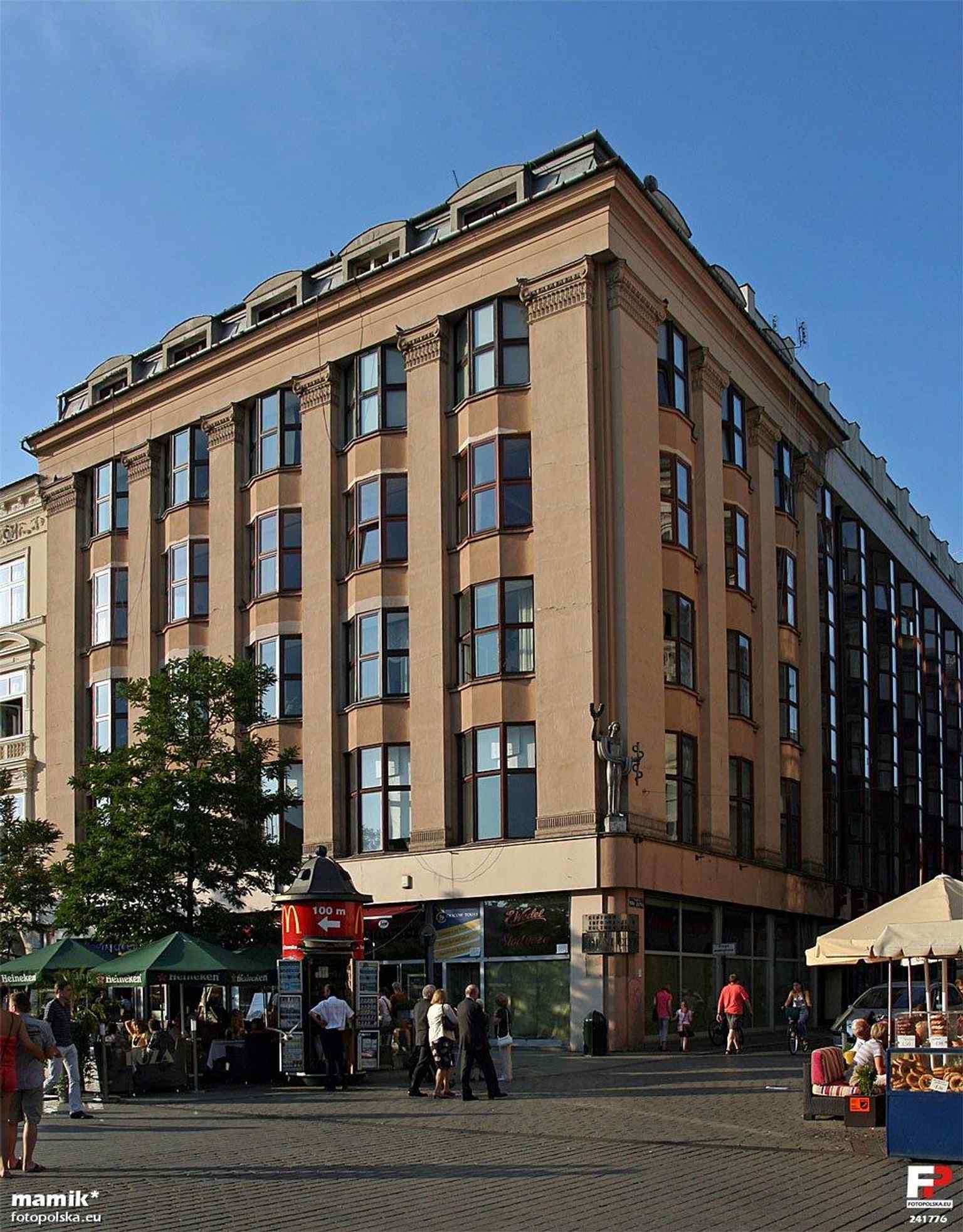
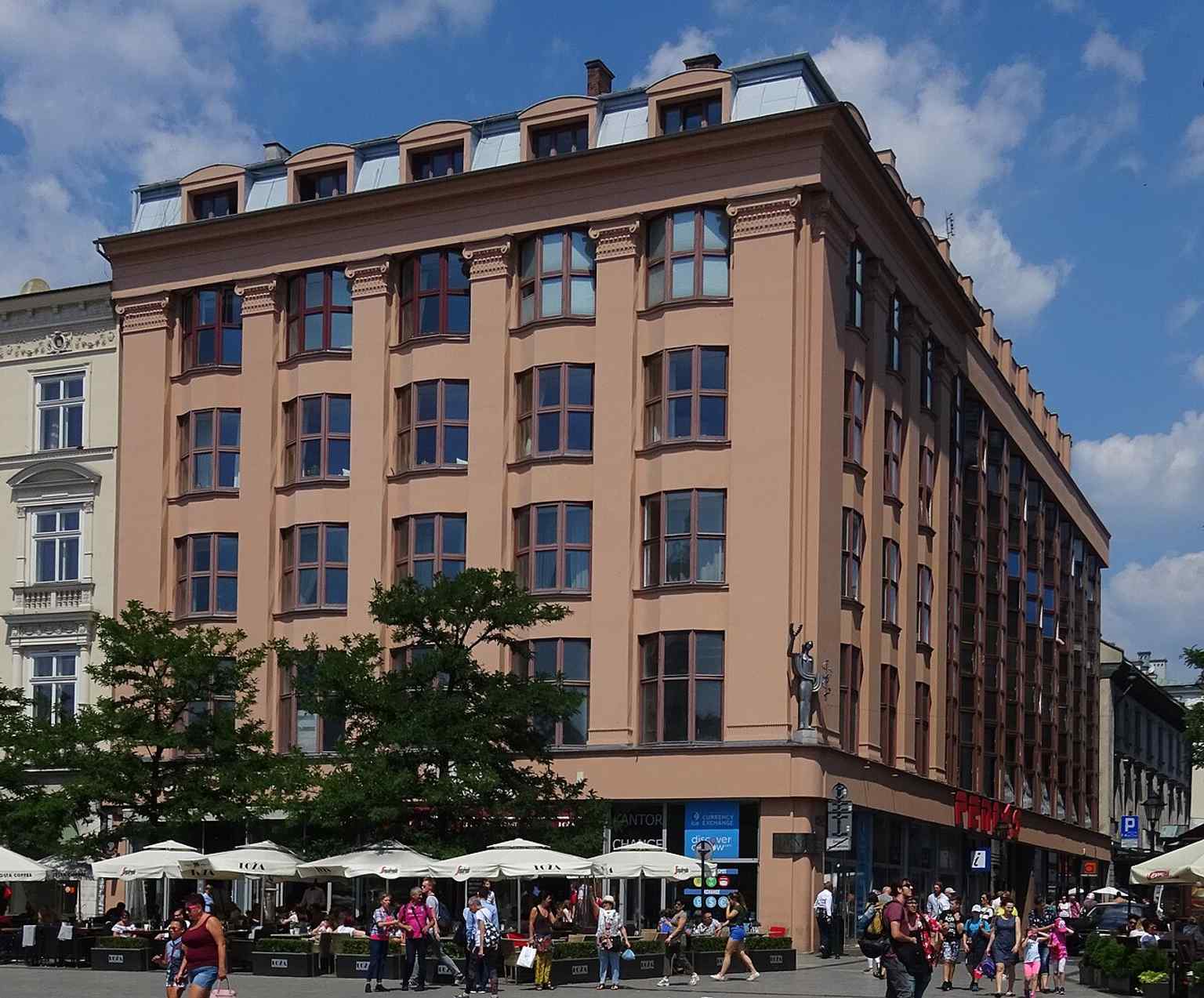
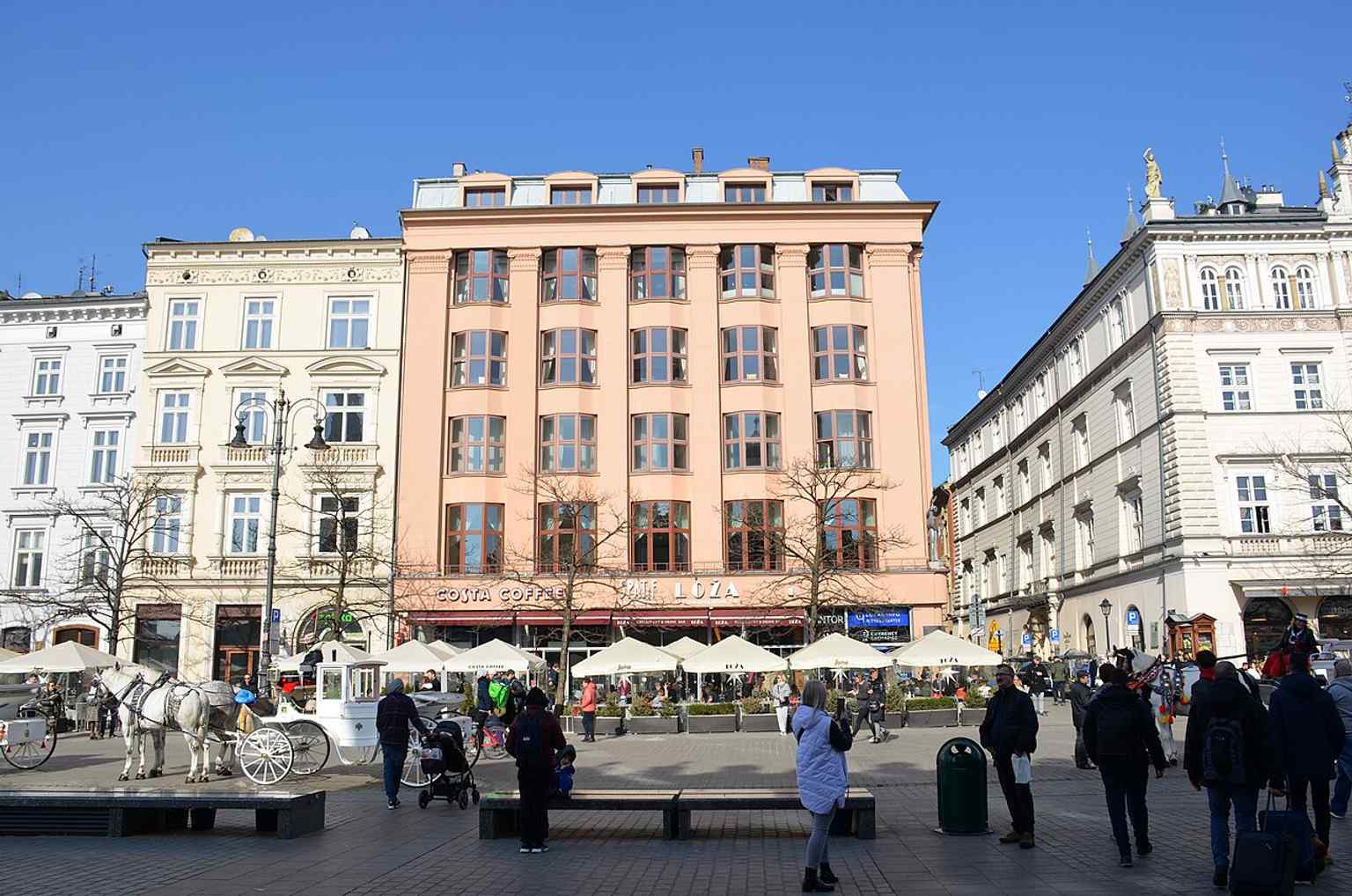
On your right, look for the pale stone corner building with broad rectangular windows and a silvery female figure fixed high at the angle like the house’s own badge.
This is the Phoenix Building, and it is Kraków picking a fight with itself in public. In old cities, preserving and changing are never opposite teams with neat uniforms. Every time someone says “save the past,” another person asks, “which past?” and every time someone says “build something new,” somebody else hears “tear out a memory.”
Feniks makes that argument in stone. The Phoenix Insurance Society hired architect Adolf Szyszko-Bohusz in the late nineteen twenties to create a bold new headquarters here on the Market Square. But this modern Art Deco block did not appear on an empty patch of land. It replaced three medieval houses demolished in nineteen fourteen: the Tryblowska, the Fridrichszmalcowska, and the Ważyński house along Saint John Street. In one of them, the mathematician and astronomer Jan Śniadecki lived in seventeen ninety-two. During demolition, workers even found a stone figure of Saint Christopher, later handed to the National Museum. So yes, this stylish facade comes with ghosts in the paperwork.
The scandal started before the building even rose. Critics later said the real outrage was not modern architecture but the earlier destruction itself. In nineteen thirty-two, Henryk Jasieński pointed a finger at the parcel owner, Tadeusz Będzikiewicz, and blasted the helpless officials who failed to stop the loss. Then came the second round: Szyszko-Bohusz first tried more historical designs, flirting with baroque and Polish Renaissance forms, before committing to this avowedly modern shape. Kraków’s conservatives nearly choked on their tea. President Ignacy Mościcki, a friend of the architect, personally helped push it through.
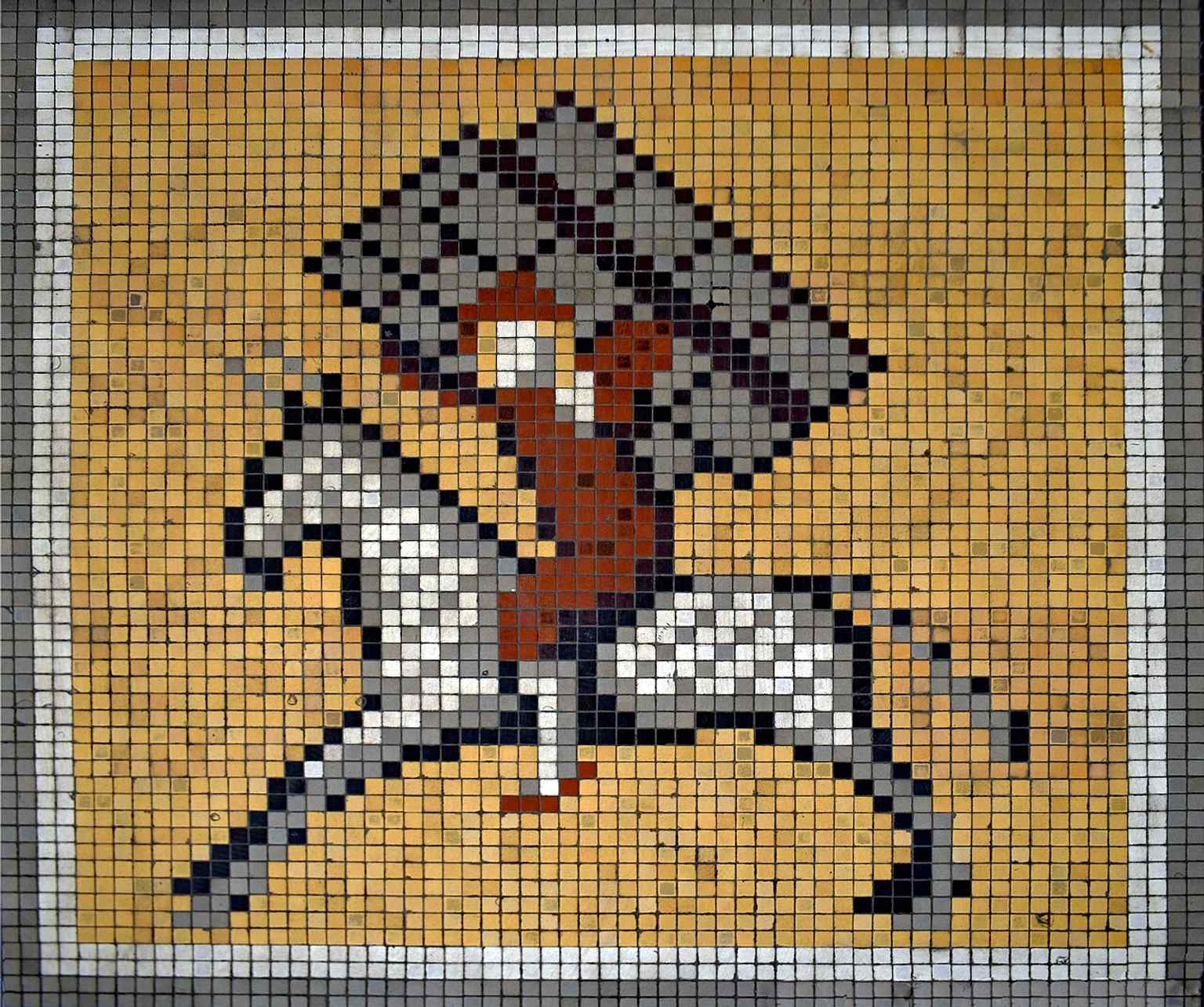
And then, oh boy, luxury arrived. Marble-lined stairs. Aluminum window frames. Garbage chutes. Even air conditioning in the apartments, the first such elegant flats in Kraków. The corner sculpture above you is Hygieia, goddess of health, modeled in aluminum by Karol Muszkiet. If you glance at the phone image of the Wedel mosaic, you’ll see another surviving clue: for more than seventy years, a chocolate shop occupied the corner unit. This site also served as Kraków’s political noticeboard. During the First World War, an empty fenced lot stood here, and in February of nineteen eighteen locals covered the hoarding with furious anti-Prussian slogans and satirical drawings. Polish legionaries even hung up their military decorations there in protest, while residents placed candles beneath them. Not exactly subtle. Very Kraków.
Later the German occupiers reshaped the facade to suit Adolf Hitler Platz, stripping its original decorative roofline and changing its face. The corner figure disappeared, then returned only in the nineteen nineties. If you want, compare the before-and-after image in the app; the argument practically stares back at you. So here’s the uncomfortable question: if you had the power, would you save the fragile old streetscape, or allow a daring new building that later generations might also fight to protect? Kraków still hasn’t answered that cleanly. Walk on to Krzysztofory Palace, about a minute away, carrying that little splinter in your shoe.






.jpg)
.jpg)

.jpg)