
Visite audio d'Asunción : Histoires sacrées et légendes urbaines de la Cathédrale
Ville née au bord du fleuve et façonnée par la rébellion, Asunción garde ses secrets les plus audacieux cachés à la vue de tous. Derrière chaque façade élégante du quartier de la Cathédrale se cache une histoire de transformation et de troubles. Embarquez pour cette visite audio autoguidée afin de découvrir le véritable pouls de la capitale du Paraguay, au-delà des cartes postales et des guides habituels. Écoutez attentivement les rivalités scolaires légendaires, les confessions scandaleuses de la cathédrale et les complots politiques se dérouler autour de vous. Qu'est-ce qui a déclenché une vive controverse lorsqu'une école de filles a soudainement ouvert ses portes aux garçons ? Quels vœux murmurés à l'intérieur de la Cathédrale d'Asunción ont changé le cours du pouvoir politique ? Quelle est la véritable histoire derrière une guitare hantée au Centre Culturel – et pourquoi tombe-t-elle parfois mystérieusement silencieuse ? Traversez des siècles de drame dans ces rues historiques, sentant le suspense de l'histoire à vos trousses. Vivez le rire, la rivalité, l'inspiration et les secrets que seuls les habitants connaissent. Plongez sous la surface d'Asunción – votre voyage au cœur de la ville commence maintenant.
Aperçu du tour
À propos de ce tour
- scheduleDurée 30–50 minsAllez à votre propre rythme
- straightenParcours à pied de 3.0 kmSuivez le sentier guidé
- location_on
- wifi_offFonctionne hors ligneTéléchargez une fois, utilisez n'importe où
- all_inclusiveAccès à vieRéécoutez n'importe quand, pour toujours
- location_onCommence à École Nationale EMD Asunción Escalacia
Arrêts de ce tour
To spot the EMD National School Asunción Escalada, keep your eyes open for a striking blue and white shield-shaped logo prominently featuring the letters "CNAE"-it’s usually by…Lire plusAfficher moins
To spot the EMD National School Asunción Escalada, keep your eyes open for a striking blue and white shield-shaped logo prominently featuring the letters "CNAE"-it’s usually by the main entrance, and the grand, bustling facade of the school is right on the corner of Iturbe and Eligio Ayala streets. Alright, pause right here for a moment, because you’re standing at the threshold of a living piece of history-one that has witnessed generations of dreams unfold and a fair share of teenage debates about homework, uniforms, and sports day rivalries! This is the EMD National School Asunción Escalada, a cornerstone of Paraguayan education, but with a few twists and turns worthy of its own telenovela. Picture Asunción in 1938: bustling streets, horse-drawn carts sharing space with early cars, radio broadcasts crackling with government news, while the world was changing fast around them. But right here, instead of the lively teenage chatter you hear now, there was a quiet excitement-a whisper about a brand-new school specially built for girls. At a time when educational opportunities for women were a precious rarity, the National Girls High School was created by presidential decree No. 4,369. Imagine the courage of the first students walking through those doors, knowing they were pioneers. Their mission? To prove that women could take on the world, science equations and all. Now, things weren’t always so co-ed and collaborative. For more than six decades, this landmark welcomed only girls, helping to shape the minds of women who would go on to be leaders, teachers, and trailblazers. But in February 2004, someone at the Ministry of Education decided it was time to shake things up a little. Suddenly, boys were allowed to enroll! The very next day, the air was tinged with suspense-were boys ready for this? Would girls accept their new classmates? Some parents cheered, hoping for a more inclusive world, while others weren't quite so sure and pulled their daughters out in protest. Talk about drama in the schoolyard! If you listen closely now, you might almost hear the echo of the old school anthem-music composed by the famous Remberto Giménez, with lyrics written by the so-called Poet of the City, Francisco Ortiz Méndez. The words celebrated girlhood and strength, ringing through the corridors each day. But in 2004, with the new wave of coeducation, the song’s references to girls alone made it a relic of another age, and the anthem was set aside, a bittersweet reminder of changing times. Today, more than 1,000 students in smart uniforms-white shirts and blue skirts or pants, matching ties, white stockings for girls-march through the halls each morning and afternoon. The smells of chalk dust and fresh ink mix with the excitement of learning anything from industrial chemistry, to business administration, to social sciences, and more technical subjects than you can shake a Bunsen burner at! Did you know this is one of only five schools in the entire metropolitan area to offer a technical baccalaureate in industrial chemistry? At the end of the year, the hallways come alive with the Expoferia, a kind of science and technology extravaganza, and you’d better believe the students go all out-displaying innovations that might even leave their teachers scratching their heads in amazement. Oh, and the color wars? No, not a battle with paint-though that would be fun! It’s the annual Sports and Cultural Fair, pitting red against yellow, blue against turquoise, and so on, in contests fierce enough to make the World Cup look like a tea party. There’s soccer, volleyball, brainy quizzes, even chess and cycling, the air buzzing with cheers and a healthy dose of friendly rivalry. Buried behind all of this is a long-standing debate about a certain multipurpose room-the “Emilio Biggi” domain. Picture an endless tug-of-war between the school and the Ministry of Education: Who's the real boss here? No matter who wins, one thing is clear: this place is bursting with life, history, and more stories than you can possibly imagine. So as you stand here in the shadow of the CNAE crest, take a moment to think about how many footsteps have crossed these grounds. From its humble beginnings to its current role as a scientific and cultural powerhouse, this school has faced it all-controversy, change, triumph, and lots and lots of homework. Ready to move on to our next stop? Let’s keep going before the bell rings! Eager to learn more about the co-educational high school, location or the anthem? Simply drop your inquiries in the chat section and I'll provide the details you need.
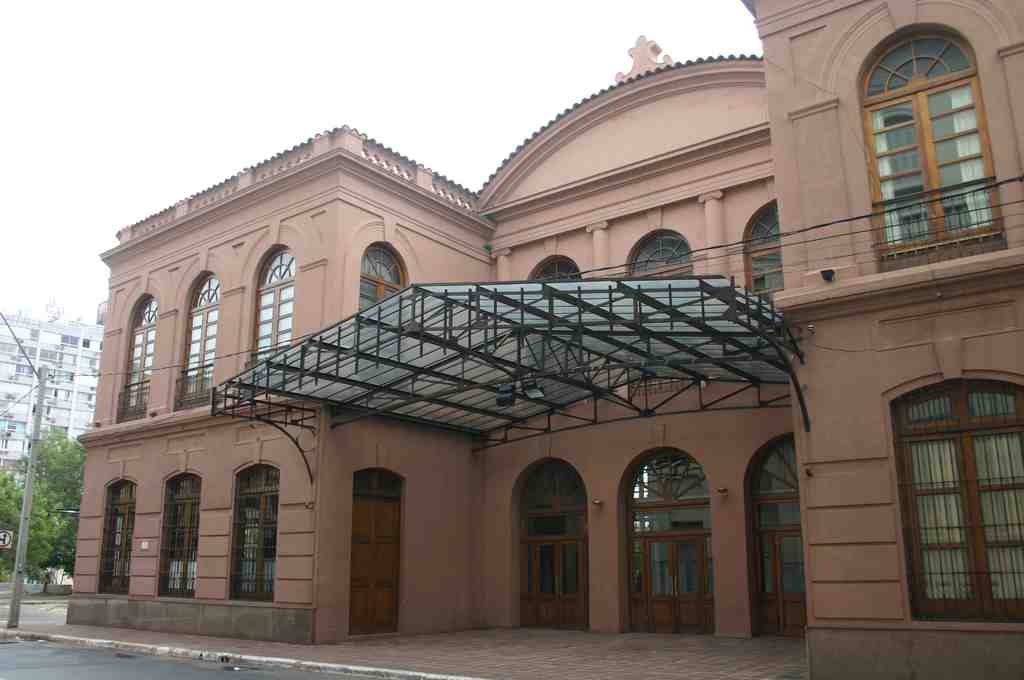
Ouvrir la page dédiée →To spot the Asunción Cathedral, just look ahead for a grand, light-colored building with tall bell towers and wide stone steps, right at the heart of the historic…Lire plusAfficher moins
To spot the Asunción Cathedral, just look ahead for a grand, light-colored building with tall bell towers and wide stone steps, right at the heart of the historic center. Welcome, traveler! You’re now standing before the magnificent Asunción Cathedral, a bright and elegant guardian of history, crowned with two proud towers reaching for the sky. Imagine stepping back to the 1840s-horse hooves clopping on cobblestone as the city buzzed with news of its grand construction under Don Carlos Antonio López. Legend says the neighbors used to gather here, peeking through the fences just to catch a glimpse of the silver-coated high altar. Dedication to Our Lady of the Assumption gave the city its name, making this spot the city’s true heart. Listen closely and you might imagine the distant peal of the cathedral’s bells calling everyone to gather, from important politicians to secret lovebirds hoping for a blessing. Inside, that silver altar would dazzle even the sunniest Paraguayan day. If these walls could talk, they’d whisper tales of first dioceses, archbishops’ secrets, and the stubborn pride of a city that has seen centuries roll by-always keeping its cool, always watching, right where you’re standing now. So take a breath, and feel that proud, sparkling spirit of old Asunción linger in the air.
Ouvrir la page dédiée →

Afficher 7 arrêts de plusAfficher moins d'arrêtsexpand_moreexpand_less
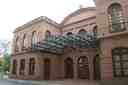
To spot the Municipal Theatre Ignacio A. Pane, look for a grand pinkish-peach building with tall arched windows and a large glass-and-metal canopy jutting over the entrance-right…Lire plusAfficher moins
To spot the Municipal Theatre Ignacio A. Pane, look for a grand pinkish-peach building with tall arched windows and a large glass-and-metal canopy jutting over the entrance-right in front of you at the corner of the street. Now, as you stand here, take a deep breath and imagine: it’s the year 1843. This place isn’t filled with actors and glittering lights just yet-instead, it’s swarming with serious-looking politicians and a few nervous guards. Why? Because that year, the very first building here served as the meeting spot for Paraguay’s First National Congress. Imagine the echo of determined voices bouncing off these walls, history literally in the making. But President Carlos Antonio López had something else in mind-a place where all of Asunción could gather, not just politicians obsessed with paperwork! He called on a Spanish journalist and playwright, Ildefonso Antonio Bermejo, to help imagine something grander: a true theatre. So, in 1855, the old Congress building’s stage was set-literally-and on November 4, the new theatre blazed to life! Can you hear the stir of excitement in the air? Paraguayans of all walks, squeezing into rows, ready to be dazzled by opera, zarzuela, drama and, of course, more than a little over-the-top applause. But the theatre was a bit like a dramatic character in its own right-never content to stand still. In 1886, along came Baudillo Alió, a Catalan businessman with a vision fit for a spotlight. He was granted the land, bulldozed the old shell, and began work on a brand-new “National Theatre.” Three years later, in 1889, the curtain rose to reveal the completed masterpiece. The opening night boomed with music: Verdi, Schubert, and the Spanish Company Orchestra, La Estudiantina Española Figaro, all taking turns to fill these walls with sound. The years rolled on, and the theatre just kept evolving. In 1894, a renovation brought private boxes and lush courtyards filled with garden air-imagine the scent of flowers mixing with a hint of stage dust! Even as political winds swirled, famous foreign actors and local legends made this place the beating heart of Asunción’s culture. Whether it was opera, operetta, or a classic tear-jerker, the “Primer Coliseo” became synonymous with spectacle and community. Ownership changed hands-by 1939, it was in the grip of the Municipality-though by 1949, it picked up a new name in honor of Ignacio A. Pane, a nod to the past and a leap into the future. But, like every good story, there was a plot twist. By the 1990s, the old beauty was fading. Parts of the building even collapsed. The theatre closed in 1995, and for a while, it felt like the final curtain had fallen. But then came a comeback worthy of a standing ovation! Restoration teams, architects, and cultural dreamers rolled up their sleeves. From 2004 to 2005, the entire site was transformed-new steel slipped into the old bones, modern features blended with original shapes, and new courtyards sprouted up as multipurpose halls. Picture a mix of old-world charm and cool, contemporary edges, all set within nearly 5,000 square meters. These days, it’s not just about evening shows: the theatre houses a café, drama classes, and event spaces-meaning you never know if you’ll hear a mysterious rehearsal, an enthusiastic applause, or simply the hum of daily city life. So, next time you look up at that elegant façade, just remember: this is a theatre that has survived revolutions, renovations, and more costume changes than you can count. Isn’t it grand to be standing in the wings of history?
Ouvrir la page dédiée →To spot the National Pantheon of the Heroes, just look ahead for a bright white building topped with a large domed roof and surrounded by tall columns and fluttering…Lire plusAfficher moins
To spot the National Pantheon of the Heroes, just look ahead for a bright white building topped with a large domed roof and surrounded by tall columns and fluttering flags. Alright, you’re standing right in front of a place where Paraguay keeps its history alive-the National Pantheon of the Heroes. Picture this: in 1863, President Francisco Solano López wanted to build a chapel to honor the Virgin of the Assumption. So he brought in some real Italian talent-architect Alejandro Ravizza and his builder friend Giacomo Colombino. They got started, but, oh boy, things didn’t go according to plan. The War of the Triple Alliance swept through, and instead of a finished chapel, Paraguay had a building stuck in time, wrapped in scaffolding like a very old, very fancy present nobody was allowed to open. It took more than 70 years-yes, 70!-to finish it. Finally, after another huge war, the Chaco War, and a few grey hairs later, the building opened as the Pantheon in 1936. Now, here’s where the story turns from unfinished business to national treasure. This isn’t just any building-think of it as Paraguay’s hall of fame. The remains of national heroes rest inside: presidents, generals, and even the celebrated child martyrs from the Battle of Acosta Ñu. There are also a couple of mysterious “Unknown Soldiers,” whose true stories live only in whispers. When you look at the front and see the words “Fides et Patria,” that means “My faith and my country”-pretty big words for a pretty big job. It’s not all quiet history either-when something big happens in Paraguay, crowds rush to these steps, waving flags and making noise. Sometimes, I wonder if the heroes inside wake up and join in. Watch out for the ceremonial changing of the guard! It’s like a dance-except everyone’s very serious and nobody’s allowed to mess up the timing. So as you stand here, take in the air, the marble, the echo of footsteps-this spot is where Paraguay remembers, celebrates, and sometimes even parties when the country has something to cheer about!
Ouvrir la page dédiée →To spot the Guarani Hotel, look up to see a striking 13-story building, sharp and angular, rising at the corner with a modernist facade of glass and repeating vertical…Lire plusAfficher moins
To spot the Guarani Hotel, look up to see a striking 13-story building, sharp and angular, rising at the corner with a modernist facade of glass and repeating vertical stripes-right ahead of you, boldly towering over the trees and the street. Welcome to the legendary Guarani Hotel, a place so iconic that even the currency of Paraguay wanted a selfie with it! Imagine you’re standing here in Asunción in the early 1960s-it's a sunny afternoon, people bustling about, cars honking, and suddenly, this colossal new hotel opens its doors for the first time. Its futuristic blue glass and crisp edges make jaws drop along Oliva Street. You’d think a spaceship had landed! This hotel wasn’t just any hotel-it was South America’s celebrity magnet. Politicians, movie stars, top musicians, and even heads of state checked into the Guarani, probably hoping the view from one of its 247 rooms would give them inspiration or at least a little break from all that paperwork. Each room here looks out over the city, giving everyone a taste of Asunción’s charm with a splash of that high-rise glamour. Now, let me take you back to the drama of its birth. The land was bought in 1954, and a couple of years later, things got really exciting-a major architecture contest drew talented teams from all corners, and the winning design came from a group of Brazilian architects. That’s why, even today, some people try to give credit to a famous Brazilian star, Oscar Niemeyer. But no, he was busy with other cosmic creations! The Guarani is 100% its own, a proud child of Brazilian style but entirely unique. Its construction was a marvel, humming with the sound of progress and ambition, led by Euclydes de Oliveira and his energetic team. By the time the doors opened in 1961, under the watchful eyes of President Stroessner, Asunción suddenly had its first taste of five-star luxury. This spot lit up the city like a beacon for anyone with a suitcase and a dream. Oh, but hold onto your luggage-there’s more! In 1986, the Guarani got a facelift most celebrities would envy: a full remodel, a sparkling new spa, and even a theater big enough for 700 laughter-loving souls. If these walls could talk, I bet they’d ask for tips on stage fright. But every star has its cloudy days. In 1996, the hotel doors closed, casting a long shadow over the neighborhood. For years, it sat silent, a sleeping giant, while different groups tried to revive its magic. You might picture it here, echoing with memories, maybe a ghost or two playing invisible poker in the empty casino at midnight. Then, like a phoenix (or maybe a glamorous old celebrity with a new agent), the Guarani Hotel came roaring back in 2008 after a major restoration. Today, it stands tall-chic, proud, very much alive, and still the coolest neighbor on the block. So the next time you see a Paraguayan bill, check to see if the Guarani Hotel is still smiling at you from the corner-after all, not many buildings get to play the star in the city’s story and its pocket change!
Ouvrir la page dédiée →Take a look just ahead of you: the Museum of Sacred Art stands tall with its grand, cream-colored façade and ornate wrought-iron gates, glowing under golden lights-just look for…Lire plusAfficher moins
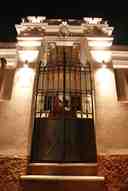
Take a look just ahead of you: the Museum of Sacred Art stands tall with its grand, cream-colored façade and ornate wrought-iron gates, glowing under golden lights-just look for the impressive entrance perched above a few steps on one of Asunción’s highest hills! Alright, let’s set the scene! Imagine you’re breathing in the fresh hilltop air, the city lights sparkling behind you, and right in front of you is Villa Lina-this beautiful early 20th-century mansion in an eclectic style, and now home to some of Paraguay’s best-kept cultural treasures. Step closer and you might almost hear the echo of footsteps from centuries past as locals and travelers enter, wide-eyed, to marvel at what’s inside. Back in 2010, the Museum of Sacred Art opened its doors to reveal not just a trove-no, an actual mountain-of treasures from the baroque period where Hispanic and Guaraní styles melt together in wood and paint. Fun fact: you’ll find nearly a hundred sacred sculptures from what is actually one of the world’s most important private Guaraní baroque collections, ranging from the 1600s all the way to the 1700s. You know that feeling when you discover forgotten toys in the attic? Imagine that, but instead, you find San Pedro de las Lágrimas, a mysterious masterpiece by Brother José Brasanelli-sometimes called the “Michelangelo of the Missions”-carved in a way that almost makes you hear the figural tears falling. Or the Mestiza Virgin, not just any statue, but a radiant wooden figure with native Guaraní features, once loved by the famous poet Josefina Pla herself! The museum isn’t just a feast for the eyes-it’s a bonanza for the senses. Picture yourself in six colorful rooms, with soft golden light touching the carved faces, music sometimes drifting in from a concert on the terrace, the smell of fresh coffee wafting from the café, and maybe even a giggle drifting from the bookstore. And, oh, don’t forget to visit the terrace-if you see a black Labrador sculpture, that’s Gonzalo, the museum’s beloved mascot, immortalized forever by artist Gustavo Beckelmann. I bet he was a “pawsitive” influence on the atmosphere here! Wander into the patio, and there’s another oddity for you: the actual marble bathtub of Madame Lynch, the famous partner of Marshal Francisco Solano López, resting quietly under the open sky. Did you ever expect to see sacred statues and a legendary bath in the same museum? Neither did I! And tucked away safely in the museum lies a time capsule, sealed in 2011 for Paraguay’s bicentennial. It holds mementos, foods, seeds, and stories-just imagine, all those secrets sleeping together, waiting to reach curious hands on May 14, 2111. Maybe a distant descendant of yours will be there in eighty-seven years, laughing as they discover what was “modern” in our time! Whether you’re pulled here for the treasures, the legends, or the adventure of discovery itself, one thing is certain: the Museum of Sacred Art is where mysteries of centuries-and the bark of a friendly dog-are never far away. Now, where to next, explorer?
Ouvrir la page dédiée →Right in front of you, you’ll spot the Paraguayan Athenaeum by its classic tan façade, tall arched doorway, white decorative moldings, and colorful posters inviting you to…Lire plusAfficher moins
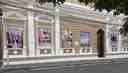
Right in front of you, you’ll spot the Paraguayan Athenaeum by its classic tan façade, tall arched doorway, white decorative moldings, and colorful posters inviting you to discover art and culture; just look for the large windows and banners framed in white along the sidewalk. Welcome to the grand old Paraguayan Athenaeum! You’re standing before the oldest art and culture institution in all of Paraguay-older than most of the pipes in Asunción and probably more reliable, too. Now, close your eyes for a moment and let your imagination travel back to July 28, 1883. The city buzzes in the heat of summer, horse carriages clatter by, and inside this very building, a group of passionate thinkers and dreamers gathers. Among them, Cecilio Báez, pen in hand, writes the founding act-his friends Ramon, Guillermo, Benjamín, and others nodding proudly, excited to bring music, literature, and the fine arts to Paraguayan life. But as any good story goes, it wasn’t all smooth sailing. By 1889, fierce political disagreements made these friends frown more than smile. The original Athenaeum dissolved-poof!-but out of its ashes, something just as marvelous appeared. In these rooms, in that same year, the National University of Asunción was born, proving that good ideas are simply too stubborn to vanish forever. As you stand here, imagine the second chapter: the “Instituto Paraguayo” of 1895, inspired by the fancy French model. Its halls burst with music, gymnastic routines, lively drawing classes, and a library packed to the rafters. The best Paraguayan minds and talents-future stars like Agustín Pío Barrios and José Asunción Flores-walked these halls. Meanwhile, in 1913, a bunch of young folks, fresh from studying abroad and bursting with energy, created the “Gimnasio Paraguayo,” firing up even more passion for knowledge and creativity, turning this spot into the beating heart of culture in Paraguay. Fast forward to 1933. Bullets fly in the Chaco War, but even amid the chaos, two rival institutions shake hands and finally unite, becoming the modern-day Athenaeum. Today, it’s still alive with music, laughter, and clinking piano keys. It’s a living legend, now led by Professor Álvaro Morel Aquino, who brought the joyful Suzuki method to musical learning here. So, as you take in the grand arches and history-stained stones, think of all the young artists, musicians, teachers, and bright sparks who walked through these very doors, determined to create, share, and keep Paraguay’s cultural soul shining bright. Not bad for a building with better attendance than most Paraguayan soccer matches!
Ouvrir la page dédiée →Look straight ahead for a long, low building painted in earthy red and cream, with tall wooden doors, large windows with decorative frames, and a line of shady trees right along…Lire plusAfficher moins
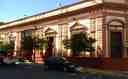
Look straight ahead for a long, low building painted in earthy red and cream, with tall wooden doors, large windows with decorative frames, and a line of shady trees right along the sidewalk. Welcome to your final stop: the Scuola Italiana Dante Alighieri! Imagine for a moment that we’re traveling back in time-all the way to 1895-when two lively Italian societies in Asunción decided their children deserved more than just pasta and hand gestures to learn; they wanted a real Italian school! So, with great excitement-and probably a few arguments over who had the best lasagna-they founded this very institution. At first, it was a boys’ trade school, then it became Scuola Regina Elena, and finally, it proudly took on the name of Italy’s famous poet, Dante Alighieri. Picture the early days: the school nestled among the city streets, the sounds of young voices bouncing off the walls, and the smell of freshly baked bread wafting in from nearby homes. By 1929, the school packed up its books, chalk, and a few bowls of spaghetti, and moved right here-Alberdi and Humaitá-creating a new hub for Italian culture and language in the heart of Barrio La Encarnación. Since then, thousands of students have hurried up these steps, wearing uniforms from crisp white polos and jeans, to all-black athletic outfits for PE (because even gym class can be stylishly dramatic in Italian fashion). Step into Dante Alighieri’s story, and you’ll discover a trilingual world-where Spanish, Italian, and Guaraní are part of daily life. But the adventure doesn’t stop there! In 1981, a new library swung open its doors. Now, this wasn’t your average bookshelf-imagine over 22,700 volumes stacked and sorted “European style,” as if the books themselves might whisper, “Ciao, come stai?” as you pass by. Named after Irene Borello de Amodei, an Italian who fell in love with Paraguay, the library is famous as one of the best in the country. And just think: among those simple uniforms and beautiful old classrooms, artists like Ricardo Migliorisi, poets, actors, and TV hosts once fumbled with their homework, dreaming big dreams-maybe even reciting Dante’s verses on a dare! Here, the past isn’t just preserved; it’s alive in every echo, every laugh, and every lesson that shapes the future. Grazie for joining me on this journey-where education meets heritage and a little dash of Italian drama! For further insights on the library, uniform or the outstanding students, feel free to navigate to the chat section below and inquire.
Ouvrir la page dédiée →

Foire aux questions
Comment commencer le tour ?
Après l'achat, téléchargez l'application AudaTours et entrez votre code de réduction. Le tour sera prêt à commencer immédiatement - il suffit d'appuyer sur lecture et de suivre l'itinéraire guidé par GPS.
Ai-je besoin d'Internet pendant le tour ?
Non ! Téléchargez le tour avant de commencer et profitez-en pleinement hors ligne. Seule la fonction de chat nécessite Internet. Nous recommandons de télécharger en WiFi pour économiser vos données mobiles.
S'agit-il d'une visite de groupe guidée ?
Non - il s'agit d'un audioguide en autonomie. Vous explorez indépendamment à votre propre rythme, avec une narration audio diffusée par votre téléphone. Pas de guide, pas de groupe, pas d'horaire.
Combien de temps dure le tour ?
La plupart des tours durent entre 60 et 90 minutes, mais vous contrôlez totalement le rythme. Faites des pauses, sautez des arrêts ou arrêtez-vous quand vous le voulez.
Et si je ne peux pas finir le tour aujourd'hui ?
Pas de problème ! Les tours disposent d'un accès à vie. Faites une pause et reprenez quand vous le souhaitez - demain, la semaine prochaine ou l'année prochaine. Votre progression est sauvegardée.
Quelles sont les langues disponibles ?
Tous les tours sont disponibles dans plus de 50 langues. Sélectionnez votre langue préférée lors de l'utilisation de votre code. Note : la langue ne peut pas être changée après la génération du tour.
Où accéder au tour après l'achat ?
Téléchargez l'application gratuite AudaTours sur l'App Store ou Google Play. Entrez votre code de réduction (envoyé par e-mail) et le tour apparaîtra dans votre bibliothèque, prêt à être téléchargé et commencé.
Si vous n'appréciez pas le tour, nous vous rembourserons votre achat. Contactez-nous à [email protected]
Paiement sécurisé avec 


