
Visite audio de Gênes : Mélodies, Monuments et Merveilles maritimes du Medio Levante
Sous les avenues élégantes et les places ensoleillées de Gênes, des siècles d'intrigues mijotent juste hors de vue – de vieux secrets et des contes audacieux attendant sous vos pieds. Cette visite audio autoguidée vous invite à soulever le masque moderne de la ville et à découvrir des légendes cachées, des scandales oubliés et des moments de défi dans des lieux que la plupart des visiteurs ne font qu'apercevoir. Pourquoi une église, anéantie par les bombes, a-t-elle resurgi comme un monument frappant à l'espoir à Foce ? Quels esprits agités hantaient les grandes salles du lycée Andrea D'Oria, déclenchant la rébellion – et inventant un compagnon chat pirate ? Quels secrets préhistoriques dorment sous la Piazza della Vittoria, autrefois la scène de la ruée de Buffalo Bill ? Parcourez l'histoire complexe de Gênes, frôlant les échos d'anciennes prières et les murmures scandaleux parmi les palais de marbre. Chaque pas apporte un nouveau drame et une merveille inattendue – la ville se révélant à chaque tournant. Prêt à laisser Gênes vous surprendre à chaque coin de rue ? Appuyez sur lecture et plongez dans les histoires qui l'ont façonnée.
Aperçu du tour
À propos de ce tour
- scheduleDurée 30–50 minsAllez à votre propre rythme
- straightenParcours à pied de 3.4 kmSuivez le sentier guidé
- location_on
- wifi_offFonctionne hors ligneTéléchargez une fois, utilisez n'importe où
- all_inclusiveAccès à vieRéécoutez n'importe quand, pour toujours
- location_onCommence à Église de Santa Maria dei Servi
Arrêts de ce tour
To spot the Church of Santa Maria dei Servi, look for a striking, modern building set back from the street, in the middle of the busy Foce neighborhood-its clean lines and…Lire plusAfficher moins
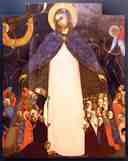
To spot the Church of Santa Maria dei Servi, look for a striking, modern building set back from the street, in the middle of the busy Foce neighborhood-its clean lines and contemporary style stand out among the older facades. Now, let’s pause a moment as you stand outside this unique church-close your eyes and imagine, if you will, the soundtrack of old Genoa: horses clip-clopping, traders shouting by the sea, and the distant toll of church bells. The story of Santa Maria dei Servi actually begins back in the 1300s, when a group called the Servite Order got official permission from the local archbishop to settle right here. Imagine monks in long robes, quietly arriving with hopes and prayers, their footsteps echoing on cobblestones that have long since disappeared. For centuries, people gathered in the original church-much different from the one you see today-to celebrate, grieve, and seek comfort beneath the watchful eyes of ancient paintings. One of the treasures rescued from the old church was a beautiful image of Mary, like the one you might see on display. The original building, however, suffered a fate as dramatic as any Genoese legend. During World War II, the bombs fell mercilessly and the church was completely destroyed-reduced to rubble and memories. Yet, Genoa is a city that never gives up. In a twist that would make any architect smile, the church found a new home in the vibrant Foce district. Using a design by Leonardo Bucci and Raffaello Trinci, construction began in the 1960s-a time of hope and rebuilding. The new building, blessed by Cardinal Siri, mixes tradition with modernity, giving new life to ancient relics and paintings, including works by great artists like Giovanni Andrea De Ferrari and Domenico Piola. So here you are, standing where faith, art, and resilience have come together, in the shadow of both history and hope. If these walls could talk, they’d probably say, “We’ve seen a lot, but you look great today!” Ready for the next stop?
Ouvrir la page dédiée →To spot Piazza della Vittoria, look ahead for a vast open square lined with grand marble buildings and dominated by a towering white triumphal arch rising from a patch of…Lire plusAfficher moins
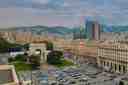
To spot Piazza della Vittoria, look ahead for a vast open square lined with grand marble buildings and dominated by a towering white triumphal arch rising from a patch of greenery-it’s hard to miss if you look towards the skyline just past the busy rows of parked cars. Welcome to Piazza della Vittoria, the beating heart of modern Genoa! If you stand here and listen closely, you can almost hear the rumble of history echoing between the stately columns and the wide open air around you. This is much more than a parking lot with a fancy arch-though let's be honest, even the cars look classier next to all this marble. But what if I told you that beneath your very feet, once upon a time, there was a village older than the Parthenon? During construction in the 1980s, workers dug deep to build an underground parking garage and found the probable remains of a stilt house, dating all the way back to somewhere between 4790 and 4460 BC. That’s before pizza was invented-and that’s saying something! Later, near the Brignole train station, archaeologists found an ancient wall and the remnants of old hearths and canals, suggesting bustling settlements and maybe even a prehistoric river port at the mouth of the Bisagno. Imagine the sound of ancient builders at work! Fast forward a few millennia and this flat space was just a green field by the wide Bisagno River. Today, it’s nearly impossible to picture, but once there were city walls-they called them the "Fronti Basse"-torn down in 1892 for Columbus’s 400th anniversary. What came next? The space became a playground for Genovese families, a ground for fairs, a parade field, and even hosted the wild west thrills of Buffalo Bill’s traveling circus in the early 1900s. Can you hear the cheer of children and the roar of Buffalo Bill’s show? This square isn’t all just fun and games; it’s also a stage for history’s most solemn and joyful moments. Popes have led open-air masses right here-Pope John Paul II himself twice, in 1985 and again in 1990, and more recently, Pope Benedict XVI in 2008. Even COVID-19 couldn’t stop Genoa’s traditions: in 2020, the city’s brand-new archbishop was ordained outdoors in this very piazza. Perhaps you’re wondering about the architecture-all these elegant palaces around you, some with columns and sunny arcades. That’s the stamp of Marcello Piacentini and a team of renowned architects and sculptors in the 1930s, during Italy’s Fascist era. Next time someone tells you marble is out of style, just point to these buildings. And, of course, front and center, the sight that makes this place unmistakable: the Arco della Vittoria, the Victory Arch, built in the 1930s. It’s covered in grand statues and bas-reliefs, a monument to the fallen of World War I. As you look closer, you’ll spot the steps rising behind, the Scalinata delle Caravelle-where the grass is planted to look just like Columbus’ three famous ships. If you ever wondered what a topiary fleet looks like, now’s your chance. In recent decades, Piazza della Vittoria has become a space for everything-concerts, sporting events, and, my personal favorite, Oktoberfest. That’s right, every September, the spirit of Bavaria fills Genoa with laughter, music, and frothy steins, in Italy’s only officially recognized Oktoberfest outside Germany. So take a breath and let your eyes wander. Behind the arch, you’ll see old and new Genoa side by side-the Andrea D’Oria High School, echoes of the city’s maritime legacy, and the modern towers of Corte Lambruschini. Connecting you to the rest of Genoa is Via XX Settembre, a vibrant, historic road that ties this huge piazza to Piazza De Ferrari and the Old Port. Even today, military parades sometimes march across the square, just like the old days. Here you are, at the crossroads of past and present-where ancient river ports meet grand 20th-century vision, and where the spirit of Genoa continually comes alive. Keep your eyes and ears open-you never know what bit of history might surprise you next.
Ouvrir la page dédiée →
Afficher 6 arrêts de plusAfficher moins d'arrêtsexpand_moreexpand_less
To spot Corte Lambruschini, look ahead for two tall, sleek towers made of glass and steel rising above the train tracks and facing the Genova Brignole station-they reflect the sky…Lire plusAfficher moins
To spot Corte Lambruschini, look ahead for two tall, sleek towers made of glass and steel rising above the train tracks and facing the Genova Brignole station-they reflect the sky like big, modern mirrors. Welcome to Corte Lambruschini! Right now, you’re standing by one of Genoa’s boldest leaps into the modern age. Picture this: just a few decades ago, instead of these shiny skyscrapers, there was a bustling 19th-century courtyard packed with the chatter of market sellers and the laughter of families living in small apartments. The original Corte Lambruschini, named after a prominent local family, was at the heart of old Borgo Pila, absolutely overflowing with Genoese energy. But in 1982, all that was swept away, and construction crews arrived, their machinery roaring as they built up towards the clouds. Fast-forward to today, and you can almost feel the hum of business through the glass-these two matching towers, each reaching nearly 87 meters high, are split into a maze of offices, a grand hotel, and a theater buzzing with applause and drama under the spotlights. If you listen closely in your imagination, you might hear the distant echo of an actor’s monologue or a crowd cheering for Sampdoria, the legendary football team that once called these towers home. Inside, there’s even a four-story underground parking lot-like a hidden city beneath your feet! The best part? These towers stand like shining beacons, visible from all over eastern Genoa, their steel and glass catching the sunset. Next time you rush past a skyscraper, remember: you might just be walking on top of old legends and stories, with echoes of the past rising up even as the city reaches for the future. And if these towers suddenly start feeling taller, don’t worry-it's not magic, it’s just Genoa dreaming big! To delve deeper into the origin of the name, features or the business based in the corte lambruschini complex, simply drop your query in the chat section and I'll provide more information.
Ouvrir la page dédiée →If you look up and ahead, you’ll spot a grand church with a huge, round dome towering over a crisp white facade-simply let your eyes follow the skyline for the largest dome in the…Lire plusAfficher moins
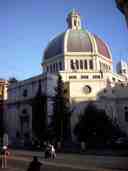
If you look up and ahead, you’ll spot a grand church with a huge, round dome towering over a crisp white facade-simply let your eyes follow the skyline for the largest dome in the neighborhood, and you can’t miss it! Welcome to the Church of Our Lady of the Assumption and Santa Zita! Right now, you’re standing in the heart of Borgo Pila, where faith, history, and, believe it or not, a dash of wool and silk all weave together. Imagine the year is the 1200s. Genoa is bustling, and along the Bisagno river, a group of hardworking Lucchese merchants is busy trading fabrics. These folks missed the comforts of home, so they built a church dedicated to “Il Volto Santo,” the Holy Face-a relic tradition they brought from Lucca. You can almost hear the distant chatter of merchants and the rustle of heavy silk as life buzzed around the old chapel. Fast forward to 1278-a local girl named Zita from Lucca is declared a saint! She was so admired for her kindness and honesty that, when word spread, everyone wanted to rename the church in her honor. So, from then on, Santa Zita was celebrated right here. But, as with any good Genoese story, trouble was just around the bend-literally. The Bisagno river had a temper. During one of its floods, it damaged the church severely. Yet, as Genoa does best, they rolled up their sleeves and rebuilt in 1452. Even after restorations in 1833, the town kept growing, until the church just couldn’t keep up with the parishioners crowding inside, elbow to elbow. So in the late 1800s, it was out with the old and in with the new… or at least, the “new” you see before you! The first stone was laid in 1893, on land donated by the generous Duchess of Galliera-talk about noble real estate! The design draws on splendid Florentine Renaissance styles, with a dome that finally capped the skyline in 1929, soaring almost 60 meters high. That’s about as tall as stacking twenty giraffes on each other-don’t try this at home! The old church wasn’t forgotten though: its ancient stone portal is tucked round the back, along with three statues saved from an old altar. Step inside and you’ll find treasures, including the Madonna di Città statue and a painting of the miracle of Santa Zita, where bread supposedly turned into flowers in her apron. So, as you breathe in the air here, imagine centuries of prayers, community celebrations, and a hint of river drama-all under this magnificent dome, lovingly pieced together by generations of Genoese hands. Now, if only walls could talk-though with churches, maybe it’s best they don’t spill all the secrets!
Ouvrir la page dédiée →To spot Piazza Alimonda, look for a broad open square with trees and traffic, and right in front of you, the grand pinkish-yellow facade and tall dome of the Church of Nostra…Lire plusAfficher moins
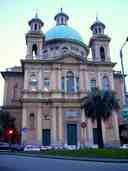
To spot Piazza Alimonda, look for a broad open square with trees and traffic, and right in front of you, the grand pinkish-yellow facade and tall dome of the Church of Nostra Signora del Rimedio. Welcome to Piazza Alimonda! You’re now standing at a spot that feels peaceful today, but it hasn’t always been so calm. Let your imagination take you back to July 20, 2001, when the square around you was buzzing not only with Genoese life but with shouts, chants, and the energy of thousands of protestors. The air crackled with tension; banners waved and voices rose in chorus, echoing against the church’s domed roof. This was one of the most dramatic days in modern Italian history, right during the Genoa G8 summit. That day, Piazza Alimonda was at the heart of fierce clashes between demonstrators and the police. You might picture smoke swirling, hear helicopters hovering above, police radios squawking, and footsteps pounding on the pavement. The church in front of you-Nostra Signora del Rimedio-watched over everything, its walls witnessing what most buildings only see in movies. But this spot is most famous for a tragedy: the death of Carlo Giuliani, a 23-year-old protestor, right outside the church gates. The story is gripping and somber. In the heat of the moment, amidst a flurry of movement and confusion, Carlo tried to throw a fire extinguisher at a police Land Rover stuck in the crowd. Suddenly, two gunshots rang out. The noise must have echoed off the stones and walls-one bullet struck Carlo, and he died where you’re standing. This event shook Italy. For years afterward, people left notes, flowers, flags, and heartfelt messages on the fence of the church in Carlo’s memory-a “secular altar,” people called it. It brought out deep emotions and even led to heated arguments and clashes with the parish. But the city never forgot. In 2011, exactly ten years after Carlo’s death, a plaque was placed here to mark the moment. And in 2020, the city finally allowed a simple stone monument that reads: “Carlo Giuliani, ragazzo. 20 luglio 2001.” Some locals still call this spot “Piazza Carlo Giuliani, ragazzo” instead of Piazza Alimonda. To this day, the square remains a place of memory-a symbol of the passion and the pain that can shake a city to its core. Funny thing, sometimes history doesn’t whisper through walls, it shouts right out here in the open. Thanks for standing in the middle of it. Ready for our next stop?
Ouvrir la page dédiée →You’ll spot the Chiesa di San Francesco d’Albaro right in front of you by its bright, pale-yellow facade, framed with soft red geometric decorations and a pointed doorway trimmed…Lire plusAfficher moins
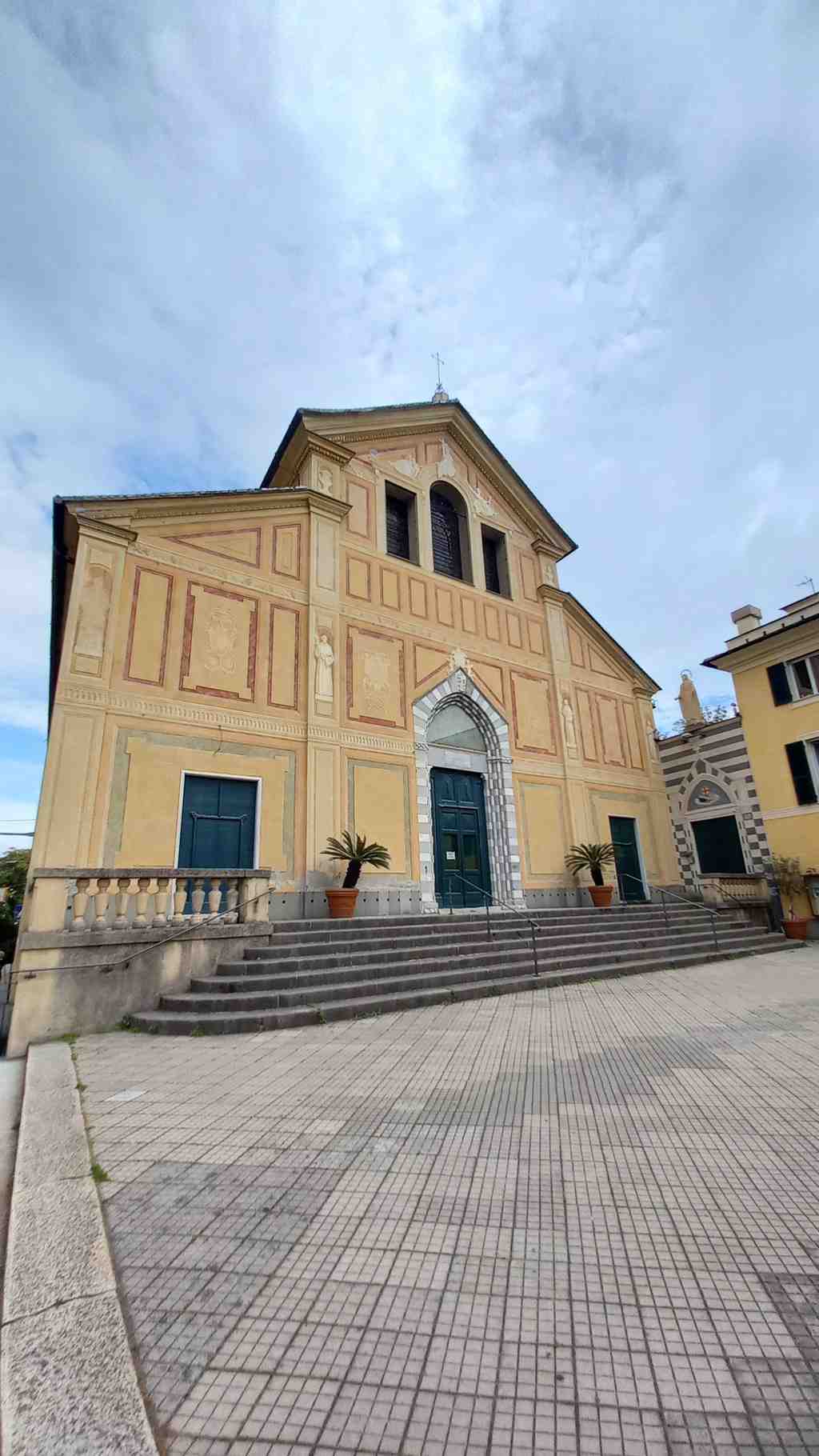
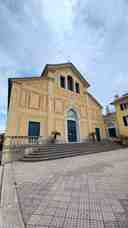
You’ll spot the Chiesa di San Francesco d’Albaro right in front of you by its bright, pale-yellow facade, framed with soft red geometric decorations and a pointed doorway trimmed in white and grey stone-just head up those broad steps and you can’t miss it! Now, let’s plunge into the swirling mist of history and imagine yourself standing on this very plaza-not just today, but centuries ago, when the air would have been tinged with the salty breath of the Ligurian Sea and the clatter of hooves echoed along the winding medieval roads. Right where you stand, in the heart of Albaro, a church has kept watch over Genoa’s changing fortunes since the 1200s. But before the Franciscans arrived with their sandals and stories, it was a spot dedicated to the Archangel Michael-a heavenly “bouncer,” if you will, at the city’s edge. Picture the year 1304: monks hustling in brown robes, merchants shouting, families building, and behind them a new chapter unfolding. A noble family named Cebà, probably not strangers to a little civic pride and maybe a pinch of rivalry, donated the land next to the old church, sparking a Franciscan building boom. By 1324, thanks to their deep pockets and the friars’ boundless energy, the new church and convent were up and running, replacing old Michael with the gentle, animal-loving Francis of Assisi as its patron-though I promise, if you have a dog with you, Saint Francis would be thrilled! Fast forward a bit to the 1400s. The church needed a facelift. Enter the Grimaldi-Cebà, always ready for some restoration action, presiding over a freshening up of the altar and choir. In 1440, the pulpit was reimagined-if walls could talk, I’ll bet it would have some “sermon-worthy” stories from this period! But a true change came in 1476, when the church swapped its old bones for a grand new plan: three naves, a Latin cross floor plan, and enough space to fit every dream, prayer, and local secret. This is more or less what you see today, with only the sturdy Gothic portal outside left to remind us of its medieval roots. Take a moment to touch the stone-think of how many hands, hopeful or weary, have done the same. The 1500s and 1600s brought both drama and disaster. Out on the coastline nearby stood an ancient church, Saints Nazario and Celso, battered by angry storms until it finally surrendered to the sea. The parishes shifted here. Papal decrees flew from Rome, bringing lofty titles and changing the pecking order-a little ecclesiastical excitement to spice up village life. By the 1700s, frescoes blossomed on the ceilings and walls, thanks to the master Giuseppe Galeotti, who must have spent a good part of 1754 craning his neck and chasing sunlight across the sanctuary. Walk inside, if you can: there you’ll see a swirl of saints, allegories, and scenes all vying for your attention. On the main vault of the nave, a triumphant Saint Francis floats above, painted by Giovanni Battista Carlone and expanded by Giovanni Agostino Ratti-clearly a competition between the Giovannis! But the peace of the cloister hasn’t always been so serene. During the Napoleonic era, when the French took over and religious orders were booted out, the cloaked friars had to pack up and leave. You might picture a somber exodus, but also a determined return-by 1817, after Napoleon’s fall, the Franciscan community marched right back in, dusted things off, and set about reclaiming their beloved home. Imagine fourteen Franciscans, a few lay brothers, some busy servants-all sharing stories and chores as the world outside spun through its revolutions. There’s more: in the convent, tucked away like a hidden treasure, you’d now find masterpieces painted by Alessandro Magnasco-a moody, dramatic “Supper at Emmaus”-and gems by other Genoese painters. Then there’s the music! Take a deep breath and listen, and you might just hear echoes from the grand organ, a true showstopper. The current one came from Bologna in the 1800s, and although it barely fit-being much bigger than expected-it now pours its melodies over the congregation, filling this crossroads of history with song. And last, if you’re up to a little ghost-hunting, let your imagination linger over the elegant portico-the portal that’s watched generations come and go, through centuries of sun, storm, and the endless parade of Genoa’s ever-curious visitors… like you!
Ouvrir la page dédiée →To spot the Chiesa di Santa Maria del Prato, just look for a tall, pale stone building with simple, sturdy walls, a pointed roof, and a narrow gated entrance - it stands quietly…Lire plusAfficher moins
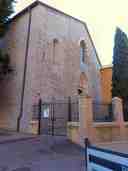
To spot the Chiesa di Santa Maria del Prato, just look for a tall, pale stone building with simple, sturdy walls, a pointed roof, and a narrow gated entrance - it stands quietly at the corner where via Parini meets piazza Leopardi, its rustic Romanesque facade setting it apart from anything else around here. Imagine you’re stepping back in time, right onto the centuries-old grass of what used to be Genoa’s public field - before the bustle of the city, before cars and gelato shops, this corner was simply called “the big public meadow.” Here stands the Chiesa di Santa Maria del Prato, built in 1172 when Genoa was a very different place. Back then, the city was fractured by feuding families and warring political factions, the kind of place where your neighbors might invite you for pasta or, depending on the day, a sword fight. Into this mix stepped a group known as the Mortariensi - serious-sounding canon priests from the order of Santa Croce di Mortara, who wanted a new church and a peaceful spot to worship (and maybe escape the city’s chaos). Now, wealthy Genoese citizens, eager for a VIP pass to the afterlife and possibly a premium burial spot, pitched in their coins. The most notable were Sigismondo Muscola and Angelerio Camilla - city bigwigs with enough influence to keep peace between rival families. Then there was Blancardo, a rich merchant who may have thought, “Why not have my soul, and my bones, rest in style?” Thanks to their generosity, the church rose up in the very heart of what must have felt like the countryside. For centuries, it was simply Santa Maria d’Albaro - but its lonely spot in the middle of the field earned it the nickname “del Prato,” which stuck as the city grew up around it. If you close your eyes for a moment, you can almost hear the wind rustling through the long grass and the bells of distant churches chiming. The place survived all sorts of upheaval: the priests changed hands (literally!), the neighborhood expanded, and the church itself started to show its age. Things got so shabby that, by 1582, visiting bishops were wagging their fingers - and not in a good way. By 1699, the church was in such rough shape that parts of it were demolished: gone were the choir and the lovely old colonnade. But alongside every crisis, some heroic figure seems to arrive. This time, it was Carlo Maria De Fornari, a bishop with grand plans - and probably an eye for property. He asked the Pope himself for ownership, became the boss, and decided to give the church a radical makeover. Out went the minimalist Romanesque, and in the dazzling, curly world of Baroque! Although that “Baroque-up” might have shocked poor medieval purists, it’s probably what saved the church from total ruin. Fast forward to 1800 and-plot twist!-the French, under Napoleon, rolled into Genoa. They transformed this tranquil church into…a horse stable. Imagine the elegant arches filled with the sound of whinnying! Thankfully, after things settled down, the De Fornari family promptly booted the horses and brought back the faithful. But history wasn't done with Santa Maria del Prato. Over the years, fortunes faded and, by 1880, the church was shut and only reopened when a group of nuns, the Clarisses, bought it and moved in next door. For about forty years, you’d see their habits fluttering through the cloisters and maybe hear the soft echo of their prayers at dusk. But nothing in Italy stays still for long! By the 1930s, the nuns left-perhaps looking for a warmer spot or less drafty rooms. Still, hope remained. A massive restoration project, led by architect Carlo Ceschi and the local heritage bosses, aimed to strip away centuries of add-ons, recapturing the church’s original medieval look-no made-up decorations, just the genuine, chiseled stone. World War II slowed things down, but by 1951, the church was breathing new life and history was back in the stones. Today, the facade before you reveals that ancient Romanesque simplicity-sterner than some, yet proud: split by upright pilasters, wrapped with worn, pale limestone, and topped by a striking ogival window with two slimmer slits beside it. Look above the portal and you’ll spot a rare fresco-the Madonna and two angels-one of the last artistic treasures clinging to its walls. The story doesn’t end in the past. These days, this church opens its doors for special occasions and Sunday afternoons. In the crypt, you’ll find the tomb of Saint Agostino Roscelli, hero to the local Immacolatine Sisters, whose general house is here. It’s a place where the echoes of medieval prayers, fresh-cut grass, galloping hooves, and modern footsteps all blend into one unforgettable Genoese tale. And I must say, for a building that’s seen battles, bishops, nuns, and even a few horses come and go, the old meadow church is holding up rather well. Now, that’s what I call a plot with a twist!
Ouvrir la page dédiée →
Foire aux questions
Comment commencer le tour ?
Après l'achat, téléchargez l'application AudaTours et entrez votre code de réduction. Le tour sera prêt à commencer immédiatement - il suffit d'appuyer sur lecture et de suivre l'itinéraire guidé par GPS.
Ai-je besoin d'Internet pendant le tour ?
Non ! Téléchargez le tour avant de commencer et profitez-en pleinement hors ligne. Seule la fonction de chat nécessite Internet. Nous recommandons de télécharger en WiFi pour économiser vos données mobiles.
S'agit-il d'une visite de groupe guidée ?
Non - il s'agit d'un audioguide en autonomie. Vous explorez indépendamment à votre propre rythme, avec une narration audio diffusée par votre téléphone. Pas de guide, pas de groupe, pas d'horaire.
Combien de temps dure le tour ?
La plupart des tours durent entre 60 et 90 minutes, mais vous contrôlez totalement le rythme. Faites des pauses, sautez des arrêts ou arrêtez-vous quand vous le voulez.
Et si je ne peux pas finir le tour aujourd'hui ?
Pas de problème ! Les tours disposent d'un accès à vie. Faites une pause et reprenez quand vous le souhaitez - demain, la semaine prochaine ou l'année prochaine. Votre progression est sauvegardée.
Quelles sont les langues disponibles ?
Tous les tours sont disponibles dans plus de 50 langues. Sélectionnez votre langue préférée lors de l'utilisation de votre code. Note : la langue ne peut pas être changée après la génération du tour.
Où accéder au tour après l'achat ?
Téléchargez l'application gratuite AudaTours sur l'App Store ou Google Play. Entrez votre code de réduction (envoyé par e-mail) et le tour apparaîtra dans votre bibliothèque, prêt à être téléchargé et commencé.
Si vous n'appréciez pas le tour, nous vous rembourserons votre achat. Contactez-nous à [email protected]
Paiement sécurisé avec 


