
Visite Audio de Dublin : Voyage Audio : De la Ténacité à la Grâce
Une ville balnéaire qui cache des secrets explosifs derrière son calme pittoresque – Bray vibre d'histoires inédites qui n'attendent que d'être découvertes. Cette visite audio autoguidée vous invite à travers les rues et les ombres de Bray, révélant des drames cachés et des moments marquants où l'histoire a laissé une empreinte que la plupart des visiteurs ne voient jamais. Qu'est-ce qui a secoué le monde de la boxe lorsque des coups de feu ont brisé le silence au Bray Boxing Club un matin tôt ? Pourquoi des fans de football exubérants ont-ils littéralement fait tomber des murs au légendaire Carlisle Grounds ? Et comment l'Hôtel de Ville de Bray s'est-il transformé d'un siège de pouvoir victorien en un havre pour les burgers et les bouleversements civiques ? Suivez des chemins sinueux du scandale au spectacle, des fusillades tragiques aux plateaux de tournage improbables et aux curiosités municipales. Laissez chaque pas vous entraîner plus loin dans le mélange complexe de chagrin, de résilience et de réinvention de Bray – vous verrez la ville vibrer d'une nouvelle vie sous la surface familière. Prêt à découvrir la facette la plus surprenante de Bray ? Appuyez sur lecture et entrez au cœur véritable de cette ville énigmatique.
Aperçu du tour
À propos de ce tour
- scheduleDurée 30–50 minsAllez à votre propre rythme
- straightenParcours à pied de 3.6 kmSuivez le sentier guidé
- location_on
- wifi_offFonctionne hors ligneTéléchargez une fois, utilisez n'importe où
- all_inclusiveAccès à vieRéécoutez n'importe quand, pour toujours
- location_onCommence à Fusillade au club de boxe de Bray
Arrêts de ce tour
Initially, it was called the Bray Athletic Ground, but after the 7th Earl of Carlisle-who must have really liked archery and cricket-opened it, it got a fancy name: the Carlisle…Lire plusAfficher moins
Initially, it was called the Bray Athletic Ground, but after the 7th Earl of Carlisle-who must have really liked archery and cricket-opened it, it got a fancy name: the Carlisle Cricket and Archery Ground. Eventually, practicality won out and it was shortened to Carlisle Grounds. The seating capacity got a boost in 2006 with a shiny new stand seating 985 fans, pushing the total capacity up to around 2,000. But let's remember, it’s not just about sitting; this stadium has seen some real action. In 2009, some walls just couldn't handle the excitement when Shamrock Rovers fans rushed to celebrate. And the walls tumbled again in 2010 during a playoff against Monaghan United. You could say these fans were literally breaking down barriers! Speaking of action, the Carlisle Grounds isn’t just for football. It's been a star on the silver screen, appearing in the 1996 film "Michael Collins". Who knew a football ground could also be a movie star, right? And if that’s not enough, it was the backdrop for Dermot Kennedy’s music video "Outnumbered". Clearly, the Carlisle Grounds isn’t shy about being in the spotlight. Plans for a large-scale redevelopment were released back in 2009, with ideas for a new stadium and a major retailer joining the mix. There's always something cooking here, much like the fans after a thrilling game! So here you are, standing at a place where history, sports, and a bit of film magic come together. Just don't try rushing any walls, okay? Enjoy the rest of your tour!
Ouvrir la page dédiée →
Afficher 5 arrêts de plusAfficher moins d'arrêtsexpand_moreexpand_less
This church is constructed from local granite, which means it literally stands on the solid rock of Bray. When it was consecrated on St. James' Day in 1863, the spire wasn’t yet…Lire plusAfficher moins
This church is constructed from local granite, which means it literally stands on the solid rock of Bray. When it was consecrated on St. James' Day in 1863, the spire wasn’t yet built. They began working on it in 1865, but Irish weather had other plans, so it wasn't completed until 1870. But hey, all good things-even 175-foot spires-are worth waiting for! Prime Minister William Ewart Gladstone was once so struck by the silent tower in 1877 that he lamented its lack of bells-and who could ignore a Prime Minister, right? Soon enough, a peal of eight bells was installed and they first rang out in 1881. These bells are still ringing each New Year’s Eve, proving they’re not just for show; they’re the hardest-working bells in Ireland! Inside, we’ve got a magnificent organ that would make even the most casual church-goer consider taking up choir practice. Built by Peter Conacher and Co. in 1911, it boasts 30 stops across three manuals and pedals. The organ was designed during the late English Romantic period, probably to get everyone in a melodious mood. But here’s something interesting-the choir vestry is actually located in the organ case at ground level! Say what you will about logistics, it’s certainly a unique feature. They’re currently restoring this powerful instrument so it can continue to fill the church with sound for decades to come. Speaking of sound, the church choir is a sight (or sound) to behold! This large, robed, mixed-voice choir of children and adults leads the congregation in song every Sunday. With talented directors through the years, the music here is soul-stirring. Alright, let’s move on before you start considering a career in organ playing! Next stop, Bray Town Hall. Make sure to enjoy the scenic views of the octagonal drum and spire as we head off!
Ouvrir la page dédiée →This Catholic church, the largest in Bray, started off way back in February 1792. But don't worry, the structure you're gazing upon wasn't built in the Dark Ages. The bulk of what…Lire plusAfficher moins
This Catholic church, the largest in Bray, started off way back in February 1792. But don't worry, the structure you're gazing upon wasn't built in the Dark Ages. The bulk of what you see today came together in the late 1890s, and then got a bit of a modern makeover in 1965 with its front, porch, and tower looking all spiffy. Think of it as a somewhat older celebrity who’s had a little facelift! Behind the church, completed in 2008, is a youth centre accessed via Herbert Road. It's a bustling hive of activity for young folks, opened in August of the same year. This parish isn't just about bricks and mortar; it's very much alive. They partner closely with local schools, such as Saint Cronan's Boys' National School, providing sacraments like Communion and Confirmation to the kids. And not only do they engage locally, they also have a heart for global community, raising funds for their twin parish of Ikanga in Kenya. Oh, and let's not forget the "Little Flower Hall" - the parish hall with a colorful history. Between 1880 and 1931, it was actually the home of Bray Male School. So, it's not just a hall, it’s a relic with stories of schoolyard mischief and academic endeavors. Well, it seems this church is more than a house of worship; it's a true community hub. I hope you’ve enjoyed this stop. Ready to move on to the next exciting place? I'll be here waiting!
Ouvrir la page dédiée →Take a look at the main facade: a neo-Gothic arch crowned by beautiful wooden doors, topped off with a stunning rose window adorned with stained glass. Those pointed arch windows…Lire plusAfficher moins
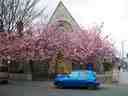
Take a look at the main facade: a neo-Gothic arch crowned by beautiful wooden doors, topped off with a stunning rose window adorned with stained glass. Those pointed arch windows with intricate geometric tracery are like looking into a giant’s kaleidoscope. The gabled slate roof gives it that quaint, old-world charm, and if you peek to the side, you’ll spot a small house-abbey that shares the same architectural flair, complete with a cozy granite fireplace. Isn’t that sweet? The church is set back from the street, nestled among trees and hedges, with a stone wall topped by a wrought iron fence-a perfect spot for some peace and reflection. It boasts two facades, one on Eglington Road and the other on Florence Road, offering different angles of its architectural beauty. Oh, and did you know the church is in great condition? Despite its age, it's holding up better than some of our New Year’s resolutions! So, take a moment, soak in the atmosphere, and maybe snap a few pics to remember this remarkable piece of history.
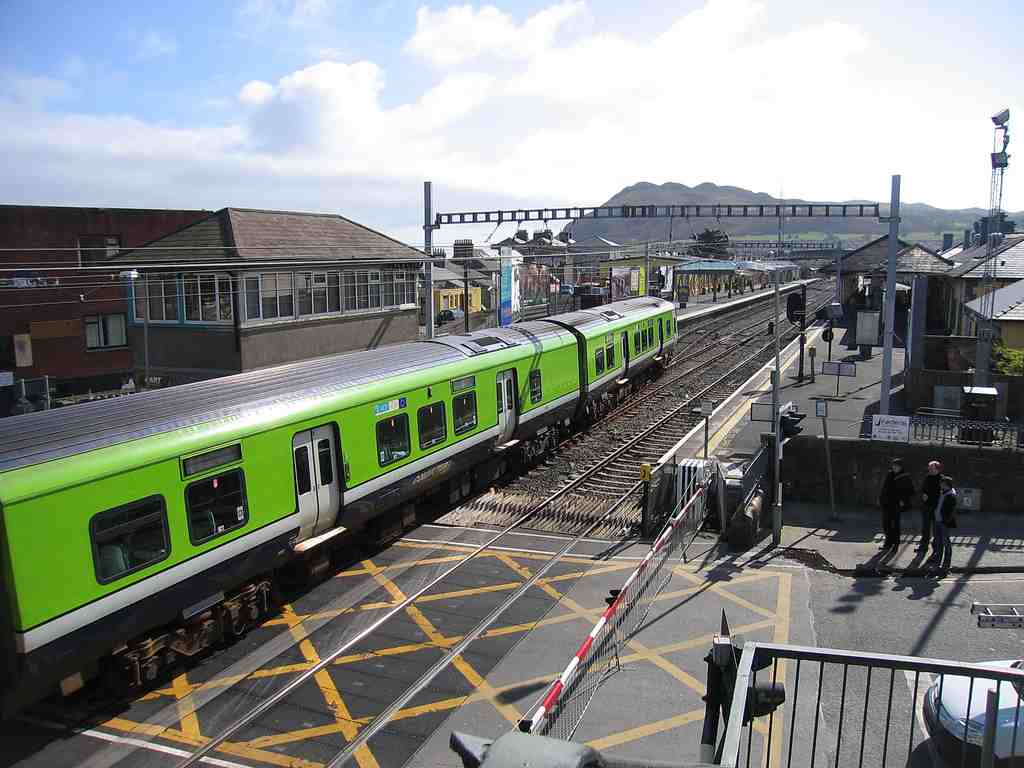
Ouvrir la page dédiée →Opened way back in 1854, this station's been the life of the locomotive party for a long time. Before the DART decided to turn up in 1984, Bray was the end of the line for…Lire plusAfficher moins
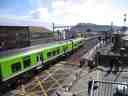
Opened way back in 1854, this station's been the life of the locomotive party for a long time. Before the DART decided to turn up in 1984, Bray was the end of the line for suburban services. Imagine being a train and thinking, "Yep, that's where I clock out for the day!" Most DART trains still make their last stop right here, but some adventurous ones continue all the way to Greystones. And, fun fact: it got its name 'Daly' in honor of Edward Daly, a leader from the 1916 Easter Rising. So you're not just at any old station; you're at a station with some patriotic pizzazz! You’re standing near the very platforms where once upon a time, even steam railmotors had a brief stint from 1906 to 1908. Spoiler alert: they must not have had the same charm as Harry Potter’s Hogwarts Express because their service was short-lived. Let's talk amenities! If you had a TARDIS to go back a few decades, you'd find a bar here. Sadly, it’s closed now, but there’s still a shop, a coffee stall for your caffeine fixes, and an ATM if you need some cash to fuel your tour. Oh, and don’t worry, the unheated public toilets are still around. Just think of them as a character-building challenge in winter. The station has undergone some serious makeovers, including a fancy renovation of its pyramid-style glass roof and the addition of new lifts as part of Iarnród Éireann's Dart Upgrade project in the early 2000s. Platforms? Oh, we've got platforms. Platform 1 is your go-to for northbound trains, while Platform 2 is for southbound and terminating services. And then there’s Platform 3, the shy sibling, mostly hanging out in the background for cleaning trains and the occasional DART adventure to Greystones. So there you have it-the Bray Daly railway station, a place where history and modern convenience catch a train together. Choo choo for checking this one out! For a more comprehensive understanding of the routes, station building and history or the road transport services, engage with me in the chat section below.
Ouvrir la page dédiée →
Foire aux questions
Comment commencer le tour ?
Après l'achat, téléchargez l'application AudaTours et entrez votre code de réduction. Le tour sera prêt à commencer immédiatement - il suffit d'appuyer sur lecture et de suivre l'itinéraire guidé par GPS.
Ai-je besoin d'Internet pendant le tour ?
Non ! Téléchargez le tour avant de commencer et profitez-en pleinement hors ligne. Seule la fonction de chat nécessite Internet. Nous recommandons de télécharger en WiFi pour économiser vos données mobiles.
S'agit-il d'une visite de groupe guidée ?
Non - il s'agit d'un audioguide en autonomie. Vous explorez indépendamment à votre propre rythme, avec une narration audio diffusée par votre téléphone. Pas de guide, pas de groupe, pas d'horaire.
Combien de temps dure le tour ?
La plupart des tours durent entre 60 et 90 minutes, mais vous contrôlez totalement le rythme. Faites des pauses, sautez des arrêts ou arrêtez-vous quand vous le voulez.
Et si je ne peux pas finir le tour aujourd'hui ?
Pas de problème ! Les tours disposent d'un accès à vie. Faites une pause et reprenez quand vous le souhaitez - demain, la semaine prochaine ou l'année prochaine. Votre progression est sauvegardée.
Quelles sont les langues disponibles ?
Tous les tours sont disponibles dans plus de 50 langues. Sélectionnez votre langue préférée lors de l'utilisation de votre code. Note : la langue ne peut pas être changée après la génération du tour.
Où accéder au tour après l'achat ?
Téléchargez l'application gratuite AudaTours sur l'App Store ou Google Play. Entrez votre code de réduction (envoyé par e-mail) et le tour apparaîtra dans votre bibliothèque, prêt à être téléchargé et commencé.
Si vous n'appréciez pas le tour, nous vous rembourserons votre achat. Contactez-nous à [email protected]
Paiement sécurisé avec 


