
Visite audio d'Ingolstadt : Ponts, parcs et légendes de Mitte
Au cœur d'Ingolstadt, d'anciennes allées de parc serpentent sous des arbres silencieux qui abritaient autrefois des intrigues royales et des réunions secrètes. Au-delà de ses jolies façades, la ville garde des histoires de rébellion, de crimes non résolus et de l'évolution bizarre de l'ordre et du chaos. Cette visite audio autoguidée est votre clé des recoins cachés et des contes oubliés, vous permettant de découvrir des histoires que peu de gens entendent. Promenez-vous à votre rythme et laissez chaque monument révéler des mystères que la plupart des visiteurs manquent. Quel incident mystérieux au Luitpoldpark a mis la ville en émoi pendant des semaines ? Pourquoi un monument du Klenze Park a-t-il brièvement disparu sans avertissement ? Quelle relique inhabituelle est cachée dans le sous-sol du Musée de la police bavaroise, liée à un scandale centenaire ? Tracez les limites où l'histoire et la rumeur se brouillent — des chemins ombragés par les arbres aux grands monuments et aux salles chargées de secrets. Chaque pas vibre avec le frisson de la découverte et l'écho des moments qui ont changé Ingolstadt pour toujours. Repoussez les feuilles du temps et commencez votre voyage dans le passé caché d'Ingolstadt.
Aperçu du tour
À propos de ce tour
- scheduleDurée 30–50 minsAllez à votre propre rythme
- straightenParcours à pied de 3.4 kmSuivez le sentier guidé
- location_onEmplacementIngolstadt, Allemagne
- wifi_offFonctionne hors ligneTéléchargez une fois, utilisez n'importe où
- all_inclusiveAccès à vieRéécoutez n'importe quand, pour toujours
- location_onCommence à Parc Luitpold
Arrêts de ce tour
Afficher 5 arrêts de plusAfficher moins d'arrêtsexpand_moreexpand_less
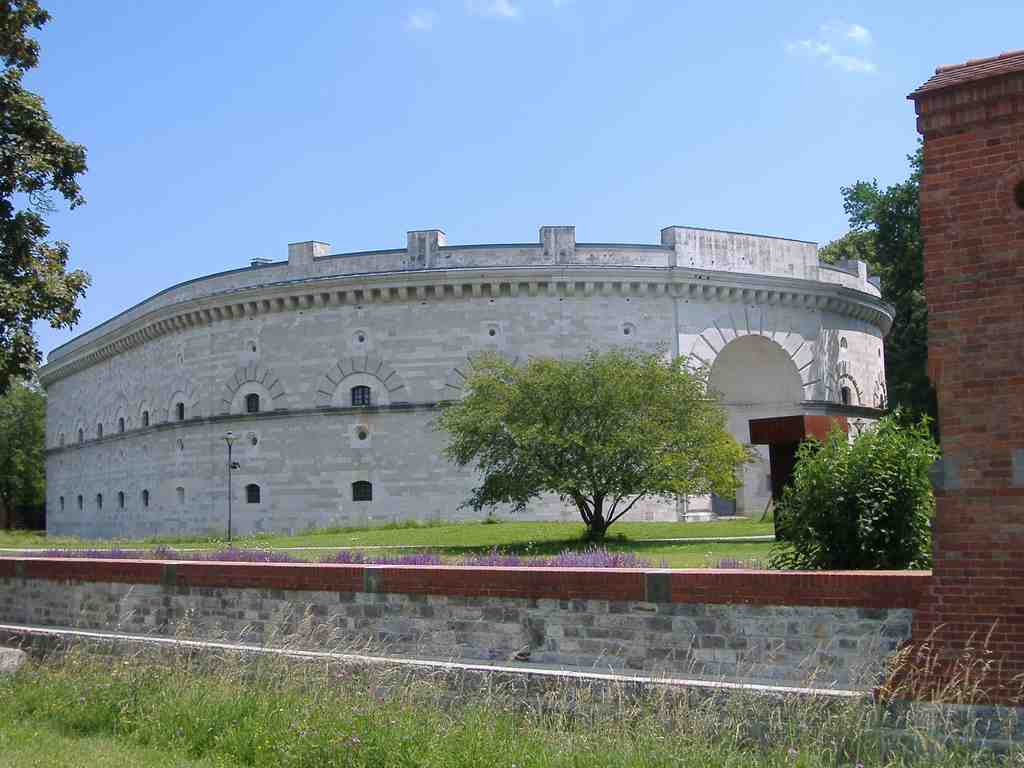
Look straight ahead for a massive, rounded, two-story stone building, with arched windows and a fortress-like feel - it curves gently and stands out in the middle of the open…Lire plusAfficher moins
Look straight ahead for a massive, rounded, two-story stone building, with arched windows and a fortress-like feel - it curves gently and stands out in the middle of the open park. Welcome to the mighty Reduit Tilly! Imagine, if you will, the year is 1828. King Ludwig I wants a structure so solid even an army would break a sweat trying to get in. Under the mastermind architect Leo von Klenze and fortress specialist Michael von Streiter, this semi-circular colossus rises along the Danube, its thick walls ready to shelter cannons, soldiers, and, in the ultimate plot twist, even the royal family and their crown jewels if Bavaria ever faced invasion! The echo you hear isn’t just your footsteps - it’s centuries of soldiers drilling inside those barrel-shaped rooms and whispers of secret escape plans. Named after General Tilly, Bavaria’s tough-as-nails commander from the Thirty Years’ War (the kind of guy you wanted on your side), this place means business. But don’t let the stern look fool you - today, it’s home to a fascinating World War I exhibition. And after decades of guarding the kingdom, the Reduit was spruced up for the 1992 garden show and now keeps watch over Klenze Park, trading the clang of weapons for birdsong and family picnics. Imagine the stories these walls could tell - and maybe, just maybe, a jewel or two is still hiding somewhere inside!
Ouvrir la page dédiée →Right in front of you, you’ll spot Klenze Park by its bright flowerbeds lining tidy gravel paths, and those distinctive old reddish-brick fortress walls peeking from behind a mix…Lire plusAfficher moins
Right in front of you, you’ll spot Klenze Park by its bright flowerbeds lining tidy gravel paths, and those distinctive old reddish-brick fortress walls peeking from behind a mix of trees-just follow the scent of summer flowers and listen for laughter drifting across the greenery. Welcome to Klenze Park, which locals simply call “Klenze”-but don’t worry, you don’t need to be on a first-name basis to enjoy it! Imagine standing here back before 1992: instead of blooming gardens, this whole area was filled with crumbling warehouses and industrial rubble, the only visitors being the occasional lost pigeon. Then, in a stroke of inspiration-and a few thousand wheelbarrows of soil-it all changed for the Bavarian State Garden Show in 1992. The park was named after Leo von Klenze, a royal architect who gave the local fortress its dramatic facades. You’re standing in a place practically built on history, as these grounds hold fortresses like the Reduit Tilly and Turm Triva. Today, they house parts of the Bavarian Army and Police Museums. From spring through summer, about 100,000 people wander these lawns each month-mostly energetic teens, but also families, friends, and visitors who have traveled from afar just for a taste of Klenze’s magic. At the river’s edge is a footbridge straight into the old town, and there’s even a floating stage-someone tried to create a city beach here once, believe it or not! In August, things get competitive with the Schanzer Fishermen’s Joust, where participants try to knock each other into the Danube. And if you’re here at the end of the school year? Get ready, because the Klenzefest transforms this peaceful park into a wild bash for students-with music, bands, and plenty of supervised fun. Yes, security makes sure it’s all fun and games, rather than wild wrestling matches with beer bottles. So, breathe in that fresh river air, listen for laughter, and maybe hum a tune-because Klenze Park is a lush patchwork of stories, celebrations, and a dash of youthful mayhem!
Ouvrir la page dédiée →Straight ahead you'll see a large, round white-stone fortress with small windows dotted all around its walls-look just past the trees and you can't miss its sturdy, commanding…Lire plusAfficher moins
Straight ahead you'll see a large, round white-stone fortress with small windows dotted all around its walls-look just past the trees and you can't miss its sturdy, commanding presence. This is no ordinary fortress-welcome to the Bavarian Police Museum, tucked inside the formidable Turm Triva in Klenze Park. If you think police museums are all lost whistles and old hats, think again! Imagine walking through these arched halls while the scent of old leather uniforms and polished boots lingers in the air. The museum first opened in December 2011, but the story inside stretches back over a century-right to the spark of the 1918 revolution. Here, you’ll discover police badges that glint like treasure, sleek old motorcycles standing ready, and uniforms that once marched through key moments of Bavarian history. You might even hear the echo of clicking heels as an officer patrols the halls. Past exhibitions have shown everything from historic documents and rare vehicles to cameras and typewriters once used by Bavaria’s finest. One thought-provoking show even explored the police’s complicated role during the dark days of the Nazi era-a reminder that courage and conscience sometimes come into sharp conflict. So, ready to solve the mystery of Bavarian policing? Step on in-but don’t try to handcuff your guide!
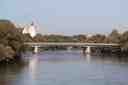
Ouvrir la page dédiée →In front of you is a simple, broad, grey steel bridge with sturdy concrete supports, stretching across the Danube river-just look straight ahead over the water and you can’t miss…Lire plusAfficher moins
In front of you is a simple, broad, grey steel bridge with sturdy concrete supports, stretching across the Danube river-just look straight ahead over the water and you can’t miss it! Now, let’s unravel the story of the Konrad-Adenauer-Brücke-you’re standing by Ingolstadt’s first permanent post-war crossing over the Danube! Imagine the year is 1948, the city is still patching itself together after World War II, and crossing the river is more of a balancing act than a stroll. Locals were hoping for a fancy stone bridge, but the city council-always mindful of the budget, maybe after one too many sausage-and-dumpling lunches-chose steel instead. The bridge finally opened in 1952 under the name Donaubrücke. There were grand ideas for a tram line running through here, but those tracks stayed in people’s dreams, not on the pavement. In 1977 the bridge was named after Konrad Adenauer, Germany’s chancellor, but by the 1990s, it was creaking under the weight of progress and Schwabian bread deliveries alike. The solution? A facelift between 2001 and 2002, swapping out the old superstructure for a new one, all for a cool 4.1 million euros. Today, it bridges not only the Danube but also Ingolstadt’s old town and lively Klenzepark, standing as a true connector-solid, unassuming, and always up for a strong traffic jam.
Ouvrir la page dédiée →
Foire aux questions
Comment commencer le tour ?
Après l'achat, téléchargez l'application AudaTours et entrez votre code de réduction. Le tour sera prêt à commencer immédiatement - il suffit d'appuyer sur lecture et de suivre l'itinéraire guidé par GPS.
Ai-je besoin d'Internet pendant le tour ?
Non ! Téléchargez le tour avant de commencer et profitez-en pleinement hors ligne. Seule la fonction de chat nécessite Internet. Nous recommandons de télécharger en WiFi pour économiser vos données mobiles.
S'agit-il d'une visite de groupe guidée ?
Non - il s'agit d'un audioguide en autonomie. Vous explorez indépendamment à votre propre rythme, avec une narration audio diffusée par votre téléphone. Pas de guide, pas de groupe, pas d'horaire.
Combien de temps dure le tour ?
La plupart des tours durent entre 60 et 90 minutes, mais vous contrôlez totalement le rythme. Faites des pauses, sautez des arrêts ou arrêtez-vous quand vous le voulez.
Et si je ne peux pas finir le tour aujourd'hui ?
Pas de problème ! Les tours disposent d'un accès à vie. Faites une pause et reprenez quand vous le souhaitez - demain, la semaine prochaine ou l'année prochaine. Votre progression est sauvegardée.
Quelles sont les langues disponibles ?
Tous les tours sont disponibles dans plus de 50 langues. Sélectionnez votre langue préférée lors de l'utilisation de votre code. Note : la langue ne peut pas être changée après la génération du tour.
Où accéder au tour après l'achat ?
Téléchargez l'application gratuite AudaTours sur l'App Store ou Google Play. Entrez votre code de réduction (envoyé par e-mail) et le tour apparaîtra dans votre bibliothèque, prêt à être téléchargé et commencé.
Si vous n'appréciez pas le tour, nous vous rembourserons votre achat. Contactez-nous à [email protected]
Paiement sécurisé avec 


