Visite Audio de Nîmes : Échos d'Empires et Pierres Sacrées
Le sang a autrefois taché ces pierres anciennes où les gladiateurs combattaient et les empereurs complotaient sous le soleil ardent de Provence. Nîmes regorge de légendes gravées dans le calcaire et de murmures perdus dans l'ombre de l'empire. Cette visite audio autoguidée remonte le temps, invitant les promeneurs à flâner à leur rythme et à découvrir des secrets que la plupart des passants n'entendent jamais. Chaque monument révèle une nouvelle couche, des arènes retentissantes de Nîmes à l'énigmatique Maison Carrée et à l'intrigue moderne de Nemausus. Quelle révolte menaça de renverser les puissantes Arènes de la ville ? Quel symbole caché se cache sous les colonnes de la Maison Carrée ? Pourquoi un général romain a-t-il dîné de figues au miel à un endroit aujourd'hui oublié de la plupart des voyageurs ? Traversez des ruelles autrefois foulées par des rebelles et des visionnaires. Ressentez le pouls de la révolte et émerveillez-vous, en traçant le pouvoir, la beauté et le scandale sous la lumière provençale. Glissez-vous derrière les grandes façades de Nîmes et commencez un voyage où chaque pas révèle un nouveau secret.
Aperçu du tour
À propos de ce tour
- scheduleDurée 40–60 minsAllez à votre propre rythme
- straightenParcours à pied de 3.1 kmSuivez le sentier guidé
- location_on
- wifi_offFonctionne hors ligneTéléchargez une fois, utilisez n'importe où
- all_inclusiveAccès à vieRéécoutez n'importe quand, pour toujours
- location_onCommence à Église Sainte-Perpétue et Sainte-Félicité de Nîmes
Arrêts de ce tour
This church was dreamed up by architect Léon Feuchère, with decorations by Joseph Felon and Colin, who clearly couldn’t get enough of fancy interiors, since they also did the…Lire plusAfficher moins
This church was dreamed up by architect Léon Feuchère, with decorations by Joseph Felon and Colin, who clearly couldn’t get enough of fancy interiors, since they also did the prefecture. Construction began when Louis-Napoleon Bonaparte laid the first stone in 1852-imagine the fanfare! The structure was up by 1862, but, just like my breakfast, the finishing touches took two more years. Finally, in June 1864, it was ready for its big debut. Inside, you’d find a breathtakingly tall nave-over 20 meters high, with elegant arches and Corinthian columns showing off at every chance. Two side chapels cozy up to the nave: on the south, you’ll find Mary holding baby Jesus, calmly ignoring everyone else’s attention. Push your gaze to the stunning stained glass windows-12 in the choir, each one for an apostle, practically a stained-glass family reunion! The rest? Geometric shapes, just in case you needed a break from all the holy faces. Suddenly, ordinary feels a little less ordinary here, right?
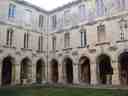
Ouvrir la page dédiée →To spot the Archaeological Museum of Nîmes, look for a large, light stone building with tall rectangular windows overlooking an open courtyard, marked by a graceful row of arches…Lire plusAfficher moins
To spot the Archaeological Museum of Nîmes, look for a large, light stone building with tall rectangular windows overlooking an open courtyard, marked by a graceful row of arches at ground level. Now, as you stand here, let’s take you time-traveling! Imagine the year is 1896-horses clop along the cobbled streets, and the air is filled with excitement. The mayor, Emile Reinaud himself, has just opened this museum, and the townspeople are bustling inside, eager to see treasures unearthed from Nîmes’s gritty soil. But the story actually begins even earlier! Before this grand old building housed ancient relics, the first archaeological museum in Nîmes was squeezed into the iconic Maison Carrée in 1823-imagine Roman columns brushing shoulders with dusty old vases in those days. By the late 1800s, the collection had outgrown its snug home. The city’s leaders found a new place here, in part of an old Jesuit college. That’s right, you’re standing in what was once a school! Inside, you’d find wonders from the Iron Age, rare Roman artifacts, and even medieval stones whispering tales of knights and monks. Local scholars flocked here when the École antique de Nîmes was founded in 1920. Picture eager academics debating over chipped pots and weathered coins, or cramming together for lectures as the rain drummed on the old windows. Their mission: to unlock secrets from Nîmes’s past, from prehistoric hunters to medieval townsfolk. The museum was a true treasure chest, every hallway echoing with discoveries. And don’t worry, the adventure didn’t end here! Recently, many of these artifacts were moved to the shiny new Musée de la Romanité. But if these old walls could talk, oh, the stories they’d share. Just don’t try hiding a Roman helmet under your coat-they count every piece!
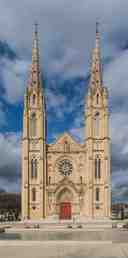
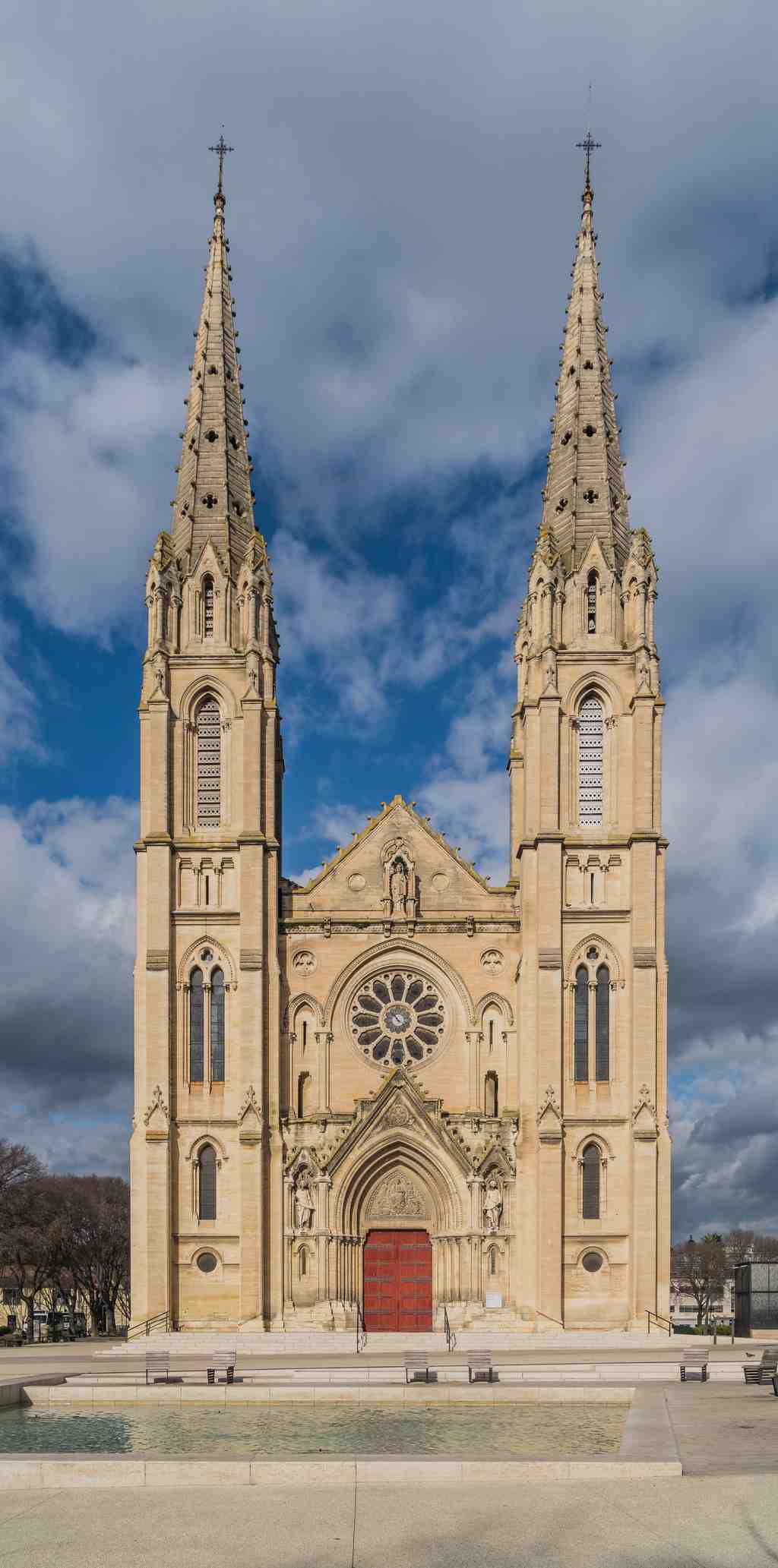
Ouvrir la page dédiée →Look ahead for a dazzling neo-Gothic church with two soaring spires reaching 70 meters into the sky, grand twin towers flanking a huge rose window, and a bold red door right in…Lire plusAfficher moins
Look ahead for a dazzling neo-Gothic church with two soaring spires reaching 70 meters into the sky, grand twin towers flanking a huge rose window, and a bold red door right in the middle-it’s hard to miss! Now, let your imagination take you back to the late 1800s, when this spot in Nîmes began to echo with the clanging of hammers and the dreams of architect Jean-Jules Mondet, who designed a church so splendid that most locals often mistake it for a cathedral (but shh, the real cathedral is hiding elsewhere in town). Dedicated to Saint Baudile, a fearless martyr of Nîmes from the 3rd century, this enormous church was built between 1867 and 1877. Picture the thrill on the first day its mighty doors opened, with room for 3,000 souls inside and ceilings that soared 20 meters above. The stained glass by Joseph Villiet must have painted the congregation in shimmering colors, while the organ by Vincent Cavaillé-Coll thundered through the cavernous space. Look up and you’ll spot two guardian angels, sculpted by Léopold Morice, and way above, Saint Baudile himself with a sword and palm, bravely keeping watch over the city. Even its twin spires compete with the clouds, daring you to crane your neck just one inch higher to take it all in. So, have you ever felt so tiny next to a church? Welcome to Saint-Baudile!
Ouvrir la page dédiée →
Afficher 10 arrêts de plusAfficher moins d'arrêtsexpand_moreexpand_less
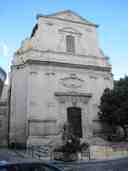
To spot the Great Temple of Nîmes, look for a grand, pale stone façade right at the corner of boulevard Amiral-Courbet and Place du Grand-Temple, topped with a large arched window…Lire plusAfficher moins
To spot the Great Temple of Nîmes, look for a grand, pale stone façade right at the corner of boulevard Amiral-Courbet and Place du Grand-Temple, topped with a large arched window and a sturdy set of steps leading up to richly decorated wooden doors. As you stand before the Great Temple, try to imagine the sound of footsteps echoing on old stones as monks in flowing robes once hurried inside-because this building actually began its life as a Dominican convent’s church, way back in the early 1700s. Picture it: from 1714 to 1736, while Europe was busy inventing powdered wigs and complicated handshakes, local craftsmen were busy raising this solemn, baroque masterpiece right here. But when the French Revolution swept away the old ways, the monks left, and the building sat empty... at least until a group of Protestants, with pastor Paul Rabaut at the helm, rented the space-not exactly Airbnb but it did the trick! In 1803, it officially became the city’s Grand Temple for the Reformed Church, and in 1821, a mighty organ was built to make sure even the neighbors could hear the hymns. Step closer and peek behind those grand doors-inside, you’ll find black marble plaques etched with the Ten Commandments and a summary of the law, all beneath the stately, simple arches of classic Languedoc Protestant architecture. Not bad for a place that survived revolutions, regime changes, and more than a few rained-out sermons!
Ouvrir la page dédiée →To spot this landmark, just look for an ancient, glowing Roman temple with tall marble columns and broad steps standing like a proud centerpiece in the heart of the city. Welcome…Lire plusAfficher moins
To spot this landmark, just look for an ancient, glowing Roman temple with tall marble columns and broad steps standing like a proud centerpiece in the heart of the city. Welcome to Nîmes-often called the “French Rome,” and trust me, even the Romans would be jealous of the sunshine here. This city isn’t just a spot on the map; it’s a living, breathing crossroads where history, sneakily, refuses to stay in the past. Imagine feeling the energy of a place where more than 150,000 people live today, and at festival time, the numbers grow fast-maybe a little like your heart rate after climbing all those steps! Nîmes sits as the crown of the Gard department, just a short ride north from the golden beaches of the Mediterranean or a glance south from the wild heights of the Cévennes hills. Its streets grow busy with people from Marseille to Barcelona, feverishly traveling between historic boulevards and futuristic trams. You might say Nîmes is the ultimate French “hub”-the Paris of Occitanie, only with a lot more sun and probably a bit more rosé. But let’s shake up our time machine for a bit: Picture the revelry in ancient Nemausus, as the settlement was called during Roman days. Roman legions marching through, their armor clanking, merchants haggling, and children darting through the columns. The city was already a superstar of the Roman Empire, a must-see along the Via Domitia-the fancy highway that led all the way from Italy to Spain. Rumor has it the locals were so inspired by the Romans that they invented a certain blue fabric here around the 18th century. Yes… denim-“de Nîmes,” literally from Nîmes! Next time you spot someone in jeans, you’ll know they’re secretly paying tribute to this sunny city. Mix in the region’s patchwork of landscapes: to the north, rocky garrigue dotted with tough little trees; to the south, lush fields and twisting rivers; and to the west, wide, inviting boulevards that seem drawn with a ruler and a sense of flair. And what’s that? The wind is picking up! That’s the mistral, a feisty cold wind that barrels down from the Rhône valley, sometimes so strong it threatens to sweep the city off its feet-hold onto your hat! Under your feet, narrow lanes of the old medieval town wind and twist, hiding secret courtyards and grand hôtels particuliers. Overhead, there’s blue sky-about three hundred days of sun each year. But don’t let the gentle weather fool you; Nîmes has seen drama that even Netflix couldn’t write. Over the centuries, torrents of rain have thundered down, filling rivers in hours and transforming streets into racing streams. Yet the people here always rebuild, refusing to let flood or fire dull the city’s luster. Modern Nîmes is as lively as its history: trams glide through the streets, the TGV brings visitors faster than Julius Caesar could dream, and festival crowds gather by the thousands. There’s a proud sense of identity here, as if every local-Nîmois and Nîmoise-leans in to whisper, “Yes, we know our city is special.” Wander far enough, and you’ll notice every corner offers a new flavor: Roman, Gaul, Camargue cowboy, or a touch of provençal gentility. And if you spot someone in a traditional feria hat, don’t be surprised-they might just challenge you to a dance or introduce you to their favorite bull. With its UNESCO-listed wonders, ancient temples, and that unmistakable golden evening light, Nîmes has earned its place among the world’s unforgettable cities. Just remember-if you lose your way, look for that regal temple in the square, glowing like a beacon. And if you think you can count all the city’s sunny days on one hand, you probably haven't been here long enough! Fascinated by the geography, urban planning or the toponymy? Let's chat about it
Ouvrir la page dédiée →To spot the Notre-Dame-et-Saint-Castor Cathedral, just look ahead for a tall, square, fortress-like stone tower with deep-set arched windows, Romanesque arches along the façade,…Lire plusAfficher moins
To spot the Notre-Dame-et-Saint-Castor Cathedral, just look ahead for a tall, square, fortress-like stone tower with deep-set arched windows, Romanesque arches along the façade, and a big green door topped by a triangular pediment-standing proudly on the bustling Place aux Herbes. Alright, my friend-here you are, outside the Notre-Dame-et-Saint-Castor Cathedral, and if these ancient walls could talk, I bet they’d have an opinion about all the pigeons. But let’s step back in time together, and listen to the echoes of Nîmes’ past. Centuries ago, this very spot looked a bit different-archaeologists have found traces of a church here from the 7th century, buried just beneath your feet. Imagine the gentle hum of medieval prayers and the steady pace of funeral processions, since this place served as a constant resting ground for Nîmes’ citizens for hundreds of years. Over those early centuries, churches were built, knocked down, then built again-each one bringing something new to the site, like a cake that just kept gaining layers. Now, shift forward to 1096: the first big Romanesque cathedral rises on top of all that history, grand enough to persuade Pope Urban II to come and dedicate it himself. The thick stone you see still carries the rhythm of graceful carved arches-a style straight out of old Provence. On the left side of the front, look closely and you’ll spot a row of biblical scenes, like a stone comic strip for the ancient crowd. But it wasn’t always peaceful here! During the religious wars of the 1500s and 1600s, the cathedral was battered and bruised by the Reformers-imagine windows shattering, flames licking the old stones, and desperate townsfolk running to protect their church. One tower, the “treasure tower,” was destroyed (and honestly, if you see a treasure tower get blown up, you know it’s been a wild week). The Protestant community even chipped in money to rebuild the nave-that’s some fierce local cooperation. The cathedral we see today mostly comes from the 17th century, built under Bishop Cohon, who favored a sweeping, single nave lined with chapels and crowned with a beautiful baroque Rosary chapel at the far end. If you picture golden candlelight and echoes under those soaring arched ceilings, you’ve got the atmosphere spot on. In the 1800s, a duchess had the entrance rebuilt to a neoclassical style, so she could pass through with her grand canopy-sometimes royalty just needs a bigger front door. But there’s a twist! Step inside, and you’ll find not just classical grandeur, but a burst of Romano-Byzantine decoration, added by an imaginative architect named Henri Antoine Révoil in the late 1800s. He wanted to remake the façade, but was stopped… otherwise, who knows what kind of exterior fashion statement this place would make! Look up at the north tower, capped with a terrace reached by a winding spiral staircase-it climbs up 40 meters into the sky, so if you hear the ghostly ring of bells, you know they’re coming from one of the eight bells in the tower. The ninth old bell is out of service, sitting a bit forlorn above the choir. And before you leave, imagine the deep, thunderous notes of the cathedral’s organ, which has been shaking the walls since 1643. Its great case is so famous, it's protected as a national treasure, and the sounds have grown richer with every restoration. The latest major touch-ups were finished in the 1980s, so if you hear a triumphant chord echoing through the streets, you know that centuries of music are still alive right here. So, standing in the heart of Nîmes, you’re not just at a cathedral; you’re surrounded by centuries of hope, destruction, reinvention, and a parade of colorful characters who all left their mark-sometimes with a chisel, sometimes with a bell, and sometimes with a really grand entrance. For a more comprehensive understanding of the historical, description or the the organ, engage with me in the chat section below.
Ouvrir la page dédiée →To spot the Museum of Old Nîmes, just look for the elegant pale stone building with tall French windows, a central balcony, and a set of stairs leading up to the front door, all…Lire plusAfficher moins
To spot the Museum of Old Nîmes, just look for the elegant pale stone building with tall French windows, a central balcony, and a set of stairs leading up to the front door, all right across the open square in front of you. Now, let’s travel back in time-right where you’re standing, imagine this grand façade overlooking Place aux Herbes, its white stone glinting in the sun, whispering stories through the centuries. But don’t be fooled! This wasn’t always a museum. In fact, 500 years ago, this was the residence of bishops, where power, prayer, and maybe some spectacular medieval gossip once echoed. Back in 1156, things were a bit tense-there was a tug-of-war between the local bishop and the cathedral chapter. Eventually, the bishop set up shop here, west of the cathedral, and in 1490, Bishop Guillaume Briçonnet built a proper palace fit for a prince of the church. But hold onto your hat! After the bloody events of the Michelade in the 16th century-a local tragedy involving violence against Catholics-nearly everything was demolished, palace included. The cathedral was rebuilt first, but it took a full hundred years before they could even think about redoing the palace. Why? The land had been chopped up and sold off like slices of cake, and buying it all back used up the king’s reconstruction funds. Classic! What followed was a saga you’d expect from a reality TV series. The new palace project finally kicked off in the 1680s under Bishop Jean-Jacques Séguier, guided by the architect Jacques Cubizol-but then, in swooped Alexis de La Feuille, an inspector and architect. Picture him, perhaps with a dramatic cape, introducing ideas from the north of France, which ruffled quite a few local feathers. Instead of the traditional southern style, he insisted on Parisian influences: a grand central body, a courtyard, and a garden. He didn’t get the slate-tiled roof he wanted, but he did have the regular tiles painted black to look like slate. The palace had a grand staircase and decorative features-though no loggia, just to keep local tradition on its toes. Still, progress was slow. For a long time, the palace was unfinished-the first floor wasn’t even habitable for decades! Not until 1757 did Bishop Charles-Prudent de Becdelièvre get architect Pierre Dardailhon to finish the job. The grand staircase was finally completed, side facades raised, and the residence at last became worthy of bishops-and history. By 1910, more changes arrived: the connection between the chapel and the palace was cut to create a new street, and further renovations shaped the building you see now. Then, in 1920, a local scholar named Henry Bauquier saw its potential and turned this lovely former palace into the Museum of Old Nîmes, preserving tales of the city’s daily life since the late Middle Ages. And inside? You’ll discover salons that recreate the world of textile industrialists from the 1700s and 1800s-and a whole room about the famous “serge de Nîmes” denim. After all, you’re standing in the hometown of blue jeans! Now a protected historic monument, the museum’s walls have seen centuries: from church intrigues to textile booms, from royal budgets to artistic renovations. Quite a journey, don’t you think?
Ouvrir la page dédiée →To spot the Arena of Nîmes, look ahead for a gigantic oval-shaped Roman building of pale stone, with two soaring tiers of arched openings and a bronze statue of a matador proudly…Lire plusAfficher moins
To spot the Arena of Nîmes, look ahead for a gigantic oval-shaped Roman building of pale stone, with two soaring tiers of arched openings and a bronze statue of a matador proudly standing right out front-it’s hard to miss, dominating the square like an ancient stone crown set against the sky. You’re standing before the Arena of Nîmes, one of the best-preserved Roman amphitheaters in the world! Imagine the year is 90 AD-close your eyes for a moment and picture bustling crowds in togas, dusty sandals shuffling, excitement in the air as up to 24,000 spectators fill these magnificent stands for a day of drama and spectacle. Originally, this arena was Nîmes’ version of Hollywood-where gladiators clashed swords, wild beasts thundered into the ring, and the public roared from rows cleverly designed to keep the rich up front and the modest folks higher up. And don’t worry, the ancient Romans thought of everything-lots of roomy corridors meant no one had to squeeze past each other; even ancient stadium exits were smarter than some airports today! But the Arena’s life wasn’t all blood and applause. After the end of gladiator games in 404, the building took a dramatic twist, becoming a fortress as invasions shook the land. Picture its massive arches blocked, defensive towers sprouting up; inside, whole neighborhoods squeezed in, complete with houses, shops, even two churches! An entire little village flourished here-though, judging by the smell, medieval plumbing left a lot to be desired. Fast-forward a few centuries, and the Arena was in such a shabby shape that François I, King of France, requested it be restored (while being handed a fancy silver model of the monument-some people collect stamps, others collect amphitheaters). It wasn’t until the 1800s that Nîmes finally set about freeing the Arena from its crust of medieval houses and rebuilt ruined sections with the help of dedicated architects. By the late 19th century, it stood once more as a place for awe and amazement. Let’s have a closer look at what’s around you! The facade you see features two tiers of perfectly stacked arches and columns-60 per level-giving the Arena its iconic look. Walking around, you might picture shade sails once stretched overhead to protect sunburn-prone Romans from the sizzling southern sun. If you could go underneath, you’d find secret halls below the arena floor-the “cruciform hall”-where the fighters and animals waited before bursting onto the stage. If only these stones could talk, what stories they’d tell of bravery, fear, and perhaps the world’s earliest stage fright! Decorative carvings are scattered around: a proud she-wolf, fighting gladiators, mythical creatures, and two bull heads gazing over the main gate. There’s even a special snail species living here found nowhere else in France, so if you trip over a gastropod, you might be meeting a true Nîmes original. Now, swap your toga for a party shirt-today, the Arena is alive with music, celebration, and passion! Every year, it hosts not just bullfights and historical reenactments, but concerts by rock legends, pop stars, and even famous comedians-imagine Tina Turner, David Bowie, or Metallica belting out tunes where gladiators once battled. Whether you’re here for jazz, techno, bullfights, or tennis, the Arena continues to bring people together from every walk of life-just a little less swordplay now. It’s a monument that survived the rise and fall of empires, the chaos of medieval times, daring restoration, and now-rock and roll. So go on, take it in: the history, the drama, the sheer size of it, and if the wind is right, maybe you’ll catch the echo of a Roman trumpet or the whisper of a crowd, still lingering after two thousand years. Ready to delve deeper into the characteristics of the monument, historical or the contemporary arenas? Join me in the chat section for an enriching discussion.
Ouvrir la page dédiée →Now, close your eyes for a second and listen to the bustle around you. Imagine 2,000 years ago: chariots rolling on Roman roads, markets buzzing with voices, and the scent of…Lire plusAfficher moins
Now, close your eyes for a second and listen to the bustle around you. Imagine 2,000 years ago: chariots rolling on Roman roads, markets buzzing with voices, and the scent of olives in the air. Step through the museum’s doors (in your mind, or for real if you like) and you’re about to walk through time. The adventure begins with discoveries from 2006 and 2007, when archaeologists working along the Allées Jaurès uncovered treasures beneath modern Nîmes-a Roman house, known as a domus, with two beautifully preserved mosaics named Achilles and Pentheus. Experts whispered in awe, calling them “the most beautiful pieces after those of Pompeii.” These spectacular works convinced Mayor Jean-Paul Fournier to build a new museum that would do justice to Nîmes’s Roman heritage and show off pieces hidden away in the city’s old 19th-century archaeological museum. Fast forward past a dramatic architecture contest displayed at the Carré d’Art-imagine three architects, plans in hand, dreaming of a legacy, and you have the start of this museum’s story. Ultimately, Portzamparc’s shimmering glass mosaic design won. Come 2015, the museum’s first stone was laid, and soon enormous cranes were hoisting up monumental mosaics and ancient milestones from the cloister of the Jesuits, ready to anchor the new halls. If you listen closely, you can almost hear the clanking of construction and the whispers of history being dusted awake. Step inside and the magic sparks to life with 65 multimedia installations: augmented reality, immersive screens, and audio-visual journeys. You’ll zip from the pre-Roman past-imagine a fully rebuilt Gallic household-then into the daily routine of ancient Romans: see artifacts from kitchens and bedrooms, dazzling mosaics, and even a recreated Domus Villa Roma. Historic tension unfolds as the Middle Ages envelope Nîmes: the city shrinks, and the old Roman amphitheater becomes a fortress. Blocks of ancient reliefs-the only remnants from vanished churches-send you clues from the fourteenth century, their stories tangled between religion and everyday medieval quirks. But wait, there’s more: the museum hosts blockbuster exhibitions-gladiators, emperors, even the forgotten saga of Pompeii. And just when you think it can’t get any better, head to the rooftop terrace for a stunning 360° view over Nîmes. There’s even a Michelin-starred restaurant and a Mediterranean garden-proof that the Romans knew how to throw a good party, but the French know how to dine in style. So whether you’re a history buff, a foodie, or just looking for a spot to daydream above the city, this museum stands as a glittering bridge between the histories, mysteries, and vibrant life of Nîmes. Ready to step inside, or hungry for another story? Let’s see where the journey takes us next! Interested in a deeper dive into the history of the musée de la romanité project, the permanent exhibition or the temporary exhibitions? Join me in the chat section for an insightful conversation.
Ouvrir la page dédiée →To spot the Church of Saint-Paul, look ahead for a grand, creamy stone building with a tall, pointed bell tower and three striking rose windows above its heavy carved doors. Now,…Lire plusAfficher moins
To spot the Church of Saint-Paul, look ahead for a grand, creamy stone building with a tall, pointed bell tower and three striking rose windows above its heavy carved doors. Now, imagine it’s the 1800s-the air smells faintly of fresh-cut stone, and you hear the distant clang as Pierre Boulanger, the master metalworker behind the ironwork of Notre-Dame de Paris, is fixing the doors under the watchful eye of architect Charles-Auguste Questel. It’s not all hammers and hard hats; artists like Hippolyte Flandrin are busy painting the walls and arches inside, creating scenes so colorful and grand they must have looked like the world’s fanciest storybook. The only problem? Over time, those murals have faded a bit, just like old family photos shoved in the attic! In 1985, the church jumped into the limelight as TV cameras rolled for the celebrity wedding of Yves Mourousi, making the ancient stone walls ring with excitement. And don’t forget the music-a pipe organ built by Aristide Cavaillé-Coll waits inside, ready to rumble the very ground at the touch of a key. If this church deserves anything, it’s a fresh coat of care, but right now, it stands proudly, a patchwork of history, music, and a hint of celebrity drama.
Ouvrir la page dédiée →Look ahead for a brilliantly lit rectangular Roman temple standing proudly above the square, with tall, elegant columns wrapped around its sides and grand stone steps leading up…Lire plusAfficher moins
Look ahead for a brilliantly lit rectangular Roman temple standing proudly above the square, with tall, elegant columns wrapped around its sides and grand stone steps leading up to its entrance. Now, imagine yourself here almost 2,000 years ago - the sun is setting and the marble glows gold, as the Maison Carrée rises above the bustling Roman forum like a box of ancient mysteries waiting to be unwrapped. Built at the dawn of the 1st century AD, this splendid temple honored the young grandsons of Emperor Augustus, Lucius and Caius Caesar, Rome’s golden children who were destined for greatness but sadly, never made it to the throne. So, yes, you’re looking at a monument built not for gods, but for two young consuls who were once the pride of the empire… talk about big shoes to fill! With thirty columns soaring nearly nine meters into the air, Corinthian capitals so ornate you’d think the stone itself was showing off, and those swooping acanthus leaves curling along the frieze, this temple wanted to impress every passerby, from plebeian to senator. Imagine priests in swirling robes ascending the fifteen steps, ceremonies on the tall podium, and - in true Roman style - the public craning their necks and looking very impressed. The Maison Carrée means “square house,” though your math teacher would point out it’s really more of a rectangle. Here’s the twist: in 16th-century French, “carré” just meant “right-angled” - so rectangles could be “long squares.” Don’t worry: nobody’s handing out geometry homework here! Over the centuries, this temple has been the ultimate multi-tasker. Imagine it as a medieval city hall, where Nîmes’ consuls argued about taxes and local drama. Picture the interior split into rooms and even two floors, chimneys and stairs jammed inside, square windows cut right through those ancient stones. There was even a time it became a house and a stable - try explaining that on an Airbnb listing! Mongrel stonework aside, the outside remained stunning, and so the Maison Carrée made it to the present pretty much whole - even if the inside has played the architectural version of musical chairs. Then, cue the medieval intrigue: the local duchess wanted to turn the temple into a grand family tomb, but the clergy held on tight, transforming it for a while into the church of the Augustins. Even after the Middle Ages, the drama wasn’t over. During the French Revolution, it became headquarters for the bigwigs running the region, and later, a museum for antique treasures. When 19th-century restorers arrived, they patched it, roof and all, and left a Latin message on the side: “Repaired by the king’s generosity and the people’s pocket!” Kind of the world’s fanciest thank you note, if you ask me. Fast forward to recent years, with architects and craftspeople laboring for over 44,000 hours, scrubbing and restoring every inch. In 2023, Maison Carrée was finally crowned on UNESCO’s World Heritage list-not bad for an old rectangle! So why is it so important? Beyond the awe-inspiring view, this is the world’s finest surviving Roman temple-a compact cousin to Rome’s grand Pantheon, still standing with all those Corinthian flourishes perfectly intact. It embodies a turning point in history: the dawn of Pax Romana, when Augustus brought peace, stability, and family values - and made sure everyone remembered it with impressive architecture. These days the space welcomes everyone: if you can’t climb the famous steps, don’t worry - there are videos and braille guides, and if you’re a fan of dramatic Roman history? Well, there’s surely enough here to keep you entertained until the next toga party. So, gaze up at this timeless survivor, and see in its stones not just ancient glory, but two millennia of reinventions, arguments, and celebrations-living proof that no one does “timeless” quite like the Romans, or the people of Nîmes.
Ouvrir la page dédiée →Look straight ahead for a bold, modern building made of glass and sleek white columns, with a dramatic grid-like canopy stretching over its steps-this is the Art Square, or Carré…Lire plusAfficher moins
Look straight ahead for a bold, modern building made of glass and sleek white columns, with a dramatic grid-like canopy stretching over its steps-this is the Art Square, or Carré d’Art. In front of you stands a building that’s a bit of a show-off, honestly-just look at all that glass and steel glinting in the sunlight, like it’s daring the ancient Roman Square House opposite to notice it. But the Art Square, or Carré d’Art, wasn’t always this futuristic. Imagine the year is 1952, and the square is filled with the sound of rushing fire engines. The grand neoclassical theatre that once dominated this spot- with its proud, columned facade-was ablaze, and all that remained afterward were charred walls and a few lonely columns. Fast forward a few decades, and you’d have seen not much more than an empty shell. In the 1980s, Mayor Jean Bousquet, who must’ve thought, “Let’s do something bold, and maybe confuse the Romans,” announced a competition for architects worldwide. Heavy hitters joined: Frank Gehry, Jean Nouvel, and others, but the prize went to Norman Foster, a visionary Brit with a liking for glass and strong coffee. Foster went through several ideas, even pondering whether to keep the old columns, but the final decision was to move them to a nearby highway rest stop (so, if you see someone hugging a column on the A9, now you know why). With a fresh vision, Foster set out to construct this shimmering, square jewel box-a contemporary echo deliberately facing the ancient Maison Carrée temple across the way. In May 1993, the Carré d’Art opened, and suddenly Nîmes had not just a breathtaking landmark but a place buzzing with art and ideas. The Carré combines two cultural powers: a museum of contemporary art and the town’s public library, all under its airy glass roof. Built of glass, steel, and concrete, it feels like you’re entering a space station in the middle of Roman France. Today, if you step inside, you’ll first find the library-a treasure chest of nearly 380,000 volumes, from medieval manuscripts to rare books and modern digitized archives. Inside, you might stumble across a 10th-century manuscript or etchings from Chagall-try slipping those out in your back pocket! Regular exhibitions showcase original documents, and much of the collection can also be explored online. The library crowd ranges from scholars and students to everyday people looking for their next favorite mystery novel-though I hear they’re still hunting for the missing neoclassical columns. But what sends a shiver of excitement through the building is the museum itself. Startled by the label “Musée de France?” Don’t worry, you don’t need a beret to enter! This museum has been building its permanent collection since 1986, tracking the energetic movements born in southern France: Nouveau Réalisme, Supports/Surfaces, and “figuration libre”-that’s a fancy way of saying artists who didn’t like to color in the lines. You’ll also find works by stars of Arte Povera, like Mario Merz and Giuseppe Penone, along with art that spans the globe, from American experimenters to German painters and Spanish visionaries. There are photo installations by artists like Sophie Calle and Taryn Simon, along with surprises hiding in every room. If you were here in 2013, you’d have seen Norman Foster himself return to design the 20th anniversary exhibition-imagine the architect personally showing off his creation, probably fighting the urge to rearrange a few light switches. So as you stand here, the air shimmering with possibility and innovation, remember: in this square, glass and stone, ancient and new, history and tomorrow, all share the same address. Let’s hope the ancient Romans aren’t too jealous-after all, they never had Wi-Fi or a Marc Chagall etching in their libraries! Exploring the realm of the historical, library or the museum? Feel free to consult the chat section for additional information.
Ouvrir la page dédiée →Right ahead of you, you’ll spot an elegant stone terrace decorated with big marble vases, detailed balustrades, and intricate statues-just look for the sweeping staircases framed…Lire plusAfficher moins
Right ahead of you, you’ll spot an elegant stone terrace decorated with big marble vases, detailed balustrades, and intricate statues-just look for the sweeping staircases framed by green trees and you can’t miss the Fountain Gardens! Welcome to the legendary Fountain Gardens, a place where history, water, and a little bit of Roman flair all come together. Now, pause for a moment and take a deep breath. Imagine it's over two thousand years ago, and the only sound is water bubbling from a mysterious spring-a spring so enchanting that ancient tribes worshipped it, even before the Romans arrived. This magical source was, quite literally, the reason for Nîmes’ birth; people settled here just to be near its life-giving waters way back in the Iron Age. As centuries rolled by, the Romans swaggered in and said, “Let’s make this epic!” They built a marvelous sanctuary called an Augusteum, right where you’re standing, celebrating both the emperor and the eternal flow of this spring. These lush gardens still follow the grand design of Roman times-notice how the curved staircases wrap gracefully down to the fountain, and the remains of ancient monuments, like the Temple of Diana and the mighty Magne Tower, peek out amidst the greenery. If you squint hard enough, you might feel like a toga-wearing senator is about to stroll past you asking for directions to the forum! Fast forward to the bustling days of the Middle Ages and beyond, and the story gets even juicier. At one point, the city’s vital water canal was so important, it ended up being used for mills. That led to squabbles between thirsty townsfolk and millers, until finally, those pesky mills were torn down in 1742. Not long after, you’d see washerwomen scrubbing away at bedsheets right in the fountain’s basin. The city’s leaders panicked at the health risks. Yep, nothing like a dirty sock emergency to spark urban reform! So, they built a fancy outdoor laundry station nearby-a little less poetic than bathing in history, but definitely more sanitary. But the most ambitious makeover was masterminded between 1745 and 1755 by Jacques Philippe Mareschal, an engineer who believed even ancient ruins deserved a touch of French garden elegance. He blended stately staircases, sparkling canals, and white marble statues-many of which, believe it or not, used to decorate a castle in Montpellier! Imagine rolling those heavy vases and statues into Nîmes: "Hey Fred, careful with that 300-year-old marble, all right?" As you wander along the shaded walkways, look up at the grand pine, chestnut, and cedar trees waving overhead. The air is thick with stories-Romans arguing over aqueduct plans, city consuls puzzling over droughts, even daring explorers crawling through underground water tunnels like medieval Indiana Jones. During scorching summers or rainy seasons, the garden stayed open to all, with the majestic wrought-iron gates letting in locals, travelers, and the odd visiting noble or duke. And every year, the city marvels at the blend of ancient engineering and French artistry that keeps the gardens blossoming. So, next time you spot someone staring dreamily at the rippling water or climbing up those majestic half-moon staircases, remember-they’re walking over layers of forgotten temples, hidden tunnels, ancient laundromats, and centuries of human wonder. If these trees and stones could talk, just imagine the secrets they’d spill!
Ouvrir la page dédiée →
Foire aux questions
Comment commencer le tour ?
Après l'achat, téléchargez l'application AudaTours et entrez votre code de réduction. Le tour sera prêt à commencer immédiatement - il suffit d'appuyer sur lecture et de suivre l'itinéraire guidé par GPS.
Ai-je besoin d'Internet pendant le tour ?
Non ! Téléchargez le tour avant de commencer et profitez-en pleinement hors ligne. Seule la fonction de chat nécessite Internet. Nous recommandons de télécharger en WiFi pour économiser vos données mobiles.
S'agit-il d'une visite de groupe guidée ?
Non - il s'agit d'un audioguide en autonomie. Vous explorez indépendamment à votre propre rythme, avec une narration audio diffusée par votre téléphone. Pas de guide, pas de groupe, pas d'horaire.
Combien de temps dure le tour ?
La plupart des tours durent entre 60 et 90 minutes, mais vous contrôlez totalement le rythme. Faites des pauses, sautez des arrêts ou arrêtez-vous quand vous le voulez.
Et si je ne peux pas finir le tour aujourd'hui ?
Pas de problème ! Les tours disposent d'un accès à vie. Faites une pause et reprenez quand vous le souhaitez - demain, la semaine prochaine ou l'année prochaine. Votre progression est sauvegardée.
Quelles sont les langues disponibles ?
Tous les tours sont disponibles dans plus de 50 langues. Sélectionnez votre langue préférée lors de l'utilisation de votre code. Note : la langue ne peut pas être changée après la génération du tour.
Où accéder au tour après l'achat ?
Téléchargez l'application gratuite AudaTours sur l'App Store ou Google Play. Entrez votre code de réduction (envoyé par e-mail) et le tour apparaîtra dans votre bibliothèque, prêt à être téléchargé et commencé.
Si vous n'appréciez pas le tour, nous vous rembourserons votre achat. Contactez-nous à [email protected]
Paiement sécurisé avec