Visite audio de Nice : Échos de l'Empire aux Aventures sur l'Avenue
Une Victoire aux ailes de bronze contemple les ombres des palmiers et les rivières disparues – voici Nice, où chaque recoin déborde de drames cachés sous le soleil de la Riviera. Au cours de ce parcours audio autoguidé, dépassez les vues de carte postale pour découvrir des histoires puissantes que la plupart des visiteurs n'entendent jamais. Quel acte secret de théâtre politique a amené le président français à se tenir au Monument du Centenaire ? Pourquoi un mystérieux obélisque à l'entrée du Pont Neuf a-t-il soudainement disparu, laissant les habitants en proie aux rumeurs ? Quelles rivalités oubliées ont résonné à travers le Jardin Albert Ier alors que les orchestres se pressaient pour divertir les foules agitées ? Promenez-vous sur les places de marbre et dans les jardins ensoleillés, suivez les faibles échos des défilés perdus et des célébrations clandestines. Chaque monument vibre d'intrigue, de trahison ou de promesse – vous invitant à voir Nice comme une ville en mouvement perpétuel. Le passé n'est pas figé ici ; il palpite juste sous la surface. Commencez votre aventure maintenant, et laissez les yeux vigilants de la Victoire guider chacun de vos pas dans un Nice plus profond.
Aperçu du tour
À propos de ce tour
- scheduleDurée 30–50 minsAllez à votre propre rythme
- straightenParcours à pied de 2.2 kmSuivez le sentier guidé
- location_on
- wifi_offFonctionne hors ligneTéléchargez une fois, utilisez n'importe où
- all_inclusiveAccès à vieRéécoutez n'importe quand, pour toujours
- location_onCommence à Monument du Centenaire
Arrêts de ce tour
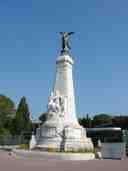
Look just ahead, and you’ll see a tall, striking white monument that rises like a sharp triangle into the sky. The top of the monument is crowned with a dark bronze statue - a…Lire plusAfficher moins
Look just ahead, and you’ll see a tall, striking white monument that rises like a sharp triangle into the sky. The top of the monument is crowned with a dark bronze statue - a winged woman who looks like she’s just about to take flight. Her arm is raised high, wrapped in what appears to be the French flag. At the base, carved in shining white marble, two women are seated together in an embrace: one young, gentle, leaning into the other, who is helmeted and calm. If you look closer, you’ll spot coats of arms, old stonework, and flowers blooming at the monument’s foundation. Standing here, let me transport you back to 1896. Imagine the crowd, dressed in colorful finery, the sound of brass bands, and the proud voices echoing off the stone. This is no ordinary statue. Built to mark one hundred years since Nice first became part of France in 1793, the Centennial Monument is full of secrets and symbols. The winged woman up top is Victory - like Nike, the Greek goddess who gave our city its name. She’s not just taking an oath; she’s promising eternal loyalty, echoing Nice’s old motto: “Nissa fidelissima” - Nice, ever faithful. Now, look at the two figures below. The young woman is Nice herself, leaning in to give herself to France, the confident motherly figure. But France doesn’t wear her usual revolutionary cap - she’s got a helmet, her chest modestly covered, her manner calm. This isn’t a wild revolution; it’s a gentle, reassuring union. You’ll also notice the ancient walls atop Nice’s head - a nod to the city’s old medieval defenses, as if she’s handing over her heart and her history. When they unveiled this monument, the president of France himself stood right about where you are now. Politicians, senators, the mayor, proud families - they all came to witness a new chapter. Look for the dates on the front: 1793, 1893, and 1860. The monument doesn’t just celebrate one joining, but many - telling the story of Nice as a city of both courage and welcome, blending the past and present for all who walk by. If you listen closely, you might imagine the cheers, the rustling flags, and the secret pride of a city that has changed hands but never lost its soul. Take a moment to look around - this is history, frozen in marble and bronze, waiting to share its story with you.
Ouvrir la page dédiée →Just ahead, you’ll see the Albert I Garden stretching out before you-look for a lush green space scattered with palm trees and paths winding through bright flower beds. You’ll…Lire plusAfficher moins
Just ahead, you’ll see the Albert I Garden stretching out before you-look for a lush green space scattered with palm trees and paths winding through bright flower beds. You’ll notice a stone fountain in the center, gently splashing water, and if you look up, you can’t miss the tall palm trees framing everything against the sky. The Boscolo Hotel Plaza’s long, elegant facade marks one edge of the garden, so just keep an eye out for the white columns and rows of balconies and the greenery sprinkled all around you. Standing here today, you’re surrounded by one of the oldest public gardens in Nice. Now, just imagine stepping into this very spot in the early 1800s. The air would be fresh, tinged with salt from the nearby sea, and laced with the scent of chestnut, linden, mimosa, and acacia. But believe it or not, before this was a paradise of trees, it was just a patch of swampy land called “Pré de l’embouchure.” When city planners first drew out this garden, their biggest challenge was to tame the soggy ground-think of boots squelching into mud as workers planted the very first trees. As the years passed, the garden became a truly magical escape. It was planted with exotic and native trees-rows of palms and mimosas, cloud-like planes, and even a collection of mulberries and cherry trees. The city brought water all the way from a hillside spring so they could power a fountain right at the heart of the garden. Picture crisp, cold water bubbling up in the middle of a sunny lawn, as people strolled by in elegant hats. Imagine, too, how this place filled with the laughter and chatter of visitors from all over Europe. Back then, promenading was the height of fashion-if you didn’t stroll here at least once, did you even visit Nice? The garden wasn’t always peaceful, though. When casinos and beaches became more popular in the Belle Époque, the gardens fought to keep their charm. To win back the crowds, they built music kiosks, installed new benches, and shined up the lamp posts. Sometimes the only military band in town had to rush back and forth, playing at both the garden and the Cours, just to keep everyone entertained. So, as you stand here, look at the mix of palm shadows and sunlight on the grass, and think about the thousands of footsteps before you-from gardeners and city planners, to musicians hurrying to the next performance, to visitors from distant lands. The Albert I Garden has always been a place of movement and mingling-a living piece of Nice where history and nature come together.
Ouvrir la page dédiée →You’re now standing where the New Bridge of Nice, or “Pont Neuf,” once proudly spanned the Paillon River. Try to imagine it: the year is 1824, and the city is buzzing with…Lire plusAfficher moins
You’re now standing where the New Bridge of Nice, or “Pont Neuf,” once proudly spanned the Paillon River. Try to imagine it: the year is 1824, and the city is buzzing with excitement. This was more than just a bridge-it was a symbol of a growing, changing Nice. The city’s center, the Old Town, was filling up, and new neighborhoods were popping up on the far side of the river. The Paillon itself, lively and stubborn, was no easy thing to cross. The only way over was the old bridge, but it was too far for most people. Something needed to change. Along came the New Bridge. It was a true marvel for its time-three grand stone arches, each stretching twenty-one meters, almost floating above the rushing water. It stood near the river’s mouth and connected new parts of town with the historic core, right in line with the place Masséna you might recognize today. The bridge was blessed by Bishop Colonna d’Istria amid a swirl of ceremony. Fancy names were given-officially, it was the “Royal Saint-Charles Bridge”-but everyone in Nice simply called it the Pont Neuf. Just picture the scene on the bridge’s opening day: the air full of anticipation, the clatter of horses’ hooves, elegant carriages rolling over fresh stone, and crowds pressing close to get the very first walk across. Stories say the king was fascinated by Egypt, so the local Jewish community gifted him an obelisk. This mysterious, pointed monument towered at the entrance to the bridge, its ancient grandeur making everyone who passed pause for a moment. But it was a bit awkward, right at the front-some complained it was blocking the way. There was a little drama: should they move it or not? In the end, the obelisk simply disappeared in 1861, leaving locals to wonder and gossip. As the decades passed, the city kept growing. In 1882, when Nice wanted to cover the Paillon and build a glittering casino at place Masséna, the famous Pont Neuf was taken down. Its stones scattered, the river tamed. All that’s left here is the memory-a bridge that once brought the city together and carried the footsteps of generations. Now, take a moment to look around and let the echoes of the past swirl around you. What would it have been like to walk across that bridge, hearing the city’s heartbeat in every step?
Ouvrir la page dédiée →
Afficher 8 arrêts de plusAfficher moins d'arrêtsexpand_moreexpand_less
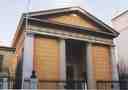
Right in front of you, you’ll see a simple yet striking building that stands out from its neighbors. Look for its soft yellow-orange façade and the tall, classic columns that hold…Lire plusAfficher moins
Right in front of you, you’ll see a simple yet striking building that stands out from its neighbors. Look for its soft yellow-orange façade and the tall, classic columns that hold up a clean triangular roof, a bit like an ancient temple from old Greece. The entrance is set back between the columns, and there’s an iron fence surrounding the front. The structure seems a little out of place here, and that’s your clue-you’re looking at the Waldensian Temple of Nice. Imagine standing here in the mid-1800s. This street was busier than you’d expect, filled with the sounds of people speaking not just French, but Italian-and many other languages, too. The building before you was once alive with the hopes of a community that had faced years of struggle just to practice their beliefs. The Waldensians, as they were known, weren’t the powerful kind of people you’d expect to build such a proud temple. They were ordinary folks-hotel workers, gardeners, even seamstresses-most from the high valleys of Piedmont, over the mountains, who found their way to Nice for work and safety. Now, close your eyes for a moment and picture this: before this temple, all they had was a cramped apartment above a shop, then a slightly bigger space on a lively street. Finally, after years and years, and with a lot of excitement and maybe a touch of fear, they managed to buy this patch of land right here and start building something of their own, something lasting. It’s not just a place for prayers. Behind these walls, there were classes for children, noisy sewing gatherings, and even a free library. Yet, the air around this place wasn’t always so free. For a long time, Protestant worship was forbidden here, and just a few decades earlier, you wouldn't have seen this temple at all. There’s a little twist to the story-now look along the side, where a narrow passage runs beside the temple. That lane is named after this very place, the Passage du Temple Vaudois-a reminder of what once happened here. Even after France took control of Nice in 1860, the Waldensian community had to negotiate-literally-how they could keep worshipping inside this temple. They struck a deal, with annual payments as small as a symbolic hundred francs, just to prove they still had a right to be here. So next time you see the doors shut or hear the silence inside, remember: this building was once full of life, languages, arguments, and laughter. And even now, its columns and quiet strength stand as a sign that, sometimes, the most ordinary people can build extraordinary things in the face of uncertainty.
Ouvrir la page dédiée →Here you are at the heart of the old County of Nice-imagine standing between the blue Mediterranean and the shoulder of the Alps, with salty sea air mixing with crisp mountain…Lire plusAfficher moins
Here you are at the heart of the old County of Nice-imagine standing between the blue Mediterranean and the shoulder of the Alps, with salty sea air mixing with crisp mountain breezes. Hundreds of years ago, Ligurian tribes roamed these lands, tending sheep, camping under the wild olive trees, and telling stories by night. Then came the Romans-marching in with their sandals slapping on the stones, their voices echoing off the cliffs. Time rolled forward. After Rome’s collapse, the Franks took over, and this region became part of the powerful County of Provence. There was even a wild stretch when Nice played at being its own tiny republic, ships at anchor in the bay, the chatter of traders filling narrow alleyways. But it wouldn’t last. In 1388, powerful families argued, deals were struck in candle-lit chambers, and with a whisper and the swipe of a pen, Nice became part of the House of Savoy. It was more like setting up a new branch of government than handing it to a king. Think of it as a place that always found itself in the middle of someone else’s tug-of-war. In 1561, the old Latin documents were finally replaced by Italian-imagine the murmurs in government halls as everyone practiced their new official greetings. Then, in the 1600s, the Duke of Savoy opened Nice as a free port. The town filled with the shouts of sailors, the clatter of carts, and the ringing of coins as merchants rushed to try their luck. But turmoil was never far away. Throughout the centuries, Nice was handed back and forth between France and Savoy, with borders redrawn over and over, like a map nobody quite agreed on. Picture soldiers on horseback, muddy and tired, and villagers not sure which flag to salute in the morning. When revolution swept through France in the late 1700s, the county was dragged into its whirlwind. Armies marched through, loyalties were questioned, and in the shadows, rebels known as barbets lurked, plotting against the French occupiers. The story finally winds down in 1860. As the wind rustled through plane trees, the people of Nice were asked to decide: Would they stay with Italy, or become part of France for good? The vote was cast, the banners unfurled-Nice became French, and you can feel echoes of all those voices in the stones beneath your feet. If you listen a little closer, maybe you’ll still catch a Ligurian ghost whispering secrets of the old county on the breeze. Ready to discover more? Let’s head to our next stop.
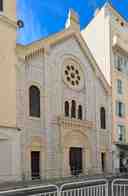
Ouvrir la page dédiée →As you come down rue Gustave Deloye, keep your eyes to the left-there it is, the Nice Synagogue, standing quiet and steadfast among the quieter city buildings. You might notice…Lire plusAfficher moins
As you come down rue Gustave Deloye, keep your eyes to the left-there it is, the Nice Synagogue, standing quiet and steadfast among the quieter city buildings. You might notice its elegant, sand-colored exterior stretching up with arched windows facing the street, its solid doors set between sturdy columns, and a modest elegance that commands respect without shouting for attention. Look for the tall, rounded windows, and the Hebrew inscription above the entrance-these are your clues that you’ve found this landmark. The street in front is busy with the sounds of everyday Nice, but for over a hundred years this place has seen stories quite unlike any other on this route. Take a moment to imagine walking into Nice in the late 1800s: the city is growing, shedding some of its old superstitions, and, finally, a proper synagogue is being built for the Orthodox Jewish community-a place they could openly call their own. Paul Martin designed it, and in 1886 its doors opened wide, a powerful symbol for a people whose story in this city began in the shadows. If you stood here centuries ago, you might have seen small groups wearing special marks on their clothing, hurrying along, careful not to draw attention. Jews first appeared in Nice in the 14th century, arriving quietly, often not by choice. They’d weathered rules that forced them into certain neighborhoods, pushed them into specific trades, and made them wear badges like characters in a strange, ongoing costume drama. At times, they might have lived just up the street, but by decree had to gather on the third floor of a building owned by a Catholic brotherhood-their synagogue a secret sanctuary in someone else’s house, their ritual bath hidden in the basement below. Imagine the nervous excitement of those quiet walks to prayer, never quite sure who would knock at the door. The rules changed again and again, swinging between strict and more relaxed as Nice traded hands-Savoy, Sardinia, France. But even during the worst times, the community endured. Then, in the 19th century, the legal chains fell away, and by the time this Great Synagogue opened, everyone in Nice could worship as they wished. But the building’s calm was shattered during the Second World War. For a brief moment, Nice felt like a refuge, the city drawing Jews fleeing persecution from all over France and even further away. But then, in 1943, the fear grew sharp and sudden: over five terrible months, around 5,000 Jews from Nice were arrested and deported-an entire world snatched away. Yet, incredibly, the synagogue did not fall silent. After the war, families arrived from North Africa and elsewhere, their laughter and sorrow mixing in the halls. Today, the Jewish community is smaller, but every day this building stands as a quiet witness: to kindness and cruelty, hardships and hope, sorrow and celebration. Look up at those rounded windows-how many stories have they kept inside, while the city outside rushed by unaware? Take a moment to stand here, feeling the life of the street and the quiet weight of history pressing through the walls. When you’re ready, we’ll continue our journey through Nice, carrying a little of this story with us as we go.
Ouvrir la page dédiée →To spot the Church of Saint Nicholas and Saint Alexandra, look for a cream-colored building with a tall, rounded front and three arches along the roofline. Each arch is topped…Lire plusAfficher moins
To spot the Church of Saint Nicholas and Saint Alexandra, look for a cream-colored building with a tall, rounded front and three arches along the roofline. Each arch is topped with a golden cross, and just above the main door, you’ll see three bright icons-saints gazing out from painted circles. There’s a large wooden door beneath a delicate stone arch, and narrow stained-glass windows reach upwards in the center. The church stands along rue Longchamp, so look for the street sign on the corner. If you see a classic lamppost close to the entrance, with hanging flowers and a few blue bollards, you’re in the right place. Imagine it’s the late 1850s, and you’re walking down this same street-except instead of modern shops, you’d see grand ladies in fur cloaks and gentlemen with walking sticks, chatting in Russian as their footsteps echo along the pavement. The air is crisp, the Riviera sun adding a golden glow, but there’s tension too-people are here not just for holiday, but to escape the cold or recover from illness. The church before you is here because the Empress of Russia, Alexandra Feodorovna, wanted a place for her fellow aristocrats to pray when they visited Nice. Imagine the whispers among the tall palm trees as she arranged for it to be built, gathering funds and sending requests all the way from Saint Petersburg. In 1856, she chose this spot-right when Nice was still part of the distant Kingdom of Sardinia, not France! When the church was finally finished in 1860, the city was buzzing. Locals peeked curiously as Russian nobles arrived for the opening. The Empress herself was too ill to come, but her daughter, Countess Stroganoff, stood proudly at the door, joined by princesses, diplomats, and all sorts of fascinating characters. What a sight it must have been-hushed voices, swirling cloaks, a feeling of exciting mystery. This church was the very first Russian parish church in all of Western Europe. Don’t confuse it with the bigger, newer Russian cathedral nearby-this one is sometimes called the “old Russian church.” Over the years, it has witnessed celebrations and heartbreaks. After a tragic death from tuberculosis in the Russian royal family, you might even have seen mourning processions here, with candlelight flickering in the windows. And that’s not all! For decades, arguments rumbled about who owns the building-the local Russian community or the Russian state? Even today, it’s part of the Romanian Orthodox Church, a reminder of how faith and identity can swirl and shift, just like the clouds you see overhead now. Take a moment to look up at the icons. Picture those Russian winters, those long journeys south, and the way this little church has stood quietly here, holding their stories.
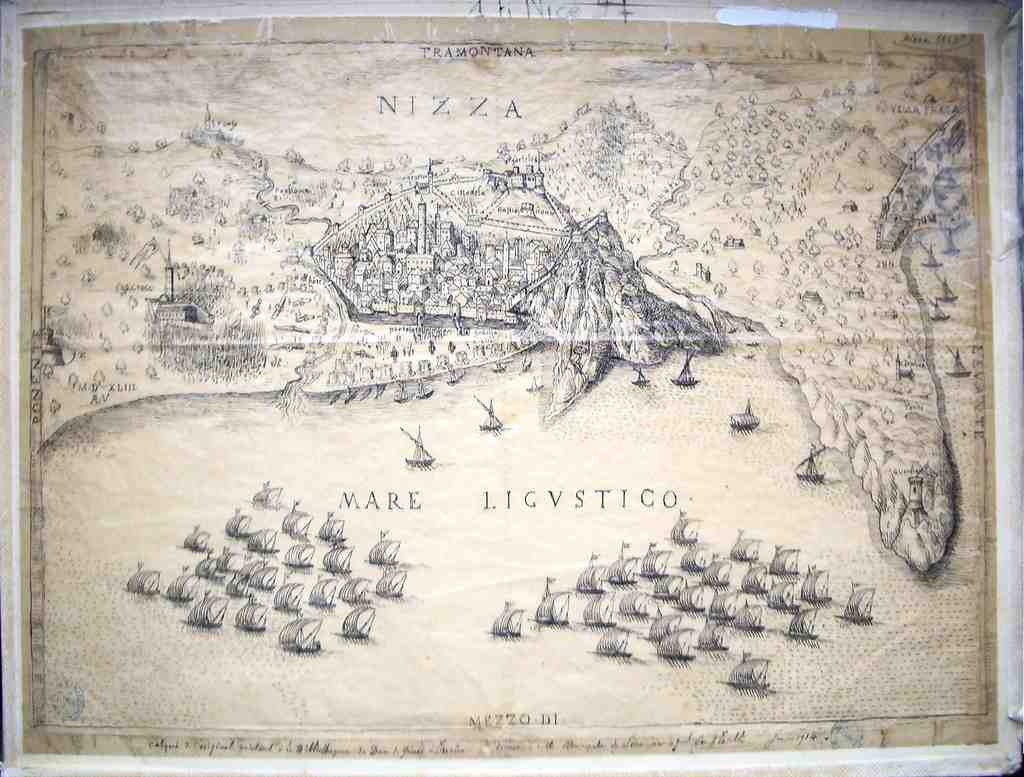
Ouvrir la page dédiée →As you approach this stop, look ahead for a map-like illustration that shows an old, walled city perched beside the sea, with dozens of ships clustered just offshore. The site of…Lire plusAfficher moins
As you approach this stop, look ahead for a map-like illustration that shows an old, walled city perched beside the sea, with dozens of ships clustered just offshore. The site of the Siege of Nice is connected to the area around the rocky hill-today it’s the site of Castle Hill Park. To spot where history unfolded, look up toward the remnants of those ancient fortifications, rising above the city and overlooking the sparkling bay below. Imagine yourself standing here in the warm, salty air of summer 1543. The city behind you is fortified, its walls strong but trembling against what’s about to come. Out to sea, you’d see the masts and sails of 120 Turkish and French galleys bobbing on the blue waves. The world feels tense, like the air just before a thunderstorm. For months, twenty thousand Franco-Turkish soldiers, led by the Count of Enghien and an admiral called Barbarossa, have surrounded the city. Cannons thunder from the ships while the defenders rush to reinforce the crumbling stone walls. The noise is everywhere-shouts, the clash of steel, and the crash of stone as the bombardment shakes the earth. Inside these walls, all of Nice trembles, but the people are stubborn: attempts to trick their way inside are met with fierce resistance. The attackers finally blast a hole through the northern rampart, near where Place Garibaldi is today. Mercenaries pour into the breach-but the townsfolk drive them back. Imagine frightened faces peering from windows, damp laundry forgotten in the chaos, the smell of gunpowder mixing with sea air. Suddenly, legends take root. Some say the Virgin Mary appears, giving courage to terrified defenders. And there’s a woman named Catherine Ségurane-a local washerwoman, not a soldier-who supposedly rallies the city with spirit and defiantly waves her laundry club at the enemy. The moment is tense, but you can almost hear the laughter of children hiding from the chaos, clinging to hope. Night falls, and the sounds of battle echo off the cliffs. The besiegers grow tired and start to argue among themselves, while help approaches-from Sospel, the Duke of Savoy and his allies gather rescue troops. By the end, the city itself falls but not the stubborn defenders holed up in the castle behind you. Eventually, the attackers give up, leaving the battered city behind, and life slowly returns to the narrow streets. Standing here, you’re on ground soaked with layers of courage, noise, and legend. The stones may be silent now, but they once rang with the stories of ordinary people who refused to surrender, no matter how dark the night.
Ouvrir la page dédiée →Right in front of you is Avenue Jean-Médecin, stretching straight ahead like a wide, sunlit canyon between tall, elegant buildings. Look for the rows of trees lining both sides…Lire plusAfficher moins
Right in front of you is Avenue Jean-Médecin, stretching straight ahead like a wide, sunlit canyon between tall, elegant buildings. Look for the rows of trees lining both sides and the tram tracks running down the middle. The facades here are light-colored, their windows framed by ironwork and shutters, with lively signs and red café awnings peeking out near street level. If you see trams gliding by and people weaving between street shops and cafés, you’re in the right place. Now let’s take a breath and imagine: for more than a hundred years, Avenue Jean-Médecin has been the beating heart of Nice, a main street where the city’s stories are woven together. If you were here before the trams, you’d have watched horse-drawn carriages jostling for space with crowds of shoppers. Today, that rush is a symphony of shopkeepers, strolling families, and the rhythmic whoosh of tram cars gliding through the center. This avenue isn’t just any street. Nicknamed simply “The Avenue” by locals, it’s the main north-south road through the city, and the epicenter for shopping and city life. It begins here near Place Masséna, all refined and touristic with its tempting window displays and elegant banks-some with stories that could be straight from an old heist movie. Just think: in 1976, a famous bank robbery took place at the Société Générale, and the legend of that daring break-in still whispers through these walls. As you walk north, you’ll sense the character of the avenue shift. Here, you’ll find grand old buildings like the Belle Époque Riviera, once the largest department store, now housing the bustling FNAC. Peer up at Art Deco facades and notice the details: the red ochre of Galeries Lafayette at the southern tip, and the flashes of modern glass from the shopping center Nicetoile. Don’t just look-listen. When night falls, thousands of tiny blue LEDs flicker to life above the tram lines, transforming the street into a river of stars. That shimmering blue glow comes from “L’Amorse du bleu,” a light installation designed to mark the rebirth of the avenue after years of renovation. Avenue Jean-Médecin isn’t only for shoppers and dreamers. From tram stops to café terraces, the pulse here is unstoppable-blending local life with the endless flow of visitors. Imagine the stories in the walls, the secrets behind every storefront, the generations who have crossed from one side to the other under the changing sky. This avenue stands as a symbol of Nice itself: vibrant, modern, yet always steeped in history. As you continue, keep your eyes open and see if the spirit of the old city peeks through the windows and reflections. The energy here never really fades-just shifts, depending who’s listening.
Ouvrir la page dédiée →To find the Pays Niçois, or Nice country, stand still and look out over the sparkling blue water framed by tall palm trees and the thick trunks of pine trees. Ahead, you’ll spot a…Lire plusAfficher moins
To find the Pays Niçois, or Nice country, stand still and look out over the sparkling blue water framed by tall palm trees and the thick trunks of pine trees. Ahead, you’ll spot a wide bay hugging the shoreline, with cliffs rising up in the distance. White villas and red rooftops peek through a blanket of green. The landscape is wild and bright, mountains standing like silent guardians above the Mediterranean sea. Just let your eyes follow the curve of the coast, and you’ll see it-the very heart of the Nice country. Close your eyes for a moment and imagine the scent of pine needles in the air, mixed with a salty sea breeze. This is more than a view-it’s a crossroads of history and nature where the Alps meet the Mediterranean. The Pays Niçois, as locals say, has always belonged to both the mountains and the sea. Long ago, this land was not even part of France. It wasn’t until 1860 that Nice country joined France, after centuries held by the powerful House of Savoy. Before that, the region belonged to medieval counts and even passed hands between kingdoms. Imagine the stories tangled beneath every olive tree and tucked behind each stone wall-noble families plotting their next move, French troops marching along the Var River, hopes and fears echoing through the valleys. During the Renaissance, mapmakers struggled to define the Nice country. It was a place too wild, too mysterious, sometimes even left off early maps of Europe. But while the scholars and explorers scratched their heads, fishermen’s songs carried over the sea, and villagers danced late into the night, never worrying about borders. Now, when you stand here and look out from this spot, you are gazing at the same horizon described by Roman writers and Renaissance humanists, a place that drew travelers with its beauty and shaped destinies with its stubborn character. Even with modern roads and trains, the Nice country keeps much of its ancient spirit-fierce independence, joy in simple celebrations, and a love for this strange, glorious meeting of sea and stone. Breathe in this view-it’s a living postcard, and you’re part of its story now.
Ouvrir la page dédiée →Look straight ahead now. You’ll notice a tall, grand building with two square towers reaching confidently into the sky-each one topped with pointed tips, almost like a giant pair…Lire plusAfficher moins
Look straight ahead now. You’ll notice a tall, grand building with two square towers reaching confidently into the sky-each one topped with pointed tips, almost like a giant pair of watchful sentinels right in the city’s heart. In the middle, there’s a huge round stained-glass window, called a rose window, and beneath it, three arched doorways. The creamy stone glows in the sunlight, making this basilica stand out against the blue sky and the bustling street around you. This is the Basilica of Our Lady of the Assumption, the largest church in Nice. Imagine you’re standing here in the late 1800s: the sound of chisels and hammers, the dust in the air, the voices of workers speaking French, maybe even some Italian. This basilica was built between 1864 and 1879, designed by Charles Lenormand. Everything about it-its strong lines, its Gothic style, those two towers-was meant to remind people of the famous cathedrals in Paris and Angers. You’ll feel just a bit of that French spirit right here. It wasn’t just about building a beautiful church. After Nice became part of France, the leaders wanted to make the city feel a little more French. What better way than this magnificent basilica? The gothic style, with its pointed arches and stone carvings, was seen as the very essence of French architecture. Even the rose window above you isn’t just decoration. Look closely, and you’ll see scenes from the mystery of the Assumption-stories told in colored glass. The basilica has seen moments of hope and sorrow. It was only made a “minor basilica,” a special honor by the Pope, in 1978. In 2020, it became the site of a tragic attack, where three people lost their lives. Just a few days later, after such sadness, the community came together for a rite of repair, filling the church with prayers and candlelight, and a quiet sense of defiance. As you stand here, take a deep breath and feel the centuries pressing close-the hopes of those who built it, the joy, the sadness, the everyday lives of people who have walked through these doors. Listen for the echo of footsteps in the stone, and just for a moment, let yourself be a part of this living story, right in the heart of Nice.
Ouvrir la page dédiée →
Foire aux questions
Comment commencer le tour ?
Après l'achat, téléchargez l'application AudaTours et entrez votre code de réduction. Le tour sera prêt à commencer immédiatement - il suffit d'appuyer sur lecture et de suivre l'itinéraire guidé par GPS.
Ai-je besoin d'Internet pendant le tour ?
Non ! Téléchargez le tour avant de commencer et profitez-en pleinement hors ligne. Seule la fonction de chat nécessite Internet. Nous recommandons de télécharger en WiFi pour économiser vos données mobiles.
S'agit-il d'une visite de groupe guidée ?
Non - il s'agit d'un audioguide en autonomie. Vous explorez indépendamment à votre propre rythme, avec une narration audio diffusée par votre téléphone. Pas de guide, pas de groupe, pas d'horaire.
Combien de temps dure le tour ?
La plupart des tours durent entre 60 et 90 minutes, mais vous contrôlez totalement le rythme. Faites des pauses, sautez des arrêts ou arrêtez-vous quand vous le voulez.
Et si je ne peux pas finir le tour aujourd'hui ?
Pas de problème ! Les tours disposent d'un accès à vie. Faites une pause et reprenez quand vous le souhaitez - demain, la semaine prochaine ou l'année prochaine. Votre progression est sauvegardée.
Quelles sont les langues disponibles ?
Tous les tours sont disponibles dans plus de 50 langues. Sélectionnez votre langue préférée lors de l'utilisation de votre code. Note : la langue ne peut pas être changée après la génération du tour.
Où accéder au tour après l'achat ?
Téléchargez l'application gratuite AudaTours sur l'App Store ou Google Play. Entrez votre code de réduction (envoyé par e-mail) et le tour apparaîtra dans votre bibliothèque, prêt à être téléchargé et commencé.
Si vous n'appréciez pas le tour, nous vous rembourserons votre achat. Contactez-nous à [email protected]
Paiement sécurisé avec