
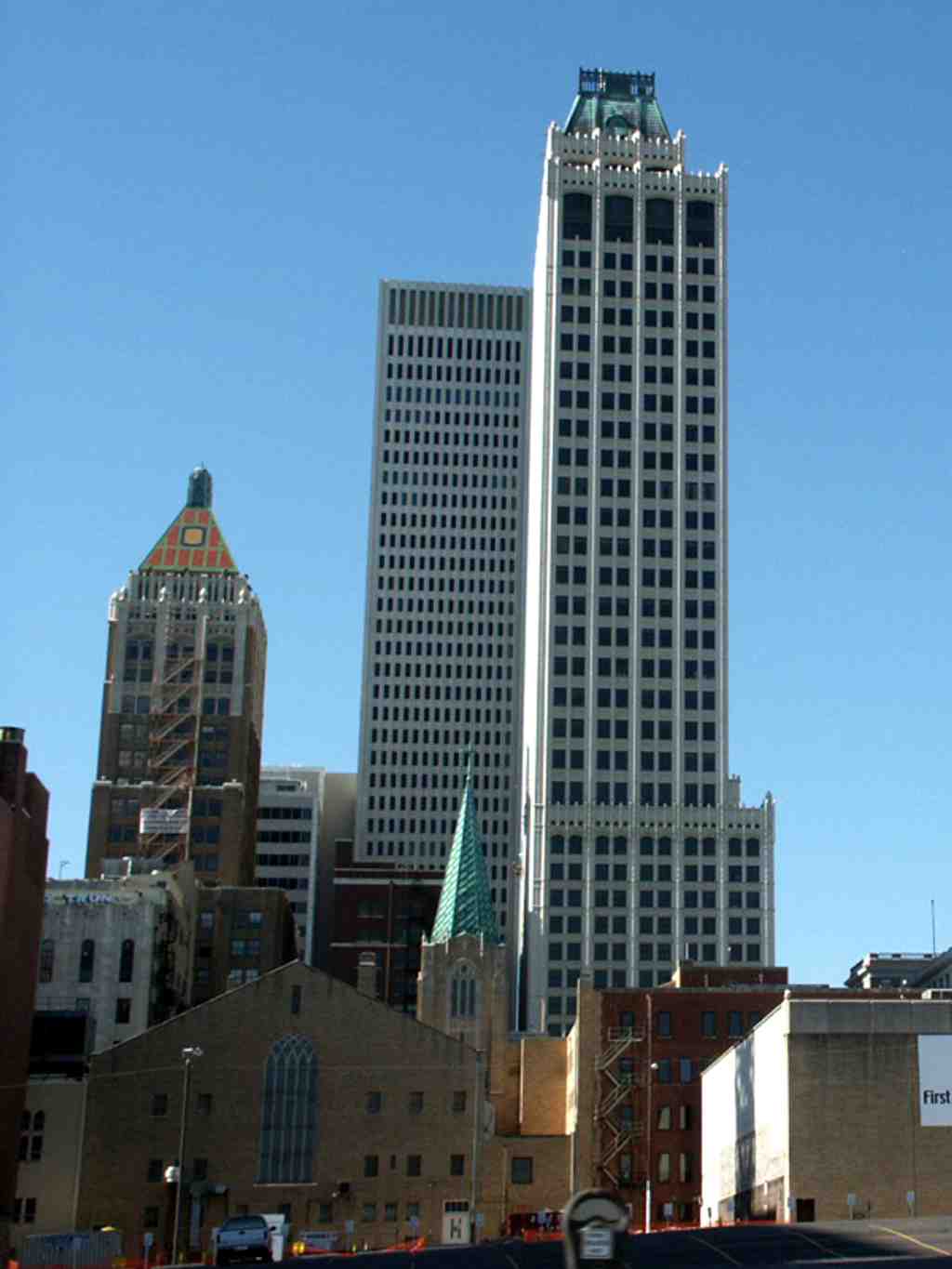
On your right stands the Mid-Continent Tower, a soaring thirty-six-story skyscraper clad in bright white terra cotta and crowned by a striking, intricate green copper roof.
Joshua Cosden started out as a humble drugstore clerk in Baltimore, but he headed west and struck it so rich in the oil fields that they called him the Prince of Petroleum. He amassed staggering wealth, dropping a hundred thousand dollars on a single racehorse, which is roughly two million dollars today, and building a one point five million dollar Long Island estate, easily over thirty million in today's money.
He wanted his success immortalized right here. Inspired by the famous Woolworth Building in New York, Cosden commissioned this very site in nineteen eighteen. He demanded that same Tudor Gothic grace, a style featuring ornate, medieval looking spires and elaborate stonework, built directly on the plains. You can see his original grand design if you pull up the image on your phone.
But the boom and bust cycle of the oil market is completely unforgiving. Cosden's towering architectural ambition crashed alongside his finances. He lost his vast fortune, endured a massive scandal, and ultimately died with his health and heart failing him.
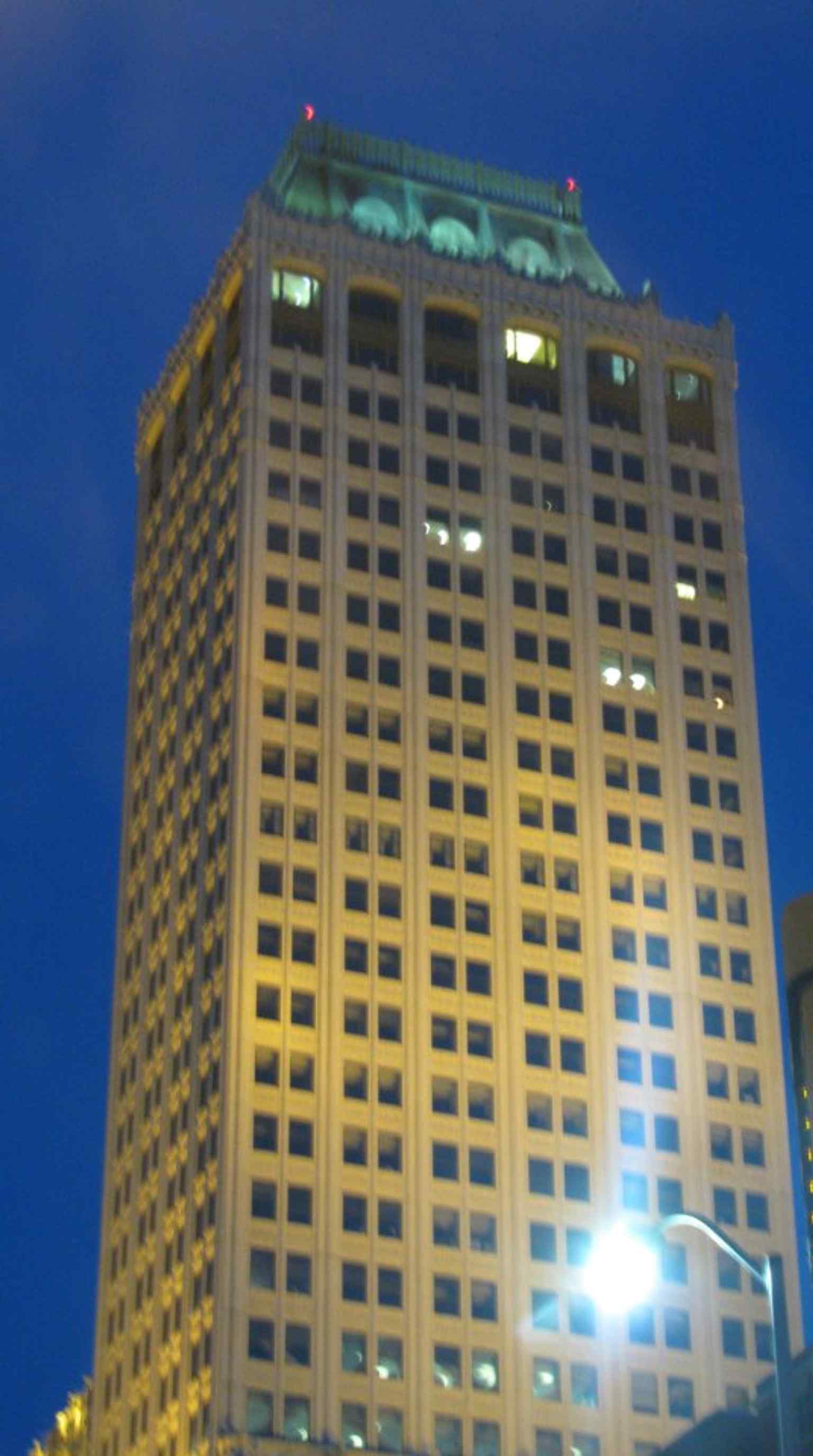
Now, look up at the Mid-Continent Tower... Notice how the top twenty stories seem to hover slightly, almost floating above the lower half? See if you can spot where the original nineteen eighteen structure ends and the massive upper section begins.
It looks like one unified skyscraper, but it is actually two completely separate buildings constructed sixty-six years apart. By nineteen eighty-four, the new owners wanted to expand, but Cosden's original sixteen-story building could not support another ounce of weight. So, engineers pulled off an unbelievable feat. They built an entirely new tower on a hundred and twenty foot deep foundation right next door. Then, using massive steel trusses, they cantilevered, or horizontally extended, twenty entire floors out into thin air, suspending them forty feet directly over the original roof.
The new tower never actually touches the old one. To pull off this seamless illusion, they custom ordered over eighty-five thousand terra cotta panels, which are fired clay architectural details, from the last remaining manufacturer in the United States. They even traveled to Italy to match the early twentieth century marble for the lobby. It was a painstaking effort, though ironically, preservation bureaucrats briefly threatened to strip the building's historic status, arguing the massive new hovering tower somehow lessened the prominence of the original roofline. The owners fought back and won, proving they had saved Cosden's legacy rather than erasing it. Check out your app to see a clear shot of how meticulously the nineteen eighty-four addition mirrors the original design.
The building is open Monday through Friday from eight AM to five PM if you want to peek at that imported marble. For now, marvel at this impossible blend of historic ambition and modern engineering, and then let us continue our walk to the Tulsa Performing Arts Center, which is just about three minutes away.





