
Audioguía de Middletown: Hiedra, Campanarios e Historias Ocultas Reveladas
Los imponentes olmos susurran secretos a lo largo del borde del campus de Wesleyan, donde las revoluciones una vez bulleron y las fortunas subieron y bajaron en silencio. Esta audioguía autoguiada desvela los pasillos ocultos de Middletown, permitiéndote desvelar la fachada pulida y rastrear los ecos que la mayoría de los visitantes pasan por alto. ¿Por qué un duelo a medianoche casi sacude el South Green hasta sus cimientos? ¿Qué escaparate descolorido en el Distrito Histórico de Main Street esconde un secreto vinculado a un alcalde corrupto? ¿Qué objeto inesperado una vez provocó una protesta entre los estudiantes de Wesleyan? Muévete a través de siglos de ambición e intriga, serpenteando entre mansiones doradas y estatuas desgastadas. Cada giro sorprende con rivalidades, rituales olvidados y un paisaje urbano moldeado por sueños audaces y reputaciones magulladas. Siente el pulso del drama bajo tus pies y observa cómo las calles familiares cobran vida con posibilidades. Las historias en capas de la ciudad esperan. Comienza tu descubrimiento y escucha más de cerca antes de que los susurros se desvanezcan.
Vista previa del tour
Sobre este tour
- scheduleDuración 40–60 minsVe a tu propio ritmo
- straighten5.0 km de ruta a pieSigue el camino guiado
- location_onUbicaciónMiddletown, Estados Unidos
- wifi_offFunciona sin conexiónDescarga una vez, úsalo en cualquier lugar
- all_inclusiveAcceso de por vidaReprodúcelo en cualquier momento, para siempre
- location_onComienza en Universidad Wesleyan
Paradas en este tour
Look left-you’ll spot a stately brick mansion with arched entries, turrets, and more chimneys than a Sherlock Holmes novel; the arched brownstone doorway and intricate brickwork…Leer másMostrar menos
Look left-you’ll spot a stately brick mansion with arched entries, turrets, and more chimneys than a Sherlock Holmes novel; the arched brownstone doorway and intricate brickwork really make this one stand out from its neighbors. Alright, what you’re looking at isn’t just another campus house, but the Xi Chapter of Psi Upsilon-home to quite possibly the most ambitious group of students to ever hold a toga party in the United States. Built in the early 1890s, this was the very FIRST house in the country designed specifically for living and fraternizing, all under one impressively expensive roof. Back then, it cost $40,000 to build-these days, that’s getting close to $1.4 million. Definitely not your average college housing. Picture Wesleyan in the late 1800s: students often wore starched collars, football meant something awkward with leather helmets, and the Psi U boys were basically the influencers of their day-top of the sports leagues, racking up academic awards, leading all the clubs. The fraternity itself started at Union College in 1833, but when it opened the “Xi Chapter” here around 1843, it became the first national fraternity chapter at Wesleyan. Kind of the original out-of-town social network. Now, about the building-it was crafted by Colin C. Wilson, a young English architect who, frankly, was a bit of an underdog. He got the gig thanks to a well-connected alum living all the way in London. The design is a mash-up of Richardsonian Romanesque (think bold, rough stonework and heavy arches) and Jacobethan style, so you get a sort of castle-with-a-hint-of-Hogwarts vibe: sturdy yellow brick, brownstone, and terracotta trim; steep, slate gables; a big Roman arch that looks like it’s holding secrets; and even some half-timbering in the gables for that “old English inn” flourish. Check out the iron porch on the north side and those fancy brownstone carvings-like the architects just couldn’t resist adding one more little detail. Inside, it has a grand wooden dining room with colonnades, and, rumor has it, plenty of secret fraternity traditions. Psi Upsilon even went co-ed in 2015-so the legacy continues, just with a bit less pipe smoke and a lot more WiFi. Ready to keep strolling? Richard Alsop IV House is just a five-minute walk north up High Street.
Abrir página dedicada →Take a look on your left at the Richard Alsop IV House. Pretty grand, right? Sitting high atop that gentle rise, behind an iron fence, this old mansion has been silently judging…Leer másMostrar menos
Take a look on your left at the Richard Alsop IV House. Pretty grand, right? Sitting high atop that gentle rise, behind an iron fence, this old mansion has been silently judging everyone passing by since 1839. If you’ve ever wondered what “high society” felt like in 19th-century Middletown, well... this was the address to envy. Folks called High Street the city’s “Gold Coast”-not for actual gold, but for the sheer style crammed into every mansion along the block. So, why the fancy digs? Richard Alsop IV built this house for his mother-Maria Dana-who, at the time, had outlived not one, but two husbands. That was no small feat in those days. And Alsop wasn’t stingy. Back then, even building a modest home could cost about $2,000 (think $65,000 or more today). This remarkable house? Let’s just say it was worth a pretty penny-enough for top local builders, designer rumors, and a swirl of high society gossip. From the outside, the Alsop House is a mash-up, reflecting the passing trends: the sturdy Greek Revival style practically shouts “look at my columns,” while the Italianate details whisper “but let’s do it with a *little* Tuscany charm.” Picture big, square windows, a porch topped with delicate ironwork, and a frieze with cheeky swag-and-tassel details. There are colonnades everywhere-because, apparently, you can never have too many columns. Inside is where things get really intriguing. Walls painted with scenes so elaborate they practically fool your eyes, like statues peeking out from trompe-l'œil niches. The parlors dress up in classical art, while a side room swaps dignity for whimsy, covered in local birds and insects, Italian villa-style. Whether these were painted by artisans from Italy or Germany-or both-remains a point for the historians to bicker about. But either way, you’d have paid dearly for this level of craft. After the Alsop family finally moved on, Wesleyan snapped up the mansion in 1948. Since then, it’s housed art, artists, and more than a few academic debates-these days as Wesleyan’s Digital Design Commons. Time marches on, but the walls remember. When you’re ready, head northwest for about 4 minutes to reach the Samuel Wadsworth Russell House.
Abrir página dedicada →


Mostrar 10 paradas másMostrar menos paradasexpand_moreexpand_less
On your right, you’ll spot St. Sebastian Church by its impressive red brick facade, rows of tall arched windows, and a bell tower that’s hard to miss-picture a little slice of…Leer másMostrar menos
On your right, you’ll spot St. Sebastian Church by its impressive red brick facade, rows of tall arched windows, and a bell tower that’s hard to miss-picture a little slice of Italy planted in Connecticut soil. This isn’t just any parish. Go back to the early 20th century, when the Italian immigrants from Melilli, Sicily, landed in Middletown with big dreams and, let's be honest, not-so-big wallets. By 1920, they’d rallied enough of their own to want a church that would feel like home, and they really went all in-fundraising, donating materials, and throwing in their own sweat. The kind of community effort that would have made even your grandma’s bake sale blush. Back then, they scraped together the dollars (the equivalent of tens of thousands today-think the price of a new car, maybe even two) to get the church off the ground. Architect Raymond C. Gorrani, fresh from designing a similar-style church up in Worcester, took on the project, shaping it after the Basilica from Melilli so it’d help cure the homesick. And when construction started in 1931, Father Rocco Guerriero stepped in as the first pastor, even pulling his own brother in as supervising architect. That’s what you call family business. Over time, St. Sebastian's has been more than a church-it’s the heart of local Italian traditions. Each spring, the Feast of St. Sebastian lights up the streets in a blur of parades, food, music, and that ever-present sense of “we made it.” The organ inside, by the way, still packs a punch-an Austin, Opus 1828, for those in the musical know. Whenever you’re ready, Main Street Historic District is just northeast from here-a comfortable 7-minute stroll.
Abrir página dedicada →If you look to your left, you’ll see Main Street stretching out, lined with brick-walled shops, old-school banks, and the sort of chunky stonework and glass storefronts that…Leer másMostrar menos
If you look to your left, you’ll see Main Street stretching out, lined with brick-walled shops, old-school banks, and the sort of chunky stonework and glass storefronts that practically yell “I’ve been here a while” - so if you spot a stretch of elegant historic facades and lively business signs, you’re in the right place. Alright, here’s a spot with a little bit of everything. Main Street Historic District is the true “downtown,” not just because of the zip code, but because for more than two centuries, this was as busy as Connecticut got. If today it feels like a friendly New England town, try to picture it packed with horses, wagons, and steamboat crews, plus a dash of anyone else headed for fortune or fresh gossip. Back in the colonial era, Middletown was *the* harbor for the Connecticut River. Wealth, timber, and tobacco - all of it poured through here. Everyone who mattered (or who thought they did) huddled, bargained, and probably argued here, right where you’re standing. The fact that you can find 19th-century banks and shops all in a row isn’t an accident; in the late 1800s and early 1900s, Middletown’s merchants had money to burn, sometimes literally, if you count the fires in those wooden storefronts. Imagine Main Street between the late 1700s and early 1900s: You’ve got the Nehemiah Hubbard House, which started out before 1788 and got fancied up with Greek columns when that style became all the rage. A couple doors down sits the Old Banking House Block from 1796 - think early American cash flow, when a bank loan might be a couple hundred bucks, or about $10,000 today, and came with a handshake and maybe a punch to the arm if you missed your payments. It’s not just the banks. You’ve got the Capitol Theater, a grand old building from 1925, when you’d pay a quarter (about $4 now) to catch vaudeville or the latest “talking picture.” Firehouses with chunky Renaissance revival details. Early car dealerships like Caulkin’s Buick-Cadillac from the 1900s, in case you drove into town a little later in history. And then there’s the soul of Main Street: generations of shopkeepers in spaces like the Wrubel Building or Shlien's Furniture - back when retailers swept their doorsteps every morning and swept out rumors while they were at it. If you stood here 100 years ago, you’d hear a dozen languages, and probably pick up Polish sausage for lunch one block, Italian shoes two doors down, and a bit of political gossip in English for dessert. Some corners have local legend status. There’s the old Mission Chapel, which started as a Greek Revival church and later doubled as a rumor mill and popcorn stand during the big city parades. O’Rourke’s Diner - moved to Main Street in 1947 - looks like a steel-and-chrome slice of Americana, the kind of place where the coffee flows and the cook calls out your name. This street is a scrapbook of local ambition and stubbornness. There are elegant banks that survived the Great Depression (one of them remodeled in 1980 - and, to be honest, we’re still trying to forgive them for it), lost landmarks like the St. Aloysius Building, which collapsed in a storm on a February morning in 2011, and the occasional building bravely wearing a marble facade to hide it was Art Deco at heart. It’s no exaggeration to say Main Street is, and always was, the life of Middletown. Every stone and brick here had to earn its place, and most of them are still holding up their end of the deal. Ready to wander on? When you are, Church of the Holy Trinity and Rectory is a 6-minute stroll southeast - just take your time and keep weaving through Main Street’s story.
Abrir página dedicada →Alright, coming up on your right, you’ll see the Church of the Holy Trinity-hard to miss, really. This towering stone church feels a bit like a medieval fortress, holding its…Leer másMostrar menos
Alright, coming up on your right, you’ll see the Church of the Holy Trinity-hard to miss, really. This towering stone church feels a bit like a medieval fortress, holding its ground on Main Street while the shops around it play dress-up with bright paint. Built in the 1870s, it’s one of Middletown’s best surviving examples of Gothic Revival architecture-basically, all those tall, pointy arches and impressive stonework designed to make you look up and maybe feel just a tiny bit closer to the heavens. Step closer and you’ll spot details straight from an architectural fantasy: the hefty brownstone walls, the classic buttressed bell tower, and-front and center-a majestic rose window that catches the morning light almost theatrically. This building was the third home for a parish that dates all the way back to the 1700s, a time when most Colonial Anglican churches tended to stick with the loyalists during the Revolution. But not this bunch-they swung for the patriots, joining the rebellion, and giving their church roots with some real bite. Oh, and if you’re wondering about that bell tower-yes, it does look like it should have a spire, but it never got one. You know what they say: spire or no spire, it’s what’s on the inside that counts. Think soaring woodwork, intricate iron support columns, and stained glass so vivid it makes your phone’s screen feel downright dull. Now, glance nearby at the former rectory-locals might call it the Bishop Acheson House, but today it houses a more… senior crowd, as apartments for elderly residents. Built in the early 1900s in solid Colonial Revival style, it once housed Reverend Edward Campion Acheson, whose son Dean later became Secretary of State under President Truman. Not bad for the local clergy. Both buildings are still in good shape, a little reminder that here in Middletown, history doesn’t just survive-it adapts. Churches might lose their rectory, but apparently they never lose their edge. When you’re ready, the Old Middletown Post Office is next-just head northeast on Main Street. It’s about a four-minute walk.
Abrir página dedicada →Just look to your right for a grand, two-story limestone building with classical arched windows and a strong, stately presence-like it’s always been the boss of this corner.…Leer másMostrar menos
Just look to your right for a grand, two-story limestone building with classical arched windows and a strong, stately presence-like it’s always been the boss of this corner. Picture Middletown in 1916: the city buzzing, horse-drawn carts mixing in with a few brave automobiles, and the townsfolk collectively holding their breath waiting for their new post office to open its doors. Believe it or not, building this cornerstone of commerce wasn’t exactly smooth sailing. The government had been debating the perfect spot for years-everyone wanted the building, but nobody agreed on where to put it. Eventually, Uncle Sam dragged out the deed from 1841 and said, “Alright, fine, right here in the middle of Main Street’s action, facing the Connecticut River.” You can almost imagine the sigh of relief-and a few mutters about government speed. Now, this isn’t just any post office. The architectural style screams Renaissance Revival-think grand Roman palazzos, but with better mail service. The smooth limestone was a bold choice in a sea of brick and brownstone, giving it real star power. Those tall arched windows and stately pilasters were designed by James A. Wetmore’s office-they wanted it to feel solid, permanent...a place where even a dime post stamp felt important. All told, that federal build cost around $100,000-that’s over $2.5 million in today's cash. Middletown’s residents were mighty proud, and why not? Everyone loves getting mail, especially when the building looks this sharp. It kept up its postal duties until 1977-136 years of government paperwork and holiday greeting cards-before Liberty Bank moved in and kept the place looking sharp. Ready for Broad Street Historic District (Middletown, Connecticut)? Just walk northwest for about 4 minutes.
Abrir página dedicada →Take a look to your left-that’s the Broad Street Historic District, Middletown’s own time capsule of classic New England ambition. If you could hear the walls talking here, you’d…Leer másMostrar menos
Take a look to your left-that’s the Broad Street Historic District, Middletown’s own time capsule of classic New England ambition. If you could hear the walls talking here, you’d get an earful: stories about fortunes made, heartbreak over lost river trade, and the relentless quest to keep up with the neighbors’ newest porch rails. Let’s set the scene. By the 1830s, Middletown’s lively days as a river port were, well, mostly *in the rearview mirror*. Smart folks, hoping to lift the city out of its economic rut, sparked new energy here: they started Wesleyan University nearby, poured investment into new mills, and-importantly-built houses that would impress anyone walking by. This area, once just vegetable gardens and open fields, burst to life almost overnight. Housing tripled in just two decades, which, in today’s numbers, would be like adding 200 high-end condos before you’ve even picked a name for the neighborhood. The money? A brand-new Greek Revival house in the 1840s might’ve set you back $3,000-easily $110,000 or more in today’s money. Take a slow walk down the lane and you’ll spot more fancy architecture per foot than you’d expect in a town this size. The Greek Revival style rules the roost here-tall columns, heavy trim, and all the stately confidence of someone who alphabetizes their spice rack. Look for numbers like 89-91 or 93-97 Broad Street; these beauties were status symbols, their front doors opening onto a world of parlor performances and high-society teas. But Middletown folks weren’t content to stick to one look. There’s Italianate drama at 15 and 17 Broad Street, with brackets so ornate you wonder if the woodcarvers got paid by the curl. The Queen Anne houses, like 23 or 25-27 Broad Street, pile on extra porches, towers, and-sometimes-just a *bit* too much personality. Stick-style? They have that, too, out at 138 Broad. If you hear a faint “click” of pocket watches and the rustling of long skirts, you’re not hallucinating-this whole district feels like it’s waiting for the next carriage to swing by. The Broad Street Historic District is also home to some fascinating hybrids: check out the Russell Library at 123 Broad, which started life as a Greek Revival church, but later got a dramatic Gothic makeover. That’s architectural improvisation at its best. Hidden gems are everywhere-old garages that were once carriage houses, the odd barn tucked behind a Queen Anne, even mansions converted to retirement homes and apartments. Middletown’s comfortable with change, but fiercely proud of its roots. Every door, gable, and wrought-iron railing here speaks to a long tradition of keeping up appearances... and sometimes outshining everyone else on the block. So, whether you’re an architecture buff or just someone who likes to daydream about life in top hats and hoop skirts, Broad Street invites you to slow down and imagine-what would YOUR house look like if you lived here in 1840? Ready for Middletown South Green Historic District
Abrir página dedicada →Alright, take a look to your right-you’re now facing the heart of what folks around here call the South Green, even though the official paperwork calls this the Middletown South…Leer másMostrar menos
Alright, take a look to your right-you’re now facing the heart of what folks around here call the South Green, even though the official paperwork calls this the Middletown South Green Historic District. Picture this: It’s the late 1800s, carriages trundle down dirt streets, and the homes around you are just going up-each one showing off the kind of architectural bravado that comes with new wealth and big dreams. The centerpiece is Union Park, a rare open patch of green at the very base of Middletown’s business district. In the 1800s, this would have been the social mixing bowl-Sunday promenades, political rallies, and a fair share of gossip drifting through the air, carried by the Connecticut breeze. But the houses lining the green...they’re the real storytellers. Most of what you see went up between 1860 and 1890, a sort of architectural arms race for style and status. Italianate houses dominate, with wide eaves, tall windows, and those classic, striped awnings that look like they ought to be keeping the sun off a Victorian novelist. There’s also a healthy portion of Second Empire flair-mansard roofs and fancy ironwork, which people back then thought made their homes look Parisian. Basically, these buildings were the Instagrammable moments of their day. If you want to spot some of the city’s oldest survivors, hunt for the Mather-Johnson House-Federal style, late 1700s, with roots so deep they’d practically need to notify the historical society if you dust the porch. Two of Middletown’s mayors called it home, so there might be a little leftover political ambition in the woodwork. Over on Crescent Street, Queen Anne Victorians wave their decorative trim like party flags. One favorite is Doolittle’s Funeral Home-a former house, complete with a turret, because everyone needs a little drama with their final arrangements. And then you have the churches. There’s the Gothic Revival South Congregational, spire reaching to the clouds, built just as the Civil War was wrapping up. The Methodist Church arrived later, with its own pointed arches, showing that even Methodists enjoy a little stone-carved drama on Sundays. Walking these sidewalks, you’re tracing the paths of families who spent their $4,000 on a home back in 1870-about $95,000 in today’s dollars. Not a bad deal for a house built to last long enough to see both horse-drawn carriages and electric scooters roll by. Look close, and you’ll catch details-a wrought iron porch here, a gingerbread gable there-each the result of someone, somewhere, wanting very badly to impress the neighbors. Ready for St. Mary of Czestochowa Parish? Just stroll northwest for five minutes. I’ll meet you there.
Abrir página dedicada →To spot St. Mary of Czestochowa Parish, look for a red-brick church with a classic steeple reaching up beside the sidewalk-a sturdy slice of Poland right here on Main Street.…Leer másMostrar menos
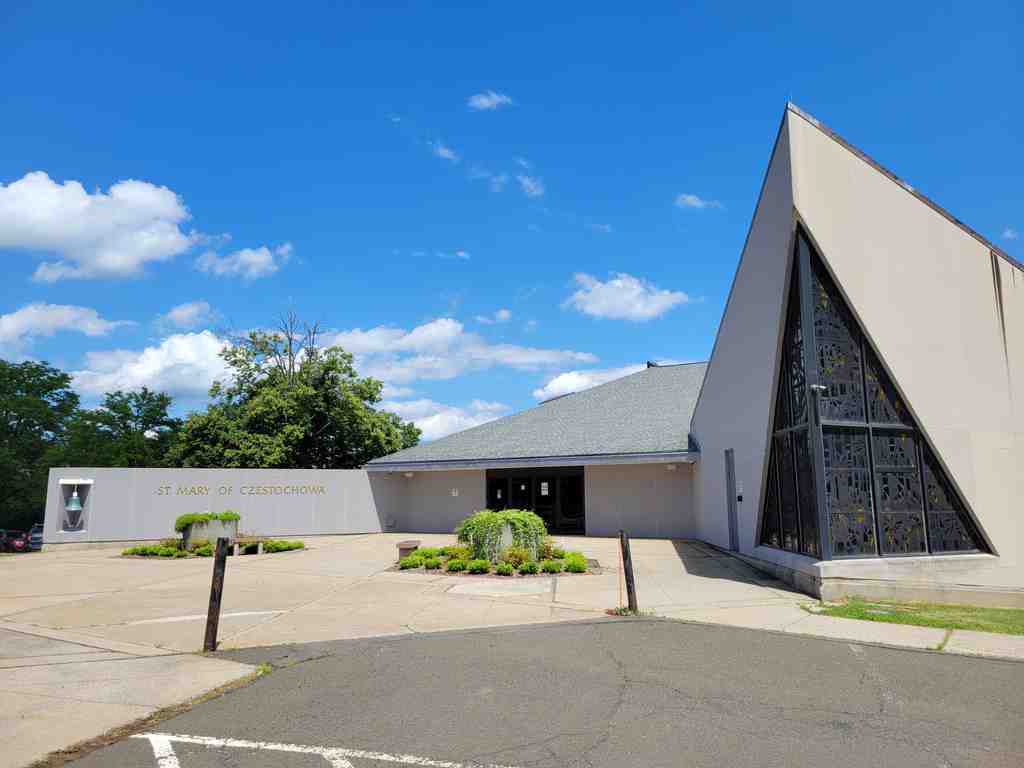
To spot St. Mary of Czestochowa Parish, look for a red-brick church with a classic steeple reaching up beside the sidewalk-a sturdy slice of Poland right here on Main Street. You’re looking at more than just a church; this is a living time capsule for Middletown’s Polish community. Back in 1902, with around 300 Polish families staking their claim on this patch of Connecticut, local folks felt it was about time for a parish of their own. By 1903, their prayers-and let’s be honest, some serious fundraising muscle-got the bishop’s approval, and St. Mary of Czestochowa Parish was born. One of the main drivers? The Saint Kazimierz order of Polish Lancers. Imagine Polish cavalrymen-in Connecticut-trying to keep Old World traditions alive on a brand new continent. Now, that’s dedication. Their first church home was a small building on Hubbard Street back in 1905, which later doubled as a school. But growth-and faith-turned dreams toward something bigger. By 1907, they moved into a much grander church next door, full of sunlight streaming through stained glass... until a devastating fire in 1980 changed everything. That kind of loss stings, both spiritually and financially. Their school, a Renaissance Revival brick building built in 1930, has educated local kids for generations-even after merging with another parish school. Today, the legacy of the founding families lives on in community events, Polish festivals, and memorials, like the touching mass held after the 2010 Kleen Energy plant tragedy. Alright, if you’re ready for the next chapter, Wilcox, Crittenden Mill is a 9-minute walk west. Safe travels.
Abrir página dedicada →To spot the Wilcox, Crittenden Mill, just cast your eyes to the right and look for a group of old brick-and-concrete buildings perched by Pameacha Creek-they’ve got a tough,…Leer másMostrar menos
To spot the Wilcox, Crittenden Mill, just cast your eyes to the right and look for a group of old brick-and-concrete buildings perched by Pameacha Creek-they’ve got a tough, industrial look, with chunky brownstone sills, corbelled chimneys, and a mural of a clipper ship on the south wall. Alright, let’s step out of the present for a second and try to imagine Middletown before hybrid cars, smartphones, and vegan donuts. Right here, long before the age of recycling bins and Instagram, these riverside mills powered the dreams-and the industry-of the city. Pameacha Creek in front of you wasn’t just babbling water; for centuries, it was a local version of the Energizer Bunny. There’s been some kind of mill here since the 1650s-think about that. When Jamestown was barely more than a muddy fort, this spot was already humming with water wheels. The story of this landmark cranks into high gear in 1814, thanks to John Watkinson. He built the original section, Mill A, for weaving wool. If you listen closely … well, probably not, but you can almost picture the clatter of early looms and the whirr of gears powered by the creek. By the middle of the 1800s, this place was pivoting from wool to widgets. Enter William Walter Wilcox-a young, driven guy with just enough grit and a keen nose for business. With his partner, Ira Penfield, Wilcox started manufacturing a little metal marvel called the grommet. It was essential for raising and lowering ship sails-think of it as the duct tape of the nautical world. Pretty soon, Wilcox was traveling the U.S., building a reputation... and probably a pretty sore back, considering 1849 travel. Adjusted for inflation, one of those grommets that sold for a few cents back then would run you about a dollar today-so, still a bargain in the world of boat parts. The firm became Wilcox, Crittenden, and Company, with a string of managers who sounded more like a law firm than an industrial powerhouse-a mayor, a Chaffee, and even a Churchill. It grew rapidly, adding buildings and employing locals, always focused on two things: being honest and really knowing their way around marine hardware. But the mill had its share of drama. In 1907, a fire ripped through the site, leaving almost nothing but a charred skeleton and a tiny brick structure. Instead of folding, the company rebuilt-without losing a single employee or customer. That’s the industrial spirit for you. If you check out the details, you’ll spot both the original brownstone features and the clunky window modifications from later restorations. These days, three out of the four mill buildings are now apartments, and the complex stands as one of the few survivors of the city’s manufacturing heyday. And the archaeological secrets below ground? Some of the old machinery and tools from the 1907 fire are still down in that ravine, untouched-a local time capsule for any future adventurer with a taste for rust. Ready for Middletown Alms House? When you’re set, just head north for about 3 minutes.
Abrir página dedicada →On your left, you’ll spot a broad, three-and-a-half-story brick building set back behind some Victorian houses, with a gabled roof and sturdy, old-school style-it’s the Middletown…Leer másMostrar menos
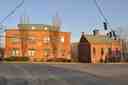
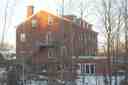
On your left, you’ll spot a broad, three-and-a-half-story brick building set back behind some Victorian houses, with a gabled roof and sturdy, old-school style-it’s the Middletown Alms House. Picture this: The year is 1814, the War of 1812 is just wrapping up, and while the rest of Connecticut is patching up muskets and tending to their cows, Middletown takes a rather ambitious approach to poverty. Instead of just handing out coins-worth maybe a quarter back then, which is a couple of bucks in today’s money-they built this giant Federal-style poorhouse, right here on Warwick Street. It’s not just any relic; this place is actually the oldest building in Connecticut built just for folks who fell on hard times, and among the oldest in the entire country. Now, if you were living here 200 years ago, you didn’t just get a free bed. The deal was: food, shelter, and a healthy serving of mandatory work. Some stitched clothes or cooked, while others were out in town, rolling up sleeves at local businesses. After about 40 years, the town’s poor were shipped off to a new spot, and this building started racking up new identities faster than a secret agent. First, a hardware company, then rifle manufacturing, guns mended in the basement, even a rifle range for spirited sharpshooters-don’t worry, the neighbors survived. By the mid-1900s, the place found its quiet groove as a home heating oil office-probably less exciting than the firing range downstairs, but better for the insurance rates. So here it sits: brick solid, a touch battered, and maybe even grateful it doesn’t have to house anyone dodging debts or inventing new hardware. Every brick’s got a story... and this pile’s seen more than its fair share.
Abrir página dedicada →




Preguntas frecuentes
¿Cómo empiezo el tour?
Después de la compra, descarga la app AudaTours e ingresa tu código de canje. El tour estará listo para comenzar de inmediato - solo toca play y sigue la ruta guiada por GPS.
¿Necesito internet durante el tour?
¡No! Descarga el tour antes de empezar y disfrútalo completamente sin conexión. Solo la función de chat requiere internet. Recomendamos descargar en WiFi para ahorrar datos móviles.
¿Es un tour guiado en grupo?
No - esta es una audioguía autoguiada. Exploras de forma independiente a tu propio ritmo, con narración de audio reproduciéndose en tu teléfono. Sin guía, sin grupo, sin horario.
¿Cuánto dura el tour?
La mayoría de los tours toman 60–90 minutos para completar, pero tú controlas el ritmo completamente. Pausa, salta paradas o toma descansos cuando quieras.
¿Qué pasa si no puedo terminar el tour hoy?
¡No hay problema! Los tours tienen acceso de por vida. Pausa y continúa cuando quieras - mañana, la próxima semana o el próximo año. Tu progreso se guarda.
¿Qué idiomas están disponibles?
Todos los tours están disponibles en más de 50 idiomas. Selecciona tu idioma preferido al canjear tu código. Nota: el idioma no se puede cambiar después de generar el tour.
¿Dónde accedo al tour después de comprarlo?
Descarga la app gratuita AudaTours desde App Store o Google Play. Ingresa tu código de canje (enviado por email) y el tour aparecerá en tu biblioteca, listo para descargar y comenzar.
Si no disfrutas el tour, te reembolsamos tu compra. Contáctanos en [email protected]
Paga de forma segura con 


