
Tour de audio de Cincinnati: Melodías, monumentos e historias ocultas
Bajo el brillante horizonte de Cincinnati, las leyendas resuenan donde la historia y la ambición chocan. Cada ladrillo majestuoso y cada panel de vidrio elevado insinúan una ciudad llena de secretos, escándalos y luchas de poder silenciosas. Este tour de audio autoguiado te invita a ir más allá de lo obvio. Recorre las arterias del centro y desentierra historias que acechan detrás del escenario en el Heritage Bank Center, que se elevan sobre la Carew Tower y resuenan dentro de los muros tipo bóveda de la Archidiócesis. Encuentra el pulso que la mayoría de los visitantes nunca escuchan. ¿Qué enfrentamiento político dentro de la Carew Tower casi cambió el destino de la ciudad de la noche a la mañana? ¿Quién desapareció entre las columnas de la catedral, dejando solo un susurro en los registros parroquiales? ¿Y qué infame truco de medianoche vinculó a jugadores de hockey con una rebelión que acaparó titulares en el Heritage Bank Center? Recorre los pasillos del poder y la revolución de Cincinnati. Siente cómo el latido de la ciudad se acelera a medida que los dramas ocultos cobran vida en cada esquina. Este es un descubrimiento cargado de suspense, que te invita a ver la ciudad de nuevo. Conéctate ahora y deja que Cincinnati revele sus secretos más audaces.
Vista previa del tour
Sobre este tour
- scheduleDuración 40–60 minsVe a tu propio ritmo
- straighten3.9 km de ruta a pieSigue el camino guiado
- location_onUbicaciónHamilton, Estados Unidos
- wifi_offFunciona sin conexiónDescarga una vez, úsalo en cualquier lugar
- all_inclusiveAcceso de por vidaReprodúcelo en cualquier momento, para siempre
- location_onComienza en Sala de Música de Cincinnati
Paradas en este tour
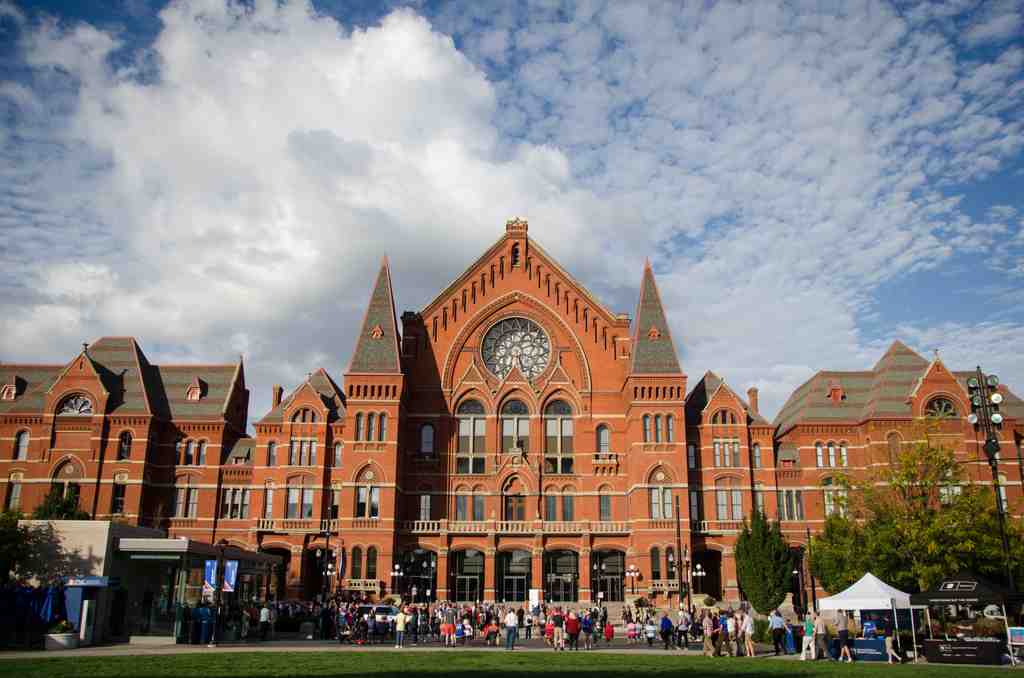
To spot the Cincinnati Music Hall, just look for a gigantic, ornate red-brick building with arched windows, pointed towers, and a huge circular stained-glass window right in the…Leer másMostrar menos
To spot the Cincinnati Music Hall, just look for a gigantic, ornate red-brick building with arched windows, pointed towers, and a huge circular stained-glass window right in the center-it's the proud, Gothic crown jewel facing Washington Park! Welcome, my friend, to the legendary Cincinnati Music Hall! Take in that stunning Venetian Gothic architecture-a swirl of spires, arches, and that magnificent rose window gleaming above you. In fact, it’s so grand that even the ghosts are impressed! Let’s step back in time and kick up the dust of history together. Imagine it’s the late 1800s-Cincinnati is buzzing with excitement, proud to be home to one of America’s most vibrant cities. But this block wasn’t always about music; it used to be a pauper’s cemetery. Yes, right where you’re standing, thousands were laid to rest-so if you ever get a chill down your spine, well, it might not be the Ohio wind! Fast forward to 1876. The city is overflowing with industrial expositions and musical festivals, but the buildings are mostly rickety wooden structures. Enter Reuben Springer: a wealthy businessman with a generous heart and, presumably, a good set of earplugs. After attending a festival where rain on a tin roof drowned out an entire chorus, Springer decided that Cincinnati deserved a hall as grand as the voices that filled it. He pledged $125,000-on the condition that everyone else chip in, too. The city answered the call, and together they funded a masterpiece. Designed by Samuel Hannaford-whose mustache, I’m told, was almost as impressive as his buildings-the Music Hall was completed in 1878. It’s not just a single building, but three, joined together by second-story passageways to make one united, awe-inspiring space. Every detail tells a story: look up to see carvings of musical instruments, and the giant rose window, which lets colored sunlight splash across the grand Springer Auditorium inside. Inside, the Springer Auditorium, named for our friend Reuben, seats over two thousand and once claimed second-largest opera house status in the country. Hanging from the ceiling is a chandelier so gigantic-1,500 pounds and 21 feet across-you might suspect it was brought in piece by piece, which it actually was, all the way from Czechoslovakia! Throughout its history, this has been a gathering place for legends-everyone from Ulysses S. Grant to Ray Charles, Ella Fitzgerald, Johnny Cash, Pink Floyd, and the Cincinnati Symphony and Opera have echoed through these halls. At one point, it even doubled as the city’s main roller-skating rink, so you could go from Beethoven to “boogie” with just one ticket! But let’s not forget the ghosts! Employees and artists have whispered about watching shadows slink through these corridors late at night, especially after it was featured as one of the Travel Channel’s “Most Terrifying Places in America.” Some say if you’re here at 3 AM, you might just see a Victorian spirit enjoying a phantom encore. Others-maybe more skeptical-blame those eerie noises on the fantastic acoustics. But, hey, a building this full of life (and maybe afterlife) just couldn’t help but hold onto a few stories. In 2016, Cincinnati came together once again for a $143 million facelift, merging old-world splendor with modern comfort. Now, as you stand beneath these soaring towers, surrounded by the ghostly hum of a thousand performances past, remember: you’re sharing a sidewalk with centuries of dreams, dramas, and maybe a ghost or two. Alright, onward to our next adventure-unless, of course, you prefer hanging out with the resident phantoms a little while longer! Just don’t ask for a haunting autograph; they’re notoriously hard to read. Interested in a deeper dive into the venues, architecture or the paranormal? Join me in the chat section for an insightful conversation.
Abrir página dedicada →To spot the Isaac M. Wise Temple, look for an extraordinary brick building with two tall, ornate towers and a big round decorative window above its main entrance, right across the…Leer másMostrar menos
To spot the Isaac M. Wise Temple, look for an extraordinary brick building with two tall, ornate towers and a big round decorative window above its main entrance, right across the street from the Saint Peter in Chains Cathedral. Welcome to the beautiful Isaac M. Wise Temple, one of Cincinnati’s true architectural showstoppers! If you feel a breeze swirling around those twin towers, just imagine it’s carrying whispers of nearly two centuries of history. Step a little closer and picture this: it’s the mid-1800s. The Civil War is rumbling around the country, and here in Cincinnati, a determined congregation-families of German-Jewish immigrants-are dreaming big. Their old synagogue on Lodge Street just isn’t grand enough. So what do they do? They build this magnificent temple, inspired by the magical Alhambra in Spain. It took a small fortune-$275,000 back then, which could buy you enough bagels to cover Plum Street and then some! When the Plum Street Temple finally opened on August 24, 1866, Cincinnati’s streets filled with excitement. The air buzzed with pride for a temple dedicated to the legendary Rabbi Isaac Mayer Wise-the founding father of Reform Judaism in America. Wise wasn’t just Cincinnati’s rabbi: he was a rabbi with a reputation that spanned the country! He gave sermons, started newspapers, and led debates that shaped the very future of Judaism in the U.S. In fact, the only thing more impressive than Wise’s legacy might be the temple’s decor-look up at those beautiful arches and the rose window above you. That intricate pattern? Imagine sunlight streaming through it, making colors dance across the pews inside. Over the years, this temple hasn’t just stood still. It’s been at the heart of many milestones. In 1972, a Bostonian named Sally Priesand was ordained here-the first female rabbi ever ordained by a rabbinical seminary in the United States. Not bad for a building whose neighbor, St. Paul’s Episcopal Cathedral, vanished into history long ago. Today, the Wise Temple stands as a reminder of vision, endurance, and hope, echoing the footsteps of every member who’s ever walked through its doors. And just think-without that original group of dreamers from 1840, this corner of Plum Street would be missing a little magic…and a lot of history.
Abrir página dedicada →You’ve made it to the imposing front steps of the Cincinnati and Hamilton County Public Library-or, as the locals like to call it, the CHPL, pronounced “chipple.” Get ready: this…Leer másMostrar menos
You’ve made it to the imposing front steps of the Cincinnati and Hamilton County Public Library-or, as the locals like to call it, the CHPL, pronounced “chipple.” Get ready: this place contains more stories than a broken printer on deadline. Take a moment and look up at the massive building before you. Now, imagine you’re standing in front of the city's very own “brain vault” where, at last count, a whopping 9.6 million volumes are stored. If you think that sounds like a lot, it’s the second-largest public library collection in the country and the 13th largest overall. That’s right-somewhere inside is probably the answer to every trivia night question for the next century! Let’s time travel back to the beginning. Picture Cincinnati in 1802, when folks first got together to share books-imagine the scene: candlelight flickering, a few leather-bound tomes, and probably someone loudly shushing the noisy horses outside. By 1853, it officially became the Cincinnati Public Library. Fast forward a bit and, in 1870, it moved into a grand building on Vine Street, with checkered marble floors, cast iron alcoves, dazzling skylights, and spiral staircases rising up like something from a Victorian mystery. Pass by the stone heads of Shakespeare, Milton, and Franklin, and you practically expected to bump into Sherlock Holmes searching for overdue books. It was one of the first libraries in America bold enough to open its doors on Sundays. At a time when “Sunday” meant, well, rest for everyone else, throngs of young men filled the reading rooms from 8 am to 10 pm. The seats were always packed and the air thick with the sweet smell of old parchment and new ideas. New York, Philadelphia, and St. Louis saw what Cincinnati was doing and quickly followed suit. Who knew the Queen City was such a trendsetter? Of course, as the decades rolled on, those endless stacks and spiral staircases weren’t enough. By the 1920s, books were everywhere-even stuffed into windowless basement corners, desperately trying to escape floods and peeling paint. Imagine the suspense: could the library hold out long enough for a new building? After a dramatic series of legal battles, financial headaches, and the kind of arguing Cincinnati is famous for, the new Main Library on Eighth and Vine opened its doors in 1955. The old place was demolished, but some of its most beloved bits-like the busts of literary heroes-were saved and are now nestled peacefully in the library’s gardens, keeping an eye on all the curious visitors. Inside the Main Library today, you’ll find a dizzying array of treasures. Not only are there books-millions of them-but also audiobooks, digital materials, movies, newspapers, and even sheet music. If you want to 3D print a keychain, stitch up some new duds, record a hit single or laser engrave a gift, the CHPL’s MakerSpace is your Willy Wonka factory. And for the genealogy sleuths out there, this place guards one of the largest family history collections in the nation. Fancy finding out if you’re related to a Cincinnati chili legend? This is the spot. With an annual circulation of over 21 million items and more than 5 million visitors in 2019, the library is a hive of activity-and with almost 17,000 free programs each year, there’s always something going on. They even loan out Wi-Fi hotspots for home use, just in case you want to read War and Peace without ever leaving your couch. And if you can’t make it inside, they’ll send books to your door, offer passport help, or help you study for your GED. Since 2013, CHPL has held Library Journal’s coveted five-star rating, and in 2020, was rated second in the country for libraries with huge budgets. Maybe they hand out gold medals for reading, too-I’d hate to see the trophy shelf. The library continues to change with the times, updating its website, redesigning logos, and digitizing rare books and the Cincinnati Enquirer’s photo archive. Each time the city has faced a challenge-budget cuts, floods, new technology-the CHPL has adapted, innovated, and called out “Shhh!” just as loudly as ever. Today, as you stand here, you’re next to over half a million square feet of curiosity, memory, and discovery. If these walls could talk, they’d probably quote Shakespeare-and if not, they’d happily loan you the book. Now, should we go inside and find out if the Dewey Decimal System still works, or move along to our next stop?
Abrir página dedicada →



Mostrar 11 paradas másMostrar menos paradasexpand_moreexpand_less
To spot the Archdiocese of Cincinnati, look for a grand stone building topped with a tall, pointed steeple and a cross standing high above massive columns right at the…Leer másMostrar menos
To spot the Archdiocese of Cincinnati, look for a grand stone building topped with a tall, pointed steeple and a cross standing high above massive columns right at the entrance. Alright, get ready to step into a whirlwind of history! Imagine you’re standing here almost 200 years ago-horses’ hooves clatter down muddy streets, carriages rattle past, and the only thing as tall as this steeple is the ambition of early Cincinnati’s Catholics. Picture the year: 1821. The pope has just drawn a new line across Ohio, plucking the state from the care of Kentucky’s Diocese of Bardstown, like someone switching teams midgame. Reverend Edward Fenwick is named the first bishop, a man with a big dream... and a bigger to-do list. He journeys all the way to Europe to collect funds for his flock-coming back with enough money in his pockets to build a cathedral and parochial schools, and even found the oldest seminary west of the Appalachians. The city is a bustling melting pot, with waves of new German and Irish immigrants rolling in; try to imagine all the different accents and languages chattering around you. Over the years, Cincinnati’s Catholic heart grew to cover 19 counties and more than 230 parishes-a spiritual empire stretching from city bustle to sleepy towns. And like any epic family, there’s been rivalry and drama. In the 1850s, a protest march ended in tragic violence as people clashed outside the bishop’s home. Let’s be honest-religion and politics have always made spicy dinner conversations! Money problems? Check. Financial panic in 1877 almost swept away the archdiocese, as locals had, somewhat unwisely, been treating the church like a piggy bank that could never run dry. Spoiler alert: It could. Court battles brewed for years before they managed to pay the last parishioner back. Now that’s what you call the original church fundraising drive! Step inside your imagination to the early 1900s: the archbishop is frowning mightily at the mere sight of a shimmy or a camel walk-or heaven forbid, a bare shoulder at a church dance. Teenagers everywhere probably rolled their eyes, which has to be the oldest tradition in the book. Time marched on, ushering in new leaders, restoring this grand cathedral, and stretching a web of schools-today, more than 100 of them-from urban Cincinnati out to the countryside. The Archdiocese even publishes one of the oldest Catholic magazines in the country and collaborates with radio stations, reaching believers’ hearts with both ink and airwaves. But not all the stories here are happy ones. In recent decades, the Archdiocese had to confront dark chapters, facing scandals and struggling for healing and justice for its communities. That honesty, difficult as it has been, is part of the soul-searching journey you stand beside today. And still, every Sunday, the bells ring out across Cincinnati-calling not just the faithful, but anyone yearning for hope, history, or just a quiet seat away from the chaos. As you stand before these columns and gaze up at the spire, know that you’re seeing a living, breathing patchwork of triumph, trouble, and tradition-woven through decades of faith, family, controversy, and the constant march of time. Now, how’s that for a stop with a story? Seeking more information about the geography, religious orders and congregations or the churches? Ask away in the chat section and I'll fill you in.
Abrir página dedicada →Look just ahead and a bit to your left to spot the Gwynne Building-a grand, cream-colored, 14-story giant lined with tall arched windows and framed in stone, standing prominently…Leer másMostrar menos
Look just ahead and a bit to your left to spot the Gwynne Building-a grand, cream-colored, 14-story giant lined with tall arched windows and framed in stone, standing prominently at the corner with its upper tower jutting above the city. Now, plant yourself right where you stand and imagine it’s 1913-Cincinnati’s streets are bustling with trolley cars and the air smells faintly of coal and ambition. Suddenly, rising above the clatter and horse hooves, there’s this brand-new building: the Gwynne Building, stretching up 14 stories, an architectural marvel made of steel, concrete, Indiana limestone, brick, and granite. No wood here-back then, fireproof meant serious business, and you could practically eat off the floors (though I don’t recommend trying). If you look closely at the corners, you’ll find ox heads peeking down, keeping a watchful, if slightly judgmental, eye on passersby. Here’s the twist-this isn’t a tale of just bricks and mortar. It was commissioned by Alice Gwynne Vanderbilt, the very same who married into the famous Vanderbilt family. Turns out, she and the building’s architect, Ernest Flagg, were cousins, family ties written in stone and steel! Alice named the building after her father, Abraham Gwynne, a Cincinnati judge, whose own father had been here when the city was still an up-and-coming frontier town. Now that’s roots. At one point, this was the nerve center for Procter & Gamble-a far cry from today’s skyscraper headquarters. You’d have found suits, secretaries, and the whiff of soap deals in the air until 1956. Over the years, the Gwynne Building’s halls have witnessed million-dollar renovations, wild real estate tales, and a cast of tenants-from transit authorities to filmmakers-each adding a new layer to its storied walls. So next time you pass by, remember: beneath those mosaic floors and watching oxen, you’re standing with Cincinnati legends and a touch of New York grandeur-all thanks to a family determined to leave their mark. And hey, at 14 stories, they sure aimed high!
Abrir página dedicada →To spot the Potter Stewart United States Courthouse, look for a grand limestone building stretching the entire block, with tall, narrow windows lined up in neat rows above a dark…Leer másMostrar menos
To spot the Potter Stewart United States Courthouse, look for a grand limestone building stretching the entire block, with tall, narrow windows lined up in neat rows above a dark granite base and a modern glass canopy at street level. Right here, standing in front of this monumental block-long façade, you’re staring at a place where history, law, and a bit of Cincinnati drama come together. The Potter Stewart United States Courthouse might look calm and stately on the outside, but its story? Let’s just say there’s a bit more turbulence than the office plants inside might suggest. Back in the 1800s, Cincinnati was growing fast, and the city’s craving for a brand-new federal building was as strong as a jury’s need for coffee on a Monday morning. The first attempt at a federal building landed over at Fourth and Vine way back in 1851, built with money saved up and, believe it or not, plenty of patience-because it took seven years to complete! After just 27 years, the government sold it off for a loss. Maybe if they’d held out a little longer, they could’ve traded it for a suite at the Merchants’ Exchange across the street. It wasn’t long before another courthouse rose on this very spot, joining a city square where no less than President James Monroe, Andrew Jackson, and John Quincy Adams had dropped by for visits, and Abraham Lincoln himself spoke. Even though the area was considered “too far” from the center of business by some cranky local shop owners (who, let’s face it, sounded like they didn’t want to walk further than the end of the block), government planners pressed on. Cincinnati’s second courthouse needed hard hats and even harder workers-excavations were done entirely by hand. Eleven years, over five million dollars, and a lot of elbow grease later, out popped another grand monument. And still… the city just wouldn’t stop growing. Suddenly, 27 departments needed to squeeze in, tripling the paperwork and the potlucks, but leaving too little room for everything else. Fast forward to the 1930s, and the city’s federal business had outgrown its second courthouse like a teenager outgrowing sneakers. So, with the kind of energy usually reserved for New Deal projects and the hope that “third time’s a charm,” construction crews swung into action. The shiny new courthouse-smaller in volume, but with twice the working space-started rising above Fifth Street. It went up fast, with steel and concrete and that eye-catching Art Moderne style… so modern, in fact, the building still looks ready for a black-and-white detective film. When this courthouse was finished in 1938, it was more than just a place to pass judgment-it was a nine-story, U-shaped answer to a city’s federal growing pains, covered in limestone and crowned with carved friezes and a Greek key belt course that wraps the building in a dignified embrace. Two grand entrances gleam with glass and aluminum, and if you peek inside, you’ll find fancy marble walls and elevator doors that haven’t changed since the first “Going up!” echoed through the lobby. Fun fact: when the courthouse opened, it held 51 agencies, probably inspiring the world’s first real-life game of “Guess Which Office You’re In?” Over the decades, it saw name changes, the addition of a modern bus station out front (not everyone’s favorite design, let’s say), and even got listed on the National Register of Historic Places in 2015. It’s named today for former Supreme Court Justice Potter Stewart, because nothing says “posh” like having your own courthouse. So, next time you pass by those soaring windows and the time-tested granite base, picture the hustle, the trials, the presidential handshakes, and the city banter that made this building not just a courthouse, but a centerpiece of Cincinnati’s ever-evolving story. Who knew so much action could be packed into a limestone box? Welcome to Cincinnati’s courthouse-with a history that’s never objected to a little excitement!
Abrir página dedicada →Look for a towering, bronze fountain in the middle of the plaza with a heroic woman at the top, arms outstretched, pouring water like Cincinnati’s own rain goddess-she’s…Leer másMostrar menos
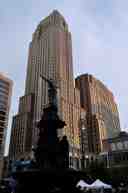
Look for a towering, bronze fountain in the middle of the plaza with a heroic woman at the top, arms outstretched, pouring water like Cincinnati’s own rain goddess-she’s impossible to miss once you see her shimmering in the spray. You’ve made it to one of Cincinnati’s proudest gems, the Tyler Davidson Fountain-or as the locals like to call her, The Genius of Water. Imagine, for a moment, standing here in 1871. The air is buzzing with excitement, gas lamps flicker all around, and people in fancy old-timey hats crowd the plaza-20,000 of them-all just to witness this moment. Henry Probasco, a wealthy businessman with a deep sense of duty and a bit of a flair for the dramatic, stands at the forefront. He’s here to honor his late brother-in-law, Tyler Davidson, and let me tell you, he doesn’t go small. Instead, he travels all the way to Munich, Germany, with one mission: to find a fountain fit for a city, a memorial that doesn’t just say “I miss you”-it shouts it from the rooftops in the splashiest way possible. Now, picture the challenge he faces. In Munich, the artist August von Kreling, along with Ferdinand von Miller at the Royal Bronze Foundry, had been dreaming up a masterpiece, but nobody had ever wanted to pay for such grandeur. Cue Probasco, who not only funds the dream but brings his own twist. He insists on four playful drinking fountains to make sure every thirsty kid and tired traveler can get a sip-because nothing says hospitality like a bronze boy riding a dolphin or wrestling a snake, right? By the time the fountain arrives in Cincinnati, it’s a marvel. Weighing in with twenty-four tons of cannon bronze (yes, the metal’s got some real battle scars from Denmark!) and eighty-five tons of sturdy granite, it stood-well, still stands-43 feet tall. At the top, the Genius of Water holds her arms wide, letting water pour from her fingertips in a gentle rain. Her message: this city owes its life and soul to the mighty Ohio River. But there’s more to see up close! Each side of the square pedestal tells a mini story-workers forging iron, peasants at the mill, a steamboat loading up with travelers, fishermen with kids by the water’s edge-all the ways water gives life and power to a city. Just above, on all sides, little scenes play out in bronze: a desperate farmer praying for rain, a fireman begging for help from the sky, a girl sharing water with an elderly man, and a mother dragging her reluctant boy to bathe. (Let’s face it, even in bronze, kids don’t love bath time.) Through the decades, this fountain has played musical chairs across the square. It’s faced east toward Europe (“Hello, ancestors!”), then west (so drivers caught a glimpse), and now south, after Fountain Square’s big facelift in 2006. For a while, the fountain even went on vacation at the Cincinnati Art Museum during renovations-proving that even statues need a break sometimes. Whenever it gets turned back on in spring, just in time for the Cincinnati Reds’ first home game, locals know the city’s real heartbeat is back. TV fans might think the fountain looks familiar-it starred in the opening credits of “WKRP in Cincinnati." And if you hear ghost stories floating through the air, well, the plaza has made an appearance in “Ghost Adventures” too (no word yet on aquatic ghosts). So, as you stand among the city’s tall buildings and listen to the splash and laughter around you, you’re not just witnessing a fountain; you’re in the presence of Cincinnati’s most enduring, shimmering symbol. Who knew water could make you feel this historic? And if your phone battery’s running low, don’t worry-just stand near the Genius of Water and try to recharge by osmosis. Nobody’ll judge! Give the old gal a nod for all the memories, and let’s keep wandering through Cincinnati’s living history.
Abrir página dedicada →Look straight ahead for a tall, chocolate-brown skyscraper with stair-step shapes near the top-it’s the massive Carew Tower, looming over the city like a jazz-age giant. Imagine…Leer másMostrar menos
Look straight ahead for a tall, chocolate-brown skyscraper with stair-step shapes near the top-it’s the massive Carew Tower, looming over the city like a jazz-age giant. Imagine it’s 1930-Cincinnati is buzzing, the air tinged with excitement (and maybe a little dust). Here, on the corner of Fifth and Vine, an ambitious dream is rising block by block: Carew Tower, 49 majestic stories of Art Deco splendor, reaching 574 feet into the blue. Developer John J. Emery had one wild idea: build a “city within a city,” packed with offices, shops, a swanky hotel, even its own parking garage-a one-stop urban adventure. The whole thing began just as the Great Depression crashed down on Cincinnati, but not even economic gloom could stop this party. Workers hammered away day and night, and within 17 months-faster than you might finish a few home repairs-the Carew Tower complex opened, at a cost of $33 million (which would buy you a lot more than a designer coffee today). Behind those thousands of windows, stories unfolded like a soap opera. On opening day, department stores moved in, radio studios blared, and by evening, the glamorous Netherland Plaza Hotel was throwing dinners fit for movie stars. The hotel’s name is a story itself: it started as the St. Nicholas Plaza, but a naming dispute sent managers scrambling for 2,000 alternatives before they settled on “Netherland Plaza,” a wink to the city’s riverbasin location. Vienna’s own Joseph Reichl managed the first guests, while big band leader Wayne King composed a special march for the lobby. I hear his music had toes tapping all the way up to the 48th floor! But the construction wasn’t all swing music and sparkly evenings. A major ironworkers’ strike threatened to put a wrench in the works-literally-and for 49 days, no steel was laid as union and non-union workers clashed over more than pay: it was about dignity and pride. Two fires broke out on upper floors (don’t worry, everyone was okay), and, with bodies dangling-safely harnessed, I hope-high above Cincinnati, the steelwork set a world record for its speed. By July 9, 1930, the roof soared above the city, and Emery’s wife raised an American flag, marking the birth of an instant icon. Through the decades, Carew Tower morphed with the times. In the '30s, you might run into baseball legends and broadcasting pioneers in the corridors. The observation deck became a dizzying must-see for tourists. The arcade below thumped with the footsteps of shoppers hunting down must-have hats and coats, while the Netherland Plaza’s ballrooms glittered with local galas, political deals, and a few wild wedding parties-some of which may be ongoing if you ask the ghosts. Of course, not every year was golden. Smoke from a massive fire in the 1940s billowed into guest rooms and storefronts. In the '60s and '80s, as downtown Cincinnati changed, Carew Tower had to keep up-major renovations hid, then restored, its Art Deco flourishes. The famous skywalk system sprouted like urban vines, linking the tower to the world, only to be chopped away again in this century. Today, after riding out booms, busts, and a few tumultuous ownership changes, Carew Tower is slowly transforming into chic downtown residences-a new life for a skyscraper that’s seen it all. People still debate which part of Cincinnati’s history is the building’s best chapter: was it the retail heyday, the office bustle, or those glamorous hotel evenings? One thing’s for sure: above it all, Carew Tower stands proud, its yellow-brick crown soaking up sunset after sunset like Cincinnati’s very own time traveler-ready to see what happens next.
Abrir página dedicada →To spot the Renaissance Cincinnati Downtown Hotel, just look up and ahead for a striking, tall, light-grey stone building with rows and rows of windows towering nineteen stories…Leer másMostrar menos
To spot the Renaissance Cincinnati Downtown Hotel, just look up and ahead for a striking, tall, light-grey stone building with rows and rows of windows towering nineteen stories above 4th & Walnut-definitely the grandest facade around! Picture yourself standing here on January 1, 1901, with the air electric and proud Cincinnatians craning their necks to marvel at the city’s new giant-the Union Trust Building! For three whole years, this was Ohio’s tallest skyscraper, drawing ambitious dreamers and bustling businesses right into its stately halls. Over the years, it’s worn many hats: engineering offices, an airline’s reservation center, jewelers, even a classic sandwich shop-though I bet the sandwiches “flew” out the door slower than the airline’s tickets! By 2010, though, the great tower stood empty; not even a ghost of a tenant to be found after some financial drama that left it in real estate limbo. That’s when a determined Columbus firm swooped in, snapping up the building for only $535,000-cheaper than a suburban fixer-upper! With a $33 million makeover, the tower burst back to life in 2014 as the Renaissance Hotel, boasting chic rooms, elegant suites, and D. Burnham’s restaurant, a tasty tribute to its legendary architect. From bankruptcy to ballrooms-now that’s a Cincinnati comeback!
Abrir página dedicada →You’ll spot the Fourth & Walnut Center rising right in front of you, its cream-colored stone and tall, grid-like windows reaching up proudly toward the sky near the…Leer másMostrar menos
You’ll spot the Fourth & Walnut Center rising right in front of you, its cream-colored stone and tall, grid-like windows reaching up proudly toward the sky near the corner. Imagine it’s 1904-horses clattering on cobblestones, ladies in fancy hats, and everyone craning their necks to gawk at what was, for a shining moment, the tallest building in all of Ohio! Now, you might be standing in the shadow of a building designed by the legendary Daniel Burnham, the Chicago architect who dreamed up cities and made them soar. But this wasn’t just any tower: folks called it the Clopay Building back then-a mashup of "clothing" and "paper," two major industries that kept Cincinnati buzzing. Over time, the place switched names almost as much as it changed hands. Fast forward to 2016, and suddenly a Texas investment firm swoops in, paying a cool $9.3 million with dreams of hotel glory! But, oops, their $67 million plan didn’t quite fly, leaving the place mostly empty and longing for comeback. Good news though-today, there’s a new plan to fill its halls with laughter, clinking glasses, and luxury living by 2027, all without a penny of city funding! This is one building that’s survived booms, busts, and plenty of bank drama-and it’s not done reinventing itself yet.
Abrir página dedicada →You’ll spot the Cincinnati Reds Hall of Fame and Museum right in front of you by its large, red-lettered sign above the entrance and a giant red-brick facade, flanked by crowds…Leer másMostrar menos
You’ll spot the Cincinnati Reds Hall of Fame and Museum right in front of you by its large, red-lettered sign above the entrance and a giant red-brick facade, flanked by crowds and banners celebrating the team’s proud legacy. Welcome to one of the crown jewels of Cincinnati sports! Right here, just a glove’s throw away from Great American Ball Park and the Ohio River, stands a monument to baseball’s legends-where the glory and heartbreak of Reds history are told not just through stories, but through treasures behind glass and memories captured in bronze. Picture this: It’s 1958, and the city can barely contain its baseball fever. Cincinnati’s Chapter of Commerce teams up with the Reds, and the very first class of Hall of Famers is chosen by none other than passionate Reds fans themselves. That’s democratic spirit-Cincinnati-style! Over time, the Hall’s torch was passed to baseball writers, but the devotion of locals never waned, even when the ceremonies took a nine-year “rain delay” in the late ‘80s and ‘90s. Luckily, executive John Allen was there to bring it back in 1998, dusting off the induction tradition and swinging for the fences once again. Speaking of revival, when the museum opened its doors next to the ballpark in 2004, fans could finally step inside over 15,000 square feet packed with jaw-dropping baseball artifacts. Imagine standing inches away from the 1975, 1976, and 1990 World Series trophies, or squinting at the scorebook used by the original 1869 Red Stockings-the world’s very first professional baseball team. There’s even a gallery gleaming with Hall of Fame plaques, each one commemorating one of 81 legends whose stories built this franchise from the diamond up. But wait, the fun doesn’t end with the trophy cases. Ever heard of the “wall of balls”? It’s a tribute to Pete Rose’s jaw-dropping 4,256 hits-and yes, each one is represented, and no, you don’t have to count them yourself, though you can try. You’ll see gloves worn by Rose at just about every position except hot dog vendor, and Johnny Bench’s MVP trophies gleaming nearby. Head outside and you’ll find a statue of Bench himself, caught mid-throw, immortalizing his heroic 1983 performance. From Crosley Field to Riverfront Stadium, every brick and display here buzzes with the electricity of opening day and the timeless hope of “maybe this season!” Slap on a Reds cap, and get ready to be swept up in a century and a half of awe, grit, and a little bit of good-natured baseball superstition.
Abrir página dedicada →Look for a massive stadium with soaring light towers, rows and rows of red seats, and two steamboat-style smokestacks rising in right center field-it’ll be right before you, just…Leer másMostrar menos
Look for a massive stadium with soaring light towers, rows and rows of red seats, and two steamboat-style smokestacks rising in right center field-it’ll be right before you, just along the river’s edge. Welcome to Great American Ball Park, the modern home of the Cincinnati Reds! Take a second to soak in the electric buzz of the crowd and the bright green sweep of the outfield stretching out before you. This ballpark opened its gates in 2003 with a splash worthy of the city’s baseball legacy, trading in the echoing concrete of the old Riverfront Stadium for a field packed with Cincinnati character-and a little bit of drama. The name? Thanks to Great American Insurance, who paid a staggering $75 million to slap their name on the scoreboard for 30 years. Not bad for a company picnic spot, right? Back in the mid-1990s, the Reds and the Bengals were like two kids forced to share a bedroom in Riverfront Stadium-and neither was happy about it. The fans wanted better, the teams wanted their own spaces, and Cincinnati voters finally ponied up with a sales tax hike to get these stadiums off the ground. Construction crews squeezed Great American Ball Park into a challenging patch of land, so much so that they had to partially demolish the old stadium before the new one was ready. The last chunk of Cinergy Field fell in December 2002. Imagine the dust cloud! Vivid history meets quirky fun outside and inside this park. Out front, welcome to Crosley Terrace-a tribute to a legendary ballpark of the city’s past, with bronze statues of baseball greats frozen mid-play. Step inside and mosaics greet you-one honors the undefeated 1869 Red Stockings, baseball’s very first pros, and the other celebrates the Big Red Machine, the unstoppable crew from the ‘70s. If you’re a scoreboard fan, you’re in luck-the screen here is a whopper, now featuring all the visual fireworks of high dynamic range video. Speaking of fireworks, check out those two smokestacks in right center field. They pay homage to the steamboats that once puffed along the Ohio River, but here, they do more than look pretty. When the Reds strike out an opponent, flames shoot out of the stacks; when a Red bashes a home run, the whole city knows-the smokestacks launch real fireworks. In 2015, a bit too much excitement caused the right stack to catch fire during a game. The only thing more fired up than that propane tank was the crowd. Nobody was hurt and the Cincinnati Fire Department had a story for the ages. Over on the third base side, look for the “rounding third and heading for home” sign-a tribute to the great broadcaster Joe Nuxhall, whose friendly voice guided fans for decades. Oh, and there’s a spot called “The Gap,” a view corridor that opens the stands to the city skyline and lets locals sneak a peek at the outfield action without even buying a ticket. Nice, right? The iconic moments here have ranged from glitzy to gritty. The park hosted the MLB All-Star Game in 2015, with new bars and concessions to fuel the party. But some memories are just cold-like the day in April 2023 when barely 5,000 shivering fans huddled under blankets for a game in biting 30-degree weather. The Reds won big, and I’d bet every hot coffee in the park tasted like victory. While you’re here, don’t miss the Cincinnati Reds Hall of Fame and Museum next door, packed with stories from the team’s century-long run. There’s even a rose garden to mark Pete Rose’s record-setting 4,192nd hit, though the roses may not be quite as wild as Pete was! Whether it’s the crack of the bat or the flash of the Power Stacks, you’re standing in the heart of Cincinnati baseball, where the past and present always play ball. If you're curious about the features, fan amenities or the notable non-baseball events, the chat section below is the perfect place to seek clarification.
Abrir página dedicada →Directly ahead, you’ll spot the Heritage Bank Center-a massive, rounded, white-and-blue arena perched above the roadways, with its bold blue rim and large “Heritage Bank Center”…Leer másMostrar menos
Directly ahead, you’ll spot the Heritage Bank Center-a massive, rounded, white-and-blue arena perched above the roadways, with its bold blue rim and large “Heritage Bank Center” sign making it tough to miss. Now let’s dive into the story swirling around you here-imagine the city buzzing with excitement in 1975, when this place first burst onto the scene as the Riverfront Coliseum. Back then, it was Cincinnati’s sparkling new answer to “where should we put 17,000 people, a hockey rink, a circus, and maybe an alligator or two?” The Stingers of the World Hockey Association hit the ice, and soon the roar of both hockey pucks and rock concerts began bouncing off these walls. As you stand here, take in the sheer size-over 346,000 square feet inside, the largest indoor arena in Greater Cincinnati. This building has changed its stripes like a particularly busy chameleon: Riverfront Coliseum, The Crown, Firstar Center, U.S. Bank Arena, and now, thanks to a bank from Kentucky, the Heritage Bank Center. But no matter the name, the action inside has been non-stop. Picture the flashing lights and glitter of concerts-Elvis Presley, the Allman Brothers, Taylor Swift, Paul McCartney, and even Celine Dion have all graced the stage here. Legend has it, more people screamed at the Bee Gees than at a monster truck rally. And in sports, this arena has seen the Cincinnati Bearcats dribble, dunk, and battle through countless basketball tournaments before their move to the university’s campus. The Kentucky Colonels played eight classic ABA games here, and years of NCAA glory unfolded on this very floor. Hockey’s heart beats strong too-after the Stingers’ run ended, the Cincinnati Cyclones became the arena’s mainstay, zipping across the ice and drawing fans in with every slapshot. Even the NCAA hockey Frozen Four has skated across this sheet, and the Cyclones are still firing up the crowd today. But this building also holds solemn memories. In 1979, a tragic crowd crush before a concert by The Who changed the city-and the entire country. Festival seating was banned, new crowd control rules were invented, and the pain of that night left a permanent mark on live music safety nationwide. Yet music ultimately returned, louder and safer, and the arena’s doors opened again to stingray suits, rocking guitars, and dancing fans. Wrestling matches have slammed down here-everything from WWE to UFC-and political rallies, circus shows, ice skating championships, and epic choir events have all made this concrete castle their stage. Even the city’s biggest basketball rivalry, the Crosstown Shootout, called this place home during some of its most tense years. If you notice a faint retro touch in the architecture, you’re not imagining things-owners put $14 million into sprucing things up in 1997, and there’s always talk about making it shinier, bigger, better… maybe one day a spot for NBA or NHL action again. Through all of its names, tenants, and applause, Heritage Bank Center remains a place where Cincinnati comes together to feel alive, celebrate, compete, and remember. Isn’t it wild to stand here and think of everything these seats have seen-from championship sweat to guitar-smashing rockstars and even the circus rolling through? Congratulations, you’ve made it to the final stop-thanks for making Cincinnati’s streets and stories come alive. If the Cyclones win big, or Paul McCartney comes back again, meet me here for an encore! Intrigued by the renovations, sporting events or the concerts? Explore further by joining me in the chat section below.
Abrir página dedicada →




Preguntas frecuentes
¿Cómo empiezo el tour?
Después de la compra, descarga la app AudaTours e ingresa tu código de canje. El tour estará listo para comenzar de inmediato - solo toca play y sigue la ruta guiada por GPS.
¿Necesito internet durante el tour?
¡No! Descarga el tour antes de empezar y disfrútalo completamente sin conexión. Solo la función de chat requiere internet. Recomendamos descargar en WiFi para ahorrar datos móviles.
¿Es un tour guiado en grupo?
No - esta es una audioguía autoguiada. Exploras de forma independiente a tu propio ritmo, con narración de audio reproduciéndose en tu teléfono. Sin guía, sin grupo, sin horario.
¿Cuánto dura el tour?
La mayoría de los tours toman 60–90 minutos para completar, pero tú controlas el ritmo completamente. Pausa, salta paradas o toma descansos cuando quieras.
¿Qué pasa si no puedo terminar el tour hoy?
¡No hay problema! Los tours tienen acceso de por vida. Pausa y continúa cuando quieras - mañana, la próxima semana o el próximo año. Tu progreso se guarda.
¿Qué idiomas están disponibles?
Todos los tours están disponibles en más de 50 idiomas. Selecciona tu idioma preferido al canjear tu código. Nota: el idioma no se puede cambiar después de generar el tour.
¿Dónde accedo al tour después de comprarlo?
Descarga la app gratuita AudaTours desde App Store o Google Play. Ingresa tu código de canje (enviado por email) y el tour aparecerá en tu biblioteca, listo para descargar y comenzar.
Si no disfrutas el tour, te reembolsamos tu compra. Contáctanos en [email protected]
Paga de forma segura con 


