AudaTours logoAudaTours

Audioguía de Corvallis: Ecos de la Herencia en el Corazón de Central Park

Guía de audio12 paradas

Explore el encantador corazón de Corvallis en este delicioso recorrido a pie por Central Park y sus alrededores históricos. Comience con una visita al bellamente conservado Teatro Whiteside, un lugar clásico que evoca la edad de oro del cine. A solo unos pasos, descubra el elegante Hotel Benton, una pieza central de la hospitalidad local con su arquitectura atemporal y su ambiente acogedor. Termine su viaje en el majestuoso Palacio de Justicia del Condado de Benton, donde un diseño impresionante se encuentra con una rica historia cívica. ¡Este recorrido ofrece una mezcla perfecta de cultura, historia y encanto de pueblo pequeño que no querrá perderse!

Vista previa del tour

map

Sobre este tour

  • schedule
    Duración 40–60 minsVe a tu propio ritmo
  • straighten
    1.9 km de ruta a pieSigue el camino guiado
  • location_on
  • wifi_off
    Funciona sin conexiónDescarga una vez, úsalo en cualquier lugar
  • all_inclusive
    Acceso de por vidaReprodúcelo en cualquier momento, para siempre
  • location_on
    Comienza en Casa J. R. Bryson

Paradas en este tour
  1. To spot the J. R. Bryson House, look for a stately, pale-gray two-story house with ornate white trim, bay windows, and a lush garden setting, just past the leafy hedges along the…Leer másMostrar menos

    To spot the J. R. Bryson House, look for a stately, pale-gray two-story house with ornate white trim, bay windows, and a lush garden setting, just past the leafy hedges along the sidewalk. Now take a deep breath-can you smell those roses tucked in the garden beds? Listen closely in your mind: imagine it’s the 1880s, and the click-clack of carriage wheels echoes along the dirt roads as J. R. Bryson himself heads home after a long day. This wasn’t just any old house; it was the place where secrets drifted through ornate wooden halls and stories swirled around the warm glow of the parlor lamps. Bryson was a well-known local figure-some said you could always hear lively debates and laughter floating from those inviting front windows. At dinners, family and guests would share tales, their voices mixing with the wind in the trees outside. And you can picture it, can’t you? The creak of the stairs, the cozy crackle of the fireplace on rainy nights. Back then, the house stood as a symbol of comfort and promise, sheltering dreams big enough to echo through history. Today, it tries to keep its secrets, but if you listen closely, you might just catch a whisper from the past-a laugh, a footstep, or an old story ready to be retold. Welcome to the J. R. Bryson House, where history is never far away… and neither is a good ghost story!

    Abrir página dedicada →
  2. Take a look in front of you and meet two of the most dedicated bookworms in Corvallis-at least in bronze form! This is the Story Time sculpture by Gary Lee Price, a local favorite…Leer másMostrar menos

    Take a look in front of you and meet two of the most dedicated bookworms in Corvallis-at least in bronze form! This is the Story Time sculpture by Gary Lee Price, a local favorite that greets everyone outside the Corvallis-Benton County Library. If you listen closely, I swear you can almost hear the pages turning-or maybe that’s just my imagination running wild again! Picture the scene: It’s a peaceful afternoon, sun dappling through the trees. In the middle of all that quiet excitement, you find this boy and girl sitting back to back, each completely lost in their own adventure. The boy, cross-legged, looks like he’s about to discover a secret dragon. The girl, with her braids and relaxed posture, might be making friends with a mermaid or planning to solve a mystery-perhaps even on these very streets! But there’s more than just a love of stories here. This sculpture is a heartfelt tribute to Jeanne H. Larson. Jeanne was the library’s director from 1948 all the way to 1967 and helped shape the library into what it is today. You might say she was the real hero of the story-no superhero cape needed, just a passion for spreading the joy of reading! The Larson family and community pitched in to bring this piece to life as a thank you to Jeanne and her biggest supporter, Robert Kermit Larson. Story Time was dedicated in 1993, and so far, the only “weathering” it’s endured is an occasional giggle from passersby who wish the books were real. There’s a plaque here, too, with words reminding us just how important libraries are to the future of our children. So next time you get lost in a book, think of these two, frozen in their endless adventure. And if you catch them turning a page, well, you might just be part of the magic yourself! Shall we wander on to our next stop?

    Abrir página dedicada →
  3. Take a look straight ahead and spot the Corvallis-Benton County Public Library-it’s a stately building marked with a bold column logo, and if you see wide windows and inviting…Leer másMostrar menos

    Take a look straight ahead and spot the Corvallis-Benton County Public Library-it’s a stately building marked with a bold column logo, and if you see wide windows and inviting doors right at street level, you’ve found it! Imagine you’re back in the 1860s, and Corvallis is just a small, dusty town. There’s no internet, of course-honestly, even a pencil could feel fancy. The only library was run out of J.W. Souther’s place-just picture a cozy room packed with almost every kind of book, and if you’ve got five dollars and a love for page-turners, you’d be in luck. Bet you couldn’t find TikTok tips, but you’d discover 730 “choice” volumes! Soon, the townsfolk wanted something more-a true public library. In 1872, a local bigwig, Dr. J. R. Bayley, made an exciting offer: if people would form a library association, he’d give them space in his shiny new brick building. Suddenly, reading became a community adventure, and everyone from rowdy kids to serious scholars ducked inside to discover new worlds. Years later, the current library took shape in 1932, designed by the famous architect Pietro Belluschi. If these walls could talk, they’d tell stories of whispered study sessions, late-night flashlight readers, and dreams bigger than the Oregon sky. The building has grown with Corvallis, stretching and expanding as more folks came in, searching for answers-and sometimes just a warm, dry place to sit! This place has even earned awards-named one of the top ten libraries in the entire country more than once! And just like long ago, the library invites everyone to “Enrich, excite, explore!” So, next time you wander in, remember you’re stepping into over 150 years of stories, secrets, and local laughter. Don’t worry-you won’t need five bucks, but it’s still a great deal.

    Abrir página dedicada →
Mostrar 9 paradas másMostrar menos paradasexpand_moreexpand_less
  1. To spot the First Congregational Church, just look ahead for a stately brick building with a row of tall white columns and broad brick steps leading right up to its main…Leer másMostrar menos

    To spot the First Congregational Church, just look ahead for a stately brick building with a row of tall white columns and broad brick steps leading right up to its main doors. Alright, imagine you’re standing here in 1917, the scent of fresh mortar in the air and the sound of construction echoing along these streets. The people of Corvallis had been dreaming of a new church ever since they split from the Presbyterians back in 1883-talk about a long family feud! Their first church was just down the road, but by the early 1900s they were running out of elbow room, and Reverend Edwin T. Sherman whipped up enough excitement (and a bit of fundraising hustle) to turn that dream into a campaign. They knocked on doors, they held socials, they wrote endless letters, and finally, in 1916, they bought this very lot. With $15,000-a king’s ransom at the time-they completed construction, and the first service boomed through these doors in April 1918. Now, picture Sunday mornings with the bell ringing, kids fidgeting in their pews, and Boy Scout Troop One gathering outside after service, eager for adventure. Maybe you can almost hear their laughter beneath the old oak trees. For 17 lively years, this was a place of joyful voices and song, hope and change. But then, in 1935, the church changed hands-and changed moods entirely! It became the DeMoss-Durdan Mortuary, where quiet footsteps and soft voices replaced the rush of Sunday bustle. For decades, the building watched Corvallis change all around it, weathering time and seasons. Today, as Christ Central Anglican Church, it still lives with spirit, holding stories of faith, friendship, and a little bit of mystery. Who knew so much history could fit behind those big white columns? And don’t worry, no funeral jokes-after all, this place has heard enough punchlines for one lifetime!

    Abrir página dedicada →
  2. Look for a charming white wooden building with tall pointed arch windows, a red front door, and a small bell tower peeking over the roof, nestled among leafy green trees-if you…Leer másMostrar menos

    Look for a charming white wooden building with tall pointed arch windows, a red front door, and a small bell tower peeking over the roof, nestled among leafy green trees-if you see the bright entrance and gothic arches, you’ve found the Corvallis Arts Center! Pause for a second and listen for the gentle rustling of the trees above you, and the distant buzz of artists chatting inside. You’re standing in front of a place with more creativity seeping through its woodwork than you’d find in a box of crayons during a thunderstorm! But this artsy spot wasn’t always a home for paints, clay, and inspiration-it started life all the way back in 1889 as the Episcopal Church of the Good Samaritan, built in the classic Carpenter Gothic style. Just imagine that roof truss system above, holding up nearly a century and a half of history! Who knew a church could have such flair? Fast forward to the early 1960s. The Good Samaritan congregation moved out, and rumor had it the building was going to be turned into an Elks Lodge temple. You can picture a row of antlered Elks tiptoeing inside, only to be told, “Sorry folks, you’ll need to find another spot!” The real twist? The benevolent Elks loaned the future Arts Center to Corvallis’ newly-formed Arts Council late in 1962, for the princely sum of-wait for it-just $1 a year. A dollar! I’ve seen more expensive cups of coffee. Inside, the hall needed a lot of elbow grease-imagine the smell of fresh paint and the echo of hammers as new carpets and furnishings went in. Money for all those renovations came from “patronages” sold for $10 each, helping to turn this space into a community showplace. The big catch? Even if the rent was a steal, the bills for maintenance and lights were a hefty $15,000 a year-which is enough to make even the most stoic artist gasp, brush in midair. Some folks thought it might need rescuing from the city’s Parks and Recreation Department! But as any artist will tell you, every masterpiece has a tricky middle. The building itself was actually moved-yes, moved-one block north to this spot you’re standing on, back in 1970. You can almost picture it rolling gently up the road, historic spire and all, to its new home on a sturdy concrete foundation. One year later, the old church-that-could finally earned its place on the National Register of Historic Places, a well-deserved badge of honor after so many close calls. The first grand opening in 1963 saw crowds pouring in-over 7,000 people!-admiring works by artists from across the globe and right here in Oregon State, with weavers, clay artists, and musicians filling the halls with sounds, laughter, and color. Today, the Arts Center is still bursting with life, supporting young talent and seasoned pros, hosting classes, rotating galleries, and even a gift shop with treasures from 60+ local artists. So let your own imagination roam a bit as you stand here; you’re not just outside a building-you’re at the heart of Corvallis’ creative spirit, where history, hope, and a little artistic mischief meet.

    Abrir página dedicada →
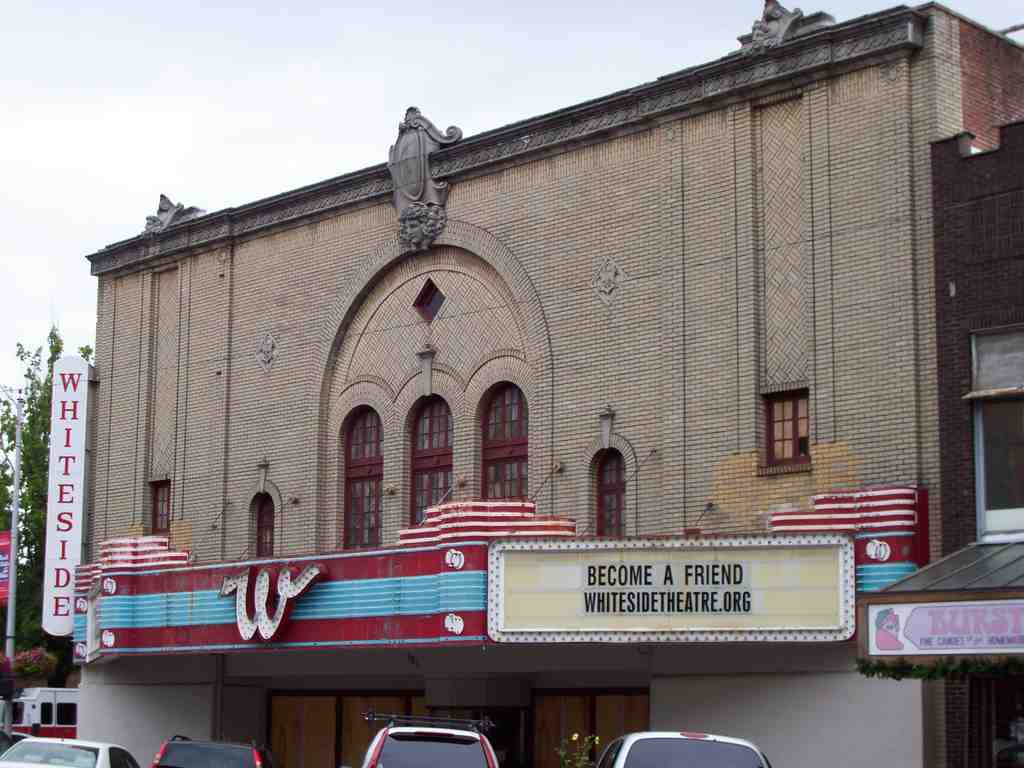
  3. To spot the Whiteside Theatre, just look for the grand cream-brick building with tall arched windows and a vintage red-and-aqua marquee-its big “W” sign over the entrance makes it…Leer másMostrar menos

    To spot the Whiteside Theatre, just look for the grand cream-brick building with tall arched windows and a vintage red-and-aqua marquee-its big “W” sign over the entrance makes it hard to miss, standing proudly at the corner. Welcome to the Whiteside Theatre! Just imagine: it’s a chilly November night in 1922, and the streets of Corvallis are slick with rain. But does a bit of rain stop the eager moviegoers of yesteryear? Not for a second! Crowds huddle under umbrellas, the excited chatter mixing with the patter of raindrops, all gathering to see the opening night of this “magnificent picture palace.” The line is so long, the ushers use Olympic speed, but some folks still can’t squeeze inside. You’d think someone was giving away free popcorn! Step inside-in your imagination-and you’d have seen draperies richer than an oil tycoon, murals that made the walls come alive, and, best of all, a massive Wurlitzer organ boasting a sound so sweet, music critics claimed it was the best in the state. In those days, movies didn’t say a word, but the organ did all the talking! Picture a Seattle theater owner on opening night, declaring to the crowd with all the drama of a movie villain, “Pictures can not be produced without fitting music!” That first night, the air was thick not only with anticipation but also with the perfume of fresh-cut flowers. This whole magical showplace came from the dreams-and wallets-of the Whiteside brothers, Sam and George. They were Iowa natives-turned-Oregonians, veterans of the movie business who’d already built the Crystal and Majestic theaters nearby. But after a dozen years in town, they wanted to give Corvallis something truly epic. So, $120,000 later, voilà: the Whiteside. Of course, every palace faces its dragons. In October 1927, disaster struck. A fire started in a paint room behind the stage, crackling and popping as flames devoured the prized organ and the seats. The theatre closed, but the Whiteside brothers didn’t let a little thing like catastrophe keep them down for long. By January, the building reopened, brighter than ever, new organ in place, and the crowd roaring back in for a Pacific Northwest movie debut. The Whiteside wasn’t just about silent reels-oh no! It soon led Corvallis into a whole new world of “talkies.” On December 26, 1928, the Whiteside screened the first talking picture in town. The Whiteside brothers spent a jaw-dropping $35,000 installing Vitaphone equipment-giant turntables spinning in rhythm with the projector, sending clear sound to horns hidden throughout the building. I have to say, I’m glad I don’t have to synchronize my voice with a spinning record-talk about multitasking! Prices, of course, were a little easier on the wallet back then: 50 cents for adults, 15 for kiddos, matinees for the budget conscious. And the theater became a full-on community hub. They held Memorial Day ceremonies, citywide beauty contests, and one lucky winner even jetted off to represent Oregon in the International Pageant of Pulchritude-try saying that three times fast! As time marched on, the Whiteside saw it all: black-and-white films, glorious color, laughter, tears, and thunderous applause (and probably a few snores from those late showings). Regal Cinemas took the reins in the 1990s, but by 2002, the big 800-seat palace had run into trouble: not enough moviegoers, and let’s just say the sewer lines needed a hero. They closed the doors after screening the epic The Fellowship of the Ring - so really, the last film was about as grand as the theatre itself. But a place like this doesn’t go quietly into the night! Corvallis locals banded together, determined to rescue their cinematic treasure. Through fundraisers, community spirit, and maybe a few prayers to the movie gods, restoration began. Little by little, the Whiteside came back to life-classic films fill the screen, the stage hosts everything from concerts to ghost tours, and the hum of the crowd outside has returned. Today, as you stand here, you’re part of a living theater-with a century’s worth of stories echoing through these walls. Keep an eye out; maybe the old organist is still around in spirit, waiting to play just one more flourish as the curtains rise. And who knows? On a stormy night, you might just hear the sound of a thousand voices cheering for the next great adventure.

    Abrir página dedicada →
  4. To spot the Corvallis Hotel, look for a grand, four-story brick building on the corner, standing tall with big windows and a line of storefronts wrapping around the ground…Leer másMostrar menos

    To spot the Corvallis Hotel, look for a grand, four-story brick building on the corner, standing tall with big windows and a line of storefronts wrapping around the ground floor. Now, let’s step back in time and imagine this corner bustling with travelers and locals, their shoes clicking on the sidewalk as they head inside seeking rest after a long train journey. The air is filled with the scent of roasting coffee drifting from the lobby, the buzz of conversation, and maybe-even a ghostly whisper or two from the past, because buildings this old are never short on secrets! Listed on the National Register of Historic Places, the Corvallis Hotel has seen decades of laughter, drama, and romance. Picture jazz music during the roaring twenties echoing through the big windows-if only these bricks could talk, right? It was the place to see and be seen-perhaps you’d spot wealthy cattle ranchers or traveling salesmen swapping their wildest stories over a game of cards. They say if you listen closely, you might just hear a mysterious tale or two riding on the wind between the alleyways. So, as you stand here, you’re not just outside a hotel-you’re at the crossroads where generations of travelers have rested, dreamed, and started adventures. Now, onward to our next legendary landmark!

    Abrir página dedicada →
  5. To spot the Lewis G. Kline Building, look for a bold, red-brick structure on the corner with a row of green awnings over the windows and storefronts-right where the trees brush…Leer másMostrar menos

    To spot the Lewis G. Kline Building, look for a bold, red-brick structure on the corner with a row of green awnings over the windows and storefronts-right where the trees brush against the sidewalks. Now, let your imagination take you back in time as you stand here. Picture this corner buzzing over a hundred years ago with horse-drawn carts rumbling past and folks in hats and long skirts bustling in and out of these very doors. This building, the Lewis G. Kline Building, has stood through so many seasons and stories that it almost feels like it breathes history-if you listen closely, maybe you’ll even hear a ghostly echo of old-timey shopkeepers calling out deals of the day! Built strong to last, it was a proud symbol of progress when Corvallis was still just a growing frontier town. Locals would gather right here to swap news and maybe a joke or two. Rumor has it, the brick is so sturdy not even Oregon rain can wash away its secrets. So, next time you see someone ducking in under one of those green awnings, just remember: you’re sharing a sidewalk with generations of dreamers, shoppers, and a fair bit of small-town mischief. Don’t be surprised if the building itself seems to wink at you as you pass!

    Abrir página dedicada →
  6. To spot the Julian Hotel, look ahead for a tall, four-story red brick building trimmed with bold white accents, standing prominently at the corner with a row of evenly spaced…Leer másMostrar menos

    To spot the Julian Hotel, look ahead for a tall, four-story red brick building trimmed with bold white accents, standing prominently at the corner with a row of evenly spaced windows and a canopy shading the sidewalk below. Now, step closer and imagine yourself right here in Corvallis, over a century ago. It’s 1892, and a fresh new hotel-then called Hotel Corvallis-has just popped up like a Victorian dream come true. It’s not the brick building you see now, but a wooden frame covered with fancy brickwork and crowned with a jaw-dropping tower at the corner. Guests stepping off the dusty streets would gaze up at a spindly turret giggling in the clouds, topped with an open cupola made especially for watching small-town life unfold, with a view fit for the fanciest top hats and parasols. Picture the hustle and bustle as travelers arrive, horses neighing and porters shouting greetings by the ornate entrance marked "Hotel Corvallis." Now, leap forward a couple of decades-1910’s here and change is in the air. The old Queen Anne frills are yesterday’s news, and architect Elmer E. McClaran is about to give the place a total makeover. Out go the turret and the fancy Victorian details, making way for crisp, clean lines and a Colonial style. With a wave of his blueprints, McClaran not only transforms the look but adds a whole extra floor-making this a true four-story giant for Corvallis. The grand reopening must’ve echoed with the clatter of cutlery and happy chatter in the restaurant-room for 300 folks, served by 13 spirited waitresses and, as the ad proudly but awkwardly announced, one “Chinese servant." The name changes too, honoring the new owner, State Senator Julian N. McFadden-so, say hello to the Julian Hotel! By 1984, the building earns its spot on the National Register of Historic Places. Today, as the sun hits the warm brick and you stand where belles, businessmen, and dreamers once gathered, you can almost hear the laughter and hopes swirling around-a living memory box, solid as ever.

    Abrir página dedicada →
  7. To spot the Benton County Courthouse, just look ahead for the stately white building with a red roof and a tall clock tower crowned by an American flag-it’s impossible to miss,…Leer másMostrar menos

    To spot the Benton County Courthouse, just look ahead for the stately white building with a red roof and a tall clock tower crowned by an American flag-it’s impossible to miss, right across the street and peeking over the trees. Alright, my friend-welcome to Oregon’s oldest courthouse still serving up justice and paperwork since 1888! Just let your eyes follow that mighty clock tower above you, and try to imagine the hustle and bustle of years past. Now, picture this: It’s a foggy morning sometime in the late 1800s. The courthouse clock sits high in the spire, ticking away, but it’s not just a matter of batteries and wires-oh no. Back then, a weary custodian had to climb up there twice a week to wind up 650 pounds of weights by hand. That’s about as much as three very grumpy llamas! On those top floors, the halls echoed with the footsteps of judges, lawyers, and anyone hoping their day in court would go well. Down in the basement, meanwhile, the Benton County Elections Department was storing ballot boxes between elections. If those walls could talk, they’d whisper tales of tense elections, close calls, and maybe a little mischief with the ballot boxes. Fast forward to 1918. The old steam heating system began squealing and groaning like a steampunk opera-the building was freezing in winter, and the county had to call in local plumbers. Out came the new hot water pipes, all shiny and modern, except they kept the original boiler, maybe because it was just too stubborn to retire. Imagine the echo of hammers, and the hiss of new pipes as workers rushed to finish before the chill set in. By 1954, it was time for a makeover. The enormous courtroom, once big enough for wild west courtroom drama, was sliced up to make smaller spaces-one for district court, another for the judge’s office, and even a cozy conference room barely wider than a jail cell. Ceiling lowered, walls covered in mahogany plywood, the place got a fresh coat of light green paint. But here’s my favorite part: out went twenty old brass spittoons-imagine the clink and clatter-and in their place, four modern sand urns for cigarette butts. I’ll bet the cleaners cheered at that! So, as you gaze up at this elegant old courthouse, just think: you’re standing where generations have argued, voted, worked, and maybe snuck a nap during jury duty. If only that clock could tell us all the secrets it’s ticked past!

    Abrir página dedicada →
  8. To spot the Hotel Benton, look for a tall, cream-colored building with seven stories, rows of rectangular and arched windows, and decorative blue medallions near the roofline,…Leer másMostrar menos

    To spot the Hotel Benton, look for a tall, cream-colored building with seven stories, rows of rectangular and arched windows, and decorative blue medallions near the roofline, standing proudly above the treetops right across from the courthouse. Now, let me whisk you back to the roaring 1920s, when Corvallis found itself in a bit of a hotel pickle. The old Julian Hotel and its fellow establishments were fading out, leaving visiting professors, traveling salesmen, and ambitious politicians scratching their heads and wondering where to hang their hats for the night. The town desperately needed a grand, modern hotel-something fireproof, sophisticated, and worthy of a growing college town. Cue the local Kiwanis club and their fearless president, Ralph Lyman Bosworth. Picture a room full of community leaders-a lawyer, a banker, a gutsy newspaper editor, all brainstorming ways to put Corvallis back on the hospitality map. Their solution? To raise an eye-popping $250,000, which, in those days, could just about get you a lifetime supply of butterscotch pudding. They rallied the townsfolk to buy bonds and subscribe to loans, every dollar donated with dreams of a bustling lobby and grand events. Corvallis wasn’t about to hand this project over to just anyone, either. Around 95 percent of the labor came straight from local hands. Imagine the sounds of hammers clanging and concrete being poured as neighbors built not just a hotel, but a symbol of community pride. And when the Italian Renaissance design-compliments of Portland’s celebrated Houghtaling and Dougan-finally rose up in 1925, it was a real stunner: seven stories of concrete and steel, 120 rooms fitted with shiny new baths and showers, walls so sturdy and thick it was practically a fortress against noise and flames. The grand opening on June 1, 1925, was no small affair. They printed 50,000 letterheads-yes, 50,000!-and sent them off to business leaders, bankers, and even Oregon’s pharmacists. Everyone from railroad travelers to local wedding guests wanted to be part of the new hotel’s electric opening week. Managed by A.N. Pierce, a hospitality pro from Portland, the Hotel Benton was crowned the social and business heart of Corvallis. Its prime spot across from the courthouse and a stone’s throw from the train station made it impossible to miss. If you were anyone with a hat and a handshake, you probably held a meeting-or maybe a secret or two-in its grand halls. But no story is without a twist. When passenger trains stopped rolling in and highway motels started popping up outside town, the hotel’s fortune dimmed. By the 1980s, the grand guest rooms had been transformed to house folks down on their luck, showcasing the building’s resilience in a changing world. Today, the Hotel Benton stands proudly on the National Register of Historic Places-not just for its handsome Italian revival looks, but as a monument to what a determined, spirited community can achieve. So take a good look up at those windows, imagine the swirling excitement of opening night, and picture the layers of history nestled behind each sturdy wall.

    Abrir página dedicada →
  9. To spot the Dr. Henry S. Pernot House, look for a tall, gingerbread-style Victorian home with warm, brown and red siding, cream trim, and a fancy second-story balcony peeking out…Leer másMostrar menos

    To spot the Dr. Henry S. Pernot House, look for a tall, gingerbread-style Victorian home with warm, brown and red siding, cream trim, and a fancy second-story balcony peeking out from behind leafy trees just ahead on your right. Welcome to the Dr. Henry S. Pernot House! Imagine standing here over a hundred years ago, when horse-drawn carriages rattled past and Dr. Pernot, a respected doctor in town, might be taking a break on his porch after a long day tending to patients. The house in front of you was built with care-listen, and you might hear the gentle creak of the old wooden stairs inside. The details are stunning: gables soaring overhead, all those decorative railings, and a touch of mystery in the air. Who might have stood at those windows on stormy nights, peeking out at the wild Oregon rain? Over the years, the house watched Corvallis grow up around it, surviving all the changing styles and noisy progress outside. Thanks to people who love history (and maybe have a soft spot for spooky stories), this beautiful home landed a spot on the National Register of Historic Places in 1982. So as you stand on the lawn, take a deep breath, feel the breeze, and imagine the conversations, secrets, and laughter that these walls have heard. I think even Dr. Pernot would say his house still has great “patient” charm!

    Abrir página dedicada →

Preguntas frecuentes

¿Cómo empiezo el tour?

Después de la compra, descarga la app AudaTours e ingresa tu código de canje. El tour estará listo para comenzar de inmediato - solo toca play y sigue la ruta guiada por GPS.

¿Necesito internet durante el tour?

¡No! Descarga el tour antes de empezar y disfrútalo completamente sin conexión. Solo la función de chat requiere internet. Recomendamos descargar en WiFi para ahorrar datos móviles.

¿Es un tour guiado en grupo?

No - esta es una audioguía autoguiada. Exploras de forma independiente a tu propio ritmo, con narración de audio reproduciéndose en tu teléfono. Sin guía, sin grupo, sin horario.

¿Cuánto dura el tour?

La mayoría de los tours toman 60–90 minutos para completar, pero tú controlas el ritmo completamente. Pausa, salta paradas o toma descansos cuando quieras.

¿Qué pasa si no puedo terminar el tour hoy?

¡No hay problema! Los tours tienen acceso de por vida. Pausa y continúa cuando quieras - mañana, la próxima semana o el próximo año. Tu progreso se guarda.

¿Qué idiomas están disponibles?

Todos los tours están disponibles en más de 50 idiomas. Selecciona tu idioma preferido al canjear tu código. Nota: el idioma no se puede cambiar después de generar el tour.

¿Dónde accedo al tour después de comprarlo?

Descarga la app gratuita AudaTours desde App Store o Google Play. Ingresa tu código de canje (enviado por email) y el tour aparecerá en tu biblioteca, listo para descargar y comenzar.

verified_user
Satisfacción garantizada

Si no disfrutas el tour, te reembolsamos tu compra. Contáctanos en [email protected]

Paga de forma segura con

Apple PayGoogle PayVisaMastercardPayPal

AudaTours: Audioguías

Tours a pie autoguiados entretenidos y económicos

Probar la app arrow_forward

Amado por viajeros de todo el mundo

format_quote Este tour fue una excelente manera de ver la ciudad. Las historias fueron interesantes sin parecer demasiado guionadas, y me encantó poder explorar a mi propio ritmo.
Jess
Jess
starstarstarstarstar
Tour de Tbilisi arrow_forward
format_quote Esta fue una forma sólida de conocer Brighton sin sentirme como un turista. La narración tenía profundidad y contexto, pero no se excedía.
Christoph
Christoph
starstarstarstarstar
Tour de Brighton arrow_forward
format_quote Empecé este tour con un croissant en una mano y cero expectativas. La app simplemente vibra contigo, sin presión, solo tú, tus auriculares y algunas historias geniales.
John
John
starstarstarstarstar
Tour de Marsella arrow_forward

Audioguías Ilimitados

Desbloquea el acceso a TODOS los tours del mundo

0 tours·0 ciudades·0 países
all_inclusive Explorar Ilimitado

