

Audioguía de la Ciudad de Nueva York: Historias Ocultas del Noroeste del Bronx
Bajo la frondosa sombra de Mosholu Parkway y los susurros ferroviarios de Bedford Park yace una historia del Bronx que pocos notan. Las torres resuenan con tormentas políticas. Los callejones guardan escándalos que una vez despertaron a la ciudad. Cada paso revela un pulso bajo el pavimento. Esta audioguía autoguiada te invita a salir del camino trillado para descubrir historias y secretos entretejidos en el ritmo diario del Bronx. Deja que dramas invisibles y momentos olvidados transformen tu forma de ver cada estación y esquina. ¿Qué alimentó los amargos enfrentamientos que tuvieron lugar en Bedford Park Boulevard? ¿Quién desapareció tras los muros del Hogar Montefiore para Inválidos Crónicos, dejando solo rumores fantasmales? ¿Qué objeto insólito en un parque de barrio provocó una rebelión en miniatura? Muévete a través del tiempo y los barrios. Sigue rumores y hechos desde plataformas bulliciosas hasta pasillos silenciosos. Espera revelación y adrenalina en igual medida. Pulsa reproducir y deja que el Bronx revele lo que esconde a plena vista.
Vista previa del tour
Sobre este tour
- scheduleDuración 40–60 minsVe a tu propio ritmo
- straighten5.0 km de ruta a pieSigue el camino guiado
- location_onUbicaciónBronx, Estados Unidos
- wifi_offFunciona sin conexiónDescarga una vez, úsalo en cualquier lugar
- all_inclusiveAcceso de por vidaReprodúcelo en cualquier momento, para siempre
- location_onComienza en Estación Williams Bridge
Paradas en este tour
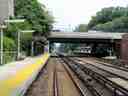
To spot Williams Bridge station, look for a pair of simple high-level platforms with yellow safety stripes alongside several railroad tracks, just beneath the overpass on Gun Hill…Leer másMostrar menos
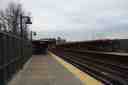
To spot Williams Bridge station, look for a pair of simple high-level platforms with yellow safety stripes alongside several railroad tracks, just beneath the overpass on Gun Hill Road. Welcome to Williams Bridge station, where the past and present of Bronx travel meet on a pair of sturdy platforms tucked beneath the buzz of Gun Hill Road! Imagine the year is 1842-locomotives chuffing in the crisp air, and passengers in top hats and bonnets waiting eagerly for the New York and Harlem Railroad. Back then, the land around you was far quieter, echoing with the clickety-clack of steam trains and maybe a horse-drawn carriage or two. Over the years, these tracks became a crossroads, first merging into the mighty New York Central Railroad, then shifting through the hands of Penn Central and Conrail before finding a modern home with the Metro-North Railroad in 1983. The platforms you see now are pretty sleek, but for decades, there was a little station building at the southeast corner where you might have grabbed a coffee before catching the train. Above you, the Third Avenue El once rattled overhead, bringing heaps of city life into the sky from 1920 until 1973-a true dance of trains above and below! Just picture commuters dashing to the old parking lot for the Bronx River Parkway, dodging traffic on what was once Newell Street-honestly, traffic in the Bronx never needs a reason to get creative! Fast forward to today, and you’re witnessing transformation in action: new elevators lifting spirits (and legs!) in 2025, improved stairs, fresh platforms-all to keep Williams Bridge chugging into the future. So, as you stand here, you’re at a living landmark shaped by every whistle, every footstep, and every hopeful traveler waiting for their ride.
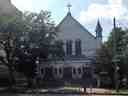
Abrir página dedicada →To spot St. Mary’s Church, just look for a pointed white wooden building with tall arched windows and a steeple topped by a cross, right at the corner of White Plains Road and…Leer másMostrar menos
To spot St. Mary’s Church, just look for a pointed white wooden building with tall arched windows and a steeple topped by a cross, right at the corner of White Plains Road and 215th Street. Standing here today, it’s not hard to imagine the church bells that once called Williamsbridge neighbors-Irish, Italian, and everyone in between-to mass on Sunday mornings. This church kicked off as a humble mission back in 1866, thanks to Rev. Patrick O’Sullivan, and by 1886, it became a real parish-the spiritual heart of what was once the town square, before Williamsbridge was even part of New York City! Picture kids in their best shoes, bustling over to the school next door, which since 1908 was run by a team of three hard-working Ursuline nuns and four lay teachers. Boys and girls, 210 in all, swapped stories and probably some contraband snacks, while the grownups worried about that $12,000 church debt (which was serious money in 1914). Fast-forward to the 1940s and 50s: imagine the sounds of marching bands, feast days with homemade Italian cooking in the church basement, and the arrival of Capuchin Franciscans who came straight from Italy themselves. St. Mary’s welcomed the faithful for generations under a succession of devoted priests, some who went on to other parishes, and one-Father Traube-who made a name for himself in New Rochelle. The church became a stage for local legends, like Sal Mineo, who shined as an Academy Award-nominated actor, and Raymond Danowski Jr., who gifted a huge poetry library to Emory University. But the neighborhood shifted, and parishioner numbers faded. By 2007, the church finally closed, but its wooden frame and windows still keep watch over Williamsbridge, standing as a quiet guardian of all the stories, hopes, and laughter that once filled this corner of the Bronx.
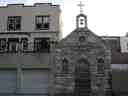
Abrir página dedicada →To spot the Lisanti Chapel, look for a small stone building right next to a row of garages, with pointed-arched windows and a bell tower topped with an iron cross-it's the…Leer másMostrar menos
To spot the Lisanti Chapel, look for a small stone building right next to a row of garages, with pointed-arched windows and a bell tower topped with an iron cross-it's the charming little structure that looks like it could star in its own movie! Now, let me take you back over a century: Imagine Williamsbridge in 1905, streets buzzing with Italian immigrant families, the scent of Sunday sauces floating out of windows, and a man named Francesco Lisanti with a dream. Francesco missed the old country, but more than anything, he wanted a place for his family and neighbors to pray, a place that felt like home. So, with his own hands-no small feat, and probably a lot of muttering in Italian-he built this tiny chapel right here on East 215th Street. He gave it Gothic Revival touches and a Southern Italian spirit, carving a plaque above the door with his name. Think of the people who passed through these doors, seeking comfort, hope, and maybe a little peace and quiet from their lively homes! In 2002, this little slice of history officially made it onto the National Register of Historic Places. So here you are, standing in front of a love letter in stone from Francesco Lisanti to his new world-a story of devotion, family, and just the right amount of Old World drama.
Abrir página dedicada →
Mostrar 9 paradas másMostrar menos paradasexpand_moreexpand_less
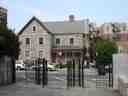
To spot the Keeper’s House, look straight ahead and find the L-shaped, grey stone building with a slate roof and a cozy little porch-its rugged granite walls make it stand out…Leer másMostrar menos
To spot the Keeper’s House, look straight ahead and find the L-shaped, grey stone building with a slate roof and a cozy little porch-its rugged granite walls make it stand out from the taller brick apartments nearby. Now, picture yourself standing here in the late 1800s-the Bronx was mostly fields and farms, and this house had just sprung up in 1889, built from the very granite dug out to create the Williamsbridge Reservoir right next door. Imagine the clinks and clatters of those stones being stacked, each one a little piece of the reservoir’s story. The Keeper’s House was where the caretaker of the vast reservoir lived, making sure the city’s thirst was quenched and-probably-keeping a sharp eye out for any sneaky neighborhood kids looking to take a swim! With its 2½ sturdy stories, that quirky L-shape, and its striking combination of slate, clay tiles, and shiny copper gutters, it’s got the look of a fairytale cottage dropped right into the city. Fast forward to 1999: this house became a historic landmark and got a full makeover thanks to the Mosholu Preservation Corporation, swooping in like the heroes of renovation. Today, it’s not just a pretty face-it’s the bustling headquarters for both the corporation and the Norwood News, keeping the community well cared for, just like the reservoir keeper did over a century ago. What a place-and not a water leak in sight!
Abrir página dedicada →To spot the Williamsbridge Oval, look ahead for a wide green park framed by lots of trees, benches, and a playful splash of water from a circular spray fountain right in front of…Leer másMostrar menos
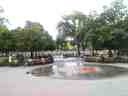
To spot the Williamsbridge Oval, look ahead for a wide green park framed by lots of trees, benches, and a playful splash of water from a circular spray fountain right in front of you. Standing here, you’re actually in the middle of what used to be a massive reservoir-imagine, until the 1930s, this spot was filled with water, not laughter. In 1934, the city handed over the drained reservoir to the Parks Department, who teamed up with the Works Progress Administration and rolled up their sleeves during the Great Depression to transform it into a park. By 1937, the community celebrated as tree shade replaced the old watery depths, and fields for sports and footraces replaced a silent pool. Fast-forward to today: the park’s athletic fields throng with games, kids battle it out on the basketball courts, dogs dash in the run, and parents relax near whimsical flower beds while fountains add refreshing soundtrack for summer afternoons. Even Hollywood took notice: Robin Williams and Robert De Niro strolled these paths in the film Awakenings. With old trees overhead and the bustling energy of neighbors all around, Williamsbridge Oval is a true Bronx classic-proof you can turn a forgotten relic into a playground for everyone.
Abrir página dedicada →To spot the Valentine-Varian House, look ahead for a two-story, old-fashioned stone farmhouse with five windows across the top and a small white porch in the center-it stands out…Leer másMostrar menos
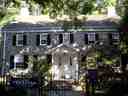
To spot the Valentine-Varian House, look ahead for a two-story, old-fashioned stone farmhouse with five windows across the top and a small white porch in the center-it stands out like a slice of country pie sandwiched between city buildings! Step right up to this time traveler’s cottage-the Valentine-Varian House, the Bronx’s second oldest house and a true survivor of history’s wild rollercoaster. Built in 1758 by Isaac Valentine, a hardworking blacksmith and farmer, this sturdy stone home was crafted from local pine for the floorboards and fieldstone for its walls. Imagine him out here on what used to be wide open fields, before cars, subways, and even selfie sticks! If you close your eyes for a second, you can almost hear the clatter of hooves and the rustle of wind in the wheat fields that once surrounded it. Fast-forward to the chaos of the American Revolution, and this house was suddenly in the thick of things. It was used by British, American… and even Hessian troops, who must have made quite the mess. In 1776, the British captured the house, and soldiers were quartered here-whether Isaac Valentine liked it or not. Fun fact: the 3rd Amendment that says “no forced sleepovers with soldiers” didn’t exist back then! At one point, George Washington himself was nearby, and the colonists actually gathered at the top of this very hill, firing down their cannon at the redcoats on the Boston Post Road. Picture stern-faced patriots crouched right where that front garden is now, gunpowder tang in the air, trying to chase off the British who were camped out below. All that drama, but the worst enemy was yet to come: after the war, Isaac Valentine went nearly bankrupt, thanks to wild inflation and a nasty little bug called the Hessian fly, which wiped out his wheat fields. So, in 1792, the house changed hands and became the Varian family home-one Varian, Isaac L. Varian, even became the 63rd Mayor of New York City. By the early 1900s, city life was closing in, and what used to be farmland became city blocks. By the 1960s, the house faced a new threat: vandalism and neglect. Luckily, it was moved across the street (yes, the whole thing!) and lovingly restored, brick by brick. Now it’s home to the Museum of Bronx History, proudly preserving stories from the Revolution to today. You’ll also spot a statue out front-the Bronx River Sentry. Though it looks like he’s guarding the door for centuries, he actually arrived much later after falling off a bridge and being restored by the Bronx County Historical Society. So, the next time someone says nothing old ever lasts in New York, just point ‘em to this solid stone house-still standing strong, outlasting armies, insects, and city chaos alike. Welcome to 3266 Bainbridge Avenue: where history refuses to be bulldozed.
Abrir página dedicada →To spot the Mosholu Parkway station, look for the long, elevated platforms with green steel beams, a red-roofed canopy above, and wire-mesh panels along the side, stretching…Leer másMostrar menos
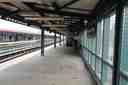
To spot the Mosholu Parkway station, look for the long, elevated platforms with green steel beams, a red-roofed canopy above, and wire-mesh panels along the side, stretching across Jerome Avenue. Welcome to the Mosholu Parkway station, where trains rumble through and the Bronx’s life never really hits the snooze button! Imagine standing here back in 1918, when this elevated station had just opened, freshly built as part of New York’s ambitious Dual Contracts-those clever agreements that had not one, but two rival companies teaming up to stitch the city with subway lines like a giant patchwork quilt. The wooden platforms creaked, the city buzzed with new possibilities, and you might have spotted the first excited passengers gazing out over Jerome Avenue from right about where you are now. Back then, the Bronx wasn't packed with apartment buildings and busy intersections-it was just beginning to grow, thanks in part to this very line. The Jerome Avenue line transformed neighborhoods like Bedford Park and Norwood, making it possible for people to get to jobs, schools, and even a day out in Manhattan without hitching a ride on a horse-drawn wagon or, heaven forbid, walking the whole way. Fun fact: on opening day in 1918, service here was just a shuttle-you’d hop on this little segment, transfer at 167th Street, and try not to lose your hat in the breeze. But time marches on, and Mosholu Parkway was never left behind. The city took over control from the original builders in 1940, ushering in an era of municipal pride-and probably way more chances for the mayor to cut ribbons. The station’s seen its share of odd moments too, from ghosts of busy rush hours to a tragic accident in 1952 when two empty trains had a less-than-friendly meeting right here. Fast forward to the 2000s, and the station got a modern facelift. Contractors buzzed around, floors were repaired, new lights flickered to life, canopies and windscreens were replaced-all for a cool $55 million. For a bit, riders had to trek around construction zones, hoping their usual platform wasn’t closed for renovations. But once it was done, the station sparkled with refurbished bricks, fresh electrical upgrades, and the southern entrance even reopened, making everyone’s commute a bit quicker (and probably reducing the number of angry morning emails sent to the MTA). And then-drumroll-the 2020s brought elevator magic! Mosholu Parkway was picked for a massive accessibility upgrade, with two new elevators so everyone, stroller-pushers and wheelchair rollers included, could get around just as easily as speed-walking teenagers trying not to be late. The project was part of a nearly billion-dollar plan that’s still transforming stations citywide. So here you are, on a platform where history, community, and a dash of subway drama come together every day. You’re standing in the middle of a Bronx success story-and if you hear the distant ring of the next train arriving, it’s just another page in the Mosholu Parkway adventure!
Abrir página dedicada →Look for a long, red brick building with a steep, dark gray, slate-covered roof and round and arched windows-it stands just beyond the fence on your left. Okay, let’s rewind the…Leer másMostrar menos
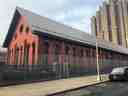
Look for a long, red brick building with a steep, dark gray, slate-covered roof and round and arched windows-it stands just beyond the fence on your left. Okay, let’s rewind the clock to the dawn of the 20th century: you’re standing before the High Pumping Station, the beating heart of water for thirsty New Yorkers from 1901 to 1906. This powerhouse was built as part of the Jerome Park Reservoir complex, delivering clean water with a steam-powered excitement you could almost hear-imagine the echo of pistons and valves hissing away behind these brick walls! The brickwork alone looks tough enough to withstand a tidal wave, and the circular windows might make you think a group of architects were big fans of donuts. Listed on the National Register of Historic Places since 1983, this place is more than just a pretty face; it’s a monument to the era when the city’s growth meant every drop counted. Now run by the Department of Environmental Protection, the High Pumping Station has kept pumping all these years-if these walls could talk, they’d tell you tales of roaring machines, anxious engineers, and the unstoppable flow of NYC life. So next time you fill a glass of water, remember: the journey might just have started here!
Abrir página dedicada →You’re looking for a wide underground station with dark green columns, a “Bedford Park Blvd” sign, and a platform lined with green tiles and trim; just follow the sounds of…Leer másMostrar menos
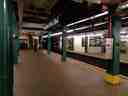
You’re looking for a wide underground station with dark green columns, a “Bedford Park Blvd” sign, and a platform lined with green tiles and trim; just follow the sounds of arriving trains and the glow of overhead lights to spot its entrance at the corner of Bedford Park Boulevard and the Grand Concourse. Now, picture yourself back in the late 1920s, as a city worker in hard hats and dusty coveralls hunker down beneath Grand Concourse, where the future of the Bronx subway is literally being carved out. Those workers were digging the Bedford Park Boulevard station-a linchpin deep beneath the bustling streets above-after the Board of Transportation approved the Concourse Line up to this exact point in 1925. And let me tell you, there was more than a little drama beneath the concrete! The original plan called for trains to end just north of this spot, but, like a subway sandwich, someone always wants to add more layers. Competing proposals had the line veering this way and that-one wild idea even sent trains rolling onto Perry Avenue! By June 1929, they settled on the path we know today, and in 1933, with great fanfare, the doors slid open. Imagine the first rush of passengers, staring up at the forest of green I-beam columns while trains slid in-one track for weekday express B trains, the D train rolling through all the time, and platforms with rows of crisp black “BEDFORD” signs beneath grassy-green trim. These walls saw flurries of excitement and plenty of puzzled commuters (myself included). A quirky fact: While Norwood-205th Street is the end of the line today, it was never meant to be a grand finale, so all those subway crews actually switch shifts right here at Bedford Park Boulevard. No crew quarters at the next station-sounds like someone forgot to pack a staff room on the blueprints! There’s some real mystery tucked away too: this station once had a full-length mezzanine stretching overhead, but now, most of it is a master control tower overseeing the entire Concourse Line. Old staircases lead nowhere, a shadow of what used to be a busier crosswalk above your head. In recent years, even amidst a global pandemic, Bedford Park Boulevard got a lift-literally. New elevators, part of the city’s push to make stations more accessible, were finally completed in October 2020 (after a few “unexpected delays”-because what’s a Bronx story without those, hey?). So if you hear the whirring of elevators, you’re witnessing the station’s newest chapter. If you listen and look around, you’ll spot the quirky short stretch of platform hiding in the north tunnel and the maze of entrances and exits bringing people up to Bedford Park Boulevard, Grand Concourse, and even a wide staircase leading beneath the overpass. So whether you’re imagining the trembling jackhammers of 1928, the first day’s excitement in 1933, or the rush of modern upgrades, Bedford Park Boulevard remains a vital hub in the city’s swirling story-just mind the gap when the train doors open!
Abrir página dedicada →To spot Bedford Park Boulevard-Lehman College station, look for the elevated train platforms with rusty red canopies, green fencing, and yellow safety edges stretching above…Leer másMostrar menos
To spot Bedford Park Boulevard-Lehman College station, look for the elevated train platforms with rusty red canopies, green fencing, and yellow safety edges stretching above Bedford Park Boulevard-just follow the curve of the tracks and you can't miss the big EXIT signs pointing out. Alright, explorer, here you are at the legendary Bedford Park Boulevard-Lehman College station, the end of our Bronx adventure and where subway stories practically echo off the steel. Picture yourself over a hundred years ago-this corner was buzzing with the excitement of big dreams and even bigger construction projects. The year is 1913, and the city leaders have just inked the Dual Contracts-a pair of deals so ambitious they needed not one but two different train companies to make it happen. Imagine the rumbling of carts, the shouts of workers, and the clang of steel beams layering the air as the Interborough Rapid Transit Company brought new hope for rapid transit straight up Jerome Avenue. This station, originally dubbed the 200th Street stop, was renamed before it even opened-someone must have thought Bedford Park Boulevard had a little more flair. It first saw straphangers on a chilly April day in 1918, when it formed part of the final stretch of the Jerome Avenue Line extension to Woodlawn. The first riders would catch a shuttle train here, transferring at 167th Street, jittery with excitement that suddenly, places once considered distant felt just a short train hop away. Now here’s a twist-while most of the Jerome Avenue Line runs high above that busy avenue, this station sits to the side, standing tall above Bedford Park Boulevard instead. It’s the single one north of 170th Street to do that, making it unique-kind of like that one cousin who insists on wearing sunglasses indoors. Renovations have brought some modern sparkle. The platforms are edged with bold yellow tactile strips (just in case you daydream too hard about your next MetroCard refill). And the station house boasts cool “BPB” mosaics, a charming restroom sign, and-once upon a time-a barbed wire fence on the Manhattan-bound platform. Not for keeping out late-night raccoons, but to deter sneaky graffiti artists in the 1980s! That fence is gone now, so your selfies are safe. Here’s a secret for you: during a short experiment in 2009, a handful of 4 trains dashed through here as express, toggling a switch on the express track just south of where you stand. It felt as if even the trains got impatient during morning rush hour. As you glance around, don’t miss the brick-lined mezzanine or the stair rails guiding students toward Lehman College and science whizzes to Bronx High School of Science. Wander east and you’ll bump into the New York Botanical Garden, perfect for some post-tour nature therapy. So, amidst the vibrations of this station’s past and present, you’re standing where New Yorkers have gathered, hustled, and hustled some more for over a century. I’d say that’s cause for a victory dance-or at least a grin about your subway savvy! Thanks for joining the journey, and next time you step on a 4 train, know a tale or two rides along with you.
Abrir página dedicada →
Preguntas frecuentes
¿Cómo empiezo el tour?
Después de la compra, descarga la app AudaTours e ingresa tu código de canje. El tour estará listo para comenzar de inmediato - solo toca play y sigue la ruta guiada por GPS.
¿Necesito internet durante el tour?
¡No! Descarga el tour antes de empezar y disfrútalo completamente sin conexión. Solo la función de chat requiere internet. Recomendamos descargar en WiFi para ahorrar datos móviles.
¿Es un tour guiado en grupo?
No - esta es una audioguía autoguiada. Exploras de forma independiente a tu propio ritmo, con narración de audio reproduciéndose en tu teléfono. Sin guía, sin grupo, sin horario.
¿Cuánto dura el tour?
La mayoría de los tours toman 60–90 minutos para completar, pero tú controlas el ritmo completamente. Pausa, salta paradas o toma descansos cuando quieras.
¿Qué pasa si no puedo terminar el tour hoy?
¡No hay problema! Los tours tienen acceso de por vida. Pausa y continúa cuando quieras - mañana, la próxima semana o el próximo año. Tu progreso se guarda.
¿Qué idiomas están disponibles?
Todos los tours están disponibles en más de 50 idiomas. Selecciona tu idioma preferido al canjear tu código. Nota: el idioma no se puede cambiar después de generar el tour.
¿Dónde accedo al tour después de comprarlo?
Descarga la app gratuita AudaTours desde App Store o Google Play. Ingresa tu código de canje (enviado por email) y el tour aparecerá en tu biblioteca, listo para descargar y comenzar.
Si no disfrutas el tour, te reembolsamos tu compra. Contáctanos en [email protected]
Paga de forma segura con 


