AudaTours logoAudaTours

Tour de audio de Shrewsbury: Un viaje a través del tiempo y la marea

Guía de audio12 paradas

Una única catedral se alza como centinela sobre Shrewsbury, sus vidrieras brillando, secretos enterrados profundamente bajo sus piedras. A la vuelta de la esquina, la última torre de vigilancia antigua guarda celosamente los susurros de asedios de medianoche y las manos cuidadosas de los relojeros. Los exuberantes céspedes y las flores silvestres en The Quarry esconden historias de diosas ahogadas y canteras desaparecidas justo bajo tus pies. En este tour de audio autoguiado, serpentea por los callejones olvidados y los animados parques de Frankwell para descubrir historias que la mayoría de los visitantes pasan por alto. ¿Dónde una aguja de catedral desaparecida reescribió la historia local en un momento aterrador? ¿Qué escándalo olvidado persiguió a los defensores de las murallas de la ciudad durante generaciones? ¿Cómo una roca extrañamente colocada controló una vez un rebaño rebelde justo en el corazón de Shrewsbury? Traza el pulso del drama, la rebelión y la reinvención mientras deambulas desde torres imponentes hasta céspedes rodeados de flores. La antigua Shrewsbury se abre ante ti, capa por misteriosa capa. Deja que la curiosidad te guíe. Comienza donde esas viejas piedras empiezan a susurrar.

Vista previa del tour

map

Sobre este tour

  • schedule
    Duración 40–60 minsVe a tu propio ritmo
  • straighten
    4.8 km de ruta a pieSigue el camino guiado
  • location_on
  • wifi_off
    Funciona sin conexiónDescarga una vez, úsalo en cualquier lugar
  • all_inclusive
    Acceso de por vidaReprodúcelo en cualquier momento, para siempre
  • location_on
    Comienza en Catedral de Shrewsbury

Paradas en este tour
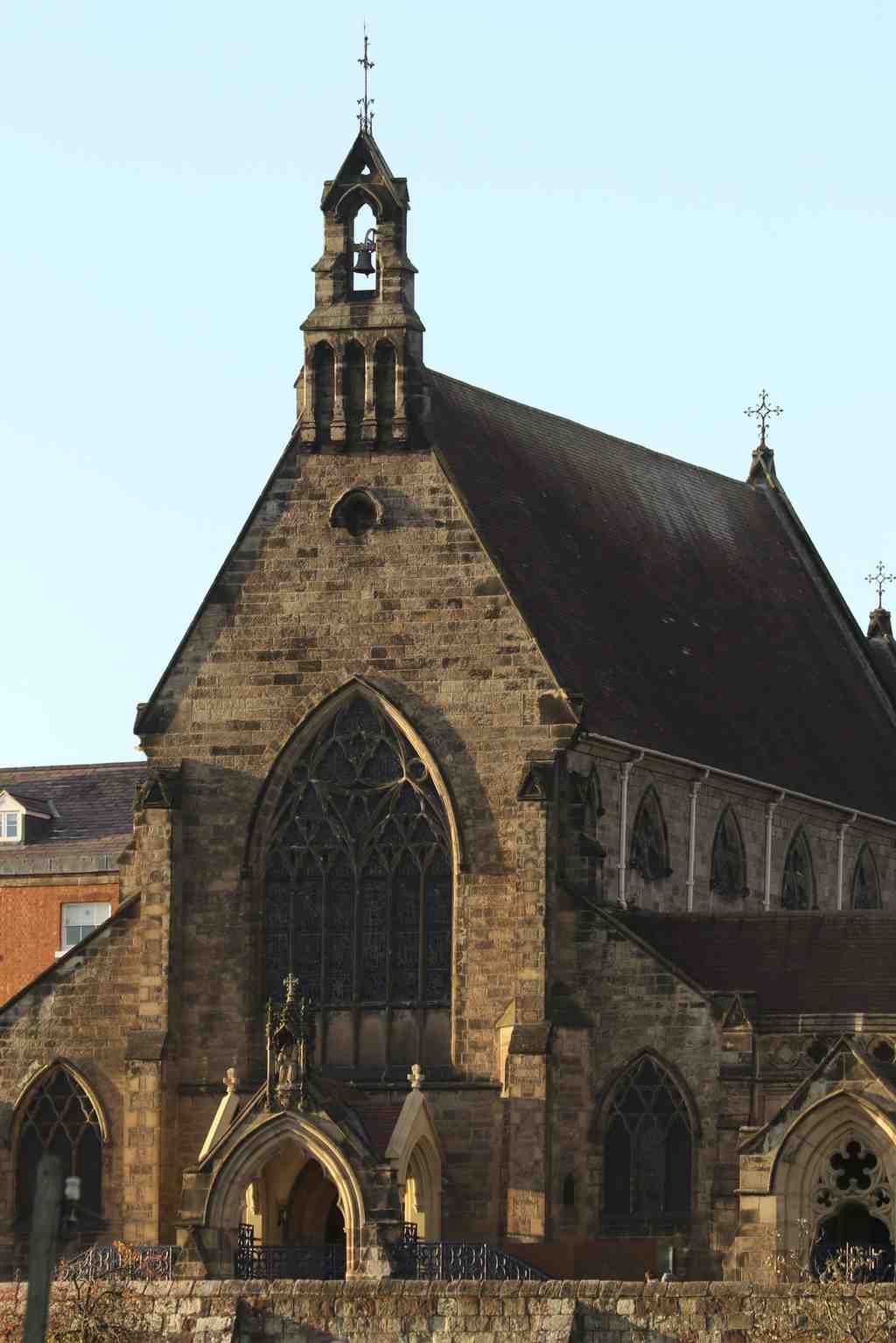
  1. To spot Shrewsbury Cathedral as you walk, look out for a sturdy, sandstone building with a tall pitched roof and elegant rows of pointed windows. Find the small bell tower perched…Leer másMostrar menos

    To spot Shrewsbury Cathedral as you walk, look out for a sturdy, sandstone building with a tall pitched roof and elegant rows of pointed windows. Find the small bell tower perched right on top and the large, dramatic arched window above the entrance. If you see a church with an impressive Gothic style and a welcoming porch, you’ve found it. Watch for those deep, historic stones catching the sunlight-this is the only cathedral in the whole county! Take a moment to stand outside, imagining yourself in the shoes of a 19th-century visitor arriving in town. The Cathedral Church of Our Lady Help of Christians and Saint Peter of Alcantara-let’s just say “Shrewsbury Cathedral” to save some breath-has a story that’s almost as dramatic as its walls. If these stones could talk, they’d whisper about noblemen’s dreams, architectural headaches, and a cathedral that almost had a grand spire-until someone dug a little too deep and hit sand. Suddenly, the plans shrank faster than soggy bread in a pond! But this place is full of surprises. Some people see old paint and think, “Meh,” but when the Cathedral’s latest makeover began, hidden paintings from the 1800s peered out from beneath layers of dull paint-like a secret treasure chest pried open after decades. It was a bit like those TV makeover shows, but with less hair spray and more stained glass. Look at those windows gleaming around you. Most are by Hardman & Co., but seven glorious works are by Margaret Agnes Rope, a true local hero-artist by day, Carmelite nun by night. And there’s even a war memorial with a statue of Mary holding Jesus, keeping silent watch over the names of local men lost in World War I. So, take a good look around you. The cathedral’s heart beats with both grandeur and gentle humility-much like Shrewsbury itself. Ready to wander on to the next story? To expand your understanding of the windows, war memorial or the location, feel free to engage with me in the chat section below.

    Abrir página dedicada →
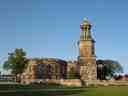
  2. To spot the Town Walls Tower, look just ahead and to your right. It jumps out from the row of brick buildings-a chunky, square tower built of big, weathered stone blocks. The top…Leer másMostrar menos

    To spot the Town Walls Tower, look just ahead and to your right. It jumps out from the row of brick buildings-a chunky, square tower built of big, weathered stone blocks. The top looks a bit like the classic turrets of a sandcastle, with little square notches along the edges. There are a couple of arched doorways and narrow windows peeking out, almost as if the place is hiding secrets from the past. It stands solid and proud against the sidewalk, making it hard to miss, even among the more modern houses. Now, as you stand here, try to imagine Shrewsbury centuries ago. That’s right, no buses, no cars, just a muddy road and the heavy clang of boots. The year is the 1300s, and this very tower-officially known as Wingfield’s Tower-is the last survivor of Shrewsbury’s mighty stone walls. If you close your eyes, you might hear the distant shouts of watchmen keeping an eye out for any trouble sneaking over the River Severn. Maybe you catch a whiff of woodsmoke drifting from the thatched rooftops, or feel the chill from the old stone blocks, so thick you’d need nearly two arm-lengths to get around them. Back then, the walls were built because everyone was worried about attacks-from the Welsh, from anyone, really. Imagine archers waiting up above, scanning the misty countryside for enemies. Or townsfolk carrying buckets, always half-worried about someone breaking through. The river was their best friend-a moat that made it tough for anyone to just march right in. Here’s a twist: over the years, the tower wasn’t always about swords and shields. It’s played host to quite a cast of characters! At one point it was even a workshop for a watchmaker-imagine fixing tiny clock gears in a fortress tower. Later, it turned into a home for coachmen, gardeners, and even became a holiday let, giving new life to its thick walls long after the threat of battle was gone. If these stones could talk, I bet they’d have some dramatic tales-narrow escapes, late-night watch shifts, and perhaps the odd grumble about coachmen’s muddy boots. But through all those adventures, it stubbornly stayed standing, even as the rest of the town walls disappeared bit by bit. Nowadays, Town Walls Tower stands quietly but stubbornly-a monument to Shrewsbury’s wild past and the perfect place for a bit of historical daydreaming. And as for its nickname? Well, it’s had almost as many names as tenants. But whether you call it Town Walls Tower or Wingfield’s Tower, don’t forget to give it a friendly nod-it’s one of the oldest residents you’ll meet today! Let’s head on to our next stop, but keep an eye on those shadows; you never know what you might glimpse from an old watchtower like this…

    Abrir página dedicada →
  3. If you’re looking ahead, you can’t miss The Quarry-just look for a bright burst of colorful flowerbeds, perfectly trimmed lawns, and winding gravel paths with that eye-catching…Leer másMostrar menos

    If you’re looking ahead, you can’t miss The Quarry-just look for a bright burst of colorful flowerbeds, perfectly trimmed lawns, and winding gravel paths with that eye-catching white fountain right in the centre. There are benches and lush trees all around, almost like the park is giving you a big, leafy hug. That gentle bubbling sound you might hear? That's the fountain at The Dingle calling you over. Standing here, you’re at the doorstep of Shrewsbury’s favourite playground since 1719. Imagine: this park stretches out over 29 acres, overflowing with flowers, ancient trees, and more local history than you can shake a picnic blanket at. If you feel a breeze, it’s probably carrying the distant laughter of students from the nearby colleges, mixing with the calls of birds in the trees. But it wasn’t always this peaceful! The centrepiece, The Dingle, used to be a quarry for stone and clay. Back in the day, it was so soggy, folks called it the “Wet Quarry”-and honestly, who can blame them? If you listen closely, perhaps you’ll hear the echoes of old pickaxes-or is that just the squirrels arguing over acorns? Nowadays, you can stroll past beds bursting with flowers or spot ducks waddling by the pond. Keep an eye out for the grand old Shoemakers’ Arbour and statues like the goddess Sabrina-she’s got a wild story of her own, having supposedly drowned in the River Severn and become a nymph. And, if you’re wandering near St Chad’s Terrace, you’ll find the county’s main war memorial: a huge domed canopy, bronze figure of St Michael standing proud, and the inscription honoring all those who gave their lives. This is where, every Remembrance Sunday, the whole park falls silent for a moment of deep respect. Oh, and don’t miss the bandstand-home these days to everything from DJ sets to fire performers hiding from the rain. Watch your step if you spot a mysterious boulder-it's an old anchor stone for grazing cows, believe it or not. Imagine cows tethered to that stone, munching away, keeping the grass neat before we had lawnmowers! Honestly, The Quarry has always been lively-just in very different ways over the centuries. So grab a breath of that fresh, flower-filled air and let your mind wander… who knows, you might even come up with the next famous Shrewsbury legend yourself!

    Abrir página dedicada →
Mostrar 9 paradas másMostrar menos paradasexpand_moreexpand_less
  1. To spot St Chad’s Church, look up and ahead as you stand at the edge of the Quarry park. You’ll see a unique round stone building with a high, domed tower rising dramatically…Leer másMostrar menos

    To spot St Chad’s Church, look up and ahead as you stand at the edge of the Quarry park. You’ll see a unique round stone building with a high, domed tower rising dramatically above a green lawn. The windows wrap around the curve of the church, and the tower looks a bit like a huge candle with a golden topper, glinting in the sun. You can’t miss it-it’s pretty much unlike any other church you’ve seen! Now, let’s imagine we’ve stepped back in time, just for a moment. Close your eyes… well, maybe just squint, so you don’t bump into anything. Picture Saxon lords and early kings walking these fields, when Shrewsbury was called Pengwern, and this church was at the heart of a royal palace. King Offa, the mighty ruler of Mercia, is believed to have founded it, though, if we’re honest, even Offa might have been piggy-backing on earlier builders! Over a thousand years ago, people came here to worship, and the place was already ancient by the time the Domesday Book rolled around in 1086. The church shifted sites in 1792, and what you’re looking at now is a Grade I listed treasure, built to be noticed, with its round shape and sky-poking tower. It’s famous for welcoming everyone-its motto is “open doors, open hearts, and open minds.” That means they want folks to feel at home here, whether you have questions about the universe, life, or just where to find the best tea in town. Even young Charles Darwin was baptised right inside these walls. Imagine the world-changing ideas running through his toddler brain-maybe he was already wondering why pigeons have different beaks! If you listen for a moment, you might almost hear the sounds of centuries past-chanting monks, grand ceremonies, and, once, the chaos of the Great Fire of Shrewsbury in 1394 when the church burnt down and the town’s taxes were dropped. Lucky break, if you ignore the fire bit. Dig down under your feet and you might find crypts from Saxon times, with old carved pillars worked by hand, now mostly hidden and quiet as secrets. The stone walls nearby hide the remains of the medieval college and buttery-a medieval snack bar, you might say! St Chad’s has seen kingdom after kingdom come and go, priests preaching wild ideas, and hundreds of years of Shrewsbury’s stories. Take a deep breath-the church is still standing, proud, grand, and a little mysterious, a true heart of the town. Now, onwards with our adventure-I promise, no time travel required for the next stop! Interested in knowing more about the churchyard, music or the notable clergy

    Abrir página dedicada →
  2. Look just ahead and a little to your left and you’ll spot the Kingsland Bridge stretching elegantly across the River Severn. It’s a graceful blue metal arch that seems to almost…Leer másMostrar menos

    Look just ahead and a little to your left and you’ll spot the Kingsland Bridge stretching elegantly across the River Severn. It’s a graceful blue metal arch that seems to almost float above the water, framed by leafy trees on both banks. There’s nothing quite like the gentle hum of the river, the cool breeze, and that striking curve of metal, inviting you to cross from one side to the other. Now, imagine the year is 1883: horses clip-clopping nearby, gentlemen in top hats pacing the muddy banks, and the air buzzing with excitement over a totally new kind of bridge. This isn’t just any river crossing-it’s a Grade II listed structure, dreamt up by the bold Henry Robertson and designed by John William Grover, who wasn’t afraid of a challenge. The builder, Cleveland Bridge & Engineering Company, would eventually go on to build the mighty Victoria Falls Bridge, but first, they had to conquer Shrewsbury! Back then, eleven thousand pounds was a small fortune-enough to make your hair stand on end! But would it work? Would people pay to cross by this slender arch of metal? Robertson thought so, so he managed to get a whole act of Parliament passed in 1873 just to make this bridge a reality. And here it is, stretching 212 feet, ribbed with proud iron, still asking for a toll after all these years. Today, you don’t need a pocket full of loose change-just a tap of your contactless card does the trick. For cars, it’s 30p. For pedestrians, there’s still that tiny honesty box, quietly hopeful for a 1p coin. If you tiptoe up to it, you might fancy yourself a Victorian for a moment: will you pay the full toll, sneak across, or simply pause and admire a beautiful view over the ever-flowing Severn? The bridge has seen it all-cyclists in a hurry, lovers strolling slowly, maybe even a few coin-dodgers squeaking by over the years. Behind its blue metal ribs is a story of invention, persistence, and a good bit of Shrewsbury pride. So as you stand here, breathe in that blend of iron, river, and history-and maybe promise the bridge you’ll be honest and slip your penny in. Who knows, with all these card machines now, that honesty box is getting rarer than a sunny day in Shrewsbury!

    Abrir página dedicada →
  3. Look just ahead and you’ll spot the Pengwern Boat Club: it’s a charming old building made of red brick and timber with a steep, gabled roof. You'll see its arches and upper…Leer másMostrar menos

    Look just ahead and you’ll spot the Pengwern Boat Club: it’s a charming old building made of red brick and timber with a steep, gabled roof. You'll see its arches and upper balcony right along the riverbank, nestled among greenery. To your right, the River Severn glimmers, and you might catch the shapes of long rowing boats and people bustling about, carrying oars and life jackets. If you see a flurry of club jerseys and hear some happy shouting, you’re at the right place! Now, take a breath of that fresh river air-imagine it’s 1871, and this is where the townsfolk of Shrewsbury rolled up their sleeves and said, “Let’s make rowing fun for everyone!” Pengwern Boat Club was born here, and it’s been a beating heart for local rowing ever since. Every year, the mighty River Severn hosts thrilling races where cheers echo, blades slice the water, and, just sometimes, a rower might take an unexpected splash!. Back when Pengwern got started, the other rowing club in town was a bit too serious and exclusive-a ‘no fun allowed’ sort of place. But Pengwern opened its doors to all, and soon, everyone wanted in. By the turn of the twentieth century, the old club vanished, while Pengwern flourished. Imagine the laughter and chatter as new members came down these same steps, helping to launch boats, swap stories, or just sneak a sandwich between races. For almost a century, though, the club was just for the gents. But in the 1970s, the times changed, and women were finally welcomed aboard-so now the river echoes with even more voices (and, let’s be honest, probably even better rowing techniques).. Today you might see juniors, seniors, and masters taking their turn, plus rowers with all sorts of abilities finding their rhythm on the water. Come spring, this place bursts to life with crowds and excitement for the Shrewsbury Regatta-a race so old it’s got more tradition than some family recipes. Oh, and don’t get me started on the legendary pubs and clubs regatta, where friendly rivalry and wobbly coracle races make sure nobody takes themselves too seriously. So as you stand here, feel the buzz of today’s club and remember: it’s not just about rowing faster, but about rowing together. And if you’re lucky, you might just see history gliding by on the river… just keep an eye out for flying corks from a victory bottle of bubbly! Exploring the realm of the events, club house or the other events? Feel free to consult the chat section for additional information.

    Abrir página dedicada →
  4. As you come up to this spot, look straight ahead and you’ll spot the Porthill Bridge-it’s that old-fashioned, green metal bridge with its tall decorative towers and crisscrossed…Leer másMostrar menos

    As you come up to this spot, look straight ahead and you’ll spot the Porthill Bridge-it’s that old-fashioned, green metal bridge with its tall decorative towers and crisscrossed metalwork rising up above the pathway. It’s slimmer than a car bridge, just wide enough for pedestrians, and you might notice the thick cables running up and over the top, giving it that classic suspension-bridge look. The bridge stretches ahead of you, inviting you across the River Severn. Just to your right if you glance around, you’ll see the lovely green swathes of the Quarry, and on the left, the cheerful Boathouse pub nestles by the bank. Now, let’s pause and soak in some of the charm! Imagine you’re back in the early 1920s, when folks were eager to get across the river but had only a small ferry to rely on-sometimes your day depended on the boatman’s breakfast mood. Then along came this bridge, placed here in 1922 by David Rowell & Co, and suddenly you could stroll from Porthill to town without puddle-soaked shoes or waiting in the cold for a ferry. But even now, more than a hundred years later, the bridge still wobbles under your feet. Don’t worry, it’s not about to drop you in the river-this odd little shake has become part of its character! Locals say it jiggles like a jelly when folks cross, some even delight in hopping up and down just to feel it shiver a bit more. If you could peel back history’s layers, you’d see the cable attachment post still standing on the north bank-a quiet reminder of all the hands that built and rebuilt this spot. During the big refurbishment in 2012, the bridge even went back to its roots for a while: a ferry carried folks across the water, just like the olden days, though a ride would set you back a princely 50p now. This is a bridge that laughs at formality. You’ll see joggers, dog-walkers, and maybe even a duck or two that’s lost its way. You can feel the breeze off the Severn, hear the laughter from the Boathouse garden, and, if you’re lucky, you might catch a waft of roast dinner on a Sunday. So go on, march out onto the Porthill Bridge-embrace the bounce, wave to a passing runner, and imagine all the stories this lively walkway has witnessed. Just keep your footing… and if the bridge starts humming, you’ll know you’re truly walking in Shrewsbury style!

    Abrir página dedicada →
  5. You’re almost at the Welsh Bridge. Just ahead, you’ll spot five grand stone arches stretching confidently across the River Severn. The bridge is low and wide, carved in pretty…Leer másMostrar menos

    You’re almost at the Welsh Bridge. Just ahead, you’ll spot five grand stone arches stretching confidently across the River Severn. The bridge is low and wide, carved in pretty pale sandstone, with old iron lamps lining the top. It’s quite a sight-almost like the bridge posed just for your arrival. On your right, a classic red-bricked building stands close by, and if you look at the water, you might spot a few ducks paddling along or their reflections rippling beneath those arches. Now, let’s step back in time a bit. Imagine it’s the late 1700s. Instead of cars rumbling overhead, you’d hear horse hooves and wagon wheels clattering across these stones. Remarkably, the entire bridge was built by hand-and not by just anyone. The builders, John Tilley and John Carline, were seasoned experts, and their fathers were masons too. It’s like the Carlines were the “Bridge-Building Dynasties” of their day-minus the reality TV, of course. The Welsh Bridge you see in front of you is actually the new kid on the block-well, if being built in 1795 makes you new. Before this arching beauty, there stood a medieval bridge called St George’s Bridge, which was likely full of character, creaks, and maybe an occasional missing cobble. This new bridge was state-of-the-art back then, costing a whopping £8,000-a kingly sum, though probably not enough for a riverside flat these days. If you wander to the south end of the bridge, keep your eyes peeled for a peculiar message: "Commit No Nuisance" chiseled into the stone. That’s 18th-century code for, “Please don’t use this spot as a toilet!” It gives you a taste of both the history and humor that’s lived on these stones for centuries. So as you look out over the river, feel the breeze for a moment. Imagine the bustle of travelers crossing here for hundreds of years-farmers, merchants, and even a few mischievous folks peeking over their shoulders to see if anyone’s reading that old “no nuisance” warning. Welcome to a bridge where Shrewsbury truly connects, and every arch tells a story. Shall we press on?

    Abrir página dedicada →
  6. If you’re searching for St George’s Bridge, look for a spot near the Theatre Severn and the River Severn. Imagine a sturdy stone bridge stretching over the water, with tall,…Leer másMostrar menos

    If you’re searching for St George’s Bridge, look for a spot near the Theatre Severn and the River Severn. Imagine a sturdy stone bridge stretching over the water, with tall, strong towers rising up at either end-one of them right on the riverbank, looming above you. The bridge would have once looked almost like a small castle sitting right over the water. Today, you’ll only find a single old arch left, hidden in the foundations of the theatre, but this spot was once the grand entrance into town. Now, close your eyes and imagine it’s the 1500s. The bridge before you is the “greatest, fairest, and highest” in all the land, with six mighty arches of stone marching across the river. You’d hear the echo of boots and wagon wheels on ancient cobbles. At one end stands a great gate, and at the other end, a giant tower blocking any would-be invaders from sneaking into Shrewsbury. There’s a statue of Richard Plantagenet glaring down from up high, and if you’re lucky, you might even catch the faint smell of bread drifting from the tiny shops built along the middle of the bridge. Some days, John Leland himself-an early English traveler-walked across and thought it quite grand. And just imagine the locals’ gossip: not only did this bridge have a public toilet right on top, but it even featured a wooden drawbridge ready to creak open and strand you above the swirling water below. People called it everything from “Walshebrugge” to “Walshemanne’s brigge”-try saying that three times fast after a pint! Today, only a single dry arch remains-unearthed when the Theatre Severn was built. Once, crowds hurried through Mardol Gate into town, past the rush of the river and calls from boatmen, and you might have heard the clang of chains as the drawbridge rose. While today’s Welsh Bridge is further downstream, this place still stands as a gateway to the past. Next time you cross the river, glance around and remember you’re following in the footsteps of knights, townsfolk, and the odd busy merchant who just couldn’t hold it any longer. Quite a bridge, and quite a story to cross with!

    Abrir página dedicada →
  7. As you stand here in front of the New Riverside site, take a moment to imagine the dust and rumble of demolition-walls tumbling, machines roaring, echoes bouncing across…Leer másMostrar menos

    As you stand here in front of the New Riverside site, take a moment to imagine the dust and rumble of demolition-walls tumbling, machines roaring, echoes bouncing across Smithfield Road. It’s a place caught in the middle of transformation, where Shrewsbury is preparing to reinvent the way you shop, eat, and stroll. This isn’t just any construction project; it’s a £150 million leap into the future. Picture about 50 brand-new shops sparkling to life, with cafes and restaurants serving everything from frothy cappuccinos to the kind of pastries you’d almost feel bad eating. There’s a new energy in the air-well, there will be, once the dust settles! The idea? To link two of the town’s busiest shopping hearts, Darwin and Pride Hill, with a dramatic reimagining of the old Riverside Centre. Think of it as Shrewsbury’s way of stitching together its favorite places into one vibrant, modern center. The plan includes ‘multi-level streets’ covered by a swooping petal-shaped roof-imagine being cozy and dry even as the rain taps above you. And at the very heart, a central public space that leads down to the river, where shoppers, friends, and maybe the odd busker could gather. Of course, the road getting here has had its fair share of potholes! There was planning, more planning, excited announcements-and then frustrating delays. Add in a twist of property drama, some banking woes, and a generous dash of the unexpected, and you get a classic Shrewsbury saga. At one point, there was even a public vote to choose a new name; for a brief, shining moment, this could have been Castle Gate! So, as you stand at the edge of possibility and old concrete, spare a thought for the shops and stories that once stood here-and look forward to the sparkling glass, buzzing crowds, and maybe a new favorite coffee spot right here in New Riverside. The future is just around the (temporarily fenced-off) corner!

    Abrir página dedicada →
  8. If you’re standing on the bustling square right now, look for a striking stone building rising up right in front of you. You’ll spot its pale, sturdy arches forming a grand…Leer másMostrar menos

    If you’re standing on the bustling square right now, look for a striking stone building rising up right in front of you. You’ll spot its pale, sturdy arches forming a grand walkway at ground level-almost like a castle that wanted to let the market folk through. Its roofline is decorated with curvy, wave-like shapes, almost as if someone got very excited when designing the top! Squint up, and you’ll see the clock face in the north gable, keeping time over the town, and some proud stone carvings sitting high above the arches. Now, let’s take a little step back - in time! Imagine the year is 1597. You might smell fresh bread, apples, even a whiff of sheep as farmers pack this space under the arches, selling everything from wool to eggs. Picture tradespeople haggling, the shouts and laughter bouncing off these thick Elizabethan walls. The design was so clever-those arches let the market happen rain or shine, and upstairs there was a special room for important meetings, or maybe the odd celebration if someone got a good price for their onions! This building is the Old Market Hall, sometimes called the OMH for short. Not just a home for frantic market days, but a proud centerpiece for Shrewsbury since the days of Queen Elizabeth I. If you look above the central arch, you can make out the royal coat of arms settled right into the stone, guarded by an English lion and a Welsh dragon. Even the town’s clock has a long history-though, if you’re late, you can always blame it on Victorian engineering. One last bit of mystery: look high above the main arch to find a statue in armor. That’s meant to be Richard, Duke of York-quite a serious fellow by the look of him. He once stood guard on the Welsh Bridge until, in 1771, the mayor decided he'd look far grander here. It’s the only statue of Richard of York in the whole country, so he’s got a unique spot. And just think: during World War II, families huddled below as this sturdy hall became an air raid shelter, and later it transformed into a courthouse where justice echoed off those ancient walls. Today, it’s come back to life as an arts venue and café, where you can sit and relax, maybe catch a film where sheep once outnumbered moviegoers. This is a place where time stands still and rushes forward, all at once. Speaking of time, did you notice the sundial on the wall? Just in case the clock decides to take a break!

    Abrir página dedicada →
  9. If you look straight ahead, you’ll spot a majestic stone building rising above the treetops. St Mary’s Church is impossible to miss: its spire is needle-sharp and soars up into…Leer másMostrar menos

    If you look straight ahead, you’ll spot a majestic stone building rising above the treetops. St Mary’s Church is impossible to miss: its spire is needle-sharp and soars up into the sky, higher than anything else around. The church itself is built from a mix of deep red and pale stone, with a sturdy square tower topped by that dramatic, octagonal spire-said to be the third tallest in England! Spot the blue clock face above the main door, and, if you’re close enough, check out the chunky Norman arches and the carved stonework all around. Now, as you stand here, imagine walking through the bustle of medieval Shrewsbury, the air thick with the scents of fresh bread and tanneries, and the deep chiming of church bells echoing across the rooftops. St Mary’s Church has stood here since before anyone in Shrewsbury can remember-local legend says King Edgar himself founded it in the 900s, which is just about the time when “wifi” meant waving flags from the tower. The church looks a bit like a stone ship braved against the centuries, with its strong tower at the west and that incredible spire, pointing the way to heaven or perhaps just daring the rainclouds to try their luck. When they built the first parts almost a thousand years ago, it was much simpler-just a plain nave and a small chancel, nothing fancy. Over time, as the town grew richer and the stories grew wilder, they added more: winding porches, elegant windows, and a spire that must have made every other church in town look away in embarrassment. Just imagine the drama-one night in 1894, a storm roared in, and the very top of the spire came crashing down, smashing into the clerestory. Bricks flew, glass shattered, and the next day the churchyard was a sea of rubble. But did St Mary’s give up? Not a chance. Skilled hands repaired the damage, and you’d struggle to spot the scars, unless you know exactly where to look. Notice the bottom part of the tower, made of deep red stone-a reminder of Norman power, thick walls for thick times. Then right above it, the pale sandstone takes over, a bit fancier, with gothic windows and carved battlements like something out of a fairy tale. Peer up at the spire and see if you can count the little windows-those are called lucarnes, and they’re there to stop the spire blowing away like an unlucky umbrella. Every stone here is heavy with stories-about priests, queens, candlelit processions, even a bishop-to-be who once served as a humble curate. Walk around the north porch and you might find a Roman stone re-used in the wall, a relic from even longer ago, when Shrewsbury was little more than a fort full of soldiers and sheep. So take a breath, listen for the wind whistling around the spire, and let your imagination fill this timeless space with the voices and hopes of all who have passed through its doors. At St Mary’s, you’re not just standing in front of a landmark-you’re standing inside a living story. And if the spire starts to look like it’s leaning, don’t worry, it’s just bowing to you in thanks for visiting! To delve deeper into the collegiate church, parish church or the architecture, simply drop your query in the chat section and I'll provide more information.

    Abrir página dedicada →

Preguntas frecuentes

¿Cómo empiezo el tour?

Después de la compra, descarga la app AudaTours e ingresa tu código de canje. El tour estará listo para comenzar de inmediato - solo toca play y sigue la ruta guiada por GPS.

¿Necesito internet durante el tour?

¡No! Descarga el tour antes de empezar y disfrútalo completamente sin conexión. Solo la función de chat requiere internet. Recomendamos descargar en WiFi para ahorrar datos móviles.

¿Es un tour guiado en grupo?

No - esta es una audioguía autoguiada. Exploras de forma independiente a tu propio ritmo, con narración de audio reproduciéndose en tu teléfono. Sin guía, sin grupo, sin horario.

¿Cuánto dura el tour?

La mayoría de los tours toman 60–90 minutos para completar, pero tú controlas el ritmo completamente. Pausa, salta paradas o toma descansos cuando quieras.

¿Qué pasa si no puedo terminar el tour hoy?

¡No hay problema! Los tours tienen acceso de por vida. Pausa y continúa cuando quieras - mañana, la próxima semana o el próximo año. Tu progreso se guarda.

¿Qué idiomas están disponibles?

Todos los tours están disponibles en más de 50 idiomas. Selecciona tu idioma preferido al canjear tu código. Nota: el idioma no se puede cambiar después de generar el tour.

¿Dónde accedo al tour después de comprarlo?

Descarga la app gratuita AudaTours desde App Store o Google Play. Ingresa tu código de canje (enviado por email) y el tour aparecerá en tu biblioteca, listo para descargar y comenzar.

verified_user
Satisfacción garantizada

Si no disfrutas el tour, te reembolsamos tu compra. Contáctanos en [email protected]

Paga de forma segura con

Apple PayGoogle PayVisaMastercardPayPal

AudaTours: Audioguías

Tours a pie autoguiados entretenidos y económicos

Probar la app arrow_forward

Amado por viajeros de todo el mundo

format_quote Este tour fue una excelente manera de ver la ciudad. Las historias fueron interesantes sin parecer demasiado guionadas, y me encantó poder explorar a mi propio ritmo.
Jess
Jess
starstarstarstarstar
Tour de Tbilisi arrow_forward
format_quote Esta fue una forma sólida de conocer Brighton sin sentirme como un turista. La narración tenía profundidad y contexto, pero no se excedía.
Christoph
Christoph
starstarstarstarstar
Tour de Brighton arrow_forward
format_quote Empecé este tour con un croissant en una mano y cero expectativas. La app simplemente vibra contigo, sin presión, solo tú, tus auriculares y algunas historias geniales.
John
John
starstarstarstarstar
Tour de Marsella arrow_forward

Audioguías Ilimitados

Desbloquea el acceso a TODOS los tours del mundo

0 tours·0 ciudades·0 países
all_inclusive Explorar Ilimitado