AudaTours logoAudaTours

Audioguía de Preston: Ecos de Fe y Patrimonio

Guía de audio15 paradas

Una ciudad de secretos se esconde bajo las bulliciosas calles de Preston, donde capillas de piedra, escaparates luminosos y columnas imponentes revelan historias que pocos escuchan. Este audioguía autoguiado te invita a recorrer a tu propio ritmo y descubrir las historias ocultas detrás de los preciados monumentos de Maudlands, lugares por los que la mayoría de los visitantes pasan sin pensarlo dos veces. ¿Quién arriesgó todo dentro de los muros de St Wilfrid durante años de conflictos religiosos? ¿Qué extrañas escenas de medianoche se desarrollaron una vez bajo la rotonda de cristal de St George? ¿Qué escándalo resonó a través del gran pórtico arqueado de la Iglesia Metodista Central, enviando susurros por Lune Street? Viaja entre sombras y luz mientras cada paso te sumerge en dramas olvidados: revolución, reinvención, heroísmo silencioso y curiosas leyendas locales. Deja que Preston se transforme con cada esquina que gires. ¿Listo para rascar la superficie y descubrir la ciudad que los lugareños casi olvidaron? Tu aventura comienza aquí.

Vista previa del tour

map

Sobre este tour

  • schedule
    Duración 40–60 minsVe a tu propio ritmo
  • straighten
    4.4 km de ruta a pieSigue el camino guiado
  • location_on
    UbicaciónPreston, Reino Unido
  • wifi_off
    Funciona sin conexiónDescarga una vez, úsalo en cualquier lugar
  • all_inclusive
    Acceso de por vidaReprodúcelo en cualquier momento, para siempre
  • location_on
    Comienza en Centro Comercial St George

Paradas en este tour
  1. To spot St George’s Shopping Centre, just look for a striking glass and steel entrance with a tall peaked roof stretching up over big, welcoming doors, flanked by red brick and…Leer másMostrar menos

    To spot St George’s Shopping Centre, just look for a striking glass and steel entrance with a tall peaked roof stretching up over big, welcoming doors, flanked by red brick and light stone walls; you can’t miss the bustling crowd and the glint of sunlight off the glass right ahead of you. Now, step a little closer and let’s time travel for a moment-back to 1964, when this place was the sparkling new jewel of Preston’s shopping scene. Imagine an open-air plaza, with shoppers bundled in coats darting from shop to shop, since there was no roof to keep out the famous Lancashire drizzle. Back then, this very spot was called “The Bullring”-which, despite its sound, hosted less bull-fighting and more bargain-hunting. But can you imagine hunting for deals while the wind tried to snatch your shopping bags? Fast forward to 1981, and the centre got smart, finally putting a roof over everyone’s heads. Goodbye, soggy shopping bags! The 1990s brought another facelift-think new tiles, shiny escalators, and glittering glass everywhere. But even the fanciest new look can’t hide the march of time, and by 2004, St George’s was feeling a little, well, tired. That’s when The Mall Fund swooped in, giving the whole centre a grand makeover. Imagine the buzz as builders hammered away, escalators whirred to life, and sleek TVs sprang up to give shoppers the latest news-you could practically feel the place reinventing itself. For a while, the whole centre was even called “The Mall.” Staff in black and pink uniforms staffed special “Ask Me” stands, ready to point lost souls toward shoes, sandwiches, or the elusive toilets… though there was always someone who still needed a map! But change is the only constant in retail land. In 2010, the centre reclaimed its original name and the locals cheered, or at least muttered approvingly over their coffees. Today, as you look up at the sunlight beaming through the big circular glass rotunda above, you’re standing at the heart of it all. This is where people have met friends for decades, where Costa Coffee now echoes with laughter, and where the halls stretch away to Fishergate and Friargate, lined with shops, stalls, and the odd busker attempting “Wonderwall.” You’re just a stone’s throw from bus stops, the train station, and a car park stacked above like a wedding cake. All these transformations kept the centre alive and full of life-but underneath it all, St George’s is still Preston’s favourite place to meet, browse, and buy a well-earned treat. And who knows? With all the twists and turns in its history-maybe the next story is about to unfold right here.

    Abrir página dedicada →
  2. Look to your right and you’ll spot St Wilfrid’s Church-a grand, tall building with striking red bricks, creamy stone trim, and arching doorways, standing snugly between the street…Leer másMostrar menos

    Look to your right and you’ll spot St Wilfrid’s Church-a grand, tall building with striking red bricks, creamy stone trim, and arching doorways, standing snugly between the street and neighbouring walls. Alright, take a deep breath-can you feel it? You’re now standing in front of one of Preston’s most cherished secrets: St Wilfrid’s Church, hidden away like a jewel tucked between busy Fishergate and peaceful Winckley Square. If you listen closely, you might just imagine boots crunching on old Chapel Street, the same path faithful townsfolk have walked since 1793. This church began its journey when the Society of Jesus-better known as the Jesuits-looked out over Preston and thought, “We need a new home,” because the first Catholic church, St Mary’s, was bursting at the seams. What followed was a wild scramble in the 1790s as Father Joseph ‘Daddy’ Dunn (that’s right, a man with a nickname straight out of a family reunion!) led the charge to build a new, bigger church. Imagine Preston back then, a time when Catholic churches weren’t exactly welcome to stand out, so this one was built discreetly-no tall spires to wave at the sky, no green to picnic on, just a sturdy rectangle running alongside the street, keeping a low profile. But what St Wilfrid’s lacked in flash, it made up for in heart and hustle. By 1793, after just 14 months-and at a cost of £4,000, which would buy you quite a lot of pies back then-they flung open the doors. Inside, a simple brick building welcomed worshippers with a balcony curling around three sides of the altar-a bit like theater, only with more incense and less drama. Of course, with growing crowds (and maybe a few folks sitting on laps), the church had to change. Fast-forward to the late 1800s, when a priest-architect with a legendary name-Fr. Ignatius Scoles-added a new sodality chapel and confessionals. By 1880, things were getting downright fancy: stone cladding, terracotta flourishes, and marbles whisked in from all over Europe dressed up the church in style. If these walls could talk, they’d probably whisper, “About time someone gave us a makeover!” And while most Catholic churches embraced some big changes after Vatican II, St Wilfrid’s kept its proud traditions: the high altar, the altar rails, all lovingly preserved. If you go inside today, you’re walking into a time capsule-almost like the Jesuits pressed pause on history. Outside, the Society of Jesus still keeps watch, with their centre next door, and spirits are always high: this place is open all day, inviting people of every age for a moment of quiet-or even just to browse for a rosary in the bookshop. If you peek through the doors, you’ll catch the soft murmur of prayers and the gentle hum of groups meeting, a living heartbeat in the city. So, as you stand here, picture the snow crunching beneath your feet, the faint ring of bells in the distance, and a building that’s seen centuries of hope, devotion, and a bit of undercover Catholic courage. Not bad for a church that once tried to hide in plain sight! Exploring the realm of the dedication, ministry or the gallery? Feel free to consult the chat section for additional information.

    Abrir página dedicada →
  3. To spot Preston Central Methodist Church, look for the grand entrance with its towering columns and a huge arched porch right above the steps, facing you from Lune Street. Now,…Leer másMostrar menos

    To spot Preston Central Methodist Church, look for the grand entrance with its towering columns and a huge arched porch right above the steps, facing you from Lune Street. Now, take a moment and picture the year 1817: horse-drawn carriages clatter along the cobblestones, and townsfolk are gathering here on Lune Street, eyes wide with curiosity. Before you stands the Preston Central Methodist Church-brand new, and one of the very first public buildings in England to light up with gas lamps. Imagine the wonder on people’s faces as the night glowed warmly from within these sandstone walls, while the rest of the city remained tucked in the dark. It must have felt a little bit like magic, or at least like electricity before its time! If you look up, you’ll see those grand Corinthian columns holding up a giant stone arch, their elegant capitals topped with fancy mouldings. In the early days, folks walked up those same steps, maybe amazed at the sight, possibly out of breath after arguing over whether gaslight would ever catch on! Under the arch, the doors led into a welcoming space-a gathering place for faith, safety, and community. The church changed along with the world around it. In the 1860s, it got a spectacular remodel by Poulton and Woodman, brightening up its face for generations to come. Fast forward to the 1990s, this old hall showed its heart: it opened its doors to those who had nowhere else to go, offering warm beds and hot meals, kindness echoing under the same horseshoe-shaped gallery. They even snuck a cozy coffee shop in-so the scent of roasted beans now mingles with church air, just don’t try sneaking in a giant cappuccino during service! Past the columns, the windows with their circular glazing gleam-sometimes dazzling in the sunlight, sometimes aglow with laughter and music within. This isn’t just a church-it’s a survivor, a helper, and a proud keeper of stories, just waiting for yours to join the collection.

    Abrir página dedicada →
Mostrar 12 paradas másMostrar menos paradasexpand_moreexpand_less
  1. On your right, you'll spot a grand stone church with striking round windows high along its upper level and an eye-catching bright red door-just look for the sandstone building…Leer másMostrar menos

    On your right, you'll spot a grand stone church with striking round windows high along its upper level and an eye-catching bright red door-just look for the sandstone building lined with circular and arched windows. Welcome to the Church of St George the Martyr! Now, this isn’t just any old church hiding behind a fancy red door. Step a little closer and you can almost hear the echo of nearly 300 years’ worth of footsteps outside-this place has stood on George's Road since 1725! Back then, Preston was a much smaller, noisier market town and this church first opened its doors as a “chapel of ease”-which, funny enough, doesn’t mean it was an easy place to nap, but rather that it was built to help out its big sister, St John’s Church, because the town was growing too fast for one church to keep up. By 1799 the place was bulging at the seams. Folk must have been elbow-to-elbow at Sunday service, so they decided to expand, likely adding the big arms on either side you see today-called transepts. The church grew and changed like a person, getting a stone jacket in 1843 and a brand new parish identity the very next year. But the upgrades kept on coming. In 1848, the chancel at the far end, with its rounded apse, was drawn up by the talented Lancaster architect, Edmund Sharpe. Imagine the hazards and jokes those builders would’ve had-“Don’t drop that stone! It rolls for miles!”-but all their hard work means you can now see a sandstone marvel blending a Georgian base with Romanesque flair. The windows mostly have elegant round heads, but peep at the west end for a surprise-a big wheel window in the old baptistry sends colored light spinning into the church on sunny days. And if you could tiptoe inside, you’d step under dramatic stone arches that seem to reach for the heavens, supported on pillars as round and solid as old tree trunks. Look around-the walls once echoed with the gentle hum of organ pipes, first played by the famous W. T. Best and moved twice by determined organ builders. Pipes aside, the church is a museum of wonder, decorated with vibrant paintings and stained glass by Carl Almquist of Shrigley and Hunt. You can almost hear the, surrounded by memorials remembering centuries of Preston’s families. Don’t forget to look up-the tower’s corners are topped with tiny stone pinnacles, and, if you’re very quiet, you might just imagine the wind swirling round them, telling tales of the many people who’ve passed through here to celebrate, mourn, or simply search for peace. If these walls could talk, they’d have stories to rival any novel-and maybe the odd joke about who can ring the bell the loudest!

    Abrir página dedicada →
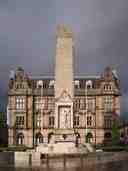
  2. Right in front of you stands a tall, pale stone monument with a striking figure of Victory in the center, arms lifted high, flanked by two flagpoles and set before a grand, old…Leer másMostrar menos

    Right in front of you stands a tall, pale stone monument with a striking figure of Victory in the center, arms lifted high, flanked by two flagpoles and set before a grand, old building-just look for the centerpiece of the square rising up against the sky! Step a little closer, because you’re now standing in front of the Preston Cenotaph: a monument that’s stood watch over Market Square since 1926, quietly keeping the memory of Preston’s fallen soldiers alive. Imagine, nearly 100 years ago, this very spot was packed with townsfolk, the air thick with emotion and anticipation, as the monument was unveiled by Admiral of the Fleet Earl Jellicoe himself. The cenotaph is no ordinary stone block-it’s alive with symbolism and carved history. Right in the heart of the monument is the figure of Victory, arms outstretched and holding laurel wreaths, almost as if she’s cheering on a never-ending marathon. Flanking her, sculpted figures represent those who gave their lives, hands reaching out in a quiet, powerful plea: “Remember us.” Above them all lies an empty coffin-hence the name “cenotaph,” meaning “empty tomb”-surrounded by cherubs and carved strands of foliage, as if even nature is quietly paying its respects. When it was first dedicated, a roll of honour filled with the names of World War I servicemen was placed nearby. Two thousand names, each carved into marble at the Harris Museum, share their silent story every day with anyone willing to listen. Oddly enough, after the Second World War, there wasn't an official roll created, but the cenotaph holds the grief and memory of those lost in both wars, always keeping them close. The monument has seen more than just pigeons and passersby. In 2012, after a hefty makeover costing over £800,000-and probably more scaffolding than you’d see on a blockbuster film set-a new dedication was carved, honouring all the people of Preston lost in wars since 1945. Then, in 2013, something magical happened: as part of a local event, every single name from the roll of honour was projected onto this stone, bathing it in glowing stories beneath the night sky. Standing here now, in the quiet square, you can almost hear the echo of cheers, tears, and promises made long ago-a reminder that this isn't just a slab of stone, but a vessel of memories, standing tall for those who never came home.

    Abrir página dedicada →
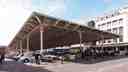
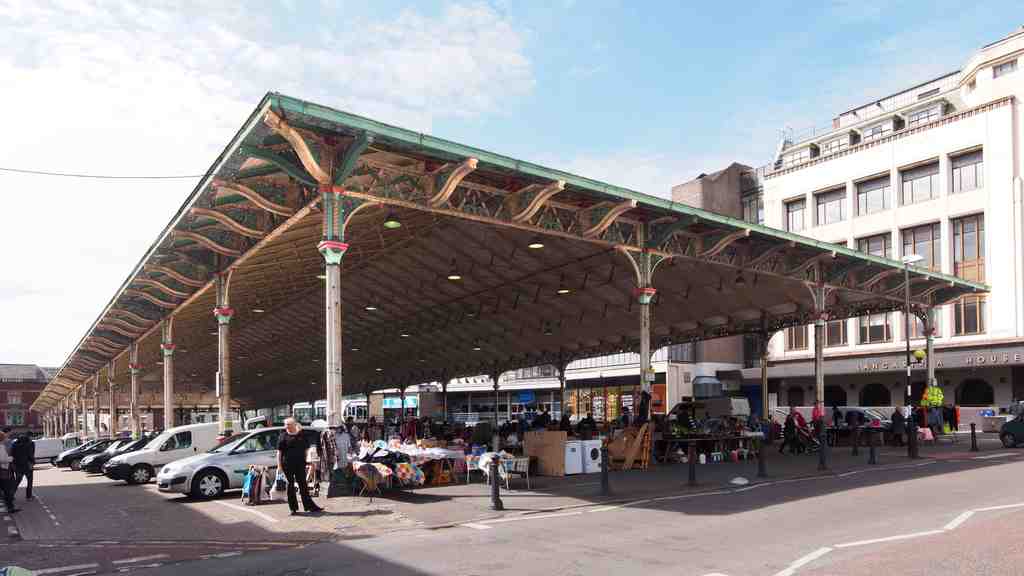
  3. Look just ahead-you’ll spot the Covered Market by its expansive, pointed roof stretching far and wide, held aloft by delicate cast iron pillars and decorated with intricate…Leer másMostrar menos

    Look just ahead-you’ll spot the Covered Market by its expansive, pointed roof stretching far and wide, held aloft by delicate cast iron pillars and decorated with intricate latticework, making it look almost like a giant’s elegant picnic shelter. Now that you’re standing outside Preston’s legendary Covered Market, let me whisk you back through the years-because, honestly, this place has more drama than a soap opera set in the Victorian era! The air here might still hum with the echoes of bustling traders from over a century ago, voices calling out the day’s best bargains, the creak of carts, and the sweet and spicy aroma of fresh produce and street food wafting under that magnificent roof. This shelter above you is no ordinary canopy. Built between 1870 and 1875, it’s a true marvel of Victorian engineering, with towering cast iron pillars and a roof that reaches nearly ninety feet across without a single pillar cluttering the middle. Those iron supports don’t just look pretty-they cleverly double as pipes, quietly sipping up the Lancashire rainwater through concealed gutters that drain down through their hollow centers. The roof slopes gently from Lancaster Road down to Market Street, a deliberate design meant to keep the rain off both traders and shoppers, whether they were haggling over onions in 1880 or picking up gadgets today. But, let’s rewind a bit-because if you think constructing a market was a simple affair, oh no! Like many epic stories, this one starts with big dreams and no money. The good folks of Preston began thinking about a covered market way back in the 1830s. They squabbled over where to put it-east of here, on Lune Street, at “the Orchard”-but each time, the purse strings snapped shut and the dream had to wait. Several generations of city officials tried again and again, with the project abandoned in 1842, then again in 1848, and put aside once more in the early 1850s, all because the town couldn’t scrape together enough cash. I suppose some dreams take longer to cook than a Sunday roast! Everything finally started rolling in the 1860s. By now, Preston was a booming industrial town, choked with blocks of buildings and desperate for more space to trade. Enter: Edward Garlick, the Borough Treasurer and Surveyor. He toured the country, sizing up markets from Norfolk to Nottingham, and then drew up plans for Preston’s own. His design was ambitious, and after no fewer than ten tenders, a local foundryman named Joseph Clayton won the contract. Clayton promised to deliver “a commodious market without excessive cost,” but he clearly hadn’t read the script that called for disaster. Construction started in early 1870, but delays mounted-Clayton insisted he had to cast every last bit of iron at his foundry before building anything on site. The Council got nervous, and just when it seemed things could not get stickier, disaster struck. On a quiet Saturday morning in August 1870, as the sun peeked above Preston and ten men worked away, the entire half-built roof suddenly gave way. With a sound that probably woke up everyone from the Earl of Derby to the ducks on the Ribble, the roof crashed down in a mess of splintered beams and twisted iron. Miraculously, most of the workmen escaped unharmed except one, Thomas Bateson, who was rushed off to recover. Imagine the chaos; piles of broken metal where there should’ve been apple stalls! Panic spread, fingers pointed-was it the design, the builder, the lack of larch poles for scaffolding? Clayton and the Council bickered all the way to the trade press. In the end, Clayton left, his reputation dented, and two more contractors tried and failed, one refusing even to start because he didn’t trust the safety of the plans. Finally, in 1872, William Allsup, a determined local builder, took up the challenge. He finished the roof in splendid Victorian style in just over three years. Since then, the place has undergone many face-lifts-the fish market got its own roof in 1924, the cobbles gave way to concrete in the 1950s, and the market hall had a big makeover in the 2010s, even making room for cinema and restaurants. As you stand here now, listen for new laughter and stories-they say Wallace and Gromit themselves, immortalised in bronze, now greet visitors at the entrance, reading the paper and keeping an eye out for mischievous pen thieves. Over nearly 150 years, this market has survived misfortune, arguments, and even architectural drama. Yet, here it stands-waiting for the next chapter, and, who knows, the next great deal or the odd mystery runaway cheese wheel! Eager to learn more about the description, early proposals or the planning begins? Simply drop your inquiries in the chat section and I'll provide the details you need.

    Abrir página dedicada →
  4. To spot the Harris Museum, look ahead for a grand, stone building glowing with soft golden light-its tall Neo-Classical columns and a wide pediment towering over the Flag Market,…Leer másMostrar menos

    To spot the Harris Museum, look ahead for a grand, stone building glowing with soft golden light-its tall Neo-Classical columns and a wide pediment towering over the Flag Market, making it stand out like a stately palace in the night. Now, imagine yourself right here in the late 1800s. Preston was buzzing with excitement: families, shopkeepers, even the odd fisherman, were all dreaming of a place that would hold the wonders of art, books, and history-a place where anyone, no matter how muddy their shoes, could feel clever. At the heart of this dream was a generous man named Edmund Harris, a lawyer who, just as he was about to hang up his wig for good, left £300,000 in his will-an enormous fortune at the time! With the town’s own fundraising efforts stacked high and Harris’s bequest, Preston set out to create this magnificent building you see in front of you. Construction started during the famous Preston Guild of 1882, and, in true dramatic fashion, the new museum rose up in style different from anything locals had seen-a bold Neo-Classical building. Imagine all the townsfolk gasping at James Hibbert’s unusual design, because back then, everyone was mad for Gothic Revival towers and spires! Hibbert’s choice of grand columns, symmetry, and pure classical elegance was almost rebellious. And would you believe it? Unlike many other awe-inspiring museums, there’s not a single dramatic flight of steps at its entrance. Instead, there are welcoming doors right at ground level on all sides, a little like Preston saying, "Come on in, don’t trip!". Above the entrance, take a look at that enormous pediment. There’s a sculpted scene, inspired by the grandmaster Raphael’s painting, The School of Athens, carefully brought to life in stone by Edwin Roscoe Mullins. At the centre, the ancient general Pericles holds court, surrounded by wise thinkers-an architectural “who’s who” of antiquity. And if you squint below, you’ll see the words, “To Literature, Arts and Science”-the museum’s proud motto, carved deep into its bones. Now, step inside in your imagination. The Harris is not just a building, it’s an adventure in stone, mosaic and marble. Gaze up-yes, way up-over 120 feet to the top of the lantern tower, with balconies and halls spiralling around you like the world’s most educated beehive. Every step across the mosaic floors adds a soft echo to the cavernous hall. The original décor drew on the grandeur of Ancient Greece, Assyria, and Egypt, though today only a few of the Classical friezes survive, watching over you like wise old headmasters. The displays inside are a treasure chest of stories. There’s the mysterious, ancient Poulton Elk-a 13,500-year-old skeleton speared by prehistoric hunters-reminding you just how far back “local history” can go. The walls are hung with artworks by famous hands, from Lucian Freud to Stanley Spencer, as well as Preston’s very own creative heroes. But don’t overlook the glass and ceramics gallery, where delicate British creations shimmer under spotlights. A modern museum always keeps moving, and so does the Harris. Suspended dramatically in the central foyer, there’s a Foucault Pendulum, a swinging clock that ticks with the turning of the Earth itself, its butterfly-shaped plate winking different hours as you watch. But don’t be fooled by all the marble and grand words-this place is for people. Preston’s renowned public library still welcomes everyone looking for adventure inside a book. Since 1916, when William Bramwell shelved his last book at the age of 81, librarians have jealously guarded collections of rare old tomes and illustrated children’s books, some dating back to the eighteenth century. And in case you thought a grand old building was immune to a little sprucing up, the Harris is now getting an ambitious new lease on life. Thanks to a hefty National Lottery grant, it’s being lovingly restored-roofs, stone, secret original entrances (perfect for a dramatic arrival!), new lifts, and even a special area just for children to dream big. Oh, and if you’ve played Preston Monopoly? There’s every chance you bought this very museum and charged your friends rent-though I hope you didn’t mortgage it for a few old hotels! So while you stand below the glowing columns, remember: you’re not just seeing a museum, you’re stepping into the soul of Preston-a treasure trove of stories, proudly keeping the city’s mind and imagination alive. For a more comprehensive understanding of the design, collections or the library, engage with me in the chat section below.

    Abrir página dedicada →
  5. Right in front of you, you’ll see an impressive sandstone church rising up with a tall octagonal spire and gothic pinnacles poking into the sky-if you’re looking for Preston…Leer másMostrar menos

    Right in front of you, you’ll see an impressive sandstone church rising up with a tall octagonal spire and gothic pinnacles poking into the sky-if you’re looking for Preston Minster, just spot the tower and spire that practically reach for the clouds at the edge of Church Street. Alright, imagine being here not just on a busy Preston afternoon, but hundreds of years ago, drawn to this same spot by the call of church bells and the steady shuffle of townsfolk eager for sanctuary or solace. Preston Minster, formally the Minster Church of St John the Evangelist, stands at the true heart of the city, shaped by centuries of dramatic change, survival, and a fair bit of renovation-like the ultimate historical makeover story. Our tale stretches all the way back to at least 1094, when Roger de Poiteau was handing this ancient site over to the abbey at Sées. Rumor has it, if you listen closely, you might almost hear the echo of monks’ footsteps in the dewy grass outside these walls. At that time, this was a place dedicated to Saint Wilfrid, though the original building is long, long gone-think of it as an archaeological disappearing act. Fast forward to the 16th century: the church rises anew, its dedication bouncing from one saint to another like a game of sacred musical chairs. By 1581, poor Saint John the Baptist lost his title, and it was the Evangelist who took over. Years later, as the centuries pressed on, the church was patched up, repaired, altered-yet by 1770, it was so worn out that a major overhaul was inevitable. Now, if you think home improvement shows are dramatic, imagine in 1811 when the tower was partly demolished. But wait-just a few years later, a new one popped up in 1814. Clearly, someone here liked a good tower challenge. Still, by the time 1853 rolled around, the church was again in such bad shape that almost the whole thing-except that determined bit of the tower-was knocked down to make way for a brand-new masterpiece. And what a masterpiece! Between 1853 and 1855, E. H. Shellard, probably feeling like the Michelangelo of Lancashire, built what’s now considered his greatest work. Sandstone ashlar, elegant flying buttresses, and gothic pinnacles-this is a church determined to win the architectural beauty contest every year. The spire is so tall and octagonal you might start looking up and wonder whether it’s competing with the tower of Pisa for attention. Peek around-a closer look shows intricate windows along the nave, and the huge east window floods the chancel with colored light when the sun hits just right. Back then, all sorts of skilled hands left their mark: in 1856 the talented E. G. Paley designed a font and some tower details, then a reredos and an organ case. His son Henry kept the family tradition alive with repairs in the 1930s, even swapping ceilings for new and taking care of that sky-high spire for the princely sum of £320. You can nearly hear the clatter of scaffolding, the hammering and sawing of repairs. Step inside-(well, peek through the doors)-and you’d discover tall arches resting on quatrefoil piers, the kind that make you feel like you’re walking under the branches of a stone forest. Both the nave and the chancel have hammerbeam roofs that soar overhead. There’s a gallery at the west end, timber piers holding it up, and-just in case you love a bit of drama-a huge painting of the Sermon on the Mount by Hans Feibusch stares down from the west wall, painted in 1956 at a time when people thought a TV was the greatest art form. But here’s a modern secret: the stained-glass window by Brian Clarke. Installed in the 1970s, it’s unique for using early silkscreen printing onto mouth-blown glass and even includes a photographic street scene from the 1972 Preston Guild. Imagine the artist, glass in hand, experimenting with new technology, fusing together old traditions and modern methods all in tribute to Alderman Fred Gray. Not too shabby as a legacy! The Minster also takes pride in its regimental chapel, iron screens decorated with red roses dividing its space, a nod to Lancashire’s famous emblem. In the tower, twelve bells wait to ring, some of which began their lives in Holy Trinity, Bolton, before being moved to Preston in 1997, and you just know those bells have stories-a long journey, a second chance to ring out celebrations or call the faithful. The church’s grounds are framed by historic gates, listed at Grade II, crafted around 1855-so the very gates themselves have seen generations step through with anxious hopes, wedding day dreams, and the daily heartbeat of a growing city. So as you stand here, outside this towering monument, take a breath and imagine it: the ancient site, the debris and dust of demolition, the sudden roaring of new construction, the slow revelation of stained glass, the chime of the bells, and Preston’s history shimmering in stone before you. And if you listen carefully, you might just hear a joke from the spirit of E. H. Shellard: "What did the steeple say to the chancel? I’ve got your back-just don’t let the choir hit any high notes up here!"

    Abrir página dedicada →
  6. To spot St Paul’s Church, just look for a grand sandstone building with twin, pointy spires standing tall on either side of a gabled front, with three slim, arched windows above a…Leer másMostrar menos

    To spot St Paul’s Church, just look for a grand sandstone building with twin, pointy spires standing tall on either side of a gabled front, with three slim, arched windows above a dark main entrance-right ahead of you! Now, as you stand here in St Paul’s Square, let’s turn back the clock to the roaring 1820s. Imagine clouds floating overhead, fresh-cut sandstone dust drifting through the air, as you listen to the ringing of mason’s hammers against stone. This church, designed by the dynamic duo of Thomas Rickman and Henry Hutchinson, was built thanks to a cool grant of £6,221-worth about £640,000 nowadays-from the Church Building Commission. That’s a lot of pocket change just to keep up with the neighbors! Picture the first parishioners climbing these steps in 1825, glancing up at those octagonal turrets and tall pinnacles that reach for the sky. The church was growing with Preston itself, and by 1882, it needed more space-so a chancel and a shiny new baptistery were added, courtesy of Mr. T. H. Myers. But just when the story seems simple, there’s a twist: in 1979, St Paul’s was declared ‘redundant,’ which sounds rather dramatic, but it simply meant the building was ready for the next chapter of its life. And what a chapter it was! A few years later in 1981, instead of hymns echoing off these old stones, the pulsing beat of 80s pop music filled the air as Red Rose Radio moved in. Imagine the crew chuckling as they rolled big sound equipment over the flagstones, wires coiling like spaghetti, getting ready for Lancashire to tune in. The old nave became a hive of radio activity; presenters behind microphones, engineers hunched over crackling soundboards, records spinning. If you listen closely, maybe you can almost hear a burst of radio static or the cheerful patter of a DJ introducing the next big hit. Over time, St Paul’s transformed yet again as Rock FM and Greatest Hits Radio Lancashire sent their signals from here all over the county. Downstairs were the studios, upstairs the offices-no doubt filled with mugs of coffee, stacks of CDs, and the occasional frantic dash to meet the news deadline. But like all good tunes, the radio chapter came to an end in 2020, with the stations moving out and the grand old building turning into office space. Before you wander off, look to the northern corner outside. There stands the parish war memorial, like a silent sentinel. It’s a slim hexagonal column, also carved from sandstone, crowned by a Celtic-style cross. Once, metal plates with the names of local men lost in war were fixed to it, but they’ve since vanished, their memory woven into the very fabric of this remarkable place. So here stands St Paul’s: a church built on ambition, filled with music, stories, and memories, always quietly waiting for its next adventure. And as I always say-if these walls could talk, make sure you’re on the right frequency!

    Abrir página dedicada →
  7. To spot the Syro-Malabar Cathedral of St Alphonsa, look just ahead for a grand cream-coloured stone church with a tall, elegant spire rising high above Meadow Street-a beacon you…Leer másMostrar menos

    To spot the Syro-Malabar Cathedral of St Alphonsa, look just ahead for a grand cream-coloured stone church with a tall, elegant spire rising high above Meadow Street-a beacon you can’t miss against the skyline. You’re now standing before a place where history, faith, and architecture come together in a rather unforgettable way. Picture this area almost 200 years ago: instead of the gentle sounds of city life, you might have heard the clatter of horses and the distant tolling of a brand new church bell. It’s 1836, and right where you stand, St Ignatius Church has just opened its doors. Tall, proud, and full of ambition, it was the first building in Preston to boast a spire-imagine how it must have stood out in a town of low rooftops and narrow cobbled streets! But this wasn’t just any church. After the Catholic Emancipation Act, Catholic communities could finally build churches openly, but they were often simple, blending in, sometimes doubling as homes for priests. St Ignatius, however, wanted to make a statement. Thanks to architect Joseph John Scoles, it arrived in style, one of the earliest splashes of Gothic beauty in Preston, with pointed arches, tall windows, and a nave that stretches as if it, too, is praying. Over the decades, St Ignatius grew-literally and figuratively. In 1858, ambitious builders added five more bays, a new chancel, and side chapels. It’s as if every generation wanted to add a twist of their own. The church corridors and chapels would have echoed with the footsteps of famous poets: Francis Thompson was baptised here, and the legendary Gerard Manley Hopkins-a poet-priest-once served as curate. If you imagine the halls late at night, you might picture Hopkins pacing, composing verses in the candlelight. Fast forward to modern times, and things take quite a dramatic turn! In 2014, the last resident priest left, and for a moment, it seemed like the church would fall silent, a bit like an old cathedral after midnight mass. But just as the final hymn seemed sung, Preston’s Syro-Malabar Catholic community saw a new future here. That same winter, with joyful anticipation, Bishop Michael Campbell offered the church to the Syro-Malabar rite-a vibrant community with roots stretching all the way to India. The story didn’t stop there. In 2016, Pope Francis himself declared this church a cathedral-the grand seat of the Syro-Malabar Catholic Eparchy of Great Britain. The cathedral was buzzing again, with colourful liturgies and new melodies in ancient rites, as Bishop Joseph Srampickal took up the post. Even the square outside-St Ignatius Square-is preserved as part of Preston’s heritage, kept safe so the heart of this neighbourhood never changes too much. Each stone has a story, each wall echoes with voices past and present. So as you gaze up at that magnificent spire, imagine waves of change, faith, and poetry, all swirling through nearly two centuries right where you stand. And if you listen closely, perhaps you’ll catch not only the sounds of the city, but also the soft whispers of history still alive inside these walls.

    Abrir página dedicada →
  8. Look for a grand, symmetrical red brick building with lighter sandstone details and arched windows, standing proudly on a corner with a row of three grand doorways at the front,…Leer másMostrar menos

    Look for a grand, symmetrical red brick building with lighter sandstone details and arched windows, standing proudly on a corner with a row of three grand doorways at the front, all reached by a few wide stone steps. Welcome to the City Church, Preston-or at least, that might be the name you see on the front! This building has worn many hats over its long history, so it might be fairer to call it Preston’s great shape-shifter. Now, let’s close our eyes for a second and imagine the year is 1838: instead of cars, you’d hear the hoofbeats of horses and the clack of boots on cobblestone as people gather to admire this fresh new Wesleyan Methodist Church. Its red brick front shines in the sunlight, framed by elegant sandstone and crowned with a crisp stone pediment that proudly displays the year above. Back in those days, crowds would sweep up the stone plinth and through one of those three grand doors, probably whispering to each other, “Did you see the columns? Very posh!” Inside, the air would ring with hymns bouncing off the horseshoe-shaped gallery, supported by slim iron columns. And speaking of irons, here’s some Methodist humor for you: the columns inside the gallery may be made of iron, but the resolve of the parishioners was even stronger! In 1885, local architect James Hibbert gave the church a bit of a makeover. Imagine the excitement-a facelift for a building that already stood tall! But the story doesn’t stop there. Jump forward through time and you’ll find this church transforming yet again, this time into a lively Pentecostal church. Finally, in 2016, it took on its latest identity as the City Mosque. Just think-over almost two centuries, this spot has welcomed new faces, new prayers, and new dreams. So take a moment and let your imagination wander-who might have climbed these steps before you? Victorian worshippers, fiery preachers, joyful choirs, and now, a community seeking peace and unity, all under one magnificent roof. If only buildings could talk, we’d need to pull up a chair for the stories!

    Abrir página dedicada →
  9. Right ahead, you’ll spot St Peter’s Church standing proud with its tall pointed spire and castle-like stone walls-just look for the intricate windows and the dramatic steeple…Leer másMostrar menos

    Right ahead, you’ll spot St Peter’s Church standing proud with its tall pointed spire and castle-like stone walls-just look for the intricate windows and the dramatic steeple soaring above the rooftops! Picture this: it’s 1822, Preston is buzzing with excitement, and in this very spot, St Peter’s Church is starting to rise from the Lancashire ground. Built of solid sandstone, it looks as if someone plucked a medieval castle and set it down right here-with tall pointed arches, embattled parapets along the roof, and that towering spire that seems to poke the clouds. The church was designed by Thomas Rickman and Henry Hutchinson, two architects who knew how to give a place a sense of gravitas. But building something this grand wasn’t cheap-even then, it cost a whopping £6,765, which would be something like £750,000 today. Luckily, the Church Building Commission was feeling generous and handed over a grant, allowing Preston to dream a little bigger than usual! Yet, our story doesn’t stop with architecture. Fast forward to 1851, and the people of Preston decided they needed an even taller, fancier steeple. Enter Joseph Mitchell, the architect who designed the new spire, thanks to a hefty donation from Thomas German-a local alderman, mayor, and apparent fan of tall towers. His legacy lives not just up in the clouds, but also inside, with a monument and tiled floor in the tower giving him a permanent seat at the church he helped finish. Now, take in the church’s exterior as you stand here: imagine broad, arched windows glowing with sunlight, two side porches that almost feel like secret castle entrances, and, if you peek up at the nave, you’ll see rows of square-headed windows and gothic details everywhere you look. There are buttresses clinging to the corners like watchful sentinels, all topped with little stone “crowns”-or embattled turrets, if you want to get technical! Step inside in your mind and picture galleries hugging three sides of the space, held up by thin, elegant iron columns. In the south aisle, a monument to Thomas German gazes over visitors, alongside an ornate font from 1884. But here’s a twist-by 1973, the echoes of hymns were replaced with the energy of students as the church was adopted by Preston Polytechnic. Today it thrives as St Peters Arts Centre, breathing new life into these storied walls. So as you stand before it, imagine not just the prayers of ages past but the lively stir of creativity-a true Preston original that’s stubbornly refused to fade into history. Who knew a church could become a hub for artists and dreamers? Now, that’s what I call heavenly recycling!

    Abrir página dedicada →
  10. Look ahead for a low brick bridge nestled between wild greenery and fencing, just beyond an overgrown, disused railway track; you’ll spot it near a cluster of old buildings and a…Leer másMostrar menos

    Look ahead for a low brick bridge nestled between wild greenery and fencing, just beyond an overgrown, disused railway track; you’ll spot it near a cluster of old buildings and a church spire rising in the background. Now, let’s step back in time-imagine the air buzzing with energy as trains clattered into the Maudland Bridge railway station, right where you’re standing now. This spot was once the gateway to exciting journeys along the Longridge Branch Line. Just think: steam engines chugging past, passengers bustling on and off, and maybe the odd stationmaster with a fantastic moustache waving a flag with great importance. But the story gets even more interesting! The station’s roots reach deep into Preston’s history, named after the ancient leper hospital of St. Mary Magdalen, which stood nearby during medieval times. Back in 1850, someone had a brilliant idea-build a tunnel, nearly as long as nine football pitches, slicing straight under the city! This was the Miley Tunnel, linking new and old lines so that people (and goods) could travel all the way from Fleetwood by the coast to Skipton in Yorkshire. Sounds ambitious, right? Well, like my last attempt at DIY furniture, the plan didn’t quite work out as intended. The huge dream fizzled in just a couple of years, and the tunnel mostly rattled with goods wagons rather than passengers. But Maudland Bridge station had another shot at fame. In 1856, after a brief pause, passenger trains returned, filling the area once more with the sound of voices, whistles, and the clanging of metal. Ownership changed hands, tracks shuffled about, and for a while, Longridge trains paraded up the mighty West Coast Main Line into Preston town. Yet in 1885, the bravest of the station’s days came to an end, and Maudland Bridge quietly closed its doors to passengers forever. Freight trains kept rumbling through for decades, but today, all that’s left are silent, rusty tracks sprouting weeds and memories. Even after the trains stopped, Maudland Bridge still whispered tales-sometimes with a wild edge. The disused Miley Tunnel became the scene of a few too many accidents. People, a bit too adventurous (or perhaps just unlucky after a night out), tumbled over the nearby walls and into the tunnel below, adding a dash of drama and sparking calls for “health and safety” fences taller than your average basketball player. And who knows what’s next? Dreamers are already imagining boats in a new marina at this very spot and trains perhaps gliding back one day. For now, stand quietly and listen-you might just hear the distant echo of steam, whistles, and stories carried by the wind.

    Abrir página dedicada →
  11. Just ahead of you, towering high above rooftops and reaching toward the clouds, is a limestone spire so tall you’d swear it was trying to eavesdrop on the sun-look straight up and…Leer másMostrar menos

    Just ahead of you, towering high above rooftops and reaching toward the clouds, is a limestone spire so tall you’d swear it was trying to eavesdrop on the sun-look straight up and you can’t miss the soaring steeple of St Walburge’s Church. Alright, now imagine it’s the mid-1800s in bustling Preston. On a bustling day-horses trotting by, the hum of textile mills in the distance-an ingenious architect named Joseph Hansom (yes, the very same fellow who invented the hansom cab!) is hunched over plans right here in Maudlands, just northwest of Preston’s city center. Maudlands sounds mysterious, doesn’t it? That’s because it’s a twist on “St Mary Magdalene,” whose name lingered here thanks to a 12th-century hospital for leprosy once nearby. Those must’ve been dramatic times: medieval priests, the sick seeking solace, and the land itself steeped in centuries of hope and healing. But back to Hansom! He was asked to build something grand-a real showstopper-to capture the spirit and pride of the local Catholic community, who’d only recently regained the right to worship openly. And so St Walburge’s was born, dedicated to an extraordinary woman: Saint Walpurga (or Walburge), born in 710 AD. Picture her journeying, cloak flapping in the North Sea wind, by her two brothers St Willibald and St Winibald, off to Germany as missionaries. Walburge wasn’t just brave, she was famous for miraculous healings-a woman who made illnesses run for the hills! Amid the growing prosperity brought by Lancashire’s textile mills, construction started in 1850. Imagine the clatter and clamour-hammers ringing, stone blocks thudding onto carts, the air filled with English rain and, sometimes, a cheerful whistle. Four years later, Preston welcomed a building so large it could fit a thousand souls, with a roof soaring overhead and fourteen mighty wooden beams. On each beam stands a life-sized carved saint, watching over you like an ancient security team (though they probably won't check your tickets!). Now tilt your head back-the real spectacle is the spire. All 309 feet of it, built from limestone sleepers once used on the Preston and Longridge Railway. At sunset, the spire glows reddish, as if blushing from all the attention. Only Salisbury and Norwich Cathedrals can claim higher spires in the UK, but St Walburge’s? Tallest in England for a parish church. I’d say it’s Preston’s way of showing off without being rude. Speaking of showing off, within the tower there’s a giant bell-the heaviest swinging bell in all Lancashire, weighing in at a whopping 1.5 tonnes. Too bad you only get to hear it in winter, though; it’s down to some very clever birds who’ve claimed the belfry as their VIP nesting spot. Trouble almost came knocking in the 21st century. In 2007, with changing times and dwindling funds, there were whispers the church might be closed down. Locals didn’t stand for it; they dashed into action with fundraising drives and grants to save this gem. The Victorian Society’s David Garrard called St Walburge's "an outstanding building by an ingenious and imaginative architect"-if that sounds like the world’s fanciest compliment, it probably is! Thanks to all this energy, the church’s doors stayed open and its spire still watched over the city, as though keeping an eye on mischief. Fast forward to 2014. Preston’s bishop, Michael Campbell, entrusted the church to the Institute of Christ the King Sovereign Priest, making it a shrine where traditions could flourish, and daily Mass could echo amid the hammer-beamed roof. You’ll feel the history in the air-look up, past the vast rose window (it’s 22 feet across, so it’s basically the church equivalent of the London Eye) and down the nave. Inside, you’ll spot the finely carved triptych, a grand old organ, and saints from around Britain gazing down on every worshipper and wanderer. On the right in the sanctuary, St Ignatius of Loyola makes his presence known-proof of the Jesuit priests’ enduring influence. St Walburge’s once even made it onto TV. The church’s spire was the final job for Fred Dibnah, the beloved steeplejack and TV personality. He didn’t quite finish-and his ladders were left behind and became a bit of a local marvel themselves. If you ever get the chance, climb the spire (on select weekends-and tickets help keep the church going). It’s a climb that’ll leave your knees wobbly and your spirits sky-high. Looking out at Preston from those dizzy heights, you’ll probably agree: sometimes, history really does reach for the heavens.

    Abrir página dedicada →
  12. To spot St Mark’s Church, look for a large, stately building made of pale sandstone with a super-tall square tower on the left, rooftop windows, and striking arched windows facing…Leer másMostrar menos

    To spot St Mark’s Church, look for a large, stately building made of pale sandstone with a super-tall square tower on the left, rooftop windows, and striking arched windows facing the street. As you stand outside St Mark’s Church, imagine the year is 1863, and the air is thick with the sound of hammers and voices as local workers finish building this new place of worship. The smell of fresh-cut sandstone mixes with Lancashire rain, while the people of Preston crane their necks to admire the elegant “Decorated” Gothic windows and the three-sided apse. This church wasn’t just made for Sunday gatherings-it was built, in part, as a good old-fashioned rivalry with its neighbor, St Walburge’s! The architects wanted St Mark’s tower to rise almost as high as its competitor, as if to say, “Ours is standing tall and proud too!” For over a hundred years, St Mark’s bustled with life. It saw baptisms, weddings, and generations of parishioners sitting in its nave, sunlight spilling through those impressive stained-glass windows. But as the twentieth century rolled on, Preston changed. People moved away; the parish shrank. In 1982, after so many years filled with voices and song, the church fell silent, its last echoes of the choir fading into the cold air. For more than a decade, this mighty building stood empty-a ghost on St Mark’s Road. Its grand tower, which once dared you to look up until your neck ached, collected nothing but rain and pigeons. The silence inside must have felt enormous, stretching across the flagstones and pews, broken only by the occasional creak as the building settled. Yet, St Mark’s wasn’t quite ready to fade away. Its altar and furnishings found a new home, now glimmering in the Lady Chapel at St Michael’s, so whenever someone visits, a little piece of St Mark’s spirit lives on. The old church got a whole new lease of life when it was transformed into flats-imagine climbing into bed in a room where a vicar once gave a sermon! Even the former school next door has turned creative, becoming a design studio bustling with modern ideas. And, let’s be honest, if you stand here on a windy day and look up at those stone pinnacles, you might just feel the weight of history-and the faintest sound of past footsteps, lingering like a secret only this church can tell.

    Abrir página dedicada →

Preguntas frecuentes

¿Cómo empiezo el tour?

Después de la compra, descarga la app AudaTours e ingresa tu código de canje. El tour estará listo para comenzar de inmediato - solo toca play y sigue la ruta guiada por GPS.

¿Necesito internet durante el tour?

¡No! Descarga el tour antes de empezar y disfrútalo completamente sin conexión. Solo la función de chat requiere internet. Recomendamos descargar en WiFi para ahorrar datos móviles.

¿Es un tour guiado en grupo?

No - esta es una audioguía autoguiada. Exploras de forma independiente a tu propio ritmo, con narración de audio reproduciéndose en tu teléfono. Sin guía, sin grupo, sin horario.

¿Cuánto dura el tour?

La mayoría de los tours toman 60–90 minutos para completar, pero tú controlas el ritmo completamente. Pausa, salta paradas o toma descansos cuando quieras.

¿Qué pasa si no puedo terminar el tour hoy?

¡No hay problema! Los tours tienen acceso de por vida. Pausa y continúa cuando quieras - mañana, la próxima semana o el próximo año. Tu progreso se guarda.

¿Qué idiomas están disponibles?

Todos los tours están disponibles en más de 50 idiomas. Selecciona tu idioma preferido al canjear tu código. Nota: el idioma no se puede cambiar después de generar el tour.

¿Dónde accedo al tour después de comprarlo?

Descarga la app gratuita AudaTours desde App Store o Google Play. Ingresa tu código de canje (enviado por email) y el tour aparecerá en tu biblioteca, listo para descargar y comenzar.

verified_user
Satisfacción garantizada

Si no disfrutas el tour, te reembolsamos tu compra. Contáctanos en [email protected]

Paga de forma segura con

Apple PayGoogle PayVisaMastercardPayPal

AudaTours: Audioguías

Tours a pie autoguiados entretenidos y económicos

Probar la app arrow_forward

Amado por viajeros de todo el mundo

format_quote Este tour fue una excelente manera de ver la ciudad. Las historias fueron interesantes sin parecer demasiado guionadas, y me encantó poder explorar a mi propio ritmo.
Jess
Jess
starstarstarstarstar
Tour de Tbilisi arrow_forward
format_quote Esta fue una forma sólida de conocer Brighton sin sentirme como un turista. La narración tenía profundidad y contexto, pero no se excedía.
Christoph
Christoph
starstarstarstarstar
Tour de Brighton arrow_forward
format_quote Empecé este tour con un croissant en una mano y cero expectativas. La app simplemente vibra contigo, sin presión, solo tú, tus auriculares y algunas historias geniales.
John
John
starstarstarstarstar
Tour de Marsella arrow_forward

Audioguías Ilimitados

Desbloquea el acceso a TODOS los tours del mundo

0 tours·0 ciudades·0 países
all_inclusive Explorar Ilimitado