Audioguía de Portsmouth: El Paseo Definitivo por el Tiempo de Portsmouth
El estruendo de los cañones resonó una vez a lo largo del puerto de Portsmouth, mientras los secretos susurraban entre sus antiguas piedras. Bajo el bullicio moderno de la ciudad, aguarda una historia tejida con mástiles destrozados, intrigas reales y rebelión silenciosa. Esta audioguía autoguiada te llevará al corazón de Portsmouth. Descubre historias olvidadas mientras paseas desde la majestuosa aguja de la Catedral de Portsmouth hasta la gloria sumergida del Mary Rose y la imponente fuerza del HMS Warrior. ¿Por qué marineros desesperados arriesgaron todo por escapar en Gunwharf Quays? ¿Qué escalofriante verdad yace bajo los suelos de iglesias centenarias? ¿Qué escándalo real casi condenó a toda una flota aquí, y por qué involucró a un cierto pastel salado? Ve más allá de las postales y las guías. Recorre las rutas sinuosas de reyes y marginados a través de tabernas humeantes y hasta los salobres astilleros. Deja que las voces perdidas se alcen mientras descubres una nueva visión de esta ciudad junto al mar. Comienza ahora y escucha a Portsmouth revelar sus secretos donde los cañones una vez hablaron.
Vista previa del tour
Sobre este tour
- scheduleDuración 40–60 minsVe a tu propio ritmo
- straighten5.7 km de ruta a pieSigue el camino guiado
- location_onUbicaciónPortsmouth, Reino Unido
- wifi_offFunciona sin conexiónDescarga una vez, úsalo en cualquier lugar
- all_inclusiveAcceso de por vidaReprodúcelo en cualquier momento, para siempre
- location_onComienza en United Services Portsmouth F.C.
Paradas en este tour

To spot United Services Portsmouth F.C., look for a blue circular badge featuring a white crown surrounded by laurel branches-it’ll catch your eye on the outer walls or signs near…Leer másMostrar menos
To spot United Services Portsmouth F.C., look for a blue circular badge featuring a white crown surrounded by laurel branches-it’ll catch your eye on the outer walls or signs near Victory Stadium on Burnaby Road. Welcome to a hidden gem for football lovers and history buffs alike! Picture this: it's 1962, and you can almost hear the echo of boots on wet grass and the roar of proud sailors as Portsmouth Royal Navy Football Club is born, thanks to the dream of Dennis Probee. The idea was simple but grand-to bring fierce, top-level football to the men and women of the services, bridging weekday leagues and the big-time Navy games. Fast forward to the mid-80s-the club joins the very first season of the Wessex League, squaring off against fierce rivals. It’s muddy knees, chilly air, and the smell of pies wafting from the Victory Stadium clubhouse… oh, and don’t get me started on those nail-biting matches under the new floodlights! Change was in the air by 2004! The team opened its doors not just to all the armed forces, but also to you and me… civilians! With this new spirit of unity, they changed their name to United Services Portsmouth F.C. Suddenly, you had a football club where a Royal Navy chief might pass to a local postman-and yes, that sometimes led to hilarious on-field misunderstandings. I always imagine them shouting, “Aye aye, Cap’n!” out of habit, even when no Navy officer’s around! The ground itself, the Victory Stadium, has grown right alongside the team-a 500-seat covered stand, shiny electronic scoreboard, and even two top-class hockey pitches, one named after a true Navy hockey hero. It’s a stadium built for legends and laughter alike. Through all the tense moments and celebrations-whether winning cups, nearly storming the FA Vase semi-finals, or nabbing local league titles-this club has powered on with Portsmouth pride and real community spirit. So, take a deep breath, look around, and enjoy this patch of green where legends and ordinary folks alike have chased glory, soaked through their socks, and scored those unforgettable goals.
Abrir página dedicada →To spot the Domus Dei, just look across the wide green lawn for a grand, old stone church with a steep red-tiled roof and tall arched windows, topped with a small pointed tower-it…Leer másMostrar menos
To spot the Domus Dei, just look across the wide green lawn for a grand, old stone church with a steep red-tiled roof and tall arched windows, topped with a small pointed tower-it stands clear and proud against the sky. Welcome to the unforgettable Domus Dei, or as it’s known today, the Royal Garrison Church! Right where you’re standing, imagine nearly 800 years of drama washed over these ancient stones. Take in the sturdy grey walls and the red roof-this building has kept watch over Portsmouth since 1212, when a certain Bishop Peter des Roches decided, “You know what this city needs? A place to care for the sick and weary.” And so the Domus Dei was born, a cozy haven for travellers and the poor long before anyone typed symptoms into a website. But not every story here is so peaceful. Picture the year 1450: the air inside the old chapel is thick with the scent of candles and whispers of prayer. Suddenly, that peace is shattered -furious naval seamen crash inside, angry about rotten pay and empty bellies. They drag Bishop Adam Moleyns right out, and in a burst of violence, he’s murdered, right here. The shock rippled so far that Portsmouth was slapped with the “Greater Excommunication”-no weddings, no baptisms, just an entire city grounded from church for nearly 60 years! Talk about being put in time-out. Life rolled on, though, and by 1540, Henry VIII had come calling for church properties, so the Domus Dei became an armoury-no tranquil prayers, just clangs and clatters as armor stacked up. Then, a mansion appeared, housing military governors, and in 1662, the building hosted a royal wedding! Imagine the nervous excitement of young King Charles II and Princess Catherine, their laughter echoing off these very stones. But Portsmouth’s weather-and history-wasn’t always kind. Over centuries, the place crumbled until rescued and restored, then battered again during World War II. Incendiary bombs rained down in 1941, blowing out stained glass and stripping the nave of its roof. Yet, like a true Portsmouth survivor, the Domus Dei endured. Walk around and look up: the chancel is still intact, but part of the nave remains open to the sky, a living memory of those wartime nights. So as you stand here, take a deep breath-can you almost hear faint whispers from the past? The Royal Garrison Church has seen it all: kindness, tragedy, royalty, and recovery. And thanks to a fresh grant in 2021, she’ll be sharing her stories for centuries more.
Abrir página dedicada →Look ahead for a bright, blocky pavilion covered in bold yellow and blue panels, with a square tower rising from its centre and the words “CLARENCE PIER” circling the top; this…Leer másMostrar menos
Look ahead for a bright, blocky pavilion covered in bold yellow and blue panels, with a square tower rising from its centre and the words “CLARENCE PIER” circling the top; this colourful structure stands right by the seafront, so you truly can’t miss it. Welcome to Clarence Pier, Portsmouth’s own nostalgic playground by the sea, where it’s hard not to smell the popcorn, hear the laughter, and maybe even spot a stray chip-stealing seagull in the air. Standing here now, you’re looking at more than just an amusement park - you’re looking at a survivor of history, a place that’s managed to keep the fun rolling despite wars, storms, and the occasional fashion crisis! Let’s set the scene: it’s 1861, and England’s Prince and Princess of Wales cut the ribbon to officially open Clarence Pier. Imagine the creak of wood and the excited buzz as people strolled onto the pier, ready to board steam ferries to the Isle of Wight or dance away inside the elegant Assembly Rooms. Then came the dark clouds of World War II. Picture searchlights sweeping across the Solent, the sudden roar overhead as bombs rained down-sadly, Clarence Pier and its neighboring Southsea Baths and Assembly Rooms were left battered and broken in the blitz. But Portsmouth folk are made of sturdy stuff. Rather than give up, they rebuilt their beloved pier, trading old timbers for tough concrete decking by the mid-1950s. There’s a wonderful detail: the Lady Mayoress herself, Mrs. Frank Miles, drove the first pile into the sand on a hopeful June day in 1953, and the new pier would open barely a year later. For a while, temporary kiosks popped up, selling sweets and treats to tide everyone over until something grander appeared. By 1961, Clarence Pier had its brand-new look-the fantastic modernist yellow-and-blue pavilion right in front of you, with a restaurant, bars, ballroom, a coffee shop, and what was then a towering 60-foot observation turret. You can almost hear the hum of excitement as the Lord Mayor, Ralph Bonner Pink, threw open the doors to the public! As you look around, you might notice that Clarence Pier isn’t quite like other British seaside piers. Instead of jutting straight out over the waves, it stays close to shore and sprawls sideways-a bit like it’s sneaking along the coast to catch a better view. The main attraction - the Golden Horseshoe building - is more than just a cavernous arcade. Over the decades, it’s been home to everything from an opulent ballroom to a lively bowling alley, and, in its glory days, the sort of prize bingo hall where elbows were sharp and jokes were sharper. Back in the 1980s, it was nicknamed “Fun Acres,” with rollercoasters, slides, dodgems, a ghost train, and arcade stalls shaped like-wait for it-giant mushrooms. North of the pier, you’d have found a Ferris wheel whose spherical cabins bobbed and spun, a Super Loop ride that would make your hair stand on end, and rides where even the bravest left with shaky knees. The famous Skyways rollercoaster was a staple until 2018, while the gigantic Ferris wheel-called the Solent Eye-came and went in cycles, soaring over the water and then disappearing, only to return, then vanish for good in 2020. There’s a lesson for you: in Portsmouth, even the rides like to go on holiday! There’s more to discover if you wander about. Arcade fans can duck into Games Wharf or Southsea Island Leisure, or try their luck in the Wheel of Fortune-though sadly, you won’t find a futuristic dino dark ride these days, even though Jurassic 3001 once delighted kids and startled passers-by with a roaring animatronic triceratops that poked its head right out of the building. The Golden Horseshoe now houses a Wimpy bar upstairs-perfect for sofa-sized burgers and milkshakes with a side of nostalgia. Downstairs you’ll catch the lively energy of gamers chasing jackpots, and if you fancy putting your putting skills to the test, try the Putt Hutt mini-golf, which opened just in 2023 where the Pirates and Princesses Play Area once stood. You’ve also landed in a minor spot of television fame. The beloved “Mr. Bean” once ran riot here for an episode, and you can spot Clarence Pier in a music video or three, proving that everyone wants to feel like a kid here-famous or not! So, whether you’re here for the rides, the retro arcades, the echo of history, or just a seaside snack, Clarence Pier offers a story around every corner. Roll up those sleeves and grab your tokens; who knows, your next adventure might just be waiting behind those yellow and blue walls! Curious about the about, in pop-culture or the attractions? Don't hesitate to reach out in the chat section for additional details.
Abrir página dedicada →
Mostrar 12 paradas másMostrar menos paradasexpand_moreexpand_less
To spot Portsmouth Cathedral, look for the grand creamy-stone building with its large square tower topped by a gleaming weather vane and clock, right across the street with trees…Leer másMostrar menos
To spot Portsmouth Cathedral, look for the grand creamy-stone building with its large square tower topped by a gleaming weather vane and clock, right across the street with trees and gardens out front. Alright, welcome to one of Portsmouth’s most storied spots-Portsmouth Cathedral! Take a deep breath and soak it in. The walls here don’t just whisper history; sometimes, if you listen closely, they practically shout it! Imagine yourself back in the year 1180, when a wealthy Norman merchant named Jean de Gisors decided that the brand new town of Portsmouth was missing a certain… spiritual sparkle. He offered up this plot to the Augustinian canons, asking them to honor the memory of Thomas Becket-the recently martyred Archbishop of Canterbury. That little chapel sprouted up here, and over centuries, it’s turned into the mighty cathedral standing before you now. Back in its earliest days, this church wasn’t just for praying; the central tower was literally a lookout and lighthouse! Picture medieval monks gazing out for ships-or maybe the odd French raider-using the tower as Portsmouth’s eye on the sea. What’s amazing is parts of that original 12th-century building-the chancel and the two arms called transepts-are still here today. They survived fire, fury, and even an attack from the French in 1337, when most of Portsmouth was left in ashes. But drama didn’t stop there. In 1449, one poor bishop was murdered by angry sailors-maybe their hymn requests weren’t being met? The whole town was excommunicated, meaning nobody here was supposed to set foot in the church. It took almost 60 long years before they were let back in, so you can imagine how tense things got! Years later, a royal visitor dropped by-Queen Elizabeth I herself sang hymns under these ancient rafters in 1591. Fast forward to the English Civil War, and this place took a pounding. Royalists took over, using the tower to spy on their enemies, but the opposition in Gosport didn’t like that one bit. Cannonballs smashed into the old nave and tower, leaving the church a battered shell. But Portsmouth’s got a stubborn streak; after King Charles II was restored, he ordered fundraising all across England to rebuild. By 1693, the church had a classical new look, galleries for more worshippers, and a wooden cupola lantern for guiding ships. Even the bells got in on the action-eight to start with, growing into a mighty peal of twelve, all cast at Taylor's famous bell foundry. Being on the coast isn’t just about salty air-it’s also about repairs! The cathedral closed in 1902 because the foundations needed saving, though its adventurous spirit never wavered. When Portsmouth became a diocese in 1927, this church got a big promotion: from humble parish church to grand cathedral. Architects dreamed up ambitious extensions in styles ranging from “Neo-Byzantine” to a dash of the classical, but world events had other ideas. When WWII arrived, work stopped, and a makeshift brick wall bricked off half the nave for over fifty years. Imagine worshippers squinting past scaffolding and wartime damage, yet still keeping faith. By the 1990s, enough was enough-the wall was crumbling and the community hustled up millions to finish what had begun generations ago. The nave was finally completed, but in a foreshortened way-a cozy space perfect for special occasions, not just your typical service. In 1991, Queen Elizabeth The Queen Mother was here to consecrate the finished church, so you’re standing where royals have tread and history has unfolded in every stone. Between the bronze west doors outside-decorated with the tree of life-to the dazzling rose window and the powerful organ that once played notes rescued from Manchester Cathedral, this building is a kaleidoscope of eras. Look for treasures like the centuries-old pulpit, a memorial to the Duke of Buckingham, epic sculptures, and even granite that traveled all the way from Singapore! And here’s a fun twist: When the choirs sing, you hear the sound of centuries blending together. Boys’ choirs, girls’ choirs, and adults-a real musical family, sometimes touring as far away as Estonia and Malta! The organ, rebuilt and extended over time, now includes the jazzy “Trumpet of the Sea” which blasts from above the doors-ready to make even the seagulls pause mid-squawk. So while Portsmouth Cathedral may not be the tallest or the glitziest, it’s absolutely packed with stories, scars, and songs. Take a moment to listen-you might just catch an echo from one of the thousand souls who stood where you’re standing now, from monks with torches to modern-day visitors wondering, “How on earth did they fit so much drama under one roof?” For further insights on the architecture, music or the dean and chapter, feel free to navigate to the chat section below and inquire.
Abrir página dedicada →If you look up just ahead, you’ll spot a tall, glassy tower with a unique rounded top-locals call it “The Lipstick”-standing proudly above Gunwharf Quays. Alright, stand back and…Leer másMostrar menos
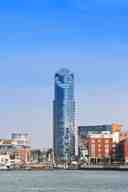
If you look up just ahead, you’ll spot a tall, glassy tower with a unique rounded top-locals call it “The Lipstick”-standing proudly above Gunwharf Quays. Alright, stand back and soak it in-no, really, make sure your chin doesn’t drop when you look up! This is the East Side Plaza, officially known as 1 Gunwharf Quays. Do you hear the distant clinks of cutlery from Brasserie Blanc at its base, or maybe the quiet hum of a bustling city below your feet? Just imagine, back in 2008 when the doors first opened, folks around town couldn’t stop talking about the city’s “new lipstick”-and no, this isn’t a beauty shop. At 95 meters tall and sporting 29 floors, the building’s shimmering, curvy glass makes it look ready to be plucked off the skyline and slipped into a giant handbag. Once the crown jewel in a three-part project costing a cool £50 million, this tower was designed to dazzle and transform the Portsmouth waterfront. And you know what? It nailed it, even winning the “Best Urban Regeneration Housing Scheme” before it was fully finished! Now, as the city’s second tallest structure-just after the Spinnaker Tower-The Lipstick is a modern icon where people live, dine, and enjoy breathtaking views over the Solent. Not bad for a place that started out as just a twinkle in an architect’s eye!
Abrir página dedicada →If you look ahead, you’ll see a solid, classic brick building with a slightly institutional feel-think plain, functional, and unmistakably military, blending into its surroundings…Leer másMostrar menos
If you look ahead, you’ll see a solid, classic brick building with a slightly institutional feel-think plain, functional, and unmistakably military, blending into its surroundings but full of hidden stories; to spot it, look for a compact, no-nonsense structure likely set back a bit from the main road, with sturdy walls and a weathered, purpose-built look. Alright, sailor-welcome to HMS Vernon! You’re standing in front of what was once the very brain of Britain’s naval fireworks: the Royal Navy’s famous “stone frigate,” a landlocked base bustling with science, secrets, and some seriously explosive history. Picture this: it’s 1876, and rather than bouncing across the channel on a ship, Portsmouth’s navy men step onto solid ground to study a different kind of sea monster… the torpedo! The Royal Navy wanted a home for the Torpedo Branch, so they squished not one but several hulking old ships together-HMS Vernon, Vesuvius, Ariadne, and even Florence Nightingale. These floating legends were soon lashed side by side and packed with cots, eager young recruits, and enough gadgets to make James Bond jealous. Here’s where the action kicked off: life aboard HMS Vernon was a swirling mix of invention and danger. Men crawled over torpedoes, tried new explosives, and held their ears tight against the echo of test detonations. Every corridor might echo with “mind your feet!”-or was that “mind the mines?” In 1904, HMS Warrior floated in to add its muscle as a workshop and wireless school, and before you know it, even the names of the ships were handed to the buildings: Vernon I, II, III… like Hogwarts, but with less magic and more boom. Now, step into the First World War. The air crackled with urgency. The staff of Vernon weren’t just gearing up for routine-they were inventing things nobody had seen before! They delved deep into torpedo trials, cooked up new anti-submarine gadgets, and invented electrics that set ships humming. You could almost hear chalk squeaking on the blackboard as Professor Edward Philip Harrison-he sounds serious because he was-led a team developing the infamous magnetic mine. Imagine the tension as sailors faced not just enemy ships, but invisible threats lurking below. Then came the nightmarish clatter of the Second World War. Suddenly, mine disposal wasn’t just an afterthought-it was life or death. Here at Vernon, men learned how to defuse the nastiest German mines. One officer, Lieutenant Commander John Ouvry, defused the first intact German magnetic mine… imagine steady hands, sweat beading on his forehead, maybe even holding his breath as he clipped that last wire. Of course, the enemy fought dirty, hiding booby traps inside some mines; tragically, one such trap exploded at Vernon in 1940, shaking the whole establishment and costing precious lives. In response, they moved the scariest jobs out to a disused quarry called, rather cheerily, HMS Mirtle. As Portsmouth shuddered under heavy air raids, Vernon didn’t escape the chaos. One bomb leveled the Dido Building and ended a hundred lives, ensuring the base would always carry memories of courage under fire. Even then, the work never stopped-departments scattered to quieter bits of the coast but kept fighting the silent, undersea battle. You might notice, too, a quiet pride in Vernon's later years. This was where the navy’s bravest divers trained, facing “The Dunker”-a terrifying swimming-pool device that dunked airmen in the dark, upside-down, so they could escape a crashed helicopter. Vernon also became home to the slickest clearance divers in the Royal Navy, ready to cut through murky waters and deactivate deadly mines. Just picture the splash and adrenaline as another recruit plunges into the icy water during a training drill. HMS Vernon’s last hurrah came in the 1990s, when the site gradually passed its torch-first to the Royal Marines, then to civilian hands as part of the modern Gunwharf Quays. But if you listen carefully, maybe just maybe, you’ll hear the distant clang of hammers, the murmur of young sailors learning their craft, and the quiet, enduring hum of legacy. The figurehead of the original HMS Vernon still stands proud in Portsmouth today-an old sailor watching over a city that never really stopped inventing, adventuring, and daring the impossible. And think, just behind these unassuming walls, Portsmouth changed the very shape of naval history-one electric spark, clattering mine, and sweaty-palmed dive at a time. Ready for the next adventure? Let’s march onward-just remember to keep an ear out for any unexpected explosions! Interested in knowing more about the in wartime and onshore, postwar devolution and decommissioning or the captains of the torpedo school
Abrir página dedicada →To spot the Spinnaker Tower right now, just look up-way up!-and you’ll see a striking white structure shaped like a giant billowing sail dominating the skyline just ahead of…Leer másMostrar menos
To spot the Spinnaker Tower right now, just look up-way up!-and you’ll see a striking white structure shaped like a giant billowing sail dominating the skyline just ahead of you. Now, as you stand here at Portsmouth’s most iconic lookout, let me whisk you back to where it all began. Imagine the late 1990s: the city’s abuzz with excitement about the approaching Millennium, and Portsmouth wants a landmark to match the grand occasion. What should they build? The people took charge! Three different designs were put to a public vote, right here in Portsmouth, and the winner was this one-a sweeping sail of steel and glass, inspired by the spinnaker sail on classic racing yachts. With 65% of the vote, locals knew they’d chosen something special. The architects-Portsmouth’s own HGP Architects-envisioned a tower soaring 170 metres into the sky, the tallest thing for miles around. The shape, with two graceful curves meeting at a needle-point tip, is meant to echo sails caught full of wind, a tribute to Portsmouth’s centuries-old maritime spirit. But building it wasn’t all smooth sailing, if you’ll pardon the pun. Construction was delayed-so long, in fact, that it didn’t open until 2005, missing the Millennium entirely! The budget? Well, let’s say it ballooned nearly as much as the spinnaker the tower’s named after. In the end, it cost an eye-watering £35.6 million, with the city council picking up quite a chunk of the tab. Picture the drama: council leaders retiring in frustration, legal advisors sent on paid leave, and a city watching its “Millennium Tower” become a bit of a running joke. Even on opening day, the external glass lift broke down, trapping the project manager and builders inside for ninety embarrassing minutes. Still, all the stress and setbacks melted away when the public finally got inside. Crowds of over 600,000 swarmed the Spinnaker’s observation decks that first year-everyone desperate to explore the three glass-walled platforms stacked at 100, 105, and 110 metres high. Up there, you can see for 23 miles on a clear day! Want an adventure? Brave visitors can step out onto a glass floor, peering straight down to the water and city below. And if you’re not a fan of heights, well, just hold onto the rail and enjoy the view. Let’s talk colours! You’d think a structure so distinctive wouldn’t need a wardrobe change, but in 2015, Emirates airline sponsored the Spinnaker. Suddenly, the city faced a crisis: the tower was to be repainted red and white, which happened to match the colors of Portsmouth’s fiercest football rivals, Southampton. The uproar! Locals demanded a rethink, petitions flew around, and in the end, blue, gold, and white carried the day-a true Portsmouth palette. Once the sponsorship ended in 2021, it returned to its original sleek, all-white look. Today, Macmillan Cancer Support is the tower’s proud sponsor-not repainting, just adding their green logo and hosting charity events, keeping that Portsmouth pride intact. Speaking of pride, the tower hasn’t just been a place to look out; it’s been a stage for adventure and celebration. Daredevils have abseiled down it for charity, and yes, one brave base jumper even leaped off, leaving the security guards looking extra nervous! It’s only fitting that Spinnaker Tower often pops up on TV. If you’ve ever seen the opening scenes of BBC South Today or caught children’s events with Pudsey Bear or stars like Annie Nightingale, you’ve already glimpsed this modern marvel. And if you’re feeling especially daring today, you might even imagine yourself tackling the tower’s 570 steps. For the record, the tower is fully accessible thanks to new equipment, so no one is left behind-though you can skip the bungee jumps unless you’re feeling really wild. So here it stands: not just Portsmouth’s tallest icon, but its proudest, quirkiest, and perhaps most debated monument. Whether you’re staring up, out, or down through the glass, you’re part of a story that spans excitement, frustration, laughter, and maybe even a little vertigo. And hey, at least the lifts are working now... we hope! Interested in knowing more about the structure, commercial sponsorship with emirates (2015-2020) or the gallery
Abrir página dedicada →Gunwharf Quays is right in front of you-a vast, modern, semi-circular glass and brick building with a tall archway sculpture on top, bustling with shops and restaurants; just walk…Leer másMostrar menos
Gunwharf Quays is right in front of you-a vast, modern, semi-circular glass and brick building with a tall archway sculpture on top, bustling with shops and restaurants; just walk towards the large open square crowded with people and you'll spot it! Welcome to Gunwharf Quays! Now, I know it looks like a shopper’s paradise (and, let’s be honest, it is), but let’s peel back history’s layers for a moment. Imagine you’re standing here over 300 years ago-there’s no Starbucks, no restaurants, just the sharp smell of gunpowder in the air and the clang of cannonballs being stacked. This land was nothing but reclaimed mud and ambition, made solid in 1706 to create what was known as the Old Gun Wharf. Portsmouth’s salty wind would blow across the site, carrying the shouts of dock workers as they offloaded cannons and stored deadly cargo for the British Navy. Back then, ships arriving in port would unload their cannons, lining them up in neat rows, each one labeled with its ship’s name, while cannonballs were stacked in pyramid-shaped piles on the wharf. Can you picture it? A field of iron and oak, noise, and organized chaos. Everything had its place: gun carriages protected from weather, but cannons and cannonballs braving the sea air, their names boldly painted on their side. In 1814, a grand storehouse-the Vulcan Building-rose up nearby, built strong enough to last through centuries. Little did those 19th-century builders know that their trusty bricks would dodge enemy bombs and the Blitz, and would one day echo laughter from today’s shoppers. Even after so many years, bits of those old fortress walls and historic buildings can still be found, peeking out among designer stores and buzzing restaurants. And oh, what a parade of uniforms this spot has seen! The Royal Marine Artillery, the Royal Artillery, and the Army Ordnance Corps all called Gunwharf home over the years, each group marching across the paving stones right where you’re standing. Just think: behind the Vulcan building still stands the old 19th-century gateway, and not far away, the original Main Gate from the 1870s presses its memories into the landscape. Back then, barracks bustled with the sounds of soldiers, and hospital wards waited for those unlucky enough to cross the wrong end of a musket. The Gunwharf fell quiet as naval warfare moved forward-no more piles of cannonballs, no more offloaded guns-so the site took on a new identity as HMS Vernon in 1923, a Royal Navy shore establishment. The echoes of drills and discipline continued until finally, in 1995, the last officers hung up their caps for good, and the great gates swung open for something new. And what a transformation! The old yards and barracks, battered but brave after the Blitz, were smartened up and reborn as Gunwharf Quays in 2001, reopening after years of careful restoration. Even now, if you know where to look, you’ll spot the Regency charms of the Old Customs House pub, which once oversaw militia schedules and military paperwork, now serving pints and pub chips. While you grab some lunch or browse the shops, you’re strolling over hidden tunnels and barrack rooms that sheltered centuries of Portsmouth’s defenders. Just above the horizon, you can see the Spinnaker Tower rising like a modern-day sail, and the old storehouses and sea walls around you still whisper stories to those curious enough to listen. Footsteps echo through time here, from powder-stained marines to after-work shoppers. So next time you buy a new pair of shoes here, remember: you’re shopping where cannons slept and sailors dreamed of home. There’s always more than meets the eye-especially in a place where, if you stand still for a moment, you just might hear a distant cannon’s boom.
Abrir página dedicada →Look ahead to spot a massive, black iron-hulled warship stretching across the water, with three tall timber masts, a sharp ram bow, orange smokestacks, and a decorative white…Leer másMostrar menos
Look ahead to spot a massive, black iron-hulled warship stretching across the water, with three tall timber masts, a sharp ram bow, orange smokestacks, and a decorative white figurehead at the prow. Welcome to the mighty HMS Warrior! Imagine being transported back to the 1860s-steam and salt in the air and this colossal ship gleaming on the horizon. Back then, HMS Warrior was as modern as a spaceship is today, built to terrify rivals and make sure Britain ruled the waves. Just picture her, covered in 4.5 inches of iron armor, her black hull glistening, and flags snapping in the wind. She wasn’t just another wooden ship-oh no. HMS Warrior was the world’s first iron-hulled, armor-plated warship, created as Britain’s answer to the French launching their own iron monster, the Gloire. If you’d been here in 1861, you might’ve seen Queen Victoria herself, nervously checking with the Admiralty to see if this ship could keep Britain safe. Designed by Isaac Watts and Thomas Lloyd, the Warrior mixed cutting-edge steam engines with classic sails, and carried a whopping 40 powerful guns. She was built for speed-up to 17.5 knots with both steam and sail, which was astonishing at the time! The clang and thud of hammers and the sizzle of hot iron would have filled the air during her construction at Thames Ironworks in London. After her frosty launch on a winter’s day, her journey as a guardian of the Channel began. If you’d walked her decks during her heyday, you’d find 50 officers and over 650 sailors. The gun deck would be alive with the scent of gunpowder, hammocks swinging between heavy cannons, and perhaps the less pleasant aroma of a few hundred feet after months at sea. They not only fought battles, they lifted the heaviest anchors by hand-imagine the grunts and yells echoing through the hull! Officers enjoyed private cabins, while the marines got a taste of artillery action, manning aft guns and sleeping in the ship’s noisy heart. In her prime, Warrior was a celebrity ship. Crowds by the thousands lined up to walk her decks when she toured British ports-a bit like the Beatles of the Victorian Navy! She even once escorted a royal yacht, carrying Princess Alexandra of Denmark, and the crew's conduct was so impressive she sent a thank you engraved and fitted right on the ship’s wheel. You might think Warrior was unstoppable, but technology moves fast. Within just a decade, newer ships without masts, like HMS Devastation, made her old-fashioned. Warrior ended up as a reserve ship, serving quietly as a guard and supply depot, and later as a school for torpedo training. For fifty years, she spent her days as a floating oil depot in Wales, covered in concrete and left almost forgotten. But she wasn’t finished! In 1979, Warrior got a second chance. The Royal Navy handed her over to a preservation trust, and the ship made a triumphant journey to Hartlepool for an eight-year, nine-million-pound restoration. Craftsmen scoured old records to bring her back just as she’d been in 1862. They even carved a new giant figurehead to keep watch on the bow, since the previous one had a rather embarrassing run-in with another ship. Imagine the creak of wood and the smell of fresh paint as her great iron hull was reborn. Finally, in 1987, HMS Warrior steamed back to Portsmouth, with crowds cheering from every vantage point and over 90 boats escorting her home. Today, you stand before a living piece of history, a ship that changed the world. She’s hosted weddings, inspired countless imaginations, and continues to teach visitors about a time when iron and steam ruled the seas. So, take a moment-imagine the sights, the sounds, the sheer scale-because you’re looking at the greatest, toughest, and certainly the flashiest ship of her age! Intrigued by the background, design and description or the figurehead? Make your way to the chat section and I'll be happy to provide further details.
Abrir página dedicada →To spot the Mary Rose, look ahead for a massive, high-sided wooden warship with towering masts and colorful flags trailing in the wind-she looks almost like a fortress afloat and…Leer másMostrar menos
To spot the Mary Rose, look ahead for a massive, high-sided wooden warship with towering masts and colorful flags trailing in the wind-she looks almost like a fortress afloat and is proudly sitting at the heart of the museum near the Historic Dockyard entrance. Welcome to one of the most dramatic places in maritime history: the Mary Rose! Imagine yourself now, it’s the early 1500s, the smell of sea salt is thick in the air, and the cries of gulls cut through the wind. Here stands the pride of Henry VIII's Tudor navy-a ship built from the timber of around 600 mighty oaks, as grand as any castle and bristling with the power of new-age cannons. If you listen closely, you might just catch the bustle and clatter of a crew of four hundred bustling above and below deck, never knowing just how famous their ship would become. The Mary Rose was one of the very first purpose-built warships of her time, a beast that could fire heavy new bronze cannons right through sturdy, freshly-invented gun-ports. Talk about firepower-her broadsides were enough to make any enemy tremble! She was launched in 1511 and became the "rock star" of the Tudor navy, leading attacks against France, Scotland, and Brittany. In fact, she once outsailed every ship in a race off the coast of Kent; her captain called her the "noblest ship of sail... in Christendom." But with all her fame and fortune also came trouble. Her decks were stacked not just with sailors, but with archers wielding hundreds of longbows, soldiers holding axes and pikes, and gunners ready at the enormous bronze culverins. Life was crowded and often not for the faint-hearted-especially if you were a "powder monkey," scurrying with bags of gunpowder during the heat of battle! Below, surgeons worked in a cramped room and the cook churned out meals from deep in the hull. After 34 years weathering war and storm, she met her tragic fate on July 19, 1545. Picture the tension: the Mary Rose leading the charge against a looming French invasion fleet, her King watching from shore. Suddenly, disaster struck. Exactly why she sank is still shrouded in mystery-perhaps a gust of wind tipped her as cannons fired, perhaps overloaded, or maybe the chaos of battle played its part. In minutes, the pride of the navy slipped beneath the waves of the Solent, taking most of her crew with her. The Mary Rose lay lost for centuries, her secrets guarded by shifting silt and dark water. It wasn’t until 1971 that she was found again, lying on her starboard side. In 1982, after one of the most ambitious salvage operations in history, the remaining section of her hull rose into the daylight for the first time in over four hundred years-a heart-pounding, nail-biting moment for millions watching around the world! Now, the remains of the hull and an enormous treasure trove of artifacts let us peek into Tudor life: longbows and arrows, musical instruments, fine leather shoes, cannons, and even the skeletons of the men who sailed her. If you’ve ever dreamed of a real-life time machine, this is it. Today, the Mary Rose is a proud time capsule, where every wooden beam, rusty arrowhead, and battered helmet tells its own story. Her museum stands as a monument not just to a ship, but to an entire era-the hopes, ambitions, and dangers that made Tudor England roar into history. And if you hear the whistles and shouts of a busy deck echoing through the museum... well, that’s just the Mary Rose, still bursting with life after all these centuries! Intrigued by the historical context, construction or the design? Make your way to the chat section and I'll be happy to provide further details.
Abrir página dedicada →Directly in front of you is a stately, long red-brick Georgian building crowned by a little white cupola on the roof; look for rows of small uniform windows and that distinct…Leer másMostrar menos
Directly in front of you is a stately, long red-brick Georgian building crowned by a little white cupola on the roof; look for rows of small uniform windows and that distinct white feature peeking through the trees to help you spot the Royal Naval Academy. Alright, you’ve found it-welcome to the site where Britain once forged its future sea captains! Now, imagine yourself here in the 18th century, surrounded by the brisk salt air, the distant clang of shipbuilders’ hammers, and the unmistakable shouts of marching cadets. This grand building, with its crisp lines and imposing symmetry, was built way back in 1733, not just to turn lads into naval officers, but to shake up the whole Royal Navy system. Before the Academy opened its doors, the only way to become a naval officer was to jump aboard a ship as a kind of apprentice-learning life at sea the hard way, elbow-to-elbow with men who were born with sea legs and, more likely than not, grew up with powerful friends. The Academy wanted to change all that! Here, forty recruits at a time would bunk down and study everything from maths and navigation to learning how to tie a knot without ending up in a tangled mess. The best part? If you graduated here, you bagged yourself two years' worth of precious “sea time” before even stepping onto a ship-a shortcut, if you will, toward that fancy lieutenant’s exam. But not everyone liked these bookish new officers. Oh no! Many old sea dogs believed an officer could only be made on the quarterdeck, learning amid thunder, splinters, and the odd flying cabbage. There was even a separate rank-midshipman-by-order-just for these “academy boys,” as if to make absolutely sure everyone knew who’d earned their stripes on sea, and who’d done too much homework! Still, the Academy saw plenty of high drama and talent. Just think, in 1786 and again in 1791, the Austen brothers-Francis and Charles-came here. Yes, those Austens! Jane’s brothers swapped bonnets and balls for cutlasses and compass points, and both rose to become admirals. Then there’s Philip Broke, who trained here before steering HMS Shannon to victory against the USS Chesapeake. Picture the tension: Broke, pacing his quarterdeck, the air thick with gun smoke and shouts, every lesson from Portsmouth echoing in his mind. But time marched on, and in 1806, the Academy reinvented itself as the Royal Navy College, even merging with the School of Naval Architecture in 1816. Yet despite these changes, winds of tradition were still strong. In 1837, the college closed its doors to budding young officers-all future recruits were sent straight to sea once again. Training for the top brass carried on here until 1873, long after the echo of young boots had faded. As you stand here, try to imagine the generations of hopefuls bustling to and fro across this very green, the proud, anxious parents, the clatter of carriage wheels, and the ever-present naval discipline in the air. This wasn’t just a school-it was a grand experiment in charting a new course for the Royal Navy. And just think, some of the world’s most famous authors’ siblings once paced these halls! Seeking more information about the training, notable individuals or the governors? Ask away in the chat section and I'll fill you in.
Abrir página dedicada →Right ahead, you’ll spot a handsome, red-brick chapel with tall arched windows and a distinctive green-copper cupola rising above the roof-just look past the trees and you can…Leer másMostrar menos
Right ahead, you’ll spot a handsome, red-brick chapel with tall arched windows and a distinctive green-copper cupola rising above the roof-just look past the trees and you can catch the elegant doorway and the church’s peaceful little yard. Now, let’s step into the past for a moment. You’re standing by St Ann’s Church, the cherished heart of the Royal Navy’s spiritual life, nestled right here inside His Majesty’s Naval Base. Imagine the year is 1786: dusty red bricks in a neat Flemish bond are freshly set, and the tang of salt air mixes with the sound of hammers and saws as naval workers and stonemasons hurry about. The new chapel stands proudly where an earlier church once witnessed the hopes and fears of Portsmouth’s sailors since 1704. Legend has it, the design was likely overseen by a Navy Board surveyor named Marquand, working for the famously precise Samuel Wyatt. But don’t worry, despite all their careful calculations, the church has seen its share of drama! In May 1941, a Luftwaffe bomb dropped nearby, rattling the steeple and leaving scars on the sturdy brickwork. She survived, though, and was lovingly restored in the 1950s-proof you can’t keep a good chapel down. Now, every year, St Ann’s fills with memories and emotion. You can almost hear the deep hum of sailors’ voices, past and present, echoing through the pews as they remember those lost at sea. The HMS Royal Oak Association returns here each October, when the church swells with the families of those who perished on that fateful ship, sunk in 1939. On the 80th anniversary, Princess Anne herself came to unveil a new memorial, a moment heavy with quiet dignity and shared loss. And if you listen closely, you might even feel the pride and courage in the very walls. After all, surviving centuries, bombs, and storms-St Ann’s has always had the soul of a true naval hero.
Abrir página dedicada →Just ahead, you’ll spot HMS Victory by her towering three masts and distinctive yellow-and-black stripes along her wooden hull-no hiding this giant ship, she looks like she sailed…Leer másMostrar menos
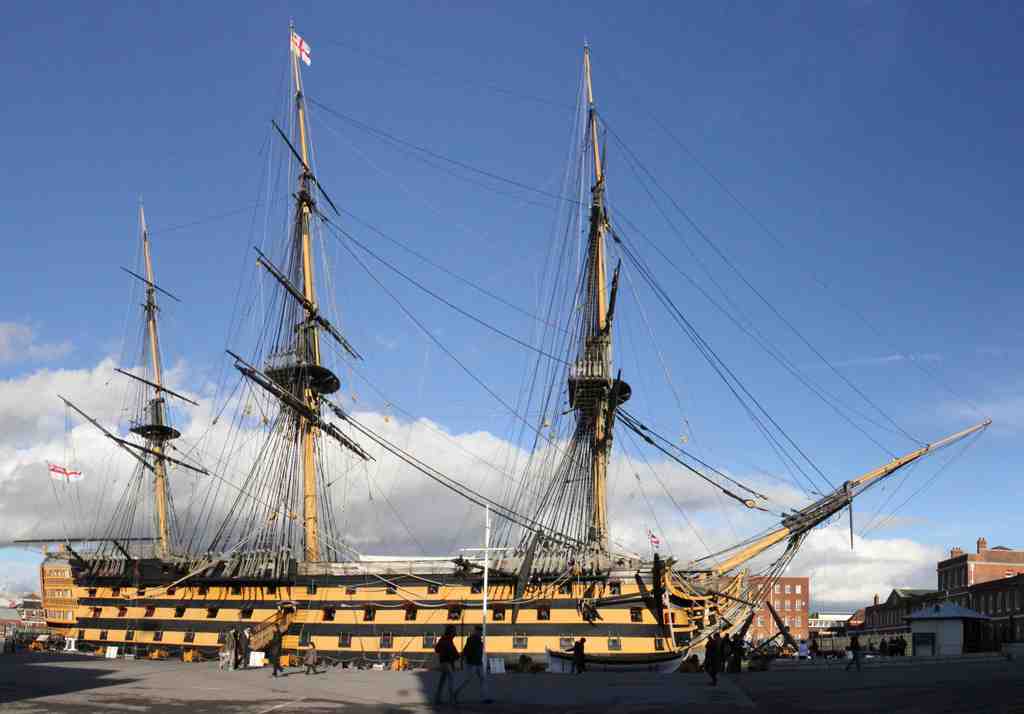
Just ahead, you’ll spot HMS Victory by her towering three masts and distinctive yellow-and-black stripes along her wooden hull-no hiding this giant ship, she looks like she sailed straight out of a swashbuckling adventure! Welcome, my friend, to the legendary HMS Victory! Standing before her, you might imagine the creak of timber under your feet, the snap of canvas sails high overhead, and the salty tang of the sea carried on the wind. Now, close your eyes for a second-listen. You’re about to step into a story that stretches back nearly 250 years, and it’s anything but dry history. Built from an astonishing 6,000 trees-90% of them oak-Victory was ordered in 1758, in an age when Britain was desperate to rule the waves. Picture the bustle at Chatham Dockyard as hammers ring out and shipwrights sweat over the rugged planks. She was finally floated in 1765, but here’s the first twist: by then, peace had broken out, so Victory-named to inspire just that-was left to rest, not fight. Wooden warships like this didn’t come cheap, and they didn’t come easy. Victory’s frame was so broad, they had to shave down the dock gates just to launch her! She was so heavy in the water that the lower gunports sat just four and a half feet above the sea-one rough wave and suddenly your cabin’s got a saltwater Jacuzzi. It took decades before Victory saw full action. When war broke out across the Atlantic, she was callsigned into service in 1778, bristling with 104 thundering guns and crewed by 850 men-imagine the rumbling sound of multiple broadsides and the chaos of battle. Victory fought at Ushant, Gibraltar, and Cape Spartel, and survived it all. For much of her long career, she bobbed in and out of “ordinary”-a Royal Navy word for mothballs-but each time the world turned dangerous, she was ready to join the line of battle. Her true moment of glory? That would be 1805’s Battle of Trafalgar. Picture Lord Nelson climbing the quarterdeck, using Victory as his flagship. The suspense is building, the Royal Navy faces a combined French and Spanish fleet, and the fate of nations is at stake. Nelson rallies the crew: “England expects every man will do his duty!” Those words were sent up as flags, flapping in the wind. Victory led the attack, smashing through enemy lines. It’s chaos, smoke so thick you can hardly breathe, splinters flying, cannons roaring, men shouting orders. In the heat of it all, Nelson is fatally wounded, but the British emerge victorious, and the world remembers Victory forever. But life aboard wasn’t all battles and glory. The ship could carry supplies and food for months-though if you’d like your bread with a side of weevils or salted beef that could break your teeth, Victory was the place for you. Below deck, it was crammed, noisy, and always slightly damp, but this was home to hundreds of sailors, young and old. Victory is not just a survivor of storms and gunfire; she was adapted again and again. After Trafalgar, she became a harbour ship, then a floating hospital, and later a museum. If you look closely at her hull today, you’ll spot the “Nelson chequer”-those iconic yellow and black stripes, painted to mimic the look she carried into Trafalgar, a style so dashing it was copied across the whole Royal Navy. Restored and preserved in dry dock since 1922, Victory is still officially in commission and serves today as the flagship of the First Sea Lord. She’s the oldest warship still in service anywhere in the world. So, as you stand here, remember: twelve sails, three gun decks, enough timber to build a small forest, and a whole century’s worth of war stories. There are ghosts in these decks, and not a one of them would ever let you forget-this is HMS Victory. Go on, take in her towering masts and bold stripes. She’s sailed through more drama than any soap opera! Interested in knowing more about the design, construction and armament, early service or the french revolutionary wars
Abrir página dedicada →To spot the National Museum of the Royal Navy, Portsmouth, just look for the long line of striking red-brick buildings with elegant white window frames and a tall clock tower…Leer másMostrar menos
To spot the National Museum of the Royal Navy, Portsmouth, just look for the long line of striking red-brick buildings with elegant white window frames and a tall clock tower capped with a cupola-they’re right across from the famous HMS Victory, so you really can’t miss them! Step right up, mate! You’re standing before the beating heart of Britain’s seafaring story-where brick walls have soaked up centuries of cannon fire, salt spray, and a fair share of sailor shenanigans! Picture yourself back in 1911. Instead of smartphones and electric scooters zipping past, you’d hear the ring of hammers, distant calls from the dockyards, and the clatter of wooden crates as the first naval treasures were gathered for what started as the Dockyard Museum. The man who started it all? Mr. Mark Edwin Pescott-Frost. You might imagine him dodging seagull attacks and determinedly collecting relics while his colleagues wondered if he’d lost his marbles. Thanks to his passion (and perhaps a stubborn streak wider than the Solent), you’re now standing where tales of the Royal Navy truly come alive. Over time, this once-small collection grew into a mighty museum, eventually becoming the National Museum of the Royal Navy we know today. It outgrew its old jacket and moved into these historic buildings: Storehouse No. 11, built way back in 1763-imagine the echo of boots and the rumble of barrels!-and next door, Storehouse No. 10, from 1776. These places have seen more than just dusty boxes; here, bustling activity once meant life or death for sailors heading out on the roaring seas. Inside, you’ll find the Victory Gallery, a purpose-built home to dramatic tales from HMS Victory herself, and the Nelson Gallery, where Admiral Nelson’s life and exploits unfold with enough suspense to make a Hollywood director jealous. Peer into the Sailing Navy Gallery and you’ll smell the tang of tarred ropes, hear the snap of canvas, and feel for just a moment what it was to face monstrous storms or enemy fire with only wooden planks between you and the deep. If you like your history with a twist, just around the corner is "HMS Hear My Story," packed with untold tales of ordinary people-men and women-who kept the Navy afloat through war and peace. And let’s not forget: there’s the Trafalgar Sail-huge and battle-scarred-one of the very last witnesses to Lord Nelson’s great triumph. Whether tales of heroics or hardship hook your attention, this museum is no dusty ship-in-a-bottle collection: it’s a living, breathing world of daring, discovery, and the occasional dodgy boiled cabbage. So set your sights, sailor, and get ready for adventure-Portsmouth’s proudest stories are waiting just inside!
Abrir página dedicada →To spot the HMS M33, look down into the dry dock just ahead of you-she’s a striking warship with sharp black-and-white “dazzle” camouflage stripes, a squat superstructure, and two…Leer másMostrar menos
To spot the HMS M33, look down into the dry dock just ahead of you-she’s a striking warship with sharp black-and-white “dazzle” camouflage stripes, a squat superstructure, and two big guns jutting out above her deck. Now, get ready to step back in time-because you’re standing in front of a true survivor of two world wars, the HMS M33. She’s not the biggest ship in the yard, but don’t let her size fool you: this unassuming monitor has stories tougher than her steel hull. Imagine it’s 1915, the First World War is roaring and shipyards like Harland & Wolff in Belfast are scrambling to build new warships as fast as humanly possible. The order comes in for M33 in March, and-hold onto your hats-she’s launched just two months later, and commissioned by June. That’s faster than most of us can finish assembling flat-pack furniture! Now picture her in the warm haze of August 1915, the salty air thick with smoke and the thunder of heavy guns. M33 is packed with a nervous but determined crew, ready to support the British landings at Suvla Bay during the infamous Gallipoli Campaign. With her shallow draft and twin six-inch guns, she’s able to sneak close to shore and pound enemy targets, right at the heart of the action. The deck would rumble as her guns let loose, shaking both ship and soul. M33 stands her ground through chaos and confusion until the very end-outlasting the carnage, and remaining off Gallipoli until the evacuation. The war isn’t done with her yet; she’s a floating patchwork of stories-bursting shells, salt-crusted decks, hope and exhaustion. By 1916 she’s helping seize the Greek fleet in Salamis Bay, a scene full of tension, as British sailors prepare for anything-will the Greeks fight or comply? After that, M33 sails into a new chapter far away: the snowy riverbanks of North Russia in 1919. Imagine the freezing winds off the Dvina River, where everything is crusted with ice and the crew, noses red as signal flags, are trying to maneuver up the river to save allied troops retreating under fire. When water gets so shallow her propellers almost stick in the mud, the crew pulls off a bizarre scene: removing the guns and hauling them overland by cart, all hands crammed to the stern to tip the ship just enough to wriggle through-no one ever said naval service was boring! While M25 and M27 are scuttled behind her, M33 limps home, battered but safe, earning her legend as the little ship that could. M33 doesn’t retire to a golden sunset-oh no, she changes identities more than an undercover spy! She becomes HMS Minerva, teaching crews the secret tricks of mine-laying. She transforms again into Hulk C23, a boom defence workshop and floating office, doing everything but serving tea. By the 1940s, imagine her as a humble but hard-working office barge, with creaking floorboards and the constant thrum of workmen’s boots. It isn’t until the 1980s that preservationists swoop in, recognizing her unique value: a real, tangible connection to heroes of the past. Carefully hoisted out, painted in her distinctive dazzle colours, M33 is restored inside and out. Towed home to Portsmouth, she returns full circle, eventually joining the National Museum of the Royal Navy fleet for all to see. Today, she stands as one of only three British WWI warships left-and the only Allied survivor from Gallipoli. Take a moment to look at her honest lines, battered but proud. If M33 could talk, she’d have tales of war, survival, and “office life”…but luckily, you’ve got me! Thanks for joining this epic journey through Portsmouth’s maritime past-I hope you enjoyed our voyage. If you listen closely, maybe you’ll hear echoes of her guns and the laughter of sailors who called her home. Intrigued by the construction, first world war or the russian intervention? Explore further by joining me in the chat section below.
Abrir página dedicada →
Preguntas frecuentes
¿Cómo empiezo el tour?
Después de la compra, descarga la app AudaTours e ingresa tu código de canje. El tour estará listo para comenzar de inmediato - solo toca play y sigue la ruta guiada por GPS.
¿Necesito internet durante el tour?
¡No! Descarga el tour antes de empezar y disfrútalo completamente sin conexión. Solo la función de chat requiere internet. Recomendamos descargar en WiFi para ahorrar datos móviles.
¿Es un tour guiado en grupo?
No - esta es una audioguía autoguiada. Exploras de forma independiente a tu propio ritmo, con narración de audio reproduciéndose en tu teléfono. Sin guía, sin grupo, sin horario.
¿Cuánto dura el tour?
La mayoría de los tours toman 60–90 minutos para completar, pero tú controlas el ritmo completamente. Pausa, salta paradas o toma descansos cuando quieras.
¿Qué pasa si no puedo terminar el tour hoy?
¡No hay problema! Los tours tienen acceso de por vida. Pausa y continúa cuando quieras - mañana, la próxima semana o el próximo año. Tu progreso se guarda.
¿Qué idiomas están disponibles?
Todos los tours están disponibles en más de 50 idiomas. Selecciona tu idioma preferido al canjear tu código. Nota: el idioma no se puede cambiar después de generar el tour.
¿Dónde accedo al tour después de comprarlo?
Descarga la app gratuita AudaTours desde App Store o Google Play. Ingresa tu código de canje (enviado por email) y el tour aparecerá en tu biblioteca, listo para descargar y comenzar.
Si no disfrutas el tour, te reembolsamos tu compra. Contáctanos en [email protected]
Paga de forma segura con