
Tour de Audio de Nottingham: Un Viaje Inmersivo
Bajo las bulliciosas calles de Nottingham, secretos centenarios esperan ser descubiertos. Pasea por casas mercantiles con entramado de madera, desciende a túneles de arenisca sombríos y ponte bajo cúpulas solemnes donde la justicia una vez resonó. Este tour de audio autoguiado te invita a desenterrar capas ocultas e historias no contadas que la mayoría de los visitantes pasan por alto. ¿Qué crisis obligó a reconstruir el Edificio de Severn pieza por pieza como un rompecabezas medieval? ¿Quién desapareció entre los ecos húmedos de la Ciudad de las Cuevas, para no ser visto nunca más? ¿Y cómo es que una sala de tribunal entera se derrumbó durante un juicio en el Museo Nacional de la Justicia? Recorre desde vigas torcidas hasta cavernas misteriosas y celdas inquietantes, sintiendo el espíritu rebelde de Nottingham latir bajo cada paso. Cada giro desvela nuevo drama, escándalo y asombro, transformando calles familiares en puertas de descubrimiento. ¿Listo para levantar el velo sobre los secretos más asombrosos de Nottingham? Comienza tu viaje bajo la superficie ahora.
Vista previa del tour
Sobre este tour
- scheduleDuración 40–60 minsVe a tu propio ritmo
- straighten3.1 km de ruta a pieSigue el camino guiado
- location_onUbicaciónNottingham, Reino Unido
- wifi_offFunciona sin conexiónDescarga una vez, úsalo en cualquier lugar
- all_inclusiveAcceso de por vidaReprodúcelo en cualquier momento, para siempre
- location_onComienza en Edificio de Severn
Paradas en este tour
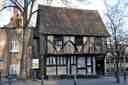
Ah, you're nearly there! Now, keep your eyes peeled for a charming, medieval timber-framed building with a jettied first floor. This relic stands with its black oak beams…Leer másMostrar menos
Ah, you're nearly there! Now, keep your eyes peeled for a charming, medieval timber-framed building with a jettied first floor. This relic stands with its black oak beams contrasting beautifully with the light-rendered walls in between. The roof slopes down at a steep angle, covered in traditional plain tiles. If you spot a structure that seems like it has stepped straight out of a historical drama, with intricate windows and a quaint old-sign that reads "The Lace Centre", then you’ve found the Severn's Building. Now, let’s get to the juicy details. Hold onto your knickers, because we're talking history that dates back to about 1450! Originally, this Grade II listed building called Middle Pavement its home, serving as a merchant's house. Time traveling a bit, from 1879 to 1885, it was the spotlight for the offices of some creative architects. Later, John and James Severn decided to infuse some spirit (quite literally) by turning it into their wine and spirit business. The building’s stability was quite shaken in the Nottingham Blitz, ol' Severn's got a bit of a roof makeover post-World War II! It faced the threat of a disappearing act under plans to widen the streets. Thank goodness Nottingham City Council swooped in, dismantled it carefully, and reassembled it by 1970 at Castle Road. Can you imagine putting this medieval marvel back together like a gigantic historical jigsaw puzzle? From 1980 until 2009, you could step inside and get lost in lace as it housed a lace museum and shop. After a stint of changing hands and being put up for sale, this old gem was up for grabs again in 2022 for a cool £499,000 - pretty penny for a piece of history, eh? Alright! Ready for the next adventure? Follow me to St Nicholas Church, your next stop!
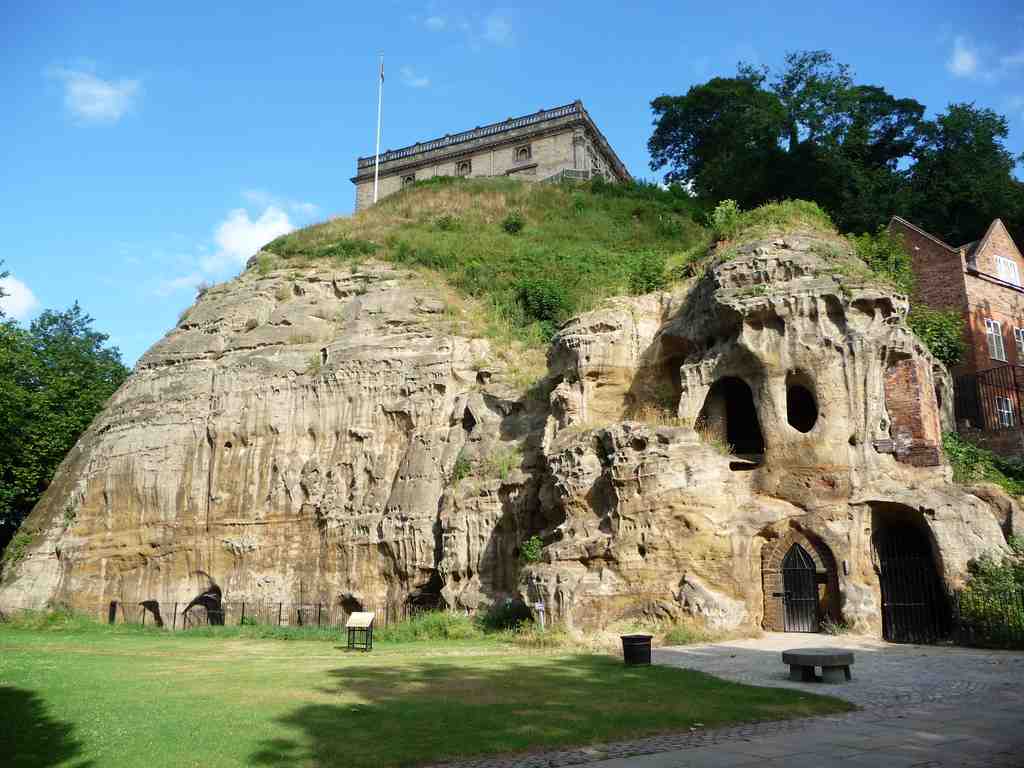
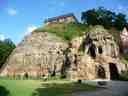
Abrir página dedicada →Alright intrepid explorer, you’re approaching the City of Caves! Look out for a modest entrance nestled against the hill, likely to have signs directing you into the depths below.…Leer másMostrar menos
Alright intrepid explorer, you’re approaching the City of Caves! Look out for a modest entrance nestled against the hill, likely to have signs directing you into the depths below. The exterior might be a bit unassuming, but trust me, there’s a whole world waiting underneath your feet! Now, let's time-travel back into these fascinating underground labyrinths. The City of Caves is truly an underground marvel, carved out of Nottingham's soft sandstone. Over the centuries, these caves have seen it all - from a medieval tannery to pub cellars to life-saving air raid shelters during World War II. Nottingham, or as the Welsh Bishop Asser called it, Tig Guocobauc, meaning ‘place of caves,’ has more than 800 cataloged caves, some dating back to 1270-1300. Imagine living in one of these during medieval times - not exactly a penthouse suite, but hey, it had its charm! Drury Hill, the medieval street under which these caves were once situated, saw its fair share of highs and lows. By the 19th century, this wealthy neighborhood transformed into one of Britain’s roughest slums, complete with overcrowded basements and rampant diseases. Not the kind of place you'd want to call home! During WWII, these caves were vital, serving as air raid shelters, providing refuge from bombing raids. Walking through these tunnels, you may hear echoes of those tumultuous times. The caves have been lovingly preserved and are now part of the National Justice Museum, run by the Egalitarian Trust since they opened to the public in 2004. Here, you’ll learn about the lives of those who sought shelter, worked, and lived in this underground world. Don’t worry, your visit should be a bit more comfortable than medieval or wartime living conditions. So, ready to explore the subterranean secrets of Nottingham? Dive in and let your imagination run wild through these historic tunnels!
Abrir página dedicada →The National Justice Museum, located in the Lace Market area of Nottingham, is a captivating site with a rich history. This landmark was formerly known as the Galleries of Justice…Leer másMostrar menos
The National Justice Museum, located in the Lace Market area of Nottingham, is a captivating site with a rich history. This landmark was formerly known as the Galleries of Justice Museum and has seen its fair share of drama, having functioned as a courtroom, a prison, and a police station over the centuries. The site has been associated with law and order since the Normans’ time, and written records date the use of this site as a law court back to 1375. Walking through the museum, you'll be stepping into a place where justice, and sometimes injustice, was served. Picture the historic courtrooms from the 14th century or the prison dating back to 1449. This Grade II* listed building has been a key player in Nottingham’s history, with various sections built and rebuilt over the centuries. In 1724, during a court session, the floor unexpectedly collapsed, throwing people into the cellar below and causing quite the commotion-one can only imagine the scene! The hall you see today was mainly rebuilt in the late 18th century by architect James Gandon, with the later addition of an Italianate facade by William Bliss Sanders in 1876. Hangings and trials of notable criminals took place right here, and it now serves as a compelling exhibition space where you can learn about the legal system through interactive exhibits and artifacts. Whether you’re a history buff, a crime aficionado, or just looking for an interesting and engaging visit, the National Justice Museum offers a fascinating journey through justice's sometimes murky past. Enjoy your visit, but try to stay on the right side of the law while you’re here!
Abrir página dedicada →
Mostrar 9 paradas másMostrar menos paradasexpand_moreexpand_less
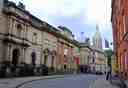
Behold, the magnificent Adams Building! If you're standing in front of it, you'll notice its imposing red-brick façade, complete with ornate stone detailing and grand arched…Leer másMostrar menos
Behold, the magnificent Adams Building! If you're standing in front of it, you'll notice its imposing red-brick façade, complete with ornate stone detailing and grand arched windows. Especially eye-catching is the elaborate central bay with its symmetrical vertical elements and finely crafted pinnacles at the top - it's an unmissable piece of architecture that stands out proudly even among its impressive neighbors. The Adams Building was originally the Adams and Page warehouse and is the largest structure in Nottingham's historic Lace Market district. Think of it as Nottingham’s nod to the 15th-century Florence with a bit of Victorian industrial hustle and bustle mixed in. Built in phases between 1854 and 1874, this Grade II*-listed beauty started as a lace showroom and warehouse masterminded by industrialist Thomas Adams and architect Thomas Chambers Hine. Imagine a time when Nottingham was a global hub for lace manufacturing! This place wasn't just about looking pretty; it was a bustling hive of activity where lace products were finished, displayed, and sold in grand style. With a grand entrance that once led to a two-storey showroom lit by decorative gas lamps and powered by steam engines, the Adams Building was cutting-edge. And let's not forget those "lace lofts" - rooms at the roof level almost entirely made of glass to let in ample light for detailed lace work. These lofts were the envy of many a lace warehouse back in the day. But what makes the Adams Building truly charming is Adams' commitment to his workers. The basement (now Floor B) functioned as a chapel for over 500 workers, complete with a chaplain and vestry. Amenities such as indoor toilets, washing facilities, and tea rooms were considered luxurious at a time when such comforts were rare. The factory even had a heating system involving a mixture of coal and patent warm-air flues! In terms of style, Hine went for an ‘Anglo-Italian’ look, reminiscent of Tuscany's grandst century palaces. Yes, every brick and stone was carefully chosen to ensure this building stood out from the plainer industrial structures - it was even dubbed the "finest erection in the Midlands" by a local newspaper! So, take a moment to appreciate the intricate details and the genteel industrial elegance of the Adams Building as you continue your journey through Nottingham's storied Lace Market! Intrigued by the background, phase i or the later phases? Explore further by joining me in the chat section below.
Abrir página dedicada →Now let's dive into the fun history of Old Market Square! Spanning a whopping 12,000 square meters (or about 3 acres if you prefer), this is one of the largest paved squares in…Leer másMostrar menos
Now let's dive into the fun history of Old Market Square! Spanning a whopping 12,000 square meters (or about 3 acres if you prefer), this is one of the largest paved squares in the entire United Kingdom. It's like the city's living room, where everyone gathers for big events, fairs, concerts, exhibitions, and even the odd vigil. Imagine the square buzzing with energy, folks from all walks of life converging here to celebrate or protest. During the 11th century, this area marked the center point between two main parts of Nottingham: the Norman town near the castle and the Anglo-Saxon town around the Lace Market. They didn’t get along too well back then, which is why there was a wall dividing them, now symbolized by a stainless steel drainage channel running through the square. The Goose Fair, one of the oldest and largest fairs in England, used to be held here before moving in 1928. The square also housed Smith's Bank, the earliest provincial bank in England, founded in 1688. Fast forward to the 2000s, the square got a cool $17 million facelift, keeping its nickname 'Slab Square' due to the concrete and granite slabs that now grace the area. There was even a quaint mosaic of Nottingham's city coat of arms before the redesign, which now finds its home near the Royal Concert Hall. Whether it’s a royal visit, a civil protest (hello Luddites!), or a local celebration, Old Market Square has seen it all. So, soak in the rich history and energetic vibe of this grand market place that truly forms the heart of Nottingham. Enjoy your adventure!
Abrir página dedicada →Alright, adventurer! As you stand here, feast your eyes on the impressive structure before you-St Peter's Church. You'll know you're in the right place when you see a tall,…Leer másMostrar menos
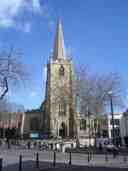
Alright, adventurer! As you stand here, feast your eyes on the impressive structure before you-St Peter's Church. You'll know you're in the right place when you see a tall, pointed spire that almost seems to pierce the sky. The church sports a striking, sandy-colored exterior and is surrounded by a mix of old and new architecture. The large clock on the tower is a dead giveaway, keeping everyone in check since the 19th century! Now, let's dive into some fascinating history! St Peter's Church, officially The Church of St Peter with St James, is an Anglican parish church right in the heart of Nottingham. Being Grade I listed, it's recognized for its outstanding architectural and historical significance. St Peter's is actually one of the three medieval parish churches in the city, alongside St Mary's and St Nicholas. Now, let's time travel a bit-this beauty shows signs of construction dating back to around 1180. The original church, founded around 1100, was unfortunately destroyed by a fire. The current structure offers an eclectic mix of architectural styles from various eras. But St Peter's isn't just about bricks and mortar; it's got soul too! This place has an organ that dates back to 1812, providing melodies for a choir that's world-class. These choristers don't just sing for their supper here; they perform both locally and globally. If music warms your heart, you’re in luck. The church hosts a series of Saturday morning concerts, a tradition since 1988. The organ, boasting a blend of old and new elements, ensures every note resonates through the historic halls. Oh, and that clock tower! Installed in 1847 and once the largest in Nottingham, it’s not just there to tell time but to remind you of the craftsmanship of Reuben Bosworth. If you're a fan of quirky historical trivia, get this: in 1785, William Bradley earned a guinea for teaching the boys to sing-now that’s dedication! So, while you take in the architectural splendor, remember that St Peter’s Church is much more than a pretty face; it’s a living, breathing piece of Nottingham’s rich history.
Abrir página dedicada →Alright, intrepid explorer, you should see St Nicholas Church, or St Nic's as the locals fondly call it, looming ahead. Look for its distinct, sturdy tower - it's a bit of a…Leer másMostrar menos
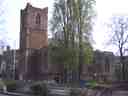
Alright, intrepid explorer, you should see St Nicholas Church, or St Nic's as the locals fondly call it, looming ahead. Look for its distinct, sturdy tower - it's a bit of a red-brick beacon in the urban landscape, topped with corner crenellations that give it a classic medieval flair. The building stands prominently with its large arched windows, and you might notice the churchyard, although no burials have taken place there since 1881. Also, spot that cleared area near the windows. Sounds like you've got it in your sights! Now, gather 'round for a quick, fun story! St Nic's isn't just any old parish church; it's a historical heavyweight right in the heart of Nottingham. Baptisms, burials, and marriages have been cataloged here since 1562, giving it a real air of history. But here’s the showstopper: back in 1643 during the English Civil War, the Royalists used the old St Nic’s church to bombard the castle garrison. This wasn't well received, and Colonel Hutchinson, the local governor, ordered the whole thing to be razed. For 28 years, there was no St Nic's - until the present building was completed in 1678! With a history of registers starting in the 16th century and a fascinating array of documents, St Nic's holds a treasure trove of ecclesiastical memorabilia. Ever heard of a church owning bassoons and a serpent? Well, St Nic’s did - except now they’ve upgraded to a modern electronic organ. So, there you have it: a place with roots deep in medieval times, yet modern enough to keep up with today’s rhythm - a landmark not to be missed! Now, onwards to the next stop, fellow traveler! The City of Caves awaits.
Abrir página dedicada →

Reseñas
Preguntas frecuentes
¿Cómo empiezo el tour?
Después de la compra, descarga la app AudaTours e ingresa tu código de canje. El tour estará listo para comenzar de inmediato - solo toca play y sigue la ruta guiada por GPS.
¿Necesito internet durante el tour?
¡No! Descarga el tour antes de empezar y disfrútalo completamente sin conexión. Solo la función de chat requiere internet. Recomendamos descargar en WiFi para ahorrar datos móviles.
¿Es un tour guiado en grupo?
No - esta es una audioguía autoguiada. Exploras de forma independiente a tu propio ritmo, con narración de audio reproduciéndose en tu teléfono. Sin guía, sin grupo, sin horario.
¿Cuánto dura el tour?
La mayoría de los tours toman 60–90 minutos para completar, pero tú controlas el ritmo completamente. Pausa, salta paradas o toma descansos cuando quieras.
¿Qué pasa si no puedo terminar el tour hoy?
¡No hay problema! Los tours tienen acceso de por vida. Pausa y continúa cuando quieras - mañana, la próxima semana o el próximo año. Tu progreso se guarda.
¿Qué idiomas están disponibles?
Todos los tours están disponibles en más de 50 idiomas. Selecciona tu idioma preferido al canjear tu código. Nota: el idioma no se puede cambiar después de generar el tour.
¿Dónde accedo al tour después de comprarlo?
Descarga la app gratuita AudaTours desde App Store o Google Play. Ingresa tu código de canje (enviado por email) y el tour aparecerá en tu biblioteca, listo para descargar y comenzar.
Si no disfrutas el tour, te reembolsamos tu compra. Contáctanos en [email protected]
Paga de forma segura con 


