Tour de audio de Aberdeen: Historias de la Ciudad de Granito y Joyas Ocultas
Agujas de granito perforan un cielo una vez ennegrecido por la rebelión y la invención en Aberdeen. Aquí, los secretos resuenan en los pasos fuera del Teatro de Su Majestad y las sombras se ciernen detrás de los luminosos escaparates del Centro Bon Accord. Embárcate en un tour de audio autoguiado que te llevará más allá del granito pulido y las calles concurridas, adentrándote en las historias ocultas que la mayoría de los visitantes nunca descubren. ¿Qué escándalo real amenazó con cerrar las puertas del teatro para siempre? ¿Qué almas perdidas se dice que rondan las Triple Kirks, y qué misteriosos rituales se desarrollaron allí antes del amanecer? En Bon Accord, ¿por qué una tienda aparentemente ordinaria se convirtió en el corazón de la intriga política por una sola noche fatídica? Atraviesa callejones barridos por el cambio y callejuelas marcadas por la ambición. Siente el pulso del teatro, la fe y el comercio de Aberdeen colisionando en cada esquina. Cada paso revela secretos que brillan bajo la piedra y la historia por igual. Pulsa reproducir y deja que los capítulos velados de Aberdeen reclamen tu curiosidad.
Vista previa del tour
Sobre este tour
- scheduleDuración 40–60 minsVe a tu propio ritmo
- straighten5.0 km de ruta a pieSigue el camino guiado
- location_onUbicaciónAberdeen, Reino Unido
- wifi_offFunciona sin conexiónDescarga una vez, úsalo en cualquier lugar
- all_inclusiveAcceso de por vidaReprodúcelo en cualquier momento, para siempre
- location_onComienza en Iglesia de San Juan, Aberdeen
Paradas en este tour
To spot St John's, look for a striking granite church with large pointed arched windows, dark slate roofs, and a sturdy square tower rising up behind a deeply set wooden…Leer másMostrar menos
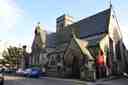
To spot St John's, look for a striking granite church with large pointed arched windows, dark slate roofs, and a sturdy square tower rising up behind a deeply set wooden doorway-you’ll find it tucked just off Crown Street. Alright, as you stand beside this grand granite building, let’s unpack its story-a saga of rebellious preachers, secret gatherings, and more plot twists than a soap opera. Back in 1693, Reverend George Garden was booted out of the Kirk of St Nicholas for refusing to play by the rules of the new Presbyterian Church. Imagine him, forced into exile, but not one to let a little thing like banishment stop him. When he finally crept back to Aberdeen in the early 1700s, he gathered his scattered followers in hidden houses, no doubt keeping one eye on the door and the other on their hymnals. For 130 years, the congregation played musical chairs around Aberdeen, bouncing from house to house until finally landing in a bigger building in Golden Square, dedicated to St John the Evangelist. Names like Bishop Andrew Gerard and Reverend Roger Aitken-who actually went on an adventure to Canada-kept the congregation alive. Fast-forward to 1851, and they’re here in this impressive new church, designed by Mackenzie and Matthews. It’s been a sanctuary for everyone ever since, with the choir singers’ voices echoing through these stone halls for generations. Reverend Patrick Cheyne made enough waves with his bold sermons to get himself prosecuted, and his successor, Frederick G Lee, was so rattled he left to start his own church! Now, look out for the ancient baptismal font inside, older than the church itself. It’s from the ruined church at Kinkell, with secretive carvings and a connection to Alexander Galloway, who was rector there 500 years ago. And just when you think its history can’t be any more surprising-in 2013, the congregation swung open the doors to Aberdeen’s Muslim neighbors, inviting them to worship here when their mosque was full. This isn’t just a church; it’s Aberdeen’s champion of resilience, debate, and community spirit!
Abrir página dedicada →Look at this bustling marvel in front of you-Union Square! Feel the hum of excitement all around, like the city’s heart skipping a beat. Picture it not so long ago: this was just…Leer másMostrar menos
Look at this bustling marvel in front of you-Union Square! Feel the hum of excitement all around, like the city’s heart skipping a beat. Picture it not so long ago: this was just quiet, unused railway land. Then, the developers at Hammerson rolled up their sleeves in 2007 and started turning empty space into Aberdeen’s grandest shopping centre, pouring in a whopping £250 million. By October 2009, the doors swung open and shoppers poured in-even more at Christmas, as shops seemed to appear overnight like magic elves at work. Now you’re standing where over 60 shops tempt you with treasures, more than fifteen restaurants tease your nose, and the largest cinema in Aberdeen beckons, ready for you to lose yourself in a blockbuster. Fancy an overnight adventure? There’s even a hotel with over 200 rooms-just in case shopping wears you out! Union Square isn’t just for the shopaholics. It’s a transport hub, gluing the railway and bus stations together. Perfect if you need to hop on a train or bus-so no excuses if you buy too much to carry! And a little secret for you: Marks & Spencer is growing even bigger soon, gobbling up TK Maxx and expanding. So, explore to your heart’s content-just don’t get lost, or you might end up living here in all 700,000 square feet!
Abrir página dedicada →Look for a grand, grey granite building with striking red-brick arches around the windows, standing proudly right in front of you across the busy road-its sign reads “The…Leer másMostrar menos
Look for a grand, grey granite building with striking red-brick arches around the windows, standing proudly right in front of you across the busy road-its sign reads “The Tivoli”. Here you are, right outside the legendary Tivoli Theatre! Imagine the scene back in 1872 when this building burst onto Aberdeen’s stage as Her Majesty’s Theatre, all dressed up in granite with architectural flourishes that made the crowds gasp with excitement. In those early days, top hats and bustling gowns would swirl around you as the city came alive with drama and laughter. The architects behind this showstopper thought, “Let’s give Aberdeen something unforgettable!” and they did just that-twice in fact! Frank Matcham, the superstar theatre designer, rebuilt its interior in 1897 and returned like an encore performance in 1909 to make the Tivoli shine brighter than ever. But wait-here’s a twist worthy of any play: the Tivoli had to close its doors in 1906 when an even bigger theatre opened nearby. People thought the show was over, but not for long! A couple of years later, new renovations and a snazzy name-The Tivoli-brought it right back. Talk about a dramatic comeback! Still, the story took another wild turn when bingo replaced ballet and song in 1966. The spinning of bingo balls became the soundtrack until the doors closed in 1998, leaving the Tivoli in eerie silence. But Aberdeen loves a good revival. Locals campaigned, new owners arrived, and in 2013, the Tivoli glimmered once more with bustling shows, musicals, and pantomimes. Even a pandemic couldn’t keep it down for long-it reopened in 2021. Now you’re standing where famous actors, eager crowds, and even bingo callers found their spotlight. Take a deep breath and soak in that sense of drama in the air-The Tivoli never really closes its curtains for long!
Abrir página dedicada →
Mostrar 12 paradas másMostrar menos paradasexpand_moreexpand_less
Right in front of you, you’ll spot the Trinity Centre’s entrance tucked under the old grey stone arches, with its big blue signs and a stretch of modern glass storefronts to the…Leer másMostrar menos
Right in front of you, you’ll spot the Trinity Centre’s entrance tucked under the old grey stone arches, with its big blue signs and a stretch of modern glass storefronts to the right-just look for the sleek, curving canopy above the shops along busy Union Street. Now picture this: it’s 1982, and Aberdeen’s buzzing with excitement as plans are revealed for a new city shopping hub. But here’s the twist-the shops lined up outside on Union Bridge were already bustling since the 1960s, echoing with footsteps and gossip even before the shiny new mall popped up. When construction kicked off, the city made sure not to erase its roots-they kept the grand old Trinity Hall as a proud entrance, ready to greet shoppers with a touch of history. In strolled Debenhams, the anchor store, which finally opened its doors in October 1984-two weeks late, keeping everyone hanging by their shopping bags! Over the years, the centre changed hands and names, even surviving some rocky moments-remember when HMV almost left in 2020 but then decided, “Nah, we’re staying for the encore!” Sadly, Debenhams didn’t return after lockdown, but the Trinity Centre endures, bridging old Aberdeen charm and new city life. So whether you’re here for noodles, bargains, or just a peek into Aberdeen’s lively past, this centre has a story around every corner!
Abrir página dedicada →To spot Gilcomston Church, glance across Union Street for a grand grey stone building with tall, dramatic spires, pointed arches, and a beautiful circular rose window right above…Leer másMostrar menos
To spot Gilcomston Church, glance across Union Street for a grand grey stone building with tall, dramatic spires, pointed arches, and a beautiful circular rose window right above the main entrance. As you stand here in front of Gilcomston Church, imagine a different Aberdeen during World War II-a time when this very church almost faded into history. The pews were nearly empty, the congregation almost gone, and the doors nearly shut for good. But then along came Rev William Still in 1945, a man with a bold idea and a knack for shaking things up. He didn’t just want sermons-he wanted every verse, every chapter, every tiny detail of the Bible explored. If you thought reading the fine print on your phone contract was tedious, try doing it with the Bible... every week, for decades! What made this church truly special was the buzz of students and locals alike, drawn by Still’s approach like curious bees to a hive of inspiration. The church, once almost silent, now echoed with lively discussion and the thumbing of well-read Bibles. Not everyone was thrilled at first-such innovation caused quite the stir! But word spread, reaching far beyond Aberdeen, as other congregations picked up the habit, and Rev Still himself found international friends in Edinburgh and Glasgow. Fast forward, and this place saw more big moments-like the great congregation exodus of 2013, when just about everyone walked out and courageously formed an independent community together. Ministers may have come and gone-Dominic Smart, Jeremy Middleton, and now, Nathan Owens-but the bold heart of Gilcomston remains. Standing here, you’re in front of a church that quite literally refused to go quietly and became one of Aberdeen’s famous sparks of faith.
Abrir página dedicada →Look for a tall, striking grey stone church with an intricate gothic spire reaching toward the sky right ahead on Huntly Street-if you spot the clock high above, you’re in the…Leer másMostrar menos
Look for a tall, striking grey stone church with an intricate gothic spire reaching toward the sky right ahead on Huntly Street-if you spot the clock high above, you’re in the right place! Now, picture the year 1860: horse-drawn carriages rumbling over cobbles, and the scent of stone dust in the air as Alexander Ellis’s new cathedral stands freshly finished-a beacon for Aberdeen’s Catholic community. This elegant church didn’t always look quite so sky-scraping; in 1877, architect Robert Gordon Wilson boosted its status-and its silhouette-with that dramatic spire and the peal of new bells, celebrating St Mary’s official rise to cathedral status. Step inside, and you’ll find an organ from 1887 that has rattled these ancient rafters through countless weddings, Christmases, and concertos-hopefully, never running out of air. The stained glass above, bright with coloured light, includes a vibrant 1978 window honouring St John Ogilvie, who probably never imagined he’d end up immortalized in technicolour glass! Marble monuments to four Scottish bishops, including two who rest eternally within these walls, make this not just a church, but a mini-museum of faith and history. Mass is said here daily, and if you’re lucky, you might catch the weekly Polish or the monthly Spanish service-just enough to make any language student sweat. Welcome to St Mary’s Cathedral: living proof that even in Aberdeen, time stands still and marches on at the same time.
Abrir página dedicada →To spot His Majesty’s Theatre, look for a grand, granite-clad building with a rounded green copper dome and a gold-lettered sign that reads “His Majesty’s” just above the main…Leer másMostrar menos
To spot His Majesty’s Theatre, look for a grand, granite-clad building with a rounded green copper dome and a gold-lettered sign that reads “His Majesty’s” just above the main entrance-right across from Union Terrace Gardens. Now, as you stand here, take in the sight of those majestic granite walls-each stone, brought from nearby Kemnay, gleaming in the Aberdeen sun. Imagine the year is 1906, horse-drawn carriages rattling along Rosemount Viaduct, a crowd bustling with excitement outside this glittering new landmark. The theatre was the dream-child of Robert Arthur, a Glaswegian theatre entrepreneur who’d already left his mark across Scotland and England. He looked at Aberdeen and thought, we need a palace for the performing arts-a real showstopper. So, Robert Arthur partnered up with Frank Matcham, the superstar of theatre architects, and pitched his grand plans to the city council back in 1901. Aberdeen, ever so practical, took a couple of years to say yes, but once they did, there was no stopping Arthur’s ambitions. Construction kicked off in 1904, and just two years later, the doors opened to a jaw-dropping space that could seat over 1,400-making it the biggest theatre in North-East Scotland. But the story doesn’t stop there. Robert Arthur’s empire hit some money trouble in 1912-let’s call it the “intermission nobody bought tickets for.” That’s when Michael Simons and the mighty Howard & Wyndham theatre company swooped in, keeping the curtain lifted for Aberdeen audiences. Over the decades, the theatre swapped hands more times than a program at interval: from Simons to Walter Gilbert, then to the lively Donald family, who kitted the place out with some cutting-edge 1930s tech-think neon lights, cinema projectors, and even a revolving stage. Through all this, His Majesty’s Theatre became a gem for drama, opera, pantomime, and everything in between. And here’s a slice of theatre trivia: unlike its London cousin (which changed names to Her Majesty’s when Queen Elizabeth II took the throne), this Aberdeen original always stayed “His Majesty’s”-just like its far-off twin in Perth, Western Australia. The spirit of tradition lives strong in these granite bones! By the time the 1970s rolled around, the future of the theatre was in doubt. Aberdeen’s city fathers stepped in, bought the building, and, with a sprinkle of council magic (and £3.5 million), gave it a much-needed facelift. In 1982, after nearly two years of silence, the grand old theatre was opened again-this time by King Charles III, then just Prince Charles, Duke of Rothesay. Fast forward to the early 2000s-Aberdeen decided that “timeless” didn’t have to mean “stuck in time.” The city invested heavily in a state-of-the-art extension, adding everything from a shiny glass foyer to extra bars, a new restaurant, and spaces for dance and rehearsal. You’ll spot the modern glass frontage and elegant Kemnay granite used to match the original, all topped off with a pre-patinated copper roof echoing that famous dome above. Inside, if you could peek, you’d see an auditorium dressed in lush Baroque and neo-Jacobean style, a copper-dome tower, and-perched high above-a dramatic statue of Tragedy and Comedy, which has witnessed more standing ovations than you can count! In 2006, celebrating its hundredth birthday, the theatre was twinned with its Perth counterpart, swapping stories of showbiz and Scottish weather. Even today, His Majesty’s Theatre is the buzzing heart of the city’s arts scene, managed by Aberdeen Performing Arts, and home to everything from national theatre tours to local productions. And if you fancy a modern treat after the show, the award-winning ‘Terrace Bar’ just reopened in 2022-perfect for a post-performance toast. Just think: for more than a century, from grand openings to stormy nights, laughter, applause, and the occasional dramatic gasp have all echoed through these polished granite walls. Not bad for a night out in Aberdeen, eh?
Abrir página dedicada →Look out for a grand, stone building with a dramatic domed corner tower and rows of tall windows stretching along the street - The Academy Shopping Centre will be right in front…Leer másMostrar menos
Look out for a grand, stone building with a dramatic domed corner tower and rows of tall windows stretching along the street - The Academy Shopping Centre will be right in front of you at the corner of Belmont Street and Schoolhill. Alright, adventurer, you’re standing outside a place that’s been bustling with stories for more than a century! Imagine it’s 1905: the stone walls are echoing with the chatter and footsteps of a thousand schoolchildren filing into the Central Senior Secondary School - the place to be if you were aged 12 to 15 in Aberdeen. Back then, the building was considered so important, they had John Alexander Ogg Allan, Aberdeen’s official school architect, design it in a Renaissance style. Look at those powerful lines and that tower - it’s what one might call “imperial vigour,” just a teensy bit dramatic! In 1954, things got even more exclusive: only pupils who conquered the mighty 11-plus exam could make it in, and it became Aberdeen Academy. But, as all childhoods do, its days as a school ended in 1969, and the pupils marched off to Hazlehead Academy. Fast forward to 1998 - this Victorian school traded in pencils and books for shopping bags and lattes! Now, the central courtyard bursts with energy - think fashion shows, comedy acts, sizzling food wafting through al fresco diners. It’s a place where you can almost hear the laughter of students past, mingling with today’s lively crowd.
Abrir página dedicada →You’ve made it to the Triple Kirks! Right now, you're standing in front of one of Aberdeen’s great survivors-a spire that’s seen more drama than most soap operas. Take a moment to…Leer másMostrar menos
You’ve made it to the Triple Kirks! Right now, you're standing in front of one of Aberdeen’s great survivors-a spire that’s seen more drama than most soap operas. Take a moment to look up-see that tall, striking spire poking skyward? Imagine a time when three separate church congregations bustled beneath its roof, all squeezed into a single big building. Let’s rewind to the 1840s, to a time when religious tension in Scotland was burning hotter than a kettle left on too long. The Disruption of 1843 shook the nation: there was a huge argument about who got to pick church ministers. Should the local laird call the shots, or should congregations have their say? When the dust settled, about a third of ministers stormed out of the Church of Scotland, determined to form the Free Church. Here in Aberdeen, even though folks mostly agreed on appointments, all 15 ministers “came out” in solidarity with their counterparts elsewhere-now that’s what I call team spirit. Picture the scene: a committee in Aberdeen, plotting their next move after snapping up an abandoned weaving factory. As fate would have it, the guy buying it for the Free Church got there just before an agent sent by the rival church. Talk about close calls! Soon enough, out went the factory and in came Aberdeen’s superstar architect, Archibald Simpson. Now, Simpson didn’t just build three churches-he built them all under one roof to save money, all sharing one magnificent spire. The building used granite rubble, a bit like using LEGO blocks made from Aberdeen’s bones, and even repurposed bricks from the old factory. But here’s where you need to use your imagination: it’s 1844, and Aberdeen’s skyline has changed. The Triple Kirks, with brick spire inspired by St. Elizabeth's Church in Marburg, rises about 190 feet high. When viewed from Union Bridge, people thought it looked like a cathedral-no wonder! The east, south, and west parishes all moved in, each with their own doors and meeting rooms, but united by one soaring spire. And if you listen carefully, you can almost hear the voices of excited parishioners, gathering beneath the arches and Perpendicular Gothic windows. But, as with any iconic building, the peace couldn’t last. The arrival of the railway in the Denburn Valley in 1864 sent literal shockwaves through the area. Trains rattled by far below, so close that the West Free congregation, fearing the whole place might tumble down, decided to move out. Eventually, railway companies purchased the entire building, and the other two churches cleverly bought back their shares…at a tidy profit, no less. Who knew church management could be so savvy? Through the decades, the congregations shuffled around like dancers at a ceilidh-one selling, another buying, one renaming itself the High Free Church, yet another converting spaces for extra church events. By the 1970s, though, church use faded and the building began to crumble. But even as the walls fell to ruin, the spire, now Category A listed, stubbornly refused to come down. Every time a developer came up with a whizzy new idea-malls, restaurants, offices-the Secretary of State for Scotland would wag a finger and insist: "Keep the spire!" Aberdeen locals can be a bit opinionated, you see, especially when it comes to their skyline. So, after years of plans and pushbacks, compromises were made-a modern accommodation block called "The Point" now wraps around the spire, making it look a little like a wizard’s hat popping out of a concrete box. Even John Betjeman, the famous writer, gushed about this tower, saying only Salisbury’s spire could top it. So here you are, looking at the last standing piece of a building that’s weathered church splits, steam trains, and property booms. Just imagine all the debates, prayers, and schemes this spot has witnessed. And who knows-maybe the spire’s still listening, ready for the next story. Now, shall we carry on to the next adventure? Curious about the 1843 schism in the church of scotland, construction of the triple kirks or the religious use? Don't hesitate to reach out in the chat section for additional details.
Abrir página dedicada →To spot The Belmont Cinema, look for a sturdy granite building with a big blue sign overhead, glowing red “CINEMA” letters, and colourful posters inviting you in-right in front of…Leer másMostrar menos
To spot The Belmont Cinema, look for a sturdy granite building with a big blue sign overhead, glowing red “CINEMA” letters, and colourful posters inviting you in-right in front of you on Belmont Street! Imagine you’re back in 1896, when this building was brand new and buzzing-not with the sounds of popcorn but fiery debates and working-class hopes, as it opened its doors as Aberdeen’s Trades Council Hall. Designed by the city’s own Alexander Ellis and Robert Gordon Wilson, this spot became a gathering place for the young labour movement. If you listen hard enough, maybe you’ll catch a faint cheer from an old trade unionist-or just someone who found the secret biscuit stash! But not long after, in 1898, the magic of movies landed here, starting with flickering scenes of Queen Victoria herself at Balmoral Castle. That must have been quite the blockbuster for Victorian film fans! By 1910, the building swapped debates for nonstop matinees as the Coliseum cinema, and soon changed names as often as a movie villain escapes-first New Kinema in 1921, then Belmont Cinema in 1935. After taking a detour as a warehouse, the magic returned in 2000, when the council revived it as part of a grand restoration, even with a little help from the National Lottery. Through owner dramas worthy of the big screen-Picturehouse, Cineworld, then the Centre for the Moving Image-it survived every plot twist. Even after it closed its doors in 2022, cinephiles rallied like the heroes in an underdog film, vowing to bring it back. Now, as a grade C listed building, this historic cinema is set for a new sequel-Belmont Community Cinema Ltd is working to reopen these doors and fill them with light, laughter, and maybe a few spilled drinks, late 2024. So, next time you visit, you can say you stood outside before the next premiere rolled.
Abrir página dedicada →Belmont Street is a narrow, lively lane lined with classic granite buildings and busy market stalls, stretching ahead of you under colourful canopies. Now, imagine yourself…Leer másMostrar menos
Belmont Street is a narrow, lively lane lined with classic granite buildings and busy market stalls, stretching ahead of you under colourful canopies. Now, imagine yourself wandering here in the late 1700s. Instead of traders selling flowers and home-baked bread, you’d spot Aberdeen’s wealthiest folks, strolling outside grand townhouses-maybe even bumping into Thomas Menzies of Pitfodels himself, who moved here for a bit of suburban peace in 1788 after growing tired of life in the old town. Back then, Belmont Street was the new “it” address-big homes with gardens running right down to the River Denburn valley. A handful of those original houses are still with us today, so you’re walking beside the ghosts of those first fancy dwellers and their grand ambitions. But Belmont Street quickly became more than just posh homes; it was a battleground for church rivalries. The Triple Kirks, just up the way, was built to give the powerful “Auld Kirk” some competition-three free churches brought together under one spectacular tower that looked down at the older rivals next door. And believe it or not, church splits here were so dramatic they’d make any soap opera blush. In 1779, the anti-Burgher United Presbyterians kicked things off with their massive 800-seat church, soon followed by the Relief Presbyterians who wanted even more seats for their sermons. There was such excitement for new chapels, some folks probably spent more time planning church fundraisers than praying! In modern times, Belmont Street has another claim to fame-the Belmont Cinema, where Aberdonians caught films from the late 1800s all the way until 2022. So, take a moment to soak it all up: the church spires, the old granite walls, the lively market, and the sense that every corner here has its own tale to tell, whether it’s of faith, fortune, or the next blockbuster screening.
Abrir página dedicada →To spot the Kirk of St Nicholas, look for a towering granite church with an impressive spire and clock above arched windows, peeking through the branches of the surrounding…Leer másMostrar menos
To spot the Kirk of St Nicholas, look for a towering granite church with an impressive spire and clock above arched windows, peeking through the branches of the surrounding graveyard trees-it's impossible to miss once you glance up! As you stand here, take a deep breath and listen-imagine the wind whistling through centuries-old gravestones and the distant chime of church bells echoing between the stone walls. This is the Kirk of St Nicholas, affectionately known in Aberdeen as the Mither Kirk, or “mother church.” You’re now face-to-face with a building that’s older than most family trees and has more stories than a gossiping neighbor! Let’s rewind the clock, all the way back to 1151. Pirates weren’t the only ones hoping for Saint Nicholas’ good luck-Aberdeen’s townsfolk picked him as their patron saint, hoping for protection in commerce, stormy seas, and probably a bit less rain. Back in its medieval heyday, this church was one of Scotland’s biggest, growing so large that it once rivaled St Mary’s in Dundee. Bishop Elphinstone himself dedicated its new expansion in 1498-and to celebrate the 500th anniversary, they installed a special stained glass window right at the main entrance overlooking Drum’s Aisle. That aisle, by the way, still holds the ancient resting places of the Irvines from Drum Castle. Imagine the whispers of 15th-century footsteps below your own. But the Kirk didn’t have the easiest ride through history. Within these walls were not one, but two different congregations: the East Kirk and the West Kirk, a bit like a sibling rivalry under one roof. The East was built in Gothic style, the West in classic Italian fashion, showing off Aberdeen’s flair for architecture. Yet even stone and timber don’t last forever-disaster struck in 1874, when a fire destroyed the East Church and the old central tower. As flames licked the sky, the city lost its famous timber spire and a beloved bell named Lowrie, which, with its huge size, would’ve sounded like a gentle earthquake every Sunday morning. They rebuilt, of course-Aberdeen folk are nothing if not stubborn-and soon a new granite tower rose up, holding a whopping 36-bell carillon from Belgium (which, rumor has it, didn’t sound great… replaced in 1950 by even more bells!). The Kirk isn’t just about grand towers and bells. Step inside the Oil and Gas chapel, and you’ll find handcrafted wooden furniture by the late Tim Stead and a beautiful stained glass window by Shona MacInnes, telling the story of Aberdeen’s life-modern miracles mixing with ancient faith. There’s even a special memorial for those lost in the North Sea oil fields, their names echoing quietly among the polished pews. Not all the secrets lie above ground. The ancient Vault or Chapel of Our Lady of Pity sits underneath, with medieval vaulting and preserved woodwork from centuries past. Over the centuries, thieves have even tried their luck-like in 1562, when local troublemakers pinched the lead from the baptismal font and were nearly banished for it! There’s also the graveyard wrapping around three sides of the church, packed tight with table stones and memorials to everyone from provosts to Arctic explorers. Some gravestones are even part of the paving or, strangely enough, parking! And if you listen closely, you might just hear the echoes of sermons from famous preachers-Adam Heriot, John Craig, or Andrew Cant-each leaving their mark on Aberdeen’s story. The Kirk isn’t in regular use these days, but the West Kirk is now owned by Scot-ART, and archaeologists continue to dig up medieval secrets in the East Kirk. So, next time you walk by, tip your hat to the Kirk of St Nicholas. It’s survived fire, rebuilding, mischievous thieves, and the stubborn North Sea winds-now that’s what you call “having character.” If you're keen on discovering more about the churchyard, notable ministers or the notable burials, head down to the chat section and engage with me.
Abrir página dedicada →Directly ahead of you, you’ll spot a modern, grey stone building with a big glass façade and bold white letters spelling out “Bon Accord” above the entrance-no need to squint,…Leer másMostrar menos
Directly ahead of you, you’ll spot a modern, grey stone building with a big glass façade and bold white letters spelling out “Bon Accord” above the entrance-no need to squint, it’s hard to miss! Welcome to the Bon Accord Centre! Imagine standing here in the early 1980s, when this spot was little more than a construction site echoing with the clang of steel and shovels biting the earth. It’s hard to picture now, with shoppers bustling in and out and the smell of fresh coffee and perfume drifting out from inside, but this shopping hub began its life in two parts. First, the St. Nicholas Shopping Centre opened its doors in 1985-making headlines not just for shops, but for the thousands of ancient coins unearthed during its construction! Picture a surprised worker holding up a muddy, clinking handful, not just stumbling upon loose change but around 7,000 coins worth thousands of pounds. Now, that’s what you call a bonus at work! Fast-forward to 1990, and the neighboring Bon Accord Centre sprang to life. The two centres formed the beating retail heart of Aberdeen, eventually merging in the early 2000s into one massive, maze-like wonderland. Through the 80s and 90s, anyone strutting their stuff with shopping bags here was likely showing off finds from iconic stores like C&A, Woolworths, and the ever-so-chic Miss Selfridge, which opened just before the ink was dry on the original entrance. At one point, you could stroll from the serpentine Bon Accord side straight into the more angular, concrete-flavored St. Nicholas building, and on up to the urban rooftop plaza-a perfect viewpoint for a lunch break or a quick gossip about the latest fashion trend. Speaking of shape, take a look around-the Bon Accord part is clever by design! Its curving form and huge glazed roof, domed 90 feet high, are meant to offer the best window displays, hiding surprises around every bend. Meanwhile, the straight-through, old-school architecture of the St. Nicholas side is still visible if you peek at the more concrete-heavy bits. Oh, and did you know there’s parking for over 1,700 cars? I reckon half the city could park here for Christmas shopping-if only they could find a space! Now, let me take you on a journey through shopping history. As you walk the bright, modern halls today, imagine Aberdeen’s Lord Provost laying the first stone in 1983, with the sound of cameras snapping and reporters shouting questions. The centre opened in style, and its owners changed hands a few times-at one point, British Land paid a whopping £31 million for St. Nicholas, which sounds like enough to buy a lifetime supply of donuts and then some! The two-centre dream came full circle in the early 2000s with a management merger and a sleek new dual-brand identity. But brands come and go-remember Woolworths’ pick n’ mix, or the Disney Store’s glittering window displays? Today, you’ll find big names like Next and River Island, both of whom moved in with a bang, bringing the sort of excitement usually reserved for a rock concert (or a Boxing Day sale!). Of course, there’s drama behind the scenes too-the bold renovation efforts, new entrances opening with fanfare, and a food court showdown that ended with Bon Appetit closing only to reopen later as Food Terrace, still serving up tasty bites to fuel even the most dedicated shoppers. The pandemic hit hard, closing over twenty shops and leaving the centre’s future uncertain. But never fear! In true Aberdeen spirit, the centre was snapped up by new owners in 2023-at a bargain price, too. And the future’s bright: the council approved plans for a cinema right inside the centre, meaning you might soon grab popcorn and watch the latest blockbuster, mere steps from your shopping bags. So, step beneath that gleaming glass sign, imagine all the feet that have hurried through before you, and listen close-you might just hear the whispers of Aberdeen’s retail adventures echoing through the halls. After all, in the ever-changing world of shopping, there’s never a dull moment at Bon Accord!
Abrir página dedicada →To spot Marischal Square, just look ahead for the striking modern glass-and-stone buildings with sharp, clean lines rising prominently on your right-they’re surrounded by broad…Leer másMostrar menos
To spot Marischal Square, just look ahead for the striking modern glass-and-stone buildings with sharp, clean lines rising prominently on your right-they’re surrounded by broad pavements, fountains, and set opposite the dramatic granite façade of Marischal College. Welcome to Marischal Square, where past and present do the tango right in Aberdeen’s city centre! Imagine standing here just a decade ago-you’d be facing the 14-storey St. Nicholas House, Aberdeen City Council’s concrete headquarters, looming above Broad Street like a giant stack of grey filing cabinets. But in 2014, those old offices were sent tumbling down. Staff packed their mugs and staplers, heading across the road to the freshly done-up Marischal College, which finally stopped teaching medicine after centuries. Once those towers were down, Aberdeen faced a question: What should rise from the rubble? Some locals pictured leafy parks or cultural spaces, while others eyed more shopping and good old-fashioned business. In fact, there were debates so heated you could almost toast a sandwich on them! The council eventually held a design competition-imagine thirteen developers battling with blueprints instead of bagpipes. After rounds of meetings and passionate speeches, Manchester-based Muse Developments won in 2013, with a project promising to lure 3,000 extra people to the city every day. They teamed up with Aviva Investors-after all, who wouldn’t want the keys to a shiny, bustling new plaza in Aberdeen? Now, Marischal Square isn’t just eye-candy architecture; it’s a swirling hive of activity. Inside the twin buildings-1 and 2 Marischal Square-there’s a whole universe of offices, receptions, meeting rooms, and underground parking spaces. There’s even a Marriott Residence Inn hotel tucked alongside the 17th-century Provost Skene's House, a survivor from times when people wore ruffles and said “good morrow” in the street. Wander out onto the public green, watch the fountains play, or grab a cone from Mackie’s ice cream-fittingly, they were the very first shop to roll up their shutters here, back in December 2017. If you listen amid the clatter of foot traffic, you might catch a familiar tune wafting from the upper floors-Original 106, Aberdeen’s local radio station, now broadcasts from up there. Maybe they’ll give you a shoutout if you wave! Meanwhile, you’re spoiled for choice with coffee from Costa, pub grub at All Bar One, Tony Macaroni’s pasta, and (when it existed) Prezzo for pizza fans. Sadly, Prezzo closed in 2021, so if anyone glances wistfully around here, they’re probably just missing their favourite spaghetti. Walk over and you’ll spot a glittering glass roof, public gardens, and the pedestrian-friendly plaza linking old and new, just as the designers dreamed. There’s no missing the massive leopard sculpture “Poised” either. Five metres high and weighing two tonnes, it stands atop a ten-metre pole in the atrium, gazing down as if to say, “Welcome to my patch! Try not to spill your latte.” The sculptor, Andy Scott, spent a year crafting it-the leopard’s now as famous in Aberdeen as the seagulls that eye your chips at the beach. Let’s be honest, though-not everyone was thrilled. There were protests in 2015, with people joining hands around the site to defend the views of Marischal College and the Provost Skene’s House. If you feel a slight sense of drama in the square, it’s probably the last whispers of that human chain, echoing through time. But the developers promised to respect the city’s granite glory, and in the end, Marischal Square nabbed awards for project of the year, and its slick blend of modern and tradition pleased the architects, if not quite everyone else. So here you stand, in Aberdeen’s business-and-lifestyle hotspot-surrounded by history, hustle, and that leopard that never seems to blink. There’s always something new to discover here, whether you’re grabbing a cappuccino, picnicking on the public green, or just admiring how Aberdeen keeps reinventing itself-one bold square at a time.
Abrir página dedicada →To spot the Tolbooth, look for the sturdy grey granite building with a tall, pointy clock tower and weather vane, right next to a grand arched gateway on Union Street. Welcome to…Leer másMostrar menos
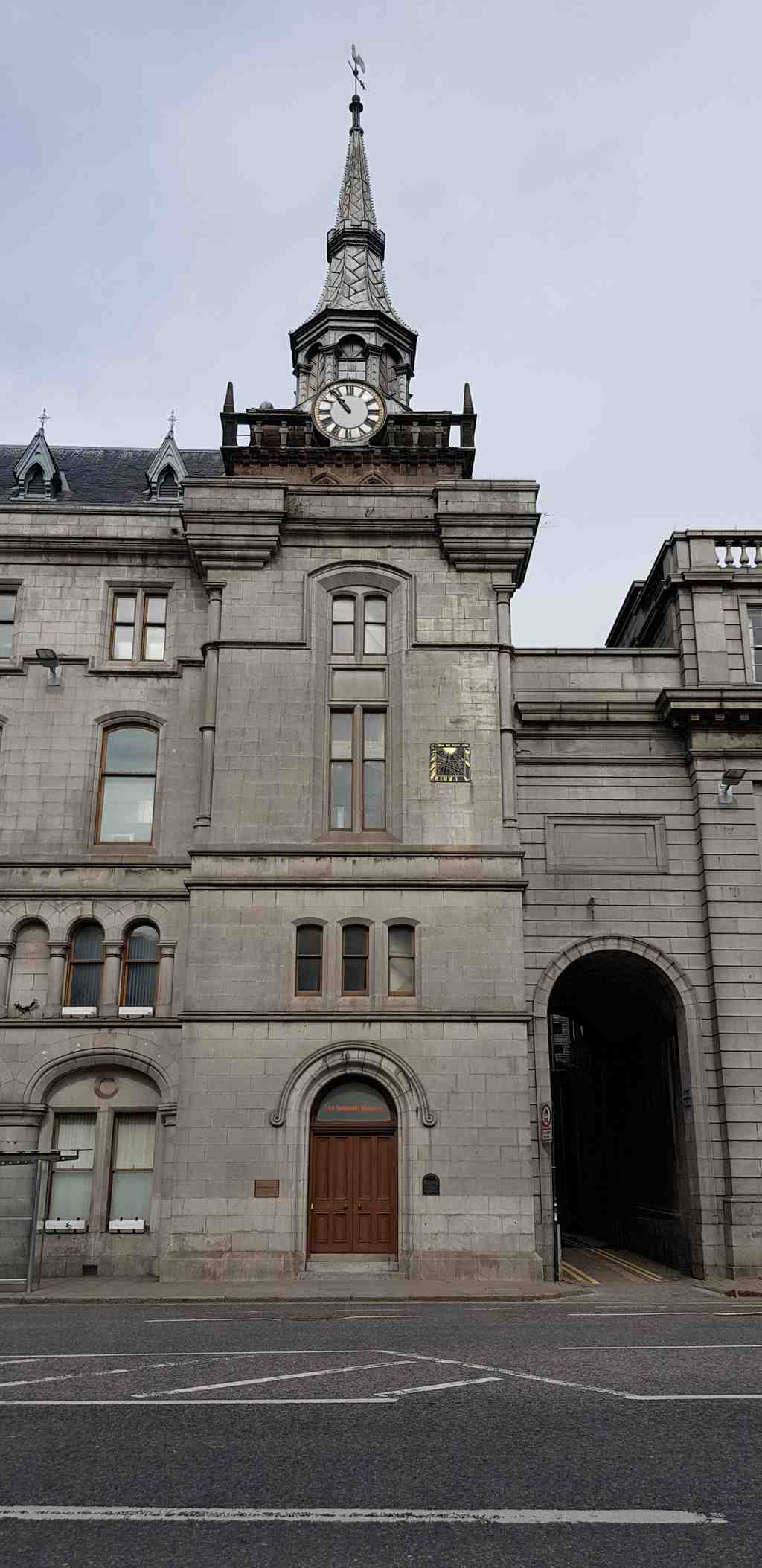
To spot the Tolbooth, look for the sturdy grey granite building with a tall, pointy clock tower and weather vane, right next to a grand arched gateway on Union Street. Welcome to the Tolbooth, Aberdeen’s most dramatic slice of history-standing tall since the 1600s, it’s seen more shocking moments than a cat with its tail in a plug socket! Take a moment to imagine the cold stone beneath your feet and the chill air swirling around the ancient prison doors. Back in its heyday, this was the place you really did not want your name called-unless you were picking up a lost pigeon. People claimed the first guillotine outside Paris was commissioned here, and yes, you can still see its heavy blade on display! If you think your neighbours are suspicious, just wait: In 1630, a woman named Marion Hardie was thrown in here for so-called witchcraft. After a harrowing stay, she was strangled and burned out front-let’s just say the 1600s had a strict no-magic policy. By 1703, charging someone with witchcraft was out, but not before dozens were condemned right where you stand. History took another turn during the Jacobite risings. Crowds would gather, voices echoing off the stone, as folks declared James Francis Edward Stuart their king. After the failed uprising, this place was stuffed with nearly a hundred Jacobite prisoners-who could probably use a good personal space seminar. The Tolbooth’s past hides dark secrets too: in the 1700s, street children were locked up here and then shipped to America as slaves-imagine the echo of tiny footsteps on these floors. Fast forward to today: the Tolbooth is a museum-its ghostly history so famous it starred on “Most Haunted!” Step inside, see the old cells, meet the ghostly model prisoner Willie Baird, and who knows-maybe you’ll feel a cold shiver even on a sunny day. Congratulations, intrepid explorer, you’ve made it to the end of your Aberdeen adventure at one of its oldest, most mysterious landmarks!
Abrir página dedicada →
Preguntas frecuentes
¿Cómo empiezo el tour?
Después de la compra, descarga la app AudaTours e ingresa tu código de canje. El tour estará listo para comenzar de inmediato - solo toca play y sigue la ruta guiada por GPS.
¿Necesito internet durante el tour?
¡No! Descarga el tour antes de empezar y disfrútalo completamente sin conexión. Solo la función de chat requiere internet. Recomendamos descargar en WiFi para ahorrar datos móviles.
¿Es un tour guiado en grupo?
No - esta es una audioguía autoguiada. Exploras de forma independiente a tu propio ritmo, con narración de audio reproduciéndose en tu teléfono. Sin guía, sin grupo, sin horario.
¿Cuánto dura el tour?
La mayoría de los tours toman 60–90 minutos para completar, pero tú controlas el ritmo completamente. Pausa, salta paradas o toma descansos cuando quieras.
¿Qué pasa si no puedo terminar el tour hoy?
¡No hay problema! Los tours tienen acceso de por vida. Pausa y continúa cuando quieras - mañana, la próxima semana o el próximo año. Tu progreso se guarda.
¿Qué idiomas están disponibles?
Todos los tours están disponibles en más de 50 idiomas. Selecciona tu idioma preferido al canjear tu código. Nota: el idioma no se puede cambiar después de generar el tour.
¿Dónde accedo al tour después de comprarlo?
Descarga la app gratuita AudaTours desde App Store o Google Play. Ingresa tu código de canje (enviado por email) y el tour aparecerá en tu biblioteca, listo para descargar y comenzar.
Si no disfrutas el tour, te reembolsamos tu compra. Contáctanos en [email protected]
Paga de forma segura con